Month: May 2017 Page 2 of 4

The Right Side by Spencer Quinn

The Right SideThe Right Side

by Spencer Quinn

eARC, 336 pg.
Atria Books, 2017

Read: May 11 – 12, 2017


Okay, since I first opened the pages of Dog On It 8 years ago, I’ve been a Spencer Quinn fan — it probably took me two chapters to consider myself one. So it’s kind of a given that I’d like this book — but only “kind of.” This was so far from a Bowser & Birdie or Chet & Bernie book that they could be written by different people.

Sgt. LeAnne Hogan was an excellent athlete in her childhood and teen years, and then she joined the Army (deciding her West Point plans would take too long — an oversimplification that’ll do for now) and became an excellent soldier, serving multiple tours in combat zones. During her last sting in Afghanistan — as part of a team working to build intelligence sources among Afghan women — she is involved in an attack that leaves some dead and her injured — physically and mentally.

Her memories of that fateful day are vague and dim at best, but the scars will not leave. Not only that, she lost an eye, her confidence, her future plans, and career. She slowly befriends a woman who lost part of her leg to an IED in Iraq who shares a room with LeAnne in Walter Reed. Marci dies suddenly and unexpectedly — and that is too much for LeAnne. She leaves the hospital immediately and sets off on a drive across the country, she really doesn’t have a plan, but she needs to be somewhere else.

It’s pretty clear that LeAnne is suffering from PTSD on top of everything else — as you’d expect. She comes across as angry and rude to almost everyone she runs across and exchanges more than a few words with. She eventually finds herself in Marci’s hometown — where her daughter has gone missing. For the first time since the day everything changed, LeAnne has a purpose — bring her friend’s daughter home. Along the way, she LeAnne gets adopted by a large dog who will prove an invaluable aid in this challenge.

LeAnne is a great character — not a perfect person by any means, but you can see where a lot of writers (novelists or journalists) would try to paint her as one. She has huge flaws — some of which are easier to see after the injury (and some of them are new after it, too). There are some other good characters, too — even if you don’t necessarily like them (LeAnne’s mother would be an example of this — she’s trying to do the right thing, but the reader can sense LeAnne’s apprehensions toward her — and will likely share them). The people in Marci’s hometown (particularly those that are related to her) are the best drawn in the book — and I’d be willing to read a sequel or two just in this city to spend more time with them. Not everyone gets what LeAnne’s going through — some don’t know how to react to her — but those that come close will endear themselves to you.

The dog, Goody, isn’t Chet, he isn’t Bowser — he’s a typical dog, no more (or less) intelligent than any other. Goody won’t be serving as the narrator in a story any time — he will drink from the toilet bowl and ignore a lot of what LeAnne wants him to do.

Like I said, I’m a Quinn fan — but I didn’t think he had this in him. Funny mysteries with dogs? Sure, he’s great at those. But sensitive explorations of veterans dealing with the aftermath of life-altering injuries? I wouldn’t have guessed it. But man . . . he really got this flawed character, this incredibly human character, right. There’s a couple of moments that didn’t work as well as they should’ve — a couple of moments that were hard to believe in a book as grounded in reality as this book was. But you know what? You forgive them easily, because so much is right with this book — so much just works, that you’ll accept the things that don’t. It wasn’t all dark and moody — there’s some hope, some chuckles, a lot that is somber and sad, too. While not a “feel good” read by any means, you will feel pretty good about who things end up.

This is probably categorized as a Thriller, as that’s where Quinn’s readers are — but I can see a case for this being labeled General Fiction (or whatever synonym your local shop uses), it’s flexible that way. This is Spencer Quinn operating on a whole new level with a character we need more like — such a great read.

Disclaimer: I received this eARC from Atria Books via NetGalley in exchange for this post — thanks to both for this.

—–

4 1/2 Stars

Storm Front (Audiobook) by Jim Butcher, James Marsters

Storm FrontStorm Front

by Jim Butcher, James Marsters (Narrator)
Series: The Dresden Files, #1
Unabridged Audiobook, 8 hrs., 1 min.
Buzzy Multimedia Publishing Corp., 2009

Read: May 18 – 19, 2017


Okay, I know myself well enough that I’m pretty incapable of critical thought when it comes to The Dresden Files — which is not to say I think the books (especially this one) are perfect, but I can overlook all the flaws — and those I can’t I can shrug off. It’s been years — almost a decade — since I re-read this, and I’d forgotten some details, but the core is pure Dresden. And the best of all is that I know they get better from here.

So I’m not going to talk about the book, really. For the 2 of you who don’t know, Harry Dresden is a Marlowe/Spenser-type of P.I. (but not really) who happens to be a wizard. He consults with the police on the supernatural front and does a little business helping private citizens. That’s all the setup you need.

What I want to talk about here is the audiobook portion of it — I’ve heard for years that the James Marsters narrated audiobooks in this series are fantastic. I was prepared to be thoroughly entertained. But not as much as I was. Marsters was just incredible, almost unbelievably good. This was, as the best audiobooks are, a performance, not just a reading. And this was one of the best performances I’ve witnessed from Marsters. Had I the means, I’d have bought the rest of the series Friday night after I finished this one.

Butcher fans, if you’ve only read the book, you need to listen to them, too. Marsters brought our man to life.

—–

5 Stars

The Hammer of Thor (Audiobook) by Rick Riordan, Kieran Culkin

The Hammer of ThorThe Hammer of Thor

by Rick Riordan, Kieran Culkin (Narrator)
Series: Magnus Chase and the Gods of Asgard, #2
Unabridged Audiobook, 10 hrs., 34 mins..
Listening Library, 2016
Read: May 10 – 12, 2016


Thor’s hammer is missing, so not only can he not stream Netflix (I’d forgotten that was a thing in this series) on it, he can’t intimidate the giants into not invading. You can guess which bothers him more. The Valkrie Samira and her pal Magnus have to go find it before things get out of hand.

I didn’t like this one as much as the first book in this series — but I didn’t dislike it. It’s still the same outline that Riordan is following with these books — there’s a quest; the hero and his friends have to go find the whatever to stall doomsday a little longer; to get the X the group has to beat a series of mini-challenges and then they’ll have a shot at the X. Since this is a book 2, they’ll get X, but many other things will go wrong, forcing the series into another book. For the most part, the minor challenges worked better for me than I expected.

I enjoyed Magnus’ friends — Samira in particular; although I’m pretty torn about the new character added to Magnus’ group: Alex Fierro — a child of Loki. I understand what Riordan was trying to do with this character, but I’m not sure he succeeded. I’m not convinced that Alex was a person, and not just a conglomeration of traits. But I have hope. Alex’s presence, I thought, ended up short-changing some of the other characters when it came to action and involvement in the plot, which I wasn’t crazy about.

I really enjoy seeing different authors’ take on the same mythological characters. Comparing/contrasting Kevin Hearne’s and Riordan’s Thors and Lokis would make for a very entertaining piece (I think Riordan’s Thor is more comical, but his Loki just might be more sadistic), and I will admit I got distracted a couple of times listening to this by thinking about the differences.

The best part of this was seeing how the problems Magnus, etc. are dealing with intersect some of what Percy, Annabeth and Apollo are going through in Riordan’s other series, and the strong hint that we’ll see some sort of cross-over soon. We’d understood that the Egyptian gods were threatening the earth about the same time that the Problems with Camps Jupiter and Half-Blood start up, but this was a much more explicit description. I like thinking that the various pantheons are having troubles at the same time, and that Earth could be doom in any number of ways simultaneously.

I bought this in hardcover the week it came out (last October, I think), but haven’t been able to find/make the time to read it. When I saw it as available on my library’s audiobook site, I figured I’d jump — just to get that TBR pile a little smaller. I hadn’t listened to Riordan on audio before, and was curious ow it translated. I was surprised to hear Kieran Culkin’s name (and voice) at the beginning of this — he didn’t strike me as the kind of actor who’d do audiobooks. I’m glad that he did, though. I really enjoyed his work throughout the novel — the narration, the characters — he just nailed it. That’s how Magnus Chase should sound.

It was entertaining enough to keep going, and I trust that Riordan knows what he’s doing, I’m just not convinced that he did all he could to make this book as good as it could be.

—–

3 Stars

Saturday Miscellany – 5/20/17

Things might go better if I stop trying to post this first thing in the morning — this time my tardiness can be blamed on my 2nd son’s high school graduation last night (congrats, my boy) and our new dog being . . . well, a wonderful distraction.

Odds ‘n ends over the week about books and reading that caught my eye. You’ve probably seen some/most/all of them, but just in case:

Lastly, I’d like to say hi and welcome to mysteryauthorjamesrnelson for following the blog this week.

Hour Game (Audiobook) by David Baldacci, Scott Brick

Hour GameHour Game

by David Baldacci, Scott Brick (Narrator)
Series: King & Maxwell, #2
Unabridged Audiobook, 14 hrs., 25 mins.
Hachette Audio, 2004
Read: May 1 – 5, 2017


Whoops — it’s been two and a half years since I read the first volume in the series — I really meant to get back to it sooner. Oh well, better late than etc., etc. I don’t have much to say about this, but I have a few thoughts.

This picks up a few months after Split Second, the partnership between King and Maxwell has solidified, they’ve had some success and have settled into their lives. They’re doing some work for a local attorney assisting him defend an accused burglar, when they’re asked to help the local police investigate a murder that resembles a famous serial killer. Soon afterwards, other bodies show up — each following a different serial killer’s M. O. to keep the authorities guessing.

Soon, King and Maxwell are officially involved — as are the national media and the FBI. Naturally, the two cases intertwine — as does another mystery.

The mysteries were pretty easy to guess, but how Baldacci resolved them wasn’t — which was nice. The character moments were okay, actually — the characters were the best part of this book, not just our leads, but pretty much everyone who wasn’t killed within a page or two of being introduced.

Will you hold it against me if I admit it wasn’t until as I was writing this that I figured out what the title referred to? I really hadn’t thought about it, but I really shouldn’t have had to.

I liked this more than the last Scott Brick audiobook I listened to — which wasn’t bad. His accent work was good (have heard him do better), and he made the characters come to life — even giving a couple of characters I could live without enough of a hook that I probably liked them more in audio than I would’ve if I read it.

Hour Game was well constructed, well paced, and kept me engaged and entertained — an improvement over the first one, too. Can’t ask for much more than that.

—–

3 Stars

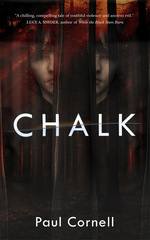
Chalk by Paul Cornell

ChalkChalk

by Paul Cornell

Kindle Edition, 206 pg.
Tor.com, 2017

Read: May 5 – 8, 2017

There are kids who went through school experiences like mine who will never watch football, and there are those who end up playing for Arsenal. Okay, who will end up with season tickets. Stockholm syndrome will only take you so far.

Enough about what I am now. That comes later.

Everyone keeps talking about this as a story about bullying — sure, there’s a little bullying here. But mostly, that’s like saying that Hannibal Lecter enjoys an unconventional diet. What happens to Andrew Waggoner is so far beyond bullying — it’s flat out assault (but with a psychological component that matches bullying). After a Halloween dance, Waggoner is forced into the woods by the school bullies and is assaulted. Somehow, his trauma links him to some long-dormant forces who take the opportunity to reassert themselves. One manifestation of the mystical/magical works with (compels? coerces? convinces?) Waggoner to take his revenge against those who permanently scarred him mentally and physically.

And over the next 12 months, that’s just what happens — Waggoner and/or his mystical companion (it’s never clear exactly how much is done by each) exact their revenge — Waggoner vacillates in his commitment to this project, and comes close to stopping on many occasions. In the midst of this, he becomes a writer and makes a friend based on shared interest, rather than just being social pariahs. In short, he starts growing up.

Meanwhile, the ancient forces tied to Waggoner are in open conflict with the dominant, more modern/contemporary, forces/beliefs. The school — and the students’ lives — become the major battleground for them, the final conflict coming on the anniversary of the attack that changed Waggoner’s life forever.

I kept seeing the school as the school from Sing Street (except, in the West Country, not Dublin — but roughly the same era), which I know is inaccurate, but I couldn’t stop myself. Pop music plays a large role in the story, and as it’s set in the early 80’s I didn’t have to google most of the songs (there were a couple of tunes that didn’t make it to Idaho that long ago) — which was a plus for me, and probably most readers.

You can tell (well, you can guess) that Cornell and Waggoner had similar experiences in their early lives — the language he uses to describe the bullying speaks to that. But more than that, the way he describes how the bullying shaped him, both then and when Waggoner reflects on those events from the vantage point of adulthood, resonated with me, and will with many readers.

The characters — bullies, victims, other children, or adults — were all wonderfully constructed. I’m not sure that I liked any of them (including Waggoner), but I was drawn into this world, and was very invested in what happened to each of them.

This was intense, gripping, strangely something (I want to say beautiful, but that doesn’t seem right) — there’s a je ne sais quoi about Chalk that inspires and repulses at the same time. I know I haven’t done a good job describing this book — I’m trying hard not to ruin anything for future readers. It was one of the more affecting, compelling books I’ve read this year. Cornell does a masterful job of mixing our reality with his fantasy — as he’s shown in the Shadow Police and Lychford books — this time you add in a layer of childhood horror and wonder to that combination.

This is something special, you won’t read much like it.

—–

4 Stars

A Shift Toward Prey by Natalie Allison Book Tour

A Shift Toward Prey by Natalie Allison Book Tour Banner

A Shift Toward Prey by Natalie Allison Book Cover

  • Publication Date: May 15, 2017
  • Sold by: Amazon Digital Services LLC
  • ASIN: B06XKJMNND

ABOUT THE BOOK:

There’s a war brewing in the shadowed lands of the Fringe, a conflict that will match Shifter claws against Vampire fangs for the first time in two centuries. And it seems as if those with the power to stop it are only making things worse.

For too long, a young, ambitious Jaguar-Shifter named Chiari Jhahn has been forced to watch her elder sister’s savage regime destroy the very heart of the Shifter Realm. And now it seems as if that regime is hell-bent on starting a war with their long-time enemies, the Vampires of the Everdark.

After witnessing her sister let her pride stand in the way of a peace agreement that would have stopped the coming bloodshed, Chiari feels she has no choice but to start a revolution—it’s either that, or watch her people become nothing more than prey for a much-stronger predator. But her sister’s reach is long, and Chiari doesn’t know who she can trust.

Forced to seek allies in the most unlikely places, Chiari must use every ounce of her intellect and cunning to build a rebellion that will topple her sister from power and hopefully mitigate the Vampire threat. But Vampires aren’t the only monsters hiding in the dark—and they’re not the only predators out for blood. Chiari’s friends may prove to be worse than her enemies. When political ambition is matched against predatory instinct, the phrase “coming back to bite you” takes on a whole new meaning.

PURCHASE A SHIFT TOWARD PREY ON AMAZON.COM


ABOUT THE AUTHORNatalie Allison Author Photo

Natalie Allison grew up in a house full of books. Her world—and her imagination—became infused with the wonder and mystery of places like Middle Earth, Narnia, Valdemar, and Pern. An early love of reading led to an early love of writing, and she wrote her very first novel at the tender age of eight.

Natalie has been building worlds with words ever since, and her stories have entertained readers from all over the globe. Now she lives with her adoring husband, a son who’s a genius, and a dog who’s determined to save the world from mushrooms, kittens, frogs, and other nefarious creatures.

Readers can connect with Natalie via:

Website
Facebook
Twitter

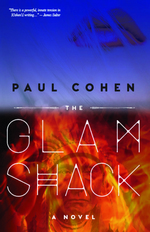
The Glamshack by Paul W. Cohen (updated)

I pulled this one from publication this morning to work on it a bit more. I’m not sure I actually made it better, but I’m pretty sure it’s not worse.

…and then tweaked again 12 hours later . . .

The GlamshackThe Glamshack

by Paul W. Cohen

eARC, 222 pg.
PUB, 2017

Read: May 8 – 9, 2017


Do not read this book for the plot — you will likely be disappointed, and possibly frustrated. There’s just not much of it, and what little there is isn’t that creative — there are good plot-moments, yes. But really, there’s nothing here that you likely haven’t read. But the strength of this book is in how Cohen delivers the plot, not the what that he delivers.

Essentially, the novel is a story of Henry Folsom — a lifestyle reporter in 1999. I think lifestyle reporter is close — he writes for a fashion magazine, doing puff-piece profiles and interviews. He’s just not that good at his job, and is close to being fired after some disastrous encounters with the kind of people that you cannot have disastrous encounters with. During one such encounter, he meets a woman that he finds much more interesting than his interview subject. They flirt, they date, they have a months-long relationship, full of ups and downs. She leaves him for a few days (at least) when the book opens, and as he waits to see if she’ll return as promised, he spends this time in a drunken stupor reliving, rehearsing, and analyzing (not too deeply) the relationship while reading a history of the Plains Indians Wars of the 1800s.

Henry never gives us the name of his love, his obsession. It’s always “She” or “Her.” Always capitalized. Within the last few months, I read something describing a man in love’s speech by saying something like “you could hear the capital She in his voice.” That’s surely how Henry talked — it’s how he writes, how he thinks. She is completely and totally unworthy of the devotion he shows. Sure, you could (rightly) argue that none of us are — but She is really just the worst — manipulative, selfish. untrustworthy . . . But there’s no two ways about it, Henry’s devoted to her (and he’s not alone). She has a tragic backstory, which, if true, probably accounts for some of her personality flaws. But I’m not convinced that she didn’t invent part of it to serve her own ends. All this is to say that she’s not a good person, but a great character.

Henry is sort of a Humbert Humbert character. No, he’s not a murderer or a pedophile — or any other kind of criminal that I’m aware of. He is someone with a fancy prose style and has overly-idealized the object of his affections. The way Henry thinks about, describes, and acts toward Her really reminded me of Humbert — particularly (and this is what made me start down this trails of thought) in the way that Henry reveals Her character, her shortcomings, and virtues while defending or denying the problematic aspects of Her character and well as his. Henry’s use of language — and Cohen’s, too — is just wonderful. Most of the quotations I’d pull wouldn’t work without a lot of context, but there’s some great use of language throughout this book. Don’t get me wrong, I’m not suggesting that I mastered the novel — there’s a lot of Cohen’s figurative language that I can’t wrap my brain around. The repeated phrase, “fighting breasts,” is a good example — I have no idea what those are. Didn’t are while I was reading, don’t care now — segments of this might as well have been poetry for the care shown to word choice and placement.

Elmore Leonard’s famous 10 Rules for Writing contains warning against “hooptedoodle” — the parts of books that sound like writing. His goal was to remain invisible (he failed, by the way, I think he knew that). I don’t regularly use these rules to evaluate books — but sometimes, I can’t help it (they stick with you more than some other writer’s do). Glamshack wouldn’t last 5 paragraphs against Leonard’s standards. But that’s okay, as Leonard himself says, “If you have a facility for language and imagery and the sound of your voice pleases you, invisibility is not what you are after, and you can skip the rules.” Cohen’s one of those who can skip the rules without a lot of complaint from anyone.

I wasn’t wowed by The Glamshack story or characters, but I enjoyed reading it and loved Cohen’s writing. I recommend it.

Disclaimer: I received this eARC from the author in exchange for this post — thanks, Mr. Cohen, I enjoyed this.

—–

3 Stars

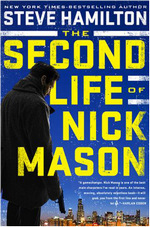
The Second Life of Nick Mason by Steve Hamilton

The Second Life of Nick MasonThe Second Life of Nick Mason

by Steve Hamilton
Series: Nick Mason, #1

Hardcover, 288 pg.
G.P. Putnam’s Sons, 2016

Read: May 10 – 11, 2017

After listening to the hype around this book for a year, I finally got around to reading it. I’ll admit, when this came out last year, I didn’t think it was my cup of tea. I think I confused it with something else that came out about the same time. Because after a few pages, I was hooked — it also didn’t even come close to matching the kind of story I thought it was (I didn’t read the jacket copy). I spent the next 280 pages kicking myself for waiting to read this thing.

Nick Mason was a successful, but small-time criminal for years. He and his friends never got violent, but they sure were not “good” in any sense of the world — things happen, people move on and Nick falls for a college girl. She has one rule: Nick picks her or crime. He picks her and the straight and narrow. A few years later, Nick’s making a living, has a wonderful daughter and wife. The friend who moved away comes back and asks Nick to do one final job — one that’ll land him enough money to not have to worry about his family’s future. Nick makes the fatal mistake and goes along — and ends up serving a 25-year sentence.

Darius Cole, a crime boss — the kind you read about or see in movies and hope that doesn’t exist in real life — who’s still running a decently-sized empire from a prison he’ll never leave takes an interest in Mason. He eventually makes Mason an offer — Cole does a few things and Mason goes free. On the outside, he’ll need to serve the remaining 20 years of his sentence, but he’ll do so as Cole’s employee. As his handler will tell him after he’s released:

This isn’t freedom. This is mobility. Don’t get those things confused.

Set up in a very nice house, with a cover job better than he could’ve ever got on his own, Mason looks like he’s got it made — but when Quintero (his handler) calls with an assignment, he has to drop whatever he’s doing and take care of the assignment. Period. His own well-being, as well as that of his (now) ex-wife and daughter, depend on it. The assignment can be as benign as following a rival of Cole’s or as serious as murder — it doesn’t matter, Mason is responsible for carrying it out. Promptly.

His conviction overturned, his ex-still wants nothing to do him — and won’t let him have anything to do with his daughter. One of the detectives responsible for his conviction will not accept what he sees as a travesty of justice and will not stop until he can put Mason back where he belongs.

I cannot stress enough, this is not some tale of a falsely accused man becoming some sort of vigilante working outside the system — we’ve all seen that story and this frequently feels like it. But Mason himself will tell you he deserved what happened to him. He’s under no illusions about what he’s doing and will be doing for the foreseeable future. This isn’t a redemption story, either. He’s not a good man — he’s a criminal who has a set of rules he lives by — even if his new employer forces him to break some of those.

Which is why he’s so compelling — Hamilton has created a great character here. There’s no reason to like Mason, there’s little reason to root for him, we’re supposed to be hoping that Det. Sandoval figures things out, puts Mason and Quintero away and dismantles Cole’s business. But nope. Not a bit. Sandoval’s a good guy, decent cop — and most readers are going to want him to succeed except where it makes Mason’s life difficult. That dynamic is just another part of what makes this book work.

I’m really at a loss to describe how well this book sinks its claws into you. It grabs you by the scruff of your neck (mixing metaphors, I know, hooks, claws, grabs . . . it does all three) and drags you along — and you don’t care. In fact, you enjoy it so much that you try to move faster than the book’s pace.

The one good thing about waiting so long to read this is that I don’t have to wait too long for the sequel — Exit Strategy was released this week, and I’m licking my chops until I can get to it.

I’m on the verge of going overboard here, so I’m going to stop — this is a heckuva thrill ride, and readers of thrillers, crime novels would be foolish to make the mistake I did by not reading this.

—–

4 1/2 Stars

2017 Library Love Challenge

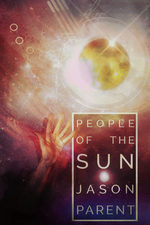
People of the Sun by Jason Parent

People of the SunPeople of the Sun

by Jason Parent

Kindle Edition, 327 pg.
Sinister Grin Press, 2017

Read: March 13 – 15, 2017


This was a refreshing SF adventure with plenty of heart and imagination.

A handful of brave astronauts take off from the dying planet Symoria with a mission to find something to save their planet– but something goes wrong during the launch, damaging the ship and severely injuring some of the crew. The ship crashes on a nearby planet — Earth, naturally — and things go downhill from there.

Yeah, a disastrous (and possibly fatal) launch is the best thing that happens to the Symorians. Doesn’t really say a whole lot about this planet, or at least its inhabitants, does it?

Anyway, they land in New Hampshire to be found by a State Trooper and his friend, a geology professor. Factors in the environment shock the Symorians by helping them to adapt to Earth and human culture in surprising ways. The professor, Connor Gaudreau (the professor) becomes an ambassador of sorts for them.

To say that their first meeting with the U. S. Military goes poorly is an understatement — the soldiers believe that the Symorians are nerds in cosplay uniforms and makeup. When they won’t take off “the Spock ears,” one solider in particular gets aggressive — striking the non aggressive Symorian commander, Lenyx, repeatedly. While trying to defend himself, Lenyx accidentally kills this soldier, making things worse.

Thankfully, there’s a sitting President who’s looking to establish her legacy by making a treaty with a new race. What follows is full of betrayal hope, loyalty and avarice. Plus a healthy dose of hope.

The imagination behind this novel is impressive. Parent shows a lot of creativity in establishing why the aliens might use English expressions and human attitudes. The writing is solid — nothing dazzling, but solid. The characters are well-written, and the plot works well. Yeah, at a certain point, the ending is inevitable and few readers will be surprised at the last 1/3 (or so). But that doesn’t mean it’s bad, it just means that Parent follows his story through to its logical conclusion — he doesn’t go for some shock twist that has no foundation. He starts at A, then goes to B, C and D on his way to E — without succumbing to the temptation to go for a detour through Q and R.

An entertaining, quick read with plenty of characters that make you want to read on. Recommended.

Disclaimer: I received a copy of this novel from the author in exchange for this post — thanks!

—–

3 Stars

Page 2 of 4

Powered by WordPress & Theme by Anders Norén