Month: November 2017 Page 3 of 4

Saturday Miscellany – 11/11/17

Odds ‘n ends over the week about books and reading that caught my eye. You’ve probably seen some/most/all of them, but just in case:

    This Week’s New Releases I’m Excited About and/or You’ll Probably See Here Soon:

  • The Midnight Line by Lee Child — In the wake of Make Me (which still gives me the heebie jeebies), Reacher goes on a hunt to indulge his curiosity (and we all know he’s going to end up doing a lot more)
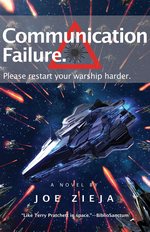
  • Communication Failure by Joe Zieja — this funny follow-up to last year’s Mechanical Failure will get you laughing at the brink of Interplanetary War. It’s great, as I discussed here.
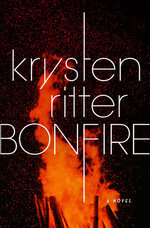
  • Bonfire by Krysten Ritter — Ritter’s first novel is a suspenseful, solid read. Here’s what I wrote about it last month.
  • The Wrong Stars by Tim Pratt — another comedic space opera this week — sounds like a pretty good trend.
  • A Spoonful of Magic by Irene Radford — it’s a cute premise, and different enough from the typical UF that it looks worth a try.
  • A Burdizzo For A Prince by Mark Rapacz — J. J.’s a hitman on the run from his former colleagues after he dishes out some justice on the boss’ son. Look up the word “Burdizzo” and you’ll get an idea why J. J. probably doesn’t want anyone to catch him.
  • Heather, the Totality by Matthew Weiner — It’s Matthew Weiner, what else needs to be said?


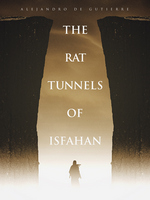
The Rat Tunnels of Isfahan by Alejandro de Gutierre

The Rat Tunnels of IsfahanThe Rat Tunnels of Isfahan

by Alejandro de Gutierre
Series: Scorpions and Silk, #1

Kindle Edition, 75 pg.
De Gutierre, 2017

Read: November 9, 2017

I wasn’t crazy. Not like most of the tortured souls I shared the prison with. Some wandered, muttering and bumping into walls. Some sat unmoving for hours, staring into a darkness even the desert sun couldn’t penetrate, their eyes seeing but not seeing, ears hearing but not listening. And a sad few would break; they would weep, and rock, and cry out. These were the broken: shuffling from place to place, barely eating, barely drinking, numbly watching the flesh drip from their bones, oblivious to the blood slowing in their veins.

We know very little about the central (practically only) character in this novella — he’s a prisoner, somewhere in Persia, sometime long ago. That’s about all that we know — for that matter, that’s about all he knows. His imprisonment has left him so psychologically shattered that he can’t remember anything about himself. He has children somewhere, he thinks.

We see him struggle to survive, struggle to get free, struggle to convince himself that he’s not crazy, and return to/rebuild his life. I don’t know much about him, but I like him, and I want to see the best for him.

I don’t think it’s possible for the word “visceral” to show up more in my notes for a 75-page novella than it did here. You feel this story as much as you read it — the almost-alien creepiness of a scorpion, the isolation, the fear, the rat chewing on a toe — all of it, de Gutierre puts you right in the mind of his amnesiac (his having no name helps there).

Until this story spools out a bit more — maybe volume 2, maybe until the end — I’m not sure what I think of the story, plot or characters. I can tell you that I want to know these characters better, I want to find out what happens to them, but that’s as far as I can say on that front. So, I’m left with de Guiterre’s writing — which is just what this story needs. He knows what he’s doing, and has got me hooked, even if I don’t have a clue about what he’s doing. This atmospheric, visceral read will leave you demanding more, soon.

Disclaimer: I received a copy of this novella from the author in exchange for my honest opinion — and I’m glad he gave it to me, because I wouldn’t have heard of it otherwise.

—–

3 Stars

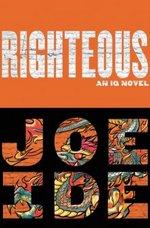
Righteous by Joe Ide

RighteousRighteous

by Joe Ide
Series: IQ, #2

Hardcover, 326 pg.
Mulholland Books, 2017

Read: November 3 – 4, 2017


Isaiah Quintabe is back with a couple of dynamite cases. IQ ended with Isaiah stumbling upon the car that killed his brother. So about half of this book is devoted to Isaiah’s renewed efforts to find the man who killed his brother. He quickly concludes that Marcus was not killed in an accident, as he’d believed and the police had included. Rather, it’s pretty clear to him that Marcus was targeted by the driver. So now, Isaiah starts digging — he finds more suspects than he’d prefer, and he starts to have some questions about Marcus’s lifestyle/livelihood.

That story alternates with an actual paying case — Marcus’ girlfriend (and the object of Isaiah’s teenaged affections) comes calling for Isaiah’s help. Her little sister, a gambling addict, and her equally addicted boyfriend are in trouble — they’ve got a Loan Shark gunning for them, and have resorted to some freakishly stupid lengths to get the money they need to get him off their case. These lengths have made them the target of some of the nastiest, deadliest, coldest criminals you’ve ever read. So, Isaiah and Dodson head to Vegas to help them. Dodson is fairly assertive here, not wanting to be relegated to sidekick and PR status, but to been seen as an equal to Isaiah — more of an Elementary‘s Joan Watson than Doyle’s John, without the student-vibe (or Dr. Eric Foreman to Dr. House . . . ugh, there are just too many versions of Holmes to walk an unbeaten path). Which is not to suggest that Ide’s blossoming partnership here is just a retread or a rehash, Dodson just reminds me of Joan a little. There’s a dynamic between these two that you don’t often see in detective duos, outside of police shows where two are forced to work together — a mix of partnership, antagonism, respect, and rivalry.

So why does Isaiah bring him along? Because he’s growing as a person, realizing that he needs social connections, other people in his life — he has a new dog, but that’s not enough. There’s even a longing for something like Dodson’s new family. His work, his trying to make something out of the wreck his life became after Marcus’ death — that’s not enough (nor is it finished) — he wants people around, and Dodson’s the first step.

There’s a couple of criminals wandering around Vegas making life horrible for several people that I’d love to see again — [spoiler] we won’t, and they got what they deserved — but man, I enjoyed them so much. All the “bad guys” (and, wow, were there a lot of them) were much more than your typical mystery novel baddies (even really well-written ones!). They were fully fleshed-out, individuals, with believable (and contradictory) self-interests and motivations.

As compelling as the baddies are, Isaiah is better. And in this book (like IQ) we see one of the ways that Ide is superior to Arthur Conan Doyle. In A Study in Scarlet, we see Holmes as the successful version of himself — on the verge of being a legend, really. Like Athena fully formed, emerging from Zeus’ skull. But IQ is still learning, still fallible — yes, he’s achieved a large measure of success and notoriety, but he’s still making mistakes. He’s good, but he needs more discipline, more patience, less ego, etc. In Righteous, as in IQ, we get the equivalent of Miller’s Batman: Year One and Barr’s Batman: Year Two. He’ll get to the point where his mistakes are more rare and less obvious, no doubt — but he’s not there yet. Combining this aspect of the character and the nascent social life and you’ve got a lot of fodder for character growth.

I’ve recently started reading (for those who don’t read every post) the John Rebus books, plugging my way through the 30 years of history of the character. I’ve received various encouragements from long-time Rebus readers to stick with it, the best is yet to come (not that I was in any danger of dropping it), and that I was reading something special. I can easily see myself giving similar encouragement to someone just starting these books in a decade or so. Isaiah is one of those characters that I can see myself reading for years to come. Between Isaiah and Dodson as characters, and Ide’s style and skill — this series is one to read.

—–

4 Stars
2017 Library Love Challenge

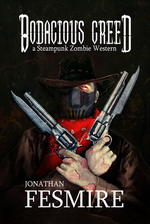
Bodacious Creed by Jonathan Fesmire

Bodacious CreedBodacious Creed: A Steampunk Zombie Western

by Jonathan Fesmire
Series: The Adventures of Bodacious Creed, #1

Kindle Edition, 370 pg.
Bodacious Publishing, 2017

Read: October 16 – 19, 2017


This is a strange, fun genre hodgepodge of a book. When Fesmire approached me about reading this book, I figured it’d be something like Cherie Priest’s Clockwork Century, just set further south. A good mix of steampunk tech and an Old West setting, maybe with a Zombie wandering around as a vague threat, 300 pages later and we’ll be done. Wow. I couldn’t have been more wrong.

U. S. Marshall James “Bodacious” Creed is a one-man crime-fighting machine (figuratively speaking) — he comes to Santa Cruz in search of Corwin Blake, a notorious killer. While searching for Blake he sees plenty of evidence that there’s a greater criminal enterprise running through town, but he only has eyes for Blake. Not long after this, Blake guns Creed down. Creed awakens a couple of weeks later, stronger, unsure of what’s going on, but with the same drive to protect the citizenry of Santa Cruz and to put Blake behind bars or six-feet under. Creed’s appearance has been altered and his appearance alone makes criminals and non-criminals fearful (like the Gotham Knight will in a few decades). He becomes a one-man crackdown on crime.

How did Creed wake up? Well, that would be the purview of Anna Lynn Boyd — owner of a bordello and restaurant. She’s also a scientific genius on par with Tony Stark, her improvements to technology have propelled the California tech industry to unrivaled heights (including robotics of a steampunk sort). She’s been experimenting with some medical technologies and the murder of a hero like Creed provides just the opportunity she needs to test her breakthroughs.

You take that setup, add in a love interest for both of them, some loyal friends (old and new), some less-than loyal friends, a crime syndicate (before crime syndicates were cool), questionably capable law enforcement officials, and a rival scientist — and you’ve got yourself a heckuva read. It’s exciting, fun, pretty well paced with some very clever turns of phrase (the occasional bit of clunkieness and awkward phrases are easily forgivable).

The Steampunk and Western genres blend nicely — as seen in Dawn’s Early Light by Ballantine and Morris, and suggested in a Priest book or two. The time frames for both overlap — it’s just that Westerns are typically dustier than Victorian dramas. I spent a good deal of this novel doubting the “Zombie” tag — sure, you’ve got Creed walking around, but that was more of a Frankenstein’s Monster kind of thing. Although, there was a reference or two to something strange in New Orleans. — but at a certain point, the tag became fitting and appropriate, and despite my aversion to Zombies, I really liked what Fesmire had to say about them. His is an interesting take that should prove more interesting in future installments.

Beyond what I suggested at the beginning, I really didn’t know what to expect from this book — but whatever it was, I was wrong and pleasantly surprised to be so. This is one of those books that will not change or life or the way you look at anything, but you will surely enjoy reading it. Which is exactly what I needed when I read it, I encourage you to do the same.

Disclaimer: I received a copy of this book from the author in exchange for this post and my honest opinion. Honest, not timely, this is 2-3 weeks late — sorry about that, Mr. Fesmire.

—–

3.5 Stars

Pub Day Repost: Bonfire by Krysten Ritter

BonfireBonfire

by Krysten Ritter
eARC, 288 pg.
Crown Archetype, 2017
Read: October 6 – 10, 2017

When you grow up in a place called Barrens, you want to get out — especially if it’s an area with limited job options, a struggling agricultural industry, and nothing else to commend it. Although, the name alone would probably justify wanting to get out even if the economy and culture were richer. But as is the case with too many small towns like this, few manage to get out. Abby Williams headed for Chicago two days after she graduated from high school, went to college and law school, becoming an associate at an environmental firm — and only sometime after that did she return.

She returns with her friend (a gay black man, who tends to stick out in the small, rural Illinois town), a first-year associate and a couple of students to investigate some claims about the water in the local reservoir. The town’s only major employer is called Optimal Plastics, which has been dogged by rumors of shoddy environmental practices and health problems for years — including before they came to Illinois — and the team is going to see if they can make these rumors and concerns stick this time.

As they dig into records, tests, regulatory reports and whatnot, Abby notices something. Optimal Plastics is clean. Absolutely clean — on paper, there’s never been a company so clean and responsible. Which just seems impossible, no one is this perfect. Abby smells blood in the water and goes on the attack.

At the same time, in a small town, you can’t help but run into people you don’t want to see again — which is pretty much everyone from High School. The girls who used to torment her, the guy she had a large crush on, the people she wasn’t so sure about. It takes mere moments for her to get embroiled (or re-embroiled) in the same relationships, problems, gossip that she’d escaped from. From “the old crowd” (that was never Abby’s crowd), she gets her insight into Optimal Plastics — all the good they’ve done for the town, the numbers of people they employ, the money they pour into the schools, and so on. So much good that no one wants to take a good look into them, the price is potentially too high.

This reminds her (not that she needed the reminder) of some problems potentially tied to the company back when she was in high school — girls that seemed inexplicably sick. What else could it be from? She’s told time and time again by her friend that what happened over a decade ago doesn’t matter,what matters is what the company is doing now. Abby’s not convinced, and keeps digging at this — even if she agrees with him, the ghosts that haunt her will not allow her to let it go. Abby becomes more and more focused on this aspect of the investigation — flirting with and maybe crossing the lines into obsession.

Oh, and did I mention her father? As you may have picked up from the fact I mentioned earlier that she hadn’t returned to Barrens since high school that she’s not that close to anyone there — including her father. The exploration of and changes to their relationship is one of the more emotionally satisfying storylines in the book.

I’m from a small town, I get the feeling of never actually escaping from it — returning to the same place you left. But I’m willing to bet that even readers from larger towns/cities can relate to this. You can take the girl out of High School, but you can never take High School out of the girl, I guess. Ritter deals with the emotional realities and hazards like a pro — there’s not a beat that seems false or forced. The manner in which Abby makes connections, interweaves her look into what happened years ago with what’s going on right now is great (for the reader). The secrets she uncovers are chilling and unthinkable — yet entirely believable.

Would I have liked to have seen more with her colleagues reacting to Barrens, helping her follow the leads she’s interested in, or just interacting with her at all? Absolutely — but I’m not sure how Ritter could’ve done that without more effort than it’s probably worth. Could she have done more with her Chicago-friend sticking out in Barrens? Yup, but it might have distracted from the overall plot (but if she’s going to remark on it as often as she does, she should do something on it — it comes across as urban snobbery). I think that’s almost something I could say about everything in the book. I don’t know that I needed a lot more of everything, but I think every bit of the story, the characters, the mystery, etc. could use a little bit more development, a little more space. Not much, just a little bit.

I liked Abby almost immediately — from the fairly disturbing Prologue, on through to her struggles in town and questionable choices, you root for her and hope that she finds an element of peace. Her coworkers are great. It’s hard to decide what you think about some of her old high school friends right away, and probably best no to decide too much about anyone in town until The Reveal at the end.

The writing is crisp and compelling — Ritter has some really nice turns of phrase as well. There’s a couple of times that Abby is drunk and/or the influence of alcohol plus other things that were just excellent. Abby’s inability to keep her perceptions in line, to have a coherent recollection about everything she experiences through this time — that’s just excellently executed.

I won’t say that it’s one of the best books I’ve read this year — if there’s a plot point here that you haven’t seen, I’ll be surprised. If there’s a character, character arc, or anything like that you haven’t seen before, I’ll eat my hat. Does it matter? Nope. The way that Ritter tells the story, how she treats the characters and shows them to the reader — how she executes things, that’s the key. It all worked really well, I was thoroughly entertained, even held in suspense. Even if in retrospect I decided that I’d seen it all before, I didn’t see a lot of it coming — or I’d seen story elements X and Y a few dozen times, I hadn’t seen them combined the way Ritter did. This is a solid first novel, and I hope there’s at least a second on the way.

Disclaimer: I received this eARC from Crown Publishing via NetGalley in exchange for this post — thanks to both for this.

—–

3 Stars

Communication Failure by Joe Zieja

Communication FailureCommunication Failure

by Joe Zieja
Series: Epic Failure, #2

ARC, 325 pg.
Saga Press, 2017

Read: October 31 – November 2, 2017


So, Captain Rogers has escaped with his life after saving the 331st Meridian Fleet from a takeover from almost all the droids on board, now he’s been made acting admiral and is faced with a potentially bigger threat: the Thelicosan fleet — the very fleet that Rogers’ ships are to keep on their side of the border — has informed him that they are about to invade. Given the size of the fleets facing off, this is an invasion that will not go well for the 331st.

So how is this would-be con-man, former engineer, and current CO going to survive this? He hasn’t the foggiest idea.

Clearly, for those who read Mechanical Failure (and those who haven’t have made a mistake that they need to rectify soon), whatever solution he comes up with is going to rely heavily on Deet and the Space Marines (the Viking/Captain Alsinbury and Sergeant Malin in particular) will be heavily involved. Malin has taken it upon herself to help Rogers learn some self-defense (even if that’s primarily various ways to duck), the Viking is questioning every decision her new CO is making, and Deet is continuing his exploration into human behavior/consciousness (he’s exploring philosophy and spirituality at the moment — which is pretty distracting). Basically, if Rogers is looking for a lot of support from them, he’s going to be disappointed.

It turns out that the Thelicosans didn’t intend to send that message at all, what they were supposed to communicate was very different, actually. But before Rogers and his counterpart can find a way to de-escalate the situation, shots are fired, milk is spilled, and events start to spiral out of control. Which isn’t to say that everyone is doomed and that war is inevitable, it’s just going to take some work to keep it from happening. There are forces, groups, entities — whatever you want to call them — hawkish individuals who are working behind the scenes to keep these cultures at odds with each other, hopefully spilling over into something catastrophic. Which is something too many of us are familiar with, I fear — and something that someone with Zieja’s military background is likely more familiar with. The Thelicosans and Meridians discover who these people are — and how they are attempting to manipulate the fleets — and the big question is how successful they’ll be.

We focus on three Thelicosans, but spend almost as much time on their flagship (The Limiter) as we do the Meridian flagship (Flagship). Grand Marshall Alandra Keffoule is the commander of the border fleet — at one time, she was a star in the special forces, and now she’s been assigned to the border fleet as a last chance. She fully intends on taking full advantage of this opportunity to make history and restore herself to her position of prominence in the military. Her deputy, Commodore Zergan, has fought alongside her since the special forces days and is now trying to help her rebuild her reputation. Secretary Vilia Quinn is the liaison between the Thelicosan government and the fleet. Quinn’s development through the book is a lot of fun to watch — and is probably a bigger surprise to her than it is to the reader, which just makes it better. Thelicosan culture is saturated in science and math, and is full of rituals that are incredibly binding and incredibly difficult for outsiders to understand. In many ways, the culture is hard to swallow — how a society develops along those lines seems impossible. But if you just accept that this is the way their society functions, it ends up working and stays consistent (and entertaining).

Lieutenant Lieutenant Nolan “Flash” “Chillster” “Snake” “Blade” Fisk, the best pilot the 331st has is a great addition to the cast — yeah, he’s probably the most cartoonish, least grounded, character in Rogers’ fleet — but man, he’s a lot of fun (and I think it’s pretty clear that Zieja enjoys writing him). think Ace Rimmer (what a guy!), but dumber. Mechanical Failure‘s most cartoonish character, Tunger, is back — the would-be spy/should-be zookeeper finds himself in the thick of things and is well-used (as a character) and is well-suited to his activities. Basically, I put up with him in the last book, and enjoyed him here. I’d like to talk more about Deet and the other characters here — I’ve barely said anything about Rogers (he develops in some ways no one would’ve expected) — but I can’t without ruining anything, so let’s just say that everyone you enjoyed in the previous installment you’ll continue to enjoy for the same reasons.

Mechanical Failure didn’t feature a lot of world-building outside life on the ship. Zieja takes care of that this time — we get a look at the political situation between the various governments, and the history behind the four powers. Which isn’t to say that we’re drowning in details like George R. R. Martin would give us, it’s still breezy and fast-paced. Still, there’s a handle you can grab on to, some context for the kind of madness that Rogers finds himself in the middle of.

One of my personal criteria for judging books that are heavy on the humor in the midst of the SF or mystery or fantasy story is judging what the book would be like without the jokes. The Hitchhiker’s Trilogy, for example, would fall apart in seconds (and few rival me for their devotion to that series). Magic 2.0 would hold up pretty well, on the other hand. The Epic Failure series would be another one that would hold up without the jokes. I’m not saying it’d be a masterpiece of SF, but the story would flow, there’d be enough intrigue and action to keep readers turning pages. However, you leave the humor, the jokes and the general whackiness in the books and they’re elevated to must-reads.

There are too many puns (technically, more than 1 qualifies for that), there’s a series of jokes about the space version of The Art of War that you’d think would get old very quickly, but doesn’t — at all; and Rogers has a couple of bridge officers that make the pilot Flash seem subtle. Somehow, Zieja makes all this excess work — I thought the humor worked wonderfully here, and I think it’ll hold up under repeated readings.

I thoroughly enjoyed this book and can’t wait to see where Zieja takes us next.

Disclaimer: I received this book ARC from the author, and I can’t thank him enough for it, but my opinion is my own and wasn’t really influenced by that act (other than giving me something to have an opinion about).

—–

4 Stars

Grace Alone–Salvation as a Gift of God by Carl R. Trueman

Grace Alone--Salvation as a Gift of GodGrace Alone–Salvation as a Gift of God: What the Reformers Taught…and Why It Still Matters

by Carl R. Trueman
Series: The 5 Solas Series
Paperback, 243 pg.
Zondervan, 2017
Read: October 8 – 22, 2017


After struggling through three books in this series, I will admit to some trepidation about this one — thankfully, Carl Trueman is an author I have a bit of experience with, so I figured it’d be worth the effort. Thankfully, there wasn’t that much effort, and the book was absolutely worth the time.

Trueman organizes this book differently than the others — in Part 1, he considers Sola Gratia in Scripture and Church History. Trueman surveys the idea of grace alone through both Testaments (it’s easier than some would lead you to think to find it in the Old Testament), looking at individual texts as well as themes throughout the books. I would have liked this to be a bit longer — but I really can’t complain about it. Following that, Trueman focuses on the teachings the Church throughout history about Grace — starting with the early church, focusing on Augustine and his Confessions as emblematic of the first centuries of the church. Then he continues to focus on Augustine, but shifts the focus to the controversies sparked by the Confessions with Pelagius and his followers as the prism through which the (Western) Church discusses and teaches Grace since those days. In the next chapter, Trueman focuses on Medieval theology about grace using Aquinas as the example. Following that we get chapters on Luther and Calvin (and those who’d be allied to Calvin’s branch of the Reformation), shaking off the accumulated tradition and misunderstandings to get back to the core of Scriptural and Augustininan teaching (with help from Aquinas). Would I have appreciated another chapter or two about post-Reformational history? Sure. But they weren’t necessary to fulfill Trueman’s aims, and we get a taste of what they’d offer in Part 2.

Part 2 is title “Sola Gratia in the Church.” Grace is communicated to Christians via The Church, Preaching, Sacraments and Prayer and so Trueman a. defends that idea and then proceeds to discuss how God goes that in chapters devoted to each of those. For those of the Reformed tradition, there is nothing ground-breaking or controversial here, although Protestants from other traditions might find some of the ideas challenging. These are solid chapters of the kind of teaching I expected from this series, and I appreciated them.

In the book’s Conclusion, Trueman attempts to address the questions: “What would a ‘grace alone’ church look like today? What would characterize its life as a church? How might we recognize such a church when we see it?” The answers to these questions are a mix of doctrinal and practical ideas that he lists in ten points showing the interconnections between them. This conclusion (in building on what came before) is worth at least half the price of the book — just fantastic stuff.

I still have one to go in the series, so I may have to modify this, but this one is by far the best of the bunch — accessible, pastoral and thorough without sacrificing depth. Trueman doesn’t seem to get distracted by pet details, nor to just beat the same obvious deceased equines on this topic. If you’re going to read just one of the five, let this be it. Alternatively, if the some of the others have left you wanting, give this one a shot, I think you’ll appreciate it.

—–

4 Stars

Saturday Miscellany – 11/4/17

Odds ‘n ends over the week about books and reading that caught my eye. You’ve probably seen some/most/all of them, but just in case:

    This Week’s New Releases I’m Excited About and/or You’ll Probably See Here Soon:

  • Siege Line by Myke Cole — you may have surmised from the above, that Cole’s new book is out. This is the third in the prequel Reawakening trilogy, and should be a blast.
  • Two Kinds of Truth by Michael Connelly — Bosch is back, with a new case and a blast from the past.

Lastly, I’d like to say hi and welcome to Simple Ula for following the blog this week.

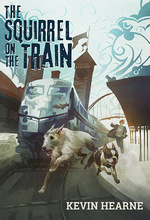
The Squirrel on the Train by Kevin Hearne

The Squirrel on the TrainThe Squirrel on the Train

by Kevin Hearne
Series: Iron Druid Chronicles/Oberon’s Meaty Mysteries, #2

eARC, 120 pg.
Subterranean Press, 2017

Read: November 2, 2017


Can the magic of The Purloined Poodle be recaptured? Yes — maybe even topped. For many, that should be all I need to write. If that’s the case, you’re fine — go ahead and close this, no need to finish this.

If you’re still here, I’ll write a little more — While on a trip to Portland to go sight-seeing, er, sight-smelling, Oberon, Orlaith and Starbuck get away from Atticus (er, I mean, Connor Molloy) while chasing after a suspicious-looking squirrel. That’s a tautology, I realize, if you ask the hounds, but this was a really sketchy-looking squirrel. Anyway, this brought the group into the path of Detective Ibarra. She happens to be at the train station investigating the odd murder of a man who looks just like Atticus.

Naturally, that gets him interested and investigating things as best as he can. Thanks in no small part to the noses of the hounds, Atticus and an old friend are able to uncover what’s going on to help Atticus’ new friend make an arrest.

It’s a whole story in Oberon’s voice, I don’t know what else I can say about the writing/voice/feel of the book. That says pretty much everything. From Oberon’s opening comparison of the diabolical natures of Squirrels vs. Clowns to Orlaith’s judgment that “death by physics” “sounds like justice” to the harrowing adventure at the end of the novella, this is a fine adventure for “the Hounds of the Willamette and their pet Druid!”

There’s a nice tie-in to some of the darker developments in the Iron Druid Chronicles — that won’t matter at all if you haven’t read that far, or if you can’t remember the connection. This was a good sequel that called back to the previous book, and told the same kind of story in a similar way — but didn’t just repeat things. Just like a sequel’s supposed to be, for another tautology. I smiled pretty much the whole time I read it (as far as I could tell, it’s not like I filmed myself). I don’t know if we get a third in this series given the end of the IDC next year. If we do, I’ll be happy — if not, this is a great duology.

Disclaimer: I received this eARC from Subterranean Press via NetGalley in exchange for this post — thanks to both for this.

—–

4 Stars

Moshe Comes to Visit by Tehila Sade Moyal, Fatima Pires (Illustrator)

Moshe Comes to VisitMoshe Comes to Visit

by Tehila Sade Moyal, Fatima Pires (Illustrator)

Kindle Edition, 30 pg.
Simple Story, 2017

Read: November 2, 20017


I feel like saying anything less than positive about this cute little book is the equivalent of kicking a puppy. Which doesn’t mean that this is going to be glowing, it just means that I’m already feeling bad about what I’m going to say.

Martin hears something that scares him in the night — a classic starting point for a kid’s book — and his parents try to help him find the monsters. They turn on the lights, look through his room, etc. This is all well and good so far, until we get the couplet: “In this manner, several nights go by, / With no apparent fear in either parent’s eyes.” Huh? The parent’s aren’t scared? Isn’t that the point? Anyway, Dad gets the idea to write “an agreement with fears.”

This agreement is the key to the book — there’s even a blank Agreement form in the back for the reader’s own use. Sadly, I don’t understand the agreement — and I can’t imagine that I’m the only parent who’d like to try something like this, but can’t figure out exactly what’s supposed to be the point.

We transition from this to Martin’s mother beings scared by something in her bathroom. Great idea — even moms and dads get scared. It turns out that Mom’s scared by a cockroach — a talking ‘roach, I should stress — who Martin befriends. I like, I really like this part of the story. And then to help Mom deal with her fear of Moshe, Martin comes up with an agreement for his mom like the one they came up with earlier for him. I even kind of understood this one.

As soon as it’s accomplished, Moshe leaves and the book’s over. What? I don’t get it. This book is supposed to help kids deal with their fears — and it might, work in the original language,but in English . . . . nope.

Pires’ art was fine. Nothing fantastic, but that’s it. I’d have appreciated a smaller cockroach, but if he can talk, maybe he’s like one of Narnia’s Talking Beasts and has to be larger. I’m not sure. Otherwise, that was fine.

It’s cute, and comes close to working, but just doesn’t. A little editing, a little clarifying, and maybe you have a cute book that helps kids with fears. Right now, it just doesn’t.

Disclaimer: I received a copy of this book from the author in exchange for my honest opinion.

—–

2 1/2 Stars

Page 3 of 4

Powered by WordPress & Theme by Anders Norén