


My 2025 Wrap-up continues and now we’re on to the Non-Fiction list. While I liked a number of works that didn’t make this list, I felt strange calling them a “favorite.” These are the ones that stuck with me through the year; the ones I cited in conversation; that I thought about when reading something else or watching something on TV. Yeah, there’s some overlap between this list and the audiobook list from yesterday—lately, most Non-Fiction books I work through are in audiobook format. So it makes sense, even if it makes this post seem like an echo.
As always, I only put books that I’ve read for the first time on this list. I don’t typically return to NF books (outside of looking up things for one or three points), but occasionally I do—for example, The Pleasures of Reading in an Age of Distraction by Alan Jacobs would get a permanent spot on this list, were it not for this rule.
(in alphabetical order by author)
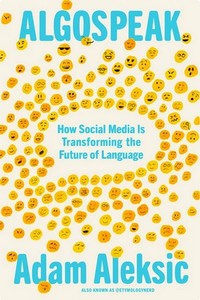 Algospeak:
How Social Media Is Transforming the Future of Language
by Adam Aleksic
My original post
Language in general—but English particularly—is a constantly-changing thing, and these changes are happening faster and faster all the time. Algospeak is a great look at the hows and whys of a lot of the current evolutionary processes. It is about more than language—it’s also about how the Internet changes the way we think and express ourselves in general. And therefore, how society changes (which leads to Internet changes, and other circle-of-life things).
Aleksic has obvious expertise and passion for the subject (look at just one of his videos). He’s also active in these areas. It’s a great read, informative and entertaining. Hard to ask for more.
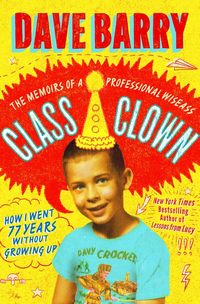 Class Clown: The Memoirs of a Professional Wiseass—How I Went 77 Years Without Growing Up
by Dave Barry
My original post
It comes as no surprise to any that I loved a Dave Barry book. It takes something pretty lackluster by him to get that reaction (and he doesn’t do that often–but I can prove it if you want). But this is something else–it’s insightful, it’s touching, it’s (seemingly) honest, and human. It’s a look at his childhood, his professional humorist origin story, and then scattered accounts of some of the very strange things that his profession has let him do.
I don’t say this about many authors–but I really don’t know that I’ve wondered anything about Barry’s personal life. But now that I know? I am more than happy to get some understanding about it. Does it necessarily help me understand his work better? No (but we’ll see the next time I take up his work, I guess). But it makes me like Barry the person a bit more.
 Food for Thought: Essays and Ruminations
by Alton Brown
Like any good fan of a TV show/personality, I like to know how they got started, how the show was developed, etc. Brown talks about how he got into food education media–and it’s not really how you’d expect. How he moved on from Good Eats to other things. There’s some great stuff about his education. But perhaps the most rewarding portion of the book is his musing and observations on the place of food/eating to human society (writ large or on an individual level).
Really, there’s so little to not appreciate from this book. Alton Brown has spent decades thinking and writing about food. This is the result of all that.
 Enshittification: Why Everything Suddenly Got Worse and What to Do About It
I don’t know how to talk about Doctorow’s screed against Big Tech, the policies that led to these platforms that have taken over the internet and made it less-good than it used to be. Even that sentence is not a great way to talk about the book. The book wowed me. I wouldn’t say it radicalized me on some of this, but I sort of wish it did. The Ressa book below really struck me as a giant proof for Doctorow’s case (good idea to read the two of them around the same time). It’s a great–and terrifying–read.
 Everything Is Tuberculosis: The History and Persistence of Our Deadliest Infection
by John Green
I never imagined I would appreciate a book about an infectious disease. And despite all the good things I heard about this book, I didn’t rush to pick it up. But I’m so glad I did.
First of all, you could probably pick any number of things to use in place of Tuberculosis to trace human history, seemingly at major turning points and shaping societal developments. Say…bread, or writing, or…I dunno this is a sentence I regret starting. But from a certain point of view–you can buy the theory posited at the beginning of this book, that Tuberculosis shaped human history.
Green talks about the treatments that have been tried (and failed), the way it impacted population sizes, the devastation it’s left in it’s wake, and how things are going in the battle against the disease now. Interwoven with these is the story of one particular patient in Sierra Leone that Green met years ago. We follow his personal struggle–ups, downs, way downs, and more.
Green can relate these facts–even the bleak ones–in an engaging way that will stick with the reader. But then he drives it home and makes it gets you emotionally involved through the patient’s story.
You just can’t help but being taken in by the book and it’ll leave a lasting impression.
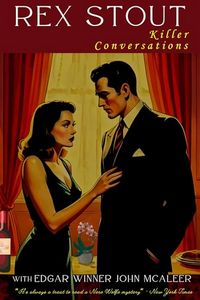 Killer Conversations with Rex Stout and John McAleer
My original post
Granted, there is a very limited audience for this kind of thing. But for that audience (and I’m part of it), this is catnip.
These snippets of conversations between Rex Stout and his biographer and friend are just wonderful. Quick back and forths on any number of topics–life, death, love, reputation, writing, Stout’s characters, his career, and more–it’s fun to read. It’s fun to think about. You’ll wish you were half as clever as Stout.
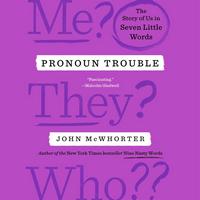 Pronoun Trouble: The Story of Us in Seven Little Words
So, sure–this looks like it’s nothing but a screed on one side or the other about the problem we’re having with third-person pronouns the a socio-political front in English. And, yes, it is about that, (but only from a linguistic point of view), but there’s more to it. There’s also that pesky second-person plural.
Like in his book, Nine Nasty Words, McWhorter gives a quick look at the history of English pronouns one at a time–looking at various forms, usages, spellings, and assorted trivia. When appropriate, the then talks about some of the contemporary challenges and controversies with them.
Completely entertaining–McWhorter’s a great narrator–and very educating. I heartily commend this to you (no matter what you think of using “they” for the third-person singular).
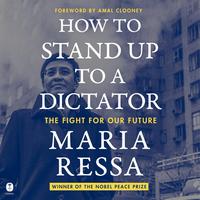 How to Stand Up to a Dictator: The Fight for Our Future
by Maria Ressa, read by Maria Ressa & Rebecca Mozo
Maria Ressa’s story is fascinating. It’s just that simple. I mean, you rarely find a Nobel Peace Prize recipient without an interesting backstory of some sort.
Like I said above, when you add this to Doctorow’s book and you see how everything he said is entirely possible and how it can work against someone.
There’s, of course, more than just Ressa’s story and struggles reflected here. There’s a call to action, a call to do the necessary work, and a call to hope, when it comes to oppressive governments or platforms.
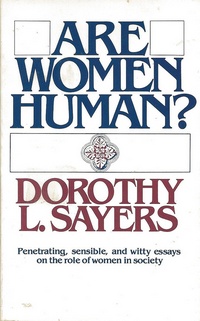 Are Women Human?
by Dorothy L. Sayers
These are two essays by Sayers on the subject of women in society–with a particular look at academia. They are pointed, clear, and witty.
I’m not sure what else to say, really.
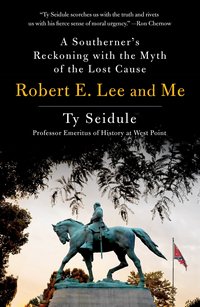 Robert E. Lee and Me:
A Southerner’s Reckoning with the Myth of the Lost Cause
by Ty Seidule
This is a powerful read. This very-Southern, Lost Cause adherent, West Point history professor starts looking at what he’d been raised believing, and the systemic racism of the culture he’d been raised in. The book then recounts example after example after example of the racism everywhere and the excuses made for covering up the treason of the Confederacy everywhere, including the U.S. Army–the army he left and fought against.
I thought Seifert made a compelling case in an engaging read that will stick with you for a long time.

Melissa
There we re several books here that I am very interested – the Robert E. Lee book and the TB book in particular but the Maria Ressa book seems fascinating too! Thanks for sharing!
KWHR
Goodness, I forgot McWhorter published that. Thanks for the reminder so I can read it! Sayers essays are so good. Especially appreciated her highlight of how much the industrial revolution and modernization of many trades removed so many classic occupations that were historically the domain of women and suddenly were considered “unseemly” for them to do.