Author: HCNewton Page 143 of 623

Bea Wolf by Zach Weinersmith, Boulet (Illustrator): A Joy-Filled Retelling for Readers of All Ages

Bea WolfBea Wolf

by Zach Weinersmith, Boulet (Illustrator)

DETAILS:
Publisher: First Second
Publication Date: March 21, 2023
Format: Hardcover
Length: 192
Read Date: November 25, 2023
Buy from Bookshop.org Support Indie Bookstores

Hey, wait!
Listen to the lives of the long-ago kids, the world-fighters,
the parent-unminding kids, the improper, the politeness-proof,
the unbowed bully-crushers,
the bedtime-breakers, the raspberry-blowers,
fighters of fun-killers, fearing nothing, fated for fame.

What’s Bea Wolf About?

In some generic town, there is a treehouse that deserves every accolade you can think of. Treehart has been the headquarters of several of those long-ago kids, where they played, had fun, ate too much candy, etc., etc. Treehart has been ruled by a succession of kings and queens who ruled with generosity until they started to sprout things like facial hair and acne and had to set aside the grown and (ugh) start growing up.

They run afoul of one of the local teachers

Mr. Grindle he was called, for his father was Mr. Grindle
and his mother was Mrs. Grindle, and that is how names work.

With just a touch, Grindle can bring about adolescence—or, even worse, adulthood. He started periodically raiding Treehart, begeezering all he could. And then, he’d clean it.

Ten kids turned teenaged, tired-eyed, ever-texting
eight turned middle-aged, aching, anxious, angry at the Internet.

Nearby, a former king’s cousin has heard of the adultening and sent her fiercest warrior, Bea Wolf, to come and restore frivolity and childhood to Treehart by defeating Grindle. Epic tales are shared, a lot of soda and candy are consumed, and then the two face off in a battle that can only be described as “epic.”

A Bit About the Art

In the Acknowledgements, Boulet said that he really didn’t have time to do the art for this book, but after reading part of the script, he knew he had to. I’m so glad he found—probably made—the time for it. This wouldn’t be nearly as successful without his art.

It’s playful and silly while not turning the whole thing into a joke. There’s pathos, there’s gravity, there’s danger in his drawings. And yet they’re attractive, winsome, and engaging, too. His art is everything the text is and more—yes, I think the book would’ve worked had it only been the text. But…he brings it to life in a way that words alone can’t.

Boulet and Weinersmith are a potent and nigh-perfect match here. I cannot say enough good about this art.

On The Publisher’s page for the book, there’s a link to “Take a Look Inside!” I’d heartily recommend you giving that a glance so you can get a flavor of the look of the book.

About Beowulf

After the tale (at least the first part of the tale) of Bea Wolf, Weinersmith spends a few times talking about what Beowulf is, its history, and the connection between this graphic novel and the source. It even talks about various translations to help a young reader pick one to try.

It’s written in a way that definitely appeals to crusty old guys like me and very likely will appeal to younger readers, too. I’m not kidding, I’ve re-read it just for the jokes.

This essay ends by applying it to the reader:

If you’ve made it this far, all the way to the end of my notes, reading all these words in a book that’s mostly pictures, you must be either a librarian or a future writer. Or maybe both. If you haven’t read the original Beowulf, you may be asking whether you should give it a shot. The answer is yes. It’s scary and it’s not for kids, so you’ll probably really like it. If you’re a speaker of English, it’s the oldest big poem in something resembling your language, and it just happens to be one of the greatest stories ever written.

At one point, late in the original Beowulf poem, a dragon grows angry because a man steals from his golden hoard. Beowulf is part of the golden hoard of our language. Tolkien stole from it for his stories, and you should too. You might summon up a dragon of your own.

I don’t know if this will inspire a future writer or not, but it worked for me.

(yeah, I strayed from my own topic there, but whatever…)

So, what did I think about Bea Wolf?

I had so much fun reading this, from beginning to end. I was able to appreciate it on a few levels—as someone who appreciates cute and clever comic art, cute and clever comic writing, as a cute and comic take on the epic poem, and as a wonderful and romantic vision of childhood (and a vision of adulthood that hits pretty close to home a little too often). There are probably more levels I enjoyed it on, but that’ll work for a starter.

The poetry itself was dynamite. Weinersmith did a fantastic job of capturing the flavor and spirit of the original and adapting it to a Middle-Grade level (while keeping it engaging for older readers).

I honestly don’t know who the market is for this—sure, it’s supposed to be for Children—but I wonder how many will be intrigued by the idea of it (hopefully, they will be prompted by clever adults/peers). On the other hand, I can’t be the only fan of the original from High School/College/after those who finds the notion of this appealing. Thankfully, I do think both audiences will be pleased with the results and the time they spent with it.

There’s at least one more book chronicling Bea’s adventures. I cannot wait to see her deal with Grindle’s mother.

I don’t know if I’m doing a decent job of praising this—but I think you get the gist. Do yourself, your inner child, and possibly your children a favor and run out to pick this up. You’ll be glad you did.


4 1/2 Stars

This post contains an affiliate link. If you purchase from it, I will get a small commission at no additional cost to you. As always, the opinions expressed are my own.
Irresponsible Reader Pilcrow Icon

WWW Wednesday, December 6, 2023

I can’t think of anything to blather on about today, so we might was well get right to the point:

This meme was formerly hosted by MizB at A Daily Rhythm and revived on Taking on a World of Words—and shown to me by Aurore-Anne-Chehoke at Diary-of-a-black-city-girl.

The Three Ws are:

What are you currently reading?
What did you recently finish reading?
What do you think you’ll read next?

Easy enough, right?

What are you currently reading?

I’m reading The Last Dance by Mark Billingham, my first, but not last book by Billingham. I’m listening to the short story collection, Give the People What They Want and Other Stories of Sharp Wit, Cunning Women, and Wild Magic by Alex Bledsoe, narrated by Stefan Rudnicki, with Alex Bledsoe and Gabrielle de Cuir on audiobook.

The Last DanceBlank Space

What did you recently finish reading?

I just finished Lee Child and Andrew Child’s The Secret, the last Reacher novel I’ll read for a while. The last audiobook I listened to was The Ghosts of Sherwood by Carrie Vaughn, Angele Masters (Narrator) on audio, a quick blast of fun.

The SecretBlank SpaceThe Ghosts of Sherwood

What do you think you’ll read next?

My next book should be Alexandra Petri’s US History: Important American Documents (I Made Up) by Alexandra Petri , because I need a dose of humor after some of the dark stuff I’ve been reading lately (also, I was next on my library’s list), and my next audiobook should be Imaginary Numbers by Seanan McGuire, Emily Bauer (Narrator).

Alexandra Petri's US HistoryBlank SpaceImaginary Numbers

Are you reading/listening to something good?

The Secret by Lee Child and Andrew Child: Time for Me to Slip out the Back (away from) Jack

The SecretThe Secret

by Lee Child, Andrew Child (Narrator)

DETAILS:
Series: Jack Reacher, #28
Publisher: Delacorte Press
Publication Date: October 24, 2023
Format: Hardcover
Length: 292 pg.
Read Date: December 2-4, 2023
Buy from Bookshop.org Support Indie Bookstores

What’s The Secret About?

It’s 1992 and Capt. Jack Reacher has been assigned to a task force organized by the Secretary of Defense. He’s the U.S. Army Representative, and there’s someone from the CIA, the FBI, and the Treasury Department. They’ve been brought together to investigate a series of possible murders of scientists from around the country—although there’s the possibility they’re freak accidents or suicides, too.

In the 60s these men were part of a secret project that was abandoned after an accident caused some civilian deaths. But now it appears that someone has found their names and is working their way down a list. Can Reacher and the task force find the killer in time? What’s the purpose of killing them now?

So, what did I think about The Secret?

If this were a thriller about any other character and had someone else’s name on the cover, I might have said it was enjoyable enough.

But it’s about Jack Reacher and Lee Child’s name is on the cover (even if it’s pretty well established that Andrew is doing most of the writing), so there are certain standards that have to be met. The Secret falls far short of them.

I could go on a prolonged screed listing my problems with the book—but I’m going to skip it. Those problems range from minor (there’s no way that a 1992 version—or a 2023 version—of Reacher is going to say “pearl clutching”) to major (there’s no reason for the big multiple attackers vs. Reacher fight in the middle other than it’s been a hundred pages since Reacher’s done anything violent, and that time was pretty quick and undramatic). I’d also say I was disappointed by the use of the rest of the task force, which was subpar at best, the big reveal at the end was lazy, and the concluding chapters were a letdown from the mediocre pages before it.

But for me, it boils down to this—that guy walking around in a uniform wasn’t Jack Reacher. He was a decent Generic Thriller hero who could possibly develop into a character worthy of a series. And that’s a fatal flaw.

The Secret wasn’t terrible, but it wasn’t good, either. Reacher deserves better from his creator—and from anyone hired to carry on the character, and he’s not getting it. I’ve tried (and some of my readers have told me I shouldn’t) to give this new arrangement time to develop into something worthwhile, but I think my experiment is over. I’m going to move on to other thriller series now—I may check in with what the Child brothers are doing in a couple of years, but if I’m going to keep a positive regard for Jack Reacher, I’m going to have to focus on my memories (and whatever Alan Ritchson is doing on the show).


2 1/2 Stars

This post contains an affiliate link. If you purchase from it, I will get a small commission at no additional cost to you. As always, the opinions expressed are my own.
Irresponsible Reader Pilcrow Icon

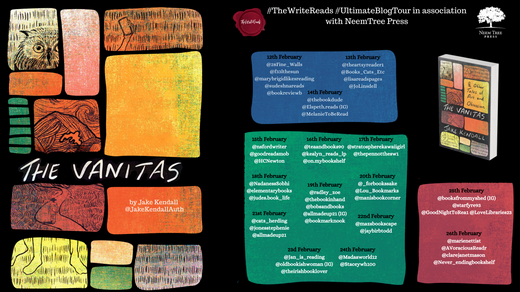
BOOK SPOTLIGHT: The Haunting Scent of Poppies by Victoria Williamson

I’m very pleased today to welcome The Write Reads Ultimate Blog Tour for Victoria Williamson’s The Haunting Scent of Poppies! A handful of bloggers have already been talking about it on the tour, and a few more are coming–go check out https://twitter.com/WriteReadsTours to see a what those who’ve read it have had to say. But in the meantime, let me tell you about the book.

The Haunting Scent of Poppies Tour Banner

Book Details:

Genre: Historical Fiction/YA/Horror
Publisher: Silver Thistle Press
Format: Paperback/Ebook
Length: 59 pages
Publication Date: December 1, 2023
The Haunting Scent of Poppies Cover

About the Book:

A spine-chilling winter ghost story set in the months after the Great War. Perfect for lovers of MR James and Susan Hill

The War is over, but for petty criminal Charlie his darkest days are only just beginning.

Charlie Briggs is never off-duty, even when a botched job means he’s forced to lay low in a sleepy Hampshire town for the holiday season. Always searching for his next unwitting victim, or a shiny trinket he can pilfer, he can’t believe his luck when he happens upon a rare book so valuable it will set him up for life. All he needs to do is sit tight until Boxing Day. But there’s a desperate story that bleeds beyond the pages; something far more dangerous than London’s mobsters is lurking in the shadows.

Could the book be cursed? Why is he haunted by the horrors of war? Can he put things right before he’s suffocated by his own greed?

Book Links:

Amazon UK ~ Amazon ~ Goodreads

About the Author:

Victoria WilliamsonVictoria Williamson is an award-winning author who grew up in Scotland surrounded by hills, books, and an historical farm estate which inspired many of her early adventure stories and spooky tales. After studying Physics at the University of Glasgow, she set out on her own real-life adventures, which included teaching maths and science in Cameroon, training teachers in Malawi, teaching English in China and working with children with additional support needs in the UK. Victoria currently works part time writing KS2 books for the education company Twinkl and spends the rest of her time writing novels, and visiting schools, libraries and literary festivals to give author talks and run creative writing workshops.

Victoria’s previous novels include The Fox Girl and the White Gazelle, The Boy with the Butterfly Mind, Hag Storm, and War of the Wind. She has won the Bolton Children’s Fiction Award 2020/2021, The YA-aldi Glasgow Secondary School Libraries Book Award 2023, and has been shortlisted for the Week Junior Book Awards 2023, The Leeds Book Awards 2023, the Red Book Award 2023, the James Reckitt Hull Book Awards 2021, The Trinity School Book Awards 2021, and longlisted for the ABA South Coast Book Awards 2023, the Waterstones Children’s Book Prize 2020, and the Branford Boase Award 2019.

Her latest novel, The Pawnshop of Stolen Dreams, is a middle grade fantasy inspired by classic folklore. Twenty percent of the author royalties for this book are donated to CharChar Literacy, an organisation working to improve children’s literacy levels in Malawi.

You can find out more about Victoria’s books, school visits and free resources for schools on her website: www.strangelymagical.com.

Author Links:

Website ~ Twitter


My thanks to The Write Reads for the invitation to participate in this tour and the materials they provided.

A Few Quick Questions With…Amy Maren Rice

Earlier today, I had a few things to say about the very entertaining debut novel from Amy Maren Rice, Fuzzwiggs: The Switcheroo, and this summer she participated in a Q&A about writing in Idaho with me. Since I met her earlier this year at the Nampa Library’s local author event, I’ve run into her at a couple of other events in the area. Getting to know her a little bit these last few months is a highlight of the year, I hope you enjoy the the As she provides to me Qs below (as well as the previous batch).


Beverly Cleary and Toni Morrison have both said things like, “write the book you want to read.” The last time we did a Q&A, you suggested you wrote the book you wanted your kids to read. Talk about that thinking process a bit, if you could. How long did it take to get from that decision to having Fuzzwiggs: The Switcheroo in your hands? Were there some abandoned books along the way?
A long, long time! I started daydreaming about writing Fuzzwiggs: The Switcheroo almost ten years ago. I’d always wanted to write a book but never felt confident enough in myself to pursue it. The push to write came when my boys (about 9 and 11 at the time) and I had difficulty finding books for their reading levels that were also age appropriate and fun. Something sparked inside me, and I finally felt like I could do it.

Once my brain got the go-ahead I was addicted. I started by jotting down the flood of ideas floating around in my head. Often, my favorites came from exhaustion; when I was too tired to think straight but still had parenting duties that demanded my consciousness. The words began to flow, and I didn’t want to stop. There were some casualties along the way (my kids were fine I swear) but ideas were begrudgingly cut as I found my voice and style.

I had a few goals in mind as I wrote. I wanted to challenge my kids’ vocabulary a bit, but not swamp them with it, so I sprinkled a few less commonly used words in there, like eccentricities and melodious, to get their brains whirring. I purposely made the chapters short, some as brief as two pages, each one a small scene to keep their attention. And I made the two main characters relatable to them. I don’t remember where I heard it, but I’ve always liked the saying, “Because I have a brother, I’ll always have a friend.” The plan was to teach the brothers in my story to value each other’s differences and embrace their built-in friendship. I hoped my boys would see the lesson in that.

I was only ever focused on writing one book. There wasn’t room in my brain for more as I was also currently also keeping myself and three small humans alive.

Students at Hogwarts have just the right pronunciation (“It’s Leviosa, Not Leviosaaa”), Samantha Stephens twitches her nose, and your Fuzzwiggs—ahem, pass gas (I whisper, so my older relatives don’t get the vapors). Where did that choice come from? You mentioned you wrote the book with your pre-teen sons in mind, so I’m sure that played a significant role. But can you remember what led up to that?
At the time, my life was my three young boys. Little boy humor, as you may know, is very … unique. There was never a fart that wasn’t funny, so naturally I had to incorporate that. As this was to be a book for “family eyes only”, it never occurred to me to consider the consequences of having to utter the phrase, “my characters have fart powers” in public, but here we are.
That got an audible laugh from me. 🙂

Were you drawing on particular myths or stories when you came up with the tree and the guardians? (I can’t remember the proper name for either, sorry, feel free to edit/correct me) It feels a little Norse myth-with a twist to me. Or am I off-base there? )
You may find this hard to believe but I was just making it up as I went along! It’s very cool that you get that Norse myth-with a twist vibe, I do have Germanic heritage…ha!

For me, trees have always symbolized life and family. Growing up, my own family was big into genealogy, which is often represented with a tree, the branches stretching out into each family line. I often imagined the roots as nourishing and nurturing, tethering us to our ancestors who watch over us and support us. I think it was because of this sense of family and ancestry that I chose the tree as the home of my portals and the family as guardians.

I love how even the baby gets in on the action (at least to a degree). Is this a reaction on your part to the way that younger siblings/parents are frequently pushed to the side for stories with this age group—or was it more of a “it just seemed fun” kind of thing?
It does seem like parents and siblings are often forgotten about or mentioned only briefly, but I’m always looking for things to be resolved. Who’s watching the baby? Where are the parents? For my story, I wanted there to be a feeling of family. Even though the family is struggling emotionally with a loss and the boys are having difficulty getting along, I tried to show them as being together and being there for each other—even the baby, who provides a source of joy for them in a time of sorrow and transition.

Who are some of the bigger influences you have in your writing—whether or not readers can see them, you know they’re there?
One Christmas (back in my teen years) I received a hardback copy of The Belgariad (books 1-3) by David Eddings. I couldn’t put it down and, consequently, was very sleep deprived that December. I became hooked on epic fantasy and soon discovered Robert Jordan— who introduced me to Trollocs (eek) and the one power, and R.A. Salvator—whose character Drizzit Do’Urden captured my heart in his Dark Elf Trilogy. Later in life, after I became a mother, I found Brandon Mull and Tyler Whitesides who inspired me to write a fantasy book for the younger generation of readers, one I would love for my own kids to experience.

How’s the reception to Fuzzwiggs: The Switcheroo been? What kind of surprises have you encountered?
it’s been an interesting year for sure. When I started writing, I hoped that I would be brave enough to put it out into the world but was never sure it would happen. When I finally took the leap, it was both exhilarating and terrifying. I’m surprised every time someone has something nice to say about it. The little girl who stopped by my table to tell me about her favorite parts in the book, the lady who shouted across the room as she entered, “I came just to see you!”, and the young man who asked me (very politely) to “hurry up and finish book two” …those where huge surprises. I’ll always have those memories to build me up through life and I’m grateful to have met all of those people.

I’ve had my moments where my anxiety gets the better of me, but my growth has been a surprise too. Every time I’m able to attend a book event and talk to strangers about fart powers is a good day. My hope is that by sharing my anxiety struggles I will be an example of pushing through, working to overcome, and allowing myself to be vulnerable— especially to my sons.

How’s the process in working on your second book compared to the first?
Wow, what a different experience! This is my first “second book” and it’s been interesting to see how I respond to challenges as I write it. I can’t just go back and change the first book to match where my imagination wants to go, so there’s a lot of compromising going on in my brain. Lots of ideas in the save for later pile but also lots of new ideas competing for attention. I’m enjoying the creativity and challenge of it.

It’s also very surreal. I wrote a book. I’m writing a second book. How’s that for dreams coming true!

What’s next for Amy Maren Rice, author?
I find that if I imagine too far ahead, I don’t finish what I’m currently working on. I see all the sparkly things and want to explore them all and can become blind to the carnage of forgotten ideas and projects left in my path. I do know that this will be a six-book series, which I’m looking forward to writing, and currently I’m just basking in the glow of having done something way out of my comfort zone and not perished.

Thanks for your time—and thanks for Fuzzwiggs: The Switcheroo—I’m eager to see what’s next for this family.


A Few Quick Questions

Fuzzwiggs: The Switcheroo by Amy Maren Rice: A Silly (and Odorous) MG Adventure Sure to Please

I’ve got a Q&A with the author, Amy Maren Rice, coming up this afternoon, come back and give it a read, will you?


Fuzzwiggs: The SwitcherooFuzzwiggs:
The Switcheroo

by Amy Maren Rice

DETAILS:
Series: Fuzzwigs, #1
Publisher: Covenant Books
Publication Date: July 14, 2022
Format: Paperback
Length: 294 pg.
Read Date: August 31-September 2, 2023
Buy from Bookshop.org Support Indie Bookstores

A Brief Introduction/Disclaimer

When I type (and when I read), I always insert an “i” between the “z”s and the “w”. I don’t know why, it just got into the back of my head that way. I believe I caught them all in proofreading, but I may not have.

Apologies in advance. Also, next time she comes up with a race of extra-dimensional characters, I hope Rice consults with me about the vowels she should use.


…the bowl shifted.

Slowly the crimson crockery began to rise. Twig like fingers curled around the edge. A pair of furry arms followed and then came two frightened golden eyes that blinked rapidly at them. A triangular face with a soft puppylike nose was next. It twitched as a strand of pasta slid off it to the floor. Oversized tufted ears slowly unfolded as the creature spoke…

“Please, we are needing your help.” It repeated, its eyes large and pleading like a puppy begging for a treat.

Jasper rubbed his own eyes in disbelief. “W-w-w…” he stuttered. He licked his lips he tried again. “What are you?”

“We are being the Fuzzwiggs,” the creature replied.

“Whose [sic] ‘we’ and what are, uh, those?” Milo asked, brushing the lettuce from his hair.

The animal made a gesture with his long fingers and several other big-eyed furry creatures shuffled forward, filling the room. They came from behind doors and under furniture. One was even inside a kitchen cabinet. Their rabbit like feet stepped carefully around the food-splattered floor…

What’s Fuzzwiggs: The Switcheroo About?

I’ll try to keep this brief…but no promises.

When we meet them, Jasper (12) and his brother, Milo (10), are moving to a new home. Their father died in a plane crash, and their mother can’t support the family as things are. So they, their mother (Emily) and baby brother (Wyatt) are going to live in tiny little town in Idaho to live with their grandfather and aunt. The brothers really don’t know their family well, but the house their father grew up in is large enough for them and the change will be good for the family (or so Emily hopes).

When they arrive, no one is home. They didn’t expect their grandfather to be there—he travels a lot and doesn’t do a great job of keeping the family updated on his location. But their Aunt Delilah should’ve been there. In her place is a note welcoming them to the house, telling them to choose their own rooms, make themselves comfortable, and to do a few specific things—follow some rules and do some chores. Some of the chores and rules are odd, but whatever.

The house is large and wonderful—the boys really want to go exploring some of the strangeness, but their mother makes them focus on unpacking and whatnot. Perhaps the strangest thing about the house is that there is a large, old tree in the center of it—words like “mega” and “ancient” are used by the boys to describe it. Their dad used to joke about being raised in a tree house. Now they get it. Sort of.

What the family is going to learn, is that the Great Tree is a vitally important object beyond their comprehension. It’s guarded (in part) by some strange and magical creatures called the Fuzzwigs. The odd thing about these creatures (well, one of the odd things) is that their magic comes from their flatulence.

But before they learn that, as is expected in stories where people are given oddly specific instructions and warnings—Emily and the kids don’t really heed them as they should. The consequences of that are going to bring a lot of trouble—and the Fuzzwigs—into their lives.

Fuzzwiggs

This is going to be the crux of the book for (at least) most readers—what do you think of these creatures? Even the Middle-Grade readers of this book are going to be familiar with a lot of the things in the novel—the bickering brothers, the family tragedy that makes them move, the mysterious extended family members they have to rely on, the strange thing in the new house that comes with a lot of rules, etc. And sure, silly intelligent (or at least sentient and capable of communication) creatures will be familiar, too—but the Fuzzwiggs are what’s going to draw the attention and keep it or lose it.

For this reader, they kept it. It helps once you get to the point you can see beyond the obvious comedy and get to something deeper (not much deeper, it’s not that kind of book)—I don’t know how much the target audience will respond to that, probably more than I reflexively give them credit for. Also, this will be easier to talk about when we get to Book 2 in the series and I can talk about some of these deeper ideas without spoiling things.

I think the easiest comparison I can make to help one of my readers to understand the Fuzzwiggs is the lemurs from Madagascar movies and the spin-off movies/show. They have a similar kind of manic energy and attitudes. As I make that comparison, I realize that the humor that comes from them reminds me of DreamWorks Animation movies in general.

We might as well segue to:

The Humor

Yes, it’s largely juvenile. So what? The book is directed at people who are juveniles. Can adults appreciate it? Yes, but only if they are willing to find humor in bodily functions and whatnot.

I think of it similarly to that line of C.S. Lewis’ about Fairy Tales, about one day being old enough to start reading them again. Or, “When I became a man I put away childish things, including the fear of childishness and the desire to be very grown up.” Human bodies are silly things that can make gross noises—at a certain age, we pretend it’s not amusing, and at a more advanced age we can chuckle at it again. Sure, I might not find the sounds and this book as amusing as a ten-year-old will…but I’m okay with that. Actually, I’m a little jealous.

So, to get back to the DreamWorks Animation idea—if Shrek and its counterparts are too juvenile for you—skip this book. And give it to someone who will enjoy the humor.

There is one character in particular I’d love to talk about on the comedy front, but it would spoil too much. Let’s just say that there’s a Hollywood hopeful in these pages that deserves a spin-off novella.

So, what did I think about Fuzzwiggs: The Switcheroo?

I really enjoyed the way that the whole family got involved—at least in some way—with the story. It’d have been very easy for Rice to focus on Jasper and Milo—or the boys and their aunt. But Rice got their baby brother rather involved in the story to great effect—Wyatt’s antics elicit some good chuckles and also brought some sweetness into things. I also appreciated the way their Mom was handled—we get a little from Emily’s perspective, we understand how everything we see here is difficult for her and yet she knows it’s best, and so on. And then she’s largely sidelined because this is a MG book and it’s a rule. Or, to put it less cynically, otherwise, the boys couldn’t get into adventures. But it’s a comical sidelining that Rice used well.

The adventure story itself is exactly what you want in this kind of story—there’s a great trek through the wilderness, hazards from within and without, some villains that really don’t realize what they’ve gotten themselves into (they’re both rotten and comical, a great combination for this kind of book), and some great battles (or scenes that are battle-ish and I don’t know how else to characterize them) and some nice story resolutions with hidden life lessons in them. It’s a good balance between comedy and adventure that I’d imagine would appeal to a broad range of middle-grade readers.

I had a few quibbles with the book and feel like I should mention them. There’s a museum in town that was established before Lewis and Clark stumbled through the area. I assume that was an editorial slip, or there’s going to be a great explanation eventually given for that. I do wonder if some of the descriptions of the magic/abilities of some of the creatures could’ve been explained a little better. Some (all?) of the scenes that cut away to things not directly involving the main events of this book were really hard to follow, yes, they’re establishing the world for this series and setting up future books. But I think a little more finesse would’ve helped a lot here. Neither of these are fatal flaws, and I anticipate that Rice will do this kind of thing better as she writes more. But they dampen my enthusiasm a bit.

Just a bit, though. I had a ball with this book and I think my readers would enjoy it—and the kids in their lives would enjoy it even more. I’m eager to see where Rice takes this series and I really want to see the scenes that follow the Epilogue. I imagine most readers will be with me there.

Pick this up—I think you’ll be happy you did.


3.5 Stars

This post contains an affiliate link. If you purchase from it, I will get a small commission at no additional cost to you. As always, the opinions expressed are my own.
Literary Locals logo

MUSIC MONDAY: Call It What You Will by Joe Pug

Music Monday
Music Monday’s originated at The Tattooed Book Geek‘s fantastic blog and has shown up here and there since then.
1. Sure, it would’ve been more apropos to post this song yesterday, but then it wouldn’t be Monday, right?

  1. Yes, he mispronounces “Spokane.” Yes, it drives me bonkers. The rest of the lines make up for it.

The Irresponsible Reader Metallica Logo

Robert B. Parker’s Broken Trust by Mike Lupica: Lupica Earns Some Trust from This Longtime Spenser Fan

Robert B. Parker's Broken TrustRobert B. Parker’s Broken Trust

by Mike Lupica

DETAILS:
Series: Spenser, #51
Publisher: G.P. Putnam's Sons
Publication Date: November 28, 2023
Format: Hardcover
Length: 382 pg.
Read Date: November 30-December 2, 2023
Buy from Bookshop.org Support Indie Bookstores

We sat there in silence for a few moments, as if each of us were waiting for the other to make the next move. It often went this way with potential clients, like an awkward first date, and just how much they wanted to drop their guard.

“So how can I help you, Mrs. Crain?”

“Please. Laura.”

“So how can I help you, Laura.”

Her blue eyes were so pale as to be as clear as glass.

“That’s the thing,” she said. “You probably can’t.”

What’s Broken Trust About?

From that promising start, Laura Crain—the wife of the US’s 6th richest man—asks Spenser to help. Her husband has been acting strangely, and neither Laura nor his business partner can understand why. Their company is on the verge of completing a merger that will make them richer yet and will secure the company’s place in the electric car market.

The richer part isn’t that important—outside of the increasing opportunities for the very philanthropic couple to give even more money to causes. But strengthening the company to keep doing what it’s been doing is important to the Crains—they’re committed to this kind of environmentally friendly industry.

Spenser has a hard time starting his investigation because it’s such a vague target—maybe he can’t help her after all, but something about Laura Crain makes him want to try. He’s (reportedly, although some downplay this) almost paranoid, having outbursts—one nearly violent one is witnessed by Spenser—and his volatility puts many things at risk.

Then someone tied to the company is murdered. Spenser is threatened. Not long after that, someone else dies, too (probably another murder, even if it’s initially unclear). And now Spenser has a bigger mess to look into, assuming he can keep everyone else connected to the case safe and the target off his back.

The Obligatory Street-Cred Establishment

Each time a new author takes the reins of a Parker series, their first book is full of them establishing their bona fides when it comes to the series. They have to show that they understand the protagonist, the supporting characters, and the history of the series through references to past cases, quick/extended appearances of various supporting characters, etc. And Lupica goes above and beyond with these—almost all of them feeling like they were apropos in the moment, thankfully. I started to keep a mental list of his efforts, then I switched to writing them down when the list got long enough—then I abandoned it because I had better things to pay attention to and it was getting too long to print here.

The punchline? The dude knows his stuff and can show it off.

He even brings in a connection to Gino Fish. Given how long Gino’s been dead, that was nice. And, as difficult as it might be to justify returning to that connection, I’d enjoy Lupica finding a way to do it. I really enjoyed that particular character.

Now, I didn’t think that Sunny Randall’s quick appearance was necessary—nor do I think Richie Burke added much. But I liked how the latter was used (which may contradict what I just said about him), and it was a clever thing to do.

Martin Quirk

Martin Quirk gets a couple of good scenes here and his presence is felt outside of them, too—Belson brings him up a few times, which helps—but Quirk casts enough of a shadow it wasn’t that necessary. Part of that is due to the whole cred establishment, but not all of it, I don’t think. It also fits pretty well with this book—and you’d expect someone with his rank to be getting involved given the prominence of the people involved in these murders.

Beyond that, however, if Lupica wasn’t planting seeds for something major on the Quirk-front in the next book or two, then he faked me out pretty well. I hope he didn’t because I’m pretty curious about it—we haven’t gotten a lot of good Quirk material in a long time (since he got Spenser out of that southern jail cell back in the 90s, maybe?).

Mike Lupica

And what’s going on with Quirk is just one of the moves Lupica is making to put his own stamp on this series. And that’s one of the things I really appreciate about both the Publisher/the Estate’s handling of these authors taking over—they allow them to make changes to the characters. I’d absolutely understand if they had to keep the characters in some sort of stasis from how Parker had left them, like an ’80s TV drama or something.

I’m holding off forming an impression about what Lupica is doing with some of the characters at this point, I need to see it worked out a little more. But I do appreciate him taking ownership and making the moves.

I’ll be frank—I thought he did okay with the Sunny Randall books (the series I have the least attachment to, so I didn’t care too much how he did), and while I thought he was a step down from Coleman, he’s doing okay with the Jesse Stone books. But giving him the keys to the Ferrari of Parker’s series? That seemed like a dangerous move.

However, I think of all his Parker-verse work, this was the strongest. He rose to the occasion, and I’m greatly relieved. I hope he can continue it.

So, what did I think about Broken Trust?

He looked around. “We looking fo anything in particular?” Hawk said.

“What we’re always looking for,” I said. “Something that will make us feel smart when we find it.”

“Could be here awhile,” he said.

One of my favorite parts about almost every Spenser novel is the initial conversation between Spenser and the client. Lupica nailed it, I thought. After that strong start, things kept rolling at or near that level for just about the rest of the book.

It wasn’t perfect, by any means, but it was quite good. For example, some of the Hawk-Spenser banter is a little jokier than usual—Hawk, in particular, seems a little looser as he teases Spenser over a handful of things. It’s subtle, but it’s there. I enjoyed it—maybe too much—but I think Lupica could dial back Hawk a notch or two.

To be a little more pointed: the last page (or so) of Chapter Eighty-Three, all of Chapter Eighty-Four, and the last half of Chapter Eighty-Five (which, sadly is the last half chapter of the book) were let-downs. If you took the first half of Eighty-Five and put it earlier and made Eighty-Tree/the novel end with the conversation in Spenser’s office, I’d have been more satisfied. I can’t remember when I’ve been so specific about this kind of thing (not a habit I’m inclined to get into, either)—but that probably says how much it rankled me. I probably would’ve given the book another half-star (at least) without these pages.

Lupica did a good job with Susan—a character that can frequently be divisive, but he dealt with her well (and the conversations with her about the case didn’t drag the book down). Other than Hawk’s teasing, I thought he did a great job with Hawk and the other returning characters*.

* He did brush off one of the more tantalizing things that Atkins left for him regarding Hawk in less than a sentence, however. I think that was a mistake, but I get it, too.

As for Spenser himself? I give Lupica high marks—both for keeping Spenser vulnerable, fallible, and human while seemingly superhuman at times. There’s a point where Spenser wonders if he’s invented a red herring for himself on one line of inquiry, which was a nice touch. Spenser takes probably the least likely punch he’s received in the series to date—and I believed it (and quite enjoyed the fallout). Basically, he treated the character with the respect due, and I suspect that comes from a fellow fan’s heart.

I really liked the case—and the turns it took. I do wonder if Lupica wrote himself into a little corner and had to use a deus ex machina to get him out of it in the latter chapters. It worked well enough that I’m not complaining—nor am I wholly convinced that’s what happened. It just seems like one (which is bad enough). But the layers to the case, the motives of the potential suspects, how everything played out in the end, and the secrets that came to light (and how they came to light) were really well handled and worthy of Parker at his best.

Color me satisfied with this one, and my trust in Lupica strengthened. I think this would be a decent jumping-on point for someone curious about the character—or the idea of an aging PI still plugging away at things. Check this one out.


4 Stars

This post contains an affiliate link. If you purchase from it, I will get a small commission at no additional cost to you. As always, the opinions expressed are my own.
Irresponsible Reader Pilcrow Icon

The Holy Spirit: An Introduction by Fred Sanders: A Vital and Needed Work

The Holy Spirit: An IntroductionThe Holy Spirit:
An Introduction

by Fred Sanders

DETAILS:
Series: Short Studies in Systematic Theology
Publisher: Crossway
Publication Date: October 3, 2023
Format: Paperback
Length: 157 pg. 
Read Date: October 15-November 12, 2023

This book introduces Christians to the Holy Spirit, which is a cheeky thing to do.

By definition, every Christian must already know the Holy Spirit in the most important way, since “anyone who does not have the Spirit of Christ does not belong to him” (Rom. 8:9). So to publish a book for Christian readers under the title The Holy Spirit: An Introduction is to take on a peculiar project: introducing readers to somebody they already know. That is exactly what this book does. It presupposes that its readers are already engaged with the reality of the Holy Spirit and invites them to a theological encounter with that person.

What’s The Holy Spirit: An Introduction About?

It’s kind of summarized there in that last sentence: it’s an introductory work on the theology of the Holy Spirit assuming that the reader knows Him already, but needs to understand Him, His identity, and His work more fully.

As it’s an Introduction (like all the books in this series), and therefore accessible which is nice—but it does a thorough job of talking about things like the Doctrine of the Trinity and how it is informed by and informs our Theology of the Spirit.

Sanders’ Approach

Rather than try to paraphrase or summarize Sanders, let me just let him describe the design of the book:

But my approach in this book is, as I said above, indirect, which is why I began by highlighting the paradoxical character of studying the Holy Spirit. I hope to treat the paradoxical character of pneumatology not as a hindrance to be lamented but as a help to be cherished. If knowledge of the Holy Spirit is, in the ways described above, deflective, reflexive, and connective, then an introduction to the Holy Spirit might deliver a great deal of insight by arranging itself in a corresponding way. Think of the implications that follow from the work of the Spirit being deflective, reflexive, and connective. Deflective means that when you try to think about the Spirit, you find the Spirit himself changing the subject to the Father and the Son. Reflexive means that when you try to think about the Spirit, you find the Spirit himself requiring you to think about yourself and about thinking. Connective means that when you try to think about the Spirit, the Spirit himself draws you out into the full scope of all theology. But these things are all beneficial! To study the Holy Spirit according to his own characteristic way of working means to be personally engaged in a total Trinitarian encounter with the truth of God, We will engage the deflective character of pneumatology.

Many books about Him focus on things like how the Spirit acts in the world today, the gifts of the Spirit—what that phrase means and how one obtains them—the role of Pentecost and how it can/if it can be duplicated today, and so on. Sanders eschews that—focusing on more primary issues (which isn’t to say he doesn’t get into some of that). He starts looking at the Trinity, then he considers the Spirit in relation to the Father—and how by doing so we can gain a better understanding of them both. Then he moves on to the Spirit in relation to the Son—how that’s similar and how that relationship is different than the previous. The final chapter considers the Spirit Himself—yes, addressing some of the same information, but from a different angle.

Bonus Material

As with many (sadly, not all) of this series, this comes with a nifty-looking Further Reading list—one I fully intend to use.

But the additional material I want to talk about is the Appendix, “Rules for Thinking Well about the Holy Spirit.” These are 27 brief rules that so usefully summarize the material in the book—and related ideas—for believers to bear in mind as we read Scripture or theology while working through doctrines/ideas about the Spirit. These rules are the kind of thing that students would do well to pin a copy of onto their wall/somewhere in easy reach.

So, what did I think about The Holy Spirit: An Introduction?

The Holy Spirit makes himself known to us in a way that is better than we could have expected or imagined for ourselves. He is the prevenient person, always already at work, never Father-free or Sonless in his being or in his work, closer to us than our own breath, and making known to us in the depths of our selves the deep things of God.

This is definitely one of my top 3 books in this series—possibly the best thing in it so far.

Sanders’s tone is certainly engaging—he never loses sight of the importance of what he’s talking about, and the necessary reverence. But he’s okay with being chatty and a little witty with the reader. He’s able to break down some complicated and technical points in a way that the reader can find them understandable and compelling.

I really appreciated his approach—both in the way he focused on what he chose to and those things he didn’t seem that interested in writing about. I’m sure others would disagree with me, but it looks like he majored on the major issues and didn’t bother with the minor ones.

I’m not sure that this will supplant Ferguson’s The Holy Spirit in my own use and reference when it comes to pneumatology—but I can’t see me looking into Ferguson’s without looking into this next.

Get your hands on it, and be introduced to Someone you’re already close to.


4 1/2 Stars

Irresponsible Reader Pilcrow Icon

Saturday Miscellany—12/2/23

You would not believe how many times I’ve tried to get this posted today…I barely do, and I was there for all of them. But, life has interfered (as it so often does). But it’s still Saturday, so I can live with it (the two posts I also planned on scheduling today, on the other hand are going to wait a week or more for attention).

But you didn’t come here for my whinging. You came here for this:

Odds ‘n ends about books and reading that caught my eye this week. You’ve probably seen some/most/all of them, but just in case:
bullet Wisconsin libraries would have to notify parents about the books their kids check out under GOP proposal—I’m not fond of this, but I’m not sure it’s horrible. The other bill talked about in this story, on the other hand…
bullet When Your Own Book Gets Caught Up in the Censorship Wars—a little BTS action
bullet This Is Your Brain on Books
bullet The big idea: should we abolish literary genres?
bullet Webtoons and Webcomics Keep Scrolling into Print
bullet Do You Believe in Magic? On The Timeless Charm of Children’s Books 
bullet It’s getting to be that time of year, isn’t it? Libro.fm’s Top 10 Audiobooks of 2023
bullet S.A. Cosby lists His favorite books of the year—have read a couple of these and have several others sitting on a stack in my office, glaring at me
bullet And looking in the other direction, FFA’s Most Anticipated Reads of 2024
bullet Scaring Myself: The Story Behind How & Why I Wrote CALICO…—Lee Goldberg talks about the background to his latest novel (that I will write about ASAP, but you should read)
bullet The Case for Never Reading the Book Jacket—I thought this was interesting and had planned on putting it here in the first place, and then:
bullet Molly Templeton responded with What Do You Want to Know About a Book Before You Read It?—what are your thoughts?
bullet #R3COMM3ND3D2023 wrapped up this week, so I only have a few more TBR add-ons for you:
bullet …with Donna of Retirement Reflections
bullet …with Rae of Rae Reads
bullet …with Ayo Onatade of Shotsmag Confidential
bullet …with Sarah Hardy of bytheletterbookreviews
bullet …with Jo of Jo’s Book Blog
bullet Announcing Solstitia: a Fiction Fans Magazine—the brains behind Fiction Fans are launching a zine/litmag. Looking forward to some good reads.
bullet Similarly, JCM Berne is starting up Grimdwarf Magazine—and is worth looking into
bullet Managing my TBR—The Narratess talks about getting her TBR slimmed down. No offense intended, but having read her numbers, I’m feeling better about mine. But still…
bullet Is It Easier to Write Negative Reviews?—Not for me, no. But I can see where Krsyta is coming from.

A Book-ish Related Podcast episode (or two) you might want to give a listen to:
bullet The Joined Up Writing Podcast 204: S.A. Cosby—Cosby chats about All the Sinners Bleed and much more. I love listening to this guy.

This Week’s New Releases that I’m Excited About and/or You’ll Probably See Here Soon:
bullet Robert B. Parker’s Broken Trust by Mike Lupica—Lupica takes up the Spenser torch from Atkins, and is much better than I assumed. (I’d planned on finishing this today, but, life intervened). PI Fans would be smart to pick this up.
bullet Didn’t See That Coming by Jesse Q. Sutanto—okay, a YA take on You’ve Got Mail with gamers and a private school, isn’t really my cuppa. But I really liked Sutanto’s style at first contact. So, I’m going to give this a shot (as I try to work older books into my schedule, too).

Lastly, I’d like to say hi and extend a warm welcome to Taylor @ Taylor Fenner’s Bookish World, who followed the blog this week. I hope you enjoy the content and keep coming back.
I am simply a book drunkard. - L.M. Montgomery

Page 143 of 623

Powered by WordPress & Theme by Anders Norén