Author: HCNewton Page 155 of 609

Saturday Miscellany—7/15/23

Anyone else use Evernote? If so, is it working for you? Everything I’ve tried to do with it today has failed–which really concerns me, as every non-published thing I have in the works is saved there. I had to assemble this in Notepad of all things.

That’s not what we’re here for today (but seriously, if you are an Evernote user, speak up if you’re having issues, too)…let’s get on with the Miscellany.

Odds ‘n ends about books and reading that caught my eye this week. You’ve probably seen some/most/all of them, but just in case:
bullet Why Indie Bookstore matter, especially on Prime Day—sure, Prime Day is over, but this still applies. (It’s also focused on one indie store in particular, but I’m willing to bet most of it applies to your local store)
bullet The Merch-ification of Book Publishing: BookTok and Bookstagram have given rise to a new form of book publicity. Is it tearing the literary community apart? asks Esquire
bullet Inspiration and Mrs. Plansky’s Revenge by Spencer Quinn!—a quick and fun essay
bullet How Literature Lasts (and Popular Myths of Popularity): On what books remain, fade, or return
bullet BOOKS ACROSS AMERICA: a documentary—”Prepare for the craziest literary road trip of your life. Books Across America is an upcoming documentary following one intrepid young writer as he travels to 50 states, reads 50 books, and interviews 50 authors—all in 50 days.” Sounds intriguing, right? The Kickstarter’s live now to get this made. (although, I have to admit that I’ve never heard of the Idaho author until now).
bullet Read the very first reviews of To Kill a Mockingbird.—In honor of the 63rd anniversary of this classic, LitHub posted excerpts from early reviews.
bullet Garland County Library hosted Author Talk: Eli Cranor this week, and it was a great conversation. I love being able to watch/participate in something like this from Arkansas from my desk in Idaho.
bullet A Parent’s Guide to Your Teenager’s Linguistic Distillation of Classic AP Lit Titles—from McSweeny’s
bullet How Many Genres Is Too Many?—Molly Templeton talks microgenre, categories, and the like.
bullet What I’d Like to See from the New Narnia Film Adaptations—I’d personally prefer a “one-book-a-season” series to a film, but am in lockstep with everything else Krysta wishes for here.
bullet Why DNF’ing a book Is Actually Good For You!

This Week’s New Releases that I’m Excited About and/or You’ll Probably See Here Soon:
bullet Fearless by M.W. Craven—I loved this debut of a Reacher-esque character who is literally incapable of feeling fear, and I’m looking forward to reading him for years to come. You can read more of my gushing here.
bullet Sleepless City by Reed Farrel Coleman—Coleman’s new series about the cop called into “fix” sticky situations for the NYPD also has me ready for a long-term relationship. It’s a great ride, as I try to describe here.

Meme Showing Distraught Woman with the caption: I Have No Books To Read Except Books in my House, library, boostore, and Kindle

The Friday 56 for 7/14/23: The Eternity Fund by Liz Monument

The Friday 56This is a weekly bloghop hosted by Freda’s Voice.

RULES:
The Friday 56 Grab a book, any book.
The Friday 56 Turn to Page 56 or 56% on your ereader. If you have to improvise, that is okay.
The Friday 56 Find a snippet, short and sweet.
The Friday 56 Post it.

from Page 56 of:
The Eternity Fund

The Eternity Fund by Liz Monument

They weren’t there. We passed over the Klone Zone, and the rows of windowless warehouses that force-grew veg. They slid away beneath us, grey anonymous blocks identical to every other in the district save for the neon leaves that identified their roof apexes. I’d heard tell the lights inside were so intensive that the vegetables grew six times faster than in real daylight. The catch was their adverse effect on human tissue. The non-robotic staff had bleached hands, white-filmed eyes and untreatable skin rashes. And that was only on the outside.

Not Prepared by Matthew Hanover: This’ll Melt Your Heart and Bring a Smile to Your Face

Not PreparedNot Prepared

by Matthew Hanover

DETAILS:
Series: Wallflowers, #4
Publication Date: July 25, 2023
Format: eARC
Read Date: July 7-10, 2023

The Series

Let me start with this—I’ve labeled this as the fourth book in the Wallflowers series (I prefer to think of it as the Alli-verse, but whatever, I’ll go with Hanover’s title). This does not mean you need to read the other three first. There’s only the thinnest little thread tying these together and there’s no reason not to read them all as stand-alones.

What’s Not Prepared About?

Our protagonist, Neil, is a single photographer approaching 40. He’s fairly successful and comfortable with his life—which is primarily about his work and staying healthy. He enjoys a few romantic dalliances but stopped pursuing anything serious some time back. He’s fairly free and likes his life—outside of some family he rarely sees (largely due to circumstance, not preference), he really has no ties. Well, there’s the daughter of his childhood friend—Neil was named her godfather when she was born a little over a decade ago, shortly before his friend died. He’s seen her a few times over the years and babysat her occasionally, but that’s about it.

One night, the now 12-year-old Chloe shows up on his doorstep. Chloe says her mom dropped her off on her way out of town for a few days and that she needs to stay with Neil. It’s not really the most convenient or thoughtful way to do this, but Neil doesn’t begrudge Chloe for it—her mother, Sara, has never been thoughtful or responsible so it fits.

The next day, Neil takes Chloe to get some clothes—Sara left her without any. He’s not crazy about this, but it needs to happen. Neil’s really not crazy about helping her find underwear or a training bra. Thankfully, there’s a woman near them in the store who sees Neil’s predicament and comes to his aid.

Naturally, because it’s this kind of book, there’s a spark between this woman, Jenna, and Neil. A couple of days after their meet-cute, the two meet for coffee. The sparks are still there—and Jenna’s able to give Neil a hint or two about dealing with Chloe.

Neil’s going to need more than a hint or two because Chloe eventually comes clean with him—she has no idea where her mom went and when/if she’ll be coming home. Chloe’s looking for a new home and family, and she’s picked Neil (and would like Jenna to be part of it, too).

This is the last thing that Neil bargained for, but he’s drawn to the idea (about both Chloe and Jenna). Now the question is, can they make it work?

Chloe

When I posted about Hanover’s first book, Not Famous, I spent a lot of time talking about the protagonist’s younger sister. She wasn’t that integral to the plot, but brought out aspects of the central characters you wouldn’t have seen otherwise—but more than that, she’s a perfectly charming character that you wanted to see more of. In Not Prepared, Hanover takes a very similar character and makes her the focus of the novel.

If that’s all he did, I’d be a fan of the book—thankfully he does more (some of which I’ll talk about in a minute). But let’s focus on Chloe for a moment.

So, obviously, she’s a mess. Her mother abandoned her and it’s pretty clear that before she literally abandoned her, Sara put the minimal amount of effort (at best) in before that. She’s not used to being cared for, for having limits placed on her, for having a reliable presence of any kind—once she’s given those she responds well to them and flourishes (probably responds a bit too well, but we’re not looking for gritty realism here).

Chloe’s also obviously an intelligent and resourceful girl who sees her opportunity and seizes it. Not simply for her physical needs—but she’s long had an emotional tie to Neil and she makes the most of her time with him to feed and nurture that bond. It takes Neil a bit to understand just what he’s meant to her for so long, but once he does he reciprocates.

It’s both the portrayal of Chloe and the depiction of their relationship—in all of its ups and downs, flaws and strengths—that makes this book so strong

A Meeting of Anxieties

Neil suffers from health anxiety—a term he (understandably) prefers to hypochondria—which leads him to spend a lot of time in hospitals and doctor’s offices. He’s both very aware that he’s very likely completely healthy and yet he’s frequently convinced that he has any number of undiagnosed conditions or ailments, frequently exasperated by news reports or pharmaceutical commercials. This is something that’s impacted his life as long as he can remember—and having a dear friend die at a young age likely didn’t help. As a result of this, he’s rather health conscious, particularly when it comes to the food he buys and prepares. Which is exactly what a 12-year-old doesn’t want to hear or experience.

Jenna struggles with brumotactillophobia (a form of OCD relating to foods touching each other), which sounds like something to chuckle over, but for Jenna, it’s a serious and frequently embarrassing issue.

Neil’s lost relationships—short-term and incredibly serious—because of his anxiety. Jenna has, too—the number of first dates she’s had that have ended in disaster is the kind of thing to make anyone into a social hermit. Because they can relate to each other’s hardships—and because they’re basically decent people capable of empathy—both of them can understand and accept the other. In fact, it’s an early way for them to bond. There are points throughout the novel where they’re able to help each other with their anxiety, which just made me love them as a couple and like the book even more.

Chloe’s better for spending time with both of them and seeing how they cope and deal with their anxieties—she’s better than any of the characters in the book at supporting them through bumps in the road. As I type this, I realize it’s due in part to her having spent her entire life taking care of her mother, so maybe it’s not as heartwarming a point as I initially thought. Still, it endeared me to her.

Alli Conwell

For years, one aspect of Marvel (and related) movies that was a sure-fire pleaser was the inventive way that Stan Lee would show up in some sort of cameo. Hanover’s not quite at that point with the singer-songwriter that was at the center of his first novel, Not Famous, but it’s in sight.

I do enjoy seeing how Alli will pop up in the various books. And somehow—don’t ask me how, I’m worried it’s a sign of cognitive decline—when she does pop up I’m surprised.
Me: Oh, wow! That was great that he tied Alli into this.
Voice in My Head: You mean like he always does? Why weren’t you looking for it?
Me (grumbling): Shut up.

In a way that won’t bother anyone who’s never read a Hanover book before, her presence is felt throughout the novel, beginning with one of my favorite lines of the book.

Post-Credits Scene?

If Marvel (and other) movies* have taught us anything in the last 15 years, it’s that you don’t leave the movie theater until the credits have stopped rolling and all the lights have come up. Period. Sure, you’ll get a complete story if you do, but you’ll be missing something.

Hanover has provided his readers with a “post-credits” chapter—a bonus chapter that you can access for free. Now, if you don’t, you will get the entire story and you should be completely satisfied (I sure was). But the bonus chapter? That will make you happier and give you a better idea of what will happen to our characters. My ARC didn’t have the entire bonus chapter—but it had enough to give me that boost that a good-post credits scene does (and it gives me a reason to actually open the version I pre-ordered, so I can access the rest of it).

* That’s entirely too many Marvel movie references for a post here—particularly for a book bereft of super powers. Oops.

So, what did I think about Not Prepared?

This is the best thing that Hanover has published—it’s also my favorite so far. Any of the three central characters would be enough to qualify the book for the latter—but you throw them together, and it’s a lock.

Jenna is an independent, self-assured woman who knows her limitations, has a strong sense of self and her morality, and because of that, is able to let herself be vulnerable and open to those she wants to be vulnerable and open to. She makes room for Neil and Chloe because it’s her choice, not because she’s driven to, or needs something.

I’ve said enough about Chloe at this point that any more would be overkill—so I’ll leave it with saying that she’s an adorable kid that I want to read a sequel or three about (but not really, because I’d rather imagine what happens after this than know).

Then there’s Neil—a mature narrator/protagonist, rather than the twentysomething still trying to figure out what kind of life he wants. Neil has his life, he’s responsible, his career’s in a good place. Somewhat by force and a sense of duty (with a twinge of guilt), but primarily because he wants to—he changes his life to accommodate Chloe. This will ultimately prove to change his whole life for the better.

There are no easy answers in Not Prepared, nothing works out just the way that any of the characters are looking for or expect (no readers, I’d wager). But there’s hope, there’s possibility, there’s a solid base for good things for them all. I think this is as good a sign for Hanover’s storytelling as it is for the book itself—there’s some mature writing at work here.

Possibly my favorite thing here is that while this book is at heart a Rom-Com, the romantic story takes a backseat to the love story between the girl who needs a family and a bachelor who didn’t expect one. There’s still plenty of “rom”, and a good amount of “com” of a handful of stripes (particularly when it comes to a single man being thrust into dealing with a young girl at the cusp of puberty)—but there’s a lot more, too.

It’s all told with Hanover’s trademark wit, charm, and grace—prose that moves so smoothly you don’t realize how long you’ve spent sucked into his book. He won me over starting at the prologue, and I don’t know if I stopped grinning throughout (well, except to chuckle or smile). The emotions are real and grounded—both positively and negatively. His depictions of anxiety really impressed me, and there are scenes between Chloe and Neil that got me choked up.

I strongly recommend this warm comedy about an unorthodox way to start a family.

Disclaimer: I was given a copy of this ARC by the author in exchange for this post. Which gave me something to opine about, but otherwise didn’t influence my opinion.


4 1/2 Stars

Kickstarter Announcement: Climbing the Ranks by Tao Wong

Climbing the Ranks Promo
I’m very pleased to welcome the Escapist Book Tour for the Kickstarter Announcment for Tao Wong’s Climbing the Ranks to The Irresponsible Reader! Before we get into the nuts and bolts of things, let me tell you a couple of things–1. I kicked the start for another project by Won earlier this year, and this man knows how to organize and run a campaign. If you’ve ever had a bad crowdfunding experience and are a little uneasy about them? You have nothing to worry about here. 2. I’ve got an interview with Wong coming up in a couple of weeks here for something else and I’m telling you that Wong is one impressive individual. Following that interview and the Kickstarter, I have a (virtual) stack of his books to get through and I cannot wait to dive in. You might as well start establishing/working through a stack of your own with this one.

Now let’s talk about this Kickstarter campaign for Climbing the Ranks:

Climbing the Ranks Tour

Book Details:

Book Title: Climbing the Ranks by Tao Wong
Series: Climbing the Ranks
Publisher: Starlit Publishing
Release date(s): Kickstarter July 12 – Aug. 4, On Starlit Publishing’s Website Nov. 2023, Available everywhere Dec. 2023
Length: approx. 600
Genre: LitRPG/Cultivation, crossover with Epic Fantasy
Intended Age Group: Adult
Climbing the Ranks Cover

About the Book

When the Towers arrived, without warning, without communication of intent or indication of reasoning, chaos ensued…

Decades later, enchantments from the Tower and mana cores from the creatures within power the most advanced technologies in the real world. What was once a puzzling mystery has become a necessary part of economic growth.

For Arthur Chua, the Malaysian Beginner Tower has always been his objective. Climbing the Tower is the only form of escape available for one without money or connections. He’s not looking to be a hero or famous, just a survivor.

Fate, on the other hand, has other plans for him. At long last, the reason for the arrival of the Towers will be revealed, and humanity will once again experience a seismic shift when the truth appears.

Of course, Arthur’s going to have to survive long enough for that to happen…

See Also:

Tower of God meets Solo Leveling

Content/Trigger Warnings:

Shown on Page (things clearly told to the reader):
bullet Some violence and gore (mostly related to fighting monsters)
Alluded to (things only mentioned in passing or hinted at):
bullet None

Book Links

Kickstarter ~ Online Serial Version (start reading now!)

Kickstarter Info

Climbing the Ranks Rewards

About the Author

Tao WongTao Wong is a Canadian author based in Toronto, with series in the LitRPG and xianxia science fiction and fantasy markets. He has over five (5) different series spanning a wide range of worlds, with works in audio, paperback, hardcover and eBook formats and translations to German, Spanish, Portuguese and other languages. As a reader, he cut his teeth decades ago on Dragonlance, Terry Brooks and Asimov before graduating to Jordan, Gaiman, Bujold and more.

When he’s not writing and working, he’s practicing martial arts, reading (even more!) and taking care of his family. Other hobbies include occasional RPGs and board games as well as picking up new, random skillsets.

Tao became a full-time author in 2019 and is a member of the Science Fiction and Fantasy Writers of America (SFWA) and Novelists, Inc. (NINC).

Facebook ~ Instagram ~ Twitter ~ Publisher Facebook ~ Publisher Twitter


My thanks to Escapist Book Tours for the invitation to participate in this tour and the materials they provided. The opinions expressed by me are honest and my own.

Escapist Book Tours

WWW Wednesday, July 12, 2023

Another week has flown by, time for a WWW Wednesday.

This meme was formerly hosted by MizB at A Daily Rhythm and revived on Taking on a World of Words—and shown to me by Aurore-Anne-Chehoke at Diary-of-a-black-city-girl.

The Three Ws are:

What are you currently reading?
What did you recently finish reading?
What do you think you’ll read next?

Easy enough, right?

What are you currently reading?

I’m reading the ARC for A Fatal Groove by Olivia Blacke, and I just started The Marlow Murder Club by Robert Thorogood, Nicolette McKenzie (Narrator) on audiobook.

A Fatal GrooveBlank SpaceThe Marlow Murder Club

What did you recently finish reading?

I just finished Matthew Hanover’s Not Prepared (hopefully you’ll be reading more about that here today) and Chaos Choreography by Seanan McGuire, Emily Bauer (Narrator) on audio.

Not PreparedBlank SpaceChaos Choreography

What do you think you’ll read next?

My next book should be the futuristic noir thriller The Eternity Fund by Liz Monument and my next audiobook should be Blue Like Me by Aaron Philip Clark, Preston Butler III (Narrator), where Finn is on the hunt for more dirty cops.

The Eternity FundBlank SpaceBlue Like Me

What are you working through?

PUB DAY REPOST: Sleepless City by Reed Farrel Coleman: Your Summer Action Novel is Here

Sleepless CitySleepless City

by Reed Farrel Coleman

DETAILS:
Series: Nick Ryan, #1
Publisher: Blackstone Publishing
Publication Date: July 11, 2023
Format: eARC
Length: 321 pgs.
Read Date: June 23-26, 2023
Buy from Bookshop.org Support Indie Bookstores


I really want to tell you everything about this book—and I also want to tell you nothing at all beyond what the jacket copy is going to say and just tell you that if that sounds good to you—it is, and maybe better than you think. If that doesn’t sound good to you, it still is, but it’s probably not your cup of tea. Let’s see if I can accomplish something in-between.

What’s Sleepless City About?

Nick Ryan is a detective with the NYPD—that’s all he’s wanted to be, and he’s good at it. Sadly, because his father did the right thing and testified against a number of dirty cops several years ago—Ryan (and his father) are hated by most of the rank and file (and probably more of those above those). It doesn’t matter what Ryan does, his career is going nowhere. He’s still doing good work and seems to accept his lot in life.

Until a few things happen—I’m going to ignore those and move on to the results: Ryan is recruited by a lawyer representing unnamed interests who are going to change things for him. He’s going to get a promotion, he’s going to get to choose what cases he works on—whatever strikes his fancy and curiosity. But when this lawyer calls, he will push pause on everything in his life to take care of whatever these interests want. He’s basically going to be a fixer for the NYPD, cleaning up messes they can’t, preventing problems, and essentially doing whatever needs done. They’ll provide the resources (off the record and unseen), and he provides the results.

In Sleepless City we get the origin story for Det. Ryan, we see his first two cases, and get an idea what the resulting series should look like. Here’s the best thing about these two cases (which I’m going to share even if some might consider it mildly spoilery to do so because it’s a great selling point): unlike in 95% of thrillers/procedurals these two crimes that apparently have nothing to do with each other do not come around in the end to be related. They are actually distinct from each other. The resolution of one has practically nothing to do with the other (only that some goodwill generated by Ryan in one situation keeps him out of hot water in another).

Problem 1

A few recent incidents (nationally and in the city) have tensions high between the police and black communities at the tipping point. Ryan’s called into the scene of a shooting death of an interracial couple by someone who never should’ve joined the police. Ryan’s impulse—and that of several others, it should be noted—is to let the facts come out honestly.

But with the city near the boiling point, the fear is that the ensuing riots will leave too many dead, too many homes and businesses (and survivors) ruined, and the outcome of the protests and riots uncertain. Ryan has to cover this up without turning the victims into anything but victims.

So right away, you know that this book/series is going to live in morally gray (at best) areas. The lengths Ryan goes to—and the means by which he tries to accomplish this coverup are, tell you just as much about the way this series is going to work while the ends tell you about the ethical quagmire it tries to navigate.

Problem 2

The second issue centers around a Madoff-like character who stole a billion or so dollars—a large amount came from various law enforcement unions. The havoc wreaked on the first responders by this loss is great—and the consequences for Ryan’s brother (as an example) are devastating.

They’re going to be able to put Aaron Lister away for a long time—there’s no doubt about that. But no one can find the money—and nothing that the police, the FBI, or the courts have been able to do can get Lister to reveal where it is so they can try to repay the retirement funds.

Enter Nick Ryan.

No White Hats In Sight

We get the idea early on that Nick Ryan is a stand-up guy, ready to do the right thing regardless of the consequences. But after the events that I alluded to before his recruitment, he takes a different position on the legality of his actions (and maybe that was present before, but it’s certainly strengthened now)—it’s about the end result for Ryan now.

He’ll cut corners, he’ll make deals with whatever devils he needs to, and he’ll resort to methods that are so far beyond the pale of right, moral, or legal that they should be measured in light years.

In the real world—I’d hate someone like him and want to see anyone doing these vigilante acts imprisoned. And it’s not just Ryan, all law enforcement characters like him—Raylan Givens should be tried on several charges, Jack Reacher should’ve been locked up (not for the reasons he was initially arrested when we meet him—but for everything else in that book, and the dozens following). I want Malcolm Fox to expose Rebus for the offenses he’s committed (not necessarily the one’s Fox thinks he has, though). Kate Burkholder should confess to shooting that man (in self-defense) and the coverup of that shooting in her teens. And so on.

But in fiction? Bring. It. On. I love this stuff. Particularly because I don’t think Ryan’s modus operandi is sitting well with him—I’m betting as the series progresses, we’re going to see him having a harder and harder time with what he’s doing. Possibly even driving him to eventually trying to bite the hand that feeds him and exposing the interests directing him to the world (and going down with them).

I don’t have time to talk about the mess that is his personal life—but there’s plenty of fodder there for personal subplots for years to come.

So, what did I think about Sleepless City?

I had a great time with this book—it’s a great action ride and you can spend hours debating the ethical questions it raises (with yourself, with the book, or with others—and I can’t wait until people I know have had the chance to read this so we can have those discussions).

The speed at which Ryan is able to pull off these fixes probably strains credulity, but this isn’t the kind of book to care about how long things take. And by the time you start to wonder about plausibility, you’ve blown past the point where the question arose and you’re more focused on what happens next.

Because he’s the reigning gold standard, I will say there are a couple of scenes where Ryan gets to have a Jack Reacher-esque moment, scenes that have nothing to do with the plot, just a chance for Reacher/Ryan to demonstrate their abilities and stop a wrong outside of the primary storylines. The way that one of these resolves is so un-Reacher that I laughed and re-read it to see where Coleman made you think Ryan was going to try to match the ex-MP’s style. Ryan can be violent when he needs to be (quite), but he starts with his brains and mouth when he can in a situation—as satisfying as a good fight scene can be, someone thinking and talking his way through a problem can be as fun.

I think Coleman pulled off quite the feat here—this doesn’t feel like his previous work (although I freely admit I haven’t read as much of his earlier work as I want to, so maybe it does). This is more about action and less about reflection and thought. But it’s not mindless violence and the Ryan is a thoughtful character.

There are moments of fun—Coleman’s able to slip in a joke or two, too. But really this book is all about forward momentum, as if once Ryan has taken on this role he can’t stop moving and the book follows suit.

I assumed going in between the premise and my past experience with Coleman that I was going to enjoy the book—but Coleman and Ryan delivered something not quite what I was expecting—and Sleepless City is better for it.

I hope I’m reading these books for years to come—and suggest you pick up Sleepless City as soon as you can.

Disclaimer: I received this eARC from Blackstone Publishing via NetGalley in exchange for this post—thanks to both for this.


4 1/2 Stars

This post contains an affiliate link. If you purchase from it, I will get a small commission at no additional cost to you. As always, the opinions expressed are my own.


PUB DAY REPOST: Fearless by M.W. Craven: I Didn’t Realize How Ominously “Proactive” Could Be Used in a Sentence

1. I don’t think I adequately expressed how good this book is below—it’s always a problem I have when I’m as enthusiastic about a book as I am about this one.
2. I typically post about a pre-publication book less than a month before publication, this is more than three months in advance. I just couldn’t wait that long to read it. See what I said about “enthusiastic” above.
3. Related to #1, I really don’t know if this is all that coherent–I get rambly when I’m this enthusiastic. I’m also not sure I rambled about the right things. You get what you pay for here.


FearlessFearless

by M.W. Craven

DETAILS:
Series: Ben Koenig, #X
Publisher: Flatiron Books
Publication Date: July 11, 2023
Format: ARC
Length: 405 pgs. 
Read Date: March 20-21, 2023

What’s Fearless About?

I’m going to be vague and/or withholding a lot here because Ben Koenig/M.W. Craven will give you the details in a more satisfying manner than I will/can. So live with that—or go order the book. (the better option)

Ben Koenig used to be a U.S. Marshal. Well, he never resigned, so maybe he still is one. But he’s no-showed enough that he probably isn’t anymore. Before he went off-the-grid six years ago, he headed up the Special Operations Group—a task force that went after the worst of the worst on the Marshals’ caseload. They’re the kind of guys that Raylan Givens would call when things got over his head (or hat, I guess).

Koenig literally cannot feel fear—which is a great asset in a situation fraught with danger—it’s also a major problem. Fear keeps people from reckless and foolish moves. A move he might not have made if he’d hesitated a moment (but that he doesn’t regret) put him in a situation where he needed to disappear. No one is better at disappearing than someone who is great at tracking anyone.

But something has happened, and the Marshals have to go to extraordinary lengths to find him. The Director of the Marshals Service, Mitchell Burridge needs his help. Mitch was Ben’s mentor/friend/father figure, so he’d agree to pretty much anything. Mitch’s daughter went missing from her college some weeks ago, and no one has a lead on her—no police force, no Federal agency. Mitch asks Ben to bring his daughter home (at this point, probably her body, but no one admits that out loud). And as for those who took her? Well, that’s also best left unsaid. Ben will address that when it comes time.

As Mitch puts it, Ben’s an apex predator and there’s no one else who can do all of what needs to get done. He may be that, but he’s been acting more like prey for a long time so he makes a few stumbles along the way as he shakes the dust off. But it’s not too long before Koenig catches a scent and starts following it.

That’s an Unfortunate Name

There’s a figure mentioned pretty early on and then repeatedly throughout the book—it takes a while to know if he’s a victim of something, involved in the disappearance, tangentially connected to the abductors, a dupe, or a red herring—or something else entirely. But the name keeps coming up, and it threw me.

The name is Spencer Quinn. Spencer Quinn is also the pen name of Peter Abrahams. Readers of this blog will recognize that name as the author of one of my favorite PI series, The Chet and Bernie Mysteries, among other things. The name is distinctive enough that it jumps out at you—it took me out of the moment each time. In a way that Rob Parker, Pat Cornwall, or Tom Harris might not (or even the non-nickname versions of their names). Will this be a hiccup for anyone who isn’t a Quinn reader? Nope. Was it easy to get over? Yeah, but there’s the instinctual flash of name recognition throughout.

Craven had no idea he was doing this (as I’d assumed, although I’d theorized that he could be a major fan or a major detractor—depending on how things went with the character), although I have to confess I’m a little surprised that no editor stopped him along the way.

Still, it’s a cool name, you can’t blame a guy for wanting to use it. Just ask Peter Abrahams.

Michael Westen-Moments

The show Burn Notice would regularly feature the protagonist giving voice-over lessons on spycraft, weapons, strategy, etc. to the viewer, and that’s the name I inevitably give to moments in thrillers when the first-person narrator, or the protagonist’s thought process described by the third person narrator, breaks down the hero’s decision making, etc.

I love this stuff. Almost every thriller writer has to feed the reader this kind of thing because most of us don’t know how much pressure you have to exert on the trigger of Gun X to get it to fire, or why it’s important that the guy on the left is holding the knife the way he is so the hero knows he’s more dangerous than the larger guy on the right with the shotgun. Sometimes the protagonist—either through confidence (cockiness?) or to help intimidate the opposition—will deliver this in dialogue. I always appreciate the flair that gives.

Ben Koenig is great at this kind of thing. When he Michael Westons his way through the way he approaches a certain building in the final confrontation, why he picks the type of car he does to use on his mission, why he punches this guy the way he does, etc. the reader can actually believe they’ve been given some information they can use in their daily life. You know, the next time they need to drive a car into another state to locate the missing child of their old boss.

But my favorite Michael Westoning in this book—and the scene that hooked me—is early on when Koenig takes time to critique the group of deputies who came to bring him into custody for the way they went about it—location, timing, where the person with the shotgun was standing in relation to everyone else, etc. Sure, Koenig was the one being detained—but there was no doubt who was in control (and who could’ve made everyone’s day much, much worse had he wanted to).

Incidentally, it’s been too many years since I read the book, but you can’t tell me that this scene wasn’t a tip of the hat to Child’s Killing Floor—and a suggestion to the reader that this character is going to be their next Reacher (who is also good at Michael Westoning).

Who Wrote This Again?

I’m not going to try to claim that I’m an expert on M.W. Craven—but I’m fairly familiar with his work (I’ve read 6 of his 7 previously published novels—don’t ask me to explain the missing one). It’s easy to see that the Avison Fluke novels are written by the same author that gave us the Washington Poe novels. This makes sense, it’s fairly common amongst writers of multiple series—no one is surprised to learn that the Mickey Haller books are written by Bosch’s creator; the Sunny Randall and Virgil Cole/Everett Hitch series and the stand-alone Double Play are clearly the work of the Spenser writer; even if John Rebus wasn’t Malcolm Fox’s white whale, everyone could tell those series were written by the same man; and so on.

But Fearless? It probably took me less than 50 pages to stop thinking of this as ‘the new Craven’ book and ‘the first Koenig’ book. If Koenig shares any DNA with Fluke or Poe, it’d take 23andMe or Ancestry.com to figure it out. If you know nothing about Craven’s previous work, all you’ll see is someone writing a book in the mold of Jack Reacher and Peter Ash—with a little bit of Nick Mason and Nick Heller thrown in. Well, writing in that mold—and matching each series at their best.

So, what did I think about Fearless?

I think the past 5 years have demonstrated pretty clearly that I’m probably going to love whatever Craven writes—and now I know that’s true even if it doesn’t feel like a Craven book.

This just worked on every level—Koenig is a fertile character, well-designed to carry a series for quite a while. His assets are perfect for a Reacher/Peter Ash-type character. His flaws keep him from being invincible, and provide plenty of ways for him to be his own greatest adversary. His quirks (e.g., fixation on chocolate milkshakes, absorption of odd bits of trivia) round him out nicely. The reason he’s off the grid is better than being a Luddite/technophobe. Can he grow—and can the reader grow in their understanding of him? Sure. He can also believably regress and find develop new hindrances and weaknesses to work through or overcome.

The narrative voice that Craven uses here will suck in the reader and keep the pages turning between action scenes. The action scenes might as well be directed by John McTiernan, Shane Black, or Chad Stahelski. I don’t know how “realistic” they are, but I don’t think you have to suspend much disbelief. And they’re so fun, who cares?

The story could have been a little more intricate—just a tad. But given everything else that this book had to do—introduce Koenig, establish the series and his backstory, provide some good potential recurring characters—some things have to be sacrificed. Then again, I can point to several beloved and best-selling thrillers that aren’t as intricate as this one. So don’t take this point as anything but me being greedy.

I did have a quibble or two with the novel—it’s not perfect. But I hesitate to get into them as I read an ARC, and there’s still a chance for them to vanish before publication. Also, they’re pretty much at the straining at gnats level, and I try to avoid that. In the end, those quibbles only serve to underline how great the rest of it is.

This is clearly the first in a series (even if all the promotional materials didn’t call it that, you’d get that sense throughout—and the last five pages make it abundantly clear that there’s more to come. So I do think future books will have a slightly different flavor than this one—which could’ve very easily served as a standalone.

To put it simply, I loved every second I spent reading this, Fearless was the highlight of the month for me—and I expect that I’ll keep talking about it throughout the year—I can’t wait for it to get published here so that American audiences can meet Craven. Put your orders in now, folks, July will be here before you know it, and you don’t want to miss this.

Disclaimer: I received this eARC from Flatiron Books via NetGalley, and an ARC from Flatiron with an assist from the author in exchange for this post—thanks to all involved for this. Their providing it only influenced my opinion by giving me something to opine about—I raved about it of my own free will.


5 Stars

This post contains an affiliate link. If you purchase from it, I will get a small commission at no additional cost to you. As always, the opinions expressed are my own.
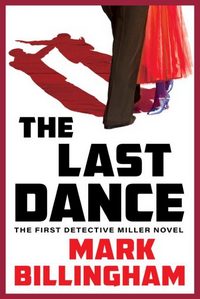
The Bitter Past by Bruce Borgos: The First In What Had Better Be a Long-Running Series in the American West

The Bitter PastThe Bitter Past

by Bruce Borgos

DETAILS:
Series: Porter Beck, #1
Publisher: Minotaur Books
Publication Date: July 18, 2023
Format: eARC
Length: 320 pg.
Read Date: July 5-6, 2023
Buy from Bookshop.org Support Indie Bookstores

What’s The Bitter Past About?

Porter Beck is the Sheriff of Lincoln County, Nevada. We meet him as he and his deputies are looking at a horrific crime scene. A retired FBI Agent has been tortured and killed, and Beck and his crew are clueless as to why.

Well, that’s not entirely true—Beck has an idea, but he needs the autopsy results before he starts to act on it. Before he came back home and became Sheriff, Beck was in Army Intelligence and recognizes signs of a Russian Foreign Intelligence Service operation. An FBI Agent has been sent to look into the case and works alongside the Sheriff’s department, Beck confronts Special Agent Sana Locke about this and she comes clean.

The dead agent had spent decades trying to find a Russian agent who had infiltrated US nuclear tests in the 1950s, and there’s a reason to think that the Russians have come to find that agent for themselves. It’s up to Beck and Agent Locke to stop them.

The only way I can sense to talk about this book is to focus on each timeline/storyline separately.

The Present

We spend a lot of time getting to know Beck and his deputies—a colorful and interesting batch that I hope we get to spend a lot more time with in the years to come. We also get to know Beck’s father—the former Sheriff, now battling dementia—and his adoptive sister, a firearms expert and instructor (who could probably be the protagonist in a series of her own).

In addition to trying to find either the killer or the agent the killer was looking for (in order to find the killer), they have to deal with a missing woman from an FLDS compound.

Both active cases stretch the small department to the limits—it’s a large county (roughly the same area as Maryland)—and tensions within the department staff start to build as they do their best to cover routine duties as well as pursue (and generate) leads.

We don’t get to me a lot of non-law enforcement residents of Lincoln County, I assume that’ll change in future books—but those that we do tell me that I want to meet more of them.

The Past

In the mid-to-late 1950s* the US conducted several tests of nuclear weapons in the desert of Lincoln County. Our Russian Agent, Lt. Georgiy Dudko of the KGB, had spent a long time preparing to come to America and pass himself off as an American citizen**. Once here, he got hired on as a security guard on the base that conducted the testing and started gathering information for Moscow as worked his way into better and better positions on base.

* and maybe later, too—I’m not sure of the history off the top of my head, and it’s beyond the scope of this post to get into that.
** Think of the FX show The Americans but Georgiy never got to wear any of the impossibly great wigs. Poor guy.

Georgiy never lost sight of his mission—but at some point questioned some of his orders. He thought they damaged his overall mission and he had other moral/ethical concerns that I really can’t get into. But this led to the Present-time story, so the reader is able to start putting the pieces together right away.

This is largely background material, but that doesn’t keep Borgos from keeping it as gripping as if it’s the only story in the novel. Early in this story, I saw it as background and was in a hurry to get back to Beck’s storyline. That ended quickly and I didn’t want to step away from Georgiy’s story—even once I knew pretty much how things had to go. And my notes say that a lot.

The Setting

Obviously, the setting of any book is vital to the overall novel—you can’t tell Elvis Cole or Harry Bosch stories outside of L.A. (with a couple of exceptions), Spenser and Kenzie & Gennaro need Boston, Walt Longmire and Joe Pickett have to have their stories in Wyoming—the geography, the character of their homes, and the history of the area shape and form the people, crimes, and type of stories you can tell.

The same is true here—these are stories that can only be told in this part of the world. The history of the area informs so much of this novel that it cannot be overstated—but the empty spaces, the long distances between neighbors, and the amount of territory Beck’s department is responsible for are just as important as that history. It’s a perfect combination of locale and subject.

So, what did I think about The Bitter Past?

I cannot believe that I haven’t been reading these books for years—I felt right at home with the characters almost instantly. I could feel the rapport between them—even between Beck and his rival deputy—as solidly as if this were the fifth book in the series.

I want to spend some time discussing a couple of the deputies at length, but I’ve gone on too long already. So I’ll just leave it by mentioning my favorite parts of the book. There are a couple of scenes of Beck and the deputies looking around crime scenes and dissecting them—each pointing out evidence and trying to build an explanation for what’s before them, what happened during the crime, etc. Yes, Beck’s the Sheriff and has the most experience, but it’s a true team effort, which is just a joy to watch. If Borgos gives me a couple of those in every book, I will be reading him for as long as it already feels like I have been.

That opening crime scene is grisly—I can’t think of anything worse since M. W. Craven’s The Puppet Show—and any reader is going to want to read about that killer being stopped.

Borgos puts enough wit and humor in both storylines to keep things from getting too bogged down in blood and intrigue (and nuclear fallout), the characters are all the kind you want to spend more time with (even the Russian spy), and the cases are intriguing. The pacing is perfect—he keeps you turning pages and trying to guess at what’s coming next without keeping things at a breakneck speed, so you can enjoy the scenery and his well-put-together sentences.

I don’t know if Borgos will be able to structure another book like this—and I frankly don’t care. If all we get is Beck and his crew, I’m fine. If he does have another trick like this up his sleeve, I’m all for that, too.

I strongly recommend this book—particularly for fans of Craig Johnson and C.J. Box. This is the beginning of the next great Western Mystery series. I’d have ordered Book 2 already if the option existed, and I think I won’t be alone in that.

Disclaimer: I received this eARC from St. Martin’s Press via NetGalley in exchange for this post–thanks to both for this.


4 1/2 Stars

This post contains an affiliate link. If you purchase from it, I will get a small commission at no additional cost to you. As always, the opinions expressed are my own.

Highlights from June: Lines Worth Repeating

Highlights from the Month

Real Tigers

Real Tigers by Mick Herron

“And I thought he was one of your cleverer boys.”

“Mind like a razor,” Lamb agreed. “Disposable.”

“Have you got a gun?”

“No.”

“What if they have?”

“Your concern is touching. I’ll be all right.”

“But what if …?”

Lamb leaned through Ho’s open window. “What if they come after you? With guns?”

“…Yes.”

“You’ll be fine. Getting shot’s like falling off a log. It doesn’t take practice.”


A Necromancer Called Gam Gam

A Necromancer Called Gam Gam by Adam Holcombe

“Inexperience does not always mean ineptitude.”

…for the first time in days, she felt the cold chill of dread and depression leave her as she returned the hug. She wept with Gam Gam, but this was different somehow. Not the screaming pain she had felt, but something warmer. Tears she didn’t mind shedding.


The Ink Black Heart

The Ink Black Heart by Robert Galbraith

He experienced one of those moments of simultaneous confusion and clarity that belong to the drunk and the desperate.

The idea of suggesting that Strike stop lying to the women in his life occurred only to be dismissed, on the basis that the resolutions to stop smoking, lose weight and exercise were enough personal improvement to be getting on with.

He was starting to feel like a truffle pig trying to do its job in a room full of incense, dead fish and strong cheese.


The Storied Life of A. J. Fikry

The Storied Life of A.J. Fikry by Gabrielle Zevin

What is the point of bad dates if not to have amusing anecdotes for your friends?

The Fall of the House of Ussher is a decent primer on what not to do with children.

“Infinite Jest is a masterpiece,” Harvey had said.

“Infinite Jest is an endurance contest. You manage to get through it and you have no choice but to say you like it. Otherwise, you have to deal with the fact that you just wasted weeks of your life,” A.J. had countered. “Style, no substance, my friend.”

People tell boring lies about politics, God, and love. You know everything you need to know about a person from the answer to the question, What is your favorite book?

The words you can’t find, you borrow.

We read to know we’re not alone. We read because we are alone. We read and we are not alone.


If I Understood You, Would I Have This Look on My Face?

If I Understood You, Would I Have This Look on My Face? by Alan Alda

Ignorance was my ally as long as it was backed up by curiosity. Ignorance without curiosity is not so good, but with curiosity it was the clear water through which I could see the coins at the bottom of the fountain.

Aristotle is often quoted as saying that a story should have a beginning, a middle, and an end. That’s true, but I don’t think that’s the whole story. After all, a dead cat has a beginning, a middle, and an end.


Robert B. Parker's Bad Influence

Bad Influence by Alison Gaylin

…I’ve used the Internet only for work and for the purchasing of shoes—an approach I believed could lead to world peace if more people shared it.


Murder Your Employer: The McMasters Guide to Homicide by Rupert Holmes

“If it looks like a duck, swims like a duck, quacks like a duck, but has an alibi, it’s not a duck.”

“No accomplices. Ever. Show me two individuals who commit a murder, and I’ll show you one individual who’ll make a deal with the District Attorney to implicate the other. In fact, I’ll show you two individuals willing to do that.”


The Worst Man

The Worst Man by Jon Rance

It’s easier to keep doing the same thing over and over, even though I know it isn’t good for me, than to try something new. I’ve never been good at thinking outside of the box. When it comes to drinking and love, I’m firmly in the box, where I stubbornly remain unhappy and unfulfilled.

‘Sounds perfect. Nothing better than a proper old-fashioned pub.’

‘You haven’t seen it yet,’ I say, as we reach the pub and stand outside. ‘Here it is, The Crown.’

‘Looks nice enough.’

‘And it is. Literally just nice enough not to be closed for serious health violations.’

… I was at home marking some awful essays and I needed some fresh air. Can you believe that one of my pupils wrote that World War One was a minor conflict in the early part of the nineteenth century?’

‘Really? That’s terrible. I blame the teachers.’

‘Me too,’

I arrive home from work on the Friday before my birthday weekend to a surprise abduction. I suppose all abductions are essentially a surprise. You don’t tend to sit down with your abductors prior to your abduction and plan everything out. Surprise is indeed a crucial element when abducting someone, and I’m certainly surprised by mine.


Random Sh*t Flying Through the Air

Random Sh*t Flying Through the Air by Jackson Ford

What can I say—police chases and murder plots and stand- offs with black ops teams have a way of bringing coworkers together.

OK, private jets are awesome. This plane is bigger than my apartment. And it’s way more comfortable: buttery leather seats, muted silver accents, tables that I’m pretty sure are real wood. Also a full bar, with some seriously good whiskey stacked behind it. Forget being a chef. Hell, forget being a government agent. I should try find work as a German tech billionaire.

It’s hard going. And not just beauce of the terrain. I can’t stop thinking about [spoiler]. Replaying what happened over and over and over. Trying to find an angle, a way to make it come out different. But it’s like the ending of Game of Thrones. You can wish as much as you want, but it will still suck, and it will suck for all eternity.


Killing Me

Killing Me by Michelle Gagnon

“But first, Marcie and I are taking you out to see the real Vegas. Locals only stuff.”

“Wow, that’s tempting,” I said, even though in my experience, “locals only” usually involved some sort of harm to animals, followed by throwing up in a Dairy Queen parking lot.

Worse traveling companions than Grace must exist. I could’ve been stuck with a gassy dog, teething baby, or car full of mimes. But two hours into the drive I probably would’ve welcomed all three.


Cutthroat Cupcakes

Cutthroat Cupcakes by Cate Lawley

My gut didn’t like this guy. It also wasn’t doing somersaults and pointing at him as the murderer— but an intuitive organ can only do so much, and that likely exceeded reasonable expectations of it.

That feeling you get when you’ve been on a transatlantic flight, when your seat neighbor coughed the entire flight and the flight attendant spilled a drink on you because some idiot tried to pass her in the aisle at the exact moment she was handing you your drink? As if your skin is covered in a layer of filth and germs and a stickiness that cannot be wiped away? That’s how I felt after one lingering look from Hector.


(Image by DaModernDaVinci from Pixabay)

The Bible vs. Biblical Womanhood: How God’s Word Consistently Affirms Gender Equality by Philip Barton Payne: Almost thou persuadest me…

The Bible vs. Biblical WomanhoodThe Bible vs. Biblical Womanhood:
How God’s Word Consistently Affirms Gender Equality

by Philip Barton Payne

DETAILS:
Publisher: Zondervan
Publication Date: April 04, 2023
Format: Paperback
Length: 183 pg.
Read Date: May 14-29, 2023
Buy from Bookshop.org Support Indie Bookstores

The Back of the Book Says

A biblical defense of egalitarianism

In The Bible vs. Biblical Womanhood, New Testament scholar Philip B. Payne shows how Scripture affirms gender equality in the church and in the home. This issue is important because it affects the freedom of Christians to proclaim the gospel and advance God’s kingdom. Payne carefully examines each Bible passage alleged to teach gender hierarchy and demonstrates that the Bible does not endorse gender hierarchy but instead emphasizes:

  • The Holy Spirit gifting all believers for ministry
  • The oneness of the body of Christ (the church) and the priesthood of all believers
  • Humility, service, and mutual submission required of all believers

Payne concludes each chapter by defending his position by providing detailed answers to common objections.

The Bible vs. Biblical Womanhood is for those struggling to reconcile the Bible’s seemingly contradictory teachings about man and woman. Readers will come away with greater confidence in the reliability of Scripture’s consistent, harmonious message of gender equality.

What’s This Look Like?

Essentially Payne looks at 11 Biblical passages that are frequently used to support complementarian/patriarchal positions in the church. He critiques those interpretations and offers his own. The critical portions of each chapter are smaller than the positive portions, I should stress. Payne’s focus is on explaining and defending his interpretations.

Some Problems

I’m not evaluating Payne’s arguments or positions—that’s not what this blog is about. But as a reader, there were a few flags raised that made it hard for me to take the work as seriously as I might otherwise.

So, I got a little uneasy when in one of the introductions, Payne referred to his “discoveries” in his studies of the Biblical texts. At this stage of Church History discoveries are pretty suspect.

What made me really suspicious of Payne’s work was the way he’d slip between Bible translations frequently—essentially you get the idea he cherry-picked translations to support his arguments for him, rather than sticking with one translation (or translating each passage himself) and then explaining his issues with a word choice or two—on the whole, I find that a lot more convincing.

Two of his most pivotal chapters utilize a lot of textual criticism prior to his interpretation of the text—Payne does a thorough job of explaining that criticism and then constructs his argument. I don’t know enough to evaluate his critical work there—I find both arguments plausible, but his positions rely so heavily on them that multiple chapters would crumble without them. I don’t know if his positions can stand without him being right on these points.

I’d love to read good scholarly reactions to his textual critical arguments, I wonder how much water they hold.

So, what did I think about The Bible vs. Biblical Womanhood?

I really liked a lot of the book—and found myself agreeing with most of his critiques of complementarianism/patriarchal positions. I was able to appreciate many—maybe most—of his positive arguments, I don’t think I was won over totally by any, but I didn’t expect that to happen off of one popular-level book (nor was I looking for it).

The book was well-written, engaging, and clear. Payne takes complicated (and almost convoluted) ideas and expresses them in a way that anyone can get their hands around. And even if you’re not convinced—but I can see him convincing those who are looking for it—you will understand the positions, and see a lot of things that look easy are a lot murkier, and require wisdom to work through.

I do think this is worth the time to read and think through, I’m glad I did. I would read other things by Payne in the future. I’d love to hear what other people think.


3 Stars
This post contains an affiliate link. If you purchase from it, I will get a small commission at no additional cost to you. As always, the opinions expressed are my own.
Page 155 of 609

Powered by WordPress & Theme by Anders Norén