Author: HCNewton Page 156 of 609

Saturday Miscellany—7/8/23

I didn’t find as much fodder for this post as I expect this week—I’m guessing the holiday mid-week in the US didn’t help. Or maybe it’s the excessive heat frying everyone’s brains. Or maybe everyone spent too much time trying out Threads. Or maybe I was looking in the wrong places.

That last one is likely the case.

Anyway…quality over quantity this week.

Odds ‘n ends about books and reading that caught my eye this week. You’ve probably seen some/most/all of them, but just in case:
bullet How Novellas Became Novels
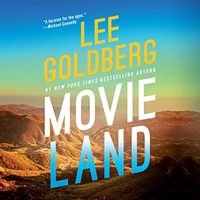
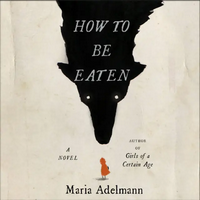
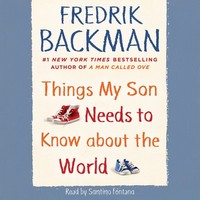
bullet Books about books are catnip for avid readers. This week there’s a bumper crop—The L.A. Times helps us all spend money/add to our TBR with this one
bullet How To Balance Between Imagination and Facts: Or, a look at the difference between “based on” and “inspired by”
bullet We Need to Tell a Different Kind of Love Story—An argument for friendship stories. Yes, a hundred times, yes.
bullet Why Cozy Mystery’s Amateur Sleuths Are Not Just Busy-Bodies—the key to a cozy is this point, I think.
bullet Key/Egg Reviewed in the Current Issue of F&SF, Eight Years After Publication—Harry Connelly talks about an unexpected and late review of one of his novels (my personal favorite)
bullet Why Harry Potter’s Hedwig Would Make a Terrible Pet—another bubble is burst.
bullet Witty & Sarcastic Book Club continued this great series: Poetry and Song in SFF
bullet …Featuring Ricardo Victoria
bullet …Featuring Rowena Andrews
bullet …Featuring Carol Carman
bullet …Featuring A.R. Witham
bullet …Featuring Steven McKay
bullet Meet The Blogger: Nick Borelli from Out of this World—a nice interview with Borelli
bullet Book Things I’m Bored Of—Monstrumology sounds off

A Book-ish Related Podcast episode (or two) you might want to give a listen to:
bullet Crime Time FM MW ‘MIKE’ CRAVEN In Person With Paul—a great chat with Craven. I loved hearing the two talking about Bazell’s Beat the Reaper, a personal favorite.

This Week’s New Releases that I’m Excited About and/or You’ll Probably See Here Soon:
bullet Flop Dead Gorgeous by David Rosenfelt—Andy Carpenter defends an old and now famous friend. I had a lot of fun with this one (as per usual).
bullet The Last Dance by Mark Billingham—I’ve enjoyed Billingham for years as a podcast host and guest, but I’ve never read him. The launch of this new series puts an end to that.

Excessive Heat Warning: Stay Inside and Read

The Worst We Can Find by Dale Sherman: MST3K: The Satellite of Love, The Bots, The Mads, The Movies and Everything Else

The Worst We Can FindThe Worst We Can Find:
MST3K, RiffTrax, and the History of Heckling at the Movies

by Dale Sherman

DETAILS:
Publisher: Applause Books
Publication Date: June 15, 2023
Format: Paperback
Length: 246 pg.
Read Date: June 27-29, 2023
Buy from Bookshop.org Support Indie Bookstores

What’s The Worst We Can Find About?

This is one of those books where the sub-title tells you everything you need to know: “MST3K, RiffTrax, and the History of Heckling at the Movies.” The back of the book does give a fuller explanation:

Had you tuned in to the small television station KTMA on Thanksgiving Day, 1988, you would have been one of the few witnesses to pop culture history being made. On that day, viewers in and around St. Paul, Minnesota, were treated to a genuine oddity, in which a man and his robots, trapped within a defiantly DIY sci-fi set, cracked jokes while watching the terrible 1981 movie Invaders from the Deep. Although its origins may have been inauspicious, Mystery Science Theater 3000 captured the spirit of what had been a beloved pastime for generations of wags, wiseacres, and smart alecks, and would soon go on to inspire countless more.

The Worst We Can Find is a comprehensive history of and guide to MST3K and its various offshoots—including Rifftrax, Cinematic Titanic, and The Mads Are Back—whose lean crew of writers, performers, and puppeteers have now been making fun of movies for over thirty years. It investigates how “riffing” of films evolved, recounts the history of these programs, and considers how a practice guaranteed to annoy real-life fellow moviegoers grew into such a beloved, long-lasting franchise. As author Dale Sherman explains, creative heckling has been around forever—but MST3K and its progeny managed to redirect that art into a style that was both affectionate and cutting, winning the devotion of countless fans and aspiring riffers.

Sherman starts with some commentary on the history of what we now call “meta” and riffing in general—going back to Greek choruses. He then shows how movies started riffing/commenting on themselves (and each other).

He then focuses on MST3K itself—talking about Joel Hodgson’s background and the creation of the show. We actually get some good background on all the major players from the early years. He then describes the transitions in staff/cast as it moves from KTMA to Comedy Central to the movie (and, wow, what an effort to get that made) to SciFi and so on.

We then get a look at what the post-MST3K careers of the central figures look like and how riffing on movies has kept popping up in their lives (largely because people won’t let them stop) and how the show has come back from its ending a time or two.

My Sole Criticism

Sherman only cites previously available material—yes, he dug up a lot of things that many/most fans would never see, never think of looking for. But he doesn’t interview anyone himself, or provide anything outside a couple of personal memories that an industrious fan couldn’t have found on their own.

I don’t want to criticize what he did—it is no small feat to do what he did. And I’m so glad he did it—but the lack of original material keeps me from absolutely raving about this book.

So, what did I think about The Worst We Can Find?

Back when I talked about Scott Ryan’s Moonlighting: An Oral History, I’d said:

When I read a book about a television show, I want a few things—I want something to

    • make me want to rewatch the show
    • make me not really need to, because the book has helped me remember it in such a way that it’s not that necessary
    • give me a lot of behind-the-scenes information about the show
    • help me understand it better (not just information, but reflections on it—its legacy, cultural context, impact on television, et.)
    • Ideally, teach me something about the art and/or business of television (preferably both)
    • and if it can be fun (TV should be entertaining), that’s all the better.

Yeah, that seems like a lot to ask for from a book, but if I’m going to take the time to read a book instead of watching a behind-the-scenes show or listening to a panel discussion, I want bang for my buck—I don’t always get it (and know that going in), but I want it.

The Worst We Can Find delivered on all but the “make me not really need to” because there’s no way that someone could do that in a book form. I have watched some MST3K since then (more than I usually do because I’ve been inspired)—and some Rifftrax, too.

I don’t want ponderous, I don’t want slow. I don’t mind a lot of detail (in fact, I relish it), I don’t mind thoughtful (that’s why I read the book), but I want to be entertained. And Sherman delivered there. His chapter introductions were golden—worth at least half of the purchase price alone. I started to give a couple of examples, but why ruin it for you? So, I’ll be vague. I laughed aloud at Chapter 4’s introduction. Maybe all of them, but Chapter 4 was the point I stopped to make note of it.

I really appreciated the way Sherman pivoted in the last chapter to speak of “we” in reference to fans of the show, it’s clear throughout that he was one of us (there’s no way you do this work without that—or a bigger paycheck than he likely got for this book), but I appreciated the way he did it there.

The last paragraph was perfect, incidentally.

This was a great read, I learned a lot, I chuckled frequently, and I had a great time reminiscing about a favorite show. I think you will, too. I’d say is a must for MSTies. As I said, I can’t rave about it—but I can strongly encourage you to check it out. And keep circulating the tapes.


4 Stars

This post contains an affiliate link. If you purchase from it, I will get a small commission at no additional cost to you. As always, the opinions expressed are my own.

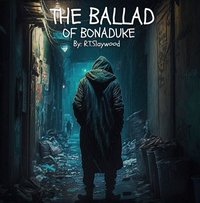
The Ballad of Bonaduke—Episode 28: The Warning by R. T. Slaywood: In Which Our Hero(?) Ponders a Bit

The Ballad of BonadukeThe Ballad of Bonaduke—
Episode Episode 28: The Warning

by R.T. Slaywood

DETAILS:
Series: The Ballad of Bonaduke, #28
Format: Kindle Vella Story
Read Date: June 29, 2023

I could feel blood dripping down my back and begin soaking the waistline of my pants by the time I reached the exit. The pain from my leg almost blocked out the sensation of my socks soaking from the ankle down, but it was there.

The Story So Far…

A drunken Michael Bonaduke decides to use a grift (with maybe some sort of magic/magic-like “help”) to win on a scratch-off lottery ticket so he has money to buy more to drink. He pulls off whatever he did, gets his money and some booze and stumbles off into the darkness to drink himself into oblivion so he can start again the next day. He’s hit by dark memories (probably what’s driving him to the drinking) of fire, pleading, and screaming. There’s going to be a price to pay for his grift, and he’s trying to be ready.

He’s abducted by some representatives of a mysterious group who subject him to a test—if he passes, everything will be explained to him (and hopefully the reader, too). He passes—and is brought somewhere for answers, or maybe training, or maybe another test. Time will tell (or things are going to get really annoying). Answers aren’t quick to come—but the mysteries and questions keep piling up.

Things get hairy and Bonaduke leaves and finds himself back in the neighborhood he started from. He takes refuge in a homeless encampment shortly before a police raid. He’s apprehended and finds himself an interrogation room and shortly escapes after using his grift (but with results he didn’t quite intend). He finds himself by a group of squatters who seem to have strapped a woman to a chair for reasons that can’t be good. He attempts to rescue her before he even realizes what he’s doing, and…

What’s The Warning About?

This episode is essentially Bonaduke carrying the woman he rescued out of the building and thinking about what happened at the end–how did his grift work in that situation? It was a lot more powerful than he’s used to–for that matter how does it work in the first place? He’s still trying to figure that out.

He doesn’t come up with a firm answer–not much of any answer, but he’s chewing on it.

So, what did I think about The Warning?

So, um…yeah. It’s good for Bonaduke (and therefore the reader) to get some clarification on what happened, but I’m not sure we got any solid answers here. I’m pretty sure he didn’t, and if he didn’t, we can’t. I’d like an answer or two soon. The beginnings of theories are interesting, and it’s nice to see a character think through something. But argh…some progress we could hang our hats on to would be interesting.

I’m reminding myself that if I wasn’t reading this episodically, I’d probably not have these frustrations. But…I am and I do.

I don’t have a firm opinion on this episode, because it’s a stepping stone. The problems I have with it are because of the design, not the execution. I didn’t dislike it is the best I can do–oh, and I want more.

I’m hoping we get back to the guys in the apartment (or their colleagues) in the near future–and maybe some more with the sister-in-law. But if Slaywood’s got another interesting curveball to throw at us, I won’t complain.


3 Stars

The Friday 56 for 7/7/23: Stray Ally by Troy Lambert

The Friday 56This is a weekly bloghop hosted by Freda’s Voice.

RULES:
The Friday 56 Grab a book, any book.
The Friday 56 Turn to Page 56 or 56% on your ereader. If you have to improvise, that is okay.
The Friday 56 Find a snippet, short and sweet.
The Friday 56 Post it.

from Page 56 of:
Stray Ally

Stray Ally by Troy Lambert

The shovel in his hands, the white sheet folded up onto the top of his head. The gallows.

The grave behind him. The Lieutenant’s arm around his shoulder.

The camp sign in the next picture. Todd Clarke in the background, watching. He picked up the phone, then thought better of it. Pay phones had become nearly impossible to find. Time to go buy a prepaid cell and make some calls.

This would be the last time, no matter what. Of course, that’s what he’d said the last time.

Mid-Year Freak Out Book Tag ’23

Mid-Year Freak Out Book Tag
I’d intended on getting this posted last week, you’ll see how well that worked out for me. I’ve done this tag the last few years, and have had a lot of fun with it, even if it took me an unexpectedly long time to assemble this one.

I have really enjoyed reading the posts that several others have put up over the last week or so (like Novel Lives, Biblio Nerd Reflections, Pages and Tea, and Twirling Book Princess…I thought I’d noted a few others, too, but apparently not. Sorry if I neglected you). Hopefully, this is half as entertaining.

I think I did okay at not mentioning some titles too often—but I had to repeat some. When a book is good in one category, odds are it’ll be good in others.

1. The best book you’ve read so far this year?

This was a four-way tie that I whittled all the way down to 3. How’s that for not at all decisive? (the other one gets mentioned a couple of times below).

The Perception of Dolls by Anthony Croix, Edited by Russell Day (my post about it) is a truly impressive work. I have not been able to stop thinking and talking about Chain-Gang All-Stars by Nana Kwame Adjei-Brenyah (and I think I didn’t say enough good things about it in my initial post (my post about it) . Ozark Dogs by Eli Cranor shows that his debut wasn’t a fluke.

The Perception of DollsBlank SpaceChain-Gang All-StarsBlank SpaceOzark DOgs

I should probably mention Fearless by M. W. Craven (my post about it)and Sleepless City by Reed Farrel Coleman (my post about it), too. I’m forcing myself to stop now.

FearlessBlank SpaceSleepless City


2. The best sequel you’ve read this year?

It’d be Samantha Jayne Allen’s Hard Rain (my post about it) or Random Sh*t Flying Through the Air by Jackson Ford. A lot of the stand-out books I’ve read this year are first books in a series and or stand-alones (also, I haven’t read quite as many sequels as I thought I did). Hard Rain does a great job of continuing the growth and development of Annie McIntyre, while telling a different kind of story in that same world. Random raised the stakes from its predecessor and showed that Ford was not pulling any punches—it’s one of those that the more I think about it, the more I’m impressed.

Hard RainBlank SpaceRandom Sh*t Flying Through the Air


3. New releases you haven’t read yet but want to.

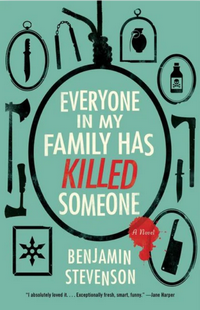
This list should probably be longer, but off the top of my head (do note, these are books I own, so I should be able to read them easily): Everyone in My Family Has Killed Someone by Benjamin Stevenson Lancaster, All the Sinners Bleed by S. A. Cosby, Evidence Pool by Ian Robinson, Blood Runs Cold by Neil Lancaster

Not necessarily in that order.

Everyone in My Family Has Killed SomeoneBlank SpaceAll the Sinners BleedBlank SpaceEvidence PoolBlank SpaceBlood Runs Cold


4. Most anticipated releases for the second half of the year.

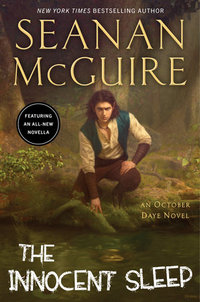
The Narrow Road Between Desires by Patrick Rothfuss and The Olympian Affair by Jim Butcher are reflex answers. Sleep No More and The Innocent Sleep are close seconds, to see how Seanan McGuire handles the conclusion of Be the Serpent and how she handles these two books together.

The Narrow Road Between DesiresBlank SpaceThe Olympian Affair
Sleep No MoreBlank SpaceThe Innocent Sleep

Not Prepared by Matthew Hanover is technically an answer to this, but I got an advance copy and I’m starting it this week, so….

Not Prepared


5. Biggest disappointment.

I feel like I’m picking on books here, but…

Karin Slaughter’s Triptych (my post about it) was a major let-down for me and made me unsure that I want to try anything else by her. And The Stench of Honolulu by Jack Handey made me reconsider wanting to read humor.

TriptychBlank SpaceThe Stench of Honolulu


6. Biggest Surprise.

Ummm…how little I liked those last two books?

Eh, let’s go positive again. I assumed (as I always try to) that I was going to have fun with books with titles like Vera Wong’s Unsolicited Advice for Murderers by Jesse Q. Sutanto (my post about it) and A Necromancer Called Gam Gam by Adam Holcombe (my post about it). But I wasn’t prepared to enjoy them as much as I did.

Vera Wong's Unsolicited AdviceBlank SpaceA Necromancer Called Gam Gam


7. Favorite new to you, or debut, author.

Jesse Q. Sutanto (my post about her book), Ausma Zehanat Khan (my post about her book), and Nana Kwame Adjei-Brenyah (my post about his book) would top this list. I can’t believe everyone isn’t talking about Adjei-Brenyah in the same way that S.A. Crosby and Oyinkan Braithwaite were a few years ago (and Crosby still is). Zehanat Khan feels like someone I should’ve been reading for years (and I have some makeup reading to do). Sutanto is just a fantastic breath of fresh air compared to most of the people I read—like Abbi Waxman, but with murder.

Vera Wong's Unsolicited AdviceBlank SpaceBlackwater FallsBlank SpaceChain-Gang All-Stars


8. Newest fictional crush.

Lola, the corgi in Vampire Weekend by Mike Chen (don’t ask me why I haven’t got a post finished about this yet…) would be my new fantasy dog. Any corgi that can put up with living with a vampire—and actually seem to enjoy it—is a special kind of dog. Honestly, I don’t know that many of her interactions with her vampire, Louise, really won me over (although I appreciated Louise’s devotion to her), but it was the way that Lola helped bring poor Ian out of his shell/emotional wreckage that was so heartwarming.

Vampire Weekend


9. Newest favorite character.

I don’t even know if I can limit this to a handful…Ben Koenig (from Fearless), Vera Wong (from, well, duh), Imaya Rahman (from Blackwater Falls), Juniper (from Mrs. Covington’s), and Nick Ryan (from Sleepless City) all jump to mind. And if I let myself keep thinking, I’d come up with another 6 in 20 seconds. I think I have to go with Juniper (but I could make a case for all of these)

Mrs. Covington's


10. Book that made you cry?

Huh…Don’t think I’ve read one this year. On the Savage Side by Tiffany McDaniel (my post about it) probably moved me the most of the books I read this year. The Once and Future Witches by Alix E. Harrow could easily have jerked a tear or two out of me if I’d been in a slightly different mood, ditto for Lost in the Moment and Found by Seanan McGuire (my post about it).

I think this year’s books have been the literary equivalent of Johnson & Johnson’s Baby Shampoo. Which is a line I stole from my ’22 post. By the end of the year, something will change that, I’m sure.

On the Savage SideBlank SpaceThe Once and Future WitchesBlank SpaceLost in the Moment and Found


11. Book that made you happy?

Well, really, any book that I rated 3 Stars or higher (most of them for the year) made me happy—it’s why I do this. But I associate happiness with three in particular: Mrs. Covington’s by K.R.R. Lockahven (my post about it), Vera Wong’s Unsolicited Advice for Murderers by Jesse Q. Sutanto (my post about it), and Cutthroat Cupcakes by Cate Lawley (my post about it) (that might be recency bias, but…eh, who cares?).

Cozy/Cozy-Adjacent books like these just make you feel good. These three still make me feel good as I think about them later.

Mrs. Covington'sBlank SpaceVera Wong's Unsolicited AdviceBlank SpaceCutthroat Cupcakes


12. Favorite book to film adaption?

I almost put nothing here (other than a list of ones I’ve intended to get to), but at the last second, I remembered that Bullet Train was adapted from a novel. I have no idea how it is as an adaptation, but I had a lot of fun watching this a couple of months back.

Bullet Train Movie

and another last-minute memory—the TV show Will Trent. Which is all sorts of okay (which still puts it miles ahead of the first book in the series).

Will Trent


13. Favorite post/review you have done this year?

Everything relating to the Literary Locals series and most of the A Few Quick Questions I’ve done this year are probably my favorites, but I have a hard time picking out individual posts from them, so I’ll go with:
bullet They Asked, so I Answer (just about) Anything for My 10th Blogiversary
bullet TEN(!!!!!) YEARS of The Irresponsible Reader. (or, Happy Blogiversary to me.)
bullet Book Blogger Hop: Are Books a Must-Have in Your Home?

I think my favorite review-ish posts would be (although all of them make me want to spend another hour or so improving them):
bullet The Perception of Dolls by Anthony Croix, Edited by Russell Day: Creepy Dolls, Creepy dolls, and Creepy do!!s
bullet Scratching the Flint by Vern Smith: We Didn’t Start the Fire…
bullet Ten Reasons to NOT Read Nic Blake and the Remarkables: The Manifestor Prophecy by Angie Thomas


14. Most beautiful book you have bought or been given this year?

Farmhouse by Sophie Blackall is just a gorgeously put-together book. It’s worth getting just to look at.

Farmhouse

The Hardcover reissue of The Part About the Dragon Was (Mostly) True by Sean Gibson, Mrs. Covington’s by K.R.R. Lockhaven, and However Long the Day by Justin Reed are pretty attractive, too.

Part about Dragon Was TrueBlank SpaceMrs. Covington'sBlank SpaceHowever Long the Day


15. What books do you need to read by the end of the year?

The lists from my 20 Books of Summer, Books on My Summer 2023 to-Read List (That Aren’t on My 20 Books Challenge), the answers from #3 and 4, and the rest of my challenge reads. That pretty much takes care of the year (but I know I’ll read others, too).
.


As usual, I’m not tagging anyone in this—but I’d like to see what you all have to come up with.

Pure of Heart by Danielle Parker: She’s Not Your Typical Werewolf and This Isn’t Your Typical UF

Too many months ago, Parker participated in a Q&A about writing in Idaho with me, now I have a chance to talk about her debut book!


Pure of HeartPure of Heart

by Danielle Parker

DETAILS:
Series: The Faoladh Series, Book One
Publication Date: September 27, 2015
Format: Paperback
Length: 328 pg.
Read Date: June 29-July 3, 2023

What’s Pure of Heart About?

In this world, werewolves are born, not made, and apparently begin changing around adolescence. In Harper’s case, this is dangerous—her parents died before they told her anything about lycanthropy and she had to learn about it along with the uncle who took her in and raised her from the age of eight. Grady knew his sister got furry every full moon, so it wasn’t a total surprise—but that’s about all he knew about werewolves.

She’s in her twenties now and pretty much all she knows is that chains can’t hold her down and that her wolf will kill and eat people if given the chance. Harper’s taken it upon herself to make sure that doesn’t happen again. Her uncle and friend/veterinarian regularly hunt her down and shoot her with tranquilizers when her wolf gets out of the house.

Harper’s entire life seems to revolve around not letting the wolf get out of control. Which seems like a lonely existence—and it pretty much is.

Until a new woman moves to the small Colorado town to take over her late grandparents’ bookstore. Something about Emerson affects the wolf part of her—Harper can’t even come close to understanding it. But her wolf immediately acts strangely (and we’re talking strangely for a werewolf, so it’s really strange) as soon as Harper meets Emerson.

Harper’s got to figure out what’s going on with the wolf before something happens to Emerson.

Parker’s Werewolves

I guess I should say “Faoladh” instead—but whatever. Keeping in line with her tumblr page’s title, Parker’s “Werewolves Don’t Sparkle.” Harper’s wolf is dangerous to everyone and everything (particularly doors/walls/fences). There’s little tame about her. We’re reminded of that constantly (bordering on too often).

This shows up in Harper, too—her wolf is always below the surface and keeps her from being too likable to many people. That’s a nice little touch and as (if?) Harper and her wolf start getting along better as the series continues, it’ll be good to see how that changes her.

The way she describes the change (particularly from human to wolf) is really good. Over the years of reading werewolf UF, it’s become one of those things that jump out at me to differentiate the authors’ take on lycanthropes and Parker’s strikes me as one of the better versions of that.

Harper and her family know incredibly little about her, um, condition. And it’s almost wholly from trial and error (mostly error). Because he didn’t manifest the werewolf heritage, Grady’s parents and sister didn’t bother to tell him much about it. I find that difficult to swallow, but I’m willing to do that for the sake of the story. I do appreciate that her cousin isn’t going to have this issue, he knows almost as much as the reader does. Harper stumbling through all of this practically blind makes it very easy for the reader to jump in with her and learn alongside her.

We are told a couple of times that there’s a difference between Faoladh and what we think of werewolves thanks to books and movies. But we have no reason to believe that yet—I really want to see us have that reason as well as see how that actually works out. I’m not saying that because I’m skeptical, but because I think both will refreshing and stimulating.

On a semi-related note, people in this town are quick to take a couple of clues and jump to the conclusion that “this woman must be a member of a species that I thought was the stuff of folklore and horror movies until right this second.” A little more self-doubt would’ve been nice, but it’d have slowed the book down too much.

So, what did I think about Pure of Heart?

I’m honestly not sure what I was expecting from this book—but it wasn’t what Pure of Heart ended up being. It’s a compelling read, for sure, just not for the reasons I’m used to in typical UF/werewolf novels, which is a pleasant change. For starters, there’s no big supernatural foe (unless you count Harper’s war within herself). It’s human drama, just with a massive side helping of the supernatural on board. Actually, I’ll just stop with that, too, so I don’t end up saying too much.

It’s also a great pastiche for Disney’s Beauty and The Beast—and once you start seeing that, it’s everywhere, adding a level of entertainment.

I don’t have a major problem with the romance arc that the book ended up focusing on, but it looked for a minute or two that we’d be swimming in strong and interesting platonic friendships, and those intrigue me more lately. So that was a minor disappointment, but just a minor one. I’m a little worried about the level of consent involved given the supernatural angle—see also, my qualms with Jolly’s BaIT—but Parker seems so focused on it, that I’m trusting her. Also, there’s reason to suspect that everyone involved is going to come to a greater understanding of Faoladh abilities soon, and that’ll give her a chance to assuage any feelings of creepiness.

Is it a wholly successful novel? Not quite—but it’s close enough to make getting (and reading) the second book a priority. The writing was compelling and engaging—Parker can tell a story and keep the reader curious and entertained the whole way. A lot of snark and love flows between her characters, Harper’s family/friends are a tight bunch and it’s hard to resist that feeling. Her characters brim with life. I think with another book or two under her belt, Parker could turn into a favorite author.

Check this one out, for sure.

3.5 Stars

20 Books of Summer
Literary Locals logo

Sleepless City by Reed Farrel Coleman: Your Summer Action Novel is Here

Sleepless CitySleepless City

by Reed Farrel Coleman

DETAILS:
Series: Nick Ryan, #1
Publisher: Blackstone Publishing
Publication Date: July 11, 2023
Format: eARC
Length: 321 pgs.
Read Date: June 23-26, 2023
Buy from Bookshop.org Support Indie Bookstores


I really want to tell you everything about this book—and I also want to tell you nothing at all beyond what the jacket copy is going to say and just tell you that if that sounds good to you—it is, and maybe better than you think. If that doesn’t sound good to you, it still is, but it’s probably not your cup of tea. Let’s see if I can accomplish something in-between.

What’s Sleepless City About?

Nick Ryan is a detective with the NYPD—that’s all he’s wanted to be, and he’s good at it. Sadly, because his father did the right thing and testified against a number of dirty cops several years ago—Ryan (and his father) are hated by most of the rank and file (and probably more of those above those). It doesn’t matter what Ryan does, his career is going nowhere. He’s still doing good work and seems to accept his lot in life.

Until a few things happen—I’m going to ignore those and move on to the results: Ryan is recruited by a lawyer representing unnamed interests who are going to change things for him. He’s going to get a promotion, he’s going to get to choose what cases he works on—whatever strikes his fancy and curiosity. But when this lawyer calls, he will push pause on everything in his life to take care of whatever these interests want. He’s basically going to be a fixer for the NYPD, cleaning up messes they can’t, preventing problems, and essentially doing whatever needs done. They’ll provide the resources (off the record and unseen), and he provides the results.

In Sleepless City we get the origin story for Det. Ryan, we see his first two cases, and get an idea what the resulting series should look like. Here’s the best thing about these two cases (which I’m going to share even if some might consider it mildly spoilery to do so because it’s a great selling point): unlike in 95% of thrillers/procedurals these two crimes that apparently have nothing to do with each other do not come around in the end to be related. They are actually distinct from each other. The resolution of one has practically nothing to do with the other (only that some goodwill generated by Ryan in one situation keeps him out of hot water in another).

Problem 1

A few recent incidents (nationally and in the city) have tensions high between the police and black communities at the tipping point. Ryan’s called into the scene of a shooting death of an interracial couple by someone who never should’ve joined the police. Ryan’s impulse—and that of several others, it should be noted—is to let the facts come out honestly.

But with the city near the boiling point, the fear is that the ensuing riots will leave too many dead, too many homes and businesses (and survivors) ruined, and the outcome of the protests and riots uncertain. Ryan has to cover this up without turning the victims into anything but victims.

So right away, you know that this book/series is going to live in morally gray (at best) areas. The lengths Ryan goes to—and the means by which he tries to accomplish this coverup are, tell you just as much about the way this series is going to work while the ends tell you about the ethical quagmire it tries to navigate.

Problem 2

The second issue centers around a Madoff-like character who stole a billion or so dollars—a large amount came from various law enforcement unions. The havoc wreaked on the first responders by this loss is great—and the consequences for Ryan’s brother (as an example) are devastating.

They’re going to be able to put Aaron Lister away for a long time—there’s no doubt about that. But no one can find the money—and nothing that the police, the FBI, or the courts have been able to do can get Lister to reveal where it is so they can try to repay the retirement funds.

Enter Nick Ryan.

No White Hats In Sight

We get the idea early on that Nick Ryan is a stand-up guy, ready to do the right thing regardless of the consequences. But after the events that I alluded to before his recruitment, he takes a different position on the legality of his actions (and maybe that was present before, but it’s certainly strengthened now)—it’s about the end result for Ryan now.

He’ll cut corners, he’ll make deals with whatever devils he needs to, and he’ll resort to methods that are so far beyond the pale of right, moral, or legal that they should be measured in light years.

In the real world—I’d hate someone like him and want to see anyone doing these vigilante acts imprisoned. And it’s not just Ryan, all law enforcement characters like him—Raylan Givens should be tried on several charges, Jack Reacher should’ve been locked up (not for the reasons he was initially arrested when we meet him—but for everything else in that book, and the dozens following). I want Malcolm Fox to expose Rebus for the offenses he’s committed (not necessarily the one’s Fox thinks he has, though). Kate Burkholder should confess to shooting that man (in self-defense) and the coverup of that shooting in her teens. And so on.

But in fiction? Bring. It. On. I love this stuff. Particularly because I don’t think Ryan’s modus operandi is sitting well with him—I’m betting as the series progresses, we’re going to see him having a harder and harder time with what he’s doing. Possibly even driving him to eventually trying to bite the hand that feeds him and exposing the interests directing him to the world (and going down with them).

I don’t have time to talk about the mess that is his personal life—but there’s plenty of fodder there for personal subplots for years to come.

So, what did I think about Sleepless City?

I had a great time with this book—it’s a great action ride and you can spend hours debating the ethical questions it raises (with yourself, with the book, or with others—and I can’t wait until people I know have had the chance to read this so we can have those discussions).

The speed at which Ryan is able to pull off these fixes probably strains credulity, but this isn’t the kind of book to care about how long things take. And by the time you start to wonder about plausibility, you’ve blown past the point where the question arose and you’re more focused on what happens next.

Because he’s the reigning gold standard, I will say there are a couple of scenes where Ryan gets to have a Jack Reacher-esque moment, scenes that have nothing to do with the plot, just a chance for Reacher/Ryan to demonstrate their abilities and stop a wrong outside of the primary storylines. The way that one of these resolves is so un-Reacher that I laughed and re-read it to see where Coleman made you think Ryan was going to try to match the ex-MP’s style. Ryan can be violent when he needs to be (quite), but he starts with his brains and mouth when he can in a situation—as satisfying as a good fight scene can be, someone thinking and talking his way through a problem can be as fun.

I think Coleman pulled off quite the feat here—this doesn’t feel like his previous work (although I freely admit I haven’t read as much of his earlier work as I want to, so maybe it does). This is more about action and less about reflection and thought. But it’s not mindless violence and the Ryan is a thoughtful character.

There are moments of fun—Coleman’s able to slip in a joke or two, too. But really this book is all about forward momentum, as if once Ryan has taken on this role he can’t stop moving and the book follows suit.

I assumed going in between the premise and my past experience with Coleman that I was going to enjoy the book—but Coleman and Ryan delivered something not quite what I was expecting—and Sleepless City is better for it.

I hope I’m reading these books for years to come—and suggest you pick up Sleepless City as soon as you can.

Disclaimer: I received this eARC from Blackstone Publishing via NetGalley in exchange for this post—thanks to both for this.


4 1/2 Stars

This post contains an affiliate link. If you purchase from it, I will get a small commission at no additional cost to you. As always, the opinions expressed are my own.

WWW Wednesday, July 5, 2023

Thanks to the holiday yesterday, it’s a Wednesday that feels a lot like a Monday—only better because it’s closer to the end of the work week. Still, it’s a Wednesday, so that means it’s time for this quick check-in.


This meme was formerly hosted by MizB at A Daily Rhythm and revived on Taking on a World of Words—and shown to me by Aurore-Anne-Chehoke at Diary-of-a-black-city-girl.

The Three Ws are:

What are you currently reading?
What did you recently finish reading?
What do you think you’ll read next?

Easy enough, right?

What are you currently reading?

I’m reading The Curse of Silver of Pharaoh by Pip Ballantine, Tee Morris. I’m still listening to Dark Age by Pierce Brown narrated by: Tim Gerard Reynolds, John Curless, Moira Quirk, James Langton & Rendah Heywood on audiobook.

The Curse of Silver of PharaohBlank SpaceDark Age

What did you recently finish reading?

I just finished Danielle Parker’s Pure of Heart, which proved to be a fun take on werewolves.

Pure of Heart

What do you think you’ll read next?

My next book should be The Bitter Past by Bruce Borgos and my next audiobook should still be Chaos Choreography by Seanan McGuire, Emily Bauer (Narrator).

The Bitter PastBlank SpaceChaos Choreography

What’re you up to book-wise?

Book Blogger Hop: Review Rating System

Book Blogger Hop


This prompt was submitted by Billy @ Coffee Addicted Writer:

What review rating system do you employ?

I’m just copying and pasting my About My Ratings page for this answer—why reinvent the wheel? I did take the opportunity to rephrase a couple of things a little, correct a typo or two (and I’m trying really hard not to think about how many years those typos existed without me seeing them), and generally brush it up for this answer and on the page. So, I’m glad this question made me look at the page.

I will talk about my love for Rex Stout’s Nero Wolfe/Archie Goodwin books at any excuse I get. As an alternative to the ubiquitous 5-Star schema, I’ve thought about adopting Wolfe’s Rating System (or Archie’s take on it). From Plot It Yourself:

I divide the books Nero Wolfe reads into four grades: A, B, C, and D. If, when he comes down to the office from the plant rooms at six o’clock, he picks up his current book and opens to his place before he rings for beer, and if his place was marked with a thin strip of gold, five inches long and an inch wide, which was presented to him some years ago by a grateful client, the book is an A. If he picks up the book before he rings, but his place was marked with a piece of paper, it is a B. If he rings and then picks up the book, and he had dog-eared a page to mark his place, it is a C. If he waits until Fritz has brought the beer and he has poured to pick up the book, and his place was dog-eared, it’s a D. I haven’t kept score, but I would say that of the two hundred or so books he reads in a year not more than five or six get an A.

If I knew how to portray that graphically, I still might adopt it. Seriously, if anyone reading this has any ideas—I’m open.

Actually, I’m of a mixed-mind about rating books, it seems demeaning (and pretty subjective) to grade them like this. But it’s also handy to be able to tell at a glance what someone thinks of a book. So, here’s my approach. For now, I’ll stick to the seemingly standard star ratings, but I regularly think about replacing it.

5 Stars = Grade: A. I loved it. Blew me away. Knocked my socks off. The stuff that dreams are made of. Get thee to a bookstore/library and put this on the top of your TBR pile!

4 Stars = Grade: B. Highly recommended. Very entertaining (where applicable), well-written, and whatnot. More than worth the time to read.

3 Stars = Grade: C. I liked it. It’s good. It gets the job done—entertains/educates/keeps your interest/whatever the job is. The book as a whole might not be dazzling, but it’s worth your time. I’d continue the series/reading books by the author. Recommended. I want to stress this word here: Recommended. I suggest you read this book.

2 Stars = Grade: D. Don’t bother. It’s not bad per se, it’s just not good.

1 Star = Grade: F. This is not a book to be lightly tossed aside. It should be thrown with great force.

I also use half-stars for something that’s almost the next whole number, but I can’t quite justify it for this space (but will round up for places like Goodreads/Amazon/NetGalley).

Comments, quibbles, suggestions?

PUB DAY REPOST: Flop Dead Gorgeous by David Rosenfelt: An Old Friend Brings a Challenging Case for Andy Carpenter @stmartinspress @netgalley

Flop Dead GorgeousFlop Dead Gorgeous

by David Rosenfelt

DETAILS:
Series: Andy Carpenter, #27
Publisher: Minotaur Books
Publication Date: July 04, 2023
Format: eARC
Length: 272
Read Date: June 13, 2023


What’s Flop Dead Gorgeous About?

Jenny Nichols went to the same high school as Andy Carpenter—but when he went to law school, she went to California and became a movie star. She comes back to Paterson frequently, even adopting a miniature French poodle from Andy’s rescue foundation and striking up a friendship with Laurie.

She’s staying in Paterson while filming her next movie in New York and Andy hosts a dinner with her and several others—during the dinner, her ex-boyfriend, current producer, and co-star (all the same person) shows up and causes a scene in an effort to see her. While Andy does nothing at all (his strength), Willie, Laurie, and Marcus shut down the producer and his bodyguards. They leave and the night goes on as before and everything seems fine.

Because this is that kind of book in that kind of series, that “fine” doesn’t last long. Jenny wakes up in the middle of the night to find her ex stabbed to death in her kitchen. With no one else in the house—and few people knowing she was staying there at all—the suspect list is really short, and it’s no time at all before Andy is hired to defend Jenny.

Wait, What?

I may be revealing what a horrible (as opposed to irresponsible) reader I am here—but in the second chapter, Rosenfelt said something that stopped me cold. Andy’s hosting that dinner for Jenny with a bunch of his friends and colleagues, including Sam, Willie and Sondra Miller, Vince Saunders—you know, the people you’d expect. Except for this: Marcus and his wife Julie. Did we know Marcus had a wife? Has she shown up a lot and I’ve totally forgotten her? I really don’t think so, but I don’t have time to read 20+ books (I can’t remember when he shows up first, book 2 or 3, I think) to see.

Part of my shock here has to do with the idea of Marcus having any kind of personal life is strange. It’s like when you’re in second grade and see your teacher in the grocery store. But I just have no recollection of this woman.

And, really, that’s not the strangest Marcus moment in the book…

Poor Eddie Dowd

Andy’s on his third associate in the series—the lawyer who does most of the actual lawyering, instead of the investigating and courtroom antics. He’s the guy who puts together briefs, looks up precedents, writes motions, and so on. This associate is usually comedic in some way, too.

Eddie shows up a little bit here, but nowhere is used to lighten the mood—we don’t even get one example of his overuse of sports metaphors. It was likely necessary to cut his jokes for space and/or to make up for the running joke (see below), but I couldn’t help but feel bad for the character. He barely got to do anything—particularly nothing interesting.

The Running Joke

There’s a running joke throughout this book that I can’t bring myself to ruin—or repeat. Initially, I wondered about Rosenfelt’s continued use of it—but in the end, I wouldn’t cut a single instance of it, and the later in the book we got the funnier I found each reappearance.

I don’t remember Rosenfelt going back to the well so often like this often (ever?).* Sure, he repeats jokes from book to book—Andy’s trying to retire, Edna’s lack of interest in work, Marcus’ lack of talking, etc. But fifteen+ appearances of a gag in one novel? I think this is new. I don’t know that we need it in every Andy Carpenter book from now on, but I wouldn’t mind it frequently.

* Fill up the comments here with the times he’s done it before and I’ve forgotten about it, by all means.

So, what did I think about Flop Dead Gorgeous?

I know I complain often about not knowing what to say about an Andy Carpenter novel that I haven’t said a few times before. And really, aside from what I’ve noted in the two sections above, I’m not sure what to say.

The one thing that I want to talk about the most is the one that I cannot discuss—the killer and the motive behind the killing. I can’t even think of a vague way to praise the choices Rosenfelt made in this novel’s structure. But for my money, the choice of the killer, motive, etc. are praiseworthy.

I do like the way Rosenfelt is aging Ricky—especially while not aging Tara—and letting Ricky pay attention to this case. Good character work.

Flop Dead Gorgeous features some of Rosenfelt’s funniest material in years. More of Andy in court (or so it seems) than we’ve been treated to lately. Good character work (both with regulars and new characters)—except for poor Eddie. The best mystery Rosenfelt’s given us in a long time. And Andy’s narrative voice has never been better (rarely been worse, too)—there are a couple of paragraphs that made me stop and note, “This is why I keep coming back to this series.”

We’re twenty-seven books in and I still laughed and was left on tenterhooks to see how Andy was going to prevail. That’s no mean feat. Rosenfelt hasn’t lost a step, and neither has this series. Naturally, I recommend Flop Dead Gorgeous to your attention.

Disclaimer: I received this eARC from St. Martin’s Press via NetGalley in exchange for this post—thanks to both for this.


4 Stars

This post contains an affiliate link. If you purchase from it, I will get a small commission at no additional cost to you. As always, the opinions expressed are my own.

Page 156 of 609

Powered by WordPress & Theme by Anders Norén