Author: HCNewton Page 193 of 609

Book Blogger Hop: Favorite Reading Nook

Book Blogger Hop


This prompt was submitted by Billy @ Coffee Addicted Writer:

Do you have a favorite reading nook?

I can—and do—read anywhere: in a house, with a mouse, in a (or on a) box, with a fox, in a car, in a (or under a) tree, on a train (theoretically, never been), in the dark, in the rain (assuming I have some sort of cover—can’t let the pages get wet), with a goat, but definitely not in a boat (I get seasick quicker than Toby Daye gets new clothes blood-stained.

But lately, I tend to do most of my reading in my recliner—where you have to sit juuuust right, so the broken spring doesn’t dig into your back. If you do that, it’s about the most comfortable chair around. That can be dangerous when I’m a bit drowsy, but that spring can serve a useful purpose.

This question, made me think of a post from a few years ago, and since I’m too sick to come up with more than 2.5 paragraphs today, I figured I’d copy and paste it here. It seems sort of appropriate.


Where the Magic Happens…or something

Three years ago when I switched to a day job, my reading habits had to change—among other things. It took almost no time at all to realize that reading in the break room just wasn’t going to work—it was too loud, there were too many things going on, you couldn’t sit by yourself, really. And then there were all these nice people wanting to talk.

Actually, people, in general, being around was something to get used to, but that’s another story.

Then I realized that there were perfectly good stairs a lot closer to my workspace than the break room was. So I started hanging out there and reading—sometimes, sitting on the stairs, other times leaning against the railing—it’s at a decent height for that. Nowadays, that’s where 40-60% of my weekday reading happens while on break.

It’s not perfectly quiet, but it’s close enough. Except when the flautist practices every couple of months. There are people who pass through—and some of them talk to me, but the conversations are short—because they’re on their way to somewhere else. Sometimes it’s just a “hi,” and occasionally I workshop ideas for posts here when someone asks about what I’m reading. I’ve even been given a couple of good recommendations.

Now, the keen-eyed among you might have noticed a couple of post-its on the wall (circled below).

So, for a couple of years, people would joke about putting up a sign where I read with my name on it or something (more than one person has suggested getting me a chair). But last December, I moved to a different floor, and within a month, someone had put up the larger post-it reading “[H. C.]’s Reading Spot.” This would be in the larger circle.

A couple of weeks later, that person asked if I liked my sign. I had to confess that I had no clue what she was talking about and apologized profusely. Who pays attention to the walls along the stairs? Especially when you’re not climbing the stairs, but are focused on the book/eReader in your hand. So when I went out for my next break, I went looking for it—and she’d added another post-it (the smaller one), “<– This is the sign.”

Very helpful.

So, yeah, that’s where I read and recharge from all the interaction with people so I have enough energy to get back to work and interact with more people.

Sure, it’s not as snazzy as some of the reading nooks you see on Instagram, Bookstr, etc. It could be more comfortable, that’s for sure. But I’ve gotta say, when the book is halfway decent, I don’t notice. That’s where the magic happens.

What about you—do you have a particular space that’s best to read in?

SICK LEAVE REPOST: Faith in the Time of Plague Edited by Stephen M. Coleman and Todd M. Rester: Reformation and Post-Reformation Voices Speak to Our Moment

Wasn’t feeling well enough to finish a post for today, and given my recent test results, I thought of this book–something I’m pretty sure Westminster Seminary Press wouldn’t have put out without a certain pandemic.

Faith in the Time of Plague

Faith in the Time of Plague

Edited by Stephen M. Coleman and Todd M.Rester

Hardcover, 309 pg.
Westminster Seminary Press, 2021

Read: November 7-December 12, 2021

The main point? Two rocks must be steered clear of: stupid boldness and exceedingly vicious fear. On the first, one does those things that while we fear nothing—would often lose ourselves and others. On the second it happens that as we would look to our own life, we would desert the work of Christ. Therefore, let us fear what can happen if we fail to avoid those evils. But let us be confident in the Lord and let us remain as steadfast as possible—even to the point of death—in our calling and in the work of Christ.

What’s Faith in the Time of Plague About?

The Editors describe the book like this:

The body of extant plague writings is vast and much of it remains unavailable in English. The selections in this book were determined to a great extent by the treasures that came to light in translating the 1655 pamphlet Variorum tractatus theologici de peste, which makes up Part I of the book. This collection of tracts is an unparalleled Post-Reformation treatment of the plague, from pastoral and scholarly points of view. Part II consists of those Reformation and Post-Reformation works that Beza, Rivet, Voetius, and Hoornbeeck [the authors in Part I] engaged with frequently (Zanchi, Abbot, and Ursinus). Alongside those pieces are additional contemporary works that we felt would be especially useful for pastors, scholars, and interested readers to have available in book form (Zwingli, Luther, Lavater, and Rawlet), and which give the reader a more complete picture of the Reformed tradition’s branch of plague writings. Each of these eleven authors addresses the unique questions posited by the plague in distinct ways, yet each does so by definitively Reformed methods—grounded in Scripture, historically informed, and always with the issue of faith in Christ at the forefront.

There are also two appendices, On Mortality by Cyprian of Carthage—a work that multiple authors in the main texts refer to (and likely shape even those who don’t) and the section Prayer and Thanksgiving from the Book of Common Prayer—an application of all the theology of the main texts.

Part 1: Variorum tractatus theologici de peste

The various works in part one are careful, methodical, Scriptural, and thorough—they cover all the bases. The treatise by Beza seems to both reflect the thinking of the rest of the Reformation as much as it shapes everything that comes after (or at least everything in the book).

Some parts of this took some work to get through, but it was worth it.

Part II: Reformation and Post-Reformation Plague Writings

Others sin on the right hand. They are much too rash and reckless, tempting God and disregarding everything which might counteract death and the plague. They disdain the use of medicines; they do not avoid places and persons infected by the plague, but lightheartedly make sport of it and wish to prove how independent they are. They say that it is God’s punishment; if he wants to protect them he can do so without medicines or our carefulness. This is not trusting God but tempting him. God has created medicines and provided us with intelligence to guard and take good care of the body so that we can live in good health.

For me, this part of the book (roughly a third) was the most rewarding. Luther’s Whether One May Flee from a Deadly Plague covered most/all of the points in Part I, but in a pithier and more digestible fashion. Which is what you expect from Luther, right?

Zwingli’s Plauge Hymn is great. I really don’t know what else to say.

The most moving, the most personal entry in the volume is John Rawlet’s A Letter to my Mother is clearly part of that preparation for death mentioned in the post last week. In this printing, it’s an eleven-page letter* written by an Anglican minister in London sure he was soon to contract the plague and die. He was wrong about contracting the plague and never sent the letter—but he was ready for it.

* Hard to fathom in the age of texts, tweets, and email.

An Unimportant Observation

I’m pretty sure I’ve never run into the word “licit” as often as I have in this work. Like most people (especially those who read a lot of Crime Fiction), I run across “illicit” all the time. But “licit”? Almost never.

Maybe it’s a quirk of the translators, but I doubt it. It’s just refreshing to see the word—and it’s one I’m going to try to use more often.

So, what did I think about Faith in the Time of Plague?

One thing that struck me was how often these Reformation authors appealed to earlier theologians (like Cyprian). But largely not about plagues or other diseases. Instead, it was how they approached the response to persecution—could believers flee from it, or do they have to run toward it or simply wait for it? Both persecution and disease come from the Lord—as both trial and result of sin.

I have to say, I’m not sure I’d have approached it that way before.

Those looking for easy answers to “how would the early Church or Reformers” deal with COVID-19 (or the like)”, will be disappointed. There are no quick and easy answers here. But this can remind readers that the Church has been through similar—and worse—times before. She likely will again. There have been careful, pastoral responses to it in the past, and that can be true again. We don’t have to have a snappy, one-size-fits-all approach at the first sign of trouble, but we are called to gracious, Christ-honoring, people-serving responses.

These are some excellent examples of how to do it. This isn’t the easiest, breeziest thing I’ve read this year—it might even be the furthest from it. But it’s an invaluable resource and I’m glad Westminster Seminary Press brought it to us.

Saturday Miscellany—12/10/2022

It’s that magical time of the year…the Goodreads Choice Award Winners have been named and everyone is griping about it. Haven’t read any of the winners, but this year’s crop looks better than the last few, IMHO.

Running late today, so that’s all the introduction you get (I can hear the cheers now). On with the links!
Odds ‘n ends about books and reading that caught my eye this week. You’ve probably seen some/most/all of them, but just in case:
bullet ‘I want to savour every word’: the joy of reading slowly—Sounds great. I honestly don’t think I’m physically capable of it.
bullet I’m sure most of you saw this tweet where a disappointed author vented about the small showing at a reading and then got all sorts of encouragement from all sorts of authors—it’s a great thread and then it got picked up a whole lot of news outlets (like NPR).
bullet Now You Too Can Bake Like Emily Dickinson This Holiday Season—I’m not sure why anyone would want to, but…
bullet The gift that actually does keep on giving.
bullet How Edgar Allan Poe Reinvented American Literature – and Science Writing
bullet Don’t Kill the Dog—an author reflects on that cardinal rule
bullet 10 of the Best Gifts for Book Enthusiasts (That Aren’t Books)
bullet #R3COMM3ND3D2022 The After Show Party #BookBlogger—a quick recap and look back at this great series
bullet It’s December, which means it’s time for Best Of lists…where people tell you about all the books that you heard great things about but didn’t get around to:
bullet Tor.com Reviewers’ Choice: The Best Books of 2022
bullet The Best Crime Novels of the Year: 2022 from CrimeReads
bullet My Top 10 Reads of 2022! from Out of This World SFF
bullet Everything Counts As Reading
bullet I Like Big Books and I Cannot Lie: Six Alternative Uses for Shelf Bending Novels—Paul Goat Allen has some great tips
bullet Here’s how I view negative reviews
bullet Quotables: Words that Stuck with Me in 2022—Witty & Sarcastic Book Blogs shares great lines from this year’s reading

A Book-ish Related Podcast episode (or two) you might want to give a listen to:
bullet Blood Brothers Podcast Episode 114 with Andrew Child—this great conversation makes me wish I liked his contributions to the Reacher canon more.

This Week’s New Releases that I’m Excited About and/or You’ll Probably See Here Soon (and one from last week I thoughtlessly overlooked):
bullet The Hero Interviews by Andi Ewington—a comic collection of interviews with various Fantasy heroes that looks like a lot of fun. Check out this here review for a better (and informed) take on it.
bullet Bodacious Creed and the San Francisco Syndicate by Jonathan Fesmire—the third installment in this Steampunk/Western/Zombie Adventure series is out and looks like a good ‘un
bullet My Darkest Prayer by S.A. Cosby—Cosby’s first book has been reissued and I’m kicking myself for not hunting it down after Blacktop Wasteland.
bullet Gone edited by Stephen J. Golds—30 pieces of short crime fiction from a great-looking lineup of writers
bullet The Perception Of Dolls: The Fantoccini Street Reports by Anthony Croix, edited by Russell Day—I’m not even going to try to summarize this. Just click the link. It’s Russell Day and Fahrenheit Press, ’nuff said.
bullet Grit, Black, Blood by Ashley Erwin—another one I don’t think I can summarize in a sentence or two (without reading, anyway).

Bookish Problem 186 Thinking about characters long after you've finished a book and wondering what's become of them

The Friday 56 for 12/9/22: Radio Radio by Ian Shane

The Friday 56This is a weekly bloghop hosted by Freda’s Voice.

RULES:
The Friday 56 Grab a book, any book.
The Friday 56 Turn to Page 56 or 56% on your ereader. If you have to improvise, that is okay.
The Friday 56 Find a snippet, short and sweet.
The Friday 56 Post it.

from Page 56 of:
Radio Radio

Radio Radio by Ian Shane

He picks up the box to indicate that his ten years at this company could barely fill a cardboard box. “My last bit of advice that you’re going to ignore is to not give these bastards a reason.”

This is the best bit of advice he’s given me. It doesn’t sound so stupid when it comes from someone who’s not in an authoritative position. “Yeah,” I say softly. “Thanks.”

Tony makes his move to the door. “Hey, Tony,” I say, stopping him at the threshold.

“Yeah.”

“I’m gonna miss you, man.” Tony chuckles a bit. “No, you won’t.” He smiles at my seemingly transparent attempt at comfort. “But thanks for saying so.”

I walk to the doorframe to watch him walk away from the station for the last time. I felt a subtle sense of loss as I saw him turn the corner. It’s the sort of loss an FBI agent might feel after putting away a mob boss that was the subject of a three-year probe. He was a worthy adversary. We were like Eliot Ness and Al Capone, Dr. Richard Kimble and the one-armed man, Batman and The Joker.

LITERARY LOCALS: Introducing a New Series of Posts About Writing in Idaho and Books Created Here

Literary Locals
Idaho is not known for being home to many authors—we’ve produced Carol Ryrie Brink and Marilynne Summers Robinson (although both moved away), and Anthony Doerr resides here. But really, our greatest claim to literary fame is that Hemingway shot himself here.

This is a shame in many ways.

Now, I do know that Idaho has a good number of independent authors toiling away—either self-publishing or putting out their work through independent presses. And it occurred to me this summer, that I’ve done a lousy job of promoting them. I’ve blogged about the books of Devri Walls, J.C. Jackson, and Jeremy Billups, but that’s pretty much it. But I knew there are others out there.

Sure, my talking about their works isn’t going to turn them into best sellers or anything, but every little bit helps, right?

So, I started working on a little project that I’ve decided to call Literary Locals. I’ll be reading and posting about works from local authors I spot (and the works that I think I’ll like), I’ll be spotlighting some titles, and doing some Q&As with these authors—both about their own works and being a writer in Idaho. I’ve got a few authors who’ve graciously agreed to take part in this, and I think it’ll be fun.

Before I realized that I should attach a label to this project, I started with Danielle Higley, the author of The Stories Behind the Stories: The Remarkable True Tales Behind Your Favorite Kid’s Books, posting about her book and the first of the two Q&As I hope to do with her.

Then I did something that really shows I didn’t think much before proceeding, and sent Q&As to a bunch of independent authors less than a week before November. Also known to many as NaNoWriMo. “Hey, would you interrupt the big time-consuming event that you’ve been gearing up for to spend some time on my project?” is really not a great move. Thankfully, I’ve gotten some responses and I’m going to be able to really get things underway next week.

So stay tuned and get to know some of the people in my neighborhood.

I should add that if any Idaho writer stumbles across this post and wants to get in on the action, let me know! The more, the merrier!


My Brain Trust (wife and kids) put some work into this series, too, and I’d like to thank them. But really, we could’ve saved our effort and turned to my friends. After we’d struck out at a logo, I asked Micah Burke if he would help us brainstorm some ideas—instead, he produced a handful of images that led to the above logo. I’m telling you, every blogger needs a friend like him—or better, should hire him. And then Jodie from Witty and Sarcastic Book Club spent 10 minutes thinking before coming up with a much better series title than we had after three months of bouncing ideas off of each other. The day before a hurricane made landfall in her home state—again, my gift of bad timing shines forth.

The World Record Book of Racist Stories (Audiobook) by Amber Ruffin & Lacey Lamar: Records No One Should Want to Hold (but too many vie for)

The World Record Book of Racist StoriesThe World Record Book
of Racist Stories

by Amber Ruffin & Lacey Lamar

DETAILS:
Publisher: Grand Central Publishing
Publication Date: November 22, 2022
Format: Unabridged Audiobook
Length: 4 hrs., 54 min.
Read Date: November 28-29, 2022
Support Independent Bookstores - Visit IndieBound.org

An Issue with Sequels/Follow Ups

As I’m sitting here thinking about what to write, I keep comparing this to last year’s You’ll Never Believe What Happened to Lacey: Crazy Stories about Racism. This is intentional because this is very much a Part II to that book. But it’s different, too. So it makes sense to contrast it so I can give an idea of how it’s different.

At the same time, I run the risk of sounding dull—”You’ll Never Believe did X, The World Record Book did Y,” “The World Record Book is more Z than…,” and so on.

I don’t know how to avoid that—so I guess this is an apology in advance? I’ll try to limit the comparisons and keep this interesting, if only because the book deserves to give a good impression, even if I’m not able to do that.

What’s The World Record Book of Racist Stories About?

Because they got to share a bunch of stories in the first book—primarily about Lacey—the sisters wanted to give the rest of their family, and some friends, the chance to get their stories told. Or, as they put it, “air out [their] dirty racist laundry.”

Ruffin warns:

FYI: You’ll be able to tell the difference between this book and the last book. This one’s gonna be a bit heavier. A touch more serious. The reason for that is with the first book, Lacey and | got to giggle through silly racism stories, and it felt great. So, if the family wants to share their stories too, however they want to share, we welcome that. We want them to feel great and heard and blah, blah, bloo. There’s plenty of silliness, it’s just that the rest of the family is less likely to remember the funnier racist stories. They have not been keeping journals. But those terrible, scary racist stories? Maaaan, they remember those like a mug. So, to emotionally prepare you, I’d call this book fifty-fifty silly-scary racist stories. Okay? So, don’t come to me talking about “It wasn’t like the first book” ‘cause you’ve been warned.

To balance out these stories, the interplay between the sisters seems a bit sillier than before (in the print version, each has their own typeface so you can see it)—up to, and including, them singing their own little ditties in the audio. The authors also include some pictures for illustration of the ridiculousness of the story or for a little burst of joy or cuteness to alleviate the heaviness of the stories they’re telling.

I should add there are a couple of anecdotes that really silly or scary, just heartbreaking.*

* Granted, there’s a sense in which all of these are heartbreaking, humanity’s inhumanity always is. So I guess those stories are extra-heartbreaking. Heartbreaking cubed.

The Organization of the Book

So, the theme of this book is there in the title—it’s a Guinness World Records collection, but no one wants to get their stories told here (names have been changed to protect those involved—according to the authors, at Lamar’s insistence over Ruffin’s intentions). The anecdotes are arranged under broad topics (or for the person they’re about), and they are each given a title like “Most Confusing Racist Phrase,” “Worst Car Service,” “Most Racist Pilot,” “Worst Celebrity Look-Alike,” “Worst Teacher,” and so on. Several of the category names are clearly exercises in creativity by the authors, like “Most Regular Degular, Day-to-Day Racism” or “Most Racist Comment I Was Not Part Of”

These Worsts and Bests, it must be remembered, apply to their family and circle of friends. Most minorities in this country can probably come up with their own “Worst Nursing Home Experience,” “Second Worst Bar Patron,” or “Worst Interview.”

A Variety of Storytellers

In the previous book, the stories were predominately told about things that happened to Ruffin or Lamar, as I’ve said. This time out, they bring in stories about their mother, father, all their siblings, a sibling-in-law, a former Nebraska state senator, and even a couple of white people (for contrast).

In fact, the book opens with an anecdote from a white, male friend about a traffic stop. It’s really atypical encounter, and one that this white, male would enjoy having. But, Ruffin says that it’s the story that shocked her the most. I don’t blame her if what follows is what she’s used to. Roughly midway through the book, we get another five quick anecdotes from a friend that Ruffin trades “opposite stories” with:

Stories where I’m suffering some racist nonsense and she’s getting away with everything but murder. It’s so shocking to me. I can’t believe this is happening to my little bud. Being white is hilarious. So, as you read these next five stories, try to think about how out of place they are in this book. Try to imagine a Black man getting away with any of this. It’s fun because you can’t!

With at least four of these, I agree—I can’t imagine that. Probably not the other, either.

They also include some anecdotes from state senator Tanya Cook, a nice (?) reminder that it’s common to find this kind of behavior anywhere.

So, what did I think about The World Record Book of Racist Stories?

Lamar writes in her closing remarks:

I’m glad our family and people from the community got the chance to share these stories with you. No matter how you feel about them, they have happened and are happening out there to not just a small group of people in Omaha, Nebraska, but to absolutely anyone at anytime, anywhere. I personally feel that by sharing these stories we are shining a light on racism, ignorance, and just some all-around hilarious shit.

That’s a pretty good way to summarize this book. And it’s a light that needs to be shone in a way that the masses will take it in. In our culture, for better or worse, the best way to do that is to make it funny and chopped up into digestible bits*. Which is what Ruffin and Lamar did here.

* See Planet Funny by Ken Jennings for more on that.

I didn’t enjoy this as much as the first—no offense to the authors and contributors, but it wasn’t as fun. If only the Introduction had warned me… But the authors worked hard to make it enjoyable—it’s just hard to do with the subject matter. As it grawlix-ing should be. The fact that they succeeded at all is remarkable.

Pretty much, you can read what I said about You’ll Never Believe and apply it here, just with a little less laughter. But I did laugh audibly at a few points, so there’s that. I also shook my head enough in unbelief/despair/denial that I’m surprised I didn’t pull something.

It may not be my favorite non-fiction read of the year (but it’s close), but it might be the most important one. Pick this (and the predecessor) up, folks.


4 Stars

This post contains an affiliate link. If you purchase from it, I will get a small commission at no additional cost to you. As always, the opinions expressed are my own.

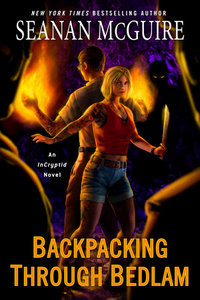
No Plan B by Lee Child and Andrew Child Is Good Enough

No Plan BNo Plan B

by Lee Child, Andrew Child (Narrator)

DETAILS:
Series: Jack Reacher, #27
Publisher: Delacorte Press
Publication Date: October 24, 2022
Format: Hardcover
Length: 357 pg.
Read Date: December 1-3, 2022
Support Independent Bookstores - Visit IndieBound.org

…maybe the others were right. With Reacher running around out there, maybe the full ceremony isn’t the smart way to go. Maybe It’s time we switched to Plan B.”

“We don’t have a Plan B, We’ve never needed one.”

“Maybe it’s time to think of one.”

What’s No Plan B About?

Reacher sees something in a newspaper about a museum display nearby, so he goes to check it out. This leads to him being in just the right neighborhood to see someone being pushed in front of a bus. While others are calling 911 and trying to tend to the victim, Reacher pursues the pusher. This leads to a confrontation where Reacher’s size works against him for once, and with the help of his partner, the man gets away (a Tom Cruise-sized character probably would’ve got at least one of them). Before they slipped away, Reacher got a glimpse of something the man took off the victim that made him curious.

That glance starts a whole machine working—that man, his partner, and their bosses can’t have what he saw become public. They don’t know how much time he got with the information, how much he read/understood—but if he saw anything, it could make things go very wrong for them. So they dispatch another team to take care of Reacher (the two that escaped aren’t in any shape to do anything after tangling with our hero).

Meanwhile, Reacher tries to convince the police that the woman had been pushed. But there’s already a witness who’d been swearing she jumped, and no one confirms what Reacher saw. The detective in charge sympathizes with Reacher and wants to follow up on his statement, but his superiors like the tidy answer a suicide brings. He feeds Reacher a bit of information, and the former M.P. is off on his own investigation. When the new team tries to take him out, Reacher knows he’s on to something and digs in for the long haul. This will take him from Colorado to a small town in Georgia, home to a prison the murder victim worked at.

Two other parties are making a trip to that same town. One is a teen who just learned that his father is imprisoned there—in the same conversation that he learned his father’s identity from his dying mother. He steals some money from his foster mother (money that should’ve been used to care for him, I should note) and buys a bus ticket from LA. He’s in over his head, and as we follow him on his journey it becomes clear that the fact that he survives long enough to get to Georgia is a sign of divine blessing or dumb luck.

We also track a father out for revenge. He’s a professional arsonist—actually, he employs professional arsonists at this point in his career. Something happened that killed his son—the details are kept vague for the reader. The grieving father backtracks the supply chain that provided the product, determined to destroy the man at the top.

So, what did I think about No Plan B?

After last year’s Better Off Dead, I was prepared to put this collaboration/Reacher 2.0 in the “Not for Me” category. I’m glad that the brothers continue to have success, and that many, many readers are satisfied, but it might be time for me to disembark. I wanted to give them one more chance—everyone has an off-novel, right?—but I’d decided that this would be my last Reacher novel. This was good enough to get the brothers another. I guess my fandom is no longer a long-term lease, but the equivalent of a month-to-month rental.

One strategy I employed going into this was ignoring half of the names on the cover—this is an Andrew Grant/Child take on Reacher, not a Lee Child*. That adjustment to my expectations, helped a bit, too.

* I’ve heard and seen multiple interviews/features on the pair describing how they work together, so I know it’s not entirely true. But, it helped me.

The action was good—but hallway fights might be better left to Daredevil than print. I wondered for most of the book if they had one too many storylines, but I ended up buying into the idea. The first hundred pages were great (at least the Reacher vs. conspirators storyline, and maybe the foster kid)—particularly the first couple of chapters, it was a very effective hook. Pages 100-300 were good enough—some “meh” bits, enough good bits to keep me engaged and to push the narrative along, with a really nice uptick over the last chapter or two. The last 50 pages were rushed—you want things to move quickly in the end of the thriller, you need fast action to go along with the adrenaline of the big finish—but this was just too much happening, and it was hard to appreciate it all. There’s a fast momentum, and there’s careening out of control, and this came close to that.

Still, it was in those pages that I came around to liking the revenge storyline and getting why the Childs went with it.

This was a decent thriller with some really good moments featuring a character that reminded me a lot of that guy from 61 Hours, The Hard Way, and One Shot. It’s a fast, entertaining read that will do the job.


3 Stars

This post contains an affiliate link. If you purchase from it, I will get a small commission at no additional cost to you. As always, the opinions expressed are my own.

Book Blogger Hop: Rereading Before Reading a Sequel

Book Blogger Hop


This prompt was submitted by Billy @ Coffee Addicted Writer:

Do you go back and reread the previous book before starting the sequel?

In my pre-book blogger days, yes. Almost 100% of the time—or if it was part of a multi-book ARC, I’d read everything leading up to it. Sure, that led to some imbalance—I’d know the beginning of a trilogy really well, the middle part so-so, and then the third would just get one reading (unless I got the hankering to read the whole thing in one bite).

It really helped to get some minor details refreshed, remember the character names (especially in bigger fantasy tomes), and just “prime” my mind in general for what was coming. Also, I clearly enjoyed the previous book—that’s why I was coming back for the next, and it worked as an excuse to revisit the series/author.

But that really went away once I really got into blogging, and I’d have a hard time letting myself enjoy the luxury of a re-read. That’s a whole ‘nother story, though, and not something anyone but my therapist should pretend to care about.

Over the last couple of years, however—this is largely thanks to my local library really beefing up their collections—I’ve taken to listening to a book a week or two before the sequel/next in the series releases. I get all the benefits, and since I don’t make a point of writing about every audiobook I listen to, there’s no guilt or internal pressure. I probably do this for 50% or so of the books in a series that I read, time (and availability) permitting right now.

What about you? Do you go into a sequel cold or do you need a refresher?

WWW Wednesday, December 7, 2022

It’s time for this week’s WWW Wednesday!

This meme was formerly hosted by MizB at A Daily Rhythm and revived on Taking on a World of Words—and shown to me by Aurore-Anne-Chehoke at Diary-of-a-black-city-girl.

The Three Ws are:

What are you currently reading?
What did you recently finish reading?
What do you think you’ll read next?

Easy enough, right?

What are you currently reading?

I just started Radio Radio by Ian Shane and am listening to Friends, Lovers, and the Big Terrible Thing by Matthew Perry on audiobook.

Radio RadioBlank SpaceFriends, Lovers, and the Big Terrible Thing

What did you recently finish reading?

I just finished Mary Robinette Kowal’s The Spare Man, and have already started recommending it to everyone. I also finished the satisfying Stone Cold by C. J. Box, David Chandler (Narrator) on audio.

The Spare ManBlank SpaceStone Cold

What do you think you’ll read next?

My next book should be Her Name Is Knight by Yasmin Angoe (and yeah, I said this last week, but other library deadlines reared their head) and my next audiobook should be the trilogy ending Junkyard War by Faith Hunter, Khristine Hvam (Narrator).

Her Name Is KnightBlank SpaceJunkyard War

What about you?

A Few Quick Questions with…Sheryl Bass

A little bit ago, I shared my thoughts about Baby Dragon’s Big Sneeze, which is really something you need in your library (if you have people around in the right age range, anyway). Now, here are a few Answers to my Questions from Sheryl Bass, the author. I enjoyed these answers—and really appreciate how she didn’t say anything about my embarrassing typos that I finally noticed when I formatted this post.


Can you talk a little about the genesis of this particular book? What about this idea (among the large number of others you may have had) that made you devote the time to it?
This book started with a big sneeze of my own. I had the ridiculous thought that it was a good thing I wasn’t a dragon or it could have done a lot of damage. This was approximately 13 years ago. The book has been edited and revised since then.

The illustrations are fantastic—how did you team up with Ramesh Ram? What was the process of working with him to combine story and pictures?
This is a self-published book, but the term “self-publishing” is a bit of a misnomer as there are many people who can help every step of the way. I found my mentor, April Cox of Self-Publishing Made Simple while I was watching a free online video she produced about her services. She has approximately 12 illustrators who she regularly works with and knows that they are willing to do work for hire such that the author can retain rights to the illustrations after their work is complete and they are competent and responsive. She had me review the websites of all 12 illustrators and pick my favorite 3 or 4. Then, I asked the three or four of them to draw the exact same scene from my book in black and white. I paid each of them $50 do do this sketch. I then whittled it down to my top two illustrators and had my friends and family be a focus group and vote on their favorite illustrator. Remesh Ram of Prayan Animation won the votes. He is fantastic and I plan to use him for my future children’s picture books.

I can only imagine that coming up with a story in rhyme brings particular challenges—did you find yourself having to abandon ideas, or backtrack a bit when you couldn’t find a decent rhyme and rework a sentence or two?
Yes! I definitely found writing in rhyme to be a challenge. However, I believe it is well worth it. Many publishing houses don’t like rhyme right now. Various types of children’s books go in and out of style and perhaps rhyme is not as in fashion as it once was. However, I am a big proponent of rhyme as there is research supporting it for children in language acquisition, vocabulary expansion, giving a children a sense of rhythm and encouraging reluctant readers. This is part of why nursery rhymes are so useful and enjoyable for children.

You chose to publish this yourself, rather than going through a small press, or a larger “traditional” press—any regrets about that? Any advice for others considering this path?
I have no regrets about self-publishing this book and doing so in the future with additional children’s books. The advantages to self-publishing are more creative control (I chose my own illustrator and told him exactly how I wanted the dragon to look, what I wanted my townspeople to be wearing, etc.), the royalties are higher (40-50% versus 10-12 percent with traditional publishing) and a faster turn around time to publish (months versus years for traditional publishing).

Before this book, you had a couple of personal essays about dogs published—writing about dogs is a big interest around these parts—can you tell us a little about those essays and the books they were in? Any plans to combine your children’s books and your interest in dogs?
These were two slightly different versions of the same story about being a stage mom to my now deceased dog, Lyric. She starred as Toto in the Boulder Dinner Theatre’s production of The Wizard of Oz. She was the only cast member without an understudy and got paid in prime rib every night (since it was dinner theater). Her mom got paid $40 per show. She did 7 shows per week for five months. This story can be found in Lost Souls: Found! Inspiring Stories About Chihuahuas (Kyla Duffy and Lowrey Mumford) and Second-Chance Dogs: True Stories of the Dogs We Rescue and the Dogs Who Rescue Us (ed. Callie Smith Grant).

Related to that—what’s next for Sheryl Bass, author?
I have two additional children’s picture book stories in drafts and others not yet put to paper that I plan to self-publish. You can find my current book and eventually, my others at http://www.be-kindpublishing.com.

Thanks for your time—and thanks for this great little book—I hope it finds its audience!


Page 193 of 609

Powered by WordPress & Theme by Anders Norén