Author: HCNewton Page 195 of 623

PUB DAY REPOST: On the Savage Side by Tiffany McDaniel: A Funeral for Dreams

On the Savage SideOn the Savage Side

by Tiffany McDaniel

DETAILS:
Publisher: Knopf
Publication Date: February 14, 2023
Format: eARC
Length: 464 pg.
Read Date: January 23-31, 2023
Support Independent Bookstores - Visit IndieBound.org


So, you can tell from the title of this post, that this is not a happy tale. The other big hint along those lines is the author’s name. I’m sure that Tiffany McDaniel is perfectly capable of writing a fun romp of a novel—I just have no evidence that she’s interested in doing so.

When you do see her name on a cover, you know a few things going in—the book is going to feature some sort of childhood trauma; the beautifully stylized dialogue (that doesn’t even pretend to be realistic); and prose that can only be described as gorgeous.

Everything else may differ from book to book, but the above are pretty much a given at this point.

What’s On the Savage Side About?

We meet 6-year-old twin sisters Arc and Daffy on the day their father died. Believe it or not, this is likely the best their life is going to be for the rest of this book. They spend most of their childhood in a home with their mother and aunt (I’m very carefully not saying they were raised by their mother and aunt), prostitutes who spend what little money they have on drugs—heroin, primarily. There are brief periods where the children are taken care of by their grandmother—who is kind, loving, and able to take care of them—but those are brief.

We see them age—struggling to separate themselves from their mother and aunt, and eventually following in their footsteps in addiction and profession. As adults, Arc’s focus is her (more fragile) sister’s safety and well-being. It’s because of Daffy that she finds a rehab facility, there’s a (probable) serial killer out there leaving women’s bodies in the river, and Arc is determined to not let Daffy become the next. Hopefully, she can prevent her friends from being the next, too.

Interspersed with chapters describing their lives (with some time jumping involved), we get some selections from their mother’s diary—back when she was capable of keeping one. We see her struggle with addiction and knowing the danger she poses to her daughters (and I was so glad when the book gave us that—it was the first maternal action I saw from her, but we didn’t get to see it for a long time).

We also get chapters describing the point-of-view of the river that flows near their town. How it reacts to being where the bodies of women are discarded, along with its thoughts on other things as well. It’s these chapters—particularly early on—that give the novel its depth and perspective. It feels to me like those chapters are McDaniels speaking with the least amount of artifice. The river feels like her voice unfiltered through the devices she uses the rest of the time.

Chillicothe, Ohio

Until I started this book, I knew Chillicothe, Ohio as the birthplace of Archie Goodwin of Rex Stout’s Nero Wolfe books. I half-assumed it was a fictional location, and never bothered to look it up. Now I know that it exists, and I’m going to have a hard time reestablishing the positive associations I had with the name. It feels like a great place to be from, not a great place to be. I’m sure that it’s a perfectly fine place in reality, but the small city does not come across very well in these pages.

So, what did I think about On the Savage Side?

This was just a brutal read. Every time you get a glimmer of hope, a glimmer of a feeling that things might be okay for some of these characters—something snuffs it out. But there’s another source right around the corner. But, to go back to that line from the novel I borrowed above—the book is full of funerals for dreams.

But there’s beauty in the darkness. And a drive to keep persevering shared by the reader and the characters. I wondered more than once why some of them kept trying—but they did. The mother of one of Arc’s adult friends is a strong vision of enduring love and hope—she’s always ready to help her daughter no matter how tight the grip of addiction is on her at the time. She’s always trying, always striving to give her daughter the care she needs—even when (especially when) there’s no reason to think it’ll do any good.

I mentioned a serial killer above—it’s not a serial killer novel, though. It’s a novel about the women that may be his target and their fears about it. But people looking for a Thomas Harris read will be disappointed. Actually, people looking for most things you find in typical novels will be disappointed. Many of the looming questions in our characters’ lives are left unanswered. But you don’t walk away frustrated that you don’t get the answers like you would from other novels—because we’re given answers to questions we never thought to ask. Some of those are more important, too.

Like always, Tiffany McDaniels delivered a book that’s going to stay in my subconscious for a while—lurking there, making me rethink what I read from time to time. It’ll probably stay there until her next novel comes along (Betty‘s been there for a couple of years, and really only was dislodged by this one—and The Summer that Melted Everything is still there all these years later). It’s somber, it’s sober, and it’s difficult to read. But it’s so worth it in ways I cannot adequately explain. It’ll make you think. It’ll make you feel.

I’m having a hard time articulating exactly why you should read this without getting into the details—if you’ve read McDaniels before, you know what I’m saying. If you haven’t—it’s time to.

Disclaimer: I received this eARC from Knopf via NetGalley in exchange for this post—thanks to both for this.


4 1/2 Stars

This post contains an affiliate link. If you purchase from it, I will get a small commission at no additional cost to you. As always, the opinions expressed are my own.

LITERARY LOCALS: A Q&A About Writing in Idaho with Bryan McBee

Literary Locals logo
This is another connection made by my friend who had a nearby booth an Arts fair (or something like that). I don’t know if either my pal or McBee sold much that day, but I appreciate them conversing at least! If you look at his material and compare it to others from this series of posts, one thing you’ll see off the top is the wide variety of genres we have here. It ain’t all potatoes and mountain scenes here, folks.
Anyway, sit back and enjoy this chat with Bryan McBee–and go check out his site and books afterward.


Before we get into things, why don’t you give the reader a brief introduction to you and your work.
My name is Bryan McBee. I am an Idaho author. I served in the US Army for five years. After which, I attended BSU and graduated in 2018. I have been a bookworm for most of my life, thanks in large part to my mom, who caved in to my constant pestering, and read to me from Stephen King’s The Night Shift in third grade. I have been in love with reading and writing pretty much all my life. I finished writing my first novel, Vector Zero, in 2013, and found a publisher for it in 2021. My second novel, Afterworld, came out in 2022, and I just signed a contract for my third novel which is titled Abnormal Ends. A few of my favorite authors are Dan Simmons, Stephen King, Robert McCommon, Megan O’Keefe, John Scalzi and Brandon Sanderson.

What kept you going from 2013-2021? Also, how many revisions did Vector Zero go through in that time? Incidentally, what I’ve heard of Abnormal Ends on social media has me really intrigued—looking forward to that.
Some of the time in between was taken up by college. I took advantage of the GI Bill and returned to school. For much of that time Vector Zero sat in a file on my computer collecting metaphorical dust. I took it out from time to time trying to find an agent to represent it. Each time I reread and revised it a little. Then came working with an actual editor with an eye towards publication and release. All told the novel went through at least five or six major revisions/rewrites before hitting the shelves.

I’m glad to hear that you’re looking forward to Abnormal Ends. I was excited to write it. It’s with the editor as we speak. I will send out updates as they come in.

Are you a native Idahoan? What brought you to Idaho in the first place? What is it about Idaho that keeps you here?
I’ve lived in Idaho most of my life. I moved here from Oregon when I was 13. My mom’s job transferred her here, and I being her only remaining dependent, was carted along with the rest of her luggage. I love it here. It’s clean, the people are nice, and the country is beautiful.

Are you tied into some sort of local author/bookish group/culture? If so, tell us about it and how it helps you as an author.
I am still pretty new to the whole published author thing, so I’m still trying to find my place in the local culture. I’ve joined the Idaho Writer’s Guild. They’ve been pretty helpful with finding events and giving support to a newby like me.

I’m hearing a lot of good things about the IWG from this series of Q&As. What kind of support/help have you found from it? Here’s a chance for a newby to do some outreach so he can become a respected vet 🙂
I’ve only been a part of the Guild for a year, and due to work haven’t had as much time as I would like to take advantage of the conferences and other events they hold. I am hoping to change that this year and become more active within the Guild.

What kind of events in the area do you attend—either to sell/promote your books or to network with authors? Are there any outside of this area that you hit regularly and wish we had something like it here?
I’ve gotten in touch with several bookstores in the Boise area to do signings. They’ve all been very accommodating. Most recently, I was at Barnes and Noble. In addition to bookstores, I will be at the Gem State Comic Con for the second year in a row, and the Idaho Halloween and Horror Con for the third year in a row. Both are great events. Very fun, and I get to meet lots of awesome nerdy people like me. I attended FanX, the Salt Lake City Comic Con in 2022. That was amazing, and almost overwhelming.

I haven’t made it to Gem State yet—what’s it like for authors? (or in general, come to think of it). I don’t think I’ve heard of the Halloween and Horror Con, either—but if you’ve gone twice and are coming back, it’s got to have something going or it, what’s it like and where is it held?
Gem State Comic con was pretty fantastic. I’m told that last year was the first year back after a hiatus. I found the crowd very welcoming and friendly. Lots of people from all sorts of different fandoms gathered to celebrate the things they love.

The Halloween and Horror Convention was my first big show since becoming a published writer. Last year and the year before they held the convention at the Red Lion hotel downtown. But they’ve outgrown that and will be holding it at Expo-Idaho, like Gem Comic Con. It’s a really great show if you like all things Halloween or Horror.

I will try to keep going back to both shows, as long as they will have me.

What’s the breakdown of your audience—do you have a strong local base, or are your readers from other parts of the world?
I am still a very new author on the scene, and in the process of building my audience. Much of my audience is local to the Boise area, because that’s where I live and can easily reach. However, several of my old army buddies have become dedicated readers, so I have some out of state reach. According to the demographics function on my Facebook page, I even have a follower in Malta. Which I think is tremendous!

Malta? Sounds very exotic. You need to arrange a signing there. (The snarky part of my brain just flashed on Cliff Poncier from the movie Singles, “we’re huge in Europe right now. I mean, we’ve got records… uh, a big record just broke in Belgium.”)

Are those buddies spreading the word as well? I’d think that could be good marketing (especially if they’re still enlisted and stuck on base somewhere with other people who need something to fill downtime).
I just rewatched Singles for the first time in years a little while ago!

My army buddies are spreading the word about my books. A few of them have been fans as well as friends for a long time! Every little bit of exposure helps when it comes to building an audience, and word of mouth is absolutely invaluable!

Do you think there are particular challenges or advantages to being a writer in the Treasure Valley?
I can’t say that I’ve seen any particular challenges to being an author here in the Treasure Valley. The internet has made it so that one doesn’t need to be in New York to be discovered. One thing I have noticed, is there is a strong feeling of local pride among people when they see that I’m a local writer. People here love to support local artists and creators. Which I think bolsters the strong sense of community that we all share here.

Do you bring Idaho (or some sort of Idaho-sensibility, assuming one exists) to your work? Whether or not anyone else sees it, can you look at some aspect of your writing and think “That’s Idaho” or “I would do ____ differently if I was a Kentuckian or from Illinois?”
I’m not really sure. My main focus as I’m scribbling away is to try and make my characters and situations as believable as possible, especially when it’s completely unbelievable. I feel like a writer has to be true to the world they have created and the people who inhabit it. On the main, I like to write what I like to read. Which is a little bit of everything. Hence, my first book is a military thriller, my second is a post-apocalyptic fantasy, and my third is going to be a cyber-punk serial killer novel. The only sensibility I try to bring to my work, is to tell the best story I can.

One final question, is there a book (or two…or 18, if you get really carried away), that embodies Idaho/the Idaho spirit to you to recommend to my readers?
Cloud Cuckoo Land by Anthony Doerr. Such a good book.

That’s my first Doerr response, which really surprises me.
In college, especially in English classes, especially in the writing classes, and most especially in the fiction writing classes, the professors name drop Anthony Doerr constantly. Not quite to the point of annoyance, but only just. It did make me curious about his work. So after I graduated (and gained free time with which to read what I wanted to read) I checked out his work. Very impressive, in my opinion. Well worth all the name dropping I heard as an English major in school.

Thanks for your time and participation! Hope you enjoyed it!
Thank you for the opportunity to chat with you!


Literary Locals logo

BOOK SPOTLIGHT: Mercury’s Shadow by P. J. Garcin

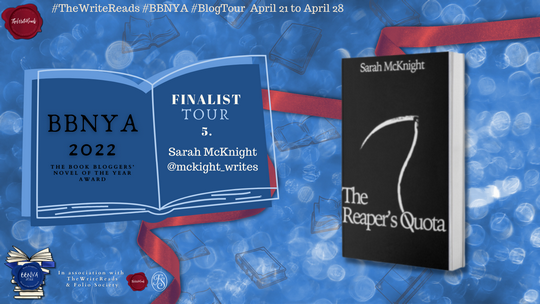
I’m very pleased today to welcome The Write Reads Blog Tour for P.J. Garcin’s Mercury’s Shadow. Be sure to watch https://twitter.com/WriteReadsTours over the next few days to see a lot of bloggers write interesting things about it. Mercury’s Shadow was a finalist for the 2022 Book Blogger’s Novel of the Year Award, so you know there’s a lot of good to be said about it–but before getting to the spotlight for it, let’s start with a word about BBNYA.

BBNYA:

BBNYA is a yearly competition where book bloggers from all over the world read and score books written by indie authors, ending with 15 finalists and one overall winner. If you are an author and wish to learn more about the BBNYA competition, you can visit the official website http://www.bbnya.com or Twitter @bbnya_official. BBNYA is brought to you in association with the @Foliosociety (if you love beautiful books, you NEED to check out their website!) and the book blogger support group @The_WriteReads.

Mercury's Shadow Tour Banner

Book Details:

Genre: Science Fiction, Space Opera, Action Adventure
Age Category: Young Adult/New Adult
Publisher: Rawktron Productions
Release date: July 5, 2020
Format: Paperback/Ebook
Length: 308 pages
Mercury's Shadow

About the Book:

One man’s lust for power threatens the future of humanity—can a young girl from the outer system stop it all?

Imogen “Chim” Esper is thrust into the center of an interplanetary conflict when her family is torn apart by the cruel and indifferent Kardashev Corporation. Forced to run, along with her robotic best friend, Chim struggles to find her place in a society that is poised for revolutionary transformation.

The Kardashev Corporation dominates all commerce and politics in the solar system. Its megalomaniac CEO, Alton Neal, is hell-bent on transforming society by capturing the full energy output of the sun through the creation of a Dyson Swarm.

Citizens of Earth and the stations throughout the system must band together to protect access to the lifeblood of the system or risk becoming permanently enslaved to the Kardashev Corporation.

Mercury’s Shadow is a thrilling adventure that blends real science, big ideas, grand adventure and high stakes to introduce a new heroine and a deep universe that will leave readers asking for more.

Book Links:

Amazon.ca ~ Amazon US ~ Amazon UK ~ Goodreads

About the Author:

PJ Garcin has been writing stories, music and games for most of his life. He writes from the beautiful east coast of Canada where he has worked extensively in video games and technology for the past 20 years. Picking up a long running writing thread, he recently completed the first book in the Kardashev Cycle — Mercury’s Shadow.

The Kardashev Cycle follows the rise and expansion of the dominant Kardashev Corporation and its near universal control over the solar system. The first book in the series, Mercury’s Shadow, introduces the young Imogen Esper — a resourceful young girl from a mining station in the asteroid belt who finds herself caught up in an interplanetary conflict when her father is injured during a routine maintenance mission. The second book, Chimera’s Prism, continued the adventure in 2021.

PJ is a regular speaker at technology conferences on topics ranging from interactive narrative to machine learning. He has an undergrad degree in English, Rhetoric and Professional Writing as well as a Master’s degree in Communication.

He worked as Executive Producer in games on titles that sold more than 27 million units in total. He worked on large franchises such as FIFA, Madden, and Guitar Hero while helping to launch successful indie franchises like The Golf Club (now PGA Tour) and Infinite Air. He currently works as Director of Product Management for an open-source-focused SaaS company.

Website ~ Twitter ~ TikTok ~ Instagram ~ Facebook


My thanks to The Write Reads for the invitation to participate in this tour and the materials they provided.

Bad Memory by Jim Cliff: A Very Cold (and Closed) Case Gets a Second Look

Bad MemoryBad Memory

by Jim Cliff

DETAILS:
Series: Jake Abraham, #2
Publisher: Antbear Books
Publication Date: May 2, 2017
Format: eBook
Length: 104 pg.
Read Date: February 1, 2023

“I need you to find out what happened to her. I need to know who killed her.”

“The paper says suicide,” I helpfully pointed out. Case closed. That was easy.

“They’re wrong.”

“You seem pretty sure about that.”

“I was there when she died.”

What’s Bad Memory About?

Jake Abraham’s a P.I. who probably should’ve gone into another line of work, all things considered. But he didn’t, and it turns out that he has a knack for this kind of thing (see The Shoulders of Giants).

Jake’s approached by a client* who wants to him to look into a twenty-three old suicide. She was nearby, she says, when the woman died, and what she remembers hearing makes her certain it wasn’t a suicide. She was pressured into staying silent back then, but the reasons for that have disappeared and now she wants to unburden her conscience.

* I’m pretty sure she was a character in the earlier novel, but after 6+ years, I don’t remember—and I’m too lazy to check

Jake starts looking into this—talking to his detective friend, coworkers of the deceased, and the man who pressured his client into staying quiet. What he discovers doesn’t add up to a tidy suicide like the police had determined—but it doesn’t rule it out either.

Well, except for the people who aren’t doing an incredibly subtle tailing job on him all of the sudden. He’s not doing anything else that should draw anyone’s attention.

Cliff’s Voice

It wasn’t the first time I’d had a gun pointed at me, but it doesn’t get any more fun.

Like with The Shoulders of Giants, Cliff’s voice—the snappy PI patter in both the first-person narration and Jake’s dialogue—wins me over. It’s like Stout enjoying himself, early Crais, or Parker at his lightest. It just sings.

I really don’t need a good story to make me enjoy reading something told with this (or a similar) voice. Thankfully, Cliff delivers a good story, too—making it all the more enjoyable.

So, what did I think about Bad Memory?

There aren’t many perks to being a licensed private investigator. We can’t arrest people, we can’t tap people’s phones, we can’t even go through people’s mail. We’re basically private citizens with tenacious personalities.

This novella is precisely what I needed—I’d just finished two long-ish reads that were pretty heavy and taken a lot out of me emotionally. This was quick, satisfying, and filled with some snappy writing. It was a nice change of pace and tone, giving me the chance to catch my breath before diving into another full novel.

Even if it didn’t serve that purpose for me, I’d have been glad to read this—it scratches that P.I. itch in just the right way.

There was a moment when I thought that the book was trying too hard to convince me that Suspect X was guilty, and so I started to wonder who else it could’ve been. But then I remembered that this was a novella and Cliff didn’t have space to be that clever—so I shifted to trying to figure out why X was guilty. If he’d had another 100+ pages in the book and X was still guilty, I’d likely have complained about it. But given the space restraints, I have no problem with X.

Short, sweet, and to the point. This novella got the job done and makes me wish that Cliff wrote faster.


3 Stars

In the Fullness of Time: An Introduction to the Biblical Theology of Acts and Paul by Richard B. Gaffin Jr.: One of the Best Things I’ve Read in Years

I can’t put this one off any longer—if I could, I promise you I would. I’m out of my league here, but I’ve got nothing else to write about. And I really need to write something about this.


In the Fullness of TimeIn the Fullness of Time: An Introduction to the Biblical Theology of Acts and Paul

by Richard B. Gaffin Jr.

DETAILS:
Publisher: Crossway
Publication Date: May 3, 2022
Format: Hardcover
Length: 419 pg.
Read Date: September 4-December 25, 2022
Support Independent Bookstores - Visit IndieBound.org

What’s In the Fullness of Time About?

First, let’s look at what was on the Publisher’s Website:

An Exegetical Study of the Book of Acts and Pauline Theology

Christians often skip a crucial starting point when studying the apostle Paul: the foundations of his deeply nuanced theology. Some studies on the book of Acts attempt to touch on every major theme in Paul’s letters, making them difficult to understand or prone to leaving out important nuances. Christians need a biblical, theological, and exegetically grounded framework to thoroughly understand Paul’s theology.

In this book, Richard B. Gaffin Jr. gives readers an accessible introduction to Acts and Paul. Building on a lifetime of study, Gaffin teaches on topics including the redemptive-historical significance of Pentecost; eschatology; and the fulfillment of redemptive history in the death and resurrection of Christ. In the Fullness of Time is an exegetical “textbook” for pastors, students, and lay leaders seeking to learn more about Acts and Paul from a Reformed and evangelical perspective.

  • Explores the Foundations of Paul’s Theology: Offers a nuanced look at the core of Paul’s thinking
  • Wide-Ranging Audience: A valuable study for pastors, theology students, and lay leaders
  • Thorough Yet Accessible: An in-depth look at Pauline theology that’s accessible to readers

After reading the book, however, I’d offer a tweak or two to that description. For example, I’d add to that “for pastors, students, and lay leaders” lay people in general (or just swap out “leaders” for “people”).

Also, I’m not sure I’d include eschatology alongside those other topics. It seemed to me (on first read, anyway) that this was a book about Eschatology as presented by/understood through the New Testament—with a focus on understanding Pentecost and the fulfillment of redemption (and a couple of other topics) in light of that eschatology. That may seem like splitting hairs, and really, I’m guessing the good people at Crossway understand the book a bit better than I do. Still, I didn’t get the impression that the book thought of those ideas as equal (unlike the description).

The chapters in this book came from lecture notes for the class that Gaffin taught for years on Paul and Acts—a class I’ve heard several people mention over the years, and really wish I could’ve taken. Getting that material in written form is a blessing I didn’t expect and was more than happy to receive.

The Centrality of Eschatology

In Chapter 2, Gaffin writes:

for much Christian theology and preaching seeking to be faithful to the Bible as God’s inscripturated word, the rediscovery of eschatology can be seen as having a corrective significance that has resulted in laying hold of biblical teaching in a way that has not been fully appreciated in the past.

For instance, in a standard volume on systematic theology, “Eschatology” is the last chapter. More significantly, coming at the end of the volume, eschatology tends to be defined exclusively in terms of the “last things” having to do with what is still future for the church—Christ’s return and matters concomitant with his return, perhaps including as well some treatment of what occurs at death and the so-called intermediate state. Even more significantly, very often little, if any, attention is given to the relationship with what has preceded, to the integral connection between the future hope of the church and its present life and the practical relevance of the former for the latter.

What has become more and more clear is that in an overall presentation of biblical teaching, eschatology is not properly compartmentalized at the end. In particular, the New Testament teaches, as our own work will show, what is often termed a “realized eschatology.” Biblical eschatology is to be defined in terms of the first as well as the second coming of Christ. New Testament eschatology has a dual focus. In that respect it is elliptical, defined by two foci, present and future, the proverbial already-not-yet.

It’s this dual focus that characterizes so much of this book, and grounds the arguments Gaffin puts forth.

The Exegetical Portions

Throughout the book, Gaffin offers a lengthier exegesis of a particular passage as either a foundation for a chapter’s position or to show how something from earlier in a chapter is worked out through Paul or Luke’s work. These are the best parts of this book.

Period. It’s not even close.

For example, he uses a little more than two pages to exegete Philippians 2:12-13 while considering the indicative and imperative in Paul. I don’t remember a better example of writing leading to doxology recently.

I get—between this being based on the course, where he only had so much time and the design of the book—that he couldn’t have given us similar treatment for several more passages that he touched upon. But man, I wish he had. But that brushes up on the next section, so I guess it’s time to transition.

Could Use A Little More

In addition to wanting more exegetical portions, there’s something else I could use more of.

I think that despite the length of the book, it should’ve been longer—too much needs to be fleshed out a little more. Not much, but almost every point could be expressed more fully. More than once, Gaffin does a better job of clarifying what he’s not addressing or not saying than he does in making it clear what he is trying to say.

So, what did I think about In the Fullness of Time?

I read a chapter (or just a half of one) a week for a few months to carefully work through the book—and I’m sure I need to do the same (or slower) once or twice more to really get a handle on Gaffin’s arguments. But what I got this time around was about as good as anyone could ask for.

Reading this felt like I was sitting in a lecture hall featuring my favorite professor—in a strange way. I felt like I was a beginning student—almost like looking at some of these passages for the first time. Yet, while reading I simultaneously felt like I was understanding texts with a depth I’m not accustomed to. Reading Gaffin you’re frequently running into thinking more subtle and profound than a lot of what you’ve encountered previously—and that’s certainly the case here. Still, I thought this work was a bit easier to work through than some of his shorter works.

For me, this is the kind of work that you want to read alongside one or more others, so you can pause and talk things through from time to time—just to make sure everyone is understanding everything. Or at least you’re stupified with company.

Anyway, I don’t think I have anything else to say at this point—maybe on the eventual reread, I’ll be able to say something more substantive than this. Basically, you want to read this, wrestle with it, study it, and do it again.


5 Stars

This post contains an affiliate link. If you purchase from it, I will get a small commission at no additional cost to you. As always, the opinions expressed are my own.

Saturday Miscellany—2/11/23

I didn’t have a lot of time on the InterWebs this week, which leads to a small miscellany. ¯_ (ツ)_/¯ C’est la vie. But I did enjoy these pieces and think you will, too.

No New Releases caught my eye this week, which is good—I am literally 2+ weeks behind this year (and it’s the second week of February!!!), I don’t need the temptation.

Odds ‘n ends about books and reading that caught my eye this week. You’ve probably seen some/most/all of them, but just in case:
bullet Banning books in the land of the free
bullet What books hate most in readers.—I can’t read the story this is in response to (but the headline and subtitle make me think I’d have enjoyed it), but this is a fun post.
bullet Can Detective Novels Withstand the Moonlighting Curse?—Seasonally appropriate, even if I dispute the existence of said curse.
bullet The Many Levels of Mystery: ‘Whodunnit?’ to ‘Whydunnit?’ and Beyond (this is about much more than mystery or crime writing)
bullet Reading Ireland Month is Coming—If I’ve heard of this before, I’ve completely forgotten it. Sounds like a fun idea. Head on over to 746 Books to check it out.
bullet For the love of wild romance—Outside of the lack of Eames-appreciation, the only things wrong with this post is that it isn’t longer and published somewhere more eyeballs won’t land on it.
bullet Let people enjoy their books how they see fit—it’s truly ridiculous that this needs to be said. But since it does (repeatedly), at least it’s said well.
bullet 5 Misconceptions About YA

The kind of activity by a Publisher (Indie or not, but an Indie has more freedom to do) that deserves attention:
bullet We don’t want your money honey. Seriously, we don’t.—Fahrenheit Press points to some great charities to help earthquake victims in Syria & Turkey and will be donating all profits from their store this weekend, too.

What I Mean When I Say

The Ballad of Bonaduke—Episode 15: A Walk In The Park by R. T. Slaywood: I’m Getting Tired of This

The Ballad of BonadukeThe Ballad of Bonaduke—
Episode 15: A Walk In The Park

by R.T. Slaywood

DETAILS:
Series: The Ballad of Bonaduke, #15
Format: Kindle Vella Story
Read Date: February 9, 2023

The Story So Far…

A drunken Michael Bonaduke decides to use a grift (with maybe some sort of magic/magic-like “help”) to win on a scratch-off lottery ticket so he has money to buy more to drink. He pulls off whatever he did, gets his money and some booze and stumbles off into the darkness to drink himself into oblivion so he can start again the next day. He’s hit by dark memories (probably what’s driving him to the drinking) of fire, pleading, and screaming. There’s going to be a price to pay for his grift, and he’s trying to be ready.

Before then, he gets himself drunk and we get some of his tragic backstory. As he ponders this, he decides to use some of his ill-gotten-gains to buy more booze and walks into a liquor store robbery. He foils it in some sort of magical fashion, gets some more to drink, and heads off to the park to drink until he’s arrested (probably for the failed robbery). At least that’s his plan, but it gets interrupted by being hit by a car. He wakes up on some sort of short, metal bed and is unsure what’s going on. It turns out that some group is subjecting him to a test—if he passes, everything will be explained to him (and hopefully the reader, too). He passes—and is brought somewhere for answers, or maybe training, or maybe another test. Time will tell (or things are going to get really annoying). Answers aren’t quick to come—but the mysteries and questions keep piling up.

Things get hairy and Bonaduke leaves and finds himself back in the neighborhood he started from.

What’s A Walk In The Park About?

So, our man needs a place to lay low and make some choices, so he heads to a homeless encampment he used to stay at. He apparently left under a cloud and it doesn’t seem he’s welcome.

So, what did I think about A Walk In The Park?

I think it’s fitting to just repeat what I said about the last episode here. If the story isn’t going to move, there’s no reason for my posts to move.

This is another filler episode where not much (anything) happens. I’m getting really tired of these. It’s hard to have an opinion about treading water. I feel shallow complaining about this, but…


2 Stars

The Friday 56 for 2/10/23: A Man Named Doll by Jonathan Ames

The Friday 56This is a weekly bloghop hosted by Freda’s Voice.

RULES:
The Friday 56 Grab a book, any book.
The Friday 56 Turn to Page 56 or 56% on your ereader. If you have to improvise, that is okay.
The Friday 56 Find a snippet, short and sweet.
The Friday 56 Post it.

from Page 56 of:
A Man Named Doll

A Man Named Doll by Jonathan Ames

I went back inside and looked at the blood trail some more. Someone had dragged blondie from the table to the elevator and up to the sixth floor, and then for some reason had left him there and taken off.

Or, alternatively, that person was somewhere inside, hiding, and not making themselves known.

So I had a dilemma: Should I search the whole house? Or should I go home immediately and call the cops and tell them everything? Every stupid thing I had done?

I decided to search the house.

A Few Quick Questions with…Troy Lambert

A couple of hours ago, I posted about Lambert’s novel, Harvested, the first of a series I know I’m coming back to soon. Now, I have the chance to get some more information about him and the book in this Q&A. He’ll be back in a couple of weeks for a Q&A about writing in Idaho as part of the Literary Locals series—be sure you come back for that.


All authors have more ideas running around in their head than they can possibly develop—what was it about this idea that made you commit to writing it? Also, what was the starting point for this book? Was it the story about the missing dogs or the ongoing story (I’m being deliberately vague here) that required you to invent Max, or did you have Max and need to figure out some stories to put him in? Or is that kind of answer impossible—and you got the whole ball of wax at once?
So the idea of Max as a character came first, although the idea for the plot came shortly after. The idea of missing dogs appealed to me in a lot of ways, and I saw the twist in my head after only a little research, and it kinda all came together after that.

The same was true for Teaching Moments, although in that case the idea for the killer came to me first, and then I worked it into the Max series. The next book in that series is much the same, although I think the main villain in that case is even worse. That one will be out late this year or early next.

Multiple authors have talked about the unbreakable rule even in Crime Fiction is “you don’t kill the dog (or other pets).” But you not only kill some, but threaten several more. Did you think much about the danger inherent in this plot? What compelled you to go forward with it? Or was that danger what drew you into it?
So that is often a “rule” but I think it is all in how you handle it. The dogs for me are just like people in this book: they are valuable characters, and they are even heroic at times (no spoilers, of course)

And the story of dogs continues in Teaching Moments as one of them becomes Max’s partner throughout. Of course, a lot of my other work features dogs as well, and that is because I love them, and can’t help myself when it comes to casting them in books.

Supporting characters really make or break a book for me more than the protagonist does. Dr. Gamble is a great example of that—she was such a fun character. When she was introduced, I really didn’t expect much of her, she seemed like a typical “generic subject matter expert to help the PI get to the next step” that we’re all used to seeing, but you really fleshed her out and made her a big part of the story. Was that the idea all along, or did you just enjoy her so much that you changed her role?
So I liked her from the start. She was a favorite character who came to me pretty fleshed out. I think supporting characters are key to a good story: they produce conflict, tension, but also from time to time just some pleasant relief to that tension. I think she serves all those roles in this story, and she may play additional roles in the series going forward, even becoming more of a key character in Book 5, but that is down the road a bit.

Who are some of your major influences? (whether or not you think those influences can be seen in your work—you know they’re there)
There are several. I would say that Stephen King and Dean Koontz top the list, at least for writing style and in some cases subject matter. They’re also both inspiring on a personal level. But there are certainly others: Lee Child, Vincent Zandri (a good friend now) and others.

Let’s play “Online Bookstore Algorithm” (a game I made up for these Q&As). What are 3-5 books whose readers may like Harvested?
Ha! A fun game. L.T. Ryan readers, stories like Unmasked and that series, Brad Lee, A Team of One, anything in the Chase Baker series by Vincent Zandri, and the Finding Reacher series by Diane Capri.

Your Amazon Author Page lists a lot of titles—you’ve been a busy man for the last decade or so. What is it about storytelling/writing that keeps it fresh for you? Is this a compulsion to keep going, or is it more pleasure?
That’s a two part answer: it is a compulsion, yes, in some ways. But it is also pleasure. I love telling stories, and plan to do it until I just can’t any more. I hope that day is a long way in the future. I don’t ever plan to retire, and there are so many more titles coming out even just this year. I can’t wait to see what I come up with next.

In somewhat of a related question, what’s next for Troy Lambert, author? Also, are there more Max Boucher books to come, or is it a duology? (I largely ask for myself, so I’m in the right frame of mind before I start the next)
So there is another book in the Capital City Murders, and one that signals a major change in the series story, coming in April. Right now there are at least three more Max books planned along with a novella that will be out this year as well, and a new series coming sometime either later this year or the first part of next.

There will be a couple of anthologies and story collections coming, and even a book of poetry at some point. So stay tuned!

Thanks for your time—and thanks for Max Boucher, he’s the kind of PI that the Northwest needs more of (at least in fiction).
You bet. Thanks for having me.


Literary Locals logo

Harvested by Troy Lambert: A Man Bites Dog P.I. Novel

This is part of my Literary Locals series. Be sure to come back this afternoon for a Q&A with the author about this book—and in a couple of weeks to see his thoughts on writing in Idaho.


HarvestedHarvested

by Troy Lambert

DETAILS:
Series: Max Boucher Mysteries, #1
Publisher: Unbound Media
Publication Date: March 15, 2019
Format: Paperback
Length: 247 pg.
Read Date: January 2-3, 2023
Support Independent Bookstores - Visit IndieBound.org

What’s Harvested About?

Max Boucher is a P.I. in Seattle. Like a good (fictional) P.I., he spends a lot of time drinking. He spends most of the rest of his time working just to make ends meet. He really wants to devote his time to looking for whoever murdered his daughter, killed his dog, and either kidnapped or murdered his wife. He—and his former colleagues in the Seattle PD—have followed every lead they have, but he’d spend all of his life going back over the evidence time and time again if he could.

Now, he’s taken on a case—he takes on every case that comes his way—that takes him back to his old neighborhood. The dog park that he and his family used to go to, in fact. There’s a rash of dognappings in the area, and owners have come together to hire him to find their canine friends. The police can/will only do so much, but Max can devote more time to it.

It doesn’t take long for things to get hairy—there’s a connection to a Korean mob boss. Some of the dogs start reappearing—with strange injuries. And it turns out that this has been happening all over Seattle for some time. Max isn’t sure what he’s gotten himself into, but it’s about a lot more than missing poodles.

Supporting Characters

Obviously, you’ve got to have a compelling P.I. in a book like this—and a good hook for the story. That’s what the reader comes for, and the writer had better deliver. A plausible villain, is important, too—but the others can overcome an iffy one. But what will really make a P.I. novel work is the supporting characters—the cop buddies/frenemies/rival (depending on the series), the client, the witnesses, and so on.

Lambert nails this throughout the book. I like Boucher and want to see more of him, but I enjoyed some of the side characters more than him. There’s a friendly and helpful veterinarian who could probably carry a cozy mystery series on her own—and I would buy six of those tomorrow if they existed.

There’s a guy who details Max’s car (he’s got an older car that’s his pride and joy)—which is something definitely called upon when your case involves carrying injured dogs (and injured detectives) around. If Eddie shows up for a scene or two in every book in the series, you can color me pleased. I’m not even sure why—I also don’t care much, I just liked him.

I’m not going to say I enjoyed the Korean mob boss* in the same way I did those two. But the scenes with him are some of the most intense in the novel.

* Ahem. Suspected boss, of a mob that may not even exist.

I could go on for a few more—I don’t remember exactly my point when I started this section, other than to rave about Dr. Gamble and Eddie. But I guess that I just want to stress that Lambert gives us more than a solid P.I. He knows how to give the reader characters to invest in and care about—even if only for a page or two.

Beware of (Hurt) Dogs

* (yeah, that’s a lame section title—but it’s better than “It’s a Dog Eat Dog Book” with the implied cannibalism)

I know I have readers who will be antsy about this book—we’re talking about kidnapped and injured dogs here (there’s a reason I have a recurring post about books about dogs who live). And for those who cannot take violence toward animals, this is a book to avoid.

I will say, however, almost all of the violence happens “off-screen”—you see very little of it on the page. And what you see on the page isn’t that bad (up until the climactic bit at the end, but the violence there is spread amongst characters with two and four legs (and the two-legged ones get the worst of it).

The point of this book is Boucher investigating the kidnappings, stopping them by getting to the bottom of things and rescuing as many dogs as he can. So if you’re on the fence, you can hold on to that.

So, what did I think about Harvested?

This was a good read. Lambert delivered in every way I wanted a book like this to—solid plot, unique case, great character work, and a pace that keeps you turning the pages long past the time you should put the book down for sleep or chores. I’d recommend this just for the (relative) novelty of a Seattle P.I.—mid-sized US cities need to be the setting of more P.I. novels. The book delivers on everything it promises and gives you an open (and welcome) invitation to come back for another. I know I’m accepting that invitation.

Oh—minor spoiler—by the end, one of the kidnapped dogs can’t be matched with an owner and ends up staying with Max. So you know I have to come back, just for more of him.

I’d have come back anyway—I want to see how Max moves on from this point in general. I’m quite curious about the clues he discovered regarding his wife’s case, too. I’m assuming (and really don’t want to know the truth until I’m into the next book) that book 2 will advance the investigation into his wife’s kidnapping while Max and his new partner dive into another stand-alone case—and we’ll continue that way for a while. That sounds like a great time to me. Grab this one—the second book is out now, you might as well grab it, too. You’ll have fun.


3.5 Stars

This post contains an affiliate link. If you purchase from it, I will get a small commission at no additional cost to you. As always, the opinions expressed are my own.
Literary Locals logo

Page 195 of 623

Powered by WordPress & Theme by Anders Norén