Author: HCNewton Page 220 of 610

Highlights from June: Lines Worth Repeating

Highlights from the Month
Whoops! Knew I forgot something last week.

I’m citing more audiobooks here than I usually do. So, let me again stress that punctuation, sentence/paragraph breaks, and so on are guesswork on my part.

Attachments

Attachments by Rainbow Rowell

Lincoln checked out the kitchen. The fridge was new, but the rest of the room did indeed know the differene between Red Skelton and Red Buttons.

“I don’t know if I even believe in that anymore. The fith guy. The perfect guy. The one. I’ve lost faith in ‘the’.”

“How do you feel about ‘a’ and ‘an’?”

“Indifferent.”

“So you’re considering a life without articles?”

“I’m sort of…coming off a bad relationship.”

“When did it end?”

“Slightly before it started.”


Adult Assembly Required

Adult Assembly Required by Abbi Waxman

“I know it’s hard to imagine right now, but Los Angeles does have different seasons. There are three days of spring every May, an unpredictable and unpleasantly hot summer from then until three days of crisp and lovely fall sometime in November, then an unpredictable and unpleasantly chilly winter until the three-day spring rolls around again.”

Laura laughed. “Well, New York isn’t much better: Spring and fall last a month each and make you certain there’s no better city on earth, then summer and winter are brutal and exhausting. Precisely when you decide it’s time to leave once and for all, spring or fall shows up and you forget the pain all over again.”

When the body experiences a sudden shock, it actually freezes for one twenty-fifth of a second and then deploys intense psychological curiosity, mobilizing every neuron and nerve, every sense, every possible input to work out exactly what just happened. In a microsecond or two the brain gathers the intel, sorts it, analyzes it, cross-references it, and is ready to issue directions for what to do next. It’s a miracle, really, and while it might not definitively prove the existence of God, it certainly deserves an enthusiastic round of applause.


How to Take Over the World

How to Take Over the World: Practical Schemes and Scientific Solutions for the Aspiring Supervillain by Author

Are Shakespeare’s plays truly the greatest in the English language? Shakespeare scholars certainly think so. But I’ve actually read some of them, so I speak with authority when I say that his plays are okay, I guess? But it’s hard to argue they couldn’t be improved upon. For example, did you know that not once in Shakespeare’s works does even a single character gain access to a giant robot suit, much less employ it to lay waste to their enemies? Academics will argue that their beloved Bard captures the very heart of the human condition with sublime nuance and rapturous magnificence, but any conception of humanity that excludes the ever-present desire to possess a robot large enough to climb inside and which also fires lasers out of its eyes and missiles out of its hands is one that feels somewhat blinkered.


Crazy in Poughkeepsie

Crazy in Poughkeepsie by Daniel Pinkwater

“Tell me if I get this right. The way to get there is just to drive along without any kind of plan, taking various turns on the spur of the moment.”

“With the right attitude.”

“And the right attitude is…”

“Assuming we’ll arrive.”

“Shouldn’t we consult the global positioning thingie?” Vern Chuckoff asked.

“We don’t have one,” Maurice said. “This car is pre-digital, but there’s a blue light that comes on when we are on the Interstate.”

“The Interstate Highway System, which was just being completed when this car was built?” Vern asked.

“I think it’s more likely to be the system of virtual or quasi-imaginary roads or routes that exists in between the state of so-called reality in which we operate and some other states of existence of which we are ordinarily unaware,” Molly said.


We Are Legion (We Are Bob)

We Are Legion (We Are Bob) by Dennis E. Taylor

We took a minute to enjoy the joke. Belly laughs are one of the best things about sentience and you should never miss the chance for one.


Against All Odds

Against All Odds by Jeffrey H. Haskell

Being blown out into space was on the top of every spacer’s list of “how not to die.”

Back on the O-Deck, he stopped next to Jennings before entering the bridge. He gave her a nod and she snapped to attention.
“Captain on deck,” she bellowed. In his experience, Marines loved yelling at anyone, especially the Navy. It didn’t surprise him at all to see her grin as he stepped through.

She hadn’t really known Commander Stanislaw that well but having him react so was surprising, even though doctors had a long history of acting like they knew better than everyone else.


Movieland

Movieland by Author

“The ME called with her autopsy report on [name withheld],” he said. “I learned that getting a shotgun blast in the face and driving off a cliff can kill you.”

“Did you reach them?”

“Yeah, an ADA named Joel Goldman, I got his take on the possibility that Honig hired a gunsel to take out Kim Spivey.”
“A gunsel?”

“It’s the same as a gunman, but more fun to say.”


The Border

The Border by Don Winslow

It’s funny, he thinks, how the big decisions in your life don’t always follow a big moment or a big change, but just seem to settle on you like an inevitability, something you didn’t decide at all but has always been decided for you.

Barrera made billions of dollars, created and ruled a freaking empire, and what does he have to show for it?

A dead child, an ex-wife who doesn’t come to his wake, a young trophy widow, twin sons who will grow up without their father, a baseball, some smelly old boxing gloves and a suit he never wore. And no one, not one of the hundreds of people [at his funeral], can think of one nice story to tell about him. And that’s the guy who won.

EI Señor. El Patroón. The Godfather.

In a better world, the movies that play on the inside of his eyelids would be features, the product of a screenwriter’s imagination and a director’s style, but in Chuy’s world they are documentaries; memories, you could call them, except they don’t flow like remembrance but are choppy cuts, flashes of surrealism that are all too real.

They are of flayed bodies and severed heads.

Dead children.

Corpses mutilated, others burned in fifty-five-gallon drums, and the memories reside in his nose as well as his eyes. And in his ears, as he can still hear—can’t stop hearing, really—the screams, the pleas for mercy, the shrill taunting laughter that was sometimes his own.

“You got kids?”

“No,” Cirello says. “You missin’ out.”

“I figure I got time.”

“We all figure we got time,” Darnell says. “Ain’t true. Time got us. Time undefeated, man. You never beat it. You wanna know about time, ask a convict. We experts on the subject of time.”

Eddie Ruiz stayed in the witness protection program for about thirty-seven minutes.

Which is about the time it took him to scope out St. George, Utah, and say, “I don’t think so.”

Yeah, a lot of the homeless are addicts, but most addicts aren’t homeless.

Jacqui has learned this on the blocks and in the parks and housing projects where she scores and shoots up. Most of the junkies out there with her have jobs—they’re roofers and carpet layers, or auto mechanics, or they work at one of the few factories that survived after IBM pulled out. There are housewives shooting up because it’s cheaper than the Oxy pills they got hooked on, there are high school kids, their teachers, people who drive down from even smaller towns upstate to score.

You have homeless like her who stink of body odor and you have suburban queens who smell of Mary Kay products and pay for their habits from their Amway earnings, and you have everything in between.

Welcome to Heroin Nation, 2016.

One nation, under the influence.

With liberty and justice for all.

Amen.

(Image by DaModernDaVinci from Pixabay)

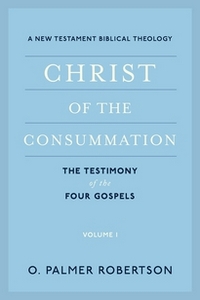
REPOSTING JUST CUZ: Grace Alone–Salvation as a Gift of God by Carl R. Trueman

Grace Alone--Salvation as a Gift of GodGrace Alone–Salvation as a Gift of God: What the Reformers Taught…and Why It Still Matters

by Carl R. Trueman
Series: The 5 Solas Series
Paperback, 243 pg.
Zondervan, 2017
Read: October 8 – 22, 2017

After struggling through three books in this series, I will admit to some trepidation about this one — thankfully, Carl Trueman is an author I have a bit of experience with, so I figured it’d be worth the effort. Thankfully, there wasn’t that much effort, and the book was absolutely worth the time.

Trueman organizes this book differently than the others — in Part 1, he considers Sola Gratia in Scripture and Church History. Trueman surveys the idea of grace alone through both Testaments (it’s easier than some would lead you to think to find it in the Old Testament), looking at individual texts as well as themes throughout the books. I would have liked this to be a bit longer — but I really can’t complain about it. Following that, Trueman focuses on the teachings of the Church throughout history about Grace — starting with the early church, focusing on Augustine and his Confessions as emblematic of the first centuries of the church. Then he continues to focus on Augustine but shifts the focus to the controversies sparked by the Confessions with Pelagius and his followers as the prism through which the (Western) Church discusses and teaches Grace since those days. In the next chapter, Trueman focuses on Medieval theology about grace using Aquinas as the example. Following that we get chapters on Luther and Calvin (and those who’d be allied to Calvin’s branch of the Reformation), shaking off the accumulated tradition and misunderstandings to get back to the core of Scriptural and Augustinian teaching (with help from Aquinas). Would I have appreciated another chapter or two about post-Reformational history? Sure. But they weren’t necessary to fulfill Trueman’s aims, and we get a taste of what they’d offer in Part 2.

Part 2 is titled “Sola Gratia in the Church.” Grace is communicated to Christians via The Church, Preaching, Sacraments, and Prayer and so Trueman a. defends that idea and then proceeds to discuss how God goes that in chapters devoted to each of those. For those of the Reformed tradition, there is nothing ground-breaking or controversial here, although Protestants from other traditions might find some of the ideas challenging. These are solid chapters of the kind of teaching I expected from this series, and I appreciated them.

In the book’s Conclusion, Trueman attempts to address the questions: “What would a ‘grace alone’ church look like today? What would characterize its life as a church? How might we recognize such a church when we see it?” The answers to these questions are a mix of doctrinal and practical ideas that he lists in ten points showing the interconnections between them. This conclusion (in building on what came before) is worth at least half the price of the book — just fantastic stuff.

I still have one to go in the series, so I may have to modify this, but this one is by far the best of the bunch — accessible, pastoral, and thorough without sacrificing depth. Trueman doesn’t seem to get distracted by pet details, nor to just beat the same obvious deceased equines on this topic. If you’re going to read just one of the five, let this be it. Alternatively, if the some of the others have left you wanting, give this one a shot, I think you’ll appreciate it.

—–

4 Stars

Saturday Miscellany—7/9/22

Odds ‘n ends about books and reading that caught my eye this week. You’ve probably seen some/most/all of them, but just in case:
bullet How to read: a guide to getting more out of the experience: Most of us can read, but is there a way to do it better? Faster? With more comprehension or even … joy?—This kind of thing typically comes out in January, but I’ll take it now. 🙂
bullet Publishers, Internet Archive File Dueling Summary Judgment Motions in Scan Suit
bullet ‘There’s obviously a market’: why are there so many children’s books about anxiety?—Pretty sure the fact that there is a market says a lot about the state of…everything?
bullet Song Exploder Is Exploding Books Now—I’ve never listened to an episode of Song Exploder, but I’m about done with Hrishikesh Hirway’s West Wing Weekly podcast, and if he approaches books with the same kind of analysis, I’m in…
bullet Exclusive Cover Reveal + Excerpt: Vampire Weekend Is a Punk Rock Tale of Found Family—Chen’s tackling vampires next? Color me excited.
bullet Ben Aaronovitch’s Rivers of London novels are set for TV adaptation—I’ll believe it when I see it (and I think Aaronovitch said something similar in an interview I heard a couple of months ago). Still, I want to believe—and see it.
bullet Rex Stout: Logomachizing—a great essay on Stout and Nero Wolfe.
bullet Why We Love Horror—I mean, I don’t love horror, but for those who do…
bullet Book Blogger Stats Survey Results: 2022—a good look at the state of book blogging
bullet Book Relaxation—on rediscoveringreading

This Week’s New Releases that I’m Excited About and/or You’ll Probably See Here Soon:
bullet The Law by Jim Butcher—a new Dresden Files novella dials down the magic to remind everyone that it doesn’t take a lot of power to ruin someone’s life. I had a couple of things to say about the audiobook
bullet Holy Chow by David Rosenfelt—Andy Carpenter defends the accused murderer/step-son of a friend I wrote about it a couple of weeks ago.
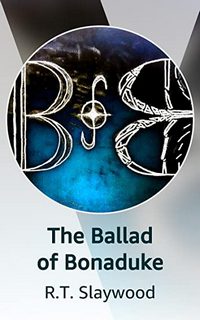
bullet The Ballad of Hanging Lees by David Nolan—1. Buy this for the cover alone. 2. It’s the third in Nolan’s “Manc Noir” trilogy. I’d be lying if I said I wasn’t a little bit intimidated going in. Nolan pulls no punches, and if this is the end? A lot of nasty things could happen.
bullet Celebromancy by Michael R. Underwood—the second Ree Reyes novel gets the reissue treatment by Underwood, and it looks snazzy. If you missed this series the first time through, get on it now.

Lastly, I’d like to say hi and extend a warm welcome to a new follower Sheri Dye (who I think has a blog I should link to here, but I can’t seem to find it). Don’t be a stranger!

Some of you never read

Short Tails by Spencer Quinn: Too Short, but a Lot of Fun

Short TailsShort Tails:
Chet & Bernie Short Stories

by Spencer Quinn

DETAILS:
Series: Chet and Bernie
Publisher: Forge Books
Publication Date: June 28, 2022
Format: Kindle Edition
Length: 90 pgs.
Read Date: July 7, 2022

I grabbed him by the pant leg, which was how we closed our cases, me and Bernie.

“Aieee! Aieee!”

Oh, come on, Chuckie! Suck it up. My teeth were barely engaged at all. But the funny thing is that when that Aieee sound is in the air, they—meaning my teeth—get this sort of…urge.

“AIEEE! AIEEE!”

What’s Short Tails About?

This is a collection of short stories from the Chet & Bernie series. I don’t normally do this for short story collections, but the collection is brief enough that I can get away with it, let’s take a quick look at each.

Upper Story

I want to say that this takes place during Scents and Sensibility, but I can’t swear to it (if it didn’t, I might as well have). Bernie’s in the hospital, so Chet’s staying–and working with–their friend, Rick Torres. This story is heavy on Chet’s actions and his contrasting appraisal of working with Bernie vs. Rick. As you’d expect, the comparison does not go in Rick’s favor (no matter that he’s freer with the Slim Jims).

It’s a very short story with a great emotional punch and some good chuckle-inducing lines. I’d have honestly expected this to be last in the collection because of that–but what do I know?

The Iggy Papers

This is probably the most satisfying story in the bunch. Like with The Iggy Chronicles, this focuses on something to do with Mrs. Parson’s medical care. Bernie gets to flex his investigative muscles here a bit more than in the other stories from the book, and Chet’s major contributions come from his commentary and interaction with Iggy.

This is everything that a Chet and Bernie short story should be.

The Numbers After Two

It’s been a bit since we got to see Bernie’s head for finances on display (more accurately, total lack of one), this story gives us a tale about an interrupted vacation for the detectives and a chance to see Bernie’s gullibility on display.

I know that it’s good to see Bernie’s fallibility–Chet tends toward hagiography when he describes Bernie. We need to see him stumble outside of his romantic relationships–but I have such trouble buying that he can be as gullible as he so often is when it comes to financial schemes and yet be such a good detective. Still, this is who he’s been since Day 1 of the series, so we need to see it every now and then.

The story isn’t all about watching the train wreck of Bernie making a bad investment*, but it’s the heart of it–the rest of the story makes up for that part of it, and it ends on a good note (as it started).

* That feels like a spoiler, but if you don’t know what’s going to happen the instant that Bernie gets a wad of cash, you haven’t been paying attention.

So, what did I think about Short Tails?

These were cute stories, but there were too few of them. If this collection was 2 or 3-times as long? I’d have been as happy as a dog with a new Kong. I had fun with this, but it was just enough to satisfy me. But not much more than that.

Still, I’ll take any excuse to read a Chet & Bernie story, and I figure most of Quinn’s readers will, too. So yeah, I recommend it.


3 Stars

Mid-Year Freak Out Book Tag ’22

Mid-Year Freak Out Book Tag
I’d intended on getting this posted Tuesday, you’ll see how well that worked out for me. I’ve done this tag the last couple of years, and have had a lot of fun with it. This year, I found myself overthinking the answers for some reason—which took some of the fun out of things, but I’m really enjoying being done with it. I have really enjoyed reading the posts that several others have put up over the last week or so, hopefully, this is half as entertaining.

I think I did okay at not mentioning some titles too often—but I had to repeat some. When a book is good in one category, odds are it’ll be good in others.

1. The best book you’ve read so far this year?

Either Don’t Know Tough by Eli Cranor (my post about it) or Reconstruction by Mick Herron (my post about it). My immediate reaction was Don’t Know Tough, Cranor’s work is just gut-wrenching, beautiful, and powerful. But when I was looking over titles for another prompt, I was reminded of Reconstruction and I can’t talk myself out of ignoring it, it was too well constructed (pun unintended but embraced and flaunted).

Oof. And The Border (my post about it) needs to be included, too. I’ve got to stop thinking about this question and move on.

Don't Know ToughBlank SpaceReconstructionBlank SpaceThe Border

2. The best sequel you’ve read this year?

I think S. J. Rozan’s Family Business (my post about it) leads this by a nose, but I can’t rule out or Lee Goldberg’s Movieland (my post about it). Movieland is the best Eve Ronin novel yet—Eve’s developing into a more interesting and complex character, and she started off great. Family Business does everything the Lydia Chin/Bill Smith —series does best—you’ve got Chinese gangs and the subculture around Chinatown, you’ve got Lydia and Bill’s relationship (professional and personal) firing on all cylinders, some great stuff involving Lydia’s mother, some action, some clever detective work, with everything in the novel occurring withing multiple layers of tradition, family, and secrets. Man…I want to go read it again instead of finishing this post.

Blank SpaceFamily BusinessBlank SpaceMovieland


I need to exercise some self-control and muster up a little decisiveness soon, two ties in two questions? Pfui.


3. New releases you haven’t read yet but want to.

Sure, I say something about getting in ship shape right before a question that allows plurals. The Botanist by M.W. Craven and The Self-Made Widow by Fabian Nicieza (hopefully I’ll read both this week). The only other one that I can think of is Random Sh*t Flying Through the Air by Jackson Ford (but I need to take care of at least part of prompt #5 first). There are probably a dozen others that belong here, but I’m drawing a blank.

The BotanistBlank SpaceThe Self-Made WidowBlank SpaceA Sh*tload of Crazy Powers

4. Most anticipated releases for the second half of the year.

Hmmm. Well, there’s Final Heir, the last Jane Yellowrock book. I’ve avoided all knowledge of the next Toby Daye novel, Be the Serpent, but I bet it’ll be a humdinger—McGuire was too nice to Toby last year, there must be blood (well, okay, that’s a given…but you know what I mean). Sure, there’s also the next Thursday Murder Club, The Bullet That Missed, and Noelle Holten’s 6 Ripley Avenue—I’m really excited to dive into that. Since it’s the end of the trilogy, I’m really looking forward to A Hard Day for a Hangover by Darynda Jones, and I can’t forget Racing the Light by Robert Crais—he spends longer than most between books, so there’s a lot of anticipation for a new one.

Final HeirBlank SpaceBe the SerpentBlank SpaceThe Bullet that Missed

6 Ripley AvenueBlank SpaceA Hard Day for a HangoverBlank SpaceRacing the Light

5. Biggest disappointment.

I feel like I’m picking on books here, but…Rosebud (my post about it)—just because I’m used to really liking Paul Cornell’s books. But I think it’d be The Lost Discipline of Conversation: Surprising Lessons in Spiritual Formation Drawn from the English Puritans by Joanne J. Jung (my post about it)—this is precisely the kind of book that I’d typically lap up. But I think Jung missed the point of what the Puritans were going for and ended up distorting them (IMO) and the book was kind of “blah” regardless.

RosebudBlank SpaceLost Discipline of Conversation

6. Biggest Surprise.

The Part About the Dragon Was (Mostly) True by Sean Gibson (my post about it). I’d heard nothing but good things about this, but I wasn’t prepared for this level of silliness. The funniest thing I’ve read this year.

The Part About the Dragon was True

7. Favorite new to you, or debut, author.

Eli Cranor. You don’t often come across a writer like this. He’s a crime writer, through-and-through, but he’s the kind you can give to your “Literary Fiction” snob relative/friend and they’ll actually read it.

(although, if I’d waited a couple of weeks last year to read Elizabeth Breck for the first time, it’d be her. No contest. Cranor’s work is better, but Breck’s stuff feels like it was written for me and maybe a couple of other people).

Don't Know Tough

8. Newest fictional crush.

Daisy the pug in Adult Assembly Required (my post about it) would be my new fantasy dog. Daisy’s antics around food remind me of the pug/beagle mix snoring nearby, and the way she gets the humans in the house to fight over her? It’s brilliant, she won me over right away that the other animals in the book (who were great, too) just couldn’t.

Adult Assembly Required

9. Newest favorite character.

See what I said above about the new-to-me author, the same goes for Breck’s Madison Kelly. But, no…I had to read her first book last year.

So…I guess it’d be Tuesday Mooney (from Tuesday Mooney Talks to Ghosts (my post about it)) or Tempest Raj (from Under Lock & Skeleton Key (my post about it)). These two are almost as good as Madison, so I’m not complaining too much. Tuesday is too smart for her own good, creative in her own way, irascible, stubborn, witty in an enviable way, and haunted (possibly literally). How do I sum up Tempest? She’s a stage magician drowning in guilt, indecision, and the crushing weight of public scrutiny—yet her personality, curiosity, and intelligence keeps shining through and fighting against her circumstances. There’s something immediately likable about her (rough edges and flaws included)

Tuesday Mooney Talks to GhostsBlank SpaceUnder Lock & Skeleton Key

10. Book that made you cry?

Huh…Don’t think I’ve read one this year. There was a moment or two in The Cartographers by Peng Shepherd (my post about it)that probably got close, ditto for Light Years from Home by Mike Chen (my post about it). I might have got a little misty at a couple of points in Adult Assembly Required by Abbi Waxman (my post about it), but…yeah, I think this year’s books have been the literary equivalent of Johnson & Johnson’s Baby Shampoo.

The CartographersBlank SpaceLight Years from HomeBlank SpaceAdult Assembly Required

11. Book that made you happy?

Well, really, any book that I rated 3 Stars or higher (most of them for the year), made me happy. But I associate happiness with three in particular: Adult Assembly Required by Abbi Waxman (my post about it), Kaiju Preservation Society by John Scalzi (my post about it), and Black Nerd Problems by William Evans & Omar Holmon (my post about it). These filled me with joy, made me want to re-read them immediately, and still make me feel good weeks/months later.

Adult Assembly RequiredBlank SpaceKaiju Preservation SocietyBlank SpaceBlack Nerd Problems

12. Favorite book to film adaption?

It’s not a “film”, but boy howdy is AppleTV’s Slow Horses fantastic. And as faithful as you could ask for, not perfectly so, but close enough.

Slow Horses Apple TV

13. Favorite post/review you have done this year?

I’m having a lot of fun with the Highlights: Lines worth Repeating posts, I don’t know why it’s taken me so long to do something like them. I guess my best (and therefore favorite) post would be What Makes a Good Book: A Reader’s Perspective (Part 1)—I hope I can get the next posts done on that project.

14. Most beautiful book you have bought or been given this year?

That’d be the Limited Edition King of Crows Anniversary hardback. Which works out nicely, because I don’t need another copy of that—I just wanted it as a display copy. It should be great to look at.

Honorable mention goes to Guidebook for Instruction in the Christian Religion by Herman Bavinck, translated and edited by Gregory Parker Jr., Cameron Clausing. The dustjacket isn’t the nicest one that I’ve seen lately, but the book underneath it? It’s almost as nice to look at as it is to read.

King of Crows AnniversaryBlank SpaceGuidebook for Instruction in the Christian Religion

15. What books do you need to read by the end of the year?

The embarrassing thing is that I could copy and paste my answer from last year and it’d be pretty accurate. And the two that I did read from that answer were read this year. I will be a bit less ambitious this year for this answer and will limit my answer to the books from 20 Books of Summer, the books listed in #4, E.B. White on Dogs, and I’m going to catch up on Jackson Ford’s The Frost Files: Random Sht Flying Through the Air and Eye of the Sht Storm.


As usual, I’m not tagging anyone in this—but I’d like to see what you all have to come up with.

The Friday 56 for 7/8/22: The Self-Made Widow By Fabian Nicieza

The Friday 56This is a weekly bloghop hosted by Freda’s Voice.

RULES:
The Friday 56 Grab a book, any book.
The Friday 56 Turn to Page 56 or 56% on your ereader. If you have to improvise, that is okay.
The Friday 56 Find a snippet, short and sweet.
The Friday 56 Post it.

from Page 56 of:
The Self-Made Widow

The Self-Made Widow by Fabian Nicieza

At 7 in the morning on Monday, Kenny sat in a makeup chair before his segment on Fox & Friends. He had been on the network often enough that he’d lost any sense of the jitters. The segment went smoothly. The negative was that clearly none of them had read the advance galley of his book, but the positive was that they let him do the bulk of the talking during his segment.

As he left the studio on Sixth Avenue, Kenny got a text from Albert congratulating him on a job well done. He pocketed the phone and entered the subway station. He didn’t really care. Insofar as it would help the book sell, he was satisfied, but Kenny had gotten to the point where appearing on other people’s shows wasn’t enough. He wanted his own show.

Not on a stupid cable news channel talking about the hot air of the day. Something more. A Vice meets adorable but serious Jacob Soboroff meets Columbo magazine type of thing. But for a streaming platform, with episodic storytelling, blowing the lid off unsolved murders, corporate crimes, political scandal.

He didn’t want to wait any longer. He felt he had been waiting his whole life.

A World Without “Whom” by Emmy J. Favilla: Schoolhouse Rock Never Taught Me This

A World Without A World Without “Whom”:
The Essential Guide to Language
in the BuzzFeed Age

by Emmy J. Favilla

DETAILS:
Publisher: Bloomsbury USA
Publication Date: November 13, 2017
Format: Hardcover
Length: 363 pg.
Read Date: June 29-July 4, 2022
Support Independent Bookstores - Visit IndieBound.org

World peace Is a noble ideal, but I’d like to step that goal up a notch: A world with peace and without whom is the place I’d like to spend my golden years, basking in the sun, nary a subjunctive mood in sight, figurative literallys and comma splices frolicking about.

This is a book about feelings, mostly—not about rules, because how can anyone in good conscience create blanket rules for something as fluid, as personal, and as alive as language? Something that is used to communicate literally (literally) every thought, every emotion humans are capable of experiencing, via every medium in existence, from speech to print to Twitter to Snapchat? We can’t. Nearly everything about the way words are strung together is open to interpretation, and so boldly declaring a sentence structure “right” or “wrong” is a move that’s often subjective, and we’d be remiss not to acknowledge that most of the guidelines that govern our language are too. Communication is an art, not a science or a machine, and artistic license is especially constructive when the internet is the medium.

What’s A World Without “Whom” About?

This could easily—very easily—be a book I take 10 paragraphs to describe, so I’m going to have mercy on you and me and borrow the description from the Publisher.

A World Without “Whom” is Eats, Shoots & Leaves for the internet age, and BuzzFeed global copy chief Emmy Favilla is the witty go-to style guru of webspeak.

As language evolves faster than ever before, what is the future of “correct” writing? When Favilla was tasked with creating a style guide for BuzzFeed, she opted for spelling, grammar, and punctuation guidelines that would reflect not only the site’s lighthearted tone, but also how readers actually use language IRL.

With wry cleverness and an uncanny intuition for the possibilities of internet-age expression, Favilla makes a case for breaking the rules laid out by Strunk and White: A world without “whom,” she argues, is a world with more room for writing that’s clear, timely, pleasurable, and politically aware. Featuring priceless emoji strings, sidebars, quizzes, and style debates among the most lovable word nerds in the digital media world—of which Favilla is queen—A World Without “Whom” is essential for readers and writers of virtually everything: news articles, blog posts, tweets, texts, emails, and whatever comes next . . . so basically everyone.

At one point, Favilla cites a book, Internet Linguistics: A Student Guide, noting that it “was published in 2011, aka eons ago in internet time.” This book was published in 2017, making it eons-old by that standard, and a tad dated. But it still works and may even trigger a pleasant memory or two with a then-topical joke/reference.

The Overall Tone/Voice

This is a funny book. Favilla writes with a lot of passion, which helps in addressing what most would consider a dry and arid topic. But even better than the intensity of some of her thoughts, it’s the humor. I don’t know if I made it 3 pages without coming across a solid laugh line—and generally, it was fewer.

Granted, it may take a particular and peculiar sense of humor to find joes about conjunction use fodder for laughter, but if that’s your poison…

Even when she’s not going for the big laugh, but simply explaining something her style is fun. You can’t not have a good time reading this (even when she encourages something like “verbifying with abandon.” Just quoting those three words makes me want to scrub my hands like Adrian Monk.

A Couple of Nice Bonuses

As one should expect from a book that invokes BuzzFeed twice on the cover, the book is filled with graphics and lists—and even a couple of quizzes.

My favorite lists are “Standard Punctuation Marks, Ranked from Worst to Best,” (I’d literally have a poster of this hanging next to my desk if there was room for anything but bookshelves there) and “Old-Timey Words You Need to Start Using Again” (there’s a version on BuzzFeed)

So, what did I think about A World Without “Whom”?

Hey, remember Latin and its roughly 18,239,721 conjugations for every word? (If you don’t, your high school days were much brighter and probably filled with many more cool parties than mine.) We survived the evolution away from declensions, and we will survive this free-for-all era unscathed as well. Simpler doesn’t necessarily equate to a loss of impact or clarity. It just means fewer strict guidelines to follow. And that’s okay. Have you read the news lately? We have enough utterly horrifying, faith-in-humanity—destroying stuff going on in our day-today to worry about.

The fear that our language is deteriorating because we’re making calculated decisions to nix periods or because more people are pretending that whom doesn’t exist or they’re swapping emojis for words is as irritating as the performance that die-hard carnivores often put on of a paralyzing fear of trying vegan food. Pull yourself together. It’s not going to kill you, and it might actually make you a more well-rounded person with a new perspective.

This is not a book for the die-hard prescriptivist when it comes to language use. Favilla bases her positions and stylistic choices on feelings (and literally tells you that on page 1—which is not to say that there’s no thought involved) and what she thinks will communicate more clearly. But she’ll say time after time, that her rules are subjective and writers should make up their own minds. Especially when it comes to the internet—she will draw a line between print and online writing and doesn’t seem to have a problem with more formal writing being done for traditional/print publications—as long as the internet can be the Wild West.

I’m reflexively a prescriptivist and will tend toward that kind of usage/take/book. But anyone who’s read this particular site for any length of time (even if this post is your first!), will know I’m clearly not a strict practitioner of the rules Mrs. Hammer and Mr. Nelson pounded into me in Middle School. She didn’t convince me on some points, and I’d still side with Strunk, White, and Dreyer at any point they disagreed with her. But I had so much fun reading this—and learning from it, I have to admit—that I don’t mind her somewhat anarchical approach.*

*I halfway expect that in 2053, if someone reads this book they’ll find that this is a straightjacket in terms of free expression.

And since this is supposed to be what I thought about the reading experience, not if I agree with her on every jot and tittle, I have no problem recommending it. If you’re the kind of person who gets worked up about getting your phrasing juuuuuust right or are bothered when someone doesn’t. If you think reading tributes to commas and em dashes is a good time. Or if you’re curious about why someone would want to eliminate whom or is fine with letting the English subjunctive mood die…this is the book for you. I’m very glad that Jodie recommended this one to me.

And, I think I came away from this with an idea for my next tattoo. So, right there, this was worth the time for me.


3.5 Stars

This post contains an affiliate link. If you purchase from it, I will get a small commission at no additional cost to you. As always, opinions are my own.

Book Blogger Hop: Favorite Movie Adaptations

Book Blogger Hop


This prompt was submitted by Cheryl @ I Heart Fictional People:

What is your favorite movie adapted from a book?

Immediately, I thought of The Godfather and The Godfather: Part II, then Goodfellas jumped to mind. Those three have to be contenders, right? Stardust is a lousy adaptation, but a movie I can’t get enough of. There’s Jurassic Park, of course. I loved the first three of Jackson’s Tolkein adaptations, and I think it’s best if we don’t talk about the others. To Kill a Mockingbird is practically perfect. I was trying to decide among all of these, and wasn’t getting very far. I could talk about great movies that are adapted (I could really talk about movies of various qualities that are bad adaptations), but my favorite? That’s hard to narrow down.

And then I glimpsed a cover…a stupid, ugly, movie tie-in cover of a book I’ve read so many times that the cover could fall off it the next time I open it. I love the book, and the movie is one I can watch and enjoy at the drop of a hat. And how can I not? It’s got a little of everything…fencing, fighting, torture, revenge, giants, monsters, chases, escapes, true love, miracles…

The Princess Bride Poster
William Goldman is one of the best screenwriters of the 20th century, and his novels were pretty good, too. His adaptation of his own novel is just fantastic. I could go on for a bit here, but who has that kind of time?

I’d be remiss while talking about this movie to not mention As You Wish: Inconceivable Tales from the Making of The Princess Bride by Cary Elwes with Joe Layden. Fans of the movie need to read this.

What’s your favorite adaptation?

The Law (Audiobook) by Jim Butcher: Harry Gets Back to His Roots in this Novella

The LawThe Law

by Jim Butcher

DETAILS:
Series: The Dresden Files
Publisher: Podium Audio
Publication Date: July 5, 2022
Format: Unabridged Audiobook
Length:  3 hrs., 22 min.
Read Date: July 5, 2022

What’s The Law About?

Harry is still recovering from the events of Battle Ground, as is the city of Chicago. This is going to be a theme for a while, It seems (and should be). But he’s doing better than he was in “Little Things” (from Heroic Hearts. I’m not sure that I am, but that’s something for me to take up with my therapist.

He and Billy are tending to some administrative duties when they’re interrupted by someone looking for help. “Everyone knows” that if you need help, there are groups you can seek out, but if you need a miracle…Harry Dresden is who you look for.

Her problem isn’t supernatural in origin—it’s dealing with a vicious landlord who is on the verge of destroying a tutoring service that she and several others have built up over the last few years, serving underprivileged kids and barely scraping by. Something about her problem strikes at something in Harry—this isn’t the kind of problem he’s dealt with in a long time (but it brings the reader back to the time before his office building burned down, probably earlier, too). He figures the landlord is a bully and he can go out-bully him and help the tutor out.

Of course, it’s not that easy.

And sure, I said something earlier about it not being a problem of supernatural origin. But maybe it’s supernatural-adjacent, and everyone’s favorite wizard gets to do his thing.

Battle of the Bean Aftermath

We don’t spend much time with characters inside Harry’s immediate circle, and everyone (or so close to everyone that it doesn’t matter) that he comes across outside that circle responds in some way to what he calls the Battle of the Bean—although they may not understand what actually happened there (officials have done a really good job with a cover story, better than anything Tommy Lee Jones’s Agent kay ever gave). But more people have at least a general awareness of what happened there than I think Harry realized.

I can’t dive too deeply into this without spoiling, so I’m just going to offer two thoughts:
bullet I loved seeing Harry’s reactions to these responses.
bullet This, more than anything that happened to any character(s) in Battle Ground makes that whole thing more real to me. It gives it all a different weight than many of the events in the books—it didn’t happen in Chichen Itza or some other place that will make it out-of-sight-out-of-mind; it’s not something that was limited to the signatories of the Accords (or their like), or something that had limited impact on us muggles. This was a major event and the ripples from it are going to change everything.

How was Butcher as a Narrator?

He was…fine? Yeah, he’s clearly not James Marsters (who will, Butcher assures listeners be returning for the next novel), and doesn’t try to be.

Still, listening to the author bringing his own words to life—hitting things the way he absolutely intended, rather than someone’s best guess—is always fun. While Dresden is generally narrated by a better performer, I’d gladly listen to more Dresden audio narrated by Butcher (and would only complain a little).

His characterization of Bob was, shall we say, interesting. If I hadn’t heard 16 novels by Marsters, I might have appreciated it more. While I didn’t dislike Butcher’s Bob, it wasn’t what we’ve grown used to.

Oh, be sure to stick around at the end for some outtakes. They’re amusing and something that others should add to their audiobooks.

So, what did I think about The Law?

This was a great way to bridge the gap between Battle Ground and the next novel (we might get more bridges, too….who knows?). Harry, his allies and friends, and the city are recovering. Things are shifting around and the new status is becoming more quo. That kind of thing wouldn’t work in a full novel, we need something more, but it’s great in a novella (he says knowing that Butcher could easily prove him wrong). Now we’re ready for the next Big (or fairly-Big) Thing in Harry’s life.

My favorite part of this novella is that Harry can’t blast his way to a solution to this case. He can’t yell “Forzare!” or “Fuego!” and make everything okay (except for cleaning up the debris left behind). He has to think about it. He has to work the system—multiple systems, actually. He has to find a new ally to help him through one of them, too. We all know Harry is capable of this, but too often lately (especially post-Winter mantle) his solution is to punch at something, punch some more, and then, if there’s no other recourse, to think about the problem. This was a nice return to Harry having to think.

This is not one of the best entries in this series—long or short form—but it’s a really good one. I love spending time in this world and with these characters, so I’ll gladly embrace any excuse to do so. Even if you’re only a casual Dresden fan (I assume those exist?), you’ll have a good time with this one.


4 Stars

WWW Wednesday, July 6, 2022

It’s time for WWW Wednesday already? I think I said something like this a couple of weeks ago, but the third 3-day weekend in 6 weeks is really messing with me. I’m glad we get a couple of months without one. I don’t remember being this discombobulated by an extra day off as I have with the last two. Okay then, let’s get this taken care of, try to get me on some more solid footing.

This meme was formerly hosted by MizB at A Daily Rhythm and revived on Taking on a World of Words—and shown to me by Aurore-Anne-Chehoke at Diary-of-a-black-city-girl.

The Three Ws are:

What are you currently reading?
What did you recently finish reading?
What do you think you’ll read next?

Easy enough, right?

What are you currently reading?

I’m reading The Botanist by M.W. Craven (and am having a really hard time putting it down) and I just started listening to My Mess Is a Bit of a Life: Adventures in Anxiety by Georgia Pritchett, Katherine Parkinson (Narrator) on audiobook. Yeah, last week, I said it was going to be my next one—but between the holiday and the way that Harry Dresden trumps anything else for me…

The BotanistBlank SpaceMy Mess Is a Bit of a Life

What did you recently finish reading?

I just finished A World Without “Whom”: The Essential Guide to Language in the BuzzFeed Age by Emmy J. Favilla—which was amusing, educational, and (for some) provocative. Yesterday, I listened to the new Dresden Files novella The Law by Jim Butcher on audio.

A World Without WhomBlank SpaceThe Law

What do you think you’ll read next?

My next book should be the collection Short Tails by Spencer Quinn and my next audiobook should be Long Lost by Linda Castillo, Kathleen McInerney (Narrator), another novella. I seem to be hitting some quick reads at the moment (maybe my brain is making up for the week it took me to get through Don Winslow)

Short TailsBlank SpaceLong Lost

Tell me what you’re reading!

Page 220 of 610

Powered by WordPress & Theme by Anders Norén