Author: HCNewton Page 231 of 623

The Irresponsible Reader On…Self-Published Children’s & Picture Books

Self-Published Authors Appreciation Week

From the first moment that people did the strange thing of asking me to talk about their books on my blog, I’ve been impressed by the quality of a lot of what’s been published by authors going out on their own, taking all the risks, shouldering all the responsibility and doing all the work to get their words, their dreams, their blood, sweat, and tears. This should be celebrated—it’s definitely appreciated, as we’re trying to show this week.

I don’t know how I ended up on the radar of Children’s and Picture Book authors—particularly so many from Israel. But I’m just glad I did, these are guaranteed dashes of brightness and diversity to my reading schedule. I somehow neglected to cover this section of books last year, so here’s my catch-up. Highlighting some of the self-published Children’s/Picture Books that I’ve blogged about over the last few years—just a sentence or two. Hopefully enough to make you click on the link to the full post. Beyond that, it’d be great if I inspired you to add a few of these to your TBR. Also, be sure you check out the other posts over at the SPAAW Hub.

bullet Snobbity Snowman by Maria Bardyukova & Quiet Riley, Jr.—Snobbity is a snowman with an attitude (at least at the beginning). I loved the art. (my post about it)
bullet Elephant Wind by Heather L. Beal, Jubayda Sager (Illustrator)—A scientist explains a tornado to a daycare class. (my post about it)
bullet Hurricane Vacation by Heather L. Beal, Jasmine Mills (Illustrator)—Lily and Niko are visiting their family when a Hurricane Watch is issued, so they join their family in preparing the house for the storm and getting ready to go to a shelter. Along the way, they learn about what a hurricane is as well as all the ways that people can protect themselves, themselves, and so on. (my post about it)
bullet Tummy Rumble Quake by Heather L. Beal, Jubayda Sager (Illustrator)—A daycare class learns about earthquakes and earthquake safety. (my post about it)
bullet Bearded by Jeremy Billups—A Bearded Bear and a Red-Haired Little Girl go on adventures all over the world with an assortment of different animals. I love this art (and have a print of one illustration hanging on my office wall). (my post about it)
bullet Bearded Too by Jeremy Billups—A fun and fitting sequel to the above. (my post about it)
bullet Sea This and Sea That by Jeremy Billups—Set in a “crowded, hectic and gruff” city under the sea, with one quiet spot—The Sea This and Sea That Below the Seashore. Missus Bluffington gives a couple of kids (and the reader) a through her very unusual place, full of all sorts of sea creatures, sea plants, fish, and an octopus that shows up in some unusual places. (my post about it)
bullet Mike Nero and The Superhero School by Natasha Carlow, Kyle Stephen (Illustrator)—It’s Mike’s first day at a new school—he meets his principal and some incredible children and learns a little about the superpower he has within himself—and those inside other students, too. (my post about it)
bullet Be Brave, Little Puffy by Arline Cooper—A puffer fish gets tired of being a puffer fish and tries out life with other kinds of fish. (my post about it)
bullet Kitties Are Not Good To Eat by Cassandra Gelvin—A board book/electronic equivalent full of cat photos and handy tips like the title. (my post about it)
bullet Vernon the Vegetarian Lion by John Hughson, Ali Smith (Illustrator)—Vernon tries out vegetarianism. It goes as well as you’d think. (my post about it)
bullet Meeting of the Mustangs by Cathy Kennedy—This is for kids older than the rest on this list (7+ was my guess). A story of a wild mustang growing up. (my post about it)
bullet The Fed-up Cow by Peta Lemon, Maria Dasic Todoric (Illustrator)—Hilda the cow tries out the lives of other animals before learning to accept herself. (my post about it)
bullet Noam’s Monsters by Shai Levinger, Kaustuv Brahmachari (Illustrator), Ephrat Abisror (Translator)—Written by a Clinical Psychologist, this is about a boy struggling with anxieties and fears. Hopeful yet honest. (my post about it)
bullet Moshe Comes to Visit by Tehila Sade Moyal, Fatima Pires (Illustrator)—A young boy discovers that everyone is afraid of something. (my post about it)
bullet Bear with Bear by Hagit R. Oron, Galia Armeland by Hagit R. Oron, Galia Armeland (Illustrator)—A young boy tries to choose a pet. (my post about it)
bullet Bravo and Elphie by Hagit R. Oron, Or Oron (Illustrator)—Ephie and her pet have some struggles at the playground. (my post about it)
bullet Elphie and Dad go on an Epic Adventure by Hagit R. Oron, Or Oron (Illustrator)—An imaginative dad turns running errands with his son into an epic adventure. (my post about it)
bullet Elphie Goes Trick or Treating by Hagit R. Oron, Or Oron (Illustrator)—The title pretty much sums it up. (my post about it)
bullet Elphie Meets the End of The World by Hagit R. Oron, Or Oron Misgav (Illustrator)—Elphie is playing hide and seek with Phante and Phante’s older brother comes in talking about how he saw on the news that the world ending. Eliphie doesn’t take the news well and runs home to hide. Mom and Dad try to comfort and assure him. But it doesn’t really take—so they decide that if the world is going to end, they might as well make a party of it. That seems to work, and in the end, drives home the lesson that every day—even our last—ought to be enjoyed as a gift. (my post about it)
bullet Practice Makes Perfect by Michael Portnoy, Adelia Drubetski (Illustrator), Freda Zolty Kovatch (Translator)—Madam Fly’s two sons are musical geniuses, or something like it—because she’s convinced they should put on concerts despite having no experience with playing whatsoever. Experience and the crickets who run the local music shop try to teach them an important lesson when it comes to music (or just about anything). (my post about it)
bullet The Incredible Ordinary Hero or The Brave Bystander: Burns by Aida Rascanu, Beatrice Magriniby Aida Rascanu, Beatrice Magrini (Illustrator)—a double-whammy of a lesson for the readers/audience. First, there’s a discussion of what it means to be a hero (doing things that are heroic) and there’s a little first aid lesson—age-appropriate, mind you—to help parents/teachers train up young ones. (my post about it)
bullet The Flying Frog and the Kidnappers by David Yair, Ilana Graf (Illustrator), Natalie Jackson (Illustrator)—4th in a series of 11 (so far, anyway). This series for beginning readers is about Quack, a flying frog, who helps some siblings fight crime. Obviously, in this case, they’re up against some kidnappers. (my post about it)

If you're a self-published author that I've featured on this blog and I didn't mention you in this post and should have. I'm sorry (unless you're this guy). Please drop me a line, and I'll fix this. I want to keep this regularly updated so I keep talking about Self-Published Authors.

The Irresponsible Reader On…Self-Published “General” Fiction

(updated 7/25/22)
Self-Published Authors Appreciation Week

From the first moment that people did the strange thing of asking me to talk about their books on my blog, I’ve been impressed by the quality of a lot of what’s been published by authors going out on their own, taking all the risks, shouldering all the responsibility and doing all the work to get their words, their dreams, their blood, sweat, and tears. This should be celebrated—it’s definitely appreciated, as we’re trying to show this week.

Because I completely forgot to plan, I didn’t have a lot of new-to-me Self-Published works to talk about this week, so primarily I’m dusting off and updating these posts from last year—highlighting the self-published works that I’ve blogged about over the last few years—just a sentence or two. Hopefully, this’ll be enough to make you click on the link to the full post. Beyond that, it’d be great if I inspired you to add a few of these to your TBR. Also, be sure you check out the other posts over at the SPAAW Hub.

Today we’re going to be looking at General Fiction (for lack of a better term)—there’s some Lad Lit, a dash of historical fiction, some humor, a couple of things I don’t know how to categorize beyond “Fiction”, and a bit more. Hopefully, you can find something that tickles your fancy.

bullet Dispatches from a Tourist Trap by James Bailey—Jason (see below) and his mother move from Seattle to a small town in the middle of Washington to stay with her parents as she establishes a life away from her husband. Hilarity and conflict ensue. (my post about it)
bullet The First World Problems of Jason Van Otterloo by James Bailey—an epistolary novel (through emails) from a 13-year-old whose life is turned upside down in 2003 Seattle. A lot of heart and a few laughs. (my post about it)
bullet The Glamshack by Paul W. Cohen—A lifestyle reporter’s obsessive love for a woman and the havoc it wreaks on his life. (my post about it)
bullet The Chronicles of Iona: Exile by Paula de Fougerolles—The first novel in a series about the founding of Iona. Some historical fiction with a hint of Fantasy. (my post about it)
bullet Not Awkward by Matthew Hanover—a young man attends the funeral of his ex’s father and gets roped into staying during shiva in the days leading to his wedding. Nah, not awkward at all. (my post about it)
bullet Not Dressed by Matthew Hanover—Hanover’s (seemingly) effortless charm makes this “romantic comedy of how love goes wrong—and right—when you’re a twenty-something still figuring out how to adult” a real winner. (my post about it)
bullet Not Famous by Matthew Hanover—Hanover’s first novel is about a guy who falls for a socially awkward musician. It will steal your heart. (my post about it)
bullet The Flight of the Pickerings by John Grayson Heide—a heart-warming story about an older couple dealing with dementia and the end of their life together get their world turned upside down when their rebellious teenage grandson comes to live with them. (my post about it)
bullet Didn’t Get Frazzled by David Z. Hirsch, MD—a bildungsroman following a 20-something through his 4 years of medical school: from Gross Anatomy to the verge of residency. (my post about it)
bullet Love and Other Monsters in the Dark by K. B. Jensen—I could probably put this on most of my Self-Published Fiction lists, so I’ll limit it to this one. It’s sort of the same genre as The Twilight Zone—SF, Fantasy, Horror, Crime. Sudden Fiction and Short stories that’ll knock your socks off. (my post about it)
bullet XYZ by William Knight—A mature, old-school programmer has to start his career over at a 21st Century Startup as his family life falls apart in every way imaginable. Clearly a comedy. (my post about it)
bullet Dirt Road Home by Alexander Nader—A lot of charm fills this YA(ish) Coming of Age story about a teen forced to move from Detroit to a small town in Tennessee before graduation. (my post about it)
bullet Coffee and Condolences by Wesley Parker—A widower tries to begin recovering from the deaths of his wife and children by reconnecting with his step-sister and maybe finds love. (my post about it)
bullet Headphones and Heartaches by Wesley Parker—A teen finds home, safety, and love in a Foster Home, but is torn about leaving his mother behind. One sentence doesn’t do it justice, I simply loved this one. (my post about it)
bullet The Summer Holidays Survival Guide by Jon Rance—an out-of-shape teacher tries to prepare for a half-marathon while surviving the summer with his three kids, a marriage on the rocks, and his father (with dementia) moving in. (my post about it)
bullet The Crescent and the Cross by Kurt Scheffler— the story of The Battle of Tours (in 732) and events leading up to it, told through the lives of people close to Charles Martel and Charles on the one hand and a couple of the leaders of the Muslim forces involved in the Arab invasion of France. (my post about it)
bullet In Ten Years by Ian Shane—The reductionist description is “A 21st Century When Harry Met Sally“. We watch a couple of college friends over 18 years start to figure out that they’re in love. Hilarious and sweet. (my post about it)
bullet Postgraduate by Ian Shane—When your life falls apart, why not take your college radio show and turn it into an Internet radio show? And then, why not attend a reunion with the old college radio gang, including “The One That Got Away” (because you foolishly dumped her)? (my post about it)
bullet KA-E-RO-U Time to Go Home by B. Jeanne Shibahara—I’m so glad the blurb contains a one-sentence description because I couldn’t write one: “Desert-dweller Meryl travels to Japan, returns a WWII flag, and brings home an understanding of life that opens her heart for the unexpected.” (my post about it)
bullet Lingering by Melissa Simonson—It’s sort-of SF, sort-of a Thriller, but not really either, so I put this here. This is a novel about grief, about dealing with death—while telling the story about an effort to design an AI to mimic a dead loved one in order to help a survivor cope. (my post about it)

If you're a self-published author that I've featured on this blog and I didn't mention you in this post and should have. I'm sorry (unless you're this guy). Please drop me a line, and I'll fix this. I want to keep this regularly updated so I keep talking about Self-Published Authors.

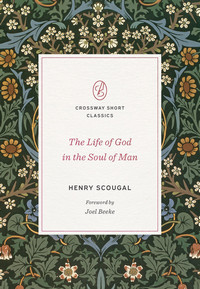
Guidebook for Instruction in the Christian Religion by Herman Bavinck; Gregory Parker Jr., Cameron Clausing (Translators): Dogmatics for Everyone

Guidebook for Instruction in the Christian ReligionGuidebook for Instruction in the Christian Religion

by Herman Bavinck, translated and edited by Gregory Parker Jr., Cameron Clausing

DETAILS:
Publisher: Hendrickson Academic
Publication Date: June 7, 2022
Format: Hardcover
Length: 194
Read Date: July 3-17, 2022
Support Independent Bookstores - Visit IndieBound.org

What’s Guidebook for Instruction in the Christian Religion About?

…in writing this guidebook, I had in mind the pupils in the highest classes of our Christian gymnasium, public schools, in the education of teachers, and in normal schools, etc., and moreover those who desire to understand the main content of our Christian, Reformed confession of faith through a not too comprehensive or expensive book.

That’s it in a nutshell—this book delivers the main content of the Reformed Christian thought directed toward those in High School or those without much education.

In twenty chapters of 10 +/- pages each, Bavinck covers things such as the Knowledge of God, General and Special Revelation, the Trinity, Creation, Providence, The Person and Work of Christ, The Holy Spirit, Salvation, The Church, and The End of the World.

There’s not much more to say than that, it’s shorter and easier to read than Systematic/Dogmatic Theology that I can think of, written by one of the most significant and influential teachers of the Twentieth Century.

[His desire is] to discuss the material in a scriptural sense: that it is not only revealed in its teaching but also in its comforting character, and that it is applied to the heart and conscience. Religious instruction must be education in the true sense of the word, and it must be education in the religion—that is, in the most tender and sacred of what a human soul may possess.

Guidebook and The Wonderful Works of God

While this was an original composition, it is fairly similar to The Wonderful Works of God, published a few years earlier. The Guidebook is streamlined, no doubt, but many passages/paragraphs in both match*, and the translators give footnotes throughout showing that—and when they diverge. There are instances that I’ve found (and will likely see others in future reading/study) that a similar section in the Guidebook helps clarify a point in TWWoG.

* Bavinck says he “intimately connected” the two.

So, what did I think about Guidebook for Instruction in the Christian Religion?

It took three afternoons of semi-casual reading for me to read this—I could’ve done it in two, had I skipped an afternoon nap (much less the three I let myself take over the period). I spent months reading both The Wonderful Works of God and Reformed Dogmatics, I practically gave myself whiplash as quick as this went.

This is incredibly accessible—anyone from fourteen on up should be able to handle it (although parts might take a little work for some—but not often). It covers all the essential matters of Systematic Theology, and occasionally goes beyond. There might be things you’d like him to be a bit more thorough about, but that’s what the other works are for. The translators put it this way:

He traverses a path in which he attempts to bridge the gap between the theology in the academy and theology in the church In doing so, he provides the pilgrim with a theology that is uniquely accessible. For those who found his Reformed Dogmatics alarmingly academic and his Magnalia Dei* intimidatingly thick, Guidebook is the theological porridge that is “just right” for most readers.

* The translators use the Latin title for The Wonderful Works of God throughout the work.

I recommend this without hesitation—as I do everything I’ve read by Bavinck—but without having to worry that someone will be intimidated by it, or decide they’re not up for the work. Although I still maintain that people shouldn’t be as intimidated as they are by him. The translators have given us a gift in making this available to English readers for the first time—as much of a gift as Bavinck gave the church of his time in writing it.

The translators close their Introduction with these words, and I think they’re a great way to sum up the book:

In his Guidebook for Instruction in the Christian Religion, Bavinck has given a gift to the church. The reader will likely find little that is groundbreaking or novel (as one regularly does in Reformed Dogmatics). However, this book supplies the theology of an academic concerned with the life of the church. It is an example of catechetical theology produced by one of the foremost academic theologians of his time.

Above all, we hope this translation helps fulfill Bavinck’s hope for true theology: that it does not remain an object of the head but penetrates the heart and thus becomes an act of confession and praise. As he writes, “Dogmatics, therefore, is… a hymn of adoration and thanksgiving, a ‘glory to God in the highest’ (Luke 2:14). In this book, Bavinck gives us a songbook: setting God before us and calling us to sing God’s praises.

5 Stars

This post contains an affiliate link. If you purchase from it, I will get a small commission at no additional cost to you. As always, the opinions expressed are my own.

Saturday Miscellany—7/23/22

I’m going to start this week with a hearty Thank You to Peat Long for the shoutout in their Friday Five post yesterday. If you’re not following that blog, now’s the time to fix that.

No New Releases caught my eye this week—so I won’t be trying to add on to your TBR (or mine)—but that likely means I missed something. Anyone want to point something out?

Odds ‘n ends about books and reading that caught my eye this week. You’ve probably seen some/most/all of them, but just in case:
bullet Why inappropriate books are the best kind—An Op-Ed from the LA Times.
bullet 14 ways to get out of a reading slump—Some advice from Washington Post readers. A couple of these don’t show up on every reading slump advice piece I’ve seen.
bullet Librarian Alex Brown provided a list of ways non-library people can help your local library
bullet 7 Fiction Books That Change The Way You Think—some good TBR fodder and a great last paragraph.
bullet Author Commentary on the Ending of the Alex Verus Series—Benedict Jacka starts to look back at how he ended the Alex Verus series and a couple of ways he considered ending things.
bullet A Quickie With…. M.W. Craven—a fun Q&A with M. W. Craven
bullet Maps and Mapping in Fantasy by W.P. Wiles—W.P. Wiles dropped by FanFiAddict this week to talk about maps in Fantasy novels in general and his new novel in particular
bullet Coincidentally, Sheldon Comics posted this comic about Fantasy Novels the other day
bullet Book Twitter Will Always Be at War With Itself: To read or not to read? That is the question
bullet The Vampire Chronicles: Experts Weigh in On Literature’s Best Vampires—It looks like a decent list overall (not familiar as I could be with all the entries), but I’m including this solely for the last vampire.
bullet An off-the-cuff comment by Jennings on a correct response on Jeopardy! reignited the debate about Narnia reading order
bullet The Anarchism of the Dresden Files by CT Phipps—Might be the best thing I read this week.
bullet Audiobooks vs Reading Print/Ebooks: Are Audiobooks good for you or what?—The fact this comes from Lovely Audiobooks probably gives away the answer…
bullet Reading and Its Effects on your Emotions
bullet Self-published Authors Appreciation Week 2022—is next week. Be sure to keep your eye on the SPAAW 2022 Hub to read all the good posts. I’ve got one post ready, need to get crackin’ on the rest.

A Book-ish Related Podcast episode (or two) you might want to give a listen to:
bullet Libro.fm has recently started a podcast to talk all things audiobook. This week, I listened to Episode 01 “Meet the Founders”. I’d never wondered about how they started, but it hooked me. Looking forward to seeing where it goes from there.

Lastly, I’d like to say hi and extend a warm welcome to tinareadsallthebooks and Kimberly who followed the blog this week.

Whispers in the Dark by Chris McDonald: Is DI Piper a Match for this Cunning Killer?

Whispers in the DarkWhispers in the Dark

by Chris McDonald

DETAILS:
Series: DI Erika Piper, #2
Publisher: Red Dog Press
Publication Date: November 14, 2020
Format: eBook
Length: 311 pg.
Read Date: July 20, 2022
Support Independent Bookstores - Visit IndieBound.org

What’s Whispers in the Dark About?

DI Piper is pulled away from her partner Liam’s wedding reception to take over at the scene of a murder. A good friend of her DCI is one of the victims. DCI Clive Burston and a drug dealer have been shot and killed. The way it looks, if a gun had been recovered at the scene, she’d have concluded that Burston shot the dealer and then himself. But clearly, that can’t be the case.

Then another pair of bodies shows up—it also consists of a member of the same gang as the dealer and someone who has no connection to him—or crime at all.

Just what is going on? And how is she supposed to stop it?

DI Erika Piper

Piper’s still dealing with the trauma—physically and psychologically—from the events prior to A Wash of Black—and she’s picked up a little more on the psychological side. But she’s clearly in a better place than she was when we met her. There’s a confidence to her that wasn’t there in the last book—you can see it in both her interactions with her colleagues and the way she goes about the investigation. She’s not trying to prove that she’s ready to work anymore.

She still has work to do—no doubt about that—but she’s on the right path, and it’s nice to see McDonald showing that. It’s some subtle work and well done.

Now, how the events of this novel will set her up for whatever book 3 throws at her, I don’t know. I’m looking forward to seeing how she deals with it.

So, what did I think about Whispers in the Dark?

McDonald gives Erika and Liam some strong moments—individually and together—outside the case, and I was taken aback by how invested I was in these characters before the halfway point of their second book! There were some sweet moments, and a couple that got me a little misty (for both “positive” and “negative” reasons)—I was impressed at how efficiently he was at some of those, just two or three sentences that hit the emotions just right. And then there’s the scene that made me say things about McDonald that I should probably apologize to him for.

If he’s that good with the subplots, of course he’s going to nail the main story. This is a classic mystery—the killer, the motive, how the detective figures it out, how the killer comes into contact with the victims—it’s all tried and true, and McDonald delivers it well. But how the killer does it? I don’t think I’ve seen that before (eh, maybe something like it—but not as effectively portrayed). It’s a very clever take on this story. The personal stories and the way Piper and the others go through the investigation—the ups, downs, and the unexpected—that’s what separates these books from the rest.

It occurs to me, that if you removed the names and the personal subplots, and just told me the plot of this novel, I’d think you were describing one of Noelle Holten’s DC Maggie Jamieson. The twisty sort of mix of technology, motive, and execution behind the crimes fits in Maggie’s world as well as in Erika’s. Fans of one should definitely check out the other—although A Wash of Black wouldn’t have worked as well as a Maggie Jamieson book, so I’m not saying the two series are in lockstep—just that two of my recent favorites have some overlap.

Top-notch writing—there’s a couple of scenes that are so well described I feel like I was in the room with them—a great mystery, and some characters that’ll become favorites. Get your hands on this series, reader.


4 Stars
20 Books of Summer

This post contains an affiliate link. If you purchase from it, I will get a small commission at no additional cost to you. As always, opinions are my own.

The Friday 56 for 7/22/22: Ghost of a Chance by Dan Willis

The Friday 56This is a weekly bloghop hosted by Freda’s Voice.

RULES:
The Friday 56 Grab a book, any book.
The Friday 56 Turn to Page 56 or 56% on your ereader. If you have to improvise, that is okay.
The Friday 56 Find a snippet, short and sweet.
The Friday 56 Post it.

from Page 56% of:
Ghost of a Chance

Ghost of a Chance by Dan Willis

“What’s this?” he asked as she pulled out a small key ring.

For a brief moment a frown crossed her lips, but she replaced it almost instantly with her sardonic smile.

“This is the reason I’m here,” she said, inserting a key in the lock. She turned it and pushed the door open. “Don’t touch the handle,” she said, reaching inside to switch on a magelight. “It’s got a needle coated in a nasty contact poison hidden inside it.”

Alex raised an eyebrow at her, but she just shrugged.

“What?” she said. “Don’t you have security measures around your valuables?”

The Prince of Infinite Space by Giano Cromley: Stumbling Toward Adulthood

The Prince of Infinite SpaceThe Prince of Infinite Space

by Giano Cromley

DETAILS:
Series: Kirby Russo, #2
Publisher: Propertius Press
Publication Date: August 2, 2022
Format: eARC
Length: 264 pg.
Read Date: Jane 18-19, 2022

What’s The Prince of Infinite Space About?

Kirby Russo, a “troubled youth” from Montana has been at the Haverford Military Institute in North Dakota just long enough to start to change his behavior and think about things in a different light—but not so long that he’s totally bought into the system. He’s still largely an outsider—and likes it that way.

He’s assuming that he’ll have a leadership position in the school newspaper—his one real passion—at the beginning of his Senior Year. When that doesn’t happen, he (unlike the reader, who can see it coming from the moment he starts talking about it) goes off the deep end. All the progress he’s made, all the evolution he’s been going through is out the window, and his demeanor, attitude, and focus shifts. He just doesn’t have anywhere to shift it to, so he spends the first few months of the year completely aimless.

The closest thing he has to a goal comes from a picture he saw in a Chicago newspaper. His long-lost love is shown (under an assumed name) in a homeless camp. He starts to fantasize about reuniting with her—but how can he get to Chicago?

Then his Original Biological Contributor shows up unannounced. He’s never met his father, and has heard little good about him over his life. But when his father introduces himself to Kirby and asks to take him to meet his dying grandmother outside of Chicago, Kirby seizes the opportunity.

He can escape the Institute, learn something about his father, and get close enough to Chicago that he can probably find a way to the city.

It ain’t much, but it’s a plan.

Time Period

It’s a little disconcerting reading something that’s probably considered Historical Fiction set during the protagonist’s Senior Year in high school when you share the same Senior Year. Outside the discussion of Iraq’s invasion of Kuwait and the U.S. response, there’s not a lot of references to people and events of 1990. I’m fine with that—we don’t need an Ernest Cline-level of name-dropping to establish the setting.

I’m not convinced that Cromley’s 1990 matches up with reality that well. If Kirby’s world was looking at the 2003 invasion of Iraq, I probably wouldn’t have blinked. But the attitudes that Kirby encounters—in particular on the streets of Chicago—seem to fit the early 2000s more than the early 1990s.

So, what did I think about The Prince of Infinite Space?

The writing really sang (after a heavy-handed first sentence)—I chuckled a lot, and the descriptions were fantastic and real. His depcition of Chicaco alone made this worth the read. Cromley hits all the emotions and the big moments just right. The novel moved along quickly (possibly too quickly), and you get taken along with the characters effortlessly. Kirby’s a wonderfully flawed character—he’s a self-absorbed, petulant, immature twit. But he’s at the time of life where he’s supposed to be one, so that’s a win.

But unlike many of those characters, you get drawn into his character. You like him just enough, get invested in him enough that you want to see him mature, you want to see the coming-of-age in action. You don’t just want to write him off and go read about someone else.

This feels like the bones of a good novel—there’s not enough meat on it. Or, to change the metaphor, it’s like a chili that you serve too quickly, without letting the flavors develop while simmering a decent amount of time. There’s a compliment here—I liked it, I just wanted it to be better, I wanted more of everything.

This is a sequel to The Last Good Halloween, which probably tells about the delinquency (perceived or real) that sent Kirby to the Haverford Military Institute. It’s utterly unnecessary to read before this, but I’d imagine those who had read it will be a bit more satisfied after seeing what happens to Kirby.

Disclaimer: I received this eARC from the author and Lori Hettler of The Next Best Book Club in exchange for this post—thanks to both for this.


3 Stars

With Grimm Resolve by Jeffrey H. Haskell: Buckle Up, Grimm and the Interceptor are Back!

With Grimm ResolveWith Grimm Resolve

by Jeffrey H. Haskell

DETAILS:
Series: Grimm's War, #2
Publisher: Aethon Books
Publication Date: May 17, 2022
Format: Kindle Edition
Length: 373 pg.
Read Date: July 15-18, 2022

“Kim, any ideas?” he asked.

He didn’t need to tell her what for— her stations repeated everything he saw and kept her apprised of the situation.

“Other than we run? Nothing, sir. I know that’s not what you were hoping to hear.”

“I can’t expect you to solve the impossible every day. Maybe just on Tuesdays,” he said with false cheer.

What’s With Grimm Resolve About?

Grimm’s back from command school and the USS Interceptor is back on patrol. His crew has become the well-oiled machine he knew they could be. There’s been a little shuffling of the crew between books, but by and large, those secondary characters you enjoyed before are back and ready for more.

I really don’t know what else to say shy of recapping the whole novel—the crew looks into a distress call on a fairly remote station, and finds both action and a mystery. Chasing breadcrumbs leads them to a couple of discoveries that blow their minds (and don’t do wonders for the structural integrity of the ship, come to think of it). Coupled with what they uncovered/witnessed in the first volume, Grimm and his crew know that things for their Navy and the Alliance will never be the same.

Its Place in the Series

Initially, I saw this advertised as a trilogy (and it still looks like one on the publisher’s website, as of the time I write this)—and there’s at least one reference in the book to a trilogy.

However, Amazon tells me there’s a fourth book coming in September. I’m refusing to read anything about it, so I don’t inadvertently learn anything about the third volume, One Decisive Victory. But I can’t stop speculating—was there just too much to wrap up in One Decisive Victory, so Haskell had to split it? (I can 100% believe that given the events of this book) Did he finish the trilogy and decide he was having too much fun/success to leave it there and came up with something new? (Another theory I could absolutely believe).

Regardless, With Grimm Resolve functions as a middle novel of a trilogy—it’s darker, the stakes are higher, and it certainly appears that Grimm, the Interceptor, her crew, and potentially the entire Alliance are in dire straits—straits so dire I should probably capitalize them. At the same time, we get a complete story here—Haskell only leaves the minimum unresolved. There’s clearly more to come, but we get a resolution on most of the important events here. One Decisive Victory will be about the repercussions of this novel.

So, what did I think about With Grimm Resolve?

Against All Odds started slowly, establishing the status quo for the Navy, the political realities in the Alliance, and the state of relations with other governments—in addition to everything about Grimm and the Interceptor. Once that’s established, he takes the brakes off and it becomes a thrill ride. As we start this novel by focusing on a different group and their activities threatening the Alliance, I assumed we’d get something similar.

And we sort of do—but it’s quicker, Haskell doesn’t have much to do in order to orient his readers, and the action hits before we’re a quarter of the way in—and it really doesn’t let up. Yes, there are moments of rest for the reader and characters, it’s not all danger and combat for the last three-quarters. But the plot doesn’t stop and no one gets out of the woods until the end. There’s a tension throughout that doesn’t let up.

Along those lines, I should mention a nice trick by Haskell. The series is called Grimm’s War, and whether it goes on for one or two (or more) books, you know Grimm makes it through Book 2, or the series would be called something else. Yet, there’s more than once where you can see Grimm being killed and you can’t help but wonder if Haskell has fooled you into thinking he’s safe. I love that he was able to do that.

With Grimm Resolve ended in a way that made me consider tossing off my schedule and jumping on to the next one right away. I’m thoroughly enjoying this series and can’t imagine why anyone wouldn’t. Give this series a try!


4 Stars

20 Books of Summer

WWW Wednesday, June 20, 2022

Like just about everyone in the Northern Hemisphere (or so it seems), I seem to be melting this week. When I’m not dreaming of November, I’ve been distracting myself with books—I’m actually two days ahead of where I expected to be. This happens so rarely, I’m on the verge of dancing a jig. Let’s dive into this WWW Wednesday and see what’s up, shall we?

This meme was formerly hosted by MizB at A Daily Rhythm and revived on Taking on a World of Words—and shown to me by Aurore-Anne-Chehoke at Diary-of-a-black-city-girl.

The Three Ws are:

What are you currently reading?
What did you recently finish reading?
What do you think you’ll read next?

Easy enough, right?

What are you currently reading?

I’m reading the second DI Erika Piper novel, Whispers in the Dark by Chris McDonald and am revistiting The Jigsaw Man by Nadine Matheson, Davine Henry (Narrator) on audiobook.

Whispers in the DarkBlank SpaceThe Jigsaw Man

What did you recently finish reading?

I just finished Giano Cromley’s The Prince of Infinite Space, a coming of age story set when I was coming of age (which was a little odd) and the amusing memoir, The Diary of a Bookseller by Shaun Bythell, Robin Laing (Narrator) on audio.

The Prince of Infinite SpaceBlank SpaceThe Diary of a Bookseller

What do you think you’ll read next?

My next book should be Ghost of a Chance by Dan Willis (yeah, finally gettting to it!) With the Jane Yellowrock series finale just a few weeks away, my next audiobook should be True Dead by Faith Hunter, Khristine Hvam (Narrator).

Ghost of a ChanceBlank SpaceTrue Dead

How are you distracting yourself from the swelter?

The Self-Made Widow by Fabian Nicieza: The Housewife Detective and the Disgraced Journalist Face Off with a Devious Mind

The Self-Made Widow The Self-Made Widow

by Fabian Nicieza

DETAILS:
Series: Suburban Dicks, #2
Publisher: G.P. Putnam's Sons
Publication Date: June 20, 2022
Format: Hardcover
Length:388 pg.
Read Date: July 7-11, 2022
Support Independent Bookstores - Visit IndieBound.org

[Det. Rossi] heard [Andi] sigh over the phone. He hated when she sighed. It was one of the few childish affectations she had, but he also knew that meant she was either frustrated, disappointed, or, worse, thinking something through.

Or even worse, he corrected himself, all three combined.

He suspected this was an “even worse” scenario.

What’s The Self-Made Widow About?

Andrea Stern’s social circle is shaken up when the husband of one of her friends dies suddenly. Many knew of his heart condition, so it wasn’t a total surprise, but it still wasn’t expected. Everyone rallies to support his wife and sons through this trying time.

During the funeral, however, Andi’s Spider-Sense starts tingling, and she starts to put some things that she’s noticed together—leading her to a daunting conclusion. Meanwhile, Kenny Lee, her collaborator in the exposure of the conspiracy and murder last year, gets an anonymous phone call saying that his death wasn’t due to natural causes, but that he was murdered by his wife.

Finding themselves interested in the same case again, they divvy up the avenues of investigating and get to work.

Kenny Lee

He was thirty years old and the only meaningful relationship he’d ever had in his life was with the fear of being in a meaningful relationship.

Kenny’s life since their last investigation has changed the most—he’s no longer a disreputable journalist, that case reestablished his reputation, got him some great publicity, and frequent TV exposure. He’s set to release his book about the murders/investigation in a few weeks and the Netflix documentary series will follow soon after that.

He is, for Kenny, back on top of the world—he’s bought a new car, is taking better care of himself, has a better attitude toward life, and maybe has a girlfriend. But it’s not enough—he’s restless, he realizes early in the novel that he needs to be chasing a story. Something makes him take another look at this death and he starts to ask questions.

He ends up using the team he has working with/for him on the documentary to help with the legwork, I really didn’t think that the novel’s cast needed to be bigger—but man, I had a lot of fun with this group. Most of them aren’t investigators, but (like with so many in this series) that’s part of their charm—and maybe the secret to their success.

I can’t help but wonder that the same impulses that led to his earlier professional downfall are being held back by his current wave of success. If that success slows or wanes, will that come back, leading him to a new round of scandal, possibly derailing Andie’s work? Or maybe making him a target for her?

Andrea Stern

Her insecurities kicked in. What was it about her that alienated people? She knew she was arrogant, sarcastic, and judgmental, but was that reason for people to be so wary around her?

Things haven’t been good for Andi and Jeff in the months since she uncovered the murder/had their fifth child. Long-simmering resentments and arguments have heated up. Andi hasn’t gone to work full-time or anything, but she has consulted with the police a little bit, and she’s clearly interested in doing more—if she can figure out how to do it. Jeff is not at all supportive of this, but Andi’s not deterred for a moment.

What does give her some pause is the effect that this particular investigation is having/going to have on her children and her friends. Yes, she’s (mostly) privately been judging the other moms, but they’re her social circle and have been for years. Can these relationships survive the secrets she will have to dig up and expose?

Thankfully, the friend she made last year, Sathwika* is encouraging, and supportive—and jumps into assisting Andi with both feet. Sathwika gets Andi more than anyone else seems to, and Andi may just have to rely on her alone after all this shakes out.

* This post is too long as is, so I won’t talk more about her now, but I need to spend a few paragraphs on Sathwika when I talk about the next novel.

That’s just what’s going on in the background—proving that Derek was killed is going to be hard enough. But then how is she going to prove her friend did it (assuming she is the one)? Is it all worth it? What will she gain and lose here?

Ruth Stern

…she also couldn’t accept someone getting away with murder.

Her first thought was: How does Mom do this?

But Ruth’s next thought, immediately coming after the first one, and bringing both excitement and trepidation in its wake, was: How do I do it better?

Like Anci in the Slim in Little Egypt books and Auri Vicram, one thing that almost always works for me is a daughter of a mystery protagonist taking it upon themselves to jump into mystery-solving (or being recruited to help). There’s a mixture of eagerness, naiveté, inventiveness, and immaturity that adds a freshness to a type of novel that can seem familiar before you even read it.

Ruth helped out her mom a little bit in the previous book, but she’s called upon to do more now. One of Molly’s sons is in her grade and they’re friendly with each other. Ruth uses this to get a better picture of life in the Goode household—both before and after Derek’s death.

It’s not the easiest thing for her to do—it feels like she’s betraying her friend. She knows the toll it takes on her mother’s relationships, and can understand that. But she continues to emulate her mother, driven by similar impulses. Ruth is one of the aspects of this series that works best, and I hope Nicieza continues to bring her in.

Molly Goode

Ohhh, Molly is possibly my favorite antagonist of the year. She’s the kind of woman that Bernadette Fox would feud with in the neighborhood or school. You can see her bullying mothers in a PTA meeting for not bringing the right kind of gluten and allergen-free goodies to a Bake Sale, or bringing the wrath of the HOA on someone who has let their grass get too long. She’s a meticulous planner, always gracious, with perfect children, and a (until he died) husband successful enough to enable her to live the kind of life she’s wanted.

In short, she’s the last person you’d suspect of a devious, premeditated murder. But then again…

What kind of person would you have to be to commit murder when one of the people closest to you solves murders as a hobby?

So, what did I think about The Self-Made Widow?

This was not a whodunit—both Kenny and Andi had a target in mind when they started looking into Derek’s death. It was a howdunit, a little bit of a whydunit—and, sure, a wasitdun? Then the biggest question—how could they prove any of it? I absolutely loved how they had to approach this one—I can’t think of a novel with an alibi like this one. This is a master class in how to put together a mystery novel for those readers who’ve read too many mystery novels.

My biggest (only?) complaint is that there’s a new Chief of Police in town, and we don’t spend nearly enough time with him—I hope that changes in the future, I liked him and think it’d be fun to see him lock horns with Andie more (and/or work alongside her).

For both Kenny and Andie, Suburban Dicks* was about them getting back to what they wanted/needed to be doing with their lives—Kenny needed to do some real reporting, and shake the scandal off; Andie needed to stop forcing herself into the mold of perfect suburban wife/mother, and do some profiling/investigating. This book focuses on some introspection for the two of them, what’s important to them? Are the choices they made last year—or this year—worth it to them? What made them this way? Between what we see about them in these books, we have a foundation for what’s to come (hopefully in many books).

* We get a nice dash of meta-humor about the title, incidentally.

It’d be easy to talk up the humor of the book—but it’s not a comedy. It’s comedically told—and there are some moments of slapstick—but at its heart, The Self-Made Widow is a murder mystery (with some other crimes thrown in for good measure). There’s a lot of darkness under the laughs, and readers should be prepared for that.

There’s a lot to chew on here when it comes to our protagonists as well as many of the supporting characters. Add in the murder and what they have to do to resolve things, and you’ve got yourself a great read. But you also get Nicieza’s laugh-out-loud humor, sharp observations, and strong narrative voice. If this novel had only one of these elements—character, plot, and writing—and it’d still be something I recommend. All three? Fuggedaboutit.


5 Stars

This post contains an affiliate link. If you purchase from it, I will get a small commission at no additional cost to you. As always, the opinions expressed are my own.
Page 231 of 623

Powered by WordPress & Theme by Anders Norén