Author: HCNewton Page 248 of 610

Dogtripping by David Rosenfelt: Moving a Very Unusual, Very Large, Very Hairy Family Across the U.S.

DogtrippingDogtripping:
25 Rescues, 11 Volunteers,
and 3 RVs on Our Canine
Cross-Country Adventure

by David Rosenfelt

DETAILS:
Publisher: St. Martin's Press
Publication Date: July 23, 2013
Format: Hardcover
Length: 278 pg.
Read Date: January 19-20, 2022
Support Independent Bookstores - Visit IndieBound.org

The overriding view of everyone was that it was going to be a great adventure, successful and a hell of a lot of fun.

Except for me.

I was expecting a disaster.

What’s Dogtripping About?

After a decade and a half or so of running their dog rescue in southern California, David Rosenfelt and his wife decide to move out of California (a very close call with a wildfire is a primary impetus for this) to Maine. But they have a bigger logistical challenge than most of us do when we make a move—either cross-town or cross-country. Sure, it can be hard to figure out the best way to move a piano or a fragile heirloom—but ultimately, that’s something that people do all the time. But how do you get twenty-five dogs cross-country?

First of all, you need help—and we’re not talking the kind of help where you get a few friends together, promise a pizza and a six-pack to split, and get them to help you move a piano or a sofa. This is a bigger project. You also have to figure out what kind of vehicle—or vehicles—will be needed, where you all will sleep, how can you deal with the bathroom breaks, and so on.

Right there, that’s an interesting story, many people—especially dog lovers would read that. When the talented and amusing author of the Andy Carpenter novels tells the story, it becomes an entertaining read.

Interspersed between chapters discussing the preparation for the trip and the trip itself are chapters describing the background for The Tara Foundation (starting with the dog it’s named after), the development and growth of their rescue efforts, and profiles of some of the dogs.

Dog Profiles

My favorite parts of the book are the 2-3 page profiles of some of the dogs that have stayed with their pack—for anywhere from a week to several years. He starts by describing how the dog came to their attention, then he talks about the specific challenges for that dog, their personality, and how they integrated into the menagerie. Then he’ll describe how they took to the move—if they were part of that 25—found a family to adopt them, or how their life came to an end.

Obviously, I preferred reading the first two endings—but they’ve been at this for a long time, and most of their rescues are senior dogs, it’s a reality they have to deal with far too often. Not always, but I generally got a little misty for those other endings. Rosenfelt has a real knack for making you grin/chuckle, telling a heartwarming story, and then hitting you with the sadness that comes from the brevity of canine life.

Still, I’d read an entry on every dog they ever had in their shelter and come back for more.

Incidentally, he includes some really sound advice on deciding when to put an ailing dog to sleep.*

* Please, no one tell my almost 16-year old Pug/Beagle mix that I read anything about that. No need to stress her out.

Too Many Italics

I am not a fan of extended sections of italics—there are better ways to set aside chunks of text (going to a sans serif typeface, for example), but I’m mostly used to them. A character’s thoughts—usually a sentence or two–I can handle. I can even put up with a few paragraphs for a dream sequence or flashback or something. But whole chapters really bug me.

And that’s what we get here—and not just a few, but several. There’s no set pattern, but typically a couple of chapters in regular type (one of them being really brief) and then one in italics. It’s very aggravating.

But here’s the worst part—it’s the chapters that are about the subject of the book that are italicized! The background chapters, the chapters that profile individual dogs, or are just full of Rosenfelt talking about some topic (for example: their efforts to keep the smell of all their dogs using the back yard as a bathroom from bothering the neighbors) are all in regular type. But the part of the book that the title and subtitle describe are italicized.

I don’t understand that choice. I certainly didn’t enjoy it.

So, what did I think about Dogtripping?

Twenty-five is pretty much the fewest dogs Debbie and I have had in the last ten years. We’ve had as many as forty-two, but we feel that more than forty is slightly eccentric.

This was a fast, fun read—with some really touching moments mixed in.

I’m going to borrow the conclusion to my post about Rosenfelt’s other book about their rescues, Lessons from Tara, because it works just as well here, and I’m tired:

Fans of the Andy Carpenter series will be happy to hear that Andy’s voice is Rosenfelt’s—the book at times feels like an Andy Carpenter book without all the muss and fuss of a plot, murder, or trial. I laughed, I chuckled, I learned a thing or two, and I even got misty more than I wanted to. All in all a really strong read. If you’re a dog lover, or just someone who likes to read good things, find some time for this one.


3.5 Stars

This post contains an affiliate link. If you purchase from it, I will get a small commission at no additional cost to you. As always, opinions are my own.

The Good Sister by Sally Hepworth: It’s a Sister Thing

The Good SisterThe Good Sister

by Sally Hepworth

DETAILS:
Publisher: St. Martin's Press
Publication Date:  April 12, 2021
Format: Hardcover
Length: 306
Read Date: January 17-18, 2022
Support Independent Bookstores - Visit IndieBound.org

“I imagine, being twins, the bond is even more unique. If you get along, that is.” She laughs.

Beverly doesn’t seem to be expecting an answer, and I am glad. If she had, I might have told her the truth. That people without sisters think it’s all sunshine and lollipops or all blood and guts. But actually it’s always both. Sunshine and guts. Lollipops and blood. Good and bad. The bad is as essential to the relationship as the good.

Maybe the bad is even more important, because that’s what ties you together.

A Tale of Two Sisters

This is about a pair of fraternal/dizygotic twins and their efforts to provide one of them with the baby she and her husband can’t have.

Sort of. Kind of. Mostly. There’s a lot more going on, but that’s the core.

We get told the story of these two from the perspectives of each twin. Let’s break it down that way.

Fern Carter

Fern is a librarian—she’s not really comfortable with people. Or with anything other than her routine. She describes others toward the end as neurotypical, which was nice, but it’s not really necessary, she’s clearly on the Spectrum somewhere. She’s overly sensitive to stimulus, not fond of touch, and bad with interpersonal relations and communications.

She’s great with people in circumstances she’s comfortable in—for example, the library. Reading to kids in the children’s library, recommending books to patrons, and dealing with the homeless people seeking shelter and showers, for example.

She also knows how much she owes her sister. So when she discovers that despite her desire to become a mother, Rose can’t, Fern takes it upon herself to get pregnant for her.

And things become even more interesting for her from there.

Rose Castle

We get Rose’s perspective from a journal she’s keeping—she tells us right away that this is a therapy assignment and not something she’s doing on her own. This is to help her process her childhood and some things she’s going through right now—like marriage problems.

From their early childhood, she’s taken on the role of protector to her sister—that has never stopped. And her journal entries show all the ways she’s been doing that.

We get a lot more of Fern’s first-person narration than we do of Rose’s journals. But it’s Rose’s perception that sets the agenda for the novel.

A word of warning—Rose is molested by one of her mother’s boyfriends. It’s clear that’s what’s going on, but Hepworth doesn’t get too detailed about it. Very little space is given to it, but it’s there.

But…

This is a psychological/domestic thriller—that’s clear, it’s marketed as one. So, despite everything I just said, you know that not all is right with these two and their life. The trick is figuring out what’s wrong and why.

So, what did I think about The Good Sister?

I spent so much of this book wondering why my friend suggested this for me—why would anyone think I’d enjoy this? Yes, it was well-written; yes, it was suspenseful; yes, I was interested in the story; yes, I really wanted things to work out for Fern and to understand Rose; yes, the pages were flying by (I read this faster than anything I’ve read for a month or so); no, I was not enjoying the experience. It’s a good read, just not my thing. I wasn’t thinking of stopping, I just didn’t see why I should bother going on.

But for the last hundred pages or so, I started to wonder if I really was enjoying it. The last 40 +/- pages? I loved it. Seriously, I had a blast with it.

Hepworth did a really good job telling the story and keeping you guessing about what was going on, why X said something, or Y did something. You can get a pretty good idea about all that, and probably make some strong guesses. But you’re going to be a little bit off (at least). Until Hepworth gets you right where she wants you, and then she just tells you what you need to know. Then, it’s about taking all it in, while holding on for a very taut and tense conclusion.

This isn’t going to go down as one of my favorite books—but it’s going to be one I recommend to people (I have a list of them in mind already), and it’s one I’d recommend to any of you who dig psychological thrillers or just want something a little different. You’ll likely end up liking it far earlier than I did and wonder what’s wrong with me.


3 Stars

This post contains an affiliate link. If you purchase from it, I will get a small commission at no additional cost to you. As always, opinions are my own.

WWW Wednesday, January 19, 2022

So the holiday Monday threw me off a little bit, it feels like I’m getting this ready far too early in the week. Hope you’re all having a good one, it’s time for WWW Wednesday!

This meme was formerly hosted by MizB at A Daily Rhythm and revived on Taking on a World of Words—and shown to me by Aurore-Anne-Chehoke at Diary-of-a-black-city-girl.

The Three Ws are:

What are you currently reading?
What did you recently finish reading?
What do you think you’ll read next?

Easy enough, right?

What are you currently reading?

I’m reading the fiftieth Spenser novel, Robert B. Parker’s Bye Bye Baby by Ace Atkins. I’m also listening to a little-known novel, The Hobbit by J.R.R. Tolkien, Andy Serkis (Narrator) on audiobook—have you heard of it?

Bye Bye BabyBlank SpaceThe Hobbit

What did you recently finish reading?

I just finished Sally Hepworth’s The Good Sister; A Bathroom Book for People Not Pooping or Peeing but Using the Bathroom as an Escape by Joe Pera, illustrated by Joe Bennett; and Dark Queen by Faith Hunter, Khristine Hvam (Narrator) on audio.

The Good SisterBlank SpaceA Bathroom Book for People Not Pooping or Peeing but Using the Bathroom as an EscapeBlank SpaceDark Queen

What do you think you’ll read next?

My next book should be a book that I’ve meant to read for years: Dogtripping: 25 Rescues, 11 Volunteers, and 3 RVs on Our Canine Cross-Country Adventure by David Rosenfelt. My next audiobook should be Dead Man’s Grave by Neil Lancaster, Angus King (Narrator).

DogtrippingBlank SpaceDead Man's Grave

Hit me with your Three W’s in the comments! (no, really, do it!)

A Bathroom Book for People Not Pooping or Peeing but Using the Bathroom as an Escape by Joe Pera, Joe Bennett (Illustration)


A Bathroom Book...A Bathroom Book for
People Not Pooping or
Peeing but Using the
Bathroom as an Escape

by Joe Pera, Joe Bennett (Illustrator)

DETAILS:
Publisher: Forge Books
Publication Date: November 15, 2021
Format: Hardcover
Length: 111 pg.
Read Date: January 18, 2022
Support Independent Bookstores - Visit IndieBound.org

What’s A Bathroom Book… About?

I don’t know how to describe this book, so I’m going to lift this from the publisher:

Joe Pera goes to the bathroom a lot. And his friend, Joe Bennett, does too. They both have small bladders but more often it’s just to get a moment of quiet, a break from work, or because it’s the only way they know how to politely end conversations.

So they created a functional meditative guide to help people who suffer from social anxiety and deal with it in this very particular way. Although, it’s a comedic book, the goal is to help these readers:

1. Relax
2. Recharge
3. Rejoin the world outside of the bathroom

It’s also fun entertainment for people simply hiding in the bathroom to avoid doing work.

A Bathroom Book for People Not Pooping or Peeing But Using the Bathroom as an Escape will be waiting in the bathroom like a beacon for anxious readers looking to feel calm, confident, and less alone.

The Illustrations

I’m not sure how to describe it. A few adjectives jump to mind: quirky, offbeat, unusual. But they fit the tone of the book really well.

When the illustration is of an object (or a few of them), it’s very realistic—cartoonish, but realistic. There’s very little realism to the people depicted, however. They’re very cartoonish, with nods to realism. It’s an interesting way to go with that. I should stress that cartoonish isn’t a criticism, it’s just the best word I can come up with to describe these. Bennett has a style all his own—oddly compelling and fairly eccentric.

Along these lines, whoever did the page layout and typesetting deserves a slap on the back and maybe a raise.

So, what did I think about A Bathroom Book…?

Frankly, I had to buy this just because of the title. How do you walk away from it? I knew nothing about Joe Pera until this—now I’m curious about him.

Some years back, as I understand, there were a variety of books labeled “Bathroom Humor” or something like that—vaguely risqué (maybe some weren’t that vague), full of jokes and perhaps cartoons. I remember my grandfather had a book like that equipped with a chain so you could hang it on the towel rack or something like that. This is not that kind of book.

This is a gentler humor—the purpose of it is to help you relax and regroup, maybe to take a beat and prepare to leave the bathroom to face whatever social pressure (or similar hurdle) lies outside the bathroom.

We’ve all been there at least once—some of us are there on a regular basis—using the bathroom not just for a biological need, but to take a breather from life for just a couple of minutes. This is short enough that it can fit the bill (or, if you read slowly, it’s easy to dip in and out for a quick trip).

You’re not going to laugh out loud (probably—except maybe for the Jane Goodall jokes). But you just might smile—even a half-smile—because it reminds you of human oddities. And maybe because it’ll remind you that you’re not alone in needing this oasis from reality.

I enjoyed this, I think it’ll hold up to repeated readings. It’s an odd source of affirmation and encouragement—but I like it, and will take the affirmation and encouragement where I can find it.

This post contains an affiliate link. If you purchase from it, I will get a small commission at no additional cost to you. As always, opinions are my own.

Top 5 Tuesday – Top 5 books I will definitely* read in 2022


This week’s topic is, “Top 5 books I will definitely* read in 2022. Same disclosure from 2021. You won’t be subjected to punishment (from me) if you don’t read these. But what are 5 books you really want to tick off your TBR this year?” Sure, I could’ve just picked five books that are the next in a series (and, yeah, that’s what I mostly did)–but these are ones that either I am champing at the bit to read or that I know I have every intention on reading, but can see myself getting distracted from and still wanting to read in 2023 (see the entry for Return of the Paladin on Top 5 books I haven’t read yet in 2021). So, calling my shot at the others should help me remember to do it.

1 Bye Bye Baby
Robert B. Parker’s Bye Bye Baby by Ace Atkins

The fiftieth Spenser novel is also the last one that Atkins will write. I can only imagine that Atkins is going to go out with a bang. This is the epitome of me champing at the bit to read a book. I will be abandoning whatever I’m reading to dive into this as soon as I get my hands on it.
2 The Botanist
The Botanist by M. W. Craven

The Poe/Tilly novels have become a (the?) highlight of my summers. I cannot wait to see what happens here.

3 Lives Laid Away
Lives Laid Away by Stephen Mack Jones

August Snow was one of my favorite “discoveries” of 2021–I was practically giddy reading it. I’d expected I’d read this one last year, and don’t know how I didn’t get to it. This will happen soon.

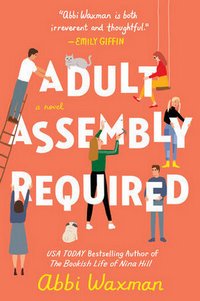
4 Adult Assembly Required
Adult Assembly Required by Abbi Waxman

This made my list without me knowing anything about it–I’ve just enjoyed Waxman’s voice so much the last few years. Also, I wanted something on this list that wasn’t a Mystery/Detective/Crime novel or part of a series.

Oops. It turns out that this is a sequel to The Bookish Life of Nina Hill. 1 out of 2 ain’t bad, right?

5 City on Fire
City on Fire by Don Winslow

I’ve loved almost every Winslow book I’ve read–and was impressed with those I didn’t. So it would seem I’d be super-excited about this–and I am. But after The Cartel–both in scope and impact–I’ve been intimidated by him. This is going to be one of those I have to push myself to read, oddly enough.

Top Ten Tuesday: 2021 Releases I Was Excited to Read But Didn’t Get To


The topic for this week’s Top Ten Tuesdays is the 2021 Releases I Was Excited to Read But Didn’t Get To.

Wow, I really kept up with new releases in 2021. I remembered 6 of these right off the bat, but I then had to go through a year’s worth of my Saturday Miscellany posts to find another 4 for the list. And if this was a top 12, I’d have listed every new release I made note of last year—unlike past years, where I probably left fifty untouched. Sure, I likely didn’t document another 60 or so that fell in the category “oh, wow, that looks great, I should get that” before promptly forgetting about it. But I’ll take this as a win regardless.

I’m going to try to knock off this list by May—we’ll see how that goes.

Top Ten 2021 Releases I Was Excited to Read But Didn’t Get To

10 AMORALMAN
AMORALMAN: A True Story and Other Lies by Derek DelGaudio

DelGaudio’s memoir should prove intersting, and I really don’t know what else to say until I actually open the thing. If the film In & Of Itself is anything to go by, it’ll be a compelling read, if nothing else.

9 Dreyer's English (Adapted for Young Readers)
Dreyer’s English (Adapted for Young Readers):
Good Advice for Good Writing
by Benjamin Dreyer

I’ve been looking forward to getting my hands on this one since I heard about it. I loved the “adult” version and want to see how he translates that into advice for kids (also, I can see this being easier to pass on to non-language nerd friends/family who need the help)

8 Eye of the Sh*t Storm
Eye of the Sh*t Storm by Jackson Ford

The third Teagan Frost adventure looks great (and reminds me to get my act together and read #2).

7 A War of Wizards
A War of Wizards by Layton Green

The Blackwood Saga concludes here in Book 5. I’d say I’d dive in next week, but, I still haven’t read book four.

6 Swashbucklers
Swashbucklers by Dan Hanks

This is one of those books I can’t imagine summarizing in a few paragraphs (at least without reading it first), much less a sentence. Click that link there to learn about it. Looks fun.

5 The Curious Reader
The Curious Reader:
Facts About Famous Authors and Novels |
Book Lovers and Literary Interest |
A Literary Miscellany of Novels & Novelists

edited by Erin McCarthy & the team at Mental Floss

“This literary compendium from Mental Floss reveals fascinating facts about the world’s most famous authors and their literary works.” I’ve flipped through this a little since picking it up at my bookstore, I have no idea how to describe it—or how I’m going to write about it. But it’s going to be fun trying to figure it out.

4 Fuzz
Fuzz: When Nature Breaks the Law by Mary Roach

Roach’s books always look interesting, but I haven’t gotten around to trying one. This one could change that.

3 Questland
Questland by Carrie Vaughn

Jurassic Park, but for D&D types.

2 Project Hail Mary
Project Hail Mary by Andy Weir

Weir’s latest looks more like The Martian than Artemis, which should help sales, even if it seems like a cheat for him to try (looking at you, Ernest Cline).

1 hard Reboot
Hard Reboot by Django Wexler

“Kas is a junior researcher on a fact-finding mission to old Earth. But when a con-artist tricks her into wagering a large sum of money belonging to her university on the outcome of a manned robot arena battle she becomes drawn into the seedy underworld of old Earth politics and state-sponsored battle-droid prizefights.” Oh, that old chestnut…this is just such a strange collection of ideas I think I have to try it.

A Private Investigation (Audiobook) by Peter Grainger, Gildart Jackson: A Change is Coming

A Private InvestigationA Private Investigation

by Peter Grainger, Gildart Jackson (Narrator)

DETAILS:
Series: A DC Smith Investigation, #8
Publisher: Tantor Audio
Publication Date: Nov 13, 2018
Format: Unabridged Audiobook
Length: 10 hrs., 40 min.
Read Date: December 13-15, 2022
Support Independent Bookstores - Visit IndieBound.org

But now, change is coming, and change is inevitable.

Except from vending machines.

What’s A Private Investigation About?

I haven’t really talked much about the Andretti case and the book that Jo Emerson is working on about the investigation—with Smith as a significant source. I haven’t talked much about Jo Emerson at all, either. Mostly because I wasn’t really sure where Grainger was going with this storyline. It’s the biggest case of Smith’s career, and in many ways defined it. It’s also the case that led to Chris Murray’s father leaving the police. There was a serial killer preying on young women. Smith and Murray stopped the killer, put him away years ago–—but questions have lingered.

But now, a young woman has gone missing in King’s Lake—so here in the last three weeks of Smith’s career, he’s pulled off the bench to take point on it—he’s headed a search for missing girls—no one else around has. At a certain point, Smith starts to see similarities between this missing girl and some of those related to the Andretti case. Then there’s an individual who popped up during both investigations. Suddenly the one man the police need to run things, the man who knows more about the Andretti case than anyone else alive is prevented from taking part in this new case. A logic that I don’t quite follow, but am sure it makes sense to someone.

Smith, however, keeps working the case—as off the radar as he can. What’s going to happen to him if he ignores an order or two at this point?

A Matter of Budget

It’s realistic, I’m sure, but there’s a lot of discussion about the budget for this investigation and what King’s Lake Central can spend on the search for this teen. While it’s come up before in this series—in almost every book—it’s very prominent here.

It’s also despair-inducing, while I understand that governments have to take this kind of thing into account—when a missing teen’s life could possibly be endangered, to think that the efforts to find her are governed by a financial report as much as—even more than—clues the investigation has picked up is hard to come to terms with.

Except for the cost of forensic tests, I don’t remember too many American procedurals hitting this point as hard as Grainger and other UK authors do (am thinking Rankin and Aaronovich in particular—even Paul Cornell’s <b>Shadow Police</b>series). I wonder if that’s more to do with the state of procedural fiction or if it’s the way different governments think about such things.

Smith’s Train of Thought

One of my favorite parts of these books is when we follow along with Smith’s Stream of Consciousness as he works through a part of a puzzle—or when he guides DC Chris Murray through something similar to help him build the same patterns. There’s something idiosyncratic about Smith’s thinking (although it never seems that way while listening, it seems like the only possible way to work through it) that is addicting.

We’re treated to multiple sessions of that this time out, and I thoroughly enjoyed them all. Even when I didn’t like the actions that Smith was taking after those trains of thought.

A Neat Cliffhanger that Time Ruined

This is slightly spoilery, unless you can do the very basic math. Still, feel free to skip to the next heading.

We all clear now? Last chance to skip ahead…

DC’s fate is very uncertain at the end of this book—it could very easily go either way, and with this very clearly the end of the series, it felt like Grainger was hinting in one direction.

However, this was published in late 2018, in 2021—book nine of the series came out (and there are some indications that Smith was a presence in at least the first of the Kings Lake Investigations series that came out after this book–I’ll be listening to that soon). This kind of kills the suspense for me—which is a shame, because that ending really could’ve gone either way and I’d have been going crazy if I listened to it new.

So, what did I think about A Private Investigation?

I’m so, so, so glad that we’ll get to hear what happens next with the group from King’s Lake Central in a new series. I don’t want to leave this world and these characters behind. I got too busy last year to stay on my schedule of listening to them, but I’m pretty sure that’s over.

This book was bittersweet, while the last book felt like the last gasp of DC Smith’s career, this definitely is. The case was compelling, the search for the girl was tense, and the emotions of Smith’s team—and Smith himself—were so well-depicted to make this a knockout of a book. But man…I just didn’t want to deal with Smith being done. Police procedurals don’t normally get that emotional for me—but several of these books have got me wrapped up in the characters’ lives–and this more than the rest.
This is absolutely, positively, not the book to start with for this series—almost any of the others would be, but the first would be best. But you absolutely, positively start this series if you haven’t yet. Jackson’s narration is outstanding, making the audiobooks my strongest recommendation, but I bet the charm of the characters would be evident in the print version as well.


4 Stars

This post contains an affiliate link. If you purchase from it, I will get a small commission at no additional cost to you. As always, opinions are my own.

The Accomplice by Lisa Lutz: That’s What Friends are For

The AccompliceThe Accomplice

by Lisa Lutz

DETAILS:
Publisher: Ballantine Books
Publication Date: January 24, 2022
Format: eARC
Length: 368
Read Date: January 12-13, 2022
Support Independent Bookstores - Visit IndieBound.org

What’s The Accomplice About?

Luna and Owen meet in a Business Ethics class in college and form an almost immediate bond, becoming the best of friends—you know the kind that 1977’s Harry Burns says is impossible, but that 1987’s Harry finds himself wanting. Without the romance of 1988/89. They’re inseparable, a package deal—not just in college but after that.

Twelve years after their first meeting, Luna finds the murdered body of Owen’s wife while out running. Obviously, the police focus on Owen initially, but Luna knows it wasn’t him (not because of evidence, but because Owen wouldn’t).

Still, it’s hard not to think about a sort-of similar thing that happened back in college. And some of the things from Luna’s past and…well, now things are a real mess. While worrying about Owen, dealing with some personal turmoil that arises at the same time, and answering questions from the police—Luna starts to re-examine that time in college and asks some questions she maybe should’ve asked a decade ago.

As the Publisher puts it:

The Accomplice brilliantly examines the bonds of shared history, what it costs to break them, and what happens when you start wondering how well you know the one person who truly knows you.

The novel is told in alternating timelines, an approach that really works in this case. The primary timeline is 2019 with the murder and its investigation and aftermath. The other starts with Luna and Owen’s first meeting and then progresses through their college years, tracking the course of their friendship—focusing on that “sort-of similar thing.”

Owen and Luna/Luna and Owen

My opinion of the two of them vacillated a lot over the course of the novel—particularly Owen (which had nothing to do with him as a suspect, just him).

But the two of them together? There’s something special about their friendship…I can’t put it into words, but when they’re interacting, it’s just a pleasure to read. The same applies to them when they’re not interacting, but are looking out for each other. These two are great friends—easily forgiving each other, putting up with shortcomings (but being very aware of them), understanding each other better than their spouses, etc.

When either of them are being questioned by the police, for example, they’re much more concerned about explaining the actions and clarifying problems for the other than they are with staying out of trouble with the police themselves. Even if, and this is the part that counts, they aren’t feeling particularly fond of the other at the time.

Actual, living, breathing friendship. It’s a great thing to see, and it’s why I cared at all about this novel—sure, the puzzles were interesting, the dialogue was crisp, and so on. But you get drawn in, and kept in, by their friendship. Would I have read a slice-of-life novel about these two? Yes, and at times the book feels like it. Would I have read about these two taking a joint-family vacation where hilarity ensues instead of this crime? Absolutely. But this is better.

Some mutual friends

There’s another couple that Owen and Luna knew from college (names withheld because they’re not a couple when first mentioned). There is something about them that stood out from the rest of the characters in the book.
He’s just a hoot in college—and she’s the best friend that Luna has other than Owen (arguably better than Owen, but that’s not something Luna would consider).

But their after-college activities are fantastic—it’s not in Lutz’s wheelhouse to do something like this, but man, I’d love a novel about their life. Their dynamic—as well as their business/products—steals every scene they’re in for the 2019 timeline. I want more of them. I know I’m not going to get that, but it’s on my wishlist, just a few notches down from flying cars and a way to make this blog my full-time job.

So, what did I think about The Accomplice?

I keep seeing Lutz’s The Passenger referenced in relation to this book—while that’s not a bad book to compare this to, I think How to Start a Fire fits better in terms of tone and storytelling. If you go into this expecting something like the former, it’s going to take you a minute to re-calibrate expectations.

There are good portions of this book that aren’t all about “what’s X’s secret?”, “who’s the killer?”, “what horrible—or at unscrupulous—activity has Y been up to?”, etc. And those are just fun—it’s light, clever, winning—you want to get to know these people, be their friends—shake your head at their eccentricities. Then every few pages, you get a reminder that–where’s there’s light, there’s likely a shadow, and it might be best not to look into them.

Bouncing back and forth between the two timelines (and, eventually, a third that proves really illuminating toward both character and plot), Lutz reveals more of the characters, peels back the secrets, and advances the plot so easily, so naturally, that it must have been excruciating work. The easier it is on the reader, the harder it likely was on the author—and hopefully, Lutz took a nice break after finishing this. This is the kind of weaving that Lutz excels at—as seen in The Swallows, How to Start a Fire, and (yes) The Passenger—and she’s getting better at it, I tell you, you won’t see any of this coming.

It’s not too surprising to see me recommending a Lutz novel (the surprise would be me not), but there’s something different about this one. Set aside a couple of days and get to know Owen and Luna.


4 Stars

Disclaimer: I received this eARC from Random House Publishing Group – Ballantine via NetGalley in exchange for this post—thanks to both for this.

This post contains an affiliate link. If you purchase from it, I will get a small commission at no additional cost to you. As always, opinions are my own.

God Dwells Among Us by G. K. Beale and Mitchell Kim: Eden, the Once and Future Temple

God Dwells Among UsGod Dwells Among Us:
A Biblical Theology of the Temple

by G. K. Beale, Mitchell Kim

DETAILS:
Series: Essential Studies in Biblical Theology
Publisher: IVP Academic
Publication Year: 2014, 2021 (in this format)
Format: Paperback
Length: 153
Read Date: January 2-10, 2022
Support Independent Bookstores - Visit IndieBound.org

What’s God Dwells Among Us About?

The book opens describing Eden as the first temple on Earth—the dwelling place of God on Earth, that Israel’s Tabernacle and Temple would mirror. After Adam and Eve failed their probation, their duties to the temple, by letting the serpent and sin pollute it. After establishing that, Beale and Kim show how Adam and Eve were to spread Eden—spread the worship and image of God—throughout the world.

This call is, while changed due to the Fall, reiterated to the Patriarchs, seen in the Tabernacle and Temple. The Prophets declare Eden’s restoration to come, and the new Temple is established in Christ and begins expanding through the Church. This new Temple is served by a kingdom of priests who serve those around them as they worship God. Eden, then, will be completely restored in the New Earth.

That’s 134 pages reduced to 136 words,* so obviously I’m leaving a lot out. But that’s the gist.

* How cool would that have been if I’d accidentally got that to 134 words?

The Last Two Chapters

I’m pretty sure that the last time I read this, I focused on chapters 1-9, the more theoretical and exegetical portions. This time—I appreciated and learned from those chapters, but these last two grabbed me.

Chapter 10, “‘Why Haven’t I Seen This Before?’: Seeing the Purpose of God’s Dwelling Place in Eden,” addresses an important question. How can believers who’ve spent years reading the Scriptures not have seen this? They sketch out some factors, like a difference in cosmology a defective understanding of the unity of the Biblical message, a weak view of typology, and a different understanding of what a “literal” fulfillment of prophecy entails. I thought this chapter and the hermeneutical ideas it put forward were very insightful.

The final chapter, “Concluding Practical Reflections: Foundational Convictions for Sacrificial Mission in the Temple” is notable not only for the practical, applicatory perspective; but also for the emphasis on missions. It’s important to see that this isn’t just theology, this is a call to a way of life. Too often books like this can seem to forget that (sometimes they actually do), there’s no way to think that about this book.

So, what did I think about God Dwells Among Us?

I said something earlier about reading this book before—it was originally published in 2014, and then re-released as part of the Essential Studies in Biblical Theology series. Somewhere I got the impression that it had been revised somewhat as part of being brought into the series—I think that was an error on my part. Oh well, it was good to re-read it anyway.

As the text pre-dates the series, it has a different feel than the others—I liked that about it.

This was accessible, approachable, and beneficial to life and mind. Beal and Kim are great at both shining a light on the text and bringing it to bear on the reader. This is one of the more useful and valuable entries in this really good series and I’m glad to recommend it to you.


4 Stars

This post contains an affiliate link. If you purchase from it, I will get a small commission at no additional cost to you. As always, opinions are my own.

Saturday Miscellany—1/15/22

Odds ‘n ends about books and reading that caught my eye this week. You’ve probably seen some/most/all of them, but just in case:
bullet Americans Reading Fewer Books Than in Past—pretty sure this is news to no one. Still depressing to see.
bullet Book bans in schools are catching fire. Black authors say uproar isn’t about students.
bullet The 23 most popular books of the past year, according to Goodreads members—huh.
bullet Have We Forgotten How to Read Critically?—Um, yeah?
bullet Ace Atkins bids Robert B. Parker’s Spenser farewell
bullet The Future of Robert B. Parker’s Sunny Randall—I meant to include this last week, but it fits the theme of the previous item.
bullet Some Books That Inspire Me—On the eve of his first novel’s publication, Adam Shaw talks about some books that got him to that point.
bullet Maybe Reading Goals Are Good, Actually—Templeton has some good ideas about reading goals for a self-described “free range reader”
bullet How BOOK IT! Made Reading Delicious—from Mental Floss
bullet Bookish Bucket List—Now this is a good idea…
bullet Misrepresentations of Autism in Fiction—good stuff from The Coycaterpillar Reads.
bullet StoryGraph vs. Goodreads – The Good & the Bad
bullet The importance of book reviews

This Week’s New Releases that I’m Excited About and/or You’ll Probably See Here Soon:
bullet The Jackals by Adam Shaw—Jack Dotson returns to his hometown for a funeral and has to deal with the past he tried to leave behind—and doing so may cause trouble for the rest of his life. (oof, that sounded lame…go read the link, it’s better when not summarized in a sentence)

Lastly, I’d like to say hi and extend a warm welcome to Rabhya Maini who followed the blog this week. Don’t be a stranger!

Page 248 of 610

Powered by WordPress & Theme by Anders Norén