Author: HCNewton Page 247 of 610

WWW Wednesday, January 26, 2022

Time for WWW Wednesday!

This meme was formerly hosted by MizB at A Daily Rhythm and revived on Taking on a World of Words—and shown to me by Aurore-Anne-Chehoke at Diary-of-a-black-city-girl.

The Three Ws are:

What are you currently reading?
What did you recently finish reading?
What do you think you’ll read next?

Easy enough, right?

What are you currently reading?

I’m reading the very compelling Reconstruction by Mick Herron and am revisiting Burning Bright by Nick Petrie, Stephen Mendel (Narrator) on audiobook, which I remember not playing out the way I expected at all–looking forward to seeing if I should’ve picked it up on the twist earlier.

ReconstructionBlank SpaceBurning Bright

What did you recently finish reading?

I just finished David Rosenfelt’s Dogtripping: 25 Rescues, 11 Volunteers, and 3 RVs on Our Canine Cross-Country Adventure and Dead Man’s Grave by Neil Lancaster, Angus King (Narrator) on audio.

DogtrippingBlank SpaceDead Man's Grave

What do you think you’ll read next?

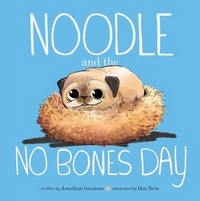
Up next are a couple of things I’ve been wanting to get to for a while, and my library has come through for me: How to Save a Superhero by Ruth Freeman and my next audiobook should be Fuzz: When Nature Breaks the Law by Mary Roach (Narrator).

How to Save a SuperheroBlank SpaceFuzz: When Nature Breaks the Law

What about you?

Nice Dragons Finish Last by Rachel Aaron: Meet the World’s Worst Dragon

Nice Dragons Finish LastNice Dragons Finish Last

by Rachel Aaron

DETAILS:
Series: The Heartstrikers, #1
Publication Date: July 13, 2014
Format: Kindle Edition
Length: 287 pages
Read Date: January 13 - 17, 2022
Support Independent Bookstores - Visit IndieBound.org

What’s Nice Dragons Finish Last About?

Julius is one of the youngest—and definitely smallest—members of the Heartstrikers, one of the most powerful dragon clans in the world. Like the best of dragons, the Heartstrikers are conniving, dangerous, cruel, and avaricious. Julius is everything they’re not, he has all the usual dragon abilities (true, he hasn’t developed them as he should, but he has them), but his personality and morality are the opposite. The word best used to describe him—and the one used most often in the book—is nice.

Now, his mother is giving him one last chance to become the dragon she wants him to be—she’s trapped him in human form, removing most of his abilities, and he has to make something of himself with these limitations in less than a month. Oh, she landed him in the one city in the world where dragons are banned, too.

Julius teams up with a human mage (who turns out to be on the run from organized crime) to rise to the challenge, and…well, that’s about it. That’s the setup.

Bob

Julius’ older brother, Bob (technically, Brohomir), is one of the three Great Seers in the world. Most of his family seems to regard him as a loon not worthy of paying too much attention to. But Julius seems to understand and respect his ability—especially since he saw the curse happening 4 months before it did, and made some provisions to help his little brother after it.

Why, of all the characters in the book, am I focusing on him? Bob’s a hoot. He seems to have cultivated that insane reputation he has and enjoys playing to type. He’s almost like the draconian answer to Julius Lebowski—off in his own little world, and having a hard time relating to his siblings (again, purposefully)

He has his own agenda for Julius, and it doesn’t necessarily line up with Julius’ plans and hopes. But—unlike most of his family—Bob wants his little brother to be alive. Which makes him a little easier to like.

But it’s not that hard in the first place—Bob steals every scene he’s in. He seems to be the world’s second-nicest dragon, he’s scheming and manipulative to be sure, but he’s eccentric enough that it’s easy to discount it.

Here’s the Thing I Don’t Get

So we learn that Julius was never aggressive enough for the training his siblings went through, at a certain age, he’s simply run from them (which, at least, had the advantage of helping him become fast. Eventually, he’d just hide out in his room and avoid the exercises. Instead of learning to fight like a good dragon, he played video games with humans online. This led to him having some empathy for humans—even liking them, he’s able to see them as something more than tools to be used and exploited.

What we never learn is how Julius becomes nice. Are we to believe that despite the family and culture he’s born into, he’s just hard-wired to be nice? If so, where’d that come from? He’s apparently the one dragon in existence (possibly ever) who’s nice—is it some sort of genetic mutation? Or is it that he picks it up during his interactions with humans. But…since when does online gaming bring out the considerate, respectful, friendly, and helpful side in anyone? Just how does he turn out to be a kind, considerate, respectful, nice person when that’s counter to everything he’s taught and surrounded by?

Maybe in a subsequent book, Aaron will explain this. In the meantime, I’m going to keep asking that question. Is it enough of an issue to detract from my enjoyment of the book? Nah, it’s a fun and sweet story either way. But it’s gnawing away at the back of my mind.

So, what did I think about Nice Dragons Finish Last?

This has been on my Goodreads Want to Read list since 2014 (and on my Kindle since 2015). I cannot tell you why I put it off this long, but I am more than a little annoyed with myself over not getting to it until now. I should be thinking about re-reading the series about now, not starting it.

I had plenty of fun with this—I wasn’t sure what to make of it at the start, but after a chapter or so I settled in and was able to enjoy the ride from there out.

Aaron did a good job of bringing the reader into the world, getting us invested in the characters—even some characters you wouldn’t normally get invested in. A book like this calls for double duty—you’ve got to tell a solid story and you have to set up a world and series. Aaron handles that well, because not only did I enjoy this, I was eager to see what happened next in the series (hopefully, it doesn’t take me eight years to get to it).


3 Stars

This post contains an affiliate link. If you purchase from it, I will get a small commission at no additional cost to you. As always, opinions are my own.


Pub Day Repost: The Accomplice by Lisa Lutz: That’s What Friends are For

The AccompliceThe Accomplice

by Lisa Lutz

DETAILS:
Publisher: Ballantine Books
Publication Date: January 24, 2022
Format: eARC
Length: 368
Read Date: January 12-13, 2022
Support Independent Bookstores - Visit IndieBound.org

What’s The Accomplice About?

Luna and Owen meet in a Business Ethics class in college and form an almost immediate bond, becoming the best of friends—you know the kind that 1977’s Harry Burns says is impossible, but that 1987’s Harry finds himself wanting. Without the romance of 1988/89. They’re inseparable, a package deal—not just in college but after that.

Twelve years after their first meeting, Luna finds the murdered body of Owen’s wife while out running. Obviously, the police focus on Owen initially, but Luna knows it wasn’t him (not because of evidence, but because Owen wouldn’t).

Still, it’s hard not to think about a sort-of similar thing that happened back in college. And some of the things from Luna’s past and…well, now things are a real mess. While worrying about Owen, dealing with some personal turmoil that arises at the same time, and answering questions from the police—Luna starts to re-examine that time in college and asks some questions she maybe should’ve asked a decade ago.

As the Publisher puts it:

The Accomplice brilliantly examines the bonds of shared history, what it costs to break them, and what happens when you start wondering how well you know the one person who truly knows you.

The novel is told in alternating timelines, an approach that really works in this case. The primary timeline is 2019 with the murder and its investigation and aftermath. The other starts with Luna and Owen’s first meeting and then progresses through their college years, tracking the course of their friendship—focusing on that “sort-of similar thing.”

Owen and Luna/Luna and Owen

My opinion of the two of them vacillated a lot over the course of the novel—particularly Owen (which had nothing to do with him as a suspect, just him).

But the two of them together? There’s something special about their friendship…I can’t put it into words, but when they’re interacting, it’s just a pleasure to read. The same applies to them when they’re not interacting, but are looking out for each other. These two are great friends—easily forgiving each other, putting up with shortcomings (but being very aware of them), understanding each other better than their spouses, etc.

When either of them are being questioned by the police, for example, they’re much more concerned about explaining the actions and clarifying problems for the other than they are with staying out of trouble with the police themselves. Even if, and this is the part that counts, they aren’t feeling particularly fond of the other at the time.

Actual, living, breathing friendship. It’s a great thing to see, and it’s why I cared at all about this novel—sure, the puzzles were interesting, the dialogue was crisp, and so on. But you get drawn in, and kept in, by their friendship. Would I have read a slice-of-life novel about these two? Yes, and at times the book feels like it. Would I have read about these two taking a joint-family vacation where hilarity ensues instead of this crime? Absolutely. But this is better.

Some mutual friends

There’s another couple that Owen and Luna knew from college (names withheld because they’re not a couple when first mentioned). There is something about them that stood out from the rest of the characters in the book.

He’s just a hoot in college—and she’s the best friend that Luna has other than Owen (arguably better than Owen, but that’s not something Luna would consider).

But their after-college activities are fantastic—it’s not in Lutz’s wheelhouse to do something like this, but man, I’d love a novel about their life. Their dynamic—as well as their business/products—steals every scene they’re in for the 2019 timeline. I want more of them. I know I’m not going to get that, but it’s on my wishlist, just a few notches down from flying cars and a way to make this blog my full-time job.

So, what did I think about The Accomplice?

I keep seeing Lutz’s The Passenger referenced in relation to this book—while that’s not a bad book to compare this to, I think How to Start a Fire fits better in terms of tone and storytelling. If you go into this expecting something like the former, it’s going to take you a minute to re-calibrate expectations.

There are good portions of this book that aren’t all about “what’s X’s secret?”, “who’s the killer?”, “what horrible—or at unscrupulous—activity has Y been up to?”, etc. And those are just fun—it’s light, clever, winning—you want to get to know these people, be their friends—shake your head at their eccentricities. Then every few pages, you get a reminder that–where’s there’s light, there’s likely a shadow, and it might be best not to look into them.

Bouncing back and forth between the two timelines (and, eventually, a third that proves really illuminating toward both character and plot), Lutz reveals more of the characters, peels back the secrets, and advances the plot so easily, so naturally, that it must have been excruciating work. The easier it is on the reader, the harder it likely was on the author—and hopefully, Lutz took a nice break after finishing this. This is the kind of weaving that Lutz excels at—as seen in The Swallows, How to Start a Fire, and (yes) The Passenger—and she’s getting better at it, I tell you, you won’t see any of this coming.

It’s not too surprising to see me recommending a Lutz novel (the surprise would be me not), but there’s something different about this one. Set aside a couple of days and get to know Owen and Luna.


4 Stars

Disclaimer: I received this eARC from Random House Publishing Group – Ballantine via NetGalley in exchange for this post—thanks to both for this.

This post contains an affiliate link. If you purchase from it, I will get a small commission at no additional cost to you. As always, opinions are my own.

PUB DAY REPOST: The Appeal by Janice Hallett: You Have Not Read a Mystery Like This Before.

The Appeal

The Appeal

by Janice Hallett

eARC, 448 pg.
Atria Books, 2022

Read: October 30-November 4, 2021
Grab a copy from your local indie bookstore!

What’s The Appeal About?

The setup is basically this: a pair of law students have been given a stack of documents—emails, texts, voicemail transcripts, letters, and so on. They’re to read through this stack and be prepared to work out what crime(s) happened in what’s documented and who did what (and maybe why).

The correspondence focuses on a period of March-July in the lives of people in The Fairway Players or their associates. The Fairway Players are a local amateur theater group from a small community. As the group starts to plan their next play, the director makes a horrible announcement: his granddaughter, Poppy, has just been diagnosed with a rare form of brain cancer. He’s going to have to step back for a while, and Poppy’s uncle will be stepping up to direct, etc. There’s an experimental drug from the U.S. that’s her best shot at a cure, but it’s expensive and the family’s trying to crowdfund the treatment.

The Players are galvanized into action—individually and as a whole. People do charity runs, have a fundraising gala, a raffle, direct contributions, and so on—and, of course, all the proceeds from The Fairway Players’ next play will go to the Fund.

The stack of documents chronicles the messages about this fundraising appeal, the emails of support, and a lot of the behind-the-scenes work at the appeal and the play, and assorted tangential matters. There’s a lot of gossip, backstabbing, emotional manipulation, and…well, you start to get the idea that not everything is on the up-and-up with the appeal, the treatment, and some of the people involved. The more you start to piece together the picture these emails, etc. are painting, the more you’re pretty sure you’re missing something big. Maybe a few somethings. A crime has been committed, one or two may be in progress, and there may be more on the way.

The only way to find out is to see what the next email has to say.

Isabel Beck

When it comes to sheer word count, we hear more from Isabel Beck than any of the other characters. This doesn’t necessarily mean that we know more about her than some of the others—we just get more input from her about what’s going on. Or at least what she says is going on.

Issy is clearly a lonely person. Until she recruits a couple of new colleagues, she’s the newest member of The Fairway Players and isn’t really liked by most (and, in fact, the people she brings in are quickly more welcome than she is). She’s described as “mousy,” “drippy,” who “latches on to” people—and some things not as complimentary. Between her emails and what others say about her, you really start to pity Issy.

And that feeling just grows—like just about every person in the book, she does some truly lousy things. But unlike just about every person in the book, I only felt bad for her. I really hoped for a heaping dose of comeuppance to be given to everyone else but kept hoping something good would happen for Issy.

If I liked nothing else about The Appeal, Isabel Beck would be enough for me to tell you to go read this book. I’m so glad I met this character, one of the best of 2021.

The Stroke of Genius

The law students, Femi and Charlotte, communicate with each other via WhatsApp about these documents as they read—as you read, too. They get exactly the same information as the reader does when the reader does. As they write back and forth, it’s like you’re a part of the conversation with them. Instead of texting/messaging your friend(s) as you read the same novel, in this case, you’re reading along with a couple of the characters.

In mysteries, as the reader, you’re always looking back at things, seeing what happened. Even if the narration is in the present tense, it’s going through things that have already happened. Which is the case here, too. But you’re with Femi and Charlotte in the trenches—it feels very “now”—while you and those two are looking towards the future, what documents are going to be coming? As they start to put things together, you do, too (sometimes faster than them, sometimes a beat or two behind them). It’s a fun—and brilliant—layer on top of what’s already a great book that kicks it up a notch or two of cleverness.

Lingering Questions

One of the downsides/advantages (depending on your point of view) of this type of storytelling is that you don’t have an omniscient narrator—or even a first person—to tie up all the loose ends.

I have several lingering questions about some of the events of the book, many of which can’t even make a decent guess about the answer for. If Connelly, Rankin, Holten, Goldberg, or anyone else had left this much hanging—you can believe I’d be jumping up and down shouting my objections to the heavens. But I’m oddly at peace with this. I have been and am going to be spending some time chewing on my questions, make no mistake, but I’m fine with Hallett not tieing everything up in a nice bow.

I should stress that all the important questions, the ones that keep the reader turning pages for, are answered in definitive ways.

So, what did I think about The Appeal?

I ordered this book as soon as I read Noelle Holten’s post about it in July. Then listening to Hallet on The Blood Brothers Podcast just made me anticipate it more. So when I saw this on NetGalley, I had to jump—who wants to wait until January for the US release?

I am so glad that I didn’t wait.

As I read this, I kept saying to myself things like, “oh, this is clever;” “this is great;” “oohh, impressive;” and so on. And then 30-60 minutes later, I’d say the same thing again, but mean it more. And then again 30-minutes later. Right up to the final paragraphs, this kept getting better and better—and it started off great.

Now that I’ve said such grandiose things that no book can possibly live up to them, I’m not sure there’s a whole lot left to say.

The Appeal is a funny, thought-provoking, and suspenseful novel full of great, believable characters—not a whole lot of likable characters, but believable and interesting, sure—with a multi-layered plot that will keep you guessing and thinking as it pushes you to keep going; all presented in a format that you’ve seen rarely (if ever) in a mystery novel. If the execution isn’t flawless, it’s close enough that you won’t notice.

One of the best of the year. Period.


5 Stars

Disclaimer: I received this eARC from Atria via NetGalley in exchange for this post and my honest opinion—thanks to both for this.

This post contains an affiliate link. If you purchase from it, I will get a small commission at no additional cost to you. As always, opinions are my own.

Top Ten Tuesday: New-to-Me Authors I Discovered in 2021


The topic for this week’s Top Ten Tuesdays is the Top Ten New-to-Me Authors I Discovered in 2021

When I posted Top 5 Tuesday – Top 5 New Authors of 2021 a couple of weeks ago, I’d said that a Top 10 list would’ve been better for me to post, and a couple of days later I saw that this was coming up, so you know I had to do this.

Top Ten New-to-Me Authors I Discovered in 2021

(alphabetically)

10 Elizabeth Breck Elizabeth Breck

Breck’s P.I., Madison Kelly, felt like a breath of fresh air. She’s got all the characteristics of female P.I.s (see: Millhone, Warshawski, Randall, Chin, Gennaro), and makes them feel fresh and new (she also brings a few of her own to the table, too). Breck’s experience as a P.I. adds a layer of authenticity to the writing, too. But really, it’s her voice that hooked me.

In case you’re curious about what I said about the book that put her on this list, click here.

9 S.A. Cosby S.A. Cosby

After a few months of seeing the rabid hype for Blacktop Wasteland, I finally carved out time for this piece of Rural Noir and was just blown away. The novel was beautifully written, with a lyrical nature to some passages that will make you want to reread the paragraphs a few times just to take it all in. But also? It has great car scenes in case you’re worried about it being too highbrow and artsy. It took less than a paragraph for me to get why people’d been raving about the book, and I don’t see that quieting down any time soon.

In case you’re curious about what I said about the book that put him on this list, click here.

8 Janice Hallett Janice Hallett

I’ve never seen someone put together a book like this in the Crime/Mystery genre. The closest I can think of is Semple’s Where’d You Go, Bernadette. In addition to creating a very clever novel, she does a fantastic job of capturing a handful of distinct voices…and I don’t know what more to say about Hallett, really. I’m at a loss for words.

The book that put her on the list is released in the U.S. today! Now we can catch up with the rest of the world (I was able to snag a copy from NetGalley, too). In case you’re curious about what I said about it, click here.

7 Stephen Mack Jones Stephen Mack Jones

I read the first book in his series, August Snow, last summer—and I just clicked with it within a couple of pages. The voice was just perfect, his characters felt like good friends already—just ones I needed to get to know better. He also had a real gift for setting—I could see some of the locations clearly, and the food? I’m getting hungry right now. I’ll be returning to Jones and Snow early next year, and I can’t wait.

In case you’re curious about what I said about the book that put him on this list, click here.

6 Kathleen Kent Kathleen Kent

Kent’s crime debut kicks off with a near-perfect first chapter that got me to add the rest of this trilogy to my TBR. The rest of the book is almost as good. An NYPD Detective as a fish out of water in Dallas is a pretty fun idea—throw her into the middle of an investigation of a Drug Cartel with a stalker on her heels, and it’s more than a fun idea, it’s a blockbuster read.

Inexplicably, I haven’t written anything about The Dime yet, or I’d point you to it.

5 J.R.R. Lockhaven J.R.R. Lockhaven

Lockhaven’s debut is just as strange as you’d expect from someone who threw an extra “R.” into his name (Kyle Robert Redundant Lockhaven) for his fantasy debut The Conjuring of Zoth-Avarex: The Self-Proclaimed Greatest Dragon in the Multiverse. Part workplace satire, part celebration of Fantasy tropes, and part send-up of those same tropes, there’s little to criticize and a lot to celebrate in this book. I know his next book won’t be as nutty, which I will miss, but I’m curious to see it.

In case you’re curious about what I said about the book that put him on this list, click here.

4 Nadine Matheson Nadine Matheson

Matheson infuses her fiction with her experience and knowledge—one of the murders takes place near her home, which helps her bring that part of London to life in a way I don’t think I’ve seen before. Also, she’s a Criminal Solicitor, bringing an authenticity to the book that you don’t always get. I’m starting to get carried away and I have 3 other people to talk about so I’m going to shut up.

In case you’re curious about what I said about the book that put her on this list, click here.

3 Chris McDonald Chris McDonald

I’ve only read one of McDonald’s two series to date (I plan on changing that soon), and it certainly appears that the two are pretty different in style and tone. But you can’t read five books in a year by one author without it leaving a pretty strong impression on you. The Stonebridge Mysteries had strong characters, clever mysteries, and a humorous touch (without being comedies), a consistent source of entertainment throughout 2021.

In case you’re curious about what I said about the series that put him on this list, click here.

2 Fabian Nicieza Fabian Nicieza

In researching this post, I realized I’d actually met Nicieza in 1987 in Psi Force #9 from Marvel Comics. But I’m still counting this because: 1. I’d forgotten about him completely, and 2. I’m going with new-to-me-novelists. He’s written a lot of other comics in the meantime—including creating Deadpool. But now he’s turned to novel writing—his first novel was laugh-out-loud funny, with the kind of tension that seasoned pros struggle with, great characters, and some social commentary, too. Oh, yeah, and a great mystery!

In case you’re curious about what I said about the book that put him here, click here.

1 Richard Osman Richard Osman

Osman has a long résumé in all sorts of fields—none of which I was exposed to here in the U.S. But his first novel was a great way to be introduced—a great mix of meditation on grief and aging, comedy, and mystery. He writes like a seasoned pro, and I can’t wait to see what he does next.

In case you’re curious about what I said about the books that put him on this list, click here.

Robert B. Parker’s Bye Bye Baby by Ace Atkins: Atkins’ Farewell to Spenser Will Not Disappoint their Fans

Bye Bye BabyRobert B. Parker’s Bye Bye Baby

by Ace Atkins

DETAILS:
Series: Spenser, #50
Publisher: G.P. Putnam's Sons
Publication Date: January 11, 2022
Format: Hardcover
Length: 304 pg.
Read Date: January 19, 2022
Support Independent Bookstores - Visit IndieBound.org

Over the years, many things have changed about my profession. I no longer kept an actual landline on my desk. Since no one had called it since a little past the first of the millennium, I discontinued the service.

My superhuman ability to scroll through microfilm was no longer in demand. Almost anything I needed to look up, from old news stories, to criminal histories, to vehicle records, could be found online. Although I missed my visits to the Boston Public Library, I’d accepted the long, boring hours at my desk, thinking about how many old cases I could’ve solved with Google.

What’s Bye Bye Baby About?

Spenser’s hired by the campaign manager for a Congresswoman during her first re-election bid. Carolina Garcia-Ramirez, aka CGR, has had enemies since she first announced her candidacy (despite its reputation, Boston has a fair share of people antagonistic to a progressive woman politician—especially if she’s a minority), but lately, the threats are more specific and indicate inside information. Despite the Congresswoman’s resistance to the idea, Spenser joins her team as both a bodyguard and to investigate these threats.

Suspects range from any number of racist and alt-right groups, lone individuals, and someone related to the campaign of her opponent—the same man she unseated during the last primary.

It’s not long before Spenser runs into FBI agents, who have a different agenda regarding the Garcia-Ramirez. Spenser wants to stop whoever’s threatening her—as soon as possible. The FBI is more concerned with leveraging these threats into making a larger case against extremists in the region. They do agree, however, that the threats are real and the Congresswoman is in real danger.

The Hawk Storyline

In exchange for helping Spender on CGR-Duty, Hawk asks him to try to track down a woman from his past. Hawk rarely (that we see) asks Spenser for help with something in exchange for his services, so that was noteworthy in and of itself. But for him to ask for this kind of favor? Double strange.

Sadly, most of the developments in this story happen off-screen. And while there are plenty of surprises in it, because it’s so off-screen, it’s too easy to overlook what’s going on. (I honestly only remembered to write something about it just before I hit “Schedule” on this post)

Too Political?

There’s a lot of talk about Atkins making this too political (not the first time it’s been said about his Spenser novels). I can only imagine this was written by people who skipped a handful of Parker’s novels, primarily Looking for Rachel Wallace.

I say that not just because it was Parker at his (arguably) most political,* but this novel was clearly influenced by Looking for Rachel Wallace—I made note of the resemblance on page 18 (but I’d wondered about it before then), and it only became clearer as the book went on.

* Double Deuce, Thin Air, and Pale Kings and Princes jumped to mind as clearly political, too. If I let myself spend time thinking about it, I’d have no problem coming up with more.

Yes, Carolina Garcia-Ramirez/CGR, is obviously modeled on Alexandria Ocasio-Cortez/AOC. The crimes planned and attempted have similarly obvious recent real-world parallels. But this is not a book that only partisans can enjoy, if they can put up with Spenser pushing back on the stances of his Republican client in The Widening Gyre*, they can put up with this. Come to think of it, The Widening Gyre is pretty important for the background to this book.

* Oh, look, another one!

Also, if taking a strong anti-racist stance is going to get someone who’s a fan of Hawk, Bobby Horse, Chollo, and Sixkill decrying the political stance. Maybe they haven’t been paying attention to the series.

Bye Bye, Atkins

“Have you found any suspects?” Susan said.

“Nope.”

“Got any leads?” she said.

“Zip.”

“Planning on doing more than just poking around and annoying people?”

“Why mess with a winning formula?”

Alas, that’s exactly what’s going to happen—the winning formula of Ace Atkins donning the Parker mantle for this series is no more, and Mike Lupica will be taking over.

Atkins is moving on so he can write some projects of his own that he doesn’t have time for while handling Spenser. That’s absolutely understandable, and I look forward to seeing what he’s going to do. But I’m going to miss him with these characters and series—I remember being about a quarter of the way through Lullaby and breathing a sigh of relief—not only was he as good as Parker, he was as good as Parker in his prime. I thought I’d be saying goodbye to a very old friend after Parker died, and Atkins let me hang on a little longer.

I’m a little worried about the series. Lupica’s doing a good job with Sunny Randall (his last one is forthcoming this year), and isn’t bad with the Jesse Stone books. But I doubt he’s going to be as good as Atkins with Spenser. I’m hoping to eat my words, though.

So, what did I think about Bye Bye Baby?

“You think these threats could be legitimate?”

“Maybe” [Wayne Cosgrove] said. “Hell, It only takes one person. It’s just a goddamn mess to see through all the noise and bluster these days. Everyone is angry. Everyone has an ax to grind. At least in the old days, a nut had to roll a sheet of paper into the typewriter or paste together some jumbled clippings from a magazine. But now all they have to do is use a dummy email account and be done.”

“The perils of sleuthing in the twenty-first century.”

It’s a little hard separating my feelings and thoughts about this book from Atkins’ entire run with this being his last, but I’m going to try.

I don’t think this was his strongest outing—nor was it his weakest—but it was as fun as you could want. Spenser’s wit was on full power, as was his gift for observation. The mid-novel fight scene was pretty good–as were the other action scenes. The campaign staff were believable and interesting—as was CGR (although her boyfriend got on my nerves, I think by design). A lot of that story was predictable, but Atkins told it well enough that you didn’t mind—there are only so many things you can do in a story about bodyguarding someone, after all. There were also plenty of unexpected things along the way, so even if the destination was clear all along, Atkins’s route to it wasn’t.

The only sour note for me was the investigation for Hawk—it felt like Atkins had a good idea at the beginning, and just didn’t have the time to develop it as he should’ve. I do wonder if he was just setting something up for Lupica. It’s the only thing that makes sense to me.

Atkins brought out all of the major characters from his run, and many from Parker’s, for one last ride—it was great to see them before the hand-off. Atkins even made one major character move (one might say it was overdue and something that Parker should’ve done).

This would work as a jumping-on point to the series—although I can’t imagine here in book 50 that there’s anyone who hasn’t tried the series but is considering it. But more importantly, it’s one for the fans written by a fellow fan, and that audience should be more than satisfied with it.


4 1/2 Stars

This post contains an affiliate link. If you purchase from it, I will get a small commission at no additional cost to you. As always, opinions are my own.

Why Did Jesus Have to Live a Perfect Life? by Brandon D. Crowe: Obedience that Actually Saves

Why Did Jesus Have to Live a Perfect Life?Why Did Jesus Live a Perfect Life?:
The Necessity of Christ’s Obedience for Our Salvation

by Brandon D. Crowe

DETAILS:
Publisher: Baker Academic
Publication Date: October 26, 2021
Format: Paperback
Length: 189 pg.
Read Date: December 19-26, 2021
Support Independent Bookstores - Visit IndieBound.org

What’s Why Did Jesus Have to Live a Perfect Life? About?

Crowe seeks to focus on this question:

Is perfect obediencce necessary for enternal life?

The question could be rephrased a number of ways; Is perfect obedience necessary for justification? Is perfect obedience necessary for salvation? Did Jesus have to be perfectly obedient in order to save us? And if so, why?

Obviously, he says it is necessary—noting that we’ll underplay and miss all of what Christ did on our behalf and that we’d end up putting too much importance on our own works.

After Crowe establishes the question and ensures that the reader understands the definitions he’s using for the key terms, he turns to the Biblical text for some exegetical looks at key texts. This is, as it should be, the bulk of the book. In the third part of the book, he moves on to practical application—given what’s been said about the necessity of Christ’s perfect obedience, what’s the place of/need of the obedience and good works of the believer?

So, what did I think about Why Did Jesus Have to Live a Perfect Life??

I appreciated Crowe’s approach to the topic of Christ’s obedience—and, as usual, found his study of the texts to be helpful and challenging. The place of works in the Christian life too often is pitted against the obedience of Christ, or tied to it in an unbiblical fashion–Crowe’s discussion was more than helpful and I wish I saw more works like it.

A couple of highlights from the book for me were that third part about obedience and the last chapter in the exegetical part. In that chapter, Crowe examines the connection between Jesus’s obedience and the resurrection. That discussion tied in nicely to his 2020 book, The Hope of Israel: The Resurrection of Christ in the Acts of the Apostles (one of those books I still think about).

This is a careful overview of the topic, and will reward a similarly careful read. By design, he doesn’t posit anything revolutionary or new—it’s a restatement and reminder of what Reformation churches have been teaching for centuries. Even so, it’s something we need to be reminded of.


4 Stars

This post contains an affiliate link. If you purchase from it, I will get a small commission at no additional cost to you. As always, opinions are my own.

Saturday Miscellany—1/22/22

I apparently had one of those weeks where I did more reading than blogging/blog prep, I didn’t realize it, but apparently, that was the case. STill did get a post or two up every day, and found some good stuff for this post, just not what I expected to produce at the beginning of the week. Oh, well. Read some good stuff, plugged away at a couple of projects I’m excited to share with you, and…well, I don’t know, there should be a third thing, but who has the energy to write a whole list?

Odds ‘n ends about books and reading that caught my eye this week. You’ve probably seen some/most/all of them, but just in case:
bullet Book bans are back in style
bullet For Booksellers, the Crystal Ball Stays Cloudy: Indie booksellers saw solid sales in 2021 but wonder what 2022 will bring
bullet 30 years of Harry Bosch—that’s a mind-boggling number
bullet Humor in Books, and Other Places, Too! An Interview with Armanis Ar-Feinial—I’m really digging this series from K. R. R. Lockhaven.
bullet The Deeply Personal Art of Organizing Your Books—Molly Templeton weighs in on book organization
bullet 5 Years of Blogging—Suckerforcoffe looks back on five years of blogging—no mean feat.
bullet What You Need to Know Before You Return a Book on Audible in 2022
bullet I read City of Lies…all of them—I don’t know how I left this off of last week’s list, but I’m glad I did, I’m a little short on material for this week. The Fantasy Inn’s Kopratic read every book called City of Lies around. Brilliant idea for a project

A Book-ish Related Podcast episode (or four) you might want to give a listen to:
bullet Tales From The Bridge: All Things Sci-Fi Ep.27: A Conversation with Seanan McGuire—I’ve heard a few interviews with McGuire—she’s always entertaining, but she’s in rare form here. Great stuff.
bullet The Thriller Zone Nick Kolakowski, Pulp Thriller Writer—this was a good interview that inspired me to dip into the archives, the episodes with Ace Atkins and Tori Eldridge were worth noting, too. This podcast is going to be in the rotation for a while.

This Week’s New Releases that I’m Excited About and/or You’ll Probably See Here Soon:
bullet Robert B. Parker’s Bye Bye Baby by Ace Atkins—This is the tenth and final book in this series for Atkins, and he goes out strong in this story of Spenser protecting a politician from threats and harassment. I tried to get my post up about this yesterday, but it needed a little more time in the oven. Hopefully early next week.

Lastly, I’d like to say hi and extend a warm welcome to Celeste L and Eweto Ovie who followed the blog this week. Don’t be a stranger!

The Friday 56 for 1/21/22: Nice Dragons Finish Last by Rachel Aaron

The Friday 56This is a weekly bloghop hosted by Freda’s Voice.

RULES:
The Friday 56 Grab a book, any book.
The Friday 56 Turn to Page 56 or 56% on your ereader. If you have to improvise, that is okay.
The Friday 56 Find a snippet, short and sweet.
The Friday 56 Post it

from Page 56 of:
Nice Dragons Finish Last

Nice Dragons Finish Last by Rachel Aaron

“…believe it or not, I don’t normally get into back-alley brawls with strange men.”

“Well, if anyone deserved breaking your ‘no slamming people into walls’ streak over, it would be Bixby’s idiots.”

“I only got half of them,” he reminded her. “You did the other. Credit where credit is due.”

Marci laughed. “If by ‘credit’ you mean ‘assault and battery charges,’ then I guess you’re right.” She shook her head and turned to flash him a warm smile. “You know, we make a pretty good team.”

Julius felt that smile all the way to his toes.

Book Blogger Hop: Books Per Month?

Book Blogger Hop


This prompt was submitted by Elizabeth @ Silver’s Reviews:

What is the average number of books you read per month?

You’d think I’d know that, wouldn’t you? I had to do a tiny bit of research for this. I could’ve gone back about a decade in coming up with this number, but that felt like overkill. I figured a look at the last three years would fit my current habits best (and was easiest to get the data from, which helped). But just the raw number looked boring, so why not make* a chart?

* Have my spreadsheet make a chart, after it did the math for me.

What about you?

Page 247 of 610

Powered by WordPress & Theme by Anders Norén