Author: HCNewton Page 253 of 623

BOOK SPOTLIGHT: Under the Bridge by Jack Byrne

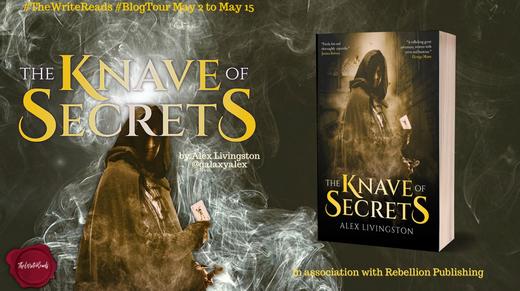
I’m very pleased and excited today to welcome The Write Reads Blog Tour for Under the Bridge by Jack Byrne. The problem is, I was supposed to do this on March 9th (I apparently put it in my calendar as May 9th). Even if I’d gotten the date right, I couldn’t fit this into my schedule on time, sadly, but you should absolutely check out some of the posts about it at https://twitter.com/WriteReadsTours to see why you should find room for it. But before you go, let’s learn a little about this book, shall we?

Under the Bridge Tour Banner

Book Details:

Book Title: Under the Bridge by Jack Byrne
Series: The Liverpool Mysteries
Publisher: Northodox Press
Release date: February 18, 2021
Format: Paperback/Ebook
Length: 360 pages
Under the Bridge

Book Blurb:

2004 – The discovery of a skeleton in the Liverpool docklands unearths long buried secrets. Reporter, Anne McCarthy, is keen to prove herself and dives into the case with abandon where she finds Michael, an old Irish caretaker who knows far more than he’s letting on and may have a connection to the body.

Meanwhile, Vinny Doyle, is starting a postgrad degree, researching Liverpool’s immigrant history and a burgeoning Scouse identity. But Vinny has been neglecting his own family history and stranger Michael might know about his father’s disappearance in the 70s.

1955 – Escaping violence in Ireland and fresh off the boat, Michael falls in with Wicklow boys Jack Power and Paddy Doyle, who smuggle contraband through the docks putting them at odds with unions while they rally the dock workers against the rackets and the strikebreakers. A story of corruption, secret police, and sectarianism slowly unravels. But will the truth out?

As the conflict heightens, Michael questions the life sprawling out ahead of him. In the present, Anne races to solve the mystery, but is she prepared for what she’ll find?

Book Links:

Amazon US ~ Amazon UK ~ Goodreads

About the Author:

Jack ByrneI was born and raised in Speke Liverpool, (Paul McCartney lived in the street behind us for a while) although my parents first lived ‘Under The Bridge’ in Garston, and all my family goes back to Wicklow in Ireland.

The Liverpool Mystery Series will be four novels. Under The Bridge is the first. I am writing Fire Next time now, and The Wicklow Boys will follow next year. You can find The One Road prequel a collection of short stories on Amazon.

Author Links:

Website ~ Twitter ~ Facebook


My thanks to The Write Reads for the invitation to participate in this tour and the materials they provided.

The Part About the Dragon Was (Mostly) True by Sean Gibson: A Hilarious Fantasy Filled with Adventure and Shenanigans. Definitely Shenanigans.

The Part About the Dragon Was (Mostly) TrueThe Part About the Dragon Was (Mostly) True

by Sean Gibson

DETAILS:
Publisher: The Parliament House
Publication Date: December 10, 2020
Format: Kindle Edition
Length: 358 pg.
Read Date: March 10-12, 2022
Support Independent Bookstores - Visit IndieBound.org

I am, if not the most well-known bard in Erithea (yet), arguably the most talented, and unarguably the cleverest. I also wouldn’t quibble if you suggested that I’m the most beautiful, but that’s just because I’m very agreeable (and beautiful)…

Decades ago, I was sworn to secrecy regarding the true story of the great and terrible “Dragonia,” but recent developments have released me from that promise, and so I can finally tell the tale.

What’s The Part About the Dragon Was (Mostly) True About?

This is that true story about Dragonia, told alongside the “official” account so the reader can see how the details were adjusted and tweaked to create the story everyone knows.

The town (or village, depending on who you ask) of Skendrick is being terrorized by a dragon—crops are being ruined, trade is disrupted, and the town is about to fall apart. Desperate, they put out a call for adventurers to come and kill the dragon. But they get no takers—so they go to Plan B. The villagers (or townspeople) pool their meager resources to hire a bard. This bard is to compose a song to make the attempt to kill the dragon sound appealing enough—and its treasure (which may or may not actually exist) enticing enough—to get a band of adventurers to come.

This is where Heloise comes in. She takes the gig and soon gets a new and yet unaccomplished band of adventurers to take up the call to action. I don’t want to get into describing the group, you want to meet them in the book.

They encounter difficulties from without and within; nasty, malodorous geography; orcs and other creatures; and, well, the dragon.

Heloise the Bard

“You’re not half as funny as you think you are, as I suspect you have a very high opinion of yourself.”

“My opinion of myself is in direct proportion to my amazingness,” I said sweetly.

The half-elf, Heloise the Bard is our narrator—as you can tell from the quotations above, she has a fairly high opinion of herself and her abilities. She’s also rather impressed with her hair and certain other physical attributes. Probably her greatest skill is self-promotion.

She decides to accompany the adventurers, to chronicle their journey and the outcome of their clash with the dragon. Her wit and quick thinking prove valuable to their effort and her particular set of skills make all the difference.

She is a hoot. It’d be easy for Heloise to be an annoying, over-the-top character, but somehow Gibson keeps her as an entertaining, over-the-top character. I’ve been trying to come up with a character to compare her to, and I’m failing. Maybe she’s the Fantasy version of Evanovich’s Lula, except Heloise has the skills that Lula thinks she has. Maybe she’s the equivalent of High Fidelity‘s Barry. Somewhere in the Venn Diagram featuring Fantasy, Lula, and Barry, I guess.

She appears in a couple of other books by Gibson, and I’m eager to spend some more time with her.

The Humor

The section could easily be merged with the previous one because the humor displayed in the book is primarily Heloise’s. The jokes are pretty much non-stop—even in the middle of fight scenes, or when death is nigh. The danger is still present, and the combat (and so on) is as deadly as it would be in another book—it’s just surrounded by laughs.

It didn’t take me long before I’d highlighted too many lines to quote—not that it stopped me from going on. My notes on this one are ridiculous. I kept chuckling throughout the reading. I probably would’ve finished the book in 2/3 the time, if reacting to the jokes didn’t make me stop reading for a moment.

If you’ve read The Tales of Pell, you’ve got a good idea for the pace of the jokes—and tone of the book, too.

There’s slapstick, there’s scatological humor, a great Meatloaf (the singer) line, some fantastic bursts of alliteration for the sake of a laugh, some general silliness, clever dialogue, and…honestly, I’m having a hard time thinking of a kind of humor that’s not in there. There’s a running gag (that I’ve alluded to) throughout about whether Skendrick is a town or a village—I can’t tell you how often it’s brought up. And the joke works every time—I should’ve gotten sick of it, and I never did. I don’t know how Gibson pulled that off, but that alone is the mark of a fantastic humor writer.

In addition to The Tales of Pell, if you’ve enjoyed Christopher Healy, Dave Barry, K.R.R. Lockhaven, Peter David, Scott Meyer, Joe Zieja, Jim C. Hines’ Jig the Goblin series, or John Scalzi—you’re going to dig the humor here. And if you dig the humor, you’re going to really enjoy the book. It’s that simple.

So, what did I think about The Part About the Dragon Was (Mostly) True?

You know by this point that one of my main goals in telling this story is to show that the adventuring life isn’t all it’s thought to be. It’s mostly boring, frustrating, dangerous (though not excitingly dangerous), smelly (dear gods, so smelly), and not particularly lucrative. Occasionally, however, it’s exactly how the songs make it sound, and in those moments, it’s easy to see why people—even smart, capable people like Nadi—would devote their lives to doing something so irrational. Let the record show that entering a dragon’s lair for the first time is one of those moments, and it’s fair to say that each member of our intrepid band experienced more than a frisson of excitement as we crept across that threshold.

I think it’s pretty clear that I had a blast with this book, but I should probably make that explicit. I had a blast reading this book.

I think I should not that this is not a book to read if you’re in a “find out what happened and get to the end of the story” frame of mind. This is a “enjoy the trip, not the destination”/”stop and smell the roses” kind of book. The destination/what happens is fully satisfying, but the getting-there is so much better.

In addition to the jokes and the dragon, there is a running commentary on what “the adventuring life” is like outside of the glamorous or exciting bits. A lot of fantasy novels will show bits of it, but not enough of them do—and most don’t do it this way. For example, The Part About the Dragon Was (Mostly) True contains more description of various odors than every 99% of the fantasy novels I’ve read by a significant factor. If this were a scratch and sniff book…well, I can’t imagine anyone would stock it—you just don’t want that in your warehouse/store. Sure, it’s silly talking about realism in a book featuring orcs, halflings, elves, etc.—but this factor does ground the book and give it a seriousness (for lack of a better term) that makes this more than a collection of jokes.

This is the funniest book I’ve read in 2022, and I can’t imagine it’ll face much competition. It’s got it all, go get your hands on it.


4 Stars

This post contains an affiliate link. If you purchase from it, I will get a small commission at no additional cost to you. As always, opinions are my own.

You’re Only Human by Kelly M. Kapic: The Reality and Comfort of Creaturely Finitude

You're Only HumanYou’re Only Human:
How Your Limits Reflect
God’s Design and Why
That’s Good News

by Kelly M. Kapic

DETAILS:
Publisher: Brazos Press
Publication Date: January 17, 2022
Format: Hardcover
Length: 228
Read Date: January 23-30, 2022
Support Independent Bookstores - Visit IndieBound.org

What’s You’re Only Human About?

Creaturely finitude is less an idea we discover than a reality we run into.

When we do run into this idea (as we all will), we frequently interpret that reality incorrectly—not recognizing that our limits, our finitude, as part of who we are as creatures (or forgetting that if we do recognize that). As such we can push against them in unhealthy ways, ignore them to our own peril, or see them as the result of sin, not the result of creation.

What Kapic sets out to do is to remind us that part of being a creature is having limits. When we remember that, we can live as we ought—in dependence on the God who made us that way. As he puts it,

Many of us fail to understand that our limitations are a gift from God, and therefore good. This produces in us the burden of trying to be something we are not and cannot be.

Particularity and Limits

Kapic reminds his readers that the doctrine of Creation shouldn’t just be limited to our understanding of Genesis 1-2, but to reflecting on the design, abilities, and limitations of humanity. These limitations would be in place regardless of our fallen state—sure, the fall twists those limitations—but they’re part of the original state.

In the first part of the book, Kapic lays out the theology necessary for this—and ties it to the Gospel, lest we get distracted from what matters most.

Healthy Dependence

The second part of the book talks about the creaturely dependence that flows from this—we aren’t capable of everything we need or want to accomplish, but He is. This is part of created humanity, and it takes on new meaning in Christ.

Tied to this idea of dependence is humility.

Humility consists in a recognition of (and a rejoicing in) the good limitations that God has given us; it is not a regrettable necessity, nor simply a later addition responding to sinful disorders. Even if there had never been a fall into sin, humility would still have the essential character of gratitude for our dependence on God and for his faithful supply of our need. Humility is built on the Creator/creature distinction; its response to sin emphasizes our further need for God to restore us to the fellowship that he always intended us to inhabit.

Kapic spends a lot of time drawing out the implications of this—in light of both Creation and Redemption.

Lament and Gratitude

We can express our humility and dependence in both our lament and our gratitude—this part of the application section of the book was probably the most rewarding to me. Kapic makes the case that they’re mirror concepts rooted in humility and dependence on our Creator and Redeemer, and both ought to be embraced by the believer.

So, what did I think about You’re Only Human?

It took me over a month to be mostly satisfied with what I wanted to say about this book—an example of creaturely finitude, come to think of it. I struggled over this—really wanting to get into all of his ideas and arguments. But that’s not what this blog is for (thankfully, or I’d be working on this post for another six months, minimum). I’ve trimmed this post a few times while putting it together, in fact, because I kept getting in the weeds.

You’re Only Human is the kind of book that I really don’t think I got a handle on after one read—I’m planning on a re-read this summer, in fact. I’ve got a general sense of it, but I want to return to it having a bird’s-eye view, so I can appreciate more of the details.

I don’t know if this is going to hit every reader like it did me—very likely it won’t—but this is just what I needed. Still, I think what Kapic has to say will resonate with and be helpful for many.


4 1/2 Stars

This post contains an affiliate link. If you purchase from it, I will get a small commission at no additional cost to you. As always, opinions are my own.

Saturday Miscellany—3/12/22

Odds ‘n ends about books and reading that caught my eye this week. You’ve probably seen some/most/all of them, but just in case:
bullet What is the best age to learn to read?—there’s a lot of info here, and a great conclusion
bullet Is It Possible to Read Without Expectations?
bullet The Books That Made Us – Dragonlance Chronicles by Margaret Weis and Tracy Hickman—Over on Before We Go Blog, Jodie Crum talks about The Dragonlance Chronicles (because what else is she going to talk about?).
bullet How to get over a book hangover—some handy advice from Kopratic at The Fantasy Inn
bullet Owl! at the Library tweeted a good point about kids books vs. adult fiction

This Week’s New Releases that I’m Excited About and/or You’ll Probably See Here Soon:
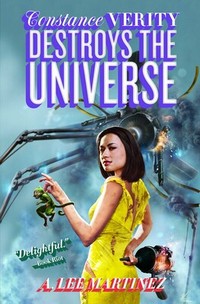
bullet Constance Verity Destroys the Universe by A. Lee Martinez—The end of the Constance Verity Trilogy sees Constance fighting her biggest foe yet. I’ve been waiting for this since 2018, can’t wait to dive in.
bullet One for All by Lillie Lainoff—A young French woman in a Three Musketeers-esque adventure. I talked about it the other day

Lastly, I’d like to say hi and extend a warm welcome to mariakonnel who followed the blog this week.

The Friday 56 for 3/11/22: The Part About the Dragon Was (Mostly) True by Sean Gibson

The Friday 56This is a weekly bloghop hosted by Freda’s Voice.

RULES:
The Friday 56 Grab a book, any book.
The Friday 56 Turn to Page 56 or 56% on your ereader. If you have to improvise, that is okay.
The Friday 56 Find a snippet, short and sweet.
The Friday 56 Post it

from Page 56 of:
The Part About the Dragon Was (Mostly) True

The Part About the Dragon Was (Mostly) True by Sean Gibson

If this were a performance and I were describing Borden, I’d probably call it tranquil and idyllic, but those are really just polite ways of saying boring and filled with lazy people, and since I don’t need to be polite here, I’ll say this: Borden is a boring place full of lazy, and frequently chauvinistic, people….

Suffice it to say, Borden’s not exactly a star-making destination for bards on the rise, but it does consistently offer gigs with solid pay, so if I’m in the region, I make it a point to stop over for a night or two. Around the time the people of Skendrick were so desperately seeking assistance with their little dragon problem, I was in the middle of a two-night stint at Big Bob’s, the nicest tavern in Borden, which is a little bit like saying it’s the least drunk sailor in a dockside bar. Still, the disappointingly regular-sized Robert, the proprietor and namesake of the establishment, didn’t ogle me, paid performers well, and at least had a decent selection of ales, so it was my preferred stop when I was in Borden.

Bullet Points about Troubled Blood by Robert Galbraith: A Clever Mystery Hidden in a Bloated and Problematic Novel

Troubled BloodTroubled Blood

by Robert Galbraith

DETAILS:
Series: Cormoran Strike, #5
Publisher: Mulholland Books
Publication Date: September 14, 2020
Format: Hardcover
Length: 927 pg.
Read Date: February 23-March 2, 2022
Support Independent Bookstores - Visit IndieBound.org


I’ve jumped on each book in this series, but this book sat on my shelf for 16 months after its release. Now that I’ve finally tackled it, I’m afraid that it’ll take me 16 months to write this up the way I normally would.

So, I’m just going to offer some brief thoughts about the book. But first, let’s start with:

The Offical Description

Private Detective Cormoran Strike is visiting his family in Cornwall when he is approached by a woman asking for help finding her mother, Margot Bamborough – who went missing in mysterious circumstances in 1974.

Strike has never tackled a cold case before, let alone one forty years old. But despite the slim chance of success, he is intrigued and takes it on; adding to the long list of cases that he and his partner in the agency, Robin Ellacott, are currently working on. And Robin herself is also juggling a messy divorce and unwanted male attention, as well as battling her own feelings about Strike.

As Strike and Robin investigate Margot’s disappearance, they come up against a fiendishly complex case with leads that include tarot cards, a psychopathic serial killer and witnesses who cannot all be trusted. And they learn that even cases decades old can prove to be deadly . . .

Things I’m Not Going to Develop into Paragraphs:

bullet The Acknowledgments start with, “My thanks, as ever, to my superb editor David Shelley…” Why? What did Shelley do? I cannot be expected to believe that anything was cut, trimmed, or compressed. 900 pages is too long for a P.I. novel.

There’s very little that I can think of that Shelley or Galbraith should’ve cut, but that’s not my job, I’m just the reader. Those two get paid to eliminate the wasteful portions of this book.

bullet Two things that I think could’ve been slimmed down, if not eliminated were: the cases non-Bamborough cases that Strike, Robin, and their contractors were on. We could’ve just used passing references to them, we didn’t need all the space devoted to them.

bullet There’s a storyline involving Robin and a contractor that took too long, and I get why Galbraith included it…but I have to keep arguing myself into accepting it.

bullet A lot has been made of the way that the serial killer suspected of Bamborough’s killing sometimes disguised himself as a woman. Given the public stances that Galbraith’s alter-ego has taken lately, this aspect of the character has come under fire. Which is understandable, and likely justified.

However, had Rowling not been embroiled in this controversy, or had anyone else written this character, I don’t think this character’s practice would’ve been controversial—it really comes across as his way of muddling witnesses and gaining the trust of a victim.

But she is the one who wrote this, and she is the one out there making those statements, and it’s hard to believe there’s no connection.

bullet I learned about a new philia while reading this book, and I really wish I hadn’t. It’s part of one of Strike and Robin’s other cases. I hope I don’t come across another reference to this in fiction or reality anytime soon so I’ll forget about it.

bullet Troubled Blood contains the only Matthew storyline that I liked in this series And it took until the end of it (or maybe Robin’s thoughts about it after the end of it) for me to reach that conclusion. He’s really one of the worst characters I’ve endured in the last decade.

bullet Similarly, we got another Charlotte Campbell story. I could barely put up with that story. I did like Strike’s actions at the end of it (I’m only now seeing the parallel, which makes me realize that I hadn’t organized my thoughts too well before this), but I wish Strike had gotten there a book or two ago. Or that Galbraith had used less space for it here.

bullet On the other hand, the story about Strike’s family (not his father and half-siblings, the family he was raised with) was fantastic.

bullet Outside of a few scenes in each previous novel, this was the best display and development of the friendship between Robin and Strike. It’s also the most extended, which helps (this is actually not a reference to the length of the book).

bullet The Bamborough mystery was just great. The strengths and weaknesses it showed in both Strike and Robin were worth the effort getting through it all. Seeing them make mistakes and recovering from them—and seeing them make breakthroughs—this is the kind of thing that attracted me to the series in the first place, they’re both works-in-progress and it’s great to see them grow as investigators.

You cut out everything else in the book and just give us this? I’m raving about it. Period.

bullet Yeah, yeah, yeah, I know…you need subplots, character growth, etc. But really…

bullet Did I mention this was too long?

bullet This ultimately worked for me. But there are so many qualifications, disclaimers, bet-hedging, allowances, and so on to that evaluation, I’m not sure it’s worth much. Die-hard fans of the series will find reasons to like this. I don’t think this would bring on new fans—it’s definitely not a place for people to jump on to this series.

bullet I said it last time, I’ll say it again, I hope the next book is leaner. But I doubt it will be.


3.5 Stars

This post contains an affiliate link. If you purchase from it, I will get a small commission at no additional cost to you. As always, opinions are my own.

March 11, 1952 – The Birth of One Hoopy Frood

Douglas Adams

Far out in the uncharted backwaters of the unfashionable end of the western spiral arm of the Galaxy lies a small unregarded yellow sun. Orbiting this at a distance of roughly ninety-two million miles is an utterly insignificant little blue-green planet where seventy years ago today, Douglas Adams was born.

When the Towel Day Facebook page posted about this anniversary this week, I thought about doing a big tribute post today. But I really didn’t have the time to do a decent job of it.

Instead, I’m going to do something uncharacteristic of me—I’m going to keep it brief. Douglas Adams was a formative writer for me. It’d take very little time at all to see how formative, he’s probably in the Top 5 authors I’ve mentioned on this site. His humor, his imagination, his point of view, his style was a gift that has been influencing writers and readers for decades, and likely will continue to.

In honor of this anniversary, tonight I’m going to have a gin and tonic* in his honor, read a few sections from his books (likely a little more than that), and be grateful we got his creative output.

* see The Restaurant at the End of the Universe‘s discussion about the beverage.

The Jackals by Adam Shaw: Maybe You Can Go Home Again, But Should You?

The JackalsThe Jackals

by Adam Shaw

DETAILS:
Publisher: Moonshine Books
Publication Date: January 11, 2022
Format: Kindle Edition
Length: 288 pg.
Read Date: January 28-31, 2022
Support Independent Bookstores - Visit IndieBound.org

What’s The Jackals About?

Years ago, Jack was in a band with his brother and two close friends from school. They were playing regularly, and had a big event coming up. A major fight occurs between Jack and Mark, his best friend since childhood and bandmate. Jack leaves town, the band falls apart, and they don’t speak for seven years.

Now Jack’s living in a new town, has a career on the verge of going somewhere, a girlfriend out of his league, and a dog that the author doesn’t spend enough time on.* Which is when he gets the news that Mark was killed.

Robbed of the chance to make amends, Jack joins his brother and another bandmate to help clean out Mark’s house and attend the funeral. Hopefully giving him the opportunity to mend fences with everyone still living.

It does not go according to plan.

* It’s been a while since I got to geek out over a dog, and I thought for a minute that this would be my chance.

Proportional Response

Around the time that Jack left town, Mark’s life took a turn. The next several years were marked by a series of poor choices and their ramifications (I’ll keep it vague on that point). Many/some of those close to Mark blamed Jack for this direction in his life. When presented with the opportunity to pay Jack back for this, they do so.

But it’s not a proportional response—what’s done to Jack is over the line, and will have long-reaching consequences for Jack’s life.

I found Jack’s response to this both hard to believe and disappointing. The more I think about this part of the novel, the less I like it. No matter what Jack’s ultimate response to everything that happens may be, no matter what personal development may be triggered by this—ultimately for the good (quite possibly)—I just don’t buy this part of the book.

So, what did I think about The Jackals?

I’m not 100% that the official description is correct, and I wonder if the novel was revised a bit after it was written. But that’s okay, the things that didn’t quite match up were better this way.

The ending wasn’t what I expected from this story—both from the way the novel was moving and from the kind of story Shaw was telling. It was a little unsatisfying in the moment, but the more I thought about it, the more I appreciated what Shaw did. He went against expectations provided the kind of ending that was most fitting for Jack.

The best takeaway from this novel was what it had to say about friendship—the real, enduring kind. Both the friendships that were forged in childhood/adolescence and how they morph into something different in adulthood—whether or not there’s frequent contact.

It had comedic moments, but could’ve been funnier. It had some good drama, but could’ve used some more depth. I thought the characters were well-thought-out, but we needed a little more from each one. I liked the story, but I wasn’t sure it was resolved right. Essentially, on just about every front I can think of the novel missed the promise it shows. Just by a hair. I wanted to love this, but in the end, I could only like it.

However underwhelmed I was with the book as a whole, and whatever issues I might have with parts of the plot—I did enjoy the book and am glad I read it. I’m curious to see what Shaw will do next, and I’ll definitely grab it. Your results may vary, of course, and I can easily see readers enjoying this more than I did (and I did like it!).

This post contains an affiliate link. If you purchase from it, I will get a small commission at no additional cost to you. As always, opinions are my own.

One for All by Lillie Lainoff: An Entertaining YA Dumas-inspired Adventure

One for AllOne for All

by Lillie Lainoff

DETAILS:
Publisher: Farrar, Straus and Giroux (BYR)
Publication Date: March 8, 2022
Format: eARC
Length: 336 pgs.
Read Date: March 5-6, 2022
Support Independent Bookstores - Visit IndieBound.org

The Publisher’s Description

I keep stumbling over coming up with my own synopsis, it’s either too long, too spoiler-filled (although I wonder if I’d have said as much as this does), or too brief to be worth it. So, here’s what the publisher has to say:

Tania de Batz is most herself with a sword in her hand. Everyone thinks her near-constant dizziness makes her weak, nothing but “a sick girl.” But Tania wants to be strong, independent, a fencer like her father—a former Musketeer and her greatest champion. Then Papa is brutally, mysteriously murdered. His dying wish? For Tania to attend finishing school. But L’Académie des Mariées, Tania realizes, is no finishing school. It’s a secret training ground for new Musketeers: women who are socialites on the surface, but strap daggers under their skirts, seduce men into giving up dangerous secrets, and protect France from downfall. And they don’t shy away from a sword fight.

With her newfound sisters at her side, Tania feels that she has a purpose, that she belongs. But then she meets Étienne, her target in uncovering a potential assassination plot. He’s kind, charming—and might have information about what really happened to her father. Torn between duty and dizzying emotion, Tania will have to decide where her loyalties lie…or risk losing everything she’s ever wanted.

POTS

The main characters of this novel are Tania and her fellow musketeers, the head of L’Académie des Mariées, the bad guys, and Postural Orthostatic Tachycardia Syndrome. The description talks says, “Everyone thinks her near-constant dizziness makes her weak, nothing but ‘a sick girl.'” Which introduces that character.

Obviously, no one has actually diagnosed Tania with POTS, and most of the characters don’t know the extent of the Syndrome’s impact on her (not just because she hides it as much as possible). But that’s what she has—I know that not just because the symptoms are recognizable to those who can, nor because it’s in all the marketing materials I’ve seen—but because there’s a great note at the back describing the author’s own experience with it (and, as I understand it, the same applies to the audiobook narrator).

It’s depicted, discussed, and addressed in period-appropriate ways, which is great. This is a really good way to raise awareness and understanding of POTS. I, for one, needed that—and I’m pretty sure I’m not alone in that.

I’d never heard of POTS until a few months ago—or if I had, it didn’t take root in my consciousness—but a family member was diagnosed with it. I’ve read websites, heard them discuss it, and so on, so I had a decent understanding. But after reading this novel, I think I have a richer understanding. Lainoff helped me walk a mile in the shoes of someone with the Syndrome in a way I hadn’t been able to before. The book is going to have a special place for me because of that.

I want to stress that I’d have enjoyed it anyway and would’ve appreciated “the look behind the curtain” of POTS without the personal connection, and I’m certainly not recommending it only because of the depiction of POTS. But it was a personal highlight.

YA-ness

Every so often when I’m reading a YA/MG book, I feel like a grumpy old man. The things that make a book fitting for the target audience jump out at me, they usually don’t make me like a book less (maybe they help me cut the book some slack). So what I’m saying here—just because I mention something, it doesn’t mean I’m critiquing/criticizing/complaining about it, it’s just something that jumped out at me.

Also, I know some readers of this blog have a YA allergy (or at least sensitivity), and I want to provide them with enough information to make an informed choice.

One for All is a very much YA book. If you bear in mind that it is one, the excesses/lack of subtlety/predictability of the book can be understood/expected.

Would I have preferred a little more nuance? A little more complexity? Sure. But Lainoff’s plot and characters were good enough to make up for it.

I also think it’s the YA-ness of the book that makes the transplanting of progressive 21st Century attitudes, expectations, and behaviors on the part of some of the characters in this 17th Century setting work. Were this written with older readers in mind, there’d be more internal conflict (amongst Tania’s group, and likely within some of the individuals) against bucking the cultural norms to the degree that they do.

Tous Pour Un

Big themes that one might expect to be addressed in a book like this would be romance, maybe family, likely even found family. And that’s not really what happens here. (well sort of found family, but it feels different to me, your results may vary)

Instead, it’s about camaraderie. It’s about a team. A group working together in a very Star Treky “the needs of the many outweigh the needs of the few…Or the one” kind of way. The four Mousquetaires have different political, social, and personal agendas—which are respected, understood, and shared to varying degrees—that they put aside for the needs of each other.

Time and time again, they tell each other “we won’t let you fall.” Mistakes will be made, errors will occur—hugely stupid choices will be made—but these four rally together to form a bond that is truly all for one and one for all.

I love seeing things like this—and I don’t see it often enough. And when I do see it, it’s largely an unstated thing. Sometimes it will be discussed with an outsider, but rarely within the group. And I get that, and there’s a certain beauty and nobility about not having to say it. At the same time, there’s a beauty in saying it. It’s great having examples of people reassuring each other, “I’ve got your back, I’m on your six, and I will help when needed” is a wonderful thing. How many of us need to hear that ourselves? So seeing it in a group of characters? I absolutely loved it and it’s likely my favorite thing about this book.

Use of French

Lainoff will frequently drop in a word, phrase, or sentence in French in the middle of dialogue or the narration. It’s almost always immediately translated or given enough context clues that a translation is unnecessary (generally she still provides one even when it’s unnecessary).

It was a nice way to brush up on my high-school French, for sure, but I really can’t tell you why it was used 97% of the time. And even that 3% I could guess about, I’m not certain that it was necessary or useful.

It was a nice bit of seasoning—little dashes of spice to add flavor—but nothing the recipe needed.*

* See the section head above for an accidental example of what I’m saying.

So, what did I think about One for All?

I really had fun with this book. I think I liked it in a “the whole is greater than the sum of its parts” kind of way. I do think if I focused on story X or Y; character W or Z; or theme A, B, or C; I might end up quibbling with the book. But the experience as a whole really worked for me and gave me almost everything I wanted in this book. (a little more humor or panache would’ve been nice—but now that the four have established themselves, that’s possible in a sequel)

It’s a familiar premise, well-executed—with just enough distinctiveness about it to make this stand out. Good characters acting in largely relatable and believable ways. Solid action that’s well used (although I’d like the volume turned up just a little bit on those scenes). It’s very much an origin story kind of thing and does a good job of introducing and creating a world as well as populating it.

If there’s a sequel, I will read it. If this is a stand-alone, I’m satisfied with it. Which is a great spot to be in, and not one I find myself in a lot lately. Particularly when you bear in mind the target audience, this is an enjoyable and satisfying read that I’m pleased to recommend.

Disclaimer: I received this eARC from Macmillan Children’s Publishing Group via NetGalley in exchange for this post—thanks to both for this. Although I’m sorry that this posted the day after publication, I tried, really.


4 Stars

This post contains an affiliate link. If you purchase from it, I will get a small commission at no additional cost to you. As always, opinions are my own.

WWW Wednesday, March 9, 2022

After a couple of atypical weeks, this is starting to feel like a normal one (at least on the reading front). Which makes this WWW Wednesday a little more interesting than the last two, for me, anyway.

This meme was formerly hosted by MizB at A Daily Rhythm and revived on Taking on a World of Words—and shown to me by Aurore-Anne-Chehoke at Diary-of-a-black-city-girl.

The Three Ws are:

What are you currently reading?
What did you recently finish reading?
What do you think you’ll read next?

Easy enough, right?

What are you currently reading?

I’m reading Lives Laid Away by Stephen Mack Jones—I’m a little apprehensive, I loved the first in the series so much—and am listening to Demon Magic and a Martini by Annette Marie, Cris Dukehart (Narrator) on audiobook.

Lives Laid AwayBlank SpaceDemon Magic and a Martini

What did you recently finish reading?

I just finished David Ahern’s Madam Tulip and the Rainbow’s End and Percy Jackson’s Greek Heroes by Rick Riordan, Jesse Bernstein (Narrator) on audio.

Madam Tulip and the Rainbow’s EndBlank SpacePercy Jackson's Greek Heroes

What do you think you’ll read next?

My next book should be The Part About the Dragon Was (Mostly) True by Sean Gibson and my next audiobook should be Hard Reboot by Django Wexler, Morgan Hallett (Narrator).

The Part About the Dragon Was (Mostly) TrueBlank SpaceHard Reboot

Hit me with your Three W’s in the comments!

Page 253 of 623

Powered by WordPress & Theme by Anders Norén