Author: HCNewton Page 252 of 623

BOOK SPOTLIGHT: These Walls Were Never Really There by Bryan Blears

I’m very pleased to welcome The Write Reads Blog Tour for by Bryan Blears to the blog today. I couldn’t fit this into my schedule on time, sadly, but you should absolutely check out some of the posts about it at https://twitter.com/WriteReadsTours to see why you should give it a read. But before you go there, let’s learn a little about this book, shall we?

These Walls Were Never Really There Tour Banner

Book Details:

Book Title: These Walls Were Never Really There by Bryan Blears
Publisher: 2qt Limited
Release date: April 1, 2022
Format: Paperback/Ebook
Length: 286 pages
These Walls Were Never Really There

About the Book:

Based on the author’s own experiences of leaving home and traveling across Europe on less than a pound a day, These Walls Were Never Really There is a compelling true story described by publishing editors as ‘immersive and moving’ and ‘a potential prizewinner in the making’.

Initially set in the heart of Manchester’s homeless community, These Walls follows twenty-year-old Cameron, who is propelled on a physical and spiritual journey which will take him far from the life he once knew.

A surprising story about mental health, friendship, and redemption, this compelling debut will take you on a journey across Europe and beyond, as Cameron and his traveling companion Jacob navigate perilous border crossings, packs of wolves, and the harsh realities of life on the road.

Set against the backdrop of the emerging Arab Spring, Cameron and Jacob will have their friendship pushed to its limits as they find themselves trapped thousands of miles away from home…

Book Links:

Amazon US ~ Amazon UK ~ Goodreads

About the Author:

Bryan BlearsBryan Blears is an author of contemporary literary fiction from Salford, Manchester. He has written for the Huffington Post, the New Statesman, and the Philosophical Society of England, among others.

Focusing on social issues, mental health, and overcoming personal adversity, his fiction has been compared to George Orwell, Sylvia Plath, and Donna Tartt. His debut novel, These Walls Were Never Really There, has been described by critics as an ‘immersive and moving true story’ and ‘a fantastic talent, and a potential prizewinner in the making.’

Author Links:

Website ~ Twitter


My thanks to The Write Reads for the invitation to participate in this tour and the materials they provided.

REPOSTING JUST CUZ: Who Shall Ascend the Mountain of the Lord? by L. Michael Morales

Fatigue is winning over my will to get the post I intended for today finished. So, I’m going to repost this—I’ve been thinking a lot about this book recently, but I feel like I remember too much of it to commit, even if I want to master the arguments. I didn’t do justice to the book when I wrote the original post, but maybe it’ll nudge someone to read the book.


Who Shall Ascend the Mountain of the Lord Who Shall Ascend the Mountain of the Lord?: A Biblical Theology of the Book of Leviticus

by L. Michael Morales
Series: New Studies in Biblical Theology, #37Paperback, 306 pg.
IVP Academic, 2015
Read: October 16 – November 27, 2016

So this is another one of those books that I’m not really qualified to talk about, but . . . whoops, here I go.

Morales doesn’t give us what you typically find/look for in a study of Leviticus — detailed explanations — or dodges — of the various purity laws and other commands and regulations contained in it. Instead, he begins by explaining his conclusion that Leviticus is the center of the Pentateuch, and that Chapter 16 is the center of it. Beginning in Genesis, everything is leading up to the Day of Atonement, and then everything from that is to be seen as the result of, or in light of that day.

That’s a lousy summary, but that’s the best you’re going to get from me in a couple of sentences. The argument is so detailed, so complex that I can’t really do much better without spending a few pages on it — and no one wants to read that (especially since you can read Morales doing a better job). At first, I thought that it was an interesting idea, but it really didn’t matter much. But as I read on and understood what he was doing better, it started to capture my imagination and draw me in. This was well argued, well researched — and well explained for even non-technical types like me.

But when it comes to Biblical Theology, the proof in the pudding comes from tying in his theses to the unfolding story of redemption — first in Israel’s story and then showing how it leads to Christ and His work on earth, His Ascension and pouring out of His Spirit to prepare a people to meet with Him on Mount Zion. The last two chapters were fantastic — and I’m going to have to reread them a few times to really wrap my brain around it all. There were moments of beauty here — it’s hard for an academically-inclined work to inspire and touch the emotions of a reader, but Morales did it.

This volume is the first I’ve read in New Studies in Biblical Theology (I believe it’s the first I heard of it, too) — the series is edited by D. A. Carson. The series aims “to simultaneously instruct and to edify, to interact with current scholarship and to point the way ahead. . . While volume notes interact with the best of recent research, the text of each work avoids untransliterated Greek and Hebrew or too much specialist jargon. The volumes are written within the framework of confessional evangelicalism, but they also engage a variety of other relevant viewpoints and significant literature.” If this is a representative volume, it won’t be my last in the series. If I can just pick another — the list of 41 is daunting — just too many choices.

Anyway, Who Shall Ascend was a challenging, interesting, educational and inspiring work — there’s not much more that you can ask for. If you’re up for the work, I heartily recommend it.

—–

4 Stars

Saturday Miscellany—3/19/22

Odds ‘n ends about books and reading that caught my eye this week. You’ve probably seen some/most/all of them, but just in case:
bullet How It Felt to Have My Novel Stolen—Peter C. Baker talks about being the victim of a manuscript thief
bullet How to write an audiobook—Rob Parker discusses his approach to writing for an audio-first format.
bullet The best books for people who love sweet old dogs—because I needed more books about dogs in my life? I think I’m going to have to get all of these…(Hat-tip: David Rosenfelt)
bullet Hardcover.app—is a new Goodreads competitor, anyone else try it?
bullet Booktuber, Shelf Centered, provides a through, in-depth, and definitive answer to the question: Do Audiobooks COUNT as Reading?—hopefully the debate is over now.
bullet I’ve been enjoying this series on Before We Go Blog, The Books That Made Us, this week had a couple of entries that really resonated with me: Time of the Twins (Dragonlance Legends) by Margaret Weis and Tracy Hickman and As I lay Dying by William Faulkner.
bullet New is Not Always Better- Hollywood’s Butchery of Good Stories
bullet How to Read More—Kopratic shares some tips that you probably haven’t seen before

A Book-ish Related Podcast episode (or two) you might want to give a listen to:
bullet TFTB Ep.34: A Conversation with John Scalzi

This Week’s New Releases that I’m Excited About and/or You’ll Probably See Here Soon:
bullet The Kaiju Preservation Society by John Scalzi—”Jamie Gray is stuck as a dead-end driver for food delivery apps. That is, until Jamie makes a delivery to an old acquaintance, Tom, who works at what he calls “an animal rights organization.” Tom’s team needs a last-minute grunt to handle things on their next field visit. Jamie, eager to do anything, immediately signs on.” He’s not told that the animals are Kaiju, and, well…trouble ensues
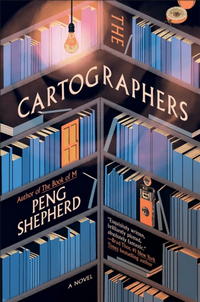
bullet The Cartographers by Peng Shepherd—is one of those that I can’t think of a way to compress the synopsis into a sentence or two. Just click the link, looks like a lot of fun.
bullet Under Lock & Skeleton Key by Gigi Pandian—a strange, locked-room style mystery
bullet Blessed Are the Bank Robbers: The True Adventures of an Evangelical Outlaw by Chas Smith—the true story of a bank robber reared and enmeshed in Southern California’s Evangelical subculture.

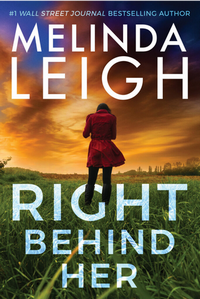
Drown Her Sorrows by Melinda Leigh: Another Satisfying Entry in this Series

Drown Her SorrowsDrown Her Sorrows

by Melinda Leigh

DETAILS:
Series: Bree Taggert, #3
Publisher: Montlake
Publication Date: March 15, 2021
Format: Hardcover
Length: 304 pg.
Read Date: March 15, 2022
Support Independent Bookstores - Visit IndieBound.org

What’s Drown Her Sorrows About?

A new deputy investigates a report about an abandoned vehicle and calls Bree for backup, the owner left her home three days earlier after a fight with her husband and hasn’t been seen since. He’s been waiting for her to cool down and hasn’t been worried about her—it’s not the first time this has happened. But given the state of her vehicle, the deputy and Bree fear the worst and begin searching the area. They soon discover the body of a woman who looks like she jumped off a bridge into the river—they presume it’s the missing woman, but can’t be sure because of the body’s condition.

Once it’s determined that the woman has been murdered—Bree and her investigator, Matt, get to work—was she killed by her husband? Was it her sister—driven by repeated disagreements on how to deal with their mother’s medical bills? Was it her temperamental boss with the shifty-looking business practices?

Throw in her continued adjustment to a domestic life and helping her niece and nephew process their grief, learning how to be the top banana in a Sheriff’s Department (including having to work with deputies that aren’t interested in doing things by the book; the beginning of a secretive romantic relationship with Matt who happens to work for the department as a consultant)—and you’ve got yourself a novel.

Chief Deputy Todd Harvey

Something that struck me in the last book, but jumped out to me here, and bugged me throughout—Leigh isn’t doing right by at least one of her supporting characters—Chief Deputy Todd Harvey. We’re told that Todd was one of the non-corrupt members of the department under the previous sheriff; he tried to do right by Matt during his troubles, and he’s been super supportive and helpful to Bree. He knows the area—and the politics—and yet he’s basically Detectives Ryan and Esposito—he’s around to deliver exposition, deliver timely information, get warrants, etc. That’s all.

There’s a pretty similar dynamic to Bree/Matt in the Walt Longmire books with Sheriff Longmire and his undersheriff, Moretti—those two are at the forefront of the cases, doing most of the work that the reader sees with other members of the department playing supporting roles. But even there, Saizarbitoria, Double Tuff, or even the new hire whose name escapes me at the moment, get to do more than deliver exposition or do behind-the-scenes work. If they appear in a book, there’s something that they bring to the story beyond delivering messages or warrants.

Ol’ Todd deserves better. Let him sit around and participate in the brainstorming. Let him handle an interrogation, or find the missing evidence, etc. Just give him any kind of storyline. Bree’s old partner, now housemate, serves a similar role on the homefront—and Leigh started to give her a story in this one, so I know it’s possible.

Series Timeline

We’re told that this book starts roughly four months after the murder of Bree’s sister. That doesn’t seem like enough time.

It may be about the right time frame for Bree’s niece, and you could argue that it’s about right for her older nephew. They’re still adjusting, still grieving, still trying to figure out how to behave in school, etc. But you mean to tell me that in four months, Bree’s closed two major cases (with one more underway), settled into her new job, started a (secret) romantic relationship, hired some new deputies, and is getting the runaround from elected officials about her budget? I just don’t buy it. That’s not enough time.

Another way to look at it is: you’re telling me the spate of murders in the last four months doesn’t have them throwing money at her to crack down on the crime stats?

Does this really affect me or my enjoyment of the book? Not really, but every time they bring it up I have to stop and think about it for a minute before shrugging and moving along. It’d be great if that part wasn’t necessary.

So, what did I think about Drown Her Sorrows?

This is another engrossing and entertaining read from Melinda Leigh. Once you get the setup for the novel, the pages just melt away. I always finish these faster than I expect to and am surprised when they end.

There’s something effortless in the prose and engaging about the characters and stories. Sure, I have quibbles and questions about some of Leigh’s choices after I put the book down. But while I’m reading (other than the Todd stuff), they don’t register with me, and I’m just wanting to find out what happens next and if I was right about the killer’s identity. The reveals are satisfying, the twists are well-delivered, and the herrings are just the right shade of red to keep you guessing.

These are fast and fun books, you should check them out. So far, these work as stand-alones or entries in a series, so you’re probably safe to jump in at any point.


3 Stars

This post contains an affiliate link. If you purchase from it, I will get a small commission at no additional cost to you. As always, opinions are my own.


Spelunking Through Hell by Seanan McGuire: It’s Always the Last Place You Look, Right?

Spelunking Through HellSpelunking Through Hell:
A Visitor’s Guide to the Underworld

by Seanan McGuire

DETAILS:
Series: InCryptid, #11
Publisher: DAW
Publication Date: February 28, 2022
Format: Trade Paperback
Length: 267
Read Date: March 14, 2022
Support Independent Bookstores - Visit IndieBound.org

If Thomas is there, if he’s still alive and waiting for me to find him, I can’t make him wait because I’m finally stopping to worry about my own neck. My neck doesn’t matter. My neck made a lot of choices, and none of them said ‘hey, it would be fun to survive a long, long time.’

What’s Spelunking Through Hell About?

Alice Price—grandmother to the primary protagonists of this series—has spent the last fifty years jumping from one dimensional reality to another, seeking her husband who has been taken from her as part of the deal he made with the crossroads. Alice has sacrificed just about everything—her health, almost every waking moment, her children’s childhoods, and her relationship with them, for starters.

Now, given some information Annie was given as she defeated the crossroads recently, Alice knows that the clock is running out, she’s going to have to take some risky and dramatic moves in a last-ditch effort to bring her husband home. Assuming she can find him, that he’s still alive, and interested in coming home, that is.

Alice calls in markers, gets help from several allies, and takes some big—possibly fatal—risks to follow her last theory about where to look.

Hopefully, it’s worth it.

Quo Vadimus

The first five books in the series, while interconnected, felt very stand-aloneish. Then we got Annie trilogy—which started out as something in the same vein, but then shifted into something else, something else that ended up informing this book—and then we had the pretty intense duology about Sarah. Now we have this one, which feels stand-aloneish again, but is also the consummation of things that go back to the beginning.

That’s how the series struck me as I read it, anyway—although between what McGuire has said and a little bit of thinking I’ve done in the last day or so, maybe it’s not the best way to think of things—easier to say from this vantage point. At any rate, this book sure feels like a turning point in the InCryptid series.

So where does the series go from here? Well, it can go back to the whole Covenant of St. George vs. the Prices (and all Cryptids in North America) conflict. Maybe touching base with things in Australia, along the way? It’d be nice if we saw Alex and Shelby again. Maybe there’s more fallout from Annie’s Crossroads takedown or Sarah’s adventures to deal with, too. Or something that seems out-of-nowhere but that McGuire’s been planting seeds for since at least the second book—I put nothing past her.

I realize it’s silly to speculate, but when a book is where a series has been heading for a while, it invites theories about where the series might be going next. Knowing McGuire, the answers are somewhere online already, but I’m going to wait until Book 12 to see.

So, what did I think about Spelunking Through Hell?

The last couple of books just didn’t do as much for me as the earlier books in the series did, I was so glad to get back to the previous levels here (sorry, Sarah!). There’s just so much to commend about this book, and so little to complain about. There was at least one point in the book that was a “Eureka!” moment for me—I couldn’t believe McGuire had tied X into this book. Thirty seconds or so after I got that surprise, I realized I should’ve been expecting it. I’m glad I hadn’t taken the time to think about things so that I would expect it, it’s more fun to get the Eureka.

Alice shares the same quippy attitude as her grandchildren, the same stubborn streak and aptitude for violence—which isn’t that surprising, really, where did I think the kids got it? Still, as has been the case for the other four narrators in the series, while there’s a family resemblance, there are individual distinctives so that you don’t confuse her with the previous narrators.

Inside the crunchy candy shell of quips, magic, trans-dimensional travel, and people fighting for their survival, there’s a chewy center of a very sweet love story. I have no problem with the crunch shell, but like with a Tootsie Pop, the center is what makes it all worth it. The dénouement may be better, however—I know I didn’t get through it with dry eyes.

This is not the book to jump into this series with. Yeah, I’ve said it feels like a stand-alone, which seems like it’d serve as a jumping-on point, but it’s really not. Go back at least to Magic for Nothing, but you’d be best served going back to Discount Armageddon. Just know that when you start (and you really should if you haven’t yet) at one of those points, you’re in for a heckuva ride when you get to this book.


4 Stars

This post contains an affiliate link. If you purchase from it, I will get a small commission at no additional cost to you. As always, opinions are my own.

Madam Tulip and the Rainbow’s End by David Ahern: Derry and Bruce on the Hunt for Treasures Not Associated with Leprechauns

Madam Tulip and the Rainbow’s EndMadam Tulip and the Rainbow’s End

by David Ahern

DETAILS:
Series: Madam Tulip, #5
Publisher: Malin Press
Publication Date: March 1, 2022
Format: eARC
Length: 274 pgs.
Read Date: March 5-8, 2022


Yeah, okay, the post title is pretty lame. It’s the best I can come up with. Let’s move past that, okay?

What’s Madam Tulip and the Rainbow’s End About?

Thanks to a series of events that probably rings true for many struggling actors, Derry and Bruce find themselves stranded by the touring company they’d been a part of without funds and a pretty hefty hotel/bar tab. One thing leads to another, and Derry finds herself suiting up as Madam Tulip to do some fortune-telling at a charity event to work off this debt.

She’s happy to do that for a few reasons—it seems that Derry’s trying to cut back on her Tulip work, and really only does it for charities anymore. This time, she can do it for her own benefit and a charity, so she’s okay with that.

As she’s wont to do, as Madam Tulip she befriends a couple of women—one local, and one fellow American (who turns out to employ the local woman). Both women have recently had family members die, and are still grieving. The local woman comes to Madam Tulip for confirmation of her suspicion that her brother was murdered—which Tulip gave her without realizing it. The other woman’s father was supposed to leave her a large amount of money, but didn’t—her focus isn’t on the money as much as it is on understanding what happened (which makes it so much easier to like her).

Having confirmation of her brother’s murder, Mary Jo sets out to prove it and find the murderer—Derry’s friend, Bruce, is going to prove more useful than his psychic bestie on this front and is happy to try. Being able to look at things more objectively, Derry’s able to suggest a thing or two to Lena that might help her find the closure she needs.

Given the nature of a cozy mystery novel, obviously, it won’t be long until Derry finds herself more caught up in the efforts of both women to get the answers they seek—and a little more peril than any three of them expected.*

* Although by this point, Derry should know better—even without any psychic abilities..

Derry’s Gift

Derry’s abilities that stem from being the daughter of a seventh son of a seventh son have gotten her into (and out of) plenty of trouble in the past few books—but they’re never enough by themselves. Derry’s got to figure things out and take advantage of the information she gains—and frequently needs an assist from Bruce for those things that those abilities can’t cover.

This time out, she doesn’t get to take advantage of that gift too much—there are a couple of tarot readings that help her friends (and maybe some of the other readings she does in between those, but we don’t see them). But that’s pretty much it—the rest comes from Derry putting on her metaphorical deerstalker and sussing things out for herself (talking things over with Bruce helps, too).

I think I like it better this way—Derry’s never used her psychic (or whatever) capabilities as a crutch to get to the bottom of things. But the further she gets from that, the better for me.

(although, I can’t imagine I’d complain too loudly if Book 6 or 7 has Derry acting more like Jean Grey/Professor X than Jessica Fletcher)

Jacko Off-the-Grid

You can’t have a Madam Tulip novel without Derry’s father, Jacko, turning up to make things interesting. This time, fresh off a new variety of financial woes (for him, anyway), he decides to rent out his home and go live on an isolated island for a while—to reconnect with his art and avoid the distractions of technology and the city.

Neither Derry nor her mother have a lot of faith that this is going to work too well. But Derry wants to give him the chance and refuses when her mother tries to enlist her to stop him.

In the end, Jacko’s storyline brushes up against Derry’s in a few places, but in more of a “what a small world” kind of way. The two barely interact with each other, and Jacko’s never part of the main action. This is a good use of the character, who is prone to taking over the books (in an entertaining way, but a bit too dominant). Here he gets to go full-on with his antics without impacting the main story—that’s perfect.

So, what did I think about Madam Tulip and the Rainbow’s End?

At this point, getting a Madam Tulip book is a chance to spend time with some friends—with all the warmth, comfort, and pleasantness that comparison brings to mind. Ahern’s got his world and characters down pat now, and the novel moves like clockwork.

This isn’t the same old-same old by any means, however. As he mentioned in our Q&A about this book, Derry not only has to solve a crime this time but there’s a puzzle, too.

Madam Tulip and the Rainbow’s End gives you everything you want in a cozy mystery—good characters, a grin or two, a clever mystery or two, a well-constructed story, and a diverting read for a couple of hours. As expected from this series/author, I’m glad to recommend it to you.

I know Madam Tulip #6 is on the way, and I’m looking forward to it—and hopefully, several more before people in Ireland figure out that they need to stop inviting the fortune teller to their events if they want things to go smoothly (especially nefarious things).

Disclaimer: I received this eARC from the author in exchange for this post. I thank him for that, but the opinions expressed are mine.


4 Stars

Yet A Few More Quick Questions with . . . David Ahern

The fifth Madam Tulip—Madam Tulip and the Rainbow’s End—book came out two weeks ago, and I’ve somehow conned the author, David Ahern, to come back for his third Q&A with me. I’ll try to get my post about the book up in a couple of hours, but until then, enjoy Ahern’s As to my Qs. And maybe go check out his website and the books if you haven’t yet.


Madam Tulip’s back for her fifth adventure, you’ve said all along that this was intended as a series—did you see it going this long originally? Have the characters/mysteries developed the way you initially imagined, or have they taken on directions you didn’t expect?
I did envisage five books, but only if I could make each as good or better than the last. I’ll be honest, I hadn’t a clue how the characters would develop. They’ve gone their own way, and I just tag along. They’re wandering into book #6 just now.

On the craft side of writing—looking back over these five books (plus whatever drafts you have in progress), can you see the difference in your own writing? Would you say you’re a better writer now, or (as I’ve heard others say) are you finding new and exciting mistakes to make?
If I wasn’t learning something with every book, I’d quit. Writing by numbers, never trying anything new, would make writing too boring for me. On the other hand, getting out of the comfort zone is risky. With ‘the Rainbow’s End,’ I thought more than once I might not be able to pull off what I was trying to do. The story has both a mystery and a puzzle running in parallel. Neither should weaken the other, and they have to synch neatly at the end. Technically a tall order, but I knew if it worked it would be a great read. And when you do pull off a craft challenge and everything clicks, you know it, and that’s satisfying.

While the MadamTulip books aren’t really “humor” per se, there’s a lot of comic moments throughout them. One of the things I’ve been thinking about lately is how authors strike the balance between comedy and the serious matters being depicted in their stories. How do you approach this idea? Also, is that something that’s there from the first draft onwards? Or is that something you address in one of your re-writes? On a related note: when you read for pleasure, what do you gravitate toward—the comedic or the serious/dark?
On the technical side, mixing humor and serious material does have to be managed carefully, but it’s more instinctive with me than thought through. I never have to redraft for taste reasons, only for pace. Good mysteries are very moral books and crime isn’t funny. Folly is where the comedy lives, and that’s ok.

I’ve always loved comic writing. Thurber, Wodehouse, our own Flann O’Brien, Douglas Adams – I adore them. Most of my reading these days is non-fiction, especially history, and almost all of my TV work when I used to produce documentaries was on subjects that don’t leave much room for cheer. Humor is a great relief from all of that. I’ve pretty well given up reading dark fiction, especially anything with graphic violence. Having said that, I’m reading Alexander Pope’s translation of Homer’s Illiad right now, and the thing is one long catalogue of brilliantly described homicides. I should stop reading it but I can’t. That boy Homer has talent and may have a future.

Not only do you have to come up with new settings and mysteries for Derry to stumble into for each book, you have to come up with a storyline for her father, Jacko. Which idea is harder to plan: his escapades or Derry’s? The first time we did a Q&A, you said your grandfather inspired Jacko—are you still drawing on your memories of him?
Derry’s adventures are by far the most demanding, because they’re both mystery and thriller. Jacko’s scrapes seem to arrive of their own accord, though I do like them to share something of the same drivers as the main story. In ‘the Rainbow’s End,’ everybody is chasing some dream, and Jacko is no exception.

Yes, my old granda is still in my thoughts. He had the wonderful quality of relishing life with an infectious enthusiasm. He always had a plan, usually none too practical. My mother lately reminded me that when he left the Irish Army (he was a sergeant several times), he spent his gratuity payout on a piano he could hardly play and a stuffed alligator that cluttered up the hallway for years. I guess he just liked the idea at the time.

We’ve also talked about Bruce before—Derry’s ex-Navy SEAL friend who she can pal around with, and who provides the physical prowess she occasionally has to have to stay alive. He’s such a great character, have you considered a novel/short story focused on him alone?
To be honest, I haven’t thought of a way to do that. Although the Tulip stories are unlikely in the way all amateur sleuth stories are, I keep them psychologically very realistic. Bruce uses his acting vocation to help cope with the more troubling things from his history in the service. That works for him, and no big deal is made about it. But if he were the main character, keeping him realistic without veering into the darker side would be impossible and not the Bruce we know now. In the life he has in the Tulip stories, he’s just himself. There’s something charmingly unreflective about him that in a main character could veer into a cartoon.

What’s next for David Ahern, author?
Another Madam Tulip. She’s not finished with me yet.

That sounds like a win for me! Thanks for your time—and thanks for Madam Tulip and the Rainbow’s End and I hope you have plenty of success with it.
Thanks, H.C. A pleasure talking to you as always.


WWW Wednesday, March 16, 2022

I don’t know about the rest of you–but my wife and I are still dragging after the Daylight Savings jump. Our dogs have figured out when to expect food, and I’m still reeling. It makes no sense to me, but, I’m not sure it needs to. Still, I’ve managed to stay awake long enough to get some reading in–and will probably continue to do so. As you can see in this week’s WWW Wednesday.


This meme was formerly hosted by MizB at A Daily Rhythm and revived on Taking on a World of Words—and shown to me by Aurore-Anne-Chehoke at Diary-of-a-black-city-girl.

The Three Ws are:

What are you currently reading?
What did you recently finish reading?
What do you think you’ll read next?

Easy enough, right?

What are you currently reading?

I’m reading the first in the new series, Death in the Sunshine by Steph Broadribb, and am listening to False Value by Ben Aaronovitch, Kobna Holdbrook-Smith (Narrator) on audiobook, just to remind myself where we left Peter and everyone else before the new book next month.

Death in the SunshineBlank SpaceFalse Value

What did you recently finish reading?

I just finished a couple of quick reads/listens—Melinda Leigh’s Drown Her Sorrows and Hard Reboot by Django Wexler, Morgan Hallett (Narrator) on audio.

Drown Her SorrowsBlank SpaceHard Reboot

What do you think you’ll read next?

My next book should be Double Take by Elizabeth Breck, which promises to be really good, and my next audiobook should be The Two Towers by J.R.R. Tolkien, Andy Serkis (Narrator), which promises to be really long.

Double TakeBlank SpaceThe Two Towers

What about you?

Lives Laid Away by Stephen Mack Jones: An Action-Packed, Dark Sequel

Lives Laid AwayLives Laid Away

by Stephen Mack Jones

DETAILS:
Series: August Snow, #2
Publisher: Soho Crime
Publication Date: January 7, 2019
Format: Paperback
Length: 296
Read Date: March 9-10, 2022
Support Independent Bookstores - Visit IndieBound.org

What’s Lives Laid Away About?

While August Snow is considering how to help out his neighbors in the middle of an ICE crackdown/intimidation campaign, his friend from the coroner’s office brings him a case he can’t get out of his mind. A young, unidentified, Hispanic woman was tortured, raped, killed, and dumped while dressed as Marie Antoinette. The police can’t get anywhere with the case and are ready to move on. Falconi can’t do that. So he comes to August for help.

Snow’s not able to get the photos he’s been shown out of his mind, either. So he starts looking into it—knowing the right people to ask, he’s able to identify the woman within a day. This gets him looking in the right direction for answers—sadly, that direction is full of organized crime, disorganized crime, human trafficking, and corrupt government officials.

August gets backup in both his brushes with ICE and the murder case from new and unexpected allies. There’s a lot going on in Detroit (and in his own past) that August had been previously unaware of, and he’s likely going to wish he’d stayed in the dark before all is said and done here.

Tomás

We met Tomás Gutierrez, August’s godfather, in the previous book and he provided some of the backup August required then. In this book, he’s basically August’s partner.

He fills the fairly typical modern detective sidekick role (Hawk, Joe Pike, Bubba Rogowski, Nate Romanowski, Nick Petrie’s Lewis, etc.)—a little meaner, a little less bound by conscience, a little more prone to violence, has a better personal weapons stash, and so on. The big twist here is that he’s so much older than August. I don’t know if we’re told his age anywhere, but he’s no spring chicken—He’s his godfather, was good friends with his parents, he has a grandchild. And while his age is mentioned every now and then, he seems too spry to be really believable in this role.

This might be because of the subjects of the book—his wife is being threatened, the dead woman was known to his wife, etc.—and in the next book, he won’t be as involved in whatever is happening. If that’s the case? I have no problem with it—but if he keeps acting as a partner, it’s going to have to be addressed.

I like the character of Tomás and how Jones has been using him so far, I just don’t know if he’s a viable long-term option.

What is it About Places Like This?

Back in 2019, I posted about M. W. Craven’s Black Summer, and discussed how Craven’s description of a seedy pub made me feel like I was there. I had a flashback to that moment when Jones described the biker bar Taffy’s on the Lake here. It was so crystal clear and detailed that I felt like I was there. I don’t know if it’s me, and the one or two nasty bars that I’ve been in have stuck with me so much that when Craven or Jones describes one that I’m taken there, or if they’re just so good that I’d feel the same way without personal experience.

I’m going to credit them with this, not just for the sake of my mental health. For example, in August Snow, Jones did a similar job with a small Mexican restaurant. In that case, his writing made me want to feel like I was there.

He’s so good at describing places in a way that brings in all of your senses (there are other examples I could cite, but this one paralleled so nicely with Black Summer), that without ever stepping foot in Detroit (or the state of Michigan) that I can really get a strong feel for the settings.

So, what did I think about Lives Laid Away?

Is this as good as August Snow? I don’t think so. But that says more about how good it was than about the quality of Lives Laid Away. This was intense and exciting. You’re kept on the edge of your seat while being given things to think about.

At the same time, while August Snow had enough action to satisfy any thriller reader, Jones stepped up the violence this time. I don’t know if this is the direction of the series in general, or if something about these circumstances brought it out in August, but wow. I can think of Jack Reacher/Peter Ash novels that contain less violence and action—I wouldn’t have expected that given the first novel. This is not a criticism, I’m just putting that out there for potential readers—it really worked for me (although I’m not sure I needed all the “enhanced interrogation” scenes).

Along those lines, I’m not sure I really realized how ominous, “I gotta see a guy about a thing,” could sound.

This isn’t just a novel about a vigilante ex-cop on a crusade—it is that, but it’s more—it’s also about a city dealing with contemporary pressures, contemporary issues, and a troubled (to be nice about) past. What is Detroit becoming? How is it treating the people who live there? How should it be? These questions loom large while August is trying to figure out who killed these women and why. Lives Laid Away is a solid, action-filled thriller with a social conscience and heart. This is not a combination that you see that much, but I wish we’d see more of.


4 Stars

This post contains an affiliate link. If you purchase from it, I will get a small commission at no additional cost to you. As always, opinions are my own.

Top Ten Tuesday: Books On My Spring 2022 TBR


The topic for this week’s Top Ten Tuesdays is the Top Ten Books On My Spring 2022 TBR.

This topic came at a pretty useful time, I was trying to get a bit more organized this last weekend. I’m sure these aren’t just the next ten books I’m going to read, one or two other things are going to slip in*, they almost always do. But this is a good skeleton schedule for March/April—this could be dubbed my “Spring of the Female Detective”

* After hitting “Schedule” on this post, for example, I remembered a book I left off this list that should probably go between books #1 & #2. Ooops. Go check out Death in the Sunshine by Steph Broadribb, will you?

Top Ten Books On My Spring 2022 TBR

1 Drown Her Sorrows
Drown Her Sorrows by Melnda Leigh

I think it was Lee Goldberg’s tweets about this book that convinced me to give the series a try, so I’m really looking forward to diving in (many months after I anticipated reading it!)

When Sheriff Bree Taggert discovers the body of a young woman floating near the bank of the Scarlet River, a note in her abandoned car suggests suicide. The autopsy reveals a different story. Holly Thorpe was dead long before she dropped off the bridge and hit the water.

As Bree and her investigator Matt Flynn delve into the case, secrets in Holly’s personal life complicate their efforts to solve the murder. Holly left behind a volatile marriage, an equally divisive relationship with her sister, and an employer whose intimate involvement with Holly was no secret. Each one has a motive for murder.

When Holly’s sister is terrorized by a stalker’s sick prank, and the prime suspect turns up dead, everything Bree was sure of is upended and her case goes off the rails. When the killer strikes close to home, Bree and Matt must race to solve the murders before one of their own becomes the next victim.

2 Halo: The Fall of Reach
Halo: The Fall of Reach by Eric Nylund

Is this my typical kind of read? Nope. Like almost everything I was recommended in that 12 months 12 Books 12 Friends challenge, this is a little outside my zone (but adjacent to it). Figure it’ll be fun.

The twenty-sixth century. Humanity has expanded beyond Earth’s system to hundreds of planets that colonists now call home. But the United Earth Government and the United Nations Space Command is struggling to control this vast empire. After exhausting all strategies to keep seething colonial insurrections from exploding into a full-blown interplanetary civil war, the UNSC has one last hope. At the Office of Naval Intelligence, Dr. Catherine Halsey has been hard at work on a top-secret program that could bring an end to the conflict…and it starts with seventy-five children, among them a six-year-old boy named John. And Halsey could never guess that this child will eventually become the final hope against an even greater peril engulfing the galaxy—the inexorable confrontation with a theocratic military alliance of alien races known as the Covenant.

This is the electrifying origin story of Spartan John-117—the Master Chief—and of his legendary, unstoppable heroism in leading the resistance against humanity’s possible extinction.

3 Double Take
Double Take by Elizabeth Breck

It was love at first chapter for me and Madison Kelly last year, will the relationship flourish here?

It’s a perfect San Diego fall­—cool and crisp with bright blue skies. But not everything is right in the sunny idyll dubbed “America’s Finest City.” Young journalist Barrett Brown has been missing for a week, and her boyfriend hires private investigator Madison Kelly to find her. Right away, Barrett reminds Madison of a younger version of herself: smart, ambitious, and a loner.

As she launches her investigation, Madison realizes that Barrett’s disappearance is connected to a big story she was chasing–and she sets out to walk in Barrett’s footsteps to trace her whereabouts. As the trail grows colder, things begin to heat up between Madison and Barrett’s boyfriend. But he doesn’t seem to be telling everything he knows, and Madison gets the feeling that her every move is being watched. What dirty secrets lie at the heart of Barrett’s big lead?

If Madison can’t get to the bottom of the case in time, she could be in line to become the next victim.

4 Angela's Ashes
Angela’s Ashes by Frank McCourt

When this came out, I simply had no time (and, frankly, no inclination) to jump on the tidal wave of readers. But I’ve always been curious. Prompted by Allyson y Johnson, I’ve decided to take the plunge.

“When I look back on my childhood I wonder how I managed to survive at all. It was, of course, a miserable childhood: the happy childhood is hardly worth your while. Worse than the ordinary miserable childhood is the miserable Irish childhood, and worse yet is the miserable Irish Catholic childhood.”

So begins the luminous memoir of Frank McCourt, born in Depression-era Brooklyn to recent Irish immigrants and raised in the slums of Limerick, Ireland. Frank’s mother, Angela, has no money to feed the children since Frank’s father, Malachy, rarely works, and when he does he drinks his wages. Yet Malachy—exasperating, irresponsible, and beguiling—does nurture in Frank an appetite for the one thing he can provide: a story. Frank lives for his father’s tales of Cuchulain, who saved Ireland, and of the Angel on the Seventh Step, who brings his mother babies.

Perhaps it is story that accounts for Frank’s survival. Wearing rags for diapers, begging a pig’s head for Christmas dinner and gathering coal from the roadside to light a fire, Frank endures poverty, near-starvation and the casual cruelty of relatives and neighbors—yet lives to tell his tale with eloquence, exuberance, and remarkable forgiveness.

Angela’s Ashes, imbued on every page with Frank McCourt’s astounding humor and compassion, is a glorious book that bears all the marks of a classic.

5 Pay Dirt Road
Pay Dirt Road by Samantha Jayne Allen

A few months ago, I was browsing NetGalley when I should’ve been hacking away at my TBR and saw the words, “Friday Night Lights meets Mare of Easttown” and hit “Request” without reading anything else. Thankfully the rest of the description looked good, too.

Annie McIntyre has a love/hate relationship with Garnett, Texas.

Recently graduated from college and home waitressing, lacking not in ambition but certainly in direction, Annie is lured into the family business—a private investigation firm—by her supposed-to-be-retired grandfather, Leroy, despite the rest of the clan’s misgivings.

When a waitress at the café goes missing, Annie and Leroy begin an investigation that leads them down rural routes and haunted byways, to noxious-smelling oil fields and to the glowing neon of local honky-tonks. As Annie works to uncover the truth she finds herself identifying with the victim in increasing, unsettling ways, and realizes she must confront her own past—failed romances, a disturbing experience she’d rather forget, and the trick mirror of nostalgia itself—if she wants to survive this homecoming.

6 DoubleBlind
DoubleBlind by Libby Fischer Hellmann

A publicist working with Hellmann emailed me about this a couple of weeks ago. He hasn’t steered me wrong yet, had to give this a shot.

With little work during the pandemic, Chicago PI Georgia Davis agrees to help the best friend of fellow sleuth, Ellie Foreman. Susan Siler’s aunt died suddenly after her Covid booster, and Susan’s distraught mother wants the death investigated.

However, Georgia’s investigation is interrupted by a family trip to Nauvoo, Illinois, the one-time Mormon heartland. It’s there that her life unexpectedly intersects with the runaway spouse of a Mormon Fundamentalist. Back in Evanston, after Georgia is almost killed by a hit and run driver, she discovers that she and the escaped woman look remarkably alike.

Is someone trying to kill Georgia because of her death investigation case? Or is it a case of mistaken identity? And how can Georgia find her doppelganger before whoever wants them both dead tries again?

7 Sixteen Ways to Defend a Walled City
Sixteen Ways to Defend a Walled City by K. J. Parker

This impulse buy back on Independent Bookstore Day last year (or some other event at Rediscovered Books) has been sitting ignored on my shelf for months. Which is where “Your TBR Reduction Book Challenge” comes in–this fits the April prompt, so it finally gets some attention.

A siege is approaching, and the city has little time to prepare. The people have no food and no weapons, and the enemy has sworn to slaughter them all.

To save the city will take a miracle, but what it has is Orhan. A colonel of engineers, Orhan has far more experience with bridge-building than battles, is a cheat and a liar, and has a serious problem with authority. He is, in other words, perfect for the job.

Sixteen Ways To Defend a Walled City is the story of Orhan, son of Siyyah Doctus Felix Praeclarissimus, and his history of the Great Siege, written down so that the deeds and sufferings of great men may never be forgotten.

8 Ordinary Grace
Ordinary Grace by William Kent Krueger

April’s book for the 12 Books Challenge is close to my typical kind of read, but looks high-falutin’ enough to be a bit out of the norm for me.

New Bremen, Minnesota, 1961. The Twins were playing their debut season, ice-cold root beers were selling out at the soda counter of Halderson’s Drugstore, and Hot Stuff comic books were a mainstay on every barbershop magazine rack. It was a time of innocence and hope for a country with a new, young president. But for thirteen-year-old Frank Drum it was a grim summer in which death visited frequently and assumed many forms. Accident. Nature. Suicide. Murder.

Frank begins the season preoccupied with the concerns of any teenage boy, but when tragedy unexpectedly strikes his family—which includes his Methodist minister father; his passionate, artistic mother; Juilliard-bound older sister; and wise-beyond-his-years kid brother—he finds himself thrust into an adult world full of secrets, lies, adultery, and betrayal, suddenly called upon to demonstrate a maturity and gumption beyond his years.

Told from Frank’s perspective forty years after that fateful summer, Ordinary Grace is a brilliantly moving account of a boy standing at the door of his young manhood, trying to understand a world that seems to be falling apart around him. It is an unforgettable novel about discovering the terrible price of wisdom and the enduring grace of God.

9 Amongst Our Weapons
Amongst Our Weapons by Ben Aaronovitch

I haven’t actually read the description below until this point (and I really only glanced at it enough to copy and paste accurately), all I need to know is that this is the 9th Peter Grant/Folly/Rivers of London book and I’m in.

The London Silver Vaults—for well over a century, the largest collection of silver for sale in the world. It has more locks than the Bank of England and more cameras than a paparazzi convention.

Not somewhere you can murder someone and vanish without a trace—only that’s what happened.

The disappearing act, the reports of a blinding flash of light, and memory loss amongst the witnesses all make this a case for Detective Constable Peter Grant and the Special Assessment Unit.

Alongside their boss DCI Thomas Nightingale, the SAU find themselves embroiled in a mystery that encompasses London’s tangled history, foreign lands and, most terrifying of all, the North!

And Peter must solve this case soon, because back home his partner Beverley is expecting twins any day now. But what he doesn’t know is that he’s about to encounter something—and somebody—that nobody ever expects…

10 A Snake in the Raspberry Patch
A Snake in the Raspberry Patch by Joanne Jackson

This is another one from the publicist mentioned in #6. I can’t imagine I’d have even heard of this without him.

It is the summer of 1971 and Liz takes care of her four sisters while waiting to meet the sixth Murphy child: a boy. And yet, something is not right. Adults tensely whisper in small groups, heads shaking. Her younger sister, Rose seems more annoying, always flashing her camera and jotting notes in her notepad. The truth is worse than anyone could imagine: an entire family slaughtered in their home nearby, even the children. The small rural community reels in the aftermath. No one seems to know who did it or why. For Liz, these events complicate her already tiring life. Keeping Rose in line already feels like a full time job, and if Rose gets it in her head that she can solve a murder… The killer must be someone just passing through, a random horror. It almost begs the question: where do murderers live?

Page 252 of 623

Powered by WordPress & Theme by Anders Norén