Author: HCNewton Page 282 of 610

Death in Adam, Life in Christ: The Doctrine of Imputation by J. V. Fesko: Careful Words on an Important Topic

Death in Adam, Life in Christ

Death in Adam, Life in Christ:
The Doctrine of Imputation

by J. V. Fesko
Series: Reformed Exegetical and Doctrinal Studies

Paperback, 280 pg.
Mentor, 2016

Read: May 23-June 21, 2021

What’s Death in Adam, Life in Christ About?

The Back of the Book:

The doctrine of imputation is the ground in which salvation is rooted. It centers around the three great ‘assignments’ of the Bible:

  • Adam’s original sin assigned to mankind
  • The sins of God’s people assigned to Chrsit
  • And Christ’s righteousness assigned to all of His people.
    This doctrine is often seen as superfluous or splitting hairs, and yet, without it, redemption automatically becomes reliant on our own works and assurance of salvation is suddenly not so sure.J. V. Fesko eloquently and systematically works through this doctrine, looking at its long history in the church, its exegetical foundation, and its dogmatic formulation. In exploring imputed guilt from the First Adam alongside the imputed righteousness from the Second, this volume offers a helpfully well-rounded explanation of the doctrine.

Fesko starts out by sketching the doctrine and how he’s going to approach the argument. He then discusses the history of the doctrine, how the Church has discussed this from the Early Church through to the present—this takes about half the book. Then we get two carefully structured chapters looking at Imputation in the Old and New Testaments. He wraps things up with a long chapter that brings all the data together to lay out a doctrine of Imputation that reflects the exegesis and honors the best of the history.

So, what did I think about Death in Adam, Life in Christ?

I’d been wanting to try the R.E.D.S. series for a while, but hadn’t taken the leap. When Jonathan Landry Cruse cited this in The Christian’s True Identity, I figured this was the way in. This volume speaks well for the series.

If J. V. Fesko convinces you to embrace his position on something it won’t be through soaring rhetoric, emotional ploys, or charm and wit—it’ll be because he’s right. I’m not saying that Fesko drains all the life and verve out of important and interesting topics; but if you said it, I wouldn’t argue. It’s dry, it’s careful, it’s painstaking. It’s also very good.

These are important ideas, difficult topics, and they should be talked about as if they are. This is what Fesko does.

The historical overview was helpful and informative. The exegetical chapters were great. The doctrinal chapter and conclusion? Gold. It’ll take work and perseverance, but if you want to understand this vital doctrine, I can’t think of a better way.


4 Stars

Saturday Miscellany—6/26/21

Record high temps and an AC system that’s not holding its own sum up most of the week for me. Thankfully, I read a few books that were good enough I could ignore how much I was perspiring. I truly hope you’re faring better in your corner of the world than the Northwest US is.

Also, have you all seen this site: BlogOverview.com? It looks like a great resource to find blogs on all sorts of topics, researched and curated by people, not an algorithm (and I’m not just saying that because I really dug the way they described this site, I’ve picked up a few to follow)

Odds n ends about books and reading that caught my eye this week. You’ve probably seen some/most/all of them, but just in case:
bullet Douglas Coupland on Generation X at 30: ‘Generational trashing is eternal’—Sure, this is more of an advertisement for his new book, but the fact that the novel Generation X is 30 should be noted.
bullet On the Road to Bridget Jones: five books that define each generation—Fun lists to go along with that Coupland piece
bullet Bosch Season 7 Preview: In a Changed World, How Should We Feel About Police Shows?—applies to the book version of Bosch, too.
bullet Ditto for this one: title—Michael Connelly Says Bosch Is Just Like Batman – Without ‘the Cape and Mask and Stuff’
bullet Books and Bias: Rediscovering the writing and ideologies in Rex Stout’s Nero Wolfe novels—I’d quibble with some of the details sure, but great piece.
bullet Lessons of a self-published writer: independent bookstores are good, Amazon not so much.
bullet Coffee and Condolences: One Year Later—Some thoughts from Wesley Parker about the genesis of his book.
bullet Deadpool Creator Fabian Nicieza on (Finally) Finishing His Novel: It only took 35 years of writing comics to learn that 35 years of writing comics would help him write his debut mystery.—this reads a lot like something written by Deadpool’s creator should. Interesting look at the process of getting to his debut.
bullet Why I Like To Reread Books
bullet Why I am NOT telling you my book number… (But I will shout about books I love.)—I get this argument. I like it. I don’t think I’m going to stop mentioning my number and judging myself by it in my monthly posts, but…maybe?
bullet The Pros and Cons of Historical Fiction
bullet Reading during the pandemic—I think many of us can identify with this.

This Week's New Releases That I’m Excited About and/or You’ll Probably See Here Soon:
bullet Questland by Carrie Vaughn—Jurassic Park, but for D&D types.
bullet Suburban Dicks by Fabian Nicieza—Click the link for the whole blurb, but “a hilariously entertaining debut featuring two unlikely and unforgettable amateur sleuths. An engrossing and entertaining murder mystery full of skewering social commentary, Suburban Dicks examines the racial tensions exposed in a New Jersey suburb after the murder of a gas station attendant.”

Lastly I’d like to say hi and extend a warm welcome to tubasarwat, Elias Graves, and jakeschubert7 who all took the time to hit the follow button this week.
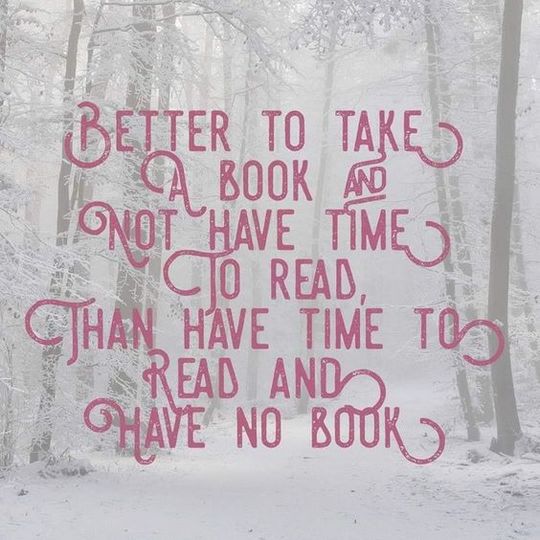
I wish I knew who to attribute this to, I saw it on the feed for The Shaggy Shepherd Book Reviews and had to share:

The Friday 56 for 6/25/21: Till Morning is Nigh by Rob Parker

Between a couple of books with dull page 56s and a few Uncorrected Proofs (I don’t feel comfortable quoting from them), it’s been a while since I had something for this. But, I’m back!

The Friday 56This is a weekly bloghop hosted by Freda’s Voice.

RULES:
The Friday 56 Grab a book, any book.
The Friday 56 Turn to Page 56 or 56% on your ereader. If you have to improvise, that is okay.
The Friday 56 Find a snippet, short and sweet.
The Friday 56 Post it

from 56% of:
Till Morning is Nigh

Till Morning is Nigh by Rob Parker

…Broadshott is easy to keep a fix on thanks to her bobbing blonde hair, and as I get to within five yards of her, leaving the maelstrom churning behind us, a figure in jeans and a green parka steps from the crowd, arm cocked facing her. I don’t know what it is, but my moral compass won’t let anyone get hurt, and in an instant, instinct has me pouncing at the man, grabbing his arm mid hurl, and twisting him back into a heap on the floor with his arm up his back. As I drop him, a strawberry milkshake pops from his grasp, glooping all over him.

I remember this started happening back in the summer, this milkshaking of right-leaning figures. Like it was an acceptable thing to do. It’s still assault at the end of the day, and if one side is using any kind of violence to intimidate or quell the other, no matter how silly and harmless a splash of milkshake is, then you’ve run out of arguments. A failure of words is a failure of reason–and I can’t see a reason it should be done. And a milkshake is one thing. Tomorrow it could be a brick or stone, just like I thought it was today.

The Bounty by Janet Evanovich with Steve Hamilton: Fox and O’Hare are on the Hunt for Nazi Gold

The Bounty

The Bounty

by Janet Evanovich with Steve Hamilton
Fox and O’Hare, #7

Hardcover, 305 pg.
Atria Books, 2021

Read: May 26-28, 2021
Grab a copy from your local indie bookstore!

“Yeah, it’s a pickle, all right,” Jake said. “We used to call missions like this one-percenters.”

“Meaning one percent chance of success?” Quentin asked. “I’ve been on a few of those myself.”

Jake smiled. “I’m not being trying to be pessimistic. As a matter of fact, one-percenters are usually the most fun. There’s no pressure when you’re trying to do the impossible.”

What’s The Bounty About?

The day has gotten away from me, so I’m not going to come up with my own synopsis for this one, but I’ll borrow the description from Evanovich’s site so I can get a little shut-eye:

Straight as an arrow special agent Kate O’Hare and international con man Nick Fox have brought down some of the biggest criminals out there. But now they face their most dangerous foe yet—a vast, shadowy international organization known only as the Brotherhood.
Directly descended from the Vatican Bank priests who served Hitler during World War II, the Brotherhood is on a frantic search for a lost train loaded with $30 billion in Nazi gold, untouched for over seventy-five years somewhere in the mountains of Eastern Europe.
Kate and Nick know that there is only one man who can find the fortune and bring down the Brotherhood—the same man who taught Nick everything he knows—his father, Quentin. As the stakes get higher, they must also rely on Kate’s own father, Jake, who shares his daughter’s grit and stubbornness. Too bad they can never agree on anything.
From a remote monastery in the Swiss Alps to the lawless desert of the Western Sahara, Kate, Nick, and the two men who made them who they are today must crisscross the world in a desperate scramble to stop their deadliest foe in the biggest adventure of their lives.

The State of the Series

Books 1-5 (co-written by Lee Goldberg) were comedic heist/con adventures, with a goofy (slightly over-the-top) supporting cast—that were just so fun to read. The sixth book (co-written by Peter Evanovich) tried to match that and just failed.

Now, Steve Hamilton has stepped into the co-writer spot and the series has shifted a bit. The Bounty is more of a straightforward thriller—sure, it’s lighter than most thrillers, but it’s not a comedy. Almost all of the supporting cast is absent, we only get Kate’s father, Jake (frequently the best part of the early books) with Nick’s father, Quentin, being introduced. Quentin isn’t goofy at all, he’s not over-the-top, but he’s a fun character. Nick’s sleight-of-hand antics and thievery are on display—but we don’t get any hint of a con job. I missed that.

I don’t know if Book 8 will get back to the early roots (my preference) or if it’ll keep going in this path. But at the very least, I can look forward to the next book again, something I feared wouldn’t happen again.

There’s a parallel to this and my mini-rant about the cover designs from a couple of weeks ago. Which you might want to give a read if you didn’t see that.

So, what did I think about The Bounty?

This was a make-or-break entry in the series for me, if I didn’t enjoy this one, I was going to walk away from these. But Evanovich and Hamilton have reassured me. This is just so much better than the disaster that was The Big Kahuna that I’m willing to embrace (at least temporarily) this new style. I hope it continues.

If you like light thrillers with a semi-Indiana Jones feel, with a dash of flirtation between the leads thrown in, you should give this a try. The first five books in the series are better, but this is a good entry point.


3.5 Stars
2021 Library Love Challenge

99 Poems to Cure Whatever’s Wrong with You or Create The Problems You Need by Sam Pink: The Cartoon Continues

99 Poems to Cure Whatever's Wrong with You or Create The Problems You Need

99 Poems to Cure
Whatever’s Wrong with You
or Create The Problems
You Need

by Sam Pink

Paperback, 103 pg.
CLASH Books, 2019

Grab a copy from your local indie bookstore!


A little housekeeping to start: That title is just too long to keep using, you know? I thought about using 99PtCWWwYoCTPYN, but that’s almost as bad—actually, it’s probably worse aesthetically speaking. So, I’m going to go with 99 Poems.

Why Did I Want to Read 99 Poems…?

I’ve mentioned around here before that I’m not much of a poetry reader. In fact, I think I’ve only posted about one other poetry collection. I think this the fourth poetry collection I’ve read since I graduated from college in the mid-90s.

So what possessed me to pick this up? Well, despite what it may look like around here (and certainly how it feels sometimes), I do want to keep trying new/less familiar things. What got this to my attention was that someone on my Twitter feed posted a picture of one of the poems from this book a couple of months ago—I believe it was “The Woodchuck”—it made me smile, and it seemed like a good idea to try some more.

Which is how I got here. Trying to figure out how to talk about poems.

Comic Poems

Like the poem that got my attention, many of these poems fall under the heading of “comic.” They all won’t make you laugh—but you’ll probably grin a bit. The construction is similar to a joke, but I think it’s a disservice, even for the comic poems to treat them as simply that.

The Non-Comic Poems

Then there are the poems on the other end of the spectrum, moving, poignant—even uplifting.

I think most readers will find themselves in some/many of these. Which is both comforting and unnerving.

Approachable

None of these are difficult to read (some may be challenging to chew on)—a few are two or three lines, a few are about 2 pages long. Most are 6-ish lines long.

Really, I’ve read tweets that contain as many characters as some of these poems. I guess I’m saying, there’s no reason for non-poetry readers like me to feel intimidated by these.

Samples

I’m no photographer, but typing out these poems to give you a taste seems strange, they should look the way they were printed. Here’s a couple of the poems that stayed with me.
Masters
It's Always Both

So, what did I think about 99 Poems…?

How do you not like something with that title? That’s practically an instant 3-Stars right there.

But more than that, I liked this collection. Reading a couple of these is a good break from everything else going on in the world around you. A simple way to look at things in a different way. I’m likely to keep an eye out for more by Pink, and I think you should, too.


3.5 Stars

This post contains an affiliate link. If you purchase from it, I will get a small commission at no additional cost to you. As always, opinions are my own.

WWW Wednesday, June 23, 2021

Time for WWW Wednesday!

This meme was formerly hosted by MizB at A Daily Rhythm and revived on Taking on a World of Words—and shown to me by Aurore-Anne-Chehoke at Diary-of-a-black-city-girl.

The Three Ws are:

What are you currently reading?
What did you recently finish reading?
What do you think you’ll read next?

Easy enough, right?

What are you currently reading?

I’m reading Dead Ground by M. W. Craven, and if I believed in an Id, mine would be screaming at me for taking time to do anything but read it for the next 200+ pages (like compiling this post). I’m also going through Hidden by Benedict Jacka, Gildard Jackson (Narrator) on audiobook.

Dead GroundBlank SpaceHidden

What did you recently finish reading?

I just finished Rob Parker’s Till Morning is Nigh, probably the best of the bunch. I also finally finished Scarface and the Untouchable: Al Capone, Eliot Ness, and the Battle for Chicago by Max Allan Collins and A. Brad Schwartz, Stefan Rudnicki (Narrator) on audio.

Till Morning is NighBlank SpaceScarface and the Untouchable

What do you think you’ll read next?

My next book should be Dog Eat Dog by David Rosenfelt (you have to wonder how he waited for the 22nd book to use this title) and my next audiobook should be Death’s Rival by Faith Hunter, Khristine Hvam (Narrator) as I continue to revisit the Jane Yellowrock series in audio.

Dog Eat DogBlank SpaceDeath's Rival

You reading anything good at the moment?

The Penny Black by Rob Parker: Ben Bracken Takes a Breather (for a bit)

The Penny Black

The Penny Black

by Rob Parker
Series: Ben Braken, #3

Kindle Edition, 218 pg.
Lume Books, 2020

Read: June 8-9, 2021
Grab a copy from your local indie bookstore!

What’s The Penny Black About?

After the…shall we say, extreme conclusion of Morte Point, Ben Bracken has to disappear. Not like he disappeared after he escaped from prison either—this is a whole new level. Not only does he have to hope that the several governments and criminal organizations never learn what he did, but he also has to hope that the 3 other people who know what he did don’t come looking for him.

So he assumes a name and lives in a tiny town called Horning. He gets a job that pays him just enough, he boards with an older couple (some of the nicer people you’ll ever meet). Ben takes the time to recuperate, to soak in the atmosphere, to remember what it is about people—British people, in particular—that made him love his country so much that he is what he is.

As he starts to prepare to leave this town and move on, he stumbles on to a criminal conspiracy in this quiet community. Because that’s what Ben Bracken does. Bears bear. Bees be. Ben finds conspiracies.

Ben feels like he owes people of Horning a debt because of the solace they’ve given him. So he decides to clean up town on his way out.

Things go from quiet and bad to loud and worse before long—and then it gets deafening and horrific.

So, what did I think about The Penny Black?

It wasn’t bad. It wasn’t my favorite, but there were some really good moments. The fight scenes were well done, as I’ve come to expect, and I really liked the self-reflection Ben undertakes and the steps he takes to move on with his life.

I honestly don’t have a lot to say—and I feel bad about that. It was alright. I think it’ll end up being a pivotal moment in the series, and I’m eager to see where things go from here, but I just can’t get that excited about this one.


3 Stars

This post contains an affiliate link. If you purchase from it, I will get a small commission at no additional cost to you. As always, opinions are my own.

The Keepers by Jeffrey B. Burton: A Sequel Stronger than its Predecessor—a Real Treat for Fans.

The Keepers

The Keepers

by Jeffrey B. Burton
Series: Mace Reid K-9 Mystery, Volume 2

eARC, 288 pg.
Minotaur Books, 2021

Read: June 17-19, 2021
Grab a copy from your local indie bookstore!

What’s The Keepers About?

While at a police station wrapping up a case he’d helped Chicago Police to wrap up, Mace and his golden retriever, Vira, are brought along on an urgent call, the man in charge of the State Attorney’s Special Prosecution Office went missing at a park around midnight.

It doesn’t take long for Vira to find his body. Not long after that, while Mace is waiting to be sent home, Vira’s almost impossible/might-as-well-be-supernatural abilities give Mace a reason to believe that he knows the Attorney’s killer.

And Mace regrets that instantly—the man responsible isn’t anyone Mace, or his police friends, want to cross. But they have no choice—which leads to them being on the run, fighting some of the more powerful men in Chicago just to survive, much less get anywhere to finding his killer.

Returning Characters

In The Finders, there were two uniformed officers and two police detectives involved with Mace and the investigation. This time out, it’s pretty much just the two uniformed officers—Kippy Gimm and her partner Dave Wabiszewski. It’s not often (at least not often enough) that non-detective officers get the focus, and it’s a refreshing change of pace.

Also, while readers had enough exposure to all the police characters to be satisfied, it’s nicer this time to not have your attention split and the reader can really get to know these characters better and form a closer emotional bond. If memory serves, we met Kippy before we met Mace last year, but we didn’t get that much time with Wabs. It’s good to have that changed.

Ohh, a New Dog

Mace has added another dog to his pack, a three-month-old bloodhound named Billie Joe. Billie Joe isn’t good for much more than comic relief at the moment, but I’m sure within a book or two, Mace’ll have him trained enough that he can carry his own weight. In the meantime, he’s fun to chuckle at.

There’s an extended comedic break at the beginning of Chapter 21 that is great on its own—but it comes at just the right time in the book to give a little breather as the tension mounts and just before it shifts into a new gear. It’s just Mace talking to his dogs, pretty much the same way that anyone with pets has done regularly. I could rea 3-4 more of those each book and it wouldn’t get tired.

In the meantime, I’ll just reread that scene occasionally.

The Killer

That’s not really the best heading for this section, because there are a few killers running through these pages—and as some are acting on orders from others, who really gets that label? Anyway, I wanted to say a little about the individual who is immediately responsible for most of the deaths in the book—this isn’t a spoiler really, we meet him in Chapter 1.

He is large, frightening, brutal, and efficient. He’s also a very chatty guy who has a lot to say about the English language. This side of Justified‘s Boyd Crowder, you’re not going to find a criminal as chatty as this guy. I enjoyed his little talks about English idioms more than I should have. If this guy isn’t one of your favorite baddies of the year, you should rethink things.

Best of all? He’s not a serial killer. I was a little afraid that after The FInders this series would be Mace and His Dogs vs. Various Serial Killers. Now that it’s clear that Mace and the dogs will be dealing with a variety of criminals, I’m a bit more positive about the series as a whole.

So, what did I think about The Keepers?

At the same time I was reading this, I was listening to an audiobook (nonfiction) about Capone and Ness during Prohibition. Listening to a thoroughly researched account of corruption in Chicago politics while reading a novel about corrupt Chicago officials, really makes the fictional feel more reality-based. I’m not saying everyone needs to go out and grab a book about Capone and Ness to fully appreciate this, I’m just saying being reminded that things may not have changed that much in almost a century adds a little something to the experience.

I loved this, I really did. I remembered liking last year’s debut, I remembered most of the bigger plot points, the dogs, and so on—and remembered really enjoying the book. In less than one chapter of Mace’s first-person narration, I remembered just how much I like him and his voice. I kicked myself for forgetting that part—Mace is a great protagonist for this alone.

When I wrote about The Finders last year, I said:

It’s possible that I’m rating this a little higher than it deserves. If I was being entirely objective, I’d probably take off a half or maybe a full star from my rating. But this isn’t an objective piece, or an objective rating—this is about how much I enjoyed this, how it appealed to me, entertained me and made me want to read on. For that, it scored really high for me.

I’m not saying that this year—this is a superior novel that I enjoyed as much, if not more—I was again entertained and couldn’t wait to find out what happened. I’m giving this the same rating without apology or disclaimer.

It was tense, it was funny, it was horrifying (on a couple of occasions), and my jaw hit the floor a few times. I still can’t believe a few of the choices that Burton made, even with a few days’ worth of thought. He does some risky things, swinging for the fences with this—and they absolutely worked.

You don’t need to have read The Finders to appreciate The Keepers for what it is—great Crime Fiction with a strong central protagonist, some great supporting characters, and a fantastic opponent. Oh, yeah, and a bunch of great dogs. More than enough reasons to take this recommendation and run to your nearest library/bookseller with it.

Disclaimer: I received this eARC from St. Martin’s Press via NetGalley in exchange for this post—thanks to both for this.
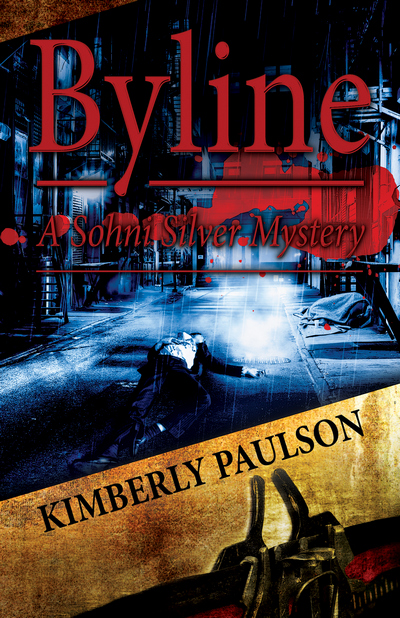

4 1/2 Stars

This post contains an affiliate link. If you purchase from it, I will get a small commission at no additional cost to you. As always, opinions are my own.

BOOK SPOTLIGHT: Weatherman by Price Doom

I just don’t have time to read every book that comes my way, but I’d like to do my part to expose them to as many eyeballs as I can. So, from time to time, I’ll post a Spotlight to lend a hand. If this looks like it’s up your alley, you should jump on it.


Book Details:

Book Title: Can You See My Scars by Samuel Moore-Sobel
Release date: September 1, 2020
Format: Mobi/ePub
Length: 84 pages

Book Blurb:

Heart and her father are on the run from God. At least, that’s what her father, Sonny, tells her. Young Heart believes Sonny’s stories of dying suns and scientists with tranquilizer guns, parachuting out of planes in pursuit of them. Sonny believes only the elements in his body can save the sun, and Heart grows up in fear of the boogeymen from Sonny’s stories—and Sonny himself. After years without proof and questions about Sonny’s mental stability, Heart makes her escape.

About the Author:

Special Education Teacher by day, writer by night, full time dad every night and day.

Social Media

Twitter ~ Facebook

Purchase Links

Amazon ~ Goodreads

What Happens When We Worship by Jonathan Landry Cruse: An Introduction To or Gentle Reminder of The Supernatural Event of Worship

What Happens When We Worship

What Happens When We Worship

by Jonathan Landry Cruse

Paperback, 186 pg.
Reformation Heritage Books, 2020

Read: February 28, 2021
Grab a copy from your local indie bookstore!

What’s What Happens When We Worship About?

…ultimately I want to recover worship from the doldrums. Let me rephrase that: I want to recover the perception of worship as being the doldrums. Worship is never dull, but we are sometimes. Churchgoing is monotonous and mundane only because our eyes are blinded to the supernatural wonder that is taking place all around us. The reality is that worship is an exhilarating experience. So we don’t need smoke machines, more lights, dramatic presentations, louder music, mystical theology, or entertaining speakers to make worship exciting. We simply need to understand what’s going on in the first place.

This is not a manual for the “how-to” aspects of worship, nor does it wade into the “style” debates and conflicts, he doesn’t look into the “why” we do certain things in worship (although he brushes against the idea). This is about the supernatural aspect to the ordinary, weekly event. This is something too few people think about when it comes to worship—we’re pretty focused on what we do for those few hours, but Cruse’s thesis is that this approach is backward.

Central Thesis

This book is written from a simple but important premise: something is happening when we worship. Something happens to us, Something happens between us and the people we worship with, and, most importantly, something happens between us and God.

Humans are not the primary actors in worship—we are primarily acted upon. We’re involved, we’re active, but only in the secondary sense. Something happens. Something happens at every stage, in every act or element of the service. This book sets out to survey this.

He does this by sketching out “A Brief Theology of Worship.” Focusing on what worship is, that the worshipper is being shaped by the event, meets with God as He renews His Covenant, the worshipper submits to God’s acts and call in this time and we do so while communing with the saints. This is about one-third of the book and it informs the rest.

The heart of the book focuses on “The Parts of the Service,” looking at what God does, what happens in each part. This has a distinctly Reformed flavoring and will include things not in typical Evangelical Protestant services, so some of these ideas may not be what the reader is used to.

The concluding chapters focus on the ordinariness of the extraordinary service (the extraordinariness of the ordinary service is probably how I should’ve put that)—how what we think of as usual, normal. ordinary is so much more and we ought to understand this. And part of that ordinary work ought to be preparing for the service, and he gives direction for that to end the book.

Highlights

I thought this was just an outstanding book, and could easily write a few paragraphs about why each chapter was so valuable and helpful. But I’m going to limit myself to a brief paragraph about two chapters that really stood out to me (on future readings, I fully expect other chapters to stand out in the same way)

In Chapter 12, “We Get a New Name,” Cruse spends a chapter on the Benediction. I’ve read and own at least a dozen books on Worship and I don’t think I’ve ever read more than a couple of paragraphs about the Benediction—much less a whole chapter. This was gold. I’d grasped and been taught about its importance before, but this kind of focus was new to me. He begins by describing it as:

God blesses His people by confirming that His name is on them for good in Christ, and thereby strengthens them to serve Him in the week ahead.

He expands that, reminding readers what having God’s name on them, ties it into Baptism and develops the idea into God sending His people into the world.

The chapter on singing was another stand-out, saying that it’s a gift of God as

a fitting way to praise Him for His work, pray to Him with our deepest needs, and proclaim to one another the sanctifigyin truths of the gospel.

It’s a measured, careful, and encouraging look at this often contentious topic. His approach ignores the controversy, focusing on weightier matters. Like so many things in the book, I found it refreshing.

Wait, Did I Miss Something?

I was thinking about this book a few days after finishing and stopped dead in my tracks when I had this thought. I don’t think that Cruse mentions the Regulative Principle of Worship by name. I could be wrong here, but if he does, he doesn’t make a big deal of it.

Typically, Confessional Presbyterians/Reformed Christian books on the subject are full of references to the RPW, many such books are defenses of, studies on, of that principle. For an entire book to be written for our camp without that is stunning.

Don’t get me wrong—this is a book about Regulated Worship. The RPW is reflected in the pages, but I don’t think it shows up by name. I find that refreshing.

So, what did I think about What Happens When We Worship?

Admittedly, we are just going to be scratching the surface here. There could easily be ten more chapters in this book, and each chapter could easily be ten times longer. But I’m not seeking to present a fully exhaustive treatment on the subject of worship. Rather, this is meant to be an important introduction to, or perhaps a gentle reminder of, the topic. My aim is to whet your appetite when it comes to worship. For indeed it is in corporate worship that we are able to “taste and see that the LORD is good” (Ps. 34:8).

Cruse writes crisply and clearly with an approachable and engaging style—there’s nothing daunting about the writing, some of the ideas might take a little work to understand if you are reading this as an introduction—but it won’t be because of the writing.

Cruse wrote my conclusion for me in his first chapter—that’s what the book sets out to be, and he accomplished that. Edifying, educational, orthodox, and even devotional—this book will introduce you to the vital topic or will gently remind you of the things you’ve been taken for granted. Either way, it’s something you should read.


5 Stars

This post contains an affiliate link. If you purchase from it, I will get a small commission at no additional cost to you. As always, opinions are my own.

Page 282 of 610

Powered by WordPress & Theme by Anders Norén