Author: HCNewton Page 284 of 628

PUB DAY REPOST: Fan Fiction by Brent Spiner: The Previously Untold Story of Lt. Cmdr. Data’s Stalker

Fan Fiction

Fan Fiction
A Mem-Noir: Inspired
by True Events

by Brent Spiner

eARC, 256 pg.
St. Martin’s Press, 2021

Read: September 29-30, 2021
Grab a copy from your local indie bookstore!

What’s Fan Fiction About?

During the filming of Season 4 of Star Trek: The Next Generation, Brent Spiner starts receiving threatening (and disturbing) packages and letters delivered to his trailer. They’re purportedly from “Lal” (Data’s daughter from episode 3.16 “The Offspring”).

Those aren’t the only interesting letters he’s receiving, there are also a series of letters from someone claiming to speak to Spiner on the phone at night while her husband is out of town on business. These conversations are apparently quite graphic and sexual in nature, while the letters that are in response to them are very benign, and maybe a little tragic.

Spiner gets help from the LAPD, the FBI, a personal bodyguard, and fictionalized versions of his ST:TNG costars as the threats increase in intensity. This assistance bounces from comical to incredibly effective, while Spiner’s worry and stress (and increasing lack of sleep) start to spiral out of control and his grasp on sanity starts to slip.

Fan Connection

When it comes to his stalker, the late-night phone call recipient, a law enforcement officer/would-be-TV-writer, a pizza delivery man—and a few others, the relationship between fan and performer is clearly unhealthy.

But throughout there is a thread of meaningful connections being made through Spiner’s performance to the audience. There were a couple of really sweet moments we see because of this—in the midst of the satiric madness, they really ground the work and help you remember that Spiner was more than someone suffering from a sleep-deprived paranoia.

I’m Likely to be The Only One Bothered By This, But…

We spend a lot of time with ST:TNG and have references to other parts of Spiner’s career before that, but not one single nod to Bob Wheeler?

That’s the role that made me a fan of Spiner—probably would’ve found another 1/2 Star or so if there’d been a quality joke about him.

So, what did I think about Fan Fiction?

I don’t remember the last time I had this much fun reading a book—it was just a blast. I laughed and/or chuckled frequently, cringed a couple of times (in a good way), and couldn’t turn the pages fast enough.

That starts with the characters: Spiner’s antics and reactions to his situation were great. The comically-exaggerated versions of the ST:TNG cast were fantastic—I wouldn’t mind reading a series of Spiner’s adventures just to see those again. The Bodyguard and FBI officer rounded out the cast of characters in an entertaining way that also provided the lethal abilities required to keep Spiner alive in the face of the threat.

The stalker’s actions in other settings would be hair-raising and chilling—but given the comic tone, they become ridiculous. And you can’t wait to see what extreme “Lal” will go to next.

Spiner’s humanity (depicted as very flawed) shines through in the midst of the madness. When that’s combined with the heartwarming fan connections, they make this surprisingly sweet as much as it is comically dark. All in all, a real winner.

Fans of Star Trek or Hollywood satires need to get their hands on it.

Disclaimer: I received this eARC from St. Martin’s Press via NetGalley in exchange for this post—thanks to both for this.


4 Stars

This post contains an affiliate link. If you purchase from it, I will get a small commission at no additional cost to you. As always, opinions are my own.

Best in Snow by David Rosenfelt: Tara Digs Up Trouble for Andy

Best in Snow

Best in Snow

by David Rosenfelt
Series: Andy Carpenter, #24

eARC, 320 pg.
Minotaur Books, 2021

Read: September 10, 2021
Grab a copy from your local indie bookstore!

What’s Best in Snow About?

After a snowstorm dumps a healthy amount of snow on the ground, Andy takes his dogs for a walk. Tara, his beloved golden retriever goes digging in that snow and uncovers a body. Not just any body, it turns out, but the mayor.

The evidence points to a reporter that used to work for Andy’s friend, Vince, at his paper. Despite this scandal that he kicked off last year centering on the mayor, Vince believes him and supports him the best he can. One way Vince supports the reporter is that he gets Andy to defend him.

Also, instead of Andy taking in the suspect’s dog for the duration of the trial, Vince does it this time. Vince is not a dog person—he’s not much of a people person, either, so readers can imagine how his housing the dog will go.

Comfort Food

I’m pretty sure I’ve said this (or something like it) before—it’s hard to track in a 24 book series just what I’ve said. But these Andy Carpenter books literary comfort food. You know what you’re going to get, you know you like it, and it just makes you feel good.

For example, you know when it gets to the part about jury deliberation, Andy’s going to say and do a few things. And it’s just as enjoyable to see him say that in this book as it was 20+ books ago.

That said? Rosenfelt managed to surprise me a couple of times and did some stuff in the courtroom that I haven’t seen from him before.

Holiday Content

In the last few years that Rosenfelt has been doing these Christmas-y themed books, I’ve always been mildly surprised at how low little “Holiday Content” there is in the book. This one seemed to be the lightest on Christmas/New Year’s material.

Yeah, the weather and dates help ground the action and show how fast things are moving in terms of the trial. But there’s not much more to it than that. Basically, this is just an excuse to get another Andy Carpenter book this year. And I’m fine with that.

So, what did I think about Best in Snow?

I really enjoyed this—the case was a good puzzle. The courtroom antics and strategies were up to Rosenfelt’s usual standards (maybe a little better than some). The little bit of action that crept in (mostly involving Marcus) was great, too.

The members of Andy’s team were as entertaining as usual and, of course, so were the dogs (including Vince’s new charge).

If you’re a long-time reader of the series, you know what you’re going to get here—with a couple of surprises. If you haven’t tried this series yet, you really should—this is as good a place as any. But once you start, you’ll have a hard time stopping. That’s not a warning, that’s an assurance.

Disclaimer: I received this eARC from St. Martin’s Press via NetGalley in exchange for this post—thanks to both for this.


4 Stars

This post contains an affiliate link. If you purchase from it, I will get a small commission at no additional cost to you. As always, opinions are my own.

Suburban Dicks by Fabian Nicieza: Murder Where the Suburbs Meet Utopia

I spent a month on this so it ended up fairly coherent. If I’d posted this sooner, it’d liable to be inarticulate blather. I wanted this post to be better than it is, but I think the point gets through.


Suburban Dicks

Suburban Dicks

by Fabian Nicieza

Hardcover, 386 pg.
G.P. Putnam’s Sons, 2021

Read: September 8-9, 2021
Grab a copy from your local indie bookstore!

Satkunananthan Sasmal would have been the first to admit he’d had worse nights working the midnight shift at his uncle’s Valero station. For example…there was the old lady who fell asleep while driving and plowed into the first island. Satkunananthan barely hit the kill switch on pump three before diving out of the car’s path. The woman rolled down her window and asked him to fill her tank. Regular. Cash.

Then there was that time he had been robbed at gunpoint.

And the other time he had been robbed at knifepoint.

And the other time he had been robbed at spatula-point.

In his defense, it had been one of those long-handled metal barbecue spatulas.

And there was last night, when Satkunananthan Sasmal was murdered.

What’s Suburban Dicks About?

It’s about the murder of poor Satkunananthan Sasmal, to put it succinctly. The very outclassed police department of the small New Jersey city he’s from isn’t up to investigating it properly, and they take a lazy and facile answer for the crime.

This is where a couple of unlikely amateur sleuths come in. The first is Kenneth Lee, when he was a little younger, he rocketed to fame thanks to his reporting. When he was a little older, he was famously disgraced thanks to bad reporting.. Now he’s struggling to make ends meet and working for the small-timiest paper you can imagine.

The other unlikely sleuth is a mother of 4 (with one on the way) who was headed for a career as an FBI profiler hunting killers. She arrives (accidentally) on the crime scene before the police get a chance to secure the scene and notices about it than the professionals. Being there, seeing the Satkunananthan’s body, and drawing some important conclusions hooks Andrea Stern. She teams up with Lee to do the work the police are clearly not going to.

Between the two of them and some even unlikelier help that Andrea recruits, the two find themselves going down unexpected avenues of investigation, discovering secrets that few can believe, and bringing a variety of injustices to light.

Andrea Stern

In what seemed like painfully slow motion, a woman slid out through the open door as if the minivan was oozing an egg yolk. Her legs popped out first, short and stubby, then she slid her body down and out of the seat. As much bowling ball as human, she wiggled her feet until they touched the ground.

She was short, five foot threeish, with an unkempt hive of thick, curly dark hair. Her brown eyes were huge, and—Michelle had no other word for it—feral. She waddled as much as walked. She was more pregnant than any woman Michelle had ever seen in her life, and quite possibly more pregnant than any woman had ever been in the history of human civilization. If Michelle had to guess, she would have estimated the woman was about to give birth to a college sophomore.

If Andrea Stern isn’t my favorite new character this year, she’s going to be in the top 3. She made the choice to abandon her dreams of working for the FBI, of following her gifts and interests in order to be a mom. She didn’t realize how often she’d be a mother, but that’s beside the point.

Sure, she’s been wondering what might have been practically every day since then (actually, she’s pretty sure what might have been). So when she has the opportunity to investigate a murder—she grabs it and won’t let go. No matter what problems it causes her family.

She is smart, she’s funny, she’s tenacious, she gives a new meaning to resourceful, and she deserves a husband that treats her better.

She’s not perfect—it’s hard not to question a lot of her parenting choices. But I think she’d seem better were she not “more pregnant than any woman” in history and trying to recapture the years lost.

Kenneth Lee

She stared at him for several seconds, then said, “You’re not doing it ‘cause you’re a good person.”

“No, I absolutely am not,” he freely admitted. “But good will come of it. I promise you that.”

Nicieza had every opportunity to rehabilitate Lee, to make him sympathetic—even to tell a redemption story of sorts. But no, he leaves Lee pretty much where we found him—as someone who tasted the limelight and would do just about anything to get back to it.

This doesn’t mean he’s bad at his job, though. He was a solid partner in the investigation, just with less-than-honorable motives.

So, what did I think about Suburban Dicks?

I was having so much fun reading this that I was on page 200 before I noticed that I hadn’t taken a single note. So I forced myself to write down a couple of things so I could write this post. And then by page 220, I stopped taking notes again until I was finished. I was probably grinning throughout. Nicieza delivered something smack-dab in the middle of the sweet-spot for my taste.

This felt like the third or fourth book in the Andrea Stern series—starting when she was in High School (or maybe before) and then taking a break after college and picking up here. Like Veronica Mars, making this the Hulu series—just a little more successful. Andrea and her world—her family, too—felt well-established, a character that Nicieza had spent years perfecting.

That’s not all that was perfect—the book was a perfect balance of comedy, social commentary, and murder mystery. I’m not sure which aspect I appreciated most, either. Consider it a three-way tie, I guess.

It wouldn’t hurt my feelings if Lee wasn’t around in any sequel (oh, please let there by a sequel!), but I’d certainly hope to see just about everyone else—mostly characters I haven’t talked about because I want to keep this thing under 15,000 words. But the supporting characters are a great mix of cultures, economic class, and personalities—the kind you want to read about again and again.

I’m not sure what else to say—from the great opening (quoted at the beginning of this post) to a perfect last line, this is going to be one of my favorites of the year and I’m willing to bet you’ll agree if you give it a chance.


5 Stars

This post contains an affiliate link. If you purchase from it, I will get a small commission at no additional cost to you. As always, opinions are my own.

Opening Lines: The Bruised Reed by Richard Sibbes

We all know we’re not supposed to judge a book by its cover (yet, publishing companies spend big bucks on cover design/art). But, the opening sentence(s)/paragraph(s) are fair game. So, when I stumble on a good opening (or remember one and pull it off the shelves), I’ll throw it up here. Dare you not to read the rest of the book.

from The Bruised Reed by Richard Sibbes:

The prophet Isaiah, being lifted up and carried with the wing of a prophetical spirit, passes over all the time between him and the appearing of Jesus Christ in the flesh. Seeing with the eye of prophecy, and with the eye of faith, Christ as present, he presents him, in the name of God, to the spiritual eye of others, in these words: `Behold my servant, whom I uphold; mine elect, in whom my soul delighteth; I have put my spirit upon him: he shall bring forth judgment to the Gentiles. He shall not cry, nor lift up, nor cause his voice to be heard in the street. A bruised reed shall he not break, and the smoking flax shall he not quench: he shall bring forth judgment unto truth’ (Isa. 42:1 3). These words are alleged by Matthew as fulfilled now in Christ (Matt. 12:18 20). In them are propounded, first, the calling of Christ to his office; secondly, the manner in which he carries it out.

CHRIST’S CALLING

God calls him here his servant. Christ was God’s servant in the greatest piece of service that ever was, a chosen and a choice servant who did and suffered all by commission from the Father. In this we may see the sweet love of God to us, in that he counts the work of our salvation by Christ his greatest service, and in that he will put his only beloved Son to that service. He might well prefix it with `Behold’ to raise up our thoughts to the highest pitch of attention and admiration. In time of temptation, apprehensive consciences look so much to the present trouble they are in that they need to be roused up to behold him in whom they may find rest for their distressed souls. In temptations it is safest to behold nothing but Christ the true brazen serpent, the true `Lamb of God that taketh away the sin of the world’, (John 1:29). This saving object has a special influence of comfort to the soul, especially if we look not only on Christ, but upon the Father’s authority and love in him. For in all that Christ did and suffered as Mediator, we must see God in him reconciling the world unto himself (2 Cor. 5:19).

What a support to our faith is this, that God the Father, the party offended by our sins, is so well pleased with the work of redemption! And what a comfort is this, that, seeing God’s love rests on Christ, as well pleased in him, we may gather that he is as well pleased with us, if we be in Christ! For his love rests in a whole Christ, in Christ mystical, as well as Christ natural, because he loves him and us with one love. Let us, therefore, embrace Christ, and in him God’s love, and build our faith safely on such a Saviour that is furnished with so high a commission.

See here, for our comfort, a sweet agreement of all three persons: the Father gives a commission to Christ; the Spirit furnishes and sanctifies to it, and Christ himself executes the office of a Mediator. Our redemption is founded upon the joint agreement of all three persons of the Trinity.

A recent bit of shopping led me to flipping through a few Sibbes books on my shelf—there’s something about his language (especially those first two sentences) that no one today could (should) get away with, but feels entirely appropriate from him.

Also, both his language and subject make me want to keep on reading (and I’ve read it at least 4 times). Your results may vary, but this is catnip to me.

Saturday Miscellany—10/9/21

I clearly stepped away from blogs/social media/etc. this week, if this is all I have for a list…

Odds n ends about books and reading that caught my eye this week. You’ve probably seen some/most/all of them, but just in case:
bullet How Changing Your Reading Habits Can Transform Your Health—This is an older piece, and I don’t remember how I came across it this week. But I did, and it’s worth a read.
bullet Sue Grafton’s Kinsey Millhone Alphabet Book Series To Get TV Adaptation By A+E Studios—Sure, I’m curious about how this works as an adaptation. But knowing what Grafton thought of the idea…
bullet The 25 Most Iconic Book Covers in History—there are some great ones here.
bullet How To Avoid Fandom Toxicity—I’d file most of this under “common sense.” But then you have to remember that old chestnut about how rare common sense is…
bullet The Return of #Norsevember—Last year’s Norsevember produced some interesting posts, I trust this year will, too.

This Week's New Releases That I’m Excited About and/or You’ll Probably See Here Soon:
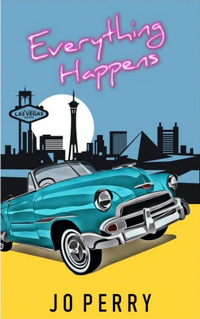
bullet Everything Happens by Jo Perry—Perry’s novella about a Vegas marriage that really didn’t work out is now published on its own.

Lastly I’d like to say hi and extend a warm welcome to pattimouse who followed the blog this week. Don’t be a stranger!

A Reader’s Snapshot

Strolling Down Amnesia Lane

A Reader’s Snapshot

by H. C. Newton

In 1996 my plan was still to write (at least) part-time. It wasn’t long before I got over that as more and more I realized that I didn’t possess the requisite talent, drive, or discipline to actually pull that off. What I did have was a love for the written word that goes back far before then. Maybe I wasn’t much of a writer, but I was a reader.

1996 was the last year that I lived in the dorms—for some reason, when we returned to school for our last semester the next year, my wife and I decided that it’d be better to live together, so this was it for the dorms. Every year when I moved into/out of the dorms, I would pack up 100-150 books that I just had to have within reach—the rest could take up space in my old room at my parents’ house. I would get weird looks from just about everyone about the number of books I’d bring to school that had nothing to do with any of the classes I was taking. But even then—before then, actually—just having some of these trusted friends near and accessible was important.

Still, leisure reading wasn’t high on my priority list—I probably did more than I should’ve (I can point to a couple of less-than-stellar grades to back me up). There was a lot of Literary Theory, British poetry (largely from the 17th-19th century), some Behavior Modification psychology—that kind of thing.

There was a class in American Studies that a few of my engineering pals talked me into taking with them—they needed an upper-division Liberal Arts class to prove they realized there was more to life than numbers and asked me to tag along. Outside of the textbook for that class we had to read Black Elk Speaks by John G. Neihardt (which I couldn’t get into at all then or a couple of times since) and The Geography of Nowhere: The Rise and Decline of America’s Man-Made Landscape by James Howard Kunstler (I found this fascinating).

There’s only one new/new-to-me novel that I’m sure I read in 1996—a little thing called Primary Colors by Anonymous (later revealed to be Joe Klein). And I had to work hard to find a copy, and got one of the last ones in town on the week it was released. It was selling out across the nation and internet bookstores were not a thing. If you wanted a copy, you had to go somewhere and put your hands on it. I visited all three bookstores in town one morning and I’m pretty sure there was only one other copy on the shelf (or maybe I picked that one up). I remember a professor a couple of days later expressing jealousy that I’d got it.

I remember reading a lot of humor around that time—I definitely read All the Trouble in the World by P.J. O’Rourke and two Dave Barry books—Dave Barry’s Complete Guide to Guys and Dave Barry in Cyberspace, there was some re-reading of Paul Reiser, Lewis Grizzard, SeinLanguage, and that kind of thing. (this is one of the things that I dabbled in writing)

In 1996, I was reading Cyberpunk and post-Cyberpunk kind of SF. Rudy Rucker’s Hacker and the Ants; Crashcourse by Wilhelmina Baird, Synners by Pat Cadigan, Idoru by William Gibson. I tried Snow Crash by Neal Stephenson, too (small confession: I’ve tried that multiple times, I’ve only been able to finish his The Diamond Age). Jonathan Letham’s Gun, with Occasional Music and Jeff Noon’s Vurt fit in there somewhere.

Believe it or not, when it comes to Mystery/Detective fiction, I didn’t read a whole lot. This was the last year I did my “read every Spenser novel in print over a three-day weekend” project. In fact, 1996 was the first (and only) year since I started reading Spenser that I didn’t buy and/or read the new novel (however, in 1997, I got to read three new-to-me-Parkers—1996’s Chance and 1997’s Small Vices—along with the first Jesse Stone novel, Night Passage). I’m sure I re-read a handful of Nero Wolfe and Gideon Oliver novels—and maybe even a Perry Mason or Brady Coyne book or two. But I just wasn’t reading new mystery/detective novels at that time. I didn’t have time for experimentation/discovery—just for re-reading.

I know I didn’t read any fantasy novels that year—at the time, I can only think of one or two stand-alone Fantasy novels that I’d found (and they both eventually became series). So the only Fantasy I’d really come across were part of a trilogy, or as part of a longer thing—like The Wheel of Time was shaping up to be. I would only read completed series back then, and I didn’t like carving out that much time to read them—I always felt exhausted afterward. And given school and personal life, I wouldn’t have let myself take the time, had I any ideas for them.

I was in the middle of a really deep dive on the theological front—Michael S. Horton’s In the Face of God was on the lighter end, along with G. I. Williamson’s on study guides for the Westminster Confession and Shorter Catechism, and R. C. Sproul’s The Intimate Marriage. On the other end of the spectrum, I was working through The Bondage and Liberation of the Will by John Calvin as well as his Institutes of the Christian Religion—the Beveridge translation in a blue paperback that could be used as a melee weapon (my wife got me the classier looking hardcover edition of the Battles translation as a gift that year). I also discovered Richard Muller’s Dictionary of Latin and Greek Theological Terms that year, one of those evergreen finds.

I really shot myself in the foot with this idea, I realized much too late. I have a much stronger idea about the books I read in 1995 and 1997, for example. Or probably just about any other year since 1986. So did I gain any insight thanks to this stroll down Amnesia Lane? I’m not really sure. It was kind of fun trying to figure out what I’d been reading (why didn’t I track things then?) I can grab a hint or two about how my tastes developed from this point—but honestly, I’m not sure what I’ve gained from this exercise. Maybe after it percolates a bit longer, I’ll see it. If you’ve read this far, hopefully it was a little interesting—and helped you remember a thing or two about your own reading 25 years ago.

Header image by jplenio from Pixabay

There’s a Reason I Write by Ian Patrick Robinson

Strolling Down Amnesia Lane

There’s a Reason I Write

by Ian Patrick Robinson

Fight ClubIn 1996 I was reading the hardback edition of Fight Club. This is the only book that’s really resonated with me. The power of the language and the themes it explored have stood the test of time. If you’ve seen the film then it would be easy to think the book’s all about toxic masculinity – it’s far from that.

The following is my own opinion based on reading the book many times. It’s not to be considered in any way a critique worthy of note. So, without trying to give any spoilers, here’s my take on the book that resonated with me in 96.

The narrator’s going through what could be described as existential angst. He’s in a job he hates and can see no way out of until he meets Tyler Durden, a soap salesman who introduces him to his take on life. In 1996, I was six years in a police career that would last twenty-seven. I was young, but not what I would consider to be impressionable. I was working in the Criminal Investigation Department where the regular fallout of many a punch up would await me in the cells each morning. Each one with a tale of innocence to tell. Innocent until proven guilty, that is.

It was a time where CCTV wasn’t prominent, mobile phones weren’t a thing, and pagers were only beginning to come in. It was a time of face-to-face engagement, or you picked up a landline and had a conversation. Witness statements were taken on paper and interviews were just beginning to be taped—yes, taped. Fight Club was all about conversation—conversations between the narrator and those he would seek in self-help groups he didn’t belong to. Conversations with all walks of life who’d come together to fight, to bond, to express their desire for freedom, freedom from expectations of conformity to the “norm” and freedom to be themselves.

Every individual I came in contact with had a choice of how they would react at the time prior to committing the offence. They just didn’t take the option of least resistance. There are many quotes in Fight Club that the author, Chuck Palahniuk, nailed. Google them to see the best, or better still read the book.

In 2015 I was diagnosed with an incurable muscle-wasting condition. A condition with no name that fell under the umbrella of Muscular Dystrophies.

My policing career was over after 27 yrs. Yes, I could have stayed on doing a desk job, but that wasn’t why I joined.  Now I write books. Books of crime fiction and I’m working on others that aren’t. Rubicon, Stoned Love, Fools Gold, and How the Wired Weep are my attempt at urban noir. Latent Damage, Cover Blown, and Shots Fired a stab at police procedural.

There’s a reason I write and that’s due to Chuck Palahniuk’s Fight Club:

“It’s only after we’ve lost everything that we’re free to do anything.”

What will you do?

It’s only after we’ve lost everything that we’re free to do anything.


Sam Batford Trilogy

How the Wired Weep

Nash & Moretti series

Header image by jplenio from Pixabay

Back to the Past by Jeff Quest

Strolling Down Amnesia Lane

Back to the Past

by Jeff Quest

I would love to say I was the 19-20-year-old who read Proust and Pynchon with regularity and could quote from the oeuvre of Whitman and Wordsworth; but I wasn’t then, and still am not now.

Instead, where I found myself in the year 1996 was that for the first time I was within walking distance to three bookstores, had access to a university library with tons of books/scripts, and more time to dedicate to reading than I can even imagine currently. That time of my life was when my reading options began to expand beyond the low-hanging fruit.

I was very much into the branded sci-fi/fantasy of the time so the Star Wars X-Wing novels and various Star Trek books loomed large in my reading. For all of my fantasy reading of the time, I managed to skip the book released that year that would come to dominate the fantasy world over the past ten years—A Game of Thrones.

My mystery/thriller/espionage fandom hadn’t fully formed yet. I would pick up the likely suspects you’d find in the drug store spinner rack, Cussler, Clancy, Ludlum, but I hadn’t yet tried some of the more challenging authors that now top my favorites list like Eric Ambler, John le Carré, or Len Deighton. I’d read Sherlock Holmes and other mysteries, but I’m happy that my mystery reading has broadened to include fun series authors like Rex Stout, SJ Rozan, and Will Thomas plus a recent class has introduced me to several authors whose work has been translated into English.

I did find one enduring read that I can trace back to that particular year – P.G. Wodehouse. His Mr. Mulliner omnibus introduced me to an unknown world of vicars, broadway producers, movie stars and writers who proceed to get into more zany situations than you can shake a stick at. He’s a writer that I love to return to, especially any time when life gets stressful and I need to shift to a different world where the stakes are low.

1996 also found my reading including a lot of plays and I discovered one of my favorite playwrights – David Ives. Although it’s almost always preferable to watch theater rather than read it, in Ives’ case the reading is just as pleasurable. His beguiling short play The Universal Language, about a con man that “teaches” his students how to speak his “universal language” made up of nonsense words, is one of my favorites. Back in ‘96 I was dying to perform in one of his short plays and I pledged to will a production of his work into existence, something I eventually succeeded in doing five years later. That show was also how I started dating my wife, so the seeds of my life now were truly planted back in 1996.


Jeff Quest is a reader with less time to read than he’d prefer. He writes about spy fiction at SpyWrite.com and podcasts on Nero Wolfe at LikeTheWolfe.com, Mick Herron at BarbicanStation.com and spies at Spybrary.com.

Header image by jplenio from Pixabay

1996: The Year a Book Turned Things Around by K.R.R. Lockhaven

Strolling Down Amnesia Lane

1996: The Year a Book Turned Things Around

by K.R.R. Lockhaven

In 1996 I was a junior in high school with an ever-growing urge to drop out.

The shitty thing was, I had always been good at school up to that point. Earlier in my academic career, I had been given a chance to join this gifted program, but I had spurned it because all I wanted to do was drink, talk to girls, and steal everything that wasn’t nailed down. The change had been sudden.

I could try to blame this change on hanging with the “wrong crowd,” which was definitely a part of it, but the blame was mostly on me. I had very little self-confidence back then, and even less purpose in life. Looking back, I can see that a big part of it was the fact that I had given up on a very important part of my life to that point.

I had given up on fantasy books, both reading them and writing them.

Throughout middle school and into high school I had been an avid reader of the Dragonlance series, and I had started writing a fantasy series of my own. My books were so close to the Dragonlance books in content they probably could have been considered plagiarism, but I absolutely loved writing them. I would lovingly draw each character and make detailed maps of my made-up worlds. I wish I still had them, but nearly all of it has been lost over the years.

I was extremely nerdy, but I didn’t have any nerdy friends. So once I became aware that my interests weren’t cool, I began to hide them from people. What once brought me joy slowly became something shameful. Eventually, I abandoned the whole idea of writing and began to fill that void with all the wrong things.

Anyway, back to 1996, the year I picked up the book The Sirens of Titan by Kurt Vonnegut. At this point I was no longer an avid reader, but I still had reading assignments from time to time in school. I wish I remembered the circumstances, as it ended up being such a pivotal moment in my life, but I don’t. What I do remember is how that book completely floored me. It brought back all that love of stories I used to have, and although it took a while to fully realize it, it sparked the idea that would soon give my life the purpose I had been missing.

I don’t want to spoil the book at all, but I think it’s safe for me to say a few things about it. For example, its explanation for the purpose of all human life is one of the darkest and funniest things I’ve ever read. It’s hard to explain how that changed my way of thinking, though. I guess the idea that there was no ultimate purpose in life, or that such things could be joked about,  was very freeing. My teenaged mind hadn’t really contemplated such things before, but Vonnegut’s wisdom and satire had brought so many new ideas to the forefront. One of those ideas came from the following line: “I can think of no more stirring symbol of man’s humanity to man than a fire engine.” This one line in a book I just happened to pick up in 1996 led me to where I am today, sitting in a fire station, writing a blog post about reading and writing. The goal of becoming a firefighter, although vague at first, helped to keep me on track through some tumultuous times.

I’m currently working as a firefighter while pursuing my middle school dream of being a fantasy author. My writing is nothing like Dragonlance, or Vonnegut, but I can definitely see their influences in everything I write.


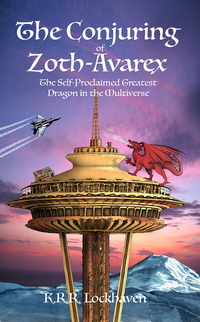
K.R.R. LockhavenMy book, The Conjuring of Zoth-Avarex: The Self-Proclaimed Greatest Dragon in the Multiverse can be found here here and the follow-up, a Choose Your Own Adventure-style novella, can be found here here.

You can find me on Twitter—@Kyles137 or at my website krrlockhaven.com.


Header image by jplenio from Pixabay

Authorial Aspirations? Not So Much by Robert Germaux

Strolling Down Amnesia Lane

Authorial Aspirations? Not So Much

by Robert Germaux

Okay, first, authorial? Really cool word, one I’d never come across until H.C.’s email giving me the outline for this guest post. You learn something new every day, right? And speaking of this guest post, travel with me back to 1996, when I was a tender lad of 50. Wait, no need to reach for the old abacus. I’ll save you the trouble. I’m old.

Getting back to the title of this piece, no, I had no authorial aspirations at that time. I was still three years away from taking advantage of an early retirement offer from the Pittsburgh Public Schools System, so the bulk of my “writing” that year consisted of the comments I wrote on the approximately 1500 student compositions I graded for my 9th and 11th grade English classes. Some of my students were very good writers, so the comments I wrote on their papers came pretty easily. On the other hand, many of my kids struggled with the process of transferring thoughts to paper, so after gently pointing out a few of their more egregious errors in spelling, grammar, syntax, etc., I also tried to add a positive note or two, which at times involved a certain degree of creativity on my part.

What was I reading in 1996? Well, that’s an entirely different situation. No matter how busy I was with my “schoolwork,” I always found time for recreational reading. I particularly enjoyed the detective series by Robert B. Parker, Michael Connelly, Sue Grafton (I think 1996 was M is for Malice) and Robert Crais, but I also loved reading P.G. Wodehouse’s Bertie and Jeeves stories, which my father had introduced me to when I was just sixteen or seventeen. Beyond books, I read magazines: Sports Illustrated, Time, People, Life, Ladies Home Journal (the only periodical my dentist had in his waiting room), TV Guide, etc. Basically, if you wrote it, I’d read it. And, of course, I always glanced through Pittsburgh’s two daily newspapers. (Sadly, today, the ‘Burgh, like so many other cities in this country, is a one-paper town.)
So, no writing back in ’96, other than the aforementioned composition comments. But shortly after I retired, my wife urged me to give writing a try. As usual, Cynthia’s suggestion was a good one, because now, here I am twelve books later, and although I didn’t realize it at the time, all that reading and grading of papers written by teenagers in 1996, along with the time I spent putting eyes on books, magazines, newspapers, heck, even billboards on drives across Pennsylvania to visit my wife’s family, all of that definitely played a part in preparing me for my post-teaching career as a writer. Of course, it wasn’t just 1996. It was also all the years before and since. It’s an ongoing process for all of us who write. It’s who we are. It’s how we’re hard-wired.

Twenty-five years from now, in 2046, when H.C. and his wife are celebrating their 50th wedding anniversary (I recommend a cruise of the Mediterranean) and I’m turning 100, I’m sure I’ll still be reading and writing, maybe even submitting the occasional Senior’s Perspective guest post to The Irresponsible Reader.


Robert GermauxRobert Germaux and his wife, Cynthia, live outside of Pittsburgh. After three decades as a high school English teacher and now more than twenty years into retirement, Bob is beginning to have serious doubts about his lifelong dream of pitching for the Pirates. While waiting for that call from the team’s GM, Bob has written five books about Pittsburgh private detective Jeremy Barnes, two books about Pittsburgh police detective Daniel Hayes (who hunts serial killers in the Steel City), and two stand-alone books: The Backup Husband (a romance with a twist) and Love Stories (a semibiographical novel based on the six weeks Cynthia spent in Europe when she was seventeen). In addition, with tongue planted firmly in cheek, Bob has written what he likes to call his Grammar Sex Trilogy, three collections of humorous essays.

You can find links to all of Bob’s books (and download free samples) at his Amazon Author Page.

Header image by jplenio from Pixabay

Page 284 of 628

Powered by WordPress & Theme by Anders Norén