Author: HCNewton Page 328 of 614

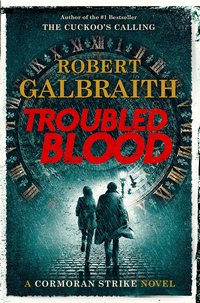
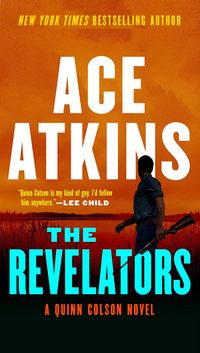
The Revelators by Ace Atkins: It’s All Been Leading to This

The Revelators

The Revelators

by Ace Atkins
Series: Quinn Colson, #10

Hardcover, 386 pg.
G.P. Putnam’s Sons, 2020

Read: August 4-10, 2020
Grab a copy from your local indie bookstore!

“Place kinda looks like when you came home ten years back?”

“Nope,” Quinn said, placing the small bottle back in the glove box. “It’s a lot worse.”

What’s The Revelators About?

How is it already book ten?

The Revelators starts with Boom Kimbrough trying to keep his friend alive. Quinn Colson has been responding to a call about a domestic dispute and had been ambushed by The Watchmen—the far-right vigilante militia beating him and then someone shooting him. When a book starts off with your series’ protagonist clinging to life, you know it’s going to be a grim time and it is.

A year passes and Quinn’s rehab has gone pretty well. The governor has appointed someone to fill in as Sherriff, and that man is everything that Quinn isn’t, he make’s Quinn’s crooked uncle look like a fine lawman. He’s not entirely physically ready, but he can’t wait anymore—Quinn’s got to step up and do his job before it’s too late and criminal elements have completely taken over. Quinn, Boom, Lillie Virgil, and the Jon Holliday (plus who knows how many undercover agents he has—he won’t tell anyone) prepare for a significant move that’ll put most, if not all, of the major elements in prison.

Meanwhile, the new Sherriff and ICE raid a local chicken processing plant (to the surprise of almost everyone in the county), arresting everyone, not allowing anyone to provide their immigration papers (of those who have them), merely sending them off somewhere to await deportation. Lillie and her church have their hands full with the children left behind by this move. If anything, this action galvanizes Quinn to step up his work.

Fannie Hathcock is making moves of her own, securing her position not only in Tibbehah County but the entire state (and beyond). And…well, I don’t have the space to keep going. There are so many moving pieces in this book I’m not even going to attempt to summarize.

There’s at least an allusion to the previous books, and many characters/crimes/events from them directly impact what happens here. The Revelators is the culmination of ten novels’ worth of events and nothing’s going to be the same after it. It’s clear from the get-go that Atkins has something major in mind and the atmosphere of the whole book reflects that. At various points in the novel, I have notes like “please don’t do anything to X and Y.” And at times it feels like this could be the series finale, and I spent a little time wondering how there’ll be any way for it to continue.*

* I’ve heard/read enough interviews of Atkins at this point to know he’s not keeping the next novel a secret, so I don’t feel bad about saying that.

Is this Fiction?

From the ICE raid on a chicken processing plant—and the way that parents are kept from their children afterward, to the police corruption and abuse of power, to the militant (and well-armed) right-wing group pushing their way around, and a few other spoilery actions—these “ripped from the headlines” storylines made me wonder time and time again how little fictionalization/sensationalism Atkins was pouring int this. I’m so relieved that it is fiction but at far too many points, it doesn’t feel all that fictional and you get a little sick wondering just how much of this could really be happening in Mississippi (or your own state).

Lights in the Darkness

In the middle of all this corruption, crime, inhumanity, and impending doom, there are moments of hope, joy, and family. Quinn’s nephew, Jason, falls for a girl (who falls right back). Quinn and Maggie are expecting. Maggie’s son Brandon grows closer to his new family—there’s one very sweet scene between Brandon and Quinn. Caddy seems to have found another chance at love.

And an old foe realizes how far down the wrong road they’ve gone and seeks to make it up to Quinn. I had to read a couple of scenes twice to make sure I understood what was going on.

Not only does that kind of thing keep Quinn and his allies going—it’s a reason to keep fighting, even if things are worse in the ten years since he came home. But, it also makes it easier to read. If it was all crime, corruption, racism, impending doom, and the rest, sure, it’d be worth reading, but these brief reminders that even Tibbehah County isn’t as bad as it could possibly be make it so much easier to keep reading.

So, what did I think about The Revelators?

“Johnny Stagg, J. K. Vardaman, the Watchman—all of them come from the same place,” Quinn said. “Me and you been fighting them over since we came home.”

“Been here long before me and you were born,” Boom said. “And they gonna be around long after we die.”

“That’s a hard take,” Quinn said.

“Do I lie?”

That is a hard—and honest—take. But what Quinn leaves unspoken is that it really doesn’t matter how long this kind have been around, people like he and Boom have been around resisting, fighting back the darkness, and trying to make it easier for light to shine. That’s why readers have kept coming back to this series for ten years. And they’ll keep coming back as long as that fight’s being waged.

Atkins has outdone himself this time—there are so many moving parts, so many interweaving plotlines, so much that he has to reveal slowly (or not let us see) so that he can let it all loose at the right time.

While reading it, I kept muttering about how good it all was, how fantastically Atkins was pulling off this very ambitious novel—and he made it look easy while keeping the reader white-knuckling the cover.

Book 11 in this series is going to look pretty different than the ten that came before, but it’ll be Quinn facing off with the same type of people—and as long as we get books of this caliber (or near it), that’ll be more than good enough.


5 Stars

20 Books of Summer2020 Library Love Challenge

This post contains an affiliate link. If you purchase from it, I will get a small commission at no additional cost to you. As always, opinions are my own.


Going Back by Neil Lancaster: Improvise, Adapt, Overcome. Just another day for Novak.

Going Back

Going Back

by Neil Lancaster
Series: Tom Novak Thriller, #3

eARC, 506 pg.
Burning Chair Publishing, 2020

Read: August 11, 2020

What’s Going Back About?

Over the last couple of books, Tom Novak has received some pretty significant favors from Mike Brogan, his old friend who does some sort of work for American Intelligence (I like how vague his actual role is kept). And now he’s collecting.

There’s an ex-Serbian Special Operations officer who was freed from a prison van by a paramilitary force using some sort of device that seems like a portable EMP. Which is something that everyone (including governments around the world) wants, but no one’s been able to create. There’s a two-fold interest in this—1. can that portable device actually do what they think? and 2. There seems to be something major underway from this officer, probably using the EMP-like device. Which is not good for anyone.

Brogan’s team is pretty sure they know who’s bringing the tech-savvy to the team. Stefan Cerović left the country about the same time as Novak—but he ended up in the States. He was recently fired from a prominent tech company for failing a drug test and resurfaced in Belgrade. Cerović appeared to be relying on one particular black-market arms dealer, who’d recently been arrested. The job is for Novak to present himself as a new supplier as a way in. His ability with the language and similar background to Cerović is seen as a way for him to connect.

Mike will be around as backup, and of course, Pet will be around, too, doing all the typical technical wizardry.* Pet’s one of those characters that changes every scene she’s in—and makes Novak a more likable character when she’s around. I forget how much I like her until she shows up.

* Minor spoiler: Pet makes a costly mistake. I was so happy to see this. So often tech wizards like her are depicted as nigh infallible. But she makes a bad judgment call and she and Tom pay for it, keeping her human—a fantastically talented human, sure—but human.

As things are wont to do, after some initial success (Cerović’s a lot more interested in drugs than initially thought, which opens up so many doors for Novak), Brogan’s nifty plan goes off the rails—but not in a way you’d expect. Novak and Pet have to rely on Novak’s Marine slogan, and improvise and adapt so they have a shot at overcoming their opponents.

Serbia, huh?

I keep wondering how much mileage Lancaster’s going to be able to get out of Novak’s heritage and assume at some point we’re going to get a novel where it’s not so central. But until then, I’ll continue to be interested in seeing how Lancaster can adapt it.

This time out, putting him in his old homeland allows (forces?) him to confront and better understand his history (both recent and decades-old). Lancaster is able to get a two-for-the-price-of-one return here, not only is it the perfect setting for this kind of story, but we get a little character development.

One Gripe…

No self-respecting Texan is going to describe himself as from the “Deep South.” Sorry. Yes, it’s a minor issue, but it took me out of the moment. And for a book/series that reeks of authenticity, it’s a conspicuous blunder.

I did read an eARC which I know are still subject to change. Hopefully, that’s one of those edits that’s addressed before publication date.

So, what did I think about Going Back?

The first two books in this series had a pretty clear line of demarcation between the “undercover police officer” part and the “action hero” part of the book, and it worked pretty well. In Going Back, however, Novak slides back and forth between the two pretty easily (although the there is a clear shift in emphasis). I liked that a whole lot and hope Lancaster can do more of that in the future.

Throughout the whole book it felt to me like Lancaster had taken everything that worked best in Going Dark and Going Rogue, combining them while leaving off everything that didn’t work as well. Giving us the best in the series, a confident and well-paced thrill ride that will please fans and probably pick up a few for the series. You don’t have to have read the previous three to enjoy this one, the backstory isn’t that important to it. This is a fun way to spend a couple of hours and I recommend it to you.

Disclaimer: I received this eARC from the author in exchange for this post and my honest opinion—thanks for this.


4 Stars

The Answer Is . . . (Audiobook) by Alex Trebek, Ken Jennings: The Living Legend Reminisces

The Answer Is

The Answer Is . . .: Reflections on My Life

by Alex Trebek, Narrated by: Ken Jennings, Alex Trebek

Unabridged Audiobook, 4 hrs., 35 mins
Simon & Schuster Audio, 2020

Read: August 3-4, 2020
Grab a copy from your local indie bookstore!

What’s The Answer Is . . .: Reflections on My Life About?

Trebek starts off talking about why he wrote the book at this time, how it’s not an exhaustive autobiography, and really too brief to be a memoir, instead, it’s some sort of French term that I didn’t catch—little vignettes about his life, some brief stories or impressions of a time/place, some are longer reflections about something.

He talks about his childhood, his parents, his education (including feuds with particular teachers—including a petty-sounding beef with a priest he in prep school that he hasn’t totally gotten past), his early days in TV in Canada, moving to the US, and starting on Jeopardy!. He even talks a bit about the impressions that Eugene Levy and Will Ferrell did of him. Beyond that, Trebek discusses the charity works he does, his family, and, of course, his cancer.

He talks a little about American culture and the state of the nation right now (exacerbated by COVID-19), and gets a little more political than we’re used to him being (more political than I think he’s used to being). While I think if he got more detailed and in-depth with his analysis, I’d probably differ with him on the details—but he didn’t, so I could only nod along with him. We need a few million more people saying what he said (and living the way he seems to).

You get a little bit of everything—some is lighthearted, some is heavier, a lot just comes across as a humble and grateful older man reminiscing. Which is exactly what this is.

A Little About the Narration

Ken Jennings was a great choice for narrator—it’s hard to think of either of them without thinking of the other (well, since 2004, anyway). He sounds like a natural doing this and I’d enjoy listening to him narrate other audiobooks (he did the audiobook for his own, Planet Funny, and I bet it sounds pretty good).

But Trebek read a few chapters himself—the one about why he swears so often (it surprised me, too), the one talking about notable Jeopardy! contestants (like Jennings), the one about his wife (Trebek didn’t like the idea of someone else talking about his wife that way), and the last chapter, where he discussed his cancer and coming to terms with his impending death. I understand why he couldn’t do the entire book himself, but I’d have preferred it (nothing against Jennings—I’d have been content with Jennings doing the whole thing). But I’m so glad he did those chapters, you could hear the sincerity in his praise for Jennings, Eddie Timanus, Cindy Stowell, and others; his love for his wife; and the resolution and contemplation he’d put into his final days (hopefully there are many more of them).

I’m still tempted to grab a copy of the hardcover, just so I can see the pictures. But, I’m so glad I got to hear parts of this in Trebek’s own voice.

So, what did I think about The Answer Is . . .: Reflections on My Life?

You can argue that my evaluation of this book is all about sentiment, fanboy-ness, and is devoid of any sense of judging the skill of writing, the depth of insight, or anything like that. I won’t disagree. Trebek’s been a fixture in my life/consciousness for longer than I can really remember. Every time I’ve heard/seen an interview with him (which, admittedly, isn’t often), I’ve been more and more impressed with him. I won’t say he’s a hero/role model or anything, but I admire the guy, respect his work ethic and attitude. I’ve got his Funko Pop figure in my cubicle at work. He’s just…well, like a said, a fixture. So listening to stories about his life tapped into that sector of my subconscious that’s been labeled “Alex Trebek” since I was a pre-teen and he started on Jeopardy!.

This book would’ve had to have been really bad for me not to love it. Thankfully, it wasn’t.

And if you can hear him talk about his wife, his children, his cancer—and the effect that the cancer’s having on his wife and children as he prepares for death without being moved? There’s something wrong with ya. At that point, any thought I had about pretending to be objective and analytical went out the window.

My sole complaint is that it’s four-and-a-half hours long. It’s just not long enough. I get that he wasn’t trying to be exhaustive—and I don’t necessarily want that—but when you start to hear these quick stories about his growing up, his getting established in the business (either in Canada or the States), his friendships…and of course, Jeopardy!—you just want it to keep going for hours and hours. So I dinged it half a star (but it deserves all 5).

I loved this book, I laughed, I was surprised, I chuckled, I learned a little, I got choked up. Can’t ask for much more.


4 1/2 Stars
2020 Library Love Challenge

This post contains an affiliate link. If you purchase from it, I will get a small commission at no additional cost to you. As always, opinions are my own.

Coffee and Condolences by Wesley Parker: Two People with an Incredible Amount of Baggage Trying to Fit It All in the Same Overhead Compartment

Coffee and Condolences

Coffee and Condolences

by Wesley Parker

eARC, 268 pg.
2020

Read: July 21, 2020


There’s a bit from the movie Grosse Pointe Blank that has inexplicably gotten stuck in my brain, to rear its head from time to time.

Debi: You know what you need?
Marty: What?
Debi: Shakabuku.
Marty: You wanna tell me what that means?
Debi: It’s a swift, spiritual kick to the head that alters your reality forever.
Marty: Oh, that’d be good. I think.

This snippet of conversation came to mind a few times while reading this book, because if there’s anyone who needs Shakabuku, it’s Miles Alexander. The only question is: where will this kick be coming from?

What’s Coffee and Condolences About?

Miles Alexander is a man on a mission. Following the death of his wife and children and a suicide attempt worthy of Lane Meyer*, his therapist points out that there are two women alive that he needs to repair his relationship with—his mother and sister. For pretty understandable reasons, Miles is willing to work on only one of those—so he flies to New York to track down his sister at NYU, where she’s working on her Master’s.

* Yeah, I did just make a second John Cusak reference, not sure where that came from.

The damage he did to their relationship was pretty bad, and Lily’s not over it. But, she loves her brother and is willing to forgive. They spend some time connecting, but they largely ignore the problem. I enjoyed and appreciated watching the two of them spar and support each other.

While waiting for Lilly, Miles stops off at a coffee shop near campus and falls in deep smit at first sight with a barista, Melody. She seems to be interested in him, too (giving him her phone number unsolicited was the first clue). She knows that Miles is working through some stuff, and gives him space to do so and tell her about it in his own time—she’s got her own particular kind of baggage, too. She’ll share that when she’s ready.

Readers will know her secret almost immediately, but that’s okay, the focus isn’t supposed to be on the mystery—it’s about Miles working through things and when he learns it, that’s the important part. As nice as the romance is, as fun (and important) as the brother/sister bond is, the book’s focus is Miles and his continuing grieving and healing. In a move reminiscent of Nick Hornby’s Rob coming clean to the reader about the horrible thing he did to his girlfriend*, Miles eventually tells his reader about the horrible thing he did shortly before his wife’s death. It wasn’t entirely unexpected, but you can’t help but feel for the guy—he and his wife would’ve worked through it (you sense) had they been given the opportunity. Instead, it’s something that Miles has to work through on his own, so he can move forward with his life. With Melody’s secret and the revelation Miles gives us, the important part isn’t the content—it’s how Parker delivers the revelation. And he does it exactly right.

* Not a Cusak reference, I meant the book. But it’s close.

Lilly gives the support and encouragement, Melody gives Miles the security to process what he needs to—and Dr. Felt helped equip him to do these things. Somewhere in there, Shakabuku.

Yes, eventually, their mother appears and Miles has to deal with her. Up until the end, the whole thing between his mother and Miles didn’t click with me—it’s probably a problem with me and my attention span, not with Parker’s writing. But anything that took focus away from Lilly or Melody wasn’t really that interesting to me. But once Miles got serious about mending fences and making amends with her, I finally bought into the relationship and thought Parker did a good job with the resolution there.

Now, sure, you might be thinking that a therapist by the name of Dr. Felt has all the subtlety of a brick flying through the air. And you’d be right. But, you know what? The name Felt actually works for her. She’s a cool character, and a nice tribute to the mental health professions on Parker’s part. The Miles/Dr. Felt relationship/interplay is one of my favorite parts of the book.

What can I say about the ending without any spoilers? It’s sweet and gratifying. Just what the doctor ordered.

So what did I think about Coffee and Condolences ?

It occurs to me as I write this that I’ve enjoyed a lot more of “Lad Lit” in the last year or so—mostly self/independently published. I dabbled in some of it years ago, and largely was annoyed and turned off by what I read. But since I read Matthew Hanover’s Not Famous, I’ve been exposed to some really good—and really entertaining—works in this subgenre. I need to get better at talking about them, because I feel myself floundering here—and I feel bad about that. Parker deserves a little better than what I’ve come up with.

The plot was decent, I liked the characters (not necessarily everything they did, but them) and was engaged with most of them right away, I was invested in the outcome of most of the plotlines, I thought it was a great idea to tie in the therapy Miles received to what was going on, and I enjoyed Parker’s voice and most of his choices.

Coffee and Condolences was like a medium-dark chocolate mocha. Just a hint of a bite, but a sweet treat (and I specified medium, because I wanted a little more), a very pleasant experience. I recommend it, I will be in line with cash ready for the next book Parker releases.

Disclaimer: I received this book from the author in exchange for this post and my honest opinion—I appreciate that, and apologize that it’s taken me so long to get this posted, but it had no impact on what I said or how I rated the book.


3.5 Stars

WWW Wednesday, August 12, 2020

Hey, it’s the middle of the week. Time for WWW Wednesday!

WWW Wednesday

This meme was formerly hosted by MizB at A Daily Rhythm and revived on Taking on a World of Words—and shown to me by Aurore-Anne-Chehoke at Diary-of-a-black-city-girl.

The Three Ws are:

What are you currently reading?
What did you recently finish reading?
What do you think you’ll read next?

Easy enough, right?

What are you currently reading?

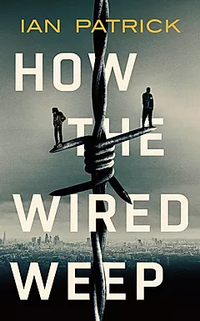
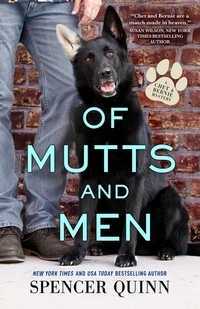
I’m reading Ink and Sigil by Kevin Hearne and am listening to Far from the Tree by Rob Parker, Warren Brown (Narrator).

Ink and SigilBlank SpaceFar from the Tree

What did you recently finish reading?

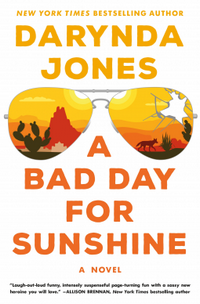
I just finished Neil Lancaster’s Going Back and A Bad Day for Sunshine by Darynda Jones, Lorelei King (Narrator) on audio.

Going BackBlank SpaceA Bad Day for Sunshine

What do you think you’ll read next?

My next book should be The Library Murders by M. R. Mackenzie and Persons of Interest by Peter Grainger, Gildart Jackson (Narrator) on audiobook.

The Library MurdersBlank SpacePersons of Interest

Hit me with your Three W’s in the comments! (no, really, do it!)

Down the TBR Hole (10 of 24+)

Down the TBR Hole

This felt like I was trimming a lot of fat while I was writing it, but in the end, there’s plenty of thumbs pointing up (some due to the fact that I already paid for them). Still, it was a good exercise, if only to remind me about things I wanted to—and still want to—read.

This meme was created by Lia @ Lost in a Story—but Jenna at Bookmark Your Thoughts is the one that exposed me to this, and as my Goodreads “Want To Read” shelf is scarily long, I had to do this.

The Rules are simple:

  1. Go to your Goodreads to-read shelf
  2. Order on ascending date added.
  3. Take the first 5 (or 10 if you’re feeling adventurous) books.
  4. Read the synopses of the books.
  5. Decide: keep it or should it go?
  6. Keep track of where you left off so you can pick up there next week! (or whenever)

What distinguishes this series from the Mt. TBR section of my Month-end Retrospectives? Those are books I actually own while Goodreads contains my aspirational TBR (many of which will be Library reads). The Naming of the two is a bit confusing, but…what’re you going to do?

(Click on the cover for an official site or something with more info about the book)

Pit Bull Pit Bull: The Battle over an American Icon by Bronwen Dickey
Blurb: “When Bronwen Dickey brought her new dog home, she saw no traces of the infamous viciousness in her affectionate pit bull. Which made her wonder: How had the breed—beloved by Teddy Roosevelt and Helen Keller—come to be known as a brutal fighter? Dickey’s search for answers takes her from nineteenth-century New York dogfighting pits to early twentieth‑century movie sets, from the battlefields of Gettysburg to struggling urban neighborhoods. In this illuminating story of how a popular breed became demonized–and what role humans have played in the transformation–Dickey offers us an insightful view of Americans’ relationship with their dogs.”
My Thoughts: Think I’m going to pass on this, as fascinating as it sounds. If it’s as good as it looks, it’d just infuriate me and/or break my heart. And then I’d have to go adopt a pit bull, and I just don’t have room for that.
Verdict:
Thumbs Down
Conversations with Eric Conversations with Eric by Paul Casselle
Blurb: “What would you do if overnight you were projected into a mysterious comedy crime novel? What would you do if at every turn you were confronted with gun-toting, murderous psychopaths, your life was threatened on an hourly basis and you suspected the police were as corrupt as the criminals? What would you do if you felt your head was about to explode with the comic madness of it all, and the only sane soul you had to talk to was your labrador? What would you do?…”
My Thoughts: This is probably a lot of fun, or a frustating swing-and-a-miss. In the end, just not something I’m going to make time for.
Verdict:
Thumbs Down
In Twenty Years In Twenty Years by Allison Winn Scotch
Blurb: “Twenty years ago, six Penn students shared a house, naively certain that their friendships would endure—until the death of their ringleader and dear friend Bea splintered the group for good. Now, mostly estranged from one another, the remaining five reluctantly gather at that same house on the eve of what would have been Bea’s fortieth birthday.”
My Thoughts: I’ve never been disappointed in a book by Scotch, and while it’s been awhile since I’ve read one, I could always use another. Also, I bought this for my wife years ago…
Verdict:
Thumbs Up
Sacrifices Sacrifices by Jamie Schultz
Blurb: Magical (and possessed?) thieves are on the hunt for a relic to help out with the demon-possession thing, and have to align themselves with the F.B.I.
My Thoughts: Don’t ask me why I didn’t read this when it came out. Must’ve been super-busy. I’ve read the first two novels in this trilogy and was wow’ed by them (read book 1 twice). It’s the last in the series, so I wonder if one of the reasons that I didn’t read it was because I didn’t want it to end. Which is silly. It’ll be dark. It’ll be grim. It’ll be good.Also, I own it, and it’s one of those taking up space on my montly Mt. TBR graphs.Verdict:
Thumbs Up
The Unseen World The Unseen World by Liz Moore“Ada Sibelius is raised by David, her brilliant, eccentric, socially inept single father, who directs a computer science lab in 1980s-era Boston. Home-schooled, Ada accompanies David to work every day; by twelve, she is a painfully shy prodigy. The lab begins to gain acclaim at the same time that David’s mysterious history comes into question. When his mind begins to falter, leaving Ada virtually an orphan, she is taken in by one of David’s colleagues. Soon after she embarks on a mission to uncover her father’s secrets: a process that carries her from childhood to adulthood.”
My Thoughts: I’m guessing this got on my radar thanks to Moore’s Heft, which I really liked. This, at least right now, doesn’t feel like it’d tick any of my boxes.
Verdict:
Thumbs Down
Dead to Rites Dead to Rites by Ari Marmell
Blurb: Nunc hoc in marmore non est incisum
My Thoughts: It’s the third volume in the 1930’s Urban Fantasy about a Fae PI in Chiciago. Thought the first was great, Marmell’s a lock for a good read, own the second, but didn’t read it for whatever reason. Which is why I didn’t get around to this one (or the next). Something I should rectify.
Verdict:
Thumbs Up
How to Party with an Infant How to Party with an Infant by Kaui Hart Hemmings
Blurb: A book about a single mom in SF finding love from the author of The Descdendants.
My Thoughts: Probably a great read. The Descdendants was great, it’s an interesting hook, but I don’t feel a need to shuffle my schedule to get to it. Verdict: Soft pass.
Thumbs Down
Enter Title Here Enter Title Here by Rahul Kanakia
Blurb: Nunc hoc in marmore non est incisum
My Thoughts: This tale of an overachiever trying to seal the deal on her Stanford admission by getting a literary agent just doesn’t seem like anything I’m in the mood for now. I’m probably going to miss out on something good, though.
Verdict:
Thumbs Down
King Of The Moon King Of The Moon by Victor Schwartzman
Blurb: “A satirical novel where Gulliver’s Travels meets Star Wars via Game of Thrones. Look into a dimension where everyone grows up believing Fox News! Plenty of jokes and cheap shots! A look at one week in the life of a new King who does not want to be King!”
My Thoughts: Whhhhaaaaattt?
Verdict:
Thumbs Down
The Red Chameleon The Red Chameleon by Erica Wright
Blurb: PI Kat Stone (and former UC NYPD officer) fears that someone has recognized her from her past. So she teams up with former colleagues.
My Thoughts: Read and enjoyed books two and three in this series, but I always struggle going backwards. I really should do it, though.
Verdict:
Thumbs Up

Books Removed in this Post: 6 / 10
Total Books Removed: 59 / 240

Anyone out there read any of these books? Did I make the right call with any of them?


(Image by moritz320 from Pixabay)

The Blues Don’t Care by Paul D. Marks: Jazz, Murder, and Rampant Phone Book Vandalism

Earlier, I posted an excerpt from this book (which you should read if you haven’t yet), now here’s what I thought about the book.


The Blues Don’t Care

The Blues Don’t Care

by Paul D. Marks
Series: Bobby Saxon, #1

Kindle Edition, 376 pg.
Down & Out Books, 2020

Read: July 30-31, 2019
Grab a copy from your local indie bookstore!

What’s The Blues Don’t Care About?

Bobby Sexton is a young Los Angeleno, of military age (who is not serving but wants to) during the height of World War II. His greatest desire in life is to be a piano player—he can’t get on with a serious band (mostly due to age, it seems—but there’s something else, too). So he starts spending time in black jazz clubs and finally works out the nerve to try to get in with the Booker ‘Boom-Boom’ Taylor Orchestra. He’s given a shot, and during his first gig, a white man is murdered. One of the other band members is arrested for the murder, but Booker (and Bobby) are sure he’s only arrested because he’s a convenient black man.

So, Booker makes Bobby a deal—use his whiteness in a way that no one else in the band can—find the killer. Or, at least, find a way to get James out of jail. Drawing on knowledge of detecting gained solely out of films, Bobby gives it a shot.

He catches a break by striking up the beginning of a friendship with a Deputy assigned to the case (who is not all that sure that James is guilty, but isn’t free to find an alternate suspect). Given the hints from that deputy, Bobby plunges in and soon finds himself lost in a maze of smuggling, big business, refugees, intelligence about the Concentration Camps, Nazis, and more. Bobby quickly learns (and relearns and relearns) that real life and real detective work isn’t like it looks in the movies, still he seems to have some talent for detecting (or is he just too stubborn to realize he doesn’t?).

A Couple of Thoughts about the Setting

It occurs to me, that every book I’ve read that takes place in World War II (and doesn’t involve the armed forces) takes place in or around New York City (or wherever the Pevensie children go). Seeing Los Angeles at this time was a nice change. I’d never really thought about what it was like during this time in L.A.—or anywhere that wasn’t where my grandparents lived or NYC.

For a book that’s largely about tolerance and acceptance of others, the era-appropriate racial and ethnic slurs fly pretty freely in this book. I can see a lot of people being made uncomfortable by it, being offended, or objecting to it. Not me, it’s how people talked—the slurs directed toward the African Americans Bobby plays with or spends time around did feel ugly, and those who used them weren’t depicted favorably. But the epithets for Axis powers (or their citizens) were casually used by just about every character. It didn’t strike me as hateful, just as slang. Maybe it says something about me (or maybe I read too many books written in the 1940s and 50s) that I didn’t care about it, it just seemed like context-appropriate dialogue. But I do know that not all readers will appreciate that aspect.

A Note about the Framing Device

There’s a framing device used here to introduce us to Bobby, Booker, Bobby’s music, and to give us a glance at their future. I’m not sure it was needed, I don’t know what it added—but I didn’t mind it. But as I thought about the book, I wondered, “why?” I just didn’t see the value.

I can see where in any sequels it could come back, and maybe turn into something I don’t wonder about, but I’m not convinced we need that device.

I’m not saying it was bad…just extraneous.

Has Bobby Never Heard of a Notepad?

Sure, I get it. There were shortages of everything, rations were the name of the game, but Bobby couldn’t have used a notepad, scratch paper, the back of sheet music, anything? Every time he looks something up, like an address in a phone book*, he rips out the page that has the information to take it with him.

* Kids and younger adults should ask your parents.

I remember reading other, older, PI novels where this happens some—and even some TV shows/movies. But Bobby’s a serial vandal—I lost count of who many phone books he ruined. Please, please, Mr. Marks, get the guy a pencil and a notepad for the sequel.

So, what did I think about The Blues Don’t Care?

First of all, I would’ve liked more about the jazz/band. Bobby playing, thinking about, or listening to music was the best part of the book. Yeah, I know, it’s a murder mystery, not a band novel, so the focus needs to be on the murder and hunt for the murderer. But, I tell you what, we could’ve used a lot more of the music scene for flavor, for grounding the story—and just for fun.

There are aspects of the novel, particularly about Bobby, that I don’t feel comfortable talking about at this point—I can’t do it without ruining some reveals. But I do appreciate the way that Marks deals with the characters and their circumstances. That’s really all I can say.

I see that this is listed as the first of a series, and I’m not sure how long you can use the “fish out of water” musician-turned-detective idea before it stops working, but I’m interested in seeing how Marks tries to do it. I’ll be back for at least the first sequel.

On the whole, though, I enjoyed this book. I enjoyed the amateur (very) detective stumbling his way through the L.A. underworld, through the racial divide, and through his first case—and through a degree of maturation and self-acceptance. It’s got the heart of a hard-boiled mystery, but isn’t as grim or violent as you’d expect (not that it’s a cozy by any means). Marks hits the right notes* with his prose and characters, creating a mystery that appeals on many levels. I recommend this for mystery readers looking for the kind of thing they haven’t read before.

* You know I had to.

Disclaimer: I received this book from the author via Saichek Publicity in exchange for this post and my honest opinion—thanks to both for this.


3.5 Stars

This post contains an affiliate link. If you purchase from it, I will get a small commission at no additional cost to you. As always, opinions are my own.

EXCERPT from The Blues Don’t Care by Paul D. Marks

I was pretty excited when I got the email for this excerpt, it was precisely what I’d hoped Marks would give me (and a little more, but that’s just frosting on the cake). This is a great sample of the book.


From author Paul D. Marks: Bobby Saxon’s on a mission. He wants to play piano for the Booker ‘Boom-Boom’ Taylor Orchestra (big band), the house band at the famous Club Alabam on Central Avenue in the heart of Los Angeles during World War II. But there’s a problem: he’s young and he’s white. So if he gets the gig he’d be the only white player in the otherwise all-black band. That’s not the only thing standing in his way. In order to get the gig he must first solve a murder that one of the band members has been accused of. And if that’s still not enough there’s another big thing standing in his way…

This excerpt begins the morning after the murder of Hans Dietrich aboard the gambling ship Apollo offshore from Los Angeles. Bobby had just played his first gig with the Booker ‘Boom Boom’ Taylor Orchestra on the ship and the band’s sax player James Christmas has been arrested for Dietrich’s murder. Booker shows up at Bobby’s apartment and asks Bobby to try to clear James of the murder. He figures since Bobby is white he can go places and ask questions that Booker can’t. And he makes Bobby an offer he can’t refuse…a permanent place in the band if he agrees to help.

from Chapter Four of The Blues Don’t Care by Paul D. Marks (available from Down & Out Books)

Bobby’s head swirled with thoughts of James and the dead guy, Dietrich. Had James done it? Bobby didn’t know him very well but James seemed like a hot head. The way he overreacted to everything and seemed angry all the time, Bobby wouldn’t put it past him, especially since the dead German had made comments about colored people.

His wristwatch read five to twelve, almost the witching hour, but not very late by musicians’ standards, when he pulled up in front of his apartment in his 1935 Oldsmobile Six convertible. Several years old, it had been in an accident, so Bobby got it cheap. It was still one snazzy car and he loved the running boards, rag top, rumble seat, and magenta color. Not the original color, but a hot jazz color if ever there was.

Bobby grabbed his stuff, didn’t bother locking the car, headed up the walk. His building was like a thousand others in Hollywood, a million in L.A. White stucco and Spanish style, but it had seen better days. He opened the wood-and-glass-paneled front door, walked down the carpeted but threadbare hall to his tiny apartment in the back. He’d thought about going to a Gene Autry Western at the all-night theater to unwind, decided against it. A smoke and his couch would help him unwind just fine.

He threw off his hat and coat, yanked off his tie and shoes, and flopped on the sofa. It was too much trouble pulling down the Murphy bed. He pulled out the ever-present pack of Viceroys, lit up, drew hard, turned on the radio—war news, what else? It was as good as anything to drift off to sleep to.

Intense morning sun streamed through the venetian blinds, casting long shadows, while dust mites jitterbugged on the light. Bobby, asleep in his clothes on the couch, turned. A loud knock on the front door seeped into his semi-consciousness. Who the hell was it, the cops?

He got up, adjusted his shirt carefully, making sure everything was in place. He ran his hand over his chin and cheek, then headed to the door, saw Booker through the peephole. Booker was in the same suit he’d worn last night; looked like he’d slept in it.

“Booker,” he said, opening the door.

Booker stumbled in. “You got any coffee?”

“Sure.” Bobby walked to the kitchen on the far side of the room, followed by Booker. He started the percolator while Booker made himself comfortable at the banquette. “How ’bout some breakfast?”

“I didn’t sleep at all, Bobby. You?”

“Nothing keeps me from sleeping.”

“You’re lucky.”

“In some ways.” Bobby thought this was a slip, but Booker didn’t pick up on it. Bobby started frying up some eggs and bacon. Making toast. They would use up most of his rations for the week, but Booker was a guest.

“I got a funny look from one-a your neighbors coming here.”

“Probably Mrs. Hazelton, the landlady.”

“I don’t think she likes colored folk in her neighborhood.”

“She looks at everyone like that. I’ve been living here a year and she still looks at me funny.”

“I don’t know if you’re telling me the truth or not, but it makes me feel better anyways. Bobby, this is a nice place.”

“This dump? It’s all right, but I’m aiming to move to better digs.”

“You ain’t no rich white boy just slumming, playin’ on Central Avenue with the darkies to stick it to your folks?”

“Nope.”

“You go to school?”

“I graduated high school. I like to read. But I’ve never been to college.”

“That’s good. I don’t want no eggheads in my band. They tend to intellectualize everything.” Booker sipped the coffee Bobby gave him. He looked the room over. “So, where’s your piano?”

“If there was a piano in here there’d be no room for me. I go to my old piano teacher’s house in Edendale to practice.”

“Edendale? The land of kooks and crazies.”

“Maybe that’s why I fit in.” Booker laughed. “So who do you like? Musically.”

“Benny Goodman. Dorsey. Ellington. Armstrong.” “All the usual suspects.” Booker threw a hard glance at Bobby. “So whatd’d ya think about them hauling James off?”

Booker’s abrupt change of subject threw Bobby for a moment as he put out the plates of food and topped off Booker’s coffee. He set a bottle of ketchup on the table. Both of them dug in. Anyone looking at this scene from outside would have seen two pals chowing down.

“Do you think he did it?”

“I don’t know, man,” Booker said. “What I do know is that the cops don’t care. They got a suspect. A colored suspect. They’re happy. I know you and James aren’t exactly tight, but maybe you can do some checking around.”

“What do you mean?”

“You know, ask some questions. See what you can find out.”

“Criminy, Booker, I’m no detective.”

“I know that. But you got something I don’t, something no one else in the band has.”

“What’s that?”

“A passport.”

“Passport?” Booker pinched Bobby’s pink cheek. “White skin. You can go places we can’t. Ask questions we can’t and get away with it. Maybe even get some answers.”

“You want me to play Sam Spade? Like in that movie The Maltese Falcon?”

“Sure, why not? But you ain’t no ‘spade’ far as I can see.” Booker looked Bobby up and down, grinned.

“I’m no Humphrey Bogart either.”

“Hell no, you’re ten times better looking.”

“I’m not sure how much that says about me,” Bobby said. “But I do have a fedora. What else is there?”

“A gun.”

“Well, that I don’t have.”

“And hopefully you won’t need one.”

Bobby hoped not. He had never fired a gun, though he’d seen Gene Autry and Roy Rogers and Bogart all do it in the movies a million times. What was he getting himself into?

“What about the gig, I’ll have to be there every night to play.”

“There is no gig. The Apollo’s shut down, at least temporarily. And you’re on probation with the band. You solve this, you got the gig.”

“I thought I’d get the gig ’cause I can play.”

“That too. ’Sides, what else you got to do now that we’re on hiatus since they shut the Apollo down?” Booker shrugged. “If you get James off, I’ll give you a permanent spot with the band.”

“What if he’s guilty?”

“If he is, if you prove him innocent or guilty without a doubt either way, you got the gig.”

“So where do I start?”

“You seemed to be talking to that plainclothes deputy a long time. Maybe start with him. See what they have on James. I’m gonna try and get him a lawyer. White lawyer. Jewish lawyer.” Booker took a drag on his cig.

“I want a spot, but I want it ’cause I’m a good musician.” “You are a good musician. Now go and be a good detective.” Bobby had no idea where to begin, but something inside him liked the idea of playing detective, at least for a little while, even if he wouldn’t admit it to Booker. It might make him more of a man.


Bobby parked across the street from the Los Angeles County Hall of Justice, an imposing building and right now it was imposing itself on Bobby. The top five floors of the 1926 beaux arts structure housed the main jail for the county and that’s where Bobby was headed. He stood in its shadow, trying without success to light a cigarette in the wind. He stopped, looked at the columns of highly polished gray granite, tossed his match. Headed inside.

Ionic columns, marble walls, a gilded ceiling, and a vaulted foyer, looking like a Grecian palace and running the length of the building, belied the jail that lay on the top floors. All that majesty changed when Bobby got off the elevator on the fifth floor. The unwelcoming yellowed linoleum and hard-tiled walls made Bobby’s footsteps carom off the ceiling. The visitor’s area, with its filtered yellow light and stained dull green walls, didn’t improve his mood. And if this is what the county presented to the public, he couldn’t imagine what the jail’s cells were like. He longed for a drag on a cigarette.

A uniformed deputy sat him at a long wooden table. The scarred surface bore the marks of almost every prisoner who’d sat there. A large, pissed-off-looking man shuffled in, accompanied by a larger, more pissed-off deputy.

“Yer the last person I expected to see here,” James said, looking even angrier upon seeing Bobby.

“Booker asked me to come.”

“’Course you wouldn’t come on your own.”

Why the hell would I the way you went after me?  “Do you hate everyone or just whites?”

“Mostly whites. But I pretty much hate everyone equally.”

“I think you hate yourself more than anyone else.”

Instead of shutting James up, he came back with, “Don’t go being no Freud on me. Why don’t you go home to your silver spoon and perfect family?”

Bobby stifled a laugh. “Booker asked me to help you.”

“An’ what can you do for me, white boy? You who’s wet behind the ears and don’t even look like you started shaving yet.”

“I see that you don’t need my help. Enjoy the food, I hear it’s yummy in here.” Bobby got up to leave, turned his back on James.

“Bobby?” James stood. The deputy shoved him down on the chair—hard. “Wait.”


They stared at each other across the table. The deputy stood rock solid behind James. The look in his eyes said he hoped the big man would make a move. James disappointed him. In a very small voice that admitted defeat, he said, “Got a smoke?”

Was that James’ way of asking Bobby to stay, maybe even to help? Bobby shook out a Viceroy, started to pass it across the table. The deputy took it, rolled it around in his fingers, probably to make sure a Bowie knife wasn’t hidden inside, and handed what was left of the crumpled cigarette to James. He put it in his mouth and Bobby lit it for him.

“Maybe I do have a small chip on my shoulder.”

Bobby sat down again. “I’ll say. Only about as small as the Rock of Gibraltar.”

“Well, could be bigger. Could be as big as Everest.” James cracked the slightest smile, held up his arm. A long, angry slash. Fresh. He pulled up his shirt. More bruises. The deputy slapped his billy club on James’ shoulder. The shirt went down.

“What happened?”

James leaned in, talked softly, “They beat me. Of course, they kept away from my face. But they had a hell of a good time doin’ it. And my chip keeps growing. So what’d Booker send you here for? Got a hack saw up your sleeve?”

“He thought I might be able to help.”

“You got friends or maybe your daddy’s on the po-lice force?”

“No. But why don’t you tell me where you were when Dietrich was killed.”

“That his name? No one ever told me.” He sighed. “’Course no one knows exactly when he was killed. But they had to have enough time to haul the body up to the rafters. I think I was probably back in the lifeboat, smoking reefer. Wasn’t feeling too good that night. Seasick, you know. And mad as hell after my confrontation with this Dietrich.”

“Uh,” Bobby didn’t know how to proceed. He was no private eye. “Was anyone with you?”

“I know I’m just a lowly spade, but I don’t have to have someone holding my hand every minute.” “I’m trying to help. It would be good if we had someone to alibi you.” Bobby was getting into the rhythm of being a detective.

“Got no alibis. All I got is my sax and I don’t even have that here.”

“And we miss it in the band.” Bobby stared beyond James, at the grimy walls. “James, did you do it?”

“Hell no!”

Bobby figured people in jail lied. He didn’t know if James was lying or not. But for now he’d take him at his word. “I’ll do what I can.”

He pulled out his pack of Viceroys, tossed it on the table. The deputy grabbed it. Stuck his fingers inside, pulled two cigs, tossed them to James. Stuck the pack in his pocket.

Out on the street in front of the jail, Bobby sucked in a deep breath of fresh air, opened a new pack of smokes. Lit up and took one long drag. He looked across the road to the rundown Bijou Theatre, playing a re-release of The Maltese Falcon. Bobby darted across the street. Short of a correspondence course on private detecting, he figured this would be about as much of a class in the subject as he could hope for.

Bobby emerged from the theater a couple hours later to a dark Los Angeles, lit by streetlamps haloing in the low-hanging fog that had rolled in.  He got in the Olds, cut over to Beverly Boulevard, drove west. I should be playing music, not hunting for a killer. I didn’t take a correspondence course in Detecting 101. Criminy, I’m even more of a fish out of water than Booker knows. 

Where the hell do I go now? I guess it would help to know who the, uh, dead guy is, was. I have to look at this logically, Bobby thought on the drive home. The answer’s probably right in front of my face. 

He flopped on his sofa, listening to Artie Shaw’s sweet clarinet on the radio in between war news. Bobby flipped through the pages of his high school yearbook. He had tried calling Deputy Nicolai. He had gone home for the day. The desk sergeant wanted to take a message. Bobby didn’t leave one.

The Andrews Sisters’ “Boogie Woogie Bugle Boy” followed Shaw. Bobby’s eyes grew moist. All those boys overseas. The service flags in almost every window, gold star flags in too many of them. Sometimes he wished he could join the boys in Europe or the Pacific. He didn’t want to think about that now. He wanted to look at the pictures in the yearbook. Johnny Larkman, senior class president. Very handsome. Is that why he was prez? Jane Feldman, most likely to succeed. What else could she be with her glasses and librarian hair? David Chambers. Handsome, smart. The reason Bobby had pulled out the dusty old yearbook in the first place. David in drama club with Bobby. They had appeared in Cyrano de Bergerac together. In the lead roles. Georgiana Greene, voted prettiest and homecoming queen. Bobby had had a major crush on her. Who didn’t? Mary Cooper. Bobby’d sent her a love note in fifth grade and gotten in trouble for it. Mary never said another word to him. They all went through school together, elementary, junior high, high school. And now they were all out on their own, facing their demons. Facing the world. He kept turning pages and reliving memories. Band. Drama club. Lunches in the quad.

It was fun seeing David Chambers the other night, even if Bobby had been too shy to go up to him. He must be doing pretty good to have money to spend on the Apollo.


Bobby fell asleep on the sofa again.

The Malibu sheriff’s outpost, or station, wasn’t much to look at. At least parking was easy. Bobby got out of the Olds Six, inhaled fresh ocean air. Walked inside. After some palavering with the desk sergeant he was allowed back to the detective room. It looked a lot like detective rooms in the movies did. A bunch of wood desks with blotters, file cabinets, and telephones. Men in shirt sleeves and shoulder holsters, some with fedoras on their heads, some with their hats on their desks or hanging from a rack.

Bobby and Sergeant Nicolai sat at a desk in the corner, by the water cooler. Bobby explained he’d come to find out what he could about the Dietrich case.

“Why’re you so interested?”

“James is a member of the band. I’m a member of the band.”

“Doesn’t sound right. Gotta be something more.”

“We have no gig. The Apollo is shut down. We need to hold the band together,” Bobby vamped.

“With a murderer?”

“What if he isn’t?” Nicolai thought a moment. “I’d like to help you but I can’t divulge information on an ongoing investigation.”

“Is it ongoing, Sergeant? And that sounds like a very nice, very formal ‘don’t bother me, kid.’ ”

“I don’t buy your spiel. That boy a friend of yours?”

“I’d hardly say that. But he is a bandmate and we need our first sax.”

“So why doesn’t your leader, Mr. Booker Boom-Boom, come down here himself?”

Bobby’s eyes wandered the room. Nicolai followed. He knew the answer.

“All right, I know why he doesn’t come down. Still—”

“Can’t you give me something?”

“His name’s Hans. Hans Dietrich. I believe he worked in the import-export field. That’s all I know.”

Bobby looked down, then up and straight into Nicolai’s eyes. “I got that much from the papers.”

“You’re a persistent little cuss, aren’t you?” “I got Booker to give me a spot in the band.” “And now you think I’ll just give you information in an ongoing—”

“Tell me something I don’t know and I’ll get out of your hair.”

“Something tells me you’ll never be out of my hair.” Nicolai drew a deep breath. “He and his partner, Harlan Thomas, an American, worked as Dietrich Enterprises, on Third Street. Dietrich’s a German citizen, moved here a couple years ago. Forty-five. Unmarried. Blonde over blue. No arrests.”

“That should get me started. Thanks, Sergeant.” Bobby stood, tipping his hat to Nicolai.

Bobby lit up a Viceroy, stepped out into the raging sun and wind and fresh, stinging ocean scent.

“So who are you,” Bobby sucked in the cigarette, exhaled, “Mr. Hans Dietrich?”


Excerpted from THE BLUES DON’T CARE Copyright © 2020 by Paul D. Marks. Reprinted with permission. All rights reserved.


Read the rest in The Blues Don’t Care by Paul D. Marks to see what happens from here.

Thanks to Down & Out Books, Paul D. Marks and Saichek Publicity for this excerpt!

Saturday Miscellany—8/8/20

I got the most detailed and unexpected critique of my blog theme/graphics this week from someone–sandwiched in a very complimentary email. I think there’s a lot of merit to what this new reader had to say (although I didn’t understand most of what he said about the main site graphic). At the same time, it made me sort of defensive toward whoever designed the theme for WordPress and my friend who made the graphic (one comment he made has a lot of merit, and I’ll probably never be able to unsee, despite not catching it for years).

Beyond that, and only having limited time to read this week (am about 2.5 days behind my ideal schedule, 1.5 behind the realistic one), it’s been a good and largely productive week around here (self-discipline pays off). How’s August treating all of you?

Only one New Release for the first week of a month? Clearly, I missed a few–help me out, friends.

That’s a lot of blather, I’d better move on with things.

Odds n ends about books and reading that caught my eye this week. You’ve probably seen some/most/all of them, but just in case:

bullet 16 Ways to Celebrate National Book Lovers Day—Tomorrow is National Book Lovers Day here in the U. S., and NetGalley’s Bookish blog has compiled a list of ways to note it. I’ll be taking a pass on it this year for religious reasons, but honestly, who needs a label on the calendar to do any of these, I tend to tick off a lot of this list on a day that ends in “y”.
bullet Mental Illness Can Make It Hard to Read. Here’s Why — and What You Can Do
bullet What I Learned From the Worst Novelist in the English Language
bullet From Victorian demons to the Beijing night bus: why we tell each other urban legends
bullet The Evolution of Dennis Lehane—I’m not as taken with Lehane’s later work as many/most, but that’s largely taste and temperament (mine). But he’s forever near the top of my list for the Kenzie and Gennaro books, and when I do get around to reading something he’s written, it never fails to impress.
bullet The Last Lines From 19 of the Most Beautiful Books Ever Written—(Lashaan should probably avoid this piece, Gatsby and Old Man and the Sea warning)
bullet A Guide to Stanning Book Blogs // What Are Book Blogs, How & Why You Should Support Book Bloggers, & More
bullet You Are a Book Blogger and You Are a Reader.—the working title, “It Doesn’t Matter How Much You Blog, You Are a Blogger and It Doesn’t Matter How Much You Read, You Are a Reader” summarizes it best
bullet Should You Read the [SF/F] Classics?
bullet Wonderful and Whimsical Fantasy Worlds to Get Lost in This Summer—Yet another great list from The Orangutan Librarian.

A Book-ish Related Podcast Episode (or two) you might want to give a listen to:
bullet The Worldshapers Episode 58: Faith Hunter—a great conversation Hunter shared on Facebook, after I listened to this, I’ve downloaded several other episodes (and listened to most of those), this is a pretty good podcast in a similar vein to The Once and Future Podcast and Author Stories, I also really appreciated Episode 47: Carrie Vaughn.

This Week's New Releases That I’m Excited About and/or You’ll Probably See Here Soon:
bullet The Heirs of Locksley by Carrie Vaughn—this novella checks in on Robin and Marian’s kids four years after the last one. Just fun books, as I wrote (especially compared to most modern Robin Hood stories).

Lastly I’d like to say hi and extend a warm welcome to ilaria.muzzi, bookshelflife, and angelicreader who followed the blog this week. Hope to see you around.

The History of Tom Jones, a Foundling by Henry Fielding: BOOK X., vi-BOOK XI., ii.

Fridays with the Foundling
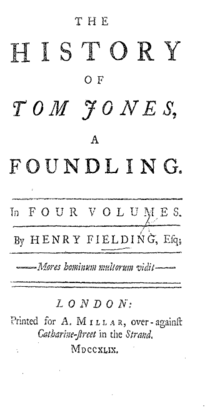
Tom Jones Original CoverPartridge tries to talk Tom in to returning home, rather than getting further inolved with the military. That doesn’t go well at all, and the two start to bicker, when Tom finds the Muff, recognizes it and suddenly can only care aonly about it. He tries to set out to track Sophia down.

And, yeah, Mrs. Fitzpatrick was, after all, probably at the Inn—just not the woman that Tom was found with, and is already on the road. The coach that had likely brought Mrs. Fitzpatrick to the end is described:

The Coach which had brought the young Lady and her Maid, and which, perhaps, the Reader may have hitherto concluded was her own, was, indeed, a returned Coach belonging to Mr King, of Bath, one of the worthiest and honestest Men that ever dealt in Horse-flesh, and whose Coaches we heartily recommend to all our Readers who travel that Road. By which Means they may, perhaps, have the Pleasure of riding in the very Coach, and being driven by the very Coachman, that is recorded in this History.

According the footnotes in my edition, this was an actual business, making this appear to be one of the earliest examples of product placement?

Chapter vi ends with:

Here, Reader, it may be necessary to acquaint thee with some Matters, which, if thou dost know already, thou art wiser than I take thee to be. And this Information thou shalt receive in the next Chapter.

This is one of my all-time favorite chapter endings. I love it when Fielding narrates his narration like this. It’s the simple things in life, right?

The next chapter is such the comedy of errors, mistaken identities, mistaken motives, wild accusations, and general running about that I can’t summarize it well—I’d really have to just reprint the whole chapter. Suffice it to say that Squire Western is a couple of hours behind Sophia, and is still no friend of Tom’s. Oh, and Mrs. Fitzpatrick is the cousin of Sophia.

We then get flashback chapters, detailing how Sophia ran away from her home, and how her father reacted (hint: poorly) upon discovering it—oddly, her aunt defended her actions. Naturally, Fielding uses the chance to indulge his weakness for the young lady,

It is now Time to look after Sophia; whom the Reader, if he lovers half as well as I do, will rejoice to find escaped from the Clutches of her passionate Father, and from those of her dispassionate Lover.

We get a beginning of a Book digression—this one into a harangue against literary critics, who are nothing more than slanderers, attacking an author when they attack a book—

for, as no one can call another Bastard, without calling the Mother a Whore, so neither can any one give the Names of sad Stuff, horrid Nonsense, &c., to a Book, without calling the Author a Blockhead; which, though in a moral Sense it is a preferable Appellation to that of Villain, is perhaps rather more injurious to his worldly Interest.

(as much as I quibble with his argument, I enjoyed it)

Then we resume with Sophia’s journey after her close miss with Tom, she, her maid, and their guide rush toward London, and soon discover they’re being followed (unintentionally). It turns out that they’re being followed by none other than Sophia’s cousin, Mrs. Fitzpatrick. They had been very close not that long ago and decide to travel together. But are both so tired after their last couple of days that they don’t talk much, and resolve to keep their stories until they’ve had a chance to sleep. They get to an inn, and collapse almost immediately, so we’ll get to see them catch up with each other next week.

Some of this was just a bit too busy for my taste. I prefer Fielding a bit more streamlined, but overall, this was eventful, fun and should prove to make life interesting in the chapters to come.

Page 328 of 614

Powered by WordPress & Theme by Anders Norén