Author: HCNewton Page 329 of 614

The Friday 56 for 8/7/20

The Friday 56This is a weekly bloghop hosted by Freda’s Voice

RULES:
The Friday 56 Grab a book, any book.
The Friday 56 Turn to Page 56 or 56% on your ereader. If you have to improvise, that is okay.
The Friday 56 Find a snippet, short and sweet.
The Friday 56 Post it

from page 56 of:
The Revelators

by Ace Atkins

(a rare lighter moment in this book)

“How you feeling, brother?” Donnie said.

“Might ask you the same.”

“Nobody’s been shooting at me,” Donnie said. “Not in a long while.”

“Those Cartel boys got you pretty good,” Quinn said. “You’re lucky they didn’t kill you.”

“Takes a lot more to kill ole Donnie Vamer,” he said, grinning. “You see that woman I was just talking to? That’s damn Rita Wright, Pat Wright’s little sister. She wasn’t nothing but a kid when I left. But damn, she ain’t a kid no more. That little yellow dress about busting at the seams.”

“You’re too old for Rita Wright,” Quinn said.“You forget we’re the exact same age.”

“Nope,” Donnie said. “I’m six months older. And six months smarter. I rode a bike, drove a car, and got nekkid with a woman long before you and Boom. Y’all can deny it all you want. But those are some braggin’ rights, son.”

Betty by Tiffany McDaniel: A Beautiful Novel about a Tragic Childhood

Betty

Betty

by Tiffany McDaniel

eARC, 480 pg.
Knopf, 2020

Read: July 25-28, 2020
Grab a copy from your local indie bookstore!


I’ve struggled with this one for days now and was tempted to say something like, “It’s a Tiffany McDaniel book. This means the writing is gorgeous, the subject will provoke you, you will be moved. And did I mention it’s wonderfully written?” But I knew I couldn’t post that…it doesn’t actually tell you anything about this book (“Tiffany McDaniel” and “gorgeous writing” is essentially a tautology) and since when do I express myself in twenty-seven words?

Who’s Betty About?

Yeah, I normally ask what a book is about, but the what is so unimportant in this book a reader could be excused for not remembering. You won’t forget the who anytime soon. The who is what matters.

It’s about a young, poor family’s struggles between 1939 and 1973—with a focus on 1961-73 (when Betty was 7-19) when the family settles in Appalachian Ohio (and largely stays there). The father is of Cherokee descent (Tsa-la-gi. A-vn-da-di-s-di), the mother is white—and you can imagine how easy life was for them and their children in that time (harder for Betty who takes more after her Cherokee lineage, while her siblings favor their mother). While none of the children has an easy life, there’s a greater degree of difficulty of Betty.

I could spend a good deal of time talking about various family members, but I’m going to focus on two of them.

Landon Carpenter (a.k.a. “Dad”)

When Landon Carpenter met Alka Lark, he was working as a gravedigger, he later worked at a clothespin factory—and then several other jobs, including a stint in a coal mine (which left him with a permanent limp due to a beating given by racists), while the family moved from state to state. When they settled in Breathed, Ohio*, he became known for selling moonshine, herbal remedies (based on “Cherokee wisdom” that was essentially what he happened to make up on the spot), and hand-crafting furniture.

* A fictional city that also served as the setting for The Summer that Melted Everything—one of several nods to that work included here.

But really, what he does with his time is father his children and try to take care of his wife. They don’t all appreciate it, or understand what he’s doing, but they’re (largely) devoted anyway. He will be frequently found passing on a bit of received knowledge through myths or parable form. He wasn’t ready to be a father when he became one and two decades later, he still wasn’t entirely ready when Betty arrived (or her younger siblings, either), but he rises to the occasion as best as he can. I don’t get the picture that he’s the easiest guy to get to know or get along with for prolonged periods. But for those who do get to know him, he’s clearly a loyal and supportive friend.

Betty (a.k.a. “Little Indian”)

Either as a quirk of personality or because she’s physically closer to her Cherokee heritage (likely a combination), Betty embraces the cultural lessons her father passes down more readily than her siblings do—and always wants more. She’s naive, inquisitive, and somehow despite everything she witnesses innocent and optimistic (not precisely, but that’s the best word I can come up with). Life hands her horrible experience after horrible experience, and while momentarily cowed, she comes back, wiser, but still innocent. Toward the end of the book, she has a couple of experiences (one thing she’s told about, one thing she witnesses) that drive her to the breaking point—but even then she holds on for a little longer.

She’s our Point of View character and doesn’t understand everything that’s going on around her for most of the book—things really kick off when she’s seven, after all. So we see a lot of the book through unreliable eyes, but very reliable emotions and reactions. From the latter, we can get a good understanding of what’s going on, better than she can.

The Magic (for lack of a better word)

In McDaniel’s The Summer that Melted Everything, many things happen that may be supernatural or magical in origin, there’s a semi-magical realism feel to it. That’s not the case here. Nor is the source of the “magic” in this novel one mysterious stranger.

The power that keeps Dad and Betty—and the rest of the family—going comes from story. Dad’s constantly telling stories to his children, Betty in particular—and, we learn, he even tells stories to his friends (I don’t think Landon’s wife has much patience for many such stories, as much as she needs them). Betty typically doesn’t tell her stories to anyone, but she writes them down, filling notebooks with them. Some she keeps, some she buries (to preserve or to hid), some she gives away. By their use of story—sometimes use of words—Dad and betty keep themselves, and those around them, going. They inspire, encourage, and teach with them.

A story that Betty’s mother tells her is arguably the most powerful story in the novel—and it explains more of the novel than anything else. Her story, is wholly true, and wholly heartbreaking, but even that comes down to the power of storytelling.

Drawbacks to the book

I don’t really want to label these as problems with the book, but there are a few things that keep me from being as enthusiastic about Betty as I was for The Summer that Melted Everything (which I am enthusiastic about to this day). I basically proselytized readers over that book, I won’t go that overboard for this.

The first is that it took me far longer than it should have to get what McDaniel was trying to accomplish, I kept waiting for a plot to emerge, and there’s never much of one by design. Instead, as I indicated above, this is about the characters. Growing, developing, faltering, stumbling, and retreating. It’s about how they react to the events (or non-events) in their lives that matters, now the events themselves. It’s entirely possible that this is all me and not the text. But I don’t think that’s the case (or I wouldn’t have gone on about it).

Secondly, the non-Carpenter characters. With two notable exceptions (the town Doctor who comes running when they call; and a friend of Landon’s who rents them the house they settle in. But the rest of the people (almost without exception), are simply horrible. Some of the Carpenters are okay, and most of them demonstrate growth (at least). But everyone else is horrible, blatantly so…so many people in authority of varying degrees are just horrible, spiteful, evil people. And it’s just hard to read that. I firmly believe in man’s inhumanity to man, but it’s usually tempered, at least on the surface/occasionally, with something positive. We aren’t given anything to look to and say, “Hey, there’s someone decent”, or “There’s someone doing something decent. Spiteful, racist, ignorant, misogynous, capricious, and evil. Those are the words that come to mind as I think about the non-Carpenter characters, and it’s just hard to read them.

So, what did I think about Betty?

I started off liking it, and that feeling slowly grew. There weren’t many moments that wow’ed me, but there were a handful that broke my heart. I sincerely want another 50 pages of the Dad’s odd little myths (some of which, I’m pretty sure contradict themselves, which Betty sees and rolls with). I wanted to help Betty through her challenges, to at least shoulder some of her burden with her.

And did I mention the prose is fantastic?

That said, I don’t think I connected with the characters (particularly those who aren’t Dad or Betty) the way McDaniel wanted me to. I don’t think there’s enough going on to urge people to read this, but I will recommend it strongly. That said, I think I will be in the minority with this book and most readers won’t understand my hesitation to rave over this. I do recommend this book, I do plan on re-reading it in a year or two, and I will be first in line for McDaniel’s next book.

Disclaimer: I received this eARC from Knopf Doubleday Publishing Group via NetGalley in exchange for this post—thanks to both for this. I also want to thank McDaniel for approaching me to let me know it was available for request. None of the above kept me from giving my honest opinion.


4 Stars
20 Books of Summer

This post contains an affiliate link. If you purchase from it, I will get a small commission at no additional cost to you. As always, opinions are my own.

WWW Wednesday, August 5, 2020

Technical difficulties (and lethargy) kept me from this post last week, but I’m back, online, and caffeinated, so let’s break out the WWW Wednesday!

This meme was formerly hosted by MizB at A Daily Rhythm and revived on Taking on a World of Words—and shown to me by Aurore-Anne-Chehoke at Diary-of-a-black-city-girl.

The Three Ws are:

What are you currently reading?
What did you recently finish reading?
What do you think you’ll read next?

Easy enough, right?
What are you currently reading?
I’m reading The Revelators by Ace Atkins and am listening to Deadly Assessments by Drew Hayes, Kirby Heyborne (Narrator).

The RevelatorsBlank SpaceDeadly Assessments

What did you recently finish reading?
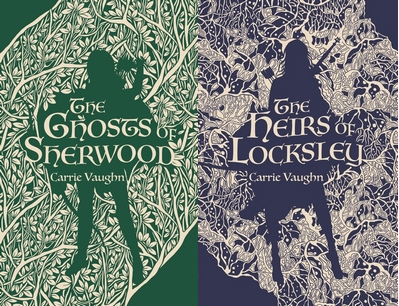
I just finished Carrie Vaughn’s The Heirs of Locksley and The Answer Is . . .Reflections on My Life by Alex Trebek, narrated by Ken Jennings and Alex Trebek on audio.

The Heirs of LocksleyBlank SpaceThe Answer Is

What do you think you’ll read next?
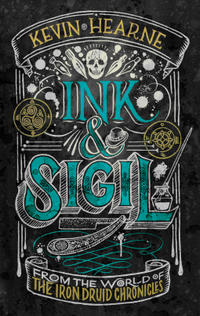
My next book should be the Iron Druid Chronicles spin-off, Ink and Sigil by Kevin Hearne and some sort of audiobook, I’m not sure what–we’ll see what the Library has to offer.

Ink and Sigil

Hit me with your Three W’s in the comments! (no, really, do it!)

The Heirs of Locksley by Carrie Vaughn: Robin’s Kids Go Looking for Fun and Find Trouble Again

The Heirs of Locksley

The Heirs of Locksley

by Carrie Vaughn
Series: The Locksley Chronicles, #2

Kindle Edition, 128 pg.
Tor.com, 2020

Read: August 4, 2020
Grab a copy from your local indie bookstore!

“Well,” Marian said calmly. “Perhaps they found an adventure.”

“Marian, they were supposed to be nothing like me. They were supposed to be sensible and quiet and not at all prone to adventures.”

“Hmm,” she said, refusing to state any opinion about what Robin’s children were meant to be like. If they were wild, she’d blame Sherwood Forest before she blamed Robin. Something about that place got into one’s bones and made one rash.

What’s The Heirs of Locksley About?

It’s about four years after the events of The Ghosts of Sherwood, King John is dead and the Locksley’s are at the coronation of his son, King Henry III.

Robin pushes his son John into taking care of some of the courtly duties as his heir (also, he’s the Locksley without any political baggage). His sisters accompany him to meet the new king, one thing leads to another, and Henry calls for an archery competition to see them at work.

The Locksleys being the Locksleys, trouble follows them—some comes at the competition, some comes later. Basically (like their father), the children go looking for fun, and adventure ensues—maybe it is Sherwood’s fault.

“So what did you think would happen, coming here? Knowing who their father is?”

[Redacted] was trapped. He had the look of a hound who had cornered a boar all by himself and then didn’t know what to do with it. “Those . . . They’re just stories. You aren’t him, not really.”

“No, of course not. That man lived a long time ago,” Robin murmured. “I am much angrier right now than he ever was.”

You can just see the glint in his eye as he said that…(and the way he laughed about that line when recounting this over the fire).

So, what did I think about The Heirs of Locksley?

Like its predecessor, this is a quick read. A fun read—it feels like one more entry in a long-running series, not just the second. We’ve only got to spend roughly 250 pages with these three and they already feel like old friends.

Vaughn tapped into something here and I’m so glad she did. In the afterword, she writes:

What makes a good Robin Hood story?

Adventure. Charm. Good people we like looking out for each other— it’s not enough to have a story about Robin Hood. He needs all his friends around him, and they need to be witty and skilled and admirable. Archery, of course we need archery. Clint Barton and Katniss Everdeen insist that we still need archery even in this modern day. And Robin needs to help people. He needs to denounce corruption and tyranny. He rebels and resists.

From where I sit, that’s exactly what Vaughn delivered. Most modern retellings (on-screen or in print) seem to miss the charm and witty parts in the gritty reboots—but Vaughn kept them.

I know it’s a duology, but I’d buy more—either the further adventures of the heirs or if she wanted to go back and tell some of Robin’s adventures.


4 Stars

This post contains an affiliate link. If you purchase from it, I will get a small commission at no additional cost to you. As always, opinions are my own.

BOOK SPOTLIGHT: Adventure by Chicken Bus by Janet LoSole

I just don’t have time to read every book that comes my way, but I’d like to do my part to expose them to as many eyeballs as I can. So, from time to time, I’ll post a Spotlight to lend a hand. If this looks like it’s up your ally, you should jump on it.


Book Details:

Book Title: Adventure by Chicken Bus: An Unschooling Odyssey through Central America by Janet LoSole
Release date: December 11, 2019
Format: Paperback/Ebook
Length: 226 pages
Publisher: Resource Publications, an imprint of Wipf & Stock

Book Blurb:

Embarking on a homeschooling field trip to Central America is stressful enough, but add in perilous bridge crossings, trips to the hospital, and a lack of women’s underwear, and you have the makings of an Adventure by Chicken Bus…a tale of one family, buckling under a mountain of debt, who sells all worldly possessions and hits the road.

Adventure by Chicken Bus demonstrates how to travel sustainably, but more importantly, how to nurture the next generation of environmentalists and social justice activists by exposing them to the conditions faced by those in the developing world.

From a remote monkey sanctuary tucked into an enclave on the Panama-Costa Rica frontier to the overdeveloped beaches of the Mayan Riviera, we endure chaotic border crossings, infections and injuries, learn about the history of the civil war in Nicaragua, visit UNESCO heritage sites, and hike the ancient Mayan temples of Tikal in Guatemala.

For the sake of safety, we plan our route down to the kilometer, navigating the region by chicken bus, an eye-opening mode of public transportation ubiquitous in the developing world. Along the way we re-connect with each other, re-kindle our commitment to the environment, recognize the privilege into which we were born, and become compassionate global citizens.

About the Author:

Janet LoSoleJanet LoSole is a freelance writer living in Ontario, Canada. She holds a Bachelor of Arts Degree in French Linguistics from York University in Toronto and a Bachelor of Education Degree from Nipissing University. She is a certified TESOL instructor and has taught ESL internationally since 1994. She began homeschooling her daughters in 1997. She writes about traveling with children and homeschooling. Her work has been published in: Canada’s Education Magazine, Natural Parent Magazine, The Alliance for Self-Directed Education, Outdoor Families Online, Unravel, and elsewhere.

Social Media

Twitter ~ Instagram

Purchase Links

Amazon ~ Amazon.Ca ~ ~ Wipf and Stock ~ Barnes & Noble

Top 5 Tuesday – Top 5 books where something went wrong


Top 5 Tuesday has a new host, and a new slate of topics—I think I can have some fun with these next few.

This week’s topic is, “Top 5 books where something went wrong.” Now, really, what story doesn’t involve something going wrong?* At best, it’s a book about something that went wrong before it started and the protagonists are trying to set it right, or at least make things better. But pretty much every book focuses on things going wrong. It’s just a matter of how often and how wrong things go. Still, when you read the topic, you have a pretty good idea what’s meant, right?

This was a hard list to whittle down—a Top 15 would’ve been easier than Top 5, but I think I’ve got a good, eclectic, group. To make things a little more challenging for myself, I didn’t choose any book I’ve read this year (that also will prevent recency bias). Shall we see what I came up with?

* I’m tempted to make a theological point here, but I’ll restrain myself.

5 The Freedom Broker
The Freedom Broker by K. J. Howe

I’m not sure why, this one was the second title that jumped to mind when I started thinking about the topic. I remembered few of the details without my post to jog my memory. But it works pretty well, Thea Paris is in private security, with a specialty in K&R (Kidnapping and Ransom)—both the negotiation side, and (when that fails) the rescue teams. She’s one of the best around.

Until her super-rich father is kidnapped, and everything starts going wrong. I described Howe’s writing as: an “everything including the kitchen sink” approach to story telling—the number of things that go wrong during Thea’s search for her father, and the number of opponents and obstacles in her way is seemingly endless. I love it, every time you think she’s on a roll and things are going to start going her way, a problem that the reader should’ve seen coming (but almost never does) shows up to derail things again.

4 All Our Wrong Todays
All Our Wrong Todays by Elan Mastai

Since I read this book, it may be the one I’ve most frequently recommended to people who ask for a recommendation. 2016 is the future that 1950’s Sci-Fi promised, peace, prosperity, flying cars, all that. Until the day the first time machine was turned on and something went wrong. History was re-written and what resulted is the (relative) dystopia that was 2016 (who knows what Mastai would’ve had his protagonist think of 2020). The only person that knew this was the first time traveler.

What happens next is a series of attempts—and failures, so, so many failures—to restore the timeline. It’s such a great read. I should probably schedule a re-read, come to think of it.

(My original post about the book)

3 Mechanical Failure
Mechanical Failure by Joe Zieja

It’s right there in the title, right? Any of the Epic Failure trilogy would’ve fit, but the first seems to feature more failures—from the Droid who can’t swear to the retired engineer who tried to be a pirate—and his failure ended up getting him re-enlisted and promoted, and promoted and promoted again after repeated failures. People are assigned to the wrong stations on board the (appropriately named) Flagship, every device malfunctions, battle droids don’t function appropriately, and so on.

(My original post about the book)

2 The Cartel
The Cartel by Don Winslow

What doesn’t go wrong in this book? You’ve got a prisonbreak, freeing the head of the biggest Cartel in Mexico—if only so he can wage war to stay the largest. You’ve got corruption at every level of the War on Drugs (on both sides of the border). You have new gangs rising to prominence, mostly due to bloodshed. You have more and more money coming into the cartels and more competition for that money. You have journalists, politicians, doctors, cops trying to do the right thing and being hunted, shot, and/or killed for it. I can’t think of anything that goes right in this book—at least not for very long.

1 The Martian
The Martian by Andy Weir

Mark Watney finds ways to snatch defeat from the jaws of victory time after time after time. The strength of this book is that it’s about problem-solving your way out of those defeats, but from the first page (moments before the first page, technically) until the very end—things go wrong for Watney, giving him plenty of opportunities to exercise his problem-solving ability.

This is the first book I thought of when I saw the prompt, and it’s probably the best example on my shelves of it.

(My original post about the book)

The Silence by Luca Veste: A Chilling Look at Spiraling Consequences of One Fatal Night

The Silence

The Silence

by Luca Veste

eARC, 400 pg.
Sourcebooks Landmark, 2020

Read: July 17-20, 2020
Grab a copy from your local indie bookstore!


This is one of those thrillers where it feels like if you say anything, you’ll ruin something. But, I’ve got to try (if only for the sake of my NetGally Feedback Ratio).

What’s The Silence About?

I’m going to borrow the blurb, because if that says too much, it’s on Sourcebooks, not me.

It was supposed to be our last weekend away as friends, before marriage and respectability beckoned. But what happened that Saturday changed everything.

We killed a stranger and covered it up.

In the middle of the night, someone died.

We didn’t know our victim was a serial killer.

The six of us promised each other we would not tell anyone about the body we buried.

But now the pact has been broken.

We don’t think he was working alone.

And the killing has started again …

The year following the killing of the serial killer was not easy on these six friends, the toll on them all is great. Then when the killing starts again, it’s even worse, the fragile hold that Matt (the narrator) has on his life and mental health is about to shatter. Sone of his friends are doing somewhat better, while others…well, you should read that for yourself.

While we what happens to these six around the one-year anniversary we get some quick glimpses at some of the formative experiences they shared through childhood, adolescence, and university that shaped who they are and how they reacted to the present crisis.

What can I talk about?

That borders on too much about the plot, and I really don’t think I can talk much about the characters for the same reason—almost everything we learn about them is tied to the story.

Let’s focus instead on the feel of the book, the atmosphere. Wow. The opening pages are upbeat, joyful—but you can tell that won’t last for long (and not just because you’ve read the blurb). Then it gets bad, and worse, and worse yet. And you can’t look away—like the proverbial car wreck you see coming. Not only can you not look away, you have to see more, you have to keep turning the pages to see just what kind of damage will be done. How these lives will be further shattered.

It’s horrible. It’s tragic. It’s compelling.

So, what did I think about The Silence?

I don’t know that I can honestly say that I enjoyed this book—I don’t think anyone can. It’s not that kind of book. It’s a serial killer novel like you’ve never read before. If for no other reason than the focus isn’t on the killer or the hunt for the killer. It’s about the victims, prospective victims, and those that are left behind. It’s about seeing the ripple effects of trauma.

It’s a great experience. An intense read. This will be lurking in my subconscious for a while. Veste tapped into something here, and you’ve gotta try it.

Disclaimer: I received this eARC from Sourcebooks Landmark via NetGalley in exchange for this post—thanks to both for this.


4 Stars

This post contains an affiliate link. If you purchase from it, I will get a small commission at no additional cost to you. As always, opinions are my own.
Catch-Up Quick Takes Timeless; Point Blank; Smarter Faster Better; Heartburn; In Plain Sight; Wonder Woman: Tempest Tossed; The Bitterroots

The point of these quick takes post to catch up on my “To Write About” stack—emphasizing pithiness, not thoroughness. Half of this particular group bothers me to include here, but I’m afraid I’m about to lose track of them. The other half? Well, I might have trouble coming up with enough to talk about even in this format.

Timeless

Timeless

by Gail Carriger, Emily Gray (Narrator)
Series: The Parasol Protectorate, #5
Unabridged Audiobook, 11 hrs., 25 mins.
Hachette Audio, 2012
Read: May 13-18, 2020
Grab a copy from your local indie bookstore!

(the official blurb)
I won’t deny that there were a couple of moments that had me on the edge of my seat, but overall this concluding novel felt like a letdown. There was just a lot of treading water going on, the plot just wouldn’t move for ages, it seemed.

An audiobook narrated by Emily Gray Unabridged Audiobooks a multitude of shortcomings, however. She’s just so much fun to listen to.

I’m glad I listened to this series, but I’m also glad that I’m done. It started strong, but over the course of the series, it kept getting weaker and weaker. A fun mash-up of Urban Fantasy and Victorian Steampunk, but ultimately unsatisfying.
3 Stars

Point Blank

Point Blank

by Anthony Horowitz, Simon Prebble (Narrator)
Series: Alex Rider, #2
Unabridged Audiobook, 5 hrs., 42 min.
Recorded Books, 2013
Read: May 29, 2020
Grab a copy from your local indie bookstore!

(the official blurb)
Alex Rider is back with another dose of escapist spy fiction for the MG set. It’s fun, but disposable. It’s the audiobook equivalent of NCIS, an entertaining way to spend some time, but that’s about it. I liked what Horowitz did with his character and I appreciated the growth in Alex.

This time, Alex is sent to an exclusive private school in the guise of a child of a rich and powerful man. Two similar fathers, from different parts of the world, with sons at this school, had recently been assassinated and M16 wants to get to the bottom of it.

Prebble did a fine job with the narration, I hope he continues.

This was clever and pretty exciting, I hope the series continues in this veinI can absolutely see why my son tore through them (and re-read them, probably the only things he re-read). I’ll be back for more (just wish I’d made myself do this back when he was reading them).
3 Stars

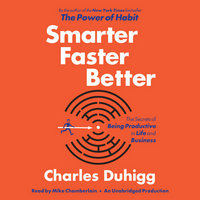
Smarter Faster Better

Smarter Faster Better: The Secrets of Being Productive in Life and Business

by Charles Duhigg, Mike Chamberlain (Narrator)
Unabridged Audiobook, 10 hrs., 23 min.
Random House Audio, 2016
Read: July 2-6, 2020
Grab a copy from your local indie bookstore!

(the official blurb)
My chief complaint about Duhigg’s book, The Power of Habit, was that I expected something the reader could use for themselves. This isn’t as easy to apply as you might want, but it’s clearly written with an eye for the reader not just to understand the principles of efficiency and productivity, but to show some ways to bring the lessons home.

That said, it’s not a how-to book, it’s not self-improvement, it’s largely about the science/study/understanding of productivity. I found it just as fascinating as the last book, and can see where it’d be a useful guidebook for people in some sort of position of authority in an organization.

Duhigg also shows us his process while illustrating his own application of the book’s lessonswhich I really enjoyed.

I’m absolutely on board for whatever book Duhigg puts out next, Chamberlain is a great narrator for his material, too.
3.5 Stars

Heartburn

Heartburn

by Nora Ephron, Meryl Streep (Narrator)
Unabridged Audiobook, 5 hrs., 30 min.
Random House Audio, 2013
Read: July 7, 2020
Grab a copy from your local indie bookstore!

(the official blurb)
A very pregnant cookbook writer/TV host/new mom’s marriage crumbles around her, as she attempts to salvage it, protect her children, and make a way for herself in the world. Really, she’s trying to do it all, and do it well. (that’s a lousy summary, just click the link above, will ya?)

The narrator? This Meryl Streep person? I tell you what, I think she’s going placesthere’s something special about her performance. Seriously, she did a great job, no surprise there.

Nor is it a surprise that Ephron can write a clever little book. I’m a long-time fan, I knew I should’ve picked this up when it was released. I don’t know that it’s necessarily deep, or that you walk away with new insight into the human condition, marriage, or love. But it was funny, it felt honest and real, and you get caught up in the life of Rachel Samstat right away. Solidly entertaining.
3.5 Stars

In Plain Sight

In Plain Sight

by C. J. Box, David Chandler (Narrator)
Series: Joe Pickett, #6
Unabridged Audiobook, 8 hrs., 23 min.
Recorded Books, 2008
Read: July 22-24, 2020
Grab a copy from your local indie bookstore!

(the official blurb)
So this is all about chickens coming home to roostalmost everything that happened in this novel ties into one or more of the previous novels. And never the fun stuff from those novels. There’s the marital issues we got a glimpse at since Day 1 (and getting worse all the timeespecially in the last book), the dead former Sheriff, the new Sheriff and his issues with Joe, Joe’s new bossand more that I will just gloss over and let you read.

There’s a truly disturbing secret unearthed that really sheds light on so much of what happened in the book, most authors would’ve spent a lot more time on it than Box did here, he just let it be something that happened on the way to the major showdown. I like that he did it, but also kind of wish he’d given us a little more about it.

I did like the new governor and hope we get to see him again. (I especially like the fact that he’s a fictional politician and governs a neighboring state, not my own, I don’t even think I could enjoy him as a fictional Idaho governor).

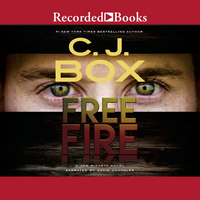
There’s a lot left hanging at the close of this novel, I know the series continues (for many, many books to come), but I really have no idea what it’ll look like when I come back for Free Fire. Joe will be different, too, no matter what the circumstances around him are like. I assume Box is going to address it and I’m very curious about it.
3 Stars

Wonder Woman: Tempest Tossed

Wonder Woman: Tempest Tossed

by Laurie Halse Anderson, Leila del Duca (Art)
Paperback, 208 pg.
DC Comics, 2020
Read: July 25, 2020
Grab a copy from your local indie bookstore!

(the official blurb)
I really didn’t need this book, Leigh Bardugo’s YA retelling of Wonder Woman’s origin was good enough, and superior to this one. But I’d read some largely positive reviews and decided to give it a shot.

It felt less like a Wonder Woman story, and more like Anderson wanted to find a way to talk about certain issues and shoved Diana into the necessary circumstances and then shaped the character around that, rather than making it feel organic and earned. Also, there was too much left unexplained. There was so much I didn’t understand about what was going on with Diana on the Themyscira and physically that it felt more like Anderson dropped the ball and less like she was being understated.

It wasn’t bad, but it sure wasn’t good.
2 1/2 Stars

The Bitterroots

The Bitterroots

by C. J. Box, Christina Delaine (Narrator)
Series: The Highway Quartet, #5
Unabridged Audiobook, 9 hrs., 49 min.
Macmillan Audio, 2019
Read: July 30-31, 2020
Grab a copy from your local indie bookstore!

(the official blurb)
Cassie’s done with law enforcement (but like Harry Bosch, will always think like a cop), and is making a living as a PI. A blast from the past calls in a favor owed and hires her to do some work as an investigator for the defense in a criminal proceeding. Cassie hates the idea in general, and loathes it in particularthe client is clearly guilty. Clearly guilty of raping his teenage niece, no less. He’s also a highly unpleasant personshe wouldn’t want to work for him even before the rape charge. But a debt’s a debt, and she figures she’ll find enough evidence to get him to switch his plea to guilty and work out a deal.

Readers/Listeners know all too well that the clearly guilty part guarantees that Cassie will eat some crow on this point, but that’s for later.

So Cassie travels to the very small town in northern Montana where the crime took place and the client’s estranged family runs everything from their ranch to the school board and all things in betweenincluding the Sheriff’s Office and Courts. Things do not go well for her and her investigationwhich just makes her think there’s something for her to find to help the client after all.

I definitely listened to this too soon after In Plain Sight, one of the themes of it is repeated herenot something I’d have noticed (at least not as much) if a few more weeks had passed.

Box ultimately won me over, but I came close to DNFing this a time or two, and I really didn’t enjoy most of the book. It was just a little heavy-handed, and the tie-in to a prior nemesis really didn’t work for me at all (and I’m not sure the introduction of the tie-in works now that I’ve seen where Box was taking itit’s too complicated to explain, especially for this post, let’s just say I didn’t like it). But by the end, I liked what Cassie got up to and how she handled herselfand I like the way that Box dealt with the climax and denouementboth were really strong (and semi-unexpected).
3 Stars

2020 Library Love Challenge
This post contains affiliate links. If you purchase from any of them, I will get a small commission at no additional cost to you. As always, opinions are my own.

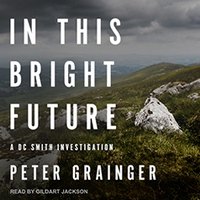
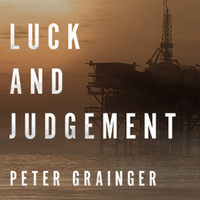
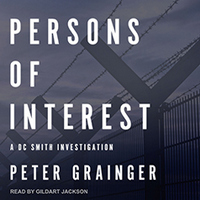
Luck and Judgement (Audiobook) by Peter Grainger, Gildart Jackson: Death at Sea, Corruption and Destruction on Land

Luck and Judgement

Luck and Judgement

Peter Grainger, Gildart Jackson (Narrator)
Series: A DC Smith Investigation, #2

Unabridged Audiobook, 11 hrs., 57 min.
Tantor Audio, 2016

Read: June 10-12, 2020
Grab a copy from your local indie bookstore!

…this was, when you thought about it, typical of the places that Smith brought you to, of the situations that you could find yourselves in when working with him…He had these ideas which somehow seemed to be more than hunches and a way of making things happen before you realized it. Half suggestions would have momentum before you could blink.

I’ve said it before, and I’ll keep saying it until it’s no longer true* but there’s a certain magic, an ineffable alchemy about Jackson narrating Grainger’s work. It’s just fantastic, I think I’d have liked these audiobooks with another narrator (or in print), but I don’t think I’d have liked them as much. I’ve enjoyed Jackson’s narration before, but it was (no offense intended) good, not great. But you put the two of them together? It’s fantastic.

* I expect that will be roughly the time that one of them retires.

The downside here is, that I don’t have a lot to say beyond that. And it kind of drives me crazy. I made a couple of notes, but I’ve misplaced them (which is pretty annoying).

What’s Luck and Judgement About?

We start off with Smith and Waters taking a helicopter to an oil rig with some other police to investigate a death/missing person (the helicopter rides inject a much-needed bit of levity to keep the beginning of this novel from being too dark). Smith and Waters are really along for the ride, most of the work will be done by the others, but the victim was in Smith’s jurisdiction—as it the rig. Or close enough, so they have to come along.

The higher-ups and the executives on the rig are willing to write it up as a suicide, but are leaning on an unfortunate accident as the explanation. Smith, shockingly, isn’t convinced. Suicide seems unlikely for several reasons, and one would have to work really hard to get around all the safety measures, guard rails, fences, gates, and whatnot in order to have an unfortunate accident. It makes him no friends, but Smith is convinced (and is more so by the hour) that this is a homicide.

As bad as it is for the victim, their suffering is over—but for their survivors, the crime (if there was one) will affect their lives for years to come. In this case, we’re talking about his wife and a small child. They didn’t have a lot of money coming in before his death, but now, there’s nothing. A small apartment, little financial security, and nothing else. Without becoming maudlin, or focusing on them too much, Grainger does allow us to see how these events will alter their lives and what the future may hold for them. We got a little bit of that in the previous novels, but it plays a larger role this time. It’s a small thing, but one that’s too often over-looked in Crime Fiction.

There’s a new detective on the team, a transfer, and one that Smith has a hard time relating to—he’s trying to be cautious and make sure she’s acclimating. At the same time, he’s worried that he’s not using her, and that the best way to get her acclimated is to throw her in. With the rest of the detectives (including those he doesn’t appreciate), you don’t see him uncertain or reflective. So watching Smith trying to figure out how to manage someone is a new side to him.

That same detective plays a role in an undercover operation that Smith undertakes to follow a lead—it’s possibly the most comedic part of the series to date—while not really being that funny at all. Judge for yourself.

As much as Smith’s hunches, his intuition, might start his team down a road, or help him to see a connection that others miss, once he makes that intuitive leap to start an investigation, procedure takes over. I can’t think of another “police procedural” where the procedure is as effective as it is in these books. Smith and the team (mostly the team) grind and grind and grind, doggedly going through all the steps before them, and it pays off—at least to a degree. I really respect that as a narrative choice—sure, Smith’s (or someone else’s) intuition (experience guided by intelligence, as Nero Wolfe would put it) will sometimes help set the direction, but it’s legwork that gets it done.

What’s Going On Other than the Main Case?

Smith continues to work with the True Crime writer on that previous case of his, and a friendship develops between the two As an ongoing arc, this is a real slow burn, and I’m enjoying it, as much as I don’t understand what Grainger is up to. I’m assuming instead of a B (or C) story, this will eventually become the A story for a novel—maybe the last in the series? But unless this is just going to demonstrate that Smith’s biggest case ever was his biggest failure and he’s going to have to find the real killer now, I’m not sure I see how.*

* Okay, I just came up with a half-baked idea where it would work, but I’ll hold off on that idea until it can get solidified.

Lastly, it’s time for Smith to be recertified as physically fit to carry on his duties. He’s missed two previous opportunities to qualify and he has no choice but to show up for this one. It feels pretty personal, the DCI who’s had it in for him since before the series started seems to be using this to force him out. The reasons he missed the previous two are legitimate reasons, and the DCI just looks petty for forcing his hand like this. But then when doesn’t this guy look petty? In the last book, he tried to get Smith to transfer to another office, and that didn’t work, so this is his new attempt. It’s short-sighted and small-minded to force Smith out, but the dies have been cast. While the new assignment was being dangled in front of Smith, a private-sector job was also offered—the lengths (the questionable, reckless, and likely illegal) that Smith goes go to pass this test demonstrates how un-tempting he actually found the offers last time, no matter what he may have thought. Smith loves this kind of police work and will have to be forced into retirement, kicking and screaming.

So, what did I think about Luck and Judgement?

So much for the three paragraphs that I was hoping to come up with for this post, I guess, eh?

I pretty much gave that away in my first paragraph, didn’t I? There is something about the combination of Grainger’s novels and Jackson’s performance that make these books so satisfying. Are they the best written, most exciting and suspenseful Police Procedurals? No. But they are just about the most satisfying, most immersive, most effective that I can think of—even when the ending isn’t what you’d want. There is a strong sense of humanity in these books, not just in the protagonists, but in the victim, the killer, the witnesses, the people who aren’t the killer but who aren’t up to anything legal/moral/ethical…everyone. There’s no one cartoon-y or over the top (in any direction). You just don’t see enough of that.

I was sucked into the intricacies of this case and thoroughly enjoyed spending time with Smith and the rest of the team—and I can’t wait to return to this world.


4 Stars

This post contains an affiliate link. If you purchase from it, I will get a small commission at no additional cost to you. As always, opinions are my own.

July 2020 in Retrospect: What I Read/Listened to/Wrote About

I finished 27 books (okay, fine…26 books and one picture book), with 9,217 pages (800+ of those I’ve been working on for a few months, though) and a 3.85 average rating. That counts as a very good month around here. I didn’t post as many things as I wanted to (I talked a little bit about that this morning), but I liked what I did post. If I only felt free to leave me house, I’d call July a win—a pretty good month, regardless.

So, here’s what happened here in July.
Books Read

Brief Cases The Curator Vagrant Queen
5 Stars 5 Stars 3.5 Stars
Smarter Faster Better Heartburn Elphie Meets the End of The World
3.5 Stars 3.5 Stars/td> 3 Stars
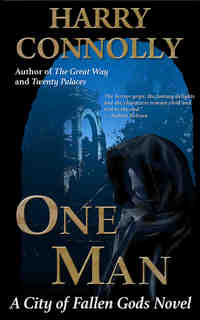
One Man Spells for the Dead I Was Told It Would Get Easier
4 Stars 4 Stars 4 Stars
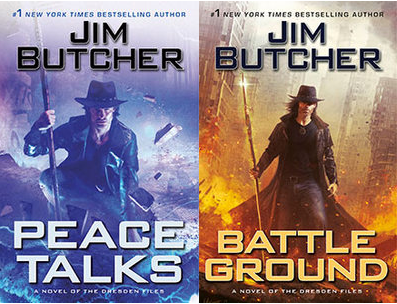
Veloctiy Weapon Peace Talks Firefly The Sting
4 Stars 5 Stars 3.5 Stars
Land of Wolves The Silence Coffee and Condolences
3.5 Stars 4 Stars Still Deciding
The Monster in the Hollows In Plain Sight Legends Rise
3 Stars 3 Stars 3.5 Stars
Wonder Woman: Tempest Tossed Institutes of Christian Religion vol 1 Struck Down But Not Destroyed
2 1/2 Stars 5 Stars 4 Stars
Dark Jenny Betty Early Autumn
4 1/2 Stars 4 Stars 5 Stars
Twenty Palaces The Blues Don’t Care The Bitterroots
4 Stars 3.5 Stars 3 Stars

Still Reading

Tom Jones Original Cover Institutes of Christian Religion vol 2 Blank Space

Ratings

5 Stars 5 2 1/2 Stars 1
4 1/2 Stars 1 2 Stars 0
4 Stars 8 1 1/2 Stars 0
3.5 Stars 8 1 Star 0
3 Stars 4
Average = 3.85

TBR Pile
Mt TBR July 20

Breakdowns
“Traditionally” Published: 19
Self-/Independent Published: 8

Genre This Month Year to Date
Children’s 1 (4%) 3 (2%)
Fantasy 5 (19%) 23 (15%)
General Fiction/ Literature 4 (15%) 12 (8%)
Horror 0 (0%) 0 (0%)
Humor 0 (0%) 1 (1%)
Mystery/ Suspense/ Thriller 7 (26%) 6 (32%)
Non-Fiction 1 (4%) 9 (6%)
Science Fiction 3 (11%) 14 (9%)
Steampunk 0 (0%) 1 (2%)
Theology/ Christian Living 2 (7%) 11 (7%)
Urban Fantasy 4 (15%) 21 (14%)
Western 0 (0%) 0 (0%)

Review-ish Things Posted

Other Things I Wroteotherwriting
Other than the Saturday Miscellanies (4th, 11th, 18th, and 25th), I also wrote:

How was your month?

Page 329 of 614

Powered by WordPress & Theme by Anders Norén