Author: HCNewton Page 384 of 624

Saturday Miscellany—9/28/19

This has been a strange week, I kept running out of steam in the evenings and was honestly and pleasantly surprised to find that I’d played around on social media enough to actually have anything to post today. How I got anything written this week is beyond me. I did do more reading than I expected to—still, I have a need to be reading 5 books right now rather than writing anything (and I don’t mean reading a chapter or two and then switching, I literally mean reading 5 simultaneously). When I say that I overcommitted for Sept./Oct. I really mean it. (and that’s not counting the two books I pre-ordered months ago that arrived in the last 10 days and are sitting ignored on my shelf).

Anyway, I hope you enjoy this list of odds ‘n ends over the week about books and reading that caught my eye—I did:

    A Book-ish Related Podcast Episode you might want to give a listen to:

  • Author Stories’ Episode 724 | Craig Johnson Returns With Land Of Wolves—Hank Garner’s fifth chat with Johnson. Pleasant chat about a great installment in the series (my post about the book will be up soon, I think)

    Among an interesting looking crop the this week’s only New Releases I’m Excited About and/or You’ll Probably See Here Soon is:

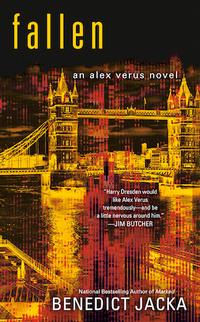
  • Fallen by Benedict Jacka—the tenth in the Alex Verus series is out now, and I’m hoping I can squeeze it in soon. Incidentally, I like the fact that the US covers are starting to be multi-colored. I can’t give an abbreviated single-sentence synopsis, because I like walking into these without any idea what’s going to happen. It’s enough that it’s a new Verus.

Lastly, I’d like to say hi and extend a warm welcome to Aqsa haleem, OwlBeSatReading, and bryan_lunsford for following the blog this week. Don’t be a stranger, and use that comment box, would you?

100 Book Reviews on NetGalley

I just hit the magic 100 on NetGalley!
100 Book Reviews

Phew!

I’m Sorry…Love, Your Husband (Audiobook) by Clint Edwards, Joe Hempel: Would-be Humorous Essays on Marriage, Parenting, and Family

I'm Sorry...Love, Your Husband

I’m Sorry…Love, Your Husband: Honest, Hilarious Stories From a Father of Three Who Made All the Mistakes (and Made up for Them)

by Clint Edwards, Joe Hempel (Narrator)

Unabridged Audiobook, 4 hrs., 42 mins.
Tantor Audio, 2018

Read: September 23, 2019

The “Short Synopsis” for the book is:

In this inspiring and unconventional book of essays, Clint Edwards sheds light on the darker yet hilarious side of domestic life.

Which sounds pretty good, and is what led to my checking this book out. In the same vein, my “Short Response” is: nope.

The “Full Synopsis” is:

Marriage and Kids are No Joke

He may not win Father of the Year, but Clint Edwards has won the hearts of thousands—including the New York Times, Scary Mommy, and Good Morning America—thanks to his candor and irreverence when it comes to raising kids, being married, and learning from his mistakes.

Clint has three children: Tristan (the know it all), Norah (the snarky princess), and Aspen (the worst roommate ever). He describes parenting as “a million different gears turning in a million different directions, all of them covered in sour milk.” In this inspiring and unconventional book of essays, he sheds light on the darker yet hilarious side of domestic life.

Owning up to all his mishaps and dumbassery, Edwards shares essays on just about every topic fellow spouses and parents can appreciate, including: stupid things he’s said to his pregnant wife, the trauma of taking a toddler shopping, revelations on buying a minivan, and the struggle to not fight the nosy neighbor (who is five years old).

Clint’s funny, heartwarming account of the terrifying yet completely rewarding life of a parent is a breath of fresh air. Each essay in I’m Sorry . . . Love, Your Husband will have you thinking finally, someone gets it.

Which brings me to a “Fuller Response” (I’ll keep my “Full Response” up my sleeve). Those of you who are too young to remember the 1991–1999 Prime Time hit, Home Improvement, may not appreciate this, but I kept thinking of it as I listened to this book. In almost every episode, Tim “The Tool Man” Taylor does something that exasperates and/or disappoints his wife, messes things up with his kids or coworkers in the first act (generally it’s family, but occasionally it’s friends/colleagues). Things get worse during Act Two, leading Tim to get some advice from his wise neighbor, Wilson, and then implement this advice to patch things up with whoever he’s in trouble with and become a better father/husband/friend/colleague. Along the way, America laughed at Tim’s foibles and follies—and at some good comedic moments that had nothing to do with the main plot—and then had their hearts warmed by the ending. That equation worked well for 203 episodes (eh, probably 170 or so, really).

Every essay in this collection reminded me of that outline—except for the comedy. There’s no fictional Tool Time TV show to entertain, there are no actual laughs (maybe 3 bits that made me grin in the 4.75 hours), just frequently preachy lessons about how to become a better man/husband/father (most of which are repeated at least 3 times in the book, almost word-for-word).

The descriptions of his three kids that show up in the synopsis are repeated throughout the book, which is good—because otherwise, I wouldn’t have known this about them. He doesn’t show this at all in his essays.

Hempel does a fine job with this. My problems with this aren’t about him, it’s the content. I can’t say his narration is great, but it might have been. Everything’s colored by the content.

The amount of mild and casual profanity from someone who mentions church as often as he does was a little incongruous. Maybe today’s Mormons are just different from the ones I grew up surrounded by. This isn’t what led to my low rating, it’s just something that chafed a little while I listened to this (and really, it’s the only thing that stuck out to me about the book as a whole). My objection along these lines is that the phrase, “it was a d*$# move” gets tired as a constant evaluation/summary of his actions. If that’s all he can say, maybe he should focus a bit more on the writing and a little less on the self-improvement.

In the end, it wasn’t the triteness, it wasn’t the preachiness, it wasn’t the redundancy of these essays that turned me off (although none of that helped). It was that there was nothing in the essays to make me interested. It was just dull. I didn’t laugh, I didn’t get inspired, I wasn’t entertained. It just was. The only thing that got me through the book was a lack of options that day and a need for something to listen to at work. I’m sure Edwards is a nice guy and a swell father, but he’s just not funny or insightful. Or if he is, he’s left it outside this book.


2 Stars

2019 Library Love Challenge

Humor Reading Challenge 2019

The Princess Beard by Kevin Hearne, Delilah S. Dawson: An Adventure on the High (and Joke-Filled) Seas of Pell

The Princess Beard

The Princess Beard

by Delilah S. Dawson and Kevin Hearne
Series: The Tales of Pell, #3

eARC, 384 pg.
Dell Rey Books, 2019

Read: September 16-21, 2019

Readers of Kill the Farm Boy (the first installment in the Tales of Pell trilogy) may have been wondering about what happened to Princess Aurora/Snow White-esque figure, Princess Harkovitra*. Well, she wakes up, and finds herself in the position she’s always wanted—a chance to start over. She leaves her name and home behind, hitching a ride with our old acquaintance Morvin on his way to start a new life himself.

*Then again, maybe you’re like me, and figured she was like Worstely and that her only purpose was to kick-start the novel and hadn’t thought of her since.

They’re not the only ones looking for a new start. We also meet a swole centaur prone to over-compensation, seeks to reach a mystic temple that will heal him of (what he considers) his emasculating magical abilities. A pariah elf is looking for the opportunity to do something more meaningful than swindle tourists. And we also pick up with one of the newly liberated dryads from No Country for Old Gnomes, who needs a way to get to her chosen law school, Bogtorts.

All of these new starts require the characters to travel somewhere inaccessible to foot/horse/carriage traffic. Enter the Clean Pirate Luc (a.k.a. Filthy Lucre), who happens to be a one-eyed talking parrot. He needs new crew members and is willing to let these travel to their intended destinations in exchange for labor. Even if the result is something incongruous, like a centaur swabbing the decks (thankfully, that’s a funny image—a great thing for a comedic fantasy). Except for Morvin, who has other plans that involve less of the high seas.

The pirate ship ends up being just the thing to take our characters from quick adventure to quick adventure, creating opportunities for bonding and character growth. It’s different enough from the land-based pilgrimages of the past two novels to keep things feeling fresh, while allowing the same kind of vibe to permeate the book. I’m not the biggest fan of pirate/ship-based adventures, but when they’re done well, they are a lot of fun. And who doesn’t like a good Melville-based joke (or several)?

Not just Melville-based jokes, but there’s more than a couple of The Princess Bride riffs (in case the title didn’t tip you off). Which seems timely, given the resurgence in interest in William Goldman’s classic thanks to some nonsense about remaking the movie. I could be wrong, but this seems to be the jokiest of the three (I’m pretty sure my notes/list of great lines is longer than normal). Not that the others were joke-light, but this seems more focused on them and less focused on the story. Which makes it less successful as a novel in my opinion. But that’s in comparison to two really strong and effective novels, so I’m not saying it’s not a good read—it’s just a not-as-good-as-I-wanted read. If this was the first Pell book I’d read, I’d rush out to get the others (particularly, if a charming and insightful blogger had said the others were better than this one). I started chuckling within a page and didn’t finish until the end. Sometimes I did more than chuckle.

I’m not complaining a bit about the number of jokes, the character names alone are hilarious and make the book worth reading. It just takes away some of the impact of the story and the characters—or it distracted the authors from making them as compelling as they could have been. It’s kind of a chicken vs. egg thing.

Each of these characters gets an opportunity to find themselves, find their inner-strength, true desires, real self—whatever you want to call it. It turns out that some of them were right all along, and others just needed the fresh perspective that extreme circumstances can bring.

I didn’t connect with this one as much as I did the ones before, ditto for any of the characters. But I expect that my experience isn’t typical—The Princess Beard will resonate with some more than the others did. Either way, the reader will enjoy the ride. It’s exciting, it’s affirming, it’s a hoot.

I’m going to miss Pell, and hope the authors decide to dip their collective toes back into the land from time to time in the future. If not, at least we get the beginnings for these beautiful friendships.

Disclaimer: I received this eARC from Random House Publishing Group – Ballantine via NetGalley in exchange for this post—thanks to both for this entertaining romp.


3.5 Stars

Hire Idiots by Professor I.M. Nemo: A Sharp Satire Wrapped in a Murder Mystery

Hire Idiots

Hire Idiots

by Professor I.M. Nemo

Kindle Edition, 233 pg.
Fox Spirit Book, 2019

Read: September 23-24, 2019

‘…Kakistocracies seem to be taking over everywhere.’ …

‘They’ve turned schools into factories. Fill out the form, mark the dot, memorize the same things. At the rate real learning is being undercut, soon we’ll be an idiocracy.’

‘Can we blame the internet?’

This was a very clever book. The more I think about it, the quicker I come back to that point. There’s a lot more to think about and write about when it comes to Hire Idiots, but the core of it all has to be the cleverness of it.

The novel begins with the murder of an aged college professor—there are not exactly a lot of suspects. He’s largely estranged from his family; not particularly liked by his colleagues (but no one really rises to active dislike or enmity); he holds an endowed chair—in English—at a small, obscure Liberal Arts college, so it’s not as if his death is going to benefit anyone, or be noticed by anyone outside his department, really.

Before the police can really get the investigation underway, the entire college (including those who did notice his death) are distracted by a shakeup at the top of the administration. The president is removed following a financial scandal. The Board doesn’t name an interim and begin a search for a new successor, rather they appoint a figure-head chancellor and a Chief Operations Officer. The COO brings in a Chief Academic Officer, a host of Vice Presidents, and a consulting group to help them (assuming the latter can ever figure out the name of the college). These people couch their ideas in a lot of positive spin and corporate-speak, but what it all boils down to is that programs, departments, and staff are going to be cut—except, of course, in the Business and Criminal Justice areas.

Then an active shooter arrives on campus and ends up taking over an entire building. Instead of letting the police apprehend him, the new corporate leadership removes them from campus and lets their security team deal with the situation, resulting in (for starters) a media blackout. Can’t have current and prospective students thinking this is an unsafe place to study and/or spend tuition/fees/etc. money anywhere else.

Where most mystery novels—no matter how cozy they are—would focus on the murder and/or the takeover of the building, Hire Idiots focuses on the responses from the faculty to the new administration and the impending cuts, with a focus on one of the murdered professor’s closest acquaintances and his response to the administration, his observations of the rest, and his crush on the detective heading up the murder investigation. I’d estimate 85% of the novel is about the shakeup, 6% about the professor’s personal life/response to everything; 5% on the shakeup story and 4% on the takeover.

That’s not a criticism, that’s a description—primarily so you don’t spend a lot of time, like me, wondering “is this actually a Crime Novel or did I mis-remember something?” Yes, it is, but it’s not going about anything the way you’d expect.

The bulk of the novel is a satirical/prophetic look at the state of the American higher education (noting repeatedly that British education is further down this path), taking inspiration from the line from William Blake (the focus of the scholarship of our primary character):

Degrade first the arts, if you’d mankind degrade;
Hire idiots to paint with cold light and hot shade.

As such, it is pretty devastating and too close to the truth for comfort.

Like any good satire, there are a couple of scenes that are delightfully and bizarrely absurd. When the Theater Department joined in the Faculty protest and their contribution went awry, I laughed loud enough to draw stares from my family. I won’t spoil it, but when you read that bit, you can just imagine me cracking up.

Some of the characters are better-drawn than you frequently see in satire, which is wonderful. I really grew to like a few of them, and appreciated what Nemo was able to with them (although character and character development really didn’t seem as important to the novel as did everything else).

On top of that—or on the side, anyway—you’ve got a nice little puzzle of a murder that at once is clever, and not meaty enough to sustain an entire novel (hence, the rest) and the strange little business about the building takeover. I’m still not sure really get what Nemo was going for there (although, I’m convinced that it should be obvious to me, and I’ll feel sheepish when it finally occurs to me), but I enjoyed it.

My one complaint is the length—I think we needed a little more of everything. It all felt just a little under-developed. Not enough to make me dislike the book, just enough to keep me from being fully satisfied.

A clever, clever read that will entertain as it makes you worry about the future of formal education. On the surface, Hire Idiots is a fun read, with some very sharp-witted lines. As a bonus, it’ll get you to use “Kakistocracy”, which is just a fun word.


3.5 Stars

My thanks to damppebbles blog tours for the invitation to participate in this tour and the materials (including a copy of the novel) they provided.

BOOK SPOTLIGHT: Hire Idiots by Professor I.M. Nemo

Today I welcome the Book Tour for the sharply-written Hire Idiots by Professor I.M. Nemo. Along with this spotlight post, I’ll be giving my take on the novel. But before I get to talking about the book, let’s start by learning a little about this here book, okay?


Book Details:

Book Title: Hire Idiots by Professor I.M. Nemo
Release date: August 24, 2019
Publisher: Fox Spirit Books
Format: Paperback/Ebook
Length: 233 pages

Book Blurb:

‘This is a work of fiction. Any resemblance to the living or the dead is purely coincidental and ought to make you ashamed at the comparison.’

PROMINENT PROFESSOR STABBED TO DEATH AT KINGSLEY COLLEGE

Unfortunately, the murder may get lost in the confusion of new vice presidents, marketers, focus groups, assessors and protestors as the administration tries to make education profitable. There’s no time for mystery!

Professor Clarence Van Dyke finds himself bewildered by the changes, but determined to get to the bottom of the killing. He wants his friend to rest in peace – or perhaps he just wants to spend more time with the attractive Detective Riordan. But isn’t he the primary suspect?

About Professor I.M. Nemo:

Herdford OwlThere’s no author bio as the author wishes to remain anonymous! Instead, enjoy this picture of an owl (allegedly, a photo of the author).

Purchase Links:

Amazon UK ~ Amazon US ~ Fox Spirit Store


My thanks to damppebbles blog tours for the invitation to participate in this tour and the materials (including a copy of the novel) they provided.

Relief by Execution by Gint Aras: Reflections on Societal Woes from a Different Angle on the Holocaust

Relief by Execution

Relief by Execution: A Visit to Mauthausen

by Gint Aras

eARC, 94 pg.
Little Bound Books, 2019

Read: September 21, 2019


This is a short book (long essay), that to really get into would render the reading of the content pointless, so I’ve got to hold back some of what I want to say. The official blurb is a good starting point for a few thoughts I have in reaction to this essay:

Between the years of 1996-1999, Gint Aras lived a hapless bohemian’s life in Linz, Austria. Decades later, a random conversation with a Polish immigrant in a Chicago coffeehouse provokes a question: why didn’t Aras ever visit Mauthausen, or any of the other holocaust sites close to his former home? The answer compels him to visit the concentration camp in the winter of 2017, bringing with him the baggage of a childhood shaped by his family of Lithuanian WWII refugees.

Thus far, I’m on board with it—Aras blends recollections of the visit with glimpses of his past—the racism, the abuse, the ways of thinking that he was raised in, and then applying that to American society. I think this is a solid idea, but not terribly uncommon. What makes this better is the perspective Aras brings to it. Rather than identifying with the inmates, the victims of the holocaust; he puts himself in the shoes of the guards, of the soldiers carrying out the orders that those of us separated by a distance of miles, years and context can’t imagine.

Or, as the blurb concludes:

The result is this meditative inquiry, at once lyrical and piercing, on the nature of ethnic identity, the constructs of race and nation, and the lasting consequences of collective trauma.

It’s this part that I found wanting. The length of this essay didn’t work for me — Aras either spent too much time on things he didn’t properly develop, or he spent too much time talking about things that didn’t add enough value to the essay. Either fully developing things—which would probably take another 50 or so pages (just a guess)—or trimming about half the length to give a tighter, more controlled argument would have made this a stronger piece of writing.

I enjoyed the writing generally, but too often (not really frequently, but not rarely enough) his writing got in the way of what he was trying to do. His style was too elaborate, his vocabulary obfuscated, and he just got in his own way.

Lastly, I think the essay would’ve been better served with more about his actual time in Mauthausen.

In summary, I think this is a great concept, but I couldn’t get behind the execution—often overwritten, and either too short or too long. Still, this is worth your time. You’ll end up thinking about things in a different way, which is always beneficial. It’s a short read. It’s a compelling read. Sure, it’s a problematic read—but the positives outweigh that.

Disclaimer: I received this eARC from the author via Lori @ TNBBC Publicity in exchange for this post—thanks to both for this.


3 Stars
LetsReadIndie Reading Challenge

Teaser Tuesday: Witches Protection Program by Michael Okon

 photo wwp_cover_zpsbdr9ihtq.jpg

Fantasy
Date Published: 09/30/2019
Publisher: WordFire Press
 photo add-to-goodreads-button_zpsc7b3c634.png
Wes Rockville, a disgraced law-enforcement agent, gets one last chance to prove himself and save his career when he’s reassigned to a 232-year-old secret government organization. The Witches Protection Program. His first assignment: uncover a billion-dollar cosmetics company’s diabolical plan to use witchcraft for global domination, while protecting its heiress Morgan Pendragon from her aunt’s evil deeds. Reluctantly paired with veteran witch protector, Alastair Verne, Wes must learn to believe in witches… and believe in himself. Filled with adventure and suspense, Michael Okon creates a rousing, tongue-in-cheek alternate reality where witches cast spells and wreak havoc in modern-day New York City.

EXCERPT

The narrator filled in more information. “It wasn’t until this land became my land that the government decided to create an organization to protect women at risk. The Davina Doctrine went against everything that the Willas stood for. Even though they ran the risk of persecution, the Davinas chose to work with law enforcement to expose the evil deeds of the rival sisterhood. President George Washington established secret legislation under Title VI of the Control Act of 1792. The law was enacted to protect the good witches that exposed the evil deeds of their sisterhood.”

The screen went dark. There was only a chair in the center of a dimly lit stage. A single spotlight focused on the top of the blond actress’s head. Wes was right; it was the actress he’d suspected. She had a hit sitcom and two Emmys, and there was some recent Oscar talk about her last movie.

“Yes. There are witches. Living among us. They are women who believe in using their power to protect love and life. And then there are some who use their powers for all the wrong reasons.”

The camera came to rest on her beautiful face. She winked saucily as she placed a triangular witch’s hat on her head. “Welcome to the Witches Protection Program.”

Alastair smiled broadly. “I love that part.”

“That was Jennifer Anis—”

About the Author

 photo michael okon headshot_zpsiqsvv7ru.jpg
Michael Okon is an award-winning and best-selling author of multiple genres including paranormal, thriller, horror, action/adventure and self-help. He graduated from Long Island University with a degree in English, and then later received his MBA in business and finance. Coming from a family of writers, he has storytelling in his DNA. Michael has been writing from as far back as he can remember, his inspiration being his love for films and their impact on his life. From the time he saw The Goonies, he was hooked on the idea of entertaining people through unforgettable characters.

Michael is a lifelong movie buff, a music playlist aficionado, and a sucker for self-help books. He lives on the North Shore of Long Island with his wife and children.

Contact Links

The Chain by Adrian McKinty: Move Over, Stanley Milgram, The Chain is here

The Chain

The Chain

by Adrian McKinty

Hardcover, 357 pg.
Mulholland Books, 2019

Read: July 17-18, 2019

The house is musty and empty. A thin layer of dust coats the kitchen surfaces. No one has been in here since early September. She closes the kitchen door behind her and explores the home.

Three uninteresting levels and a very interesting basement with brick walls and a concrete floor and nothing in it but a washing machine, a dryer, and a boiler. The house is held up by a series of concrete pillars and she could, she thinks in disgust, chain someone to one of those pillars. She checks out the little window above the dryer. She’ll cover that with a board she’ll get from the hardware store in town.

Rachel shivers With a mixture of fascination and revulsion. How can she think about this sort of thing so glibly? Is that what trauma does to you?

Yes.

It reminds her again of the chemo days. The numbness. The feeling of plunging into the abyss and falling, falling, falling forever.

How do I add anything to the discussion about The Chain? How do I say something that hasn’t been said by (seemingly) everyone this side of the English Channel? Honestly, how do I say anything about this book that left me speechless, reeling, and nigh-despairing multiple times? How can I say anything meaningful about this book without giving anything away?

In order: Probably can’t. Forget that. Good question—very carefully and with a focus on brevity, I guess. Here goes.

A lot of this first paragraph is well-known, this book has been talked a lot about. But even knowing this, I wasn’t prepared for the first few chapters as McKinty put flesh on the premise.

Rachel O’Neill, nearly a year into remission, is on her way to see her oncologist about some blood test results. It can’t be good news that he’s making her come in for, right? On her way, she gets a phone call that will change her life—her daughter has been kidnapped. To get her back, she has to do a few things: 1. Pay an almost impossibly high ransom (note the use of “almost”); 2. Kidnap some other child; and 3. Wait for that child’s parents to kidnap someone and then Kylie will be released unharmed. If Law Enforcement (of any kind) is involved or any of the three steps are violated, Kylie will die. If not, she’ll be free to go straightaway. It’s clearly understood, but not really stated (immediately, anyway)—once Kylie is home Rachel will do anything the Chain tells her to do in the future—or . . .

That’s pretty much the high point of the book for Rachel. The first part of the book concerns itself with this horrible scenario. What corners will she cut? What laws (actual written laws, or the understood conventions of society) will she bend and break? What lengths will she go to in order to save her daughter? In the end, she takes all the necessary steps to secure her daughter’s release, because what other choice does she have? And as she thinks as she stalks a potential kidnapping victim:

She looks at her watch. Not yet five o’clock. This morning when she woke up, she had been a completely different person. As J. G. Ballard pointed out, civilization is just a thin, fragile veneer over the law of the jungle: Better you than me. Better your kid than my kid.

(I should point out, she’s not being pretentious, nor is McKinty taking liberties to force allusions into the character. Rachel’s a philosophy instructor, that’s how she thinks—a brilliant bit of characterization because she can retreat to thoughtful insights as a way of dealing with the stark reality she finds herself in)

During this part, while Kylie is (rightly) terrified, I generally actually felt worse for Rachel than her daughter. Which I hope doesn’t say something horrible about me—I think it says more about where McKinty puts the reader: smack-dab in the middle of Rachel’s perspective while seeing Kylie from the outside.

The second part of the book picks up months later, showing us the fall-out of the encounter with The Chain in the lives of those we met in Part One. For good reasons as well as convention, this is something that Crime Fiction does too rarely. It’s not just a murder, it’s the shattered lives of those close to the victim that will not fully recover; it’s not just a burglary, it’s the loss of a feeling of personal security that takes people years to come to grips with; and so on. McKinty allows us to see the repercussions of all the choices made and actions taken by Rachel (and The Chain regarding her).

Which is just devastating, really. Again, the panic and terror that assaulted her in the first few minutes after receiving the phone call is the high point for this poor mother.

We also get a little—not exhaustively, but enough—backstory concerning those running The Chain in this part. McKinty doesn’t make any effort to glamorize them or explain away their evil. Yes, there might have been things in their pasts that shaped them, but they chose this atrocious path knowing full well what they were doing.

I don’t want to talk too much about the book or the characters—I’ll end up ruining something if I do. We get to know Rachel pretty well—she’s intelligent, caring, and tenacious. She’s also tired, emotionally worn out after the medical and personal events of the years immediately before this. You can usually say this about the victim of crime (in reality or in fiction), but she really didn’t deserve any of this. It’s easy to second guess what she does, the compromises she makes and what she abandons. But it’s impossible not to empathize with her.

On the cover, there’s a quotation from Don Winslow, calling this “Jaws for parents.” Before he wrote Say Nothing, someone gave Brad Parks some advice that he should write about what terrifies him the most. I don’t know if anyone gave McKinty that advice or something like it, but it sure reads that way. I can’t imagine there’s not a parent alive who can read this without worrying about their kids, and reconsidering how closely to track their movements and activities.

Before executing her kidnapping plan, Rachel says:

“But even if it all goes right, . . . it’ll still be absolutely terrible.”

For her, that’s true. For the reader? It’s absolutely false. The tension is dialed up to 11, the pacing is relentless, the stakes are high enough that the reader should make sure their blood pressure prescriptions are filled. The Chain is as compelling and engrossing as you could want. It’s a near-perfect thriller that doesn’t let up. If you haven’t read it yet, you need to fix that pronto.


4 1/2 Stars

2019 Library Love Challenge 2019 Cloak & Dagger Challenge

Saturday Miscellany—9/21/19

Been a busy, busy day, just now had time to sit down and list off the odds ‘n ends over the week about books and reading that caught my eye. You’ve probably seen some/most/all of them, but just in case:

    This Week’s New Releases I’m Excited About and/or You’ll Probably See Here Soon:

  • Land of Wolves by Craig Johnson—I’m looking forward to seeing how life is doing for Walt back in Wyoming. After the (IMHO) less-than-successful Depth of Winter, I think this could be a turning point for the series.
  • System Failure by Joe Zieja—The Epic Failure trilogy concludes. I’m expecting to laugh a whole lot when I start this (hopefully Wednesday). Some of the best humorous SF, I’ve ever read.
  • A Little Hatred by Joe Abercrombie—the generation after The First Law seems to be just as messed up as their forefathers. Gotta be a blast.
  • Kopp Sisters on the March by Amy Stewart—Constance leaves the jail behind and trains for WWI service

Lastly, I’d like to say hi and extend a warm welcome to agnieszkaweiner
(say that fives times fast) and Bill for following the blog this week. Don’t be a stranger, and use that comment box, would you?

Page 384 of 624

Powered by WordPress & Theme by Anders Norén