Author: HCNewton Page 456 of 625

The Dying Place by Luca Veste

Good grief! It’s taken me almost a year to read the second in this series? I’ve got to get this TBR under control.

The Dying PlaceThe Dying Place

by Luca Veste
Series: Murphy and Rossi, #2

Paperback, 383 pg.
Avon, 2014

Read: January 24 – 27, 2018

You can’t choose the last words you ever say to your child — and that’s what they are, no matter what age — as they leave the house. Off to school, off out with friends. Off to work, or on a date. You don’t think of them as last words. Just another part of the ongoing conversation, the never-ending role as a parent.

But at some point, they will be the last words you say to your child, and for too many parents in these pages, those words come a lot sooner than anyone expected or wanted. Which is just part of what makes this novel so effective and devastating.

So often (arguably, too often) in books about mass killers, the killers are depicted as geniuses, psychopaths, sociopaths, or a combination of thereof. The villains of this book (without giving too much away, I think) are regular people — people you pass by every day, see in stores, say hi to walking down the hall at work, or maybe even chat with a bit by the coffee pot. They’re hard-working, responsible adults — vote, pay taxes, help their neighbors, maybe raised a few kids. But life has dealt them one too many band hands and they make some horrible choices in response. And then things spiral out of control.

The victims aren’t the easiest to sympathize with — at least on the surface — they’re young men, technically adults, but kids really. Petty criminals — felons-in-training, on the whole — loiterers, drug users, public drunks, vandals. Not the kind of criminal you stay awake at night worried about, but you certainly don’t want your kids turning out like them or your daughters dating them. On the whole, men who could profit from a good mentor, like the folks in the previous paragraph.

That’s more spoiler-y than I tend to go around here, but that’s just the first 50 pages. One of these ne’er-do-wells shows up dead on the steps of a church, bringing Murphy and Rossi into the story, investigating this murder and eventually understanding that there’s more going on. This particular murder victim has been missing for months, but given his frequent delinquency, no one other than his mother, took his disappearance as anything to be concerned about. The reader, by this time, knows that he’d been kidnapped by our fine, upstanding citizens for the purpose of (re)educating him and redirecting his life — up until it was ended, and he wasn’t the only one being (re)educated in this fashion. The question is, will Murphy and Rossi catch up to the reader’s information in time to stop them before another young man is killed?

Pretty much at this point, the reader can plot the rest of the book and do a pretty good job of it. What the reader won’t be able to do is pace it like Veste does — it seems like he breaks several Basic Thriller 101 rules on that front. More than once I muttered, “What, he’s doing that now? Already?” (and once or twice the opposite — “he finally got around to this?”). He may have broken pacing rules, but he did so in a way that worked. Which is really all that matters, right?

It’s the characterizations that bring this home — Murphy and Rossi dealing with their demons as well as the mystery surrounding the missing and then murdered victim; the kidnapped men/boys; as well as the kidnappers. He doesn’t dive too deeply into the various kidnapper’s frame-of-minds, just enough that we understand what they did and why — and how they reacted to the chain of events they set in motion. We get a little deeper when it comes to the victims — which allows us to empathize with them.

But Veste also makes us looks at what the people around these victims thought of them and their families (mostly their mothers) both before and after these boys became victims. It’s at this point that society at large fails. Veste doesn’t fall into the trap of trying to fix societal ills, but man, he makes you think long and hard about your attitudes about some people. The fact that he does that while telling a chilling crime story is all the better.

There’s more to be said about some of this, it’s a very ambitious work — I have many more notes about things I intended to talk about, but I think I’m going to stop here so the focus stays on the vital stuff. Veste tapped into something powerful here, and that overshadows a lot of the nuances I could talk about (and outweighs the few nits I want to pick). From the wrenching opening pages to the guy-punch of a conclusion, The Dying Place is a gripping police procedural featuring characters you can’t help but like and root for, even while the world around them comes apart at the seams.

—–

4 Stars

Saturday Miscellany — 1/27/18

The last two weeks have been fairly quiet around here, sorry about that. I’ve been bizzarely and inexplicably tired lately — literally fell asleep writing 2-3 times this week (and last week, come to think about it). Will try to turn the tide this week…

Meanwhile, here are the odds ‘n ends over the week about books and reading that caught my eye. You’ve probably seen some/most/all of them, but just in case:

    No New Releases caught my eye this week, which gives me a chance to catch up/get less-behind (however you want to look at it)

Lastly, I’d like to say hi and welcome to Paula Bardell-Hedley and BookieWookie for following the blog this week.

Book Blast: The Immortality Trigger by Douglas Misquita

~ The Immortality Trigger by Douglas Misquita ~
a Luc Fortesque adventure thriller


1945 
Allied paratroopers raid a secret Nazi research facility. The operation is reported as a success. But, the lone survivor, Benjamin Ezra, knows otherwise. 

2014 
A drug lord, El Fantasma threatens to plunge Colombia into an era of bloody drug wars. DEA Country Attaché, Zachary Mason is in charge of a covert operation to remove El Fantasma, with the help of a vigilante, El Angel, and a retired undercover agent, Raymond Garrett. 

In Naples, INTERPOL agent, Sabina Wytchoff, is investigating the death of her parents, when the Wytchoff family’s association with an ancient cabal comes under investigation. 

After the events of The Apocalypse Trigger, Luc Fortesque, is scouring the world for the man who tested experimental drugs on him. 

Wei Ling works for a shadow Transhumanist faction within China’s State Council, developing drugs that will enhance human longevity. 

Their paths will converge… violently… and conclude the mission that began in 1945.

The Immortality Trigger
is also available at all leading eBook retailers


Reviews for The Immortality Trigger:

“…with a storyteller of Misquita’s caliber, you just may need Dramamine before the first chapter is done.”Bestthrillers.com
“For fans of the fast-paced and modern tale with global reach that dabbles in history, this is a perfect storm.”Lydia Peever

“The Immortality Trigger cemented in my mind why Douglas Misquita is my favourite Indian thriller author.”Newton Lewis


Other books in the series:


Douglas Misquita is an action-adventure thriller writer from Mumbai, India. He hammered out his first novel on the keyboard of a laptop with half-a-working-screen, and has been churning out literary entertainment to the tune of a book-a-year. His books have been praised for their pace, locales, intertwined plots, research and visuals – it’s almost like watching a movie… only, this one unfolds across the pages of a book! 


Giveaway:
One Paperback Copy of The Immortality Trigger by Douglas Misquita

a Rafflecopter giveaway
https://widget-prime.rafflecopter.com/launch.js

The trouble with audiobooks…

This morning I heard the phrase, “her two perfect teeth,” describing the surgically enhanced and improved trophy wife of an entertainment executive. Which made no sense at all to me and, frankly distracted me from what he went on to read.

Two minutes or so later, it hit me that what the narrator had actually said was actually, “too-perfect teeth” (punctuation is a guess). Which is actually fitting for the context.

Profane Fire at the Altar of the Lord by Dennis Malley

Revised after being inspired by a comment from Bookstooge to talk about something I really should’ve included initially.

Profane Fire at the Altar of the LordProfane Fire at the Altar of the Lord

by Dennis Maley


Kindle Edition, 314 pg.
Jublio, 2018

Read: January 19 – 23, 2018


Infamous papal indulgence-seller, Tetzel is falling out of favor with the German people — which means economic trouble for him, as well as those he’s paying to assist him. One such person is David, a little person (“dwarf” in sixteenth-century eyes), a con man, juggler, and entertainer. He gets himself in some legal trouble and draws upon his dubious ethnicity and a character he played to some success in the past and convinces the court that he’s a member of one of the Lost Tribe of Israel, living in Arabia, sent to Europe to secure partners in a new Crusade. To stay out of legal trouble, he has to embark on a tour of various cities to try to recruit the help of assorted kings, bankers and Bishops of Rome. Along the way, David finds a kindred spirit in Diogo, a womanizing actor hiding out as a deckhand on a merchant ship. Diogo joins David as an assistant, translator, and more.

The backdrop to these antics is a loose survey of early sixteenth-century history of Europe — the politics, diplomacy, and wars the characterize the relations between France, Spain, England, the Holy Roman Empire, German princes, German peasants, and the Popes. As I said, it’s a loose recounting, told mostly in summary form with a conversational tone.

Watching these two lie, deceive and sneak their way through the hearts and purses of Europe is a good time. I could have used a couple of female characters that were better drawn, but David and Diogo are an amusing pair. At one point, a rift between the two arises and one of them begins to believe their own press (among other things) and their lives get more interesting.

Despite the title, there’s really nothing that is satirical about religion — true believers, anyway. David and Diogo are shown as scoundrels throughout. Tetzel’s appearance is fairly matter-of-fact about what he did, Tyndale and Luther are mentioned frequently, but only for what they actually did (true, colored by popular mis-characterizations of their work, but not done to insult/defame/mock them). The various Popes and Cardinal Wolsey are discussed in terms of their political machinations (mostly having to do with becoming/staying Pope). When it comes to people of actual religious belief (Lutheran, Roman Catholic, Jewish or Kabbalistic), Maley is pretty-hands off, he doesn’t comment at all about the belief — yeah, several people are duped by these scoundrels, but that doesn’t mean that their faith isn’t real.

In the Acknowledgements, the author states that this “book’s purpose is to entertain. The standard of its scholarship is low. I am not a historian.” It’d be nice if that came before the text, so I didn’t spend so much time hemming and hawing about some of the history/depictions of historical characters.

Actually, now that I mention it — this novel would’ve been stronger without all the historical ramblings — yes, they were amusingly told. But it added nothing to the story. Not just because as a reader, you need to take his history with a generous helping of salt; but all the history primarily served to distract the reader and detract from the story of these con men. Yes, some of it — some — was helpful for some context, but the other 97-95% of the historical material could have been excised to help the rest of the novel.

Nevertheless, this was a funny story with some amusing characters. This wasn’t a typical religious-fraud satire, although it easily could’ve been — and that’s to be commended. Like many satires, Maley had some trouble toward the end and the plot threatened to get away from him — but he was able to bring things back into shape by the conclusion, which is a pretty neat trick, too. Flawed, but entertaining, it’s worth a shot.

Disclaimer: I received this book from the author in exchange for my honest opinion in this post. I thank him for the shot.

—–

3 Stars

✔ Read a self published book.

The Unbelievable Story of How I Met Your Mother by Preston Randall

The Unbelievable Story of How I Met Your MotherThe Unbelievable Story of How I Met Your Mother

by Preston Randall
Kindle Edition, 40 pg.
BookRix, 2016

Read: January 20, 2018


Daniel Zurenski is 40 (or so) and lives in the same basement room he’s been in since he moved out of the crib, he has an okay job (not that many coworkers are aware he exists, but the job is okay), and is pretty out-of-shape. He seems to be an all-right guy who maybe has a problem with emotional eating, zero love life, and a less-than-healthy attachment to his mother. He’s on a little bit of a fitness kick at the moment — he ran a 5K with people from his office a few weeks back and now finds himself signed up for the city marathon.

But before he can get there, comedy strikes. Poor Daniel. But ultimately, good for Daniel (see the title, you know it’s going to have a happy ending). But before the good, comes a lot of . . . well, things he can laugh about later — and the reader can laugh at now.

Before we get to that, however, we have to get through some more character introductions, which are really just ways for Randall to set up some dominoes to knock over when the time is right. This is done pretty well, at a certain point, you understand just what he’s setting things up for, and the details approach overkill. But stay with him — they’re really not that bad, and everything he sets up has a purpose. Once he starts knocking over dominoes, it’s all worth it.

The humor is gross, quite simply. And very slap-sticky. But if you can handle the gross, and enjoy the slap-stick, it’s really well done (not the easiest thing in the world to pull off, either). And then after the slap-stick comes the title event, which is nice. I think the epilogue-esque material could lose a couple of paragraphs and be better off for it, but that’s a minor quibble.

It’s short, it’s cute, it’s more narratively satisfying than another recent work with a similar title. Randall’s short story is worth the time, give it a shot.

—–

3 Stars

Orphan X by Gregg Hurwitz

Orphan XOrphan X

by Gregg Hurwitz
Series: Orphan X, #1

Hardcover, 354 pg.
Minotaur Books, 2016

Read: January 17 – 18, 2017


Wow. Just wow.

I firmly believe, and have said so repeatedly here, that it’s not the novelty of an idea that makes a book worth reading, it’s the execution. But for some reason, because I’ve seen/read this story (at least what one can tell from the blurb) so many times, I put off reading it. That was stupid. There’s a reason some stories, some ideas are told so many times: when done well, they are great.

That’s what we’ve got here. Evan Smoak is an Orphan (he’s also an orphan, but that’s not all that important). From a pretty young age, he’s been trained as an off-the-books special operative for the US government, with a tie to only his handler. No other connection whatsoever to any covert agency, budget, oversight. Nothing can possibly go wrong with that, right? At some point he runs into another Orphan and is struck by the differences between the two — clearly, Evan’s training involved the cultivation of a conscience and a modicum of ethics. This splash of humanity gets this human weapon into trouble and he leaves the program.

But it’s not like he’s got a backup plan for his life, he’s trained for only one thing, so he becomes The Nowhere Man. If you have a problem, if no one else can help, and if you can find him…maybe you can hire, well, the A-Team. Because The Nowhere Man can’t be hired. If he helps you, all he asks is that you find someone else in trouble and give them his phone number. Evan goes on for some time like this, helping people who can’t help themselves, getting some justice for those who are let down by the system, etc.

Until one day, things go pear-shaped when meeting a new client, and suddenly Evan finds himself (for the first time in his life) the hunted.

About the same time that his professional career is blowing up (almost literally), he finds himself having a personal life. Until now, Evan’s lived a pretty monkish life — free from personal ties, anyway. A lonely existence to be sure. and he starts to have friends? Not surprisingly, at all, this adds some complications to his already pretty complicated week.

This is an exciting read, fast-paced, energetic, incredibly violent — the fight scenes are great. This is essentially a Jason Statham movie in text form (although Statham always looks like someone who could star in an action flick and Evan doesn’t). It’s fun, it’s impossible to take seriously, (but I can’t imagine that Hurwitz expects anyone to). Evan’s The Punisher without the anger, The Equalizer without the age, Jason Bourne without the memory issues, James Bond without the government backing/British accent, John Wick without the dog or criminal record.

Okay, it’s clear I don’t know what to say about Orphan X at this point . . . this is a fun read, I’m glad I finally got around to it, and I’m looking forward to the sequels. If you like action flicks, give it a shot.

—–

3.5 Stars

2018 Library Love Challenge

Saturday Miscellany — 1/20/18

Odds ‘n ends over the week about books and reading that caught my eye. You’ve probably seen some/most/all of them, but just in case:

    This Week’s New Releases I’m Excited About and/or You’ll Probably See Here Soon:

  • Darkside Earther by Bradley Horner — The blurb is too long to try to compress, here’s something the author said to sum it up: “It’s Space-Opera, a YA romance, full of virtual worlds and Space Battles.” Also, I can say that Horner knows his stuff –I read his reviews regularly and he knows his genre fiction — if that familiarity is reflected in this story, it’ll be good.
  • Iron Gold by Pierce Brown — I thought the Red Rising trilogy ended well, I really didn’t need more in this world — and I”m a little afraid that this is trying to squeeze more out of this story than is good for it. Still, there’s no way that I”m not going to read something that Brown puts out at this point. This takes place a decade or so after Morning Star and has to do with how things turned out after that. I don’t want to know anything else until I read the book, so that’s all I can say 🙂

Lastly, I’d like to say hi and welcome to Amy Sparks and lynnm2018 for following the blog this week (neither of them had a URL to share, either…not often that happens), hope you like what you read.

The Falls by Ian Rankin

The FallsThe Falls

by Ian Rankin
Series: John Rebus, #12

Hardcover, 395 pg.
Minotaur Books, 2001

Read: January 15 – 16, 2018

If anyone can do it, John, you can. I’ve always had confidence in your sheer pig-headedness and inability to listen to your senior officers.

After the last few novels which were characterized by several interlocking stories, The Falls centers on the disappearance of a young woman — Philippa Balfour. Flip is the daughter of an important banker, a student of sorts, and frequently the girlfriend of one of the least appealing young men you’ve met lately. She never showed up for a night of drinking with friends and her father’s influence got the police involved much more quickly than they would have otherwise. There are few that hold out much hope for a happy resolution to this case, but until a body shows up, that’s how they have to proceed.

Now, just because I said there’s only one case at the core of this book, that doesn’t mean it’s just one story. There’s the typical investigation, undertaken by a large number of detectives and under media scrutiny. Then there’s something that catches Rebus’ eye, which leads him on one path. Siobhan Clarke finds another loose strand to pull at, and uses much of her off-the-clock time following that. The two are aware of what the other is doing, but neither is all that interested in it. Readers, of course, know that one or both of them are going to make more progress than the rest of the Force and can just enjoy watching them.

That’s the strength of this book — Rebus finds some evidence that might tie this crime to others throughout Scotland over the past few decades. He clearly specializes in historical investigations, and it’s clearly a good idea for him to go down that path. Siobhan’s got a more tech-savvy take on it (and she doesn’t have all the skills necessary for that kind of work, but she’s able to stumble along with some help. Watching both of these two mavericks at work was such a blast (Siobhan once again is confronted with her colleagues pointing out her methods and focus approximating Rebus’). The actual solution to the mystery of Flip’s appearance was very satisfying and well-executed.

I spent a good deal of time missing Brian Holmes during the early pages — the DS that Siobhan is partnered up with just stressed how much isn’t Brian. And it goes downhill from there. Brian might not have been my favorite supporting character, but wow — he’s so much better than everyone else Siobhan has worked with (other than DI Rebus, of course). Maybe it helps that he was involved with that librarian, so he wasn’t trying to start something with her (minor spoiler, sorry).

The book starts with Watson’s retirement (not the last we see of him, which is nice), and newly-minted DCS Gill Templar has her work cut out for her. Not only does she need to lead the search for the missing daughter of an important Edinburgh banker, but she has to establish her authority. The way she goes about it rubs some the wrong way, and you have to wonder how long she can maintain things. Siobhan’s take on her new boss shows a good amount of discernment. One thing’s for sure, Rebus is going to miss Farmer Watson (but not his coffee).

Speaking of Gill, Rebus has a new romantic interest in The Falls, Jean Burchill. I liked Jean more than I ever liked Gill, Patience (low bar, there) or any of the others that have graced these pages. Her husband had been an alcoholic (of a different sort than Rebus), and sees Rebus’ vices in a very different light than other have. She doesn’t approve, but she can approach them more realistically than Patience ever did. I fear she won’t be around long, but that’s hopefully just cynicism on my part. (feel free to leave me in the dark on that front down in the comment box, folks).

Not just Farmer’s retirement, but Rebus has to deal with loss and a greater sense of mortality at points here. He and his contemporaries can’t help but sense their own retirement days approaching/looming. Also, Rebus may not add to his enemies list within the Police, but he’s deepened the antagonism a few have toward him. At one point, he goes out of his way to cultivate that — for a good reason, in his mind at least. But I’m not sure if he’s ever come closer to losing his job. Who knows what’d happen to him if that day comes.

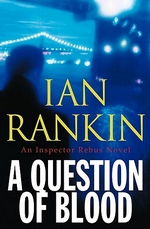
This is one of those covers that makes you wish cover designers had to read the book — an inconsequential point, but when Rebus actually got to the titular location, I had to shake my head. (Other cover images I’ve seen for this aren’t as misleading).

This might not be as powerfully told, or as sweeping as some of the recent books have been. But I’m not sure I’ve enjoyed reading a Rebus novel more than this one — and could’ve easily read it in one sitting. This will be sure to please Rebus fans and could easily make some, too.

—–

4 Stars

2018 Library Love Challenge

Where Night Stops by Douglas Light

Where Night StopsWhere Night Stops

by Douglas Light

eARC, 252 pg.
Rare Bird/Vireo, 2018

Read: January 12 – 13, 2018

She smells of lemons and warm cinnamon and isn’t very pretty. Sliding onto the barstool next to me, she says, “Can I sit here?”

The bartender, the woman, and me — we’re the only people in the bar. She can sit anywhere. It’s not just a seat she wants.

I study her a moment then catch the bartender’s eye, the order is placed without a word. Whatever the woman wants. Alcohol, like long marriages, has a language of its own, one not composed of speech.

Now, that’s how you start a novel.

So, our narrator is orphaned the night after his high school graduation — however odd it may feel to call someone on the cusp of adulthood an orphan, he is one (and the back of the book says so). Suddenly his college dreams, plans for the future are gone, as is his past (other than memories). He finds his way from Iowa to Seattle and takes up residence in a homeless shelter. The closest thing he has to a friend there sets him up with a way to make some money — more than he’d been able to scrape together from an under-the-table gig at a gas station.

It’s obviously not above-board, but it’s good money. What else is a kid with no ties to society, no dreams, no means and nothing better to do? We bounce back and forth between the opening scene (and what follows) in the bar and his burgeoning criminal career. He bounces all of the globe playing small roles in what are likely significant crimes. The resulting story is a combination of tragedy, comedy of errors and Bildungsroman. All of which leads up to a concluding scene that is at once unexpected and the only appropriate thing that could’ve happened.

As a reader. you’re never impressed with our narrator’s choices. You may understand them, but it’s hard to be behind them. Especially because after a certain point, our young man makes a giant mistake. The reader knows this — and has to hope that whatever he does, he figures out his mistake or gets out of this life soon.

The plot’s decent and will carry you along well enough. But it’s not why you will stick with this book (at least not primarily), it’s Light’s writing. In the middle of all this, there are sentences like, “Walking the empty night street, my kidneys rattled with anxiety.” I’m pretty sure this is biologically nonsensical (I haven’t bothered to check with my son’s nephrologist, but I was tempted to), but that doesn’t stop it from being incredibly effective — you know precisely what Light’s going for there, and in the moment, your kidneys felts a little weird. There’s something to his writing that made me stop every so often to re-read a sentence or paragraph or passage — not because I missed something or didn’t understand what was happening, but because Light captured a moment, an idea, or phrase in such an engaging way that I didn’t want to move on.

I’m not sure if this is a very literary thriller, or a literary novel playing with thriller tropes. Nor am I sure that I care, but this is the kind of book that can appeal to both target audiences. It’s a good example of either genre, and a better example of why the distinctions are specious. There’s an interesting crime story here; a character study; a look at what happens to someone who has no connection to his future, society, or his past — oh, and it’s a good read, too.

Disclaimer: I received this ARC in exchange for my honest opinion about the novel, I appreciate the opportunity, but it didn’t influence the above.

—–

4 Stars

Page 456 of 625

Powered by WordPress & Theme by Anders Norén