Author: HCNewton Page 532 of 625

BookGrabbr: A great way for readers to discover new books and an innovative marketing tool for authors.


​BookGrabbr: A
 great way for readers to discover new books and an innovative marketing tool for authors. 
Picture

​For Readers:

BookGrabbr is a social media-marketing tool that allows authors to share both full books and previews of their books with readers. Readers, you can have access to these books by signing in through Facebook, Twitter, or LinkedIn and using their ability to share as a form of currency. The “Share” is the payment! Share the book, and it will allow you to read it. Just click the “Grabb this book” button next to the book and our system will prompt you to share in exchange for reading!

BookGrabbr contains books of many genres, so visit today, “grabb” a book that catches your eye and start reading!

For Authors and Publishers:

Through their unique marketing tool and platform, BookGrabbr helps authors connect to readers that they wouldn’t generally be able to connect to through their friends and their friend’s friends. The noise in the marketplace is deafening, and at times can be a bit overwhelming for authors trying to promote their books.

BookGrabbr created a way to generate some more buzz by harnessing the power of each individual author’s social media platform.  Once you create your profile on BookGrabbr it allows potential readers to read a preview of your book or the full copy and then directs them to your site of choice to purchase your book in the format that you desire. And since BookGrabbr doesn’t make any money on book sales, you can send them to a retailer, or to your own personal page or wherever you choose! BookGrabbr’s purpose is to help you sell more books, gain momentum and generate exposure.


See how it works:

Picture


​How does iRead Book Tours help?

For Readers: 

We help you discover new authors that have put their profile and books on BookGrabbr through our BookGrabbr Promotion Service.

For Authors and Publishers:

Don’t have time to dedicate to yet another marketing campaign? Let us take care of it for you. Through the BookGrabbr Promotion Service we create your profile, help you share your books on your social media and ours too, of course. In addition, we provide you with ideas and the support on how to best use your BookGrabbr profile. This is a cost-effective, efficient way to publicize your books! Contact us to see how we can help you spread the word about your book through BookGrabbr.

Like the idea? Enter this giveaway to win a BookGrabbr Promotion Service worth $75 and $100 in cash!

Not an author? You can still win the $100 in cash.

Giveaway starts March 14 and ends April 15, 2016. Just scroll to the bottom of the post (that looks an awful lot like this one) to be taken to the Rafflecopter Entry.

United States of Books – The Yearling by Marjorie Kinnan Rawlings

The YearlingThe Yearling

by Marjorie Kinnan Rawlings

Author: Laura at 125Pages.com

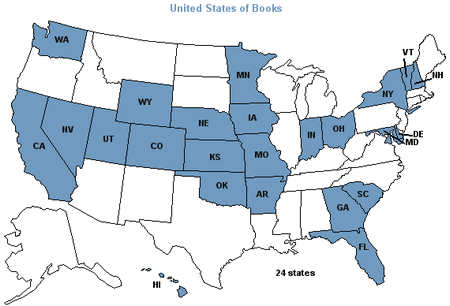
Welcome to another installment of the United States of Books! See full details here. Today we will visit Florida with The Yearling by Marjorie Kinnan Rawlings. Entertainment Weekly says “Working with Hemingway and F. Scott Fitzgerald’s editor, Rawlings was pushed to look into her own history for literary fodder, which led to her 1938 Pulitzer winner about a Florida boy and his pet deer.”

bambigif The Yearling is a book I have heard about over the years, but was never super interested in reading. I could guess the outcome of a book centered around a young boy and his pet deer living on a hardscrabble farm in the 1870’s. I had read Old Yeller and seen Bambi, I knew what was coming. So I wasn’t thrilled when the random picking for the United States of Books challenge offered me up The Yearling. I don’t think I can really spoil a book that is over 75 years old, but just in case, I will only say I was right about the ending. However, I was mistaken about how I would feel about the book as a whole.

The tale of the Jody, Ora and Ezra “Penny” Baxter is not one of an easy life. Farming a small plot of land in central Florida, they hunt and trade for what they need. Jody is the only child of seven born, who lived past the age of three. Trailing his pa and learning to do what is necessary to survive, Jody wants nothing more than a pet to call his own. Then on a hunt, he finds a small deer and is determined to make it his own. Flag soon becomes part of the family and even goes on hunts with Jody and his father. Weaving around the story of the fawn and his boy was the epic hunt of a troublesome bear, a snakebite, and a very unique cast of characters.

Now that I have read it, I am glad I had the chance to, as some of the writing was just lyrical. Especially the parts describing the land surrounding the farm.

Around a bend in the road, the dry growth of pines and scrub oak disappeared. There was a new lushness. Sweet gums and bay were here, and, like sign-posts indicating the river, cypress. Wild azaleas were blooming late in the low places, and the passion flower opened its lavender corollas along the road

I could see why this was EW‘s Florida pick as the location was almost a secondary character in the story.

The fall fruits were not yet ripe, papaw and gallberry and persimmon. The mast of the pines, the acorns of the oaks, the berries of the palmetto, would not be ready until the first frost. The deer were feeding on the tender growth, bud of sweet bay and of myrtle, sprigs of wire-grass, tips of arrowroot in the ponds and prairies, and succulent lily stems and pads. The type of food kept them in the low, wet places, the swamps, the prairies and the bay-heads.

Unfortunately, the jarring difference between the lyrical descriptions and the regional dialect of the characters when they spoke, made this a difficult read for me. The way they thought in their heads did not match the words they said and this made the transitions very hard. I would almost prefer a read like The Adventures of Huckleberry Finn where, while there were numerous regional dialects, all the characters thought and spoke in them. When you read a description as beautiful as the one above then the very next life is something along the lines of “Don’t go gittin faintified on me.”, it pulls you out of the story and throws a wrench in your pacing.

The Yearling had some amazing moments with the descriptions by Marjorie Kinnan Rawlings. It is not a book that I would personally read again as the storyline is not what I enjoy and the transitions between characters thinking and speaking was too harsh. For the time it was written though, I can see why it received such high praise. It contained heartbreak, action and basic human survival tempered by a strong family bond.

Favorite lines – A mark was on him from the day’s delight, so that all his life, when April was a thin green and the flavor of rain was on his tongue, an old wound would throb and a nostalgia would fill him for something he could not quite remember.

Have you read The Yearling, or added it to your TBR?

Saturday Miscellany – 4/9/16

Odds ‘n ends over the week about books and reading that caught my eye. You’ve probably seen some/most/all of them, but just in case:

    This Week’s New Releases I’m Excited About and/or You’ll Probably See Here Soon:

  • Burned by Benedict Jacka — Alex Verus #7 finds Alex sentenced to death? Something tells me he finds away to stop that, but it won’t be easy . . .
  • Every Heart a Doorway by Seanan McGuire — the buzz around this one is practically deafening, it’s sitting just a few inches way and I really want to open it up. Actually, so is Burned. The temptation is strong here.
  • Waylaid by Kim Harrison — I blogged about this yesterday, you might want to check it out.
  • There Will Always Be a Max by Michael R. Underwood — a new Genrenauts story set in the Post-Apocalyptic region of of Action world.
  • Shadow Rites by Faith Hunter — Jane Yellowrock #10

Lastly, I’d like to say hi and welcome to Got My Book for following the blog this week.

Waylaid by Kim Harrison

WaylaidWaylaid

by Kim Harrison
Series: The Peri Reed Chronicles/The Hollows

Kindle Single, 87 pg.
Pocket Star, 2016

Read: April 5, 2016


In her Foreword, Harrison says, “Waylaid still reads like self-made fan fiction to me, ” thereby denying book bloggers and other amateur reviewers the opportunity to use that label. Which is a shame, because that’d be a great way to sum it up. Thankfully, it saves us all from making the same joke.

In a move as classic as Uncle Jesse visiting Los Angeles to say “howdy” to Enos*, Harrison brings much beloved Rachel Morgan into the new, awesome, and in much need of publicity world of Peri Reed. Set sometime after the main events of The Witch with No Name (but not necessarily the last chapter), and before The Drafter, Waylaid will serve as a great introduction for fans of Morgan’s series.

A drunken mishap, inspired by a silly Urban Fantasy TV show (that I’d totally watch), results in Jack summoning Rachel in to Peri’s apartment. Jack and Peri assume she’s a counter-agent who’d been waiting for them to return to attack. Rachel has no clue who they are other than nitwits who summoned her away from a date and started attacking her. It doesn’t take her long to realize that her magic doesn’t work, and wherever she is, it’s a world she doesn’t recognize — Detroit still exists, people have technology she can only dream about, and the ley lines are deader than Arizona back home. The clock’s ticking and Peri and Rachel have to team up to get Rachel back home.

It’s silly, it’s fun — it’s pretty faithful to both series, it hopefully helps boost sales of The Drafter and its sequel.

I don’t really a lot to say without getting pretty heavy into spoilers, but I thought it was worth the pittance I spent on it, probably a little more. Fans of Harrison should give it a shot.

* I just revealed my age there, I know. I also know there are older examples, but that’s the first in my memory.

—–

3 Stars

The Red Storm by Grant Bywaters

The Red StormThe Red Storm

by Grant Bywaters

Hardcover, 277 pg.
Minotaur Books, 2015

Read: March 24, 2016


So you’ve got a barely scraping by, more literate than he appears, PI in the 1930’s. He’s good with a gun, better with his fists, his mouth gets him into trouble. He has a friend with the police, and many more on the streets (well, at least people who owe him favors and vice versa). It’s not NY or LA, but so far, this is pretty straight-forward — even having his office in New Orleans doesn’t make him stand out too much. Doesn’t mean it’s bad — just that this is a variation on a theme.

What if I told you that he’s black?

Well, now here we have something new. This is a pretty big variation. Thankfully, this isn’t just a gimmick, either.

Once an up and coming boxer in NYC, William Fletcher realized that the color of his skin was going to keep him out of Title contention and falls into a life of crime, acting as the muscle for a minor-league gangster, Storm. He’s not all that crazy about the life, but he goes along for a while. Storm gets desperate, does some really stupid things and has to get out of town. Sometime in the next decade, Fletcher moves down to New Orleans, gets himself a PI license and sets up shop.

Storm comes to town, looking up his old “friend” and asks him to look for his long-lost daughter, Zelda. Without taking money from a fugitive, or even agreeing to work for him, Fletcher tracks down the girl (now a lounge singer), but will only tell Storm where if she agrees. While she’s thinking about it, things get interesting.

People start trying to kill her, for starters, and she hires Fletcher to be a body-guard. While the city begins to erupt in a gang war, somehow Zelda and Fletcher are in the middle of it — neither understands why, but Fletcher is going to find out.

The characters are so rich, so flawed, so human. Fletcher’s having to be creative to get access to people and places while being black in Louisiana in the 30’s is compelling to watch. He’s a realist about the disadvantages his color imposes on him. He’s not happy about them, but he’s not off to change hearts and minds, he just deals with the reality he finds himself in. Zelda’s deeply flawed, but trying to overcome her flaws (mostly). The criminals are great characters, too — classic mobsters in the ’30’s mold.

This is at once a historical mystery and a hard-boiled P.I. novel, a combination I hadn’t realized I wanted. But man, I had a blast with this. Along those lines, I there were a couple of vocabulary choices that seemed anachronistic, but they weren’t so obnoxious that they took me out of the moment or made me want to go look up to see if they were fitting for the time.

I feel like I should have more to say, but I really don’t. At this point, it’s just gushing — Red Storm is taut and well-paced, with a good mystery at the core and a P. I. as knight errant — protecting the damsel and righting wrongs. Fletcher is the real deal, so is Bywaters. I hope to see a lot more of both of them, soon.

Disclaimer: I was provided a copy of this by the author in exchange for my review, which didn’t influence my take. The fact that he seemed willing to banter with me and caught a reference I made in an early email didn’t either — probably.

—–

4 Stars

A Few Quick Questions With…Marjorie Thelen

Earlier today I posted my thoughts on A Far Out Galaxy, the first volume in Marjorie Thelen’s Deovolante Space Opera. Thelen was kind enough to give me a few moments of her time to A my Q’s — not much story-specific (and no spoilers), but we touched on this book as well as writing in general. I kept the number down, because we’re all better off with her working on her next book(s) rather than spending time answering all the questions I might have. I appreciate her time and answers (you never go wrong with a tip of the cap to Robert B. Parker around here).

There was some pretty extensive world-building in A Far-Out Galaxy — how much of it had you done before starting, and how much was on the fly?
All on the fly. I started with the idea that I had read about at the time, back in the late 80s that we live on an insignificant planet in an insignificant galaxy. And I had read some of Von Daniken’s books like Chariots of the Gods and his ideas that the lines on the Cusco plane were drawn by extraterrestrials. So I thought what if an extraterrestrial civilization had seeded Earth with human beings and then stepped away. That is how a Far Out Galaxy started. I had two main characters in mind– male and female leads. I do no outlining before I write. I just sit down every morning and say, I wonder what they are up to today.
What’s the difference in how you write/how you have to think/how you plot a SF story from a Mystery (or something else)? Is there a genre that you particularly enjoy reading, but could never write?
I don’t plot out the story ahead of time. Whether mystery or sci fic I know I have to keep the plot moving so I try to have a hook at the end of each scene or chapter. There’s always a bit of mystery in the sci fi books I write. I once read to paint oneself into a corner in a mystery and I try to do that. It is sometimes a challenge to get out of that corner! So far I’ve managed to do it. I seldom read fiction anymore. I’ve read so much romance, mystery, thriller, etc. that they all seem the same. I seldom read today’s sci fi because it is dark and dystopian and that bores me to tears. A Far Out Galaxy and its sequels are light and fun and that is what I like to read. I read a lot of non-fiction, which I would never attempt to write. I like to stick to fiction and make things up. My mind needs something to create, or it gets me in trouble.
Who are some of your major influences? (whether or not you think those influences can be seen in your work — you know they’re there)
Robert B. Parker and Tony Hillerman in mystery. I love how Parker writes almost entirely in dialogue and that is how I like to write. In one sentence Hillerman can describe an entire landscape and I try to get close to that and not get wordy in descriptions. Ursula Le Guin, Arthur C. Clarke, Robert Heinlein, Kurt Vonnegut are the sci fi giants on my bookshelf. I especially admire Ursula’s amazing writing career and her ability to take a stand on issues.
I’ve often heard that writers, or artists in general, will forget hundreds of positive reviews but always remember the negative — what’s the worst thing that someone’s said about one of your books, and has it altered your approach to future books?
One time I entered a romance writing contest and one of the judges said my heroine was too stupid to live. That heroine is Vita in A Far Out Galaxy and some people love her to death. The American reading public is very fickle, and an author has to keep that in mind. I just keep on writing ’cause I like to.
What’s next for you?
I’m working on the fourth book on in the Deovolante series called Earth Rising. A Far Out Galaxy is the first book in that series, Hoodoo Canyon is the second, and The Next Universe Over is the third. This past week I resurrected a book called Wings of the Dawn, an Oregon Trail epic, that I started six years ago but never finished. After writing around 100 pages I decided that I would outline the rest of the book. When I completed the outline I thought this is a stupid story and never finished the book. One of my writer friends in my writer group, the Harney Basin Writers, keeps nagging me to finish that book because she really likes what I have written so far. I just might. But I’m not going to follow the dang outline.

A Far Out Galaxy by Marjorie Thelen

A Far Out GalaxyA Far Out Galaxy

by Marjorie Thelen
Series: Deovolante Space Opera, #1

PDF, 278 pg.
CreateSpace, 2014

Read: March 26, 2016


If you don’t mind getting Romance into your Science Fiction/Space Opera or SF into your Romance in a literary Reese’s Peanut Butter Cup, this might be your cup of tea. This is light-hearted, almost humorous — don’t think Scalzi, Adams, Holt, Cline or Rob Reid. Think Evanovich in Space. It’s an odd mix of Space Opera, Romance and humor — mostly pulled off well. In the end, it wasn’t my thing, but it was fairly well executed.

Will and Vita are planetary royalty, who’ve been ordered to go on a mission together by a higher governing power. Vita’s a queen on a technologically-oriented planet, and like many before her, she’s a clone. It’s about time for her to clone herself to get her successor trained and ready in time. But there’s a problem, the cloning device is on the blink and no one can repair it. So, they’re going to have to take care of the succession the old-fashioned way. Enter Will — a Captain Kirk type. Handsome, charming, a gal in every space port, and a heckuva warrior. If anyone can get the might-as-well-be-asexual Vita pregnant, it’s him. There’s a Dave and Maddy vibe going throughout the early chapters, but you know she’s going to succumb to his charms (if only because she has to — at least at first). This would be the Romance bit.

Meanwhile, they’re being pursued by Will’s half-brother and other assorted nefarious types to interfere with their mission to check in on their colony, Earth, as well as to get up to other mischief. The colony is in pretty rough shape, what with the citizens acting the way we do — but they’ve got trick or two up their sleeve to get us back on track (which may or may not be entirely successful). This would be the Science Fiction/Space Opera bit.

Now, given everything that they’re able to do later in the book I’m not sure that I buy the whole “we can’t repair the cloning device” thing — I bet later on that we find out that The Powers That Be orchestrated the sabotage. But…that’s neither here nor there.

Thelen gets into some pretty impressive world-building (even if the science is . . . not that science-y), complete with multiple governing bodies and hierarchies, etc. Although, while I tracked with all the assorted layers of orders and bloodlines and whatnot that they talked about involving those on the mission (and related to it), I found it hard to understand — much less care — about the problems back home in their home galaxy. Hopefully, in future installments Thelen gets the reader to care — or to not worry about it and focus on the characters we do know.

Some of the characters here are pretty well-developed and engaging — though a few were little more than names and ranks, but that worked out okay given the story. The love story didn’t work for me — at least not in the early stages. I had no problem with it i the last half, though, and that’s when the book started working its charm on me (those two are pretty likely linked). The story was okay — but it felt like a lot of it was just to set up the rest of the series, not to tell a story in this book — but there was enough completed here to feel okay about it.

I think this is the kind of thing a lot of people would enjoy — on the whole, sadly, I’m not really one of them — but it’s fairly well written. I did end up liking it eventually — not a whole lot, but enough that I could see the merits and see why others would probably get into the series. I’m glad I pushed through my early disinterest to get to some pretty good stuff in the latter half. If Evanovich in Space sounds like your cup of tea, give this series a look.

Disclaimer: I was graciously provided a copy of this book by the author in exchange for my thoughts, even if it took me 3 months longer than I’d hoped to get to them.

—–

3 Stars

The Watcher in the Wall by Owen Laukkanen

The Watcher in the WallThe Watcher in the Wall

by Owen Laukkanen
Series: Stevens & Windermere, #5

Hardcover, 354 pg.
G.P. Putnam’s Sons, 2016

Read:April 4 – 5, 2016


Not too long after the events of The Stolen Ones, a classmate of Kirk Stevens’ daughter, Andrea, a victim of bullying and neglect, kills himself. Andrea wants justice for the classmate — she wants the bullies punished, she wants the message to go forth that this kind of thing can’t happen, and she wants her father to insure that happens. He sympathizes, he even empathizes, but he really can’t do anything. But he pokes around a little bit — and he and Carla Windermere discover that there was a suicide pact — that some girl in Philly is supposed to be killing herself now, too.

They may not be able to do anything for the dead boy, but they can try to keep this girl alive.

Only . . . there is no girl. Or at least, she isn’t who she said she was. Mental alarm bells start going off, and the two agent soon figure out that there’s one person out there online, posing as a concerned stranger, helping others to commit suicide — maybe even talking them into it, for whatever reason they might have. Once you start to learn the reason, you become convinced that this person is a certain level of despicable.

The original suicide brought up a lot of memories for Carla — things she’d tried to forget from her school days. She throws herself into this investigation, putting even more pressure on herself than usual. She talks to her partner and her boyfriend less, develops a shorter fuse, and drinks and smokes worse than she usually does. She also refuses to tell anyone what’s going on == she’ll only say she’s trying to save kids’ lives.

The two start traveling the country, learning more about certain types of online forums than anyone should know, trying to hunt down their suspect before he/she gets talks another teen into making a mortal choice. The novel has breakneck pace, and enough twists to keep you engaged — all of which is good.

Because of the focus on Windermere, and the pressing nature of the investigation (not that their other cases have been leisurely), we spent absolutely no time with the Stevens family after Andrea brought a witness to her father. That’s just strange — granted, it wasn’t until after I was finished with the novel that I realized we hadn’t spent time with them — but I knew something was missing. The Stevens gang has been such a fixture for at least a few chapters in these books, to not have them is jarring. But we did get a lot of time with Carla and Mathers — actually about the same as usual (maybe less). But in comparison, we got a lot more. Still, the lack of personal lives in this novel drove home two things — the urgency Carla felt, and the weight of the rest of the emotions/regrets/anger she was dealing with.

This is the second novel in the last half-year that I’ve read dealing with people being talked into suicide. Both very different, both compelling in their own rights — this was a tad more believable, really. Still, I hope this isn’t a trend that continues.

I couldn’t believe how quickly I sped through this — not just because Laukkanen writes with lean, confident prose, but it was the characters, the plot — you read this and you just have to know how it turns out (okay, sure, you are rightly convinced that Kirk and Carla will get their man — but how, and what the body count will be along the way, that’s the question). Yeah, the weakest of the 5, but it was satisfying, entertaining and engaging. Good enough for me, and enough to keep me coming back for more.

—–

3 Stars

Calamity by Brandon Sanderson

CalamityCalamity

by Brandon Sanderson
Series: The Reckoners, #3

Hardcover, 417 pg.
Delacorte Press, 2016

Read: March 30 – April 2, 2016

There was more connectivity between city-states in the Fractured States than I’d once assumed. Perhaps the Epics could have survived without any kind of infrastructure, but they tended to want subjects to rule. What good was it to be an all-powerful force of destruction and fury if you didn’t have peasants to murder now and then? Unfortunately peasants had to eat, or they’d go and die before you got a chance to murder them.

That meant building up some kind of structure in your city, finding some kind of product you could trade. Cities that could produce a surplus of food could trade for power cells, weapons or luxuries. I found that satisfying. When they’d first appeared, the Epics had wantonly destroyed anything and everything, ruining the national infrastructure. Now they were forced to bring it all back, becoming administrators.

Life was so unfair. You couldn’t both destroy everything around you and live like a king.

I really enjoyed Steelheart, the first novel in this trilogy — and Firefight was a lot of fun, if not as good — it wasn’t anything serious, weighty, or bogged-down with teenage drama. Just a fun story about super-powered individuals ruling over a post-apocalyptic dystopia and the non-super-powered rebels trying to take them down. So, how’d Brandon Sanderson wrap things up? In a very mixed bag — an ending that was honest, consistent, and fitting for the series, but one I really didn’t care for.

Which is going to take some explanation.

David’s voice is as friendly, upbeat, and nerdy in the way that charmed me in the beginning. Even weighted down with added burdens and losses, he’s hung onto his core personality. His metaphors are as painful as ever — his ability to get his teammates to go along with the biggest of hare-brained schemes is intact and still astounding.

I wanted answers. They were probably here somewhere. Maybe I’d find them behind that group of robotic war drones that were extending their gun arms from behind the freezers in front of me.

Oh.

But he isn’t the same kid we met on the streets of Newcago — he’s lost his drive for revenge, it’s evolved into something else (and/or been revealed or better understood to be something else). He’s not out for blood, not out for simply overthrowing the Epics. He still wants to stop them, to restore rule to non-Epics and free them from the tyranny they’re under. But it’s because of wrong and right, for deeper reasons, purer motives.

He’s not the only one who’s changed and grown — Megan, the love of his life and former foe, has greater understanding of herself and her powers, she’s gaining more and more control of both. Part of it is self-acceptance, part of it is David’s faith in her. Either way, she’s a more entertaining character — and a less threatening force (at least as far as The Reckoners are concerned).

Thanks to their travel and experience, David and the others have a better understanding of how the world works (see the above quotation for a hint) — and some of the Epics have had to make adjustments, if for no other reason to keep their subjects alive and working. From a surprising source, we learn how the Reckoners tech works — as do they — and it’s pretty odd (and interesting). Not only that — the source of Calamity, the source of the Epics’ powers is revealed. You really can’t ask for more than that.

Well, actually you can — one of the other things that comes out of the growth and development of David (and the rest) over the series, and especially over this book, are some underlying themes that come out. They’ve been there since the beginning if you knew how to look, but here, Sanderson makes them explicit. I really appreciated them as they surfaced — I’m not sure that a lot of the YA crowd that this is targeted for would as much as I did, but many would. The last scene is pretty heartwarming, really — something I wouldn’t have expected at pretty much any point in the series (and has nothing to do with romance, for the record).

So why am I lukewarm about this? While the execution was consistent, the tone was right on-pitch and Sanderson didn’t cheat anywhere along the way to the series conclusion, I just didn’t like it. I didn’t like the explanation given for the source of the powers. I didn’t like the way the last half of the book played out (mostly everything after the last battle with the Prof, really — so less than half, but the groundwork was laid at about the 50% mark). Sanderson told the story he wanted to, in a way that made sense to the rest of the series, and he never copped out or went for high drama over being true to his story. So I can’t judge it too harshly. I just didn’t care for the way it played out. Which pretty much just means that Sanderson wrote the ending he wanted and not the one I wanted. Sure, I think it’s tacky, but you can add that to the very long list of things that he didn’t ask me.

I wasn’t wowed, wasn’t thrilled with things in the end. But I really can’t complain about any of it. Fans of — or at least readers of — the series should check out the conclusion, just to get the closure it brings. Hopefully, you’ll get more out of it than I did.

—–

3 Stars

United States of Books – The Grapes of Wrath by John Steinbeck

The Grapes of Wrath The Grapes of Wrath

by John Steinbeck

Author: C.H. Armstrong at C.H. Armstrong Books & Blog

SYNOPSIS

(From Goodreads.com)

First published in 1939, Steinbeck’s Pulitzer Prize winning epic of the Great Depression chronicles the Dust Bowl migration of the 1930s and tells the story of one Oklahoma farm family, the Joads, driven from their homestead and forced to travel west to the promised land of California. Out of their trials and their repeated collisions against the hard realities of an America divided into haves and have-nots evolves a drama that is intensely human yet majestic in its scale and moral vision, elemental yet plainspoken, tragic but ultimately stirring in its human dignity.

A portrait of the conflict between the powerful and the powerless, of one man’s fierce reaction to injustice, and of one woman’s stoical strength, the novel captures the horrors of the Great Depression and probes the very nature of equality and justice in America.

Sensitive to fascist and communist criticism, Steinbeck insisted that “The Battle Hymn of the Republic” be printed in its entirety in the first edition of the book—which takes its title from the first verse: He is trampling out the vintage where the grapes of wrath are stored.” As Don DeLillo has claimed, Steinbeck shaped a geography of conscience” with this novel where there is something at stake in every sentence.” Beyond that—for emotional urgency, evocative power, sustained impact, prophetic reach, and continued controversy—The Grapes of Wrath is perhaps the most American of American classics.

REVIEW

5 Stars

When The Grapes of Wrath was released in 1939, it was not only an instant bestseller, but it was met with no small amount of criticism and anger. Steinbeck brought to the world the devastation of the Dust Bowl but, more importantly, the horrors and blatant racism that greeted migrant workers searching for better lives. For as many who read Steinbeck’s epic novel and heralded it as the true “Great American Novel,” an equal number were aghast at the raw truths he portrayed and sought to have it banned or even burned. Nearly seventy years later, it’s still at the center of much controversy and is listed as Number Two among the Top 10 Most Banned Books (Shortlist.com).

The Grapes of Wrath is an epic novel depicting the mass westward migration of Oklahomans (and neighboring states) during The Great Depression of the 1930s and the simultaneous Dust Bowl. It was a time when the overuse of the land had turned the once fertile farming soil into dust, making it unfit for the growing of crops. With no money coming in from the crops, banks swooped in and called in loans on the land, and forced tenant farmers and their families out of the homes they’d known for generations. The result was mass homelessness that led to a great migration to California and nearby states in search of jobs.

At the center of Steinbeck’s novel is the Joad family. Their eldest son has just been released from prison and returns home to find his family packing up their meager belongings, ready to depart for California and hopes for a better life. So begins the story of the Joad family and their journey west. But they soon realize that their travels will neither be easy, nor as idyllic as they had imagined. Instead of green fields of orange trees ripe with fruit just for the picking, they’re met with numerous hardships and discrimination. California – the land of plenty and the focus of their dreams – doesn’t want them. They’re not only barred from entrance but, once gaining access, are met with conditions more deplorable than those they’ve left behind.

When The Grapes of Wrath was first released, it was met with criticism from groups crying foul at Steinbeck’s depictions for how migrant workers were treated. In truth, Steinbeck revealed that his novel was a watered-down version of the true horrors of the workers – the truth was worse than the fiction of his novel. As a native Oklahoman and one who finds pride in the name “Okie,” I can only tell you that I truly loved this novel. I loved Steinbeck’s descriptive prose; but more than that, I loved the truth behind his words, which echoed through my mind long after I turned the last page.

Many will say that The Grapes of Wrath is a depressing novel. On the contrary, I found it to be a book of hope and a testament to the strength of the human spirit. Yes, it was difficult to read about the hundreds of thousands of starving migrant people; and it was even more difficult to come to terms with the fact that “this really happened!” But what I really got from the story was a lesson in discrimination and racism, and hope for the future of mankind. You see, even when all had been taken from them and there seemed to be no real hope in the foreseeable future, the Okies refused to just lay down and die. They refused to let the “big guy” get the best of them. They trudged on through death, hopelessness, starvation and despair. They did their best to keep their families together, and they never failed to lend a helping hand to one whose need was even greater than their own. Nearly 100 years later, the majority of Oklahomans still possess those admirable qualities.

Page 532 of 625

Powered by WordPress & Theme by Anders Norén