Category: K-O Page 15 of 22

A Few Quick Questions With…Nick Kolakowski

Little backstory to this Q&A, in my never-ceasing attempts to get organized, I’ve started noting when a book post is due, what I’m doing associated with it, etc on my reading log (nothing special, just an up-to-current date Excel spreadsheet, with a couple of blank lines and then a list of upcoming reads). I’d put a note on with Boise Longpig Hunting Club with the release date and a note “read early for Q&A.” Before I sent my list of Questions, I looked over my correspondence with Kolakowski and realized we hadn’t actually discussed it — thankfully, he was gracious enough to answer my questions (beer’s on me next time you’re in town) — and here they are.

Could you tell us a little about your “path to publication”? What got you into writing and what did you do to take it from an aspiration to a reality?
I’ve always wanted to be a writer. My love of crime fiction also started at a very young age, when my Dad gave me his yellowed copy of Chandler’s “Trouble Is My Business.” I’d written crime fiction since I was a teenager but I only got serious about producing a novel in my late 20s. I wrote three “trunk novels” before “A Brutal Bunch of Heartbroken Saps,” which was picked up by Shotgun Honey and published in 2017. Other novels followed.

I suspect my process mirrors that of other folks: you write a lot, query agents, send manuscripts around, and generally struggle in a very crowded market. And when you finally begin publishing books, that kicks off a whole new game: marketing, publicity, trying to get the word out. The grind never stops. Good thing it’s fun.

Why Boise, of all places? In the Acknowledgements you mention the time you’ve spent in Idaho — other than just soaking up the culture, what kind of research did you do? (I’ve got to say, as someone who’s lived most of his life in the Boise-area, you do a really good job of capturing the feel, the geography, etc. Just hopefully not the crime)
My wife was born and raised in Boise, and so I started going there with her, sometimes a couple times a year. She has friends and family all over the state, and so we spend a lot of time driving around. That’s the bulk of the research I did for the novel—with the exception of the book’s final act, which is set in a wilderness of my own invention, I don’t think there’s a location that isn’t grounded in reality. I’m sometimes startled by the changes when I come back every eight months or so—the money pouring into the state is producing seismic changes, especially in the Boise area.

I chose Boise because it’s not a place usually covered by crime fiction; I’m a little tired of novels always being set in New York, or Los Angeles, or Chicago. And for years, I’d wanted to write a thriller set in someplace more isolated and rural—which Idaho definitely provides, along with a unique texture all its own.

What’s the one (or two) book/movie/show in the last 5 years that made you say, “I wish I’d written that.”?
“Breaking Bad.” I can say that without putting too much thought into it. It’s a masterpiece.
(I might have to retire that question — between the answer, and the way you put it, I don’t know if that can be topped.)

I’ve often heard that writers (or artists in general) will forget hundreds of positive reviews but always remember the negative — what’s the worst thing that someone’s said about one of your books, and has it altered your approach to future books?

Ooof, that’s a tough one. My sense of humor is rather bleak, and at one point, an Amazon reviewer suggested that they “didn’t appreciate the crudeness and [my] choice of words at times.” And when I read that, I thought, “Well, okay, but you should have seen the first draft. That was even worse.” I do try to restrain myself a little bit more, at moments, because I realize that some readers might not appreciate when I go deliriously over-the-top.

The same goes with violence; I’m trying to be a little bit more judicious in my moments of kinetic action. If you structure it right, you can pack a lot of emotional and thematic “oomph” into just a single gunshot.

What’s next for Nick Kolakowski? (Bonus points if it involves anyone who survives Boise Longpig Hunting Club)
I’m actually writing the sequel to “Boise Longpig” right now! It’s called “Voodoo Potato,” and it’s set in New Orleans. It deals heavily with the privatization of public security, and the dangers that stem from that. When we were in New Orleans last, someone casually mentioned to us that it takes 20 minutes for the cops to arrive if you call 911, and that some local millionaire had set up a private security force in the French Quarter that can respond more quickly. Sounds like a potential Pandora’s Box to me.
Oh, that sounds great (the book, not the terrifying reality behind it).

Thanks for taking the time to answer these, and I hope that Boise Longpig Hunting Club finds all sorts of success!

Pub Day Post — Boise Longpig Hunting Club by Nick Kolokowski: A Gritty, Violent Visit to Idaho

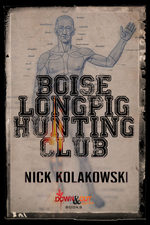
Boise Longpig Hunting ClubBoise Longpig Hunting Club

by Nick Kolakowski

eARC, 320 pg.
Down & Out Books , 2018
Read: July 28, 2018
Jake Halligan is a bounty hunter — more in the Lori Anderson/JT mold, than a Stephanie Plum-type — in Boise, Idaho and the immediate environs. He’s got a kid, an interesting relationship with his daughter’s mother, and a sister that . . . well, you just have to meet her. But think Bubba Rogowski without the size and clinical diagnosis.

Jake’s a Vet, having served in some of the worst conditions Iraq has to offer. He’s smart, he’s careful — he has people he cares about, so he has to be — and he has a conscience. It doesn’t stop him from doing his job, but it can stop him from enjoying it. Early on in the novel, we find Jake after a rough week at work — and a less-than-friendly exchange with the local police — on the whole, his life is looking pretty good, even if Janine (his ex-wife, fiancé and mother of his child) made him pay a social call on some neighbors. When they get home, Jake finds a dead woman in his gun safe. This plunges Jake into a hunt for a killer — as well as an explanation. He’ll find both, and probably wish he didn’t. It’s a violent, nasty hunt full of crazy characters, drug dealers, Aryan assassins, corrupt police — and people who are even worse than them.

Along for the ride are Janine — I can’t say enough about Janine as a character. From her attitude towards a house without books, to her hidden strength and anxieties — and all points in between. Then there’s Frankie, his sister — she’s cocky, funny, and vicious — she’s the biggest gun dealer in Idaho, not even close to legal, and the law can’t touch her. The law can’t even find her. She’s surrounded by associates/employees who are almost as colorful as she is (some even more so) — and is definitely the person you want at your side (or back) in a firefight.

Which is good — because they’re going to find themselves in a few.

Kolakowski has a great way with his characters — they’re real, they’re human — and they’re larger than life in a way that you’ll absolutely buy, as well as enjoy. When the action starts, it is gripping and exciting — you’ll keep turning pages. When there’s a lull in the action, you can bask in the character moments. I’m not really sure what else can I say beyond that. This is the whole package, you get to spend time with interesting people being interesting, and when they take a break from that, it’s because fists or bullets are flying — or maybe something explodes.

My one gripe — and it’s not much of one, before we get back to me saying nice things. The ending is abrupt. I’m not sure if I can think of a well-known book/movie to compare it to. You’re just reading along, hoping that Jake, Frankie, Janine and the rest survive this mess and then before you really realize what happened, it’s over. You know who survives — and who doesn’t — and the book ends with very little wrap-up (actually the wrap up happens before the ending — that remark will make sense when you read it). Kolakowski had a story to tell and he didn’t drag out the ending, much like his protagonist would approach things, I expect. He got the job done and moved on. I would’ve preferred a little more time after the main events are over — there are things I want to know about the immediate aftermath. There aren’t loose ends left untied, I’d just like to see what they look like after they’re taken care of. You can make a strong case that this is the way to end a book — when things are done.

It’s not often that I can evaluate an author’s use of geography — I know that Robert B. Parker and Dennis Lehane have tweaked Boston, I understand that Butcher goofs re: Chicago’s neighborhoods, etc. but I don’t know that reading the books, I learn that later. It’s rare when I’ve been somewhere a book has been set — a little bit with the Mercy Thompson books (but I’m better at noting pronunciation on the audiobooks that no resident would recognize), I noted that Wesley Chu fumbled a smidge Eastern Oregon in the third Tao book, and that Marilynne Robinson’s Housekeeping was creative with the facts, etc. But by and large, this book takes place in the area I’ve lived in most of my life, so I feel that I can actually comment. — and Kolakowski nailed it. Not just the details, but he’s got the feel, he’s got the atmosphere, the attitude toward change and the out-of-state money that’s bringing the change. he’s changed business names and whatnot, but I can still recognize them — I love seeing this kind of detail brought to life. I’m trusting that his depiction of local crime is hyperbolic, however.

I’m a little worried that it’s as accurate as the rest, actually . . . but we’ll move on.

There’s a visceral feel to this novel and these characters — people in places most don’t think about showing skills, interests, and circumstances that you don’t normally associate with that area. Just a guy trying to make a decent life for his family and himself, who finds himself in dangerous situations. I couldn’t help but think of Jason Miller’s Slim in Little Egypt series while reading his. Jake’s far more capable than Slim, and is far less likely to end up on the wrong end of a beating. But there’s a very similar ethos in the books, and fans of one should grab the other right away.

I’m not going to belabor the point any more, I think it’s clear that I enjoyed the heck out of this — it’s fast, it’s energetic, it’s fun. Go grab a copy of it.

Disclaimer: This book was provided to me by the author in exchange for my honest opinion, which I greatly appreciate.

—–

4 Stars

How It Happened by Michael Koryta: A great thriller to kick off your summer (and/or a Russo novel gone awry)

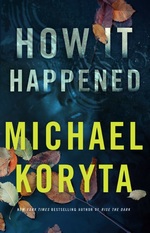
How it HappenedHow It Happened

by Michael Koryta

Hardcover, 368 pg.
Little, Brown and Company, 2018
Read: May 29 – 30, 2018

The rain had tapered off overnight and given way to a gorgeous day, the sky and sea competing for the deepest blue, a light wind pushing off the water, temperature nearing eighty. The air was scented with ocean breezes and pines and held only the faintest trace of humidity. A quintessential Maine day, more suited to July than May.

If you weren’t looking for a drug addict and self-confessed murderer, it would be a day to treasure.

This is one of those that comes down to the set-up. Because it’s executed practically flawlessly, and if you’re in for a penny, you’re in for the whole pound — and it’s a heckuva ride. You won’t want to get off until the end, and then you’ll be able to breathe for the first time in seventy pages or so. If you’ve read Koryta before, you have an idea what things’ll be like — and you’ll be right. If you’ve not read him before, you probably will make arrangements to familiarize yourself with him soon after finishing this.

So, what is the setup? FBI Agent/expert on eliciting/evaluating confessions from criminal suspects, Rob Barrett returns to the small Maine community of his childhood summers to investigate a missing persons case/potential double homicide. After weeks of work, he finally gets a seemingly reliable confession from Kimberly Crepeaux to what happened to the missing young people. It’s a harrowing confession, I have to say — I’ve read novels with less tension than her recounting of what happened that night. Kimberly is a drug addict, jailhouse snitch, and all-around unreliable person — everyone in town knows this. But Rob believes her (and you will, too).

But there are a couple of problems. Problem one: Mathias Burke is the man that Kimberly says is the murderer. Mathias is a go-getter of a young man, and has been since he was a kid — the dictionary might as well feature his picture under “industrious.” No one in town can believe anything Kimberly says about the way he acted that night — even the non-criminal aspects of it. None of it is characteristic of him. Problem two: the bodies aren’t where she says they were. In fact, they’re found miles away and seemingly killed in a different fashion, with the fingerprints and DNA of someone not Mathias Burke present.

So much for Kimberly’s confession — and Rob’s career. He’s shipped out to a field office in Montana, probably for the rest of his career.

But Kimberly sticks to her story, and convinces the father of one of the victims, Howard Pelletier, to believe her (and fear for her safety from Burke). Howard’s wife died when his daughter, Jackie, was young. He became the most devoted single father in history, and in time, she reciprocated. The story of Jackie and Howard would be enough for a novel, were it not for the murder. Howard’s insistence that Rob pay attention to Kimberly again and his need for answers brings Rob back for one more try at finding out how it happened.

Pretty good hook, eh? And like I said, once it’s set, Koryta reels the reader in just like the seasoned pro he’s become.

A strange thought occurred to me this weekend: this could very easily have been a Richard Russo novel — I’m not sure who the protagonist would’ve been — maybe the cafe owner or something. But Rob, returning to his childhood stomping grounds (however temporarily), Howard and Jackie would’ve easily have been fixtures — ditto for Mathias Burke (and even Kimberly, come to think of it). Mathias would be a major player, really — not the protagonist, but a lead character for sure, his troubled youth, his Horatio Alger-ish work ethic/success story, the way that this silly FBI interloper messed up his life, etc. The tangled lines connecting all these people would be seen more clearly, and traced back a generation or two, making everything more complex. Actually, the more I think about this, the more I want to see Russo write his take on these elements. Anyhow, this isn’t a Richard Russo novel — this is a Michael Koryta novel. So, it won’t be anywhere near as funny, the psychology will be presented in starter light, the tension level will be much higher, and the sense of right and wrong will be much less murky.

A knockout of a read — a great thriller to kick off your summer with.

—–

4 Stars2018 Library Love Challenge

Tricks for Free by Seanan McGuire

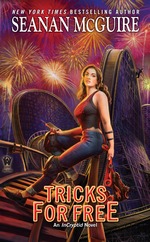
Tricks for FreeTricks for Free

by Seanan McGuire
Series: InCryptid, #7

Mass Market Paperback, 346 pg.
DAW Books, 2018

Read: March 13 – 17, 2018

           There are people who say you never really escape from high school, you just keep finding it in different forms, over and over again, until it finally kills you. Those people are assholes, and should not be allowed in polite company. That doesn’t mean they’re wrong.
           The room seemed even larger without the safety of the elevator behind me. I took a few hesitant steps forward, wishing I had a knife, or better yet, twenty knives, or better yet, twenty knives and a brick of C-4. Plastic explosives are a strange and dangerous security blanket, but they tend to make whatever’s scaring me go away quickly, so I’m in favor.

Whenever possible, frequent/regular readers know, I like to start off these posts with a quotation from the book that sums up the feel, the character, or just makes me smile. I couldn’t decide this time what to go with, so I used both — one from a flashback to high school which is just perfect for everyone who views it as something they survived, and the other that captures Annie’s voice oh-so-well.

Because of [Spoilers Redacted] at the end of Magic for Nothing, Annie’s on the run and on her own. Her family doesn’t know where she is (and hasn’t heard directly from her to keep it that way), her friends know nothing — she doesn’t even have a single Aeslin mouse with her. She could not possibly be more alone in the world. She lucks into a job at Lowryland — an amusement park near DisneyWorld — thanks to running into a teammate from high school who is an executive there. It’s not a glamorous job — she works in knick-knack shops, does clean up, works in food kiosks, etc. for far too little money. But there’s enough people around that she can hide in and almost no spell or anything the Covenant (or anyone else) tries to use to find her will work in that setting.

She’s living in the employee apartments near the park with a couple of cryptids. One is from her old Roller Derby team, who, as luck would have it, started working for Lowryland around the same time. The other roommate is a Pliny’s Gorgon, working as a resident at the Lowryland hospital. Tying this book back to Half-Off Ragnorack is a nice touch (and works out well for other reasons). It’s not the best life, but she’s content enough, she’s safe enough, and there are good people in her life.

Until things start to go wrong at the park, some magic users discover that she’s hiding there (they’re also hiding from the Covenant, so that works out), and people are getting hurt. Making this a question of can Annie stop whatever’s going on at the park without revealing herself to the Covenant and putting her friends in danger?

So there’s the setup — does McGuire pull it off? Yeah, stupid question. She does and she does it well.

First, she nails Annie’s emotional state — probably better than she does Verity’s often. Annie’s in a very vulnerable place — emotionally, psychologically, physically — and you can feel that.

           I went very still as it struck me that, tight now,l was living like a cryptid. l was hiding from people who wanted to do me harm as much because of who 1 was as because of anything I’d done. That was normal — being a Price meant I‘d had a bounty on my head horn the day l was born — but the isolation that came with it was new. The need to view everyone around me as a potential danger, to hide, it was all new, and it burned. There were dragons working all over Lowryland, and while none of them were part of my personal clique of Mean Girls, none of them knew my name either. It wasn’t safe. It might never be safe again, not until we’d found a way to end the danger posed by the Covenant — and that was something we’d been trying to accomplish for generations.

That vulnerability runs throughout this book — even when Annie’s at her most “rah-rah, we can do this, team” she’s very aware that everything is seconds away from disaster. This brings a richness of character to Annie that Alex and Verity don’t have (at least not to the same extent), if you ask me, this brings Annie into Toby Daye territory and elevates this series as a whole because of it.

You may have noticed a repeated use of the word luck above — that’s purposeful. Luck, as a concept, permeates these pages. It’s not a very clear concept to most of the characters, but it gets clarified by [Spoilers Redacted]. As one more magical system in this world that has a variety of them — that overlap, run parallel, and make a general mish-mash of things, it’s great. I think it’s a clever addition and I enjoyed watching it play out here, and anticipate continuing to affect things down the road.

The major flaw comes in how Annie pulls things off — in humble opinion. Throughout the book, there’s a warning given Annie — don’t do X. Beauty isn’t supposed to go in that part of the castle, Egon warns Ray and Venkman against crossing the streams, Annie needs to not do X. You know that all of those things will end up happening before the story’s done. Here’s my problem: it’s too easy for her to do it she makes the choice too quickly — and I’m not sure it was necessary when she did it (it may have been, this may have been a rare-stumble for McGuire where she didn’t make it clear that things were just that dire). I do know that if it’s something Annie felt the need for here, Verity sure should’ve done it back Chaos Choreography. But whatever, I’m over it — I just want to see how it plays out in the future.

One highlight for that I really can’t get into without ruining the first twelve chapters — but there’s a conversation in Chapter 13 catching up every character in Annie’s little circle with who’s who, what’s going on right now and since the last time they talked (hours or months ago), etc. This conversation just might be my favorite thing of March — reading or in Real Life™ — and it’s been a very good month. It’s just a pure joy to read.

By the way, the lack of Aeslin mice absolutely is felt throughout the book — the absence is supposed to make things feel strange, and it does. But never fear — there’s a novella starring the mice from Magic for Nothing at the back of this book. I hope when I have time to read it that it makes up for their absence.

Oh, and there’s a Priscilla Spencer map of Lowryland. Because what isn’t made better by a Priscilla Spencer map?

This is a great addition to a very fun series that adds some good depth to things, sets up our characters for a lot of trouble, and moves the series’ story as a whole down an interesting path. The next book also features Annie, but I’m sure we get back to Alex or Verity soon, and I can’t wait to see how these books without them affect their lives.

—–

4 Stars

Magic For Nothing by Seanan McGuire

Something — time constraints, distractions, deadlines, big shiny things in the corner — kept me from finishing this post last year. I tried every now and then to finish it, but at a certain point my copious notes weren’t enough. Thankfully, reading the next book in the series helped me remember enough that I thought I could finish this post. It’s not everything I wanted it to be, but short of a re-read, nothing was going make it that.
—

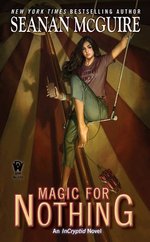
Magic For NothingMagic For Nothing

by Seanan McGuire
Series: InCryptid, #6


Mass Market Paperback, 358 pg.
Daw Books, 2017
Read: Mach 18 – 21, 2017

And you shouldn’t believe all the press about Ouija boards. They can’t be used in an exorcism. Trivial Pursuit can, but that’s another story.

This has nothing to do with the story, I just really liked that line. It comes from one of the best (probably the best, I don’t keep notes on that) openings to an InCryptid novel that McGuire’s done yet.

So after Verity declared war on the Covenant in the closing pages of Chaos Choreography, the Price family has to follow suit and step things up. Their first step? Having Antimony go undercover with the Covenant as a new recruit. This could be a suicide mission but she knows it’s the best shot to understand what’s going on with the Covenant and their plans for the United States.

You could make the claim that Annie’s infiltration of the Covenant is a little too easy — but why? It’s far more interesting for her to have infiltrated the Covenant and get assigned for a probationary task quickly than it would be for there to be a realistic screening and training process — I’m sure McGuire could have pulled it off, because what can’t she write? But this was better. Very quickly the Covenant comes up with an assignment that’ll test her loyalty and maybe score them some dead American monsters. Part of Annie’s cover is that her circus family was wiped out by a bunch of somethings and she wants revenge, the Covenant has wind of a monster or two at a circus in the midwest killing people in the towns it visits. Her assignment: infiltrate the circus, find the responsible creatures (and any others) and call in her handlers to wipe them all out.

So she’s going undercover as part of her undercover assignment. Thankfully, she’s had multiple aliases since she was a wee girl, so she’ll probably be able to keep her names straight.

Once she gets there, she finds more than one person that the Covenant will want killed just for being — so Annie has to figure out how to keep that from happening and keep her cover intact long enough that she can learn something for her family.

I loved the circus atmosphere, I pretty much always do, come to think of it. As is her norm, McGuire’s cast of characters for the Price adventures, is a whole lot of fun. But I think she stepped her game up with this one — even her Covenant characters have a bit more going for them than her normal baddies. But the key to this novel being so entertaining is Annie. We’ve seen her a little bit here and there throughout the series, but never for very long. She’s just great. Her attitude, gumption, grit and talents make for a fun character. The complicated hero-worship/jealousy thing she has going on regarding Verity (not so much with Alex, but a little bit) is a nice realistic and humanizing touch. I’m not going to blather on about her too much, but of the siblings, I think she’s my favorite.

The big climatic battle and the aftermath from that setting up at least the next novel? Thick, rich icing on an already tasty cake.

Oh, the mice. How did I get this far without mentioning the mice? The Aeslin mice are a great source of laughs as well as heart throughout this series — but man, this time Mindy (Annie’s Aeslin companion) really got me. I was moved. I . . . well, yeah,let’s just leave it there. Mindy’s just great.

If there’s one thing in this world that I know I can rely on, it’s the joyous cheering of the Aeslin mice.

Ditto, Annie, ditto. Joyous cheering of Aeslin mice and Seanan McGuire’s writing — wholly reliable. If you haven’t gotten around to picking up this volume of the InCryptid series yet, you need to. It’d make an okay jumping on point, too — but a lot of the little things won’t mean as much to you as they should. Still, I think it’d convince you to go read the earlier books.

—–

4 1/2 Stars

Beneath the Sugar Sky by Seanan McGuire

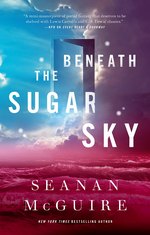
Beneath the Sugar SkyBeneath the Sugar Sky

by Seanan McGuire
Series: Wayward Children, #3

Hardcover, 174 pg.
Tor Books, 2018

Read: January 11, 2018

Children have always tumbled down rabbit holes, fallen through mirrors, been swept away by unseasonal floods or carried off by tornadoes. Children have always traveled, and because they are young and bright and full of contradictions, they haven’t always restricted their travel to the possible. Adulthood brings limitations like gravity and linear space and the idea that bedtime is a real thing, and not an artificially imposed curfew. Adults can still tumble down rabbit holes and into enchanted wardrobes, but it happens less and less with every year they live. Maybe this is a natural consequence of living in a world where being careful is a necessary survival trait, where logic wears away the potential for something bigger and better than the obvious. Childhood melts, and flights of fancy are replaced by rules. Tornados kill people: they don’t carry them off to magical worlds. Talking foxes are a sign of fever, not guides sent to start some grand adventure.

But children, ah, children. Children follow the foxes, and open the wardrobes, and peek beneath the bridge. Children climb the walls and fall down the wells and run the razor’s edge of possibility until sometimes, just sometimes, the possible surrenders and shows them the way to go home.

So begins Beneath the Sugar Sky, the third installment of McGuire’s Wayward Children series. If you’d asked me why I was excited about this book before reading it, I could’ve given you a list of reasons — but I’d forgotten just how magical the books are. By the time I got to “ah, children” not only did I remember the magic, I was under its spell.

Sometime after the events of Every Heart a Doorway, two residents of Eleanor West’s Home are down at the pond (they returned from water-worlds, and this is the best they can get), when a naked girl lands in the pond (falling from apparently nowhere), demanding to see her mother, or at the very least, someone in charge. It turns out that this girl is Sumi’s daughter — the problem there is that Sumi died during Every Heart, so she didn’t get to mature a bit, go back to her world, defeat the evil Queen, get married and have Rini. Now, the Timeline is catching up to her, and faster than you can say Marty McFly, Rini is starting to disappear, finger by finger, limb by limb. This doesn’t sit well with her, as you can imagine.

I like existing. I’m not ready to unexist just because of stupid causality. I didn’t invite stupid causality to my birthday party, it doesn’t get to give me any presents.

So, four of the residents set off on a quest to bring Sumi back to life. This takes them across the U. S., into one of the worlds of the dead, and all around Sumi/Rini’s nonsense world. There’s heroism, mystery, sacrifice, triumph and cleverness all around, without which none of this would work, but with it all — and a healthy dose of magic — it’s a plan so crazy that it just might work.

I don’t want to talk too much about the characters apart from what I’ve already said (which is essentially nothing). In addition to Rini — we have a nice mix of new to us and returning friends — with one character that’s new to the Home as well as to us. I absolutely enjoyed getting the bonus time with the returning characters, the new (to us) characters were exactly the kind of kids you hope to find in these books. Also, some of the revelations about some secondary characters serve to explain a lot about the way this particular multiverse came to be and it’s pretty cool. So, basically, the character material in this novella is almost perfect.

I wasn’t as taken with Down Among the Sticks and Bones as I was with Every Heart — Every Heart was a wonderful mix of tragedy and violence with a sense of play (especially in the ideas and words) — there was hope throughout the book, even when it was dark for everyone and there was little reason for it. Down Among was about dashed hope and tragedy in a world of tragedy, dashed hopes and violence; yes, there as a little play with the language, and some moments of triumph, but they were all overshadowed. Which was fine, it was the story that needed to be told, and I’m not complaining, but Beneath the Sugar Sky was more of a return to the tone of Every Heart, so I liked it more than Down Among — I think it was a better book, too, but I could be wrong about it. I just know it was easier to like. There’s definitely tragedy, there are hard choices to be made — and I did say something about sacrifice — but there’s a strand of hope throughout that makes it so much easier to carry on.

One thing that has been on display throughout this series is a sense of play, a sense of fair tale worlds and logic reflected in the language McGuire uses — you’ve seen bits of it already above, just one more and I’ll call it good:

There was a door there, tall and imposing, the sort of door that belonged on a cathedral or a palace; the sort of door that said “keep out” far more loudly than it would ever dream of saying “come in.”

You know exactly what that door looks like, and you have a great sense of the environment around it, too. Just from that one sentence. McGuire has a great sense of style on display in the Toby Daye and InCryptid books, which is turned up in the Indexed serials, but is probably best seen in these books — capturing the feel of preternatural worlds has pushed her to unleash all of her pent-up linguistic magic. Even if I disliked the characters and stories she’s telling in this series, I think the language would bring me back.

I’m obviously a pretty big Seanan McGuire fan — just a quick glance at the archives will tell you that. But I’m willing to bet that even if I wasn’t predisposed to like her work, this series would’ve made me one — Beneath the Sugar Sky is a slice of literary perfection and I can’t encourage you enough to try it.

—–

5 Stars

My Favorite Fiction of 2017

Is he ever going to stop with these 2017 Wrap Up posts? I know, I know…I’m sick of them. But I’ve already done most of the work on this one, I might as well finish…Also, it was supposed to go up Friday, but formatting problems . . .

Most people do this in mid-December or so, but a few years ago (before this blog), the best novel I read that year was also the last. Ever since then, I just can’t pull the trigger until January 1. Also, none of these are re-reads, I can’t have everyone losing to my re-reading books that I’ve loved for 2 decades.

I truly enjoyed all but a couple of books this year (at least a little bit), but narrowing the list down to those in this post was a little easier than I expected (‘tho there’s a couple of books I do feel bad about ignoring). I stand by my initial ratings, there are some in the 5-Star group that aren’t as good as some of the 4 and 4½-Star books, although for whatever reason, I ranked them higher (entertainment value, sentimental value…liked the ending better…etc.). Anyway, I came up with a list I think I can live with.

(in alphabetical order by author)

In The StillIn The Still

by Jacqueline Chadwick
My original post

Chadwick’s first novel is probably the most entertaining serial killer novel I’ve ever read. Without sacrificing creepiness, suspense, horror, blood, guts, general nastiness, and so on — she gives us a story with heart, humor and humanity. The second novel, Briefly Maiden is arguably better, but I liked this one a teensy bit more — and I’m genuinely nervous about what’s going to happen in book 3 (not that I won’t read it as soon as I possibly can).

4 1/2 Stars

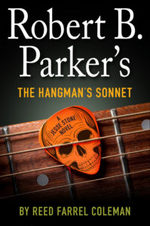
The Hangman's Sonnet Robert B. Parker’s The Hangman’s Sonnet

My original post

How do you possibly follow-up 2016’s Debt to Pay, especially with that ending, without dramatically altering the Jesse Stone flavor? I’m still not sure how Coleman did it, but he did — Jesse’s dealing with Debt to Pay in a typically self-destructive way, but is keeping his head mostly above water so he can get his job done, mostly by inertia rather than by force of will. Reflexes kick in however, and while haunted, Jesse can carry out his duties in a reasonable fashion until some friends and a case can push him into something more.

Coleman’s balancing of long-term story arcs and character development with the classic Jesse Stone-type story is what makes this novel a winner and puts this one on my list.

4 1/2 Stars

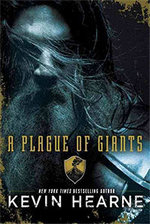
A Plague of GiantsA Plague of Giants

by Kevin Hearne

This sweeping — yet intimately told — epic fantasy about a continent/several civilizations being invaded by a race nobody knew existed is almost impossible to put into a few words. It’s about people stepping up to do more than they thought possible,more than they thought necessary, just so they and those they love can survive. It’s about heroes being heroic, leaders leading, non-heroes being more heroic, leaders conniving and failing, and regular people finding enough reason to keep going. It’s everything you want in an epic fantasy, and a bunch you didn’t realize you wanted, too (but probably should have).

5 Stars

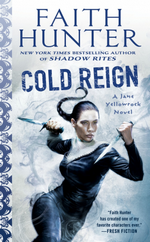
Cold ReignCold Reign

by Faith Hunter

My original post
Hunter continues to raise the stakes (yeah, sorry, couldn’t resist) for Jane and her crew as the European Vamps’ visit/invasion gets closer. Am not sure what’s more intriguing, the evolution in Jane’s powers or the evolution of the character — eh, why bother choosing? Both are great. The growth in the Younger brothers might be more entertaining — I appreciate the way they’ve become nearly as central to the overall story as Jane. I’m not sure this is the book for new readers to the series, but there are plenty before it to hook someone.

5 Stars

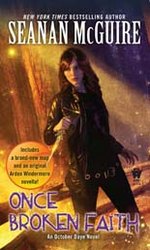
Once Broken FaithOnce Broken Faith

by Seanan McGuire
My original post

Poor planning on my part (in 2016) resulted in me reading two Toby Daye books this year, both just excellent, but this one worked a little bit better for me. Oodles and oodles of Fae royalty and nobility in one spot to decide what they’re going to do with this elf-shot cure leading to a sort-of closed room mystery (it’s just a really big, magical room) with peril on all side for Toby and her found family.

5 Stars

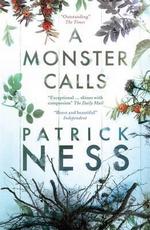
A Monster CallsA Monster Calls

by Patrick Ness
My original post

There were so many ways this could’ve been hacky, overly-sentimentalized, brow-beating, or after-school special-y and Ness avoids them all to deliver a heart-wrenching story about grief, death, love, and the power of stories — at once horrifying, creepy and hopeful.

4 1/2 Stars

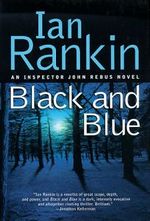
Black and BlueBlack and Blue

by Ian Rankin
My original post

Rankin kicked everything into a higher gear here — there are so many intricately intertwining stories here it’s hard to describe the book in brief. But you have Rebus running from himself into mystery after mystery, drink after drink, career-endangering move after career-endangering move. Unrelenting is the best word I can come up with for this book/character/plot — which makes for a terrific read.

5 Stars

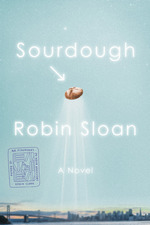
SourdoughSourdough

by Robin Sloan
My original post

This delightful story of a programmer turned baker turned . . . who knows what, in a Bay Area Underground of creative, artisanal types who will reshape the world one day. Or not. It’s magical realism, but more like magical science. However you want to describe it, there’s something about Sloan’s prose that makes you want to live in his books.

Do not read if you’re on a low carb/carb-free diet. Stick with Sloan’s other novel in that case.

4 1/2 Stars

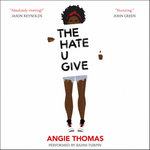
The Hate U Give (Audiobook)The Hate U Give

by Angie Thomas, Bahni Turpin (Narrator)

My original post

This was a great audiobook –and I can’t imagine that the text version was as great, I just didn’t have time for it. It’s the story about the aftermath — socially, personally, locally, nationally — of a police shooting of an unarmed black male as seen through the eyes of a close friend who was inches away from him at the time.

I think I’d have read a book about Starr Carter at any point in her life, honestly, she’s a great character. Her family feels real — it’s not perfect, but it’s not the kind of dysfunctional that we normally see instead of perfect, it’s healthy and loving and as supportive as it can be. The book will make you smile, weep, chuckle and get angry. It’s political, and it’s not. It’s fun and horrifying. It’s . . . just read the thing. Whatever you might think of it based on what you’ve read (including what I’ve posted) isn’t the whole package, just read the thing (or, listen to it, Turpin’s a good narrator).

5 Stars

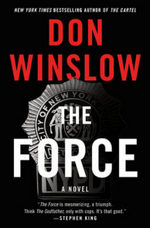
The ForceThe Force

by Don Winslow
My original post

There may be better Crime Fiction writers at the moment than Don Winslow, but that number is small, and I can’t think of anyone in it. In this fantastic book, Winslow tells the story of the last days of a corrupt, but effective (in their own corrupt and horrible way), NYPD Task Force. Denny Malone is a cop’s cop, on The Wire he’s be “real police” — but at some point he started cutting corners, lining his pockets (and justifying it to himself), eventually crossing the line so that he’s more “robber” than “cop.” Mostly. And though you know from page 1 that he’s dirty and going down, you can’t help get wrapped up in his story, hoping he finds redemption, and maybe even gets away with it.

But the book is more than that. In my original post I said: “This book feels like the love child of Tom Wolfe’s The Bonfire of the Vanities and Nicholas Pileggi’s Wiseguy. You really feel like you understand how the city of New York is run — at least parts of it: the police, elements of the criminal world, and parts of the criminal justice system. Not how they’re supposed to run, but the way it really is. [Winslow] achieves this through a series of set pieces and didactic pericopes.”

A police story, a crime thriller, a book about New York — oh, yeah, possibly the best thing I read last year.

5 Stars

There were a few that almost made the list — almost all of them did make the Top 10 for at least a minute, actually. But I stuck with the arbitrary 10 — these were all close, and arguably better than some of those on my list. Anyway, those tied for 11th place are: <

Skyfarer by Joseph Brassey (my original post), Deep Down Dead by Steph Broadribb (my original post), Briefly Maiden by Jacqueline Chadwick (yes, again) (my original post), The Twisted Path by Harry Connolly (my original post), Bound by Benedict Jacka (my original post), The Western Star by Craig Johnson (my original post), The Brightest Fell by Seanan McGuire (see? Another Toby Daye) (my original post), The Blinds by Adam Sternbergh (my original post), Hunger Makes the Wolf by Alex Wells(my original post).


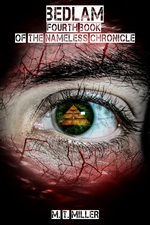
Bedlam by M. T. Miller

BedlamBedlam

by M. T. Miller
Series: The Nameless Chronicle, #4

eARC, 210 pg.
2017

Read: November 27 – 28, 2017


I was excited to open my email and see a new book from M. T. Miller waiting for me — but I’m not ready to say goodbye to this series. I do think this was the right point to wrap things up and exit, I just liked life better when I wondered when there’d be a new book about Nameless.

How to talk about this . . . this is really hard without just spilling the beans about everything.

We met Nameless as he seemingly climbed out of his own grave into a dystopian future of the Western US, not knowing anything about himself (inluding, obviously his name), but with a particular set of skills that enabled him to kill — which also seemed restorative. But he didn’t seem to be a monster. After three books of struggle to survive and find some measure of success, Nameless finally succeeded. He accomplished everything he set out to do, and then found a better way to look at life, an equanimity. Life still had challenges, but he has a new way to deal with them, a new confidence.

Then something appears, ready to take it all away — and how will Nameless react? Very differently than he would’ve before (while consistent with the guy we’ve come to know).

Not only that — but a lot of the mysteries surrounding Nameless are resolved. Questions I stopped hoping/expecting to get answers to were answered as we say goodbye to him and the world that Miller has created for us.

There’s a good degree of character development here for both Nameless and Rush — and a believable lack thereof for many others. Characters you liked in earlier books, you’ll still like. Characters that you were ambiguous toward earlier, you’ll probably still be ambiguous about.

About halfway through the book, Miller changes the rules — he does something gutsy and incredibly hard to discuss without ruining. Just when you get to the point where you pretty much accept what he’s doing, he changes it again. Up to this point, this was my favorite of the books — I really got into things. I liked it less with each new tack. Not that I didn’t appreciate the ambition, or Miller’s skill — it just changed Nameless’ story from Story Type X to Story Type Z. And I’ve never been a fan of Z, I don’t hate Z, but it’s just not my cup of tea. The more I think about it, I can see where this is justified by everything that’s happened throughout the series, and I can even defend it. I just don’t like it.

I guess you can compare it to what happened at the end of Lost or Moore’s Battlestar (both of which I liked, I should mention) or — the writers of those made a choice and executed it. I appreciate Miller’s choice and execution, but it’s just not something that’s every going to appeal to me. Basically this series consists of 1 novella and 3.5 novels that I enjoyed with .5 novels that was well done, but not my taste.

Like I said, I do think that this was the time to leave the series, I think Miller had done everything he could with Nameless, Rush and the rest. I wasn’t crazy about how he landed the plane, but I appreciated it for what it was. I can easily see others thinking I’m wrong about Z, and really digging the parts of the book that leave me cold — so please don’t take anything I said as a discouragement from reading either this book, or the series. I’m really looking forward to whatever he ends up doing next, because I do think I can see Miller’s growth over these 5 novels/novellas. It was a heckuva a ride, and I’m glad I came along for the ride. I heartily recommend it.

Disclaimer: I was provided a copy of this book by the author in exchange for this post and my honest opinion. Thanks, Mr. Miller! This didn’t impact my opinion of the book in any discernible way.

—–

4 Stars

In Medias Res: Briefly Maiden by Jacqueline Chadwick

as the title implies, I’m in the middle of this book, so this is not a review, just some thoughts mid-way through.

—–

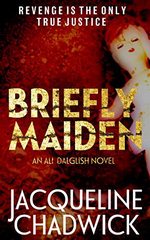
Briefly Maiden
Briefly Maiden

by Jacqueline Chadwick

Ali Dalglish, the best criminal profiler this side of Will Graham or Tony Hill, with a Tarantino twist is back. She’s not an amateur like she was in In the Still, and has a couple of more cases under her belt.

Then she’s called in to help with what seems like a lay-up of a case. Which is the biggest signal to a reader that this will be horrible — and boy howdy, this is. I’m at 49% and this is already one of the darkest, most twisted books I’ve ever read. And somehow, don’t ask me how, Chadwick has me loving this — I’m not getting a kick out of the depravity, mind you — but Ali and her interaction with her team and everyone else, I just can’t get enough of. But man . . . this book will eradicate any lingering suspicions you might have had about the reality and force of human depravity.

Actually, that reminds me: I could use a lot more of Marlene (Ali’s friend/assistant/Watson-y figure).

At this point, I’m sort of rooting for the killer — at least who Chadwick is making us think is the killer. The victims/intended victims thus far could be the primary antagonists in a book from just about every other crime series. I’m pretty sure I’ve figured out one of the mysteries — I’m fully prepared to be proven wrong, though.

Anyway, I’ll finish this tomorrow, so you can expect to see a full post early next week. But you should really read this book — and its predecessor, if you haven’t yet. I practically guarantee that you’ll love it.

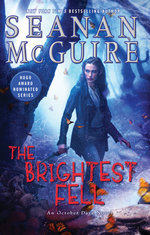
The Brightest Fell by Seanan McGuire

The Brightest FellThe Brightest Fell

by Seanan McGuire
Series: Toby Daye, #11

Hardcover, 289 pg.
DAW, 2017

Read: September 6 – 7, 2017

I still couldn’t see anything, which was unusual. Fae have excellent night vision. We’re like cats, able to see in the slightest trace of light. For it to be this dark, there had to be no light at all-that, or something had been done to my eyes. The thought caused a brief spike of panic, until I blinked several times and confirmed that I could still feel my eyes. No one had removed them or sealed my eyelids shut.

It says something about my life that this was a concern.

Surely, at some point, Toby will stop being lulled into a sense that everything is okay with the world — she starts this book by enjoying life, and a night out with her friends. Which is one of the surest signs that things are going to go horribly awry for her. And they do, before she can finish unwinding after the night out, there’s a knock on her door. Amandine, her mother, has stopped by for a visit.

Well, not really a visit. She wants to hire Toby to go find her older daughter, August. Toby’s never met her sister and really doesn’t want to get mixed up with anything involving August (who’s been missing for over a century) or her mother. Amandine has never been one to take no for an answer, instead, she takes hostages.

So, Toby’s off to find her sister August — which makes preventing war (like she’s been doing lately) look positively run-of-the-mill. I’m going to leave the plot summary at that. Because, like others, I don’t know how to talk about this without spoiling things that shouldn’t be. There are a couple of quotations (one from Toby, one from someone else) that illustrate what’s going on beyond this missing person hunt:

All my chickens were coming home to roost, and while I didn’t want them, I had earned them. I had earned them, every one.

“We are the sum of our actions . . . When desperation sets our course, those actions can blacken with remarkable speed.”

If that doesn’t describe the last couple of Iron Druid Chronicles, Dresden Files, and pretty much every Alex Verus book, I don’t know what does. The best of Urban Fantasy ultimately puts their protagonists in this situation — Toby’s been close to it before, but she’s dancing closer to the line here, sacrificing (or at least being prepared to sacrifice) so much to find her sister — and the number of things she won’t sacrifice is pretty small.

There’s not a whole lot of character growth and development here, there’s no time. We do see many of our old friends and acquaintances being themselves — maybe turned up to 11. One character, who will remain nameless, displays a degree of depth that we haven’t seen before. Toby grows a bit through this experience, if only to find out what extremes she’ll go to. She finds herself capable of changing her mind about someone –not easy for her to do (like most of us).

People are complicated. That’s the problem with people. lt would be so much easier if they could all be put into easy little boxes and left there, never changing, never challenging the things I decided about them.

This was a great read — in more than just the story, or characters — there are just some books where the whole is greater than the sum of its parts. This is one of them (though the sum of its parts was pretty good) — everything just clicked. McGuire drew me in and kept me there between the voice, the fact that we have 10 books of history with these characters, and the drama (and little bit of comedy). There was one point, where Toby does something brave, reckless and potentially stupid (especially if it came back to bite her), where I found myself muttering, “Oh, oak and ash! No!” I figure any book that has you under its spell enough that you end up borrowing oaths and curses from the protagonist is a pretty engrossing read. She didn’t listen to me, and she sure should have.

From the fun as all get out opening scene, to the ominous final sentence that should fill every Toby fan with dread (although it promises some great books), McGuire was firing on all cylinders here. Yeah, plenty came home to roost in The Brightest Fell, and it meant that those closest to Toby suffered, but she found a way to be Toby throughout — she didn’t surrender who she was, and she got things done the best she could. All the while bringing the reader along through her highs and lows with her. Can’t ask for more than that. (well..I guess you could, but why?)

—–

5 Stars

Page 15 of 22

Powered by WordPress & Theme by Anders Norén