Category: P-U Page 19 of 36

Fleshmarket Alley by Ian Rankin: Rebus finds himself in his most tangled case yet

Fleshmarket AlleyFleshmarket Alley / Fleshmarket Close

by Ian RankinSeries: John Rebus, #15

Hardcover, 420 pg.
Little, Brown and Company, 2005
Read: May 18 – 23, 2018

           Rebus had never seen children in a mortuary before, and the sight of« fended him. This was a place for professionals, for adults, for the widowed. It was a place for unwelcome truths about the human body. It was the antithesis of childhood.

Then again, what was childhood to the Yurgii children but confusion and desperation?

Which didn’t stop Rebus pinning one of the guards to the wall. physically, of course, not using his hands. But by dint of placing himself: an intimidating proximity to the man and then inching forward, until the guard had his back to the wall of the waiting area.

“You brought kids here?” Rebus spat.

This — even by Rebus’ standards — is a dark book, but we keep finding Rebus pushing back against it. It actually almost seems against his character — the cynicism and pessimism that is so definitive of him seems frequently absent. That’s not a bad thing — it’s just a little strange when you stop and think about it. Of course, there’s an easy line to draw between idealism and cynicism, and Rebus has always been an absolutist about justice — and doesn’t let much stand in his way to pursue it. This time there’s a lot more injustice that he seems to be targeting. Something about this murder that has gotten under his skin.

Maybe it’s because he knows it could be one of the last cases he’s involved in — St. Leonard’s has been reorganized and no longer has a CID, so the detectives have been reassigned throughout the city. He and Clarke were sent somewhere that reminds them on a regular basis that they’re not welcome — Rebus doesn’t even get a desk. The message is clear: he should retire. Fat chance of that happening while he can say anything about it.

Which leads to Rebus jumping in to help some old friends investigate the what appears to be a race-based murder, which ends up opening up a tangled web of crimes in so many circles it’s difficult to summarize (I deleted a couple of attempts to do that because they ended up undreadable) while staying spoiler-free. Just know that pretty much everywhere Rebus goes, he’s going to find something else that’s very, very wrong. The more Rebus learns about the victim — and his life — the less likely the fact that he’s Kurdish seems to play in his killing, but it’s inescapable — the press, other police, and every one he talks to about the case won’t stop bringing it up. It’s easier for everyone when first impressions are right, but when you can’t make the facts fit the narrative, you’d better have a detective like John Rebus around to actually get somewhere.

Siobhan meanwhile, gets involved in a couple of things that aren’t really cases but end up dragging her into one. First, she starts doing a favor for a couple she knew years ago when their daughter was raped and later committed suicide. Now their younger daughter has gone missing and they fear the worst. Also, there’s a couple of skeletons uncovered in Fleshmarket Alley that have an interesting story to tell. One thing leads to another and Siobhan becomes involved in a murder investigation that while not connected to Rebus’ keeps the two of them brushing into one another at interesting points.

We also get to see Big Ger for a few minutes, and isn’t that always fun?

There’s some odd tension between Rebus and Siobhan in these pages — something that feels natural, organic. They’re not as static as Spenser and Hawk (for one bad example), with differing goals, aspirations, etc. It’s good to see this dimension to their relationship, really. It makes be believe in them more.

Dark, tangled, well-paced, oddly timely for something written over a decade ago, and so wonderfully constructed that you really can’t believe it when all the pieces start to fall in place. Fleshmarket Alley/Close is just one more bit of evidence that Ian Rankin is a master of his craft.

—–

4 Stars
2018 Library Love Challenge

Born to the Blade 1.4: The Gauntlet by Michael Underwood: Kris’ opportunity finally knocks in the most satisfying episode yet.

The GauntletThe Gauntlet

by Michael R. Underwood
Series: Born to the Blade, #1.4

Kindle Edition, 53 pg.
Serial Box, 2018
Read: May 10, 2018
Since Episode One, we’ve been waiting for this: Kris Denn of Rumika facing the gauntlet. A series of 6 duels against the members of the Warders Circle of Twaa-Fei to gain a seat at the table for Rumika. Failure here means a decade (or so) before the next potential warder from Rumika has an opportunity. That’s pretty much the whole episode in a nutshell — can Kris make it?

Ultimately, I don’t think anyone will be shocked at the outcome — it’s about the journey, how the outcome is reached. Underwood nails it. A couple of weeks ago, I linked to a piece he wrote about how fight scenes can reveal character (he also tweeted about it this week), and this episode is him displaying that theory in practice. It really works — not only do we get a better idea about who Kris is, but we get a better understanding of the other Warders. Sure, we may not actually learn anything about Lavinia and Ojo — we just get more evidence of what we already know — but there are other duels.

This is longer than the previous two episodes — and it helped. The extra length gave things a chance to happen. I assume that’s not something we’ll see next week, but I can hope, right?

I’ve liked the previous episodes enough to justify the purchase of the season and to keep going, but I just flat-out liked this one. Good fight scenes, good character moments and the plot moves ahead. Where this goes next, I’m not sure, but having concluded this initial arc, I’m ready to see it. These authors took their time establishing this world, and carefully built up to this point and what lies beyond. I’m looking forward to see what else comes on this foundation.

—–

4 Stars

Robert B. Parker’s Old Black Magic by Ace Atkins: Atkins delivers a solid dose of Old Boston Magic

Old Black MagicRobert B. Parker’s Old Black Magic

by Ace Atkins
Series: Spenser, #46

Hardcover, 319 pg.
G.P. Putnam’s Sons, 2018
Read: May 2 – 3, 2018

Wow. The Forty-Sixth Spenser novel. Atkins’ seventh, too — it’s hard to believe. I can still remember some of these as clearly as if I read them yesterday — I’m a little vague on some of them, I have to admit (sorry Bad Business and Painted Ladies), but by and large, this is one of those series that’s defined me as a reader. This is one of those that in years to come that I’m going to remember pretty clearly, too, I’m glad to report.

Also, I’m pretty sure that 46 books in, nothing I say here is going to get the series a new reader. Still, I want to talk about it some.

So here’s the pitch: Locke, an older P.I. and friend/associate of Spenser, comes to him for help — he’d like Spenser to take over one of his cases, as she’s fighting a losing battle with a medical problem. Twenty years ago, a Boston museum was robbed — two paintings and one Picasso sketch were stolen. The Boston Police, the FBI and he have turned over every rock they can think of, he’s traveled the word just to find them. But he’s gotten no where — but there’s some new information coming to light — and with the statute of limitations about to kick in, there’s probably no better time to find the painting then now. Spenser agree and plunges right into the hunt.

Whether you’re Spenser or Nero Wolfe, the worst type of client has to be a committee or board* — a committee that’s not entirely sure they want you to work for them is even worse. The museum committee is led by a classic stuffed shirt, Spenser’s always fun to read when he’s antagonizing the pompous. We’ve also got another Spenser trope — a tough, no-nonsense, hard-to-impress client that Spenser slowly wins over — in the museum director. Putting the two of those together is a good combination. The committee has their own replacement for Locke — an anti-Spenser. British, polished, cultured (he’s probably forgotten more about art than Spenser has ever known), not obviously prone to violence, with an approach to this case that’s very different from Spenser’s. As much as I disliked him, I wish we’d gotten a little more time with him.

This is a novel largely dependent on the non-regular characters — clients, witnesses, sources, suspects. There’s no Hawk, no Sixkill, limited Susan, not enough Pearl — so who does Spenser talk to? Henry (a little more than usual), Frank, Quirk, and Rita — and a couple of chats with Vinnie Morris. Things are still not good with Vinnie, but there might be room in that direction — and common enemies can help a lot. Given the Gino Fish connection, of course we have to have a lot of Vinnie.

Spenser’s approach to this case is classic — he goes around talking to every witness, suspect that he can — annoying some, charming some, learning a very little. Then he moves on to the next and the next, and then circles back to the first. Prying a little more, and a little more. This is a very talk-y book. There’s the threat of violence — and even some actual violence — but most of the actual violence was associated with the original burglars, so we hear about it, but don’t see it. Atkin’s solid take on Parker-dialgoue means that this is a fast, fun read. And that’s fine with me.

Back when Robert B. Parker was writing multiple series, one of the fun aspects was watching characters from one series (typically the longer-running, Spenser books) show up in one of the others. Watching Capt. Healy’s interactions with Jesse Stone, for example, provided an interesting counter-point to the way Healy and Spenser got along. Now that there are three authors actively writing the Spenser-verse series, there’s an added twist to that. Recently (long enough ago that I don’t feel too bad saying it), Reed Farrel Coleman killed off Gino Fish. There are huge chunks of this book that are little else than seeing the effects of that death in Boston’s criminal society (for lack of a better term).

How do we get to Gino Fish? When it comes to Art Crimes — especially higher-end stuff — and the resulting fencing, at that time in Boston everything came through Gino’s fingers. Between the references to the late Gino and the fact that the crime in question took place two decades ago, there’s a lot of history covered here as Spenser talks to various criminals/criminal associates while hunting for these paintings. I do mean a lot of history — going back to events in Mortal Stakes (my first encounter with the series) and characters from The Godwulf Manuscript (the first in the series). Yes, there’s a certain element of this being fan-service-y nostalgia on Atkins part. As a serviced-fan, I’m not complaining. But I think it’s more, it’s the kind of series that Parker and Atkins have given us — one that is very aware of its past and draws on it always. (there’s an interesting contrast to be made with the Jesse Stone series on this front).

If you’re looking at this as a mystery novel, or focusing on the plot — I’m not sure how successful it is (better than many, but I’m not sure it’s up to Atkins’ typical standards). But, if you look at it as some time with old friends — Spenser primarily, but even Quirk, Belson, Henry, etc. — it gets better, especially if you’ve got as much history with these characters as many readers do. Throw in the atmosphere, the perfect voice, the longer-term character moves, and you’ve got yourself a heckuva read. Spenser #46 is as entertaining as you could ask for and I’m already looking forward to #47.


* Yes, it bothers me that I can only come up with two names for this truncated list. I can’t imagine that other P. I.’s are immune to this kind of client, but I can’t think of another example. I’ll probably lose sleep over this memory failure.

—–

4 Stars

Born to the Blade 1.1: Arrivals by Michael Underwood: The Start of a Promising Series

ArrivalsArrivals

by Michael R. Underwood
Series: Born to the Blade, #1.1

Kindle Edition, 61 pg.
Serial Box, 2018
Read: April 21, 2018

Publisher’s Blurb:

For centuries the Warders’ Circle on the neutral islands of Twaa-Fei has given the countries of the sky a way to avoid war, settling their disputes through formal, magical duels. But the Circle’s ability to maintain peace is fading: the Mertikan Empire is preparing for conquest and the trade nation of Quloo is sinking, stripped of the aerstone that keeps both ships and island a-sky. When upstart Kris Denn tries to win their island a seat in the Warder’s Circle and colonial subject Oda no Michiko discovers that her conquered nation’s past is not what she’s been told, they upset the balance of power. The storm they bring will bind all the peoples of the sky together…or tear them apart.

So there’s the setup for this “season” of 11 novella-length episodes, releasing weekly. Episode 1 — Arrivals is very much a pilot episode. After an action-packed opening, the story settles into introducing the pretty large cast of characters and the world the inhabit.

I found most of what follows pretty dry, and I had a hard time maintaining interest. It reminded me of the Game of Thrones pilot — at least for those of us who hadn’t read the book — so many names and places to learn that it was hard to pay attention to any story. It’s a rich world and most of the characters seem well-developed and complex — I just don’t care about any of it yet.

It is not the most accessible world, with a specialized vocabulary, and political and magic systems that the reader has to dig in to really understand. This isn’t a complaint — it’s just something to know going in. There’s no real pay off for the effort now, but you can assume it’s coming.

But those last couple of pages? Hoo-boy, there’s the hook — I might have had to wait longer than I wanted to just to get to this point, but it was worth the wait. I think that gave me enough motivation to read at least a couple more episodes. Given the strength of the list of authors involved in this one — Michael R. Underwood (the author of this installment), in particular — I’m confident that I’ll be singing the praises of Born to the Blade soon. You might want to jump on board now and enjoy the progress.

—–

3 Stars

A Question of Blood by Ian Rankin: Rebus Deals with Gun Violence on Multiple Fronts

A Question of BloodA Question of Blood

by Ian Rankin
Series: John Rebus, #14

Hardcover, 406 pg.
Little, Brown and Company, 2003

Read: April 19 – 21, 2018


I’m torn between quotations to open with, on the one hand, you have this one which captures the environment this novel takes place in — it’s a perfect encapsulation of the frustration of so many civilians. Particularly the ones in the town near the focal crime.

Fear: the crucial word. Most people would live their whole lives untouched by crime, yet they still feared it, and that fear was real and smothering. The police force existed to allay such fears, yet too often was shown to be fallible, powerless, on hand only after the event, clearing up the mess rather than preventing it.

On the other hand, this seems to be the perfect encapsulation of the sentiments of Rebus, Clarke, Hogan and so many (most?) of the police in this novel (and most police novels in general):

He checked the radio to see if anything bearable was being broadcast, but all he could find were rap and dance. There was a tape in the player, but it was Rory Gallagher, Jinx, and he wasn’t in the mood. Seemed to remember one of the tracks was called “The Devil Made Me Do It.” Not much of a defense these days, but plenty of others had come along in Old Nick‘s place. No such thing as an inexplicable crime, not now that there were scientists and psychologists who’d talk about genes and abuse, brain damage and peer pressure. Always a reason . . . always, it seemed, an excuse.

So the story is, an ex-SAS soldier walks in to a school, shoots three students and then kills himself. One of the students — the son of a local politician — survives. His dad sees this crime as an opportunity to get himself out of some PR trouble and some prominence — so he keeps popping up in inopportune places to grandstand and shine a negative light on the police. Which goes a long way to make a complicated situation worse for Bobby Hogan — the detective running the investigation. There’s not much to investigate, the only surviving witness has told his story, the culprit is dead — but there’s a lot of why questions floating around, Hogan’s got to try to answer some of them. Hogan knows two things: 1. His friend John Rebus was almost an SAS soldier, so he might understand the mindset of this man better than the rest, and 2. Rebus could use an excuse to get out of Edinburgh for a few days. The Army’s in town, doing what it can to shape the narrative — i.e. “this isn’t the way we train our men to be, maybe there’s something else going on.” Hogan’s having trouble getting anywhere, the press isn’t helping, and the evidence isn’t doing wonders for anyone at all.

I liked the fact that we’re dealing with Rebus’s military past again — it’s largely been untouched (at least to any real depth) since Knots & Crosses, and conversations between Rebus and Clarke show that he hasn’t talked to her about it at all. As much as the first book might have helped Rebus deal with some of what happened to him, it’s clear that there’s more t do. Hopefully, this is the start of it — at least to help him.

The more this crime is investigated, the less it looks as cut-and-dry as it was at the beginning. This was all wonderfully constructed, a strong multi-layered story that’ll keep the reader glued to the action to find out what happened (or why it happened). And it’s really not the best part of the novel — it could’ve been, easily. But no.

The reason that Rebus could use a few days away from home base is that he has a mysterious injury. One that could have a completely innocent explanation — or one that puts him at the center of a suspicious death investigation. There’s this creep who’s been stalking Clarke, threatening her. Rebus is seen at a bar with him one night, and the next day, he’s dead and Rebus is getting medical care that suggests he could have been present at the time of death. Clarke and Hogan believe him because he says he didn’t do it. Good ol’ Gill Templar isn’t sure (raising the question: who knows him best? Siobhan or Gill?), and frankly, none of Rebus’ legion of enemies in the police or press are less sure than Templar. There’s a little question about letting Siobhan fight her own battles rather than take the avuncular and/or misogynistic approach of helping her. The two get past that pretty quickly, but Clarke harbors a doubt or two about Rebus’ involvement.

Rebus, actually, wasn’t that concerned with protecting Clarke — he just used that situation to help him with another investigation. Which is typical of him. It’s this last story that’s really — in a way — the center of the whole novel. The events investigated, the motives for a lot of it, and the emotional core are all tied (at the very least) to this story. Rankin’s structuring of the novel in this way shows him at his best. And that’s really all I can say without ruining the experience for anyone (in fact, I arguably said too much).

Then there’s the last chapter == which is all I’m going to say about it — I’m torn. On the one hand, it seems to undercut a lot of the emotional weight of the climactic moments. But that doesn’t mean it wasn’t believable. It’s probably more believable than the alternative. Still .. . it left me dissatisfied. On the other hand, Rankin seems to be setting us up to revisit many of these characters in the future. I bet that’ll be worth it.

It’s hard to come up with things to talk about in a series that’s 14 books-old. It’s got to be hard to come up with things to talk about with a character that’s 14 books-old. Which might be part of the reason that Rankin circled back for another look at the end of Rebus’ time with the SAS, which definitely could use another look. How he did it — and the situations the characters found themselves in regarding that case,and all the others going on — is what makes Ian Rankin the modern legend that he is. A Question of Blood is one of those books that improves, the more you think about it.

—–

4 1/2 Stars

2018 Library Love Challenge

Quotation of the Day

“A man condemning the income tax because of the annoyance it gives him or the expense it puts him to is merely a dog baring its teeth, and he forfeits the privileges of civilized discourse. But it is permissible to criticize it on other and impersonal grounds. A government, like an individual, spends money for any or all of three reasons: because it needs to, because it wants to, or simply because it has it to spend. The last is much the shabbiest. It is arguable, if not manifest, that a substantial proportion of this great spring flood of billions pouring into the Treasury will in effect get spent for that last shabby reason.”

–Nero Wolfe

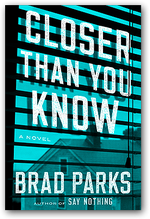
Pub Day Repost: Closer Than You Know by Brad Parks

I’m afraid this comes across as a collection of backhanded compliments — I hope I’m wrong about that. If so, I didn’t mean it.

Closer Than You KnowCloser Than You Know

by Brad Parks
eARC, 416 pg.
Dutton Books, 2017
Read: December 6 – 8, 2017

When you read a book about a dog — from Marley & Me to Where the Red Fern Grows — you’ve got a pretty good idea what’s going to happen near the end. Same goes for a Nora Ephron movie. Or a Horror flick. But you still read or watch them, and you cry, or laugh and “awww”, or jump in your seat when you’re supposed to. Even on repeat reads/viewings. But when done right, those things just work. Similarly, think of a roller coaster — you may stand outside the fence watching the thing go around the track while standing in line (some lines give you plenty of opportunity to study), and armed with that study, as well as the your own eyes, you know that track is going to drop from in front of you in a couple of seconds — or the coaster is about to hit the loop — that doesn’t stop your stomach from lurching when it does.

Why do I bother with that? It’s a thought that kept running through the back of my mind while reading Closer Than You Know. By the time I hit the 10% mark, if you’d made me write down what I expected to happen — the reveals, the twists, the story beats, etc. — I’d have gotten an A. I’m not saying I’m smarter than the average bear or anything, anyone who’s read/watched a handful of thrillers would’ve been able to, too. And it worked. It absolutely worked. How Parks pulls it off, I do not know, but he does. He’s just that good.

And all the stuff that I didn’t guess? Oh, man, it was just so sweet when Parks delivered it, there were a couple of scenes that just left me stunned. And, I should rush to note, the way Parks made a couple of reveals that I’d seen coming from the start were so well done, it was like I hadn’t called the shot.

In his previous stand-alone, Parks said that he wanted to write about the thing that scares him the most — his children being kidnapped. Closer Than You Know taps into a very similar fear — Child Protective Services taking your child from you, leaving you to the mercies of the machine where you’re presumed guilty. This time instead of “the bad guys,” faceless criminals, taking someone’s kids, this time it’s the forces of justice, of law and order, taking the child — they’re celebrated for it, they’re doing it “for the best interests of the child.”

What’s worse is that no one will tell Melanie Barrick why her infant son had been taken from his daycare. Melanie spent most of her childhood in the Foster Child system, and most of that time in the worse situations that system has to offer. This isn’t the stuff of nightmares for Melanie, mostly because I don’t think she has enough imagination for her subconscious to cook this up. And then she’s arrested for possession of cocaine and paraphernalia suggesting distribution — a felony that will guarantee she’s about to lose her little Alex for good.

Melanie is a “good person” — she’s one of the success stories that we don’t see as often as we’d like from the Foster Child system. She worked to put herself through college; has a great, supportive husband; a lousy job (but with benefits) — but one that will help her family get somewhere; and is a devoted, doting, loving mother. The kind of person we all want to think we’re surrounded by, but fear we probably aren’t.

From this point on, it’s a cyclone for despair as every part of her life — her job, her husband, her brother, her friends, her finances, her sense of privacy and security — is affected, is under siege during this ordeal. Can Melanie maintain her hope, maintain her innocence, maintain her conviction that she’ll hold her baby boy again?

In charge of prosecuting “Coke Mom” (the press is always so quick with these nicknames), is Amy Kaye. Amy Kaye could easily be the protagonist in any legal thriller, she’s just the kind of character you want to read in that kind of thing. She’s smart, dedicated and driven — at the moment, she’s primarily concerned with a serial rape investigation that she’s doing pretty much on her own. Amy starts to make progress for the first time in years when she’s put on this prosecution (largely for political reasons) — which she’s more than willing to do, but she hates to take away time and attention from the rape investigation. What really makes this difficult for Kaye is that Melanie is one of the most recent victims in this investigation.

So basically, things are not going well for these two women. There are occasional moments where there is hope, where there is a hint of humor, or life for them and it’s just enough to get you to let your guard down before the gears turn again and life gets bad. Melanie seems to be a living embodiment of Murphy’s Law — things just never go her way in this book. As she notes herself, addicts talk about hitting rock bottom — she isn’t like them, she keeps finding new bottoms. It’s during this part of the book, where the gears keep grinding away, where the Justice System seems most like a machine, and least like a method for determining (not presupposing) guilt, that things will really get to you. That stomach lurching I mentioned earlier? That image came from somewhere. It feels so real, it feels like this is something that actually happened to someone that Parks spent hours interviewing. I don’t know how you read these parts of the book and not get demoralized — but unable to put the book down, because you just have to, have to know what happens next.

As I’ve said before, I’ve been a Brad Parks fan since the first time I read his debut novel — and I miss Carter Ross, the star of his series. The bad thing for me reading Say Nothing and Closer Than You Know is that these are so good, he’s going to spend years doing books like this and I don’t know if he’ll be able to get back to Carter. On the other hand, I can’t complain really if he’s putting out reading that’s this compelling. Yeah, I said the book was largely predictable — and you’ll likely find it the same. But you will be wrong about some things and you won’t know how he’ll show you that you’re right. Think of a NASCAR race — we all know that it’s basically a series of guys going fast and turning left — but it’s how they go fast and turn left that makes all the difference. Parks delivers the goods — the word riveting doesn’t do this book justice. It’s compelling, riveting, gripping, exciting, and will make you rethink so much of what you may believe of the Criminal Justice and Child Protective systems. You will laugh, you will be stunned (in good and bad ways), you will give up hope for this poor mother.

And you will hate when the book ends — as much as you breathe a sigh of relief as you know you have some degree of closure.
Disclaimer: I received this eARC from Dutton Books via NetGalley in exchange for this post — thanks to both for this.

—–

4 1/2 Stars

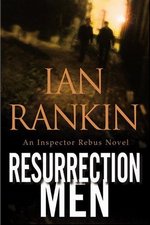
Resurrection Men by Ian Rankin

Resurrection MenResurrection Men

by Ian Rankin
Series: John Rebus, #13

Hardcover, 436 pg.
Little Brown and Company, 2002

Read: Rebruary 26 – 27, 2018

Another ghost in need of justice. Rebus had confessed to her once, after too many late-night drinks in the Oxford Bar, that he saw ghosts. Or didn’t see them so much as sense them. All the cases, the innocent — and not so innocent — victims . . . all those lives turned into CID files . . . They were always more than that to him. He’d seemed to see it as a failing, but Siobhan hadn’t agreed.

We wouldn’t be human if they didn’t get to us, she’d told him. His look had stilled her with its cynicism, as if he were saying that “human” was the one thing they weren’t supposed to be.

Thanks to sickness, a little bit of travel, and general increased busy-ness in my non-blog life, I almost missed my monthly check-in with John Rebus. Thankfully, for my Bookish-OCD, I made it just in time. Even better? This was one of the best in the series.

Rebus’ drinking and displeasure at Gill Templar’s handling of a murder investigation results in him being sent back to school. Literally. There’s a “retraining” course at the Police College for long-serving officers with discipline problems — sort of a last chance before the end of the road. These detectives are pretty similar, they’ve (mostly) been at this for years and aren’t going to change, no matter what happens in the course. Most of them know each other by reputation, Rebus is well-known, apparently — and he knows another classmate by reputation, he’s “the Glasgow Rebus.” After some counseling sessions, and some class lectures, the detectives are given a cold case to work to help learn something about teamwork. A couple of the detectives were associated with the original investigation in Glasgow, and even Rebus brushed up against it in Edinburgh. It’s not so clear how much teamwork is being learned, it’s clear that there are people who know things about the case that aren’t in the files — and they’re not sharing.

There is something about the case that could involve Big Ger, so guess who gets volunteered to talk to him? Rebus is not the only one talking to Cafferty, Siobhan Clarke (now a DS) has a couple of conversations with him. Watching Cafferty try to treat the two of the similarly, with different results, was quite entertaining — Clarke reacts to him differently than Rebus, but she doesn’t take the same angle with him that I think most would. I look forward to seeing the two of them lock horns in the future.

Speaking of Siobhan — never call her Shiv, by the way — once again, she threatened to take over the book for the first half or so. Rebus’ drinking with the other problem police and their cold case just didn’t grab my attention at first. But Siobhan’s dealing with the investigation — without her mentor to bounce ideas off of — and the various and sundry male detectives around her. Some of which work with her just fine, others . . . not so much — at the end of the day, DS Clarke is the one who puts the case together, and in a pretty compelling way. Did I enjoy things a little bit more when Rebus came along to interact with a bit? Yeah, but it wasn’t necessary. I also like the way that Rebus and Templar were the ones (along with Siobhan herself) noticing her doing things like Rebus this time, not just other police. He’s clearly left his stamp on her — for good or ill, the trick is watching her approach things the way he would, but remaining her own person. Which she has so far — and, I bet, will continue to do so.

But this is a Rebus novel, at the end of the day, and he does get the better material — as I mentioned, he interacts with Siobhan some because he and the others come to Edinburgh to follow a pretty shaky lead (mostly, it’s an excuse to get away from the college and drink somewhere else). Around this point, that storyline became more intriguing — and it did end up being the better part of the novel.

No one will ever say that the Rebus novels are a fun romp, but there was something about Rankin’s writing in Resurrection Men that seemed darker than usual — not a darkness because of violence or anything, just in the telling. Everything seemed worse, everything seemed sinister — it’s hard to put my finger on it exactly, but there was something grim going on. Yeah, I laughed a couple of times, smiled more often than that, but overall, the noir in this book was blacker. We see areas of Rebus’ psyche we haven’t seen much of before — ditto for Clarke — we also get some good Rebus/Cafferty backstory.

The structure of this novel is the real star — it was just perfect — we get a couple of mysteries to watch our detectives solve, plus a couple of other things go on. It even seems like Rankin doles out the information in an unusual way, only telling us what we need to know when we need to know it — there are times when we’re more in the dark than Rebus because he’s hiding the information from his fellow Last-Chancers and us (what does that say about Rankin’s readers?), but it works — this isn’t a case of a mystery writer cheating, it’s a deliberate attempt to build suspense. Complex without being complicated, brilliantly plotted but not in a way that feels totally organic. At a certain point, the way that all the storylines end up seem inevitable (even when you’re still not sure who the various killers are going to be), yet you’re surprised when the inevitable happens. But along the way, each step in the stories, each reveal, each development catches you off guard. Just fantastic structure to the book.

I thought it was strange that Rankin started this one off (I’m guessing for the American edition only) with a little description of the Scottish Police’s organization and rankings, which was nice (but most readers can figure it out on their own). Also included was a list of the cast of characters — organized by storyline. That was helpful, too. Unnecessary, but very nice. I’m not sure why these were used, but I’ll take them.

This one checked almost every one of my boxes — at least once, and never didn’t hold my interest. Rankin clearly knows what he’s doing and you should read this one — and the twelve before it.

—–

5 Stars
2018 Library Love Challenge

The Falls by Ian Rankin

The FallsThe Falls

by Ian Rankin
Series: John Rebus, #12

Hardcover, 395 pg.
Minotaur Books, 2001

Read: January 15 – 16, 2018

If anyone can do it, John, you can. I’ve always had confidence in your sheer pig-headedness and inability to listen to your senior officers.

After the last few novels which were characterized by several interlocking stories, The Falls centers on the disappearance of a young woman — Philippa Balfour. Flip is the daughter of an important banker, a student of sorts, and frequently the girlfriend of one of the least appealing young men you’ve met lately. She never showed up for a night of drinking with friends and her father’s influence got the police involved much more quickly than they would have otherwise. There are few that hold out much hope for a happy resolution to this case, but until a body shows up, that’s how they have to proceed.

Now, just because I said there’s only one case at the core of this book, that doesn’t mean it’s just one story. There’s the typical investigation, undertaken by a large number of detectives and under media scrutiny. Then there’s something that catches Rebus’ eye, which leads him on one path. Siobhan Clarke finds another loose strand to pull at, and uses much of her off-the-clock time following that. The two are aware of what the other is doing, but neither is all that interested in it. Readers, of course, know that one or both of them are going to make more progress than the rest of the Force and can just enjoy watching them.

That’s the strength of this book — Rebus finds some evidence that might tie this crime to others throughout Scotland over the past few decades. He clearly specializes in historical investigations, and it’s clearly a good idea for him to go down that path. Siobhan’s got a more tech-savvy take on it (and she doesn’t have all the skills necessary for that kind of work, but she’s able to stumble along with some help. Watching both of these two mavericks at work was such a blast (Siobhan once again is confronted with her colleagues pointing out her methods and focus approximating Rebus’). The actual solution to the mystery of Flip’s appearance was very satisfying and well-executed.

I spent a good deal of time missing Brian Holmes during the early pages — the DS that Siobhan is partnered up with just stressed how much isn’t Brian. And it goes downhill from there. Brian might not have been my favorite supporting character, but wow — he’s so much better than everyone else Siobhan has worked with (other than DI Rebus, of course). Maybe it helps that he was involved with that librarian, so he wasn’t trying to start something with her (minor spoiler, sorry).

The book starts with Watson’s retirement (not the last we see of him, which is nice), and newly-minted DCS Gill Templar has her work cut out for her. Not only does she need to lead the search for the missing daughter of an important Edinburgh banker, but she has to establish her authority. The way she goes about it rubs some the wrong way, and you have to wonder how long she can maintain things. Siobhan’s take on her new boss shows a good amount of discernment. One thing’s for sure, Rebus is going to miss Farmer Watson (but not his coffee).

Speaking of Gill, Rebus has a new romantic interest in The Falls, Jean Burchill. I liked Jean more than I ever liked Gill, Patience (low bar, there) or any of the others that have graced these pages. Her husband had been an alcoholic (of a different sort than Rebus), and sees Rebus’ vices in a very different light than other have. She doesn’t approve, but she can approach them more realistically than Patience ever did. I fear she won’t be around long, but that’s hopefully just cynicism on my part. (feel free to leave me in the dark on that front down in the comment box, folks).

Not just Farmer’s retirement, but Rebus has to deal with loss and a greater sense of mortality at points here. He and his contemporaries can’t help but sense their own retirement days approaching/looming. Also, Rebus may not add to his enemies list within the Police, but he’s deepened the antagonism a few have toward him. At one point, he goes out of his way to cultivate that — for a good reason, in his mind at least. But I’m not sure if he’s ever come closer to losing his job. Who knows what’d happen to him if that day comes.

This is one of those covers that makes you wish cover designers had to read the book — an inconsequential point, but when Rebus actually got to the titular location, I had to shake my head. (Other cover images I’ve seen for this aren’t as misleading).

This might not be as powerfully told, or as sweeping as some of the recent books have been. But I’m not sure I’ve enjoyed reading a Rebus novel more than this one — and could’ve easily read it in one sitting. This will be sure to please Rebus fans and could easily make some, too.

—–

4 Stars

2018 Library Love Challenge

My Favorite Fiction of 2017

Is he ever going to stop with these 2017 Wrap Up posts? I know, I know…I’m sick of them. But I’ve already done most of the work on this one, I might as well finish…Also, it was supposed to go up Friday, but formatting problems . . .

Most people do this in mid-December or so, but a few years ago (before this blog), the best novel I read that year was also the last. Ever since then, I just can’t pull the trigger until January 1. Also, none of these are re-reads, I can’t have everyone losing to my re-reading books that I’ve loved for 2 decades.

I truly enjoyed all but a couple of books this year (at least a little bit), but narrowing the list down to those in this post was a little easier than I expected (‘tho there’s a couple of books I do feel bad about ignoring). I stand by my initial ratings, there are some in the 5-Star group that aren’t as good as some of the 4 and 4½-Star books, although for whatever reason, I ranked them higher (entertainment value, sentimental value…liked the ending better…etc.). Anyway, I came up with a list I think I can live with.

(in alphabetical order by author)

In The StillIn The Still

by Jacqueline Chadwick
My original post

Chadwick’s first novel is probably the most entertaining serial killer novel I’ve ever read. Without sacrificing creepiness, suspense, horror, blood, guts, general nastiness, and so on — she gives us a story with heart, humor and humanity. The second novel, Briefly Maiden is arguably better, but I liked this one a teensy bit more — and I’m genuinely nervous about what’s going to happen in book 3 (not that I won’t read it as soon as I possibly can).

4 1/2 Stars

The Hangman's Sonnet Robert B. Parker’s The Hangman’s Sonnet

My original post

How do you possibly follow-up 2016’s Debt to Pay, especially with that ending, without dramatically altering the Jesse Stone flavor? I’m still not sure how Coleman did it, but he did — Jesse’s dealing with Debt to Pay in a typically self-destructive way, but is keeping his head mostly above water so he can get his job done, mostly by inertia rather than by force of will. Reflexes kick in however, and while haunted, Jesse can carry out his duties in a reasonable fashion until some friends and a case can push him into something more.

Coleman’s balancing of long-term story arcs and character development with the classic Jesse Stone-type story is what makes this novel a winner and puts this one on my list.

4 1/2 Stars

A Plague of GiantsA Plague of Giants

by Kevin Hearne

This sweeping — yet intimately told — epic fantasy about a continent/several civilizations being invaded by a race nobody knew existed is almost impossible to put into a few words. It’s about people stepping up to do more than they thought possible,more than they thought necessary, just so they and those they love can survive. It’s about heroes being heroic, leaders leading, non-heroes being more heroic, leaders conniving and failing, and regular people finding enough reason to keep going. It’s everything you want in an epic fantasy, and a bunch you didn’t realize you wanted, too (but probably should have).

5 Stars

Cold ReignCold Reign

by Faith Hunter

My original post
Hunter continues to raise the stakes (yeah, sorry, couldn’t resist) for Jane and her crew as the European Vamps’ visit/invasion gets closer. Am not sure what’s more intriguing, the evolution in Jane’s powers or the evolution of the character — eh, why bother choosing? Both are great. The growth in the Younger brothers might be more entertaining — I appreciate the way they’ve become nearly as central to the overall story as Jane. I’m not sure this is the book for new readers to the series, but there are plenty before it to hook someone.

5 Stars

Once Broken FaithOnce Broken Faith

by Seanan McGuire
My original post

Poor planning on my part (in 2016) resulted in me reading two Toby Daye books this year, both just excellent, but this one worked a little bit better for me. Oodles and oodles of Fae royalty and nobility in one spot to decide what they’re going to do with this elf-shot cure leading to a sort-of closed room mystery (it’s just a really big, magical room) with peril on all side for Toby and her found family.

5 Stars

A Monster CallsA Monster Calls

by Patrick Ness
My original post

There were so many ways this could’ve been hacky, overly-sentimentalized, brow-beating, or after-school special-y and Ness avoids them all to deliver a heart-wrenching story about grief, death, love, and the power of stories — at once horrifying, creepy and hopeful.

4 1/2 Stars

Black and BlueBlack and Blue

by Ian Rankin
My original post

Rankin kicked everything into a higher gear here — there are so many intricately intertwining stories here it’s hard to describe the book in brief. But you have Rebus running from himself into mystery after mystery, drink after drink, career-endangering move after career-endangering move. Unrelenting is the best word I can come up with for this book/character/plot — which makes for a terrific read.

5 Stars

SourdoughSourdough

by Robin Sloan
My original post

This delightful story of a programmer turned baker turned . . . who knows what, in a Bay Area Underground of creative, artisanal types who will reshape the world one day. Or not. It’s magical realism, but more like magical science. However you want to describe it, there’s something about Sloan’s prose that makes you want to live in his books.

Do not read if you’re on a low carb/carb-free diet. Stick with Sloan’s other novel in that case.

4 1/2 Stars

The Hate U Give (Audiobook)The Hate U Give

by Angie Thomas, Bahni Turpin (Narrator)

My original post

This was a great audiobook –and I can’t imagine that the text version was as great, I just didn’t have time for it. It’s the story about the aftermath — socially, personally, locally, nationally — of a police shooting of an unarmed black male as seen through the eyes of a close friend who was inches away from him at the time.

I think I’d have read a book about Starr Carter at any point in her life, honestly, she’s a great character. Her family feels real — it’s not perfect, but it’s not the kind of dysfunctional that we normally see instead of perfect, it’s healthy and loving and as supportive as it can be. The book will make you smile, weep, chuckle and get angry. It’s political, and it’s not. It’s fun and horrifying. It’s . . . just read the thing. Whatever you might think of it based on what you’ve read (including what I’ve posted) isn’t the whole package, just read the thing (or, listen to it, Turpin’s a good narrator).

5 Stars

The ForceThe Force

by Don Winslow
My original post

There may be better Crime Fiction writers at the moment than Don Winslow, but that number is small, and I can’t think of anyone in it. In this fantastic book, Winslow tells the story of the last days of a corrupt, but effective (in their own corrupt and horrible way), NYPD Task Force. Denny Malone is a cop’s cop, on The Wire he’s be “real police” — but at some point he started cutting corners, lining his pockets (and justifying it to himself), eventually crossing the line so that he’s more “robber” than “cop.” Mostly. And though you know from page 1 that he’s dirty and going down, you can’t help get wrapped up in his story, hoping he finds redemption, and maybe even gets away with it.

But the book is more than that. In my original post I said: “This book feels like the love child of Tom Wolfe’s The Bonfire of the Vanities and Nicholas Pileggi’s Wiseguy. You really feel like you understand how the city of New York is run — at least parts of it: the police, elements of the criminal world, and parts of the criminal justice system. Not how they’re supposed to run, but the way it really is. [Winslow] achieves this through a series of set pieces and didactic pericopes.”

A police story, a crime thriller, a book about New York — oh, yeah, possibly the best thing I read last year.

5 Stars

There were a few that almost made the list — almost all of them did make the Top 10 for at least a minute, actually. But I stuck with the arbitrary 10 — these were all close, and arguably better than some of those on my list. Anyway, those tied for 11th place are: <

Skyfarer by Joseph Brassey (my original post), Deep Down Dead by Steph Broadribb (my original post), Briefly Maiden by Jacqueline Chadwick (yes, again) (my original post), The Twisted Path by Harry Connolly (my original post), Bound by Benedict Jacka (my original post), The Western Star by Craig Johnson (my original post), The Brightest Fell by Seanan McGuire (see? Another Toby Daye) (my original post), The Blinds by Adam Sternbergh (my original post), Hunger Makes the Wolf by Alex Wells(my original post).

Page 19 of 36

Powered by WordPress & Theme by Anders Norén