Category: P-U Page 20 of 36

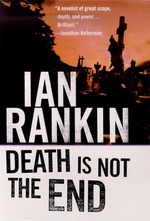
Death is Not the End by Ian Rankin

Death is Not the EndDeath is Not the End

by Ian Rankin
Series: John Rebus, #10.5

Hardcover, 73 pg.
St. Martin’s Minotaur, 1998

Read: December 4, 2017


I used Goodreads’ ordering of the Rebus series to determine when I read this novella — other sites might have led me to read this before Dead Souls, as it was published. I might have gotten more out of this book if I’d read it in that order, but it might have hurt the novel. I’m not sure.

Basically, this is one of the subplots of Dead Souls — Rebus’ looking for the missing son of a people he knew in school — in its original form. It’d be modified, expanded, and given a different ending in the novel. There’s a subplot, mildly related, involving organized crime and gambling — in much the same way that other crimes were associated with the missing person’s case in Dead Souls.

It is interesting to see how Rankin wrote something, and then came back a couple of years later and repurposed it. But that’s about all I have to say for this. It was interesting — but the version in the novel is better. The subplot didn’t do much for me, either. It was okay, but it really didn’t seem necessary.

The completist in me is glad I read it, but I think I’d have been okay with missing it, too.

—–

3 Stars

2017 Library Love Challenge

In Medias Res: Briefly Maiden by Jacqueline Chadwick

as the title implies, I’m in the middle of this book, so this is not a review, just some thoughts mid-way through.

—–

Briefly Maiden
Briefly Maiden

by Jacqueline Chadwick

Ali Dalglish, the best criminal profiler this side of Will Graham or Tony Hill, with a Tarantino twist is back. She’s not an amateur like she was in In the Still, and has a couple of more cases under her belt.

Then she’s called in to help with what seems like a lay-up of a case. Which is the biggest signal to a reader that this will be horrible — and boy howdy, this is. I’m at 49% and this is already one of the darkest, most twisted books I’ve ever read. And somehow, don’t ask me how, Chadwick has me loving this — I’m not getting a kick out of the depravity, mind you — but Ali and her interaction with her team and everyone else, I just can’t get enough of. But man . . . this book will eradicate any lingering suspicions you might have had about the reality and force of human depravity.

Actually, that reminds me: I could use a lot more of Marlene (Ali’s friend/assistant/Watson-y figure).

At this point, I’m sort of rooting for the killer — at least who Chadwick is making us think is the killer. The victims/intended victims thus far could be the primary antagonists in a book from just about every other crime series. I’m pretty sure I’ve figured out one of the mysteries — I’m fully prepared to be proven wrong, though.

Anyway, I’ll finish this tomorrow, so you can expect to see a full post early next week. But you should really read this book — and its predecessor, if you haven’t yet. I practically guarantee that you’ll love it.

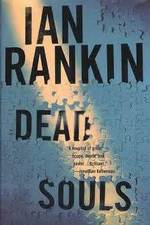
Dead Souls by Ian Rankin

Dead SoulsDead Souls

by Ian Rankin
Series: John Rebus, #10

Hardcover, 406 pg.
St. Martin’s Press, 1999

Read: November 10 – 13, 2017

For the best part of an hour, Rebus had been trying to blink away a hangover, which was about as much exercise as he could sustain. He’d planted himself on benches and against walls, wiping his brow even though Edinburgh’s early spring was a blood relative of midwinter. His shirt was damp against his back, uncomfortably tight every time he rose to his feet.

This might actually be the high point for Rebus in this novel — at least as far as the way he feels goes. The bad news is, this is from Chapter 1. Clearly, Jack Morton’s influence has clearly ended. Rebus is moments away from doing something he’ll regret almost instantly and that will have ramifications on everything he does for the foreseeable future, some of which will likely haunt him for more than that.

Which almost seems par for the course, I realize as I type that.

Anyway, Dead Souls focuses on crimes against children and what that can do to them — not just at the moment they’re victimized, but years later. There are also unintended (and fully intended consequences of crimes against adults throughout the book — Rebus’ own hands aren’t entirely clean here. Rebus’ actions in the opening pages cast enough of a shadow on him that his very brief involvement on another case is used by the defense to cast a shadow on the police’s investigation. He’s also tasked to investigate the apparent suicide of a police detective, informally, anyway. His main task is to work with Siobhan Clarke and a rookie to be a very obvious police presence to a convicted multiple-murderer, recently released and deported from the US back to Scotland. They really can’t do anything other than be visible for a few days until money runs out on the operation, but no one who knows this killer has any doubt that he’ll strike again, and the police are trying to discourage that. Unofficially, Rebus makes things uncomfortable for a pedophile in his new home — an act that will not go well and will spiral out of control — and he’s helping an old girlfriend look for her missing son.

Confused? Yeah, sure, I am — and I wrote that summary. Somehow, Rankin is able to take all that mess and assemble it into a novel that actually makes sense — with all of these stories being tied together, not just with over-lapping themes, but in reality in some sort of 6 degrees of separation fashion — even excluding DI Rebus. It’s really very impressive watching how Rankin weaves every strand of story and character in this novel — it always is, but this web seems more intricate than usual.

The other police in this novel interest me — I won’t go down the list, but those who can’t see why he cares about something, those who can’t understand why he’d do something with so little regard to consequences are on one end — the other end is filled by people (like Clarke) who know exactly what kind of man he is, and without approving or participating in the less-than-savory aspects his methods, can use him and them for good.

…he wondered why it was he was only ever happy on rewind. He thought back to times when he’d been happy, realising that at the time he hadn’t felt happy; it was only in retrospect that it dawned on him. Why was that?

There’s very little light in this novel, there’s introspection, there’s despair, there’s hatred, fear, prejudice, and opportunists taking advantage of all of that. But somehow the book never seems slow or ponderous — just Rebus chugging along, doing his thing. There’s also some strong action — some we see as it happens, but most we hear about after the fact (years or days alter). If you stop and think about how many criminal seem to “get away” with their crimes (as defined by not being charged/tried), it’s not that satisfying. If you think about the book in terms of Rebus (and through him, the reader) understanding what happened and why — it’s satisfying, not really cheerful, but satisfying in that regard.

The souls that are dead here have been killed by various means and methods over time — some realize that’s what they are, some haven’t a clue — some come to realize it in these pages (and some try to revitalize themselves). By and large, they’re dead souls walking, and seem intent on taking others with them. The question is: is DI Rebus among them?

I’m really not sure if I’ve said anything worthwhile about the book — it’s impressive, immersive and will not let you go — even days after finishing it. I don’t know that this is a bad one to be your first Rebus novel — you may be willing to cut him more slack for his questionable actions if you’ve got a history with him than you would be otherwise, however. For me, this is just further proof that Rankin is one of the best and is getting better (or was, at this point in his career anyway)

—–

4 1/2 Stars
2017 Library Love Challenge

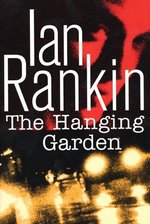
The Hanging Garden by Ian Rankin

The Hanging GardenThe Hanging Garden

by Ian Rankin
Series: John Rebus, #9

Hardcover, 335 pg.
St. Martin’s Press, 1998

Read: October 4 – 6, 2017

Rebus couldn’t get so excited. The whole enterprise had shown him a simple truth: no vacuum. Where you had society, you had criminals. No belly without an underbelly.

It’s just that kind of chipper optimism that keeps readers coming back to the Rebus books, isn’t it? The events in The Hanging Garden sure aren’t going to change his mind. There are three investigations at the core of this book (although another is referred to repeatedly) — but far more than 3 crimes.

The first is an investigation into an older gentleman who is suspected to be a former Nazi officer who was involved in the slaughter of an entire town in the waning days of WWII. Because of Rebus’ penchant for taking historical deep-dives when most police officers wouldn’t, he’s assigned to investigate this man. There are individuals from various organizations, governmental entities, and the press who are pressuring the accused and Rebus on this front.

The second involves an up and coming gangster — Tommy Telford’s smarter, quicker, and crueler than Rebus and the rest are used to dealing with — he’s also a genuine rival to Big Ger Cafferty (especially since Cafferty’s in prison). There’s a prostitute, a victim of human trafficking, that Rebus focuses on, trying to get her out of Telford’s control while using her to take him down. This becomes laden with some personal baggage (see below) and Rebus takes some risky moves that have some devastating consequences.

Lastly, Rebus’ daughter, Sammy is struck by a car in a hit and run and spends days in a coma. Based on a witness’ statement, Rebus becomes convinced that she was targeted thanks to her involvement with the prostitute and/or being his daughter. Either way, Rebus is out for blood — if only he knew who he was after. He strikes a deal to get criminals looking for the perpetrator while he’s helping/prodding the official police investigation. It really doesn’t matter which side of the law finds the driver, as far as he’s concerned, the end is the only important thing.

I’m not sure we needed the Nazi storyline — which by the way, is based on a real atrocity — but it serves to muddy the waters for Rebus and distract him. So it did play its part, and was good enough that I’m not complaining. Telford is a wonderful (fictional) criminal — I don’t want this guy walking around in my world, but in a novel? Love him. And the Sammy story — obviously, this is the emotional core to the book and is really well done.

When you have that many plates spinning, it’s hard to keep them going — and to do so in a way that balances the story telling to keep the reader engaged and not confused. Throwing in the personal aspects make it all the harder for Rankin — Clarke and Templar are involved with the police actions, and Jack Morton plays a significant role, too (and I finally liked him). Plus you have Sammy (mostly seen in flashbacks), Rhona (her mother) who comes to look after her comatose daughter. Patience Aitken is around as well — what she ever sees in Rebus, I’ll never know, it’s clearly a horrible match.

The way that Rankin has put this one together made it very difficult for me to talk about (I’ve tried to get this post written at least a dozen times). But that doesn’t mean it was hard to read — once I was in 10 pages or so in, there was no stopping. It’s a heckuva read, and I really can’t express more than that.

Rebus — mostly sober throughout, for a change — has some strong moments of self-assessment and self-examination, and is able to see/express things about himself and his approach to his work that many readers probably have intuited but it’s nice to have the man himself realize. Including one insight into himself that enabled me to finally figure out what makes Rebus and Harry Bosch different — something I’ll hopefully return to soon.

I didn’t expect that this would live up to Black and Blue, and it didn’t. But it wasn’t a let-down in any sense — it was a different kind of story, a different kind of crime, and different motivations for John Rebus. Still, the essentials are there: Rebus, his outlook, his tenacity, his humor, and his demons. Crime fiction doesn’t get much better than this.

—–

4 Stars

2017 Library Love Challenge

Happy Birthday, Archie!

My annual tribute to one of my favorite fictional characters (if not my all-time favorite).

On Oct 23 in Chillicothe, Ohio, Archie Goodwin entered this world–no doubt with a smile for the pretty nurses–and American detective literature was never the same.

I’m toasting him in one of the ways I think he’d appreciate most–by raising a glass of milk in his honor.

Who was Archie? Archie summed up his life thusly:

Born in Ohio. Public high school, pretty good at geometry and football, graduated with honor but no honors. Went to college two weeks, decided it was childish, came to New York and got a job guarding a pier, shot and killed two men and was fired, was recommended to Nero Wolfe for a chore he wanted done, did it, was offered a full-time job by Mr. Wolfe, took it, still have it.” (Fourth of July Picnic)

Long may he keep it. Just what was he employed by Wolfe to do? In The Black Mountain he answers the statement, “I thought you was a private eye” with:

I don’t like the way you say it, but I am. Also I am an accountant, an amanuensis, and a cocklebur. Eight to five you never heard the word amanuensis and you never saw a cocklebur.

In The Red Box, he says

I know pretty well what my field is. Aside from my primary function as the thorn in the seat of Wolfe’s chair to keep him from going to sleep and waking up only for meals, I’m chiefly cut out for two things: to jump and grab something before the other guy can get his paws on it, and to collect pieces of the puzzle for Wolfe to work on.

In Black Orchids, he reacts to an insult:

…her cheap crack about me being a ten-cent Clark Gable, which was ridiculous. He simpers, to begin with, and to end with no one can say I resemble a movie actor, and if they did it would be more apt to be Gary Cooper than Clark Gable.

I’m not the only Archie fan out there:

  • A few months back, someone pointed me at this post, The Wit and Wisdom of Archie Goodwin. There’s some really good stuff here that I was tempted to steal, instead, I’ll just point you at it.
  • Robert Crais himself when writing an introduction to a Before Midnight reprint, devoted it to paying tribute to Archie. — one of the few pieces of anything written that I can say I agree with jot and tittle.

In case you’re wondering if this post was simply an excuse to go through some collections of Archie Goodwin quotations, you wouldn’t be totally wrong…he’s one of the fictional characters I like spending time with most in this world–he’s the literary equivalent of comfort food. So just a couple more great lines I’ve quoted here before:

I would appreciate it if they would call a halt on all their devoted efforts to find a way to abolish war or eliminate disease or run trains with atoms or extend the span of human life to a couple of centuries, and everybody concentrate for a while on how to wake me up in the morning without my resenting it. It may be that a bevy of beautiful maidens in pure silk yellow very sheer gowns, barefooted, singing “Oh, What a Beautiful Morning” and scattering rose petals over me would do the trick, but I’d have to try it.

I looked at the wall clock. It said two minutes to four. I looked at my wrist watch. It said one minute to four. In spite of the discrepancy it seemed safe to conclude that it would soon be four o’clock.

She turned back to me, graceful as a big cat, and stood there straight and proud, not quite smiling, her warm dark eyes as curious as if she had never seen a man before. I knew damn well I ought to say something, but what? The only thing to say was ‘Will you marry me?’ but that wouldn’t do because the idea of her washing dishes or darning socks was preposterous.)

“Indeed,” I said. That was Nero Wolfe’s word, and I never used it except in moments of stress, and it severely annoyed me when I caught myself using it, because when I look in a mirror I prefer to see me as is, with no skin grafted from anybody else’s hide, even Nero Wolfe’s.

If you like Anglo-Saxon, I belched. If you fancy Latin, I eructed. No matter which, I had known that Wolfe and Inspector Cramer would have to put up with it that evening, because that is always a part of my reaction to sauerkraut. I don’t glory in it or go for a record, but neither do I fight it back. I want to be liked just for myself.

When a hippopotamus is peevish it’s a lot of peeve.

It helps a lot, with two people as much together as he and I were, if they understand each other. He understood that I was too strong-minded to add another word unless he told me to, and I understood that he was too pigheaded to tell me to.

I always belong wherever I am.

The Dark Prophecy by Rick Riordan, Robbie Daymond

The Dark ProphecyThe Dark Prophecy

by Rick Riordan, Robbie Daymond
Series: Trials of Apollo, #2

Undabridged Audiobook, 12 hrs, and 31 min.
Listening Library, 2017

Read: October 5 – 11, 2017


I’m not sure how to give a plot synopsis here — basically, it’s the continuation of the Trials of Apollo. He has another task to accomplish — another of the new emperors to take down before the third one, in the next book. It’s the same ol’ set up that has served Riordan so well — and will continue to do so for years to come.

Basically, Apollo/Lester has to go and find another Oracle. To do so, really, he has to face a lot of people that he’s hurt/disappointed over the millennia. He learns a lot about himself, matures a bit. That part was good — and the whole thing was entertaining. But it felt stale. I liked The Hidden Oracle a lot and was excited to see where this series went. Now, I’m not so sure. I’ll finish the series, but with greatly diminished expectations.

Not that it got into details, but there was a lot more intimated/flat-out said Apollo’s sexual history than I’m comfortable with for a MG book. The previous books in the Percy-verse suggested sexual orientation and activity, there was some romance, but this went much further than any of those. Honestly, it went a step too far. If this wasn’t a part of the Percy-verse, or was clearly marketed toward older readers, it wouldn’t have been that bad and I wouldn’t have said anything about it. But that’s not the case here.

As far as the audiobook goes, it was rough. Robbie Daymond was very aware that he was reading amusing material and he read it like each line was a punchline. It was the vocal equivalent of mugging for the camera, if you will. Now, there were a couple of serious and poignant moments, and Daymond pulled those off well, but otherwise it was tough to listen to.

I didn’t like the narration, and didn’t think the story/writing was as crisp as the first book in the series. But it was still entertaining enough. This isn’t the one to start reading Riordan. But it’ll do for his older readers.

—–

3 Stars

Ghost Hero by S. J. Rozan

Ghost HeroGhost Hero

by SJ Rozan
Series: Lydia Chin & Bill Smith, #11

Hardcover, 325 pg.
Minotaur Books, 2011

Read: October 13 – 16, 2017


So, Lydia Chin is approached by a potential client who is clearly lying about his identity about some paintings that are rumored to be in New York, and potentially on sale soon. This client really wants to establish a name for himself in Contemporary Chinese Art, and owning these paintings — preferably before they go on sale — will go a long way toward that. Here’s the trick, no one knows if they really do exist, or where they might be. Still the rumors persist, and in the “where there’s smoke, there’s fire” kind of thinking, they’ve got to exist. The trick is that the artist was killed in the Tiananmen Square protests of 1989. The client wants her to find them, prove they’re real (ideally), and help him get the leg up on the competition.

Like I said, Lydia doesn’t trust the man, and doesn’t understand why he picked her, but his cash is good and she’s curious (about him, the paintings, why he might want the paintings). So she takes the case, but doesn’t know where to start. Luckily, her partner, Bill Smith knows just the guy to talk to — another Chinese PI. Second generation ABC, from the Midwest, Jack Lee has an art degree and mostly looks into stolen and questionable art. Really, he’s the ideal PI to look for these paintings — and it turns out that someone else thought so, too and already hired him to do that. The three decide to work together on this, each playing to their own strengths.

From there, they dive deep into the New York Art Scene — at least those that brush up against Chinese Art — there are people who care about art, people who care about influence and money, and those who really, really care about art. Some care so much that Jack Lee gets shot at more than once. There are other threats as well — the idea that Chau might still be alive is a pretty hot political topic, and various governmental entities seem interested in what Lydia is up to.

The case is pretty interesting — and the various people that the trio interacts with are so interesting, so colorful, occasionally so despicable. The solution that Lydia cooks up is worthy of Blackadder’s Baldrick, but I kind of liked it. It works as a solution in a novel (I hope nothing like this would happen in real life). The ultimate reveal was a bit too obvious, but I still enjoyed it — and the rest of the mystery made up for it.

I’ve said time and time again, I love reading the back-and-forth between Lydia and Bill — adding Jack to that seems like a gamble. Thankfully, it worked wonderfully, he fits in with the two of them so wonderfully well that you wish he’d been around for a couple of novels previously to this. It almost doesn’t matter if the plot behind the book was entertaining, just get the three of these guys around a beverage or two and it’s worth it.

On the one hand, I’m kind of with Lydia in not understanding why someone would come to her to look for this — art isn’t her thing. On the other hand, she dealt with art dealers in China Trade, Chinese heirlooms in Reflecting the Sky, missing jewels in The Shanghai Moon (which yeah, is sort of precious minerals, but the art aspect of the Moon seems as/more important than the gems). So it’s not like she’s an utter novice. Sure, going to Bill Smith or Matt Scudder would seem like a bad move — but Lydia’s a good choice for this case (not as obvious a choice as Jack Lee, I grant you). And how could I not think of another PI in New York?

There was one thing I was disappointed in: I was truly hoping/expecting that this book would contain a clue (if not more) about why this was the last book to be published in the series — and given the 6 years that have passed since then, it seems pretty likely that this was it for the series. I’m assuming that it wasn’t planned, but can’t find any information about it (which means that someone’s going to come along in half an hour with a link to 15,000 words about the reason for this.) Update: A few hours after posting this, Rozan assured me that the series is not over, which is great to hear

A fun, fast-paced read that is enjoyable, engaging and all around entertaining — which is pretty much a great way to describe any novel from Lydia Chin’s point of view. Give this one a shot and then pick up the others (or pick up the others, and then this one — either way).

—–

4 Stars

2017 Library Love Challenge

Open and Shut (Audiobook) by David Rosenfelt, Grover Gardner

Open and ShutOpen and Shut

by David Rosenfelt, Grover Gardner (Narrator)
Series: Andy Carpenter, #1
Unabridged Audiobook, 6 hrs, 50 min.
Listen & Live Audio, Inc., 2008

Read: August 21 – 22, 2017


I honestly can’t believe I’ve talked to little about Andy Carpenter and David Rosenfelt here — it works out, when you look at timelines and whatnot, I’ve been reading him a long time before I started blogging. Still, it’s hard to believe since it’s one of my favorite series, and has been going for so long. Yeah, maybe the series is getting too long in the tooth, but for something to get to book 16+, it’s got to have a pretty solid foundation, right? That foundation is Open and Shut, where Rosenfelt introduces the world to Andy Carpenter, dog lover extraordinaire and pretty decent defense attorney.

Carpenter is a hard-working lawyer, taking on many cases that don’t pay much, but do some good. He’s obsessed with New York sports and his golden retriever. He’s going through a divorce — and has started dating his investigator. He’s got a great sense of humor, is known for a hijink or two in court, and seems like the kind of guy you want in your corner. His father is a big-time D. A., the kind of Prosecutor that people hope/assume theirs is — honest, hard-working, tough on crime. So it shocks Andy when his dad asks him to take on a client for a retrial on a murder case — a murderer his dad put away and his currently on Death Row.

Andy goes ahead with the case, not sure that he should. But it doesn’t take long before he starts to believe in his client’s innocence. About that time, things get interesting and maybe even a little dangerous.

Almost all the elements that go into a typical Andy Carpenter novel are here — even if they’re just being introduced at this point. The jokes are fresh, the clichés have yet to be developed. It’s a good mystery with some good non-mystery story elements. And, best of all, some really fun courtroom moments — not just antics on Andy’s part, but some good depictions of legal/trial strategy and the like. I’ve been thinking lately that the latter Carpenter books have been giving the courtroom short shrift, and seeing what Rosenfelt does here just solidifies that thinking.

Gardner’s narration didn’t blow me away or anything, but it was good work. I can easily believe him as Andy’s voice and can see him really growing on me (not unlike George Guidall and Walt Longmire). He’ll keep you engaged in the story, and deliver a line or two in a way that will bring a smile to your face.

Give this one a whirl, folks — text or audio — you’ll enjoy yourself.

—–

3.5 Stars

Black and Blue by Ian Rankin

Black and BlueBlack and Blue

by Ian Rankin
Series: John Rebus, #8

Hardcover, 391 pg.
St. Martin’s Press, 1997

Read: September 4 – 5, 2017


I wasn’t sure if I should open with:

He went into the toilets again, just to steady his breathing and look at himself in the mirror. He tried to relax his jaw muscles. In the past, he’d have been reaching for the quarter-bottle of whisky in his pocket. But tonight there was no quarter-bottle, no Dutch courage. Which meant for once he’d be relying on the real thing.

or:

…Rebus sat on a char in the interview room, watching his hands shaking.
‘You OK?’ Jack asked.
‘Know what, Jack? You’re like a broken record.’
‘Know what, John? You’re always needing it asked.’

Either one of those works to sum up Rebus’ frame of mind in the latter half of this book (and that’s largely because things had gotten worse for him by that point). Not that things were ever going his way in this book.

Following his gutsy political moves in the last book he’s been assigned to the worst police station in Edinburgh and a case he worked early in his career as a Detective with his mentor has come under increased scrutiny thanks to some media attention, and an underdog convicted of that crime who is able to cast some doubt on the original investigation. Meanwhile, a serial killer from the late 60s (who remains uncaptured) has inspired a copycat. Rebus (like every detective in Scotland, it seems) is on the fringes of this investigation. Oh, yeah, and there’s an unrelated suspicious death that Rebus needs to investigate.

Four cases, with more in common than anyone expects until the most tenacious cop east of Harry Bosch starts doing his thing. He starts following threads that take him far from his desk and home — Glasgow and eventually Aberdeen — and the oil platforms north. While dodging the press (more persistent that he’s used to) superior officers and an internal investigation, Rebus moves around the country picking at clues and hunches while getting under the skin of criminals, cops, oil company executives, and one serial killer.

There are so many police officers running around this book, some we know, some we don’t. Siobhan Clarke has a small, but pivotal role to play. Brian Holmes is around helping Rebus unofficially, while things with Nell are at their worst. Jack Morton, Rebus’ old drinking pal plays a significant role in this novel — he’s clean and sober now, and is convinced that’s what Rebus needs to do, too. Gil Templar needs Rebus’ help, very unofficially. There are new detectives and from Glasgow, Aberdeen and Edinburgh for readers and Rebus to meet — the main thing they all seem to have in common is that they don’t want Rebus mucking around in their cities.

I don’t know if I’ve seen Rebus more self-destructive. He’s drinking more than normal (which is saying something) and seems to care less than ever about what his superiors think of him (which is also saying something). Some of his wry sense of humor remains — almost entirely buried under cynicism. Rebus has had doubts about what he and his mentor did years ago, and the renewed attention isn’t helping his sense of guilt. He is far more interested in the serial killer cases than he ought to be professionally, it’s become a habit that threatens to distract him from his actual duties. His personal demons are almost as much of an antagonist than anyone he could possibly arrest in Black and Blue. Yet, he investigates in the same way he always does — and the way he wraps up most of the cases carry his signature style.

Black and Blue is intense, it is ambitious — for most of the book, it’d be easy to see this as being the end of the road for Rebus (if I wasn’t fully aware that 13 other novels had been published with at least one more announced) — not that you’re all that worried about him living through the end, you’re more worried that he’ll be unemployed by the end. It’s one of those novels that makes you want to ignore obligations, work and family — none of which can be as interesting or pressing as the book. You could cut out half the murders from this novel and it’d still be a winner, including all of them makes this something more than that.

I went into this one with a mix of trepidation and anticipation — I’ve heard that this was where the series took a turn for the better. I recently heard an interview with Rankin where he described it that way — sales, awards, critical acclaim, all came with this book. So I was worried that I wouldn’t see what so many had before — but was excited to try. This one lives up to expectations, as high as they might be. Just a stunning work. I honestly don’t know how Rankin will top this — I’m not sure how easy it’ll be to equal it.

—–

5 Stars
2017 Library Love Challenge

Let it Bleed by Ian Rankin

Let it BleedLet it Bleed

by Ian Rankin
Series: John Rebus, #7

Hardcover, 287 pg.
Simon & Schuster, 1996

Read: August 9 – 10, 2017

He stood there shivering after the warmth of the pub and his car. He was a few yards from where the boys had jumped. The area was cordoned off with metal barriers, anchored by sandbags. Two yellow metal lamps marked off the danger area. Someone had climbed over the barriers and laid a small wreath next to the broken rail, weighing it down with a rock so it wouldn’t be blown away. He looked up at the nearest of the two vast supports, red lights blinking at its summit as a warning to aircraft. He didn’t really feel very much, except a bit lonely and sorry for himself. The Forth was down there, as judgmental as Pilate. It was funny the things that could kill you: water, a ship’s hull, steel pellets from a plastic case. It was funny that some people actually chose to die.

“I could never do it,” Rebus said out loud. “I couldn’t kill myself.”

Which didn’t mean he hadn’t thought of it. It was funny the things you thought about some nights. It was all so funny, he felt a lump forming in his throat. It’s only the drink, he thought. It’s the drink makes me maudlin. It’s only the drink.

Yeah, right.

Before we get to this moment of self-deception (or self-mockery, it could go either way with his sense of humor), we’re treated to what’s quite possibly the most action-packed few pages in the series thus far — more happens in the first 6 pages of this novel than can happen in chapters of Rebus novels. Two suspected kidnappers are leading the police on a high-speed chase, and no one’s relishing it more than Chief Inspector Frank Lauderdale. No one’s hating it more than Inspector John Rebus. Things go really bad from there, but not in the way that anyone expects (least of all the reader, as jaded as we might be from too many crime novels).

While the police are still trying to sort out what exactly happened there, a man walks into a (poorly attended) public meeting with a Councilman and shoots himself in front of the Councilman. Once Rebus visits the widow, something starts bugging him. There’s just something wrong with that suicide (more than just what has to be wrong to lead to a suicide). Rebus starts asking some questions. Before he realizes it, he’s investigating two incidents of suicide connected to two Councilmen.

And then pressure comes down on Rebus to stop. Which works about as well as you’d think. He’s “encouraged” to take a few days of leave, which he uses to dive in without restraints to get his answers. This series as dabbled in political intrigue, power brokering and the like before, Let it Bleed takes it up a notch. What can happen to Rebus if he falters — or what can happen to him if he makes all the right people happy — shows that he’s in a whole other league now.

And then after all the action at the beginning of the novel, Rankin gives us an incredibly talky ending. And it works. Not many novels about police officers or detectives end with as much dialogue, as many meetings, as this does, but it’s entirely satisfying. No one’ll be sitting there for the last couple of chapters just wishing for a car chase, a gun fight, or anything like that. Rebus being smarter, wilier, and unwilling to bend is what makes this ending not only inevitable, but just what the reader needs.

There are a lot of criminals in this novel, but most of them aren’t your typical mystery novel “bad guys.” They’re guys who take advantage of the system, manipulate the system, and then try to protect their assets (that last one is the most problematic). There are textbook villains — and not all of them pay for it — but with Rebus around, you know that some justice will be meted out.

Our favorites are back — so is Patience — Rebus’ daughter’s back in Edinburgh, on her own now. Siobhan Clarke, Farmer Watson, Gill Templer, and Brian Holmes all are involved. Clarke is the most interesting, yet again, her determinism and ability to stay (pretty much) in line with her superiors while helping Rebus make her a fun character to spend time with. She’s more involved in these cases than she has been in the past — and it’s good to see Rebus having someone allied with him. Thankfully, she’s a good police officer, too. Because, honestly, Rebus is a horrible police detective. He’s just too much of a lone wolf, too intuitive, not the kind of detective you want building a case for you. With Templer, Farmer and Clarke around, at least he’s got some good, capable help.

A gripping, tense, intriguing, and frequently funny, novel. Let it Bleed is just a great book. This series has been growing on me, little by little for seven books now, that’s pretty clear. Let it Bleed is above and beyond the best of the bunch, and I am looking forward to what’s coming up.

—–

4 1/2 Stars

2017 Library Love Challenge

Page 20 of 36

Powered by WordPress & Theme by Anders Norén