Category: P-U Page 21 of 36

Dead is Good by Jo Perry

Dead is GoodDead is Good

by Jo Perry
Series: Charlie & Rose Investigate, #3

Kindle Edition, 282 pg.
Fahrenheit Press, 2017

Read: August 3, 2017

Oh, and after all this time I learned something else about being dead.

Death is failure.

Death is loss.

Everything—who you are, what you know—goes.

Whoever you thought you were, you weren’t and you’re not.

When he was alive, Charlie Stone was married multiple times to pretty horrible women (if we’re to believe him — and we might as well, he seems pretty upfront and honest about this kind of thing), not that he was any catch, either. But he really only loved one person, Grace Morgan. Grace broke things off with Charlie and moved on with her life, but apparently after hearing about his murder, she was moved to change her approach to art — deciding to challenge the audience, forcing them to realize how close to death they are.

Yeah, it sounds pretty silly and pretentious to me, but hey…that’s not the important part of the story. Maybe if we got more examples of her art, I’d care more and maybe even understand. What is important about Grace, for our purposes, is that her life is in danger, it’s because of this danger that Charlie and Rose have been brought from their afterlife-limbo back to Earth.

The book opens with one of the more blatant suicide-by-cop scenes you’ve ever read, which is intended to serve as protection for Grace. It doesn’t work out, or the book would be really short. Powerless to do anything but watch and hope things turn out okay, Charlie and Rose travel around L.A. discovering for themselves what it was that endangered Grace in the first place — which brings them into a world of drugs, sweatshop workers, deceptive piñatas, and smuggled birds.

This is a very tangled story, it takes Charlie quite a while to put the pieces together — Rose has her own priorities in this mess and spends some time away from Charlie, unwilling to turn her focus on his behalf. The way that this criminal enterprise is eventually revealed to work not only seems like something that really exists, but is revealed in a way that is narratively satisfying.

Charlie will tell his readers over and over that there’s no character growth in death — that’s nonsense. Post-mortem Charlie is a much more emotionally mature and self-sacrificing kind of guy than pre-mortem Charlie was. In this book we see him come to — or at least acknowledge — a greater and deeper understanding of what love is, and what he allowed his previous relationship to become. It may not do him any good in the afterlife, but Charlie is better for it, and in someway we can hope that Grace is better off having gone through all this, so that whatever life has in store for her can be tackled face-on.

I love these characters — even while we readers don’t fully understand their circumstances, how they know where to go, what brings them to this world at certain times. Even while they don’t have much better of an idea than we do (at least Charlie doesn’t). I love how while they can’t interact with their environment, the people they see and events they watch unfold, they are driven to find answers, driven to care about what’s happening. There’s something about that compulsion — and success they have in figuring things out — that matters more than when Bosch or Spenser or Chin and Smith put all the pieces together to thwart someone.

This wasn’t as amusing as previous installments, but it was just as satisfying — maybe more so. For a good mystery with oddly compelling characters, once again, look no further than Jo Perry.

The L.A. County Department of Medical Examiner-Coroner has a gift shop?? Why isn’t anyone investigating this? It may be real, it may be popular and legal. But surely that’s a crime against tact, right?

—–

4 Stars

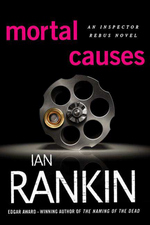
Mortal Causes by Ian Rankin

Mortal CausesMortal Causes

by Ian Rankin
Series: John Rebus, #6
Hardcover, 310 pg.
Minotaur Books, 1994
Read: July 15 – 18, 2017

When he’d washed his eyes last night, it had been like washing behind them as well. Always it came to this, he tried to do things by the books and ended up cooking them instead. It was easier, that was all. Where would the crime detection rates be without a few shortcuts?

Before Rebus gets to his shortcuts, he’s called to investigate a homicide. A particularly grisly one, reminiscent of some that Rebus saw in Northern Ireland when he was serving there.

It’s his familiarity with that execution that gets him loaned to a special squad also investigating the homicide, especially as it seems tied into some gun smuggling. Rebus isn’t pleased at all to be the new guy — much less, the temporary new guy — on a team, as much as he seems to appreciate some of the individuals on the team (while others make him think more fondly of Chief Inspector Lauderdale). The investigation takes him to Northern Ireland to collect some intelligence, to a dangerous neighborhood, and he brushes up against an American who’s funneling guns of all kinds to (and through) Edinburgh.

In the midst of all of this, Rebus has some drama in his personal life — nothing involving his tenants or brother, but things with Patience Aitken aren’t going as smoothly as one might want (are they ever?) — and there’s another woman who has Rebus in her sights (the guy isn’t a catch, from what I can tell — how does this happen so regularly?).

Throw in an appearance by Big Ger Cafferty while the bodies are piling up and you’ve got yourself a story.

I’m not sure why I don’t have much to say about this one. Maybe because we live on this side of the Good Friday Agreement? But that doesn’t seem to ring true. Rebus is Rebus, Clarke is Clarke, Holmes is Holmes, Farmer Watson is off the wagon, but still pushing his bad coffee . . . the new squad ha some interesting characters, but we don’t spend much time with them. There are some great and colorful characters we brush into during the investigation, too. I don’t know. I liked it, but I can’t think of anything to say beyond that.

There’s a lot to commend in this novel, from great lines like: “He’d had wrong hunches before, enough for a convention of the Quasimodo fan club”; to the wide-ranging sources of trouble for Rebus; to the horrible history and equally horrible present behind the crimes — this is a solid and haunting novel. Something about this was a little off, I’m not sure what — at least as I think back on it, it doesn’t seem as fully developed as the last two. But in the moment I was gripped. I’m not saying that this isn’t fine, I just know Rankin can do better.

—–

3.5 Stars
2017 Library Love Challenge

Pub Day Repost: The Right Side by Spencer Quinn

The Right SideThe Right Side

by Spencer Quinn
eARC, 336 pg.
Atria Books, 2017
Read: May 11 – 12, 2017

Okay, since I first opened the pages of Dog On It 8 years ago, I’ve been a Spencer Quinn fan — it probably took me two chapters to consider myself one. So it’s kind of a given that I’d like this book — but only “kind of.” This was so far from a Bowser & Birdie or Chet & Bernie book that they could be written by different people.

Sgt. LeAnne Hogan was an excellent athlete in her childhood and teen years, and then she joined the Army (deciding her West Point plans would take too long — an oversimplification that’ll do for now) and became an excellent soldier, serving multiple tours in combat zones. During her last sting in Afghanistan — as part of a team working to build intelligence sources among Afghan women — she is involved in an attack that leaves some dead and her injured — physically and mentally.

Her memories of that fateful day are vague and dim at best, but the scars will not leave. Not only that, she lost an eye, her confidence, her future plans, and career. She slowly befriends a woman who lost part of her leg to an IED in Iraq who shares a room with LeAnne in Walter Reed. Marci dies suddenly and unexpectedly — and that is too much for LeAnne. She leaves the hospital immediately and sets off on a drive across the country, she really doesn’t have a plan, but she needs to be somewhere else.

It’s pretty clear that LeAnne is suffering from PTSD on top of everything else — as you’d expect. She comes across as angry and rude to almost everyone she runs across and exchanges more than a few words with. She eventually finds herself in Marci’s hometown — where her daughter has gone missing. For the first time since the day everything changed, LeAnne has a purpose — bring her friend’s daughter home. Along the way, she LeAnne gets adopted by a large dog who will prove an invaluable aid in this challenge.

LeAnne is a great character — not a perfect person by any means, but you can see where a lot of writers (novelists or journalists) would try to paint her as one. She has huge flaws — some of which are easier to see after the injury (and some of them are new after it, too). There are some other good characters, too — even if you don’t necessarily like them (LeAnne’s mother would be an example of this — she’s trying to do the right thing, but the reader can sense LeAnne’s apprehensions toward her — and will likely share them). The people in Marci’s hometown (particularly those that are related to her) are the best drawn in the book — and I’d be willing to read a sequel or two just in this city to spend more time with them. Not everyone gets what LeAnne’s going through — some don’t know how to react to her — but those that come close will endear themselves to you.

The dog, Goody, isn’t Chet, he isn’t Bowser — he’s a typical dog, no more (or less) intelligent than any other. Goody won’t be serving as the narrator in a story any time — he will drink from the toilet bowl and ignore a lot of what LeAnne wants him to do.

Like I said, I’m a Quinn fan — but I didn’t think he had this in him. Funny mysteries with dogs? Sure, he’s great at those. But sensitive explorations of veterans dealing with the aftermath of life-altering injuries? I wouldn’t have guessed it. But man . . . he really got this flawed character, this incredibly human character, right. There’s a couple of moments that didn’t work as well as they should’ve — a couple of moments that were hard to believe in a book as grounded in reality as this book was. But you know what? You forgive them easily, because so much is right with this book — so much just works, that you’ll accept the things that don’t. It wasn’t all dark and moody — there’s some hope, some chuckles, a lot that is somber and sad, too. While not a “feel good” read by any means, you will feel pretty good about who things end up.

This is probably categorized as a Thriller, as that’s where Quinn’s readers are — but I can see a case for this being labeled General Fiction (or whatever synonym your local shop uses), it’s flexible that way. This is Spencer Quinn operating on a whole new level with a character we need more like — such a great read.

Disclaimer: I received this eARC from Atria Books via NetGalley in exchange for this post — thanks to both for this.

—–

4 1/2 Stars

Collared by David Rosenfelt

CollaredCollared

by David Rosenfelt
Series: Andy Carpenter, #16

eARC, 336 pg.
Minotaur Books, 2017

Read: June 13 – 14, 2017

I know I take dog-loving to a somewhat absurd degree, but what he just said pleases me. Someone who doesn’t care about dogs, or this one in particular, would have said, “It’s about the dog being found.” But he said Cody instead of the dog, which to me is a sign of respect and caring.

I may need to get out more.

Cody has been assumed to have been one of two victims of a kidnapping — the other was the baby the dog’s owner had recently adopted. It’s been two and a half years, with no trace of either. The mother’s ex-boyfriend and ex-employee has been convicted for the crime, on some pretty flimsy evidence. Now Cody has been left at the front door of The Tara Foundation. Naturally, once Andy is told about this, he brings in the police and the dog’s owner (a friend of Laurie’s, as coincidence would have it). The question at the front of everyone’s mind is: can the dog somehow lead to answers about her son?

Jill, the boy’s mother and Cody’s owner, asks Andy to look into this for her. Almost as soon as he begins, Andy uncovers some evidence that leads him to become Keith’s attorney and get him a retrial. Andy is pretty clueless (as is everyone) why someone would kidnap the boy and the dog (and return the dog), not to mention frame Keith for the crime. But while he can’t answer that, he can chip away at the evidence that put Keith behind bars — the only hope the boy has is that by doing so, someone may stumble on an explanation for what happened to him.

Along the way, Andy’s associate Hike has to go down to North Carolina to do a little research. While there, something happens to him — I won’t ruin anything for you, but it’s a lotta fun for people who have been around since Hike’s introduction — you will enjoy it. Laurie does what Laurie does, ditto for Marcus (who might be his most-Marcus-y here) and Sam. I do worry that Rosenfelt isn’t doing much with these characters beyond their regular heroics and chuckle-worthy antics, but we got some good Hike material this time, maybe it’ll be someone else’s turn to shine next. I don’t think the addition of Ricky to things added that much to the series, and that’s the last major change since Hike came along.

I really would’ve appreciated a little more courtroom action, but I’m not sure what else could’ve happened. It just seems like less time is being given to the courtroom lately — maybe I’m wrong. I can’t imagine that Andy would approve of someone doing the work to determine if I’m right or not — he sure wouldn’t — so let’s just assume I am.

I sound like I’m complaining about the book — that’s not really my intention. I wouldn’t expect so much from it if I wasn’t such a fan. Collared has a clever mystery, some funny moments, a nice twist or two, and we get to spend time with characters that readers have come to know and like. For a series 16 books in, that’s pretty good. Where else are you going to get a friend of the protagonist describe a potential suspect like this?

“Because Kaiser is a bad guy—-a very bad, very dangerous, very evil guy. He might even be a Cardinals fan.”

It’s a fun read — from the moment that Andy assembles the family to help him decide if he’ll renew his law license to the party at Charlie’s, Rosenfelt keeps you turning the pages with a smile on your face.

Disclaimer: I received this eARC from St. Martin’s Press via NetGalley in exchange for this post — thanks to both for this.
N.B.: As this was an ARC, any quotations above may be changed in the published work — I will endeavor to verify them as soon as possible.

—–

3.5 Stars

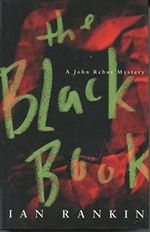
The Black Box by Ian Rankin

I thought I’d scheduled this for yesterday, well, I’d intended to, but I typo’ed the date. So, hey, enjoy a bonus post to make up for the recent bits of silence.

The Black BookThe Black Book

by Ian Rankin
Series: John Rebus, #5

Hardcover, 278 pg.
O. Penzler Books, 1994

Read: June 2 – 5, 2017


As interesting and well-written as the mystery in this novel was, as I think about the book, I have a hard time thinking about it — the non-case material dominates the book, and seems more important for the series as a whole. Which is kind of a shame — there’s a lot to be mined in this case, and we didn’t get enough of it. A famous — and infamous — local hotel burns down, and one body is recovered. This man didn’t die in the fire, but was shot dead before it started. There were so few clues left that the case had been long considered unsolved and unsolvable. Five years later, John Rebus starts reviewing the files and talking to people involved (getting himself in hot water for it). I really wanted more of it — and the people Rebus talked to about this case.

So what made this book interesting? Well, Rebus got into this case because Brian Holmes was attacked off duty one night. It’s suggested that this is because of some extra-curricular investigations he’d been running. The only thing that Rebus has to follow-up that claim is Holmes’ black notebook, full of his personal code. Rebus can almost crack one set of notes which points him at the hotel fire and the killing involved. While Holmes’ recuperates, Rebus takes it upon himself to finish the DS’ work.

We meet DC Siobahn Clarke here — Rebus’ other junior detective. She’s driven, she’s tough, she’s English, educated and careful. Most of what Rebus isn’t. She’s got a good sense of humor and duty — both of which make her one of my favorite characters in this series almost immediately (second only to Rebus).

The big thing is our meeting Morris Gerald “Big Ger” Cafferty – we’d brushed up against him in Tooth & Nail. Big Ger is possibly the biggest, baddest criminal in Edinburgh, and it seems that Rebus will go toe to toe with him a few times. He’s both a source of information (for Rebus, anyway) as well as a target for the police (including Rebus, in a couple of directions in just this book) — for both the cold case and current operations. He’s dangerous, and yet not at all — I think spending time with him in the future will be a hoot.

Lastly, Rebus’ brother is out on parole, having served a decent amount of time behind bars. More than that, he’s crashing with his brother. Family awkwardness (to put it mildly) ensues. I’m not sure he’s someone I want to spend more time with, but something tells me that Rankin has good plans for the character. Meanwhile, Clarke and Cafferty are characters I want more of right now.

A solid mystery novel — with a conclusion I didn’t see coming (to at least one of the mysteries_ — with a lot of great stuff going on at the same time. This one’s a keeper.

—–

4 Stars
2017 Library Love Challenge

The Data Disruption by Michael R. Underwood

The Data DisruptionThe Data Disruption

by Michael R. Underwood
Series: Genrenauts, #0

Kindle Edition, 68 pg.
2017

Read: May 27, 2017


It’ll come to no surprise to any of my longer-term readers that I liked this — it’s pretty established that I’m a Genrenauts fan. I dig the characters, the world(s), the type of stories Underwood’s telling — the whole kit and caboodle. This story is no exception — I liked it. This takes place just before Leah is recruited, so the team is functioning very smoothly — no growing pains needed — just King, Shireen and Roman doing their thing like seasoned pros.

It’s a pretty straight-forward, classic cyberpunk story (yeah, I’m old enough that cyberpunk can be called “classic”) — notorious hacker, D-Source, has gone missing. Which is causing all sorts of problems for the rest of his crew, and (by extension) all of Cyberpunk world as well as ours. So King and his team (minus Mallery, off in Western world) head out to save the day. They’ve worked with D-Source in the past and therefore have an easier time getting an “in” to the story in-progress. What results is a solid heist story with all the cyberpunk bells and whistles.

Underwood has been modeling this series after TV shows, and wrote this as a “lost pilot” to “serve as an introduction to the series, which I’ll use to invite more people into the worlds of Genrenauts.” Here’s my problem with that — no one watches a lost pilot until the show’s been around for a while, and usually only fans see it. No one sits down to watch “The Cage” (or the two-part version, “The Menagerie”) as an introduction to Star Trek, and for good reason. Similarly, Leah Tang is our point-of-entry character, and to remove her from the equation takes something away from the overall story. Also, there’s something that’s slowly revealed over the course of the first few books that’s just blatantly stated. I just think that works better the way that Underwood originally wrote it.

Still, Underwood knows what he’s doing, and if he thinks this will work to bring in new readers, I hope he’s right.

Putting that aside, I’m supposed to be talking about the story, not Underwood’s plans. The story worked really well. It was a little too short for me — but it’s supposed to be short, so I shouldn’t complain. Besides, I almost always complain about short story length — even I’m tired of that. While the story was told in its fullness, I just would’ve liked to see everything fleshed out a little more — also, I wouldn’t mind spending more time with my friends. Fast, fun, with good action — celebrating what makes a cyberpunk story work — and winking at the genre at the same time.

Still, any time with the ‘Nauts works for me. Good story, decent intro to this series that I can’t stop recommending — and a great price (free). Still, reading this after the sixth book would be my recommendation after starting with The Shootout Solution.

—–

3.5 Stars

The Right Side by Spencer Quinn

The Right SideThe Right Side

by Spencer Quinn

eARC, 336 pg.
Atria Books, 2017

Read: May 11 – 12, 2017


Okay, since I first opened the pages of Dog On It 8 years ago, I’ve been a Spencer Quinn fan — it probably took me two chapters to consider myself one. So it’s kind of a given that I’d like this book — but only “kind of.” This was so far from a Bowser & Birdie or Chet & Bernie book that they could be written by different people.

Sgt. LeAnne Hogan was an excellent athlete in her childhood and teen years, and then she joined the Army (deciding her West Point plans would take too long — an oversimplification that’ll do for now) and became an excellent soldier, serving multiple tours in combat zones. During her last sting in Afghanistan — as part of a team working to build intelligence sources among Afghan women — she is involved in an attack that leaves some dead and her injured — physically and mentally.

Her memories of that fateful day are vague and dim at best, but the scars will not leave. Not only that, she lost an eye, her confidence, her future plans, and career. She slowly befriends a woman who lost part of her leg to an IED in Iraq who shares a room with LeAnne in Walter Reed. Marci dies suddenly and unexpectedly — and that is too much for LeAnne. She leaves the hospital immediately and sets off on a drive across the country, she really doesn’t have a plan, but she needs to be somewhere else.

It’s pretty clear that LeAnne is suffering from PTSD on top of everything else — as you’d expect. She comes across as angry and rude to almost everyone she runs across and exchanges more than a few words with. She eventually finds herself in Marci’s hometown — where her daughter has gone missing. For the first time since the day everything changed, LeAnne has a purpose — bring her friend’s daughter home. Along the way, she LeAnne gets adopted by a large dog who will prove an invaluable aid in this challenge.

LeAnne is a great character — not a perfect person by any means, but you can see where a lot of writers (novelists or journalists) would try to paint her as one. She has huge flaws — some of which are easier to see after the injury (and some of them are new after it, too). There are some other good characters, too — even if you don’t necessarily like them (LeAnne’s mother would be an example of this — she’s trying to do the right thing, but the reader can sense LeAnne’s apprehensions toward her — and will likely share them). The people in Marci’s hometown (particularly those that are related to her) are the best drawn in the book — and I’d be willing to read a sequel or two just in this city to spend more time with them. Not everyone gets what LeAnne’s going through — some don’t know how to react to her — but those that come close will endear themselves to you.

The dog, Goody, isn’t Chet, he isn’t Bowser — he’s a typical dog, no more (or less) intelligent than any other. Goody won’t be serving as the narrator in a story any time — he will drink from the toilet bowl and ignore a lot of what LeAnne wants him to do.

Like I said, I’m a Quinn fan — but I didn’t think he had this in him. Funny mysteries with dogs? Sure, he’s great at those. But sensitive explorations of veterans dealing with the aftermath of life-altering injuries? I wouldn’t have guessed it. But man . . . he really got this flawed character, this incredibly human character, right. There’s a couple of moments that didn’t work as well as they should’ve — a couple of moments that were hard to believe in a book as grounded in reality as this book was. But you know what? You forgive them easily, because so much is right with this book — so much just works, that you’ll accept the things that don’t. It wasn’t all dark and moody — there’s some hope, some chuckles, a lot that is somber and sad, too. While not a “feel good” read by any means, you will feel pretty good about who things end up.

This is probably categorized as a Thriller, as that’s where Quinn’s readers are — but I can see a case for this being labeled General Fiction (or whatever synonym your local shop uses), it’s flexible that way. This is Spencer Quinn operating on a whole new level with a character we need more like — such a great read.

Disclaimer: I received this eARC from Atria Books via NetGalley in exchange for this post — thanks to both for this.

—–

4 1/2 Stars

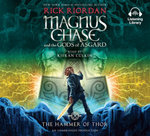
The Hammer of Thor (Audiobook) by Rick Riordan, Kieran Culkin

The Hammer of ThorThe Hammer of Thor

by Rick Riordan, Kieran Culkin (Narrator)
Series: Magnus Chase and the Gods of Asgard, #2
Unabridged Audiobook, 10 hrs., 34 mins..
Listening Library, 2016
Read: May 10 – 12, 2016


Thor’s hammer is missing, so not only can he not stream Netflix (I’d forgotten that was a thing in this series) on it, he can’t intimidate the giants into not invading. You can guess which bothers him more. The Valkrie Samira and her pal Magnus have to go find it before things get out of hand.

I didn’t like this one as much as the first book in this series — but I didn’t dislike it. It’s still the same outline that Riordan is following with these books — there’s a quest; the hero and his friends have to go find the whatever to stall doomsday a little longer; to get the X the group has to beat a series of mini-challenges and then they’ll have a shot at the X. Since this is a book 2, they’ll get X, but many other things will go wrong, forcing the series into another book. For the most part, the minor challenges worked better for me than I expected.

I enjoyed Magnus’ friends — Samira in particular; although I’m pretty torn about the new character added to Magnus’ group: Alex Fierro — a child of Loki. I understand what Riordan was trying to do with this character, but I’m not sure he succeeded. I’m not convinced that Alex was a person, and not just a conglomeration of traits. But I have hope. Alex’s presence, I thought, ended up short-changing some of the other characters when it came to action and involvement in the plot, which I wasn’t crazy about.

I really enjoy seeing different authors’ take on the same mythological characters. Comparing/contrasting Kevin Hearne’s and Riordan’s Thors and Lokis would make for a very entertaining piece (I think Riordan’s Thor is more comical, but his Loki just might be more sadistic), and I will admit I got distracted a couple of times listening to this by thinking about the differences.

The best part of this was seeing how the problems Magnus, etc. are dealing with intersect some of what Percy, Annabeth and Apollo are going through in Riordan’s other series, and the strong hint that we’ll see some sort of cross-over soon. We’d understood that the Egyptian gods were threatening the earth about the same time that the Problems with Camps Jupiter and Half-Blood start up, but this was a much more explicit description. I like thinking that the various pantheons are having troubles at the same time, and that Earth could be doom in any number of ways simultaneously.

I bought this in hardcover the week it came out (last October, I think), but haven’t been able to find/make the time to read it. When I saw it as available on my library’s audiobook site, I figured I’d jump — just to get that TBR pile a little smaller. I hadn’t listened to Riordan on audio before, and was curious ow it translated. I was surprised to hear Kieran Culkin’s name (and voice) at the beginning of this — he didn’t strike me as the kind of actor who’d do audiobooks. I’m glad that he did, though. I really enjoyed his work throughout the novel — the narration, the characters — he just nailed it. That’s how Magnus Chase should sound.

It was entertaining enough to keep going, and I trust that Riordan knows what he’s doing, I’m just not convinced that he did all he could to make this book as good as it could be.

—–

3 Stars

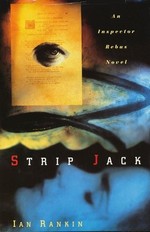
Strip Jack by Ian Rankin

Strip JackStrip Jack

by Ian Rankin
Series: John Rebus, #4

Hardcover, 206 pg.
St. Martin’s Press, 1992

Read: May 3 – 4, 2017


This is the one — the book that finally sold me on the John Rebus series (I say “finally” as if it’s been a years’ long effort, not just book 4). Everything worked for me here.

Rebus is trying to track down a rare book thief, and puts as much effort into that as you’d imagine most fictional detectives putting into it. Thankfully, it doesn’t eat up so much of his time that he can’t accompany others from his station — including Chief Superintendent “Farmer” Watson — on a raid of a brothel in a pretty nice part of town. Most of the men can’t believe they’re doing this raid, Rebus is chief among them. But, an order is an order, so they suit up and go in. While there, Brian Holmes finds a pretty popular MP in a room with one of the “employees.”

This is MP is named Gregor Jack — his background is pretty similar to Rebus’ and the detective has always admired him (at least his public persona), and something just doesn’t feel right about the way things went down with the raid and Jack’s involvement (and exposure), so he starts checking in on Jack at home. There’s something strange going on with Jack’s wife, Elizabeth — she’s not at home, and Jack doesn’t know if she even knows about the headlines about the raid and ensuing controversy. Rebus finds it a bit odd that someone like him would know so little about his wife’s whereabouts, between his curiosity and interest in the MP, he starts poking around a bit — which turns out to be fortuitous later on.

The ensuing mystery is pretty good — especially when it becomes Rebus vs. the higher-ups as they narrow the list of suspects. I liked Rebus’ method this time a little more than the previous books, it’s a bit more methodical (even when he’s mostly going with his gut, there’s still thinking behind it). Could the mystery-solving — and the novel as a whole — be a bit meatier? Yeah, but it’s not to sketchy on details. I just think that the Rebus novels would be better if they were Bosch-length.

In the previous books, I thought there were a couple of passages that were so well written that they lifted the quality of the whole book. I didn’t come across anything in particular like that, not that the writing was bad, but there wasn’t anything that jumped out at me. One very nice touch — not in the language, but in the idea and how it worked — was when Rebus was interviewing one of the Jacks’ old friends in a mental hospital and the friend asks Rebus to touch the ground for him, since that’s something he doesn’t get to do any more. When Rebus does this, and when he tells the friend about it later — just perfect.

I really would’ve liked more time with Gregor Jack and his staff — I liked the interactions between Rebus and each of them, but it’d have been hard to pull off. Most of the rest of the suspect pool weren’t terribly interesting. The friend in the hospital, isn’t really a suspect (for obvious reasons), but he does give some insight into the case — he was a well-written character and I liked the way that Rankin was able to work him into the story in a couple of ways.

Holmes reminds me of Luther‘s DS Justin Ripley (although I imagine Holmes as taller — not sure there’s a reason for that) — I like the fact that he’s sticking around, I expected him to vanish after his first appearance. I don’t know if he and his girlfriend will stick around, but I’m enjoying him as an errand boy/accomplice/hindrance for Rebus. He’s not the only returning face — Gill Templer is a pretty significant factor in the off-the-clock Rebus story, which primarily centers around his growing (yet, I expect, doomed) relationship with a doctor.

Oh, I should mention that Rebus does find the book thief (with book obsessed readers like we have on this blog, you have to assure people that the books are okay), and it (naturally) has plays a role in the novel’s greater story.

This tale of the determined and dogged detective who keeps on trying, even when he has no reason to, really worked for me — clicked every one of my procedural buttons. I hope Rankin delivers more like this book.

—–

4 Stars
2017 Library Love Challenge

Pub Day Repost: Nearly Nero by Loren D. Estleman

Nearly NeroNearly Nero: The Adventures of Claudius Lyon, the Man Who Would Be Wolfe

by Loren D. Estleman
eARC, 192 pg.
Tyrus Books, 2017
Read: March 24 – 30, 2017

I’ve heard about the stories in this volume for years, but have never tracked one down before — and then a whole collection of them show up on NetGalley! How could I not request it? I’m so glad this book exists so that those of us who don’t get the magazines, etc. that publish short mystery fiction can have them (and even those who do have access to those magazines, etc. can have them in one handy volume).

Anyway, here’s the setup: Claudius Lyon is a huge fan of Nero Wolfe — he reads every one of the reports that Archie Goodwin’s literary agent Rex Stout publishes. He’s such a fan that he wants to be Wolfe (like the guys dressing up in Batsuits in The Dark Knight Rises) — he’s fat, fairly clever, and wealthy enough not to need to work and still indulge himself. He renovates his townhouse to include a greenhouse, an elevator, and a first floor floorplan that pretty much matches Wolfe’s. He hires a private chef — a kosher chef of dubious quality (not that Lyon needs to eat kosher, it’s just what Gus can cook), changes his name to something that approximates his hero’s and hires a “man of action,” Arnie Woodbine. Arnie’s an ex-con, small-time crook who doesn’t mind (too much) putting up with his looney boss for a steady paycheck and meals.

The number of ways that Lyon isn’t Wolfe is pretty large and I won’t spoil your fun in discovering them. Now, Lyon’s unlicensed as a PI, so he can’t take on paying clients — but he occasionally gets people who will take him up on his free services. He’s decent at solving puzzles and low-priority mysteries (not that he doesn’t find his way into something bigger on occasion). Once he gets a client (non-paying, Arnie’d have me stress), he goes through whatever steps he needs to figure it out (including his own version of Wolfe’s lip movement and sending Arnie on fact-finding missions), and goes to some lengths to assemble some sort of audience for his reveal. I can’t help smiling as I think about it, really.

The whole thing is a tongue-in-cheek tribute to the Nero Wolfe/Rex Stout — recognizing the brilliance of the Stout’s work (how can you not?), while poking fun at it. Lyon’s really a goofy character and Woodbine is great at pointing that out — while begrudgingly admitting that he gets things right every now and then. There’s a lot of fun to be had in the story telling — the mysteries aren’t all that much to get excited about, it’s in watching Lyon stumble through his cases that the entertainment is found. Well, that and Woodbine’s commentary.

Not unlike many of the Wolfe stories (particularly the short stories).

I wouldn’t recommend reading more than two of these stories in a sitting, I think they work best as solo shots. It’s a difficult call, because I typically wanted to go on for one more. Also, I’m not sure how enjoyable these’d be for non-Wolfe readers — but then again, I think a lot of the humor would hold up and it might entice a reader to learn more about Lyon’s idol. And anything that gets people to read Rex Stout’s Nero Wolfe novels is a good thing.

But for readers of Stout’s Wolfe novels? This is a must read. He’s not trying and failing to recapture Stout’s magic (see Goldsborough post-The Bloodied Ivy), he’s intentionally missing and yet somehow getting a little of it. I really enjoyed this book and can easily see me re-reading it a handful of times.

Disclaimer: I received this eARC from Adams Media via NetGalley in exchange for this post — thanks to both for this.

Page 21 of 36

Powered by WordPress & Theme by Anders Norén