Category: Authors Page 19 of 123

PUB DAY REPOST: Flight Risk by Cherie Priest: Two Missing Persons Bring the Team Back Together for this Winning Sequel

Flight RiskFlight Risk

by Cherie Priest

DETAILS:
Series: Booking Agents Series, #2
Publisher: Atria Books 
Publication Date: November 15, 2022
Format: eARC
Length: 320 pg.
Read Date: October 20-21, 2022

Support Independent Bookstores - Visit IndieBound.org

What’s Flight Risk About?

Grady and his daughter lose their dog while visiting Mt. Rainer—but never fear, they find him—much to their relief. They’re not at all relieved by the fact that when he’s found, he’s carrying a human leg in his mouth. While it’s a different jurisdiction, it’s soon determined that the (probably dead) man missing a leg is/was a Seattle resident, so Grady handles that end of the investigation.

At the same time, Leda is approached by a man to find his sister. This is a major step up for Leda’s psychic consulting—since the news coverage stemming from the events in Grave Reservations, she’s been hired to find a few missing things (mostly successfully), but a person that’s been gone for a month is a significant case. She takes it on with some hesitation, and several caveats toward the brother that she might not find anything, and he might not like what she is able to find.

Naturally, there’s a connection between both missing persons, and Grady and Leda team up again.

Leda’s having a hard time making headway, at first, with her case, and calls in the woman who’d offered to mentor her for some help. Almost immediately the medium demonstrates that this was a wise choice and that she’s the real deal. As she works with Leda, providing a nudge or two, she hints that Leda may discover other abilities as she grows as a psychic—which will be interesting to watch, for sure.

Det. Grady Merritt

Flight Risk features a lot more of Grady on his own (still plenty of Grady with Leda and Grady with everyone else, don’t worry) doing police work. It’s good to see him plugging away at things and interacting with his partner (who I hope we get more time with in the future—Sam and Niki would be a fun team-up).

He doesn’t strike me as a super-cop like Bosch or Ballard—but he’s the kind you hope our police departments are full of—decent guys who are dedicated to their jobs, driven by curiosity and a sense of duty. He just happens to be pretty lucky and he now has a psychic friend who can lend a hand. I enjoy reading about this kind of police detective*, it gives me hope.

* I’m still devouring books about Bosch, Ballard, Washington Poe, and other super-cops, don’t get me wrong.

Niki

Leda’s best friend Niki is, of course, back. In Grave Reservations, Niki essentially pushed Leda to take risks, to persevere in the investigation, and so on. Then, when she accompanied Leda and Grady when they were investigating, she could be relied upon to go a little further than Leda, and would carry the comedic weight in her scenes.

Here in Flight Risk, she has the same roles. But Leda’s more confident now and doesn’t need her friend egging her on quite as much either on-stage or in her office. She is still a little more “out there” when she rides along with Grady and her friend, but I think she’s more restrained there, too.

I might be a little off here, and if I revisit this next year, I’ll wonder what I was thinking here. But right now, Niki seems to be the weak link in this book, not bringing quite enough to the plot or to the comedy. A toned-down Niki is more grounded, more realistic—absolutely. But if she’s not being Lula to Leda’s Stephanie Plum, I’m not sure what purpose she’s serving. I should stress, I don’t think Priest shouldn’t have her around, nor do I want her to be as goofy as Lula (the world doesn’t need another one)—but we just need her to be a little less restrained.

The Law of Interconnected Monkey Business

So, anyone who’s read a mystery novel before will be pretty sure that there’s a tie between Grady’s and Leda’s cases are going to be connected. Obviously, if you read the above section or the description on the back of the book or on the online store of your choice, you’ll know that, too.

That’s not what I want to talk about—it’s the way that Priest combined these two cases and got Leda and Grady to work together again. I honestly expected that this series would be Grady bringing cases to Leda, either on his own or because he’s instructed to, when the SPD comes up against a tough case. But that’s clearly not going to be the case.

There’s going to be flexibility—even possibly some times when Grady comes into things pretty late in the game (I can’t see leaving the police out of a book entirely). The fact that Priest stayed away from the structure of the first book already is an encouraging sign and shows that this isn’t going to be a cookie-cutter kind of series, but that she’s going to bring something new each time.

So, what did I think about Flight Risk?

I have to say this one was a tough one to write about—I almost felt like I could copy and paste what I said about Grave Reservations here. If you liked that novel, you’ll dig this one—having introduced the characters and world, Priest (and the readers) can focus more on the mysteries, and the book is better for it.

The mysteries were well-designed and executed, with the psychic clues/impressions/whatever along the way pointing Grady and Leda in the right direction, but not giving them so much that they don’t have to work out things for themselves (with one notable exception). This is the way to do a Psychic Detective novel. The red herrings and false trails were particularly well-done and I enjoyed seeing our protagonists dealing with them.

We got a better sense of all the supporting characters, as one would expect/hope, and I enjoyed them all. This is really a pleasant little universe that Priest has given us and I hope we get to hang out with these characters for a good while to come.

Flight Risk would be a good introductory novel for this series as well as a pleasant continuation for those who read Grave Reservations—it’s light(ish) fun with a dash of the supernatural to enliven the mystery, the combination of police and amateur detectives working together is a tried and true way to make things entertaining—and Priest uses it well. This novel hit the spot for this reader, and I look forward to another case or two soon. I definitely recommend this one to you.

Disclaimer: I received this eARC from Atria Books via NetGalley in exchange for this post that reflects my honest opinion—thanks to both for this.

This post contains an affiliate link. If you purchase from it, I will get a small commission at no additional cost to you. As always, the opinions expressed are my own.

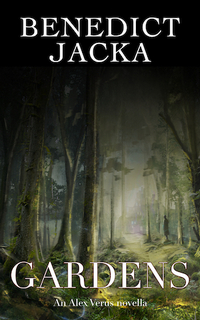
Gardens by Benedict Jacka: A Quick, Action Packed, Visit to the World of Verus

GardensGardens

by Benedict Jacka

DETAILS:
Series: Alex Verus, #12.1
Publication Date: October 31, 2022
Format: eBook
Length: 123 pg.
Read Date: November 3, 2022

What’s Gardens About?

This takes place about four months after Risen, and definitely should not be read by anyone who hasn’t read it (I’m not going to spoil anything though). We do get to catch up with the world of Mages, the Council, and the state of things with Adepts post-Risen, but we do so from a different perspective and with a largely new group of characters (they ultimately interact with some people we know though).

These characters are Daniel, Jess, and Emmanuel. They are youngish adepts with a little experience in thievery (although they really don’t like using that term) and are looking to expand. They’re hired by a mage to join a crew of others for a job to “retrieve” an object.

The object is in the possession of a mage, who they are told will be away from home for quite some time. All they need to do is open a lock (through an interesting application of wind magic that I don’t think I’ve seen before) and find the thing. Assuming they can get along with the other group of adepts hired for this job (which is clearly going to be an issue from the get-go), it sounds like an easy job.

But if it was an easy job, why would Jacka give us a novella about it?

So, what did I think about Gardens?

I had so much fun with this. It satisfied my desire to know more about this world and how things look after that fantastic finale—but was a different kind of story in it. Just not getting it told in Alex’s voice, but from a third-person narration, gave it a different feel immediately. Also, Jacka says that this is “a slightly different (but overlapping) genre to urban fantasy,” so that different feel is multiplied.

With all due respect to Jacka, I think it’s still UF. It is a darker form of it than we’re used to from him, though. But that’s just splitting hairs, and there are much better things to do with this novella.

Primarily we ought to just read and enjoy it—this is exactly what a heist-gone-wrong story told in the Verus-Verse should be. There’s in-fighting, double-crossing (maybe triple-crossing), lies, deception, unrequited love, and people in way over their head. Especially as we’ve been colored by Alex’s attitudes toward Adepts, it’s easy to forget what a great gulf there is between even a strong Adept and a Mage. Gardens does a great job of fixing that misapprehension. It’s a fast read with plenty of action—pound for pound, more than Jacka usually gives us, and I am here for it.

Is this a must-read for Alex Verus fans? No, not especially. But my friends, you will be missing out. You will be so glad you took an hour or so for this. This is definitely a must-not-read for people who haven’t read Risen (and if you haven’t read Risen, you likely haven’t read anything else in the series—which is something you should fix).


4 Stars

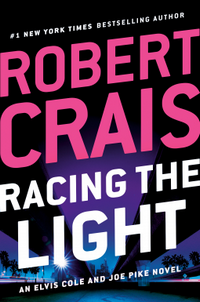
PUB DAY REPOST: Racing the Light by Robert Crais: Spooks Spooking. Detectives Detecting. Killers Killing.

Racing the LightRacing the Light

by Robert Crais

DETAILS:
Series: Elvis Cole, #18
Publisher: G.P. Putnam's Sons
Publication Date: November 1, 2022
Format: eARC
Length: 368 pg.
Read Date: October 12-14, 2022
Support Independent Bookstores - Visit IndieBound.org

What’s Racing the Light About?

The essence of the case is that Elvis is hired by the mother of a young man who has gone missing to find him. This is pretty par for the course for Elvis Cole—a missing persons case.

Here’s what makes this distinct: the mother has money—she pays a generous retainer in cash (so generous, Elvis gives some back) and you get the impression that it wouldn’t be difficult for her to add a few more thousand. Before she walks into the office, two people come in and do a security sweep. Adele Schumacher believes her son, Joshua, has been taken by government agents for his investigation into Area 51 for his podcast. So, yeah, not a typical day in the office.

The podcast is called In Your Face with Josh Shoe, and it’s frequently about government corruption, conspiracies, and whatnot—but they’ve branched out to things like interviewing a porn actress. His childhood friend/podcasting partner, Ryan, tells Elvis that Josh is trying to move to more mainstream topics (Ryan doesn’t seem on board with this, for what it’s worth). Ryan shares Adele’s theory for Josh’s absence, Josh has been taken because he returned to Area 51 and found something.

But Elvis starts to find evidence that Josh is investigating something he didn’t tell Ryan about—Elvis can’t figure out what it is, sadly, but he starts to figure out who Josh might be interviewing for this story. And one of them has gone missing, too. Is this tied to his disappearance or did the twenty-something self-employed and single guy just flake off for a few days?

It’s not long before Elvis starts to think he’s not the only one looking for Josh and he enlists help from Joe Pike (who brings in Jon Stone). If those two get on board, you know things are about to get dangerous.

Pike and Stone

The problem with getting to know the PI’s more lethal/less-hung-up-about hurting people friend/sidekick/partner better is that it’s harder to keep them feeling dangerous and mysterious—it maybe even gets to the point where they stop being quite as prone to violence as they once were, and their charcoal-gray hats get a little closer to white. With Joe Pike getting some novels of his own, a lot of his sharp edges have been dulled for fans, so it was nice that Crais brought along Jon Stone so when Pike couldn’t be ruthless and cold-blooded, there’d be someone who could.

He gets to be that guy here—he’s helpful (very), resourceful, and mercenary. He pitches in because Pike pushes him to—not because he cares about Elvis or the fate of Josh. But what he does, he does well. (and is amusing for the reader throughout)

Pike is also not quite the active presence in this book that he has been lately—so when he does show up and act, it makes it feel a bit more super-human. Crais really upped his game with Pike in this novel and it allows him to steal almost every scene he’s in. Naturally, the phone calls between Pike and Cole are still fun to read—if you can write an entertaining conversation with one party being nearly-monosyllabic, you’ve got a gift.

Lucy and Ben

Lucy and Ben come by for an almost-unannounced visit to ensure that Elvis can’t give his full attention to the case. Which sounds snarky and may not be wholly fair of me. But it’s not wrong.

I enjoy the character of Ben and the way he interacts with Elvis—and continue to do so. I appreciated and believed what he was going through—both on his own and with his mother—at this stage of life, and Crais’s portrayal of this was one of the (many) highlights of this novel. It was also a good way to remind the reader just But Lucy has bothered me for a while now (although I was initially a fan), and I’m not certain that this book alleviates that (nor do I think Crais is altogether worried about it). I’m going to reserve judgment on this appearance for now. I did like Cole’s response to her visit and presence (when it didn’t take him off of his game, although I thought that was a nice touch).

So, what did I think about Racing the Light?

I need to spend some time thinking about this idea, but while reading this book I started to think of some notable first meetings between a PI and their client—like The Big Sleep, The Doorbell Rang, God Save the Child, and The Judas Goat*—and how those meetings can be a bellwether for the rest of the book. If the meeting seems pretty good/typical, the rest of the book will be, too; if the meeting catches your attention, the rest of the book will be of a higher quality.** The first meeting between Elvis and Adele Schumacher definitely fits—it’s not your standard meeting (the presence of her personal security helps). Right away, I could tell this was going to be a better-than-usual Elvis Cole novel. There’s not much that can beat that, in my book.

* This is a list generated in a rush, and I know I’ve left off some big ones, but as indicated, this is a theory-in-progress, I might work it out fully later.
** It’s likely that a better book is going to be better from the first chapter, and I just like the idea of creating a litmus test.

My opinion never wavered from that point on—this is some of the best writing Crais has given us in a long time—there are some passages/sentences/phrases I’ve had to read a few times just because I enjoyed them so much. I’m going to have a hard time limiting myself when quoting from the book once I get the hardcover. I’m already looking forward to a re-read of this somewhere down the road.

Along those lines, there’s one passage following a conversation between Elvis and Josh’s father that I’d believe Crais stole from one of the earliest Robert B. Parker novels. It’s not often that I get a reminder of the shared DNA between Elvis and Spenser. I appreciate what distinguishes the two more than their similarities, but it’s good to see the family resemblance is still there—it’s what attracted me to both characters (and their authors!).

We see the return of some characters that Crais hasn’t used in a while, too—which adds to the overall feeling of this novel hearkening back to earlier Elvis novels more than the last few. Another of the ways this book shines is in the supporting characters, not just that many from the old gang are back, but characters for this book. We get to know a couple of people connected to the missing persons really well, they’re well-fleshed out, and you can’t help feeling empathy for them and connected to them. For example, there’s a man who lives in Griffith Park who’s a witness to part of a cover-up—we get four chapters from his perspective. And I like him enough already that I’d read a short story/novella just about him.

I’ve probably gone on more than long enough at this point, let me wrap it up.

New readers will find plenty to enjoy here as well as well-established fans should. Obviously, newcomers won’t get all the character moments that come from the buildup of 17 previous novels, but that doesn’t mean they won’t walk away with a sense of them. Don’t let the existence of those novels dissuade you, see them as an added bonus of backstory you can explore if you get into these characters.

I don’t see how long-term fans aren’t going to relish this novel. Racing the Light doesn’t carry the emotional heft of L.A. Requiem or The Last Detective (primarily because those books explored the characters of Elvis and Pike in depths that Crais can’t repeat), but in terms of plot, pacing, and character this is their equal. I haven’t been this excited about a Robert Crais novel since The Promise.

I’m telling you, readers, don’t miss out on this one.

Disclaimer: I received this eARC from PENGUIN GROUP Putnam via NetGalley in exchange for this post—thanks to both for this.


5 Stars

This post contains an affiliate link. If you purchase from it, I will get a small commission at no additional cost to you. As always, the opinions expressed are my own.

Flight Risk by Cherie Priest: Two Missing Persons Bring the Team Back Together for this Winning Sequel

Flight RiskFlight Risk

by Cherie Priest

DETAILS:
Series: Booking Agents Series, #2
Publisher: Atria Books 
Publication Date: November 15, 2022
Format: eARC
Length: 320 pg.
Read Date: October 20-21, 2022
Support Independent Bookstores - Visit IndieBound.org

What’s Flight Risk About?

Grady and his daughter lose their dog while visiting Mt. Rainer—but never fear, they find him—much to their relief. They’re not at all relieved by the fact that when he’s found, he’s carrying a human leg in his mouth. While it’s a different jurisdiction, it’s soon determined that the (probably dead) man missing a leg is/was a Seattle resident, so Grady handles that end of the investigation.

At the same time, Leda is approached by a man to find his sister. This is a major step up for Leda’s psychic consulting—since the news coverage stemming from the events in Grave Reservations, she’s been hired to find a few missing things (mostly successfully), but a person that’s been gone for a month is a significant case. She takes it on with some hesitation, and several caveats toward the brother that she might not find anything, and he might not like what she is able to find.

Naturally, there’s a connection between both missing persons, and Grady and Leda team up again.

Leda’s having a hard time making headway, at first, with her case, and calls in the woman who’d offered to mentor her for some help. Almost immediately the medium demonstrates that this was a wise choice and that she’s the real deal. As she works with Leda, providing a nudge or two, she hints that Leda may discover other abilities as she grows as a psychic—which will be interesting to watch, for sure.

Det. Grady Merritt

Flight Risk features a lot more of Grady on his own (still plenty of Grady with Leda and Grady with everyone else, don’t worry) doing police work. It’s good to see him plugging away at things and interacting with his partner (who I hope we get more time with in the future—Sam and Niki would be a fun team-up).

He doesn’t strike me as a super-cop like Bosch or Ballard—but he’s the kind you hope our police departments are full of—decent guys who are dedicated to their jobs, driven by curiosity and a sense of duty. He just happens to be pretty lucky and he now has a psychic friend who can lend a hand. I enjoy reading about this kind of police detective*, it gives me hope.

* I’m still devouring books about Bosch, Ballard, Washington Poe, and other super-cops, don’t get me wrong.

Niki

Leda’s best friend Niki is, of course, back. In Grave Reservations, Niki essentially pushed Leda to take risks, to persevere in the investigation, and so on. Then, when she accompanied Leda and Grady when they were investigating, she could be relied upon to go a little further than Leda, and would carry the comedic weight in her scenes.

Here in Flight Risk, she has the same roles. But Leda’s more confident now and doesn’t need her friend egging her on quite as much either on-stage or in her office. She is still a little more “out there” when she rides along with Grady and her friend, but I think she’s more restrained there, too.

I might be a little off here, and if I revisit this next year, I’ll wonder what I was thinking here. But right now, Niki seems to be the weak link in this book, not bringing quite enough to the plot or to the comedy. A toned-down Niki is more grounded, more realistic—absolutely. But if she’s not being Lula to Leda’s Stephanie Plum, I’m not sure what purpose she’s serving. I should stress, I don’t think Priest shouldn’t have her around, nor do I want her to be as goofy as Lula (the world doesn’t need another one)—but we just need her to be a little less restrained.

The Law of Interconnected Monkey Business

So, anyone who’s read a mystery novel before will be pretty sure that there’s a tie between Grady’s and Leda’s cases are going to be connected. Obviously, if you read the above section or the description on the back of the book or on the online store of your choice, you’ll know that, too.

That’s not what I want to talk about—it’s the way that Priest combined these two cases and got Leda and Grady to work together again. I honestly expected that this series would be Grady bringing cases to Leda, either on his own or because he’s instructed to, when the SPD comes up against a tough case. But that’s clearly not going to be the case.

There’s going to be flexibility—even possibly some times when Grady comes into things pretty late in the game (I can’t see leaving the police out of a book entirely). The fact that Priest stayed away from the structure of the first book already is an encouraging sign and shows that this isn’t going to be a cookie-cutter kind of series, but that she’s going to bring something new each time.

So, what did I think about Flight Risk?

I have to say this one was a tough one to write about—I almost felt like I could copy and paste what I said about Grave Reservations here. If you liked that novel, you’ll dig this one—having introduced the characters and world, Priest (and the readers) can focus more on the mysteries, and the book is better for it.

The mysteries were well-designed and executed, with the psychic clues/impressions/whatever along the way pointing Grady and Leda in the right direction, but not giving them so much that they don’t have to work out things for themselves (with one notable exception). This is the way to do a Psychic Detective novel. The red herrings and false trails were particularly well-done and I enjoyed seeing our protagonists dealing with them.

We got a better sense of all the supporting characters, as one would expect/hope, and I enjoyed them all. This is really a pleasant little universe that Priest has given us and I hope we get to hang out with these characters for a good while to come.

Flight Risk would be a good introductory novel for this series as well as a pleasant continuation for those who read Grave Reservations—it’s light(ish) fun with a dash of the supernatural to enliven the mystery, the combination of police and amateur detectives working together is a tried and true way to make things entertaining—and Priest uses it well. This novel hit the spot for this reader, and I look forward to another case or two soon. I definitely recommend this one to you.

Disclaimer: I received this eARC from Atria Books via NetGalley in exchange for this post that reflects my honest opinion—thanks to both for this.

This post contains an affiliate link. If you purchase from it, I will get a small commission at no additional cost to you. As always, the opinions expressed are my own.

REPOSTING: From the Mailbag: Reading the Wolfe Books for the First Time

With the earlier post about Fer-de-Lance, it seemed like a good day to repost this, too. I apparently sampled a paragraph or two from the Fer-de-Lance write-up I shared earlier, too. Sorry for the repetition.


I received this email in response to my Happy Birthday, Archie! post last week.

Soooooo, each year you post this, each year I say I’m going to start…just put a request in for Fer-de-Lance, the first of the Nero Wolfe books, right?

Thanks for the question! This is a tricky one for me, and one that I’ve thought too long about already. I’m going to write for the person already interested in the series, and not to convince you to read them—this is practical advice only, no incitement.

Short answer: Maybe.

Longer answer (which I’ll still try to keep under control, because I tend to be hard to stop on this subject, and some of this is adapted from other things I’ve written. Also, because if I start fact-checking some of this, I’ll find myself spending hours, even days, on this, so I might make some minor errors)*:

Rex Stout’s Fer-de-Lance is the first of 40+ books (novels or short story collections) featuring the exploits of private investigator Archie Goodwin (2 parts Huck Finn, 1 part Philip Marlowe) and his eccentric employer, Nero Wolfe (1 part Sherlock Holmes, 1 part Mycroft Holmes)—yes, I am one of those who think that Archie’s the main character in the mis-nomered Nero Wolfe Mysteries. It makes perfect sense to start with Fer-de-Lance and read chronologically. I did it myself a couple of years back for the first time (I’ve been reading these books for about 30 years now, and its odd that it took me so long), and I picked up subtle nuances, little callbacks and references that I’d missed before. There are almost no story or character arcs that go beyond a book (exceptions are noted below), and (most of) those that do, are easy enough to pick up and don’t spoil too much. Yes, there are introductions of new characters, a character death or two, but by and large you can dip in anywhere and not notice.

    Two quick semi-parenthetical notes on the reading this chronologically before I continue.

  • Yes, read the short story collections when you come across them in the chronology. Even if you’re not a short fiction reader, do it. There are some utter gems tucked away in those (and I spent too much time ignoring them).
  • The short story collection Death Times Three was published posthumously, but I’m pretty sure they were published in magazines, etc. before the last novel, A Family Affair. Read the collection after Please Pass the Guilt and before A Family Affair. A Family Affair works so, so well as a series finale that it should be treated as one whether or not Stout wrote it as one. It’s oft-debated, but I’m convinced that if Stout lived another year, we’d have had another novel. But he didn’t. So, again, A Family Affair should be the last you read—even if you don’t read chronologically.

In reading about Rex Stout/Nero Wolfe (either by fans or professionals), there’s an oft-quoted line from Walter D. Edmonds that you simply cannot avoid seeing, “I shall never forget my excitement on reading Fer-de-Lance, sprung like Athena perfect form the Jovian brow, fresh and new and at the same time with enough plain familiar things in scene and setting to put any reader at his ease.” Aside from Oliver Wendell Holmes’ margin note (“This fellow is the best of them all.”), there’s nothing that sums up Fer-de-Lance better, sprung like Athena indeed.

It really doesn’t matter how many times you’ve read it, but upon re-reading (and probably even initial reading if this isn’t your first encounter with Wolfe and Archie) you can’t help be struck by how much Fer-de-Lance fits the model of a mature Wolfe novel—almost all the elements are there. These characters are introduced in practically their final format—a little tweak here and there over the course of the first few novels will get them in their final form. The addition of a few other characters will be necessary, but the cast of characters is already over 90% complete. In the first chapter alone we already have Wolfe, Archie, Fritz, Theodore, Fred and Saul presented in a manner fully recognizable to the familiar reader. The story follows a fairly typical route (although the identity of the murderer is revealed far earlier than is the norm), and the essential environmental elements are there—the beer, Wolfe’s eccentric schedule, the orchids, a relapse, the food, a cocky scheme to land a client, an outrageous stratagem for getting that last essential piece of evidence (not that Wolfe needs it to solve the crime, merely to prove he was correct)—the only thing missing is the gathering of the witnesses/suspects/clients for Wolfe to reveal everything in his characteristically dramatic fashion. One recurring thought I had while reading it the last time was that Fer-de-Lance could just as easily have been the fifteenth installment in the series as the first.

If you didn’t understand half of what I wrote above because you’re new to the corpus, well, you’ll get it soon enough. There’s a formula of sorts to Wolfe/Archie novels—violated all the time, despite what we purists like to think, these variations on the theme are some of our favorite moments. You’ll pick the formula up quickly, and find it as comfortable as Wolfe’s nigh-inviolable daily schedule.

So while there is glacial development, the order is almost negligible. I do endorse and suggest a chronological read—but it’s not essential. In fact, I typically recommend The Golden Spiders (#22) or Before Midnight (#25) to newbies before plunging into Fer-de-Lance, they’re among my favorites, and are pretty representative of the fully-developed Wolfe/Archie. A&E used The Golden Spiders as the pilot to their recent series, so I’m not alone in thinking it serves as a good introduction. If you like them in their final form, you’ll have an easier time appreciating Wolfe/Archie in their almost-final form in the early books. Think of the development of Bugs Bunny over the first few shorts as a rough analogue.

Therefore, if your library/used bookstore isn’t sufficiently stocked to do the chronological read, you shouldn’t avoid the series and can dip in wherever you can. It’s like old episodes of Law & Order that you come across on cable. But there are a few things you should read in a certain order for full understanding/emotional impact, and a few others you should read after you’ve acclimated to the world/series a bit, you’ll enjoy/appreciate them more than if they’re in the first five:

  • The Doorbell Rang (#41)
  • Too Many Women (#12)—a lot of people think Archie comes off like a cad here, it’s never bothered me, however. Still, if you already like him, you’ll forgive him this.
  • And Be a Villain (#13), The Second Confession (#15), and In the Best Families (#17)—just seeing the numbers now, surprises me—I’d have thought these were in the 30’s. If Stout had been planning out a 40+ book series, he’d have put them later. Not only should you read them with experience in the series, these three need to be read in this order. There is an omnibus edition in many libraries with these three called Triple Zeck.
  • The Black Mountain (#24) would be best read after Over My Dead Body (#7), and after you’re acclimated to the world.

A couple of other suggestions:

  • Some Buried Caesar (#6)—should be read early (but not first) and often.
  • A Right to Die (#40) should be read only after Too Many Cooks (#5), it’s one of the only times that a non-regular character shows up again. There’s some racially-tinged language in Too Many Cooks that Archie’d grow out of almost immediately. Remember it was originally published in 1938 and cut him a little slack—mostly, be happy that he grows out of it.
  • And again, A Family Affair should be read pretty much when there’s nothing left.

Granted, these are all only suggestions. But ones made by a passionate fan. Still, at the end of the day, just read these books, you’ll enjoy them.

Maybe sometime I’ll get into the official continuations by Robert Goldsborough in a post like this.


* Okay, I lied—I pulled up the goodreads page for the series so I could get the numbers on them just to help. But that’s it.

Racing the Light by Robert Crais: Spooks Spooking. Detectives Detecting. Killers Killing.

Racing the LightRacing the Light

by Robert Crais

DETAILS:
Series: Elvis Cole, #18
Publisher: G.P. Putnam's Sons
Publication Date: November 1, 2022
Format: eARC
Length: 368 pg.
Read Date: October 12-14, 2022
Support Independent Bookstores - Visit IndieBound.org

What’s Racing the Light About?

The essence of the case is that Elvis is hired by the mother of a young man who has gone missing to find him. This is pretty par for the course for Elvis Cole—a missing persons case.

Here’s what makes this distinct: the mother has money—she pays a generous retainer in cash (so generous, Elvis gives some back) and you get the impression that it wouldn’t be difficult for her to add a few more thousand. Before she walks into the office, two people come in and do a security sweep. Adele Schumacher believes her son, Joshua, has been taken by government agents for his investigation into Area 51 for his podcast. So, yeah, not a typical day in the office.

The podcast is called In Your Face with Josh Shoe, and it’s frequently about government corruption, conspiracies, and whatnot—but they’ve branched out to things like interviewing a porn actress. His childhood friend/podcasting partner, Ryan, tells Elvis that Josh is trying to move to more mainstream topics (Ryan doesn’t seem on board with this, for what it’s worth). Ryan shares Adele’s theory for Josh’s absence, Josh has been taken because he returned to Area 51 and found something.

But Elvis starts to find evidence that Josh is investigating something he didn’t tell Ryan about—Elvis can’t figure out what it is, sadly, but he starts to figure out who Josh might be interviewing for this story. And one of them has gone missing, too. Is this tied to his disappearance or did the twenty-something self-employed and single guy just flake off for a few days?

It’s not long before Elvis starts to think he’s not the only one looking for Josh and he enlists help from Joe Pike (who brings in Jon Stone). If those two get on board, you know things are about to get dangerous.

Pike and Stone

The problem with getting to know the PI’s more lethal/less-hung-up-about hurting people friend/sidekick/partner better is that it’s harder to keep them feeling dangerous and mysterious—it maybe even gets to the point where they stop being quite as prone to violence as they once were, and their charcoal-gray hats get a little closer to white. With Joe Pike getting some novels of his own, a lot of his sharp edges have been dulled for fans, so it was nice that Crais brought along Jon Stone so when Pike couldn’t be ruthless and cold-blooded, there’d be someone who could.

He gets to be that guy here—he’s helpful (very), resourceful, and mercenary. He pitches in because Pike pushes him to—not because he cares about Elvis or the fate of Josh. But what he does, he does well. (and is amusing for the reader throughout)

Pike is also not quite the active presence in this book that he has been lately—so when he does show up and act, it makes it feel a bit more super-human. Crais really upped his game with Pike in this novel and it allows him to steal almost every scene he’s in. Naturally, the phone calls between Pike and Cole are still fun to read—if you can write an entertaining conversation with one party being nearly-monosyllabic, you’ve got a gift.

Lucy and Ben

Lucy and Ben come by for an almost-unannounced visit to ensure that Elvis can’t give his full attention to the case. Which sounds snarky and may not be wholly fair of me. But it’s not wrong.

I enjoy the character of Ben and the way he interacts with Elvis—and continue to do so. I appreciated and believed what he was going through—both on his own and with his mother—at this stage of life, and Crais’s portrayal of this was one of the (many) highlights of this novel. It was also a good way to remind the reader just But Lucy has bothered me for a while now (although I was initially a fan), and I’m not certain that this book alleviates that (nor do I think Crais is altogether worried about it). I’m going to reserve judgment on this appearance for now. I did like Cole’s response to her visit and presence (when it didn’t take him off of his game, although I thought that was a nice touch).

So, what did I think about Racing the Light?

I need to spend some time thinking about this idea, but while reading this book I started to think of some notable first meetings between a PI and their client—like The Big Sleep, The Doorbell Rang, God Save the Child, and The Judas Goat*—and how those meetings can be a bellwether for the rest of the book. If the meeting seems pretty good/typical, the rest of the book will be, too; if the meeting catches your attention, the rest of the book will be of a higher quality.** The first meeting between Elvis and Adele Schumacher definitely fits—it’s not your standard meeting (the presence of her personal security helps). Right away, I could tell this was going to be a better-than-usual Elvis Cole novel. There’s not much that can beat that, in my book.

* This is a list generated in a rush, and I know I’ve left off some big ones, but as indicated, this is a theory-in-progress, I might work it out fully later.
** It’s likely that a better book is going to be better from the first chapter, and I just like the idea of creating a litmus test.

My opinion never wavered from that point on—this is some of the best writing Crais has given us in a long time—there are some passages/sentences/phrases I’ve had to read a few times just because I enjoyed them so much. I’m going to have a hard time limiting myself when quoting from the book once I get the hardcover. I’m already looking forward to a re-read of this somewhere down the road.

Along those lines, there’s one passage following a conversation between Elvis and Josh’s father that I’d believe Crais stole from one of the earliest Robert B. Parker novels. It’s not often that I get a reminder of the shared DNA between Elvis and Spenser. I appreciate what distinguishes the two more than their similarities, but it’s good to see the family resemblance is still there—it’s what attracted me to both characters (and their authors!).

We see the return of some characters that Crais hasn’t used in a while, too—which adds to the overall feeling of this novel hearkening back to earlier Elvis novels more than the last few. Another of the ways this book shines is in the supporting characters, not just that many from the old gang are back, but characters for this book. We get to know a couple of people connected to the missing persons really well, they’re well-fleshed out, and you can’t help feeling empathy for them and connected to them. For example, there’s a man who lives in Griffith Park who’s a witness to part of a cover-up—we get four chapters from his perspective. And I like him enough already that I’d read a short story/novella just about him.

I’ve probably gone on more than long enough at this point, let me wrap it up.

New readers will find plenty to enjoy here as well as well-established fans should. Obviously, newcomers won’t get all the character moments that come from the buildup of 17 previous novels, but that doesn’t mean they won’t walk away with a sense of them. Don’t let the existence of those novels dissuade you, see them as an added bonus of backstory you can explore if you get into these characters.

I don’t see how long-term fans aren’t going to relish this novel. Racing the Light doesn’t carry the emotional heft of L.A. Requiem or The Last Detective (primarily because those books explored the characters of Elvis and Pike in depths that Crais can’t repeat), but in terms of plot, pacing, and character this is their equal. I haven’t been this excited about a Robert Crais novel since The Promise.

I’m telling you, readers, don’t miss out on this one.

Disclaimer: I received this eARC from PENGUIN GROUP Putnam via NetGalley in exchange for this post—thanks to both for this.


5 Stars

This post contains an affiliate link. If you purchase from it, I will get a small commission at no additional cost to you. As always, the opinions expressed are my own.

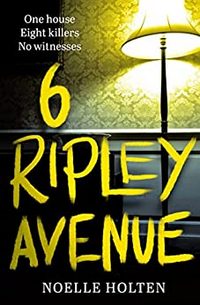
6 Ripley Avenue by Noelle Holten: One House. Eight Killers. No Witnesses.

6 Ripley Avenue6 Ripley Avenue

by Noelle Holten

DETAILS:
Publisher: One More Chapter
Publication Date: September 27, 2022
Format: eBook
Length: 378 pg.
Read Date: October 6-11, 2022

When you’re given the opportunity to confront your mother’s killer, do you take it?

I did.

No words were spoken though.

I just killed him.

Was it worth it?

Absolutely.

Do I have any regrets?

Only that I didn’t make him suffer longer.

What’s 6 Ripley Avenue About?

6 Ripley Avenue is a Probation Hostel—similar to what we call a halfway house in the U.S.—focusing on probationers convicted of violent crimes (including murder). It’s been plagued by controversy since before its opening two years ago. The concerns go beyond the typical NIMBY protests because of the violent nature of the residents.

Sloane Armstrong, a freelance investigative journalist, and Helen Burgess, an elderly woman who lives next door to the house, have been at the forefront of the effort to move and/or close Ripley House Approves Premises from the start. Their friendship was forged by this effort but has grown since then.

Now, a resident there—a convicted murderer—has been killed. The investigation into the murder highlights many of the concerns Helen has voiced and Sloane has published—poor staffing levels, inadequate security, malfunctioning CCTV, and more. Helen and Sloane see this as their opportunity to close the facility once and for all and work to uncover as much as they can about the crime and the systemic problems it exposes as possible for their purposes.

On the other hand, Jeanette Macy is the Senior Probation Officer on staff—she learns of the same problems (and more) during the investigation and sees this as the opportunity to improve things both at Ripley House and throughout the system.

The narrative bounces between the perspectives of these women as they investigate the happenings of that fateful night and interact with each other and the police during the inquiry. Will any of them be fast enough in their investigation to ensure the murderer is caught in time to save more lives?

It’s almost a locked-room mystery—but if you can’t trust the locks on the room…

The Prologue

I see a lot of hate/antagonism toward Prologues online lately. I’m not sure I get it, but if people want to skip them, I guess that’s their prerogative. However, anyone who is anti-prologue probably hasn’t read a Noelle Hotlen prologue—they’re consistently very good. This is one of her best—it’s not Dead Perfect—good, but it’s close.

If you read this book, don’t gloss over/skim/skip it.*

* I think that should apply to Prologues/Epilogues in general, but whatever. You do you.

On the Other Hand…

I think the last two chapters could be cut and the book would be stronger. I get (I’m pretty sure) the impulse for them, and they do make sure that some of what was suggested/implied in the text was nailed down. I also wonder if she answers a question or two that would be better left lingering. But I think most readers would either assume almost everything contained there—or wouldn’t care. It’s like watching deleted scenes from a movie and thinking “yeah, that was good to see, but I see why it didn’t make the final cut.”

Okay, the last six paragraphs of the penultimate chapter—they’re a distinct section—would’ve made a good, punchy last chapter on their own. But the rest felt like overkill.

Your results may vary, and it’s not like these chapters hurt the book significantly. But for me, they took a little of the luster off.

So, what did I think about 6 Ripley Avenue?

“Sometimes the places where you are meant to be safe are the ones you should fear the most.”

The violence in this book centers on those places you’re meant to be safe—home and family—and what happens when that safety is disrupted. The whodunit of the novel is the focus—but there’s a lot said about the ripple effects of (many, but not all, of) the crimes talked about. How the repercussions of a moment of violence or other dangerous choices are long-lasting and alter the lives of those only indirectly affected by them. Crime Fiction in general is getting better at showing this, and few do it as well as Holten does.

Holten’s signature style of terse chapters and paragraphs is well-evident here,* jumping from perspective to perspective to make sure the plot is always steadily advancing. This makes the pacing almost relentless and it’s hard to put the book down, no matter what the reason for doing so may be. I’m not saying that I burned any meal or let a pot boil over while reading this, but I’d absolutely understand why someone would. Thankfully, the style also makes it incredibly easy to pick back up and get fully immersed in the story immediately. You could easily read 6 Ripley Avenue in one sitting without intending to.**

* Really, does she draft on cocktail napkins? What would happen if she invested in a couple of reams of 8.5 x 11/A4?
**The fact that it took me as long as it did to read this is a commentary on my schedule this month, not the book.

The only problem with the pace is that we don’t get quite enough time to see enough of Helen and Sloane’s friendship—it’d be easy to see their relationship as Sloane exploiting the lonely woman for ammunition and Helen as desperate for an emotional connection. That’s what I saw it as initially. But as the novel progresses, we see actual affection between the two and it’d have been nice if circumstances had allowed us to see more of it. On the other hand, things do allow the reader to change their initial impression of Jeanette over the course of the novel (at least this one did).

This is one of those novels that is strengthened by the use of multiple POVs—the overlapping motives, agendas, and methods of the women looking into the crime and its repercussions, sometimes in alignment, sometimes at odds, but leading to getting at the truth was really well done. I’m not sure that, outside of the first bit of narrative from the Killer’s point-of-view that having their perspective present is that helpful—but I’d say that about at least 98% of those that I’ve read, so take that comment with a boulder-sized grain of salt.

This standalone solidifies Holten as an auto-buy for me, it’s a pleasant departure from Holten’s series work, displaying her already visible strengths and giving her a chance to show new ones. 6 Ripley Avenue is a fast, compelling, read that will stay with you for a while—you can’t ask for more than that.


4 Stars


PUB DAY REPOST: Santa’s Little Yelpers by David Rosenfelt: A Little Yuletide Cheer and Two Dangerous Cases Andy Didn’t Ask Santa For

Santa’s Little YelpersSanta’s Little Yelpers

by David Rosenfelt

DETAILS:
Series: Andy Carpenter, #26
Publisher: Minotaur Books
Publication Date: October 11, 2022
Format: eARC
Length: 304 pg.
Read Date: September 30, 2022
Support Independent Bookstores - Visit IndieBound.org

What’s Santa’s Little Yelpers About?

There’s a new employee at the Tara Foundation—he’s an ex-con, and an ex-lawyer (the former led to the latter). Chris is clear that he was wrongly convicted, but is trying to rebuild some sort of life and move on from there. Andy, Willie, and Sondra are happy to have him on board—especially because one of the shelter’s dogs just had a litter, and Chris has taken mom and her pups into his house until they’re ready to be adopted.

But since this is an Andy Carpenter novel, you know what’s coming next—the dog lover introduced at the beginning of the book is headed for trouble. Chris is told by the major witness in the case against him that he was lying and will recant in court. But before Andy can get anything filed on Chris’s behalf, the witness changes his mind. Chris goes to confront him, the witness is murdered, and, as we all expected, Chris is arrested for that crime.

It’s up to Andy, The K Team, and the rest of Andy’s team to try to prove him innocent of the murder—and maybe the initial crime.

It’s Beginning to Look (a Little) Like Christmas…

I’m not sure why Minotaur keeps doing these Christmas-themed Carpenter novels—there’s very little Christmas-y (or other holidays) in them. The Christmas content in this one is less than usual—don’t worry, there’s enough to justify this being considered a holiday novel or to satisfy those who want that content. But just enough for that—not one sentence more.

I should stress—I’m not complaining about this. I’ll take any excuse for an Andy Carpenter novel, and this gives us two in a year—and some of these “Christmas” novels have been better than the others released that year. I’m just wondering.

So, what did I think about Santa’s Little Yelpers?

Between the 25 previous books in the series and the 3 K-Team books, I like to think I’m pretty familiar with Rosenfelt and his bag of tricks—the series and I are old friends by now, and while I have a ball with these books, I pretty much see most things coming. Or so I thought. Sure, most of the book went as I expected, and I was enjoying it as much as I expected to. And then Rosenfelt pulled off a twist that I didn’t see coming—my interest and appreciation for the book increased.

And then he did it again. I wouldn’t have guessed that by book 29, Rosenfelt would be surprising me twice in one book. I’m not saying that I don’t appreciate the twists and the turns of the stories in most of his books, because I really do—but I usually know something like them is coming—I didn’t see either of these coming at all. (I do think I should’ve been in the ballpark for one of them, though, if I’d been on my game). And because of these reveals, a lot of the book played out in ways I didn’t fully expect. I love it when an author does this.

Are all semi-savvy readers going to experience this? Not necessarily—but you just might.

Even without that—this is a classic Andy Carpenter book, there’s some good Ricky material, Laurie and Marcus get to do their thing—Corey and Simon Garfunkel get some nice moments, too. Sam Willis (very minor spoiler) gets some out-of-the-office work, which is fun. And Andy meets a new judge and prosecutor and doesn’t totally alienate them (I’m not sure he endears himself to either, either).

It’s a good time, a clever case, with some typical quotable lines. Everything an Andy Carpenter fan wants—and, as always, this would be a good jumping on point for a newbie looking for an enjoyable mystery/legal thriller to read.

Disclaimer: I received this eARC from St. Martin’s Press, Minotaur Books via NetGalley in exchange for this post and my honest opinion–thanks to both for this.


4 Stars

This post contains an affiliate link. If you purchase from it, I will get a small commission at no additional cost to you. As always, the opinions expressed are my own.



			

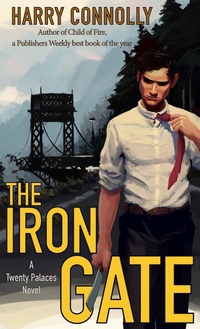
The Iron Gate by Harry Connolly: The Twenty Palaces—Back and Better than Ever

The Iron GateThe Iron Gate

by Harry Connolly

DETAILS:
Series: Twenty Palaces, #4
Publisher: Radar Avenue Press
Publication Date: September 30, 2022
Format: E-book
Length: 390 pg.
Read Date: October 1, 2022

“My name is Ray Lilly,” I said to the empty room.

There it was. I’d remembered my name, and with it came the realization that I had come to this place, whatever this place was, to find someone—no idea who at the moment—and kill them.

Setting the Stage

It’s been a while since the last Twenty Palaces fiction was published (a novella 5 years ago, a novel more than twice that), let me give a quick review.

Magic is in the world, people who come across a book of it run the risk of opening a gate to another dimension and letting monsters (called predators) into our world. Once in, they won’t stop until our reality is gone.

Standing in the way is the Twenty Palaces Society—their peers track down the books and those who are using them and stop them. Almost always this is a lethal stopping. Annalise has been a peer for quite a while now, she gets the job done without really worrying too much about what stands between her and the target.

Ray Lilly is her wooden man. His job is to be a distraction, getting the attention of the troublemakers (human) and the predators focused on him, so Annalise can dispatch them. He’s not supposed to survive for long, but somehow he’s both lived and proven pretty effective when helping Annalise. Before this, he was a criminal—a car thief, freshly released from prison and trying to live a better life for the sake of the relatives who supported him.

What’s The Iron Gate About?

Annalise sends Ray into a building in a small coastal town to do some recon. They know a predator is in the building, but before she does something (probably destroying the building) he goes in—something happens and his ghost knife (the one spell Ray possesses) lands at her feet. Ray’s been taken by that predator but is still alive. She cancels the “apocalyptic tsunami of magic” she had planned for the building to wait for Ray to either die (which would get that tsunami rescheduled) or to escape.

Meanwhile, Ray finds himself in an Everytown, USA. Everyone calls him “Carl” and…ugh, I’m just going to copy and paste from the book description, because it’s more concise (and better) than what I’ve come up with:

[Ray] realizes that for some time now he’s been living as a puppet, his body and mind under the complete domination of an unknown power, and the townsfolk think this puppet is his real identity.

And that power can still seize control of Ray’s body at any time, forcing him and the people around him to playact in nonsense stories that center around a mysterious boy and his monster dog.

The town and its people shift and change, but only Ray seems to notice.

While she waits to find out what’s going on with Ray, Annalise devotes her time, energy, and money into keeping other people from getting access to that building. The last thing she wants is anyone else feeding that monster.

It’s the Little Things

Ray’s Ghost Knife could easily be the MVP of this series. Despite being a simple spell—and Ray’s version of it screams “bargain basement” in an endearing and charming way—is a surprisingly effective and reliable piece of magic. It turns out to be as versatile as a certain someone’s Sonic Screwdriver.

The way it’s utilized in this book is completely different than we’ve seen before, and is probably responsible for me spending more time thinking about it than I would’ve otherwise (although it’s always been a favorite thing in each book/story). As much as I enjoy the whole world and magic system that Connolly has given us, it might really be this tiny element—which almost seems to be a forgettable gadget when we first saw it—that could be his masterstroke. Just for what it’s allowed him to do in each setting.

Character Growth?

There are certain characters you run into in novels/series that are formed. They don’t display a lot of growth and development and that’s fine, they don’t need to. Most of the time, that’s a flaw in the writing/character design—but sometimes the character just is who they are and that’s good. Everyone around them changes and grows, but they remain a rock. Like a rock that Marcus Aurelias would talk about amidst the raging waves.

Annalise Powliss has always seemed like one of those characters to me—Ray and the civilians they were around would change, and Annalise would remain pretty much the same (maybe relaxing a bit and trusting Ray, but that’s it). But man, over the course of this novel, things happen to change her. The Annalise who drives away from this is not the one we met in Child of Fire.

I’ve liked her since the beginning, but this version takes less effort. More than that, I enjoyed watching the transformation (and how much she hated it when she noticed it happening, yet she rolled with it).

So, what did I think about The Iron Gate?

This book is everything I’ve thought this series could be—not that I thought the previous novels, novellas, short stories, etc. lacked anything, but this seemed to be a slightly better version of them. That’s probably because Connolly’s a better novelist now than he was when he started the series.

Given the set-up for this series, that extra-dimensional powers are about to break into this reality and devour everything—there’s an inherent darkness to the books. Ray, Annalise, and the rest of the Twenty Palaces are the equivalent of the proverbial little Dutch Boy, and they might be running out of fingers to hold back the destruction. There’s a sense of futility to what they’re about, every victory is Pyrrhic. That doesn’t take away from the gripping nature of the storytelling or the entertainment value of the novels—but you don’t shake the feeling of impending loss. I didn’t feel that this time—I have a few theories to explain it, but most feel inadequate, so I’m not going to share them. I don’t know if that’s a tweak Connolly’s making to the series, something tied to The Iron Gate‘s events, or if he’s setting us up for something. I’ll buy any of those explanations—or a combination.

I wonder a little bit if that makes this a more commercial novel than the previous ones. Hopefully—and hopefully word gets out about this book and it finds the audience it deserves.

There’s so much in this book to celebrate—the way Ray figures out what’s going on and how he tries to address it, everything Annalise gets up to, the way things wrap up, and the promise of the last chapter for what’s to come. Connolly is firing on all cylinders here, and it’s great to see. You’ve got unique magic, great action, flawed protagonists, unexpected humor, and a couple of compelling intertwined plots—what more can you ask for?

This would be a good jumping-on point for this series, Connolly gives you enough to get your footing in this world and overarching story while immersing you in this book’s plot (actually, he probably made this as accessible for new readers as the first book was). This is an Urban Fantasy for those who want something out-of-the norm, and is well worth your time.


4 1/2 Stars

Santa’s Little Yelpers by David Rosenfelt: A Little Yuletide Cheer and Two Dangerous Cases Andy Didn’t Ask Santa For

Santa’s Little YelpersSanta’s Little Yelpers

by David Rosenfelt

DETAILS:
Series: Andy Carpenter, #26
Publisher: Minotaur Books
Publication Date: October 11, 2022
Format: eARC
Length: 304 pg.
Read Date: September 30, 2022
Support Independent Bookstores - Visit IndieBound.org

What’s Santa’s Little Yelpers About?

There’s a new employee at the Tara Foundation—he’s an ex-con, and an ex-lawyer (the former led to the latter). Chris is clear that he was wrongly convicted, but is trying to rebuild some sort of life and move on from there. Andy, Willie, and Sondra are happy to have him on board—especially because one of the shelter’s dogs just had a litter, and Chris has taken mom and her pups into his house until they’re ready to be adopted.

But since this is an Andy Carpenter novel, you know what’s coming next—the dog lover introduced at the beginning of the book is headed for trouble. Chris is told by the major witness in the case against him that he was lying and will recant in court. But before Andy can get anything filed on Chris’s behalf, the witness changes his mind. Chris goes to confront him, the witness is murdered, and, as we all expected, Chris is arrested for that crime.

It’s up to Andy, The K Team, and the rest of Andy’s team to try to prove him innocent of the murder—and maybe the initial crime.

It’s Beginning to Look (a Little) Like Christmas…

I’m not sure why Minotaur keeps doing these Christmas-themed Carpenter novels—there’s very little Christmas-y (or other holidays) in them. The Christmas content in this one is less than usual—don’t worry, there’s enough to justify this being considered a holiday novel or to satisfy those who want that content. But just enough for that—not one sentence more.

I should stress—I’m not complaining about this. I’ll take any excuse for an Andy Carpenter novel, and this gives us two in a year—and some of these “Christmas” novels have been better than the others released that year. I’m just wondering.

So, what did I think about Santa’s Little Yelpers?

Between the 25 previous books in the series and the 3 K-Team books, I like to think I’m pretty familiar with Rosenfelt and his bag of tricks—the series and I are old friends by now, and while I have a ball with these books, I pretty much see most things coming. Or so I thought. Sure, most of the book went as I expected, and I was enjoying it as much as I expected to. And then Rosenfelt pulled off a twist that I didn’t see coming—my interest and appreciation for the book increased.

And then he did it again. I wouldn’t have guessed that by book 29, Rosenfelt would be surprising me twice in one book. I’m not saying that I don’t appreciate the twists and the turns of the stories in most of his books, because I really do—but I usually know something like them is coming—I didn’t see either of these coming at all. (I do think I should’ve been in the ballpark for one of them, though, if I’d been on my game). And because of these reveals, a lot of the book played out in ways I didn’t fully expect. I love it when an author does this.

Are all semi-savvy readers going to experience this? Not necessarily—but you just might.

Even without that—this is a classic Andy Carpenter book, there’s some good Ricky material, Laurie and Marcus get to do their thing—Corey and Simon Garfunkel get some nice moments, too. Sam Willis (very minor spoiler) gets some out-of-the-office work, which is fun. And Andy meets a new judge and prosecutor and doesn’t totally alienate them (I’m not sure he endears himself to either, either).

It’s a good time, a clever case, with some typical quotable lines. Everything an Andy Carpenter fan wants—and, as always, this would be a good jumping on point for a newbie looking for an enjoyable mystery/legal thriller to read.

Disclaimer: I received this eARC from St. Martin’s Press, Minotaur Books via NetGalley in exchange for this post and my honest opinion–thanks to both for this.


4 Stars

This post contains an affiliate link. If you purchase from it, I will get a small commission at no additional cost to you. As always, the opinions expressed are my own.


Page 19 of 123

Powered by WordPress & Theme by Anders Norén