Category: Blog Series Page 190 of 220

My Lady Jane (Audiobook) Cynthia Hand, Brodi Ashton, Jodi Meadows, Katherine Kellgren: This YA Romance/Alt-History/Fantasy is simply delightful

My Lady JaneMy Lady Jane

by Cynthia Hand, Brodi Ashton, Jodi Meadows, Katherine Kellgren (Narrator)
Series: The Lady Janies, #1

Unabridged Audiobook, 13 hrs., 47 min.
HarperAudio, 2016
Read: July 2 – 5, 2016

           You may think you know the story. It goes like this: once upon a time, there was a sixteen-year-old girl named Jane Grey, who was forced to marry a complete strange (Lord Guildford or Gilford or Gifford-something-or-other), and shortly thereafter found herself ruler of a country. She was queen for nine days. Then she quite literally lost her head.

Yes, it’s a tragedy, if you consider the disengagement of one’s head from one’s body tragic. (We are merely narrators, and would hate to make assumptions as to what the reader would find tragic.)

We have a different tale to tell.

Pay attention. We’ve tweaked minor details. We’ve completely rearranged major details. Some names have been changed to protect the innocent (or not-so-innocent, or simply because we thought a name was terrible and we liked another name better). And we’ve added a touch of magic to keep things interesting. So really anything could happen.

This is how we think Jane’s story should have gone.

So begins the Prologue to this wonderfully fun book. It’s that second paragraph — but specifically the parenthetical sentence — that locked in my appreciation for the book. Thankfully, it continued to be as good as that paragraph, but I was going to be a fan of anything that happened from that point on.

The advantage you have with historical figures that no one knows anything about, is historical novelists — particularly those who like to play with their history — can do pretty much what they want. Lady Jane Grey is probably the English monarch that people know the least about (if they know about her at all) making her perfect fodder for this story.

This is one of those books that I can’t figure out how to summarize, so I’m just going to steal the publisher’s blurb, as much as I hate doing that, but my attempts have a mess, and theirs worked:

           In My Lady Jane, coauthors Cynthia Hand, Brodi Ashton, and Jodi Meadows have created a one-of-a-kind YA fantasy in the tradition of The Princess Bride, featuring a reluctant king, an even more reluctant queen, a noble steed, and only a passing resemblance to actual history—because sometimes history needs a little help.

At sixteen, Lady Jane Grey is about to be married off to a stranger and caught up in a conspiracy to rob her cousin, King Edward, of his throne. But those trifling problems aren’t for Jane to worry about. Jane gets to be Queen of England.

Like that could go wrong.

The characters are wonderful — no one’s perfectly good, or perfectly evil (although there are a few that come close in both directions). The authors keep things moving well, never letting the story detract from the characters, or one part of the narrative take over (there’s plenty of action, romance, friendship, espionage for everyone). Yes there’s magic, yes there’s comedy, but there’s also a lot of heart — a lot of joyful storytelling. This has it all. I really can’t point to a favorite bit, or favorite theme or anything. This is just one of those books I enjoyed all of.

Inside this novel is a love letter to books — and Jane is the representative book lover par excellence (though she could like poetry and novels a bit more) — there’s a treasure trove of quotations about reading, books, and related topics in these pages. All of them delightful.

The novel is clearly clever, witty, with a lot of heart, etc., but what sealed the deal for me was Katherine Kelgren’s outstanding performance. I would’ve enjoyed the novel pretty much no matter who wrote it (I’m not sure Scott Brick or Dick Hill could’ve pulled if off, but you never know), but Kelgren absolutely sold it. Her accent work was outstanding, the life and verve she brought to the project just wowed me.

I’m blathering on, I realize — yet I’m not sure I’ve actually said anything. Bah — just grab the book or audiobook. I don’t care if you’re YA or just A, if you like romance or not, male or female — if you like a fun story that’s well told and never takes itself too seriously (but never makes a joke out of anything important), read it. You’ll have a blast.

—–

4 Stars2018 Library Love Challenge

Planet Funny by Ken Jennings: Chortling Towards Bethlehem? or We Are Amusing Ourselves to Death

Planet FunnyPlanet Funny: How Comedy Took Over Our Culture

by Ken Jennings

Hardcover, 320 pg.
Scribner, 2018
Read: June 21 – July 6, 2018
This is going to be much shorter — and much more vague –than it should have been, because I was in a rush to get out the door on the day I took this back to the library and therefore forgot to take my notes out of the book. Which is a crying shame because I can’t cite some of my favorite lines (on the other hand, I don’t have to pick from my favorites). I’m actually pretty annoyed with myself because of this — I spent time on those notes.

I’m going to try to save a little time here and just copy the Publisher’s synopsis:

           From the brilliantly witty and exuberant New York Times bestselling author Ken Jennings, a history of humor—from fart jokes on clay Sumerian tablets all the way up to the latest Twitter gags and Facebook memes—that tells the story of how comedy came to rule the modern world.

For millennia of human history, the future belonged to the strong. To the parent who could kill the most animals with sticks and to the child who could survive the winter or the epidemic. When the Industrial Revolution came, masters of business efficiency prospered instead, and after that we placed our hope in scientific visionaries. Today, in a clear sign of evolution totally sliding off the rails, our most coveted trait is not strength or productivity or even innovation, but being funny. Yes, funniness.

Consider: presidential candidates now have to prepare funny “zingers” for debates. Newspaper headlines and church marquees, once fairly staid affairs, must now be “clever,” stuffed with puns and winks. Airline safety tutorials—those terrifying laminated cards about the possibilities of fire, explosion, depressurization, and drowning—have been replaced by joke-filled videos with multimillion-dollar budgets and dance routines.

In Planet Funny, Ken Jennings explores this brave new comedic world and what it means—or doesn’t—to be funny in it now. Tracing the evolution of humor from the caveman days to the bawdy middle-class antics of Chaucer to Monty Python’s game-changing silliness to the fast-paced meta-humor of The Simpsons, Jennings explains how we built our humor-saturated modern age, where lots of us get our news from comedy shows and a comic figure can even be elected President of the United States purely on showmanship. Entertaining, astounding, and completely head-scratching, Planet Funny is a full taxonomy of what spawned and defines the modern sense of humor.

In short, Jennings is writing about the way that humor — the entertainment culture in general, really, but largely through humor — has taken over the cultural discourse in this country, so much so that you can’t make a serious point about anything anymore without injecting a smile or a laugh. This could be subtitled, Neil Postman was right. Jennings looks at this phenomenon through a historical lens (mostly over the last century) and a contemporary lens — analyzing and commenting on both.

The initial chapters on defining humor, the history of humor and academic humor studies are probably the best part of the book — not just because of their scope and subject matter, but because how Jennings is able to be amusing and insightful while informing. (although the amusing part is problematic given the thesis of the book). I enjoyed learning about the use of humor in the 20th Century — who doesn’t associate the two? I don’t remember a time when the best advertisements/commercials weren’t the funniest (other than things like the crying Native American anti-litter AdCouncil stuff). But there was actually a time when that was looked down on? Who knew?

I also particularly liked the history of Mystery Science Theater 3000 and then pivoting that into a look on the way even entertainment changed in the last few decades because of the funny-ification of all things. Jennings gives a pretty decent defense of Alanis’ “Ironic” (while enjoying a few shots at it, too) — and the ensuing discussion of Irony the cultural waves embracing and shying away from Irony, Enjoying things Ironically, and a need for sincerity was excellent.

Politics, obviously, has fallen prey to this comedy-take over as well. From Nixon shocking everyone by showing up on Laugh-In to Clinton (pre-presidential candidate) on The Tonight Show to then-candidate on The Arsenio Hall show to every political player doing Late Night shows. Obama appearing on Maron’s podcast and Between Two Ferns (crediting that appearance with saving ObamaCare?) and onto the entire Trump campaign. At this point, the book got derailed — I think — by getting too political. If Jennings had kept it to Trump’s embracing/exploiting the comedy takeover, I probably would have enjoyed it — but he spent too much on Trump’s politics (while having ignored Nixon’s, Clinton’s, Obama’s), enough to turn off even Never-Trump types.

I’m pretty sure that the book was almost complete about the time that Louis CK’s career was felled by allegations of sexual misconduct — which is a shame, because Jennings had to go back and water-down a lot of insightful comments from Louis CK by saying something about the allegations while quoting the comedian. At the same time, it’s good that the book wasn’t completed and/or released without the chance to distance the man from the points used — otherwise I think Jennings would’ve had to spend too much time defending the use of those quotations.

I think Jennings lost his way in the last chapter and a half or so — and I lost a lot of my appreciation for the book as a whole at that point. On the whole, it’s insightful writing, peppered with a good amount of analysis, research, interviews, and laughs — outside of his weekly trivia newsletters, I haven’t read Jennings and he really impressed me here. In short, it’s a fun book, a thought-provoking book, and one that should get more attention and discussion than it is. I may quibble a bit with some of the details, but I think on the whole Jennings is on to something here — and I fear that it’s something that not enough people are going to take seriously until it’s too late.

—–

3.5 Stars2018 Library Love Challenge

The Death Pictures by Simon Hall: A Solid Sequel featuring a Procedural and a Puzzle

The Death PicturesThe Death Pictures

by Simon Hall
Series: The TV Detective, #2

Kindle Edition, 282 pg.
Fahrenheit Press, 2018
Read: July 10 – 11, 2018
So here we are a few months after the events of The TV Detective, and while Dan Groves, TV reporter, and DCI Adam Breen aren’t working together any more, their friendship has grown and both of the careers are improving from their collaboration. So when there’s a serial rapist on the loose — one who made a point of leaving a calling card at the crime scenes to get public attention — both of their bosses are interested in them renewing their partnership (even if no one ever gets to hear about his calling card).

Around the same time, there’s a famous artist dying of cancer who is using his impending death as a launching pad for a contest of sorts — it raises money for charity, and raises his public profile a bit, too (not that it needed much). Dan has been tapped by his producer and the artist’s wife to help with the final part of the contest, and to do his final interview — most to be aired upon his death. This is so far from the rape case that it seems odd to spend time on it — until the artist dies under mysterious circumstances. A murder inquiry into a celebrity’s death obviously gets the police’s and public’s attention — although it’s really seen as more of a distraction from protecting women who are prospective targets of the rapist by Adam and his team. For the most part at this point, Adam and Dan tackle the murder investigation and his team handle the rapes, and Dan pretty much only covers the case as a reporter (with an inside track, of course), but not as an investigator.

Arrests are made pretty early on in both cases — it’s in the aftermath of the murder investigation and the contest that the latter part of the novel focuses on. The puzzle’s solution is clever, but the reader can see it coming (we do have a little more information than all the characters), but that only adds to the sense of drama leading up to the Reveal. I thoroughly enjoyed watching Dan through this story — both his official work as a reporter or with the police and his unofficial personal obsession with the puzzle.

As for the rape story? I don’t mean to sound cold, but there was something very cookie-cutter about the motivation and perpetrator. Horrible, yes; disturbing, yes, but nothing that hasn’t been on Law & Order: SVU an estimated 3,709 times — I’m not saying badly written or boring, just something I’ve seen before. But when Adam gets him in the interview room and he starts laying out his defense? That was utterly chilling. As I write this, I imagine the accused’s approach is not completely novel in Crime Fiction, but man . . . the way that Hall depicts this guy? Chilling.

Dan’s frequent work on the contest is reminiscent of his search for the Ted Hughes Memorial in The TV Detective, but is obviously tied more closely to the plot of this novel. I don’t recall another series doing something like this in book after book — I hope Hall continues it.

There’s something that happened to Dan in the past that was alluded to in the previous book and is talked around a good deal here. We’re not going to get more details on that in Book 3 (I bet), but I expect to see it wreak havoc on Dan’s life and various relationships soon. Similarly, there’s something that happens in this book to Adam — that will possibly do worse pretty soon. Both of these guys are ticking psychological bombs.

I have one gripe: the formatting. There are occasional — maybe even rare — white space breaks between sections of the story, but by and large they are conspicuously absent. Which is problematic when the perspective changes from character to character — what’s worse is when the perspective change introduces an entirely new character and you don’t know how this new name connects with anything. It honestly only caused a real problem for me once, but was frequently annoying.

I should stress when your complaint about a book has to do with Kindle layout (who knows what the paperback looks like), there’s a lot that’s working pretty well.

The Death Pictures is a solidly entertaining mystery novel that recaptures a lot of the high points of its predecessor, but isn’t just a repeat of it. This series has legs, that’s obvious, and I look forward to returning to it to see what happens next.

.

—–

3.5 Stars

Needle Song by Russell Day: Great characters, strong writing, and a clever solution to the mystery make this one of 2018’s best.


Needle SongNeedle Song

by Russell Day
Series: Doc Slidesmith, #1

Kindle Edition, 380 pg.
Fahrenheit Press, 2018
Read: July 2 – 4, 2018

He’d changed again in some way. Like he had the night in The Jericho putting out The Jive. But this was different again. The Jive was showmanship. The good Doctor Slidesmith in full sail. This was more intense. I’d see him like thus on occasion in the shop, absorbed in the ink and the song of the needle. I wouldn’t say lost in what he was doing. Lost implies lack of control.

For the first time that evening, it struck me he needed an audience, not to watch him but for him to watch. Like a dial on a machine, not part of the process, just a way of monitoring it.

Back when I posted about the short story featuring Doc Slidesmith, Not Talking Italics, I said that if Needle Song was anything like it, “I’m going to have to go down to the superlative store this weekend to stock up before I write anything about it.” I’m fully stocked (now) and ready to go.

I was disappointed — somewhat — and relieved to see that the all-dialogue, no narration, no other description approach of Italics was nowhere to be seen. I could’ve read 380 pages of that (see my love for Roddy Doyle), but I know it’s not that approachable and will turn off some readers.

Now, I don’t know if anyone but Karen E. Olson has envisioned a tattoo shop as a hotbed of crime fighting — or the staff of such to be the source people would turn to for help with legal difficulties. But it works — all because of the owner of the shop, former psychologist, current Voodoo practitioner and Tarot reader, Doc Slidesmith. On the surface, you see a rough-looking — striking, I think, bordering on handsome — but your basic leather-glad biker type, covered in ink — and will underestimate him. Only those who’ve been in conversations with him, those who’ve given him a chance will see the charm, the intelligence, and the indefinable characteristic that makes people come to him for help in times of trouble. In many hands, Doc’s…peculiar resume, shall we say, would end up this cartoonish mish-mash of quirks. But Day is able to make it work — there’s a reason that Doc ended up where he is, we don’t need to know it, but it makes him the man (and armchair detective) that we want to read about.

Andy Miller — known to many as “Yakky” (he’s not a chatty type, his tattoos are all placed so that he can hide them all with this clothing, like a member of the Yakkuza), is the tattoo apprentice to Doc Slidesmith. He lives with his father — a thoroughly unpleasant and manipulative man, that Yakky feels obligated to care for. While clearly appreciative for Doc’s tutelage, and more in awe of his mentor than he’d care to admit, he’s also more than a little skeptical of Doc’s interests, beliefs and practices that aren’t related to his tattooing. He’s our narrator. He’s not your typical narrator — he’s too frequently angry at, dismissive of and unbelieving in the protagonist for that. Which is just one of the breaths of fresh air brought by this book. Yakky is singularly unimpressed by Doc’s playing detective — but in the end, is probably as invested (maybe more) in the outcome.

Jan is brought by Chris Rudjer (a long-time client and friend of Doc’s) for a Tarot reading, which brings her some measure of comfort/reassurance. So that when, months later, her husband kills himself, she comes looking for another reading — which turns into seeking help in general. Not just for her, but for Chris, with whom she’d been carrying on a not-very-secret affair for months. While it seemed obvious that her husband had taken his own life when she found his body, there were some irregularities at the scene. When the police add in the affair Jan was having with someone with a record for violent crime, they get suspicious. Slidesmith does what he can to help Chris prepare for the inevitable police involvement, and enlists Yakky to help, too.

Yakky takes Jan home to stay in his spare room. She can’t stay at home — the memories are too fresh, there are problems with her husband’s family, and (she doesn’t realize it yet) there are people following her and Doc and Yakky are worried. The dynamic between Jan and Yakky, and between Jan and Yakky’s father, end up providing vital clues to her character and psychology. This will end up proving vital to their case.

As Doc and Yakky begin digging around in Jan’s life, it’s immediately obvious that very little is as it seems. Now, if you’re used to reading Crime Fiction featuring serial killers or organized crime, you’ll think a lot of what they uncover is pretty small potatoes. But it actually seems worse — it’s more immediate, more personal — serial killers have their various pathologies, mobster’s are after profits and power — these people are just about hate, cruelty and control. Maybe it’s just me, but it seems worse in comparison.

There’s a depth to all of these characters that I could spend a lot of time thinking/writing/reading about — for example, our narrator, Yakky. I have at least a dozen questions that I feel I need answers to about him. At the same time, I think at least eleven of those answers could ruin the character for me. Ditto for Doc, Gina (another artist in the shop), or Chris. It’s a pretty neat trick — one few authors have been able to pull off, creating a character that you can tell has a compelling backstory, but that you don’t really want to know it (see Parker’s Hawk or Crais’ Pike — or the other mercenary Crais has had to create now that we know too much about Pike). I know who these people are now, and look forward to seeing what happens with them — and that’s good enough. It’s hard to tell, always, just why Doc’s working on this — is it for fun, is it out of a sense of obligation to Chris, does he feel bad for Jan, is it some of all three? Yakky will frequently talk about The Jive — the showmanship that Doc brings to Tarot readings, conversations, and dealing with difficult witnesses — it reminds me frequently of B. A. Baracus’ complaining about Hannibal’s “being on The Jazz.”

The plot is as intricate as you want — there are twists, turns, ups, downs — both with the investigation and in the lives of those touched by it. This doesn’t have the flair of Not Talking Italics, but the voice is as strong, and everything else about the writing is better. It’s a cliché to say that Day paints a picture with his words, so I won’t say that. But he does etch indelible patterns with the tattoo-gun of his words — which isn’t a painless process for all involved, but the end result is worth whatever discomfort endured. Day doesn’t write like a rookie — this could easily be the third or fourth novel of an established author instead of someone’s talented debut.

I’m torn on what I think about the details of the ending, wavering between “good” and “good enough, but could have been better.” It’s not as strong as the 94% (or so) before it, but it’s probably close enough that I shouldn’t be quibbling over details. I’m not talking about the way that Doc elicits the answers he needs to fully explain what happened to Jan’s husband (both for her closure and Chris’ safety), nor the way that everything fits together just perfectly. I just think the execution could be slightly stronger.

Whether you think of this as an amateur sleuth novel, a look into the depravity of the suburbanite, or an elaborate Miss Marple tribute/pastiche, the one thing you have to see is that this is a wonderful novel. I’m underselling it here, I know, this is one of those books that you best understand why everyone is so positive about it by reading it. You’ve got to expose yourself to Doc, Yakky and Day’s prose to really get it. One of the best books I’ve read this year. My only complaint with this book? After reading so much about the “song of the needle,” the shop, the work being done there — I’m feeling the pressure to get another tattoo myself, and soon.

—–

5 Stars

BOOK SPOTLIGHT: Needle Song by Russell Day

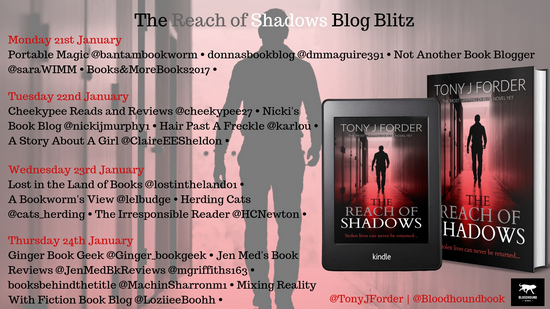
Today we welcome the Book Tour for the fantastic Needle Song by Russell Day — I’m just hoping this stop matches the quality of the rest of the tour (seriously, check out the graphic below to see some of the other posts). Along with this spotlight post, I’ll be giving my take on the novel here in a bit.

Book Details:

Book Title: Needle Song by Russell Day
Publisher: Fahrenheit Press
Release date: April 28, 2018
Format: Paperback/ebook
Length: 380 pages

Book Blurb:

Spending the night with a beautiful woman would be a good alibi, if the body in the next room wasn’t her husband.

Doc Slidesmith has a habit of knowing things he shouldn’t. He knows the woman Chris Rudjer meets online is married. He knows the adult fun she’s looking for is likely to be short lived. And when her husband’s killed, he knows Chris Rudjer didn’t do it.

Only trouble is the police disagree and no one wants to waste time investigating an open and shut case.

No one except Doc.

Using lies, blackmail and a loaded pack of Tarot cards, Doc sets about looking for the truth – but the more truth he finds, the less he thinks his friend is going to like it.

About Russell Day:

Russell DayRussell Day was born in 1966 and grew up in Harlesden, NW10 – a geographic region searching for an alibi. From an early age it was clear the only things he cared about were motorcycles, tattoos and writing. At a later stage he added family life to his list of interests and now lives with his wife and two children. He’s still in London, but has moved south of the river for the milder climate.

Although he only writes crime fiction Russ doesn’t consider his work restricted. ‘As long as there have been people there has been crime, as long as there are people there will be crime.’ That attitude leaves a lot of scope for settings and characters. One of the first short stories he had published, The Second Rat and the Automatic Nun, was a double-cross story set in a world where the church had taken over policing. In his first novel, Needle Song, an amateur detective employs logic, psychology and a loaded pack of tarot cards to investigate a death.

Russ often tells people he seldom smiles due to nerve damage, sustained when his jaw was broken. In fact, this is a total fabrication and his family will tell you he’s has always been a miserable bastard.

Russell’s Social Media Links:
Twitter https://twitter.com/rfdaze

Purchase Links for Needle Song:
Amazon UK https://www.amazon.co.uk/Needle-Song-Russell-Day-ebook/dp/B07CR9SJ5T/ref=sr_1_1?s=digital-text&ie=UTF8&qid=1526549901&sr=1-1

Amazon US https://www.amazon.com/Needle-Song-Russell-Day-ebook/dp/B07CR9SJ5T/ref=sr_1_1?ie=UTF8&qid=1526549972&sr=8-1&keywords=needle+song

Fahrenheit Press http://www.fahrenheit-press.com/books_needle_song.html


My thanks to damppebbles blog tours for the invitation to participate in this tour and the materials they provided.

The Naming of the Dead by Ian Rankin: Rebus and Clarke find themselves in (well, next to) the middle of Global Politics.

The Naming of the DeadThe Naming of the Dead

by Ian RankinSeries: John Rebus, #16

Hardcover, 464 pg.
Little, Brown and Company, 2006
Read: June 22 – 25, 2018

           “Know what I think? I think all of this is because there’s a bit of the anarchist in you. You’re on their side, and it annoys you that you’ve somehow ended up working for The Man.”

Rebus snorted a laugh. “Where did you get that from?”

She laughed with him. “I’m right though, aren’t I? You’ve always seen yourself as being on the outside–” She broke off as their coffees arrived, dug her spoon into her cappuccino and scooped foam into her mouth.

“I do my best work on the margins,” Rebus said thoughtfully.

Rebus is on the verge of retirement — really, he’s about to be forced out, he’s at the stage of his career where many detectives would be just coming into the office and doing nothing — if not outright retiring already. And, truth be told, that’s precisely what everyone in the force seems to want (except for a few allies/friends), particularly the top brass. None of which Rebus has an interest in. He’s going to have to be pulled out, kicking and screaming — probably with someone barring the door after he’s out.

So when the G8 comes to Edinburgh in 2005, the police have their hands full with security, protests, riot preparations, and whatnot. They’re importing help from all over Scotland and even England. Everyone has plenty of assignments to deal with, everyone but John Rebus, that is. So when a clue comes up that might turn into something interesting on months-old murder case, he’s ready and raring to go. That evidence seems to point at multiple victims, too — so Siobhan Clarke is put in charge of that investigation, just please keep it quiet until all the important people have gone home (and yes, everyone is fully aware of the insult of putting the DS in charge of the DI on this one). Thankfully, there’s a suspicious-looking suicide that’s related to the G8 for Rebus to focus on.

At least one of the victims in Clarke’s case has an obvious connection to Big Ger Cafferty, too. Because why not make this all interesting? Big Ger’s the target of a local politician who happens to be making a lot of waves thanks to being in all the right places during the G8 protests, sticking up for his constituents and the cause of civility in the face of civil unrest. Rebus and Cafferty do their usual thing — Cafferty wants information so he can get his form of justice taken out of the murderer, Rebus needs information from Cafferty so he can prevent that. But at the end of the day here, Siobhan spends more time with Cafferty, despite everything Rebus tries to do.

Which is the crux of this novel, really. Rebus is at his career’s end, he knows it. The closest thing he has to a legacy is DS Clarke — and he wants it to be a good legacy. He wants to keep her from Cafferty’s clutches, from the dirt that’s dogged him for years due to guilt-by-association — as well as his actual influence. At the same time, he wants her to maintain that “work on the margins” attitude, while staying in good graces with TPTB. He wants Clarke to be everything he is, just without all the bad that comes from it. (I think she wants that, too, actually). Bringing me back to the point that this novel features Rebus fighting all involved for Siobhan’s soul.

In an interesting parallel, Siobhan’s actual parents are in town to take part in the G8 protests. There’s a young woman hanging out with them, almost like a temporary daughter (which really gets under her skin). She’s determined to spend some time with them, to show herself that she can have some sort of personal life — a family — and still be a good cop. To not be Rebus. At the same time, she so wants her parents to see her as a capable detective, not just someone in the midst of a defiant reaction to her parent’s lifestyle and beliefs.

Eric Bains shows up in a light I don’t think anyone expected, and I’m hoping that things turn around for him soon. I like the guy. He’s not Brian Holmes, but he’s a nice character to have around. There’s a reporter, Marie Henderson, involved in all of this, too (that’s her opining in the opening quotation) — I really liked her, and hope we see her again. Rebus seems to actually enjoy her company and intelligence — at the same time, as the co-writer of Cafferty’s biography, she represents everything that Rebus fears for Clarke.

I’ve not spent a lot of time talking about the cases — which are interesting enough, and watching Rebus not be careful around Very Important People from all over the world is fun. But on the whole, the cases felt familiar. Like we’ve been down these roads before — not exactly, and both held plenty of surprises, but they seemed like familiar Rebus/Clarke investigations. I might have been tempted to give his a 3-Star rating and move on.

BUT, Rankin won’t let me — because putting all of this right smack in the middle of the G8 conference — and the hullabaloo surrounding it (protests, concerts, marches) — the Bush bicycling incident, the London bombings, and the announcement of the Olympics coming to London — added so much to the novel. It grounded it in reality, it presented so many obstacles to the investigations (as well as distractions from the investigations) — as well as unexpected sources of help (police officers from other jurisdictions that had just the right kind of information). Plus all the “keep Siobhan from becoming Rebus” elements of the novel just captivated me.

Another winner. What else is there to say?

—–

4 Stars2018 Library Love Challenge

Dead in the Water by Simon Bower: A Vacation Goes Very Awry Giving Some Characters their Just Desserts

Dead in the WaterDead in the Water

by Simon Bower

Kindle Edition, 403 pg.
Middle Farm Press, 2018

Read: June 27 – 30, 2018


I’ll be upfront with you — at the core here, there’s one decent person in this book (at least among the core eight characters), and we don’t spend that much time them. The best you can say about some of the others is that one is an almost-competent professional, a couple of others are a short course of self-improvement away from being decent people — and the rest are just horrible people. I’m not talking serial killers, stalkers, or dog abusers — not vile, evil people; just the kind of people we all would like to pretend don’t really exist. The book blurb describes some of them as “A human rights’ lawyer, an IT geek, a businessman, a waitress, a phone guy and a physiotherapist.” You could also describe them (I’ve shuffled the order to protect the identities of the guilty) as “A creep, a gold-digger, a busy-body, a drunken philanderer, an unscrupulous businessman who ignores international law, and a more successful gold-digger.”

These six people find themselves on a vacation together, all carrying their own histories and circumstances and concerns — on the whole, enjoying themselves — until some sort of calamity occurs bringing them into contact with France’s least-capable police officer, desperate to make his mark on law enforcement. Meanwhile, that one decent person is off living their life, unaware that they’re on the verge of being plunged into all the drama ensuing off the coast of France and in the mountains near Switzerland.

As I’m reading this, I get the impression I’m being awfully judgemental when it comes to these characters — and maybe I am. But that’s only in retrospect (and occasionally while reading, but that was a passing thing). While reading it, they were just “Charlie,” “Ana,” “Scott,” “Mia,” etc. Sure, you’d cringe while Scott makes another poor choice, or something, but you’re not sitting there looking down your nose at them the whole novel.

Beyond the experience of enjoying a story well told there are different things that will attract a reader to a novel. For me, usually, it’s character; frequently it’s voice or style. But sometimes — like, Dead in the Water it’ll be something else — the way the novel is put together. This story is told in a very careful, complex way — weaving multiple Point of View characters (frequently narrating the same events) and time-jumps together to tell this story. I’d accuse Bower of cheating once (and I’d be right, too) having a character show up i the middle of a sequence without any warning/indication that the character was even on the right continent. Still, it made utter sense that X would be with Y in the middle of Y’s plan, so it still worked — and the suddenness of Y’s appearance in the middle of the action was a well-timed and well-executed surprise, that guaranteed the success of story telling.

This doesn’t mean that there’s not a strong voice (or several, in this case), or that the characters were wanting — they weren’t. We have 8 well-drawn characters here, but man, you can tell this was a well-planned and (I’m guessing here) carefully finessed and re-written book to get these dominoes set up just “so.” There is a good deal of setting up — you spend the first 27% or so of the novel waiting for the crime part of this Crime Fiction to get going. Until that point, this could be a General Fiction kind of read. But then the dominoes start to fall, and initially you think that you’ve got a nice little puzzle before you (made more difficult by everyone lying about something), but then a few more fall and you realize that the novel you’re about halfway through is not at all what you thought it was.

The core of the crime part of this novel comes from a few characters trying to cut corners here and there — and then more than corners — to get ahead. Not because they feel life owes it to them, but the opportunities present themselves and these people are too weak/too opportunistic to let them slip by. There are no criminal masterminds at work here (or investigative geniuses on the other side, I should stress), just everyday folk — people you likely work, live and shop with — that decide to take the easy way.

This almost-Everyman nature of the criminals/would-be criminals in this nature leads me to my last point. I do think this novel could’ve been more effective — but not much more. The entire time, it’s never more than a couple of inches away from being a wonderful dark comedy. If Bower had just leaned into the humor just a little bit further, every twist and turn would’ve worked a little better and the novel as a whole would have been better for it. It almost succeeds as one now, it wouldn’t take much. But that’s not the direction Bower went, so we’re left with a pretty good straight crime novel.

This is a wonderfully constructed novel full of characters that are all-too believable in circumstances it’d be easy to see yourself in (assuming you had a pretty wealthy uncle and/or college friend who invited you along) in some fantastic locations throughout the world. This is a fun read that will keep you thinking through all the different things that could be happening next. Give this one a shot folks, I think you’ll be entertained.

—–

3.5 Stars

BOOK SPOTLIGHT: Dead In The Water by Simon Bower and something better than a Giveaway

Today we welcome the Book Tour for Dead in the Water by Simon Bower. Along with this spotlight post, I’ll be giving my take on the novel here in a bit. Scroll on down for a special Giveaway — guarantee you’ll win!

Book Details:

Book Title: Dead in the Water by Simon Bower
Publisher: Middle Farm Press
Release date: May 8, 2018
Format: Paperback/ebook
Length: 402 pages

Book Blurb:

Was it murder, suicide or an accident? Who will be next to die?

Six international friends all appear to be successful, albeit to different levels. A human rights’ lawyer, an IT geek, a businessman, a waitress, a phone guy and a physiotherapist. None of them are known to the police.

One of them must know what happened that fateful night on the catamaran.

Agent Georges Fournier is assigned the case in the French resort town near Antibes. He’s short on time, with a growing health problem and a District Attorney who just wants the case closed as accidental. But he’s not letting go.

Chrissie is a single mother and respected flight attendant in New York. When she finds out who her father is, she’s ecstatic and wants to meet him.

But within a week she’d wish she’d never known.

About Simon Bower:

Simon BowerSimon Bower is a British and Canadian author born in Berkshire in 1973. Since 1998, he’s adopted a global lifestyle, setting up home at times in Europe, Africa and North America. In 2016 Simon turned to writing full time, which led to his first published work, Dead in the Water, being released in paperback and eBook by Middle Farm Press in 2018. Simon currently lives in France, near the Swiss border, where his young family, mountains, acrylic paint and sharpened skis keep him in regular mischief.


Ian’s Social Media:
Twitter: https://twitter.com/SimonBowerBooks

Facebook: https://www.facebook.com/simon.bower.books/

Amazon Author Page: https://www.amazon.co.uk/Simon-Bower/e/B07CVX87L6/ref=dp_byline_cont_ebooks_1

Goodreads Author Page: https://www.goodreads.com/author/show/18017224.Simon_Bower


Purchase Links:
Amazon.co.uk: https://www.amazon.co.uk/Dead-Water-Simon-Bower-ebook/dp/B07CVQH56L/ref=la_B07CVX87L6_1_1?s=books&ie=UTF8&qid=1529592666&sr=1-1

Amazon.com: https://www.amazon.com/Dead-Water-Simon-Bower-ebook/dp/B07CVQH56L/ref=mt_kindle?_encoding=UTF8&me=&qid=1529592739

Waterstones: https://www.waterstones.com/book/dead-in-the-water/simon-bower/9780992889692

Who Needs a Giveaway, Anyway?


Just go get the thing for free! (through July 6, anyway)


My thanks to damppebbles blog tours for the invitation to participate in this tour and the materials they provided.

The Last Cleric by Layton Green: The Blackwood brothers are on their own in their new world and the danger is getting real

The Last ClericThe Last Cleric

by Layton Green
Series: The Blackwood Saga, #3

Kindle Edition, 374 pg.
Cloaked Traveler Press, 2018
Read: June 18 – 19, 2018

Urfe sometimes felt like a waking dream, the realization of both his wildest fantasies and darkest nightmares.

That’s fairly early in the book, too — I’m sure by the end of this, Will will be thinking less of his wildest fantasies, focusing on the nightmares instead. Which isn’t that surprising, it’s book three of a quintet — things aren’t supposed to be sunshine and rainbows (although things are going to get worse).

Will and some others are off on a quest to recover the Coffer of Devla — an Ark of the Covenant-esque religious relic and object of prophecy. The Revolution would profit greatly from taking it into battle with them — for psychological/propaganda’s sake, if nothing else. This quest takes Will, Yasmina, Mala, and a few others to the jungles of Mexico to find a mythic pyramid that may house the Coffer. We’re treated to an annoying amount of Will pining after Mala, Mala taking advantage of that a few times, and Will not learning anything. I do find his hangup over her annoying, but it’s about the only thing about Will’s character that is that flawed, so it’s good to stress his imperfection and naiveté, I guess. This storyline frequently felt like it escaped from a Rick Riordan Book (one scene in particular) — a series of tests, and narrow escapes leading to other tests. That said, when Percy or his friends fail and/or don’t succeed fast enough, the consequences aren’t as bad as they are for Will and his companions, which makes them far more entertaining to read than the most recent Riordans.

Caleb stays behind and fills his days with doing small acts around the city to help people, and his nights with getting as drunk as is humanly possible. He may not have had tremendous success on Earth, but he had his niche and he did okay with it. On Urfe, he didn’t even have that, so he turned to drink. Until the only person in two worlds who could possibly get him to stop — or at least consider moderation — shows up and does just that. Caleb soon goes on a mission to warn those living in the Blackwood Forrest about the danger coming from Lord Alistair and try to recruit them to the Revolution. On the whole, this story goes exactly like you expect it to — but it was probably the most effective of the three brothers’ arcs in this book. There were parts of this story you couldn’t see coming — at all — but once those events were introduced, it quickly became inevitable to see how those would flow into the overall storyline. Predictable isn’t bad — I’ve said it before, I’ll keep saying it — it really doesn’t matter how surprising or unexpected your story is, what matters is how you tell it. And Green tells this one just right.

Which leaves us with Val — things were looking pretty bad for him when we saw him last, and in the few days that have passed between then and this novel’s kick-off, things have continued in that vein. He does some pretty clever and daring things to try help his situation, and then finds an opportunity he can’t turn down. He essentially has to try to carry off a suicide mission for the Queen. If he succeeds, he’ll be set free. If not . . . well, the Queen or Congregation still won’t execute him, because he’ll be dead. He assembles a team — including faces you wouldn’t expect — and sets off. This storyline is the most inventive, least predictable and most harrowing of the three (which at times is saying something). Somehow, in the middle, it’s also the most dull. But never for long, I want to stress. The people that Val is surrounded by, their perspectives and what Val goes through are all shaping him — for the one who had the hardest time coming to terms with the world he found himself in, Val’s really taken to it in a way his brothers haven’t quite. Without noticing it, Val’s become a different person than he was when he first came to Urfe — and I’m not sure any Blackwood is going to be happy with the differences once they’re seen in light of day. I’m not saying he’s been seduced by the Dark Side or anything — bu he definitely approaches things from a different angle.

Meanwhile, Lord Alistair continues his bloodthirsty and power-hungry machinations at the top of the Congregation.

We meet a lot of new characters in each of the storylines (especially Will’s and Val’s) — there’s not a one of them that I wouldn’t want to spend more time with. Several of them we won’t see again, alas, but…the others? I hope we get a lot of. While I enjoyed it, I know that I came across as ambivalent towards Will’s quest — but the people he travels with are welcome additions to this cast and I didn’t get enough time with them for my taste. The other new characters were about as good, but I thought we got as much time and use from them as we needed.

The first book kept the brothers together — on the whole, there were times the group was split. In The Spirit Mage, Green split them up so we had Will and Caleb running around Urfe trying to stay out of trouble (and failing miserably); while Val took awhile to return and then was in a completely different kind of story. This time, Will and Caleb are split up so we get each brother doing something on his own. I get the desire for that move, and the narrative need — or usefulness, depending how you look at it — for that move, I really do. But man, I didn’t like it. I expected it was too much to ask to see the three Blackwoods reunited early in the novel, but (incredibly minor spoiler) now whenever they do reunite, I’m afraid what they’ve gone through will make it unlikely to be co-belligerents, much less allies. Again, I get why it was done, and will probably appreciate it by the end of the series — but in the moment, I don’t like it. it. The Brothers Three presented them as an interesting, if very flawed, team. Which was one of the things I appreciated most about the characters — keeping them from interacting takes a little of that away.

That said, Green did a great job balancing the various stories — watching each brother get a little closer to their goal, and then slipping in a reminder of what Alistair’s up to. Almost as if he’s saying, it really doesn’t matter how the Blackwoods do against these tasks, the Big Bad is out there waiting, and they’re not reading for him. There’s good character development, some good plot progression — and you can feel things going worse for the brothers, and that it’ll continue in that fashion for a while — until sometime in book 5, is my guess. Now it’s just a matter of hoping that the three of them — and as many of their friends as possible – make it through to the finale.

I had a blast reading this — there’s really little about this series that I don’t enjoy (and those aspects are all just matters of taste, really). Volume 4 is on the top of my “Waiting impatiently for” list — just under Jim Butcher and Patrick Rothfuss. It’s a great series and The Last Cleric just served as another piece of evidence for that. I really recommend all of them.

Disclaimer: I was provided with a copy of this novel by the author — which I greatly appreciate, even if it took me a few months to get to it. This gift did not influence my opinion beyond giving me something to have an opinion on.

—–

4 Stars

BOOK BLITZ: Outfoxing the Gaming Club Blitz by Pascale Batieufaye

Biography, Business
Date Published: May 2018
CLAIM INSANITY OR BE FIRED!
Ex-Casino Employee Spills All of the Unseen Corruption
Running Rampant in the Business!
Ideas flow freely through the work environment, and the good ones are scooped up and put into action. But what happens when your ideas are suddenly being claimed by someone else? What if you found out that your employer was hiding secrets from the public? A job is supposed to secure one’s finances, but what if it was actually the cause of your financial troubles?
All of these questions – and more! – are addressed in Pascale Batieufaye’s tell-all memoir, Outfoxing the Gaming Club: A Former Worker Reveals All. From the kitchen to guest services, Batieufaye exposes the corruption and exploitation present in one of the world’s biggest casinos, Resort Casino, where he worked from 1996 to 2004
Through the book’s pages, Batieufaye details how corporate executives undermine their employees and use their ideas as their own, as he found was done with his own ideas when he shared them with leadership at the gambling powerhouse. He also details the mistreatment of the Native Americans he witnessed, who built the very grounds that now contribute to their injustice.
“I have centered Outfoxing the Gaming Club on the emotional suffering I faced while working for my previous employer,”shares Batieufaye. “The book outlines guiding principles for those who have experienced maltreatment and anxiety in their own workplace. Readers will discover the crookedness that occurs right under the noses of the patrons, and unearth the oppression that the employees had to deal with on a daily basis.”
An exposé for both gamblers and those opposed to it,this book details:
· How his own ideas were stolen from right under Batieufaye’s feet
 
· The mistreatment of Native Americans involved with the company
 
· Corruption’s role in the mental health of himself and other employees at the company
 
· Gambles employees took when attempting to contribute, knowing all too well they may not receive proper credit for those ideas
 
· The emotional suffering that workers had to deal with on a daily basis
 
· And so much more!
About the Author

Pascale Batieufaye attended Johnson & Wales University, where he studied travel and tourism. He is technically an animal rights activist and aspires to open an animal rehabilitation center for rescue animals. His principal occupation has been a part time school bus driver since the end of 2012, which allowed him to write five unpublished manuscripts in his spare time. Before that, Batieufaye ran a video store which closed up at the hype of Netflix’s driven internet power. He has also held some backbreaking jobs, such as courier driver (independent contractor) and Skycap/baggage handler, although nothing seems to take as much of a toll as his work with a major, corrupt casino corporation did, as detailed in his book Outfoxing the Gaming Club.
Contact Links
Purchase Links
RABT Book Tours & PR

Page 190 of 220

Powered by WordPress & Theme by Anders Norén