Category: Fantasy Page 35 of 47

Come Tumbling Down by Seanan McGuire: Jack and Jill’s Final (?) Showdown in the Moors

Come Tumbling Down

Come Tumbling Down

by Seanan McGuire
Series: Wayward Children, #5

Hardcover, 206 pg.
Tor Books, 2020

Read: January 8-10, 2020
Grab a copy from your local indie bookstore!

Eleanor West’s Home for Wayward Children was an island of misfit toys, a place to put the unfinished stories and the broken wanderers who could butcher a deer and string a bow but no longer remembered what to do with indoor plumbing. It was also, more importantly, a holding pen for heroes. Whatever they might have become when they’d been cast out of their chosen homes, they’d been heroes once, each in their own ways. And they did not forget.

I wanted to do an Opening Lines post for this book, but I couldn’t decide where to stop—maybe around page 6 (which is a little too long for that kind of post). Seriously, it took less than a page for me to fall in love with this book.

It’s a typical day at Eleanor West’s School for Wayward Children (assuming such a thing exists) when a door appears, but instead of someone getting to go to their “home,” two figures emerge. One is a complete stranger, the other is Jack. Well, sort of. Close enough for our purposes here.

Things on the Moors have gotten to a crisis point where only one of the Wolcott twins can survive—Jack or Jill. Jill has struck first and things are dire. Jack recruits a couple of her friends and classmates to return with her (she was relatively certain she could return them to the school) to aid her in confronting her sister. They used to be heroes, they will be heroes again—as often as needed—much to Eleanor’s chagrin.

Once in the Moors, a dark and nasty place to be sure, dangers that no one (save maybe Jack) could’ve predicted present themselves and threaten the lives of the students in horrible and chilling ways. Culminating in what appears to be a final encounter for the sisters.

I love the way that McGuire writes these books, and Come Tumbling Down is no exception. It is full of the typical whimsical, fantastic and nigh-poetic language and ideas. If you’ve read a Wayward Children book before, you know what I’m talking about. If you haven’t . . . it’s hard to tell you. Here’s a sample or two:

“This is terrible . . . I mean we knew it was going to be trouble . . . but this is bonus terrible. This is the awful sprinkles on the sundae of doom.”

“A little knowledge never hurt anybody,” said Sumi.

“Perhaps not. But a great deal of knowledge can do a great deal of harm, and I’m long past the point of having only a little knowledge.”

Sumi was Sumi. Spending time with her was like trying to form a close personal relationship with a cloud of butterflies. Pretty—dazzling, even—but not exactly companionable. And some of the butterflies had knives, and that was where the metaphor collapsed.

Jill had always been the more dangerous, less predictable Wolcott, for all that she was the one who dressed in pastel colors and lace and sometimes remembered that people like it when you smiled. Something about the way she’d wrapped her horror move heart in ribbons and bows had reminded him of a corpse that hadn’t been properly embalmed like she was pretty on the outside and rotten on the inside. Terrifying and subtly wrong.

“wrapped her horror movie heart in ribbons and bows” is pretty much worth the purchase price of the book.

I’m glad that I enjoy—relish, really—the language like I do, because there’s not a lot of plot or action here. There’s enough, but there’s an awful lot of talk both around and before the action really gets underway. That’s not a wholly bad thing, and I enjoyed all of it, it just seemed self-indulgent.

It felt to me that McGuire’s reached the point of diminishing returns with this one, it’s been one too many trips to the Moors and it’s time for other Wayward Children to get the focus. Thankfully, that seems to be the plan.

I don’t think this would be a great introduction to this series (but it would function okay that way) if you’re not going to read them all in order, I feel safe in saying that it needs to be read after Down Among the Sticks and Bones. This is a good way to return to the world and revisit some of these characters. I can’t wait to see what happens in the next volume.


4 Stars

This post contains an affiliate link. If you purchase from it, I will get a small commission at no additional cost to you. As always, opinions are my own.

My Favorite Non-Crime Fiction of 2019

Like last year, while trying to come up with a Top 10 this year, I ran into a small problem (at least for me). Crime/Thriller/Mystery novels made up approximately half of the novels I read this year and therefore dominated the candidates. So, I decided to split them into 2 lists—one for Crime Fiction and one for Everything Else. Not the catchiest title, I grant you, but you get what you pay for.

These are my favorites, the things that have stuck with me in a way others haven’t—not necessarily the best things I read (but there’s a good deal of overlap, too). But these ten entertained me or grabbed me emotionally unlike the rest.

Anyway…I say this every year, but . . . Most people do this in mid-December or so, but a few years ago (before this blog), the best novel I read that year was also the last. Ever since then, I just can’t pull the trigger until January 1. Also, none of these are re-reads, I can’t have everyone losing to books that I’ve loved for 2 decades that I happened to have read this year.

Enough blather…on to the list.

(in alphabetical order by author)

A Man Called OveA Man Called Ove

by Fredrik Backman, Henning Koch (Translator)

My original post
I’ve been telling myself every year since 2016 that I was going to read all of Backman’s novels after falling in love with his My Grandmother Asked Me to Tell You She’s Sorry. The closest I got was last year when I read his first novel, A Man Called Ove (and nothing else). It’s enough to make me resolve to read more of them, and soon. The story of an old, grumpy widower befriending (against his will, I should stress) a pretty diverse group of his neighbors. It’s more than that thumbnail, but I’m trying to be brief. The story was fairly predictable, but there’s something about the way that Backman put it together that makes it perfect. And even the things you see coming will get you misty (if not elicit actual tears).

5 Stars

Dark AgeDark Age

by Pierce Brown

My original post
When I started reading this, I was figuring that Pierce Brown’s Red Rising Saga was on the downward trend. Boy, was I wrong. Dark Age showed me that time after time after time after time . . . Entertaining, occasionally amusing, stress-inducing, heart-wrenching, flat-out captivating. It was brutal and beautiful and I can’t believe I doubted Brown for a minute.

5 Stars

Here and Now and ThenHere and Now and Then

by Mike Chen

My original post
One of the best Time Travel stories I’ve ever read, but it’s so much more—it’s about fatherhood, it’s about love, it’s about friendship. Heart, soul, laughs, and heartbreak—I don’t know what else you want out of a time travel story. Or any story, really. Characters you can like (even when they do things you don’t like), characters you want to know better, characters you want to hang out with after the story (or during it, just not during the major plot point times), and a great plotline.

4 1/2 Stars

Seraphina's LamentSeraphina’s Lament

by Sarah Chorn

My original post
Chorn’s prose is as beautiful as her world is dark and disturbing. This Fantasy depicts a culture’s collapse and promises the rebirth of a world, but getting there is rough. Time and time again while reading this book, I was struck by how unique, how unusual this experience was. As different as fantasy novels tend to be from each other, by and large, most of them feel the same as you read it (I guess that’s true of all genres). But I kept coming back to how unusual this feels compared to other fantasies I’ve read. The experience of reading Seraphina’s Lament isn’t something I’ll forget any time soon.

4 1/2 Stars

No Country for Old GnomesNo Country for Old Gnomes

by Delilah S. Dawson and Kevin Hearne

My original post
Having established their off-kilter world, strong voice, and approach to the stories of Pell, Dawson and Hearne have come back to play in it. The result is superior in every way that I can think of. I lost track of how many times I said to myself while reading something along the lines of, “how did they improve things this much?” These books are noted (as I’ve focused on) for their comedy—but they’re about a lot more than comedy. The battle scenes are exciting. The emotional themes and reactions are genuine and unforced. And tragedy hits hard. It’s easy to forget in the middle of inspiring moments or humorous aftermaths of battle that these kind of novels involve death and other forms of loss—and when you do forget, you are open to getting your heart punched.

(but mostly you laugh)

4 1/2 Stars

Twenty-one Truths About LoveTwenty-one Truths About Love

by Matthew Dicks

My original post
It’s an unconventionally told story about a man figuring out how to be a businessman, husband, and father in some extreme circumstances. The lists are the star of the show, but it’s the heart behind them that made this novel a winner.

5 Stars

State of the UnionState of the Union: A Marriage in Ten Parts

by Nick Hornby

My original post
This series of brief conversations held between a married couple just before their marriage counseling sessions. At the end of the day, this is exactly what you want from a Nick Hornby book (except the length—I wanted more, always): funny, heartfelt, charming, (seemingly) effortless, and makes you feel a wide range of emotions without feeling manipulated. I loved it, I think you will, too.

4 1/2 Stars

The SwallowsThe Swallows

by Lisa Lutz

My original post
This is not my favorite Lutz novel, but I think it’s her best. It has a very different kind of humor than we got in The Spellman Files, but it’s probably as funny as Lutz has been since the third book in that series—but deadly serious, nonetheless. Lutz puts on a clinic for naturally shifting tone and using that to highlight the important stories she’s telling. From the funny and dark beginning to the perfect and bitingly ominous last three paragraphs The Swallows is a winner. Timely and appropriate, but using tropes and themes that are familiar to readers everywhere, Lutz has given us a thrilling novel for our day—provocative, entertaining, and haunting. This is one of those books that probably hews really close to things that could or have happened and you’re better off hoping are fictional.

5 Stars

PostgraduatePostgraduate

by Ian Shane

My original post
This has the general feel of Hornby, Tropper, Norman, Weiner, Russo (in his lighter moments), Perrotta, etc. The writing is engaging, catchy, welcoming. Shane writes in a way that you like reading his prose—no matter what’s happening. It’s pleasant and charming with moments of not-quite-brilliance, but close enough. Shane’s style doesn’t draw attention to itself, if anything, it deflects it. It’s not flashy, but it’s good. The protagonist feels like an old friend, the world is comfortable and relaxing to be in (I should stress about 87.3 percent of what I know about radio comes from this book, so it’s not that). This belongs in the same discussion with the best of Hornby and Tropper—it’s exactly the kind of thing I hope to read when I’m not reading a “genre” novel (I hate that phrase, but I don’t know what else to put there).

4 1/2 Stars

The Bookish Life of Nina HillThe Bookish Life of Nina Hill

by Abbi Waxman

My original post
This is a novel filled with readers, book nerds and the people who like (and love) them. There’s a nice story of a woman learning to overcome her anxieties to embrace new people in her life and heart with a sweet love story tagged on to it. Your mileage may vary, obviously, but I can’t imagine a world where anyone who reads my blog not enjoying this novel and protagonist. It’s charming, witty, funny, touching, heart-string-tugging, and generally entertaining. This is the only book on this particular list that I know would’ve found a place on a top ten that included Crime Novels as well, few things made me as happy in 2019 as this book did for a few hours (and in fleeting moments since then as I reflect on it).

5 Stars

Books that almost made the list (links to my original posts): Not Famous by Matthew Hanover, Circle of the Moon by Faith Hunter, Maxine Unleashes Doomsday by Nick Kolakowski, In an Absent Dream by Seanan McGuire, The Rosie Result by Graeme Simsion, and Lingering by Melissa Simonson

Catch-Up Quick Takes: My Plain Jane; The Rest of Us Just Live Here; The Ables

Here’s another batch of overdue takes on some good audiobooks. I don’t have the time for full-posts, so read the official blurbs if you need more information. Last time I tried one of these, I didn’t do such a good job on the “Quick” part, so I’m being more strict with myself this go-around. To that end: the narrators of these do a very capable job with their texts, but I don’t have a lot to say about their performance (I’d be happy to listen to other books by them, I should add).

My Plain JaneMy Plain Jane

by Cynthia Hand, Brodi Ashton, Jodi Meadows,
Fiona Hardingham (Narrator)
Series: The Lady Janies, #2
Unabridged Audiobook, 10 hrs., 7 min.
HarperAudio, 2018
Read: September 24-28, 2019
(the official blurb)
I was really looking forward to this sequel to My Lady Jane, especially because it would involve a supernatural Jane Eyre retelling with a strong comedic sensibility. It wasn’t what I’d hoped it would be, but it was still a lot of fun.

The best part of it was having Charlotte Brontë as a character in the story—as Jane’s best (living) friend. I enjoyed Charlotte’s character enough that I’d willingly read a sequel about her.

And yes, I said, “living” there—Helen, the poor girl from Lowood Institution whose death was so hard for Jane is still around in ghost form. The death was still hard on Jane, but having Helen around as a ghost ended up becoming a different kind of obstacle for her to overcome.

I’d have expected a better link between the Janes—at least a stronger link in the supernatural aspects of the stories—than what we got.

Still, it was a fun listen and I’m definitely coming back for the next installment about Calamity Jane.
3 Stars

The Rest of Us Just Live HereThe Rest of Us Just Live Here

by Patrick Ness, James Fouhey (Narrator)
Unabridged Audiobook, 6 hrs., 23 mins
Read: October 7, 2019
(the official blurb)
I loved the idea of exploring the lives of the “regular kids” in a high school characterized by heroes, legends, slayers, etc. Basically, the kids at Sunnyvale High who know that Buffy is saving their skin on a semi-regular basis who aren’t Xander, Willow, Cordelia, etc. While Buffy is fighting vampires and the rest, these kids have family drama, fall in love, get rejected, worry about the future (assuming they don’t get eaten by the Monster of the Week) and all the rest. She may be the hero in general, but they’re the heroes of their own lives.

So Patrick Ness tells the story of one group of these students on the verge of graduation (while the world is being saved from a threat too complicated to talk about).

Great, great concept. The execution was . . . okay. I enjoyed it, but it didn’t leave me dancing in the aisle or anything. This is only my second Ness, but it didn’t feel like this was really his wheelhouse—maybe I’m wrong, maybe A Monster Calls is that thing that’s out of the norm for him.
3 Stars

The AbelsThe Abels

by Jeremy Scott, Eric Michael Summerer (Narrator)
Series: The Ables, #1
Unabridged Audiobook, 14 hrs., 5 mins
Tantor Audio, 2019
Read: October 18-21, 2019
(the official blurb)
The concept behind this was fantastic—seriously. An upper-MG/younger-YA novel about a Special Education class in a Super Hero High School? Genius. You’ve got the kid with telekinesis who was born blind, the teleporter who lost his vision in an accident, a wheelchair-bound telepath (okay, that’s been done before), a kid with Down Syndrome who has the genetic markers for superpowers, but no one’s sure what they are, and so on. These students come together and learn how to work together and become the heroes they dream of being.

This was a blast—think early-Percy Jackson kind of quality. Some solid emotional moments, real character growth, great action. There was one gut-punch of a surprise that I still can’t believe that Scott had the nerve to make—and two big reveals that sealed the deal for me (one that I saw coming for miles, but he executed well enough that I don’t care; and one that I should’ve seen coming, but didn’t).

This one will be enjoyed by readers of all ages, I expect. Recommended.

3.5 Stars

2019 Library Love Challenge

Finally Fall Book Tag


While reading these posts on Bookidote, beforewegoblog, and The Witty & Sarcastic Bookclub, I noticed myself mentally composing this list—so I figure I had to join in the fun. I’d have posted this last week, but my free laborer realized how little he was getting paid and decided to play video games instead of generating my graphic.

Naturally, I only paid half of his fee.

Enough of that, bring on the Autumn! (even if it feels like Winter here in Idaho):

In Fall, the air is crisp and clear. Name a book with a vivid setting.

The Last of the Really Great WhangdoodlesThe Last of the Really Great Whangdoodles by Julie Edwards

I had a hard time coming up with something for this one, honestly. But Whangdoodleland was so vivid that I can still picture parts of it, despite having read it only once in the last 30+ years.


Nature is beautiful…but also dying. Name a book that is beautifully written, but also deals with a heavy topic, like loss or grief.

A Monster CallsA Monster Calls by Patrick Ness

When I posted about it, I said, “I’m not convinced that this is really all that well-written, technically speaking. But it packs such an emotional wallop, it grabs you, reaches down your throat and seizes your heart and does whatever it wants to with it—so who cares how technically well it’s written? (and, yeah, I do think the two don’t necessarily go together). A couple of weeks from now, I may not look back on this as fondly—but tonight, in the afterglow? Loved this.” I still look back on it as fondly, for the record.


Fall is Back to School Season. Name a Nonfiction Book that Taught You Something.

TimekeepersTimekeepers: How the World Became Obsessed With Time by Simon Garfield

If I’m going to read a non-fiction book, it had better teach me something or I’ll end up ranting about it for days/weeks/months! This one popped to mind, though. In my post about the book, I said: “Did I learn something from the book? Much more than I expected to. The chapter on the French experiments alone probably taught me enough to justify the whole book. I didn’t/couldn’t stick with the details of watch-making (I have a hard time visualizing that kind of detail), but even that was fascinating and informative on the surface. Most topics broadened my understanding and taught me something. Also, the sheer amount of trivia that I picked up was great (the amount of time spent recording the first Beatles LP, why pop music tends to be about 3 minutes long, etc., etc.).”


In order to keep warm, it’s good to spend some time with the people we love. Name a fictional family/household/friend-group that you’d love to be a part of.

Nero Wolfe trioThe Household of Nero Wolfe from the books by Rex Stout

(yeah, that picture is from the A&E TV show, not exactly the books—but in that image in particular, they look just about perfect)

There were many families/groups/households that I could’ve picked for this, but that Brownstone on West 35th Street is near the Platonic ideal for a place to live—I’d love to spend time with Mr. Wolfe, Archie and Fritz (not to mention Saul, Fred, Orrie, Lily, Lon . . .)


The colorful leaves are piling up on the ground. Show us a pile of Autumn-colored spines.


(I thought this was going to be hard, but in the end, I had to not make the pile bigger!)

Also…wow, clearly, I’m not a photographer. It’s a shame I don’t live closer to my pal, Micah Burke, things around here would look much spiffier.


Fall is the perfect time for some storytelling by the fireside. Share a book wherein somebody is telling a story.

A Plague of GiantsA Plague of Giants by Kevin Hearne

That’s really 90% of the book—a bard telling stories. How he pulls this off, really impressed me.

(Hammered by Kevin Hearne would also qualify, but I liked the storytelling in this one better)


The nights are getting darker. Share a dark, creepy read.

Darkness Take My HandDarkness Take My Hand by Dennis Lehane

This one disturbs me every time I read it (4-6 I think), I still remember having to sleep with the lights on after I stayed up reading it until 2-3 in the morning the first time—I doubt I was a very good employee the next day. (Sacred maybe is creepier, but this is the better book by Lehane)


The days are getting colder. Name a short, heartwarming read that could warm up somebody’s cold and rainy day.

WonderWonder by R. J. Palacio

The “short” in the category is the sticky wicket. But this is a quick read (even if the page number is higher than I’d count as “short.” Formulaic? Yup. Predictable? You betcha. Effective? Abso-smurfly. Textbook example of heartwarming.


Fall returns every year. Name an old favorite that you’d like to return to soon.

Magic Kingdom for Sale — SOLD!Magic Kingdom for Sale — SOLD! by Terry Brooks

Ive been thinking about this book a lot since Bookstooge’s Quick Fire Fantasy post. Gotta work this into the 2020 reading schedule.

I’m tagging any blogger who reads this. Play along.

Quick Fire Fantasy Book Tag


I saw this over at Bookstooge’s Reviews on the Road, and it seemed like a fun way to revisit some Fantasy Favorites, and indulge in a bit of nostalgia while I was at it.

Play along, will ya?

Rules:

  • Thank the person who tagged you and link back to their post
  • Link to the creator’s blog (thebookwormdreamer.wordpress.com) in your post
  • Answer the prompts below – all fantasy books!
  • Tag 5 others to take part
  • Enjoy!


5 star book

The Lies of Locke LamoraThe Lies of Locke Lamora
I’ve read this at least 4 times and love it more each time. A Con Novel, a Heist Novel, a story of Found Family and vengence gone wrong (and, right, if you think that’s possible). I can’t get enough of Book I of the Gentleman Bastard Sequence. It’s fun, it’s suspenseful, good fight scenes, and characters you want to spend more time with.

Oh, and the fantasy world is pretty cool, too 🙂

(I have a very short post about it here)


Always going to recommend

The Chronicles of PrydainThe Chronicles of Prydain

The Chronicles of Narnia made me a Lewis fan. The Chronicls of Prydain turned me into a Fantasy fan (which is why I had to use the covers I owned as a kid). Yeah, it’s written for what we’d call today a Middle Grade audience, but when I listened to the audiobooks a year or two ago (or when I read them to my kids a decade ago), I thought it was just about as effective as you could hope. A little bit of fun, a dash of romance, a hero quest straight out of Campbell, a decent amount of magic (but not too much), a good mythic basis—and a oracular pig! It’s also probably the series that taught me that you’ll end up having emotional attachments to characters to the extent you may get teary about when they die and/or say good-bye to each other (and, yeah, did as an adult).

(my posts about the audiobook series)


Own it but haven’t read it yet

Bloody RoseBloody Rose

I tried to read this last year, and failed. I’m hoping to read it this year, and am likely to fail. I less-than-three’d Kings of the Wyld (in print and audio) so much, I don’t know why I haven’t made the time for the sequel.


Would read again

The Brothers ThreeThe Brothers Three

The first of The Blackwood Saga is everything I loved about portal fantasies as a kid—but it’s written for adults. Some good characters, a good amount of growth (especially in the later books in the series), good fight scenes and a pretty cool world to explore. This worked for me in ways I didn’t expect—and the sequels have done a good job building on this one. I’ve yet to read the newest in the series, but this one feels like a good comfort-read if I needed one.

(my post about this one)


In another world

The Warlock in Spite of HimselfThe Warlock in Spite of Himself

(I probably would’ve gone with Brooks’ The Magic Kingdom for Sale, but Bookstooge beat me to it in his post).

I honestly remember very little about this novel, despite having read it several times. But the last time was probably in 1990-91. I was able to find a couple of the later novels in the series, too—just not enough for me at the time (I probably could now—yay, Internet). Still, somehow this is what sprang to mind when I thought of a fantasy on another world. A cool combination of SF and fantasy, as I recall.


Back on Earth

The Hum and the ShiverThe Hum and the Shiver

(and the rest of the series, too, but this is good enough—as good as many series hope to be in itself)

A magical people with amazing musical talent in the Smoky Mountains, dealing with modernization, an Iraqi war vet, and a feud going back generations. I’m not a believer in magic, but Bledsoe makes me want to with these books—this is the best of a great series, and thinking about it now has got me thinking it might be time for read #4 of this one.


As for the tagging . . . nah, I’ll just leave this open to all my readers, I’d love to see what you all would put here. (W&S Book Club, here’s another chance to talk about The Dragonlance Chronicles—you’re welcome)

Universal Monster Book Tag


Witty and Sarcastic Book Club tagged me in her little creation—a tag based on Universal’s Classic Movie Monsters. There’s a lot of recency bias in my pics, but oh well—I liked the list. I really need to do more things like this, it was fun.

While trying to come up with the last couple of entries for this, I took a Facebook break and read a couple of posts on a Nero Wolfe fan group, and realized I could fill my blanks from that Corpus. Then it occurred to me that I could do one of these with entries only from the Nero Wolfe series. Or, the Spenser series. Huh. (I’d have trouble with some other series depending how you define “sequel” below). Watch me control the impulse.

bullet Dracula: a book with a charismatic villain
The Silence of the Lambs
My Pick: Gotta go with Hannibal Lecter in The Silence of the Lambs, every other charismatic villain I can think of pales in comparison.
Bonus Nero Wolfe Pick: (yeah, so much for restraint—this was a fun additional challenge) Paul Chapin in The League of Frightened Men (my post about the book)
Bonus Spenser Pick: The Gray Man in Small Vices

bullet The Invisible Man: A book that has more going on than meets the eye
The Last Adventure of Constance Verity
My Pick: The Last Adventure of Constance Verity by A. Lee Martinez (my post about the book)
Bonus Nero Wolfe Pick: Even in the Best Families
Bonus Spenser Pick: Early Autumn

bullet Wolf-Man: A complicated character
Needle Song
My Pick: Doc Slidesmith in Needle Song (my post about the book)
Bonus Nero Wolfe Pick: Can I just use Nero Wolfe? Eh, Orrie Cather in A Family Affair
Bonus Spenser Pick: Patricia Utley in Mortal Stakes

bullet Frankenstein: A book with a misunderstood character
The Unkindest Tide
My Pick: The Luidaeg in The Unkindest Tide by Seanan McGuire (my post about the book)
Bonus Nero Wolfe Pick: Over My Dead Body (my post about the book)
Bonus Spenser Pick: Hawk, A Promised Land

bullet The Bride of Frankenstein: A sequel you enjoyed more than the first book
Stoned Love
My Pick: Stoned Love by Ian Patrick (my post about the book)
Bonus Nero Wolfe Pick: The League of Frightened Men (yeah, that’s the second time this shows up, but it’s the sequel…) (my post about the book)
Bonus Spenser Pick: God Bless the Child

bullet Creature from the Black Lagoon: An incredibly unique book
A Star-Reckoner's Lot

(there’s a better cover now, but this is the first)

My Pick: A Star-Reckoner’s Lot by Darrell Drake (my post about the book)
Bonus Nero Wolfe Pick: Some Buried Ceasar (my post about the book)
Bonus Spenser Pick: A Savage Place

bullet The Mummy: A book that wraps up nicely (see what I did there?)
Every Heart a Doorway
My Pick: Every Heart a Doorway by Seanan McGuire (my post about the book)
Bonus Nero Wolfe Pick: This applies to almost every one of them, I’m going to go with The Doorbell Rang
Bonus Spenser Pick: The Judas Goat

I’m not going to tag anyone, but I’d encourage any reader to give it a shot. I’d like to see your lists.

Also, I’ve been thinking for awhile I needed to do a re-read of the Spenser series. This post has convinced me I really need to get on that.

Pub-Day Repost: The Princess Beard by Kevin Hearne, Delilah S. Dawson: An Adventure on the High (and Joke-Filled) Seas of Pell

The Princess Beard

The Princess Beard

by Delilah S. Dawson and Kevin Hearne
Series: The Tales of Pell, #3

eARC, 384 pg.
Dell Rey Books, 2019

Read: September 16-21, 2019

Readers of Kill the Farm Boy (the first installment in the Tales of Pell trilogy) may have been wondering about what happened to Princess Aurora/Snow White-esque figure, Princess Harkovitra*. Well, she wakes up, and finds herself in the position she’s always wanted—a chance to start over. She leaves her name and home behind, hitching a ride with our old acquaintance Morvin on his way to start a new life himself.

*Then again, maybe you’re like me, and figured she was like Worstely and that her only purpose was to kick-start the novel and hadn’t thought of her since.

They’re not the only ones looking for a new start. We also meet a swole centaur prone to over-compensation, seeks to reach a mystic temple that will heal him of (what he considers) his emasculating magical abilities. A pariah elf is looking for the opportunity to do something more meaningful than swindle tourists. And we also pick up with one of the newly liberated dryads from No Country for Old Gnomes, who needs a way to get to her chosen law school, Bogtorts.

All of these new starts require the characters to travel somewhere inaccessible to foot/horse/carriage traffic. Enter the Clean Pirate Luc (a.k.a. Filthy Lucre), who happens to be a one-eyed talking parrot. He needs new crew members and is willing to let these travel to their intended destinations in exchange for labor. Even if the result is something incongruous, like a centaur swabbing the decks (thankfully, that’s a funny image—a great thing for a comedic fantasy). Except for Morvin, who has other plans that involve less of the high seas.

The pirate ship ends up being just the thing to take our characters from quick adventure to quick adventure, creating opportunities for bonding and character growth. It’s different enough from the land-based pilgrimages of the past two novels to keep things feeling fresh, while allowing the same kind of vibe to permeate the book. I’m not the biggest fan of pirate/ship-based adventures, but when they’re done well, they are a lot of fun. And who doesn’t like a good Melville-based joke (or several)?

Not just Melville-based jokes, but there’s more than a couple of The Princess Bride riffs (in case the title didn’t tip you off). Which seems timely, given the resurgence in interest in William Goldman’s classic thanks to some nonsense about remaking the movie. I could be wrong, but this seems to be the jokiest of the three (I’m pretty sure my notes/list of great lines is longer than normal). Not that the others were joke-light, but this seems more focused on them and less focused on the story. Which makes it less successful as a novel in my opinion. But that’s in comparison to two really strong and effective novels, so I’m not saying it’s not a good read—it’s just a not-as-good-as-I-wanted read. If this was the first Pell book I’d read, I’d rush out to get the others (particularly, if a charming and insightful blogger had said the others were better than this one). I started chuckling within a page and didn’t finish until the end. Sometimes I did more than chuckle.

I’m not complaining a bit about the number of jokes, the character names alone are hilarious and make the book worth reading. It just takes away some of the impact of the story and the characters—or it distracted the authors from making them as compelling as they could have been. It’s kind of a chicken vs. egg thing.

Each of these characters gets an opportunity to find themselves, find their inner-strength, true desires, real self—whatever you want to call it. It turns out that some of them were right all along, and others just needed the fresh perspective that extreme circumstances can bring.

I didn’t connect with this one as much as I did the ones before, ditto for any of the characters. But I expect that my experience isn’t typical—The Princess Beard will resonate with some more than the others did. Either way, the reader will enjoy the ride. It’s exciting, it’s affirming, it’s a hoot.

I’m going to miss Pell, and hope the authors decide to dip their collective toes back into the land from time to time in the future. If not, at least we get the beginnings for these beautiful friendships.

Disclaimer: I received this eARC from Random House Publishing Group – Ballantine via NetGalley in exchange for this post—thanks to both for this entertaining romp.


3.5 Stars

The Princess Beard by Kevin Hearne, Delilah S. Dawson: An Adventure on the High (and Joke-Filled) Seas of Pell

The Princess Beard

The Princess Beard

by Delilah S. Dawson and Kevin Hearne
Series: The Tales of Pell, #3

eARC, 384 pg.
Dell Rey Books, 2019

Read: September 16-21, 2019

Readers of Kill the Farm Boy (the first installment in the Tales of Pell trilogy) may have been wondering about what happened to Princess Aurora/Snow White-esque figure, Princess Harkovitra*. Well, she wakes up, and finds herself in the position she’s always wanted—a chance to start over. She leaves her name and home behind, hitching a ride with our old acquaintance Morvin on his way to start a new life himself.

*Then again, maybe you’re like me, and figured she was like Worstely and that her only purpose was to kick-start the novel and hadn’t thought of her since.

They’re not the only ones looking for a new start. We also meet a swole centaur prone to over-compensation, seeks to reach a mystic temple that will heal him of (what he considers) his emasculating magical abilities. A pariah elf is looking for the opportunity to do something more meaningful than swindle tourists. And we also pick up with one of the newly liberated dryads from No Country for Old Gnomes, who needs a way to get to her chosen law school, Bogtorts.

All of these new starts require the characters to travel somewhere inaccessible to foot/horse/carriage traffic. Enter the Clean Pirate Luc (a.k.a. Filthy Lucre), who happens to be a one-eyed talking parrot. He needs new crew members and is willing to let these travel to their intended destinations in exchange for labor. Even if the result is something incongruous, like a centaur swabbing the decks (thankfully, that’s a funny image—a great thing for a comedic fantasy). Except for Morvin, who has other plans that involve less of the high seas.

The pirate ship ends up being just the thing to take our characters from quick adventure to quick adventure, creating opportunities for bonding and character growth. It’s different enough from the land-based pilgrimages of the past two novels to keep things feeling fresh, while allowing the same kind of vibe to permeate the book. I’m not the biggest fan of pirate/ship-based adventures, but when they’re done well, they are a lot of fun. And who doesn’t like a good Melville-based joke (or several)?

Not just Melville-based jokes, but there’s more than a couple of The Princess Bride riffs (in case the title didn’t tip you off). Which seems timely, given the resurgence in interest in William Goldman’s classic thanks to some nonsense about remaking the movie. I could be wrong, but this seems to be the jokiest of the three (I’m pretty sure my notes/list of great lines is longer than normal). Not that the others were joke-light, but this seems more focused on them and less focused on the story. Which makes it less successful as a novel in my opinion. But that’s in comparison to two really strong and effective novels, so I’m not saying it’s not a good read—it’s just a not-as-good-as-I-wanted read. If this was the first Pell book I’d read, I’d rush out to get the others (particularly, if a charming and insightful blogger had said the others were better than this one). I started chuckling within a page and didn’t finish until the end. Sometimes I did more than chuckle.

I’m not complaining a bit about the number of jokes, the character names alone are hilarious and make the book worth reading. It just takes away some of the impact of the story and the characters—or it distracted the authors from making them as compelling as they could have been. It’s kind of a chicken vs. egg thing.

Each of these characters gets an opportunity to find themselves, find their inner-strength, true desires, real self—whatever you want to call it. It turns out that some of them were right all along, and others just needed the fresh perspective that extreme circumstances can bring.

I didn’t connect with this one as much as I did the ones before, ditto for any of the characters. But I expect that my experience isn’t typical—The Princess Beard will resonate with some more than the others did. Either way, the reader will enjoy the ride. It’s exciting, it’s affirming, it’s a hoot.

I’m going to miss Pell, and hope the authors decide to dip their collective toes back into the land from time to time in the future. If not, at least we get the beginnings for these beautiful friendships.

Disclaimer: I received this eARC from Random House Publishing Group – Ballantine via NetGalley in exchange for this post—thanks to both for this entertaining romp.


3.5 Stars

Brotherhood of the Worm by M. T. Miller: A little Sam & Dean, a little more Van Helsing, a lot of Monster Killing

Brotherhood of the Worm

Brotherhood of the Worm

by M. T. Miller
Series: The Culling, Book 1

Kindle Edition, 332 pg.
2019

Read: August 28-29, 2019

The door leading to the hallway and the rooms upstairs slammed open without warning, and in came the missing patron. He was tall, thin, and wide in the shoulders. He had been lodging upstairs for the last three days, and always wore the same grey coat and cocked hat. In his gloved left hand was a heavy-looking leather bag that he never let anyone else touch. Apparently, he even took it to the outhouse.

“Listen to me!” he bellowed after letting the bag down and shutting the door. “And listen well. Until the sun rises, no one may leave this inn!”

Having just emptied a goblet down his throat, Moritz gave the man a look of dull surprise. “What is this? A robbery?”

“I’m afraid not,” the strange patron said. “If it were, we’d all have a better chance of getting through it alive.”

The inn is in an 18th-Century(ish) Germany(ish) country. The strange patron is Conrad Shast, the last member of a noble household turned monster hunter. That’s about as friendly as he gets. He goes from town to town, wherever he’s called to go to eliminate any one of a multitude of monsters on behalf of a shadowy organization that, well, let me let Shast tell it:

“Few refer to it by name, but it is called the Culling, and it’s been protecting the world from monsters and witches for as long as history remembers. From time to time, others have tried their hands at monster hunting, but it never lasted. In the long run, only the Culling has survived the test of time.

“Officially, no noble is under obligation to aid a hunter. But the consequences of rejecting a plea for help far outweigh their potential cost.”

The Culling is a busy group, it seems, there are monsters everywhere in this world (even overrunning some continents), and, as the man said, they’re the only game in town. Generally, they send one or two people to any particular place, but if there’s a big enough problem, they will send out reinforcements. During the course of this novel, Shast ends up working with two other hunters. It’s clear that no two hunters are alike—there’s a variety of approaches, specialties, backgrounds, and personalities (I was a little afraid it’d be armies of Shasts, Miller might have been able to pull it off, but I like this approach better).

Shast is a classic loner, a wandering knight à la Jack Reacher or TV’s David Banner (but with less of a sense of humor). He comes to down, gets his prey and the money he (and The Culling) is owed for that service and moves on. No friends, no family, no entanglements. The particular hunt he’s on when he takes over the inn is a little trickier than most (and will end up being a lot trickier in the end)—he eliminates the monster, but not the source of the infestation. The source has moved on and has likely infested at least one more city by this point. So he has to hit the road to track down the source.

One woman in the inn was so changed by her exposure to the monster that she can detect the hidden creature (not that she wants to), so Shast brings her with him to expedite the hunt. The city guard also dispatches a knight old enough to be her father to act as chaperone and guard. Eventually, they cross paths with another hunter after the same target. She’s into poisons, explosions (Shast prefers a good knife) and making sure her enemies suffer. She joins this grim band as they continue to track down the source, eventually reaching the capital city and discovering things are worse than they thought.

It’s not a smooth journey, and there are distractions and obstacles (both monstrous and human) along the way. The group is not united in any way, and most aren’t that willing to be participating, but there’s not a lot of choice offered any of them. Putting this in an 18th-Century(ish) setting is a great idea—you get a little bit of technology (guns, primarily), but not enough that swords, horses, traveling on foot and slow modes of communication aren’t the flavor of the day. You get a shifting prominence of nobility, a rising middle class, and a church struggling to survive in a hostile world, also. It’s a tumultuous time, not helped at all by the creatures plaguing the citizenry. It’s also a great change from the post-apocalyptic wasteland of Miller’s previous series.

And I wish I had time to give good descriptions of these monsters—and you’d be better to read them for yourselves anyway. The first one we see is simply disgusting and disturbing (and, boy howdy, am I glad we don’t get a bunch of them). Some aren’t that bad (relatively speaking, anyway), but a lot of them could be nightmare fodder is Miller used them a little differently. None of them are easy targets for the Hunters, but it’s only in large numbers that they’re a giant threat. We don’t seem to get anything that you’ve seen before (at least nothing I’ve seen before), which is great. Nothing against trolls, orcs, vampires, wights, etc.—but I appreciate seeing something new.

A common thread, it hit me this weekend, to all the books I read—Crime Fiction, SF, Fantasy, Urban Fantasy, even General Fiction, Non-Fiction or Theology—is that the worst enemies, the greatest predators, the most dangerous threats to humans aren’t aliens, monsters, demons, or whatever external threat you can think of. It’s humanity, our neighbors, our leaders, those like us. And as horrible as the creatures that The Culling targets may be, there’s something hundreds of times worse. Miller using that reality, reflecting that in his fantasy, is my favorite part of this novel (the competition for that was stiff), it’d have been easy and understandable to make a parasite that can control its host—or some other creature—to be the ultimate evil that Shast and the rest contend with. But Miller took the better—and harder—road. Which speaks good things for this new series (and bodes ill for how things are going to go in future installments).

Speaking of future installments, I know he’s already getting things ready to release the sequel in a few months. I can see a lot of options for what that sequel will hold—Character A’s next hunt, or Character B’s hunt/attempt at redemption, Character C & D going forward (together or separately), or a completely new batch of characters in the same world. All of which are pretty appetizing—I’d prefer A or C and/or D to another group or B—but I can see any of those working. Miller’s earned my trust at this point, and I’ll take whatever eagerly.

This is the sixth work I’ve read from Miller (you can read about the four novels and one novella of The Nameless Chronicle here), and I love watching him grow and develop—he’s learned a lot from that last series, and is applying those lessons well. This is more assured and better executed than those—and I had few complaints about them! Jump on to this one at the beginning of what promises to be a great ride.

Disclaimer: I was given a copy of this novel by the author in exchange for my unbiased opinion.


4 Stars
LetsReadIndie Reading Challenge

A Few Quick Questions With…Christy J. Breedlove

I talked a little bit ago about, Screamcatcher: Web World and now I have the pleasure of sharing a Q&A I did with the author, Christy J. Breedlove. I liked the book and I like what she had to say here (there seems to be a theme…). I hope you enjoy and I hope this helps convince you to give Breedlove and her work a shot.

Tell us about your road to publication — was your plan/dream always to become a novelist and your education/other jobs were just to get you to this point, or was this a later-in-life desire?
                     My early writing accomplishment were multiple hits within a few years: In my first year of writing back in 1987, I wrote three Sf short stories that were accepted by major slick magazines which qualified me for the Science Fiction Writers of America, and at the same time achieved a Finalist award in the L. Ron Hubbard Writers of the Future Contest. This recognition garnered me a top gun SF agent at the time, Richard Curtis Associates. My first novel went to John Badham (Director) and the Producers, the Cohen Brothers. Only an option, but an extreme honor. The writer who beat me out of contention for a feature movie, was Michael Crichton’s Jurassic Park. My book was called Dinothon.

A year after that I published two best-selling non-fiction books and landed on radio, TV, in every library in the U.S. and in hundreds of newspapers.

I have been trying to catch that lightning in a bottle ever since. My YA dystopian novel, The Girl They Sold to the Moon won the grand prize in a publisher’s YA novel writing contest, went to a small auction and got tagged for a film option. So, I’m getting there, I hope!

I don’t want to ask “where do you get your ideas?” But out of all the ideas floating around in your head, why’d you latch onto this one — what was it about these characters, this idea that drove you to commit months/years to it?
                     I was always under the illusion that everything hasn’t been done. I fool myself into think that because premise is my number one priority. If it isn’t unique, out-of-the-box or distinctive, I won’t attempt it. We have a dream catcher in the living room, and one day I stared at it and remember some of the legend behind it. Then I looked up the lore associated with the dream catcher. That really started a fire within.
What kinds of research went into the construction of this concept and the world? What was the thing you came across in your research that you loved, but just couldn’t figure out how to use? (assuming there was one)
                     It all started with the dream catcher. This iconic item, which is rightfully ingrained in Indian lore, is a dream symbol respected by the culture that created it. It is mystifying, an enigma that that prods the imagination. Legends about the dream catcher are passed down from multiple tribes. There are variations, but the one fact that can be agreed upon is that it is a nightmare entrapment device, designed to sift through evil thoughts and images and only allow pleasant and peaceful dreams to enter into consciousness of the sleeper.

I wondered what would happen to a very ancient dream catcher that was topped off with dreams and nightmares. What if the nightmares became too sick or deathly? What if the web strings could not hold anymore visions? Would the dream catcher melt, burst, vanish, implode? I reasoned that something would have to give if too much evil was allowed to congregate inside of its structure. I found nothing on the Internet that offered a solution to this problem—I might have missed a relevant story, but nothing stood out to me. Stephen King had a story called Dream Catcher, but I found nothing in it that was similar to what I had in mind. So I took it upon myself to answer such a burning question. Like too much death on a battlefield could inundate the immediate location with lost and angry spirits, so could a dream catcher hold no more of its fill of sheer terror without morphing into something else, or opening up a lost and forbidden existence. What would it be like to be caught up in another world inside the webs of a dream catcher, and how would you get out? What would this world look like? How could it be navigated? What was the source of the exit, and what was inside of it that threatened your existence? Screamcatcher: Web World, the first in the series, was my answer. I can only hope that I have done it justice. The readers can be the judge of that.

Who are some of your major influences? (whether or not you think those influences can be seen in your work — you know they’re there)
                     Oh, like what I consider stylists: Poul Anderson, Virgin Planet, Peter Benchley, The Island and Jaws, Joseph Wambaugh, The Onion Field and Black Marble, Michael Crichton, Jurassic Park, Alan Dean Foster, Icerigger trilogy, and some Stephen King. Anne Rice impresses with just about anything she has written. I think it’s the humor and irony that attracts me the most–and it’s all character related As far as Ya material, I was really floored when I studied Jo Rowling’s world building. As far as dangers, toils and snares, I was attracted to the action in The Hunger Games—a real mind changer for me.

What’s the one (or two) book/movie/show in the last 5 years that made you say, “I wish I’d written that.”?
                     Totally off the spec genre, I was captivated by Rocketman, the story of Elton John, and Bohemian Rhapsody, the story of Queen. I’m a sucker for bio-dramas, like Cinderella Man, and such. There is something about the human struggle to fame and fortune that fascinated me. I get emotionally involved in the character/characters. It’s true to life, and I’ve a similar life picture painted with such ups and down.
I see there’s another Screamcatcher volume on the way, are there more to come after that? Or have you latched on to some other idea for what’s next, and can you tell us a little about that?
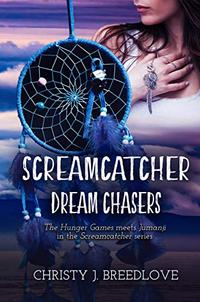
                     Two more Screamcatcher books are finished and sold to the same publisher. The second in the trilogy is called Screamcatcher: Dream Chasers. The third and final is called Screamcatcher: The Shimmering Eye. By the second book, the kids have formed the Badlands Paranormal Society. The fancy themselves as true paranormal investigators since they escaped alive from the first Web World in book 1. The third books, via the blessings of George Knapp, investigative reporter out of Las Vegas, is my fiction account of what really happened at Skin Walker Ranch, the most haunting tale I’ve ever heard in my life.
Thanks for your time—and thanks for Screamcatcher, I enjoyed it, and hope you have plenty of success with it.
                     I’m honored, H.C. Newton to grace your pages and thank you for your time and consideration of my life and work.

Page 35 of 47

Powered by WordPress & Theme by Anders Norén