Category: Fantasy Page 38 of 47

The Fairies of Sadieville by Alex Bledsoe: I hate to say good-bye to the Tufa, but this is the way to do it.

I’ve got to stop doing this. I had most of a post written about this book for yesterday, didn’t like it and trashed the whole thing. This isn’t as analytical as I wanted to be, but it does a better job capturing what I felt about the experience, and I think I happier about that than I’d have been with my planned post.

The Fairies of SadievilleThe Fairies of Sadieville

by Alex Bledsoe
Series: Tufa, #6

Kindle Edition, 368 pg.
Tor Books, 2018

Read: May 9 – 11, 2018

For many years [the Tufa] were on the wrong side of the South’s color line, and suffered for it. Their secretive ways and legendary musical aptitude spawned rumor and legend, which in turn prompted more and more withdrawal.

But now the twenty-first century, with its pervasive interconnectedness, pushed against this isolation. More and more Tufa risked the consequences of leaving and sought their way in the world. They all knew they would someday have to come back, since all Tufa were inextricably tied to Needsville. But they also knew that the seclusion of the past was no longer practical. Like it or not, the world now knocked on their door.

Such a depressing thought, but a pretty good summary of the State of the Tufa.

I still remember some of the reactions I had back in 2011 during my first read of The Hum and the Shiver and met the Tufa. There was something otherworldly, ethereal and haunting — and yet, very human, and even fun. It was, in short, magic. I thought the same when I re-read it before the sequel, and maybe it impressed me more that time. Each book since has felt the same — not all have them as successful as the first, but they’ve all had that same core magic.

When it was announced a couple of months ago that this was going to be the final novel in the series I was struck by two thoughts — the first, and strongest, was lament. The second was, “how?” There’s not an overarching narrative that needs tieing up, a goal to meet or anything. Partway through this book, I started to understand how Bledsoe was wrapping things up and concluding the series — and it felt perfect. I should add at this point that I was wrong about what he was doing, and that the reality was better than my guess.

As it’s the final book, all bets are off — the first novel contained many hints about the nature of the Tufa, but the successive books were less and less subtle in that regard, and ended up telling more than the previous. At this point, there’s no hinting, no suggesting — not only that, Bledsoe answers many questions readers have had since the beginning, and probably a few we should’ve had. And he does so in a way that enriches the series and the Tufa, not just something that reveals. There were so many little tidbits that came out that just made me smile or utter a quiet “Ah ha!”

I actually haven’t talked much about the plot yet — how odd. There are a couple of graduate students from a university in Tennessee — one in psychology (would be parapsychology if she could get away with it) and one in English with a focus in folk music as a way to improve his own music (minor spoiler: I spent a few pages waiting for him to be revealed to be a Tufa — nope, just a kindred spirit). These two have come across an old film — silent film old — shot near Needsville, showing a young woman losing her glamour and flying off on wings. There’s no way that it could be silent film quality FX, it’s a woman with wings. This town it was filmed in, Sadiesville, disappeared shortly afterwards. The two want to find this town and explore what happened to it.

Which brings them into contact with the people of Needsville — and the night winds have instructed them to help these two find what they’re looking for, despite the fact that no one in Needsville has a clue about the town. For readers, the idea that Tufa have forgotten anything that happened in their area is pretty astounding the kind of thing that piques your curiosity.

What happens next is wonderful, and horrible, and beautiful — awful in every sense, archaic and otherwise. I loved it and hated it while admiring how Bledsoe played this out. Structurally, tonally, thematically different from the rest (as each book in this series has been), yet undeniably part of the series. I loved seeing friends who’ve been around since The Hum and the Shiver or those as fresh as Gather Her Round just one last time (not that the new characters are slouches. For example, Veronica, our aspiring parapsychologist, is someone I’d hope to see if there was going to be a book 7).

There are a million little touches here — none of which I can talk about without ruining something, that make this good-bye the best installment of this series since The Hum and the Shiver. This is a must for Tufa fans (not that they need me to say it), and one more chance for me to suggest that people who haven’t started the series yet get on it. I don’t believe in actual magic — but Bledsoe’s series make me want to, especially if it looked like this. I hate to say good-bye to this series, but this is the way to do it.

Bravo.

—–

5 Stars

Born to the Blade 1.4: The Gauntlet by Michael Underwood: Kris’ opportunity finally knocks in the most satisfying episode yet.

The GauntletThe Gauntlet

by Michael R. Underwood
Series: Born to the Blade, #1.4

Kindle Edition, 53 pg.
Serial Box, 2018
Read: May 10, 2018
Since Episode One, we’ve been waiting for this: Kris Denn of Rumika facing the gauntlet. A series of 6 duels against the members of the Warders Circle of Twaa-Fei to gain a seat at the table for Rumika. Failure here means a decade (or so) before the next potential warder from Rumika has an opportunity. That’s pretty much the whole episode in a nutshell — can Kris make it?

Ultimately, I don’t think anyone will be shocked at the outcome — it’s about the journey, how the outcome is reached. Underwood nails it. A couple of weeks ago, I linked to a piece he wrote about how fight scenes can reveal character (he also tweeted about it this week), and this episode is him displaying that theory in practice. It really works — not only do we get a better idea about who Kris is, but we get a better understanding of the other Warders. Sure, we may not actually learn anything about Lavinia and Ojo — we just get more evidence of what we already know — but there are other duels.

This is longer than the previous two episodes — and it helped. The extra length gave things a chance to happen. I assume that’s not something we’ll see next week, but I can hope, right?

I’ve liked the previous episodes enough to justify the purchase of the season and to keep going, but I just flat-out liked this one. Good fight scenes, good character moments and the plot moves ahead. Where this goes next, I’m not sure, but having concluded this initial arc, I’m ready to see it. These authors took their time establishing this world, and carefully built up to this point and what lies beyond. I’m looking forward to see what else comes on this foundation.

—–

4 Stars

Born to the Blade 1.3: Baby Shower by Cassandra Khaw: Yup. Baby Shower. A literal baby shower, just what every fantasy series needs(?)

Baby ShowerBaby Shower

by Cassandra Khaw
Series: Born to the Blade, #1.3

Kindle Edition, 35 pg.
Serial Box, 2018

Read: May 4, 2018

Huh. I’m still trying to figure out this series, I admit, but the one thing I didn’t figure was that one episode would feature a party soaked in political intrigue. But it works — it really, really works.

Yeah, there’s plenty of magic and swordplay in this series. But there’s almost as much going on when it comes to diplomacy and politics. It’s subtle, it’s harder to follow in this world than you might be used to (but it’s getting easier the more time we spend in this series) — but it’s rewarding. This episode’s focal event is the perfect setting to focus on the subtle games and moves going on with these characters.

Michiko seems to take a step in a constructive direction — and if this goes like I think it will, I might actually like her as a character. Ojo’s still the most interesting character in this series (with the possible exception of Michiko’s secret relative, but he’s interesting for completely different reasons), and I continue to like how he’s being used. I think I might like Kris a bit more now than I have soon.

One thing the series seems clear about is that Lavinia is a bad person — good warrior, savvy at her job, but she’s a bad person. Maybe not King Joffrey bad, but someone in that vein. Which is odd, it seems that the series is going out of its way to show you things from (for example) Ojo’s point of view, but also what Penelope, Kris and Michiko think of him and his actions. The same goes for everyone but for Lavinia. There’s only one perspective presented for her. Now, honestly, I’m not sure I want to look too far into her head — so I’m not sure this is a bad thing, but it just strikes me as odd.

This has a great closing line — it definitely made me want to read on. The episode on the whole does that, too — by the end, I probably feel more settled in this world than I have before and I can start to enjoy things. I wouldn’t appreciate a novel taking this long to get me into the story, but given the starts and stops of these episodes, I’m much more willing to go along with it and three episodes doesn’t seem as big an investment.If you haven’t decided to take the plunge, this might be the time.

—–

3 Stars

Born to the Blade 1.2: Fault Lines by Marie Brennan: I’m still feeling the promise of the series, but want more.

My intent has been to comment on these the week of release, but I just haven’t been able to keep up with everything — today I try to fix that (or get closer, anyway).

Fault LinesFault Lines

by Marie Brennan
Series: Born to the Blade, #1.2

Kindle Edition, 44 pg.
Serial Box, 2018

Read: May 1, 2018
So straight out of the gate, this makes me happy: there’s a “previously on” section — which is great, and something we need to see more of) — and a Dramatis Personae (with a cast this big, a major plus).

The question is, can episode 2 build on the goodwill that the ending of 1 caused? Ehhh…sorta? We get to know the island this takes place on a little better, the culture there — and some more about the nations represented (and those representing them). There’s some revealing interaction with Kris and Michiko, and it’s clear that’s where our focus should be. but I sorta want more time with Ojo than with them. That’s more about Ojo being interesting than the other two annoying me by their actions at the end of the episode. But not much.

For a fantasy world, I like the strange governmental structure — a mix of diplomacy and single combat — that they’ve developed for this series. In reality, ugh. But this is fantasy. so sure, why not? But I’m not sure that I’m buying it. There’s a seeming lack of advisors for these diplomats, which is hard to swallow (though narratively neater), especially with Michiko and Kris there’s a naiveté that screams that these people shouldn’t be left to their own devices. They’re like college students out on their own. Yeah, they might be capable, but they need some more wisdom. Letting an entire people’s futures to be determined by what a young, untried warrior (no matter how talented) who’s easily swayed by elders and friendliness is . . . suggestive of problems.

I think I like this series, but I’m not sure. Goodwill toward a couple of the authors will carry you for a bit, I’m just not sure how long it’ll last without the series doing a better job of entertaining me. I’m not saying it’s bad, I’m just not totally sold. This many pages in, I should be. I want to be — but I don’t think I am yet. I still assume it’s coming.

—–

3 Stars

Born to the Blade 1.1: Arrivals by Michael Underwood: The Start of a Promising Series

ArrivalsArrivals

by Michael R. Underwood
Series: Born to the Blade, #1.1

Kindle Edition, 61 pg.
Serial Box, 2018
Read: April 21, 2018

Publisher’s Blurb:

For centuries the Warders’ Circle on the neutral islands of Twaa-Fei has given the countries of the sky a way to avoid war, settling their disputes through formal, magical duels. But the Circle’s ability to maintain peace is fading: the Mertikan Empire is preparing for conquest and the trade nation of Quloo is sinking, stripped of the aerstone that keeps both ships and island a-sky. When upstart Kris Denn tries to win their island a seat in the Warder’s Circle and colonial subject Oda no Michiko discovers that her conquered nation’s past is not what she’s been told, they upset the balance of power. The storm they bring will bind all the peoples of the sky together…or tear them apart.

So there’s the setup for this “season” of 11 novella-length episodes, releasing weekly. Episode 1 — Arrivals is very much a pilot episode. After an action-packed opening, the story settles into introducing the pretty large cast of characters and the world the inhabit.

I found most of what follows pretty dry, and I had a hard time maintaining interest. It reminded me of the Game of Thrones pilot — at least for those of us who hadn’t read the book — so many names and places to learn that it was hard to pay attention to any story. It’s a rich world and most of the characters seem well-developed and complex — I just don’t care about any of it yet.

It is not the most accessible world, with a specialized vocabulary, and political and magic systems that the reader has to dig in to really understand. This isn’t a complaint — it’s just something to know going in. There’s no real pay off for the effort now, but you can assume it’s coming.

But those last couple of pages? Hoo-boy, there’s the hook — I might have had to wait longer than I wanted to just to get to this point, but it was worth the wait. I think that gave me enough motivation to read at least a couple more episodes. Given the strength of the list of authors involved in this one — Michael R. Underwood (the author of this installment), in particular — I’m confident that I’ll be singing the praises of Born to the Blade soon. You might want to jump on board now and enjoy the progress.

—–

3 Stars

2018 Independent Bookstore Day

I didn’t celebrate Independent Bookstore Day in quite the same way I did in 2017. Last year, we went to Rediscovered Books, bought a couple of books and then went elsewhere and adopted a dog. This year, we went to Rediscovered Books — played a game (which got me a Blind Date with a Book) — bought a couple of books and chatted with an author.

Altogether less expensive, and I didn’t have to talk in a higher-pitched voice — not even once.


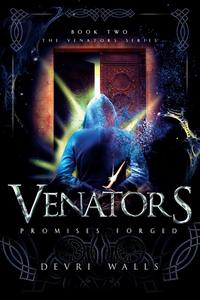
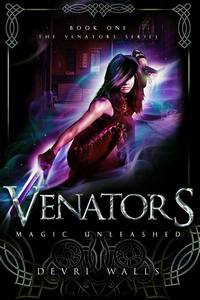
Yeah, I clearly need more practice at taking pics like that. Anyway, I grabbed The Vinyl Detective – Written in Dead Wax by Andrew Cartmell (mostly because Ben Aaronovitch talked a lot about the books on Twitter and whatnot). My Blind Date is with Fonda Lee’s Jade City, described as “Fantasy/Adult” and “The Godfather but with magic” (or words to that effect). And then I also purchased — and got signed — the new version of Devri Wall’s Venators.

Back in 2016, I read and blogged about Devri Wall’s The Wizard’s Heir and Venators: Through the Arch, and she was nice enough to answer A Few Quick Questions for me. We got to chat about why there’s a new version of the book, when to expect the next in the series, and what not. My wife, who actually thinks about things other than books, suggested getting a picture (ever the rookie, my fingers are covering the title).

As part of the game at RD, I had to take a couple of pics, I might as well throw them up here. One task was to take a picture of the bookstore — here’s the rare empty spot today (filled up seconds later). Another task was to take a photo of a Non-Fiction book with a great cover. I don’t know that I’ll read Best Before: The Evolution and Future of Processed Food, but that’s just a great cover.
      

The Armored Saint by Myke Cole

The Armored SaintThe Armored Saint

by Myke Cole
Series: The Sacred Throne, #1

Hardcover, 203 pg.
Tor Books, 2018

Read: February 28, 2018

“My strength is the Emperor and His Holy Writ.”

“Aren’t you pious for one who is so green at the sight of the Order?”

“The Emperor is divine. The Order are just men. You don’t fault a whole faith just because some of its agents take to brigandage. My faith kept me through the war, and it hasn’t failed me after.”

I’ve tossed out a couple of drafts of a paragraph of synopsis, and am tired of trying, so I’m just going to cite the jacket copy:

In a world where any act of magic could open a portal to hell, the Order insures that no wizard will live to summon devils, and will kill as many innocent people as they must to prevent that greater horror. After witnessing a horrendous slaughter, the village girl Heloise opposes the Order, and risks bringing their wrath down on herself, her family, and her village.

Lord Acton famously wrote to Bishop Creighton, “Power tends to corrupt, and absolute power corrupts absolutely.” This idea drips from almost every page of this book. Not that there was a whole lot of absolute power funning around — one member of The Order was close, and one other liked to act like it. But there’s a lot of people with enough power (of various kinds) that their tendency to corruption is problematic for everyone around them. It’s not the prettiest of worlds, but it’s a good setting for a conflict-filled read.

In the midst of this is a nation(?) ruled by a religion — including a scripture that may or may not be correctly interpreted by the religious authorities (who have plenty of civic and martial authority), although there’s no doubt that their application could use some work. They rule (and protect, if you use the term generously) this region through fear and intimidation. But you have to admit, what they’re doing works. Which doesn’t excuse the terror they inflict, but it suggests that somewhere there is an orthodoxy at work.

There are no really likeable characters here, everyone is flawed, but you cannot help but hope for the best for some of them — because they are unlikable, flawed people. Most of them are just trying to make it the best that they can for themselves and their family — and their neighbors, if possible. There are plenty of characters that you never want the best for (aside from repentance), and a couple of characters who jump from “hope for the best” to “hope they die horribly” column. This includes the protagonist — honestly, the more time we spent with her, the less I was that interested in her survival. Really, I liked her about as much as you can like Anakin in Attack of the Clones — thankfully, I like her friends and family.

Whether the Military Fantasy that we’re used to from him or this traditional Fantasy, Myke Cole knows how to write fight scenes (and other scenes of violence). This is seen particularly in the final climactic battle — it was so exciting that I found myself racing through it and having to pause and go back to make sure I understood what happened and hadn’t missed any details. Visceral is really the only word to use there.

I don’t understand how in the middle of this pretty generic Middle-Ages Europe-y fantasy we get war machines. They’re like what Tony Stark would’ve come up with a couple hundred years ago. They absolutely don’t belong to the setting — but neither does magic, so if the reader can buy one, you might as well buy both. Especially when the exosuits are so cool.

Still, at the end of the day, I was underwhelmed. It’s a rich world with characters that a reader can really sink their teeth into. But you just don’t get enough. Two hundred pages isn’t enough — The Armored Saint almost seems more like a 200 page set-up and/or advertisement for the sequel. Am I planning on reading The Queen of Crows and (most likely) The Killing Light? Yeah, I think I’ve even ordered the second one. But I’m not as excited for them as I should’ve been.

I expect my opinion to be in the minority here, so fill up that comment section with all the ways I’m wrong about Cole’s latest (or at least some of the ways).

—–

3 Stars

Beneath the Sugar Sky by Seanan McGuire

Beneath the Sugar SkyBeneath the Sugar Sky

by Seanan McGuire
Series: Wayward Children, #3

Hardcover, 174 pg.
Tor Books, 2018

Read: January 11, 2018

Children have always tumbled down rabbit holes, fallen through mirrors, been swept away by unseasonal floods or carried off by tornadoes. Children have always traveled, and because they are young and bright and full of contradictions, they haven’t always restricted their travel to the possible. Adulthood brings limitations like gravity and linear space and the idea that bedtime is a real thing, and not an artificially imposed curfew. Adults can still tumble down rabbit holes and into enchanted wardrobes, but it happens less and less with every year they live. Maybe this is a natural consequence of living in a world where being careful is a necessary survival trait, where logic wears away the potential for something bigger and better than the obvious. Childhood melts, and flights of fancy are replaced by rules. Tornados kill people: they don’t carry them off to magical worlds. Talking foxes are a sign of fever, not guides sent to start some grand adventure.

But children, ah, children. Children follow the foxes, and open the wardrobes, and peek beneath the bridge. Children climb the walls and fall down the wells and run the razor’s edge of possibility until sometimes, just sometimes, the possible surrenders and shows them the way to go home.

So begins Beneath the Sugar Sky, the third installment of McGuire’s Wayward Children series. If you’d asked me why I was excited about this book before reading it, I could’ve given you a list of reasons — but I’d forgotten just how magical the books are. By the time I got to “ah, children” not only did I remember the magic, I was under its spell.

Sometime after the events of Every Heart a Doorway, two residents of Eleanor West’s Home are down at the pond (they returned from water-worlds, and this is the best they can get), when a naked girl lands in the pond (falling from apparently nowhere), demanding to see her mother, or at the very least, someone in charge. It turns out that this girl is Sumi’s daughter — the problem there is that Sumi died during Every Heart, so she didn’t get to mature a bit, go back to her world, defeat the evil Queen, get married and have Rini. Now, the Timeline is catching up to her, and faster than you can say Marty McFly, Rini is starting to disappear, finger by finger, limb by limb. This doesn’t sit well with her, as you can imagine.

I like existing. I’m not ready to unexist just because of stupid causality. I didn’t invite stupid causality to my birthday party, it doesn’t get to give me any presents.

So, four of the residents set off on a quest to bring Sumi back to life. This takes them across the U. S., into one of the worlds of the dead, and all around Sumi/Rini’s nonsense world. There’s heroism, mystery, sacrifice, triumph and cleverness all around, without which none of this would work, but with it all — and a healthy dose of magic — it’s a plan so crazy that it just might work.

I don’t want to talk too much about the characters apart from what I’ve already said (which is essentially nothing). In addition to Rini — we have a nice mix of new to us and returning friends — with one character that’s new to the Home as well as to us. I absolutely enjoyed getting the bonus time with the returning characters, the new (to us) characters were exactly the kind of kids you hope to find in these books. Also, some of the revelations about some secondary characters serve to explain a lot about the way this particular multiverse came to be and it’s pretty cool. So, basically, the character material in this novella is almost perfect.

I wasn’t as taken with Down Among the Sticks and Bones as I was with Every HeartEvery Heart was a wonderful mix of tragedy and violence with a sense of play (especially in the ideas and words) — there was hope throughout the book, even when it was dark for everyone and there was little reason for it. Down Among was about dashed hope and tragedy in a world of tragedy, dashed hopes and violence; yes, there as a little play with the language, and some moments of triumph, but they were all overshadowed. Which was fine, it was the story that needed to be told, and I’m not complaining, but Beneath the Sugar Sky was more of a return to the tone of Every Heart, so I liked it more than Down Among — I think it was a better book, too, but I could be wrong about it. I just know it was easier to like. There’s definitely tragedy, there are hard choices to be made — and I did say something about sacrifice — but there’s a strand of hope throughout that makes it so much easier to carry on.

One thing that has been on display throughout this series is a sense of play, a sense of fair tale worlds and logic reflected in the language McGuire uses — you’ve seen bits of it already above, just one more and I’ll call it good:

There was a door there, tall and imposing, the sort of door that belonged on a cathedral or a palace; the sort of door that said “keep out” far more loudly than it would ever dream of saying “come in.”

You know exactly what that door looks like, and you have a great sense of the environment around it, too. Just from that one sentence. McGuire has a great sense of style on display in the Toby Daye and InCryptid books, which is turned up in the Indexed serials, but is probably best seen in these books — capturing the feel of preternatural worlds has pushed her to unleash all of her pent-up linguistic magic. Even if I disliked the characters and stories she’s telling in this series, I think the language would bring me back.

I’m obviously a pretty big Seanan McGuire fan — just a quick glance at the archives will tell you that. But I’m willing to bet that even if I wasn’t predisposed to like her work, this series would’ve made me one — Beneath the Sugar Sky is a slice of literary perfection and I can’t encourage you enough to try it.

—–

5 Stars

Cover Reveal: The Vengeance of Indra by Shatrujeet Nath

~ Cover Reveal ~
The Vengeance of Indra 
(Vikramaditya Veergatha #3)
by Shatrujeet Nath
VENGEANCE IS A CAGE
FORGIVENESS IS FREEDOM
In their greed to possess the deadly Halahala, the devas and the asuras have employed every dirty trick against Vikramaditya and his Council of Nine. But the humans are still standing, bloodied but unbowed.
When the wily Shukracharya discovers the secret to breaking the Council’s strength and unity, he forges an unlikely alliance with his arch-enemy, Indra, to set a deceitful plan in motion.
As cracks emerge between the councilors and their king, ghosts from the past threaten to ruin Vikramaditya and Kalidasa’s friendship, signaling the beginning of an eclipse that will cast a long shadow over all that Vikramaditya holds dear. And into this shadow steps Indra, bearing an old grudge — and a devastating new weapon.
How much longer before the Guardians of the Halahala finally fall apart?
Other Books in the Series:
 
(Click on the Covers for more details)
About the Author:
Shatrujeet Nath is the creator of the runaway national bestseller series Vikramaditya Veergatha, a four-book mytho-fantasy arc which includes The Guardians of the Halahala, The Conspiracy at Meru and The Vengeance of Indra. Described as “a new face to Indian mythology” by DNA, Shatrujeet writes for movies and web shows as well. He is also the author of The Karachi Deception, an Indo-Pak spy thriller.


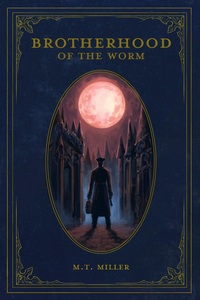
Bedlam by M. T. Miller

BedlamBedlam

by M. T. Miller
Series: The Nameless Chronicle, #4

eARC, 210 pg.
2017

Read: November 27 – 28, 2017


I was excited to open my email and see a new book from M. T. Miller waiting for me — but I’m not ready to say goodbye to this series. I do think this was the right point to wrap things up and exit, I just liked life better when I wondered when there’d be a new book about Nameless.

How to talk about this . . . this is really hard without just spilling the beans about everything.

We met Nameless as he seemingly climbed out of his own grave into a dystopian future of the Western US, not knowing anything about himself (inluding, obviously his name), but with a particular set of skills that enabled him to kill — which also seemed restorative. But he didn’t seem to be a monster. After three books of struggle to survive and find some measure of success, Nameless finally succeeded. He accomplished everything he set out to do, and then found a better way to look at life, an equanimity. Life still had challenges, but he has a new way to deal with them, a new confidence.

Then something appears, ready to take it all away — and how will Nameless react? Very differently than he would’ve before (while consistent with the guy we’ve come to know).

Not only that — but a lot of the mysteries surrounding Nameless are resolved. Questions I stopped hoping/expecting to get answers to were answered as we say goodbye to him and the world that Miller has created for us.

There’s a good degree of character development here for both Nameless and Rush — and a believable lack thereof for many others. Characters you liked in earlier books, you’ll still like. Characters that you were ambiguous toward earlier, you’ll probably still be ambiguous about.

About halfway through the book, Miller changes the rules — he does something gutsy and incredibly hard to discuss without ruining. Just when you get to the point where you pretty much accept what he’s doing, he changes it again. Up to this point, this was my favorite of the books — I really got into things. I liked it less with each new tack. Not that I didn’t appreciate the ambition, or Miller’s skill — it just changed Nameless’ story from Story Type X to Story Type Z. And I’ve never been a fan of Z, I don’t hate Z, but it’s just not my cup of tea. The more I think about it, I can see where this is justified by everything that’s happened throughout the series, and I can even defend it. I just don’t like it.

I guess you can compare it to what happened at the end of Lost or Moore’s Battlestar (both of which I liked, I should mention) or — the writers of those made a choice and executed it. I appreciate Miller’s choice and execution, but it’s just not something that’s every going to appeal to me. Basically this series consists of 1 novella and 3.5 novels that I enjoyed with .5 novels that was well done, but not my taste.

Like I said, I do think that this was the time to leave the series, I think Miller had done everything he could with Nameless, Rush and the rest. I wasn’t crazy about how he landed the plane, but I appreciated it for what it was. I can easily see others thinking I’m wrong about Z, and really digging the parts of the book that leave me cold — so please don’t take anything I said as a discouragement from reading either this book, or the series. I’m really looking forward to whatever he ends up doing next, because I do think I can see Miller’s growth over these 5 novels/novellas. It was a heckuva a ride, and I’m glad I came along for the ride. I heartily recommend it.

Disclaimer: I was provided a copy of this book by the author in exchange for this post and my honest opinion. Thanks, Mr. Miller! This didn’t impact my opinion of the book in any discernible way.

—–

4 Stars

Page 38 of 47

Powered by WordPress & Theme by Anders Norén