Category: Fiction Page 124 of 341

A Few Quick Questions with…Jonathan Nevair

Earlier this morning, I posted my take on the novel Goodbye to the Sun–out today, I should add. Now, I get to present this Q&A the author was gracious enough to participate in with me. There are some great answers here (at least I think there are), hope you enjoy.


Describe your path to publication with this.
Goodbye to the Sun was the second novel I wrote. The first will never see the light of day and I now understand that it was more a personal exercise in getting my “literary legs” than a book to be shared with readers. I’d written academic essays, etc. for years but fiction was an entirely new language. One important piece of feedback I got from an agent on the first book was that while they enjoyed it, especially the world-building and prose, they wanted more investment in the main character – more emotional connection.

I took that to heart and Goodbye to the Sun was the result. I did a good deal of research on how to write characters that are emotionally charged and how to increase empathy and investment in a reader’s relationship to a protagonist. When it came time to construct the plot for Goodbye to the Sun, I decided to model the story off of one of the most heavy-hitting examples I could find – the tragedy. It had everything I needed to ground the story in a rollercoaster of emotional transformations, struggle, and hardship.

After an early structural edit and feedback from a sensitivity reader, Goodbye to the Sun was sent out into the literary agent ether, and then, someone I follow on twitter posted a call for submissions to a small indie press specializing in SFF and horror, Shadow Spark Publishing. They were closing to submissions the next day – talk about luck… I whisked off a query letter (an improvised one, not the official one I’d been using for agents) and got a response back and a request for a partial manuscript. From there a full request followed, and after some back and forth, I signed a three-book deal.

I knew I was in the right place for the series when I read the mission statement that Jessica Moon and Mandy Russell had on the publishing house website. It made clear that they were seeking authors whose works tested boundaries and experimented with approaches – they wanted fiction that pushed in new directions. The POV structure of Goodbye to the Sun is a bit unorthodox and I was thrilled when they read the manuscript and responded positively to the story and my writing. From there, it’s been the usual publication process – editing rounds, proofs, cover designs, etc.

All authors have more ideas running around in their head than they can possibly develop—what was it about this idea that made you commit to it?
This is a great question because I don’t usually stop and reflect on the process of literary invention. As an art historian and educator, much of my recent focus has been on ethics. At the time I was writing Goodbye to the Sun, I was teaching and writing academically about ethics in art and that spirit translated into the Wind Tide universe. One thing I am starting to understand is that while I may not consciously know it, I have something to say in my fiction writing – whether it’s human themes, issues relating to ecology, or just wanting to share an appreciation of the wonders of the imagination (often visual) with others through the written and spoken word (that’s one of the reasons I love my job as an educator – putting visual experience into words and sharing my perspective with others, and engaging in a back-and-forth with others about their impressions, is one of the best parts of being an art historian).

What really made me stick with this story is the characters. Razor and Keen became intimate and close companions and something about them forced me to commit to their journeys and see them through to a narrative resolution. I didn’t grasp it until I’d written Goodbye to the Sun, but I’m a character-driven writer. I adore world-building, both settings and cultures, but when it comes down to it, I build them to put characters into the settings – to live with them in those worlds and experience what they experience, struggle alongside them, and revel in their growth and evolutions.

Clearly, you put a lot of time and effort into the world/culture-building for the novel—were there historical analogues for some/all of these groups? What kind of research did you do for this?
This is one of the reasons why I am enjoying writing science fiction – it presents a whole new, expanded set of research experiences necessary to build convincing and interesting secondary worlds. I spent time reading about tidal cycles, wind, and tropical weather to construct the two main planetary settings for Goodbye to the Sun. Some other random world-building research tangents arose like the nature of cave systems, bioluminescence, and a very intimate reading on trees (Wohlleben’s The Hidden Life of Trees) to help develop not only the famed cantinool trees on Heroon but also a broader ecological philosophy emphasizing a hidden biological communication network tied to a cause-and-effect system of human interaction with terraforming, etc.

It was also the time when the most recent cycle of Star Wars movies hit theaters and as a big fan from my childhood, the films drove me to fantasize about living in a similar secondary fictional world. Rogue One was especially inspirational to me. The rebellion, as well as the very complicated set of players mixed up between opposing sides (and the emphasis on family vs. state that related to other important sources like Antigone), played an important role as a precedent. The Motes are indebted to that source as well as giving a nod to the Fremen in Frank Herbert’s Dune.

As a middle-aged person, I’m drawn to stories of people who’ve been pushed back into circumstances of their youthful years, and I’d read Legend by David Gemmell not too long before writing Goodbye to the Sun – Keen Draden probably has some Druss “qualities” sprinkled on him. I’ve also had a lifelong interest in martial philosophy and many texts written over the centuries provided source material for Keen’s warrior philosophy and the fighting scenes. Razor’s voice and tone were strongly influenced by some other writing research I did on character voicing. Although not written in the same POV, I was strongly affected as a writer by Essun in N.K. Jemisin’s The Fifth Season.

What was the biggest surprise about the writing of Goodbye to the Sun itself? Either, “I can’t believe X is so easy!” or “If I had known Y was going to be so hard, I’d have skipped this and watched more TV”
Oh, this one is easy! And I’ll take the, “I’d have skipped this and watched more TV for 200$, please.” Even though I set up plot points and had an outline, as well as a close sense of how this narrative would adapt a tragedy model, I got bogged down at ACT III – halted in my writing tracks. It took a month of talking to myself (out loud on walks with my dog, in my head, and many scribbles that were scrunched up and tossed in the trash) to find my way out. I learned two things from this: first, I needed to be open to change and surprises in writing, but have a general plan and an “arc” for the entire plot, and second, sometimes you need to just sit down and write to get out of a rut. These are, of course, personal reflections and not advice to anyone else writing fiction. I heeded my own words for the second book in the Wind Tide series, Jati’s Wager, and that one went much better with no torturous plot crises.

Let’s play “Online Bookstore Algorithm” (a game I’ve recently invented). What are 3-5 books whose readers may like Goodbye to the Sun?
Gareth Powell, Embers of War
Essa Hansen, Nophek Gloss
James S.A. Corey, The Expanse
Becky Chambers, A Long Way to a Small Angry Planet
Frank Herbert, Dune

Thanks for your time—and thanks for Goodbye to the Sun, and I hope you have plenty of success with it.


PUB DAY POST: Goodbye to the Sun by Jonathan Nevair: Broken People and Broken Worlds Hope for a Better Future

Goodbye to the Sun

Goodbye to the Sun

by Jonathan Nevair
Series: The Wind Tides, #1

eARC, 307 pg.
Shadow Spark Publishing, 2021

Read: April 27-May 3, 2021

What’s Goodbye to the Sun About?

Several years ago, Keen Draden served as a Legion soldier on Heroon. He left the planet a changed man, a damaged man who found the numbing he needed to get by in a bottle. Now a diplomat, he finds himself on a different planet—one with some parallels to Heroon, however. While in transit on the planet, his transport is attacked and he’s taken hostage by the losing side in a civil war in a truly desperate move.

When this scheme doesn’t work the way they expected, Razor (his captor) comes up with a new plan to get some value from Draden. He sees this as an opportunity to do some good, and achieve some personal goals (the latter are far more important to him than the good). The two leave the planet and begin traveling with Jati, another former Legion soldier—one who isn’t quite as far gone as Draden.

Jati has business that takes him to Heroon, Draden’s personal affairs take him there—and he needs to confront some ghosts from his past, as well; and Razor hopes—almost against hope—that Heroon holds the key for her people’s survival.

Sure, but What’s it Really About?

So that’s the plot—at least the beginning of it—but the novel is ultimately the story of someone (or multiple someones) rebuilding themselves. Not by casting aside the mistakes and tragedies of the past, but by absorbing the lessons learned from calamity, embracing what they meant, and doing when they could to turn the hardships into something for the greater good.

When the novels leans into that, it’s at its best and is the kind of thing I relish and enjoy pressing others to read. I’m not sure it stays that kind of novel long enough to justify enthusiasm, however—but I’ll get into that later.

In addition to that, this book is about family—natural as well as found family. Religion. Power. The obligation of the power to act on behalf of the powerless.

Worldbuilding

This is one of those SFF novels that makes it obvious and plain that there was a lot of detailed worldbuilding done before the book really even started being written (or so it seems). THere’s a complex history behind Draden’s time on Heroon, there are elaborate cultural practices, expansive technology, and layers of political realities and bodies.

You don’t have to read much of the novel to get an idea about the detailed nature of the worldbuilding—and it’s one of those aspects that’s in your face at every step, and you’re still learning about the world as the novel ends—with more that needs understanding. THere’s something very attractive about that.

There’s something maddening about it, too—there are so many, many things I just don’t understand about this fictional world. While I don’t need to have an exhaustive knowledge of everything mentioned in the novel, I also shouldn’t have to shrug my shoulders and move on when I have no idea exactly what’s being talked about and am pretty sure I’ll never get an explanation for it.

For example, I have a very clear and detailed understanding of the dominant culture’s protocols to communicating gender identification when meeting someone by different means (there were frequent mentions of it), but I’m not sure if Draden was actually drinking mercury, or if Quicksilver was a brand name, a category of potent potables, or what. It’s a somewhat unimportant example, but it’s illustrative. (I could’ve used military, political or religious examples there, but this is the most concise and easily explained one).

Antigone

The novel is described as “a space opera inspired by the Greek tragedy, Antigone.” I read the Sophocles play back in High School and in College—I remember it being one of my favorites, and so I was excited to see how Nevair tackled it.

Sadly, it turns out I remember practically nothing about the play, much to my chagrin (I really thought I did), so I can’t comment on how the novel reflects the play. But I thought I’d mention it for those who read this blog and might be interested by the notion.

Plotting and Prose

When an author is painstakingly careful with every word, every phrase in his prose it takes two forms (broadly speaking, at least): the first is that it comes across as fantastically smooth, and feels effortless (think Eames or David). The other form almost seems to boast in the care used, the text beats you over the head with the amount of care exercised in selecting each word (think Jemisen or Rothfuss).

His book seems to fall into the latter category. I, obviously, can’t describe the amount of labor Nevair poured into the text, but it feels like each word in the final version was the result of rewrite after rewrite after rewrite to get it precisely the way that Nevair wanted it. This amount of care draws attention to itself in much the same way as the worldbuilding in this novel does.

Despite the clear labor over the words, it really seems (stress on “seems”) that the same level of planning wasn’t used for the story—it feels like there were multiple novels started in this book, and after a few false starts, the book finally had an arc that it stuck with through to the end. I didn’t get the sense that we’re going to take these two (and eventually three) characters on a journey from A to B via C, D, and E. It felt more like a journey from A to B via C—well, no, maybe D? On second thought, E.

I know that’s not how Nevair actually approached this. It just felt that way to me. I’d also say that story and character took a back seat to the themes Nevair wanted to explore and the worldbuilding. I’m all for expansive worldbuilding and overarching themes, but not at the expense of characters or plot.

So, what did I think about Goodbye to the Sun?

I don’t know. I respect and admire the obvious craft and care seen in these pages, I think most of what he tried to accomplish is well-worth exploring. I just think it could’ve been more effective. I think the care undercut itself.

But I don’t really want to say anything negative about the book because there were so many technical aspects, so much technique displayed, and all of that is commendable and well done. But I can’t bring myself to be entirely positive, either.

In the end, I think I’d encourage people to try it for the experience, but to go into it with the right perspective. And then I’d ask people to come back and talk about it. Maybe you can convince me one way or another.

Disclaimer: I received a copy of this from the author in exchange for my honest opinion.

Reposting Just Cuz: Death and Taxes by Mark David Zaslove: The most rootin’ tootin’ shoot ’em up about accountants you’ve ever seen

Like the Wolfe quotation from earlier today, it felt like this was a good day to re-run this:

Death and TaxesDeath and Taxes

by Mark David Zaslove
Series: Tales of a Badass IRS Agent, #1


ARC, 219 pg.
Aperient Press, 2018

Read: August 13 – 14, 2018
I’m not sure I can do this book justice with a hand-crafted synopsis, I’ll just copy and paste from Zaslove’s site:

Death and Taxes follows Mark Douglas, an ex-Marine turned IRS agent, who, along with auditing the weird and the profane, also spearheads weekend raids with his locked-and-loaded gang of government-sanctioned revenuers, merrily gathering back taxes in the form of cash, money order, or more often than not, the debtor’s most prized possessions.

Things turn ugly when Mark’s much-loved boss and dear friend Lila is tortured and killed over what she finds in a routine set of 1040 forms. Mark follows a trail dotted with plutonium-enriched cows, a Saudi sheik with jewel-encrusted body parts, a doddering, drug sniffing, gun-swallowing dog named The Cabbage, a self-righteous magician with a flair for safecracking, a billionaire Texan with a fetish for spicy barbecue sauce and even spicier women, and an FBI field agent whose nickname is “Tightass.” All of which lead to more and bloodier murders – and more danger for Mark.

Enlisting his IRS pals – Harry Salt, a 30-year vet with a quantum physical ability to drink more than humanly possible; Wooly Bob, who’s egg-bald on top with shaved eyebrows to match; Miguel, an inexperienced newbie with a company-issued bullhorn and a penchant for getting kicked in the jumblies – Mark hunts down the eunuch hit man Juju Klondike and the deadly Mongolian mob that hired him as only an angry IRS agent can. There will be no refunds for any of them when April 15th comes around. There will only be Death and Taxes.

This is hyper-violent (not that filled with blood and guts, really — there is some), a lot of guns, bombs, more guns. Sometimes played for comedic effect, sometimes it’s the good guys vs. the bad guys. Sometimes, it’s a little of both. It never got to the overkill point for me, probably because this felt more like a cartoon than a “realistic” thriller.* What was overkill for me was the hypersexualization of every woman under the age of sixty. I didn’t need to hear that much about every woman’s physical appearance — there are more gorgeous women with perfect (sometimes surgically enhanced) bodies in this guy’s life than an episode of Miami Vice.

* Really, what thriller is realistic?

But man, is this funny. There are sections — sometimes a sentence or two, sometimes several paragraphs long — that are the literary equivalent of a shot of espresso, they are so taught with action, cultural references, and humor that you just revel in them. This reminds me a lot of the John Lago Thrillers by Shane Kuhn — I think Kuhn shows more discipline in his plots and characters, but on the whole, these two are cut from the same cloth. The same energy, a similar style, a similar sense of humor — and frankly, that stuff is catnip to me. I think the plot got a little convoluted, a little confusing — but it was worth working through.

Am I planning on reading Tales of a Badass IRS Agent, #2? Yeah, I will be keeping an eye out for it. This is a heckuva romp and will entertain anyone who gives it a shot.

Disclaimer: I was provided with a copy of this novel in exchange for my honest opinion, which you see above.

—–

3 Stars

Nero Wolfe on Taxes

I can’t tell you when this became a (largely) annual thing for me to post, but it was on a blog that pre-existed this one. As always, seems like a good day to post it.

Nero Wolfe Back CoversA man condemning the income tax because of the annoyance it gives him or the expense it puts him to is merely a dog baring its teeth, and he forfeits the privileges of civilized discourse. But it is permissible to criticize it on other and impersonal grounds. A government, like an individual, spends money for any or all of three reasons: because it needs to, because it wants to, or simply because it has it to spend. The last is much the shabbiest. It is arguable, if not manifest, that a substantial proportion of this great spring flood of billions pouring into the Treasury will in effect get spent for that last shabby reason.

–Nero Wolfe
from And Be a Villain

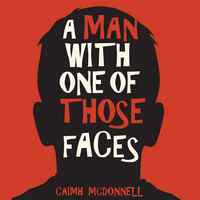
In Medias Res: A Man With One of Those Faces by Caimh McDonnell, Morgan C. Jones (Narrator)

As the title implies, I’m in the middle of this book, so this is not a review, just some thoughts mid-way through.


A Man With One of Those Faces

by Caimh McDonnell, Morgan C. Jones (Narrator)

Book Blurb:

The first time somebody tried to kill him was an accident.

The second time was deliberate.

Now Paul Mulchrone finds himself on the run with nobody to turn to except a nurse who has read one-too-many crime novels and a renegade copper with a penchant for violence. Together they must solve one of the most notorious crimes in Irish history…

…or else they’ll be history.

I’m at the 48% mark—and this is just ridiculously fun. A great mix of dark humor, some silly humor, gritty crime drama, some fascinating characters, and three very different kinds of police detectives.

For me, this experience has been like the first time I read one of Jay Stringer’s Sam Ireland books—Ways to Die in Glasgow

I get the impression that Detective Bunny McGarry is who I’m supposed to be the most focused on, but he rankles me. Poor, incredibly ordinary-looking, Paul Mulchrone and the nurse, Brigit Conroy, who got him into this mess are who I’m the most invested in. But the DI Jimmy Stewart is the star of this book—I could listen/read to a five-book series about him starting tomorrow.

I can’t think of a way to sum up the plot or even speculate about what’s going to happen next—like I normally do in these posts. I just can tell that whatever happens next that I’m going to have a blast listening to it, and I’m prepared for just about anything to happen.

A Tale of Wonderful Whiffs by Sophie Loosveldt, Isabella Croker (Illustrator): Secret Agent Pug? A Spy *for* the House of Love?

A Tale of Wonderful Whiffs Tour Poster

A Tale of Wonderful Whiffs

A Tale of Wonderful Whiffs

by Sophie Loosveldt, Isabella Croker (Illustrator)

PDF, 39 pg.
Sunshine Stories, 2020

Read: May 12, 2021

What’s A Tale of Wonderful Whiffs About?

Ahh, pugs. Over at SheldonComics.com, you’ll see them described as “God’s Little Wierdos.” But in A Tale of Wonderful Whiffs, they’re some of the Universe’s “Secret Agents” here to spread love (through a varieety of means). Both ideas work, really, if you’ve ever spent time around them.

In particular, this book is looking at Pugini and her person, Sophie. There’s not really a narrative arc here, it’s a series of vignettes looking at the things that Pugini and Sophia do as these Secret Agents to brighten the lives of those they come into contact with and spread love.

It could be argued that Pugini’s method of spreading her message of love—via “tuneful toots” created from her “happy belly” which is “only sometimes SUPER smelly”—is pretty crass and not worthy of some of the elevated subject manner. But I can’t imagine anyone’s going to bother—particularly because it’s hilarious to a kid who’s still having picture books read to them.

The Illustrations

Croker provides some dynamic art. It’s very distinctive and attractive (although I thought the colors seems a little muted). I thought she nailed the art for Pugini—who is fairly cartoonish—especially the art revolving around Pugigini and hunting for snacks. It’s cute stuff that’s going to appeal to the target audience, I can assure you.

The, um, odor cloud depicting one of Pugini’s “fabulous farts” on one page is a great touch.

Okay, Sure, Maybe I’m Biased

A few years ago we adopted a senior pug/beagle mix, and I could see a little/lot of her in Pugini—her “squidgy face”, the “snorts and toots,” and the “hungry little monster nibbling on absolutely everything.” So, I’m an easy mark for this book—then again, how often do I have something less-than-complimentary to say about a Dog Book?

So, what did I think about A Tale of Wonderful Whiffs?

Sure, I’m not that wowed by the spiritual message of the book, but how many kids are going to grab on to it when they’re at the picture book stage anyway?

It’s a little saccharine-y, a little heavy-handed (but how many picture books are noted for their subtlety?). But ultimately it’s a cute book, with a nice premise, and some distinctive art. I’m not sure what else I have to say at this point, it’s a winner.

Get your hands on it had after a little fun with one of the goofiest critters around.


3.5 Stars

My thanks to Love Books Group for the invitation to participate in this tour and the materials (including the book) they provided.

Love Books Group Banner

BOOK SPOTLIGHT: A Tale of Wonderful Whiffs by Sophie Loosveldt, Isabella Croker (Illustrator)

Today I’m pleased to welcome the Book tour for the children’s book, A Tale of Wonderful Whiffs by Sophie Loosveldt and illustrated by Isabella Croker. After this post, I’ll be giving my take on the book here in a little bit. But let’s start by learning a bit about the book.

A Tale of Wonderful Whiffs Tour Poster

Book Details:

Book Title: A Tale of Wonderful Whiffs by Sophie Loosveldt, Isabella Croker (Illustrator)
Publisher: Sunshine stories
Format: Hardcover
Length: 39 pages

Book Blurb:

Pugini
Pug on a mission

This is the story of little Sophie and Pugini.

Everyday adventures of whiffs and wonders.

Together they explore the mystery and beauty of the natural world.

There is more to life than meets the eye. With a heart full of hope and a furry friend overflowing with love little Sophie ventures on a bright journey into the magic of every new day.

We are surrounded by Secret Agents helping us understand that love is all and we are all part of it. Never alone, but all one.

About the Author:

Sophie LoosveldtI am a control freak by nature, which suits me very well as an air traffic controller at Gatwick. I would have never classified myself as creative. Having moved from Belgium to London, opening my horizons, I now realise we all are; naturally inventive, expressive and imaginative. All children are born with this creative seed waiting to sprout. It took a long time for my seed to crack and for me to bloom into myself.

It is important to allow yourself to dream and have trust in the world. As a late bloomer I have a strong desire to empower all children, so they can grow and learn to express themselves freely. Our inner child never forgets about the magic of our world. It is the key to connect to the present moment and to not get stuck inside our heads.

Purchase Link:

https://pugini.com/shop/

My thanks to Love Books Group for the invitation to participate in this tour and the materials (including the book) they provided.

Love Books Group Banner

PUB DAY BOOK BLITZ: Firepower by John Cutter

This morning I’m pleased to host a Book Blitz for John Cutter’s thriller Firepower to celebrate its publication today.

Book Details:

Book Title: Firepower by John Cutter
Publisher: Lume Books
Release date: May 13, 2021
Format: Ebook/Paperback
Length: 219 pages
Purchase Link:

Amazon UK ~ Amazon US

Firepower

Book Blurb:

White supremacists have climbed their way to the top. It’s his job to bring them down.

Vince Bellator, former Special Services operative, arrives in Dead Springs, Alabama to honor his late friend’s dying wish: to bury his hand under the porch of his hunting cabin.

But on the way, Vince has an unsettling run-in with a group of local heavily armed militiamen.

Sensing that the group is more than just a violent mob, Vince decides to infiltrate their ranks. He discovers that they are an outfit of white supremacists who call themselves The Brethren. But what sets them apart from other such extremists is that they are in the midst of planning an act of national terror.

Not only that, they are also harboring a prisoner – someone with a connection to Vince.

With the FBI unconvinced and government officials colluding with Brethren leaders, Vince realizes it is up to him to put a stop to the would-be terrorist cell. But can he do so before they wreak devastation on America and all it stands for?

Fans of Lee Child and James Patterson need look no further: full-throttle political thrills await you from the first page.

About the Author:

John Cutter is the bestselling author of The Specialist novels, which inspired the Sylvester Stallone movie of the same name. He lives in the Pacific Northwest, USA.

My thanks to Love Books Group for the invitation to participate in this Blitz.

Love Books Group

A Wanted Man by Rob Parker: Meet Ben Bracken

A Wanted Man

A Wanted Man

by Rob Parker
Series: Ben Braken, #1

Kindle Edition, 206 pg.
Lume Books, 2017

Read: May 6-8, 2021
Grab a copy from your local indie bookstore!

Jack’s father goes missing but turns up dead in a warehouse at Manchester Airport. Shot. Who has access to firearms here in the UK? Farmers, the police, and organised crime. I can’t picture an angry pig farmer losing his shit and heading to Manchester Airport to clip someone. Nor can I especially imagine a police officer doing the same thing, although stranger things have happened. And that leaves the last one. Organised crime.

What’s A Wanted Man About?

Ben Bracken was sent to prison not that long ago, but just walked out a free man—although he wasn’t actually released (nor was he scheduled to be). He has some “insurance” to keep him from having to go back and had a little cash set aside for when he was out of prison.

His plan is to get his cash, secure his insurance policy and head off to London to get revenge on the man who got him sent to prison. But before he can do that, his friend Jack has a problem. Jack’s father was just murdered and he doesn’t see the police—or his father’s criminal associates—doing that much to find the killer. Would Ben help? Sure—especially because Jack’s also in danger as long as the killer is out there.

Before Ben can enjoy his first beer in years, he’s set on a path that will lead him to going up against two crime syndicates, and decades of history, just to get Jack both the answers and safety he needs.

A Little About Ben

But… I feel a nagging. That familiar tug of duty. I carry it everywhere with me even now, bound by it, cajoled by my gratitude to Jack…

My problem is compounded by my brittle, unique moral compass. My idea of good and bad is very black and white, with great streaks of grey smeared straight across the borders between the two– the zone in which I have been known to take matters into my own hands. Those grey areas demand I owe Jack some assistance, even if it is outside of my self-imposed remit.

Ben Bracken is yet another soldier who’s having a hard time adjusting to society after years of active duty (see also Jack Reacher, Peter Ash, John Rambo, and a couple of other characters whose names slipped my mind as I got to this point), but his sense of duty kept him trying to do good. His early attempts were less than successful, landing him in prison. Now that he’s released, he’s going to resume his quest (you can practically see him sporting Joe Pike’s tattoos—as well as living them out). Sure, he had another initial target in mind, but Jack’s situation fit his mission, so he’s able to delay his own plan and help Jack out.

But basically, you get the idea that he’s going to be another of the modern wandering samurai hero—like Reacher and Ash—just with a different kind of baggage. Namely, being an escaped prisoner in a country where the kind of weapons Reacher and Ash seem to have a steady supply of aren’t that readily available. It’s a fresh version of that character type, and I’m more than interested.

There’s more than just his criminal past to separate him from the typical wandering warrior. He’s not a technophobe, actually, he’s fairly capable when it comes to the basics of technology (once someone explains what Siri is and how to use it), but he’s not a whiz. He has a sense of humor, but he’s not cracking jokes all the time—and to say that he has issues with women is understating it, but he’ll likely move on from those.

I was pretty much sold on Ben early on, and was invested in the story—but at one point, we get this line:

I whistle a little (surprised to find my ‘go to’ whistling tune is Somewhere Over The Rainbow), and drop my pocket change noisily onto the dresser.

and I knew I liked Ben, and was probably going to be buying a few more books.

Parker’s Writing

The actual writing involved in a book is something I always think about, always take into consideration when rating a book—but it’s the thing I have the hardest part discussing. Something about Parker’s work here made me want to try it.

There’s a lot of this book that comes across as a pretty standard indie thriller. That’s not a judgment, it’s just a description. In many indie thrillers, there are repeated sections that make me wince (including novels that I like). A Wanted Man has none of those—quite the opposite, he has several sections that are just wonderful.

He can sum up a character in a few words—

The curious obsessive-compulsive aspect of this guy, which, twinned with the seemingly bottomless battery of his energy, gives his personality an almost pathological slant.

His precise, measured way of speaking seems pulled from the pages of a book, exactly how you’d picture someone of his generation learning a foreign language.

I had a few more examples in my notes, but this post is getting too long.

His ability to capture a scene or a room is even better:

I leave the motorway networks as the daylight fades and trundle through the bleak stone township of Glossop, as wild hills begin to sprout out either side of the settlement. I know where I am going, and follow the ‘V’ in the horizon where two hills meet and a road carves through: Snake Pass. Suddenly, the buildings and pavements disappear, and I’m out in the open, rolling through a picture-book patchwork of varying landscapes: undulating rugged grasslands, steep canyon drop-offs, vast forests of tall firs, and a softly lapping reservoir. You could be lost out here, but still feel in touch with the gods. It’s Lord of the Rings country, Tolkien’s inspiration. It’s Britain at its most beautiful, most powerful, most respectful.

Ben and Jack visit a floating restaurant and I could almost think I’d been there.

Sure, some of his descriptions are a bit much—I didn’t need that much detail about one man’s behavior at a urinal. No one does. But thankfully, those are few and far between (but, sure, I have a crystal clear vision of what happened there).

One more example of how good Parker can be, and then I’ll move on. At one point, Bracken visits the house he grew up in. I read the two paragraphs as he left a few times, they were just that good (and hopefully out of context you can tell that)

I walk down the path to the scuffed, mucky pavement. The gum on the concrete beneath my shoes, some of it is undoubtedly mine. My DNA lies at my feet, inseparable from my town, my past. That DNA is now the only evidence I was ever here. Thirty years of love, life, family– all reduced to a dirty bit of gum on an old pavement.

This will steel me. Toughen me. It has to. Because this would, could, should break a lesser man.

So, What Did I Think About A Wanted Man?

There’s a very “pilot episode” feel to this one—the focus is on introducing Ben Bracken, his world, his situation, and his mission. The actual story seems of secondary importance. Maybe I’m being too harsh—I likely am, but that was the impression I got.

The Epilogue shows that this isn’t just going to be a series about Ben’s quest for vengeance—there’s something else going on. Now Ben just out to get revenge on the man who sent him to prison would probably be worth sticking around to watch. But Ben doing that and the stuff from the Epilogue? Now, that’s a winning combination.

Do I recommend this? Absolutely. A great character, a compelling direction for the series, and some strong writing make up for a story that seems pretty boilerplate (but a good boilerplate, don’t get me wrong). I’m coming back for more soon, and can see these books becoming a favorite.


3.5 Stars

This post contains an affiliate link. If you purchase from it, I will get a small commission at no additional cost to you. As always, opinions are my own.


COVER REVEAL: Meat is Murder (Stonebridge #3) by Chris McDonald

Welcome to The Irresponsible Reader’s part in the Cover Reveal for Chris McDonald’s Meat is Murder! (which means we’re about a month away from me having a pleasant day with the book and probably saying some complimentary things about it). Like the first two books in the Stonebridge Mysteries, it looks pretty sharp. But before we get to the cover down below, but before the picture, I’ve got a few words to share about the book.

Book Blurb

McNulty’s Meats, one of Stonebridge’s oldest businesses, is about to be taken over in a lucrative deal that would make brothers Ron and Kevin very rich men indeed. Unfortunately for them, local activist Tyler Love has other ideas. Convinced that the deal would be bad for the town, he burns the place to the ground and inadvertently kills himself in the process.

At least, that’s what the police think.

Tyler’s mum disagrees and pleads with amateur sleuths Adam and Colin to investigate. Although, going up against the psychopathic McNulty brothers, a rival businessman, a group of hippies, and a girlfriend with secrets of her own might not be such a good idea… Someone has something to hide, and will go to great lengths to keep that secret buried.

Meat is Murder
is the third book in The Stonebridge Mysteries series of Cosy Crime novellas.

Publication date: June 8, 2021

About the series

Stonebridge is a small town on the north coast of Northern Ireland. Most of its inhabitants are friendly, happy people. Most of them… Because bad things happen even in the happiest of places. It’s a good thing, then, that Adam Whyte and Colin McLaughlin call Stonebridge home.

Armed with an encyclopedic knowledge of detective shows, a misplaced sense of confidence and a keen desire to see justice done, these two are the closest thing the town has to saviours. Which isn’t that reassuring…

About the Author

Chris McDonaldOriginally hailing from the north coast of Northern Ireland and now residing in South Manchester, Chris McDonald has always been a reader. At primary school, The Hardy Boys inspired his love of adventure before his reading world was opened up by Chuck Palahniuk and the gritty world of crime. A Wash of Black is his first attempt at writing a book. He came up with the initial idea whilst feeding his baby in the middle of the night, which may not be the best thing to admit, considering the content. He is a fan of 5-a-side football, heavy metal and dogs. Whispers in the Dark is the second installment in the DI Erika Piper series, and Chris is currently working on his latest series, The Stonebridge Mysteries, published by Red Dog Press in 2021.


And now…

The Cover

Meat is Murder
The cover designers at Red Dog have done it again.

Again, this book comes out on June 8th, but you can pre-order this now at: Red Dog Press, Amazon, Kobo, or Google (but you should absolutely order from Red Dog directly, the Bezos retirement fund is big enough, help out the publisher).


My thanks to Red Dog Press for the invitation to participate in this reveal and the materials they provided.

Meat is Murder Cover Reveal Banner

Page 124 of 341

Powered by WordPress & Theme by Anders Norén