Category: Fiction Page 153 of 341

Apex Predator by M.R. Miller: Nothing goes According to These Plans

Apex Predator

Apex Predator

by M. T. Miller
Series: The Culling, Book 2

Kindle Edition, 238 pg.
2020

Read: April 17-20, 2020
Grab a copy from your local indie bookstore!

“Nothing ever goes according to plan,” Shast said. That was why contingencies existed. Layers upon layers of them.

That’s from Chapter 4. By the time the book ends 11 chapters later, Shast is going to a whole new understanding of that.

But I’m getting ahead of myself there’s some sort of monster infestation in a city—forces have been sent to take care of it–two different waves, actually. But they didn’t work. So now, The Culling–the organization that handles these kinds of things, has sent a full Hand to clear it out. A Hand is a team of five hunters, each with a different specialty. With those combined talents, they should be able to handle anything.

Only Shast and the most senior member of the Hand have worked together before, the other three are experienced, but not that much. It’s a diverse group of people who usually work along and there’s a good deal of bickering and being at loggerheads on the way to the city. Once there, once the hunt gets underway, that gets compartmentalized and the Hand gets to work.

For a completely foreign world—that we still don’t really know that much about (but we’re learning)—it’s a testimony to Miller’s story-telling that the reader is able to plug into their activities, get an idea what’s at stake and why they’re doing what they’re doing.

It doesn’t take long for every theory they have to be proven wrong, everything they try to not have any success. And before long, it’s clear that what they’re facing is something most of them had never heard of—or if they had, they thought was a myth. It’s not a myth, and soon the hunters are the hunted.

Interspersed with that story are flashbacks to a hunt from early in Shast’s career, and enduring that was pivotal in his development into the hunter that he is. He gained the perspective, the cold-heartedness that he requires to survive the hunt that’s the focus of this novel. I don’t remember Miller doing anything like this before, he pulls it off pretty well. There are times when you get a story like this that you really wonder what the flashback storyline has to do with anything, but I gave Miller the benefit of the doubt and was rewarded for it.

Last time out, I praised Miller’s design of monsters. This time, I need to do the same. I don’t remember reading monsters like this before—while they were completely original, I had no trouble getting a clear idea how these things looked or acted. They were disturbing, powerful and you have little trouble understanding why the Hand wants to destroy them.

Even better is his character design—each member of the Hand is a fully realized character–and we learn their backstory, culture, specialties, and the rest without ever feeling like we endured an info drop. Through them, we get a better idea how this world works and how the Culling developed. I’m still trying to get a handle on this world, not that it bothers me much, I know what I need to know—but I’m intrigued, I’m curious. I appreciate getting a little more information about this place.

Now in the first book of the series, Shast and his companions face off with a large and unprecedented force of monsters, but it’s something they can get a handle on, something they can understand and adapt to. This time, the Hand is completely blindsided and maybe outclassed. How he moves on from this point to book 3, I have no idea—I assume Miller has a few tricks up his sleeve and I’m looking forward to seeing what they are. In the meantime, I’d encourage you all to go pick this one up.


4 Stars

Note: I received a copy of this book from the author in exchange for this post and my honest opinion. I thank him for that.

This post contains an affiliate link. If you purchase from it, I will get a small commission at no additional cost to you. As always, opinions are my own.

Pub Day Repost: Robert B. Parker’s Grudge Match by Mike Lupica: Sunny Randall’s Forced to Work for an Enemy as Lupica Settles into the Series

Grudge Match

Robert B. Parker’s Grudge Match

by Mike Lupica
Series: Sunny Randall, #8

eARC, 210 pg.
G.P. Putnam’s Sons, 2020

Read: April 21-22, 2020
Grab a copy from your local indie bookstore!


As I said last year when Lupica debuted his continuation of the Sunny Randall books with Blood Feud, I’ve had a complicated relationship with Sunny and was ambivalent with the series re-starting. However, I enjoyed Blood Feud (although comments on my post said I came across as lukewarm, I didn’t mean to) and really thought that Lupica had a good take on the character.

Thankfully, we don’t have a sophomore slump here, I think Lupica’s feeling more comfortable in these shoes and delivered something a little more ambitious. Tony Marcus begins this book by describing the best way to hold a grudge—and then goes on to point out all the reasons Sunny has recently given him to hold one against her. If nothing else is clear from this, you do not want Marcus harboring anything for you. He does this just to impress upon Sunny that his offer of employment is something she should strongly consider.

Tony’s lover, confidante, right hand, and former employee has left him. Without warning, without notice—and Tony wants her back. He’s not that concerned for her safety, he’s a little concerned that she defected to some new competition for his turf, but mostly he just wants to know what happened and how he can win her back. Sunny (and this reader) is fairly convinced by Marcus—she doesn’t think Marcus wants to hurt her, he just wants her back. Sunny hems and haws, but agrees to take on the case—for her own safety and because she’s able to convince herself that she’s actually working for Lisa Morneau, not Marcus.

This puts her on a path to explore the world of prostitution in Boston—this isn’t the first time Sunny’s done something like this, but this time she’s working for Marcus, which opens a few more doors. She meets with Lisa’s closest friend, someone she helped get out of the life, as well as former colleagues. Sunny also has several run-ins with Marcus’s new competitor, who seems like he’s wanting to start a war with him.

At some point, the trail leads to Paradise—leading to Sunny meeting up with Jesse Stone. The two banter and flirt a bit, and Jesse offers some help on the Paradise front. It was nice to see them together again (I’ve often thought the best use of the Sunny character was as Stone’s associate).

Now, it’s not long before the search for Lisa results in murder—and Lisa herself is frightened, sure that she’s next. Which drives Sunny to start to look into why would someone want to threaten her. What does Lisa know that makes her dangerous? And can Sunny use this knowledge to save Lisa and prevent the gang war on the verge of erupting?

While that’s going on Richie’s (other) ex-wife moves back to Boston with their son, Richard, and now wants Richie to play the role in Richard’s life that she’d previously blocked him from. Richie responds as any father worthy of the title would—he’s overjoyed and turns his life upside down to accommodate that without a second thought. Sunny recognizes that this is the way he should react, but can’t quite get on board with it herself in the same way—for a combination of reasons, some petty, some understandable (maybe some fit under both columns). It’s a dicey story for all characters involved and Lupica deals with it well.

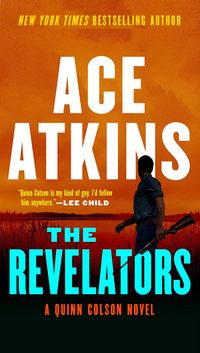
Lupica goes out of his way to make sure it’s obvious that this takes place in the Parker-verse outside of Paradise. Of course, Sunny sees her therapist, Susan Silverman; Sunny consults Lee Farrell a few times (nice to see him again) and they talk about Frank Belson once or twice (the new captain, too); Vinne Morris pops in briefly; there’s a mention of Patricia Utley, and something Tony Marcus says places this at the same time as Angel Eyes. That’s nice and pretty fun, but he’s almost name-dropping enough to make him seem desperate to prove his legitimacy as a Parker fan. “No, really, I’m qualified to write these books, let me show you how familiar I am with all the series.” I think Atkins came close to this in his first two Spenser books, Coleman in his first Jesse Stone, so it’s not unique to Lupica. Also, he doesn’t get to the point of desperation, but he’s close—if he can just dial that back a bit now, he’s proved himself.

Feel free to skip this paragraph, I dance right down the border of The Spoiler Zone (and might put a couple of toes into it). My gut reaction to the way things were left with the Richie/Richard storyline is pretty negative. It’s hard to get into without spoiling things, but…Richie reacted irrationally to things given his family and who he knows Sunny is, and Sunny took the easy way out with things (Susan Silverman would not approve—if she let herself approve/disapprove of Sunny’s actions). Now, this doesn’t mean that Lupica fell down in the writing—he’s actually writing the characters the way they were created, flaws and all. I’d like to see some growth in the characters and we didn’t get that yet—but that could be because he’s setting things up for future books. Or, he could be letting these two stagnate where they are (see Parker’s treatment of Stone in the later books).

Sunny has a good deal of internal discussion about how she’s finding herself in the situations she’s facing because of decisions men have reached, and not herself—she’s reacting too much to men’s choices. She resolves not to be the threatened, but to be the one threatening. I think there’s a lot of merit to these lines of thinking—but she seems to go through this (or something pretty close to it) in every book (by Lupica or Parker). At some point, it’d be nice to see her move past this—or add some nuance or wisdom to this consideration.

Lupica keeps things moving throughout—even when Sunny’s investigation starts going in circles, the plot keeps going. He writes confidently and with just enough flair to make this fit in the Parker-verse. There’s a joke or two that he returns to too often, but it feels in-character for Sunny’s narration to do that, so I’m not complaining.

The last line…I’m not going to say anything about it, but I could fill an entire post with what I like about it, what it makes me fear, and how I should’ve seen it as inevitable. But… I’m not going to say anything about it because I don’t play that way. Feel free to talk about it in the comments after the book comes out, though.

So, I have a lot to say about this, it turns out—but it boils down to this: Grudge Match was a fast, easy read—the plot and the prose were as smooth as you could want. Lupica has captured the voice of the Sunny Randall books and has made it his own. While I was bothered by a couple of the character beats toward the end—they didn’t take away from my enjoyment of the book. If you’re a Sunny fan, you’ll be entertained. This actually would work as a pretty decent entry point to the series, too—it’s pretty accessible (including the ongoing arcs, Lupica makes sure that people who are new to the series or haven’t read them since the last Parker in ’07 have enough information to tap into them).

Disclaimer: I received this eARC from Putnam Books via NetGalley in exchange for this post—thanks to both for this.


3.5 Stars

This post contains an affiliate link. If you purchase from it, I will get a small commission at no additional cost to you. As always, opinions are my own.

Auxiliary: London 2039 by Jon Richter: A Gripping Hardboiled Cyberpunk Read

Auxiliary: London 2039

Auxiliary: London 2039

by Jon Richter

Kindle Edition, 224 pg.
TCK Publishing, 2020

Read: May 1-4, 2020

Grab a copy from your local indie bookstore!

TIM stood for “The Imagination Machine.”It hadn’t seemed like a game-changer when it had been quietly released by the Imagination Corporation twelve years previous, at least not to Dremmler. It was simply a logical next step, a “one stop shop”that brought together office applications, email, social media, an enhanced personal organiser that was, as the company’s marketing eloquently put it, “like Alexa on steroids.”Video gaming, on-demand television, information searches, holiday bookings, shopping, dating, movies, music: TIM was a single interface for the entire online, AR/VR experience…

TIM had become ubiquitous; the go-to OS for almost everything. It flew the planes. It drove the cars. It answered your queries when you contacted customer services. It controlled the robotic surgeons that performed life-saving operations. It filed your tax returns. It delivered your food. It selected your music. It read your children bedtime stories.

And it ran the AltWorld. Whatever you wanted to see, or be, or do, or feel, or [expletive]. Real life had been made obsolete.

In the obsolete “real life,” Carl Dremmler is one of the remaining detectives in the London Police Force (which doesn’t seem to be much of a presence). His days are largely filled with cookie-cutter investigations verifying that people has wasted away while immersed in Augmented Reality to the point they couldn’t notice their physical health had deteriorated—although he gets to break it up occasionally by something like a civilian attacking a postbot.

What brings Dremmler to our focus is a very different kind of case—maybe an impossible case. A woman has been killed—horrifically, I should add. Her boyfriend, the prime suspect, has been caught (very literally) red-handed, but insists that he tried to stop it from happening, but his cybernetic arm acted independently from him.

The problem with this is that the software that controls the arm is unhackable. There is no way for this to have been anything but the accused. Unless the impossible is a lot more possible.

Dremmler finds himself fighting pressure from above to close this case and his increasing conviction that the boyfriend is innocent. He just can’t explain how. The London of 2039 is a cyberpunk future—but not one so advanced that people living in it can’t remember what life was life before TIM was ubiquitous. Dremmler has a strong preference for, well, now—which makes him the perfect person to want to believe there is a problem in a perfect OS.

I’ve always found that the best cyberpunk, seemingly paradoxically, shared a lot of characteristics with early 20th-century noir. This novel is a shining example of that—it’s actually been a long time since I’ve read a cyberpunk novel that’s embraced the noir-ness as much (or as well) as Auxiliary: London 2039 does. Dremmler is as hard-boiled a character as you could want (haunted by tragedy, alcoholic, driven) and I was reminded of Nathaniel West’s work several times by the secondary characters and mores throughout the book.

At the same time, there’s a Golden Age of Science Fiction feel to a lot of the work—especially as it relates to AIs, the place of technology in culture (and how it interacts with humans), the role of escaping from Standard Reality into Alternate Reality, and so on. As often as I was reminded of West or Chandler, I was reminded of Asimov or Clarke (Richter is more pleasant to read).

I had a blast with this. It’s just the kind of mix of genres that appeals to me and Richter executed it all perfectly. Great, twisty plot; compelling characters; a fantastic setting; and enough implications to ponder to satisfy any reader. I strongly recommend Auxiliary: London 2039 to you.


4 Stars

My thanks to Overview Media for the invitation to participate in this tour and the materials (including a copy of the novel) they provided.

BOOK SPOTLIGHT: Auxiliary: London 2039 by Jon Richter

Today I’m pleased to welcome the Book Tour for the cyberpunk thriller Auxiliary: London 2039 by Jon Richter. Following this spotlight post, I’ll be giving my take on the novel here in a bit. But let’s start by learning a little about this here book, okay?


Book Details:

Book Title: Auxiliary: London 2039 by Jon Richter
Release date: May 1, 2020
Format: Ebook/Paperback
Publisher: TCK Publishing
Length: 224 Pages

Book Blurb:

The silicon revolution left Carl Dremmler behind. Now the machines are god … but even He needs a good detective.

Maybe Dremmler isn’t obsolete after all. Yet.

Through the glittering urban jungle of the future prowls Carl Dremmler, police detective—one of the few jobs better suited to meat than machine in 2039. His latest case: a murder suspect caught literally red-handed. The investigation seems open-and-shut, but the tech-wary detective can’t help but believe the accused’s bizarre story: that his robotic arm committed the grisly crime, not him. An advanced prosthetic, controlled by a chip in his skull.

A chip controlled by TIM.

TIM—The Imagination Machine. The silicon god of the UK. The omnipresent AI that drives every car, cooks every meal, and plans every second of human life in London. But if the accused murderer’s story is true, then TIM has been compromised … and Dremmler is in horrible danger.

TIM’s systems were supposed to be impregnable. Un-hackable. Perfect. Only somebody very powerful could bend the AI to their will. Somebody with ambitions. Somebody willing to kill to keep their secrets. If Dremmler’s going to crack this case, he’ll need to question everything he thinks he knows—and face down every terror 2039 has to offer.


About the Author:

Jon RichterJon Richter writes dark fiction, including his two gripping crime thrillers, Deadly Burial and Never Rest, and his two collections of short horror fiction, volumes one and two of Jon Richter’s Disturbing Works.  His latest novel, cyberpunk noir thriller London 2039: Auxiliary, was released in May 2020.

Jon lives in London and is a self-confessed nerd who loves books, films and video games – basically any way to tell a great story.  He writes whenever he can, and hopes to bring you more macabre tales in the very near future.  He also co-hosts the Dark Natter podcast, a fortnightly dissection of the greatest works of dark fiction, available wherever you get your podcast fix.

If you want to chat to him about any of this, you can find him on Twitter @RichterWrites or Instagram @jonrichterwrites.  His website haunts the internet at www.jon-richter.com, and you can find his books available at Amazon here: https://amzn.to/2OXXRVP.

Purchase Links

Amazon UK ~ Amazon US

My thanks to Overview Media for the invitation to participate in this tour and the materials (including a copy of the novel) they provided.

Audiobook Catch-Up Quick Takes on Caliban’s War by James S.A. Corey, Jefferson Mays (Narrator); Heartless by Gail Carriger, Emily Gray (Narrator); Demon Born Magic by Jayne Faith, Amy Landon (Narrator); Stardust by Neil Gaiman; Dumplin’ by Julie Murphy, Eileen Stevens (Narrator); Funny, You Don’t Look Autistic by Michael McCreary; Paradise Valley by C.J. Box, Christina Delaine (Narrator)

The point of these quick takes post to catch up on my “To Write About” stack—emphasizing pithiness, not thoroughness. This is a little longer than most of these that I do, I just wanted to get caught up on my Library Book Audiobooks (I’m so thankful that I can get audio downloads from my library right now—I’d be lost without them!)

Caliban's War

Caliban’s War

by James S.A. Corey, Jefferson Mays (Narrator)
Series: The Expanse, #2
Unabridged Audiobook, 21 hrs.
Hachette Audio, 2017
Read: April 6-14, 2020
Grab a copy from your local indie bookstore!

(the official blurb)
90% of the reason I’m doing this in a Quick Take post is because if I don’t cover it in a paragraph or two, I’ll take 15 pages (or the equivalent). I’m kicking myself so hard for not jumping on each installment of this series as soon as it was published (although, if I did, I would be missing out on the audiobooks). I read the first book shortly after publication, but missed the release of this bookso before I realized it I was two novels and over a thousand pages behind, and I just couldn’t find the time to catch up.

Anyway, this might not have been the right time to listen to a novel about an unexpected, largely unknown, biological enemy of all humanity and the inexplicable reactions of several governments to itthrough the eyes of people living in fairly enclosed spaces. Still, it’s gripping, imaginative, wonderfully told and very compelling. I can’t wait to see what’s next (although, I’m pretty apprehensive of it, too). I loved the new characters and hope they stick around.
4 Stars

Heartless

Heartless

by Gail Carriger, Emily Gray (Narrator)
Series: The Parasol Protectorate, #4
Unabridged Audiobook, 11 hrs., 19 mins
Hachette Audio, 2011
Read: April 1-3, 2020
Grab a copy from your local indie bookstore!

(the official blurb)
I think I’m about over this series, but maybe it was just this novel. Alexia seemed to run around oblivious to what was going on for almost the entire booksure, it’s kind of explained by the effect “the infant inconvenience” is having on her mind, but I don’t totally buy that. (maybe that’s my maleness talking). The first couple of chapters and the little bit at the end with the newborn were the highlights for methe climactic battle sequence was fun, I just didn’t like how we got there. Still, it was a fun listen and I enjoy the characters. I hope the series finale is better.

That said, Emily Gray is a delight. I seriously cannot listen to her enough.
3 Stars

Demon Born Magics

Demon Born Magic

by Jayne Faith, Amy Landon (Narrator)
Series: Ella Grey, #4
Unabridged Audiobook, 8 hrs., and 52 mins.
Tantor Audio, 2017
Read: April 24-27, 2020
Grab a copy from your local indie bookstore!

(the official blurb)
Ella now knows where her brother is, but she’s been cut off from her power, so she can’t move on it. Due to her lack of power (and some other stuffincluding a total and inexplicable lack of due process), she loses her job. She and Damien start a private consulting business, make a Faustian deal and will deal with the consequences over most of this book and the next. Along the way, Ella learns why her brother is off the grid.

The luster has really worn off this series for me. I think it’s possible that Faith will stick the landing and I’ll be happy with the set as a whole, but I think she’s squandered a good start. If there was more than one book left, I’m not sure I’d bother.
3 Stars

Stardust

Stardust

by Neil Gaiman
Unabridged Audiobook, 6 hrs., 23 mins
HarperAudio, 2006
Read: April 28-29, 2020
Grab a copy from your local indie bookstore!

(the official blurb)
I remember being disappointed when I read the book a few years ago, because the movie version (that I love) was such a lousy adaptation. The text eventually won me over, but it took a long time. This is backward, I realize, but what are you going to do?

Anyway, I came into this audiobook with low expectations, but I wasn’t in the mood to spend money on an audiobook and everything I wanted from the library was checked out. Listening to Gaiman’s always fun, so I gave this a whirl. Between Gaiman, low expectations, knowing it’s not the movie, and a story that’s really good when you give it a chance, I had a great time.

It’s a fairy tale that isn’t. Gaiman draws on every convention, every trope and uses them the way a child uses a play-doh set.
4 Stars

Dumplin’

by Julie Murphy, Eileen Stevens (Narrator)
Series: Dumplin’, #1
Unabridged Audiobook, 9 hrs., 45 mins.
HarperAudio, 2015
Read: April 29-30, 2020
Grab a copy from your local indie bookstore!

(the official blurb)
This was just cute. Another “don’t make me spend money on audiobooks while I wait for holds to become available” listen. A YA story about a fat girl (her words, not mine) who joins her small-town beauty pagent, and the scandal that ensues. It’s almost entirely predictable, but Murphy’s style makes it feel fresh, and you just don’t care about the predictability. Steven’s narration is spot-on, too. I had a lot of fun with this.
3 Stars

Funny, You Don't Look Autistic

Funny, You Don’t Look Autistic: A Comedian’s Guide to Life on the Spectrum

by Michael McCreary
Unabridged Audiobook, 3 hrs., 37 mins
Annick Press, 2019
Read: March 31, 2020
Grab a copy from your local indie bookstore!

(the official blurb)
McCreary was five when he was diagnosed with Autism Spectrum Disorder, but it had challenged him and his parents far before then. In this short memoir, he talks about growing up with ASD and finding his place in performing and comedy. This wasn’t as funny as you might hope from a comedian’s memoir, but given that the focus of it was on the way he got through life and learning his craft while learning how to live in a neurotypical world, it’d be hard to be funny. Still, there was a light-heartedness to the entire book that made it pretty appealing.

I had plenty of fun listening to this, and gained some insight (much needed, I expect) into ASD. I think the hard copy might be a bit better because there are charts, graphs, etc. he mentions throughout (yes, there are pdf versions available on the publisher’s site, but who listens to an audiobook when they can stop and look at a pdf?).
3.5 Stars

Paradise Valley

Paradise Valley

by C. J. Box, Christina Delaine (Narrator)
Series: The Highway Quartet, #4
Unabridged Audiobook, 10 hrs., 6 mins
Recorded Books, 2017
Read: March 26-30, 2020
Grab a copy from your local indie bookstore!

(the official blurb)
Here we go. Cassie Dewell vs. The Lizard King: The Final Battle. Kyle Westergaard comes along for the ride, toobecause we can’t have a Highway novel without a young person’s perspective. A lot of other characters from the entire series make appearances (important ones), too.

This was a solidhorrifying, but solidconclusion to this arc. And it does set up a way for things to continue beyond this point.

I’m really glad that I started this series (it, too, started with a “don’t make me spend money on audiobooks while I wait for holds to become available” listen)
3.5 Stars

2020 Library Love Challenge
This post contains affiliate links. If you purchase from any of them, I will get a small commission at no additional cost to you. As always, opinions are my own.

A Few Quick Questions With…Ronald Hera

A little bit ago, I posted about the novel Bethlehem’s Brothers, and now it’s time for a few questions with the author, Ronald Hera, who was gracious enough to give me a little of his time.

Tell us about your road to publication—was your plan/dream always to become a novelist and your education/other jobs were just to get you to this point, or was this a later-in-life desire?
I wrote technical papers occasionally for the SAE and enjoyed it, but the idea of writing for publication came when I was about to retire and wondered what I would do to pass the time. Writing has been good for me.
Most authors have dozens of ideas bouncing around their craniums at once—what was it about this idea that made you say, “Yup—this is the one for me.”? What kind of research did you do to prepare for it?
I have three books started now. One is a bad idea and I’ll probably not write that one. But two are promising ideas and are going smoothly. They are more like mystery/action novels. Bethlehem’s Brothers came to my head for two reasons. I see people moving away from their Christian roots and that bothers me. I wanted to show the struggles that went into deciding to be a Christian during the first century. In Jerusalem’s Brothers, I wanted to show how difficult it was during the early persecution and finally in Brothers Forever, the fall of Jerusalem and who the Essenes were.

My research comes from The Complete Works of Josephus, Studies in the Life of Christ by R.C. Foster, The Bible, and the internet. I enjoy the research because it teaches me a lot about a subject dear to my heart.

While writing the book itself, what was the biggest surprise about the process? Either, “I can’t believe X is so easy!” or “If I had known Y was going to be so hard, I’d have skipped this and watched more TV”?
My imagination ran WILD! I found it hard to make the book flow and my sentences were awkward a lot of the time. Editing was lengthy for me. Even naming the characters was a challenge sometimes. I wanted them to be real and meaningful names, so I researched meanings on the internet.
As I’ll discuss in my post about the book, I really appreciated how you merged the Biblical events with your material—it seemed like you exercised great care in that. How did you decide which parts of the life of Christ to have your characters directly interact with?
Thank you for the compliment. I think a fiction writer should make the scenes and surrounding events as real and accurate as possible while making the characters and some events purely fictional. That is a delicate balance. An example is when I had Enoch with Cleopas on the road to Emmaus. The Bible mentions Cleopas and “another”, so I interjected Enoch. One must be careful not to add to the Bible. I thought this might be okay.
As soon as I saw a Cleopas hanging around, I figured this is where you were going to go, and you pulled that part off particularly well.

What’s been the response to this in the years since the original publication?

Critics like it. Bethlehem’s Brothers has recommendations from Pacific Book Review and Kirkus. It was also a finalist in the prestigious Montaigne Medal awarded by the Eric Hoffman Award Committee. Of course, I would like more people to read it. Now with e-books, cost isn’t really an issue. Maybe a different cover would help.
There’ve been two sequels to this (and I imagine there aren’t more coming based on the synopses for them), are there other books to come from you?
Certainly. I have a fourth book to add to the series called The Rock of Michael. Michael is an angel who helps the Christians displaced by the destruction of Jerusalem settle in what is now Tel Aviv-Yafo. The other possible novel is another historical fiction piece set on a college campus during protests of the Vietnam war. It has promise.
So much for my imagination 🙂

Thanks for your time and willingness to let me badger you with these questions—again, I really enjoyed Bethlehem’s Brothers and truly hope that it finds the audience it deserves.?

I am confident it will. Perhaps a TV series or a Movie might get the word out to the audience.

Bethlehem’s Brothers by Ronald Hera: First Century Historical Fiction about a Couple of Others Born in Bethlehem

Bethlehem's Brothers

Bethlehem’s Brothers

by Ronald Hera
Series: The Brothers Trilogy, #1

Kindle Edition, 308 pg.
AuthorHouse, 2011

Read: April 12-19, 2020


This historical fiction starts off with a bang—in a small home during the Massacre of the Innocents. One father (probably others, but we’re focused on one family here) tries to prevent the soldier from killing his young son and loses his life, too. Devastated, his widow does the best she can for her two remaining sons—sending one to Jerusalem with a friend of a friend as an apprentice, she takes the other to live with family near the sea of Galilee where the boy will learn to be a fisherman.

After a few chapters where we see them grow up and begin their adult lives, we begin to hear about things like John the Baptizer, and an itinerant preacher surrounded by outlandish rumors. Both boys have been raised quite differently—Simeon, in Jerusalem, was apprenticed to a former rabbi (discharged by the Sadducees for his orthodoxy); Enoch becomes involved with Zealots and was convinced the soon-to-come Messiah would lead a revolt. A few striking events lead them to realize who this Messiah is (although, they’re both pretty shaky about the details).

As the brother’s stories intersect at various points with the Gospel accounts we see John’s arrest, some healings by Christ, the Triumphal Entry, the Crucifixion, and some of those who were raised, the encounter at the Road to Emmaus and more. As they intersect, they, their friends, Simeon’s wife, and others struggle to understand what they’re hearing and seeing.

I was particularly impressed with the way that Hera treated the Biblical material. One of the best ways to evaluate Historical Fiction is based on how it treats actual history and merges the fictional with the fact. I found Hera’s use to be very sympathetic and respectful—it’s a dangerous path in general, but when you’re dealing with Sacred material, it’s even more dangerous.

It is a smooth and easy read, with a pretty engaging text. It’s not perfect, and maybe relies a bit too much on coincidence, but that doesn’t detract from it being a pleasant time. I wanted a bit more out of the dialogue but it wasn’t bad. The focus on this novel is to give an idea—with an eye to historical reality, but not bogged down in the details—what it was like for the faithful Jew to encounter the Messiah. It’s a worthwhile and ambitious goal and it delivers on it. I’d recommend this and will very likely be picking up the next two installments in the trilogy soon.

Note: I received a copy of this book from the author in exchange for this post and my honest opinion.


3 Stars

Top 5 Saturday: Retellings That Have Stuck With Me

Top 5 Saturday Retellings

The Top 5 Saturday weekly meme was created by Amanda at Devouring Books.

Rules!

  • Share your top 5 books of the current topic—these can be books that you want to read, have read and loved, have read and hated, you can do it any way you want.
  • Tag the original post (This one!)
  • Tag 5 people (I probably won’t do this bit, play along if you want)

The Upcoming Schedule Is:

5/9/20 — Books with a Number in the Title
5/16/20 — Books by Debut Authors
5/23/20 — Books about Plants/Flowers (Can be on cover, in title or plot)
5/30/20 — Books from a Male POV


The Story of Edgar Sawtelle by David Wroblewski

A Retelling of: Hamlet by some obscure playwright

The reason I didn’t call this list “My Favorite Retellings” or something like that is this novel. I didn’t really enjoy much of this one. But man, it was gorgeously written. Before I started this blogged, I wrote a little about it on Goodreads: “Meticulously crafted, wonderfully and intricately written, fantastic characters, a world you’d love to live in, imaginative, creative, a concept so great, so well executed…aaaaaand I had to force myself to read it. I took 3 breaks from this novel, and had to drag myself back to it each time. I feel like I owe this book 5 stars because it deserves them, but I really want to give it 1.75 or so. There is no reason at all that I shouldn’t like it—people should love this work, actually. But I just didn’t.” Still, nine years later, this is the first novel that lept to mind when I started this list and I have vivid memories of a lot of the book. Can’t beat that.


Fuzzy Nation by John Scalzi

A Retelling of: Little Fuzzy by H. Beam Piper

An Avatar-esque story, that’s nowhere near as self-important and a whole lot more entertaining than the Cameron movie. Jack Holloway is a prospector on the planet Zarathustra who discovers a potentially sentient and language using species (that coincendentally are about the cutest things ever). Holloway has to figure out a way to keep the species from being wiped out by an uncaring corporation. This might actually be my favorite Scalzi novel.


Cinder by Marissa Meyer

A Retelling of: Cinderella

A YA SF re-imagining of the Cinderella story featuring a young woman with a cybernetic leg who attracts the attention of a Prince trying to help his people survive a plauge. It launches an epic series (also featuing re-tellings I could have filled this list with). I don’t know that the entire Lunar Chronicles series really delivered on the promise of this book, but I had a lot of fun with it. If you’re going to do a re-imagining, this is the way to do it.

* Jim C. Hines’ Princesses series also comes to mind at this point…maybe I should have included one of them…


Re Jane by Patricia Park

A Retelling of: Jayne Eyre by Charlotte Brontë

Brontë’s novel is one of my All-Time Desert Island Top 5 novels, and I’m a sucker for a retelling of it. This one is set in NYC in the late 1990’s. Jane Re, is a half-Korean, half-American orphan who is hired to be the au pair for a Chinese adoptee. It’s Jane Eyre and more. As I said when I posted about it, it’s a clever re-imagining, and/or a satisfying read.


The Graveyard Book

A Retelling of: The Jungle Book by Rudyard Kipling

I remember reading this to my kids years ago, and being very affected by it myself. It’s haunting, playful, creepy and heartwarming. A brilliant way to retell the story of an lone man-child in a very foreign atmosphere by beings not fit to raise one—and their efforts to help him fit in his native society.

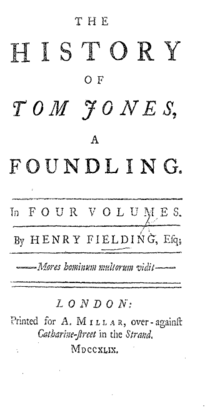
The History of Tom Jones, a Foundling by Henry Fielding: BOOK VI., v.-viii.

Fridays with the Foundling
Tom Jones Original CoverWhile the Westerns wait for Blifil to come to call on Sophia, her aunt comes in and the two talk a bit more about Sophia’s affections, each of them (still) talking about a different man. And just when I’m starting to think we’re in for 20+ pages of this misunderstanding, Sophia asks who her aunt is referring to:

…the Aunt cried, “Mr. Blifil—ay, Mr. Blifil, of whom else have we been talking?” “Good Heavens,” answered Sophia, ready to sink, “of Mr Jones, I thought; I am sure I know no other who deserves—” “I protest,” cries the Aunt, “you frighten me in your Turn. Is it Mr. Jones, and not Mr. Blifil, who is the Object of your Affection?” “Mr. Blifil!” repeated Sophia. “Sure it is impossible you can be in earnest; if you are, I am the most miserable Woman alive.”

There’s some nasty back and forth about how horrible the idea of Blifil is to Sophia and how horrible the idea of Jones is to all that is right and just with the world, and Sophia will do what she’s told, etc. In the end, they agree that Sophia will visit with Blifil that afternoon and get be nice about it, and they’ll see what happens.

They go their separate ways, Sophia unburdens her soul to her maid (who is good enough at eavesdropping not to need it, but plays along). Mrs. Honour tells her to speak her mind to her father, who’s a good man and won’t force her to do anything. In the meantime, she saw Jones down by the river not that long ago. Sophia rushes to go meet him, but misses him because she took too long choosing the right ribbons to wear. Fielding amusingly (at least to me) comments,

—a most unfortunate Accident, from which my fair Readers will not fail to draw a very wholesome Lesson. And here I strictly forbid all Male Critics to intermeddle with a Circumstance which I have recounted only for the Sake of the Ladies, and upon which they only are at Liberty to comment.

Blifil calls upon Sophia, and it does not go well. She’s nice enough, but she’s horrified at the thought of spending time with him, so she doesn’t say a lot and leaves early. Blifil is clueless enough (and enamored of himself enough) to interpret this as shyness—she’s so overcome by being alone with a guy as awesome as he is.

He leaves feeling really good about things and makes Mr. Western feel the same way about the way things are progressing. Sophia takes her maid’s advice and tells her father what she thinks of Blifil. He does not follow the script Mrs. Honourable predicts and flies into a rage, commanding Sophia to marry Blifil or he’ll cut her off.

She’s inconsolable, he’s in a fit and the two separate. Western runs into Jones and tells him about it all, and then asks Jones to go convince Sophia to go along. That’s not at all what Jones wants to do, but he agrees, because he’ll gets the green light to go off and talk to Sophia.

Neither of them come out and declare their love for each other, but the ensuing conversation allows them both to state their interest and their mutual despising of Blifil as a mate. It’s a sweet scene, interrupted by Fielding telling us that it may have gone on too long and is about to be interrupted by something of a very different flavor and so it’ll have to be taken up in another chapter.

Obviously, whatever that is (we’ll see next week) isn’t going to go in the couple’s favor—there’s almost another 700 pages to go, they’re not going to get too many sweet moments anytime soon.

I really like the pace of these last 8 chapters, and look forward to what comes next. I just wish people could have a straightforward conversation without flying off the handle so everyone could act in a reasonable manner.

Eh, where’d be the fun in that? Bring on the talking past each other!

The Misadventures of Nero Wolfe: Parodies and Pastiches Featuring the Great Detective of West 35th Street by Josh Pachter, ed.: A Collection of Short Pieces Celebrating Nero Wolfe

The Misadventures of Nero Wolfe

The Misadventures of Nero Wolfe: Parodies and Pastiches Featuring the Great Detective of West 35th Street

by Josh Pachter, ed.

Kindle Edition, 364 pg.
Mysterious Press, 2020

Read: April 15-27, 2020
Grab a copy from your local indie bookstore!


Wow—2 chances to talk about Nero Wolfe in less than a month? Say what you will about 2020, there are some really nice things going on, too.

In the same vein as the 2018 compilation that he co-edited, The Misadventures of Ellery Queen, Pachter (with the blessing of Stout’s daughter), Pachter presents just what the title promises: a collection of short pieces featuring takes on Nero Wolfe (and, generally, Archie Goodwin).

There are three introductory essays—one by Otto Penzler; one by Stout’s daughter, Rebecca Stout Bradbury; and then one from Pachter (which served as a typical introduction). All three of these pieces were a pleasure to read, but obviously, Bradbury’s is the standout for sentimental reasons.

Then we move into pastiches, although some felt more like parodies to me—but why quibble? The first entry just didn’t work for me, and almost put me off the project as a whole. But, it’s Wolfe, so as much as I say “almost”—there’s no chance that’d stick. Thankfully, the second entry more than made up for it, as did the rest. A personal highlight came from Pachter reprinting the first chapter of Murder in E Minor, Robert Goldsborough’s first Wolfe novel—I appreciated the reminder that I did really like his work at one point. (I wish something from William L. DeAndrea’s Lobo Blacke/Quinn Booker books had made it in here)

The next section featured a handful of parodies. By and large, I enjoyed this part, but I would’ve appreciated a bit more subtlety with many of the works. The story “Julius Katz and the Case of Exploding Wine” was simply fantastic—I will be tracking down more of these stories by Dave Zeltserman as soon as I can (I have a browser tab open at the moment for an e-store with the collections).

The final section, “Potpourri,” was my favorite. It included things like a story about a circus’ Fat Woman doing a fine Nero Wolfe impression (and was a pretty clever story even without that); Pachter’s short story about a young man named for Wolfe, “Sam Buried Caesar,” which was utterly charming; and a scene from Joseph Goodrich’s stage adaptation of Might as Well Be Dead. The highlight of this section (and possibly the entire book) was a little story called “The Damned Doorbell Rang,” about a couple who used to live next to Wolfe’s Brownstone on West 35th (obviously on the opposite side from Doc Vollmer), who didn’t realize who they lived next to, nor appreciate the goings-on in the brownstone. An inspired idea that was executed wonderfully.

As with almost every compilation ever assembled, there were a lot of high highs and very low lows in this one—and most readers will likely disagree with what I’d put in either category. But I can’t imagine any Wolfe reader not finding more than enough in this book to consider any time spent with it a win. The writers all clearly had fun with the subject matter, and it’s infectious. Pachter has speculated about doing another collection of Wolfean tidbits. If he does, I know I’ll be more than ready to grab it.

For a lot more about the book—the background, more information about some of the entries/authors/whatnot—check out Episode 10 of Like the Wolfe podcast. It’s a fun episode.


3.5 Stars

This post contains an affiliate link. If you purchase from it, I will get a small commission at no additional cost to you. As always, opinions are my own.

Page 153 of 341

Powered by WordPress & Theme by Anders Norén