Category: Fiction Page 85 of 348

Her Name is Knight by Yasmin Angoe: A Knock Out of a Debut

Her Name is KnightHer Name is Knight

by Yasmin Angoe

DETAILS:
Series: Nena Knight, #1
Publisher: Thomas & Mercer
Publication Date: November 1, 2021
Format: Hardcover
Length: 413 pg.
Read Date: December 8-12, 2022
Support Independent Bookstores - Visit IndieBound.org

What’s Her Name is Knight About?

I’m struggling here (and have been for a week or so) to come up with something succinct and yet descriptive. So I’m going to cop out, and borrow the description from the author’s website, because I want to get this posted (if only so I can get this book back to the library). I don’t know if I’d have said everything the third paragraph does myself—feel free to skip the first sentence of it—but I figure if Angoe is willing to say it, it can’t be that spoilery.

Stolen from her Ghanaian village as a child, Nena Knight has plenty of motives to kill. Now an elite assassin for a powerful business syndicate called the Tribe, she gets plenty of chances.

But while on assignment in Miami, Nena ends up saving a life, not taking one. She emerges from the experience a changed woman, finally hopeful for a life beyond rage and revenge. Tasked with killing a man she’s come to respect, Nena struggles to reconcile her loyalty to the Tribe with her new purpose.

Meanwhile, she learns a new Tribe council member is the same man who razed her village, murdered her family, and sold her into captivity. Nena can’t resist the temptation of vengeance―and she doesn’t want to. Before she can reclaim her life, she must leverage everything she was and everything she is to take him down and end the cycle of bloodshed for good.

The Dual Timelines

So it turns out that this novel is told in two timelines. There’s the “After,” describing the present time (everything that the description above talks about), and the “Before”—the things that happen between her village was attacked and her being brought into the Tribe. This had all the makings of a problem for me.

This feels like it’s a confession—maybe it is—books with two timelines making up the plot aren’t for me. I’m not talking about flashbacks, or anything like that. Or a big time-jump somewhere along the line. But where you have Story A taking place in one time and Story B taking place some in some other time and you have to follow each of them along for the entirety (or just about) of the novel until one timeline takes over or they merge. I’m not saying I don’t read them, or that I don’t enjoy those books. But they’re really not my thing—if for no other reason than I almost always only care about one of the timelines. Which one I care about might change while I read, but when we switch from A to B, I almost always begrudge it because I just don’t care about B and just want to get back to A.

This is particularly true when we’re dealing with the past of a character (as we are here). If I can’t guess or assume pretty much the major events in a protagonist’s childhood from what I know of them in the present, then the author either failed in their depiction of the present or is deliberately withholding something (which usually backfires in these situations).

That’s absolutely the case here with Nena Knight. You knew the bulk of what was happening in the “Before” timeline—it’s her origin story and in the “After” story we’re told about some of these events/people prior to them coming up in that timeline, or we get allusions that are clear enough that we can assume the rough outline.

However.

Angoe pulls it off—both timelines are gripping throughout (okay, it took a little bit—maybe a chapter or two—for me to get into the “Before” just because I assumed Angoe would have the problems that 90% of writers have with this setup). I did resent jumping from “After” to “Before,” because I wanted to know what happened next, but I was also glad to get back to the “Before,” because I was on tenterhooks about it after the last jump. When that chapter ended, I didn’t want to leave that timeline, but I had to know what was going on in “After.” It was a vicious cycle. A delicious one, too.

Don’t ask me how Angoe succeeded where so many falter. Skill? Magic? Both? Sure, why not?

Also? The two different voices for the timelines are an excellent choice. Angoe describes her approach:

During her childhood her story is in first person present tense so that you see the world and her journey through her eyes. As an adult, her story is in third person past tense to give you a panoramic view and scope of what this kick-ass assassin can do.

This works so well—I was a little skeptical going in, but she made a believer out of me quickly.

Now, if Angoe tries this again in the next book, will it be as effective? It beats me. I’m leaning toward no, because so few can repeat the same trick. But I’m prepared for her to prove me wrong.

So, what did I think about Her Name is Knight?

There are so many elements here that we’ve seen dozens of times before—Nikita, Black Widow, Hanna, Villanelle, etc.—young female with a traumatic past, raised by people other than her parents, trained to be a spy/assassin/etc., starts to wonder if/discovers that she’s been lied to by her handlers, and makes some connections outside of her organization that feeds their desire to get out/question. Now, there’s a reason we’ve seen these things so often—they’re reliable, there’s something about them that people enjoy. Angoe does something new and different (even if only a little) with these tried and true elements so that they feel fresh and inventive.

I’ve said it before—and I’ll say it again, and keep saying it—I don’t care if you’re telling me a story I know (unless it’s book four in a series and you’re telling the same story each time), as long as you tell it in an entertaining way. This is what Yasmin Angoe has done here.

There’s a strong—very strong—chance for Nena Knight to become my favorite kick-ass female in the near future. Lily Wong, Charlie Fox, Vanessa Michael Munroe—you’re on notice. There’s something very compelling about her, her values, and how she’s living them out. Her ass-kicking abilities are pretty compelling, too. (I’m not really a fan of that phrase, but after quoting Angoe earlier, I can’t think of another way to put it)

The supporting characters—I’m not sure how many of them will reappear in the series, so I’m going to hold off talking about them in any kind of detail—are just as well done. I could take a lot more focus on any one of them in a future book and have a blast with it. The Tribe, too, is a fascinating take on a shadowy international cabal employing our assassin-protagonist. I’m hoping to see a lot more about how and why they work in the books to come. There, too, I’m not sure how much to say. I have to see the future installments.

I’d better wrap things up because I feel like I’m spinning my wheels here—this is a killer introduction to a series. It’s so satisfying and so tantalizing at the same time—I need to know what happens to Nena next. How is she changed, and what’s stayed the same for her (that might be more interesting—what is she holding on to, or what’s so much part of her that she can’t shake it)? If you’re looking for your next thriller, you’d do well to make it this one.


3.5 Stars

This post contains an affiliate link. If you purchase from it, I will get a small commission at no additional cost to you. As always, the opinions expressed are my own.

Catch-Up Quick Takes: Some Lighter Reads/Listens

I just don’t have a lot to say about these books, so let’s take care of them briefly. The point of these quick takes posts is to catch up on my “To Write About” stack—emphasizing pithiness, not thoroughness.


Working It OutWorking It Out

by Jo Platt

DETAILS:
Publisher: Canelo
Publication Date: February 3, 2022
Format: eBook
Length: 384 pg.
Read Date: October 1-3, 2022

(the official blurb)
Platt’s voice is great. All the characters were great (well, maybe all but one of them were). But the story just fell flat for me over and over again. The resolution just made me mad. The behavior of the protagonist was supposed to be cute and endearing–but it only served to annoy me. If you take this cast of characters, mature the protagonist a degree, and put them in the service of a better novel, I’d have loved it. But…bah. It was an okay way to burn some time in a hospital waiting room (which is where I was), but that’s about it.
2 Stars

Slaying Monsters for the FeebleSlaying Monsters for the Feeble

by Annette Marie, Cris Dukehart (Narrator)

DETAILS:
Series: Guild Codex: Demonized, #2
Publisher: Tantor Audio
Publication Date: Feb 4, 2020
Format: Unabridged Audiobook
Length: 8 hrs., 27 min.
Read Date: October 6-11, 2022
Support Independent Bookstores - Visit IndieBound.org

(the official blurb)
I wasn’t sure how this series was going to really go after that first book, but I’m really pleased by this one. I particularly enjoyed the way that this fits in with the other series in this ‘verse. The action was good, the magic interesting, and the characters grew on me (or continued to, I should say).

I’m not particularly a fan of the friendship/affection/whatever between Robin and Zylas. But I don’t hate it, so there’s that.

This is one that I think I need to see through to the end before I decide about individual books–are some of these plotlines a waste of time? Are they going somewhere satisfying? Are they just going to prove frustrating? It’s too hard to tell. I think I’m going to end up thinking of this positively, but I can’t be sure yet. (I’m a little worried they could end up in the same spot as the Ella Grey series)

Cris Dukehart continues to get the job done and keep the books interesting.

3 Stars

The World's Worst AssistantThe World’s Worst Assistant

by Sona Movsesian

DETAILS: 
Publisher: Penguin Audio
Publication Date: July 19, 2022
Format: Unabridged Audiobook
Length: 5 hrs., 25 min.
Read Date: October 11-12, 2022
Support Independent Bookstores - Visit IndieBound.org

(the official blurb)
Sona Movsesian has been Conan O’Brien’s assistant for years–his friend, too. Listening to the two of them on his podcast, you can hear the affection–and get caught up in their odd communal humor. I’ve also listened to enough of her that it feels strange to refer to her as anything but Sona.

The book gives a brief biography of Movsesian before moving into her time working various low-level jobs in television before getting hired by O’Brien as he started to move his show and family to California to take over The Tonight Show. We get a look at some of what happened to him there and then what they did afterward–both professionally and personally.

Essentially, this is a book about Movsesian and her good friend and boss–how much fun they have together, some of the amazing things she’s gotten to do, and the people she’s gotten to meet because of their jobs.

You start off listening to this book (I imagine), because of her boss and wanting to hear what it’s like to work with him–even if you’re the worst assistant in the world (how do you keep the job in that case?). You end up listening to the whole thing because you can’t help but like Movsesian and want to hear her tell stories about her life and laugh along with her.
3 Stars

DeclassifiedDeclassified:
A Low-Key Guide to
the High-Strung World
of Classical Music

by Arianna Warsaw-Fan Rauch

DETAILS:
Publisher: Penguin Audio
Publication Date: October 11, 2022
Format: Unabridged Audiobook
Length: 6 hrs., 48 min.
Read Date: October 14-18, 2022
Support Independent Bookstores - Visit IndieBound.org

(the official blurb)
This would be tough to describe even if I was doing a full post, not just a quick take. I had a lot of fun with Warsaw-Fan Rauch’s book.

The behind-the-scenes bits about classical music, orchestra, and the education/training involved for today’s performers was great to hear. The jokes, snippy bits, and history of classical music, composers, and various instruments (and those that play them) were a special kind of geeky fun that I appreciated (not as much as someone who’s seriously played and/or studied, I’m sure, but enough for me).

The personal material didn’t do much for me–I don’t know her enough for that to have mattered (and didn’t get enough reason throughout the book). But it’s easy to get over that and focus on the highlights.

This was a pleasant time (and a little educational, too). Give it a listen.
3 Stars

Rebel with a ClauseRebel with a Clause:
Tales and Tips from
a Roving Grammarian

by Ellin Jovin

DETAILS:
Publisher: HarperCollins Publishers
Publication Date: July 19, 2022
Format: Unabridged Audiobook
Length: 7 hrs., 38 min.
Read Date: October 18-19, 2022
Support Independent Bookstores - Visit IndieBound.org

(the official blurb)
Um…this isn’t as clever as it thinks it is. Maybe, maybe, if I knew who Jovin was before starting this book, I might have a different take. It feels like such a bunch of inside jokes–the kind of stories that fans of someone well-established might relish, but new readers wouldn’t. On the whole, it wasn’t about her points about grammar or language usage (see Dreyer or Favilla for a couple of examples of how to do this), that drove the narrative and humor of the book. It was harder to define, it was more how odd people thought it was that she was traveling around the country giving her opinions on the sidewalk or finding people who cared enough to discuss it.

While picking up the anecdotes for this book, Jovin and her husband were making a movie about her grammar table. That movie might be more entertaining to watch, and I plan on doing that someday. I think it might work better as such–sort of a “man on the street” kind of thing that can work well (see countless talk shows and Youtube series for proof). But this was just dissatisfying.

(also, I wasn’t crazy about the narration)
2 1/2 Stars

This post contains affiliate links. If you purchase from any of them, I will get a small commission at no additional cost to you. As always, opinions are my own.

2022 While I Was Reading Challenge

2022 While I Was Reading Challenge

I finished the reading for my fifth annual While I Was Reading Challenge Monday morning—and thought I was running late, but apparently, I finished 2 days before I did in 2021—how’s that for progress?

Ramona Mead has once again done a good job in making me think about books I’d never think of before—and in ways I’d never thought of (I know I’ve never cared about an author’s astronomical sign before). Next year’s looks like a lot of fun, too. Am looking forward to it. But before we get to that, let’s look at this year.

2022 Reading Challenge Categories

  1. A book with a question in the title: Have I Told You This Already?: Stories I Don’t Want to Forget to Remember by Lauren Graham
  2. A book of non-violent true crime: Blessed Are the Bank Robbers: The True Adventures of an Evangelical Outlaw by Chas Smith
  3. A book with a cover you don’t like: Composite Creatures by Caroline Hardaker
  4. A historical fiction novel not set in Europe: A Snake in the Raspberry Patch by Joanne Jackson
  5. A book with a character’s name in the title: With Grimm Resolve by Jefferey H. Haskell
  6. A book featuring paranormal activity (fiction or non): (that feels like half of what I read) Nice Dragons Finish Last by Rachel Aaron
  7. A book with a number in the title: Citizen K-9 by David Rosenfelt
  8. A food related memoir: Yes, Chef: A Memoir by Marcus Samuelsson with Veronica Chambers
  9. A book that’s won an award: The Sense of an Ending by Julian Barnes (Winner of The Booker Prize, 2011)
  10. A middle grade novel: How to Save a Superhero by Ruth Freeman
  11. A book by an author who shares your zodiac sign: Radio Radio by Ian Shane
  12. A book that’s a combination of genres: Bloodlines by Peter Hartog

Radio Radio by Ian Shane: A Tom Petty Song in Novel Form

Radio RadioRadio Radio

by Ian Shane

DETAILS:
Publication Date: July 17, 2008
Format: eBook
Length: 253 pg.
Read Date: December 7-8, 2022

And there goes the last DJ
Who plays what he wants to play
And says what he wants to say
Hey hey hey
And there goes your freedom of choice
There goes the last human voice
And there goes the last DJ

Sure, that’s Tom Petty and not Ian Shane. But I had that song stuck in my head for almost the entire novel, they might as well be writing about the same guy.

What’s Radio Radio About?

Erik Randall is a DJ—that’s all he’s ever wanted to do. He loves being on the radio, sharing music with whatever corner of the world he can. He comes alive on the microphone, he seems to be good at the technical bits, and he loves the medium. What it has been, what it is, what it could be—but he’s very much not a fan of what it’s becoming.

He’s a True Believer, though, and is convinced that if given the opportunity, radio can still be great. He’s even formulating a plan so that one day, he can make at least one station great.

We don’t meet him on that day—in fact, shortly after we meet him, his station comes under the thumb of a corporation that makes cookie-cutter stations all over the country. In the same way you know what you’re going to be served at an Olive Garden in a different state from home, you know what you’re going to hear on the radio in your rental car once you hear a familiar station tagline. That’s what they’re going to turn his radio station into.

About the same time, he meets a local singer/songwriter, Myra. Erik’s still reeling from a semi-recent breakup and isn’t in the right frame of mind to think about romance—but she’s the kind of woman he’s dreamed about. His co-worker/friend, Shakespeare, has been pushing him for months to date again, and once Shakespeare meets Myra, he increases the pressure.

His professional life is falling apart, his personal life is looking promising for the first time in forever—can Erik handle it?

So, what did I think about Radio Radio?

I thought there was something grating—something blindly immature about Erik’s attitude and antics at work. Yes, he’s firmly in the model of the rebel DJ who cares more about the art than the business side. And as such, I can enjoy the character. Maybe it’s because I’m reading this through the eyes of someone in 2022 so I have 14 years of insight to know just how Quixotic Erik is being and how reality is going to hit him hard. Shakespeare, on the other hand, I could get behind—he’s a realist. There’s a romantic streak in him—he wants Erik and his vision to have a chance, but he knows better. I was enjoying the novel, but I really wasn’t on board with it. Which isn’t to say I didn’t find Erik amusing—I just found him a grating sort of amusing.

But then, Myra comes on the scene and two things happen. Erik starts to change, the bits of his personality that grate on me get pushed to the background.* Secondly, Ian Shane writes this stuff really well—like the way that Erik and Myra interact, the way that Erik makes an utter fool of himself because of her, the way that Myra and Shakespeare interact—this is where Shane’s later novels shine, and you can see him building that ability here. If this was the first Ian Shane book I read, shortly after Myra comes on the scene is where I’d order his next two books.

* I am fine with a protagonist grating on me—as long as there’s something about them or their story I can get behind. But I prefer the alternative.

I should also note, that some of Erik’s work attitudes and behaviors remind me of other characters in similar situations—the works of Adam Shaw, Matthew Hanover, and Andy Abramowitz jump to mind—so I’m not trying to say that Shane messed up by having Erik be this way. I just find it grating. What he does and says are, by and large, what an immature twenty-something would think and do. As he is an immature twenty-something, he’s spot-on.

Speaking of needing to grow up a little—a lot of the ways he approaches the big changes he needs to make, the conversations around them, and the way he reacts to people like Shakespeare making those changes himself, displays that immaturity. In those cases, I find it endearing and relatable.

Maybe I’m just the office crank? Out of the office issues don’t bother me as much.

One other challenge for me is that like with Postgraduate, I felt like Shane was judging me for my musical taste. And he probably should—because my musical taste not the kind of thing that Erik Randal (or anyone at Championship Vinyl) would approve of—very I’m fairly plebian, really. Frankly, I’m okay with that—and I did make a note or two to follow up on some music. I do wish I could hear Myra’s stuff, because I think I could get into it. That’s not a reflection on the novel, I just wish Shane would write a character with mainstream taste who is seen in a positive light.

This is a sweet book—there’s good character development, a strong cast of supporting characters (most of whom I didn’t mention) that I would love to see again in some form, great banter, solid comedy in a variety of forms, insight into an industry I know practically nothing about, and a sweet and well-told romantic story. It’s not as strong as his later novels, but it’s easy to see that he’ll be capable of greatness. Buy this book, it’ll make you happy.


4 Stars

PUB DAY REPOST: Vinyl Resting Place by Olivia Blacke: Family, Puns, a Dash of Romance, and Murder

Vinyl Resting PlaceVinyl Resting Place

by Olivia Blacke

DETAILS:
Series: The Record Shop Mysteries, #1
Publisher: St. Martin's Paperbacks
Publication Date: December 27, 2022
Format: eARC
Length: 304 pg.
Read Date: December 13, 2022
Support Independent Bookstores - Visit IndieBound.org

What’s Vinyl Resting Place About?

Tired of all the corporate buyouts and reshuffling in the software business, Juni Jessup returns to her home—a small town just outside Austin, TX. There, she and her two older sisters invest in a record/coffee shop. Years before, the digital music revolution had forced her parents to close the shop that had been in their family for decades. But now, the resurgence of vinyl has given them the chance to reopen—adding a coffee counter is a clever move and something that the neighborhood could really use, too.

The sisters are energized the night of the Grand Opening party—there’s a huge crowd (free tacos from a local food truck and beer from a microbrewery helped). Not only are they optimistic about the business, but the family is back together again, after Juni’s time in the Northwest. They know the future will have challenges, but for the moment, life is good.

Sadly, that first challenge is less in the future than they realized, and it’s a big one. While they’re cleaning up after the party and getting ready to open for their first day of business, Juni finds a murdered girl in the closet with their cleaning supplies. Very quickly, the police focus their investigation on the sisters’ uncle and arrest him. The family puts up the Sip & Spin as collateral for his bail, convinced that the investigation will clear him.

Then Uncle Calvin disappears and the business is in jeopardy—not to mention the three life savings they invested. The sisters, led by Juni, take the investigation into their own hands—determined not to go down without a fight.

Juni and Everyone Else

I’ve only mentioned Juni so far because of space, but the book isn’t just about her. Juni is clearly the protagonist—but the book isn’t just about her. The sisters are the core—with their mother and the husband of the eldest sister rounding out the immediate circle. The emotional core of the novel is about Juni’s return to the family and the way they’re welcoming her back (it’s not that things were ever tense, but hundreds of miles and only brief visits aren’t the same as living near each other). It’s the sense of family, the way they come together for each other, that makes sure this book (and the series, I’m sure) is filled with the warmth and comfort you need in a cozy.

Of course, you can’t have a character come back to a small town without a love interest or two popping up, too. There’s the lifelong best friend, who apparently carried a torch the whole time—he’s grown into a pretty attractive man. And then the high school/college boyfriend who suddenly and unexpectedly broke up with her one day. He’s clearly got his eyes set on reestablishing the status quo.

Also, he’s the police detective in charge of the murder. Because why should things be easy?

It’s a great recurring cast, and one that’d be easy for a series to use in new and fun ways as the series progresses—mostly because the reader can’t help but find them all endearing.

A Tiny Bonus

The music-inspired punny drink names for their coffee counter are just perfect. Too many more would’ve been too much, but I could’ve used an additional handful. They’re the kind of little touch that adds so much to a scene—you get an idea of the characters behind them, if nothing else. Like the names of the stores and restaurants in The Good Place, they add a layer of enjoyment on top of everything else.

I’m not saying I’ll pick up book two just to read what names Blacke comes up with. But I’ve had worse reasons to pick up a book.

So, what did I think about Vinyl Resting Place?

I’m a little concerned about how this can be a series—how many murders can happen in one small town record store or involving the family that owns it? I’m sure Blacke can get another one or two out of the premise before it starts to get creepy, but suspending that kind of disbelief is part and parcel of cozies like this, right? So what do I know?

The premise and genre promise certain things about this novel—and Blacke delivers exactly that. The best word to sum this experience up is pleasant—the mystery was clever, the characters are charming, and I like the overall setup for the series. And the book was exactly what a cozy should be—an entertaining and pleasant time.

I don’t see how this book won’t find fans all of whom will be more than ready for the next murder this family stumbles across.

Disclaimer: I received this eARC from St. Martin’s Press via NetGalley. Thanks to both for the opportunity. Opinions expressed are my own.


3 Stars

This post contains an affiliate link. If you purchase from it, I will get a small commission at no additional cost to you. As always, the opinions expressed are my own.

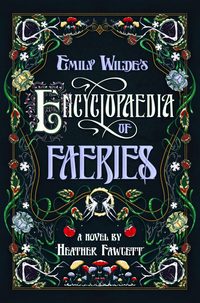
Emily Wilde’s Encyclopaedia of Faeries by Heather Fawcett: Journaling Her Investigation into the Hidden Ones of the North

Emily Wilde's Encyclopaedia of FaeriesEmily Wilde’s Encyclopaedia of Faeries

by Heather Fawcett

DETAILS:
Series: The Emily Wilde Series, Book One
Publisher: Del Rey
Publication Date: January 10, 2023
Format: eARC
Length: 336 pg.
Read Date: December 19-21, 2022
Support Independent Bookstores - Visit IndieBound.org

What’s Emily Wilde’s Encyclopaedia of Faeries About?

Emily Wilde is a dryadologist. Imagine, if you will, what post-Darwin scientists and naturalists were doing for the study of plants and animals in the late nineteenth/early twentieth centuries; or what Carter and the rest were doing in Egypt; but dryadologists are studying fairies (oh, in this world, they are as real as the tomb of Tutankhamun—she’s not a literary theorist). Humans have been dealing with fairies for centuries, but what we know about them is really limited. Mostly left to legends, tales told around the fire or in an inn—where a third or fourth-hand account is rare and as close to an eyewitness as most people will ever get. Emily and her counterparts throughout the world are seeking to bring that to an end. She has a position at Cambridge but is hoping her current project is the kind of thing that will secure her tenure and allow her to further her research.

Her project is the first comprehensive Encyclopedia of Fairies (hence the title). She could publish what she has now and probably receive scholarly acclaim—and tenure. But she’s driven. She’s a completist. And, to be honest, she has a little bit of an ego and she wants more than probable acclaim. So she rents a small shack in a Norwegian village for a few months to try to find, interact with, and document the least-understood fairies in the world. The northern Hidden Ones (both the common and regal varieties) are powerful and secretive. They don’t interact much with humans—and when they do, it’s generally bad for the humans. If Emily can be the first to get any scholarly research done, it will definitely put her on the map.

Sadly, as good as she is at dealing with and understanding Fairy, Emily is bad with humans. She has no people skills, is aware of it, and doesn’t care. But in this inhospitable climate, she really needs help to survive—much less to learn a lot about the Hidden Ones.

Thankfully (?), soon after her arrival, a colleague/competitor—and her only friend—gatecrashes her trip and takes up residence in her shack with her. Wendell Bambleby is the very picture of a Victorian gentleman-scholar. He’s a charmer, and soon has the villagers eating out of his hand. He’s also pampered and demanding (would probably have been considered a bit of a dandy at the time)—and has a really hard time not wrapping his head around things like cooking for himself, working to keep the fire burning, etc. He’s decided that he’s going to collaborate with Emily (not really caring if she agrees) and that their work in Norway will be the thing to help him reclaim some academic respectability following a scandal.

He may be under a cloud, but Wendell has connections and can open doors for Emily to get her the audience she really needs. So she accepts his proposal to collaborate, assuming she’s going to do almost all of the work.

Things ensue. I really can’t say more than that.

Poe

The first fairy that Emily meets is a young brownie—she ends up referring to him as Poe. It’s great to see her in action with him. it shows that she does know what she’s doing—we don’t just have to take her word for it (not that we have any reason to think she’s lying, but it’s good to know).

Poe really ends up showing us so much about Emily—and other characters, too. He’s ultimately so integral and important to the novel—and in a very real sense, not important to the plot in any way. But through his interactions (both that the reader sees on the page and those that happen “off-screen”) with various characters, so much of the plot becomes possible and the reader gains a whole lot of insight. Really, he was well, and cleverly, used by Fawcett. I can’t say it better without spending a few hundred spoiler-filled words, but the more I think about him, the more impressed I am by Fawcett.

Knowing More than Emily

Around the time—probably a little before—I figured out that the story of the novel isn’t really what you think it is, I figured out a couple of things that Emily is utterly blind to for a very long time.

Knowing more than a protagonist can be frustrating—I spend a lot of time yelling at detectives in mystery novels in particular. But sometimes, it can be fun watching them catch up to the reader. Fawcett’s able to draw humor from us knowing things that Emily doesn’t. It also helps us empathize with both Emily and other characters as we see her work through various situations and conversations.

And then, when Emily catches up with the reader—and reality—it’s all the more satisfying. Most/all of what we know that she doesn’t really wouldn’t be that believable if we learned it when she does. We get to spend many pages urging, “Come on, come on, come on…open your eyes/pay attention/etc.” And then, finally, cheer when she does. It’s the closest many readers will get to the position of a sportsball fan yelling at their TV to communicate to someone in a stadium miles/states away.

Slamming on the Brakes

I did have one significant problem with this book. As part of her research—part of her life, really—Emily specializes in stories about faeries. She shares some of them as part of her journal. It makes sense, they serve both the character and the overall novel. They’re truly fitting.

However.

It was like slamming the brakes on. Everything that had been building, all the tension, the momentum, the development, and so on all came to a rapid stop. And then picked up again after the stories. It reminded me of a time in Kevin Hearne’s Hammered when everything stopped for some of the characters to tell stories. As fun as those stories were, it really made that novel hard to get through (that series went on for 6 more books, two spin-off series, and a number of novellas and short stories—so the jarring stop was obviously not too catastrophic).

If the transition to them had been smoother—or maybe they had been more spread out. Just something, I probably wouldn’t have mentioned them—or I’d have talked about what a great way it was for us to get an understanding of the Northern Fairies without an infodump. Instead, it came across as a stumble—one that the novel recovered from nicely. But in the moment, it really bugged me.

So, what did I think about Emily Wilde’s Encyclopaedia of Faeries?

Stick with me for a minute—I could tell from the opening pages that this was a well-composed and well-structured novel full of fantastic world-building. But it took longer for me to move beyond appreciation and admiration for what was being done to really care about it. I did, though, the book started out slowly and picked up momentum as it went—and as it did, I got more and more invested (and my appreciation and admiration increased, too). Somewhere around the mid-point, maybe a little later, I was as invested as is possible and only my notes tell me it took time for that.

I think I just used too many words to say—it’s a slow burn of a novel in almost every conceivable way. Not unlike Emily’s rented shack—it takes a while for a fire to really start heating the place, but once it has time, it’s nice and toasty warm.

There’s a lot I’d like to talk about, but I’m not sure how. I can see later installments being easier, but so much of the novel is about beginnings. To really talk about it would be to discuss the last 20% of the novel. And no one wants me to do that.

Just because of my own prejudices, I could spend a few paragraphs on her dog, Shadow, too. As much as he deserves them, I’m going to leave it with “he’s a very good boy.” I hope to see more of him in the books to come, too.

This book is rich in character, story, world-building (and world-revealing), magic, and subtlety. I’m not sure if you can be rich in subtlety, but Fawcett pulls that off. This is absolutely something I recommend and imagine the next few months are going to be filled with people gushing over this. Readers of this post might as well get in line now to be one of those gushing.

Disclaimer: I received this eARC from Random House Publishing Group – Ballantine, Del Rey via NetGalley in exchange for this post—thanks to both for this opportunity.


4 Stars

This post contains an affiliate link. If you purchase from it, I will get a small commission at no additional cost to you. As always, the opinions expressed are my own.

BOOK SPOTLIGHT: Malibu Burns by Mark Richardson

I’m very pleased today to welcome and help kick-off The Write Reads Blog Tour for Mark Richardson’s Malibu Burns. I couldn’t fit it into my reading schedule, but if you take a look at the feed for https://twitter.com/WriteReadsTours over the next few days, you’ll see a lot of bloggers who did find the time to write interesting things about it. Still, I wanted to spread the word a bit.

Malibu Buns Tour Banner

Book Details:

Genre: Dystopian Urban Fantasy
Publisher: Next Chapter
Release date: September 29, 2022
Format: Hardcover/Paperback/Ebook
Length: 288 pages
Malibu Burns

About the Book:

Near-future San Francisco is a dark world where reality is changeable and different dimensions overlap.

Teen Malibu Makimura discovers she can feel people’s emotions, and senses an ominous voice growing inside her. She lands a job at a women’s nightclub drawing surrealist caricatures. One night while drawing a portrait, she feels a sinister emotion projected by a woman named Luciana, who invites Malibu to her Presidio Heights mansion.

There, she makes a peculiar request – and Malibu agrees. With each following act the evil inside her grows, and Malibu begins to wonder if she will ever be in control again… or if she even wants to be.

Book Links:

Amazon ~ Goodreads

About the Author:

Mark RichardsonMark Richardson is the author of the novels Malibu BurnsThe Sun Casts No Shadow, and Hunt for the Troll.

His short stories have appeared in numerous crime and literary publications, including HobartFugueSegueCrime FactorySwitchback, and Nth Position.

Born in the Chicago area, he graduated from the University of Iowa, and promptly escaped the midwestern winters for sunny California, first living in Los Angeles and then San Francisco. He spent thirty years working as a writer and marketer for tech companies in Silicon Valley.

Mark now lives in the East Bay with his wife, two children, and the world’s cutest dog. He spends his time writing fiction, obsessing about the Chicago Cubs, attending his daughter’s softball games, and reading stacks of books. He loves genre-bending fiction, especially speculative writing with a noir flavor. In 2019, he was diagnosed with Parkinson’s disease, and supports the Michael J. Fox Foundation.

Author Links:

Website ~ Instagram ~ LinkedIn ~ Goodreads


My thanks to The Write Reads for the invitation to participate in this tour and the materials they provided.

Pet by Akwaeke Emezi: Packs a Powerful Punch

PetPet

by Akwaeke Emezi

DETAILS:
Series: Pet, #1
Publisher: Make Me a World
Publication Date: September 10, 2019
Format: Hardcover
Length: 203
Read Date: December 19, 2022
Support Independent Bookstores - Visit IndieBound.org

Also, the problem is, when you think you’ve been without monsters for so long, sometimes you forget what they look like, what they sound like, no matter how much remembering your education urges you to do. It’s not the same when the monsters are gone. You’re only remembering shadows of them, stories that seem to be limited to the pages or screens you read them from. Flat and dull things. So, yes, people forget. But forgetting is dangerous.

Forgetting is how the monsters come back.

What’s Pet About?

Jam and her best friend, Redemption, live in the city of Lucille—a city that’s evolved beyond things like bigotry, crime, inequality, and more. Just ask anyone who lives there—that’s what they’re told, that’s what they believe.

But then Jam is visited by a creature from another world. This creature is there to hunt—not everything is as good and pure as the people of Lucille believe, and this creature is here to hunt someone hurting someone. And the creature (Pet) wants Jam to help with the hunt. Pet can’t tell Jam what the issue is, their prey is at Redemption’s home.

Redemption tries to tell his family about the problem, but no one believes him—that kind of thing doesn’t happen anymore. Everyone knows that.

The World

Lucille is in many ways a dream city—some sort of revolution occurred (it wasn’t entirely peaceful, but we don’t get details). And a Progressive utopia has been established for a generation or so. No sexism, no bigotry, full equality for all, no ableism, no crime, no want. And everyone (as far as the reader can see) buys into the vision for the city.

Am pretty sure those who aren’t that interested in this vision for life aren’t in Lucille anymore, whether voluntarily or not.

It feels oppressive, honestly. A benevolent oppression, it seems, but I’m not sure that’s really that much better.

One danger of this thorough monoculture, complete with everyone buying into the belief, is that humans aren’t good. There will be problems, criminals, broken people, and those who will find ways to get pleasure from hurting others (in various ways)—in short, sinners (however you want to define sinners). If the cultural orthodoxy is that this has been fixed, no one will look for the outlier. No one will look out for the victim, either. As mentioned in the opening quote—that’s a danger.

Harry Harrison painted a similar picture in his Stainless Steel Rat novels (although his outliers were frequently the heroes of the story as often as the villains—and the government was on the look for them).

Pet

I really liked Pet—particularly as he is in the last third or so of the book. I’m not entirely convinced by all his actions and what he tells Jam about himself at the beginning—it’s not that I think he was lying, I just wonder how consistent he is from beginning to the end.

I figure if I re-read the book a time or two, I’d end up being convinced, though. He’s probably the same being throughout, and I just understood him better at the end. Either way, he’s definitely someone you don’t want hunting you.

So, what did I think about Pet?

I bounced all over when it came to what to say about this novel.

It’s too short, really. Problems arise and are solved too quickly. And some of the rich, deep, thoughts weren’t given enough time and space to breathe—really, everything seemed like it was given short shrift.

But.

Oh man, this was just so wonderfully composed. Not a wasted word. Such a rich amount of world-building went into this—all the characters were so fully realized. And Emezi doesn’t need 3-4 paragraphs to do something like most writers—a sentence or two will do. Lovely and efficient prose.

This makes me think I’m wrong, and the book isn’t too short and everything is given enough space and time. But I’m not.

The worldbuilding alone is fantastic—no matter what I might think of the world. The story is haunting and disturbing in all the right ways. I can easily see why someone would become a big fan of Emezi based on this work, and I’m intrigued by the sequel/companion novel. If this wasn’t so abbreviated, I’d imagine that I’d be a giant fan (or a massive naysayer, come to think of it).

Either way, I’m glad I read this and do recommend it—there’s a lot to chew on here, and I’m looking forward to discussing it with Nisha, who recommended it to me for this Challenge. (I expect a lot of “you just don’t understand, Uncle H.” And I probably don’t)


Quick Update—called it:
3 Stars?! YOU JUST DON'T UNDERSTAND!!!


3 Stars

This post contains an affiliate link. If you purchase from it, I will get a small commission at no additional cost to you. As always, the opinions expressed are my own.

Sacrifices by Jamie Schultz: To Destroy, or to Be Destroyed

SacrificesSacrifices

by Jamie Schultz

DETAILS:
Series: Arcane Underworld, #3
Publisher: InterMix
Publication Date: July 19, 2016
Format: eBook
Length: 351 pg.
Read Date: December 14-16, 2022

I look around, though, and I ain’t stupid. How’s this end? Just keep going like this forever? Naw. People gonna die.

What’s Sacrifices About?

That opening quote sums it up—the story, characters, and events of this trilogy can’t keep going. This ends—and not everyone is going to make it out alive. Maybe no one does.

After the end of Splintered, things were bleak—the team was, well, splintered. People were dead. Demons had infected (for lack of a better term) two of the team—and the biggest and most powerful one seemed to be working with the crime boss/would-be supernatural force that they’d been working so hard to get away from. But even Sobell didn’t seem to be fully in control and might be in danger from this demon.

This brings us to Sacrifices, Karyn had a vision/prophecy that gave hope that there was a way to defeat Belial. If they could just figure out what it said—of course, Belial heard it, too, and was at work to prevent anyone from fulfilling it. The FBI is lurking around—they may be willing to help, but are more interested in slapping the cuffs on Sobell and anyone else they could.

Now it’s just a matter of seeing what happens. Will their (literal and figurative) demons defeat them? Will Belial end up wreaking destruction on Los Angeles/the world? Will…actually, I don’t know if the reader—or any of the characters, actually—really gets a picture of the ultimate stakes here. I don’t think our minds could comprehend it—but it’s big, nasty, and possibly apocalyptic.

The solution to all this may lie in the fact that demons have an enemy. An enemy even more terrible and awful (especially if you look at older definitions of those words). But what will have to be given up to secure their presence?

I’m So Glad this Isn’t a Scratch ‘n Sniff Book

It came to her that this was the world as it really was, just thin tissue floating atop an unknowable black ocean teeming with horrifying, malicious creatures— creatures at the command of the demon before her. For the first time, she saw him as much greater than simply another enemy, if more revolting than most. For the first time she really understood that he was also unspeakably ancient and filled with knowledge and power beyond reckoning. This was the type of entity she dealt with each time she delved into magic

Some authors will mention the smell of sulfur or something like that and talk about rot and decay when talking about demons. Other authors will basically make demons out to be Byronic hunks (the Cullening of demons). Schultz does not do that—either of them. He dwells on the rot, the decay, the blood, grime, disease, and filth that comes with demonic possession, power, and or presence.

His demons aren’t misunderstood, they’re not occasionally benign or honorable, and there is nothing to them other than destruction and power—they may seemingly aid a human for a time, but it’s for a price. A price that no one should pay.

Schulz’s descriptions of the demonic effects—and just the life in L.A.’s heat for those without much in the way of resources—are so vivid that you feel a little grimy just reading it. From the description of the clear bottle that one man uses as a spittoon, bloody sweatpants that have been worn for days, various wounds, and so much more—Schulz makes sure that your visual images of these events are real and substantial.

A quick personal note

I’d fully intended on jumping on this book when it came out in 2016—and cannot tell you why I didn’t. It’s just been sitting there collecting dust on my Kindle since then—and it’s been so long at this point, I didn’t think I’d remember the story enough to make it worthwhile.

But within a few pages, I was right back—Schultz did a little bit of recapping, but not much. Mostly it was the tangibility of this world and these characters, just seeing them brought it all back to me, and it was like no time had passed at all. There are few authors that can pull that off, but he did it. And I’m impressed as all get out by that.

So, what did I think about Sacrifices?

“Funny, isn’t it? Lack of a demon isn’t usually a problem to be addressed. Quite the opposite.”

“I’m not laughing.”

Sobell made a clucking noise. “That’s your prerogative, but from my position, I’d have to say that if you don’t find any of this funny, you’ll find it unspeakably bleak.”

On the whole, this book is closer to the unspeakably bleak end of the spectrum, but there are a couple of moments of brightness (and maybe a little bit funny). And I do mean a couple of moments, a handful at best.

Even the more optimistic statements and moves come with the air of “This is probably not going to work, but it’s something to do.” The only characters that are operating without a sense of impending doom are those who are on the outside of the occult happenings in the city. The futility of every scheme, plan, and idea taints everything—but these people (and/or magical/spiritual entities) keep moving forward, scrabbling after the chance that someone will make it out alive. This is hard to read—I wasn’t even sure the planet would exist when the book ends—but once Schultz got his talons into your brain, there’s just no way that you stop reading—you have to know what’s around the corner, even if it will leave you despairing.

This is a great UF trilogy, and one that I am so sad that didn’t get the attention it deserved (including from me for the last 6 years). Pick up the set, you won’t be sorry.


4 Stars

The Irresponsible Reader’s Guide to Picture Books That Aren’t Necessarily for Kids

I have to follow up yesterday’s post with this one. Not every picture book is written for kids, some are for all-ages, some are for an older audience. Playing with the format in this way really draws me in. You should check these out.


Goodnight BrewGoodnight Brew

by Ann E. Briated, Allie Ogg (Illustrator)

It’s a simple idea–parody Goodnight Moon, replacing the items in the child’s bedroom with the things found in a brewery. Throw in a little educational bit in the end, and you’ve got yourself a fun read for adults.

P Is for PterodactylP Is for Pterodactyl: The Worst Alphabet Book Ever

by Raj Haldar, Chris Carpenter, Maria Beddia (Illustrator)

This is funny stuff, good artwork, and correct–but not actually helpful–information. “S is for Seas” and “H is for Heir” for sure–but try using those for spelling something.
My full post about the book.

A Die Hard ChristmasA Die Hard Christmas: The Illustrated Holiday Classic

by Doogie Horner, JJ Harrison (Illustrator)

The premise: Take Die Hard one of the greatest action films ever made, one of the greatest Christmas movies ever made, and an all-around pop culture touchstone, then turn it into a (NOT for kids) rhyming picture book. A great holiday tradition.
My full post about the book.

Go the F*** to SleepGo the F*** to Sleep

by Adam Mansbach, Ricardo Cortés (Illustrator)

There’s not a parent alive that can’t relate to the frustration of the parent in this book. This goes firmly in the “it’s funny because it’s true” arena. The art looks more like something drawn for adult audiences (but not too much) than the rest of this list, which leans toward the kind of thing you’d find in a kid’s book.

The ABCs of MetallicaThe ABCs of Metallica

by Metallica, Howie Abrams, Michael Kaves (Illustrator)

This one might be good for kids, but I don’t know how much they’d appreciate it. It will appeal to Metallica fans who can be lighthearted about their fandom. Some nice info, cute rhymes, and fun ways to come up with something for every letter. The illustrations are great and (like the text) are kid-friendly and adult-friendly, too.
My full post about the book.

Mommy Has A TattooMommy Has A Tattoo

by Phil Padwe

This is actually aimed at a young audience, and probably should’ve gone on that list. But my wife bought this a few years ago, and I typically think of it with the rest of the books on this list. The child at the center of the book is freaked out by seeing (a nice looking) tattoo sleeve on a man in the neighborhood, his mom assures him that tattoos are okay and nothing to be afraid of–utlimately showing him her own ink. It’s a cute book.

The Adventures of the Princess and Mr. Whiffle: The Thing Beneath The Bed The Adventures of the Princess and Mr. Whiffle: The Thing Beneath The Bed

by Patrick Rothfuss, Nate Taylor (Illustrator)

Rothfuss calls this “a dark twist on the classic children’s picture-book. I think of it as Calvin and Hobbes meets Coraline, with some Edward Gorey mixed in.” I love the twist here. The art’s cute–deceptively so–and the story is great. I’d gladly read a handful of these.

Page 85 of 348

Powered by WordPress & Theme by Anders Norén