Category: Urban Fantasy Page 29 of 44

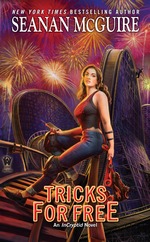
Tricks for Free by Seanan McGuire

Tricks for FreeTricks for Free

by Seanan McGuire
Series: InCryptid, #7

Mass Market Paperback, 346 pg.
DAW Books, 2018

Read: March 13 – 17, 2018

           There are people who say you never really escape from high school, you just keep finding it in different forms, over and over again, until it finally kills you. Those people are assholes, and should not be allowed in polite company. That doesn’t mean they’re wrong.
           The room seemed even larger without the safety of the elevator behind me. I took a few hesitant steps forward, wishing I had a knife, or better yet, twenty knives, or better yet, twenty knives and a brick of C-4. Plastic explosives are a strange and dangerous security blanket, but they tend to make whatever’s scaring me go away quickly, so I’m in favor.

Whenever possible, frequent/regular readers know, I like to start off these posts with a quotation from the book that sums up the feel, the character, or just makes me smile. I couldn’t decide this time what to go with, so I used both — one from a flashback to high school which is just perfect for everyone who views it as something they survived, and the other that captures Annie’s voice oh-so-well.

Because of [Spoilers Redacted] at the end of Magic for Nothing, Annie’s on the run and on her own. Her family doesn’t know where she is (and hasn’t heard directly from her to keep it that way), her friends know nothing — she doesn’t even have a single Aeslin mouse with her. She could not possibly be more alone in the world. She lucks into a job at Lowryland — an amusement park near DisneyWorld — thanks to running into a teammate from high school who is an executive there. It’s not a glamorous job — she works in knick-knack shops, does clean up, works in food kiosks, etc. for far too little money. But there’s enough people around that she can hide in and almost no spell or anything the Covenant (or anyone else) tries to use to find her will work in that setting.

She’s living in the employee apartments near the park with a couple of cryptids. One is from her old Roller Derby team, who, as luck would have it, started working for Lowryland around the same time. The other roommate is a Pliny’s Gorgon, working as a resident at the Lowryland hospital. Tying this book back to Half-Off Ragnorack is a nice touch (and works out well for other reasons). It’s not the best life, but she’s content enough, she’s safe enough, and there are good people in her life.

Until things start to go wrong at the park, some magic users discover that she’s hiding there (they’re also hiding from the Covenant, so that works out), and people are getting hurt. Making this a question of can Annie stop whatever’s going on at the park without revealing herself to the Covenant and putting her friends in danger?

So there’s the setup — does McGuire pull it off? Yeah, stupid question. She does and she does it well.

First, she nails Annie’s emotional state — probably better than she does Verity’s often. Annie’s in a very vulnerable place — emotionally, psychologically, physically — and you can feel that.

           I went very still as it struck me that, tight now,l was living like a cryptid. l was hiding from people who wanted to do me harm as much because of who 1 was as because of anything I’d done. That was normal — being a Price meant I‘d had a bounty on my head horn the day l was born — but the isolation that came with it was new. The need to view everyone around me as a potential danger, to hide, it was all new, and it burned. There were dragons working all over Lowryland, and while none of them were part of my personal clique of Mean Girls, none of them knew my name either. It wasn’t safe. It might never be safe again, not until we’d found a way to end the danger posed by the Covenant — and that was something we’d been trying to accomplish for generations.

That vulnerability runs throughout this book — even when Annie’s at her most “rah-rah, we can do this, team” she’s very aware that everything is seconds away from disaster. This brings a richness of character to Annie that Alex and Verity don’t have (at least not to the same extent), if you ask me, this brings Annie into Toby Daye territory and elevates this series as a whole because of it.

You may have noticed a repeated use of the word luck above — that’s purposeful. Luck, as a concept, permeates these pages. It’s not a very clear concept to most of the characters, but it gets clarified by [Spoilers Redacted]. As one more magical system in this world that has a variety of them — that overlap, run parallel, and make a general mish-mash of things, it’s great. I think it’s a clever addition and I enjoyed watching it play out here, and anticipate continuing to affect things down the road.

The major flaw comes in how Annie pulls things off — in humble opinion. Throughout the book, there’s a warning given Annie — don’t do X. Beauty isn’t supposed to go in that part of the castle, Egon warns Ray and Venkman against crossing the streams, Annie needs to not do X. You know that all of those things will end up happening before the story’s done. Here’s my problem: it’s too easy for her to do it she makes the choice too quickly — and I’m not sure it was necessary when she did it (it may have been, this may have been a rare-stumble for McGuire where she didn’t make it clear that things were just that dire). I do know that if it’s something Annie felt the need for here, Verity sure should’ve done it back Chaos Choreography. But whatever, I’m over it — I just want to see how it plays out in the future.

One highlight for that I really can’t get into without ruining the first twelve chapters — but there’s a conversation in Chapter 13 catching up every character in Annie’s little circle with who’s who, what’s going on right now and since the last time they talked (hours or months ago), etc. This conversation just might be my favorite thing of March — reading or in Real Life™ — and it’s been a very good month. It’s just a pure joy to read.

By the way, the lack of Aeslin mice absolutely is felt throughout the book — the absence is supposed to make things feel strange, and it does. But never fear — there’s a novella starring the mice from Magic for Nothing at the back of this book. I hope when I have time to read it that it makes up for their absence.

Oh, and there’s a Priscilla Spencer map of Lowryland. Because what isn’t made better by a Priscilla Spencer map?

This is a great addition to a very fun series that adds some good depth to things, sets up our characters for a lot of trouble, and moves the series’ story as a whole down an interesting path. The next book also features Annie, but I’m sure we get back to Alex or Verity soon, and I can’t wait to see how these books without them affect their lives.

—–

4 Stars

Magic For Nothing by Seanan McGuire

Something — time constraints, distractions, deadlines, big shiny things in the corner — kept me from finishing this post last year. I tried every now and then to finish it, but at a certain point my copious notes weren’t enough. Thankfully, reading the next book in the series helped me remember enough that I thought I could finish this post. It’s not everything I wanted it to be, but short of a re-read, nothing was going make it that.

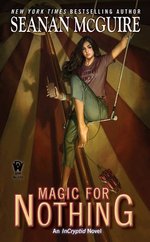
Magic For NothingMagic For Nothing

by Seanan McGuire
Series: InCryptid, #6


Mass Market Paperback, 358 pg.
Daw Books, 2017
Read: Mach 18 – 21, 2017

And you shouldn’t believe all the press about Ouija boards. They can’t be used in an exorcism. Trivial Pursuit can, but that’s another story.

This has nothing to do with the story, I just really liked that line. It comes from one of the best (probably the best, I don’t keep notes on that) openings to an InCryptid novel that McGuire’s done yet.

So after Verity declared war on the Covenant in the closing pages of Chaos Choreography, the Price family has to follow suit and step things up. Their first step? Having Antimony go undercover with the Covenant as a new recruit. This could be a suicide mission but she knows it’s the best shot to understand what’s going on with the Covenant and their plans for the United States.

You could make the claim that Annie’s infiltration of the Covenant is a little too easy — but why? It’s far more interesting for her to have infiltrated the Covenant and get assigned for a probationary task quickly than it would be for there to be a realistic screening and training process — I’m sure McGuire could have pulled it off, because what can’t she write? But this was better. Very quickly the Covenant comes up with an assignment that’ll test her loyalty and maybe score them some dead American monsters. Part of Annie’s cover is that her circus family was wiped out by a bunch of somethings and she wants revenge, the Covenant has wind of a monster or two at a circus in the midwest killing people in the towns it visits. Her assignment: infiltrate the circus, find the responsible creatures (and any others) and call in her handlers to wipe them all out.

So she’s going undercover as part of her undercover assignment. Thankfully, she’s had multiple aliases since she was a wee girl, so she’ll probably be able to keep her names straight.

Once she gets there, she finds more than one person that the Covenant will want killed just for being — so Annie has to figure out how to keep that from happening and keep her cover intact long enough that she can learn something for her family.

I loved the circus atmosphere, I pretty much always do, come to think of it. As is her norm, McGuire’s cast of characters for the Price adventures, is a whole lot of fun. But I think she stepped her game up with this one — even her Covenant characters have a bit more going for them than her normal baddies. But the key to this novel being so entertaining is Annie. We’ve seen her a little bit here and there throughout the series, but never for very long. She’s just great. Her attitude, gumption, grit and talents make for a fun character. The complicated hero-worship/jealousy thing she has going on regarding Verity (not so much with Alex, but a little bit) is a nice realistic and humanizing touch. I’m not going to blather on about her too much, but of the siblings, I think she’s my favorite.

The big climatic battle and the aftermath from that setting up at least the next novel? Thick, rich icing on an already tasty cake.

Oh, the mice. How did I get this far without mentioning the mice? The Aeslin mice are a great source of laughs as well as heart throughout this series — but man, this time Mindy (Annie’s Aeslin companion) really got me. I was moved. I . . . well, yeah,let’s just leave it there. Mindy’s just great.

If there’s one thing in this world that I know I can rely on, it’s the joyous cheering of the Aeslin mice.

Ditto, Annie, ditto. Joyous cheering of Aeslin mice and Seanan McGuire’s writing — wholly reliable. If you haven’t gotten around to picking up this volume of the InCryptid series yet, you need to. It’d make an okay jumping on point, too — but a lot of the little things won’t mean as much to you as they should. Still, I think it’d convince you to go read the earlier books.

—–

4 1/2 Stars

Burn Bright by Patricia Briggs

I had this pretty much ready to go yesterday and the day before that, but I didn’t like what I’d written — it’s not like I disagreed with myself (I’m funny that way), but I just had gone off on a tangent and ended up writing about things I didn’t care that much about, and ignored the things I’d been thinking about since I read the book. This isn’t exactly what I meant to talk about, nor is it as clear as I wanted things to be — but it’s close enough. Hope someone gets something out of it.

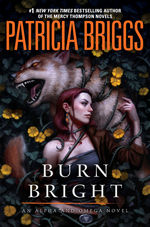
Burn BrightBurn Bright

by Patricia Briggs

Series: Alpha and Omega, #5

Hardcover, 308 pg.
Ace, 2018

Read: March 7 – 8, 2018

Anna was her father’s daughter, and her father believed in science and rational thinking. She’d been a werewolf for years now, and she still tended to think about it from a scientific viewpoint, as though lycanthropy were a virus.

Faced with a wall of briar-thorned vines straight out of a Grimms’ fairy tale, she’d never had it brought home so clearly that what she was and what she did was magic. Not Arthur C. Clarke magic, where sufficient understanding could turn it into a new science that could be labeled and understood. But a “there’s another form of power in the universe” magic. Something alien, almost sentient, that ran by its own rules-or none. Real magic, something that could be studied, maybe, but would never rest in neatly explainable categories.

I appreciated this look into Anna’s thinking. It matches up with what we’ve seen of Mercy’s take on magic, but not completely, underscoring the differences in t heir personalities and way of looking at the world.

Burn Bright takes place on the heels of Silence Fallen — Bran’s not back yet and Charles is handling things. At least as much as Leah will let him. We’ve known for quite some time that Bran’s pack is full of misfits, wolves that need extra care and attention that they probably couldn’t get elsewhere — particularly older werewolves, the type who are nearing the point where they can’t keep control. Asil is a prime example of this — but now we learn that Asil actually is an example of an older wolf who’s doing just fine and that there are a half-dozen or so living near the Marrock, but that don’t come into town or have much at all to do with anyone not Bran, Charles or a small number of specific individuals.

Now, while the Marrock is gone, someone is targeting these wolves — and all signs point to someone within the pack. Can Charles, Anna and others protect these pack members from this new threat? Can they identify the traitor in their midst, and will Charles have to kill someone he trusted to preserve the safety of all the wolves?

One thing I noticed last year doing my re-read of the Mercy and Alpha & Omega books was just how comfortable I felt in these books — that holds true here, too. It doesn’t matter about the peril being faced by Charles and Anna (or any of the rest of the pack), reading this book was a nice, relaxing time with old friends. Agatha Christie or Dorothy Sayers, she’s not, but Briggs sure writes a cozy novel. I cannot put my finger on why — if it’s something in Briggs’ style, her voice, the stories, a combination of the three — but it doesn’t matter. As long as she does that, she’ll have loyal readers.

This was a very talk-y story (and maybe all the Charles and Anna stories skew this way, but this seemed a bit more pronounced). More than once I asked “Do we need to tell this story now? Can’t we come back and chat about this later, you know, after everyone is safe?” Of course, the answer is now, and we need all the talk-y bits to get the understanding and information necessary to defeat the bad guys. Still, the author and readers know this, but Charles, Anna and the rest don’t know that and I wish they displayed a greater sense of urgency.

Most of the talk-y portions were discussing the wildlings being targeted by the mysterious (and well-armed) forces at work here. Which at least pays off in the readers getting to know them — which I greatly appreciate. The other person we get to know better is Leah, Bran’s wife and his wolf’s mate. Between these books and the Mercy novels we’ve gotten to know here a bit, but this novel fills that knowledge out. Between Leah and Chrissy (Adam’s ex- in the Mercy books) Briggs displays a real talent in writing women that you cannot stand or trust, but have enough sympathy for that you can’t just hate. They’re manipulative, conniving, and self-promoting in ways that are clearly meant to set your teeth on edge — but there’s something very vulnerable about them, too.

There’s a reveal or two later in the book that seem inevitable — only because that’s how stories work, even when (especially when?) everything is pointing in one direction, but there’s no way an author of any experience would go with something so obvious. It’s hard to get more specific while not giving away the details — but those reveals ended up leaving me dissatisfied only because I called them so early. It feels like when you’re watching a police procedural and identify the killer when the guest star makes their appearance in the first 10 minutes — sure Castle might be charming, Bones’ intern might be delightfully quirky, or Rizzoli might have some sort of compelling side-story, but the mystery part of the story is a disappointment because how is Morgan Fairchild not going to be the killer?

But the focus of the book is on the relationship between Charles and Anna, their mutual trust, the way they help each other in ways no one else can. That part of the novel is rock solid, and as long as Briggs delivers that, who’s going to complain?

I thoroughly enjoyed this one, don’t misunderstand me. And the more I learn about Bran’s pack in Montana, the more I like it and the more I want to know. Asil, as always, was a joy. But . . . the more I think about Burn Bright the less satisfying it seems, the slighter it feels. I’m glad I read it, I’ll likely gladly read it again — and I look forward to the next adventure with these two. But I think Briggs could’ve — and should’ve — done better.

—–

3.5 Stars

My Favorite Fiction of 2017

Is he ever going to stop with these 2017 Wrap Up posts? I know, I know…I’m sick of them. But I’ve already done most of the work on this one, I might as well finish…Also, it was supposed to go up Friday, but formatting problems . . .

Most people do this in mid-December or so, but a few years ago (before this blog), the best novel I read that year was also the last. Ever since then, I just can’t pull the trigger until January 1. Also, none of these are re-reads, I can’t have everyone losing to my re-reading books that I’ve loved for 2 decades.

I truly enjoyed all but a couple of books this year (at least a little bit), but narrowing the list down to those in this post was a little easier than I expected (‘tho there’s a couple of books I do feel bad about ignoring). I stand by my initial ratings, there are some in the 5-Star group that aren’t as good as some of the 4 and 4½-Star books, although for whatever reason, I ranked them higher (entertainment value, sentimental value…liked the ending better…etc.). Anyway, I came up with a list I think I can live with.

(in alphabetical order by author)

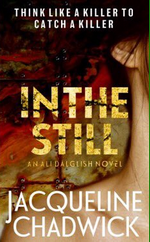
In The StillIn The Still

by Jacqueline Chadwick
My original post

Chadwick’s first novel is probably the most entertaining serial killer novel I’ve ever read. Without sacrificing creepiness, suspense, horror, blood, guts, general nastiness, and so on — she gives us a story with heart, humor and humanity. The second novel, Briefly Maiden is arguably better, but I liked this one a teensy bit more — and I’m genuinely nervous about what’s going to happen in book 3 (not that I won’t read it as soon as I possibly can).

4 1/2 Stars

The Hangman's Sonnet Robert B. Parker’s The Hangman’s Sonnet

My original post

How do you possibly follow-up 2016’s Debt to Pay, especially with that ending, without dramatically altering the Jesse Stone flavor? I’m still not sure how Coleman did it, but he did — Jesse’s dealing with Debt to Pay in a typically self-destructive way, but is keeping his head mostly above water so he can get his job done, mostly by inertia rather than by force of will. Reflexes kick in however, and while haunted, Jesse can carry out his duties in a reasonable fashion until some friends and a case can push him into something more.

Coleman’s balancing of long-term story arcs and character development with the classic Jesse Stone-type story is what makes this novel a winner and puts this one on my list.

4 1/2 Stars

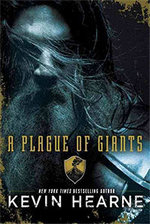
A Plague of GiantsA Plague of Giants

by Kevin Hearne

This sweeping — yet intimately told — epic fantasy about a continent/several civilizations being invaded by a race nobody knew existed is almost impossible to put into a few words. It’s about people stepping up to do more than they thought possible,more than they thought necessary, just so they and those they love can survive. It’s about heroes being heroic, leaders leading, non-heroes being more heroic, leaders conniving and failing, and regular people finding enough reason to keep going. It’s everything you want in an epic fantasy, and a bunch you didn’t realize you wanted, too (but probably should have).

5 Stars

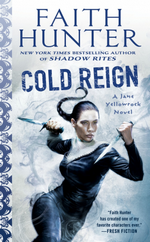
Cold ReignCold Reign

by Faith Hunter

My original post
Hunter continues to raise the stakes (yeah, sorry, couldn’t resist) for Jane and her crew as the European Vamps’ visit/invasion gets closer. Am not sure what’s more intriguing, the evolution in Jane’s powers or the evolution of the character — eh, why bother choosing? Both are great. The growth in the Younger brothers might be more entertaining — I appreciate the way they’ve become nearly as central to the overall story as Jane. I’m not sure this is the book for new readers to the series, but there are plenty before it to hook someone.

5 Stars

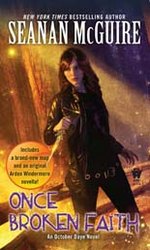
Once Broken FaithOnce Broken Faith

by Seanan McGuire
My original post

Poor planning on my part (in 2016) resulted in me reading two Toby Daye books this year, both just excellent, but this one worked a little bit better for me. Oodles and oodles of Fae royalty and nobility in one spot to decide what they’re going to do with this elf-shot cure leading to a sort-of closed room mystery (it’s just a really big, magical room) with peril on all side for Toby and her found family.

5 Stars

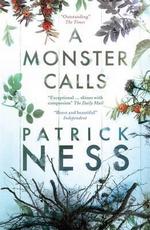
A Monster CallsA Monster Calls

by Patrick Ness
My original post

There were so many ways this could’ve been hacky, overly-sentimentalized, brow-beating, or after-school special-y and Ness avoids them all to deliver a heart-wrenching story about grief, death, love, and the power of stories — at once horrifying, creepy and hopeful.

4 1/2 Stars

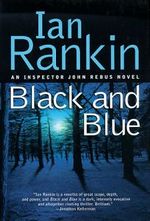
Black and BlueBlack and Blue

by Ian Rankin
My original post

Rankin kicked everything into a higher gear here — there are so many intricately intertwining stories here it’s hard to describe the book in brief. But you have Rebus running from himself into mystery after mystery, drink after drink, career-endangering move after career-endangering move. Unrelenting is the best word I can come up with for this book/character/plot — which makes for a terrific read.

5 Stars

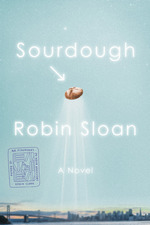
SourdoughSourdough

by Robin Sloan
My original post

This delightful story of a programmer turned baker turned . . . who knows what, in a Bay Area Underground of creative, artisanal types who will reshape the world one day. Or not. It’s magical realism, but more like magical science. However you want to describe it, there’s something about Sloan’s prose that makes you want to live in his books.

Do not read if you’re on a low carb/carb-free diet. Stick with Sloan’s other novel in that case.

4 1/2 Stars

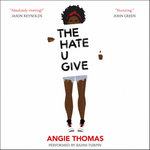
The Hate U Give (Audiobook)The Hate U Give

by Angie Thomas, Bahni Turpin (Narrator)

My original post

This was a great audiobook –and I can’t imagine that the text version was as great, I just didn’t have time for it. It’s the story about the aftermath — socially, personally, locally, nationally — of a police shooting of an unarmed black male as seen through the eyes of a close friend who was inches away from him at the time.

I think I’d have read a book about Starr Carter at any point in her life, honestly, she’s a great character. Her family feels real — it’s not perfect, but it’s not the kind of dysfunctional that we normally see instead of perfect, it’s healthy and loving and as supportive as it can be. The book will make you smile, weep, chuckle and get angry. It’s political, and it’s not. It’s fun and horrifying. It’s . . . just read the thing. Whatever you might think of it based on what you’ve read (including what I’ve posted) isn’t the whole package, just read the thing (or, listen to it, Turpin’s a good narrator).

5 Stars

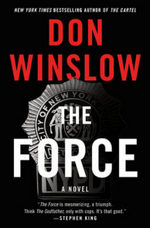
The ForceThe Force

by Don Winslow
My original post

There may be better Crime Fiction writers at the moment than Don Winslow, but that number is small, and I can’t think of anyone in it. In this fantastic book, Winslow tells the story of the last days of a corrupt, but effective (in their own corrupt and horrible way), NYPD Task Force. Denny Malone is a cop’s cop, on The Wire he’s be “real police” — but at some point he started cutting corners, lining his pockets (and justifying it to himself), eventually crossing the line so that he’s more “robber” than “cop.” Mostly. And though you know from page 1 that he’s dirty and going down, you can’t help get wrapped up in his story, hoping he finds redemption, and maybe even gets away with it.

But the book is more than that. In my original post I said: “This book feels like the love child of Tom Wolfe’s The Bonfire of the Vanities and Nicholas Pileggi’s Wiseguy. You really feel like you understand how the city of New York is run — at least parts of it: the police, elements of the criminal world, and parts of the criminal justice system. Not how they’re supposed to run, but the way it really is. [Winslow] achieves this through a series of set pieces and didactic pericopes.”

A police story, a crime thriller, a book about New York — oh, yeah, possibly the best thing I read last year.

5 Stars

There were a few that almost made the list — almost all of them did make the Top 10 for at least a minute, actually. But I stuck with the arbitrary 10 — these were all close, and arguably better than some of those on my list. Anyway, those tied for 11th place are: <

Skyfarer by Joseph Brassey (my original post), Deep Down Dead by Steph Broadribb (my original post), Briefly Maiden by Jacqueline Chadwick (yes, again) (my original post), The Twisted Path by Harry Connolly (my original post), Bound by Benedict Jacka (my original post), The Western Star by Craig Johnson (my original post), The Brightest Fell by Seanan McGuire (see? Another Toby Daye) (my original post), The Blinds by Adam Sternbergh (my original post), Hunger Makes the Wolf by Alex Wells(my original post).


The Twisted Path by Harry Connolly

I had a hard time writing this one up — I’m not sure why. I tossed out 98% of what I prepared to post yesterday and came up with this instead. I think the book deserves something better, but this is what I have.

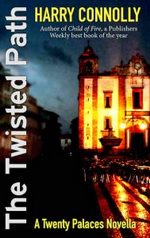
The Twisted PathThe Twisted Path

by Harry Connolly
Series: Twenty Palaces, #4

Kindle Edition, 109 pg.
Radar Ave Press, 2017

Read: December 20, 2017


Annalise Powliss is a powerful sorcerer who travels through the US on behalf of the Twenty Palace Society keeping magic out of the wrong hands — generally by killing the owners of those hands (and anyone standing too close to them). Ray Lilly is her Wooden Man — an assistant whose primary responsibility is to distract her foes, draw their fire, and die in her stead. It’s not the world’s best gig, but he’s an ex-con and doesn’t have a lot of prospects (there are other reasons, but you should read them for yourself). The thing is, Ray’s worked a lot with Annalise without dying, which makes him a remarkable example of a Wooden Man.

So the two of them have been called to the Society’s HQ in Europe so The Powers That Be can meet Ray, examine him and . . . well, he’s not really sure what to expect. Naturally, while they’re there, the pair have an opportunity to take out a supernatural bad guy in their spare time.

This is a very different kind of story for this series, the focus isn’t on the magical threat, but on the Society itself. Yes, there are Predators to be dealt with — but that’s almost a side-note. The Twisted Path gives Ray, as well as the reader, a much greater understanding of the Society. Not that I ever had a complaint about the focus in the earlier stories, but reading this pointed out what I wasn’t seeing before. Initially, you care about the Society’s mission in that, 1. they’re saving the world, blah, blah, blah; but primarily, 2. because you want Ray to succeed (or at least survive) and therefore you want to see the Society’s goals met. Now, I think I have a greater investment in the whole organization.

There’s just so many things I loved about this — Ray, the small-time crook from the Western U.S. being in Europe, trying to cope with all the differences that he never realistically expected to see. Just his reaction to walking on stairs that have existed for longer than the U.S. was a great paragraph. Ray’s initial response to the peers he’s called was so perfect, that I know it brought a smile to my face. Connolly did all the little things right, and that makes it so much easier for the reader to care about the bigger things. He’s probably done that throughout the series, but in a full novel, it’s easier to not pay attention to those details so you can get on with the story — so you can find out what’s going on. In a novella, you can feel like you can take your time.

Not only that, Connolly structured this novella in an atypical fashion — it allowed him to do some things with the story that were natural, organic, and not-cheating, but were able to take the reader by (some degree of) surprise that he wouldn’t have been able to in a straight-forward beginning-to-end structure. It’s possible, really, that this is the best writing of Connolly’s career — he’s had books that I liked a bit more, but I don’t know if he’s written anything better.

Short, fast, action-driven, but with a lot of things to chew on — this is a great UF novella for readers of this series. I don’t know how it’d work as an introduction to the series, maybe fine, but I think you’d be better off with Circle of Enemies. I bought it within minutes of hearing that The Twisted Path had been released and re-shuffled my week’s plans to read it as soon as I could — which were probably the best moves I made this week.

It’s been years since I last read one of the novels (or the novelette), so I spent a little more time than I’d have liked trying to remember why we encountered some of these characters before or how this compared to the style of the others. I’ve got to add the series to my re-read pile, I want to revisit this world soon. If you haven’t spent time with it — go grab Circle of Enemies (don’t read the prequel until after you’ve read #3, if you ask me), there are few, if any UF worlds like this.

4 1/2 Stars

Opening Lines – Dead Beat

We all know we’re not supposed to judge a book by its cover (yet, publishing companies spend big bucks on cover design/art). But, the opening sentence(s)/paragraph(s) are fair game. So, when I stumble on a good opening (or remember one and pull it off the shelves), I’ll throw it up here. Dare you not to read the rest of the book.

On the whole, we’re a murderous race.

According to Genesis, it took as few as four people to make the planet too crowded to stand, and the first murder was a fratricide. Genesis says that in a fit of jealous rage, the very first child born to mortal parents, Cain, snapped and popped the first metaphorical cap in another human being. The attack was a bloody, brutal, violent, reprehensible killing. Cain’s brother Abel probably never saw it coming.

As I opened the door to my apartment, I was filled with a sense of empathic sympathy and intuitive understanding.

For freaking Cain.

from Dead Beat by Jim Butcher

Pub Day Repost: Flame in the Dark by Faith Hunter


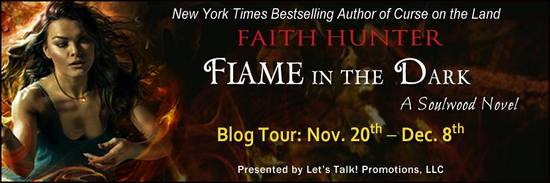
Flame in the DarkFlame in the Dark

by Faith Hunter
Series: Soulwood, #3eARC, 352 pg.
Ace/Roc, 2017
Read: September 22 – 27

Rookie Agent Nell Ingram and her PsyLED team start this novel in a multi-agency investigation into an attack on a political fundraiser — with a focus on one family in particular. There’s no obvious paranormal aspect to the attack, so PsyLED isn’t in the lead, but there’s enough to keep them hanging around the investigation. If for no other reason than the local vampires are interested in what’s going on. Soon, other attacks occur, making it even clearer that one family is the target. As the team starts to investigate that family, more questions are raised and secrets are revealed. But it’s a long while before the secrets and questions lead to anything useful for preventing further loss of life.

The presence of the vampires is a nice bonus — they were present a little in Blood of the Earth, but not really in Curse on the Land. Nell’s still struggling to make up for a faux pas in her initial exposure to the vampires — and a couple of them seem to be enjoying her discomfort. I enjoy seeing Hunter’s particular brand of vampires running around without Jane and her stakes, as long as she doesn’t return to this particular well too much in this series, the Vamps’ presence will be a plus.

The PsyLED case itself is a little on the tepid side — it’s far easier for readers to figure out what’s going on than it is for the characters, and that always hurts the stories somewhat. But — wow. What’s actually going on when the team finally puts all the pieces together? Wow — just wow. It makes putting up with their earlier slowness utterly worth it (also, the reader won’t be as correct as they thought they were for a long time). Basically, if you find yourself getting annoyed with this story, your patience will be rewarded. Probably more than rewarded.

Speaking of patience, Nell needs to exercise a good deal of it with her family, who are still struggling with understanding just what’s going on with her (and they don’t know it all!) and her move for independence from the cult she’s left. It’s clearly, and understandably, difficult to continue to distance herself from the ways and practices she was raised in, while trying to strengthen the ties with the family members still in the church. Meanwhile, the church does seem to be trying to change their practice — moving to orthopraxy, without much of a move towards orthodoxy. That kind of thing isn’t really going to work in the long run — but then again, Hunter’s not writing a realistic account of a movement in a religious group — so it’s not anything to get worked up over. Anyway, Nell puts her foot down on a couple of fronts and draws on some of what she’s learned in working with others, to be able handle her family in a way that hopefully gets through to them. She’s also making some smart moves regarding her sister, Mud/Mindy, who seems to share a lot of abilities and inclinations with Nell. I can’t wait to see what Hunter’s got up her sleeve with this.

While this is really Nell’s book (and series), there’s a great ensemble of characters here. Particularly in the PsyLED team. I’d have preferred a better use of the team, and for the second book in a row, I wondered why Hunter didn’t use some of the characters as well as she did in the first book. Maybe this is just me asking for more for Tandy to do.

There’s some satisfying development on the Brother Ephriam/foreign entity in Soulwood front (that’ll make sense to readers of the series), and regarding the “Vampire Tree.” Which just might be the creepiest floral entity I’ve ever read about — and it’s creepier than a lot of fauna, too. I’m particularly glad about the Brother Ephriam development, I was afraid that things were going to go on too long with that without any real shift in the status quo.

There’s also a stronger look at Nell’s romantic life here — her taking the first steps in exploring a real romantic relationship (in contrast to that marriage she was in), and maybe even getting her first “Improperly Proper Kiss.” There’s just enough romance story allow the reader to see her grow in this way (in addition to all the others she’s growing in), just one more step towards her fulfillment — but not so much that it’s the novel’s focus.

One of the pluses (and minuses) about this series all along has been how hard it is to simply say what Nell Ingram is. With most UF you can summarize things briefly: She can see dead people, he’s a wizard PI, she’s a skinwalker vampire hunter, he’s the world’s oldest living druid, she’s a changeling PI, she’s a ridiculously named werewolf who has a radio talk show, and so on . . . Nell’s a, um. Well. There’s magic, and powers over growing things, but no real spells, per se. See what I mean? This is a pain when trying to describe it to others, or even in knowing what to expect from her stories. And Hunter takes full advantage of this, she’ll have Nell do whatever at any point in time, and as long as it sort of relates to what she started off doing in Book 1, you buy it. By the same token, I can imagine that might be too much of a blank slate for Hunter — there are no well-established strengths/weaknesses/tropes to play with. There are things that Nell does here that just blows me away — and that has a lot to do with Hunter creating this magic creature/race on her own.

When I say that Hunter takes full advantage of this — I should say I thought she had been for the past two books — she really lets loose with it this time.

Let me try to sum up this rambling post: this is a slow burn of a novel — it puts down roots and grows like Nell’s plants, and eventually blossoms into something that’s great to look at. Be patient with it, watch the growth, and you’ll be rewarded. Because when things get going — they really get going, and it’s almost too much to take in. I vacillated a lot about what to rate this — I argued myself into 4-Stars and then into 5 and back into 4 and so on a few times. but because I really don’t place too much weight on the stars, really, I just stopped and split the difference. For those who’ve been around for the previous two books this is a must read — if this was going to be the last in the series, it’d be a decent way to leave (thankfully, Soulwood isn’t a trilogy); for Yellowrock fans who haven’t tried this series yet, you’ll appreciate it; and if you’ve never tried either — take a dip into this world, but I’ll warn you: you’ll end up reading all the others.

Disclaimer: I received this eARC from Berkley Publishing Group via NetGalley in exchange for this post — thanks to both for this. Thanks also to Let’s Talk! Promotions for the opportunity to take part in this book tour. My opinions about the book remain my own.

—–

4 1/2 Stars

The Squirrel on the Train (Audiobook) by Kevin Hearne, Luke Daniels

The Squirrel on the Train (Audiobook) The Purloined Poodle (Audiobook)

by Kevin Hearne, Luke Daniels (Narrator)
Series: Iron Druid Chronicles/Oberon’s Meaty Mysteries, #2
Unabridged Audiobook, 2 hrs, 54 min.
Kevin Hearne, 2017
Read: December 2, 2016


I posted about the text version about a month ago (and reposted last week), but wanted to say a little more about the audiobook — so for the sake of those who just clicked on the Audiobook post, I’ll just repeat everything I said before, but tag on something at the end about Luke Daniels’ work. Can the magic of The Purloined Poodle be recaptured? Yes — maybe even topped. For many, that should be all I need to write. If that’s the case, you’re fine — go ahead and close this, no need to finish this.

If you’re still here, I’ll write a little more — While on a trip to Portland to go sight-seeing, er, sight-smelling, Oberon, Orlaith and Starbuck get away from Atticus (er, I mean, Connor Molloy) while chasing after a suspicious-looking squirrel. That’s a tautology, I realize, if you ask the hounds, but this was a really sketchy-looking squirrel. Anyway, this brought the group into the path of Detective Ibarra. She happens to be at the train station investigating the odd murder of a man who looks just like Atticus.

Naturally, that gets him interested and investigating things as best as he can. Thanks in no small part to the noses of the hounds, Atticus and an old friend are able to uncover what’s going on to help Atticus’ new friend make an arrest.

It’s a whole story in Oberon’s voice, I don’t know what else I can say about the writing/voice/feel of the book. That says pretty much everything. From Oberon’s opening comparison of the diabolical natures of Squirrels vs. Clowns to Orlaith’s judgment that “death by physics” “sounds like justice” to the harrowing adventure at the end of the novella, this is a fine adventure for “the Hounds of the Willamette and their pet Druid!”

No surprise to anyone who’s heard the audiobook for any of Oberon’s other appearances in short stories/novellas/novels, but Luke Daniels killed it here. From the overall characterization and narration he does as Oberon on down to the little details, like Oberon’s particular pronunciation of “Port-LAND,” I just love it. Frankly, how anyone can listen to his rendition of Starbuck’s first steps with words like, “Yes food!” and not giggle like Ron Swanson is beyond me. He gets the serious moments, the anger, the awe, the silliness just right. I just can’t say enough good things about this audio presentation.

There’s a nice tie-in to some of the darker developments in the Iron Druid Chronicles — that won’t matter at all if you haven’t read that far, or if you can’t remember the connection. This was a good sequel that called back to the previous book, and told the same kind of story in a similar way — but didn’t just repeat things. Just like a sequel’s supposed to be, for another tautology. I smiled pretty much the whole time I read it (as far as I could tell, it’s not like I filmed myself). I don’t know if we get a third in this series given the end of the IDC next year. If we do, I’ll be happy — if not, this is a great duology.

—–

4.5 Stars

Pub Day Repost: The Squirrel on the Train by Kevin Hearne

The Squirrel on the TrainThe Squirrel on the Train

by Kevin Hearne
Series: Iron Druid Chronicles/Oberon’s Meaty Mysteries, #2eARC, 120 pg.
Subterranean Press, 2017
Read: November 2, 2017

Can the magic of The Purloined Poodle be recaptured? Yes — maybe even topped. For many, that should be all I need to write. If that’s the case, you’re fine — go ahead and close this, no need to finish this.

If you’re still here, I’ll write a little more — While on a trip to Portland to go sight-seeing, er, sight-smelling, Oberon, Orlaith and Starbuck get away from Atticus (er, I mean, Connor Molloy) while chasing after a suspicious-looking squirrel. That’s a tautology, I realize, if you ask the hounds, but this was a really sketchy-looking squirrel. Anyway, this brought the group into the path of Detective Ibarra. She happens to be at the train station investigating the odd murder of a man who looks just like Atticus.

Naturally, that gets him interested and investigating things as best as he can. Thanks in no small part to the noses of the hounds, Atticus and an old friend are able to uncover what’s going on to help Atticus’ new friend make an arrest.

It’s a whole story in Oberon’s voice, I don’t know what else I can say about the writing/voice/feel of the book. That says pretty much everything. From Oberon’s opening comparison of the diabolical natures of Squirrels vs. Clowns to Orlaith’s judgment that “death by physics” “sounds like justice” to the harrowing adventure at the end of the novella, this is a fine adventure for “the Hounds of the Willamette and their pet Druid!”

There’s a nice tie-in to some of the darker developments in the Iron Druid Chronicles — that won’t matter at all if you haven’t read that far, or if you can’t remember the connection. This was a good sequel that called back to the previous book, and told the same kind of story in a similar way — but didn’t just repeat things. Just like a sequel’s supposed to be, for another tautology. I smiled pretty much the whole time I read it (as far as I could tell, it’s not like I filmed myself). I don’t know if we get a third in this series given the end of the IDC next year. If we do, I’ll be happy — if not, this is a great duology.

Disclaimer: I received this eARC from Subterranean Press via NetGalley in exchange for this post — thanks to both for this.

—–

4 Stars

Flame in the Dark by Faith Hunter


Flame in the DarkFlame in the Dark

by Faith Hunter
Series: Soulwood, #3

eARC, 352 pg.
Ace/Roc, 2017

Read: September 22 – 27


Rookie Agent Nell Ingram and her PsyLED team start this novel in a multi-agency investigation into an attack on a political fundraiser — with a focus on one family in particular. There’s no obvious paranormal aspect to the attack, so PsyLED isn’t in the lead, but there’s enough to keep them hanging around the investigation. If for no other reason than the local vampires are interested in what’s going on. Soon, other attacks occur, making it even clearer that one family is the target. As the team starts to investigate that family, more questions are raised and secrets are revealed. But it’s a long while before the secrets and questions lead to anything useful for preventing further loss of life.

The presence of the vampires is a nice bonus — they were present a little in Blood of the Earth, but not really in Curse on the Land. Nell’s still struggling to make up for a faux pas in her initial exposure to the vampires — and a couple of them seem to be enjoying her discomfort. I enjoy seeing Hunter’s particular brand of vampires running around without Jane and her stakes, as long as she doesn’t return to this particular well too much in this series, the Vamps’ presence will be a plus.

The PsyLED case itself is a little on the tepid side — it’s far easier for readers to figure out what’s going on than it is for the characters, and that always hurts the stories somewhat. But — wow. What’s actually going on when the team finally puts all the pieces together? Wow — just wow. It makes putting up with their earlier slowness utterly worth it (also, the reader won’t be as correct as they thought they were for a long time). Basically, if you find yourself getting annoyed with this story, your patience will be rewarded. Probably more than rewarded.

Speaking of patience, Nell needs to exercise a good deal of it with her family, who are still struggling with understanding just what’s going on with her (and they don’t know it all!) and her move for independence from the cult she’s left. It’s clearly, and understandably, difficult to continue to distance herself from the ways and practices she was raised in, while trying to strengthen the ties with the family members still in the church. Meanwhile, the church does seem to be trying to change their practice — moving to orthopraxy, without much of a move towards orthodoxy. That kind of thing isn’t really going to work in the long run — but then again, Hunter’s not writing a realistic account of a movement in a religious group — so it’s not anything to get worked up over. Anyway, Nell puts her foot down on a couple of fronts and draws on some of what she’s learned in working with others, to be able handle her family in a way that hopefully gets through to them. She’s also making some smart moves regarding her sister, Mud/Mindy, who seems to share a lot of abilities and inclinations with Nell. I can’t wait to see what Hunter’s got up her sleeve with this.

While this is really Nell’s book (and series), there’s a great ensemble of characters here. Particularly in the PsyLED team. I’d have preferred a better use of the team, and for the second book in a row, I wondered why Hunter didn’t use some of the characters as well as she did in the first book. Maybe this is just me asking for more for Tandy to do.

There’s some satisfying development on the Brother Ephriam/foreign entity in Soulwood front (that’ll make sense to readers of the series), and regarding the “Vampire Tree.” Which just might be the creepiest floral entity I’ve ever read about — and it’s creepier than a lot of fauna, too. I’m particularly glad about the Brother Ephriam development, I was afraid that things were going to go on too long with that without any real shift in the status quo.

There’s also a stronger look at Nell’s romantic life here — her taking the first steps in exploring a real romantic relationship (in contrast to that marriage she was in), and maybe even getting her first “Improperly Proper Kiss.” There’s just enough romance story allow the reader to see her grow in this way (in addition to all the others she’s growing in), just one more step towards her fulfillment — but not so much that it’s the novel’s focus.

One of the pluses (and minuses) about this series all along has been how hard it is to simply say what Nell Ingram is. With most UF you can summarize things briefly: She can see dead people, he’s a wizard PI, she’s a skinwalker vampire hunter, he’s the world’s oldest living druid, she’s a changeling PI, she’s a ridiculously named werewolf who has a radio talk show, and so on . . . Nell’s a, um. Well. There’s magic, and powers over growing things, but no real spells, per se. See what I mean? This is a pain when trying to describe it to others, or even in knowing what to expect from her stories. And Hunter takes full advantage of this, she’ll have Nell do whatever at any point in time, and as long as it sort of relates to what she started off doing in Book 1, you buy it. By the same token, I can imagine that might be too much of a blank slate for Hunter — there are no well-established strengths/weaknesses/tropes to play with. There are things that Nell does here that just blows me away — and that has a lot to do with Hunter creating this magic creature/race on her own.

When I say that Hunter takes full advantage of this — I should say I thought she had been for the past two books — she really lets loose with it this time.

Let me try to sum up this rambling post: this is a slow burn of a novel — it puts down roots and grows like Nell’s plants, and eventually blossoms into something that’s great to look at. Be patient with it, watch the growth, and you’ll be rewarded. Because when things get going — they really get going, and it’s almost too much to take in. I vacillated a lot about what to rate this — I argued myself into 4-Stars and then into 5 and back into 4 and so on a few times. but because I really don’t place too much weight on the stars, really, I just stopped and split the difference. For those who’ve been around for the previous two books this is a must read — if this was going to be the last in the series, it’d be a decent way to leave (thankfully, Soulwood isn’t a trilogy); for Yellowrock fans who haven’t tried this series yet, you’ll appreciate it; and if you’ve never tried either — take a dip into this world, but I’ll warn you: you’ll end up reading all the others.

Disclaimer: I received this eARC from Berkley Publishing Group via NetGalley in exchange for this post — thanks to both for this. Thanks also to Let’s Talk! Promotions for the opportunity to take part in this book tour. My opinions about the book remain my own.

—–

4 1/2 Stars

Page 29 of 44

Powered by WordPress & Theme by Anders Norén