Category: News/Misc. Page 11 of 241

I Am The Reader Tag

I Am The Reader Tag
I’ve had this post mostly drafted for a few weeks, but hadn’t gotten around to formatting and whatnot. Then I realized it’s perfect for today’s anniversary, so…here you go.

I found this over at Jo Linsdell’s list of tags, apparently it was created by Penguin Random House to promote The Reader by Traci Chee.

Choose one word that describes being a reader

Curious. A reader is curious. Curious about new worlds, new characters—what’s going on in old fictional worlds or with familiar characters—new ideas. Curiosity about new-to-me facts and perspectives. Or different ways to tell familiar stories.

What is the first book you fell in love with?

There were a number of picture books that probably qualify—the ones I had read to me so many times I could tell when my mother goofed or was skipping ahead so she could move on to something else. But the first title that I can point to with a level of confidence is—as I’ve said so many times on this site that even I’m bored with the story (and many readers could say it with me: Encyclopedia Brown, Boy Detective.


Cover of Encyclopedia Brown boy Detective by Donald J Sobol border=


Hardback or paperback, e-book or audio?

Probably paperback, they’re just easier to hold comfortably. Hardback and then e-book are fine follow-ups. I love audio—it’s clear that I listen to them a lot—but I have to be doing something else (working, cleaning, driving), or I fall asleep. So that’s why it comes in fourth.

I know they’ve fallen out of fashion, but I miss a good mass-market paperback.

How has reading shaped your identity?

It practically is my identity. I’d like to think that Christian, Husband, Father, Grandfather, and friend come first–but I’m convinced any of them do. I say that in jest, but there’s a voice in the back of my head saying, “oh, really?”

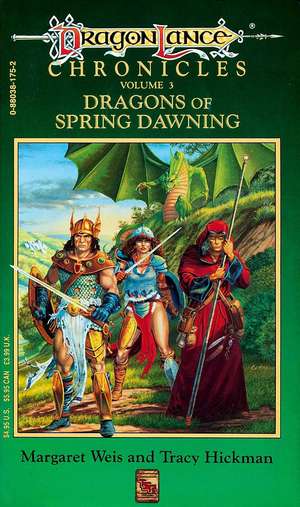
As far back as I can remember, that’s just what I did. And everyone knew it–as I talked about on Monday, my friend group had me read The Hitchhiker’s Guide to the Galaxy to help us figure out the game. They also handed me Dragons of Autumn Twilight to help us get a handle on playing in that world (we never did, but my Weiss/Hickman fandom started right then). I find myself in similar situations still. There are people were I work that’ll come up and give me book suggestions without us having had a real conversation before. I just emit a bookworm (or ink drinker) pheromone, I think. That was true before I started blogging–it’s only increased since then.

What book do you read when you need to be comforted?

I don’t have a go-to for that. Maybe I should—but really, any fictional work does it by letting me focus on a different reality.

For the longest time, I’d read a Nero Wolfe/Archie Goodwin book when I was taken down by a cold. But that’s not the same, I know, it’s just the closest I can think of.

One particularly dark part of my life started around the time I’d discovered Jim Butcher—the first 8 Dresden novels helped me through that (as did discovering Jonathan Tropper). I don’t go to either of them when I need comforted, but they ended up that way then. And probably serve the same purpose now, I just don’t realize it.

Who taught you how to be a reader?

Immediately, this line from Alberto Manguel’s A History of Reading came to mind:

At one magical instant in your early childhood, the page of a book—that string of confused, alien ciphers—shivered into meaning. Words spoke to you, gave up their secrets; at that moment, whole universes opened. You became, irrevocably, a reader.

So, I couldn’t tell you when that happened. But the authors that jumped to mind to get me/keep me hooked early on were: Donald J. Sobol, Raymond Abrashkin and Jay Williams, Robert Arthur and whoever was ghostwriting the Alfred Hitchcock and the Three Investigators books, and countless others I can’t recall. Their work has been fed and nurtured over the years by countless more (and for the last 13 years, by people featured on this here blog).

But really, it was my Mom. She introduced books to me, she spent more time than she probably could afford early on reading them to me, and supported my habit when it became out-of-control (and still does).

Describe your dream reading lounge

A comfortable chair—not too comfortable, because I can drift off pretty easily. Good lighting—I prefer overhead lighting (much to my lamp-loving wife’s consternation). A good, comfortable temperature. Not a lot around to distract myself. A decent source of music for the background. Space for a dog or to curl up next to me. I really don’t care what it’s like beyond that–I’m not going to pay attention.

What book changed the way you act or see the world?

What book didn’t?

I’m going to limit myself to Middle School and High School, or this would take a day to write. Also, I’m pretty sure I’m leaving some off–that’s the problem with memory (and I have to say that kind of thing because if I don’t add that disclaimer, I’ll be revising this list for hours).

Adams’ The Hitchhiker’s Guide to the Galaxy (as you may have read here earlier this week); Alan Mendelsohn, the Boy from Mars by Daniel Manus Pinkwater; Jane Eyre; Dave Barry Slept Here; Bierce’s The Devil’s Dictionary; The Right Stuff; Fahrenheit 451; Heart of Darkness (only in that it gave me a lifelong aversion to Joseph Conrad); Lewis’ Mere Christianity and The Screwtape Letters.


As usual, I’m not tagging anyone in this—but I’d like to see what you all have to come up with.

The Best of the Best from 13 Years of The Irresponsible Reader

The Best of the Best from 13 Years of The Irresponsible Reader
It was 13 years ago today that I first posted something to The Irresponsible Reader. I still can’t believe that I’ve stuck with it that long (I mentioned it to my wife the other day and it set her back a step)—even more improbable is that you, reader, are here. Whether you’ve been around for a few weeks or some years—my mind is boggled by it. Thanks for that, truly.

Last year, I commemorated the day by combining all my “Favorite Reads from Genre X” from Januarys past into one MEGA-LIST, which I’ve dutifully updated to include 2025 reads.

So MEGA that I truly don’t have a count. So MEGA I had to put a “Read More” link in it so it didn’t bog down the main page. Also so large, that I’m doing annoying things like overusing all caps and the word “mega.”

(a retread of last year’s joke, but I like it, so expect it to repeat for at least another couple of years.

It is a very strange list—authors that have no business next to each other, strange genre leaps, and a couple of books I’d largely forgotten about. Still, these are books that I’ve shouted about before and that I really want to draw your attention to—go read some of these!

This is definitely a work in progress. I’m going to continue to refine this list a bit in the future (not changing any selections—although I might add some from the year or two I didn’t post a “best of”/”favorite” list), just refining it—making it look better, polish some of the comments (I’ve done some of that this year), and that kind of thing. My goal is to have this in a format I like by the 15th Anniversary—assuming anyone’s actually still reading me then.

A

Amongst Our WeaponsAmongst Our Weapons

by Ben Aaronovitch

My original post
Any installment in this series is a strong contender for a favorite of the year even before I open it, and this one is a great example of why. While telling a pretty strong story, Aaronovitch expands this world and the reader’s understanding of it, a whole new magic system, and seemingly introduces the next major story arc for the series. We get to see almost every major (and more than a few minor) characters, too. For a fan, this book was a heckuva treat.


False ValueFalse Value

by Ben Aaronovitch

My original post
After wrapping up the overarching plotline from books 1-7, what do you do for book 8? Something completely different. If you were to draw a Venn diagram with circles for Charles Babbage/Ada Lovelace, Artificial General Intelligence, and Wizardry—the overlap is where you’d False Value. Who wants more? The mix of contemporary cutting-edge technologies and Newtonian magic is just fantastic.

Throw in more Hitchhiker’s Guide to the Galaxy references than is healthy and you’ve got yourself a winner.


Lies SleepingLies Sleeping

by Ben Aaronovitch

My original post
I’ve read all the comics (at least collected in paperback), listened to all the audiobooks, read the books at least once . . . I’m a Rivers of London/Peter Grant fan. Period. Which means two things—1. I’m in the bag already for this series and 2. When I say that this is the best of the bunch, I know what I’m talking about. Aaronovitch writes fantastic Urban Fantasy and this is his best yet. The series has been building to this for a while, and I honestly don’t know what to expect next. Great fight/action scenes, some genuine laughs, some solid emotional moments . . . this has it all. Everything you’ve come to expect and more.


Cover of The Goblin Emperor by Katherine AddisonThe Goblin Emporer

by Katherine Addison

To say I was daunted by the incredibly detailed pronunciation guide and information about names before the novel is to put it mildly, but that went away almost immediately. This is a wonderful work–such an intricate web of courtly manners and rules (written and unwritten), a murder plot, a coup or two, and some geeky engineers. Okay, that’s a bad way to try to describe this. I read this a couple of months ago, and already want to re-read it. Once I got into this novel I didn’t want to leave.


Chain-Gang All-StarsChain-Gang All-Stars

by Nana Kwame Adjei-Brenyah

My original post
If there’s a book I’ve recommended more frequently this year, I can’t think of it. I’ve also bought more copies of it to give away than any other. At the core, this is a satire and critique of the American culture–particularly as it relates to sports, mass entertainment, and (most importantly) the carceral system. Pitting convicted felons against each other in gladiatorial fights-to-death, selling merch featuring them, turning them into Reality TV personalities between bouts…Adjei-Brenyah holds up the worst of the US to look at.

It’s a book about death—violent death at the hands of violent people who only hope to go on so they can kill again—However, in a serious way the book is really about life. It’s a celebration of life, a call to protect it, a call to see it for what it is. It’s a reminder that “where life is precious, life is precious.” It’s impossible to read this without being moved–perhaps to action. But it’s also a visceral and exciting read that can entertain you without forcing you to think deeply about what it wants you to.


Go Back to Where You Came FromGo Back to Where You Came From: And Other Helpful Recommendations on How to Become American

by Wajahat Ali

My original post
I’m just going to remix some of what I said originally, this book was a great mix of memoir, social commentary, and satire—with a little sprinkling of a more general humor thrown in. The way he shifted between the genres was fairly seamless and quite effective—his own story (and that of his parents) were good illustrations of the societal ills he wanted to point to. Ali’s story is the kind that Americans love to tell and hear about success—even if his telling points to many of the flaws in our society. Through grit, determination, perseverance, and endurance, Ali pushes through all sorts of cultural, societal, legal, medical, and circumstantial challenges to arrive where he is. Because he believes in what we can be as a people, based on our (incredibly inconsistently applied and demonstrated) ideals and aspirations. It’s the kind of story we need to see, hear, and read more of.


Cover of Algospeak by Adam AleksicAlgospeak:
How Social Media Is Transforming the Future of Language

by Adam Aleksic

My original post
Language in general—but English particularly—is a constantly-changing thing, and these changes are happening faster and faster all the time. Algospeak is a great look at the hows and whys of a lot of the current evolutionary processes. It is about more than language—it’s also about how the Internet changes the way we think and express ourselves in general. And therefore, how society changes (which leads to Internet changes, and other circle-of-life things).

Aleksic has obvious expertise and passion for the subject (look at just one of his videos). He’s also active in these areas. It’s a great read, informative and entertaining. Hard to ask for more.


Amari and the Night BrothersAmari and the Night Brothers

by B. B. Alston

My original post
I’m a tiny bit worried that recency bias got this one on the list. But, I’m not going to lose sleep over it.

This is a delightful story about a young girl from the “wrong” part of Atlanta being recruited by her missing/presumed dead brother into a Hogwarts/MIB mashup, overcoming odds, making friends, saving the day by doing all the sorts of things that young teen protagonists have to do (with a little support from the grown-ups who are supposed to be stopping her), but mostly through grit. The book is written with a sense of joy and hope, while never losing sight of what Amari has to overcome in terms of her own circumstances as well as the specific villainy.

Also, and I can’t stress this enough, there’s a weredragon. What more do you need?


WWW Wednesday—May 27, 2026


WWW Wednesdays Logo

This meme was formerly hosted by MizB at A Daily Rhythm and revived on Taking on a World of Words—and shown to me by Aurore-Anne-Chehoke at Diary-of-a-black-city-girl.

The Three Ws are:
What are you currently reading?
What did you recently finish reading?
What do you think you’ll read next?

Seems easy enough, right? Let’s take a peek at this week’s answers:

What are you currently reading?

Cover of Starship Troopers by Robert A. Heinlein Cover of The Best Dog in the World edited by Alice Hoffman Cover of Unread by Oliver James
Starship Troopers
by Robert A. Heinlein
The Best Dog in the World: Essays on Love
edited by Alice Hoffman
Unread: A Memoir of Learning (and Loving) to Read on TikTok
by Oliver James, read by James Shippy

I’ve heard countless times that the movie is different than Heinlein’s novel. And boy howdy, everyone was right. I think I’m liking the book–but Heinlein had some issues.

I think I made the right call reading The Best Dog in the World one essay at a time–if I’d gone cover-to-cover, it probably would’ve taken a day, and I’d have been checked out for most of it. Still enjoying it.

I’m digging Unread–I’d like a little more depth and a little less repetition, but it’s still a solid read.

What did you recently finish reading?

Cover of Booked by Alison Gaylin Cover of Cultish by Amanda Montell
Robert B. Parker’s Booked
by Alison Gaylin
Cultish: The Language of Fanaticism
by Amanda Montell, read by Ann Marie Gideon

I think Gaylin tapped into a big trait (some would say flaw) of Sunny in a solid way in this book that Parker and Lupica didn’t. It was a fun read, too.

Last week, I said I was picking up Cultish because of Mrs. Irresponsible Reader. I didn’t tell her that, though, which is good, because I don’t have a lot of good things to say.

What do you think you’ll read next?

Cover of Remington Platypus by Steve Nash Cover of After the Fall by Edward Ashton
Remington Platypus
by Steve Nash
After the Fall
by Edward Ashton, read by John Pirhalla

I’ve been trying to get to Remington Platypus since the end of December. Finally! (The BookTempter’s TBR Challenge is helping)

I’m a little worried that After the Fall is going to be one of those books that’s better for my eyes than the ears, but I want to give it a shot.

Have you been reading anything good lately?

Fantasy with Friends: Are There Any Fantasy Films That Were Better Than the Book?

I didn’t get this up yesterday–you might have noticed things were busy around here. A day late and at least a quarter short, here’s my


Fantasy with Friends A Discussion Meme Hosted by Pages Unbound

Fantasy with Friends is a weekly meme hosted by the good people over at Pages Unbound. Fantasy with Friends poses questions each Monday about fantasy, either as a genre as a whole or individual works.

This week’s prompt is:

Are there any fantasy books that you think had a movie adaptation that was even better than the book?

I can think of one right off the top of my head. It’s also one of the first movies I turn to when the conversation of “Adaptations vs. Books” comes up.

Matthew Vaughn’s Stardust.

If you’ve watched it and have read the novel, I can almost guarantee you agree. (if not, please tell me—I’ve only run into people who agree, I’d love to hear an argument for the book). I’d love to do a more in-depth comparison, but I don’t have time for a re-read of the book (I did flip through the illustrated version to see if anything jumped out), but after writing a draft of this, I did watch the movie—the power of suggestion. Not that it takes much for me to want to watch it, and I was so glad I indulged.

One of the more obvious strengths is the depiction of Captain Shakespeare, his crew, and the scenes that involve them. The film changed the tone and approach, making it more entertaining. And, then, come on…DeNiro.

The story is focused. The tone is sharpened. It feels like a fairy tale with 21st-century sensibilities. More than that–it’s a fairy tale come to life. The book is a fine, stand-alone fantasy, with some creative touches.

The casting was fantastic. How do you not swoon over Yvaine the instant she shows up? Not just the way they shot Daines, but the way she asserts herself the instant Tristan shows up.

Really, the only thing that’d make the film better is if Tristan got into a hallway battle. No one (including Vaughn and Cox) knew in 2007 just how good Cox would be in those. You think Humphrey revealed his cowardice when Tristan does that sword trick? Put the two of them in a hallway and watch Tristan run up a wall. (as hard as it is to imagine Cavill quaking at Cox)

Okay, I’m getting off target here. Basically, like I said the book was…fine. It comes across as less-fine once you watch the movie–or if you come to it after the movie. I’ve tried the book twice, just to see if it was the time I encountered it. I liked it moderately more the second time, but really, it just made me want to watch the movie.

I’m just rambling now–without re-reading the book, it’s hard to talk about the way it’s not as good as the adaptation. Generally, in every conceivable way the movie is better–but I’d prefer to be more detailed.

I’m really looking forward to some of the other posts in response to this prompt, I’m looking for some new movies to watch.

Irresponsible Reader Pilcrow Icon

MUSIC MONDAY (Towel Day Edition): “Don’t Panic” by Clerics of Ohm

The Irresponsible Reader's Music Monday logo

Music Monday's originated at The Tattooed Book Geek's fantastic blog and has shown up hither, thither, and yon since then.

<

p style=”text-align: center;”>

/p>

Don't Panic

Towel Day ’26: Some of my favorite Adams lines . . .

(updated 5/25/26)

A Blue towel with the words Towel Day on it

There’s a great temptation here for me to go crazy and use so many quotations that I’d get in copyright trouble. I’ll refrain from that and just list some of his best lines . . .*

* The fact that this list keeps expanding from year to year says something about my position on flirting with temptation.

The Hitchhiker's Guide to the Galaxy

The Hitchhiker’s Guide to the Galaxy

Time is an illusion. Lunchtime doubly so.

This must be Thursday. . . I never could get the hang of Thursdays.

“You’d better be prepared for the jump into hyperspace. It’s unpleasantly like being drunk.”

“What’s so unpleasant about being drunk?”

“You ask a glass of water.”

(I’m not sure why, but this has always made me chuckle, if not actually laugh out loud. It’s just never not funny. It’s possibly the line that made me a fan of Adams)

He had found a Nutri-Matic machine which had provided him with a plastic cup filled with a liquid that was almost, but not quite, entirely unlike tea.

“You know,” said Arthur, “it’s at times like this, when I’m trapped in a Vogon airlock with a man from Betelgeuse, and about to die of asphyxiation in deep space that I really wish I’d listened to what my mother told me when I was young.”

“Why, what did she tell you?”
“I don’t know, I didn’t listen.

In those days spirits were brave, the stakes were high, men were real men, women were real women and small furry creatures from Alpha Centauri were real small furry creatures from Alpha Centuari. And all dared to brave unknown terrors, to do mighty deeds, to boldly split infinitives that no man had split before . . .

“Look,” said Arthur, “would it save you a lot of time if I just gave up and went mad now?”

The ships hung in the sky in much the same way that bricks don’t.

For a moment, nothing happened. Then, after a second or so, nothing continued to happen.

“Space,” [The Guide] says, “is big. Really big. You just won’t believe how vastly, hugely, mindbogglingly big it is. I mean, you may think it’s a long way down the road to the chemist’s, but that’s just peanuts to space, listen…”

He attacked everything in life with a mix of extraordinary genius and naive incompetence, and it was often difficult to tell which was which.

He felt that his whole life was some kind of dream and he sometimes wondered whose it was and whether they were enjoying it.


The Restaurant at the End of the Universe

The Restaurant at the End of the Universe

It is a curious fact, and one to which no one knows quite how much importance to attach, that something like 85 percent of all known worlds in the Galaxy, be they primitive or highly advanced, have invented a drink called jynnan tonnyx, or gee-N-N-T’Nix, or jinond-o-nicks, or any one of a thousand or more variations on the same phonetic theme. The drinks themselves are not the same, and vary between the Sivolvian “chinanto/mnigs” which is ordinary water served at slightly above room temperature, and the Gagrakackan “tzjin-anthony-ks” which kills cows at a hundred paces; and in fact the one common factor between all of them, beyond the fact that the names sound the same, is that they were all invented and named before the worlds concerned made contact with any other worlds.

Reality is frequently inaccurate.

Life is wasted on the living.


Life, The Universe and Everything

Life, the Universe, and Everything

The Hitchhiker’s Guide to the Galaxy has this to say on the subject of flying. There is an art, it says, or rather, a knack to flying. The knack lies in learning how to throw yourself at the ground and miss.

(It goes on for quite a while after this—and I love every bit of it.)

“One of the interesting things about space,” Arthur heard Slartibartfast saying . . . “is how dull it is?”

“Dull?” . . .

“Yes,” said Slartibartfast, “staggeringly dull. Bewilderingly so. You see, there’s so much of it and so little in it.”


So Long, and Thanks For All The Fish

So Long, and Thanks for All the Fish

Of course, one never has the slightest notion what size or shape different species are going to turn out to be, but if you were to take the findings of the latest Mid-Galactic Census report as any kind of accurate guide to statistical averages you would probably guess that the craft would hold about six people, and you would be right. You’d probably guessed that anyway. The Census report, like most such surveys, had cost an awful lot of money and told nobody anything they didn’t already know—except that every single person in the Galaxy had 2.4 legs and owned a hyena. Since this was clearly not true the whole thing eventually had to be scrapped.

Here was something that Ford felt he could speak about with authority. “Life,” he said, “is like a grapefruit.”

“Er, how so?”

“Well, it’s sort of orangy-yellow and dimpled on the outside, wet and squidgy in the middle. It’s got pips inside, too. Oh, and some people have half a one for breakfast.”

“Is there anyone else out there I can talk to?”

Arthur had a swordfish steak and said it made him angry. He grabbed a passing waitress by the arm and berated her. “Why’s this fish so bloody good?” he demanded, angrily.

“Please excuse my friend,” said Fenchurch to the startled waitress. “I think he’s having a nice day at last.”


Mostly Harmless

Mostly Harmless

A common mistake that people make when trying to design something completely foolproof is to underestimate the ingenuity of complete fools.

Fall, though, is the worst. Few things are worse than fall in New York. Some of the things that live in the lower intestines of rats would disagree, but most of the things that live in the lower intestines of rats are highly disagreeable anyways, so their opinion can and should be discounted.


Dirk Gently's Holistic Detective Agency

Dirk Gently’s Holistic Detective Agency

There is no point in using the word ‘impossible’ to describe something that has clearly happened.

If it looks like a duck, and quacks like a duck, we have at least to consider the possibility that we have a small aquatic bird of the family anatidae on our hands.

Let’s think the unthinkable, let’s do the undoable. Let us prepare to grapple with the ineffable itself, and see if we may not eff it after all.

Sherlock Holmes observed that once you have eliminated the impossible then whatever remains, however improbable, must be the answer. I, however, do not like to eliminate the impossible.

(I’ve often been tempted to get a tattoo of this)


The Long Dark Tea-Time of the Soul

The Long Dark Tea-Time of the Soul

There are some people you like immediately, some whom you think you might learn to like in the fullness of time, and some that you simply want to push away from you with a sharp stick.

It can hardly be a coincidence that no language on earth has ever produced the expression, ‘As pretty as an airport.’

The impossible often has a kind of integrity to it which the merely improbable lacks.

She stared at them with the worried frown of a drunk trying to work out why the door is dancing.

It was his subconscious which told him this—that infuriating part of a person’s brain which never responds to interrogation, merely gives little meaningful nudges and then sits humming quietly to itself, saying nothing.

As she lay beneath a pile of rubble, in pain, darkness, and choking dust, trying to find sensation in her limbs, she was at least relieved to be able to think that she hadn’t merely been imagining that this was a bad day. So thinking, she passed out.


The Last Chance to See

The Last Chance to See

“So what do we do if we get bitten by something deadly?” I asked.

He looked at me as if I were stupid. “You die, of course. That’s what deadly means.”

I’ve never understood all this fuss people make about the dawn. I’ve seen a few and they’re never as good as the photographs, which have the additional advantage of being things you can look at when you’re in the right frame of mind, which is usually around lunchtime.

I have the instinctive reaction of a Western man when confronted with the sublimely incomprehensible. I grab my camera and start to photograph it.

Human beings, who are almost unique in having the ability to learn from the experience of others, are also remarkable for their apparent disinclination to do so.

The aye-aye is a nocturnal lemur. It is a very strange-looking creature that seems to have been assembled from bits of other animals. It looks a little like a large cat with a bat’s ears, a beaver’s teeth, a tail like a large ostrich feather, a middle finger like a long dead twig and enormous eyes that seem to peer past you into a totally different world which exists just over your left shoulder.

One of the characteristics that laymen find most odd about zoologists is their insatiable enthusiasm for animal droppings. I can understand, of course, that the droppings yield a great deal of information about the habits and diets of the animals concerned, but nothing quite explains the sheer glee that the actual objects seem to inspire.

I mean, animals may not be intelligent, but they’re not as stupid as a lot of human beings.


The Salmon of Doubt

The Salmon of Doubt: Hitchhiking the Galaxy One Last Time

We are stuck with technology when what we really want is just stuff that works.

I’ve come up with a set of rules that describe our reactions to technologies:
1. Anything that is in the world when you’re born is normal and ordinary and is just a natural part of the way the world works.
2. Anything that’s invented between when you’re fifteen and thirty-five is new and exciting and revolutionary and you can probably get a career in it.
3. Anything invented after you’re thirty-five is against the natural order of things.

The fact that we live at the bottom of a deep gravity well, on the surface of a gas covered planet going around a nuclear fireball 90 million miles away and think this to be normal is obviously some indication of how skewed our perspective tends to be.


And a couple of lines I’ve seen in assorted places, articles, books, and whatnot

I love deadlines. I love the whooshing noise they make as they go by.

A learning experience is one of those things that says, “You know that thing you just did? Don’t do that.”

The fact is, I don’t know where my ideas come from. Nor does any writer. The only real answer is to drink way too much coffee and buy yourself a desk that doesn’t collapse when you beat your head against it.

Solutions nearly always come from the direction you least expect, which means there’s no point trying to look in that direction because it won’t be coming from there.

Don't Panic

Towel Day ’26: Scattered Thoughts about Reading The Hitchhiker’s Guide to the Galaxy Trilogy

(updated and revised this 5/25/26)

A Blue towel with the words Towel Day on it
I’ve been trying for a few years now to come up with a tribute to Adams. This isn’t quite what I had in mind, but it’s a start. In my mind, this is a work in progress (a multiple-year project), but I’m posting it anyway. Next year’s version will be better—or at least more complete.


Some time in 7th or 8th grade (I believe), I was at a friend’s house, and his brother let us try his copy of the text-based Hitchhiker’s Guide game, and we were no good at it at all. Really, it was embarrassing. However, his brother had a copy of the first novel, and we all figured that the novel held the keys we needed for success with the game (alas, it did not help us one whit). My friends all decided that I’d be the one to read the book and come back in a few days as an expert.

I fell in love with the book almost instantly, and I quickly forgot about the game. Adams’ irreverent style rocked my world—could people actually get away with saying some of these things? His skewed take on the world, his style, his humor…and a depressed robot, too! It was truly love at first read. As I recall, I started re-reading it as soon as I finished it—the only time in my life I’ve done that sort of thing.

Also, I finally understood that song, “Marvin, I Love You,” that I kept hearing on Dr. Demento.

It was one of those experiences that, looking back, I can say shaped my reading and thinking for the rest of my life (make of that what you will). Were my life the subject of a Doctor Who or Legends of Tomorrow episode, it’d be one of those immutable fixed points. I got my hands on the next three books as quickly as I could (the idea of a four-volume trilogy was one of the funniest ideas I’d encountered up to that point in my life), and devoured them. I do know that I didn’t understand all of the humor, several of the references shot past me at the speed of light, and I couldn’t appreciate everything that was being satirized. But what I did understand, I thought was brilliant. Not only did I find it funny, the series taught me about comedy—how to construct a joke, how to twist it in ways a reader wouldn’t always expect, and when not to twist but to go for the obviously funny idea. The trilogy also helped me to learn to see the absurdity in life.

One of the big lessons that HHGTTG taught me was something I didn’t realize for quite some time- I noticed and talked about it, but I didn’t really realize what was going on. Whether in the game, the novel, the TV show, or the radio show (my local library getting those tapes was a revelation)–Adams took several key scenes and put them in different order, almost completely intact (although with some different jokes sometimes). Each time he did that, it was to play to the strength of the various media. I learned later that he did this for a couple of other versions, and then the movie. When it comes to story–you can keep the big items and play with them to get them to serve your aim, without doing any real damage to the core of your story/point. Like I said, it took a while for me to get the vocabulary to describe that–or to spend any time thinking about it beyond, “hey, that’s cool how he did that.” It’s just one of those things that stuck deep in my mind.

Outside of one family member–HHGTTG was my first exposure to an atheist. I mean, I knew they existed–the way I knew Australia existed. I’d read about it in books, maybe seen it on a TV show or something (hey, I was a kid from a small town in Southern Idaho in the 80s). But here was a guy wearing that on his sleeve–but he made a joke about it. Well, he made a few jokes–several by the end of the trilogy (including at least one that undercut them all). I didn’t threaten my young faith or rattle me, it was more of a “huh, so that’s what they’re like.” Nothing scary, just silly. I also have to say–again, sheltered kid from Idaho pre-Internet–that one of those jokes involved someone getting killed at a zebra crossing. It wasn’t until a few reads in that I started to wonder if that was actually a thing, and not another of his Adams’ jokes about a special road crossing for those particular animals. It was a learning experience for me in many ways.

Years later, when the final volume (by Adams) was released, I’d already cemented what I thought about the books from these frequent re-reads. I’m not sure that Mostly Harmless changed things much (except for making me think for the first time that maybe I didn’t want him to write more in this series). His non-Hitchhiker’s work illustrated that he was capable of making you see things in a new light–either with a smile or a sense of regret—even when he wasn’t writing the trilogy, even when he was writing non-fiction. It was never the setting or the genre—it was Adams.

But here on Towel Day—as with most of the time I talk about Adams (but I need to change that), it comes down to where I started—the Trilogy. I read the books (particularly the first) so many times that I can quote significant portions of them, and frequently do so without noticing that I’m doing that. I have (at this time) two literary-inspired tattoos, one of which is the planet logo* featured on the original US covers. In essence, I’m saying that Adams and the series that made him famous have had an outsized influence on my life and are probably my biggest enduring fandom. If carrying around a (massively useful) piece of cloth for a day in some small way honors his memory? Sure, I’m in.

So, Happy Towel Day, You Hoopy Froods.

* I didn’t know it at the time, but Adams didn’t like that guy. Whoops.

Don't Panic

Towel Day ’26: Do You Know Where Your Towel Is?

(updated and revised this 5/25/26)

A Blue towel with the words Towel Day on it

The Hitchhiker’s Guide to the Galaxy has a few things to say on the subject of towels.

A towel, it says, is about the most massively useful thing an interstellar hitchhiker can have. Partly it has great practical value. You can wrap it around you for warmth as you bound across the cold moons of Jaglan Beta; you can lie on it on the brilliant marble-sanded beaches of Santraginus V, inhaling the heady sea vapors; you can sleep under it beneath the stars which shine so redly on the desert world of Kakrafoon; use it to sail a miniraft down the slow heavy River Moth; wet it for use in hand-to-hand-combat; wrap it round your head to ward off noxious fumes or avoid the gaze of the Ravenous Bugblatter Beast of Traal (such a mind-bogglingly stupid animal, it assumes that if you can’t see it, it can’t see you); you can wave your towel in emergencies as a distress signal, and of course dry yourself off with it if it still seems to be clean enough.

More importantly, a towel has immense psychological value. For some reason, if a strag (strag: non-hitch hiker) discovers that a hitch hiker has his towel with him, he will automatically assume that he is also in possession of a toothbrush, face flannel, soap, tin of biscuits, flask, compass, map, ball of string, gnat spray, wet weather gear, space suit etc., etc. Furthermore, the strag will then happily lend the hitch hiker any of these or a dozen other items that the hitch hiker might accidentally have “lost”. What the strag will think is that any man who can hitch the length and breadth of the galaxy, rough it, slum it, struggle against terrible odds, win through, and still knows where his towel is is clearly a man to be reckoned with.

Hence a phrase that has passed into hitchhiking slang, as in “Hey, you sass that hoopy Ford Prefect? There’s a frood who really knows where his towel is.” (Sass: know, be aware of, meet, have sex with; hoopy: really together guy; frood: really amazingly together guy.)

Towel Day, for the few who don’t know, is the annual celebration of Douglas Adams’ life and work. It was first held two weeks after his death, fans were to carry a towel with them for the day to use as a talking point to encourage those who have never read HHGTTG to do so, or to just converse with someone about Adams. Adams is one of that handful of authors that I can’t imagine I’d be the same without having encountered/read/re-read/re-re-re-re-read, and so I do my best to pay a little tribute to him each year, even if it’s just carrying around a towel. TowelDay.org is the best collection of resources on the day.

In commemoration of this date, here’s most of what I’ve written about Adams. I’ve struggled to come up with new material to share for Towel Day over the years, mostly sticking with updating and revising existing posts. And, this year is no exception. A few years back, I did a re-read of all of Adams’ (completed) fiction. For reasons beyond my ken (or recollection), I didn’t get around to blogging about the Dirk Gently books, but I did do the Hitchhiker’s Trilogy:
bullet The Hitchhiker’s Guide to the Galaxy
bullet The Restaurant at the End of the Universe
bullet Life, The Universe and Everything
bullet So Long, and Thanks For All The Fish
bullet Mostly Harmless
bullet I had a thing or two to say about the 40th Anniversary of The Hitchhiker’s Guide to the Galaxy
bullet I took a look at the 42nd Anniversary Illustrated Edition of The Hitchhiker’s Guide to the Galaxy

I should also point to a posts I wrote about Douglas Adams’ London by Yvette Keller and 42: The Wildly Improbable Ideas of Douglas Adams edited by Kevin Jon Davies—both are great ways of filling out one’s understanding of Adams and his work. I have to mention the one book that Adams/Hitchhiker’s aficionado needs to read is Don’t Panic by Neil Gaiman, David K. Dickson and MJ Simpson.

If you’re more in the mood for a podcast, I’d suggest The Waterstones Podcast How We Made: The Hitchhiker’s Guide to the Galaxy—I’ve listened to several podcast episodes about this book, and generally roll my eyes at them. But this is just fantastic. Were it available, I’d listen to a Peter Jackson-length version of the episode.

I’ve only been able to get one of my sons into Adams, he’s the taller, thinner one in the picture from a few several years ago.

I’m trying to pass this on to the next generation as well. Here’s his son, the Grand-critter, from 2 years ago:

You really need to check out this comic from Sheldon Comics—part of the Anatomy of Authors series: The Anatomy of Douglas Adams.

Lit in a Nutshell gives this quick explanation of The Hitchiiker’s Guide:

One of my favorite posts there is this pretty cool video, shot on the ISS by astronaut Samantha Cristoforetti.

Even better—here’s an appearance by Douglas Adams himself from the old Letterman show—I’m so glad someone preserved this:

Love the anecdote (Also, I want this tie.)

Don't Panic

Saturday Miscellany—5/23/26

Odds ‘n ends about books and reading that caught my eye this week. You’ve probably seen some/most/all of them, but just in case:
bullet Why the Canon Is Worth Conserving—R.V. Young makes a good case here. Maybe not convincing, but good to chew on.
bullet The Written Word Is Having A Rough Week—”Rough” is putting it mildly.
bullet Common Readers: BookTok’s critical values
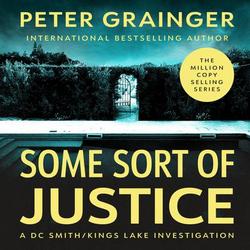
bullet The most famous crime writer you’ve never heard of – prepare to be hooked—a heckuva piece on Peter Grainger. About time he got some attention.
bullet Waterstones livestreamed Brandon Sanderson in conversation with Joe Abercrombie—I haven’t watched yet, but I imagine it’s more than worth the time.
bullet Scalzi’s recent BlueSky post about AI sums up what a lot of us SF fans have been thinking. Just phrased better.

A Book-ish Related Podcast episode (or two) you might want to give a listen to:
bullet Authors on the Air Global Radio Network Jordan Harper discusses A VIOLENT MASTERPIECE—a great conversation about the book and more. Every exposure I have to this writer makes me like him more.

My favorite sentence/passage/phrase (or two) that I read this week:
Having a teenage daughter is like Choose Your Own Adventure, a constant set of junctures in the road. She’s in a mood? How do you respond? Do you snap? Do you sympathize? I chose my go-to: ignore.—Go Gentle by Maria Semple

To help talk about backlist titles (and just for fun), What Was I Talking About 10 Years Ago This Week?
bullet Burned by Benedict Jacka
bullet Fire Touched by Patricia Briggs
bullet And I mentioned the releases of: The Highwayman. by Craig Johnson; Who Killed Sherlock Holmes? by Paul Cornell; This Damned Band also by Paul Cornell and Tony Parker; Your Favorite Band Is Killing Me: What Pop Music Rivalries Reveal About the Meaning of Life by Steven Hyden; The Second Life of Nick Mason by Steve Hamilton; and My Best Friend’s Exorcism by Grady Hendrix

This Week’s New Releases that I’m Excited About and/or You’ll Probably See Here Soon:
bullet Hawai’i Rage by Tori Eldridge—”A suspicious death on a Kohala Mountain ranch draws ranger Makalani Pahukula into a tangled family tree.” It’ll be a minute before I can dive into this, but I’m looking forward to seeing how this builds on Kaua’i Storm
bullet True Romance: A Noir Anthology editby by Troy Lambert & Vincent Zandri—the author list alone is enough to get me to shell out a couple of bucks. In this anthology, “passion isn’t red roses and candlelight. Instead, it’s obsession, betrayal, revenge, and the kind of desire that leaves bodies in its wake…From quiet suburban rot to organized crime empires, from calculated seduction to explosive violence, these stories explore the dangerous intersection where love and darkness meet. Because in noir, love isn’t salvation. It’s motiv”
bullet It’s Hard to Be an Animal by Robert Isaacs—”a funny, magical, and tender novel following a lonely, conflict-averse man whose sudden ability to understand animals sends him on a wild romp around NYC, and ultimately helps him discover his own voice. “
bullet Ironwood by Michael Connelly—the sequel to Nightshade (which I need to read soon) brings Detective Sergent Stilwell into contact with Renée Ballard and a violent drug deal.

Before an image of a well-stocked bookshelf are the words '

Highlights from April: Lines Worth Repeating

Highlights from the Month

Cover of Violet Thistlewaite Is Not a Villain Anymore by Emily Krempholtz

Violet Thistlewaite Is Not a Villain Anymore by Emily Krempholtz

Even secrets told at a whisper grow wings.


Cover of The Traitor Baru Cormorant by Seth Dickinson

The Traitor Baru Cormorant by Seth Dickinson

“You can’t go home.”

“Why not?”

“I don’t know. Because it’s gone.” Aminata frowned, finished her drink, and nodded, “You can’t find it again. Even if you go back, it’s not there anymore. That’s history, that’s how it works! Someone’s always changing someone else.”

The terror that took Baru came from the deepest part of her soul. it was a terror particular to her, a fundamental concern—the apocalyptic possibility that the world simply did not permit plans, that it worked in chaotic and unmasterable ways, that one single stroke of fortune, one well-aimed bowshot by a man she had never met, could bring total disaster. The fear that the basic logic she used to negotiate the world was a lie.


Cover of Soul Fraud by Andrew Givler

Soul Fraud by Andrew Givler

…the entire building burst into flames. It was not a gradual combustion. One second, the building was a normal not-on-fire warehouse. Then it was all fire, as if it were the head of a match that had been struck.

Cooking has always seemed so magical to me. Two things can be made from the same five basic ingredients yet taste wildly different. It may only have been a day since I learned magic was real, but part of me always thought cooks were secretly wizards.

When you’re a kid, your mother tells you not to let your friends peer-pressure you into drinking, doing drugs, and other stuff. But she never covered what do if an acquaintance offered to help you summon a demon. Or at least mine didn’t. She completely skipped that chapter.

My phone buzzed in my pocket. I gasped as I was pulled from sleep’s dark, peaceful embrace. The process of waking up is a surprisingly accurate measure of how close your life is to rock bottom. For some people, the ones with everything clicking exactly as it should be, waking up is the worst thing that happens to them in a day. Because sleep is amazing. It’s mornings that are evil. It doesn’t matter if you’re rich or poor, fat or Mr. Universe. Sleep is the lesser equalizer after death. We all get to enjoy it, and it eventually finds us all. Waking up is a shared pain for all of us. Even those freakish morning people.

“What is it you mortals say? Ah, yes, time flies when you’re having fun,” he said with a twitch of his lips. “I’ve always liked that mental picture, time flying, when obviously it actually swims.”


Cover of Guns of Brixton by Paul D. Brazill

Guns of Brixton by Paul D. Brazill

‘How is he?” said Kenneth to the fresh faced young policeman who’d been sat outside Bernie’s private room reading the Guardian.

‘Well, he’s been in and out of consciousness for most of the day. It was touch and go at one time,’ said the uniformed plod, ‘and he’s not out of the woods yet.’

He’ll go far with that degree in clichés, thought Kenneth. Officer material, no doubt about it.


Cover of Frog and Toad Are Doing Their Best by Jennie Egerdie

Frog and Toad are Doing Their Best by Jennie Egerdie, illustrated by Ellie Hajdu

“Friends do not let friends dress like internet trolls,”

“Toad,” said Frog, “the older I get, the less I understand time.”

“Time means nothing,” said Toad. “Time is just the thing that happens between snacks.”


Cover of Moving the Millers' Minnie Moore Mine Mansion by Dave Eggers

Moving the Millers’ Minnie Moore Mine Mansion by Dave Eggers, illustrated by Júlia Sardà

Like all of the best stories, this takes place in Idaho.

While Annie was gallivanting about Europe—which is what you do in Europe, by the way, you gallivant; it is a kind of traipsing—Henry was determined to build his new wife a lavish new house.


Cover of This Book Made Me Think of You by Libby Page

This Book Made Me Think of You by Libby Page

Getting back into reading feels like stepping back into the house of a beloved friend she hasn’t seen in a long time. It feels like coming home.

Tilly wasn’t sure she was expecting the trip to be fun. She was going because Joe had asked her to and it turnsed out that it’s very difficult to say no to the dead love of your life.

The right book in the hands of the right person at exactly the right moment can change their life forever.

Book shops aren’t just book shops, they’re places fo rbook lovers to come together, like-minded souls meeting among the stacks. They’re the hubs of community, the arena for heated conversations about the latest must-read series. They’re safe spaces to step in out of the rain, no matter who you are. They need our support now more than ever.


Cover of A Memory Called Empire by Arkady Martine

A Memory Called Empire by Arkady Martine

The problem with sending messages was that people responded to them, which meant one had to write more messages in reply.

She hadn’t lied once. And yet they were trusting her.

Poetry is for the desperate, and for people who have grown old enough to have something to say.

Grown old enough, or lived through enough incomprehensible experiences.


Cover of Ancillary Mercy by Ann Leckie

Ancillary Mercy by Ann Leckie

There is always more after the ending. Always the next morning, and the next. Always changes, losses and gains. Always one step after the other. Until the one true ending that none of us can escape. But even that ending is only a small one, larges as it looms for us. There is still the next morning for everyone else. For the vast majority of the rest of the universe that ending might as well not ever have happened. Every ending is an arbitrary one. Everything ending is from another angle, not really an ending.


Cover of Remarkably Bright Creatures by Shelby Van Pelt

Remarkably Bright Creatures by Shelby Van Pelt

I lost my notes to this, so started flipping through the book to find things to include…and realized that I was going to be flipping for hours if I didn’t stop. So, I’ll just go with these samples:

Smart cookie. I am smart, but I am not a snack object dispensed from a packaged food machine. What a preposterous thing to say.

Some trees aren’t meant to sprout tender new branches, but to stand stoically on the forest floor, silently decaying.

There is one topic of conversation humans never exhaust, it is the status of their outdoor environment. And for as much as they discuss it, their incredulity is . . . well, incredible. That preposterous phrase: Can you believe this weather we’re having? How many times have I heard it? One thousand, nine hundred and ten, to be exact. One and a half times a day, on average. Tell me again about the intelligence of humans. They cannot even manage to comprehend predictable meteorological events.


(Image by DaModernDaVinci from Pixabay)

Page 11 of 241

Powered by WordPress & Theme by Anders Norén