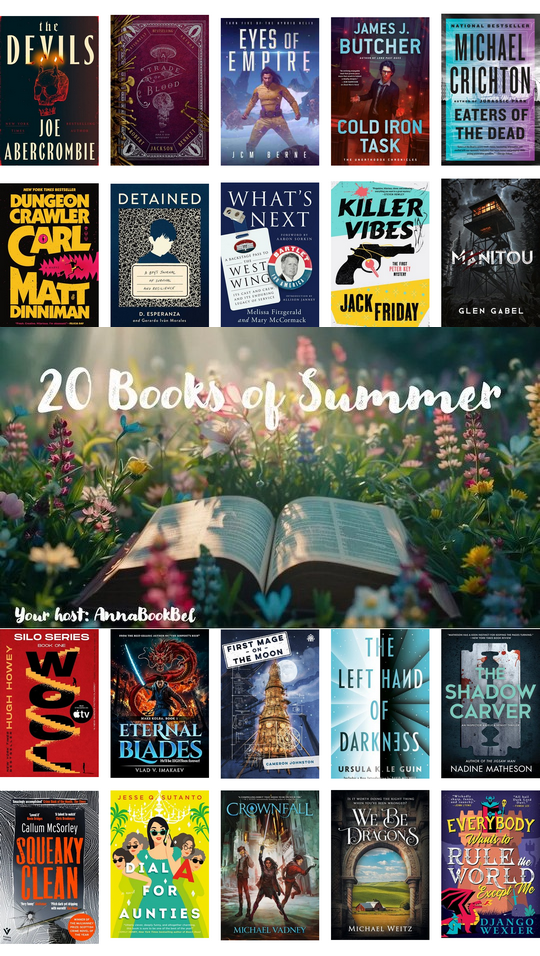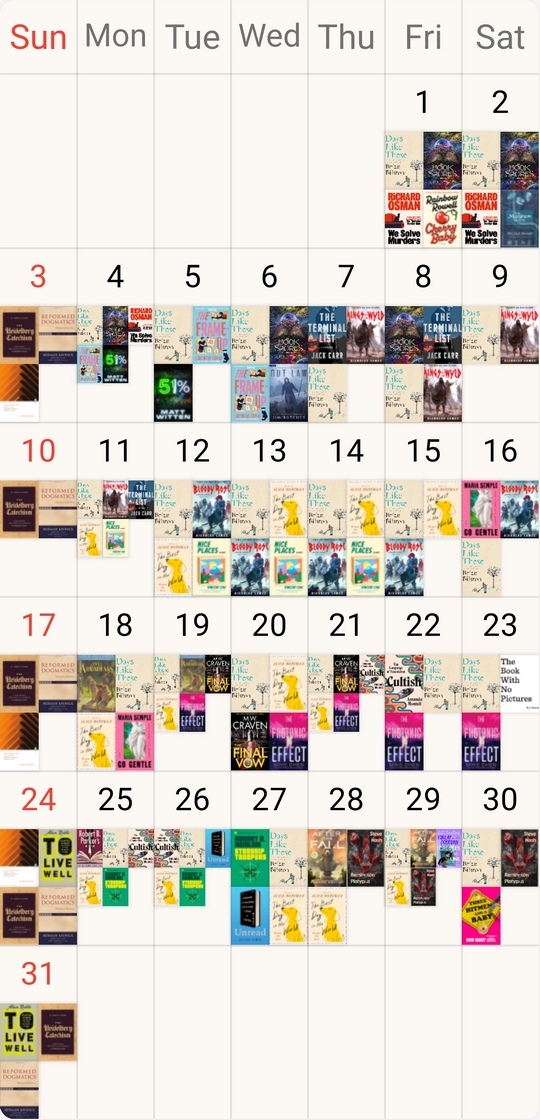
Yes, there’s a lot of overlap between this and my 20 Books of Summer post (as one would expect), but there’s some divergence, too. There’s no overlap between this and my Books I Can’t Believe I’ve Never Read Yet post (as one would hope).
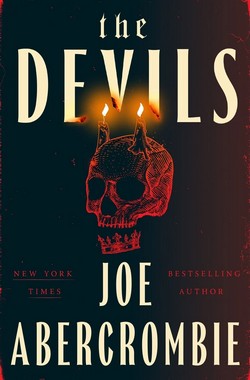
by Joe Abercrombie
Holy work sometimes requires unholy deeds.

Brother Diaz has been summoned to the Holy City, where he is certain a commendation and grand holy assignment awaits him. But his new flock is made up of unrepentant murderers, practitioners of ghastly magic, and outright monsters. The mission he is tasked with will require bloody measures from them all in order to achieve its righteous ends.

Elves lurk at our borders and hunger for our flesh, while greedy princes care for nothing but their own ambitions and comfort. With a hellish journey before him, it's a good thing Brother Diaz has the devils on his side.

This book has been taunting me for months–I just haven’t been able to squeeze it in. But now, I “have” to have it read for Fantasy Book Club.
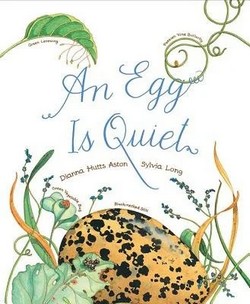
by Dianna Aston, illustrated by Sylvia Long
This stunningly beautiful and wonderfully informative book from award-winning artist Sylvia Long and author Dianna Hutts Aston makes for a fascinating introduction to the vast and amazing world of eggs. Featuring poetic text and an elegant design, this acclaimed book teaches children countless interesting facts about eggs. Full of wit and charm, An Egg Is Quiet will at once spark the imagination and cultivate a love of science.
For those of you who think this looks like an entry from last month, you’re right. Turns out that even Picture Books have wait lists at the library. I did pick this up the other day, though. So I will get it done.
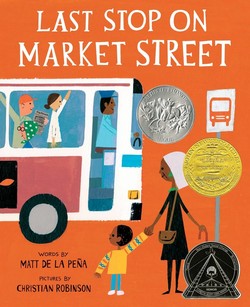
by Matt de la Peña, illustrated by Christian Robinson
On Sundays, CJ and his nana ride the bus across town to their stop on Market Street. But today, CJ’s not happy about it. Today, he’s wondering out loud why they have to wait in the rain and why they don’t have a car like his other friends. But it’s Nana who opens young CJ’s eyes and shows him the real beauty in the world around them—the spirit of the bustling city, the music in everyday life, and the magic of their often overlooked neighbors.
This is a promising entry in the 25 Greatest Picture Books of the Past 25 Years list.
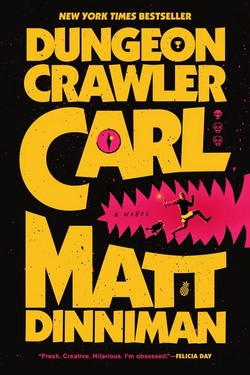
by Matt Dinniman
You know what’s worse than breaking up with your girlfriend? Being stuck with her prize-winning show cat. And you know what’s worse than that? An alien invasion, the destruction of all man-made structures on Earth, and the systematic exploitation of all the survivors for a sadistic intergalactic game show. That’s what.

Join Coast Guard vet Carl and his ex-girlfriend’s cat, Princess Donut, as they try to survive the end of the world—or just get to the next level—in a video game–like, trap-filled fantasy dungeon. A dungeon that’s actually the set of a reality television show with countless viewers across the galaxy. Exploding goblins. Magical potions. Deadly, drug-dealing llamas. This ain’t your ordinary game show.

Welcome, Crawler. Welcome to the Dungeon. Survival is optional. Keeping the viewers entertained is not.
Has anyone heard of this thing? Looked fun, thought I’d give it a shot, despite not seeing anything about it anywhere online.
by Carson Ellis
Du iz tak? What is that? As a tiny shoot unfurls, two damselflies peer at it in wonder. When the plant grows taller and sprouts leaves, some young beetles arrive to gander, and soon—with the help of a pill bug named Icky—they wrangle a ladder and build a tree fort. But this is the wild world, after all, and something horrible is waiting to swoop down—booby voobeck!—only to be carried off in turn. Su! With exquisitely detailed illustrations and tragicomic flair, Carson Ellis invites readers to imagine the dramatic possibilities to be found in even the humblest backyard. Su!
The librarian (who seemed to be at the end of a long day and tired–almost checked out), paused when he saw this in my stack, “Oh, this one is so fun,” brightening up a bit. With an endorsement like that, I’m eager to read this one (and this is sincere, even though it sounds sarcastic to me).
by Melissa Fitzgerald and Mary McCormack
A behind-the-scenes look into the creation and legacy of The West Wing as told by cast members Melissa Fitzgerald and Mary McCormack, with compelling insights from cast and crew exploring what made the show what it was and how its impassioned commitment to service has made the series and relationships behind it endure.

Step back inside the world of President Jed Bartlet’s Oval Office with Fitzgerald and McCormack as they reunite the West Wing cast and crew in a lively and colorful “backstage pass” to the timeless series. This intimate, in-depth reflection reveals how The West Wing was conceived, and spotlights the army of people it took to produce it, the lifelong friendships it forged, and the service it inspired.

From cast member origin stories to the collective cathartic farewell on the show’s final night of filming, What’s Next will delight readers with on-set and off-camera anecdotes that even West Wing superfans have never heard. Meanwhile, a deeper analysis of the show’s legacy through American culture, service, government, and civic life underscores how the series envisaged an American politics of decency and honor, creating an aspirational White House beyond the bounds of fictional television.

What’s Next revisits beloved episodes with fresh, untold commentary; compiles poignant and hilarious stories from the show’s production; highlights initiatives supported by the cast, crew, and creators; and makes a powerful case for competent, empathetic leadership, hope, and optimism for whatever lies ahead.
I’ve been wanting to read this since the publication was announced–and my pre-ordered autographed copy has been sitting 3 feet from my desk for a year-and-a-half. Enough of that nonsense.
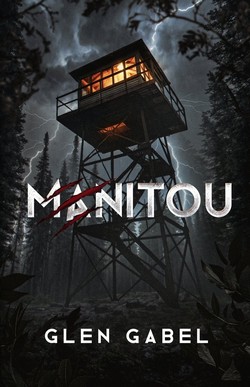
by Glen Gabel
In the remote forests of north Idaho, forest ranger Roy Farmer knows hardship intimately. Battling alcoholism and haunted by a tragic past he can't outrun, he stands atop a fire tower in the Bitterroot Wilderness, ready to end his life-until a violent summer storm sends a cartel plane crashing into the mountains around him.

Drawn reluctantly into the investigation, Roy discovers a cache of narcotics and a severed limb belonging to a missing pilot. The deeper he digs, the more he uncovers: a web of corruption in the nearby town of Lazarus, a brewing cartel war between a ruthless assassin and a violent biker gang, and a string of grisly murders that defy any human explanation.

As the bodies mount and the community fractures, Roy is forced to uphold a promise he made-and confront a malevolent entity that shows no remorse, no hesitation, and no fear.
Gabel sold me on this book while it was still being written. Now it’s out and I get to see how justified that sale was.
by Peter Grainger, read by Gildart Jackson
When Caroline Thorpe succeeded in casting doubt on the verdict of the inquest into her brother’s death, she could not have anticipated what would follow.

Freddie was Earl Thorpe of Burnham, and as the Kings Lake detectives, headed by DCI Cara Freeman, soon begin to realise, influential people have gone to considerable lengths to cover up a potential scandal surrounding the young man’s death.

Their investigation will take them from Norfolk into the capital, and from idealistic young campaigners to people at the heart of government. The stakes have never been higher for the detectives from Kings Lake Central.
I love the way that this book was set up in Grainger’s The Late Lord Thorpe in the companion series. Now that DC Smith has demonstrated a crime was committed, it’s time for his old pals at Kings Lake to take it over. Also, more time with Grainger and Jackson–going to be a highlight of the month for sure.
by Vlad V. Imakaev
One snowy night in Idaho, Maks Kolba’s life ends on a lonely road. But death is only the beginning.

When a cosmic battle between a dragon and a winged warrior collides with Maks’s world, he becomes bound to Eight—a living blade having its own will, memories, and agenda.

But Eternal Blades never rest, and neither will the darkness hunting him.

From school hallways to midnight duels, monsters and secrets stalk him at every turn. His friends demand answers. Watchers whisper about destinies and initiation trials. Every fight drags Maks deeper into a game played by beings who never die—while he simply wants to be himself.

Perfect for fans of coming-of-age fantasy, Eternal Blades blends heart and high-stakes adventure into an unforgettable saga where the fate of many worlds rests in the hands of one boy.
Imakaev and I had a brief convo at the Nampa Library’s Book Faire and it seemed like a sure-fire win.
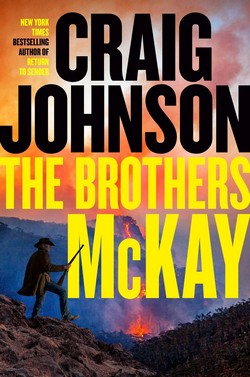
by Craig Johnson
When Pepper McKay, one of the most hated men in Absaroka County, is found murdered on his ranch in Crazy Woman Canyon, suspects aren’t in short supply. But Sheriff Walt Longmire’s attention is on those who had gathered for a family meeting that evening, McKay’s very different sons: a smooth-talking charmer, a cosmopolitan journalist, a reclusive monk, and a half-Native ranch hand who keeps the place running. Each had a motive. Each claims he’s innocent.

As Walt investigates what happened that night at the O-Kay Lodge, he’s pulled into a tangle of old grudges and long-buried secrets. Then the case takes a sharp turn: a second body surfaces, and a wildfire tears through the canyon, trapping Walt and forcing him into a fight for his life as both the killer and the elements close in.
As I assumed last month, thanks to the release date (May 26), I didn’t get to this last month. But the time is ripe now.
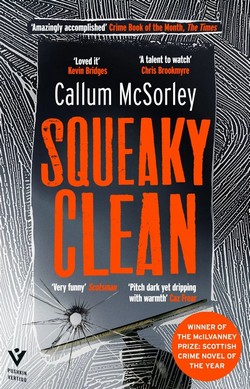
by Callum McSorley
From a hard-hitting and brutally funny new voice in crime writing comes the first in a new series starring DI Alison McCoist - the least popular detective in the Glasgow police.

Half the Glasgow copshop think DI Alison McCoist is bent. The other half just think she's a fuck-up.

No one thinks very much at all about carwash employee Davey Burnet, until one day he takes the wrong customer's motor for a ride.

One kidnapping later, he and the carwash are officially part of Glasgow's criminal underworld, working for a psychopath who enjoys playing games like 'Keep Yer Kneecaps' with any poor bastard who crosses him.

Can Davey escape from the gang's clutches with his kneecaps and life intact? Perhaps this polis Ally McCoist who keeps nosing around the carwash could help. That's if she doesn't get herself killed first.

Don’t miss this propulsively readable story of two likeable but flawed characters sucked into a grim criminal underworld –think wayward Scottish police meets Breaking Bad.
Word about this one slipped by me, but I saw someone talking about the third book in the series just before it was released, and it sounded so good, I almost grabbed it. But then my compulsion to read a series in order kicked in. So here we are…
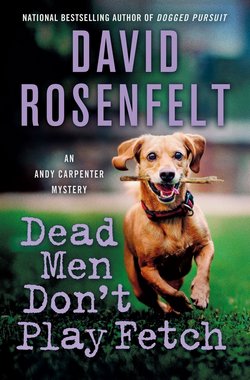
by David Rosenfelt
It’s defense lawyer Andy Carpenter’s dream to retire. That goal is once again thwarted when he gets a call from Lou Campanelli, an old friend who he simply cannot refuse, asking for a favor. Lou runs a rehab center, and when one of his patients, a homeless veteran, is charged with first degree murder, he needs Andy's help. And of course, Andy will also be called on to care for the accused’s dog, but that’s okay: What's one more dog?

The man that Jason Maddox is accused of stabbing to death is none other than billionaire Paul Vincent, an eccentric businessman and inventor. Bickert dedicated a great portion of his life to philanthropy, with a soft spot for dog-related causes. This led him to befriend Jason, a physicist and war hero, whose life fell apart to the point where he ended up on the streets with his dog, just trying to survive.

But why would Jason possibly have wanted to kill him? Well, for one thing, he was to receive a fortune in Vincent's will. That, coupled with the fact that Jason was at the scene, his fingerprints were on the knife, and Vincent's wallet was in his jacket, made it a slam dunk arrest.

Once again, Andy is enmeshed in a puzzling, twisty case. But in order to reunite a man and his dog, Andy will have to untangle it all.
Of course I’m going to read the next Andy Carpenter book.
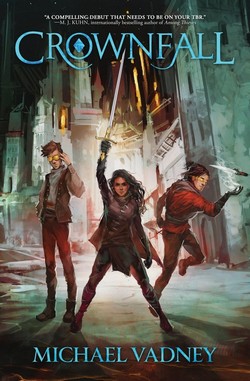
by Michael Vadney
Nearly a decade under the empire's grip has left Burunt a troubled land.

Kyndel Heim knows the truth behind the Viceroy's rise to power. After years of torture, his only goal is vengeance, but to master his powers he needs a mentor, one that won't kill him first.

Major Jelert Egarro came to Burunt to build something better. Instead, his talents have become weapons in the wrong hands-and those hands are everywhere. He must choose between his ideals or survival.

Lady Amara Khar must renew her family's legacy. Sharp and ruthless, she's kept her house alive through smuggling and shadow deals, but reclaiming power means making allies as dangerous as her enemies.

In the struggle for power, justice, and survival, each of them must decide who they're willing to become.
I featured a post by Vadney about Noblec0re in a Saturday Miscellany last month, and wanted to see him but it into action.
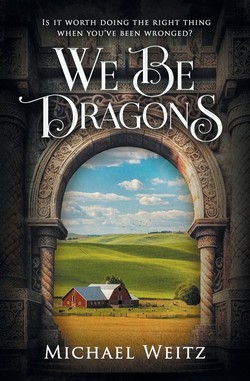
by Michael Weitz
It's 1986 and John Brewer spends his days working and saving for college. His weekends, though, are filled with terrifying monsters, deadly battles, and dark mysteries as he leads his friends through an epic Dungeons & Dragons adventure.

But life outside the game is far more complicated. A horrific farming accident puts people on edge; Henley is a demanding boss hell-bent on making John's life miserable; rancid small-town rumors create suspicion, and a local evangelist believes D&D is "the devil's work."

With both of his worlds-real and imaginary-under attack, will John find the courage to fight back? Is he willing to put his very life on the line?

We Be Dragons is a story about friendship, standing tall, and a D&D adventure that takes readers to a world where fighting for what's right is what life is all about.
A mix of D&D and life in Satanic-Panic 80s? Weitz has whet my appetite.
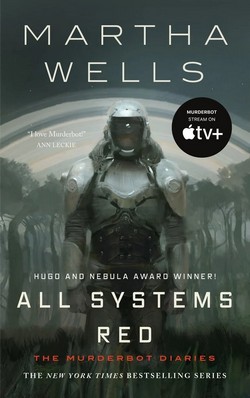
by Martha Wells
“As a heartless killing machine, I was a complete failure.”

In a corporate-dominated spacefaring future, planetary missions must be approved and supplied by the Company. Exploratory teams are accompanied by Company-supplied security androids, for their own safety.

But in a society where contracts are awarded to the lowest bidder, safety isn’t a primary concern.

On a distant planet, a team of scientists are conducting surface tests, shadowed by their Company-supplied ‘droid—a self-aware SecUnit that has hacked its own governor module, and refers to itself (though never out loud) as “Murderbot.” Scornful of humans, all it really wants is to be left alone long enough to figure out who it is.

But when a neighboring mission goes dark, it's up to the scientists and their Murderbot to get to the truth.
This is the choice for the next SF Book Club, and I could use a refresher.
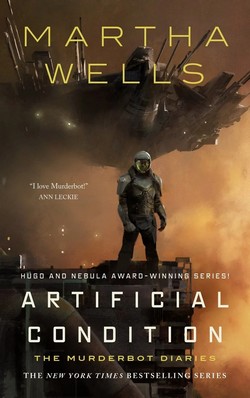
by Martha Wells
It has a dark past—one in which a number of humans were killed. A past that caused it to christen itself “Murderbot”. But it has only vague memories of the massacre that spawned that title, and it wants to know more.

Teaming up with a Research Transport vessel named ART (you don’t want to know what the “A” stands for), Murderbot heads to the mining facility where it went rogue.

What it discovers will forever change the way it thinks…
There’s a good chance that we’ll add this to the discussion for Book Club, too. Needed a prompting to get this off my To-Read shelf. It doesn’t open up much room, but there’s a little.

(Image by DaModernDaVinci from Pixabay)