Category: Non-Fiction Page 24 of 62

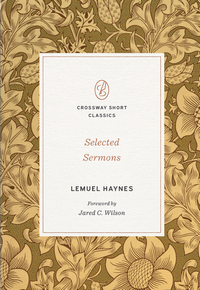
Crossway Short Classics: Selected Sermons by Lemuel Haynes: A Great Collection

Selected SermonsSelected Sermons

by Lemuel Haynes, Jared C. Wilson (Foreword)

DETAILS:
Series: Crossway Short Classics Series
Publisher: Crossway
Publication Date: February 21, 2023
Format: Paperback
Length: 139 pg.
Read Date: February 26, 2023

Some Thoughts on the Series as a Whole

The point of this series is to take classic short works—sermons, tracts, articles—package them attractively, edit a bit (modernize language, eliminate footnotes, tweak grammar, etc.), and make them widely available. Each is given a short introduction to help the reader get the context and a bit of information about the author.

They published seven books in this series last year, and I discussed them here. Two have come out this year (so far), but I’m hoping for more.

What’s Selected Sermons About?

As is obvious from the title, this is a collection of sermons by Lemuel Haynes. Born in 1753, Haynes is known as the first African-American ordained to the ministry.

The foreword serves as an introduction to Haynes as well as the included sermons, and we also get a quick biography of him before diving in.

The four sermons cover the idea of Universal Salvation, a sermon on John 3:3, a description of ministers, and a sermon against slavery.

So, what did I think about Selected Sermons?

The middle sermons—on the necessity of being born again and ministers were good examples of latter-Puritan-ish sermons, along the lines of Edwards and Whitfield. They were good, and solid, but not necessarily the kind of thing I’m coming back to.

The other two, however? Wow.

Sure, it’s easy from our vantage point to shake our heads and wonder how so many Christians could be comfortable with American slavery—it’s good to remember that it wasn’t true of them all. With “Liberty Further Extended,” Haynes delivered a powerful sermon against the practice, and you can only wish that more people were exposed to it—there’s a lot to be appreciated from this sermon, even if it’s not as timely as it once is (thank God).

“Universal Salvation,” the first sermon in the collection, blew me away (and may have set my expectations too high for the rest). The rhetoric was dynamite (there’s probably a better way to put it, but this is the most appropriate), the doctrine sound, and the conclusions were important. When you take the comments by Wilson into account, this must’ve created quite a stir when he preached it. I’d have paid the purchase price for the volume for this sermon alone.

I don’t know that everyone will agree with my evaluation—actually, I’m pretty sure many won’t—but I don’t see that anyone with an affinity toward Puritan-ish sermons, (First) Great Awakening sermons, or just good sermons not appreciating this little gem of a book.


4 Stars

This post contains an affiliate link. If you purchase from it, I will get a small commission at no additional cost to you. As always, the opinions expressed are my own.

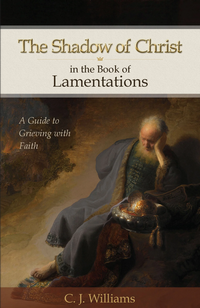
The Shadow of Christ in the Book of Lamentations by C.J. Williams: Finding the Hope of the Gospel in the Laments

The Shadow of Christ in the Book of LamentationsThe Shadow of Christ in the Book of Lamentations:
A Guide to Grieving with Faith

by C.J. Williams

DETAILS:
Publisher: Crown & Covenant Publications
Publication Date: November 25, 2022
Format: Paperback
Length: 172 pg.
Read Date: February 5-12, 2023

The people had been warned about this day of judgement for centuries, but as God pleaded with them through the prophets, they became more stubborn in their sin. Now the day had come. If there was ever an “I told you so” moment, this was it. But the speaker does not stand aloof; he gives a voice to the sorrow and suffering of the people. He wept with them and for them with sympathy that arose from the depth of his soul. Although the people had brought this terrible day upon themselves, they were met with compassion and “a spirit of gentleness” with which we are to minister to those who are overtaken in any trespass (Gal. 6:1).

What’s The Shadow of Christ in the Book of Lamentations About?

Based on a series of sermons, Williams walks the reader through the book of Lamentations—in a careful manner. He doesn’t avoid technical points, nor does he dwell on them, moving the book in an esoteric direction. At the same time, he doesn’t keep it so simple that there’s not a lot to learn, to think about, or to meditate on.

As the back of the book says,

The book of Lamentations counsels us on how to:

  • respond to hardships with faith,
  • grieve with hope,
  • and find the renewal of grace during the trials of life.

and Williams is careful to draw out each of these points more than once.

But that’s not the focus of his book—and, Williams would argue, it’s not the focus of Lamentations. The focus is on how Christ is displayed and revealed through this short Old Testament book. This comes through loud and clear and proves comforting and inspiring.

Christ-Centered Perspective

When seen in this light, a book that technically has no direct speech from God comes alive with the voice of the Son whom he would send.

Starting in the introduction and carrying on through the end, Williams makes it clear that this is going to be a Christ-centered book because the role of this book is to reveal Christ to his people. There is a speaker throughout the book, referring to himself as “I.” Williams argues that this is the voice of Christ—he is the lamenting one alongside the other voices in the book.

I’m not going to try to echo his arguments—I don’t have that kind of space. But when he started to enfold it, I was captivated—and as he returned to it throughout the book, I kept being captivated and wanted to spend more time examining these points.

So, what did I think about The Shadow of Christ in the Book of Lamentations?

When believers experience hardship or the chastening of God, asking this blunt question awakens us to the truth: Has God utterly rejected us? To ask the question is to answer it. You may not know how any hardship will end, but as a child of God, you know how it will not end. Nothing can Separate us from the love of God that is in Christ Jesus our Lord (Rom. 8:39).

The conclusion of Lamentations shows us that there js always a path forward when we walk with faith.

Of all the prophetic books, Lamentations is the one that has always resonated with me the most—but I always knew I was missing something about it. Starting in Chapter 2 (where he begins his argument for the Voice of Christ in this book), so many lightbulbs turned on—I know Christ was revealed in this book (as he is everywhere), but I didn’t understand how thoroughly the book did that.

I’m not for one second suggesting that this is an exhaustive treatment of the book, nor that Williams is the final answer when it comes to this idea—but it’s a fantastic place to start.

The rest of the book was just as good—I walked away from every chapter with a better understanding of or refreshed appreciation for the text.

If you’re looking for a trustworthy guide to this dark portion of Scripture (that is also full of light and hope), you’d do well to look to C.J. Williams.


4 Stars

Grandpappy’s Corner: Geeky Baby’s Guide to Colors by Ruenna Jones, Josh Lewis (Illustrator): Starting a Geek Off Right

Grandpappy's Corner Logo

Geeky Baby’s Guide to Colors

by Ruenna Jones, Josh Lewis (Illustrator)

DETAILS:
Publisher: Running Press Kids
Publication Date: September 21, 2023
Format: Board Book
Length: 26 pg.
Read Date: January 16, 2023
Support Independent Bookstores - Visit IndieBound.org

What’s Geeky Baby’s Guide to Colors About?

This is a book about colors illustrated with Geeky/Pop Culture illustrations (or inspired by pop culture things—for example, I don’t think some of the orange-masked faces are real superheroes).

There are pages about a White Wolf, a Gray Wizard, a Black Car (a ’67 Impala with a couple of men in the front seats), a Yellow (not golden) Lasso, and so on.

Let’s Talk about the Art for a Minute

This art is cute—in case you ever wondered if Legolas or T-Rex could look dangerous and “awww” worthy at the same time, Josh Lewis can answer that for you. All the colors pop—not just the color focused on in the drawing. All the illustrations are eye-catching and will bring a smile to the adult reading with a kid (or likely will entertain a kid flipping through the book solo).

There are a few images from the book on the Illustrator’s website.

How is it to Read Aloud?

So the reading part isn’t that engaging. It’s two words per page—color + item. But this isn’t a book about reading, it’s a book about exposing a child to colors, and helping them identify them. So the words are more prompts about what to talk about rather than reading.

So, I guess this question should be re-rephrased as “what’s this like to go through with a child?” And that answer would be it’s a lot of fun for a geeky adult who will enjoy the pictures for what they represent in Pop Culture.

Timing Is Important

If you ask me, this is a book to go through before a child is at the asking questions stage of life. As I was preparing to write this post, I started thinking about some of the conversations that could go really wrong with an inquisitive child.

Child: What happened to the White Wolf and its brothers, Grandpappy?
Me: Well, um...er, it went to live on a farm where there was a lot of room for it to run around and play.
Child: But they live near a forest already, why couldn't they stay with all the Stark children?
Me: It's time for a nap.

or

Child: What do those men do in the Black Car, Grandpappy?
Me: (forgetting to think about phrasing) They travel around and fighting angels and ganking demons, and...
Child: Are you s'posed to be fighting angels?
Me: No, that's not a good thing.
Child: What's "ganking demons" mean?
Me: Er, want some cookies? Let's not tell Mommy we had this chat, okay?

And so on. When they start getting inquisitive, it’s time for this book to be shelved out of sight.

So, what did I think about Geeky Baby’s Guide to Colors?

When my wife and I saw this, we only had to look at one or two pages to know we had to have this around for the Grandchild-to-be. I think it’ll be great to sit and look at with them while they learn colors or just to look at the pictures.

For the adult, there’s the nice feeling about introducing a child to some of these images, even if it’s only to get them embedded in a child’s subconscious. You’re never too young to learn about a sonic screwdriver or role-playing dice, anyway, right?

This is fun (in different ways) for young and old. I’m really looking forward to sharing this one with the Grandcritter.


3 Stars

This post contains an affiliate link. If you purchase from it, I will get a small commission at no additional cost to you. As always, the opinions expressed are my own.
Grandpappy Icon

Grandpappy’s Corner: Saint Patrick the Forgiver by Ned Bustard: Patrick’s Story Told for Wee Ones

Grandpappy's Corner Logo

Saint Patrick the Forgiver:
The History and Legends of Ireland’s Bishop

Written and Illustrated by Ned Bustard

DETAILS:
Publisher: IVP Kids
Publication Date: February 21, 2023
Format: eARC
Length: 32 pg.
Read Date: February 17, 2023
Support Independent Bookstores - Visit IndieBound.org

What’s Saint Patrick the Forgiver About?

Drawing on both legends about him and Patrick’s Confessions, this book tells the life story of Patrick of Ireland for the youngest set.

It starts off with his childhood and touches briefly on his period of slavery before moving into his return home and the call to Ireland. It doesn’t gloss over the hard parts of his life, but it doesn’t dwell on them, either. The focus is on Patrick forgiving those who wronged him, spreading the gospel—and even teaching the Trinity via the shamrock.

The book even covers some of the myths that arose around Patrick—baptizing a giant, driving out the snakes, etc.—working that in seamlessly with the book and not distracting from the main point.

Let’s Talk about the Art for a Minute

This art is great—it’s friendly and cartoonish, with great colors and details. Bustard also weaves in traditional Celtic knots and Christian art (like elements seen in The Book of Kells, etc.). So we’ve got a pretty modern feel with a lot of Irish elements thrown in to ground it in Patrick’s history.

Are kids going to get that? Nope. Will the adults reading it with/to the kids? Quite likely. And if not, I think they’ll still appreciate it the art, even if they’re not familiar with the influences Bustard is drawing from.

Click here for a two page sample (picture and text) on the Publisher’s site. I’m not sure it’s the image I’d have used, but it’s representative.

How is it to Read Aloud?

It’s pretty fun—the rhythm is easy and the rhymes are nice (and only one or two of them seemed like stretching things to make the rhyme).

The Grandcritter isn’t around yet to listen to me read this, but I still read most of it aloud just to see how it went—I think it went pretty smoothly and I could have some fun with it.

So, what did I think about Saint Patrick the Forgiver?

This was a great way to give an age-appropriate lesson in forgiveness while telling the story of one of the heroes of the faith. I was entertained, and even chuckled a couple of times.

It’s a great combination of story, art, rhyme, and lesson. I can see this winning over little audiences as much as it did me. Hopefully, it’ll lodge in their minds enough that they’ll want to learn more about Patrick as they grow older and through him the Three-in-One that Patrick spent his life teaching about.

I strongly recommend this quick little read.

Disclaimer: I received this eARC from InterVarsity Press via NetGalley in exchange for this post—thanks to both for this.


5 Stars

This post contains an affiliate link. If you purchase from it, I will get a small commission at no additional cost to you. As always, the opinions expressed are my own.
Grandpappy Icon

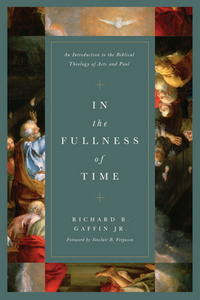
In the Fullness of Time: An Introduction to the Biblical Theology of Acts and Paul by Richard B. Gaffin Jr.: One of the Best Things I’ve Read in Years

I can’t put this one off any longer—if I could, I promise you I would. I’m out of my league here, but I’ve got nothing else to write about. And I really need to write something about this.


In the Fullness of TimeIn the Fullness of Time: An Introduction to the Biblical Theology of Acts and Paul

by Richard B. Gaffin Jr.

DETAILS:
Publisher: Crossway
Publication Date: May 3, 2022
Format: Hardcover
Length: 419 pg.
Read Date: September 4-December 25, 2022

Support Independent Bookstores - Visit IndieBound.org

What’s In the Fullness of Time About?

First, let’s look at what was on the Publisher’s Website:

An Exegetical Study of the Book of Acts and Pauline Theology

Christians often skip a crucial starting point when studying the apostle Paul: the foundations of his deeply nuanced theology. Some studies on the book of Acts attempt to touch on every major theme in Paul’s letters, making them difficult to understand or prone to leaving out important nuances. Christians need a biblical, theological, and exegetically grounded framework to thoroughly understand Paul’s theology.

In this book, Richard B. Gaffin Jr. gives readers an accessible introduction to Acts and Paul. Building on a lifetime of study, Gaffin teaches on topics including the redemptive-historical significance of Pentecost; eschatology; and the fulfillment of redemptive history in the death and resurrection of Christ. In the Fullness of Time is an exegetical “textbook” for pastors, students, and lay leaders seeking to learn more about Acts and Paul from a Reformed and evangelical perspective.

  • Explores the Foundations of Paul’s Theology: Offers a nuanced look at the core of Paul’s thinking
  • Wide-Ranging Audience: A valuable study for pastors, theology students, and lay leaders
  • Thorough Yet Accessible: An in-depth look at Pauline theology that’s accessible to readers

After reading the book, however, I’d offer a tweak or two to that description. For example, I’d add to that “for pastors, students, and lay leaders” lay people in general (or just swap out “leaders” for “people”).

Also, I’m not sure I’d include eschatology alongside those other topics. It seemed to me (on first read, anyway) that this was a book about Eschatology as presented by/understood through the New Testament—with a focus on understanding Pentecost and the fulfillment of redemption (and a couple of other topics) in light of that eschatology. That may seem like splitting hairs, and really, I’m guessing the good people at Crossway understand the book a bit better than I do. Still, I didn’t get the impression that the book thought of those ideas as equal (unlike the description).

The chapters in this book came from lecture notes for the class that Gaffin taught for years on Paul and Acts—a class I’ve heard several people mention over the years, and really wish I could’ve taken. Getting that material in written form is a blessing I didn’t expect and was more than happy to receive.

The Centrality of Eschatology

In Chapter 2, Gaffin writes:

for much Christian theology and preaching seeking to be faithful to the Bible as God’s inscripturated word, the rediscovery of eschatology can be seen as having a corrective significance that has resulted in laying hold of biblical teaching in a way that has not been fully appreciated in the past.

For instance, in a standard volume on systematic theology, “Eschatology” is the last chapter. More significantly, coming at the end of the volume, eschatology tends to be defined exclusively in terms of the “last things” having to do with what is still future for the church—Christ’s return and matters concomitant with his return, perhaps including as well some treatment of what occurs at death and the so-called intermediate state. Even more significantly, very often little, if any, attention is given to the relationship with what has preceded, to the integral connection between the future hope of the church and its present life and the practical relevance of the former for the latter.

What has become more and more clear is that in an overall presentation of biblical teaching, eschatology is not properly compartmentalized at the end. In particular, the New Testament teaches, as our own work will show, what is often termed a “realized eschatology.” Biblical eschatology is to be defined in terms of the first as well as the second coming of Christ. New Testament eschatology has a dual focus. In that respect it is elliptical, defined by two foci, present and future, the proverbial already-not-yet.

It’s this dual focus that characterizes so much of this book, and grounds the arguments Gaffin puts forth.

The Exegetical Portions

Throughout the book, Gaffin offers a lengthier exegesis of a particular passage as either a foundation for a chapter’s position or to show how something from earlier in a chapter is worked out through Paul or Luke’s work. These are the best parts of this book.

Period. It’s not even close.

For example, he uses a little more than two pages to exegete Philippians 2:12-13 while considering the indicative and imperative in Paul. I don’t remember a better example of writing leading to doxology recently.

I get—between this being based on the course, where he only had so much time and the design of the book—that he couldn’t have given us similar treatment for several more passages that he touched upon. But man, I wish he had. But that brushes up on the next section, so I guess it’s time to transition.

Could Use A Little More

In addition to wanting more exegetical portions, there’s something else I could use more of.

I think that despite the length of the book, it should’ve been longer—too much needs to be fleshed out a little more. Not much, but almost every point could be expressed more fully. More than once, Gaffin does a better job of clarifying what he’s not addressing or not saying than he does in making it clear what he is trying to say.

So, what did I think about In the Fullness of Time?

I read a chapter (or just a half of one) a week for a few months to carefully work through the book—and I’m sure I need to do the same (or slower) once or twice more to really get a handle on Gaffin’s arguments. But what I got this time around was about as good as anyone could ask for.

Reading this felt like I was sitting in a lecture hall featuring my favorite professor—in a strange way. I felt like I was a beginning student—almost like looking at some of these passages for the first time. Yet, while reading I simultaneously felt like I was understanding texts with a depth I’m not accustomed to. Reading Gaffin you’re frequently running into thinking more subtle and profound than a lot of what you’ve encountered previously—and that’s certainly the case here. Still, I thought this work was a bit easier to work through than some of his shorter works.

For me, this is the kind of work that you want to read alongside one or more others, so you can pause and talk things through from time to time—just to make sure everyone is understanding everything. Or at least you’re stupified with company.

Anyway, I don’t think I have anything else to say at this point—maybe on the eventual reread, I’ll be able to say something more substantive than this. Basically, you want to read this, wrestle with it, study it, and do it again.


5 Stars

This post contains an affiliate link. If you purchase from it, I will get a small commission at no additional cost to you. As always, the opinions expressed are my own.


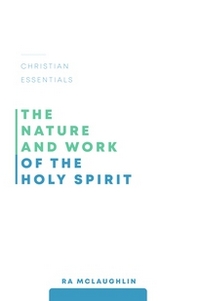
The Nature and Work of the Holy Spirit by Ra McLaughlin: A Broad and Capable Introduction to the Holy Spirit

The Nature and Work of the Holy SpiritThe Nature and Work of the Holy Spirit

by Ra McLaughlin

DETAILS:
Series: Christian Essentials 
Publisher: P & R Publishing
Publication Date: April 26, 2022
Format: Paperback
Length: 153 pg.
Read Date: January 29, 2023
Support Independent Bookstores - Visit IndieBound.org

What’s The Nature and Work of the Holy Spirit About?

As I said about the second volume of the Christian Essentials series, one of its advantages is that I can largely recycle what I said about the others.

This is a basic and broad introduction to Pneumatology—the doctrine of the Holy Spirit from a broadly Evangelical perspective. There’s a good mix of foundational theology and application of it to the Church and the individual believer. The book is adapted from curriculum using language that’s easy to translate—particularly into languages that don’t have a well-developed theological vocabulary—so the English is kept basic, too. There’s almost no academic or technical theological language used, and those that are used are well-defined (including in a handy glossary).

The chapters are short (most around fifteen pages) and well-organized. Each contains a handful of side-bars consisting of a paragraph or two with the contents of interviews with pastors and theologians on the topic under discussion. These interviews were with people from a variety of theological perspectives helping broaden the text so that it’s not exclusively from a reformed perspective.

The Organization of the Work

One thing that really jumped out at me while reading this book is that it wasn’t organized the same way as similar works are—which is refreshing because you get tired after a while of reading remixes on a topic. But mostly refreshing because I thought this was a really good way to approach the subject.

We start with the role of—and revelation of—the Spirit as a member of the Trinity—as seen in the Old Testament, then the New, and then as it was worked out in Church History. Those are three quick chapters that should probably be longer but did the job for the scope of this book.

Then we get chapters dealing with the Spirit’s work in the world—providence, creation, revelation, and common grace. Followed by His work in the Church—through special revelation, covenant grace, and gifts. The last two chapters focus on His work in individual believers—in conversion and sanctification.

So, what did I think about The Nature and Work of the Holy Spirit?

Solid teaching, an effective and helpful organization, all in all, a good book.

Like the rest of this series—the big problem with this book is that it works so hard to not take a particular position that it gives a watered-down presentation on areas of controversy. If they’d only taken a firm stance on (for example) cessationism, and then went on to give a fair presentation of non-cessationist views, that’d be different. Instead, we’re given descriptions of the views written in a way to explain them, but with the aim to avoid particulars and the offense they may carry—and really leads to it being almost useless.

When it’s not discussing intra-mural debates or disagreements, it’s a very useful and helpful work (like the other two books in this series). It’s good on the essentials—although exactly how “essential” is defined might be quibbled with.

For the series, I think this might have been the strongest entry. For just an introduction to the doctrine of the Spirit, it’s a pretty solid one. There are better books about Him and the theology surrounding Him, sure—but they’re of a nature and depth that this doesn’t want to achieve. Like the rest, I’d happily pass this volume on to someone who is just getting their feet wet.


3.5 Stars

This post contains an affiliate link. If you purchase from it, I will get a small commission at no additional cost to you. As always, the opinions expressed are my own.

BOOK SPOTLIGHT: Crimes of Famous & Infamous Criminals by Mitzi Szereto

I’m very pleased today to Spotlight Mitzi Szereto’s upcoming release, The Best New True Crime Stories: Crimes of Famous & Infamous Criminals. It comes out on February 14th—just what your Valentine wants. Assuming your Valentine is into true crime, that is. (I’m not being snarky, I know quite a few people who’d do well to pick this up in lieu of chocolates. Or at least in addition to chocolates).

Anyway, before I make this more awkward, let’s move on to looking at the book.

Book Details:

Title: The Best New True Crime Stories: Crimes of Famous & Infamous Criminals
Author: Mitzi Szereto
Genre: True Crime
Publisher: Mange
Release date: February 14, 2023
Format: Paperback/Ebook
Length: 252 pages
Crimes of Famous & Infamous Criminals

About the Book:

Infamous Figures Caught in the Act
People from all walks of life commit crimes. But the ones featured in this anthology aren’t your typical neighbors or subway passengers. Actors, musicians, TV personalities—they aren’t always who they appear to be. You might be surprised at just how many household names and Hollywood stars have led nefarious double lives. And after committing their crimes, the world may have kept on turning, but their infamous legacies remain. Get the stories behind these public figures, both contemporary and historical, who turned to lives of crime. The Best New True Crime Stories: Crimes of Famous & Infamous Criminals offers a fascinating assortment of cases from around the world and from various time frames. Like previous entries in this series, this volume contains all new and original nonfiction accounts penned by international writers from across the literary spectrum, including true crime, crime fiction, and journalism, all expertly arranged by editor Mitzi Szereto. Inside, you’ll find cases that would thrill even the most seasoned true crime addict; stories of Hollywood stars and famous criminals who went down the wrong path; encounters featuring the cases of infamous celebrities like Robert Blake, Jimmy Savile, Fatty Arbuckle, and more.

Book Trailer:

Purchase Links:

Amazon US ~ Barnes & Noble ~ Books-a-Million ~ Amazon UK ~ Blackwells ~ Amazon Canada ~ Chapters/Indigo ~ Angus & Robertson Australia ~ Booktopia

About the Author:

Mitzi Szereto Mitzi Szereto (mitziszereto.com) is an American-British author, anthology editor, and short story writer whose work spans multiple genres. Her widely acclaimed series The Best New True Crime Stories features the volumes Crimes of Famous & Infamous Criminals; Unsolved Crimes & Mysteries; Partners in Crime; Crimes of Passion, Obsession & Revenge; Well-Mannered Crooks, Rogues & Criminals; Small Towns; and Serial Killers. Aside from her many popular books, she has the added distinction of being the editor of the first anthology of erotic fiction to include a Fellow of the Royal Society of Literature. Mitzi has appeared internationally on radio and television and at literature festivals, and taught creative writing around the world. She produced and presented the London-based web TV channel Mitzi TV and portrays herself in the pseudo-documentary British film, Lint: The Movie. Follow her on Twitter, Instagram, TikTok, and Facebook @mitziszereto.

Author Links:

Website ~ Twitter ~ Facebook ~ Instagram ~ Youtube ~ TikTok ~ Goodreads


One more time, it’s out on Feb. 14th—get your preorder in now.

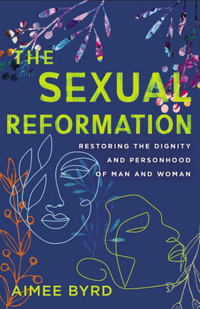
The Sexual Reformation: Restoring the Dignity and Personhood of Man and Woman by Aimee Byrd: There’s a Lot to Commend, but Maybe not Enough

The Sexual ReformationThe Sexual Reformation:
Restoring the Dignity and
Personhood of Man and Woman

by Aimee Byrd

DETAILS:
Publisher: Zondervan
Publication Date: March 7, 2022
Format: Paperback
Length: 207 pg.
Read Date: January 1-15, 2023
Support Independent Bookstores - Visit IndieBound.org

The Back of the Book

Protestants have confessed that the church is always reforming.

But has this been the case when it comes to sexuality?

What if, in trying to be faithful to the beauty of God’s design for man and woman, the church has instead latched onto a pagan concept of our nature and missed the theological meaning of our sexes? We’ve inadvertently robbed both men and women of the dignity of personhood as created in the image of God. Then we miss the beautiful message that our bodies, and our whole selves as men and women, tell: the story of the great joy in which the Son received the gift of his bride, the church.

Through an exploration of the Song of Songs, Aimee Byrd examines what this often-ignored book can teach us about Christ, his church, man, and woman. The Church is ripe for a sexual reformation, and recovering a good theological footing is imperative to it. Byrd invites you to enter into the Song’s treasures as its lyrics reveal the point of it all—not a list of roles and hierarchy, but a love song.

The Song

Like many (most?) contemporary believers, I struggle with The Song of Songs. A lot of the allegorical interpretations seem a little off to me, but I can’t rule them out. I definitely can’t buy the idea that it’s simply an erotic poem and/or erotic manual smack in the middle of the Old Testament.

Byrd draws on both older allegorical interpretations and more recent versions—shaped by the insights of Biblical Theology to come up with her observations on the Song. I found this material fascinating and wanted much more of it. I really should grab some of the works she footnoted and study them.

Call to Reformation

Along with—intermixed with—the Song material is Byrd’s continuing work on re-evaluating the way that men and women relate to themselves in the Protestant Church—particularly the ways that groups like the Council on Biblical Manhood and Womanhood or the Council on Biblical Equality call for. She critiques both poles of these disputed ideas (although she seems to have more to say about CBMW).

Her goal for the book is to bring insights from the Song to the ideas of roles, relations, and treatment of people of both genders—but primarily for women, because that’s where most of the controversy lies.

Her contention is that as we better understand the Song, we’ll better understand the telos of both sexes, which will lead to better—and more harmonious—relations between all the members of the church.

So, what did I think about The Sexual Reformation?

If this book was only the material (expanded) on the Song of Songs, I think I’d really have enjoyed it. If the book was only the other materials, it’d have been thought-provoking—and maybe convincing. But the mix of the two…ehhhhh. I’m not sure. It felt like two half-books that didn’t necessarily belong together. If one (or both) of them got a chance to be fully baked, that’d have been so much better.

Historically, the interpretation of the Song is so varied that it can easily be seen as a wax nose that can be used to say whatever an author wants. I’m not saying that Byrd did that. But I can see where it could be seen that way—yet another reason for the two books to be split.

It’s an accessible read, relatable, and the issues it wants to focus on are very important for believers to wrestle with. Making this the kind of book we need more of (both those that agree with her and those who differ, so we can think about these things). Although we got a little more about what’s going on with Byrd personally than the book really needed, and a lot of the sexual reformation material is a reiteration of her last couple of books, just presented through a different prism.

Ultimately, the Song gives me enough trouble that I’m not really sure what I think of what she says—but I liked it and want to read more like it to see it better. I’m generally on-board with her reformation ideas in broad strokes. So, I’ve got every reason to like this book, but I’m not wholly sold.

Still, I recommend the book for those who want to wrestle with these ideas—or to get pushed on the content of the Song.


3.5 Stars

This post contains an affiliate link. If you purchase from it, I will get a small commission at no additional cost to you. As always, the opinions expressed are my own.

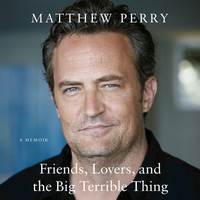
Friends, Lovers, and the Big Terrible Thing: A Memoir by Matthew Perry: A Memoir of Self-Destruction

Friends, Lovers, and the Big Terrible ThingFriends, Lovers, and the
Big Terrible Thing:
A Memoir

by Matthew Perry

DETAILS:
Publisher: Macmillan Audio
Publication Date: October 31, 2022
Format: Unabridged Audiobook
Length: 8 hrs., 49 min.
Read Date: December 6-7, 2023
Support Independent Bookstores - Visit IndieBound.org

My mind is out to kill me, and I know it. I am constantly filled with a lurking loneliness, a yearning, clinging to the notion that something outside of me will fix me. But I had had all that the outside had to offer!

What’s Friends, Lovers, and the Big Terrible Thing About?

This isn’t full of—but does contain—some good, behind-the-scenes stuff about Friends, Fools Rush In, The Whole Nine Yards, Mr. Sunshine, The Odd Couple, Studio 60 on the Sunset Strip, and other projects. But those don’t make up the bulk of the material. And those are interesting, amusing, and support the overall thesis of the book—he’s an addict who has been blessed with more good things than he knows how to handle.

There’s some juicy (largely nameless, but you can read between the lines) bits about his love life—as the title suggests. But again, there’s not much of that overall—and those, too, serve to support the overall thesis—even more than the professional matters do.

Then there’s the Big Terrible Thing—his addictions themselves, how he got started, how he maintained them, and his several attempts to get sober (of varying successes and lengths of success). He also goes into graphic (perhaps too graphic) detail about the physical toll they’ve taken on him—and the financial, emotional, and mental toll they’ve taken on those close to him.

How Perry Comes Across

When this book first came out (or just before it) there were more than a few headlines about some (I’m going to be charitable and call them) questionable jokes he made about Keanu Reeves and some people casting doubt about some of the particulars of some of his stories. Given how impaired he was during most of those disputed events (and just about every other event he recounts), I’m not surprised he doesn’t remember them correctly, and I don’t think it should be held against him. The Reeves jokes, on the other hand, might have seemed like a good idea at the time—but his editors really should’ve stopped them. I jotted down a note after the second one that “someone at Macmillan must have it out for him to let this make it to print.”

But both of those things pale in comparison to everything that Perry admits to in this book. He doesn’t come across as a good guy at all—and I don’t think he’s trying to. Sure, the fact that he’s (seemingly) coming clean about everything and (seemingly) taking responsibility for the lies, destructive behaviors, and despicable actions might make some people want to think better of him—but I don’t think he really wants that.

He comes across—and I realize this could be entirely calculated—as someone who is being honest about his shortcomings, seeking to explain the devastation his addictions have wrought on himself and many, many of those around him—how he’s somehow managed to have some success in the midst of that. He gives credit to some of those who’ve helped him get to this point in recovery—or kept him alive long enough to get there. In the end, however, Perry’s not a good guy and doesn’t pretend to be one. He’s a mess who will very likely kill himself if he relapses a time or two more.

So, what did I think about Friends, Lovers, and the Big Terrible Thing?

I’ve been a big fan of Perry’s since Friends (I can point to the joke that made me one)—I’ve seen almost everything he’s done (sometimes not because of him, but I appreciated his involvement). But I put this book under the category of “will get around to eventually, maybe.” Until I saw people reacting to how much of the focus of the book is on the Big Terrible Thing. And that piqued my interest.

That sounds ghoulish, I realize, but hearing a well-documented addict talking about their struggles is something that I appreciate. It helps me empathize with those I know fighting that fight, and I hope, helps me understand and appreciate their struggles.

Perry’s clear that he’s been given every opportunity, tool, and help to get sober and to maintain that sobriety. And he’s squandered almost every one of them. And it has yet to work. The amounts he takes on a regular basis when he uses is…it’s a shocking amount—and only someone as wealthy as he is could pull it off.

At the same time, there’s a glimmer of hope. A faint glimmer, sure. But there is one—and if someone whose rock bottom is as low as Perry’s was can maybe make it—there’s hope for others, too. And that’s the big thing I took away—there’s hope. Hope for other addicts, hope for Perry.

I thought this was a riveting and disturbing read—made tolerable by Perry’s off-kilter and somewhat humorous telling of the stories. It’s not like most celebrity memoirs I’ve read (but I don’t think it’s that ground-breaking)—but definitely worth the time.


4 Stars
This post contains an affiliate link. If you purchase from it, I will get a small commission at no additional cost to you. As always, the opinions expressed are my own.



			

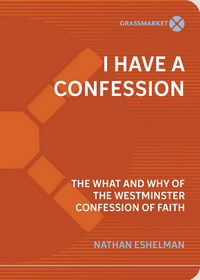
I Have a Confession: The What and Why of The Westminster Confession of Faith by Nathan Eshelman: You Get More than Your Money’s Worth in this Small Book

I Have a ConfessionI Have a Confession:]
The What and Why of the
Westminster Confession of Faith

by Nathan Eshelman

DETAILS:
Series: The Bedrock Series 
Publisher: Grassmarket Press
Publication Date: December 12, 2022
Format: Paperback
Length: 136 pg. 
Read Date: January 15, 2023

What’s I Have a Confession About?

This is an introduction to the Protestant practice of confessions—specifically The Westminster of Confession of Faith.

Eshelman starts out by describing the need for confessions, and what the ecclesiological landscape in the US is like without them. Chapter two lays out “the pillar of confessionalism”—the Scriptures themselves. It’s those Scriptures that give the warrant (chapter 3) for the development and use of confessions. This is what I expected from the book, and when that ended just a little past the halfway point, I was more than a little surprised.

What comes next is truly impressive—Eshelman gives a quick, yet thorough, review of the English Reformation from Henry VIII to the 1640s and the composition of the Westminster Confession of Faith. Then he gives a very brief overview of the contents of the Confession—chapter by chapter.

So, what did I think about I Have a Confession?

Let me start with a minor and really unimportant point—I really like the look and feel of this book. It’s like a field notebook in size, weight, and feel. It works really well for the series.

I’d intended on kicking off this year by rereading R. Scott Clark’s Recovering the Reformed Confession, but a couple of things derailed that (hopefully by the year’s end), but if I couldn’t get into that work, this is a good replacement.

The design of the series is to provide “clear, concise” works on faith and life from a Reformed perspective. Eshelman gives the reader precisely that—clear and concise. Concise, easy to read, and surprisingly thorough for a book of its size.

I was very impressed with this little book—it was everything I expected and more. I’d quibble with a point or two (a couple of his illustrations made me wonder), but only minor things. This is something I’d pass out to people without a second look—and would encourage anyone looking into the idea of Protestant confessions to give it a read.


4 Stars

Page 24 of 62

Powered by WordPress & Theme by Anders Norén