Category: Non-Fiction Page 29 of 61

The Irresponsible Reader On…Self-Published Non-Fiction

(updated 7/26/22)
Self-Published Authors Appreciation Week

From the first moment that people did the strange thing of asking me to talk about their books on my blog, I’ve been impressed by the quality of a lot of what’s been published by authors going out on their own, taking all the risks, shouldering all the responsibility and doing all the work to get their words, their dreams, their blood, sweat, and tears. This should be celebrated—it’s definitely appreciated, as we’re trying to show this week.

Because I completely forgot to plan, I didn’t have a lot of new-to-me Self-Published works to talk about this week, so primarily I’m dusting off and updating these posts from last year—highlighting the self-published works that I’ve blogged about over the last few years—just a sentence or two. Hopefully, this’ll be enough to make you click on the link to the full post. Beyond that, it’d be great if I inspired you to add a few of these to your TBR. Also, be sure you check out the other posts over at the SPAAW Hub.

Today we’re going to be looking at Self-Published Non-Fiction—which are primarily memoirs at their core, it’s what the authors do with the memoirs that makes these really stand out. But there are a couple of other things, too.

bullet Life and Death Behind the Brick and Razor: Code Red Diamond by Isaac Alexis, MD—A prison doctor uses his experiences to give suggestions for a healthy/healthier life. (my post about it)
bullet How Not to Be an *SS: Essays on Becoming a Good & Safe Man by Andrew J. Bauman—Bauman calls men to an authentic, Biblical masculinity—one built on humility, kindness, and service. While offering concrete ways to set aside patterns of abuse and neglect. (my post about it)
bullet No Problem, Mr. Walt: Building a Boat, Rebuilding a Life, & Discovering China by Walt Hackman—Hackman was one of the first self-published authors to reach out to me, and I’m so glad he did. A fascinating read about a man deciding to have an authentic Chinese junk built for him to use as a houseboat in California. (my post about it)
bullet Finding Hope in Hard Things: A Positive Take on Suffering by Pierce Taylor Hibbs—The central premise is that God uses the “hard things” in life to shape us into the people he wants us to be, and uses some of the hard things in his life as case studies to demonstrate how they were used so the reader is equipped to look at their own lives and see the purpose in their suffering. (my post about it)
bullet In Divine Company by Pierce Taylor Hibbs—Pierce’s treatment of prayer focuses on the communicative nature of God and His image bearers and then nurturing that in our lives to improve our prayer. (my post about it)
bullet Struck Down but Not Destroyed: Living Faithfully with Anxiety by Pierce Taylor Hibb—Drawing on what he’s learned from over 12 years of anxiety, Hibbs talks about learning to see what God’s purpose in the suffering is (anxiety disorders specifically, but easily transferable to other types), understanding that His hand is guiding all things—including our problems—so how do we in faith (without denying the suffering) rest in faith. (my post about it)
bullet And Drink I Did: One Man’s Story of Growing Through Recovery by Jay Keefe—It’s all there in the subtitle, Keefe tells about his OCD, his alcoholic days, his getting sober, and how he’s trying to help others since then. Powerful stuff. (my post about it)
bullet How to Take Over the World: Practical Schemes and Scientific Solutions for the Aspiring Supervillain by Ryan North—A tongue-in-cheek way to talk about some of the most advanced science around and how it can (and in some ways is) be used to destroy the world. (my post about it)
bullet The Genius’ Guide to Bad Writing by R.T. Slaywood, R.C. Martinez—A guide for the writer who is tired of success and wants to reclaim their lives from answering the siren call of fortune and fame that comes to every author. Slaywood and Martinez have a 10-Step program guaranteed to ruin a novel or two and stop a career dead in its spot. (my post about it)
bullet Uber Diva by Charles St. Anthony—a humorist writes a memoir of a Lyft/Uber driver mixed with a guide to starting/surviving/thriving as one in a tough market. St. Anthony also has a few other books out now that are probably worth a read. (my post about it)
bullet Flying Alone: A Memoir by Beth Ruggiero York—A female pilot’s memoir of her path from flight school to flying for TWA (now that I have a son learning to fly, some of her more harrowing experiences keep flashing through the back of my mind). (my post about it)


If you're a self-published author that I've featured on this blog and I didn't mention you in this post and should have. I'm sorry (unless you're this guy). Please drop me a line, and I'll fix this. I want to keep this regularly updated so I keep talking about Self-Published Authors.

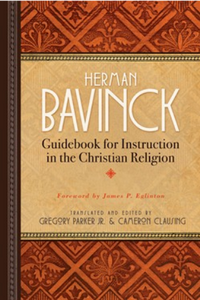
Guidebook for Instruction in the Christian Religion by Herman Bavinck; Gregory Parker Jr., Cameron Clausing (Translators): Dogmatics for Everyone

Guidebook for Instruction in the Christian ReligionGuidebook for Instruction in the Christian Religion

by Herman Bavinck, translated and edited by Gregory Parker Jr., Cameron Clausing

DETAILS:
Publisher: Hendrickson Academic
Publication Date: June 7, 2022
Format: Hardcover
Length: 194
Read Date: July 3-17, 2022
Support Independent Bookstores - Visit IndieBound.org

What’s Guidebook for Instruction in the Christian Religion About?

…in writing this guidebook, I had in mind the pupils in the highest classes of our Christian gymnasium, public schools, in the education of teachers, and in normal schools, etc., and moreover those who desire to understand the main content of our Christian, Reformed confession of faith through a not too comprehensive or expensive book.

That’s it in a nutshell—this book delivers the main content of the Reformed Christian thought directed toward those in High School or those without much education.

In twenty chapters of 10 +/- pages each, Bavinck covers things such as the Knowledge of God, General and Special Revelation, the Trinity, Creation, Providence, The Person and Work of Christ, The Holy Spirit, Salvation, The Church, and The End of the World.

There’s not much more to say than that, it’s shorter and easier to read than Systematic/Dogmatic Theology that I can think of, written by one of the most significant and influential teachers of the Twentieth Century.

[His desire is] to discuss the material in a scriptural sense: that it is not only revealed in its teaching but also in its comforting character, and that it is applied to the heart and conscience. Religious instruction must be education in the true sense of the word, and it must be education in the religion—that is, in the most tender and sacred of what a human soul may possess.

Guidebook and The Wonderful Works of God

While this was an original composition, it is fairly similar to The Wonderful Works of God, published a few years earlier. The Guidebook is streamlined, no doubt, but many passages/paragraphs in both match*, and the translators give footnotes throughout showing that—and when they diverge. There are instances that I’ve found (and will likely see others in future reading/study) that a similar section in the Guidebook helps clarify a point in TWWoG.

* Bavinck says he “intimately connected” the two.

So, what did I think about Guidebook for Instruction in the Christian Religion?

It took three afternoons of semi-casual reading for me to read this—I could’ve done it in two, had I skipped an afternoon nap (much less the three I let myself take over the period). I spent months reading both The Wonderful Works of God and Reformed Dogmatics, I practically gave myself whiplash as quick as this went.

This is incredibly accessible—anyone from fourteen on up should be able to handle it (although parts might take a little work for some—but not often). It covers all the essential matters of Systematic Theology, and occasionally goes beyond. There might be things you’d like him to be a bit more thorough about, but that’s what the other works are for. The translators put it this way:

He traverses a path in which he attempts to bridge the gap between the theology in the academy and theology in the church In doing so, he provides the pilgrim with a theology that is uniquely accessible. For those who found his Reformed Dogmatics alarmingly academic and his Magnalia Dei* intimidatingly thick, Guidebook is the theological porridge that is “just right” for most readers.

* The translators use the Latin title for The Wonderful Works of God throughout the work.

I recommend this without hesitation—as I do everything I’ve read by Bavinck—but without having to worry that someone will be intimidated by it, or decide they’re not up for the work. Although I still maintain that people shouldn’t be as intimidated as they are by him. The translators have given us a gift in making this available to English readers for the first time—as much of a gift as Bavinck gave the church of his time in writing it.

The translators close their Introduction with these words, and I think they’re a great way to sum up the book:

In his Guidebook for Instruction in the Christian Religion, Bavinck has given a gift to the church. The reader will likely find little that is groundbreaking or novel (as one regularly does in Reformed Dogmatics). However, this book supplies the theology of an academic concerned with the life of the church. It is an example of catechetical theology produced by one of the foremost academic theologians of his time.

Above all, we hope this translation helps fulfill Bavinck’s hope for true theology: that it does not remain an object of the head but penetrates the heart and thus becomes an act of confession and praise. As he writes, “Dogmatics, therefore, is… a hymn of adoration and thanksgiving, a ‘glory to God in the highest’ (Luke 2:14). In this book, Bavinck gives us a songbook: setting God before us and calling us to sing God’s praises.

5 Stars

This post contains an affiliate link. If you purchase from it, I will get a small commission at no additional cost to you. As always, the opinions expressed are my own.

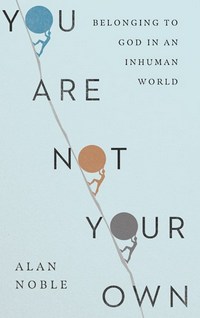
You Are Not Your Own: Belonging to God in an Inhuman World by Alan Noble: Correcting Our Understanding of Humanity

You Are Not Your OwnYou Are Not Your Own:
Belonging to God in an Inhuman World

by Alan Noble

DETAILS:
Publisher: IVP
Publication Date: October 11, 2021
Format: Kindle Edition
Length: 232 pg.
Read Date:  May 29-June 12, 2022
Support Independent Bookstores - Visit IndieBound.org


I’ve tried to write this post 4 times since I finished it—and I’ve struck out each time, because I keep trying to interact with and reflect on Noble’s arguments—because there’s a lot to chew on, a lot to commend, and a great deal to unpack. But that’s not what I’m supposed to be doing here—I’m supposed to talk about the book, talk about how Noble wrote it, and what I thought about it—sure that involves some reflection on the content, but it’s not supposed to be my focus (as much as I might like it to be). So, I’m going to take a more surface-level approach, just so I can get something out.

(I said something similar with Winslow’s The Border recently—you’re probably not going to find a lot of people discussing these two books in similar fashions anywhere else)

The Back of the Book Description

(from ivpress.com)

“You are your own, and you belong to yourself.”

This is the fundamental assumption of modern life. And if we are our own, then it’s up to us to forge our own identities and to make our lives significant. But while that may sound empowering, it turns out to be a crushing responsibility—one that never actually delivers on its promise of a free and fulfilled life, but instead leaves us burned out, depressed, anxious, and alone. This phenomenon is mapped out onto the very structures of our society, and helps explain our society’s underlying disorder.

But the Christian gospel offers a strikingly different vision. As the Heidelberg Catechism puts it, “I am not my own, but belong with body and soul, both in life and in death, to my faithful Savior Jesus Christ.” In You Are Not Your Own, Alan Noble explores how this simple truth reframes the way we understand ourselves, our families, our society, and God. Contrasting these two visions of life, he invites us past the sickness of contemporary life into a better understanding of who we are and to whom we belong.

Acting as If We Are Our Own

The part of the argument from the first paragraph takes the first four chapters and the majority of the book. I guess you could consider this the “Here’s What’s Wrong and Why” part—if we are our own (as we’re told) several problems ensue—personally, culturally, and ecclesially. We (and Noble includes most of the American Church here) have a faulty anthropology, and that results in many problems.

Noble explains where he sees the faulty anthropology leading with compassion and sensitivity, while not pulling any of his punches.

Understanding We Belong to Christ

But for the Christian, our faith begins with the realization that we are not our own (as explained in the words of Heidelberg Catechism Q&A 1). Noble points the believer to recalibrate their understanding of human nature—particularly redeemed human nature—to begin to understand what being the possession of Christ means to our life, our future, our identity.

The strength of this section comes from Noble’s honesty:

At this point you might expect me to introduce my “Five Steps for Changing Your Life by Accepting That You Are Not Your Own.” But as this is a work of nonfiction, I won’t be doing that.

Instead, he gives some advice, based on his own experiences and observations—but he offers no guarantees. I found his honesty refreshing and thought there was a lot of wisdom to his advice, but I was mostly impressed by the humble nature of the approach—advice, not a program or techniques.

So, what did I think about You Are Not Your Own?

I really liked this—I thought it was insightful and helpful. Noble’s diagnosis and advice were sound—they seemed to match up with the world around us and the problems we see. More importantly, he points to the One whose grace, mercy, and care offer any true hope and help in this broken and dying world.

Noble’s writing flows—he’s engaging, compassionate, and relatable. It’s easy to understand even the more complex points he’s making, and his illustrations give the reader plenty to hang on to.

I think Noble’s book would serve as a great companion piece to Kapic’s You’re Only Human: How Your Limits Reflect God’s Design and Why That’s Good News*. Both of these authors remind the reader of our place in the world, and why we’re there—so we can respond in dependence and trust accordingly.

* Meador’s What Are Christians For?: Life Together at the End of the World, and even the better parts of Thompson’s Growing Downward fit here, too, I think—just not as neatly.

I’ve already re-read parts of this book, and find myself chewing on it repeatedly—especially as I compare it to Kapic’s. I heartily recommend and encourage you to pick it up.


4 1/2 Stars

This post contains an affiliate link. If you purchase from it, I will get a small commission at no additional cost to you. As always, opinions are my own.

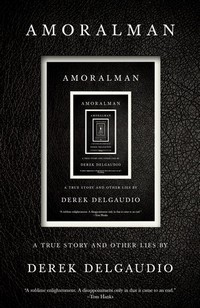
AMORALMAN by Derek DelGaudio: Engaging and Compelling, but Maybe Left Me with Too Many Questions

AMORALMANAMORALMAN:
A True Story and Other Lies

by Derek DelGaudio

DETAILS:
Publisher: Knopf
Publication Date: March 1, 2021
Format: Hardcover
Length: 235 pgs.
Read Date: July 11-12, 2022
Support Independent Bookstores - Visit IndieBound.org

What’s AMORALMAN About?

Derek DelGaudio is a performer. writer, and illusionist. This book claims (and that subtitle should make you suspect everything) to be an account of DelGaudio’s childhood, his early interest in magic tricks and illusions—and then how he was introduced to card sharps, eventually becoming friends with some and learning how to use the card tricks he’d practiced for so long to become a cheat at cards.

At some point, he takes this theoretical knowledge into the practical—to help a good friend, despite that friend’s former insistence that DelGaudio not follow him into that life. After some time exposed to this lifestyle, he has to make a choice? What kind of man is he? What place does morality hold?

It’s tied throughout to Plato’s Allegory of the Cave, the role of the perceptions, reality, and the participants.

The Title

Obviously, DelGaudio is playing with things in the title. Is this book about a moral man? an amoral man? Is it a story without a moral?

How much of this is the true story and how much is a lie? It could be seen as a collection of stories—so is only one true, or is the overall narrative true, with a scattering of lies?

I’m mildly amused by that, but I really don’t think I care.

So, what did I think about AMORALMAN?

Ehhhhh. I wanted more. And not in a “this was so good, I’ve got to have more” kind of way, but in a “this was okay, but…is this all there was?” way. Ultimately, what we’re dealing with is a memoir that tells you upfront (and repeats it) that at least some of what you’re told is a lie—and probably not just from those people who are liars by vocation.

I thought the premise promised more. I expected to get something with a bit more meat on it. A bit more to chew on.

Still, DelGaudio can tell a story. You get engaged right away and you’re eager to see how this detached, disinterested, and largely aimless kid becomes the guy who stars in In & Of Itself*. We don’t get that answer, but it’s not hard to see the foundation being laid.

* And, yeah, I bought this book without knowing anything about it because of the film version.

I do think I’d read another book by DelGaudio—I’m curious about what else he has to offer. And I do think that people interested in his other work would find something compelling here. But that’s about as much as I can say—you won’t be wasting your time.


3 Stars

20 Books of Summer

This post contains an affiliate link. If you purchase from it, I will get a small commission at no additional cost to you. As always, opinions are my own.

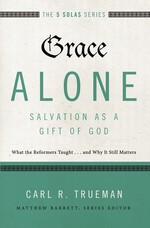
REPOSTING JUST CUZ: Grace Alone–Salvation as a Gift of God by Carl R. Trueman

Grace Alone--Salvation as a Gift of GodGrace Alone–Salvation as a Gift of God: What the Reformers Taught…and Why It Still Matters

by Carl R. Trueman
Series: The 5 Solas Series
Paperback, 243 pg.
Zondervan, 2017
Read: October 8 – 22, 2017

After struggling through three books in this series, I will admit to some trepidation about this one — thankfully, Carl Trueman is an author I have a bit of experience with, so I figured it’d be worth the effort. Thankfully, there wasn’t that much effort, and the book was absolutely worth the time.

Trueman organizes this book differently than the others — in Part 1, he considers Sola Gratia in Scripture and Church History. Trueman surveys the idea of grace alone through both Testaments (it’s easier than some would lead you to think to find it in the Old Testament), looking at individual texts as well as themes throughout the books. I would have liked this to be a bit longer — but I really can’t complain about it. Following that, Trueman focuses on the teachings of the Church throughout history about Grace — starting with the early church, focusing on Augustine and his Confessions as emblematic of the first centuries of the church. Then he continues to focus on Augustine but shifts the focus to the controversies sparked by the Confessions with Pelagius and his followers as the prism through which the (Western) Church discusses and teaches Grace since those days. In the next chapter, Trueman focuses on Medieval theology about grace using Aquinas as the example. Following that we get chapters on Luther and Calvin (and those who’d be allied to Calvin’s branch of the Reformation), shaking off the accumulated tradition and misunderstandings to get back to the core of Scriptural and Augustinian teaching (with help from Aquinas). Would I have appreciated another chapter or two about post-Reformational history? Sure. But they weren’t necessary to fulfill Trueman’s aims, and we get a taste of what they’d offer in Part 2.

Part 2 is titled “Sola Gratia in the Church.” Grace is communicated to Christians via The Church, Preaching, Sacraments, and Prayer and so Trueman a. defends that idea and then proceeds to discuss how God goes that in chapters devoted to each of those. For those of the Reformed tradition, there is nothing ground-breaking or controversial here, although Protestants from other traditions might find some of the ideas challenging. These are solid chapters of the kind of teaching I expected from this series, and I appreciated them.

In the book’s Conclusion, Trueman attempts to address the questions: “What would a ‘grace alone’ church look like today? What would characterize its life as a church? How might we recognize such a church when we see it?” The answers to these questions are a mix of doctrinal and practical ideas that he lists in ten points showing the interconnections between them. This conclusion (in building on what came before) is worth at least half the price of the book — just fantastic stuff.

I still have one to go in the series, so I may have to modify this, but this one is by far the best of the bunch — accessible, pastoral, and thorough without sacrificing depth. Trueman doesn’t seem to get distracted by pet details, nor to just beat the same obvious deceased equines on this topic. If you’re going to read just one of the five, let this be it. Alternatively, if the some of the others have left you wanting, give this one a shot, I think you’ll appreciate it.

—–

4 Stars

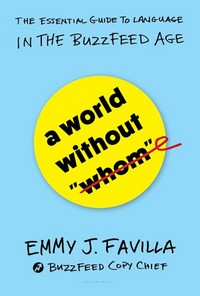
A World Without “Whom” by Emmy J. Favilla: Schoolhouse Rock Never Taught Me This

A World Without A World Without “Whom”:
The Essential Guide to Language
in the BuzzFeed Age

by Emmy J. Favilla

DETAILS:
Publisher: Bloomsbury USA
Publication Date: November 13, 2017
Format: Hardcover
Length: 363 pg.
Read Date: June 29-July 4, 2022
Support Independent Bookstores - Visit IndieBound.org

World peace Is a noble ideal, but I’d like to step that goal up a notch: A world with peace and without whom is the place I’d like to spend my golden years, basking in the sun, nary a subjunctive mood in sight, figurative literallys and comma splices frolicking about.

This is a book about feelings, mostly—not about rules, because how can anyone in good conscience create blanket rules for something as fluid, as personal, and as alive as language? Something that is used to communicate literally (literally) every thought, every emotion humans are capable of experiencing, via every medium in existence, from speech to print to Twitter to Snapchat? We can’t. Nearly everything about the way words are strung together is open to interpretation, and so boldly declaring a sentence structure “right” or “wrong” is a move that’s often subjective, and we’d be remiss not to acknowledge that most of the guidelines that govern our language are too. Communication is an art, not a science or a machine, and artistic license is especially constructive when the internet is the medium.

What’s A World Without “Whom” About?

This could easily—very easily—be a book I take 10 paragraphs to describe, so I’m going to have mercy on you and me and borrow the description from the Publisher.

A World Without “Whom” is Eats, Shoots & Leaves for the internet age, and BuzzFeed global copy chief Emmy Favilla is the witty go-to style guru of webspeak.

As language evolves faster than ever before, what is the future of “correct” writing? When Favilla was tasked with creating a style guide for BuzzFeed, she opted for spelling, grammar, and punctuation guidelines that would reflect not only the site’s lighthearted tone, but also how readers actually use language IRL.

With wry cleverness and an uncanny intuition for the possibilities of internet-age expression, Favilla makes a case for breaking the rules laid out by Strunk and White: A world without “whom,” she argues, is a world with more room for writing that’s clear, timely, pleasurable, and politically aware. Featuring priceless emoji strings, sidebars, quizzes, and style debates among the most lovable word nerds in the digital media world—of which Favilla is queen—A World Without “Whom” is essential for readers and writers of virtually everything: news articles, blog posts, tweets, texts, emails, and whatever comes next . . . so basically everyone.

At one point, Favilla cites a book, Internet Linguistics: A Student Guide, noting that it “was published in 2011, aka eons ago in internet time.” This book was published in 2017, making it eons-old by that standard, and a tad dated. But it still works and may even trigger a pleasant memory or two with a then-topical joke/reference.

The Overall Tone/Voice

This is a funny book. Favilla writes with a lot of passion, which helps in addressing what most would consider a dry and arid topic. But even better than the intensity of some of her thoughts, it’s the humor. I don’t know if I made it 3 pages without coming across a solid laugh line—and generally, it was fewer.

Granted, it may take a particular and peculiar sense of humor to find joes about conjunction use fodder for laughter, but if that’s your poison…

Even when she’s not going for the big laugh, but simply explaining something her style is fun. You can’t not have a good time reading this (even when she encourages something like “verbifying with abandon.” Just quoting those three words makes me want to scrub my hands like Adrian Monk.

A Couple of Nice Bonuses

As one should expect from a book that invokes BuzzFeed twice on the cover, the book is filled with graphics and lists—and even a couple of quizzes.

My favorite lists are “Standard Punctuation Marks, Ranked from Worst to Best,” (I’d literally have a poster of this hanging next to my desk if there was room for anything but bookshelves there) and “Old-Timey Words You Need to Start Using Again” (there’s a version on BuzzFeed)

So, what did I think about A World Without “Whom”?

Hey, remember Latin and its roughly 18,239,721 conjugations for every word? (If you don’t, your high school days were much brighter and probably filled with many more cool parties than mine.) We survived the evolution away from declensions, and we will survive this free-for-all era unscathed as well. Simpler doesn’t necessarily equate to a loss of impact or clarity. It just means fewer strict guidelines to follow. And that’s okay. Have you read the news lately? We have enough utterly horrifying, faith-in-humanity—destroying stuff going on in our day-today to worry about.

The fear that our language is deteriorating because we’re making calculated decisions to nix periods or because more people are pretending that whom doesn’t exist or they’re swapping emojis for words is as irritating as the performance that die-hard carnivores often put on of a paralyzing fear of trying vegan food. Pull yourself together. It’s not going to kill you, and it might actually make you a more well-rounded person with a new perspective.

This is not a book for the die-hard prescriptivist when it comes to language use. Favilla bases her positions and stylistic choices on feelings (and literally tells you that on page 1—which is not to say that there’s no thought involved) and what she thinks will communicate more clearly. But she’ll say time after time, that her rules are subjective and writers should make up their own minds. Especially when it comes to the internet—she will draw a line between print and online writing and doesn’t seem to have a problem with more formal writing being done for traditional/print publications—as long as the internet can be the Wild West.

I’m reflexively a prescriptivist and will tend toward that kind of usage/take/book. But anyone who’s read this particular site for any length of time (even if this post is your first!), will know I’m clearly not a strict practitioner of the rules Mrs. Hammer and Mr. Nelson pounded into me in Middle School. She didn’t convince me on some points, and I’d still side with Strunk, White, and Dreyer at any point they disagreed with her. But I had so much fun reading this—and learning from it, I have to admit—that I don’t mind her somewhat anarchical approach.*

*I halfway expect that in 2053, if someone reads this book they’ll find that this is a straightjacket in terms of free expression.

And since this is supposed to be what I thought about the reading experience, not if I agree with her on every jot and tittle, I have no problem recommending it. If you’re the kind of person who gets worked up about getting your phrasing juuuuuust right or are bothered when someone doesn’t. If you think reading tributes to commas and em dashes is a good time. Or if you’re curious about why someone would want to eliminate whom or is fine with letting the English subjunctive mood die…this is the book for you. I’m very glad that Jodie recommended this one to me.

And, I think I came away from this with an idea for my next tattoo. So, right there, this was worth the time for me.


3.5 Stars

This post contains an affiliate link. If you purchase from it, I will get a small commission at no additional cost to you. As always, opinions are my own.

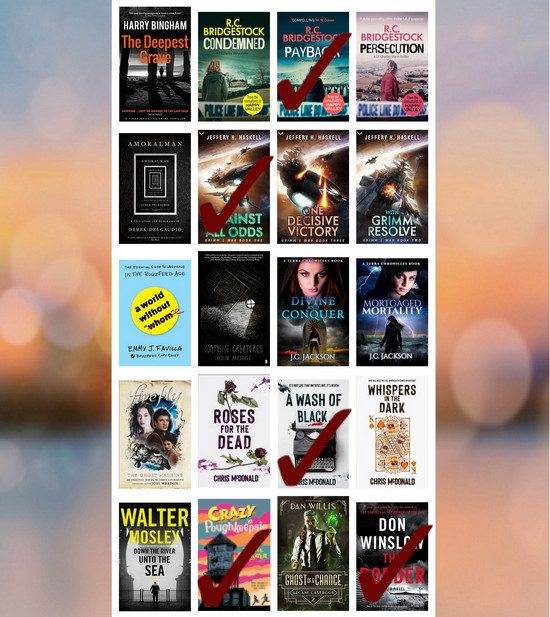
20 Books of Summer 2022: June Check-in

20 Books of Summer
Just a quick check-in on the challenge hosted by Cathy at 746 Books.

I’ve read 5 of the 20–and am about halfway through a sixth. Compared to last year at this time, I’m in great shape–because I hadn’t read anything off my list. I’d hoped for a little more, but since I don’t have anything of the weight and length of The Border left on my list, I figure I’ll breeze through most of this (there are at 4-6 likely one-day reads on the list, so that’ll help). I picked a good and entertaining list this year—and I’m chipping away at ol’ Mt. TBR, too.

1. The Deepest Grave by Harry Bingham
2. Condemned by R.C. Bridgstock
✔ 3. Payback by R.C. Bridgstock
4. Persecution by R.C. Bridgstock
5. AMORALMAN: A True Story and Other Lies by Derek DelGaudio
✔ 6. Against All Odds by Jeffery H. Haskell
7. One Decisive Victory by Jeffery H. Haskell
8. With Grimm Resolve by Jeffery H. Haskell
9. A World Without Whom: The Essential Guide to Language in the Buzzfeed Age by Emmy J. Favilla
10. Composite Creatures by Caroline Hardaker
11. Divine and Conquer by J.C. Jackson
12. Mortgaged Mortality by J.C. Jackson
13. The Ghost Machine by James Lovegrove
14. Roses for the Dead by Chris McDonald
✔ 15. A Wash of Black by Chris McDonald
16. Whispers in the Dark by Chris McDonald
17. Down the River unto the Sea by Walter Mosely
✔ 18. Crazy in Poughkeepsie by Daniel Pinkwater
19. Ghost of a Chance by Dan Willis
✔ 20. The Border by Don Winslow

(subject to change, as is allowed, but I’m going to resist the impulse to tweak as much as I can).
20 Books of Summer '22 Chart

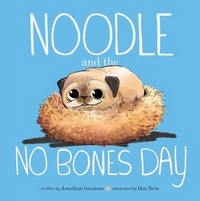
BIRTHDAY REPOST: Noodle and the No Bones Day by Jonathan Graziano, Dan Tavis (Illustrator): A Great Dose of Adorableness to Pick Up Your Day

Noodle turns 14 today, and while I can’t give him anything, I thought maybe I’d spread the word about the book about him once again. Be sure to watch the video his human posted on Instagram about the birthday, too. And if yu have a furry one in your house, give them the gift he encourages there.


Noodle and the No Bones DayNoodle and the No Bones Day

by Jonathan Graziano, Dan Tavis (Illustrator)

DETAILS:
Publisher: Margaret K. McElderry Books
Publication Date: June 6, 2022
Format: Hardcover
Length: 32 pgs.
Read Date: June 8, 2022
Support Independent Bookstores - Visit IndieBound.org

What’s Noodle and the No Bones Day About?

I’m going to assume you, dear reader, are like the 74.3% of humanity and are aware of Noodle (and, as an afterthought, Graziano). Last year Noodle took over the Internet—magazines, websites, TV news shows, social media, etc., etc., etc. People all over the world checked-in daily to see if that day was going to be a Bones Day (where Noodle, an elderly pug, wanted to get up and go for a walk) or a No Bones Day (where Noodle just wanted to stay in bed and relax all day).

This little book tells their story. It starts off describing their life—and then focuses on the first No Bones Day. Noodle isn’t sick, he isn’t depressed or anything. He just needs to spend a day getting pampered—bonus belly rubs, bonus snuggle time, and bonus snacks. Who can’t relate to that?

What About the Illustrations?

I skipped over half the words the first time I opened the book to pour over the illustrations—and I’m telling you, that never happens with me. Even in picture books, words are my priority. Typically, anyway.

These are simple drawings—there’s not a lot of clutter on the page, or background details. Just a man and his pug and their emotions. The picture where you can’t see Noodle’s face, only the rest of his body (tail end sticking up in the air) as he burrows into his bed is asymptotically close to Aristotelian perfection. The rest of them ain’t bad, either.

Dan Tavis is a gem. I have bookmarked his site to shop from in case I have to activate Grandpa Mode and need to equip my home and have picked out a couple of things from his Etsy shop that would look good on my walls)

So, what did I think about Noodle and the No Bones Day?

Is this the most adorable book that I’ve read this year? Hands down. Will something come along and usurp it? Doubtful (but, please, suggest contenders—I’m sure I could use the pick-me-ups in the months to come).

There’s a good reminder—especially for the grown-up reading this book to a child—that there are times when someone needs a day (or even a few minutes) to step back from their normal activities to show someone some extra attention and affection. Or be shown that. Even just taking the few minutes necessary to read this book to a child would be a good start.

This is a cute book. It is sweet. Nigh-unto-irresistible. The illustrations made (and make) me smile. It is perfect to use to cuddle up and read to a child and/or beloved pet. If you’re a fan of Noodle (and, I suppose, Graziano), you’re going to enjoy it. If you’re not a fan of either of them, buy this and improve your life.

It’s also a reminder that the dog in your life probably wants and deserves a snack right now. Best get on that.

This post contains an affiliate link. If you purchase from it, I will get a small commission at no additional cost to you. As always, any opinions expressed are my own.

Growing Downward by Nick Thompson: Spiritual Growth is Not an Ascent; It is a Descent

Growing DownwardGrowing Downward:
The Path to
Christ-Exalting Humility

by Nick Thompson

DETAILS:
Publisher: Reformation Heritage Books
Publication Date: May 11, 2022
Format: Kind Edition
Length: 224 pgs.
Read Date: June 19-26, 2022
Support Independent Bookstores - Visit IndieBound.org

Here is the unvarnished truth: pride is your number one enemy at every stage of the game. This is true of you regardless of your vocation; your economic, political, or social status; and your age, ethnicity, or education… I begin here because it is only as we come to understand pride as our greatest enemy that we will learn to embrace humility as our greatest ally.

What’s Growing Downward About?

The Publisher’s Description is:

Author Nick Thompson recognizes that pride is our worst enemy. If pride is our chief foe, then humility is our chief friend, even though its company may be painful. But spiritual growth is a descent—we must grow downward. Defining humility as “the downward disposition of a Godward self-perception,” Thompson walks us through the practical implications of this definition, leading us to embrace a God-centered perspective on the self. With winsome illustration and warm pastoral instruction, Growing Downward shows us that the path of humility, though difficult, is the way to true meaning and fulfillment in Jesus Christ.

Thompson is thorough at arriving at his definition of “the downward disposition of a Godward self-perception”—looking at other definitions offered by notable authors and theologians along the way—evaluating and critiquing them.

From this point, he works out the implications of that definition by looking at Existential Humility, Ethical Humility, Evangelical Humility, Ecclesiological Humility, and Eschatological Humility.

So, what did I think about Growing Downward?

As far as the reading experience goes—this is fine. The writing is crisp, it’s clear, it’s accessible, and Thompson makes certain the reader gets his point.

As far as the content? Ehhhhh, I’m not sure. The Introduction and the first part of the book? Those were really, really strong and convincing—and Thompson had me with him there. But after that? It’s complicated to explain, but I’ll try. I liked the individual chapters, and the topics he covered in them. But they seemed disconnected from the whole. Not all of them even seemed that focused on the idea of humility or Godward self-perception. Good material, but to what end?

Instead of an argument built on several lines of reasoning, which is how the book seems to be designed. It seemed to me to be one argument made, with some essays loosely attached to the topic added on. I can see where a lot of these trains of thought can lead back to the main argument. But I look to an author for that work, to show how

The one thing I tripped on more than once was Thompson’s tone—it frequently struck me as less-than-gracious or compassionate. Generally, within a couple of pages, he’d say something to mitigate what I perceived as harshness (or something like that). But I think it’d be best to not need that mitigation.

That said, I fully expect to be in the minority on this. I think many readers will benefit from this book and not get hung up on those things I did.

I liked enough of this to recommend it to you—but just enough. If you do read it, come back and tell me where I’m wrong, okay?


3 Stars

This post contains an affiliate link. If you purchase from it, I will get a small commission at no additional cost to you. As always, the opinions expressed are my own.

Catch-Up Quick Takes: A Few May/June Books

The point of these quick takes posts is to catch up on my “To Write About” stack—emphasizing pithiness, not thoroughness. This time, I’m covering a few books from the end of May and June that I just don’t have that much to say about.


A Line to KillA Line to Kill

by Anthony Horowitz, Rory Kinnear (Narrator)

DETAILS:
Series: A Hawthorne and Horowitz Mystery, #3
Publisher: HarperAudio
Publication Date: October 18, 2021
Format: Unabridged Audiobook
Length: 8 hr., 50 min.
Read Date: May 26-31, 2022
Support Independent Bookstores - Visit IndieBound.org

(the official blurb)
If you were to ask me: “HC, what do you think of the Hawthorne and Horowitz series?” I’d tell you that I love the concept, I think Hawthorne is an intriguing character and that I really enjoy Horowitz’s fictionalized version of himself. And that’s true in theory.

I’m just not so sure about the practice. I had a hard time finishing this, and more than once thought about quitting. I’m glad I didn’t–the solution was pretty clever and the resolution was satisfying.

Hawthorne regularly annoyed me–and I found his antics held no charm for me. It’s a good read, but I can see my time with this series coming to an end soon (I can also see being won over soon, too).

(none of this is a reflection on Rory Kinnear, who did his typically good reading).
3 Stars

Hellbound Guilds & Other MisdirectionsHellbound Guilds & Other Misdirections

by Annette Marie, Rob Jacobson, Iggy Toma (Narrator)

DETAILS:
Series: Guild Codex: Warped, #2
Publisher: Tantor Audio
Publication Date: September 13, 2021
Format: Unabridged Audiobook
Length: 8 hr., 12 min.
Read Date: June 6-7, 2022
Support Independent Bookstores - Visit IndieBound.org

(the official blurb)
This does a great job of interweaving the events (and characters) of Demon Magic and a Martini and Taming Demons for Beginners into the events of this adventure–I love seeing the way Marie is creating a multi-faceted world here.

This time out, our petty criminal turned aspiring MagiPol Agent tries to help out his friend, Agent Shen, who had got him out of that life of crime. She needs a big win to stay in her current assignment and not be transferred to the last office on Earth she wants. Their snooping gets them on the trail of some of the shady demon contracts the aforementioned books were about and then we’re off to the races.

There’s some really good character development for Kit Morris here–especially when it comes to learning how to use his magic. This is a common tie between these series–all three protagonists are on a similar path. Given the varied amount of knowledge they all had going into it (totally unaware; not-that-experienced-but-fairly-aware; or a lot of academic knowledge, but little practical) keeps the series distinct, yet similar–which I really appreciate.

I do prefer the other magical threats these series covered before they all focused on demons. But I’m still enjoying the ride (rides?), so I’ll stick with these a little longer.
3 Stars

How to Take Over the WorldHow to Take Over the World:
Practical Schemes and Scientific
Solutions for the Aspiring Supervillain

by Ryan North

DETAILS:
Publisher: Penguin Audio
Publication Date: March 14, 2022
Format: Unabridged Audiobook
Length: 10 hr., 3 min.
Read Date: June 7-9, 2022
Support Independent Bookstores - Visit IndieBound.org

(the official blurb)
I’m clearly a sucker for popular-level science books with a humorous presentation (which means I really need to give Mary Roach another try, I know). In this one, North focuses on the kinds of cutting-edge science that a comic book/James Bond supervillain would use to take over the world, destroy large parts of it, accumulate power to themselves, etc.

He covers such things as cloning a dinosaur (sorry, Jurassic Park, it’s just not possible…), creating a new island to use as a secret base, becoming immortal, pulling off the perfect heist, and more. The punchline to the book is essentially that a supervillain is going to have to work hard to out-do what humans are doing already when it comes to destroying the planet.

Depressing conclusion aside–this was a fun book, and exposed me to a lot of things I never would have considered before. I’m not sure I retained as much as I would have liked to–but that’s on me, not North (who, by the way, was a perfect narrator for the material). It also means that I’ve got a good reason to listen to it again or to pick up the hard copy to refer back to. Recommended.
3 Stars

Their Dark DesignsBatman: Their Dark Designs

by James Tynion IV with too many artists to list for this kind of post

DETAILS:
Publisher: DC Comics
Publication Date: November 8, 2021
Format: Trade Paperback
Length: 264 pgs.
Read Date: June 18-25, 2022
Support Independent Bookstores - Visit IndieBound.org

(the official blurb)
I don’t read a lot of graphic novels/collections of individual comics lately, and don’t know what might appeal to me. I basically read whatever Lashaan Balasingam mentions that seems interesting. He recently posted about the last volume in this series and it got me curious.

This was a lot of fun–check out the blurb for details. I really enjoyed Tynion’s take on these characters (including the new ones)–if this is how he always writes the Dark Knight, I could be satisfied reading him for years. Most of the art was dynamite (a couple of the pencilers left a little to be desired). Simply put, this is exactly what I want in a comic series.

My major mistake is that I didn’t see that my library doesn’t have the 4 volumes that tell the rest of this story. I don’t want to spend the money on these, but not knowing how the story is going to resolve is a little maddening.
3 Stars

This post contains affiliate links. If you purchase from any of them, I will get a small commission at no additional cost to you. As always, the opinions expressed are my own.



			

Page 29 of 61

Powered by WordPress & Theme by Anders Norén