Category: Non-Fiction Page 30 of 63

These Dog Days Aren’t Over

(Updated and Revised 8/26/22)

It’s National Dog Day, the annual celebration of “all dogs, mixed breed and pure. Our mission is to help galvanize the public to recognize the number of dogs that need to be rescued each year and acknowledges family dogs and dogs that work selflessly each day to save lives, keep us safe and bring comfort.” So it seemed like a good day to post another version of this.

These Dog Days Aren't OverThis was a hard post to come up with a name for‡, essentially this post came from a comment not too long ago about being hesitant to read books about animals if the reader doesn’t know if they survive the book. I get that, I absolutely do. I still bear the scars of Where the Red Fern Grows and Marley and Me (sure, that wasn’t that long ago, but the wound still stings). So, for readers like my correspondent, here are some perfectly safe books prominently featuring dogs!

I plan on updating this when I can remember to, so by all means, chime in with comments about Dogs I’ve forgotten about/haven’t yet!

Non-Fiction

bullet The Particulars of Peter by Kelly Conaboy—this is a collection of humorous essays giving Conaboy the opportunity to rave about her dog, Peter. In her eyes, Peter is a perfect dog, and as you read this, you’ll be tempted to agree. (my post about it)
bullet Olive, Mabel & Me by Andrew Cotter—Cotter’s charming book describes his life with the two dogs that rocketed to international stardom (and brought him along). (my post about it)
bullet My Life as a Dog by L. A. Davenport—Davenport’s short little book about the relationship between the author and his dog, Kevin, a black and tan, pure-bred dachshund. It focuses on what the two of them did over two days and then a weekend selected from the years they spent together. (my post about it)
bullet Dogtology: Live. Bark. Believe. by Jeff Lazarus—Humans are so obsessed with their dogs, we’ve devoted so much time, energy, and work into them that it’s become a religion, with humans essentially worshipping their pets. This book is a look at that devotion and the rituals and beliefs that accompany it. It’s technically humor, but a lot of it seems pretty on-target. (my post about it)
bullet What the Dog Knows: The Science and Wonder of Working Dogs by Cat Warren—Warren basically covers three topics: there’s the science and history of using working dogs (of all sorts of breeds, not to mention pigs(!), birds, and even cats) to find cadavers, drugs, bombs, etc.; there’s the memoir of her involvement with cadaver dogs via her German Shepherd, Solo; and anecdotes of other cadaver dogs and trainers that she’s encountered/learned from/watched in action. (my post about it)
bullet What the Dog Knows Young Readers Edition by Cat Warren, Patricia J. Wynne—The above book adjusted for younger readers, with some great illustrations. It’s not dumbed-down, just adjusted. (my post about it)

Fiction

bullet Mace Reid K-9 Mystery series by Jeffrey B. Burton—A Dog Trainer/Cadaver Dog Handler and his dogs get involved in serial killer cases. Warning: Like many heroes in action novels, most of Mace’s dogs get beat up/injured. Some pretty badly. (my posts about them)
bullet Suspect by Robert Crais—One of my all-favorite books, a cop with PTSD gets assigned to the K-9 Unit and works with a dog fresh from Afghanistan combat. (my post about it) The pair also plays a major role in The Promise.
bullet Pug Actually by Matt Dunn—Doug, a loyal pug, plays cupid for his owner. This is a cute rom-com with a charming canine narrator. (my post about it)
bullet Stepdog by Nicole Galland—A love story where the major impediment to happily ever after is her dog (a gift from her ex). (my post about it)
bullet Noodle and the No Bones Day by Jonathan Graziano, Dan Tavis (Illustrator)—This picture book relates the origin of the Internet Craze and the wonderful, photogenic pug behind it. (my post about it)
bullet Oberon’s Meaty Mysteries by Kevin Hearne (Audiobooks narrated by Luke Daniels)—Oberon, the scene-stealing Irish Wolfhound from The Iron Druid Chronicles narrates this series of novellas (my posts about them).
bullet Neah Bay series by Owen Laukkanen—Lucy is a dog who is trained by prisoner Mason Burke, who has to track her down when he gets out. She’s a service dog for Marine Vet Jess Winslow. Lucy connects the two humans in her life and helps to keep them safe when a corrupt deputy comes after Jess. (my post about them)
bullet I Thought You Were Dead by Pete Nelson—I’m not sure how to sum this one up in a sentence. It’s a pretty typical novel about a troubled writer with a romantic life and family in shambles. But his dog is the thing that makes all the difference. (my post about it)
bullet Chet and Bernie books by Spencer Quinn—Bernie Little is a PI in Phoenix. Chet’s his four-legged partner and the series narrator. It’s too fun to miss. (my posts about them)
bullet The Right Side by Spencer Quinn—”a deeply damaged female soldier home from the war in Afghanistan becomes obsessed with finding a missing girl, gains an unlikely ally in a stray dog, and encounters new perils beyond the combat zone.” (my post about it)
bullet Woof by Spencer Quinn—The beginning of an MG series about a with a penchant for trouble and her dog. (my post about it)
bullet Andy Carpenter books by David Rosenfelt—Andy Carpenter is New Jersey’s best defense lawyer and a devoted dog owner. He helps run a rescue shelter, too—and almost every client he takes as some sort of connection with a dog. These books aren’t dog-centric like the others on this list, but they’re dog-heavy. (my posts about them)
bullet The K-Team books by David Rosenfelt—a spin-off from the Andy Carpenter series. This features a PI team made up of Andy’s wife/investigator, Laurie; the near super-heroic Marcus; and Corey Douglas, a freshly-retired K-9 officer. His canine partner, Simon Garfunkel, comes along, too. Simon Garfunkel doesn’t play a giant role in the books, but he gets at least one good action scene per book. (my posts about them)
bullet Voyage of the Dogs by Greg van Eekhout—SF for all ages about a team of dogs on a long-distance space flight. (my post about it)

Supportive Roles

These dogs aren’t as significant a presence in their books as the prior group, but they’re important enough to mention.
bullet Mouse from The Dresden Files by Jim Butcher. (my posts about them)
bullet The Midnight Plan of the Repo Man by W. Bruce Cameron and the sequel Repo Madness by W. Bruce Cameron— (my posts about them)
bullet Edgar from the Washington Poe books by M. W. Craven. (my posts about them)
bullet Rutherford from The TV Detective series by Simon Hall (my posts about them)
bullet Oberon from the Iron Druid Chronicles by Kevin Hearne. (my post about them)
bullet Ruffin from the I. Q. series by Joe Ide. (my posts about them)
bullet Dog from the Walt Longmire books by Craig Johnson (my posts about them)
bullet Purvis (and Beau) from The Good Kill by John McMahon (my post about it)
bullet Trogdor from The Golden Arrow Mysteries by Meghan Scott Molin (my post about them)
bullet Mingus from The Drifter by Nicholas Petrie (my post about it)
bullet Herbert and Daisy from Adult Assembly Required by Abbi Waxman (my post about it)

Books with paws on both sides of the line

Some books that belong on this list, but might be a bit too close to not fitting on it for some readers
bullet Lessons From Lucy by Dave Barry—there’s a strong “my beloved dog is old and will die soon-vibe throughout this (it’s the whole point), so some may want to avoid it. But the focus is on what Barry is learning from his aging but still full-of-life dog. (my post about it)
bullet Dead is … series by Jo Perry—the canine protagonist in these mystery novels is a ghost, so there’s a dog death involved. But we meet her as a ghost, so she won’t die (again) in the series. (my posts about them)
bullet Dogtripping: 25 Rescues, 11 Volunteers, and 3 RVs on Our Canine Cross-Country Adventure by David Rosenfelt—For various and sundry reasons, the Rosenfelts decide to move their home and dog shelter from California to Maine. As anyone who’s had to get a dog (or a toddler) into their vehicle for a drive across town can imagine—getting 25 dogs moved across the country is a logistical nightmare. In Rosenfelt’s capable hands, if “tragedy plus time equals comedy,” “nightmarish logistics plus time” does, too. The shelter specializes in senior dogs, so not every dog mentioned or featured lives, but that’s not the focus of the book. (my post about it)
bullet Lessons from Tara by David Rosenfelt—a sort-of-sequel to the above. Inspired by the death of their dog, Tara, the Rosenfelt’s now operate a no-kill shelter for senior dogs. This is the story about the origins and day-to-day of that life. There’s discussion of Tara’s death, and he has to cover the end of days for dogs, but it’s not the focus of the book. One some will want to avoid, but you probably shouldn’t. (my post about it)


‡ I brainstormed this a bit with my family, and wanted to share some of those titles that didn’t make the cut, just because I enjoyed their creativity:
bullet These Dogs Didn’t Go To Heaven/Not All Dogs Go to Heaven implies these dogs aren’t wonderful creatures, and that’s a solid loser
bullet No Kleenex Required too vague, and not necessarily true, they’re just not required because of a death
bullet The Best Bois
bullet Books Where the Author isn’t A Heartless Bastard (Looking at You, Marley and Me) too long, and boy howdy, does it seem my son has bigger issues with the book than I did
bullet Books that Even PETA Would Be Okay With
bullet Books for the Vegan in You suggests the dog books I don’t mention are in favor of eating them…
bullet Paw Patrol I’m almost confident my daughter’s boyfriend suggested as a joke, for his sake I’m assuming it was
bullet Pawfect Dog Stories I refuse to resort to that kind of joke

(Images by S K from Pixabay and josmo from Pixabay

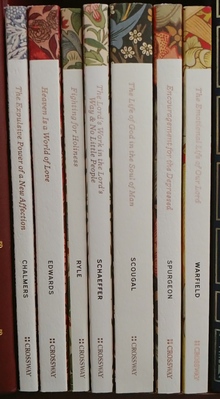
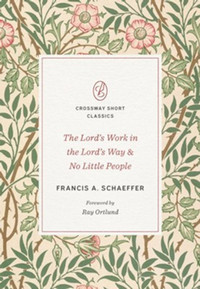
Crossway Short Classics: Warfield, Ryle, and Edwards

Crossway Short Classics SeriesCrossway Short Classics Series

DETAILS:
Publisher: Crossway Books
Format: Paperback
Read Date: July 2022

Some Thoughts on the Series as a Whole

The point of this series is to take classic short works—sermons, tracts, articles—package them attractively, edit a bit (modernize language, eliminate footnotes, tweak grammar, etc.) and make them widely available. Each is given a short introduction to help the reader get the context and a bit of information about the author.

I think this is a great idea, and I don’t know how I didn’t hear about this until a few weeks ago. I do hope they put out new books in the series (at least one of the books on the original list isn’t out yet, but they did publish one not on that list, so maybe they exchanged the titles).

I wonder a bit about the cover design—I wonder if the floral theme is a bit off-putting (Evangelical publishers usually reserve that for books marketed for women, and I don’t get the impression that this series is designed for that).

I don’t want to try to cover the whole series in one post, so I’m going to do this in chunks. This is the first in the series of posts I’ll be doing.

The Emotional Life of Our LordThe Emotional Life of Our Lord

by B.B. Warfield, Sinclair Ferguson (Foreward)

DETAILS:
Publication Date: May 10, 2022
Length: 110 pg.
Read Date: July 10, 2022
Support Independent Bookstores - Visit IndieBound.org

This is the book in the set I was most excited about—I’ve read this a few times, but I’ve only had a photocopy from someone who owned a set of Warfield’s shorter works to use (I’m sure it’s online now, but…). Now I have a nice, attractive, bound copy.

This look at Christ’s emotions—and how they demonstrate his humanity—is a fantastic piece of Christian scholarship. There’s a warmth to the writing, a sense of bringing assurance and comfort to the reader, along with the discussion of the texts. I just loved it.

Also, an Introduction by Sinclair Ferguson? Doesn’t get better than that.

5 Stars

Fighting for HolinessFighting for Holiness

by J. C. Ryle, Andrew Atherstone (Foreward)

DETAILS:
Publication Date: May 10, 2022
Length: 74 pg.
Read Date: July 17, 2022
Support Independent Bookstores - Visit IndieBound.org

The original title of this was Are You Fighting?, and I guess the editors thought that since it wasn’t going to be republished in a series with similar questions, they needed a new title. I think the new title didn’t do it any favors. Fighting for Holiness shouldn’t be seen as Fighting to obtain Holiness or to display Holiness, but on account of Holiness, or in Holiness’ Cause. It may be nit-picking, but to me, the title just didn’t fit.

The fact that I stopped to think about that mid-way through this short work says something about how gripping it was.

This was a description of several of the passages using military metaphors from the Bible, calling readers to be fighters for the Faith. (in a spiritual sense, I should add, because too often today that would be understood as a more physical combat)

I just don’t get why this was picked—Ryle wrote a lot that were this length, and most of them would’ve been better. I can’t say that the work wasn’t well-written or anything, I’m just not sure this is the best work for the use.
3 Stars

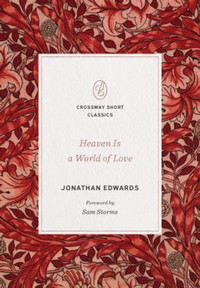
Heaven Is a World of LoveHeaven Is a World of Love

by Jonathan Edwards, Sam Storms (Foreward)

DETAILS:
Publication Date: October 13, 2020
Length: 115 pg.
Read Date: July 24, 2022
Support Independent Bookstores - Visit IndieBound.org

This is one of the several examples of sermons that demonstrate there’s more to Edwards than the caricature of a hellfire and brimstone preacher that’s so prevalent. And you have to think that’s at least part of the reason it was selected.

It’s a typical Edwardsian sermon in that he approaches the subject from several angles—maybe too many (or at least it feels that way a time or two). The focus here is on the love of God, as shown to His creation both in this world and the next (although the emphasis is on the next, hence the title).

Unlike the Warfield book above, I didn’t get the warmth in this one—odd considering the subject. It felt more like a scholarly treatise than a sermon, but that’s typical of Edwards and it’s clearly a sign that it’s been too long since I’ve read Edwards sermons.

It’s a nice sermon, a helpful sermon, and a nice bit of analysis, too.

3.5 Stars

This post contains affiliate links. If you purchase from them, I will get a small commission at no additional cost to you. As always, the opinions expressed are my own.

Reposting Just Cuz: The Last Adam by Brandon D. Crowe

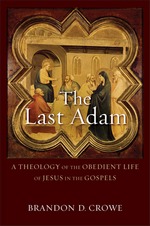
The Last AdamThe Last Adam: A Theology of the Obedient Life of Jesus in the Gospels

by Brandon D. Crowe

Paperback, 215 pg.
Baker Academic, 2017

Read: February 19 – March 19, 2017


I just don’t know how to sum up this book succinctly honestly. After a few attempts that are best never seen by anyone, I decided that no one does it better than Crowe does in the first three paragraphs:

What is the purpose and significance of the life and ministry of Jesus in the Gospels? At one level, this may seem like an obvious question. The Gospels are all about Jesus. Moreover, given the structure of each of the four Gospels, it is difficult to miss the central role played by the Passion Narratives. And yet there is much more in the Gospels beyond the Passion Narratives. Jesus is amazingly active. He preaches, heals, exorcises, prays, rebukes, forgives, calls, authorizes, confounds, challenges, rejoices, weeps, blesses, curses, prophesies, and more. In addition, he consistently draws attention to himself as he does these things.

And then there are the Christmas stories (that is, the infancy narratives). These are among the more familiar parts of the Gospels in today’s culture. But what is the relationship between the infancy narratives and salvation? Jesus appears to be quite passive lying in the manger as he is adored by shepherds, and we do not find him to be very active when the magi come and prostrate themselves before him in Matthew 2. But can we look even to the infancy of Jesus and say that Jesus was somehow already beginning to accomplish something of significance? To ask this question is to lead us back to the driving question of this volume, since Jesus did not bypass infancy, childhood, adolescence, or adulthood on his way to the cross. Why? What was it about the life of Jesus that was necessary for salvation—from the manger to the cross and everything in between? Do the Evangelists themselves give us any indications that this is a question they have in view as they write their Gospels? I will argue that they do.

In this volume I will argue that we find a shared perspective among the diversity of the four Gospels that the obedient life of Jesus—in its entirety—is vicarious and salvific in character. More specifically, I will argue that Jesus is portrayed in the Gospels as the last Adam whose obedience is necessary for God’s people to experience the blessings of salvation. In pursuit of this thesis, I will consider what the Gospels themselves say about the lifelong obedience of Jesus, which concomitantly involves considering how Jesus’s life and ministry are related to his passion. By concentrating on the Gospels I do not intend to imply that these are the only documents in the New Testament that speak to this issue. I do believe, however, that a focus on the Gospels qua Gospels is important because of the way they narrate the life of Jesus, and because their testimony to the significance of Jesus’s life for salvation has often not been given sufficient attention. Thus a sub-aim of this book is to help us read and interpret the Gospels theologically.

So, there’s his aim, rather, there are his aims. How does he go about it? Here’s the Table of Contents to give you a look at how he’s approaching his arguments (yeah, I’m quoting a lot here, but you try to tackle this book in a blog post rather than a dozen or so page review and see how easy it is):

1. A Tale of Two Adams in the History of Interpretation
2. The Last Adam and the Son of Man in the Gospels
3. The Last Adam as the Obedient Son of God
4. The Last Adam and the Fulfillment of Scripture
5. The Glory of the Last Adam in the Gospel of John
6. The Last Adam and the Kingdom of Righteousness
7. The Death and Resurrection of the Last Adam
8. The Last Adam and Salvation: Theological Synthesis and Conclusions

This is primarily an exegetical work — dealing with the text of the Gospels directly. But Crowe leans upon historical and systematic theology as well (especially in Chapter 8). Outside of Chapter 5, he’s primarily dealing with the Synoptics — but not exclusively. It is not impossible to read for the dedicated layman — I’ve read more difficult works in the last few months, but it’s not something you can skim with profit. There are issues that I’m not sure I understand the purpose of addressing, as I’m not aware of all of the academic controversies he’s addressing, but even when you don’t understand everything about those portions of the book, you can still gain from working through them.

I learned a lot. I thought about passages in a way I haven’t before — seeing things in a new light, or at least a different light. I really don’t have a lot to say about this particular book — primarily I just wanted to post about it to maybe get a reader or two to look at it that might not have otherwise. I loved it, even when I had to work a little harder than usual to get what he was saying, it was worth it. This is the kind of thing the Church needs more of.

This is written from a Confessionally Reformed perspective, but not necessarily for the Confessionally Reformed any more than other Evangelical/Evangelical-ish readers. Although, the Reformed will be more used to thinking in some of the categories he uses than others (as Crowe indicates late in this interview).

This is not an easy read, this is not a quick read, but it is a good read (why do I feel like Lewis’ Mr. Beaver now?). This is theology that will lead to doxology — as well as more theological and doxological reflection and study. I wasn’t sure what I expected to get out of this book, but Crowe delivered it and more. I’m not doing a good job summing things up here, just get this book and read it (as well as all the books Crowe writes that you can afford, I’m pretty sure I never got around to posting about his book on the General Epistles which was almost as good as this one (and easier to read)).

—–

4 1/2 Stars

The Attributes and Work of God by Richard L. Pratt, Jr.: A Broad and Capable Introduction to Theology Proper

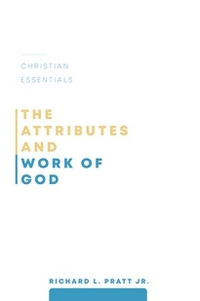
The Attributes and Work of GodThe Attributes and Work of God

by Richard L. Pratt, Jr.

DETAILS:
Series: Christian Essentials 
Publisher: P & R Publishing
Publication Date: April 27, 2022
Format: Paperback
Length: 184 pg.
Read Date: July 31, 2022
Support Independent Bookstores - Visit IndieBound.org

What’s The Attributes and Work of God About?

This is a basic and broad introduction to Theology Proper—who God is, what He does, communicable and incommunicable attributes, the Trinity, etc. It’s adapted from curriculum using language that’s easy to translate—particularly into languages that don’t have a well-developed theological vocabulary—so the English is kept basic, too. There’s almost no academic or technical theological language used, and those that are used are well defined.

The chapters are short (most around ten pages, two are longer than fifteen) and well-organized. Each contains a handful of side-bars consisting of a paragraph or two with the contents of interviews with pastors and theologians on the topic under discussion. These interviews were with people from a variety of theological perspectives helping broaden the text written by a Reformed professor.

A Couple of Issues

It’s difficult, perhaps impossible, writing at the level Pratt is here and for the audience he has in mind to get too detailed on difficult subjects—that’s a given, and I wouldn’t expect that to change. Still, I found the way that subordinationism was covered because there’s a lot of good and a lot of sloppy material being put out about it right now. People at all levels need to be given the tools to look for the good.

Secondly, I was underwhelmed with the sections on foreknowledge, predestination, and election. This again is part of the design of the book—Pratt isn’t writing only for those in the Reformed/Reformed-ish camp, so he attempted to write something on these topics that can appeal to/apply to Reformed and broad-Evangelicals. I don’t think it’s possible to satisfy all corners of this discussion, and Pratt demonstrates it in the disappointing pages on the ideas.

So, what did I think about The Attributes and Work of God?

My problems are in the closing pages of the book—until that point, I was very satisfied. People wanting a broad curriculum to cover the basics in a High School/young College-age Sunday School class or Bible Study would benefit from this—especially if the instructor can augment the material in the subordination/predestination sections.

This was an incredibly easy, but informative, read. The discussion questions and “For Further Study” resource lists at the end of each chapter are stronger than many similar examples that I’ve run across lately.

I’d hoped for something a bit deeper, a bit more thorough. But once I saw—and it took almost no time to register that—that this isn’t at all the aim of this book, I was able to adjust and ended up really enjoying this. I’ll gladly recommend this to someone looking for this level/approach and am looking forward to reading the other entries in this series.


3.5 Stars

This post contains an affiliate link. If you purchase from it, I will get a small commission at no additional cost to you. As always, the opinions expressed are my own.
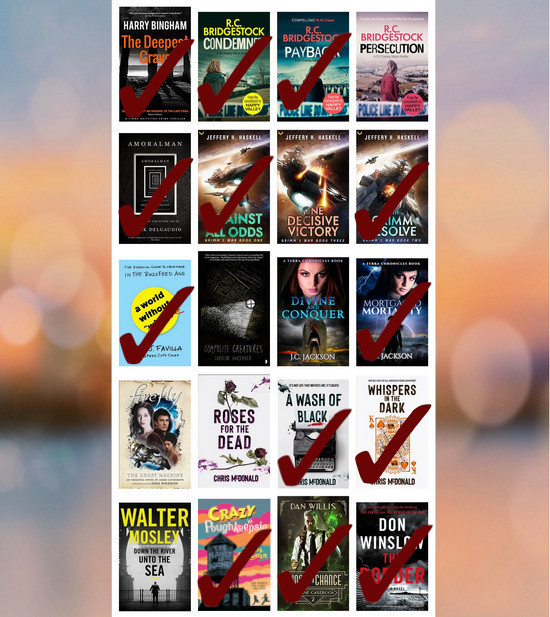
20 Books of Summer 2022: July Check-in

20 Books of Summer
Just a quick check-in on the challenge hosted by Cathy at 746 Books.

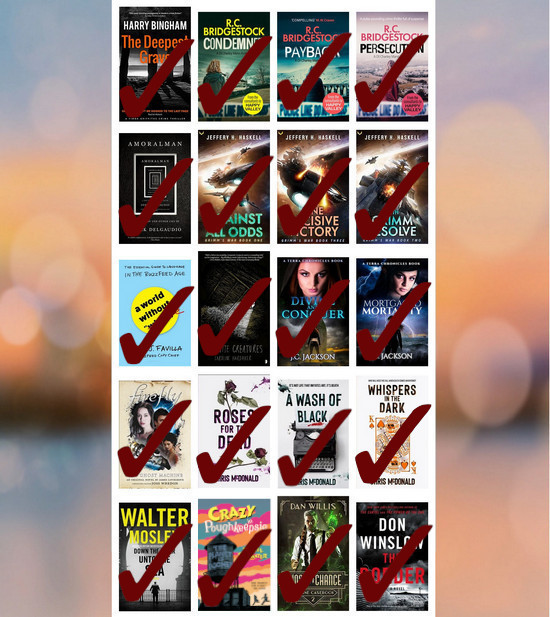
This month, I read 8 of the 20, bringing my total to 13. After a quick ARC break at the beginning of this week, I should be able to finish this challenge by mid-month—the earliest I’ve finished the challenge in the three years I’ve tackled it. I don’t think I’ve just jinxed things here, but I guess we’ll see. It’s been a fun challenge so far—I picked a good group of books this summer.

✔ 1. The Deepest Grave by Harry Bingham
✔ 2. Condemned by R.C. Bridgstock
✔ 3. Payback by R.C. Bridgstock
4. Persecution by R.C. Bridgstock
✔ 5. AMORALMAN: A True Story and Other Lies by Derek DelGaudio
✔ 6. Against All Odds by Jeffery H. Haskell
7. One Decisive Victory by Jeffery H. Haskell
✔ 8. With Grimm Resolve by Jeffery H. Haskell
✔ 9. A World Without Whom: The Essential Guide to Language in the Buzzfeed Age by Emmy J. Favilla
10. Composite Creatures by Caroline Hardaker
11. Divine and Conquer by J.C. Jackson
✔ 12. Mortgaged Mortality by J.C. Jackson
13. The Ghost Machine by James Lovegrove
14. Roses for the Dead by Chris McDonald
✔ 15. A Wash of Black by Chris McDonald
✔ 16. Whispers in the Dark by Chris McDonald
17. Down the River unto the Sea by Walter Mosely
✔ 18. Crazy in Poughkeepsie by Daniel Pinkwater
✔ 19. Ghost of a Chance by Dan Willis
✔ 20. The Border by Don Winslow

(subject to change, as is allowed, but I’m going to resist the impulse to tweak as much as I can).
20 Books of Summer '22 Chart

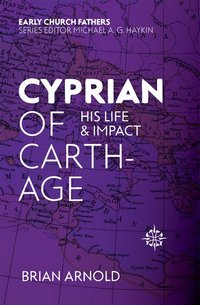
Cyprian of Carthage: His Life and Impact by Brian J. Arnold: An Unfocused Introduction to the Father

Cyprian of CarthageCyprian of Carthage:
His Life & Impact

by Brian J. Arnold

DETAILS:
Series: The Early Church Fathers
Publisher: Christian Focus Publications
Publication Date: February 1, 2018
Format: Kindle Edition
Length: 138
Read Date: July 24, 2022
Support Independent Bookstores - Visit IndieBound.org

The Series

In case you hadn’t read what I thought of the other book I’ve read in this series, let me start with the thumbnail description of the series I came up with:

I literally stumbled on to this series, The Early Church Fathers, a few weeks ago and thought it sounded like a great idea. It looked kind of like a mix of Crossway’s Theologians on the Christian Life and Oxford’s Very Short Introductions (incidentally, that’s what it ended up being).

What’s Cyprian of Carthage About?

Arnold has two aims for this short book: to introduce the third-century Father, Cyprian of Carthage, to his readers and to show that Cyprian has a use and significance for Christians today, especially as Arnold suggests that “Increasingly our world* looks more like Cyprian’s world.”

* Arnold seems to mean the Western world, perhaps, the United States, when he says “our world.”

Introducing Cyprian

Like the biography composed by Pontius, his contemporary, Arnold pretty much ignores Cyprian’s early years and starts with his conversion. It’s clear that he came from a prominent family, and seems to have held some noteworthy position in local government.

Soon after his conversion, he’s made bishop and it’s not long after that when he finds himself embroiled in controversies, some of which come out of the persecution of the Church. Arnold gives a quick overview of the nature of the controversies and Cyprian’s role and positions in each.

His Significance for Today

The latter part of the book focuses on “three areas where modern evangelicals would benefit by retrieving Cyprian: ecclesiology, virtue, and suffering and martyrdom.” Arnold sketches out each of these areas and points to how he thinks we could use the Father’s point of view.

So, what did I think about Cyprian of Carthage?

Because death and torture were always a possibility, Cyprian needed to make martyrdom appealing so that people would not drown in fear under the next wave of persecution.

The idea of making martyrdom appealing is pretty appalling to me. Sure, buttressing the faith of his people so they’d be able to stand fast during the next wave of persecution in the face of the possibility of martyrdom, is one thing. But making it appealing? Really?

Arnold also spends a lot of time discussing whether a certain period of history could be construed as a time of persecution—it’s an interesting question, and one probably worthy of debate with the scholar he’s focused on. But in a book of 138 pages, it’s not worth spending several paragraphs on the question.

I had a few other quibbles with his approach and some details of the writing. But it’s really not worth getting into.

This is a helpful volume, but it could’ve been better if Arnold had been a bit more focused on Cyprian and stayed out of extraneous areas. I do have a better appreciation for Cyprian, and I appreciate that. I just hoped for more.


3 Stars

This post contains an affiliate link. If you purchase from it, I will get a small commission at no additional cost to you. As always, the opinions expressed are my own.
Quick Take Catch-Ups: Some July 2022 Audiobooks

Some quick thoughts on some audiobooks from July—and one I forgot to write about in June. The point of these quick takes posts is to catch up on my “To Write About” stack—emphasizing pithiness, not thoroughness.


Deep HoleDeep Hole

by Don Winslow, Ed Harris (Narrator)

DETAILS:
Publisher: Audible Originals
Publication Date: May 26, 2022
Format: Audible Original
Length: 1 hr., 4 min.
Read Date: June 9, 2022

(the official blurb)
I don’t know about this. I mean, it’s a short story, so I shouldn’t expect much from this. And it’s a decent story, but…eh. It left me wanting more on just about every front.

But it wasn’t a bad story—which makes sense, Winslow can’t write a bad story—and Harris sells it.
3 Stars

Long LostLong Lost

by Linda Castillo, Kathleen McInerney (Narrator)

DETAILS:
Series: Kate Burkholder, #4.5
Publisher: Macmillan Audio
Publication Date: September 5, 2016
Format: Unabridged Audiobook
Length: 1 hr., 25 min.
Read Date: July 7, 2022
Support Independent Bookstores - Visit IndieBound.org

(the official blurb)
I wasn’t paying attention when I saw that this was the next entry for this series and checked it out of the library and was more than a little surprised when this wrapped up as quickly as it did. I was relieved, though, I didn’t think I could handle an entire novel where the setup was Kate and Tomasetti on a romantic weekend where they got distracted by a cold case.

As a short story, the concept and execution are just what you want. A nice way to tide the reader over between novels. I liked the resolution, too—sure, I saw it coming a few miles away, but Castillo ended it well.
3 Stars

My Mess Is a Bit of a LifeMy Mess Is a Bit of a Life:
Adventures in Anxiety

by Georgia Pritchett, Katherine Parkinson (Narrator)

DETAILS:
Publisher: HarperCollins Publishers
Publication Date: September 5, 2016
Format: Unabridged Audiobook
Length: 4 hrs., 15 min.
Read Date: June 28, 2021
Support Independent Bookstores - Visit IndieBound.org

(the official blurb)

This is a very amusingly told memoir, and you can see how Pritchett succeeded in comedy writing for TV. At the same time, that’s where it gets tripped up—the memories told are very brief, and almost always seem to be leading to a punchline (not necessarily a funny punchline, but a punchline). The result isn’t so much a memoir as loosely-associated scenes. There is a narrative throughout, but it’s subtle—the effect is like reading a sudden fiction collection that happens to be made up of true stories.

There are some really funny bits, some touching bits, and some good emotional moments. But…ugh. It’s like having a skeleton laid out on a table (I’m thinking of a shot from Bones or CSI: Wherever)—and I’d prefer to see some connective tissue between the bones—and maybe some organs and flesh to cover them, so that it’s an actual memoir, not the rough draft of one.
2 Stars

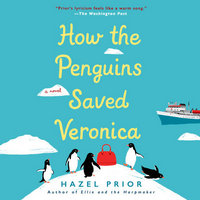
How the Penguins Saved VeronicaHow the Penguins Saved Veronica

by Hazel Prior, read by Helen Lloyd, Andrew Fallaize, Mandy Williams

DETAILS:
Series: Veronica McCreedy, #X
Publisher: Penguin Audio
Publication Date: June 16, 2020
Format: Unabridged Audiobook
Length: 10 hrs., 44 min.
Read Date: July 7-13, 2022
Support Independent Bookstores - Visit IndieBound.org

(the official blurb)
A sweet, almost-paint-by-numbers story of an elderly curmudgeon finding hope, kindness, and family thanks to time spent on a penguin research base in Antarctica.

There’s one scene at the end that serves to answer the reader’s questions that would be better left unanswered. We’d have been better served if we’d been left with ambiguity. Still, for a bittersweet and unnecessary scene, it was effective.

I’m not sure three narrators were necessary—I think any one of the three could’ve handled the whole thing judging by what I heard, but it wasn’t overly-distracting as multiple-narrator audiobooks can be.

I enjoyed the book, it was a perfectly charming and entertaining novel, as negative as I sound to myself—and am glad I finally indulged my curiosity about the book. But…meh. I’ve seen this story before and done better.
3 Stars

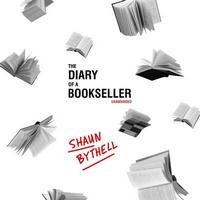
The Diary of a BooksellerThe Diary of a Bookseller

by Shaun Bythell, Robin Laing (Narrator)

DETAILS:
Series: The Diary of a Bookseller, #1
Publisher: Blackstone Audio
Publication Date: September 4, 2018
Format: Unabridged Audiobook
Length: 9 hrs., 42 min.
Read Date: July 15-19, 2022
Support Independent Bookstores - Visit IndieBound.org

(the official blurb)
I guess this would be the cure to any dreams/hopes/aspirations the reader might have to opening/buying a bookstore of their own. And the author certainly makes it clear that no one should do what he does—but it’s not like the book ends with him selling/closing down, in fact, he’s working to keep his store going.

The overall effect was like a James Herriott book—but with used books and readers in place of animals and their owners. Some pretty repetitive stories, just different enough to distinguish them—generally mildly amusing and engaging.

I had fun with it—would’ve enjoyed it a bit more if it were 20% shorter, I think. I do see that this is the beginning of a series. I’ll likely get the next installment, too. But I’m not rushing to do so.
3 Stars

This post contains affiliate links. If you purchase from any of them, I will get a small commission at no additional cost to you. As always, the opinions expressed are my own.
The Irresponsible Reader On…Self-Published Non-Fiction

(updated 7/26/22)
Self-Published Authors Appreciation Week

From the first moment that people did the strange thing of asking me to talk about their books on my blog, I’ve been impressed by the quality of a lot of what’s been published by authors going out on their own, taking all the risks, shouldering all the responsibility and doing all the work to get their words, their dreams, their blood, sweat, and tears. This should be celebrated—it’s definitely appreciated, as we’re trying to show this week.

Because I completely forgot to plan, I didn’t have a lot of new-to-me Self-Published works to talk about this week, so primarily I’m dusting off and updating these posts from last year—highlighting the self-published works that I’ve blogged about over the last few years—just a sentence or two. Hopefully, this’ll be enough to make you click on the link to the full post. Beyond that, it’d be great if I inspired you to add a few of these to your TBR. Also, be sure you check out the other posts over at the SPAAW Hub.

Today we’re going to be looking at Self-Published Non-Fiction—which are primarily memoirs at their core, it’s what the authors do with the memoirs that makes these really stand out. But there are a couple of other things, too.

bullet Life and Death Behind the Brick and Razor: Code Red Diamond by Isaac Alexis, MD—A prison doctor uses his experiences to give suggestions for a healthy/healthier life. (my post about it)
bullet How Not to Be an *SS: Essays on Becoming a Good & Safe Man by Andrew J. Bauman—Bauman calls men to an authentic, Biblical masculinity—one built on humility, kindness, and service. While offering concrete ways to set aside patterns of abuse and neglect. (my post about it)
bullet No Problem, Mr. Walt: Building a Boat, Rebuilding a Life, & Discovering China by Walt Hackman—Hackman was one of the first self-published authors to reach out to me, and I’m so glad he did. A fascinating read about a man deciding to have an authentic Chinese junk built for him to use as a houseboat in California. (my post about it)
bullet Finding Hope in Hard Things: A Positive Take on Suffering by Pierce Taylor Hibbs—The central premise is that God uses the “hard things” in life to shape us into the people he wants us to be, and uses some of the hard things in his life as case studies to demonstrate how they were used so the reader is equipped to look at their own lives and see the purpose in their suffering. (my post about it)
bullet In Divine Company by Pierce Taylor Hibbs—Pierce’s treatment of prayer focuses on the communicative nature of God and His image bearers and then nurturing that in our lives to improve our prayer. (my post about it)
bullet Struck Down but Not Destroyed: Living Faithfully with Anxiety by Pierce Taylor Hibb—Drawing on what he’s learned from over 12 years of anxiety, Hibbs talks about learning to see what God’s purpose in the suffering is (anxiety disorders specifically, but easily transferable to other types), understanding that His hand is guiding all things—including our problems—so how do we in faith (without denying the suffering) rest in faith. (my post about it)
bullet And Drink I Did: One Man’s Story of Growing Through Recovery by Jay Keefe—It’s all there in the subtitle, Keefe tells about his OCD, his alcoholic days, his getting sober, and how he’s trying to help others since then. Powerful stuff. (my post about it)
bullet How to Take Over the World: Practical Schemes and Scientific Solutions for the Aspiring Supervillain by Ryan North—A tongue-in-cheek way to talk about some of the most advanced science around and how it can (and in some ways is) be used to destroy the world. (my post about it)
bullet The Genius’ Guide to Bad Writing by R.T. Slaywood, R.C. Martinez—A guide for the writer who is tired of success and wants to reclaim their lives from answering the siren call of fortune and fame that comes to every author. Slaywood and Martinez have a 10-Step program guaranteed to ruin a novel or two and stop a career dead in its spot. (my post about it)
bullet Uber Diva by Charles St. Anthony—a humorist writes a memoir of a Lyft/Uber driver mixed with a guide to starting/surviving/thriving as one in a tough market. St. Anthony also has a few other books out now that are probably worth a read. (my post about it)
bullet Flying Alone: A Memoir by Beth Ruggiero York—A female pilot’s memoir of her path from flight school to flying for TWA (now that I have a son learning to fly, some of her more harrowing experiences keep flashing through the back of my mind). (my post about it)


If you're a self-published author that I've featured on this blog and I didn't mention you in this post and should have. I'm sorry (unless you're this guy). Please drop me a line, and I'll fix this. I want to keep this regularly updated so I keep talking about Self-Published Authors.

Guidebook for Instruction in the Christian Religion by Herman Bavinck; Gregory Parker Jr., Cameron Clausing (Translators): Dogmatics for Everyone

Guidebook for Instruction in the Christian ReligionGuidebook for Instruction in the Christian Religion

by Herman Bavinck, translated and edited by Gregory Parker Jr., Cameron Clausing

DETAILS:
Publisher: Hendrickson Academic
Publication Date: June 7, 2022
Format: Hardcover
Length: 194
Read Date: July 3-17, 2022
Support Independent Bookstores - Visit IndieBound.org

What’s Guidebook for Instruction in the Christian Religion About?

…in writing this guidebook, I had in mind the pupils in the highest classes of our Christian gymnasium, public schools, in the education of teachers, and in normal schools, etc., and moreover those who desire to understand the main content of our Christian, Reformed confession of faith through a not too comprehensive or expensive book.

That’s it in a nutshell—this book delivers the main content of the Reformed Christian thought directed toward those in High School or those without much education.

In twenty chapters of 10 +/- pages each, Bavinck covers things such as the Knowledge of God, General and Special Revelation, the Trinity, Creation, Providence, The Person and Work of Christ, The Holy Spirit, Salvation, The Church, and The End of the World.

There’s not much more to say than that, it’s shorter and easier to read than Systematic/Dogmatic Theology that I can think of, written by one of the most significant and influential teachers of the Twentieth Century.

[His desire is] to discuss the material in a scriptural sense: that it is not only revealed in its teaching but also in its comforting character, and that it is applied to the heart and conscience. Religious instruction must be education in the true sense of the word, and it must be education in the religion—that is, in the most tender and sacred of what a human soul may possess.

Guidebook and The Wonderful Works of God

While this was an original composition, it is fairly similar to The Wonderful Works of God, published a few years earlier. The Guidebook is streamlined, no doubt, but many passages/paragraphs in both match*, and the translators give footnotes throughout showing that—and when they diverge. There are instances that I’ve found (and will likely see others in future reading/study) that a similar section in the Guidebook helps clarify a point in TWWoG.

* Bavinck says he “intimately connected” the two.

So, what did I think about Guidebook for Instruction in the Christian Religion?

It took three afternoons of semi-casual reading for me to read this—I could’ve done it in two, had I skipped an afternoon nap (much less the three I let myself take over the period). I spent months reading both The Wonderful Works of God and Reformed Dogmatics, I practically gave myself whiplash as quick as this went.

This is incredibly accessible—anyone from fourteen on up should be able to handle it (although parts might take a little work for some—but not often). It covers all the essential matters of Systematic Theology, and occasionally goes beyond. There might be things you’d like him to be a bit more thorough about, but that’s what the other works are for. The translators put it this way:

He traverses a path in which he attempts to bridge the gap between the theology in the academy and theology in the church In doing so, he provides the pilgrim with a theology that is uniquely accessible. For those who found his Reformed Dogmatics alarmingly academic and his Magnalia Dei* intimidatingly thick, Guidebook is the theological porridge that is “just right” for most readers.

* The translators use the Latin title for The Wonderful Works of God throughout the work.

I recommend this without hesitation—as I do everything I’ve read by Bavinck—but without having to worry that someone will be intimidated by it, or decide they’re not up for the work. Although I still maintain that people shouldn’t be as intimidated as they are by him. The translators have given us a gift in making this available to English readers for the first time—as much of a gift as Bavinck gave the church of his time in writing it.

The translators close their Introduction with these words, and I think they’re a great way to sum up the book:

In his Guidebook for Instruction in the Christian Religion, Bavinck has given a gift to the church. The reader will likely find little that is groundbreaking or novel (as one regularly does in Reformed Dogmatics). However, this book supplies the theology of an academic concerned with the life of the church. It is an example of catechetical theology produced by one of the foremost academic theologians of his time.

Above all, we hope this translation helps fulfill Bavinck’s hope for true theology: that it does not remain an object of the head but penetrates the heart and thus becomes an act of confession and praise. As he writes, “Dogmatics, therefore, is… a hymn of adoration and thanksgiving, a ‘glory to God in the highest’ (Luke 2:14). In this book, Bavinck gives us a songbook: setting God before us and calling us to sing God’s praises.

5 Stars

This post contains an affiliate link. If you purchase from it, I will get a small commission at no additional cost to you. As always, the opinions expressed are my own.

You Are Not Your Own: Belonging to God in an Inhuman World by Alan Noble: Correcting Our Understanding of Humanity

You Are Not Your OwnYou Are Not Your Own:
Belonging to God in an Inhuman World

by Alan Noble

DETAILS:
Publisher: IVP
Publication Date: October 11, 2021
Format: Kindle Edition
Length: 232 pg.
Read Date:  May 29-June 12, 2022
Support Independent Bookstores - Visit IndieBound.org


I’ve tried to write this post 4 times since I finished it—and I’ve struck out each time, because I keep trying to interact with and reflect on Noble’s arguments—because there’s a lot to chew on, a lot to commend, and a great deal to unpack. But that’s not what I’m supposed to be doing here—I’m supposed to talk about the book, talk about how Noble wrote it, and what I thought about it—sure that involves some reflection on the content, but it’s not supposed to be my focus (as much as I might like it to be). So, I’m going to take a more surface-level approach, just so I can get something out.

(I said something similar with Winslow’s The Border recently—you’re probably not going to find a lot of people discussing these two books in similar fashions anywhere else)

The Back of the Book Description

(from ivpress.com)

“You are your own, and you belong to yourself.”

This is the fundamental assumption of modern life. And if we are our own, then it’s up to us to forge our own identities and to make our lives significant. But while that may sound empowering, it turns out to be a crushing responsibility—one that never actually delivers on its promise of a free and fulfilled life, but instead leaves us burned out, depressed, anxious, and alone. This phenomenon is mapped out onto the very structures of our society, and helps explain our society’s underlying disorder.

But the Christian gospel offers a strikingly different vision. As the Heidelberg Catechism puts it, “I am not my own, but belong with body and soul, both in life and in death, to my faithful Savior Jesus Christ.” In You Are Not Your Own, Alan Noble explores how this simple truth reframes the way we understand ourselves, our families, our society, and God. Contrasting these two visions of life, he invites us past the sickness of contemporary life into a better understanding of who we are and to whom we belong.

Acting as If We Are Our Own

The part of the argument from the first paragraph takes the first four chapters and the majority of the book. I guess you could consider this the “Here’s What’s Wrong and Why” part—if we are our own (as we’re told) several problems ensue—personally, culturally, and ecclesially. We (and Noble includes most of the American Church here) have a faulty anthropology, and that results in many problems.

Noble explains where he sees the faulty anthropology leading with compassion and sensitivity, while not pulling any of his punches.

Understanding We Belong to Christ

But for the Christian, our faith begins with the realization that we are not our own (as explained in the words of Heidelberg Catechism Q&A 1). Noble points the believer to recalibrate their understanding of human nature—particularly redeemed human nature—to begin to understand what being the possession of Christ means to our life, our future, our identity.

The strength of this section comes from Noble’s honesty:

At this point you might expect me to introduce my “Five Steps for Changing Your Life by Accepting That You Are Not Your Own.” But as this is a work of nonfiction, I won’t be doing that.

Instead, he gives some advice, based on his own experiences and observations—but he offers no guarantees. I found his honesty refreshing and thought there was a lot of wisdom to his advice, but I was mostly impressed by the humble nature of the approach—advice, not a program or techniques.

So, what did I think about You Are Not Your Own?

I really liked this—I thought it was insightful and helpful. Noble’s diagnosis and advice were sound—they seemed to match up with the world around us and the problems we see. More importantly, he points to the One whose grace, mercy, and care offer any true hope and help in this broken and dying world.

Noble’s writing flows—he’s engaging, compassionate, and relatable. It’s easy to understand even the more complex points he’s making, and his illustrations give the reader plenty to hang on to.

I think Noble’s book would serve as a great companion piece to Kapic’s You’re Only Human: How Your Limits Reflect God’s Design and Why That’s Good News*. Both of these authors remind the reader of our place in the world, and why we’re there—so we can respond in dependence and trust accordingly.

* Meador’s What Are Christians For?: Life Together at the End of the World, and even the better parts of Thompson’s Growing Downward fit here, too, I think—just not as neatly.

I’ve already re-read parts of this book, and find myself chewing on it repeatedly—especially as I compare it to Kapic’s. I heartily recommend and encourage you to pick it up.


4 1/2 Stars

This post contains an affiliate link. If you purchase from it, I will get a small commission at no additional cost to you. As always, opinions are my own.

Page 30 of 63

Powered by WordPress & Theme by Anders Norén