Category: Non-Fiction Page 31 of 61

Funny Farm (Audiobook) by Laurie Zaleski, Erin Moon: A Woman Rescues Herself, Her Kids, and a Big Bunch of Animals

Funny FarmFunny Farm:
My Unexpected Life with
600 Rescue Animals

by Laurie Zaleski, Erin Moon (Narrator)

DETAILS:
Publisher: Blackstone Publishing
Publication Date: April 25, 2022
Format: Unabridged Audiobook
Length: 8 hr., 10 min.
Read Date: May 9-10, 2022
Support Independent Bookstores - Visit IndieBound.org

I Did the Things You’re Not Supposed to Do

I judged this book by its cover.

I put this on my Want-to-Read this some months back, and really don’t remember why. All I really remembered is what I saw on the cover—it had to do with rescue animals, an “unexpected life”, and was called Funny Farm. The cover image has some friendly-looking animals. Something about it also reminded me of the cover of Straight Man by Richard Russo.

It looked to me like a light-hearted book full of animal stories, probably some that are inspirational, some that are funny, maybe some that are sad. Think James Herriot, David Rosenfelt (non-fiction that is), or Andrew Cotter. And while I read the publisher’s description, I’d forgotten it, so I just walked into this with my assumptions from the cover.

And you know what they say what happens when you assume…

So, What Is Funny Farm About?

It’s primarily the decades-long story of the establishment of the Funny Farm in its current form. It starts with Zaleski’s mother taking her and her two siblings and escaping from their abusive husband and father, dealing with both their poverty and continued harassment from him, and how they stumbled into Animal Rescue. From there we get a little about Zaleski’s outside career before we focus again on their mother’s relationship and battle with cancer, before getting a few chapters about the Farm’s permanent location and establishment as a non-profit organization.

More than anything else, this is a tribute to Zaleski’s mother—and a deserved one.

Animal Tales

The small, between-chapter, profiles/extended anecdotes about some of the Rescue’s animals are what I came for, and are absolutely worth it. I’d read another book full of nothing else. I don’t know that such a book would be a great read, but it’d be fun.

How was the Narration?

I liked the book, but I think I liked Erin Moon’s narration even more. She did a great job of bringing the text to life and augmenting the emotions.

I did think there was a weird New England-ish accent to the way she said “Mom”—particularly when she stretched it out a bit. I didn’t hear it at any other point, just that one word. It happened pretty frequently, and I bumped on it each time. Not a big deal, by any means, just something I noticed.

So, what did I think about Funny Farm?

I’d have liked it more had I come into it knowing what to expect—and that’s on me. Also, I probably wouldn’t have picked it up if I remembered what I was getting. Not that it’s bad, just not the kind of thing I put on a list to get.

There’s a warmth to the writing—even as it discusses the hardships her family endured, she writes from the perspective of someone who persevered and turned the experiences into something for the better.

While not loving the book, I really liked it—and have started following the Rescue’s social media accounts because I want to see some of this in action. It really sounds like a great organization. If you go into it with the right expectations, you’ll likely get more out of it than I did—give it a shot.


3 Stars

This post contains an affiliate link. If you purchase from it, I will get a small commission at no additional cost to you. As always, opinions are my own.

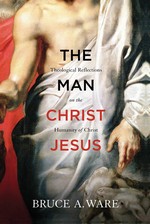
Reposting Just Cuz: The Man Christ Jesus: Theological Reflections on the Humanity of Christ by Bruce A. Ware

Was flipping through this book the other day, dipping my toes in here and there after reading Bavinck on Christ’s humanity (not that there was a problem with Bavinck, I just needed someone else’s voice in my head for a minute). So it seemed fitting to repost this today, rather than something half-baked on another book. I just wish that I’d finished the sentence I abandoned in paragraph #4….

The Man Christ Jesus: Theological Reflections on the Humanity of ChristThe Man Christ Jesus: Theological Reflections on the Humanity of Christ

by Bruce A. Ware
Kindle Edition, 160 pg.
Crossway, 2012
Read: March 9, 2014

One of Ware’s presuppositions — repeated throughout this book — is that evangelical Christians today have a good understanding of and embrace the doctrine of the Divinity of Christ, but their understanding of his humanity is wanting — enter this book. Without dipping a toe into Nestorianism, Ware wants his readers to understand the humanity of Jesus. He explains this so with a constant eye to His divinity — and how that divinity is expressed in the life of the God-man.

One of his main interests is for his readers to understand the dependency of Jesus on the Spirit — His indwelling, guidance and empowering. Without that indwelling, it would be impossible for Jesus to carry out His father’s will. If we grasp that, we see the limitations of the divine nature of Christ to his earthly work, which may seem paradoxical, but isn’t as Ware will explain.

The application portions to every chapter keep this book from being merely theoretical (however great that theory is) to helping readers put shoe leather to this teaching — as every teaching ought. It’s just easier when the author goes out of his way to help us start that on our own.

I really appreciated the chapter “Resisting Temptation,” Ware’s reflections on Hebrews 4:15 and the idea of Jesus being tempted to sin in general. He surveys some of the leading theories before suggesting his own idea how the idea of the impeccable theanthropos being tempted without sinning. He put into words an idea or two that had been floating around in my own head for a few years, and

I was surprised that Ware had to devote an entire chapter defending the masculinity of the God-man, although I shouldn’t have been. Sadly, this was a pretty boring chapter. Ware really beat this horse far beyond the point of its flatline. Sadly, he probably needed to be as through given today’s thinking.

Deep enough to discourage a casual read, but friendly enough that this should be able to be read by thoughtful laity.

—–

4 Stars

Catch-Up Quick Takes: A Few Words on a Few Books

I tried to write a full post on most of these, and I just wasn’t able to come up with enough to say. So, I guess it’s time for another one of these quick takes posts. The point of these is to catch up on my “To Write About” stack—emphasizing pithiness, not thoroughness. It wasn’t until I was well into writing this one that I realized there was a theme throughout this one. I was underwhelmed to varying degrees by all four of these books. On the plus side, my “To Write About” stack is a bit smaller.


Fight and FlightFight and Flight

by Scott Meyer, Luke Daniels (Narrator)

DETAILS:
Series: Magic 2.0, #4
Publisher: Audible Studios on Brilliance
Publication Date: March 11, 2019
Format: Unabridged Audiobook
Length: 10 hr., 26 min.
Read Date: April 4-7, 2022
Support Independent Bookstores - Visit IndieBound.org

(the official blurb)
Okay, sure, this was amusing. Luke Daniels is great. I enjoyed spending time with these characters again.

But…

This was a thin excuse of a story, were this a novella, it’d probably be pretty good—but stretched out this far, it just didn’t work.

However, the last chapter made the whole thing worthwhile, and what it introduces/sets up for the future makes me pretty excited to see what Meyer has up his sleeve.
3 Stars

Goodbye, ThingsGoodbye, Things:
The New Japanese Minimalism

by Fumio Sasaki, Eriko Sugita (Translator), Keith Szarabajka (Narrator)

DETAILS:
Publisher: Blackstone Audio
Publication Date: April 10, 2017
Format: Unabridged Audiobook
Length: 4 hr., 32 min.
Read Date: April 18, 2022
Support Independent Bookstores - Visit IndieBound.org

(the official blurb)
Ummm….yeah, so this was a thing I listened to. A friend was pretty excited about the book, so I thought I’d give it a whirl.

Sasaki didn’t convince me—the picture he painted of himself—as well as his readers/listeners—is of a pretty shallow person. I don’t think he is—or was, before he went through this period of self-improvement—but he sure did a lousy job of depicting a person who had any depth.

He describes an interesting way of life, but didn’t make me at all interested in trying it. I didn’t hate the book, but I can’t find anything to commend about it.

Szarabajka’s work was fine, I should add—nothing too flashy, which fits the book. I’d listen to other books he narrated.
2 Stars

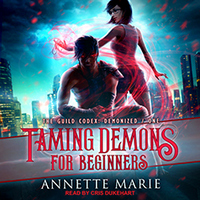
Taming Demons for BeginnersTaming Demons for Beginners

by Annette Marie, Cris Dukehart (Narrator)

DETAILS:
Series: Guild Codex: Demonized, #1
Publisher: Tantor Audio
Publication Date: December 30, 2019
Format: Unabridged Audiobook
Length: 7 hr., 52 min.
Read Date: April 26-27, 2022
Support Independent Bookstores - Visit IndieBound.org

(the official blurb)
While I was listening to this, I said, “this protagonist is doing nothing but making foolish/stupid moves—I have to pause occasionally just to growl at her.” I’m used to protagonists making foolish mistakes, that’s not the problem. But this woman seemed to be deliberately choosing the worst thing to do at every moment.

I’m not sure that she really got past that, but at some point, it stopped being annoying. I’m not sure why. Part of it has to do with the way that this book tied into Demon Magic and a Martini—Marie’s done this before, but the way she pulled that off in this case was plenty of fun. I don’t know that I’m sold on this series, but I do want to see what happens next, and that’s good enough.

Dukehart did a fine job—maybe a little bit too close to her work in The Guild Codex: Spellbound, but it’s easy enough to get past that.
3 Stars

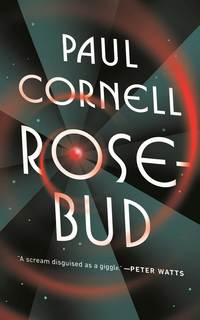
RosebudRosebud

by Paul Cornell

DETAILS:
Publisher: Tor
Publication Date: April 25, 2022
Format: Kindle Edition
Length: 112 pg.
Read Date: May 3, 2022
Support Independent Bookstores - Visit IndieBound.org

(the official blurb)
I…I just don’t know what to say about this. It’s a clever premise, and Cornell (as one expects) writes well—there are some nice sentences throughout. Basically…I should be singing the praises of this one.

And yet…

I can’t. I don’t know why, but I could not convince myself that I was enjoying this. I just didn’t respond to any of it. I’ve been a fan of Cornell’s for years, this is just a blip, I’m sure, and I’ll be gung-ho about his next work. But this just wasn’t for me.
2 1/2 Stars

This post contains affiliate links. If you purchase from any of them, I will get a small commission at no additional cost to you. As always, opinions are my own.
,

Face to Face with God: A Biblical Theology of Christ as Priest and Mediator by T. Desmond Alexander: A Biblical Theology of Hebrews

Face to Face with GodFace to Face with God:
A Biblical Theology of
Christ as Priest
and Mediator

by T. Desmond Alexander

DETAILS:
Series: Essential Studies in Biblical Theology 
Publisher: IVP Academic
Publication Date: March 22, 2022
Format: Paperback
Length: 138 pg.
Read Date: April 17-24
Support Independent Bookstores - Visit IndieBound.org

A study of Jesus Christ’s high priestly ministry takes us on a journey through paths that have largely become overgrown through lack of travelers. At times our journey will require perseverance as we familiarize ourselves with new terrain. Ultimately, we shall be rewarded as new vistas will come into view as we orientate ourselves toward the throne of grace in the heavenly sanctuary. Most important of all, as we follow the ascended Christ to the right hand of the Father in heaven, we shall hopefully discover afresh the magnitude of God’s forgiveness and the generosity of his love as he invites us to share in a kingdom that can never be shaken.

What’s Face to Face with God About?

A/The* central theme of the Epistle to the Hebrews is the Priesthood of the Lord Jesus Christ. Face to Face with God looks at the themes of priesthood—in general, and Christ’s specifically—in Hebrews and by examining the passages and teachings from the Old Testament that the Epistle is building on.

Amongst the themes Alexander explores are The Tabernacle (and Temple), Moses and Aaron’s relationship with God (prefiguring Christ’s), the role of the High Priest as Intercessor as well as in presenting the sacrifice, and the Priesthood of Melchizedek. He looks at the texts we get these ideas from as well as how the author of Hebrews deals with them as he develops his arguments, ending with a consideration of how believers are to live as a result of his priestly work—something that ought not to be ignored.

* Depending on who you ask.

So, what did I think about Face to Face with God?

This is an introductory survey, as are all the books in this series, so Alexander doesn’t dig too deeply into any of these ideas. But he does explore them with enough depth that the reader gets the complete picture.

This reads differently than the others in the series due to the way Alexander uses the book of Hebrews as his focal point and examines the texts and themes that the author of Hebrews cites in order to understand them. It’s not better or worse than the organization of the others, it’s simply a feeling of freshness that benefits the series.

I learned a lot, Alexander’s framing of the question of when Christ’s work as priest began was incredibly helpful. Not because of the answer (although that was great), but because of the thought process that went into the answer—reframing the way I thought of priesthood in general and Christ’s in particular. I had a similar reaction to his material involving Melchizedek. The other chapters had similarly helpful material, and I don’t want to take anything away from them, but those are the two that clicked the most with me.

This is a very helpful book, an interesting read, and a great example of what Biblical Theology can bring to the table.


3.5 Stars

This post contains an affiliate link. If you purchase from it, I will get a small commission at no additional cost to you. As always, opinions are my own.

How to Be Perfect (Audiobook) by Michael Schur: Being Ethical/Virtuous and Funny at the Same Time

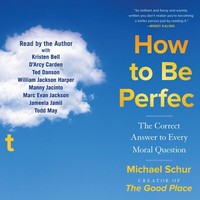
How to Be PerfectHow to Be Perfect:
The Correct Answer to
Every Moral Question

by Michael Schur (Writer, Narrator)
with: Michael Schur, Kristen Bell, D’Arcy Carden, Ted Danson, William Jackson Harper, Manny Jacinto, Marc Evan Jackson, Jameela Jamil, and Todd May

DETAILS:
Publisher: Simon & Schuster Audio
Publication Date: January 25, 2022
Format: Unabridged Audiobook
Length: 9 hrs., 13 min.
Read Date: April 11-13, 2022
Support Independent Bookstores - Visit IndieBound.org

What’s How to Be Perfect About?

From the Publisher’s Website:

Most people think of themselves as “good,” but it’s not always easy to determine what’s “good” or “bad”—especially in a world filled with complicated choices and pitfalls and booby traps and bad advice. Fortunately, many smart philosophers have been pondering this conundrum for millennia and they have guidance for us. With bright wit and deep insight, How to Be Perfect explains concepts like deontology, utilitarianism, existentialism, ubuntu, and more so we can sound cool at parties and become better people.

Schur starts off with easy ethical questions like “Should I punch my friend in the face for no reason?” (No.) and works his way up to the most complex moral issues we all face. Such as: Can I still enjoy great art if it was created by terrible people? How much money should I give to charity? Why bother being good at all when there are no consequences for being bad? And much more. By the time the book is done, we’ll know exactly how to act in every conceivable situation, so as to produce a verifiably maximal amount of moral good. We will be perfect, and all our friends will be jealous. OK, not quite. Instead, we’ll gain fresh, funny, inspiring wisdom on the toughest issues we face every day.

Schur did a lot of thinking, reading, and research into ethics as he was creating and writing The Good Place, this book comes out of that—it’s not quite the same as the classes that Chidi Anagonye would give, but it’s about as close are you’re going to get.

Morally Problematic Sandwiches

The most important part of becoming better people, I’ll say yet again, is that we care about whether what we do is good or bad, and therefore try to do the right thing. If we love a problematic person or thing too much to part with it altogether, I think that means we have to keep two ideas in our head at the same time: I love this thing. The person who made it is troubling.

One of the chapters I found most interesting—for a variety of reasons—is Chapter Ten, “This Sandwich Is Morally Problematic. But it’s also Delicious. Can I Still Eat It?”

For a range of issues, a lot of people struggle with things like watching Woody Allen or Kevin Spacey movies; listening to Michael Jackson; enjoying The Cosby Show; reading J. K. Rowling, Orson Scott Card, or Stacey Abrams novels; or eating Chick-fil-A or Burger King. This chapter explores how someone can enjoy these things while maintaining their ethical/political/social position.

Like almost every topic Schur addressed, I enjoyed seeing the way he approached the topic, and the kind of thinking he applied to it, more than I liked his conclusions. Although, I think I came closer to agreeing with him on this one than the rest. This is a common thread for me when it comes to non-theistic/atheistic philosophy, so I go into something like this expecting it. Interestingly, Schur’s conclusions on this idea come close to Alan Jacobs’ (Christian) conclusions in Breaking Bread with the Dead—not identical, but they strike me as pretty compatible.

The Narration

I frequently approach author-narrated works with a degree of trepidation, but I didn’t this time. Michael Schur knows what he’s doing, and I reflexively assumed that. He’s very capable of delivering this material in an interesting, almost conversational manner—as this book is a crystalization of his thoughts and the result of his research, he’s a great vehicle for this material.

And then there’s the rest of the cast…clearly, when Schur thinks “Virtue Ethics” he thinks about The Good Place and got the cast involved (along with Todd May, an actual ethicist). Would Schur on his own have been fine? Absolutely. But just having different voices helps break up what could be dry listening and add a level of variety that helps, it’s also good for distinguishing Schur’s words from a citation from any number of sources. And any time you can add Ted Danson’s voice to something, you know it’s going to improve things (I wonder if I could handle Marc Evan Jackson for an entire audiobook, or would that be too much of a good thing?).

I did have to do a mental double-take every time Manny Jacinto read, I’m not used to his normal voice.

Basically, narrator-wise, there’s nothing to complain about here.

So, what did I think about How to Be Perfect?

This is one of those books that invites you to stop and think about it. I don’t have the time or energy to do this, but what I really wanted to do when I finished this was to buy a hard copy of the book and sit down to work through it a few times to really engage with the ideas. I know myself well enough to realize I wouldn’t do it—or wouldn’t do it well enough to satisfy myself. But that was my initial reaction.

It’s a good book—it’s problematic in some of/many of its conclusions, sure, but it’s still a good book. Because of the nature of the show that this is based on, Schur produced something that assumes God does not exist. He doesn’t come out and deny or question it*, he simply writes as if that’s not something to be considered. So I’m obviously not going to be able to agree with everything he says, and will ultimately find fatal flaws to some of his conclusions—but that’s me. You’ll have your own set of issues, I’m sure. But when it comes to recent(ish) pop-philosophy books, this is better than many.

* Later in the book, there’s at least one shot at the notion of a reliable set of scriptures, or those who would pay attention to them, at any rate. But As far as attacks on religion go, it’s pretty mild.

I truly appreciated and enjoyed the way that Schur was able to explain the concepts he was wrestling with and the way he used humor throughout. Using himself as an example of ethical reasoning—especially as a negative example—made it all much more relatable, too. He never comes across as “you should live like this” but as “here’s what I’ve learned, here’s where I struggle, walk alongside me.”

Would I listen to this again? Yeah, absolutely. Would I go through the hard copy of the book? Sure (especially if I could find a way to take the time to do it right). Would I suggest you get the book in the medium of your choice? Absolutely. Entertaining, educational, funny, and thought-provoking. I’m not sure what else you could ask for.


4 Stars

This post contains an affiliate link. If you purchase from it, I will get a small commission at no additional cost to you. As always, opinions are my own.

Old Made New by Greg Lanier: A Practical and Engaging Guide for Laypeople

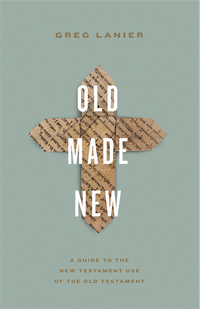
Old Made NewOld Made New:
A Guide to the New Testament
Use of the Old Testament

by Greg Lanier

DETAILS:
Publisher: Crossway
Publication Date: April 12, 2022
Format: Paperback
Length: 137
Read Date: April 10-17, 2022
Support Independent Bookstores - Visit IndieBound.org

What’s Old Made New About?

Lanier’s goal is to enable the average reader of the New Testament to understand how and why the authors would use an Old Testament passage at a particular point. As often as the NT uses the OT, that’s so important.

He begins—and this is beyond sad that he has to—by explaining why the reader of the NT would want to understand their use of the OT. He then differs his approach from others—primarily he’s not going to get bogged down in or distracted by technical considerations. As interesting as I find that kind of thing, he has a point.

In Chapter 1, he explains his method for analyzing the NT usage of a portion of the OT (I won’t get into that here), and then he spends the next few chapters demonstrating it.

The bulk of the book consists in tracing the NT authors’ engagement with the OT along three major themes:
Chapter 2—articulating the gospel in terms of the saving work of God in history and the gift of salvation to individual believers
Chapter 3—articulating the fullness of Jesus in his person and work, both as divine Son and human Savior
Chapter 4—articulating the identity of the church as eschatological Israel, as well as its mission and conduct for today

Each chapter has a mix of shorter examples that help prove out these themes, as well as longer case studies (six per chapter) that model for the reader how to do the work.

Appendix

There is a fourteen-page appendix to this book, “Inventory of New Testament Uses of the Old Testament,” listing most of the major agreed-upon uses of the Old Testament in order of New Testament chapter and verse, and then notes what kind of NT usage (Quotation, Allusion, Citation). There are some disagreements about what verses are NT uses of the Old, so Lanier keeps it to those with widespread agreement.

This is a very useful list both for the sake of reference and to help the reader practice the principles in the book. I know I’m coming back to this appendix.

I would’ve liked another version of this list using the same data, but in order of the OT book/chapter/verse—only to make things easier.

So, what did I think about Old Made New?

Lanier did a great job of balancing explaining his points with demonstrating the principles, and showing why the reader would want to use these principles. This is an engaging book, an eminently practical read, and an easy-to-use hermeneutic guide.

I really liked Lanier’s 3-step approach to analyzing the usages, it’s easy to wrap your brain around both as an example and for following the example. His case studies are both great object lessons and interesting for what he shows about the passage. I’d have had no problem reading these chapters if they were twice as long for personal benefit. Getting a handle on tools like this is such an aide for personal study and understanding, and Lanier’s given the Church a great gift with such an easy-to-understand and easy-to-use guide.

I definitely recommend this to your attention, study, and application. You’ll be rewarded.


4 Stars

This post contains an affiliate link. If you purchase from it, I will get a small commission at no additional cost to you. As always, opinions are my own.
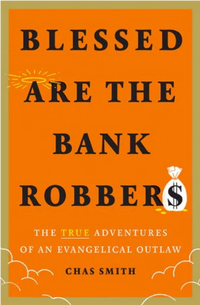
Blessed Are the Bank Robbers by Chas Smith: Not as Catchy as a Story about Billy Joe and Bobbie Sue

Blessed Are the Bank RobbersBlessed Are the Bank Robbers:
The True Adventures of an Evangelical Outlaw

by Chas Smith

DETAILS:
Publisher: Abrams Press
Publication Date: March 14, 2022
Format: Hardcover
Length: 264 pg.
Read Date: April 11-18, 2022
Support Independent Bookstores - Visit IndieBound.org

What’s Blessed Are the Bank Robbers About?

From the Publisher’s Site:

Chas Smith grew up deeply enmeshed in the evangelical Christian world that grew out of Southern California in the late 1960s. His family included famous missionaries and megachurch pastors, but his cousin Daniel Courson was Grandma’s favorite. Smith looked up to Cousin Danny. He was handsome, adventurous, and smart, earned a degree from Bible college, and settled into a family and a stable career.

Needless to say, it was a big surprise when Cousin Danny started robbing banks. Known as the “Floppy Hat Bandit,” Courson robbed 19 of them in a torrid six-week spree before being caught and sentenced to seven years. When he tried to escape, they tacked on another year. And when he finally got out, despite seeming to be back on the straight and narrow, Cousin Danny disappeared. Banks started getting robbed again. It seemed Cousin Danny might be gunning for the record.

Smith’s Blessed Are the Bank Robbers is the wild, and wildly entertaining, story of an all-American anti-hero. It’s a tale of bank robberies, art and jewel heists, high-speed chases, fake identities, encrypted Swiss email accounts, jilted lovers, and the dark side of an evangelical family (and it wasn’t just Danny; an uncle was mixed up with the mujahideen). It’s a book about what it means to live inside the church and outside the law.

Some of the material in this book comes straight from Courson himself—emails while he was a fugitive and writing he did while in prison to describe his career.

Other Bank Robbers

Scattered throughout are descriptions of other prodigious bank robbers, their streaks, and their methods. Most of these are pretty interesting and probably worth a book themselves. It’s not my typical genre, but there are a couple of these that I’d jump on.

So, what did I think about Blessed Are the Bank Robbers?

Well, it wasn’t bad. A lot of it was pretty entertaining and well-written. Significant portions of it were a blast and really sucked me in. But for every section of the book that sang, there was a section or more that fell flat. I had high hopes for this one and none of them were met.

This felt like the journalism surrounding Capone and the like during their heyday—it was a celebration of Courson’s crimes. The acknowledgment that his crimes caused actual harm came from Courson himself in a throwaway comment. Sure, it’s exciting to read about this kind of crime and Courson is clearly a charismatic figure. But celebrating him like this left a bad taste in my mouth. Then sending emails back and forth with him while he’s “on the lam”* and daydreaming about following in his footsteps? Were Smith a starry-eyed adolescent, I could accept it, but in a father? It discredited the author in my eyes (it would’ve taken a 2-sentence paragraph where he acknowledged the problem with it).

* I did appreciate getting the etymology of that phrase.

I don’t think Smith did an effective job of exploring the link between Courson’s Calvary Chapel upbringing and his turning to a life in crime—it’s there if you look for it (and make some assumptions), but if you’re going to put “Evangelical” in the subtitle, you need to expand on this.

There was a lot of promise in the premise, some entertaining/informational moments, and it was an easy read—but ultimately, it was a letdown. I fully expect that others won’t stumble over the things I did (some of which are above), and I don’t know that I would argue with them.


2 1/2 Stars

This post contains an affiliate link. If you purchase from it, I will get a small commission at no additional cost to you. As always, opinions are my own.

Instruction in Christian Love by Martin Bucer, Paul Traugott Fuhrmann (Translator): A 16th Century Classic We Need Today

Instruction in Christian Love [1523]Instruction in Christian Love [1523]

by Martin Bucer, Paul Traugott Fuhrmann (Translator)

DETAILS:
Publisher: Wipf & Stock Publishers
Publication Date: August 4, 2008
Format: Paperback
Length: 52 pg.
Read Date: April 10, 2022
Support Independent Bookstores - Visit IndieBound.org

What’s Instruction in Christian Love About?

This was written in response to some requests to expand on Bucer’s “sketchy lectures,” on the topic. In this brief book, he considers two ideas:

…according to the Scripture I exhort every one of you not to live for himself, but for his neighbor. I shall later show how to attain this ideal, for it can be realized in this world and life…

There are two chapters in the work, the exhortation, and application.

The Exhortation to not live for yourself, but for your neighbor takes the bulk of the work. Bucer begins by showing this obligation comes from the way humans were created and that the obligation continues—particularly for the believer. He then goes on to decry men seeking their own advantage, how that fuels injustice, wrapping up by saying the Christian not only shouldn’t seek their own advantage but should give up what is rightly due to them in order to promote the well-being of others.

The second chapter focuses on how the believer can carry out their duties—it was helpful and convincing. Almost everything he says here isn’t exclusive to this call to self-abnegation, but can be applied to most/all Christian duties. Which makes it more valuable, really.

So, what did I think about Instruction in Christian Love?

It’s a short work, so there’s not much to say. The second chapter is useful and can even be easily applied to the modern reader (sometimes 16th Century works are harder to relate to in their application).

But the treasure of this book is in the convicting and inspiring first chapter. I really had to be impressed with some of Bucer’s arguments and interpretation.

I came across a mention/description of this book in Meador’s What Are Christians For?, and I probably should’ve waited longer between the two—I couldn’t appreciate this work for Bucer’s genius as Meador’s words were still echoing in my ears. If I came to it fresher, I think I’d be more impressed.

But oh, well, it’s still a good work—and an easy read (outside of the conviction) that was well worth the time, and in years to come will be a very profitable re-read for me.

This post contains an affiliate link. If you purchase from it, I will get a small commission at no additional cost to you. As always, opinions are my own.

What Are Christians For? Life Together at the End of the World by Jake Meador: A View for Living in Culture and Nature

What Are Christians For?What Are Christians For?:
Life Together at the End of the World

by Jake Meador

DETAILS:
Publisher: IVP
Publication Date: February 21, 2022
Format: Hardcover
Length: 170 pg.
Read Date: March 27- April 3, 2022
Support Independent Bookstores - Visit IndieBound.org

God looks at this world and loves it, which is why we can and should do the same. This world is not something we should seek to escape through conquest or bend to our will through technique, power, or control. Rather, it is a gift given to us by God for our joy and his glory. Because God is love and his law is good, we can look at our neighbor and love him or her. Because God gave himself to us, we can give ourselves to others. We can confidently and joyfully enter into these debts of love that we build up over a lifetime of living in the world, and we can dispense them with extravagance, trusting that whatever wrongs we might experience today as a result of such living will be gathered up and made right in the glorious and perfect love of God.

The Back of the Book

What does a Christian political witness look like in our day?

Politics ought to be defined by fidelity to the common good of all the members of society. But our modern Western politics are defined by a determination to bend the natural world and human life to its own political and economic ends. This wholesale rejection of the natural order is behind the dominant revolutions in our history, and defines our experience in Western society today—our racialized hierarchy, modern industry, and the sexual revolution.

In What Are Christians For?, Jake Meador lays out a proposal for a Christian politics rooted in the givenness and goodness of the created world. He is uninterested in the cultural wars that have so often characterized American Christianity. Instead, he casts a vision for an ordered society that rejects the late modern revolution at every turn and is rooted in the natural law tradition and the great Protestant confessions. Here is a political approach that is antiracist, anticapitalist, and profoundly pro-life. A truly Christian political witness, Meador argues, must attend closely to the natural world and renounce the metallic fantasies that have poisoned common life in America life for too long.

Faithful Presence

In his discussion of the Christian response to those revolutions, Meador borrows a scheme from James Davison Hunter describing the four postures Christians have taken: defensive against, relevance to, purity from, and faithful presence.

He doesn’t spend a lot of space—but sufficient space—defining and then critiquing the first three, but gives more space to faithful presence. And actually, everything he argues for in the remainder of the book could fit in this category. I want to say I’d heard of Hunter’s categories before this, but I can’t remember where (in print or lecture). But first off, I really appreciated the schema in terms of describing how the American Church has responded. But even more, I appreciated Meador’s explanation of faithful presence and then his application of it.

Influences

Meador builds the arguments in this book on the work of Herman Bavinck—particularly his book, Christian Worldview. But he’s drawing on several other thinkers and writers from across the theological spectrum (a methodology borrowed from Bavinck). You can see the fingerprints of Lewis, Tolkien, Wendell Berry, John Paul II, Solzhenitsyn, Martin Bucer—and others. There’s a breadth of influences here that’s impressive and adds a lot to the arguments (and makes narrow-minded guys like me a little uncomfortable).

So, what did I think about What Are Christians For??

What did [Aleksandr Solzhenitsyn] propose as a way through the revolution? We must turn, our eyes upward to the heavens, he said, not as a place to conquer, as his compatriots in the space program believed, but as a reminder that our lives exist as a vapor in the wind, and then comes the judgment.

We do not conquer the heavens; we are judged by them. And if we fail to discover the sources of spiritual health, there is nothing else for us. Our spiritual lives will continue to be trampled on by the weight of our age. And if our spiritual lives are destroyed, no amount of wealth or power can atone for such a loss.

This seems like one of those books that I need to read a handful of times and then read some scholarly reviews—pro and con—before I can really say I have a handle on the strengths and weaknesses of the arguments. Thankfully, this isn’t that kind of blog.

How did it read? Very nicely. Meador’s writing is strong, it’s clear, and he’s able to express complex thoughts in a very digestible manner. Sure, I think I need to read it a few more times before I could say I mastered the thoughts—but that’s on me, not the text, this is just not the kind of thing I spend a lot of time thinking about. I appreciated Meador being critical of both the American Left and the American Right (you rarely see that in Christian literature), while putting forth a vision built on the best of the Christian traditions.

I don’t think Meador offers a perfect solution to the situation we find ourselves in, but there’s a lot of insight and wisdom to be found in these pages. And even if it’s not perfect, it’s a whole lot better than anything else I’ve found.


4 1/2 Stars

This post contains an affiliate link. If you purchase from it, I will get a small commission at no additional cost to you. As always, opinions are my own.

Recovering Our Sanity: How the Fear of God Conquers the Fears that Divide Us by Michael Horton

Recovering Our SanityRecovering Our Sanity:
How the Fear of God Conquers
the Fears that Divide Us

by Michael Horton

DETAILS:
Publisher: Zondervan
Publication Date:  February 14, 2022 
Format: Kindle Edition
Length: 320 pg.
Read Date: February 27-March 13, 2022
Support Independent Bookstores - Visit IndieBound.org

Even in more conservative contexts today, the reading of a “fear of God” passage is often quickly followed up with an explanation, dying the death of a thousand qualifications. The upshot is that fear doesn’t really mean “fear.” In such widespread dismissals we are not only failing to give God his due but are depriving ourselves and each other of the only antidote to the crippling fears that haunt us.

…The fear of God leads to trust, and trust bears the fruit of the Spirit, producing a harvest of blessings for ourselves and for others. Fear really is worship— we fear what we believe is ultimate, what we think has the last word over our lives.

What’s Recovering Our Sanity About?

In Part 1, “The Fear to End All Fears,” the goal is to remind readers about the Biblical virtue of the Fear of God—what it means, how it contrasts to other fears, and how when our focus is on the Fear of God, other fears lose significance and power.

In Part 2, “Facing Our Fears with Eyes Raised to God,” Horton puts shoe leather to this understanding of Fear of God vs. other fears. He looks at our fears of death, suffering, disease, the future—and, perhaps most importantly, other human beings.

Confronting Our Fear of Each Other

Once we regain the fear of God— indeed, of Christ as well (he’s not just the friend of sinners but the judge of all)—and face up to who we are before him, coming with empty hands to receive his Son, we’ll begin to lose this fear of the world. We will not be embarrassed when the unkempt widow sings off-key with the gusto of heartfelt conviction or when the building is drab or if we have never had a brush with greatness and our pastor has never been photographed with anybody in the news. The faithful preaching of the Word, baptism, and the Lord’s Supper; the gracious care, encouragement, and warnings of elders and the wider body; the extension of Christ’s love for temporal needs through the deacons; common prayers, singing, confession of our faith and of our sins, Christ’s declaration of forgiveness, and even God’s greeting at the beginning and his benediction at the end— all these will seem so marvelously familiar and new to us at the same time. And then we will begin to not need the world’s affection any longer.

Roughly the last third of the book is taken up by the third part of Part 2, “Confronts Our Fear of Each Other.” In this Horton talks about the fear we have of other Christians and other people outside the Church—there’s a focus on social and political issues and how American Christians ought to react to them instead of how we tend to. Horton avoids a “Left Wing” or “Republican” response—finding positive things on both sides of an issue (many of which shouldn’t find binary responses, but it seems impossible for Americans to do anything else), as well as things to critique on both sides.

Horton goes out of his way not to demonize those who disagree, but reminds his readers that there are those on each side who are fellow image-bearers, and all need Christ more than they need to be corrected or encouraged about their stances on any issue. The Church’s calling is to set aside the focus on the temporal and point others to the eternal and the world to come, while showing our gratitude for Christ’s work by serving those around us.

This sub-section is worth the price of the book (not that the rest was a waste).

So, what did I think about Recovering Our Sanity?

My goal in this book is not to take sides in cultural and political debates. Instead, it is to raise our eyes to heaven so that our sanity can be restored, as Nebuchadnezzar experienced in Daniel 4.

There were more than a few times where I wondered if Horton had lost track of the thesis of the book—I found each chapter, each topic that he covered very valuable and was impressed by the wisdom that Horton offered.

But I was wrong about that—and by the end, it was easier to see where he was going all along. Horton’s been one of those writers that have been helpful to me for a couple of decades now and it’s good to see that hasn’t changed.

There’s a lot to chew on here, and as I said, a lot of wisdom to be gleaned. I can’t imagine every reader is going to agree with everything he has to say (and I can’t believe that Horton expects that, either)—but his major points are sound, Biblical, and needed by the American Church so that we remember what our priorities are supposed to be.


4 Stars

This post contains an affiliate link. If you purchase from it, I will get a small commission at no additional cost to you. As always, opinions are my own.

Page 31 of 61

Powered by WordPress & Theme by Anders Norén