The Friday 56 for 6/16/23: The Worst Man by Jon Rance

The Friday 56This is a weekly bloghop hosted by Freda’s Voice.

RULES:
The Friday 56 Grab a book, any book.
The Friday 56 Turn to Page 56 or 56% on your ereader. If you have to improvise, that is okay.
The Friday 56 Find a snippet, short and sweet.
The Friday 56 Post it.

from Page 56% of:
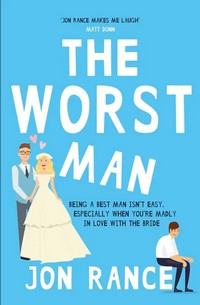
The Worst Man

The Worst Man by Jon Rance

Wilf sits at the table staring blankly at his plate, and it’s obvious that eventually one of us will have to ask the burning question, and right now all eyes are on me. I clear my throat.

‘Everything all right?’ I say, trying to sound as casual as possible even though it’s glaringly obvious that everything is not okay. This is one of those moments in life that requires great seriousness and sensitivity and probably shouldn’t be handled in a pub after ten pints of beer.

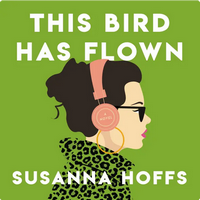
This Bird Has Flown (Audiobook) by Susanna Hoffs, Juliet Stevenson: The Portrait of a Music Star as a Thirtysomething

This Bird Has FlownThis Bird Has Flown

by Susana Hoffs (Author and Narrator), Juliet Stevenson (Narrator)

DETAILS:
Publisher: Little, Brown & Company
Publication Date: April 4, 2023
Format: Unabridged Audiobook
Length: 12 hrs., 35 min.
Read Date: May 11-16, 2023


What’s This Bird Has Flown About?

Jane Star is your proto-typical one-hit-wonder. She rocketed to stardom via a cover song and its music video (which was intended to be a feminist critique of something, but really just made her into a sex kitten). She struggled to come up with another hit and eventually her career died down and she disappeared off the scene.

Following a major breakup, she’s trying to get her career re-established (if only so she can move out of her parent’s house). Her manager/friend arranges for Jane to spend some time in London with her to write—which turns into a once-in-a-lifetime chance to play with the man whose song put her on the map at the Royal Albert Hall. Can she use this to re-launch herself?

Meanwhile, she strikes up a whirlwind romance with a man she met on the flight to London. This is both an inspiration for her writing and a major distraction from it.

The Love Story

It absolutely didn’t work for me. At all. It was a lust/infatuation story fit better for teenagers than a world-weary rock star and a college professor.

And a lot of the “sexy” moments seemed to be trying too hard to be sexy, which just feels desperate.

So why did I persist?

The One Hit Wonder Looking for Another

The story about Jane Star, trying to cling to marketability and relevancy—and maybe, just maybe regaining some sort of career is the part of this novel that makes putting up with the rest worth it.

It’s hard not to wonder how much of Jane’s experience is based on Hoffs—but it’s an idle thought because what Jane is going through is more interesting than my own speculation. She’s trapped by that one cover song that thrust her onto the world stage and is something she just can’t live up to.

She’s trying so hard to recapture that magic, to live up to expectations that she can’t write anything. And anyone who’s lived through some sort of creative block will be able to identify with this.

But then there are some moments where she remembers why she’s a musician, gets to sing or play. Even gets to write a little. And it’s magic. Not just for Jane, but for the reader—Hoffs describes the sensation in a way that it’s impossible not to get caught up in it.

I love a good rock’n’roll novel, and Hoffs delivers here.

How was the Narration?

This is really where the book shone for me—Hoffs handled the narration and the dialogue for Jane, Stevenson did the rest of the characters.

Sure, we all know that Hoffs can sing—but she can handle other voice performance areas as well. I was really impressed by what she did and was thoroughly engaged throughout.

But Stevenson? Wow. Knocked. It. Out. Of. The. Park. Her accents, her emoting, her…everything. I hated every time a scene with her ended, and was only placated by knowing another was on the way, with her doing another voice or three. Her work as Pippa, Jane’s manager, alone made me a fan.

So, what did I think about This Bird Has Flown?

Overall, I enjoyed this. I didn’t get that invested in the “love” story but thought it resolved okay (probably more than okay if you are able to get invested in it). The novel wouldn’t hold up without it (although you could improve it without changing most of the rest of the novel), so I’m not going to trash it too much.

The creativity/musician/whatever storyline—along with the accompanying friendships and conflicts—was really well done and more than made up for my grinchy attitude toward the rest. I really got invested in it and thought my investment was rewarded.

I picked up the book because of a piece or two I’d read about Hoffs’ depiction of the musician’s life—and it paid off. It would’ve been nice if the rest had been as good, but I’ll take what I got. This Bird Has Flown is not great, but it’s a lot of fun with some fantastic moments. Give it a whirl.

If Hoffs tries her hand at novel writing again, I’ll be willing to try it.


3.5 Stars

This post contains an affiliate link. If you purchase from it, I will get a small commission at no additional cost to you. As always, the opinions expressed are my own.

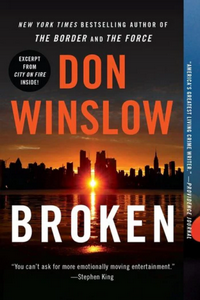
Broken by Don Winslow: It Doesn’t Get Better Than This

BrokenBroken

by Don Winslow

DETAILS:
Publisher: William Morrow
Publication Date: August 10, 2021
Format: Paperback
Length: 335
Read Date: February 24-28, 2023


From the Back of the Book

No matter how you come into this world, you come out broken . . .
In six intense, haunting short novels, Don Winslow returns to the themes that are the hallmarks of his acclaimed body of work—crime, corruption, vengeance, justice, loss, betrayal, guilt, and redemption—to explore the savagery and nobility that drive and define the human condition.

In Broken, Winslow creates a world of high-level thieves and low-life crooks, obsessed cops and jaded private detectives, dope dealers and government agents, bounty hunters and fugitives. Diverse and richly drawn, these characters—some familiar, others new—are lost souls driving without headlights on the dark highway of modern America. Set in New Orleans and Hawaii, Southern California and south Texas, each story in this collection is distinctively Winslow, shaped by his trademark blend of insight, humanity, humor, drama, and consummate literary craftsmanship.

A powerful, gripping collection of tales that will become classics of crime fiction, Broken is Don Winslow at his nerve-shattering, heartbreaking best.

I’m not so sure I’d call these “short novels,” or novellas, or whatever. They’re long short stories. 50-60 pages or so each. But eh, who cares what they’re called? They’re a bunch of stories by Don Winslow—that’s enough for me.

Here are a few words about each.

Broken

Stunning. Gut-wrenching. Violent.

At its core, it’s about a narcotics officer in the New Orleans Police Department out for vengeance against the drug lord who killed his brother.

It’s about the price of vengeance, the hole a death can leave in a family, the costs of the War on Drugs to those on both sides, and what can happen when the watchmen aren’t watched.

Crime 101

Winslow is a master of style. It’s like he periodically decides to show the world that he’s the flashiest Crime Fiction writer in action. Sometimes he does it in a chapter (or less) of a novel, sometimes he does it for longer (I recall Savages being that)—this is one of those times. The entire thing is so quotable. The term cinematic comes to mind—you can practically see everything as you read it—maybe even reach out and touch it.

The story focuses on a master thief—so good that no one knows what he looks like. He’s referred to as the 101 Bandit because his targets seem to be focused up and down the Pacific Coast Highway, Highway 101.

Davis is everything you want a master thief to be (especially if you’ve watched too many movies). He’s cool, he drives flashy cars, he has exquisite taste in food and drink, and—because he lives by certain ironclad rules for his jobs–he’s never been caught.

Lou’s the detective who’s devoted to catching him. He’s not cool or stylish—he’s leaving his (cheating) wife, starting a new chapter in his life, and is determined to put the Bandit away.

Both are very good at their chosen professions—which is better?

The San Diego Zoo

Rightly or wrongly, I think of Winslow stories in one of two ways—they’re either full of gritty realism (think The Force, The Cartel trilogy, or Broken above). Or they’re this kind of crime story that you want to laugh at, even though it’s not really a comedy. They’re just as grounded, but there’s a joy to them that seems impossible to come from the same pen as the others.

This story belongs here. I shared the opening a couple of months ago—and it hooked me hard. I’m pretty sure that I texted the friend who gave me the book about my fanaticism for the story before I was half-done. I really think that I could read this daily for a month and still enjoy it.

Oh, what’s it about? A chimpanzee has escaped from the San Diego Zoo and somehow got a pistol. One of the cops at the scene is instrumental in getting the gun away from the chimp without a tourist (or anyone) getting shot and helping the Zoo retrieve it. Then gets curious about how the chimp got the gun and does his best to answer the question, and the reader gets taken on a wild ride.

Sunset

I will always and forever take an excuse to read about Boone Daniels from The Dawn Patrol and The Gentleman’s Hour. In this story, Boone is off to chase down a beloved and legendary surfer who’s skipped on bail. How beloved? Some time ago Boone tagged this man with the nickname “ELT” for “Everyone Loves Terry.”

But now Terry’s on the verge of ruining a bail bondsman’s business. And yeah, he’s beloved—except by those he’s taken advantage of (like Boone, who keeps letting him do it).

I’m on the verge of retelling the whole thing in a lousy way. So I’ll just shut up. It’s a great cat-and-mouse hunt starring the world and characters from The Dawn Patrol (my personal favorite Winslow novel).

Even if you don’t regard the initial novel as an almost-Platonic ideal, even if you’ve never read that novel, you’ll find something to enjoy in this story.

Paradise

The trio at the center of Winslow’s Savages and The Kings of Cool head to Hawaii to vacation and hopefully start doing some business. Because it’s this particular trio and they attract trouble, things go horribly wrong. But they go wrong in a flashy, stylish, and violent way. There’s some connection with other Winslow works, too.

It’s been years since I read them, so I can’t say for certain—but I think this isn’t as good as Savages, but better than The Kings of Cool. But both were so good, I’m not sure it matters.

The Last Ride

This was simply heartbreaking. It’s a story about a guard at an ICE detention center for children who’s had enough. The sight of one particular girl locked up moves him in a way that others haven’t. So he takes matters into his own hands.

So, what did I think about Broken?

This is a fantastic collection—not a dud in the batch, although I liked some more than others, but that says more about my tastes than the quality of the stories. This really feels like a broad overview of “here’s the spectrum of what Crime Fiction can be” (except for cozy, I don’t know if Winslow is capable of cozy). Each story is distinct and self-contained*—it’s hard to think that some are written by the same man—with different voices, different types of stories, and so on.

* Although there are some links between some of these stories in the volume—as well as ties to earlier novels.

One reason that I don’t want to quibble too much with the whole “short novel” descriptor is that unlike many short stories or novellas—every one of these stories packed the punch of a novel. The plots, intricacies of story and character, the emotional weight, and whatever else you want to ascribe to the reading experience felt more like it belonged to a 200+ page novel rather than a 50± page story.

Anything else I can think to say at this point is just a repetition. This is a great collection from a master of the craft. Don’t miss it.


5 Stars

This post contains an affiliate link. If you purchase from it, I will get a small commission at no additional cost to you. As always, the opinions expressed are my own.

Book Blogger Hop: Do You Read Children’s Books?

Book Blogger Hop


This prompt was submitted by Billy @ Coffee Addicted Writer:

Do you still enjoy reading children’s books?

I have relatives that would consider 90+% of what I read to be childish, but that’s probably not the same thing.

Even before the new feature I started this year, Grandpappy’s Corner, I’ve always gladly accepted requests from Children’s and Picture Book Authors to talk about their books–and I’ve even bought a few for myself over the last couple of years. There’s something about them that just sparks joy (also, it’s pretty low investment of time and energy in return for that spark).

Some of my favorite books over the last few years have been written for kids–and several of my favorite books ever fit have been, too.

There’s that oft-quoted line from C.S. Lewis

I am almost inclined to set it up as a canon that a children’s story which is enjoyed only by children is a bad children’s story.

I’d absolutely agree with that.

I think a better question is why wouldn’t you like children’s books?

When I started this, I thought it was going to be a longer piece. But, eh…who needs that?

Do you still read children’s books?

WWW Wednesday, June 14, 2023

I’m not sure that I have anything to ramble on about before the main event today, so let’s just dive into the triple Ws.

This meme was formerly hosted by MizB at A Daily Rhythm and revived on Taking on a World of Words—and shown to me by Aurore-Anne-Chehoke at Diary-of-a-black-city-girl.

The Three Ws are:

What are you currently reading?
What did you recently finish reading?
What do you think you’ll read next?

Easy enough, right?

What are you currently reading?

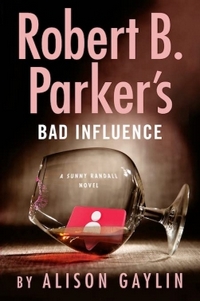
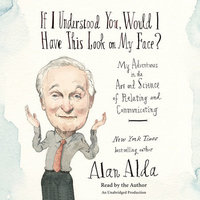
I’m reading the new Sunny Randall book from the new Sunny Randall author: Robert B. Parker’s Bad Influence by Alison Gaylin and am listening to the intriguing If I Understood You, Would I Have This Look on My Face?: My Adventures in the Art and Science of Relating and Communicating by Alan Alda (Narrator) on audiobook.

Robert B. Parker's Bad InfluenceBlank SpaceIf I Understood You, Would I Have This Look on My Face?

What did you recently finish reading?

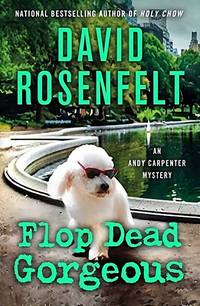
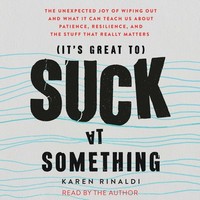
The most recent books I’ve finished are David Rosenfelt’s Flop Dead Gorgeous and It’s Great to Suck at Something by Karen Rinaldi on audio.

Flop Dead GorgeousBlank SpaceIt's Great to Suck at SomethingE

What do you think you’ll read next?

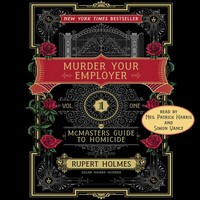
My next book should be The Worst Man by Jon Rance because I forgot that it’s what I put here last week. Oops. And my next audiobook should be Murder Your Employer: The McMasters Guide to Homicide by Rupert Holmes (yeah, it turns out, that one), Narrated by Neil Patrick Harris and Simon Vance.

The Worst ManBlank SpaceMurder Your Employer

Tell me about what you’re reading!

Grandpappy’s Corner: Little Aiden – A Love Book for Toddlers by Albert and Anna Choi, Bettina Braskó (Illustrator): Will Make You Say, “Awwww.”

I’m posting about the two books (so far) in the Little Aiden series today, which is turning into a bigger challenge than I expected. The two books are pretty similar in terms of style, quality, etc. So, yeah, the second post might sound a lot like the first—occasionally I’m just going to copy and paste. Sorry about that. But they should be different enough to justify your time as well as mine.


Little Aiden - A Love Book for Toddlers

Little Aiden – A Love Book for Toddlers

by Albert and Anna Choi, Bettina Braskó (Illustrator)

DETAILS:
Series: Little Aiden 
Publisher: Mytogo Publishing
Publication Date: May 22, 2023
Format: eBook
Length: 41 pg.
Read Date: June 10, 2023

What’s Little Aiden – A Love Book for Toddlers About?

This book is basically someone* narrating a day in Aiden’s life (or a bunch of activities over a few days), assuring him of their love in all the things he’s up to—when he’s being brave, when he’s being calm, when he’s sad, anxious, scared, and so on. All throughout the day and with a promise that this love will continue.

*Presumably his mother, given the art—although you could make the case that it’s from the point of view of the dad seeing both of them. It really doesn’t matter.

Let’s Talk about the Art for a Minute

The art is as adorable and eye-catching here as it was in the other Little Aiden book. Fantastic expressions, great background illustrations, etc. These are going to be very fun for a toddler—and whoever is reading with the toddler—to stop and talk about.

Braskó’s use of Aiden’s teddy bear is fantastic, once I saw what she did on the “Brave” illustration I had to go back through the whole book just looking for what was going on with the bear. (adding the rest of the toys to the mix on the “Confident” page was great, too)

I like her use of the first Little Aiden book here—that was such a nice touch. I wonder how many toddlers will notice?

Be sure to check out some of the samples on Braskó’s website.

How is it to Read Aloud?

I don’t mean this in a bad way—but this isn’t going to do much for the adult reader. It’s a simple and repetitive text. You don’t get to do any fun rhymes, tongue twisters, silly voices, or goofy noises (well, maybe a couple). And it’s okay, because it’s not that kind of book.

It’s the kind of book that’s intentionally repetitive—this is how you can help the child learn. It’s written simply for the same reason. Short and clear sentences that make it easy to grasp the point.

It’s also the kind of book that’s easy to stop reading to discuss—what Aiden is doing, the art, what his Teddy Bear is doing (alongside or in contrast to Aiden), or whatever. And that’s where the engagement for the adult reader is going to come in.

And, hey, some of the pages serve as a good reminder to the adult that it’s okay for the toddler to be frustrated and angry—because it’s really easy for parents/caretakers to forget that sometimes. It’s good for us to vocalize that.

So, what did I think about Little Aiden – A Love Book for Toddlers?

This is just so sweet. There’s some fun to be had (primarily from Braskó’s art, because the text is earnest), but it’s largely warm and sweet reminders of a parent’s affections.

It just made me melt, it’ll likely do the same for you.

It’ll be a great springboard for a parent/grandparent/caregiver to use to talk about all the different ways and times they love the toddler they’re reading with—and who can’t use something like that?

Another heartily recommended book from this series.


4 Stars

Grandpappy Icon

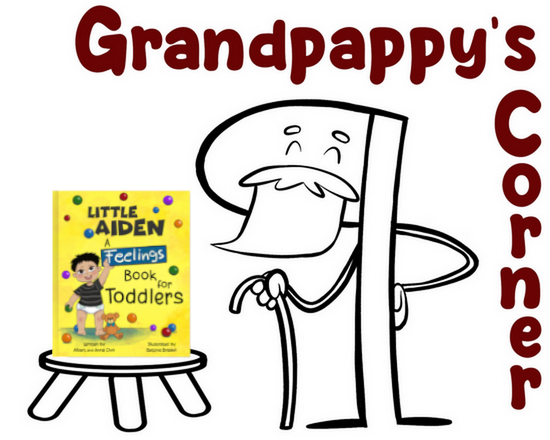
Grandpappy’s Corner: Little Aiden – A Feelings Book for Toddlers by Albert and Anna Choi, Bettina Braskó (Illustrator): Nothing Less than Feelings

I’m posting about the two books (so far) in the Little Aiden series today, which is turning into a bigger challenge than I expected. The two books are pretty similar in terms of style, quality, etc. So, yeah, the second post might sound a lot like the first—occasionally I’m just going to copy and paste. Sorry about that. But they should be different enough to justify your time as well as mine.


Little Aiden - A Feelings Book for Toddlers

Little Aiden – A Feelings Book for Toddlers

by Albert and Anna Choi, Bettina Braskó (Illustrator)

DETAILS:
Series: Little Aiden 
Publisher: Mytogo Publishing
Publication Date: December 17, 2022
Format: eBook
Length: 41 pg.
Read Date: June 10, 2023

What’s Little Aiden – A Feelings Book for Toddlers About?

There’s one simple point to this book:

It is okay to have feelings.

It’s the first sentence and that sentiment is repeated fourteen times over the book as we follow Aiden through a bunch of scenarios where he’s feeling things that kids can identify with. Scared, tired, happy, playful, silly, helpless, and more.

Let’s Talk about the Art for a Minute

Little Aiden’s expressions are clearit’s a piece of cake to tell what he’s feeling, even for a little one just trying to put words to facial expressions.

But I think Braskó’s real strength is in the rest of the illustrationswhat’s Aiden’s body doing with the feeling? What’s going on around him? Is there a mess? Does he have toys? How’s he interacting with his environment? Those really help fill out the ideas of the book.

These are going to be very fun for a toddlerand whoever is reading with the toddlerto stop and talk about. “He’s sure a messy eater, isn’t he? What’s that on the floor there next to his sippy cup? What’s that on his face?”

The illustration that goes with embarrassed is probably my favorite (and that probably says something about my maturity level).

Be sure to check out some of the samples on Braskó’s website.

How is it to Read Aloud?

I don’t mean this in a bad waybut this isn’t going to do much for the adult reader. It’s a simple and repetitive text. You don’t get to do any fun rhymes, tongue twisters, silly voices, or goofy noises (well, maybe a couple). And that’s okay, because it’s not that kind of book.

It’s the kind of book that’s intentionally repetitivethis is how you can help the child learn. It’s written simply for the same reason. Short and clear sentences that make it easy to grasp the point.

It’s also the kind of book that’s easy to stop reading to discussthe feeling in question, the art, or whatever. And that’s where the engagement for the adult reader is going to come in.

And, hey, some of the pages serve as a good reminder to the adult that it’s okay for the toddler to be frustrated and angrybecause it’s really easy for parents/caretakers to forget that sometimes. It’s good for us to vocalize that.

So, what did I think about Little Aiden – A Feelings Book for Toddlers?

Feelings can be scarysometimes a toddler isn’t sure why they’re having the emotional reaction they are, sometimes a toddler can see the adults around them reacting to the toddler’s emotions in a way that can be frightening or off-putting, sometimes a toddler doesn’t like the way an emotion makes them feel. It doesn’t do much good to assure the toddler that it doesn’t get much better sometimes as an adult.

But what you can assure them of is that it’s okay to feel things. The Chois have given toddlers a handy and helpful book to tell them this. As they read and re-read it with someone they trust they can examine these feelings and get the reminderor get the lessonthat it’s okay to feel emotions.

How to react to those emotions is a talk for a different timebut for now, it’s about being okay with having and feeling them.

I heartily recommend this book.


4 Stars

Grandpappy Icon

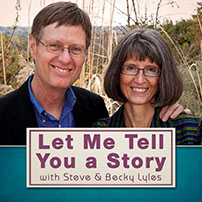
I Was On a Thing: Let Me Tell You a Story – Episode 140

Let Me Tell You a Story Podcast
Once again, I have Podcasted—I’m still not sure if that’s the right conjugation?—I have Podcast? I have committed Podcast? I have appeared on a podcast, I guess is the way to put it.

A while ago, Friend of the Blog, Becky Lyles who took part in A Q&A About Writing in Idaho earlier this year—and will appear here at least once more this summer, invited me onto the podcast she does with her husband. It’s called Let Me Tell You a Story, and you should check it out. I’ve listened to a dozen or so episodes, and they’re all very pleasant chats. It seemed strange to me to get the invitation—they typically interview authors or people who have done/are doing something interesting with their lives—usually a combination of those. And I…well, am not that.

But whatever, I went for it.

The official description of the episode is:

We often invite authors to talk with us on this podcast, but today we’re speaking with one of the many people authors value the most—readers! H.C. Newton is not only an avid, and I mean avid reader, he hosts a blog and a website called The Irresponsible Reader that’s all about books and their authors.

They had me over to their home and we spent a little less than an hour chatting about my reading habits, the blog, and whatnot. And then (unless it was cut because they wanted something more coherent), I monologued a bit at the end. In that monologue, you can see why I tank most job interviews (I left off about half of my mental outline—outlining while talking is a bad idea).

Regardless, I had a great time doing it and I hope most of their subscribers don’t spend too much time wondering why Steve and Becky inflicted me on their ears. Give it a listen and maybe subscribe to Let Me Tell You a Story. And while you’re at it, give it an extra listen for me, because I just cannot do that.

It’s Great to Suck at Something (Audiobook) by Karen Rinaldi: The Book Isn’t Quite Proof of the Title, But…

It's Great to Suck at SomethingIt’s Great to Suck at Something:
The Unexpected Joy of Wiping Out and What It Can Teach Us About Patience, Resilience, and the Stuff that Really Matters

by Karen Rinaldi

DETAILS:
Publisher: Simon & Schuster Audio
Publication Date: May 07, 2019
Format: Unabridged Audiobook
Length: 7 hrs., 15 min.
Read Date: June 12, 2023


What’s It’s Great to Suck at Something About?

The Publisher’s Description is:

When was the last time you tried something new? Something that won’t make you more productive, make you more money, or check anything off your to-do list? Something you’re really, really bad at, but that brought you joy?

Odds are, not recently. We live in a time of aspirational psychoses. We humblebrag about how hard we work and we prioritize productivity over happiness. Even kids don’t play for the sake of playing anymore: they’re building blocks to build the ideal college application. We’re told to be the best or nothing at all. We’re trapped in an epic and farcical quest for perfection and it’s all making us more anxious and depressed than ever.

This book provides the antidote. (It’s Great to) Suck at Something “shows how joy and growth come from risking failure and letting go of perfectionism” (The Wall Street Journal). Drawing on her personal experience sucking at surfing (a sport Karen Rinaldi’s dedicated nearly two decades of her life to doing without ever coming close to getting good at it) along with philosophy, literature, and the latest science, Rinaldi explores sucking as a lost art we must reclaim for our health and our sanity and helps us find the way to our own riotous suck-ability. Sucking at something rewires our brain in positive ways, helps us cultivate grit, and inspires us to find joy in the process, without obsessing about the destination. Ultimately, it gives you freedom: the freedom to suck without caring is revelatory.

My description would be—Rinaldi is a devoted surfer. That doesn’t mean that she’s a good one—she has witnesses and video evidence to back that up. But she doesn’t care—she still loves it. In fact, she’s learned a lot about herself—and probably about the way people tick—from being a lousy surfer, and now she has some good advice to share about being lousy at things (and continuing to do them). She weaves this advice with a semi-meandering recounting of her surfing career in the pages of this book.

A Quick Word About the Narration

Rinaldi’s narration on this was really good—I’d listen to her narrate another book easily. Maybe it’s easier because it’s her book and she knows the emotions she’s trying to evoke—but I’ve heard enough authors not know how to do that for me to really believe it.

So, what did I think about It’s Great to Suck at Something?

I should start by saying that I’m 100% on board with Rinaldi’s central thesis and think it’s something that more people need to embrace and practice. I just have problems with most of the rest of the book.

We’ve all been to those “meetings that could’ve been an email,” right?* As I was listening I kept thinking—this is a book that could’ve been an article. Maybe a series of them. Or a few blog posts. But it had no business being a book.

Of course, not at my current job. I’m talking exclusively about previous positions.

Or at least not this book. If this had been sold as a “memoir of a lousy but committed surfer with some advice you can apply to your own passions/hobbies.” It would’ve been fine. The book wasn’t about the benefits of sucking at things, it was about a big part of Rinaldi’s life, and through it she offered some observations on the human condition—some of which she can offer footnotes to.

The book really didn’t need the turn to spirituality it took toward the end. It was very out of place.

Trim the personal anecdotes to anecdotes/illustrations, amp up the advice (and the reasons for it) and you’ve got a decent, albeit shorter, book. But as it is, it’s hard for me to say that a reader or listener isn’t wasting their time.


2 Stars

This post contains an affiliate link. If you purchase from it, I will get a small commission at no additional cost to you. As always, the opinions expressed are my own.

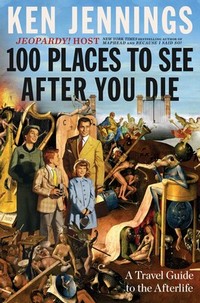
PUB DAY REPOST: 100 Places to See After You Die by Ken Jennings: The Tour Guide No One Wants, But Everyone Needs

100 Places to See After You Die100 Places to See After You Die:
A Travel Guide to the Afterlife

by Ken Jennings

DETAILS:
Publisher: Scribner Book Company
Publication Date: June 13, 2023
Format: eARC
Length: 304 pg.
Read Date: May 24-26, 2023


What’s 100 Places to See After You Die About?

Ken Jennings provides a handy tour guide through one hundred visions of the afterlife for the modern reader. Complete with tips on places to see, areas to avoid, local lingo, bits of trivia, dining tips, and so on, it’s just the kind of thing you’re going to want to peruse before you shuffle off this mortal coil, so you know where to go.

The book is broken down into: Mythology, Religion, Books, Movies, Music and Theater, and Miscellaneous. Then (alphabetically) Jennings looks at a variety of afterlife locales in each category.

For example, the Books section covers:

Aslan’s Country • The Bridge • The Cemetery • The Empyrean • The Five Lessons • Half-Life • The Inbetween • Inferno • The Kingdom • King’s Cross • Mansoul • The Null • Pandemonium • Paradiso • The Parish • Purgatorio • Riverworld • The Third Sphere • The Time Bubble • The Undying Lands • The Valley of the Shadow of Life*

* From Lewis’ The Chronicles of Narnia and The Great Divorce; O’Connor’s story “Revelation”; Saunders’ Lincoln in the Bardo; Milton’s Paradise Lost; Albom’s The Five People You Meet in Heaven; Dick’s Ubik; Sebold’s The Lovely Bones; Dante’s The Divine Comedy; Twain’s “Captain Stormfield’s Visit to Heaven”; Rowling’s Harry Potter; Moore’s Jerusalem; King’s Revival; O’Brien/O’Nolan’s The Third Policeman; Farmer’s Riverworld; Matheson’s What Dreams May Come; Oliver’s The Time Bubble; and Tolkien’s The Lord of the Rings.

Jennings describes each place with wit, humor, Dad Jokes, puns, irreverence, and plenty of facts.

Dancing Through a Minefield

It’s one thing to talk about places like Valhalla, Hades, The Bad Place, Bill & Ted’s Bogus destination, or Futurama‘s Robot Hell in a light-hearted or flippant fashion. It’s an entirely different can of worms to discuss the LDS Three Kingdoms of Glory, Jannah, Jahannam, Ariel Toll Houses/Telonia, and so on—in the same tone.

I will not say that Jennings was able to fully succeed in discussing the afterlives described in some major religions in an unoffensive manner. Primarily because I’m not an adherent of any of the religions he discussed, so my tolerance for that is really high. Had he tackled something I believe in, I very well could’ve been at risk of insult.

That said, I think he did okay. Yes, he walks close to irreverent. But he maintains a decent degree of respect. The humor largely comes from the way he describes the beliefs not at the expense of an article of faith.

Still, some people might want to skip over a chapter or two if they’re worried about getting their toes stepped on. (but those people probably aren’t going to be reading this book in the first place)

A Few Highlights

Ohhh, there are just so many.

The Books section was my favorite—followed closely by Movies and Television—this is the kind of thing I blog about, think about, and so on, so it makes sense that those sections resonated with me most. The Books section, in particular, discussed portions of those works in ways I could really sink my teeth into.

But there were multiple highlights in each section—I learned a lot about D&D, I couldn’t help singing “Ghost Riders in the Sky” during that chapter, I think he pointed out a good plot hole in It’s a Wonderful Life (I don’t know, maybe he’s not the first), I loved the discussion of Bosch’s paintings, and so on.

The chapter on The Good Life was fantastic—a great systemization of the series’ take on the afterlife (and several characters). The chapter on Nirvana was sublime.

Books, movies, mythologies, songs, etc. that I’ve never heard of, much less, read/watched/listened to/studied were described in enough detail that I could appreciate those chapters and maybe even develop an interest in following up on.

Problems/Quibbles/Things That Didn’t Work for Me

Um. Hold on, I’ll think of something.

oh! Here’s a problem: the eARC came with the typical “don’t quote from this version until verified by the published edition” warning—but it was more pronounced than usual. I really want to use samples throughout this post, but I can’t. (and I wouldn’t have even without this warning, because I know things get tweaked in the final stages).

Actually, I do have a legitimate gripe. There are no footnotes—or even endnotes*—for anything that Jennings says. Most of what the book contains could fall into the category of “General Knowledge” (at least for people who know anything about The Good Place, Dante, or the religion of the Maori). But I wouldn’t have minded a point in the right direction to learn some more details, context, or background on many, many, many things Jennings wrote about.

* It’s been decades since I haven’t asked why a book uses endnotes when footnotes exist, and yet I’d have liked to have them in this book more than the nothing we got. That’s how much this bothers me.

I Can’t Help Pondering…

Given the argument of Planet Funny: How Comedy Took Over Our Culture by Ken Jennings, I wonder about his approach to the subject of the afterlife. Sure, even Planet Funny was frequently funny as it critiqued the overuse of humor in our culture, but for his next book to take this tone, seems to undercut the work.

Or maybe it just shows that even as he can look with clear eyes at some of the weaknesses of our culture, he’s part of it and is subject to the influences. It’s almost like he’s human.

So, what did I think about 100 Places to See After You Die?

This section is going to be shorter than usual because I think I’ve pretty much answered the question already.

From the “throwaway lines” to the big ideas, this was a delight from start to finish. I thoroughly enjoyed this approach to the subjects—quick hits that tell you the essentials and make you smile while telling them.

Jennings’ style is one I aspire to, and can’t say enough good things about.

I can’t think of a reason not to give this 5 Stars, but my gut tells me not to. So I’ll knock it down to 4 1/2 (which isn’t a big deal since Goodreads, NetGalley, etc. won’t let me use 1/2 stars, I’ll round up). It’s educational, it’s entertaining, and it’s thought-provoking. You can’t go wrong with this.

Disclaimer: I received this eARC from Scribner via NetGalley in exchange for this post and my honest opinion—thanks to both for this.


4 1/2 Stars

This post contains an affiliate link. If you purchase from it, I will get a small commission at no additional cost to you. As always, the opinions expressed are my own.


Page 181 of 630

Powered by WordPress & Theme by Anders Norén