Highlights from October and November: Lines Worth Repeating

Highlights from the Month
Things got away from me last month, and I didn’t get anything put together for October. And now I’m late with November, too. I tell you, I’m halfway tempted to fire my staff. But, as I’m the staff, I’d have to replace myself afterward—and that’d be awkward. I might as well just catch up and try to do better at the end of December.
Amari and the Great Game

Amari and the Great Game by B.B. Alston

“Amari,’ says Maria. “It’s not your job to save the world every summer,” I don’t have a choice!”

Pretty please?” I ask.

“Fine, fine. Anything for a fellow human.”

I lean in, lowering my voice to a whisper. Just so you know, we don’t usually call each other humans.

Tiny scratches his bald head, his confused eyes flashing bright yellow before changing back. “But why? You are human, yes?”

I nod. “It’s just… we assume everyone we meet is human, so there isn’t any reason to mention it.”

His shoulders droop dramatically. “So many things to remember to fit into human world.”


Working It Out

Working It Out by Jo Platt

I read her text twice, acknowledging it to be actually a rather impressive composition; fewer than one hundred words and with more triggers than a rifle range.


6 Ripley Avenue

6 Ripley Avenue by Noelle Holten

Just like her, the public were seekers of truth, only sometimes they needed a nudge in the right direction.


Racing the Light

Racing the Light by Robert Crais

“Why would Josh ignore her?”

“Because he can. He’s self-absorbed, arrogant, irresponsible, and rotten with privilege.”

“Oh. The usual reasons.”

I wondered what other secrets he kept, and if those secrets had driven him away form his home and his family and Ryan.

Ryan probably wouldn’t like the answer.

Adele probably wouldn’t like the answer, either.

The people who hired me to find someone they love, almost never wanted the truth.

And when I found the truth, I often wished I hadn’t found it.

Pike answered on the first ring. I’ve never called Joe Pike when he didn’t answer the first ring. Pike would have to be dead in a ditch not to answer the first ring, and then he’d probably answer the second ring.

Pike said, “Zongtong.”

I said, “Okay. I give.”

“It’s the word for president in Standard Chinese.”

“You don’t speak Chinese.”

“Jon Stone.”

Of course. Stone was multilingual. He was fluent in Spanish, Korean, Arabic, Russian, and now, apparently, Chinese. And these were only the languages I had personally heard him speak. Some guys were born annoying.

She sounded as lost as yesterday’s kiss…


The Old Woman with the Knife

The Old Woman with the Knife by Gu Byeong-mo, Chi-Young Kim (Translator)

“How old are you, princess?”

“I’m six.”

Six. Hornclaw already knew, but now that she hears how the girl says it, it feels as though she would remember the girl’s babyish pronunciation forever. The moisture in her words never evaporating.


The Ophelia Network

The Ophelia Network by Mur Lafferty

Frankly it was a little disappointing that the male hackers weren’t hoodie-and-fingerless-glove-wearing unwashed young adults constantly looking over their shoulders. The women weren’t gorgeous Goth chicks, either. Everyone looked boring and normal. Each was dressed professionally, if a little rumpled, as they worked into the night.


Jane Steele

Jane Steele by Lyndsay Faye

There is no practice more vexing than that of authors describing in travel for the edification of people who have already traveled in coaches. As I must adhere to form, however, I will simply list a series of phrases for the unlikely reader who has never gone anywhere: thin eggshell dawn-soaked curtains stained with materials unknown to science; rattling fit to grind bones to powder; the ripe stench of horse and driver and bog.

Now I have fulfilled my literary duties…

The girl who had broken off from the line was twelve, with a moon face which was so beautiful I had no notion whether she should be congratulated or censured for taking matters a trifle too far.

I hope that the epitaph of the human race when the world ends will be: Here perished a species which lived to tell stories.


The Bullet That Missed

The Bullet That Missed by Richard Osman

The second date was, if anything, even better than the first. They have been to Brighton to watch a Polish film. Donna hadn’t realized there were Polish films, though obviously there must be. In a country that size, someone is going to make a film once in a while.

Joyce finally cracks. “So where are we off to, then?”

“To meet an old friend of mine,” says Elizabeth. “Viktor.”

“We used to have a milkman called Victor,” says Joyce. “Any chance it’s the same Victor?”

“Very possible. Was your milkman also the head of the Leningrad KGB in the eighties?”

“Different Victor,” says Joyce, “Though they finish milk-round, very early, don’t they? So perhaps he was doing two jobs?”

“It’s the people, in the end, isn’t it?…It’s always the people, You can move halfway around the world to find your perfect life, move to Australia if you like, but it always comes down to the people you meet.”


Discount Armageddon

Discount Armageddon by Seanan McGuire

“My mind’s on the job,” I said defensively, plucking the cherry from my drink. “Really. I swear.”

“Uh-huh.” Sarah raised an eyebrow. “Do we have have the ‘don’t lie to the telepath’ talk again? It won’t take long. I say ‘don’t lie to the telepath, it never works,’ you glare at me, and then you go find something you can hit.”

“Finding something I can hit is the plan.”

“Don’t worry about me,” I said flippantly. “I’m the bad thing that happens to other people.”

Sometimes I think the universe listens for lines like that one, so that it can punish the people who use them.


Screwed

Screwed by Eoin Colfer

You see, laddie. I’m a businessman. And what we got here is a business opportunity.

Except he says opera-toonity. For some reason he can’t pronounce the word right and I wouldn’t mind but he works it into every second sentence. Irish Mike Madden says opera-toonity more than the Pope says Jesus. And the Pope says Jesus a lot, especially when people sneak up on him.

Little things like that really get to me. I can take a straight sock to the jaw, but someone tapping his nails on a table or repeatedly mispronouncing a word drives me crazy. I once slapped a coffee out of a guy’s hand on the subway because he was breathing into the cup before every sip. It was like sitting beside Darth Vader on his break. And [’ll tell you something else: three people applauded.

He doesn’t know about my aversion to killing people, so is convinced that I can’t let him live. If Shea survives, he is done in this world of shadows, but Freckles would never stop coming. He’s Irish, like me, and we know all about holding grudges. When it comes to vendettas, the Irish make the Sicilians look Canadian.


Desert Star

Desert Star by Michael Connelly

Ballard told herself not to be annoyed with Bosch. She knew that putting him on a team did not make him a team player. That was not in his DNA.

He knew this was a pessimistic view of the world, but fifty years of toiling in the fields of blood had left him without much hope. He knew that the dark engine of murder would never run low on fuel. Not in his lifetime. Not in anyone’s.


Theft of Swords

Theft of Swords by Michael J. Sullivan

“Sounds like a really good plan to me,” Hadrian declared, “Royce?”
“I like any plan where I don’t die a horrible death.”

“Besides, this shouldn’t be a problem for you, of all people. I am certain you have stolen from occupied homes before.”

“Not ones where the owner can swallow me in a single bite.”

“So we’ll have to be extra quiet now, won’t we?”


Missing Pieces

Missing Pieces by Peter Grainger

People do not tell the police all they know for all sorts of reasons, and sometimes those reasons are perfectly sound. But we can be certain of one thing: if the police officer concerned suspects you of concealing information, he or she will assume the worst. It comes, as they say, with the territory.

The maverick intuitive geniuses on the television screen are wonderful entertainment, of course. But it’s the people who keep lists that solve cases in the real world.


Dead Lions

Dead Lions by Mick Herron

Having a cat is one small step from having two cats, and to be a single woman within a syllable of fifty in possession of two cats is tantamount to declaring life over. Catherine Standish has had her share of scary moments but has survived each of them, and is not about to surrender now.

She started drawing up a mental list of everyone she didn’t trust, and had to stop immediately. She didn’t have all day.

“We don’t like being out of the loop.”

“You’re always out of the loop. The loop’s miles away. Nearest you’ll get to being in the loop is when they make a documentary about it and show it on the History Channel. I thought you were aware of that.”

At the bar he ordered a large scotch for himself, because he wanted to give the impression of being kind of a lush, and also because he wanted a large scotch.


Wistful Ascending

Wistful Ascending by JCM Berne

He was wearing a close-fitting jumpsuit. The yellow was somewhere between neon and actively fluorescent, with accents in a metallic purple rumored to cause an assortment of mental illnesses if a human stared at it too long.

First lesson: Space bears were not sticklers for personal hygiene.

The boy sighed. “My name is long and stupid. But you can call me Rinth.”

“I’m sure it’s not stupid.”

“Amarinthalytics. It sounds like a subject in school that everybody fails.”

“Tell him I said hello. No hard feelings.”

She cocked her head and looked at him with her blank yellow eyes. “Really?”

Rohan shrugged. “I mean, I’m not eager to be best friends, but I also don’t want him worried that I’m going to walk down the hall and pull his testicles out of his body through his ears.”

“That is a very vivid description of vengeance to come from a man with no hard feelings.”

“I’m still an il’Drach Hybrid, you know. Our emotional milieu is mostly made up of hard feelings.

“That is your mantra? ‘Be nice’? Not, for example, ‘Be good’?”

“Yeah. Once you try to do the right thing, the moral thing, you find all sorts of ways to justify whatever. Oh, this action here is cruel, but it’s for the greater good, so it’s right. But you can’t argue with nice.”

(Image by DaModernDaVinci from Pixabay)

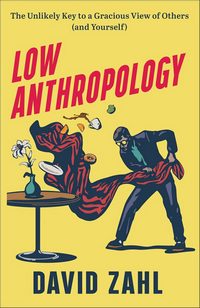
Low Anthropology by David Zahl: How Realism Should Lead to Compassion and Charity

Low AnthropologyLow Anthropology:
The Unlikely Key to a
Gracious View of Others
(and Yourself)

by David Zahl

DETAILS:
Publisher: Brazos Press
Publication Date: September 12, 2022
Format: Hardcover
Length: 203 pg.
Read Date: November 27-December 4, 2022
Support Independent Bookstores - Visit IndieBound.org


This is another one of those books that I have to fight the temptation to dig deep and spend a few thousand words laying out the ideas in detail and responding to them in kind. But that’s not what I do around here—nor is it what I have time to do. But mostly, I wouldn’t do it as well as the author did in the book—so why not just stick with what I do and tell you to buy the book?

What’s Low Anthropology About?

Zahl’s concern is the way we think about human nature—our anthropology—not in some academic sense (or just that), but how, individually, what we believe about human nature impacts the way we live and think.

High anthropologies are based on some idea about basic decency and goodness in humanity and that with the right ideas, the right amount of effort and ambition, we can improve ourselves, and fix ourselves. Low anthropologies start off with the idea that people are broken, sinful, a mess, and that while we’ll do the right thing sometimes, those times are the exception. And yes, with help, we can stumble through life in a way to be of service to others and do better ourselves.

By realizing—and remembering—that everyone is broken and struggling, we can be gracious. We know ourselves and that we are a mess, we deal with bad habits, addictions, imperfections, and sin on a more-than-daily basis. But we forget that’s true of others, too, especially in a social media world where we only see the airbrushed images others put forward.

High anthropologies tend toward self-righteousness, perfectionism, and judgementalism (toward ourselves and others). Low anthropologies can and should free us from that—to compassion, humor, and charity.

At least that’s the basic idea—he fleshes it out and argues for it much more convincingly. Then he applies it to various aspects of life—relationships, politics, and religion.

So, what did I think about Low Anthropology?

This really reminded me of Alan Noble’s You Are Not Your Own: Belonging to God in an Inhuman World and Kelly Kapic’s You’re Only Human: How Your Limits Reflect God’s Design and Why That’s Good News (it’s not that surprising, really, I invoked Kapic’s book when I posted about Noble’s). The three books approach similar topics in very similar terms—just changing the focus a little bit. The chapter on politics reminded me of the relevant chapters in Michael Horton’s Recovering Our Sanity: How the Fear of God Conquers the Fears that Divide Us (and there’s probably some overlap with other chapters, too).

I guess what I’m saying is that there’s a lot in this book to tie to things I read over the course of the year—2022 ended up being along a theme. In essence, humans are limited creatures—and when we remember that (as true of ourselves and others) and recognize the legitimacy of those limitations, as well as who put those limitations on us—it will affect the way we live and think of ourselves. It will free us to obey as we ought, to live as we ought, and treat ourselves and others along the lines we’re supposed to. We can think of it in terms of limitation and creaturely dependence, in terms of being those purchased by Christ, or in terms of realism about human nature. All call us to humility, all put the emphasis on our hope in Christ, and all will help us serve others because we’re in the same situation as them.

Zahl’s treatment of this is a bit briefer—and he applies it to more situations than Noble or Kapic, so it’s inevitably shallower. Not worse, I want to stress, but he can’t get to the same depth as the others.

Zahl’s sense of humor is evident throughout, and his engaging style really carries this work—it’s not just a helpful book, but you want to be helped by it because you’re having such a good time reading it. He brings in good illustrations and insights from psychology and culture alongside his points from Scripture and theology.

This is a practical work—the theory is sound and worked out well, but it’s not theory for theory’s sake—Zaahl’s eye is on doing something the whole time—living better, serving others, and being gracious. I wondered a little bit about particular applications he makes, and if they’re as consistent as I’d want them to be. Thankfully, a low anthropology ensures there’s plenty of room for Zahl and me to be wrong on those points and not get too worked up about it.

I really liked this work and suggest you find some time for it.


4 Stars

This post contains an affiliate link. If you purchase from it, I will get a small commission at no additional cost to you. As always, the opinions expressed are my own.

Saturday Miscellany—12/17/22

Odds ‘n ends about books and reading that caught my eye this week. You’ve probably seen some/most/all of them, but just in case:
bullet Before we turn the page on 2022 Idaho, let’s talk about how books were in the ‘eye of the hurricane’—local public radio looked back at the book-related controversies in the state this year
bullet The Bulwer-Lytton Fiction Contest “Winners” for 2022—these winners and Dishonorable Mentions are all worth your time, but I’m going to have to insist that you all take a moment to read the Children’s Lit & YA entries.
bullet The Ultimate Guide to 35 Popular Book Genres—I’m not certain that Reader’s Digest can speak that authoritatively on this, but this is pretty solid.
bullet Legally bookish: Reese Witherspoon and the boom in celebrity book clubs
bullet Here are a few more Best of ’22 lists to embiggen your TBR Stacks:
bullet You can sod off, 2022, but leave the books please—from Criminal Minds (the blog, not the CBS show)
bullet Top Five Powerful Books I Read in 2022—an interesting approach to the idea
bullet The 13 Best Literary Adaptations of 2022—from LitHub
bullet 14 Authors Share the Best Books They Read in 2022—from NetGalley’s blog
bullet Operation 2022: Success! (Or Favorite Books From this Year)—from Witty and Sarcastic Book Club (so much temptation!)
bullet The 103 Best Book Covers of 2022—I love this post every year on LitHub, so many pretty pictures…
bullet How to Plan for Your 2023 Reading Challenge—It is the time of year for this project…some good advice from NetGalley’s blog
bullet Self-Education Project Part Two: The Extended Great Books Reading Plan—or you could take this approach…zowie
bullet Speaking of advice here’s some more: Bookish Gift Ideas #1 and Bookish Holiday Gift Ideas—likely too late for Giftmas or whatever you celebrate. But good for the rest of the year, too
bullet 746 Books is 9 today!—746 Books turned 9 this week and Cathy reflects on her Quixotic project.
bullet While I Was Reading announced an end to their well-deserved and understandable hiatus: Welcome Back
bullet QOTD: Do you use bookmarks? I do, just not actual ones. Here are some weird/random things I (and my daughter) use!
bullet 5 reasons why we love morally gray characters and 5 books that feature them

This Week’s New Releases that I’m Excited About and/or You’ll Probably See Here Soon (and, for the second week in a row, a couple that I missed recently):
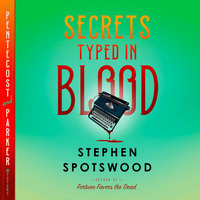
bullet Secrets Typed in Blood by Stephen Spotswood—Pentecost and Parker are hired by a mystery writer to find the killer who keeps lifting their method of killing from her short stories.
bullet Posthumous Education by Drew Hayes—Fred the Vampire Accountant spends a semester as a college professor. Sure, why not? I can see him really enjoying that. I just doubt he’s going to get to spend too much time teaching.
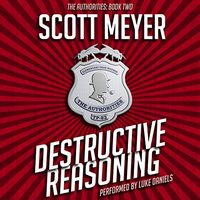
bullet Destructive Reasoning by Scott Meyer—a serial killer targeting actors playing Dr. John Watson. Sounds like a case for the Authorities! (because their funding source is about publicity first and crime-fighting second) I didn’t think we’d get a second novel featuring this team, so this is just gravy to me.

I may not know how to fly but I know how to read, and that's almost the same thing. Gregory Maguire

Vinyl Resting Place by Olivia Blacke: Family, Puns, a Dash of Romance, and Murder

Vinyl Resting PlaceVinyl Resting Place

by Olivia Blacke

DETAILS:
Series: The Record Shop Mysteries, #1
Publisher: St. Martin's Paperbacks
Publication Date: December 27, 2022
Format: eARC
Length: 304 pg.
Read Date: December 13, 2022
Support Independent Bookstores - Visit IndieBound.org

What’s Vinyl Resting Place About?

Tired of all the corporate buyouts and reshuffling in the software business, Juni Jessup returns to her home—a small town just outside Austin, TX. There, she and her two older sisters invest in a record/coffee shop. Years before, the digital music revolution had forced her parents to close the shop that had been in their family for decades. But now, the resurgence of vinyl has given them the chance to reopen—adding a coffee counter is a clever move and something that the neighborhood could really use, too.

The sisters are energized the night of the Grand Opening party—there’s a huge crowd (free tacos from a local food truck and beer from a microbrewery helped). Not only are they optimistic about the business, but the family is back together again, after Juni’s time in the Northwest. They know the future will have challenges, but for the moment, life is good.

Sadly, that first challenge is less in the future than they realized, and it’s a big one. While they’re cleaning up after the party and getting ready to open for their first day of business, Juni finds a murdered girl in the closet with their cleaning supplies. Very quickly, the police focus their investigation on the sisters’ uncle and arrest him. The family puts up the Sip & Spin as collateral for his bail, convinced that the investigation will clear him.

Then Uncle Calvin disappears and the business is in jeopardy—not to mention the three life savings they invested. The sisters, led by Juni, take the investigation into their own hands—determined not to go down without a fight.

Juni and Everyone Else

I’ve only mentioned Juni so far because of space, but the book isn’t just about her. Juni is clearly the protagonist—but the book isn’t just about her. The sisters are the core—with their mother and the husband of the eldest sister rounding out the immediate circle. The emotional core of the novel is about Juni’s return to the family and the way they’re welcoming her back (it’s not that things were ever tense, but hundreds of miles and only brief visits aren’t the same as living near each other). It’s the sense of family, the way they come together for each other, that makes sure this book (and the series, I’m sure) is filled with the warmth and comfort you need in a cozy.

Of course, you can’t have a character come back to a small town without a love interest or two popping up, too. There’s the lifelong best friend, who apparently carried a torch the whole time—he’s grown into a pretty attractive man. And then the high school/college boyfriend who suddenly and unexpectedly broke up with her one day. He’s clearly got his eyes set on reestablishing the status quo.

Also, he’s the police detective in charge of the murder. Because why should things be easy?

It’s a great recurring cast, and one that’d be easy for a series to use in new and fun ways as the series progresses—mostly because the reader can’t help but find them all endearing.

A Tiny Bonus

The music-inspired punny drink names for their coffee counter are just perfect. Too many more would’ve been too much, but I could’ve used an additional handful. They’re the kind of little touch that adds so much to a scene—you get an idea of the characters behind them, if nothing else. Like the names of the stores and restaurants in The Good Place, they add a layer of enjoyment on top of everything else.

I’m not saying I’ll pick up book two just to read what names Blacke comes up with. But I’ve had worse reasons to pick up a book.

So, what did I think about Vinyl Resting Place?

I’m a little concerned about how this can be a series—how many murders can happen in one small town record store or involving the family that owns it? I’m sure Blacke can get another one or two out of the premise before it starts to get creepy, but suspending that kind of disbelief is part and parcel of cozies like this, right? So what do I know?

The premise and genre promise certain things about this novel—and Blacke delivers exactly that. The best word to sum this experience up is pleasant—the mystery was clever, the characters are charming, and I like the overall setup for the series. And the book was exactly what a cozy should be—an entertaining and pleasant time.

I don’t see how this book won’t find fans all of whom will be more than ready for the next murder this family stumbles across.

Disclaimer: I received this eARC from St. Martin’s Press via NetGalley. Thanks to both for the opportunity. Opinions expressed are my own.


3 Stars

This post contains an affiliate link. If you purchase from it, I will get a small commission at no additional cost to you. As always, the opinions expressed are my own.

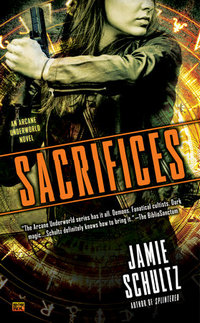
The Friday 56 for 12/16/22: Sacrifices by Jamie Schultz

The Friday 56This is a weekly bloghop hosted by Freda’s Voice.

RULES:
The Friday 56 Grab a book, any book.
The Friday 56 Turn to Page 56 or 56% on your ereader. If you have to improvise, that is okay.
The Friday 56 Find a snippet, short and sweet.
The Friday 56 Post it.

from Page 56 of:
Sacrifices

Sacrifices by Jamie Schultz

“You know they’re chock-full of demons, right?”

“I don’t know that. This is the twenty-first century. We tend to be extremely careful about calling aberrant behavior demonic possession when it might simply be mental illness.”

“Seriously? Under these circumstances?”

“None of them appear to have any history with the occult, that I can turn up, let alone the kind of lengthy history that results in end-stage possession . . .” Elliot spoke quickly and precisely, dressed it all up with technical-sounding jargon, but a note of uncertainty clung to her voice like a parasite, sucking the life out of it.

A Few Quick Questions with…James T. Lambert

Earlier today, I posted my take on the charming Aether Powered by James T. Lambert, and now I’d like to share this Q&A with you. Lambert got me to work a little harder than most authors do, which was a fun twist for me. Hope you like this Q&A and check out his work! He’ll be back in a week or two for another Literary Local post, too.

The second question and answer are probably technically a spoiler for his novel so you may want to skim/avoid them. But I think we’re both safe enough that it won’t really ruin much for you.


All authors have more ideas running around in their head than they can possibly develop—what was it about this idea that made you commit to writing it? Was there something about it that led it to be the first one you published—is it something as simple as of those you’d finished, it was the most worthy of being polished up, or was it something about that particular story?
So this was my second (and a half) NaNo project. My first had some style problems I wanted to fix and wasn’t making fast progress on, so when someone asked me which of my project was closest to completion, I thought Aether Powered was. Even after finishing some of my other NaNo projects, this one still seemed like it needed the least work to get to publication. After having published Steam Opera and Proxies I think I was wrong and Proxies was probably in better shape, but at the time I was convinced it needed a major rewrite to start in a different spot.

So my first NaNo project was Steam Opera and I attempted to write a sequel about 8 months later. It kind of fell apart between real life drama (a tree crushed both my cars while I was writing a few feet away) and problems with lack of direction in the plot. Steam Opera was a great NaNo idea as it had a specific goal for the plot: Get to the moon. If the characters got to the moon or failed in an interesting way the plot worked. So every decision while writing was ‘what do they do next to get to the moon?’ But Aether Powered was a less clever idea in terms of daily writing. I started with an interesting concept: trunk full of inventions. But every day was ‘what happens next?’ I didn’t have a goal like Steam Opera. But I wanted to succeed at NaNo and get those 50,000 words written, so I stuck to it.

When it comes to a character like Carol—how difficult was it to maintain (and/or arrive at) a believably overbearing girlfriend, without making her into a monster? Is the key in the way you write her, or in how Joseph reacted to her?
At the base she wasn’t that bad a person. She had the assumption that since Joseph owned a house and had a trust fund, he was rich. She just never moved beyond that to realize he was just scraping by. I just kept her focused on ‘I want money’ and always pushing and that gave her some ugly motivation. Also the jealousy and suspicion. I may have gone overboard with the ‘I’ll ruin your dating life’ but maybe she meant it as a joke and it just came out wrong. But with those motivations for acting the way she did, and with Joseph’s easy-going attitude letting him get steamrollered, their relationship was doomed, but not over-the-top unbelievable. People get stuck in bad relationships that aren’t quite bad enough to end. An old friend once said “it may be a cold, wet mudhole, but it’s YOUR cold, wet mudhole.” There’s a certain amount of inertia in most people and overcoming that to get out of a bad situation can be hard. I think Joseph’s reactions to her probably sold it better than anything. He tried to be careful, say the right thing, not make waves, but that just got him in deeper instead of fixing things.

There are several aspects of this book that I’d love to do a deep dive into, but I’m going to keep myself to one other: the Seafair Pirates. They are such a fun group! Is anything about their part of the story (a group like them, the Seafair, anything) based in reality, or is this something you made up en toto? When do we get a novel about them (either as a semi-sequel to Aether Powered, or something unrelated)?
I wish I was clever enough to make them up. Seafair and the Seafair Pirates are totally real. I just lucked into finding the information about them when I needed him to get some help. Here’s the website for the event: https://www.seafair.org/ The Pirates also exist (or did when I wrote the book) and I found news footage of them coming ashore. http://www.seafairpirates.org/

The descriptions of them in costume were from videos and pictures I found online. I read a lot about what they did and tried to incorporate as much as I could, but ended up modeling individuals and group scenes (like the singing) around fan groups I’ve been in. I’ve got a recording of Where the Red Queen Reigns from the group Annwn and I’ve been in Filk circles singing like that at conventions. When I was in my Science Fiction club we had all kinds of interesting people who did interesting things, so I made it a lot like that. Same with the SCA (Society for Creative Anachronism) where you could find one of everything in the groups. Just as examples: Federal radio techs fixing Smoke jumper radios at NIFC (National Interagency Fire Center), Ham radio enthusiasts who dispatched ambulances during power outages, rocket scientists who programed Martian rovers. Those are all people I’ve met through fan stuff.

I’m thinking about a sequel to Aether Powered with another invention as the key point. I’d most likely bring in the pirates again. My current working title is Rogue Wave and would be about the rogue wave phenomenon of Tsunamis. I don’t have much else yet and want to get a solid plot for it before I start. Maybe late in 2023? Depends on all the things, lol.

Who are some of your major influences? (whether or not you think those influences can be seen in your work—you know they’re there)
All my favorite authors are influences, but I never feel like I get enough of them in there. Lois McMaster Bujold, Terry Pratchett, Robert Heinlein, Isaac Asimov, Alan Dean Foster, John M. Ford, Charles Stross, and more.

More personal people would be Troy Lambert (no relation), Danielle Gilbert, David Farland, M. Todd Gallowglas, John M. Olsen, and more.

I learned a lot from the Writing Excuses podcast with Howard Tayler, Dan Wells, Mary Robinette Kowal, and Brandon Sanderson.

You’ve published SF and Steampunk so far (and non-fiction about SF)—are those your genres of choice for writing and reading? Is there a genre you particularly enjoy, but don’t think you could/would want to try—or, given time are you going to get around to them all?
I was a huge SF fan growing up and still am. I used to be a bigger fan of Fantasy too, but am less so now. I like Steampunk, but don’t read it as much as I used to a decade ago. Of course, I’m not reading in general quite as much now as then.

I will probably continue doing SF and Steampunk a lot, but I also like Urban Fantasy and have several short stories I’m planning on getting out that are UF. I’m working on a fantasy as well, so we’ll see how that goes.

I really like humor. I’m a huge Discworld fan and would love to be able to write funny/satirical stuff like that. Or like Keith Laumer’s Retief books (more SF) or Douglas Adam’s Hitchhiker’s books. But I’m having trouble getting into writing it. I’ve got a plot idea for a humorous SF story, but it hasn’t risen to the top of the pile yet.

Let’s play “Online Bookstore Algorithm” (a game I made up for these Q&As). What are 3-5 books whose readers may like Aether Powered?
Ouch, I wish I knew, my advertising might be going better, lol. Seriously though… hmmm, that’s tough.

Flaming Zeppelins. It’s a Steampunk book. More crazy than mine.

City of Saints by DJ Butler. Another Steampunk book set in Utah in the late 1800s.

Rock Band Fights Evil by DJ Butler. A series that is exactly what it says. Again, I wish mine was as creative as this.

I am having some trouble finding books that would have crossover to mine. If you have suggestions, I love to hear it. I don’t seem to be good at that kind of matchup. My first thought when you asked was, Not Dressed by Matthew Hanover—if he was to write contemporary Steampunk, it’d be a lot like it Aether Powered (and Not Dressed is the closest match of his books). While reading the book, I thought of K.R.R. Lockhaven’s The Marauders, the Daughter, and the Dragon more than once (his pirates would love yours—and vice versa).

2022 has been a busy year for you, are you easing up on yourself soon? Can you tell us what’s coming up in ‘23?
I hope not! But didn’t have a great start, getting sick right at the end of NaNo. I’m shooting to keep up a three to four book a year pace, but it’s going to be tougher than it has been since I’m running out of written stuff that just needs rewrites and edits.

I know I’ve got Relics of War coming out in early 23, probably by February (I want it for the LTUE conference in February). Relics of War is a SF story set a few thousand years in the future after a devastating war with rouge AI warships set humanity back. A ship of privateers finds information that might lead to one of the warships from the AI wars, but they aren’t the only ones after it.

I was working on Dead Knowledge until I got sick, so I need to pick that up again and get that ready, hopefully in the Summer. It’s an idea I got when taking a class from Dave Farland where he said that Necromancers were never the good guys. So I have a story where one is. He’s a research necromancer who contacts the dead to answer questions and retrieve lost knowledge. Basically he’s a librarian and the dead are the internet.

I’ve got a bit done on a sequel to Steam Opera which just came out. Shadow Opera is a story of spies and spying. Think a little like Sherlock Holmes: A Game of Shadows. I may get that out next year.

I’ve got a story idea with a couple of scenes written I plan on calling IGLOW: InterGalactic Ladies Of Wrestling. Aliens are kidnapping lady wrestlers and pitting them against alien female wrestlers. I may work on that this coming year.

I’ve got a partially finished story I’m having some trouble with I might work on. Muse asks the question: If the Greek Muses were alive today, what would they be doing? A college student with severe writer’s block finds one playing guitar on a street corner and another holding a cardboard sign: Lost Home, Lost Hope, Please Help.

Oh, nearly forgot. I’ve got six short stories in a connected set I want to polish up and print in thin little booklets. As a group they are called Monster Marshals and they are about marshals working for a secret government organization that polices magic and monsters in our world. One of the stories made it into the Haunted Yuletide anthology. “’Twas the Fight Before Christmas” has two marshals sent to a Reindeer farm in Maine to stop animated snowmen from attacking it.
WOW. I’m tired just reading that—that’s ambitious.

Thanks for your time—and thanks for Aether Powered, I had a lot of fun with it and I hope you have plenty of success with it.


Literary Locals logo

Aether Powered by James T. Lambert: 21st Century Steampunk

Literary Locals logoI’ve got a fun Q&A with the author, James T. Lambert, coming up in an hour or so—be sure to come back for it!


Aether PoweredAether Powered

by James T. Lambert

DETAILS:
Publisher: Bert Books
Publication Date: January 18, 2022
Format: Paperback
Length: 224 pg.
Read Date: November 30, 2022

What’s Aether Powered About?

I feel like I’m in danger of just going full-bore “here’s everything that happened in the novel” or not really giving you enough to know what the book’s about. Let’s give it the ol’ college try, though.

Joseph is studying Electrical Engineering and is just scraping by—his gig in the bar can pay the bills and come close to treating his girlfriend, Carol, in the manner she is accustomed to. But there’s no wiggle room in his budget—so when he gets an inheritance from his weird uncle, he could really use some money. Instead, he gets an oddly heavy trunk. Which isn’t going to do much for the huge tax bill he just received that’s going to hit his financial house of cards like a bowling ball.

The trunk is full of odd-looking bits and pieces, strange devices, sketches, and notes from a distant relative who’d collaborated with Nicola Tesla. Joseph doesn’t know what to make of them. He plays around with one a little bit and discovers that it seemingly has anti-gravity properties. Anti-gravity? You don’t have to think too hard to realize this could be the solution to his money problems—and a few other problems as well.

But wait…what was that thing Uncle Harry said about “Malevolent powers are at work…would do anything to secure this…”? Maybe Joesph should’ve paid a bit more attention to that because before he can figure out how to use the device to his advantage, someone tries to take it.

Joesph and Carol find themselves on the run and looking for allies they can trust (and end up finding in the least expected places).

Carol

The charitable way of describing Joseph’s girlfriend is that she’s “a real piece of work.” You know that at one point there had to be something between Carol and Joseph beyond the fact that she’s attractive, but they’ve been together long enough that it’s not evident why. The relationship isn’t in a great place, but when Joseph calls for help—she answers.

She’s out for herself at the same time, but she’s there to help, too. She proves to be both resourceful and creative.

I cannot tell you, however, how much time I spent wondering why Joesph was with her. It’s an interesting choice on Lambert’s part because I can’t imagine a lot of readers are going to warm to her for long. A morally gray protagonist, an anti-hero, or that sort of thing is pretty easy to get behind—some readers are drawn to them. But an unlikeable love interest is harder to accept (at least as I’ve been thinking about it since I read the book, maybe I’ll think of exceptions to this later). I think it’s a gutsy move, and I think it pays off.

The Seafair Pirates

On the other hand, you have the Seafair Pirates…these guys are great. There’s never a moment of doubt about what the reader is supposed to think about them, and I can’t believe a reader isn’t gladly going to fall in line.

Without getting into details they’re a bunch of people from a variety of backgrounds and industries in the Seattle area who like to get together, cosplay as pirates, drink a lot, sing pirate songs (they probably would’ve really gotten into the sea shanty craze of a year or so ago), and generally have fun together. A series of events brings Joseph into contact with them and they also end up proving to be a great source of aid to him in his struggles.

I’m not going to say more from a risk of oversharing, but I’d sign up for another book featuring them with or without Joseph.

The Steampunk Science

Most (not all) Steampunk that I’ve read dips a toe into the science, and explains a little bit of what’s going on in their contraptions, but largely, it can be summed up as: there’s a thing and it works. Not unlike the way that Philip Marlowe turns on a lamp or Kinsey Millhone uses a pay phone—we don’t need to know how electricity lights a bulb or how you can deposit coins into a…you know what? Never mind, that might not be the best example anymore.

The point I was trying to make is that Lambert doesn’t get down into the nitty-gritty to give us an explanation for how the devices from the trunk function. There was a part of me that wondered how our Electrical Engineering major was going to explain everything, and I was a little disappointed that he didn’t. But I got over it quickly—it’d have interrupted the flow of the novel, and honestly, I really don’t care. I just want to know that if he flips this switch and turns that dial, things happen. No one wants a Steampunk à la Tom Clancy.

The trunk isn’t big enough to contain too many devices, so this novel is primarily filled with things we all know and use—but we get a little Steampunk mixed in with smartphones and the Internet. Frankly, I love this combination and would gobble up more like it—from Lambert or anyone else.

So, what did I think about Aether Powered?

I don’t know that I’d consider this book a “cozy” of any particular genre. Although I probably should—it delivers the same sense of fun and warmth. Almost immediately, I had this warm attraction toward the book and Joseph—and ultimately, just about everyone in the novel. I don’t know a better way to describe it. There’s been a lot of talk this year about “cozy fantasy,” “hopepunk,” and things along those lines—and I get the same kind of feel from this book.

There’s some good action, some tense moments, and some believably unsavory characters/groups. But most of the characters you spend time with are the kind you want to see succeed and want to spend more time with because you like them. More than that, this is a fun story—it won’t take you long to see the general outline of the book as a whole, you’ll be pretty sure where you’re going to end up at the end. But it’s a fun ride along the way, and that’s the important part.

Also, as I touched on above—Steampunk tech in our world? Why don’t we see more of this? I’m all for full-on Steampunk novels. But a dash of it in a contemporary setting? It’s a great idea. Aether Powered is worth picking up just for the conceit. That Lambert surrounds this conceit with a good protagonist, rollicking supporting characters, and a fun adventure is a great bonus.

Check this out, you’ll be glad you did.


3.5 Stars

Literary Locals logo

The Legend of the Christmas Witch by Dan Murphy and Aubrey Plaza, Julia Iredale (Illustrator): The Story of Santa’s Misunderstood Sister

The Legend of the Christmas WitchThe Legend of the Christmas Witch

by Dan Murphy & Aubrey Plaza, Julia Iredale (Illustrator)

DETAILS:
Series: The Christmas Witch, #1
Publisher: Viking Books for Young Readers
Publication Date: November 15, 2021
Format: Hardcover
Length: 56 pg.
Read Date: December 3, 2022
Support Independent Bookstores - Visit IndieBound.org

Santa and Me

Let’s start with a personal note, I’m apprehensive (at best) about man-made religious holidays. I don’t do Christmas posts here—and almost without exception, if you see a book on here having to do with any Winter holiday, it’ll be because it’s part of a longer series that I already read.

But having been indoctrinated in American mass culture, I was on the receiving end of more stories, shows, and movies about Santa Claus (both growing up and since) than anyone else. And I’ve probably seen variations on his origin than Batman and Spider-Man combined (and if I never have to see Ben Parker or Thomas and Martha Wayne killed again, it will be too soon). They’re not my favorite things, but I tend to enjoy them and am always ready for a new one.

Which brings us to:

What’s The Legend of the Christmas Witch About?

We open with a couple of twin children, Kristoffer and Kristtörn, both of them have some magic which they mostly use in the games they play with each other. They have no parents when we meet them, and don’t appear to remember them.

They’re separated at one point, and Kristoffer is taken in by a couple from a nearby village and grows up among people—eventually delivering baked goods from his adoptive mother’s bakery. Kristtörn is heartbroken by their separation, and a witch from the woods comes along to raise her.

Time passes and Kristoffer becomes Santa Claus. Kristtörn tries to make contact with him but is unable to. So she starts visiting places just before Christmas Eve, hoping their paths cross. A legend around her (mostly misunderstanding her) grows at the same pace as her brother’s does.

This all leads somewhere, but I’m not going to go further than that.

The Artwork

Iredale’s work struck me like a classic storybook, the kind of art that was in the books I read as a kid—especially the books that were old by the time I read them. It was fitting for the kind of story. It wasn’t knock-out gorgeous, and I think it would’ve hurt the book overall had it been. There’s some sharpness to the art—almost the kind of thing that would’ve been carved into wood.

It’s vibrant and I can’t imagine a kid who won’t want to pour over the pictures as much as the story.

So, what did I think about The Legend of the Christmas Witch?

The best way to describe this book is—imagine that the Grimm Brothers wrote a story about where Santa came from as well as telling us about his sister. Now imagine that someone took that Grimm’s Fairy Tale and sanitized it for contemporary kids. That result would be a lot like this. A little dark, a little light…

Because of that tone, I do think that parents/caregivers/etc. should exercise some judgment in who gets to read this one—some of it is going to go over the heads of young ones of a certain age, and some of it could be considered too dark for some little ones. But for the right reader, this take on Santa’s origin is going to be a lot of fun.

I’m glad that I indulged my curiosity, I’m not going to suggest that this filled me with the Christmas spirit or anything, I’m not off to buy the biggest goose for anyone and my heart is the same size as it was before. But when it comes to a reworking of the Santa Myth, this was a very satisfying one.


3 Stars

This post contains an affiliate link. If you purchase from it, I will get a small commission at no additional cost to you. As always, the opinions expressed are my own.

WWW Wednesday, December 14, 2022

So…this week may turn out to be nothing but things I’ve already composed or that I can quickly plug a couple of things into—that brain fog thing is hitting me hard anytime I do something more strenuous than turning a page or pushing a remote button. So, here’s today’s plug ‘n play post.

This meme was formerly hosted by MizB at A Daily Rhythm and revived on Taking on a World of Words—and shown to me by Aurore-Anne-Chehoke at Diary-of-a-black-city-girl.

The Three Ws are:

What are you currently reading?
What did you recently finish reading?
What do you think you’ll read next?

Easy enough, right?

What are you currently reading?

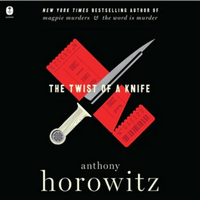
I’m reading Sacrifices by Jamie Schultz (7 years after I bought it!) and am listening to The Twist of a Knife by Anthony Horowitz, Rory Kinnear (Narrator), the new Hawthorne and Horowitz mystery, on audiobook.

SacrificesBlank SpaceThe Twist of a Knife

What did you recently finish reading?

I just finished Olivia Blacke’s Vinyl Resting Place, a fun cozy, and Junkyard War by Faith Hunter, Khristine Hvam (Narrator) on audio, which wasn’t cozy at all.

Vinyl Resting PlaceBlank SpaceJunkyard War

What do you think you’ll read next?

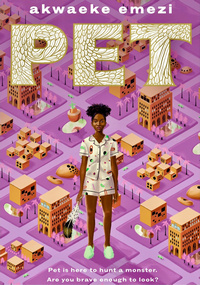
My next book should be Pet by Akwaeke Emezi—I have no idea what to expect out of this, I am going solely off of a recommendation. My next audiobook should be the third installment in the Pentecost and Parker series, Secrets Typed in Blood by Stephen Spotswood, Kirsten Potter (Narrator).

PetBlank SpaceSecrets Typed in Blood

Hope you’re having a better—and healthier—week. Reading anything good?

Have I Told You This Already?: Stories I Don’t Want to Forget to Remember by Lauren Graham: The Actress-Essayist Does It Again

Have I Told You This Already?Have I Told You This Already?:
Stories I Don’t Want to
Forget to Remember

by Lauren Graham

DETAILS: 
Publisher: Ballantine Books
Publication Date: November 15, 2022
Format: Hardcover
Length: 186 pg.
Read Date: December 12, 2022 
Support Independent Bookstores - Visit IndieBound.org

It’s almost as if I’m sending mixed messages, like valuing privacy whilst also being the author of a second book of personal essays.

What’s Have I Told You This Already? About?

This is a collection of essays—mostly personal—about Graham’s career (or things surrounding it) during various stages, some thoughts on filming a TV show and directing, and there’s one essay that’s devoted to just being funny.

She reflects on aging, friendship, making marmalade, and the ridiculous things that women in Hollywood have to do to maintain certain standards of appearance. She opens the book talking about memory and story-telling—where accuracy is necessary and where details can fudged because it makes a story better, and ends up with a tribute to New York City.

Whoops

I should’ve been patient and waited for the audiobook to become available. There’s nothing wrong with reading the paper version of this book—it’s perfectly charming and Graham’s voice shone through.

But.

Hearing it in her actual voice (not just what I assume it would sound like)—a few passages in particular—would be so much better. I listened to her previous book of essays (and the graduation speech) and I think this would’ve been more entertaining in audio format.

So, what did I think about Have I Told You This Already??

He said this as if his memory of the matter was not at all disturbed by something as inconsequential as fact. For years, my father told the same story about how a momentous occasion felt to him; the facts had faded over time, maybe because they weren’t the most relevant part of the day. Sometimes we polish an experience to make facts line up more closely with feelings or exaggerate moments to make a better dinner party tale. And sometimes, mercifully, details become blurry over time, maybe because the sharp reality is too painful to carry.

This was a fast and breezy read. Graham’s really skilled as a writer and her prose sings. She’s funny as you want her to be. The closing paragraph of the second essay is a work of comedic art, a string of puns that I couldn’t believe she was able to keep going as long as she is. I’m never going to quote any part of it—but I’m telling you, it was great.

There were a couple of chapters that didn’t do much for me—the chapter on various health retreats or the chapter on NYC as a friend (although I thought it was some of her strongest writing). And a couple that I was surprised I enjoyed as much as I did—like the chapter about her relationship with the department store, Barney’s. The chapter where she uses Nora Ephron’s essay, “I Feel Bad About My Neck,” to talk about aging in the Entertainment industry, was particularly effective.

Even the essays that underwhelmed me were well written, and I could see what she was trying to do—they just didn’t connect with me–but I found something to grin about or chuckle at in them. The essays that did click with me made me laugh (sometimes a lot). The rest fell somewhere between—but they were all funny (when intended to be), and I’m glad I read them all.

At the same time, I need to stress that this is not all comedy. There are some real emotions and some thinking behind some of these essays—and it’ll provoke some, too. I think in the end you get more comedy than anything else, but it wouldn’t take much for the balance to go the other way.

She has a real gift for a killer last line, too. Openings are important, but with essays of this length (especially if you’re going for comedic), a great last line is essential, and Graham knows what she’s doing there.

In the end, this was a very pleasant and engaging read that makes me really want to see more from her (which goes for pretty much everything she’s written). When her novel was published, I picked it up because I was curious about what this actress could do—I’ve picked up the 3 works since because I like the way she writes. This collection works as evidence that we should maybe think of Graham as a writer who can act.

This post contains an affiliate link. If you purchase from it, I will get a small commission at no additional cost to you. As always, the opinions expressed are my own.

Page 207 of 625

Powered by WordPress & Theme by Anders Norén