My Favorite Theology/Christian Living Books of 2021


Unlike 2020, when I posted about almost nothing I read in this category, I was much stricter with myself and posted about everything. I don’t know if anyone else appreciated or benefited from it, but I sure did. It also made this post a lot easier 🙂

As always, re-reads don’t count for these lists. It’s a self-imposed rule, so I don’t feel too bad about playing fast and loose with the rule for a couple of these entries.

(in alphabetical order by author)
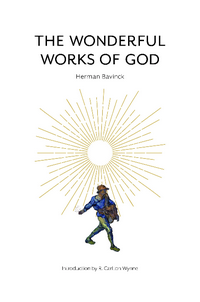
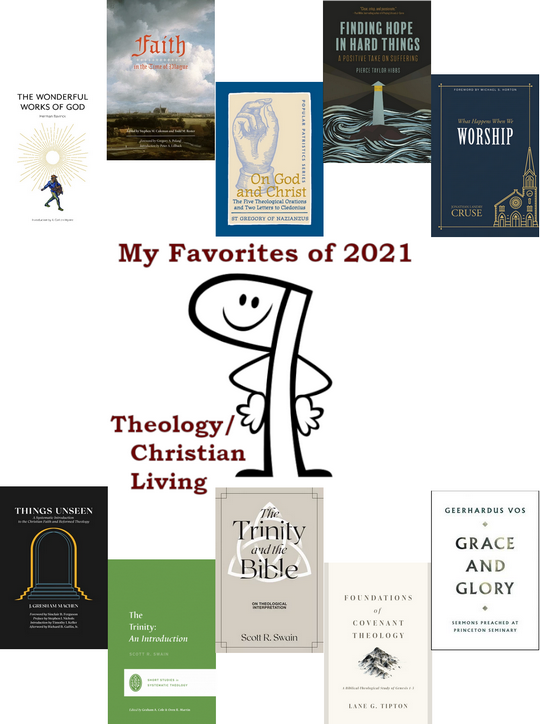
The Wonderful Works of GodThe Wonderful Works of God

by Herman Bavinck

My original post
Bavinck boiled down the material covered in his four-volume Reformed Dogmatics into this “simple explanation of the Christian faith in a book of modest scope.” It’s a pastoral work, a compassionate work, and one that will repeatedly point to the Gospel as well as the Majesty of the Triune God.

5 Stars

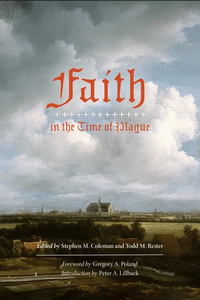
Faith in the Time of PlagueFaith in the Time of Plague

Edited by Stephen M. Coleman and Todd M.Rester

My original post
This is an anthology of “plague writings” from (primarily) Reformation and post-Reformation era pastors and theologians, to show how leaders in the past dealt with times of widespread communicable disease. Those looking for easy answers to “how would the early Church or Reformers” deal with COVID-19 (or the like)”, will be disappointed. There are no quick and easy answers here. But this can remind readers that the Church has been through similar—and worse—times before. She likely will again. There have been careful, pastoral responses to it in the past, and that can be true again. We don’t have to have a snappy, one-size-fits-all approach at the first sign of trouble, but we are called to gracious, Christ-honoring, people-serving responses.

4 Stars

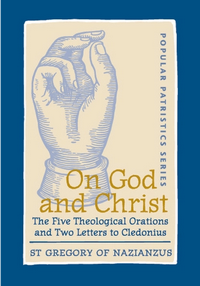
On God and ChristOn God and Christ, The Five Theological Orations and Two Letters to Cledonius

by Gregory of Nazianzus, Translators: Frederick Williams & Lionel Wickham

My original post
These sermons were pivotal in the development of the position behind the modification to the Nicene Creed at the Council of Constantinople. It’s full of technical Trinitarian language, so it’s not the easiest thing to read. But with a lot of care, it’s rewarding. These sermons have lasted since the Fourth Century because they’re useful, educational, approachable, and understandable. The translator calls them “as much high art as high theology” in his introduction. This is a man who cares about what he’s talking about—this is important to him, important to his opponents, important to his audience, and therefore it must be dealt with carefully, with precision, and clearly. All of which translates well to us today.
5 Stars

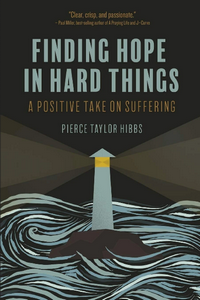
Finding Hope in Hard ThingsFinding Hope in Hard Things: A Positive Take on Suffering

by Pierce Taylor Hibbs

My original post
The central thesis of the book is: hard things are going to shape us in ways easy things can’t. He develops this thesis through a collection of essays about the death of his father, his anxiety disorder, and his struggles with self-doubt. These case studies are just that, things that his readers can relate to, sympathize with, and find similarities in their lives. After that, Hibbs points to finding Christ and His purposes in the hard things, and that’s where we find hope. This isn’t a book that comes to say “here’s a bunch of things you need to know to deal with suffering,” instead it’s “here’s what I’ve learned while through these trials, maybe you can learn from what I’ve been through, too.”

3.5 Stars

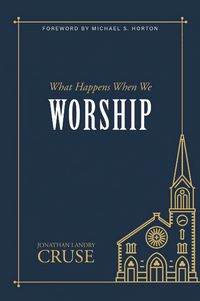
What Happens When We WorshipWhat Happens When We Worship

by Jonathan Landry Cruse

My original post
This is not a manual for the “how-to” aspects of worship, nor does it wade into the “style” debates and conflicts, he doesn’t look into the “why” we do certain things in worship (although he brushes against the idea). This is about the supernatural aspect to the ordinary, weekly event. It’s about what God does to and for His people in worship, what’s happening as we worship. Edifying, educational, orthodox, and even devotional—this book will introduce you to the vital topic or will gently remind you of the things you’ve been taken for granted.
5 Stars

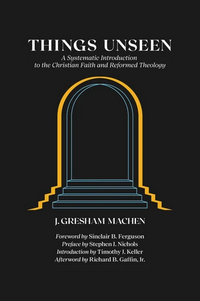
Things UnseenThings Unseen: A Systematic Introduction to the Christian Faith and Reformed Theology

by J. Gresham Machen

My original post
These are transcripts of weekly radio addresses Machen made presenting a systematic approach to Christian teaching. Flying in the face of the mode of the day, Machen gives a strong presentation of Reformed distinctives, as well as a whole-hearted belief in a supernatural Christianity. He’s succinct, pastoral, accessible, and even witty. These are not talks for scholars, or dumbed-down–they’re straightforward presentations of the topics for everyone. This is one of the most rewarding books I’ve read in a few years. Even when Machen is merely restating what generations before him taught, there’s a freshness to his presentations that really are appealing.

(I’m thumbing my nose at my “only new to me” rule here–I’ve read these talks in other collections several years ago–but not organized like this in one volume)
5 Stars

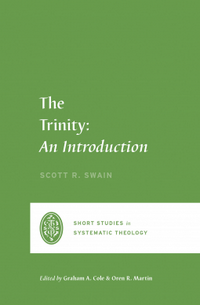
The TrinityThe Trinity: An Introduction

by Scott R. Swain

My original post
This is an introduction to the classical Christian doctrine of The Trinity. He’s not trying to re-invent the wheel, he’s definitely not trying to innovate, but to provide a concise jumping-off point into deeper studies by providing a solid foundation. While Swain never seems to be leaving out details or avoiding the complicated ideas (although he obviously has to), he keeps things short and sweet.

This is one of those books where my notes keep saying “Chapter X is likely the highlight of the book,” “the section on X is likely the most valuable in the book.” It appears 60-70% of the book is a highlight—and I may not have written all of those parts down. Which is to say, there’s a lot of gold here. Helpful, insightful, and useful—it also achieves its end for leading on to further study for me. It’s accessible, but not easy, reading. At the same time, it’s a challenging, but not difficult, text.
5 Stars

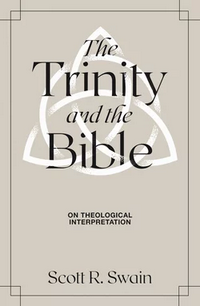
The Trinity and the BibleThe Trinity and the Bible: On Theological Interpretation

by Scott R. Swain

My original post
Rather than one overarching topic, this is a collection of previously published papers that seek to show both how the Bible reveals the Trinity and how the Trinity shapes our reading of the Bible. This is not an easy read, but it was worth the effort, every bit of it. Like a lot of the more scholarly theological books I read, I was reminded frequently while reading that I’m not an academic and this is above my weight class. But it wasn’t inaccessible, just difficult and required a little commitment. Like all good academic theology, there were moments of the most doxological writing—or doxology-inspiring writing (or a mix). There are paragraphs and paragraphs that I wish I could commit to memory, so I could use them at the drop of my hat in conversation and in prayer.
5 Stars

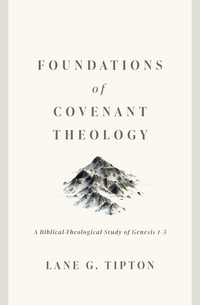
Foundations of Covenant TheologyFoundations of Covenant Theology: A Biblical-Theological Study of Genesis 1–3

by Lane G. Tipton

My original post
I’ve read several introductions to Covenant Theology in the last couple of decades. This is a different way of covering these concepts and it’s a very effective one. It’s also a different way of looking at Genesis 1-3. Almost every time I’ve seen these chapters explained and exegeted, it had to do with the doctrine of Creation, the Fall and the Promise of the Seed in Genesis 3, and so on. But Tipton’s approach—while addressing all that—focuses on the Big Picture, looking at the purposes behind Creation, the protoevangelium, the Covenants of Work and Grace, and how those are worked out in history (particularly in the last two chapters about Christ as the Promised Seed and the Second Adam).

It’s a self-described “brief and non-technical” book, building on the work of Geerhardus Vos and Meredith G. Kline. Maybe a bit too brief, a little more expansion would be beneficial, but a fascinating and helpful read.
4 Stars

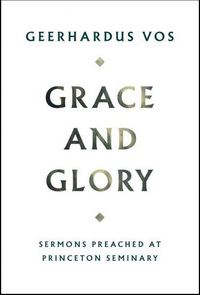
Grace and Glory (BoT Edition)Grace and Glory

by Geerhardus Vos

My original post
Another version of this book made this list a couple of years ago, but this version has more sermons. It’s easily the best collection of sermons I’ve ever read. Yes, there’s rich theology behind these sermons, but they’re primarily expositions and applications of the texts for the hearers. And, yes, the audiences of these sermons were students at Princeton Theological Seminary (before the downgrade that led to the creation of Westminster Theological Seminary), but these were not airy, academic addresses. Sure, as the initial hearers were largely future ministers, there are portions that are more applicable to preachers than to laity. But there’s not a lot of that, and even in the midst of one of those sections, there’s still a lot of gold to be mined.

5 Stars

Saturday Miscellany—1/8/22

(really quick—I could still use a recommendation or two for the 12 Books Challenge, if you’re in the mood to help a guy out)

Odds ‘n ends about books and reading that caught my eye this week. You’ve probably seen some/most/all of them, but just in case:
bullet Never Donate These Books to Little Free Libraries (or Anywhere Else)—Some of this seems like common sense. Probably those parts need to be emphasized.
bullet Public Domain Day 2022—a list of some of the works that hit Public Domain this year, it’s not just Winnie-the-Pooh.
bullet Noah Hawley Keeps Changing Lanes—a profile of Hawley and his new novel
bullet #R3COMM3ND3D2021 The After Show Party—A look back at #R3COMM3ND3D2021 (a truly impressive number of books got mentioned in these posts—if you’re looking for a 2022 TBR list, you could do worse than working your way through these.
bullet Humor in Books, and Other Places, Too! An Interview with Darran Handshaw—Lockhaven’s series continues—and includes a fire safety tip!
bullet These are probably the last of the 2021 Wrap Up posts (although I might not be the only one taking too long to do theirs), those that caught my eye:
bullet Raven’s Yearly Round Up 2021 and Top 10 Of The Year—plenty of good recommendations here
bullet Bookworm Blues lists their 25 Best Books of 2021
bullet Bookforager’s 2021 Progress Report
bullet The Bookwyrm’s Den brings us something from the other end of the spectrum comes To All the Books I DNF’d (2021 Edition), which is a much nicer way of dealing with this idea than I’d come up with.
bullet 2022 Reading Challenge for Overwhelmed Book Readers—for those who need something like this
bullet Why I’m ditching star ratings in 2022—I keep circling back to this idea myself
bullet 10 Reasons to Read Indie and Self-Published Books

This Week’s New Releases that I’m Excited About and/or You’ll Probably See Here Soon:
bullet And Your Enemies Closer by Rob Parker—the first (fairly disturbing) book in this Audible Original series was my introduction to Parker, and this follow-up is just as riveting as the predecessor. Former detective DI Foley kicks off a war between criminal factions. (I almost wrote my post about the book right here…oops. No one has time for that right now)
bullet Where the Drowned Girls Go by Seanan McGuire—a non-reading/blogging project this week sucked up more time than I expected, which is the only reason I didn’t start (and likely finish) the 7th Wayward Children book two days ago.
bullet Anthem by Noah Hawley—”An epic literary thriller set where America is right now, in which a band of unlikely heroes sets out on a quest to save one innocent life—and might end up saving us all.” Yeah, that’s pretty vague, but it’s as good as I can do right now.

Lastly, I’d like to say hi and extend a warm welcome to MaureenBaks who followed the blog this week. Don’t be a stranger!

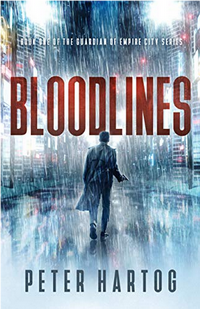
The Friday 56 for 1/7/21: Bloodlines by Peter Hartog

The Friday 56This is a weekly bloghop hosted by Freda’s Voice.

RULES:
The Friday 56 Grab a book, any book.
The Friday 56 Turn to Page 56 or 56% on your ereader. If you have to improvise, that is okay.
The Friday 56 Find a snippet, short and sweet.
The Friday 56 Post it.

from Page 56% of:
Bloodlines

Bloodlines by Peter Hartog

“What the f*** are you doing, Holliday?” Deacon hollered from the kitchen.

He leaned against one of the tables with arms folded across his chest.

“It’s what we police-types like to call ‘looking for clues,’” I retorted, irritated by the question. “Shake down the premises, go through his sock drawer, locate the virtual workstation, and mine it for information. You should try it sometime.”

“I get that,” he replied amiably. “But I doubt a vampire’s gonna hide its secrets inside an office, do you?”

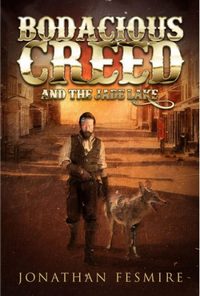
Bodacious Creed and the Jade Lake by Jonathan Fesmire: Steampunk’s Answer to Alex Murphy is Back in Action

Bodacious Creed and the Jade Lake

Bodacious Creed and the Jade Lake

by Jonathan Fesmire
Series: The Adventures of Bodacious Creed, #2

Paperback, 193 pg.
2021

Read: October 20-22, 2021

What’s Bodacious Creed and the Jade Lake About?

Years ago, Bodacious Creed, was one of the most feared/respected/famous lawmen in nineteenth-century California—then he was killed, and somehow brought back to something like life due to some amazing technology, to become a super-powered force for good.

After his “resurrection” (for lack of a better term), he’s started repairing his relationship with his daughter and has taken on a new level of folk-hero status as he seeks to take down the criminal empire that controls too much of California—and was responsible for his near-death.

One night he rushes to the rescue of an escaped Chinese slave—but is too late, and as she dies in his arms, she gives him enough information to track down where she escaped from so he can find some justice for her. Implanted in her are mechanical parts not too dissimilar from those he’s been augmented with. The idea that women are having this done to them unwillingly (and for an unknown reason), is too much—so Creed sets his sights on bringing this done.

Creed sets out for San Francisco, finds new allies for his quest (think Team Arrow/Team Flash)—they’re a strange batch of scientists, thinkers, and community activists looking for ways to make a difference. THey’re also begging to have a series made centering on them. Between their resources and Creed’s dogged determinism, they’re sure to get to the bottom of things.

San Francisco of the time isn’t the nicest place—which is pretty much how it’s always fictionally depicted, I guess. It’s not quite Mos Eisley, but the odds of finding even a mostly honest lawman aren’t that great—so, Creed and his friends are largely on their own.

So, what did I think about Bodacious Creed and the Jade Lake?

Like its predecessor, Jade Lake, is simply an entertaining read—just look at all the elements: Western, Steampunk, and Zombies*. Take three beloved and entertaining genres and put them together—sure, so many things could go wrong—but it’s hard to imagine how that’s not a crowd-pleaser.

* Okay, I know I’m not a huge Zombie fan—but almost everyone else is.

And it is, Fesmire tells a good adventure story. I don’t know what else to say about this, and I’ve tried. The Bodacious Creed series delivers what it promises: steam-powered action and adventure. With an enhanced coyote sidekick! How do you pass that up?

Disclaimer: I participated in crowdfunding efforts for this book, which might make me seem like I’m in the tank for this, but I just think of it as a very pre- kind of pre-order.


3.5 Stars

My Favorite Non-Crime Fiction of 2021

2021 Favorite Non-Crime
Back when I started this site, I knew the content would be largely “genre”-oriented. I’d have wagered the content would be roughly 1/3 Mystery/Detective fiction, 1/3 Urban Fantasy, and slightly less than 1/3 SFF, with “non-genre” fiction, humor, and non-fiction being enough to make my one-thirds just an approximation (honestly, if you asked me what I read regularly, that’s pretty much how I’d describe it today). Actual numbers show that’s wrong—it’s almost 40% Crime/Thriller Fiction, and Urban Fantasy has only topped 20% once in the last decade—it was 16% the last two years, SFF combined for about 14% in 2021.

Which is just a long-winded way to get to these two points: because Crime Fiction takes such a big chunk of my reading, it gets its own “Favorite” list, but none of the others really garner enough numbers for their own.

As always, re-reads don’t count—only the works that were new to me.

(in alphabetical order by author)

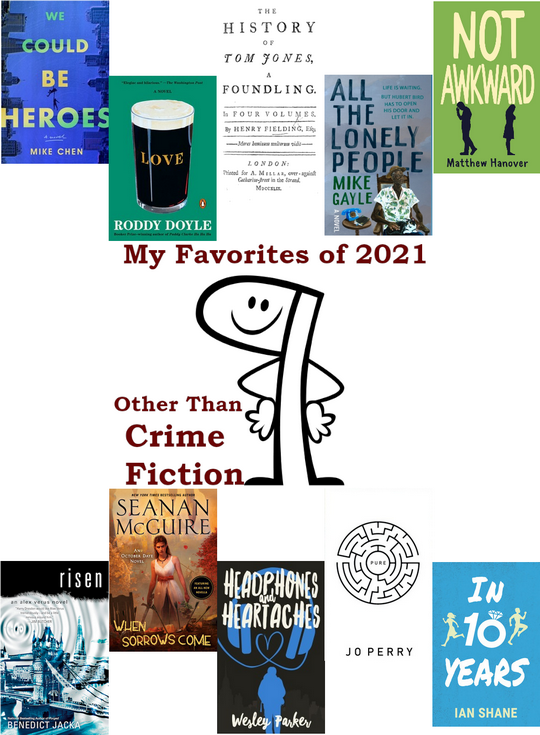
We Could Be Heroes

by Mike Chen

My original post
A super-hero and a super-villain become friends after meeting (as civilians) at a support group meeting and delve into their shared past to figure out how they got their powers and who they used to be. That old story. 🙂 In typical Chen fashion, the SF/super-hero elements are just an excuse to tell a story about friendship, memory, and identity. It’s a story about people, who just happen to be super-powered.

4 Stars

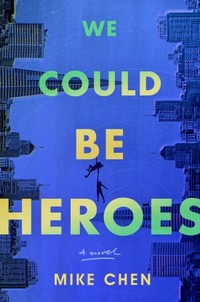
LoveLove

by Roddy Doyle

My original post
This is about as close as you can get to a novel without a plot. You’ve got a pair of old friends, getting together for drinks (many, many drinks) and to catch up on each other’s lives. They end up revisiting their past (as you do), arguing about what really happened then, and seeing how it’s impacted where they are now. There’s more to it, but that’ll do for our purposes. The novel is primarily told through dialogue (although we do get memories and internal commentary from one of the men). As is to be expected from Doyle, that dialogue sings. You can practically hear it jump off of the page–I’m not sure I could conjure up a mental image of anyone in the book, but I know exactly what they’d sound like.

4 Stars

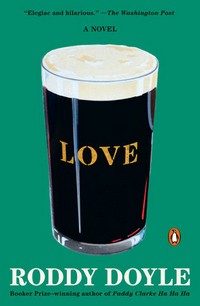
Tom Jones Original CoverThe History of Tom Jones, A Foundling

by Henry Fielding

My wrap-up post for the project
I read most of this in 2020, but didn’t finish it until 2021, so it goes on this list. Just for the (mostly rewarding) time spent on this book, it deserves a spot on this list. It’s not really the kind of book I thought it would be, but it’s so much more interesting. I’ve said enough about this book, I don’t really have it in me for more–it’s a classic, anyway, what can I say that hasn’t been said for hundreds of years?

5 Stars

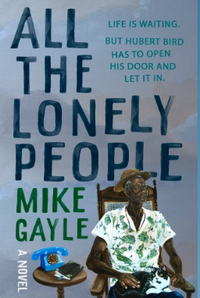
All the Lonely PeopleAll the Lonely People

by Mike Gayle

My original post
This is nothing but an all-out attack on the cockles of your heart. I described it to a friend, “Imagine a book by Fredrick Backman–but instead of a crotchety old Swedish man, it’s about a lonely man who left Kingston for London in the 50s.” It’s so heartwarming, so Capra-esque, so…eh, you get the point.

5 Stars

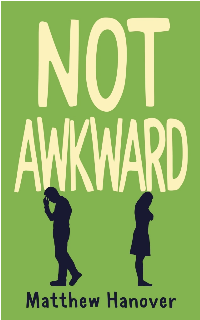
Not AwkwardNot Awkward

by Matthew Hanover

My original post
Hanover’s third Wallflowers novel came out last year and shows real growth as a writer, while not losing any of the charm, heart, and likability of his previous novels. Just before his wedding, Scott goes to the funeral for his ex’s father, and somehow ends up spending a few days with the family. Not Awkward is a warm and heart-filled story about revisiting the past, finding healing (whether or not you thought you needed it), and embracing a future that doesn’t look like you expected it would (and is probably better). It’s the kind of book that’ll make you feel a little better about life for a while—and who doesn’t want to read something like that?

4 1/2 Stars

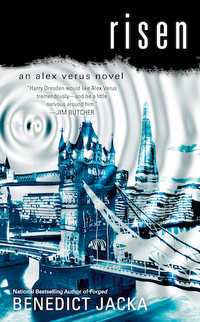
RisenRisen

by Benedict Jacka

My original post
The twelfth and final book in the Alex Verus series blew me away. It’s one of the best series finales I remember reading. It was hard to say good-bye to this world and these characters, but Jacka did such a satisfying job with this novel that it took some of the sting out of it.

5 Stars

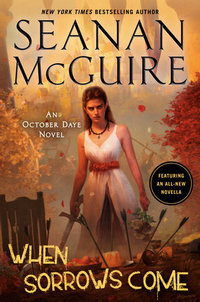
When Sorrows ComeWhen Sorrows Come

by When Sorrows Come

by Seanan McGuire

My original post
If (and that feels like a big “if”) October Day is going to get a Happily Ever After, it’s going to be years down the road. Thankfully, she got a “Happy Right Now” by marrying Tybalt. That’s pretty much what this novel is–a big dollop of happiness (with Toby putting down a palace coup along the way). It was so nice seeing that.

5 Stars

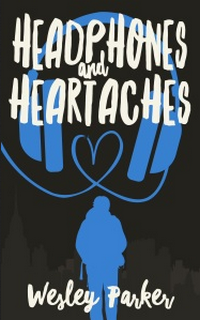
Headphones and HeartachesHeadphones and Heartaches

by Wesley Parker

My original post
Percy’s a teen who gets put into Foster Care after his mother’s latest OD. While she’s in a treatment program, Percy comes to trust and love his foster mother–a woman with a huge heart, who takes in this boy and gives him a safe place to be for the first time in his life. This is a sweet book, a touching book—an occasionally hilarious book (with some truly cringe-worthy beats)—I guess it’s best summed up as a very human book. Parker got me to feel all sorts of things for these characters, to a degree I didn’t expect or was prepared for.

5 Stars

PurePure

by Jo Perry

My original post
(sure, you could make the case that this is Crime Fiction, but I don’t buy it) After Ascher gets quarantined in her late aunt’s retirement condo during the early days of COVID. She sneaks around volunteering for a Jewish Burial Society, and then becomes convinced that one of the women she helped with was the victim of foul play. So Ascher tries to figure out what happened and who is responsible–again, while sneaking around the retirement community’s quarantine. This is a mystery novel about something—it’s more than a whodunit (assuming there was something for a “who” to have “dun”). It, like pretty much everything Perry writes, is about death and how we deal with it as humans (and one neurotic and grieving Mini-Pinscher). THere’s more to chew on, too, but that’d be telling…

This is one that’s going to stay with me for a while.

4 Stars

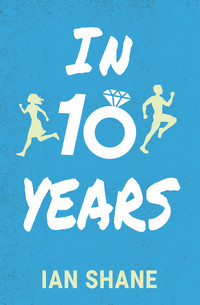
In Ten YearsIn Ten Years

by Ian Shane

My original post
A contemporary When Harry Met Sally that makes me just as happy as the movie ever did. Tried and true plotlines that felt fresh thanks to Shane’s light touch and ear for dialogue. It contains what’s probably my favorite chapter of 2021–and more than a couple of my favorite lines. I wanted to race through it to see how it ended, and I wanted to slow down to savor it (the impulse control side lost–what do you expect from someone who tagged himself “Irresponsible”?).

5 Stars

Family Business by S.J. Rozan: Family Matters

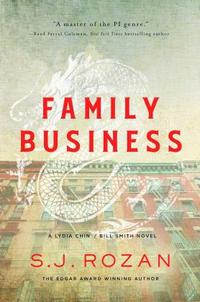
Family Business

Family Business

by S. J. Rozan
Series: Lydia Chin & Bill Smith, #14

Hardcover, 289 pg.
Pegasus Books, 2021

Read: January 1-3, 2021
Grab a copy from your local indie bookstore!

“Big Brother Choi died.”

“Wow. What happened?”

“Massive heart attack. Not to worry, there.”

I hadn’t really been worried. It wasn’t likely Big Brother Choi had been rubbed out by a rival tong leader and a Chinatown tong war was about to start. Those ham-handed days were largely gone.

But Mary’s “there” implied something else, and I knew what it was, the reason Chris Chiang had called. A seismic shudder was about to move through the streets we’d grown up on.

Our high school physics prof had told us that nature abhors a vacuum.

So does power.

What’s Family Business About?

The core of this novel is focused on what’s going to happen to a real estate development in Chinatown. Which really doesn’t sound that exciting—but Rozan’s able to make you care. Also, this is not a run-of-the-mill real estate problem.

There’s a large-scale development headed towards Lydia’s neighborhood, whether anyone wants it or not. The only thing stopping it is that the owner of one building in the middle of the projected development refuses to sell. That owner is—er, was—Big Brother Choi, the head of a tong, who uses that building as his tong’s HQ.

So, yeah, a criminal enterprise is all that stands between a (seemingly) legal and successful businessman and the destruction of a neighborhood/way of life. And then the head of the tong dies (of natural causes), and everything could change.

Choi’s niece—the executor of his will—comes to Lydia and Bill to provide some security for her as she tries to exert her position vis-à-vis the building. A lot is riding on this one building, and everyone has an opinion: there are two factions within the tong vying to determine the future of the building (and, with it, the tong); the developer; and the neighborhood’s historical society–and it’s all up to her to decide. People on all sides of the issue are trying to pressure her into making a decision they’d prefer about the building–and some of the pressure could be pretty intimidating.

Especially when ranking members of the tong start dying—without natural causes like those that took out Choi. And then people start shooting at people tangentially connected to the niece and threatening them.

Lydia and Bill now have to keep the niece alive and unscathed while trying to discover who’s behind the shooting and the dead tong members.

The Lydia and Bill Relationship

There are several reasons that Lydia and Bill’s romantic relationship is one of my favorites in fiction, and I’m not going to try to enumerate them all. But probably my favorite part is that when they shifted from close friends/business associates to romantic partners the rest stayed pretty much the same. They deepened what was there, but didn’t radically change it.

Their flirting is a little more obvious—and Lydia’s less likely to cut it off. But they still have each other’s back, the mutual support and trust are still there. When they’re on the job, they’re on the job, not making goo-goo eyes at each other. Bill knows that Lydia is going to be reckless—and he doesn’t try to stop her any more than he did before, but he sure worries about her. Would that everyone in fiction who made that transition did so as well.

So, what did I think about Family Business?

As I’ve mentioned before (likely too often), while I think most of the Bill-narrated novels are technically superior, the Lydia-narrated novels are consistently the more entertaining. So I went into this with high expectations—and they were pretty much met.

I could go on about the flirting between Lydia and Bill, or talk about Lydia’s wit and narration, or how nice it was to see a minor character from several books ago show up. But that’s probably enough to indicate where I’m leaning with this post. There are a couple of points that I want to talk about a little, however.

I loved the way Lydia’s mom inserted herself into the investigation. I’ve said enough about the slow-burn in getting the romance to advance, but getting Lydia’s mother to stop actively disapproving of Lydia’s career and now getting involved?? I dare you to go back 13 books and try to predict that.

Like most people who read Detective Fiction, one of my great joys is being one or three steps ahead of the protagonist in putting the clues together. THere’s something so satisfying about being more clever than they are—and in getting your guess endorsed by the protagonist. But what’s better? Having the protagonist put all the pieces together in a way you didn’t see coming—and instantly realizing there was no other way to interpret the evidence. That mix of “X was really clever there” and “ugh, I’m such a dunce for not seeing that” is somehow gratifying. For me, at least, the solution

Still, I’m not sure the people that Lydia initially revealed the solution to were the best to hear that. I’m even less sure of her timing on the revelation. But it did lead to some of the more exciting parts of the book—so as a reader, I liked that. I just wish that Lydia would be more judicious at times.

This was my first novel of the year—it’s a pretty good way to start 2022, something as entertaining as this was can make a guy optimistic about the next twelve months. That’s probably a silly way to think about things, but I’m running with it.

Family Business is not only another strong entry in the series that will please fans, it (like almost all those before) would be a good entry point for someone curious about the series. So really, there’s no excuse to not pick it up. Go do so.


4 Stars

This post contains an affiliate link. If you purchase from it, I will get a small commission at no additional cost to you. As always, opinions are my own.

WWW Wednesday, January 5, 2022

It’s already Wednesday? Where has the year gone?? (I’m not proud of that, but I was struggling to come up with anything else). Let’s put that weak attempt at humor behind us and get on with the WWW Wednesday, okay

This meme was formerly hosted by MizB at A Daily Rhythm and revived on Taking on a World of Words—and shown to me by Aurore-Anne-Chehoke at Diary-of-a-black-city-girl.

The Three Ws are:

What are you currently reading?
What did you recently finish reading?
What do you think you’ll read next?

Easy enough, right?

What are you currently reading?

I’m reading the SF/Urban Fantasy combo, Bloodlines by Peter Hartog, and am wrapping up Gone Missing by Linda Castillo, Kathleen McInerney (Narrator) on audiobook.

BloodlinesBlank SpaceGone Missing

What did you recently finish reading?

I just finished S.J. Rozan’s Family Business—what a great way to start the year—and The Case of the Left-Handed Lady by Nancy Springer, Katherine Kellgren (Narrator) on audio.

Family BusinessBlank SpaceThe Case of the Left-Handed Lady

What do you think you’ll read next?

My next book should be Where the Drowned Girls Go by Seanan McGuire and my next audiobook will probably be The Finders by Jeffrey B. Burton, Matt Godfrey (Narrator).

Where the Drowned Girls GoBlank SpaceThe Finders

How are you kicking off 2022?

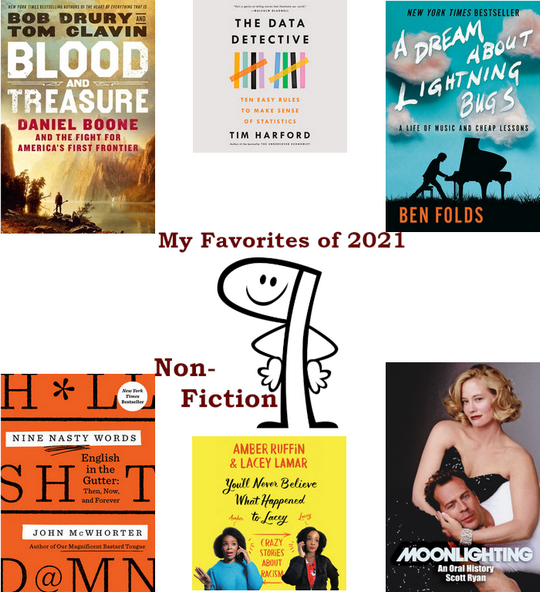
My Favorite Non-Fiction Books of 2021

Favorite Non-Fiction 2021
My 2021 Wrap up continues and now we’re on to the Non-Fiction list. While I liked a number of works that didn’t make this list, I felt strange calling them a “favorite.” So, we have 6 instead of the nigh-obligatory 10 (Hartford had two books on the list, but I wouldn’t let someone else do that on another list, so I trimmed one from this). Like last year, I was surprised that I’d given so many of these 3 or 3 1/2 stars. But these are the ones that stuck with me through the year; the ones I cited in conversation; that I thought about when reading something else or watching something on TV. Really, that’s what’s important, right?

As always, I only put books that I’ve read for the first time on this list. I don’t return to NF books (outside of looking up things for one or three points), but occasionally I do—for example, The Pleasures of Reading in an Age of Distraction by Alan Jacobs would get a permanent spot on this list, were it not for this rule.

(in alphabetical order by author)

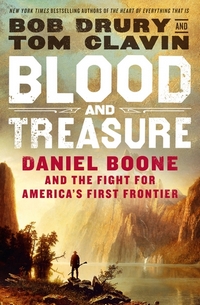
Blood and TreasureBlood and Treasure: Daniel Boone and the Fight for America’s First Frontier

by Bob Drury and Tom Clavin

My original post
This book de-mythologized—and then re-mythologized (to a point) Daniel Boone, who ended up being more interesting (and more human) than I anticipated. Some of the writing was fantastic and you could forget you were reading history (there were other parts that were so dry it could be nothing else). The book looks at both Boone and the Fight for the Frontier—against Indians, French, and the English. It’s the kind of history book that convinces me that I should read more history—not to better myself, just because it’s worthwhile.

3.5 Stars

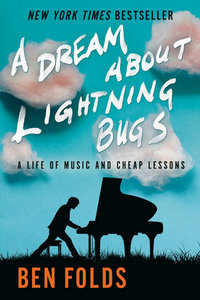
A Dream About Lightning BugsA Dream About Lightning Bugs: A Life of Music and Cheap Lessons

by Ben Folds

I haven’t written a post about this book yet, so it’s hard for me to try to give a thumbnail here. I enjoyed getting to know Folds a bit better—warts and all (and he’s not afraid to bring up some of the warts). Where this book really impressed me was when he talked about music—performing, creating, listening, what it means to a listener/performer. I’ve already returned to some of that material to reread—I’m not a musician, but I appreciate someone that thoughtful about it. It’s inspirational.

Also, his stuff about Shatner is just great.

3.5 Stars

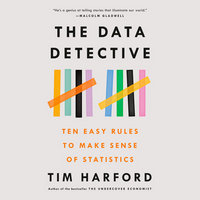
The Data Detective: Ten Easy Rules to Make Sense of StatisticsThe Data Detective: Ten Easy Rules to Make Sense of Statistics

by Tim Harford

My original post
This is one of those books I should go back and re-read, taking copious notes to help me internalize the points. We’re subject to people at work, on the news, online, and from the government throwing numbers, statistics, and “studies show” so often that it can be overwhelming. So much so that many people blindly accept everything they’re told from that formula, or doubt it all. Hartford’s point is that we should be skeptical, but to use that skepticism to dig out the real meaning behind the study/statistic and then use it for our advantage as a voter, citizen, employee, or person (or all of the above). Crystal clear writing, easily applicable, and more useful than most books on related subjects.

Actually, I think I just convinced myself to re-read it soon.

3 Stars

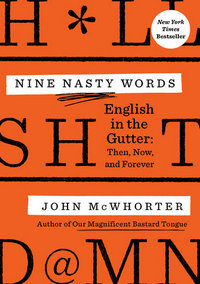
Nine Nasty WordsNine Nasty Words: English in the Gutter: Then, Now, and Forever

by John McWhorter

My original post
I’m a sucker for an entertaining look at language, and that’s what McWhorter delivered here. While I try to eschew the use of profanity, we’re surrounded by it so much more than we likely realize, so I might as well learn more about it, right? This was a solid look at the background and development of these “Big 9” words—in particular, I enjoyed McWhorter’s demonstration of how the words function as various parts of speech, as well as the varying nuances of meaning.

3 Stars

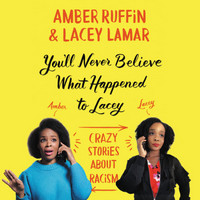
You'll Never Believe What Happened to LaceyYou’ll Never Believe What Happened to Lacey: Crazy Stories about Racism

by Amber Ruffin, Lacey Lamar

My original post
I talked about this in my favorite audiobook post, too, never fear—this’ll be the last time I bring it up this week.

Early on, Ruffin writes:

Twice a week, I get a text from my sister that says, “Can you talk?” It’s my favorite because I know I’m about to be transported to a place that exists in real life and fantasy: the place where coworkers will put their whole hand in your hair, talking ’bout “It’s fluffy like a dog.” I realize this sounds terrible, but it’s like watching Dateline. You can’t believe it was the GIRLFRIEND who killed the HUSBAND! It’s the edge of reality. Technically, it happens, but it is barely plausible. Excited, I steal away to the elevator banks at work and listen to Lacey tell me a new horror story. It’s fantastic. As I stand there, mouth agape, listening to some new fresh hell, I am always struck by the fact that these stories will only exist in this phone call. Some will go on to become stories once the topic turns to “racist people at work” one night when Lacey is hanging out with her friends, but she’ll forget most of them because of the sheer volume. The. Sheer. Volume.

That’s what this book is, a distillation of that volume. A compilation of the best/worst of those stories. They are tragic. They are sobering. They are frequently pretty funny. But only in the way they’re told. Lamar and Ruffin share these stories with an air of “you have to laugh or you’ll cry.” The kind of resigned laughter when you realize that your situation isn’t going to get better any time soon, so you might as well find the pleasure in it. A lot of this is hard to listen to/read—but it’s usually worth it. There’s also a decent level of “a spoonful of sugar helps the medicine go down” running throughout this.

4 Stars

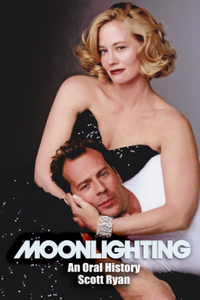
Moonlighting: An Oral HistoryMoonlighting: An Oral History

by Scott Ryan

My original post
It’s probably the most fun I’ve had with a book this year. Somehow, Ryan’s able to capture a little bit of the flavor of the show while getting into the history. Moonlighting was a revolutionary show, and he is able to talk to just about every significant figure involved in the creation and production of it for this history. He chronicles the ups, downs, and all-around zaniness. There are deep-dives on important episodes and or tricky scenes, as well as broader looks at themes, storylines, characters, etc. It’s easy to forget just how magical this show was, but spending some time with Ryan will remind viewers of a certain age of just what a ground-breaking, oft-controversial, and entertaining series it was.

5 Stars

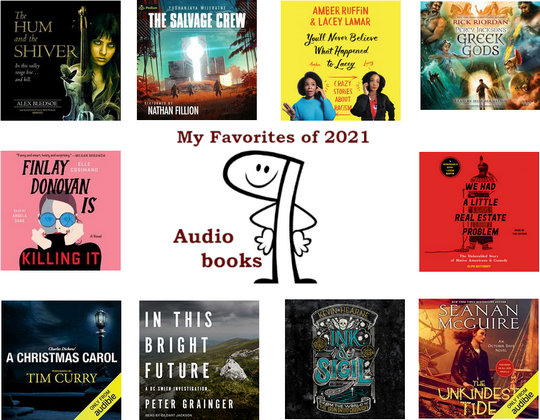
My Favorite Audiobooks of 2021

My Favorite Audiobooks of 2021
Last year I kicked off my Year-End Retrospective with a look at my favorite audiobooks, I might as well repeat that this year. How do I keep this from being just a rehash of my other year-end lists? By focusing on the audiobook experience over the content. What was it like to listen to it? How engaging was it, how did the narrator do? Was it a good match in terms of tone, content, and performance? All of these books are/were good—but the audiobooks are a bit better because of the narrator and the rest of the people involved in the production.

(in alphabetical order by author)

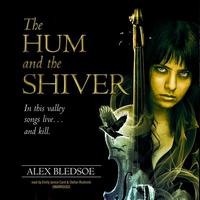
The Hum and the ShiverThe Hum and the Shiver

by Alex Bledsoe, Emily Janice Card(Narrator), Stefan Rudnicki (Narrator)

This was my third or fourth trip through this book (maybe, fifth, but I don’t think so). I’m not sure if that means it was easy for me to be impressed—or maybe it was really hard because I had high expectations. Regardless, Rudnicki and Card took me to Cloud County and the land of the Tufa. I could believe that these people lived, breathed, and walked around in this world—and yet were otherworldly, as they ought to be. I knew Rudnicki could make me believe in a Fantasy world—it turns out that he can make me believe in this one, too. Card was right there with him.

4 Stars

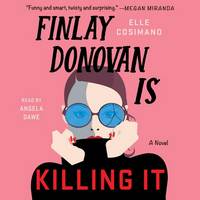
Finlay Donovan Is Killing ItFinlay Donovan Is Killing It

by Elle Cosimano, Angela Dawe (Narration)

My original post
This is on the list because of Dawe’s narration. The text was entertaining enough, sure, but her narration is what made sure I remembered the book during the list-making time. The novel was a tricky balancing act between the various tones and characters, and Dawe makes you believe it. She captured the comedic sense of the novel along with the tension and emotional moments. There were a few accents involved and she did a believable job with them, too.

3.5 Stars

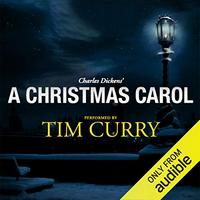
A Christmas Carol: A Signature Performance by Tim CurryA Christmas Carol: A Signature Performance by Tim Curry

by Charles Dickens, Tim Curry (Narrator)

My original post
I’ve said it before, I’ll say it again: all you need to know about this is: Tim Curry. This wasn’t the performance I expected—I figured I was in for something near to over-the-top, with Curry going to town with the text. Instead, we’re treated to a respectful, restrained performance giving Dickens’ classic just the right emotional weight, sentimentality, personality, and life.

5 Stars

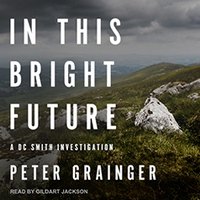
This Bright FutureIn This Bright Future

by Peter Grainger, Gildart Jackson (Narrator)

My original post
Grainger and Jackson together have made this one of my Top 3 audiobook series, period. So my only question was how many of the books would end up on this list. I ended up limiting myself to one, and therefore it had to be this one—we get so little of our typical characters and settings, but Jackson is able to make Belfast as warm and homey as King’s Lake. There are elevated dangers and emotions in this book that we don’t typically get with D.C. Smith, but Jackson doesn’t miss a beat. Grainger puts D.C. through his paces, too. Both are at the top of their game—making D.C. at the top of his, too.

4 Stars

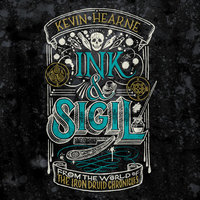
Ink & SigilInk & Sigil

by Kevin Hearne, Luke Daniels (Narrator)

Even though a pro like Luke Daniels is constantly doing voices/accents for his characters and the narration is almost never his “natural” voice (assuming he even has one anymore), I have to think that maintaining a Glaswegian accent for as long as he did for this book (ten hours and change, I think) has to be an added level of difficulty. Not that you can tell from listening to this. I thought the novel was a rollicking good time and just the way you should introduce a new series. The audiobook version just cemented that.

4 1/2 Stars

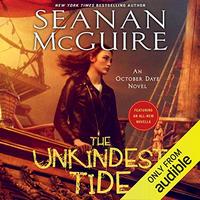
The Unkindest TideThe Unkindest Tide

by Seanan McGuire, Mary Robinette Kowal (Narrator)

This novel was the payoff (as far as we know so far, I wouldn’t put it past McGuire to turn it upside down later) to a storyline that had been lingering and building for years, I remember being stunned when reading it—just that aspect of The Unkindest Tide brought a great combination of anticipation, grief, suspense, and surprise. The story of the novel—the trip to the Duchy of Ships, the intrigue around Dianda, etc. was as solid as it gets, too. I remembered all this going in, so it was all teed up for Kowal—and she nailed it, it almost felt like I hadn’t read the book before and was discovering it fresh. A narrator who can do that is tops in my book.
4 1/2 Stars

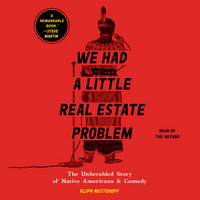
We Had a Little Real Estate ProblemWe Had a Little Real Estate Problem: The Unheralded Story of Native Americans and Comedy

by Kliph Nesteroff

My original post
As I was trimming down the list of audiobooks I listened to last year for this list, I didn’t expect that this would stay on the list. A history of Native Americans in Comedy, really? But I kept not deleting it…so I started thinking of it—there’s a social history, an entertainment history, with individual profiles mixed it—it has it all. What’s more, despite a pretty dry (but never boring) narration, and not using clips of original performances, the comedy of these individuals comes through. In the midst of hardship, suffering, prejudice, and hard breaks, there are some solid laughs. It’s hard not to keep thinking about that.

4 Stars

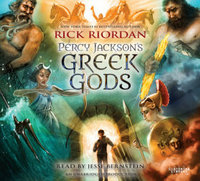
Percy Jackson's Greek GodsPercy Jackson’s Greek Gods

by Rick Riordan, Jesse Bernstein (Narrator)

I started working on a post last year about contemporary myth retellings (and I intend on finishing it before my unconceived grandkids are ready to read it), and listened to this as part of that. In many ways, the book and the information didn’t fare well compared to things like Gaiman and Fry have recently produced. But this is here and they’re not—because as an audiobook this is a great experience. Bernstein is Percy Jackson here, and it felt like something ol’ Percy was sitting down and relating to future Camp Halfblood residents. It inspired me to listen to the original Percy Jackson series again just so I can listen to Bernstein perform this character.

3 Stars

You'll Never Believe What Happened to LaceyYou’ll Never Believe What Happened to Lacey: Crazy Stories about Racism

by Amber Ruffin, Lacey Lamar

My original post
I’m still telling people about this audiobook/book nine months later. I can’t think of a book that made me angrier, sadder, or made me laugh as much in 2021 (or a few years before it, either). This did all three. Ruffin’s narration, Lamar’s stories, their hurt, and their optimism make this a must-listen.

4 1/2 Stars

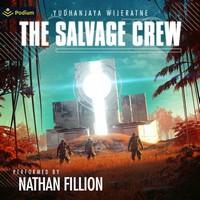
The Salvage CrewThe Salvage Crew

by Yudhanjaya Wijeratne, Nathan Fillion (Narrator)

My original post
This is a very strange SF story about a sentient AI (based on the memories and personality of an engineer). I think I’d have enjoyed the story had I read the novel, but it’s Nathan Fillion that brought it to life. That same charm that makes you like Caleb, Mal, Castle, and Nolan shines forth and makes you believe in this malfunctioning (at least eccentrically-functioning) AI and get invested in the AI’s survival and that of his ragtag crew.

4 Stars

Fortune Favors the Dead (Audiobook) by Stephen Spotswood, Kirsten Potter: Female Sleuths Buck Convention in this 1945’s Adventure

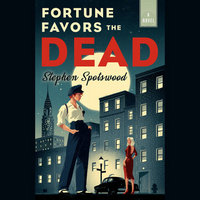
Fortune Favors the Dead

Fortune Favors the Dead

by Stephen Spotswood, Kirsten Potter
Series: A Pentecost and Parker Mystery, #1

Unabridged Audiobook, 8 hrs., 31 min.
Random House Audio, 2020

Read: December 1-2, 2021
Grab a copy from your local indie bookstore!

The Oversimplified Setup

It’s a gender-flipped Nero Wolfe/Archie Goodwin. Instead of staying home habitually because of eccentricity, detective Lillian Pentecost has multiple sclerosis. Her assistant, Willowjean “Will” Parker has a much more colorful history than Archie Goodwin—she spent years in the circus after running away from a terrible home in her teens. Will is game to get physical with suspects if necessary, but she’s not up to Archie’s level and doesn’t necessarily give as good as she gets.

Pentecost is much more active outside the home than Wolfe, and the pair are more socially active—with social consciences that would be far more at home in Twenty-First century American than in the 1940s. But largely the duo operates like their archetypes.

What’s Fortune Favors the Dead About?

The book begins with how the two met and started working together, then it jumps three years to after the partnership had been established and prospective clients show up.

A year ago, Abigail Collins’ husband shot himself when it looked like everything was going the way the steel magnate wanted it to (in the mid-1940s, selling steel to the U.S. Government was a license to print money). Now, she’s been murdered, and her body was found in the same chair as her husband. Her son, daughter, and an old family friend (now head of the company) come to Pentecost to do what the police have been unable to—find the killer and assuage the worries of the company’s stockholders.

It’s practically a true-locked room mystery, which gets Pentecost’s attention. As an added bonus for the detectives, hovering around the case is a famed spiritualist that Pentecost has been wanting to expose for a fraud.

So, what did I think about Fortune Favors the Dead?

When it comes to re-imaginings, or characters based on Wolfe/Archie, I thought this was one of the more inventive and successful (DeAndra’s Lobo Black/Quinn Booker might be better, but it’s been so long since I read it, I’m not sure). Don’t take anything negative I say—or if I’m not that enthusiastic about it—as being a reaction to being a Wolfe purist.

When you think of Stout’s works—it’s about the case, the mystery. Sure, you stick around because of the characters—but it’s about watching the characters at work in and around the case. This was about Will Palmer first and foremost—with Pentecost clearly a secondary character—and her relationships/interactions with the principals related to the case and her background. The next priority of the novel was in creating and revealing the world of Pentecost and Palmer—how they were active in it and related to people in the world. The case—and everything else—came in as a tertiary concern.

This is all fine and good for a first novel—but it didn’t seem to fit the setup either as something modeled on Wolfe/Archie novels, or as something in a vaguer 1940s detective mold. That’s me carrying in assumptions to the text, I realize. But it still felt like Smallwood’s emphasis was misplaced.

The mystery/mysteries were clever enough and the plotlines were well-executed, and the emotional beats—particularly in the final chapter—were handled perfectly by both Spotswood and Porter.

Fortune Favors the Dead was not the novel I expected, but it was good enough to get me to come back for the second in the series.


3 Stars

This post contains an affiliate link. If you purchase from it, I will get a small commission at no additional cost to you. As always, opinions are my own.
Page 271 of 630

Powered by WordPress & Theme by Anders Norén