Tag: 20 Books of Summer Page 1 of 5

Everybody Wants to Rule the World Except Me by Django Wexler: A Kingdom, A Horde, and a Davi (whatever that actually is)

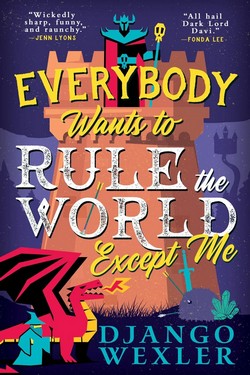
Cover of Everybody Wants to Rule the World Except Me by Django WexlerEverybody Wants to Rule the World Except Me

by Django Wexler

DETAILS:
Series: Dark Lord Davi, #2
Publisher: Orbit
Publication Date: May 27, 2025
Format: Paperback
Length: 324 pg.
Read Date: August 28-31, 2026

Buy from Bookshop.org Support Indie Bookstores

This Is Book Two of a Duology, So…

I cannot talk about this without talking about Book One, How to Become the Dark Lord and Die Trying. I probably won’t say much more than what you can assume from the title, but still.

Also, I’m going to lift sections and ideas from the post that I just linked to—because why reinvent the wheel in what I write about these books? The two books could easily be packaged together in one volume to read straight through, so it makes sense that I’m going to think a lot of the same things about them. Wexler’s consistent through the duology; I’ll be consistent in my writing about it. But I’m just saying that now to head off any self-plagiarism claims.

And, now…on with the post…


First and most urgently, I need to prevent the horde from destroying the Kingdom. This is harder than it sounds. But, Davi, you might say, you’re the Dark Lord now! Surely you can order the horde to just, I don’t know, start planting daisies. Which sounds great but this is real life (kind of) and not WarArtisan IV, I’m an actual person and not a disembodied hand in the sky clicking on stuff. The wilders follow the Dark Lord because they think it’ll get them what they want, which is apparently DEATH TO THE HUMANS; if I don’t play along, maybe they’ll decide that Hufferth or Sibarae has the Mandate of Heaven after all.

What’s Everybody Wants to Rule the World Except Me About?

That quotation basically sums it up. This book takes up shortly after the last one, with Davi having to do some quick thinking and exceptional lying to come up with a way to keep her new horde from wiping out humanity. Or at least trying to (but based on her past lives, she’s pretty sure of the outcome).

Davi and Tsav head to the kingdom’s capital to try to work something out, but the situation in the capital is different this lifetime. Requiring more quick thinking and exceptional lying.

Actually, that pretty much sums up the next…um…rest of the book. Davi and her friends/allies do what they can to come up with plans to keep everyone from attempting to wipe out the other side and maybe come up with a more constructive and long-lasting solution.

A Pretty Big Caveat

Davi feels like she was trained in the use of “blue language” by Zoey Ashe and Teagan Frost*, and truly the student has surpassed the masters. And I really don’t know how to describe her sexual appetites. Thankfully, it’s all behind closed doors (or tent flaps)—but she doesn’t mind talking about it in the narration.

Go into it knowing that, and you’ll be okay. If that’s a red flag for you, (and I honestly feel like it maybe should be one for me), pay attention to it. Maybe instead of a flag, think of it as a red metal octagon.

* From Jason Pargin’s Zoey Ashe series and Jackson Ford’s Frost Files, respectively.

The Missing Fantasy Element

I’ve always wondered where all the dragons were at. It seems like there should be dragons, dragons go with the whole post-Tolkien/Arthuriana/D&D fantasy zeitgeist like orca and Dark Lords and knights in shining armor. The Kingdom has legends about dragons, but they always take place in Olden Times, and in the modern days, giant flying reptiles are nowhere to be found. In the thousand years I’ve been kicking around, I’ve never seen a dragon. I might have even, from time to time, expressed the sentiment that I wanted to see one, or that getting eaten by a dragon would be a good death to add to my extensive catalog.

Right about now, I profoundly wish I could take those thoughts back.

I wanted to keep going with this quotation, but it was in danger of taking over the post (which might not have been a horrible idea), but

In short, it looks like the offspring of an ill-conceived one-night stand between Smaug and Cthulhu.

So, what did I think about Everybody Wants to Rule the World Except Me?

“I know what I’m doing.”

Tsav rolls her eyes. “What in the course of our relationship could possibly give me that impression?”

I snort. “You know what, fair.”

First, there is so much more heart to this book than you might think. Scrape away the jaded nature of living hundreds of lives and dying in all but one of those (sometimes horribly), and Davi has a large heart and cares a lot for her “minions.” She’s also capable of more personal growth and emotional maturation than one might give her credit for. Not so much that she stops being the sarcastic emotional train-wreck covering up her anxieties and fears with jokes and innuendo, because coping mechanisms just don’t go away. Yet….

Secondly, the action is really well-delivered again. The battle scenes are well-done (but not overly detailed so as to slow down the action), the individual fight scenes are as good as you’re going to find out there. And the plot makes complete sense for what it is. The magic system isn’t one I’ve seen before—and it works well in this world.

This will almost certainly be in the Top 5 funniest books I’ll read this year (and that’s saying something). Davi is full of sass, sarcasm, and obscure pop culture references (and she doesn’t mind making them to people who cannot understand them—she reminds me of Francis Xavier Flynn that way). Her observations and narration made me want to stretch out the reading so I could keep enjoying it (while I had no patience to find out what happens at the end).

Also, I’ve made my position concerning comedic footnotes very clear in the past—huge fan—and Wexler is great at them.

This was just a delight from start to finish. There were plenty of surprises—both in plot twists and character reveals. People into comedic fantasy should give it a try.

This post contains an affiliate link. If you purchase from it, I will get a small commission at no additional cost to you. As always, the opinions expressed are my own.

20 Books of Summer 2026

Irresponsible Reader Pilcrow Icon

The Left Hand of Darkness by Ursula K. Le Guin: An Impressive Work I Did Not Connect With

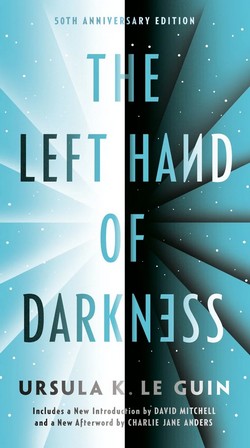
Cover of The Left Hand of Darkness by Ursula K. Le GuinThe Left Hand of Darkness:
50th Anniversary Edition

by Ursula K. Le Guin

DETAILS:
Publisher: Ace
Publication Date: March 15, 1987
Format: Paperback
Length: 300
Read Date: July 20-23, 2026
Buy from Bookshop.org Support Indie Bookstores

What’s The Left Hand of Darkness About?

Genry Ai is an ambassador from a Federation of Planets-type group. He’s been sent to recruit the planet of Winter (and the planet deserves the name, think a Narnia-esque “always winter, never Christmas” without any witches involved) to join them. After years of getting nowhere, some governmental upheaval forces him to leave where he’s been stationed and move to another nation to try to get them on board.

That doesn’t go too well, either. So Ai has to get creative.

The Kemmering

This could be considered a spoiler. But also, not, because I’m going to quote from the Introduction to the 50th Anniversary Edition.

For most of their twenty-six-day month and cycle, Gethenians are androgynous and celibate, but for two or three days of kemmer they become sexually active as either male or female, with no say in which. Any individual, then, can be both a mother and father, and can bear and sire children. (This physiology gives rise to the novel’s most memorable line, “The king was pregnant.”) Genly—like most of the book’s readers—possesses a single one unchanging gender, making him, from a Gethenian perspective, a biological anomaly to be pitied—or, less kindly, mistrusted as a “pervert.

When I read the novel, I was surprised at how long Le Guin took to define kemmer/kemmering despite its usage, and seeing the effects on the population, conversation, family, etc., all-around. But it really hit home for me when someone in the Book Club discussion brought up how far into the book it was (roughly 90 pages) and how things finally started to make sense for them—because they skipped the Introduction.

On the one hand, I love when authors drop you into something, and you have to figure it out—but something like this and 90 pages? That just seems cruel.

Also, there’s a lesson to be learned about Introductions, prefaces, and so on there.

Why did I pick this up? Why did I keep reading?

I picked it up because it was the Book Club choice for July. Sure, I was curious about Le Guin, just from seeing her name so often, but my curiosity had never gotten strong enough to know anything about her.

Part of what kept me going was to see if it picked up at any point. Sure, things were happening throughout, but the novel didn’t seem to care too much about the events, and more about the characters’ thoughts and reactions as they bounced around from location to location. And I wanted to know if after all the build-up, all the setting up of the dominoes—what would happen when they were knocked over?

But mostly, I kept at it to see why it was picked for our Book Club to discuss, and I wanted to be able to understand what the people who had a lot to say about the book had to say. Why are people still talking about this book 50+ years after it was published?

What does this book tell us about humanity?

I honestly don’t know how to answer this question in a couple of paragraphs. Non-spoiler paragraphs seem to make it impossible—the whole book is a meditation on that question—from a couple of different angles (at least).

I’m tempted to steal something else from the Introduction or Author’s Note, but that feels like cheating. Really, I’m only writing this because otherwise it would feel like I’m ducking out on the question. The novel wants readers to ponder this question, and while it suggests some approaches to an answer, I don’t think it has just one.

The Author’s Note

In reading a novel, any novel, we have to know perfectly well that the whole thing is nonsense, and then, while reading, believe every word of it.

In 1976, an Author’s Note was added to the novel—and it is fantastic. Not so much for what it says about this novel (although it’s not bad), but for what it says about Science Fiction and fiction in general.

I’ve read it three times—and I expect to read and cite it more—this book will remain on my shelves if only for that. I don’t know that I’ll get around to re-reading the novel (although I’m not opposed to the idea), but I will re-read Le Guin’s note.

So, what did I think about The Left Hand of Darkness?

I don’t know. I really don’t know. When I write something about it (including the incomplete paragraphs I deleted from my first draft) or talk about it, I come across as more enthusiastic than I really am.

The imagination involved in creating Gethen, the distinct biology of the humans there, the political structures, how the cultures display both the climate and the biology of the people, how all that could and would change when an alien shows up… And then you throw in the Foretellers and everything about them. Even more—you pack all that into 300 pages? (at least in this edition—you’re not going to find it clocking much higher outside of a Mass Market Paperback size). Most authors that I can think of would take at least 550 for this, and wouldn’t give us much more depth.

At the same time…most of these characters are hard to care about. Ai is too naive for this kind of work, and has the diplomacy skills of Michael Scott. Mahit Dzmare would’ve had everything taken care of years before the events of his novel kicked off. Estrahaven is a weasel, and not in a charming or sly way. At least for most of the book—I’m not sure he ends the book that way.

The plot is so thin; the novel is primarily a tour of the world and its inhabitants—which is fine; I just would’ve preferred more things happening along the way.

Like many novels of the era—especially the ones we still talk about—The Left Hand of Darkness is more about the ideas and the potentials than it is plot, character, action, and the like. And it scores on the fronts it focuses on. I’d just prefer if Le Guin had provided a better/thicker crunchy candy shell over the tasty peanut butter inside.

It’s such an impressive book, but I don’t know that I can urge anyone to give it a read.

Irresponsible Reader Pilcrow IconThis post contains an affiliate link. If you purchase from it, I will get a small commission at no additional cost to you. As always, the opinions expressed are my own.
20 Books of Summer 2026

Irresponsible Reader Pilcrow Icon

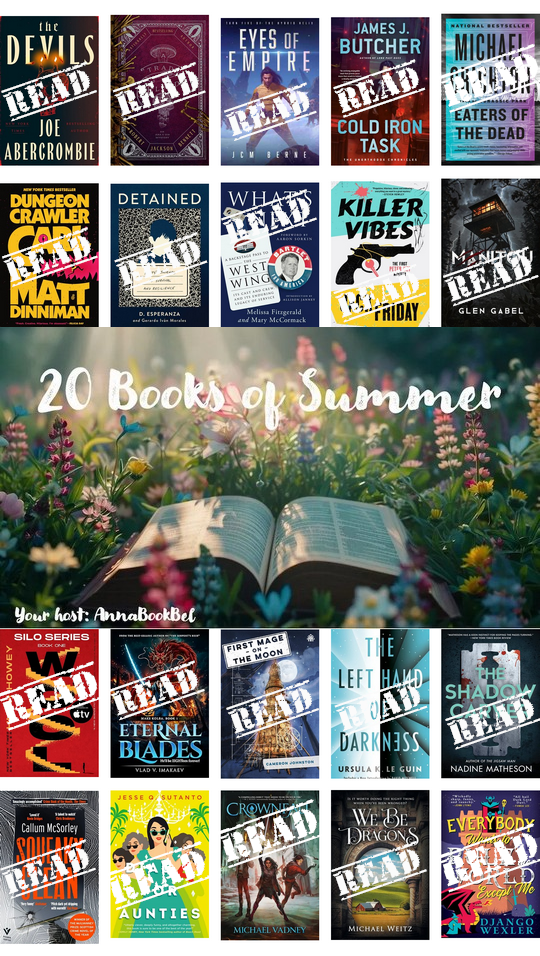
20 Books of Summer 2026: Wrap-Up

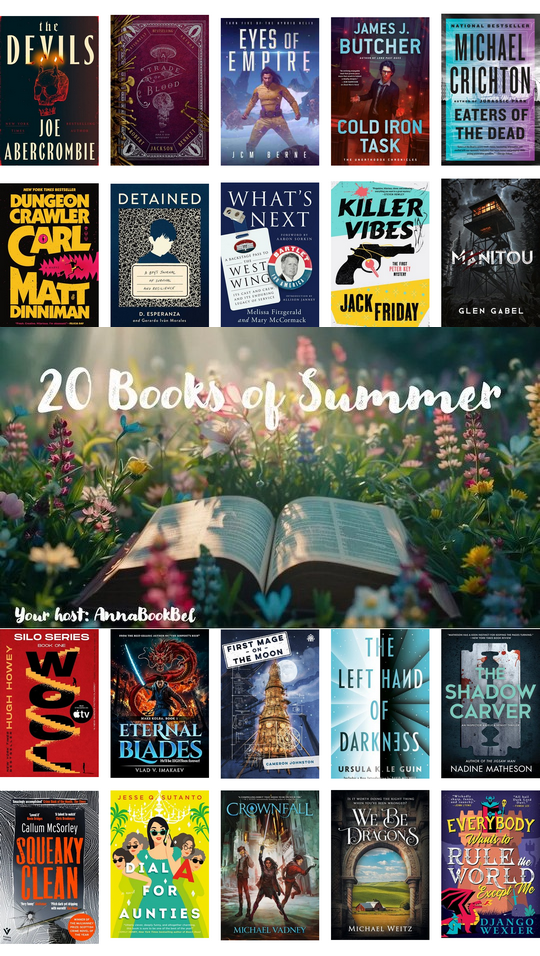
20 Books of Summer banner--the text 20 books of summer and your host: AnnaBookBel above the picture of sunshine on an open book in a field of flowers
Annabel from AnnaBookBel carries on the work started by Cathy of 746 Books . You can read her kick-off post here.

Phew. By the skin of my teeth–I finished the last book of my 20 at 6pm yesterday. A month ago, I said “I should finish by the end of the month with some wiggle room.” Not a lot of wiggle room, it seems. But at least I didn’t have to stay up to midnight to finish. Even better, I’ve written about fifteen of them. I think that might be my best number in the years I’ve done this challenge–hopefully I can nail the other 5 within a week. All in all…this has been a big success. Thanks to AnnaBookBel for doing this again.

On a semi-related front, but I read six of my Top Ten Tuesday: Books on My Summer 2026 to-Read List (That Aren’t on My 20 Books Challenge) list, too. It’s not the best I could’ve done there–but I’ll take it.

This summer, my 20 were:

✔ 1. The Devils by Joe Abercrombie (My post about it)
✔ 2. Trade of Blood by Robert Jackson Bennett (My post about it)
✔ 3. Eyes of Empire by JCM Berne (My post about it)
✔ 4. Cold Iron Task by James Butcher
✔ 5. Eaters of the Dead by Michael Crichton
✔ 6. Dungeon Crawler Carl by Matt Dinniman (My post about it)
✔ 7. Detained: A boy’s journal of survival and resilience by D. Esperanza and Gerardo Iván Morales (My post about it)
✔ 8. What’s Next: A Backstage Pass to The West Wing, Its Cast and Crew, and Its Enduring Legacy of Service by Melissa Fitzgerald and Mary McCormack (My post about it)
✔ 9. Killer Vibes by Jack Friday (My post about it)
✔ 10. Manitou by Glen Gabel (My post about it)
11. Wool by Hugh Howey
✔ 12. Eternal Blades by Vlad V. Imakaev (My post about it)
✔ 13. First Mage on the Moon by Cameron Johnston (My post about it)
✔ 14. Left Hand of Darkness by Ursula K. Le Guin
✔ 15. The Shadow Carver by Nadine Matheson (My post about it)
✔ 16. Squeaky Clean by Callum McSorley (My post about it)
✔ 17. Dial A for Aunties by Jesse Q. Sutanto (My post about it)
✔ 18. Crownfall by Michael Vadney (My post about it)
✔ 19. We Be Dragons by Michael Weitz (My post about it)
✔ 20. Everybody Wants to Rule the World Except Me by Django Wexler

How has your summer reading been? If you took part in this, how’d it go? Or if you just had a “we’ll see what comes” plan, how did that work out for you?

20 Books of Summer '26 Chart August Check-in

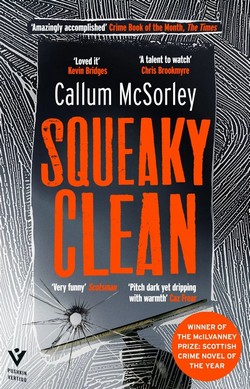
Squeaky Clean by Callum McSorley: The Cars (or most of them) Are the Only Things Clean in This Thriller

Cover of Squeaky Clean by Callum McSorelySqueaky Clean

by Callum McSorley

DETAILS:
Series: DI Alison McCoist, #1
Publisher: Pushkin Vertigo
Publication Date: June 11, 2024
Format: Paperback
Length: 382 pg.
Read Date: June 12-13, 2026
Buy from Bookshop.org Support Indie Bookstores

What’s Squeaky Clean About?

There are two characters that this book focuses on—although you can make the case that the number should be 4 or maybe 5, or… let’s stick with two—just for the sake of keeping this post in check.

The first is DI Alison McCoist—after a case went south in a pretty spectacular way, she’s been relegated to only the most basic of cases—things that barely call for police attention. Why? Well, she’s either horribly incompetent, or she’s corrupt. One of the two. Now, to be fair—after this, she does take a piece of evidence home with her.* But aside from that, from what we see early on, McCoist is a good detective who stumbled into some bad luck, and maybe got a little ahead of herself once.

Our other character is a guy named Davey Burnet. And it’s really hard not to feel bad for him—not nearly as bad as he feels about himself, but still. He can’t really hold a job down for long—although the job at a car wash is working out pretty well. Well, he can pay rent and the occasional toy for his young daughter (on the rare occasions he’s allowed to see her).

Okay, I lied—we need to also talk about Paul “Paulo” McGuinn. He’s a criminal into this and that—and, occasionally, a few other things. He starts frequenting the car wash and starts doing a little business with it and through it. After a really stupid move by Davey (that goes wronger than anyone could’ve expected), Davey becomes an indentured servant of sorts. This is not something he wants, and he actively looks for a way out of—I mean, he doesn’t want to become a grass. But aside from that…

Still, there’s this detective who keeps dropping by because of something else…

* And when you read about her doing it, you will kind of root for her.

The Glasgow Of It

It’s been a long time since I sounded out words as I read—aloud or in my head. But this book had me doing that constantly—sometimes I’d have to take 2-3 runs at a word before I could really hear it correctly. But somehow, this didn’t slow me down at all—in fact, it felt like it sped up my reading (I’m pretty sure I didn’t). But man, you couldn’t accidentally skim something, either—I had to pay attention to it all, just to make sure I didn’t miss something.

Here’s a little snippet to show you what I mean—I’ll have you all know, it took a bit of work to get something this long without any “adult language.”

McCoist held her ID closer and he snatched it right out of her hand—held it up to his nose. McCoist found herself going for the CS spray in her pocket, fingers gripping the small tin, palms starting to sweat.

“Detective Inspector Alison McCoist right enough.” He looked between her picture and her face like a doorman, feigned familiarity in his voice. “Good name fir a polis in Glesga.” He handed the card back. “Yer pals call ye Ally?”

“No.” Emphatic, humourless, “There’s been a report of someone squatting in this office.”

“Is it the bloke oer the hall? That web designer. He never goes hame.” He grated out a laugh.

“Could you tell me your name, sir?” McCoist got her notepad and pen, having to let go of the pepper spray.

“Bootin oot squatters is a bit below yer pay grade is it no? Fir a detective, a mean.”

“Sir. Name, please.”

“Am just tryin tae get some work done here,”

“What kind of work?”

“The honest kind. A promise.”

“Can I come in?”

” No.” He didn’t even pretend to think about it.

“I can come back with a warrant to search the premises.”

“Al huv the kettle ready when ye dae.”

(this was such a pain for me to proofread)

Why did I pick this up? Why did I keep reading?

I heard a couple of crime writers on a podcast—actually I think it was 3-4 people on different podcasts—talking about how much they were looking forward to the third book in this series coming out a couple of months ago. Their praise of the earlier books and excitement made me think it was worth checking out.

The Prologue was intriguing, and the first couple of chapters’ voice drew me in. By the time Davey made his critical mistake, I was hooked. And each chapter drew me in further. The combination of twisted humor; pathos; and gritty, gritty crime is executed so well, McSorley writes with the confidence of someone like Ian Rankin.

What does this book tell us about humanity?

It’s really hard to get too deep into this without talking about just about everything I shouldn’t talk about with people who haven’t read the book.

But I’m going to say the biggest commentary on humanity that this novel has to offer is about the universality of hope—and how that drives our actions. McCoist believes she can do something to earn her way out of the doghouse with her superiors and colleagues. She also hopes that she can establish a good relationship with her kids. Davey hopes he can find moderate success, straighten up his life, and get more access to his daughter—and, who knows, win her mom back, too. There are several other characters I should mention here, but again, stuff you need to read for yourself.

I guess one exception is Paulo—I don’t see hope for him at all. He’s so convinced that he’s got control of things that he doesn’t need to think about hope or anything. He just wants money and power; that’s really all he can think of. Exception that proves the rule? (probably not, but I don’t want to rethink this section too much)

So, what did I think about Squeaky Clean?

McSorley is just a fantastic writer—again, the way he balances humor, pathos, and the grittiest of crimes—mixing noir sensibilities with a bit of the absurd, and heart. It’s just fantastic.

These characters—from the several I didn’t talk about to the three I did, are all so well drawn you can imagine having conversations with them off-page. You can practically hear each voice thanks to the way McSorley does dialogue.

The way that the plot moves and turns is another example of a writer running on all cylinders—even when you think you know how the next couple of chapters—if not the whole book—is going to go. You’ll either be wrong, or so thrown by something he throws at you that you’ll get a surprise or two—and maybe start to doubt yourself. It’s really not until the last couple of pages that you can be confident in what he’s got up his sleeve. I just love that.

I really can’t think of a negative about this novel—at least not one worth talking about.

This is one of the strongest Crime Novels I’ve read this year—and will likely retain that ranking. Although I do have the sequel, and it might challenge this one. Squeaky Clean is one to check out for sure.

20 Books of Summer 2026

Irresponsible Reader Pilcrow Icon

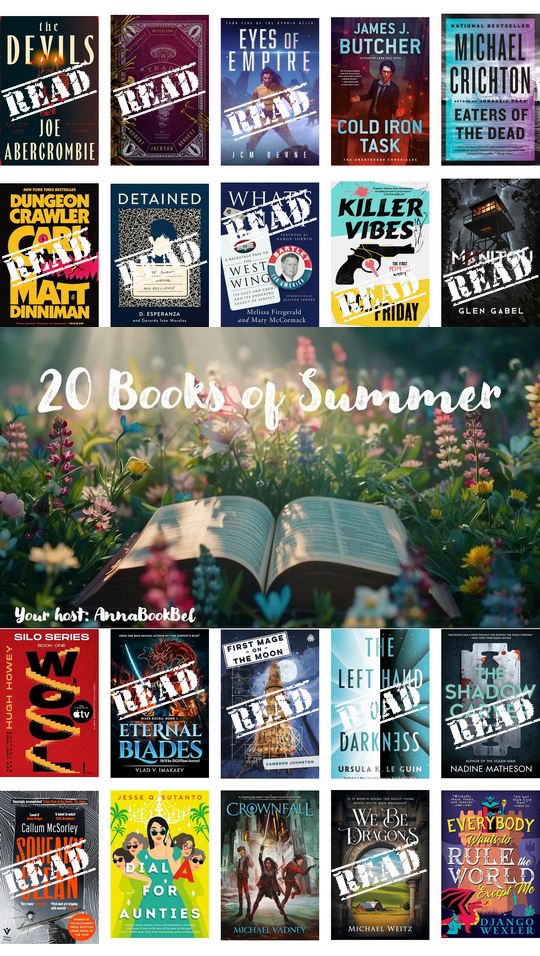
20 Books of Summer 2026: July Check-In

20 Books of Summer banner--the text 20 books of summer and your host: AnnaBookBel above the picture of sunshine on an open book in a field of flowers
Annabel from AnnaBookBel carries on the work started by Cathy of 746 Books . You can read her kick-off post here.

I only managed 6 books from the list in July–but as busy as I was, I’ll take it. If you count what I’ve accomplished in August already, I have 5.5 to go. I should finish by the end of the month with some wiggle room. Even better, I’ve written about eight of them. That’s an improvement of eight over last month, so I’ll take it. (the version of this post originally scheduled said nine there, but I had to bail on that, alas, it should be up tomorrow)

Not that it matters, but I’ve also read half of my Top Ten Tuesday: Books on My Summer 2026 to-Read List (That Aren’t on My 20 Books Challenge) list, too.

This summer, my 20 are:

My post about it

✔ 1. The Devils by Joe Abercrombie My post about it.
✔ 2. Trade of Blood by Robert Jackson Bennett
✔ 3. Eyes of Empire by JCM Berne My post about it
4. Cold Iron Task by James Butcher
5. Eaters of the Dead by Michael Crichton
✔ 6. Dungeon Crawler Carl by Matt Dinniman My post about it
✔ 7. Detained: A boy’s journal of survival and resilience by D. Esperanza and Gerardo Iván Morales
✔ 8. What’s Next: A Backstage Pass to The West Wing, Its Cast and Crew, and Its Enduring Legacy of Service by Melissa Fitzgerald and Mary McCormack My post about it
✔ 9. Killer Vibes by Jack Friday My post about it
✔ 10. Manitou by Glen Gabel
11. Wool by Hugh Howey
✔ 12. Eternal Blades by Vlad V. Imakaev My post about it
✔ 13. First Mage on the Moon by Cameron Johnston My post about it
✔ 14. Left Hand of Darkness by Ursula K. Le Guin
✔ 15. The Shadow Carver by Nadine Matheson
✔ 16. Squeaky Clean by Callum McSorley
17. Dial A for Aunties by Jesse Q. Sutanto
18. Crownfall by Michael Vadney
✔ 19. We Be Dragons by Michael Weitz My post about it
20. Everybody Wants to Rule the World Except Me by Django Wexler

(subject to change, as is allowed, but I’m going to resist the impulse to tweak as much as I can).

What do you think of this list? Any warnings—or anything you think I should be really excited about?

20 Books of Summer '26 Chart July Check-in

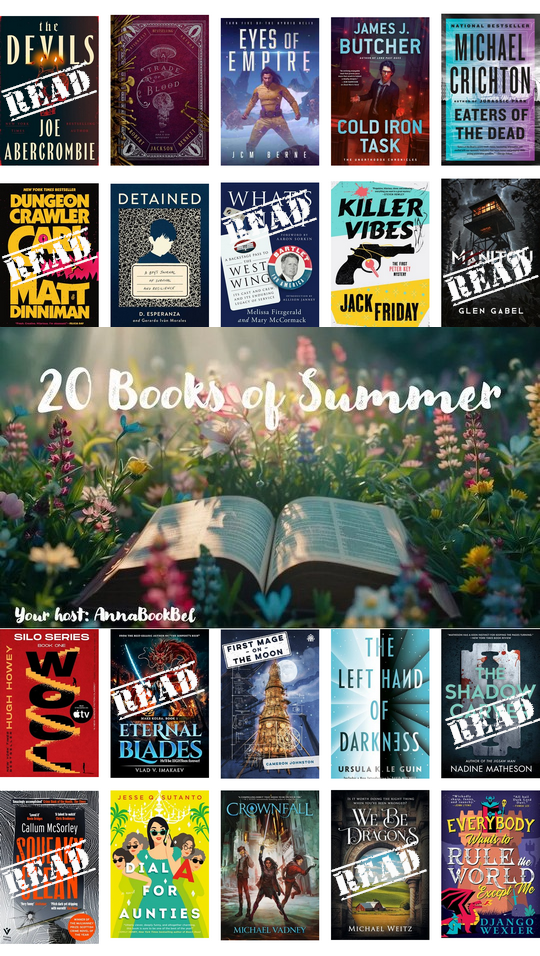
20 Books of Summer 2026: June Check-In

20 Books of Summer 2026
Annabel from AnnaBookBel carries on the work started by Cathy of 746 Books . You can read her kick-off post here.

I have read 8 of the 20 so far, which is not bad. One of that 8 is the biggest by page count (but probably one of the easiest reads), so I’m feeling pretty good about being able to check this one off the list. Sadly, I’ve written about only…let me check my math here…none of them. That’s not good. I have 80% of a post done for The Devils, but am so busy second-guessing myself that it’s now been 7 days since I meant to post it. Ooops. I think I’ll catch up on those pretty quickly. I hope to, anyway.

Not that it matters, but I’ve also finished one off of my Top Ten Tuesday: Books on My Summer 2026 to-Read List (That Aren’t on My 20 Books Challenge) list, too.

This summer, my 20 are:

✔ 1. The Devils by Joe Abercrombie
2. Trade of Blood by Robert Jackson Bennett
3. Eyes of Empire by JCM Berne
4. Cold Iron Task by James Butcher
5. Eaters of the Dead by Michael Crichton
✔ 6. Dungeon Crawler Carl by Matt Dinniman
7. Detained: A boy’s journal of survival and resilience by D. Esperanza and Gerardo Iván Morales
✔ 8. What’s Next: A Backstage Pass to The West Wing, Its Cast and Crew, and Its Enduring Legacy of Service by Melissa Fitzgerald and Mary McCormack
9. Killer Vibes by Jack Friday
✔ 10. Manitou by Glen Gabel
✔ 11. Wool by Hugh Howey
✔ 12. Eternal Blades by Vlad V. Imakaev
13. First Mage on the Moon by Cameron Johnston
14. Left Hand of Darkness by Ursula K. Le Guin
✔ 15. The Shadow Carver by Nadine Matheson
✔ 16. Squeaky Clean by Callum McSorley
17. Dial A for Aunties by Jesse Q. Sutanto
18. Crownfall by Michael Vadney
✔ 19. We Be Dragons by Michael Weitz
20. Everybody Wants to Rule the World Except Me by Django Wexler

(subject to change, as is allowed, but I’m going to resist the impulse to tweak as much as I can).

What do you think of this list? Any warnings—or anything you think I should be really excited about?

20 Books of Summer '26 Chart June Check-in

20 Books of Summer 2026: Commence

20 Books of Summer 2026
Annabel from AnnaBookBel carries on the work started by Cathy of 746 Books . You can read her kick-off post here.

Initially, I was going to use this as time to catch up on my “Read Everything I Buy in 2026 in 2026” goal, but then I remembered things like my book clubs and NetGalley. So I had to accept some setbacks there. I’ve got an ambitious, but easily achievable list.

I’ve frequently used the unofficial US Dates for Summer—Memorial Day to Labor Day, but Memorial Day has already passed. So, I’ll go along with the “official” June 1-August 31.

There’s still time to join in the fun—if you’re into this kind of thing. (there are 10 and 15 book versions, too)

This summer, my 20 are going to be:

1. The Devils by Joe Abercrombie
2. Trade of Blood by Robert Jackson Bennett
3. Eyes of Empire by JCM Berne
4. Cold Iron Task by James Butcher
5. Eaters of the Dead by Michael Crichton
6. Dungeon Crawler Carl by Matt Dinniman
7. Detained: A boy’s journal of survival and resilience by D. Esperanza and Gerardo Iván Morales
8. What’s Next: A Backstage Pass to The West Wing, Its Cast and Crew, and Its Enduring Legacy of Service by Melissa Fitzgerald and Mary McCormack
9. Killer Vibes by Jack Friday
10. Manitou by Glen Gabel
11. Wool by Hugh Howey
12. Eternal Blades by Vlad V. Imakaev
13. First Mage on the Moon by Cameron Johnston
14. Left Hand of Darkness by Ursula K. Le Guin
15. The Shadow Carver by Nadine Matheson
16. Squeaky Clean by Callum McSorley
17. Dial A for Aunties by Jesse Q. Sutanto
18. Crownfall by Michael Vadney
19. We Be Dragons by Michael Weitz
20. Everybody Wants to Rule the World Except Me by Django Wexler

(subject to change, as is allowed, but I’m going to resist the impulse to tweak as much as I can).

What do you think of this list? Any warnings—or anything you think I should be really excited about?

20 Books of Summer '26 Chart

20 Books of Summer 2025: Wrap-Up

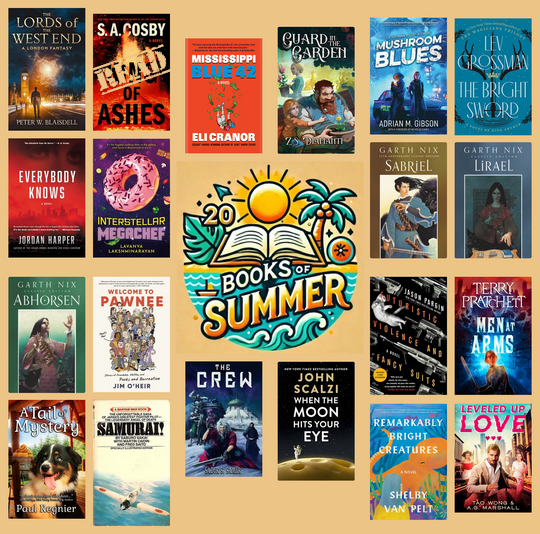
20 Books of Summer 2025 logo
A quick check-in for this Reading Challenge hosted by Emma of Words and Peace and Annabel from AnnaBookBel (you can read more about it here).

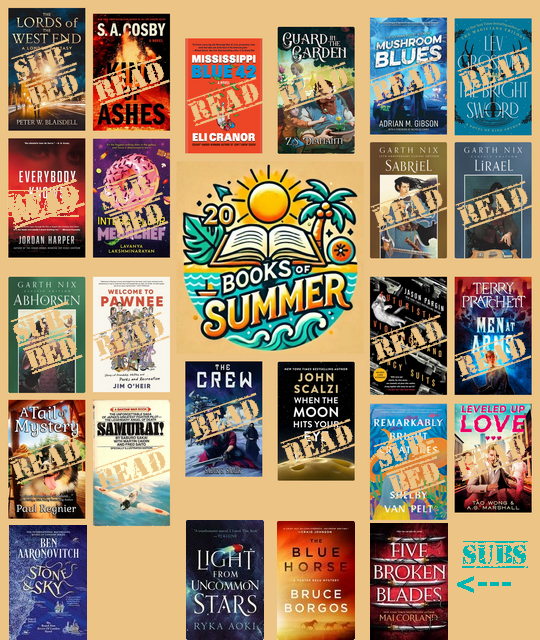
With four substitutions (ugh), I can count this as complete…The four substitutions cams from my Books on My Summer 2025 to-Read List (That Aren’t on My 20 Books Challenge)–which I did complete. But I made the title a lie with the substitutions. It’s complicated.

I had a blast with the books I did complete, and am rather annoyed with myself about those I didn’t. I was really looking forward to them (I hope to get at least a couple of them done this month.) Okay, let’s take a quick look at the lists.

🙁 1. The Lords of the West End by Peter Blaisdell
✔ 2. King of Ashes by S. A. Cosby
✔ 3. Mississippi Blue 42 by Eli Cranor
✔ 4. Guard in the Garden by Z. S. Diamanti
✔ 5. Mushroom Blues by Adrian M. Gibson
✔ 6. The Bright Sword by Lev Grossman
✔ 7. Everybody Knows by Jordan Harper
🙁 8. Interstellar MegaChef by Lavanya Lakshminarayan
✔ 9. Sabriel by Garth Nix
✔ 10. Lirael by Garth Nix
🙁 11. Abhorsen by Garth Nix
✔ 12. Welcome to Pawnee: Stories of Friendship, Waffles, and Parks and Recreation by Jim O’Heir
✔ 13. Futuristic Violence and Fancy Suits by Jason Pargin
✔ 14. Men at Arms by Terry Pratchett
✔ 15. A Tail of Mystery by Paul Regnier
✔ 16. Samurai! by Saburo Sakai with Martin Caiden and Fred Saito
✔ 17. The Crew by Sadir S. Samir
✔ 18. When the Moon Hits Your Eye by John Scalzi
🙁 19. Remarkably Bright Creatures by Shelby Van Pelt
✔ 20. Leveled Up Love by Tao Wong & A. G. Marshall

My Books on My Summer 2025 to-Read List (That Aren’t on My 20 Books Challenge):

✔ 1. Stone and Sky by Ben Aaronovitch
✔ 2. Algospeak: How Social Media Is Transforming the Future of Language by Adam Aleksic
✔ 3. Light From Uncommon Stars by Ryka Aoki
✔ 4. The Blue Horse by Bruce Borgos
✔ 5. Five Broken Blades by Mai Corland
✔ 6. This Is How You Lose the Time War by Amal El-Mohtar, Max Gladstone
✔ 7. The Medusa Protocol by Rob Hart
✔ 8. Station Eleven by Emily St. John Mandel
✔ 9. Mrs. Plansky Goes Rogue by Spencer Quinn
✔ 10. Dogged Pursuit by David Rosenfelt

Percentage-wise, I read 87% of the books I called my shot on for the summer. I’ve never been happy with getting a B, but I can be satisfied with one. (and no, I don’t see a conflict between this and the Orangutan Librarian’s recent post about competitive reading. This is me comparing myself with my goals, or my past self, or—worst of all—my expectations.)

Emma has some questions for us as we call this a wrap. Here we go:

  1. Did you manage to finish all 10/15/20 books? If not, what kept you from completing the challenge?
    No, I did not. I can narrow down the reasons to three things: I didn’t include NetGalley reads in my 20 (I think I didn’t do that last year, either); I didn’t include the books for my book clubs (that was a mistake); the big one is that with two exceptions, every book I read this summer took one-three more days than I anticipated. If I get those days back? I have this challenge done with days to spare.
  2. Of all the books you read this summer, which one(s) was/were your favorite and why?
    Hoo-boy. Favorite? Ummm, er. I could make a case of almost all of them. Everybody Knows is a strong contender, as is King of Ashes–both gave me some strong visceral reactions. So many of the others just made me happy to read. Almost all of them contained unexpected levels of quality.
    Did you DNF any? Why?
    Thankfully, no. These were all entertaining.
  3. Which book surprised you the most, either by being better or worse than you expected?
    I expected Leveled-Up Love to be a little stronger, a little funnier. I had really-high hopes for Scalzi’s book and had to settle for it being really good instead of stellar. Each surprised me in some ways (and even those two books did some things better than I expected)
  4. Did you notice any patterns in the genres you chose or enjoyed this summer?
    I think if you compared this list to previous ones, there’d be fewer Crime Fiction on the ’25 list. Two non-fiction books is a little more than usual. I think that’s it. I might be able to come up with a pattern or two in the books themselves, if I thought about it some. But, nothing’s jumping out at me.
  5. Which one had the best cover?
    When the Moon Hits Your Eye or Futuristic Violence and Fancy Suits. But Light from Uncommon Stars probably provided the strongest reaction out of me when the book explained it the imagery.
  6. Which one was the longest? Grossman’s The Bright Sword And the shortest? A Tail of Mystery by Paul Regnier
  7. Did you read them mostly in print? ebook? audio?
  8. No audiobooks, 4 ebooks, and the rest were physical. Huh. I figured that’d be closer to an even split.

  9. Imagine you’re hosting a “20 Books of Summer” book club wrap party.
    Which book would you nominate as the guest of honor, and what kind of toast or speech would you give celebrating it?
    I can’t pick. I think I’d have to pay tribute to them all–what kind of speech? I just don’t know. I really should’ve spent more time thinking about this.
  10. Looking back at all the characters you met over the summer, which one would you want as a summer buddy for a weekend getaway, and what activity would you do together?
    Jim O’Heir. Maybe that’s cheating because he’s a real person. But, kicking back with some good food (and probably some good drink), listening to him tell stories? Can’t imagine a better time. Also, most of the other characters I met would scare me in real life.

20 Books of Summer '25 Chart Wrap Up

20 Books of Summer 2025: July Check-In

20 Books of Summer 2025 logo
A quick check-in for this Reading Challenge hosted by Emma of Words and Peace and Annabel from AnnaBookBel (you can read more about it here).

I’ve read 9 really good-to-great books so far this summer, and have high expectations for the rest. I’m really just having so much fun with this challenge this year.

So here’s the list:

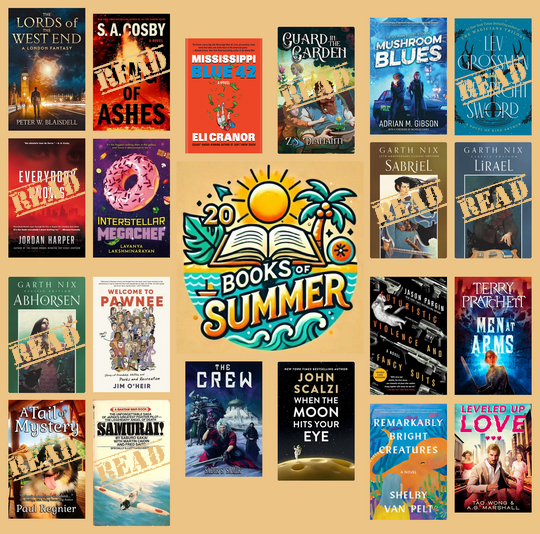
1. The Lords of the West End by Peter Blaisdell
✔ 2. King of Ashes by S. A. Cosby
3. Mississippi Blue 42 by Eli Cranor
✔ 4. Guard in the Garden by Z. S. Diamanti
5. Mushroom Blues by Adrian M. Gibson
✔ 6. The Bright Sword by Lev Grossman
✔ 7. Everybody Knows by Jordan Harper
8. Interstellar MegaChef by Lavanya Lakshminarayan
✔ 9. Sabriel by Garth Nix
✔ 10. Lirael by Garth Nix
11. Abhorsen by Garth Nix
12. Welcome to Pawnee: Stories of Friendship, Waffles, and Parks and Recreation by Jim O’Heir
13. Futuristic Violence and Fancy Suits by Jason Pargin
14. Men at Arms by Terry Pratchett
✔ 15. A Tail of Mystery by Paul Regnier
✔ 16. Samurai! by Saburo Sakai with Martin Caiden and Fred Saito
17. The Crew by Sadir S. Samir
18. When the Moon Hits Your Eye by John Scalzi
19. Remarkably Bright Creatures by Shelby Van Pelt
20. Leveled Up Love by Tao Wong & A. G. Marshall

(subject to change, as is allowed, but I’m going to resist the impulse to tweak as much as I can).

On the other hand, I’ve only got one to go on my Books on My Summer 2025 to-Read List (That Aren’t on My 20 Books Challenge), and I’ll be tackling that the week of the 18th.

✔ 1. Stone and Sky by Ben Aaronovitch
✔ 2. Algospeak: How Social Media Is Transforming the Future of Language by Adam Aleksic
3. Light From Uncommon Stars by Ryka Aoki
✔ 4. The Blue Horse by Bruce Borgos
✔ 5. Five Broken Blades by Mai Corland
6. This Is How You Lose the Time War by Amal El-Mohtar, Max Gladstone
✔ 7. The Medusa Protocol by Rob Hart
✔ 8. Station Eleven by Emily St. John Mandel
✔ 9. Mrs. Plansky Goes Rogue by Spencer Quinn
✔ 10. Dogged Pursuit by David Rosenfelt

Okay, if you think it as a percentage, I’ve read 60% of the books I called my shot on for the summer. I’m satisfied with this–and I expect I’m going to make great progress over the next month. I’m not so bold as to expect I’ve got this locked…but I’m okay with that.

(and no, I don’t see a conflict between this and the Orangutan Librarian’s recent post about competitive reading. This is me comparing myself with my goals, or my past self, or—worst of all—my expectations.)

20 Books of Summer '25 Chart July Update

20 Books of Summer 2025: June Check-In

20 Books of Summer 2025 logo
A quick check-in for this Reading Challenge hosted by Emma of Words and Peace and Annabel from AnnaBookBel (you can read more about it here). I don’t typically like to do this kind of thing until the first of the next month, but since I doubt that I’ll read 500 pages today, I figured I might as well get this up since I won’t be able to finish the post I initially planned for today. So, I’ve read 1 1/6 books for this challenge (hopefully 1 1/2 by the end of the day). It’s not the most auspicious start, but I’ll take it (and I’ve had worse starts).

So here’s the list:

1. The Lords of the West End by Peter Blaisdell
✔ 2. King of Ashes by S. A. Cosby
3. Mississippi Blue 42 by Eli Cranor
4. Guard in the Garden by Z. S. Diamanti
5. Mushroom Blues by Adrian M. Gibson
6. The Bright Sword by Lev Grossman
7. Everybody Knows by Jordan Harper
8. Interstellar MegaChef by Lavanya Lakshminarayan
9. Sabriel by Garth Nix
10. Lirael by Garth Nix
11. Abhorsen by Garth Nix
12. Welcome to Pawnee: Stories of Friendship, Waffles, and Parks and Recreation by Jim O’Heir
13. Futuristic Violence and Fancy Suits by Jason Pargin
14. Men at Arms by Terry Pratchett
15. A Tail of Mystery by Paul Regnier
16. Samurai! by Saburo Sakai with Martin Caiden and Fred Saito
17. The Crew by Sadir S. Samir
18. When the Moon Hits Your Eye by John Scalzi
19. Remarkably Bright Creatures: Shelby Van Pelt
20. Leveled Up Love by Tao Wong & A. G. Marshall

(subject to change, as is allowed, but I’m going to resist the impulse to tweak as much as I can).

On the other hand, I’m doing pretty well with my Books on My Summer 2025 to-Read List (That Aren’t on My 20 Books Challenge)

1. Stone and Sky by Ben Aaronovitch
2. Algospeak: How Social Media Is Transforming the Future of Language by Adam Aleksic
3. Light From Uncommon Stars by Ryka Aoki
✔ 4. The Blue Horse by Bruce Borgos
5. Five Broken Blades by Mai Corland
6. This Is How You Lose the Time War by Amal El-Mohtar, Max Gladstone
✔ 7. The Medusa Protocol by Rob Hart
✔ 8. Station Eleven by Emily St. John Mandel
9. Mrs. Plansky Goes Rogue by Spencer Quinn
10. Dogged Pursuit by David Rosenfelt

Okay, if you think it as a percentage, I’ve read 14% of the books I called my shot on for the summer. Again, inauspicious. July promises to be a good one for reading—I hope/expect that I’ll be looking better in 31 days.

(and no, I don’t see a conflict between this and the Orangutan Librarian’s recent post about competitive reading. This is me comparing myself with my goals, or my past self, or—worst of all—my expectations.

20 Books of Summer '25 Chart June Update

Page 1 of 5

Powered by WordPress & Theme by Anders Norén