Tag: 4 Stars Page 17 of 88

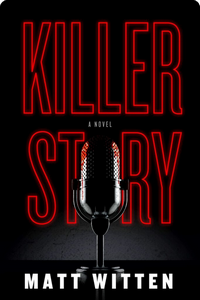
PUB DAY REPOST: Killer Story by Matt Witten: A Desperate Reporter Works to Solve a Sensational Murder

Be sure to check out this Q&A with Matt Witten—it’s a great one!


Killer StoryKiller Story

by Matt Witten

DETAILS:
Publisher: Oceanview Publishing
Publication Date: January 17, 2023
Format: eARC
Length: 320 pg.
Read Date: December 26-27, 2022
Support Independent Bookstores - Visit IndieBound.org

What’s Killer Story About?

While studying journalism in school, Petra acted as a counselor for a high school journalism camp. In that role, she met and befriended a young girl named Livvy Anderson. Over the years since then, the two forged a strong friendship—almost like sisters. At some point though, the relationship faltered—in college, Livvy started posting videos online spouting (in Petra’s view) extreme right-wing politics, hateful speech, and the like. For example, she defended a star football player accused of raping a woman on campus by trashing her reputation and exposing personal details. Rather than pushing back or even arguing with her friend, Petra chilled communication, assuming it was a phase, and focused on her own work.

And it might have been a phase if Livvy hadn’t been killed. The murder was fairly sensational—it happened while Livvy was recording a video (but she paused the recording so no one saw it or the murderer). The accused killer was acquitted—and most of the country (including Petra) assumed it was a travesty of justice and that he got away with it. The Court of Public Opinion definitely found him guilty.

Years later, Petra has found herself (like most young print journalists) bouncing around from newspaper to newspaper, trying to stay employed. She’s now at a major Boston newspaper and thinks that life is stable—the subjects of her stories might not be that glamorous, but she’s working, and the big story is around the corner.

Until she’s laid off. She panics at this point—her boyfriend (who moved cross-country with her for this job, changing the course of his career) isn’t going to put up with the lack of stability much longer, and it’s going to only get harder getting a job at the rate she’s going. So she throws out a mad pitch to her editor—what if she could definitively prove who killed Olivia Anderson? She tells him this story isn’t just the kind of thing for the paper—it’d make a great podcast.

Visions of the kind of revenue that Serial and similar podcasts could bring to the paper, not to mention the publicity of this kind of story, he gives her two weeks to firm up the story, start producing the podcast, and they’ll see what happens.

Petra heads off to find the evidence she pretended to have during that meeting—and hopefully much more.

The Journalism of this Novel

I’ve talked before about how I’m a sucker for a novel about a driven journalist—typically a print journalist, too. I’m always ready, willing, and able to embrace and fall into the romance of the crusading reporter. Or just one who does the job well, without a crusade.

But those kinds of stories are getting harder to tell and to believe in our current media landscape. Not just because print journalism is dying (for worse or for worser). It’s definitely not the track that Witten takes here. Petra is desperate and acts desperately—she lies to her editor at every turn, overstating her case and the evidence she has at each step of the way. Almost every fictional reporter* cuts a corner here and there and bends a rule and the truth in pursuit of the story and/or the truth. Even thosPetra amputates corners and forces the truth about her actions into positions only the most experienced yogi can handle—at least when it comes to what she tells her editor, coworkers, the police, her boyfriend, and so on.

* Lawyers, please note that I’m not saying anything about the methods of actual reporters or the companies they work for. Please don’t sue me.

When it comes to her actual reporting, however—in print, podcast, and elsewhere—Petra is much more honest. Bowing to editorial pressure she may say something earlier than she should* and while she never lies, she sure edges close to it. Her scripts feature incredibly well-chosen words—true, but open to interpretation.

* There are a few hundred words I could write about other journalistic ethical moves here, but I’d be getting sidetracked.

The journalism—both in print and in the podcast—we see here is very likely what fills our screens and earbuds. It’s sensationalistic, click-driven, and not necessarily all that honest. It’s depressing to think about, and it’s not great to read about if you think about it in those terms—but it makes for a thrilling (and realistic) read. Still, I think I need to go watch Deadline – U.S.A. or something to restore my faith in humanity.

The Alt-Right Depiction

Thanks to Livvy’s online persona, even now, she has a good number of fans. Many of those fans are not happy about Petra’s podcast—and make that displeasure well known online. At least one goes further than that. Between them and Livvy’s videos (and other online activities), Witten has to walk a careful line—he needs to depict them in an honest and believable way without turning them into a convenient punching bag for a reader or character to spend a lot of time venting about their politics (perhaps even himself). Or, to go in the other direction, too.

I really appreciated the restraint he showed in this regard, it’d be easy to slip here, but on the whole, he simply reports on the views espoused—sure, it’s clear that Petra and her colleagues (and many of the witnesses that talk about it) disagree with Livvy and her fans/defenders, but with only one exception, we don’t get details their differences with the alt-right views.

That exception comes from Petra having to do a deep dive into their activities and to try to interact—so it comes about organically. Even then, Witten doesn’t let Petra go too far.

I mention this to say that readers shouldn’t let the politics involved in the book dissuade them—it’s there, but it’s just part of the atmosphere. And it’s fairly evenly handled, and I can’t imagine many readers having a problem with it.

So, what did I think about Killer Story?

Early on in the novel, I made assumptions (as you do) about the kind of story that Witten was telling and what kind of things the reader should expect from the plot and characters. I was wrong on just about every point. It was a very different kind of story, the characters ended up going in directions I wouldn’t have guessed (Petra’s editor, boyfriend, and best friend were probably the exceptions to this), and every theory I had about the killing was wrong.* And the result is a richer, deeper, and more satisfying novel than what I thought I was going to get (and I anticipated this being a good one!).

* Well, almost. I did have the motive and killer right for a chapter or two, but Witten and Petra got me off of that path.

Witten’s story in last year’s Jacked was one of the higher points in a collection full of high points, and this novel solidified my appreciation for his writing. Before I got to the point where I realized that the novel wasn’t telling the story that I thought it was and shifted my expectations, I spent a good deal of time not liking the book—but I couldn’t stop reading it or thinking and talking about it when I wasn’t reading it. It was just too well done. It got under my skin. Actually, it’s still there—I can’t stop thinking about Petra and her choices. I even emailed Witten to ask a couple of questions I had about some points—points that I think the reader could have divergent opinions on, but I wanted his authorial take on it. I’ve never done this before. But I had to know—and even having his take on them, I’m chewing on it.

I’m going to be haunted by Killer Story for a bit—in the best way. If you’re looking for a mystery you can sink your teeth into and chew on, look no further.


4 Stars

Disclaimer: I received a copy of the eARC of this novel from the author in exchange for this post and my honest opinion. This did not impact my view and the above is my honest opinion.

This post contains an affiliate link. If you purchase from it, I will get a small commission at no additional cost to you. As always, the opinions expressed are my own.

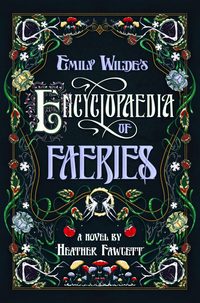
PUB DAY REPOST: Emily Wilde’s Encyclopaedia of Faeries by Heather Fawcett: Journaling Her Investigation into the Hidden Ones of the North

Emily Wilde's Encyclopaedia of FaeriesEmily Wilde’s Encyclopaedia of Faeries

by Heather Fawcett

DETAILS:
Series: The Emily Wilde Series, Book One
Publisher: Del Rey
Publication Date: January 10, 2023
Format: eARC
Length: 336 pg.
Read Date: December 19-21, 2022
Support Independent Bookstores - Visit IndieBound.org

What’s Emily Wilde’s Encyclopaedia of Faeries About?

Emily Wilde is a dryadologist. Imagine, if you will, what post-Darwin scientists and naturalists were doing for the study of plants and animals in the late nineteenth/early twentieth centuries; or what Carter and the rest were doing in Egypt; but dryadologists are studying fairies (oh, in this world, they are as real as the tomb of Tutankhamun—she’s not a literary theorist). Humans have been dealing with fairies for centuries, but what we know about them is really limited. Mostly left to legends, tales told around the fire or in an inn—where a third or fourth-hand account is rare and as close to an eyewitness as most people will ever get. Emily and her counterparts throughout the world are seeking to bring that to an end. She has a position at Cambridge but is hoping her current project is the kind of thing that will secure her tenure and allow her to further her research.

Her project is the first comprehensive Encyclopedia of Fairies (hence the title). She could publish what she has now and probably receive scholarly acclaim—and tenure. But she’s driven. She’s a completist. And, to be honest, she has a little bit of an ego and she wants more than probable acclaim. So she rents a small shack in a Norwegian village for a few months to try to find, interact with, and document the least-understood fairies in the world. The northern Hidden Ones (both the common and regal varieties) are powerful and secretive. They don’t interact much with humans—and when they do, it’s generally bad for the humans. If Emily can be the first to get any scholarly research done, it will definitely put her on the map.

Sadly, as good as she is at dealing with and understanding Fairy, Emily is bad with humans. She has no people skills, is aware of it, and doesn’t care. But in this inhospitable climate, she really needs help to survive—much less to learn a lot about the Hidden Ones.

Thankfully (?), soon after her arrival, a colleague/competitor—and her only friend—gatecrashes her trip and takes up residence in her shack with her. Wendell Bambleby is the very picture of a Victorian gentleman-scholar. He’s a charmer, and soon has the villagers eating out of his hand. He’s also pampered and demanding (would probably have been considered a bit of a dandy at the time)—and has a really hard time not wrapping his head around things like cooking for himself, working to keep the fire burning, etc. He’s decided that he’s going to collaborate with Emily (not really caring if she agrees) and that their work in Norway will be the thing to help him reclaim some academic respectability following a scandal.

He may be under a cloud, but Wendell has connections and can open doors for Emily to get her the audience she really needs. So she accepts his proposal to collaborate, assuming she’s going to do almost all of the work.

Things ensue. I really can’t say more than that.

Poe

The first fairy that Emily meets is a young brownie—she ends up referring to him as Poe. It’s great to see her in action with him. it shows that she does know what she’s doing—we don’t just have to take her word for it (not that we have any reason to think she’s lying, but it’s good to know).

Poe really ends up showing us so much about Emily—and other characters, too. He’s ultimately so integral and important to the novel—and in a very real sense, not important to the plot in any way. But through his interactions (both that the reader sees on the page and those that happen “off-screen”) with various characters, so much of the plot becomes possible and the reader gains a whole lot of insight. Really, he was well, and cleverly, used by Fawcett. I can’t say it better without spending a few hundred spoiler-filled words, but the more I think about him, the more impressed I am by Fawcett.

Knowing More than Emily

Around the time—probably a little before—I figured out that the story of the novel isn’t really what you think it is, I figured out a couple of things that Emily is utterly blind to for a very long time.

Knowing more than a protagonist can be frustrating—I spend a lot of time yelling at detectives in mystery novels in particular. But sometimes, it can be fun watching them catch up to the reader. Fawcett’s able to draw humor from us knowing things that Emily doesn’t. It also helps us empathize with both Emily and other characters as we see her work through various situations and conversations.

And then, when Emily catches up with the reader—and reality—it’s all the more satisfying. Most/all of what we know that she doesn’t really wouldn’t be that believable if we learned it when she does. We get to spend many pages urging, “Come on, come on, come on…open your eyes/pay attention/etc.” And then, finally, cheer when she does. It’s the closest many readers will get to the position of a sportsball fan yelling at their TV to communicate to someone in a stadium miles/states away.

Slamming on the Brakes

I did have one significant problem with this book. As part of her research—part of her life, really—Emily specializes in stories about faeries. She shares some of them as part of her journal. It makes sense, they serve both the character and the overall novel. They’re truly fitting.

However.

It was like slamming the brakes on. Everything that had been building, all the tension, the momentum, the development, and so on all came to a rapid stop. And then picked up again after the stories. It reminded me of a time in Kevin Hearne’s Hammered when everything stopped for some of the characters to tell stories. As fun as those stories were, it really made that novel hard to get through (that series went on for 6 more books, two spin-off series, and a number of novellas and short stories—so the jarring stop was obviously not too catastrophic).

If the transition to them had been smoother—or maybe they had been more spread out. Just something, I probably wouldn’t have mentioned them—or I’d have talked about what a great way it was for us to get an understanding of the Northern Fairies without an infodump. Instead, it came across as a stumble—one that the novel recovered from nicely. But in the moment, it really bugged me.

So, what did I think about Emily Wilde’s Encyclopaedia of Faeries?

Stick with me for a minute—I could tell from the opening pages that this was a well-composed and well-structured novel full of fantastic world-building. But it took longer for me to move beyond appreciation and admiration for what was being done to really care about it. I did, though, the book started out slowly and picked up momentum as it went—and as it did, I got more and more invested (and my appreciation and admiration increased, too). Somewhere around the mid-point, maybe a little later, I was as invested as is possible and only my notes tell me it took time for that.

I think I just used too many words to say—it’s a slow burn of a novel in almost every conceivable way. Not unlike Emily’s rented shack—it takes a while for a fire to really start heating the place, but once it has time, it’s nice and toasty warm.

There’s a lot I’d like to talk about, but I’m not sure how. I can see later installments being easier, but so much of the novel is about beginnings. To really talk about it would be to discuss the last 20% of the novel. And no one wants me to do that.

Just because of my own prejudices, I could spend a few paragraphs on her dog, Shadow, too. As much as he deserves them, I’m going to leave it with “he’s a very good boy.” I hope to see more of him in the books to come, too.

This book is rich in character, story, world-building (and world-revealing), magic, and subtlety. I’m not sure if you can be rich in subtlety, but Fawcett pulls that off. This is absolutely something I recommend and imagine the next few months are going to be filled with people gushing over this. Readers of this post might as well get in line now to be one of those gushing.

Disclaimer: I received this eARC from Random House Publishing Group – Ballantine, Del Rey via NetGalley in exchange for this post—thanks to both for this opportunity.


4 Stars

This post contains an affiliate link. If you purchase from it, I will get a small commission at no additional cost to you. As always, the opinions expressed are my own.
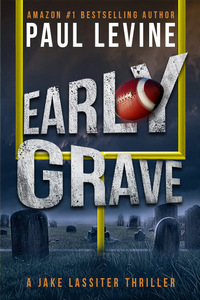
Early Grave by Paul Levine: Lassiter v. Friday Night Lights

(Paul Levine participated in a Q&A about this book after I posted this, you should check it out)

Early GraveEarly Grave

by Paul Levine

DETAILS:
Series: Jake Lassiter, #15
Publisher: Herald Square Publishing
Publication Date: January 10, 2023
Format: eARC
Length: 372 pg.
Read Date: December 28-29, 2022
Support Independent Bookstores - Visit IndieBound.org

What’s Early Grave About?

Jake and his former teammate Tank are at a High School Football game—Tank’s son, Rod (also Jake’s godson), is making his debut and the two older men are beyond excited. On the opening play, Rod takes a hard hit, and Jake (who suffers from CTE) is concerned that the concussion protocol isn’t being followed, but before they can do anything, play resumes and Rod takes another hit—one he does not get up from.

The two men rush to the field and help the medical professionals until Rod can be taken to a hospital. Rod’s moment of glory has been turned into the worst day of their lives—and it’ll be worse when Tank’s wife/Rod’s mother is informed (no one had told her that Rod was playing football). He’s going to live, but it’s impossible to say whether he’ll walk again—or be able to do much at all.

Jake wants blood—so he sues the school, certain he can get around the waiver Tank signed, and seeks an injunction from the court to suspend High School contact football games until it can be proven that all schools have taken steps to ensure the game is safer.

Tackling Football

No one can blame Jake for the first part of his suit—although many doubt he’ll be able to get around the waiver (Victoria Lord gives him some help on that). But the second part feels like career suicide—he becomes a laughing stock in town, on local radio, in the legal community, and on social media.

I need to stop for a minute and talk about the social media parts—throughout the book, there’ll be news updates on the case which triggers Twitter responses (possibly other sites, but they feel like tweets to me). They are hilarious, in a funny-‘cuz-it’s-true way. This is precisely how the Internet would respond to a lawyer doing this. Levine did a great job on this front.

On a more serious front—if Jake pulls off a miracle here, that will suggest there’s something wrong with the game. If people aren’t being careful enough at the local level, what about college? What about the NFL? Powerful groups and people don’t want this to come anywhere near a courthouse, there’s just too much to lose. Jake finds himself, his associates, and his clients the target of many less-than-ethical endeavors to keep the case from progressing.

The legal aspects of this case are hard enough, but when you throw in the threats, intimidation, and money flying around to stop it? Things get even uglier.

Counseling

Jake and Melissa are in counseling—she’s discovered he’s been hiding medical issues, and who knows what else, from her. The trust is broken and she’s concerned about their future. Their engagement may be on the rocks. Melissa doesn’t have much to do in the primary story, so this is the main interaction we get with her. Through their counseling sessions, we get to see a lot of introspection and some flashbacks to Jake’s childhood.

I don’t know that they add a lot to the story, but these scenes do a great job of exploring parts of Jake’s character we probably wouldn’t be able to see otherwise—once he stops joking around defensively, that is.

Is This is the End?

Given Lassiter’s health, readers had to expect that he couldn’t keep going forever—I even asked about that back in 2020 when Levine participated in a Q&A, he said,

Lassiter told me he retired after “Bum Deal” in 2018. But when his beloved nephew Kip gets indicted for taking other kids’ SAT exams as an imposter, well, what choice did he have but to get back in the courtroom? [that’d be Cheater’s Game] I suspect Jake has one more case in him.

This might be that one more case—it’s being marketed as the last book in the series, anyway. Early Grave certainly feels like it’s the end—in several ways.

Still, since at least the days of Holmes and The Reichenbach Falls, we all know that authors have a tendency to change their minds about ending things. I’m not sure I’d close the book on this series, you never know what Levine might do. If nothing else, there’s room for books between the previously published adventures.

So, what did I think about Early Grave?

It’s probably just as dangerous for an author like Levine to mess around with something like Football as it is for an author to mess with a character’s pet dog or cat. There are some things you just don’t threaten. But Levine (and Lassiter) dance along that nasty third rail with aplomb and panache—throw in some good personal plot lines and some ominous actions from the other side and you’ve got yourself the makings of a solid thriller.

Like with most legal thrillers, the best parts of this novel happen in the courtroom—the reader is treated to great tension, some genuine comedy, and some clever reveals. The lawyers, legal assistants (for the defense), and the judge are just what’s needed for Levine to make this aspect of the novel really sing.

Jake’s a long-established maverick—and he acts like one with witnesses, his opposition, even his clients, and the law. All while dealing with his own ongoing medical issues—you have to wonder at times if Jake should’ve had a second chair just in case he doesn’t survive until the verdict is pronounced. But it’s that maverick nature that’s got him this far in life—and this far in the series, so you know that’s exactly what the readers want.

The conclusion to the case is satisfying—maybe a little credulity-stretching, but at that point, who cares? What happens after that shows Levine’s intentions for the character in pretty definite terms (with a little wiggle room, all that someone like Jake Lassiter needs). The whole thing is about as satisfying as you could want.

My only regret is that I haven’t managed to go back to the beginning so that I can feel the cumulative weight of this series coming to an end. That said, these books are designed to be read as stand-alones, and there’s no reason this couldn’t be the first installment that someone picks up.

Disclaimer: I received this novel from Saichek Publicity in exchange for this post and my honest opinion.


4 Stars

This post contains an affiliate link. If you purchase from it, I will get a small commission at no additional cost to you. As always, the opinions expressed are my own.
The Neil Gaiman at the End of the Universe (Audiobook) by Arvind Ethan David, Neil Gaiman, Jewel Staite: Let’s Keep this Short and Sweet

The Neil Gaiman at the End of the UniverseThe Neil Gaiman at the End of the Universe

by Arvind Ethan David, Neil Gaiman (Narrator), Jewel Staite (Narrator)

DETAILS:
Publisher: Audible
Publication Date: March 18, 2021
Format: Audible Original
Length: 29 min.
Read Date: December 28, 2022


This is a short story, so I’m not going to keep this short and sweet. Let’s go with a Pros and Cons list:

Pros Cons
Satisfying SF Story
Jewel Staite
Neil flippin’ Gaiman
Sound effects that are effective,
but a little too loud

It’s 29 minutes of entertaining goodness.

’nuff said.


4 Stars

Killer Story by Matt Witten: A Desperate Reporter Works to Solve a Sensational Murder

Be sure to check back in an hour or so for a Q&A with Matt Witten—it’s a great one!


Killer StoryKiller Story

by Matt Witten

DETAILS:
Publisher: Oceanview Publishing
Publication Date: January 17, 2023
Format: eARC
Length: 320 pg.
Read Date: December 26-27, 2022
Support Independent Bookstores - Visit IndieBound.org

What’s Killer Story About?

While studying journalism in school, Petra acted as a counselor for a high school journalism camp. In that role, she met and befriended a young girl named Livvy Anderson. Over the years since then, the two forged a strong friendship—almost like sisters. At some point though, the relationship faltered—in college, Livvy started posting videos online spouting (in Petra’s view) extreme right-wing politics, hateful speech, and the like. For example, she defended a star football player accused of raping a woman on campus by trashing her reputation and exposing personal details. Rather than pushing back or even arguing with her friend, Petra chilled communication, assuming it was a phase, and focused on her own work.

And it might have been a phase if Livvy hadn’t been killed. The murder was fairly sensational—it happened while Livvy was recording a video (but she paused the recording so no one saw it or the murderer). The accused killer was acquitted—and most of the country (including Petra) assumed it was a travesty of justice and that he got away with it. The Court of Public Opinion definitely found him guilty.

Years later, Petra has found herself (like most young print journalists) bouncing around from newspaper to newspaper, trying to stay employed. She’s now at a major Boston newspaper and thinks that life is stable—the subjects of her stories might not be that glamorous, but she’s working, and the big story is around the corner.

Until she’s laid off. She panics at this point—her boyfriend (who moved cross-country with her for this job, changing the course of his career) isn’t going to put up with the lack of stability much longer, and it’s going to only get harder getting a job at the rate she’s going. So she throws out a mad pitch to her editor—what if she could definitively prove who killed Olivia Anderson? She tells him this story isn’t just the kind of thing for the paper—it’d make a great podcast.

Visions of the kind of revenue that Serial and similar podcasts could bring to the paper, not to mention the publicity of this kind of story, he gives her two weeks to firm up the story, start producing the podcast, and they’ll see what happens.

Petra heads off to find the evidence she pretended to have during that meeting—and hopefully much more.

The Journalism of this Novel

I’ve talked before about how I’m a sucker for a novel about a driven journalist—typically a print journalist, too. I’m always ready, willing, and able to embrace and fall into the romance of the crusading reporter. Or just one who does the job well, without a crusade.

But those kinds of stories are getting harder to tell and to believe in our current media landscape. Not just because print journalism is dying (for worse or for worser). It’s definitely not the track that Witten takes here. Petra is desperate and acts desperately—she lies to her editor at every turn, overstating her case and the evidence she has at each step of the way. Almost every fictional reporter* cuts a corner here and there and bends a rule and the truth in pursuit of the story and/or the truth. Petra amputates corners and forces the truth about her actions into positions only the most experienced yogi can handle—at least when it comes to what she tells her editor, coworkers, the police, her boyfriend, and so on.

* Lawyers, please note that I’m not saying anything about the methods of actual reporters or the companies they work for. Please don’t sue me.

When it comes to her actual reporting, however—in print, podcast, and elsewhere—Petra is much more honest. Bowing to editorial pressure she may say something earlier than she should* and while she never lies, she sure edges close to it. Her scripts feature incredibly well-chosen words—true, but open to interpretation.

* There are a few hundred words I could write about other journalistic ethical moves here, but I’d be getting sidetracked.

The journalism—both in print and in the podcast—we see here is very likely what fills our screens and earbuds. It’s sensationalistic, click-driven, and not necessarily all that honest. It’s depressing to think about, and it’s not great to read about if you think about it in those terms—but it makes for a thrilling (and realistic) read. Still, I think I need to go watch Deadline – U.S.A. or something to restore my faith in humanity.

The Alt-Right Depiction

Thanks to Livvy’s online persona, even now, she has a good number of fans. Many of those fans are not happy about Petra’s podcast—and make that displeasure well known online. At least one goes further than that. Between them and Livvy’s videos (and other online activities), Witten has to walk a careful line—he needs to depict them in an honest and believable way without turning them into a convenient punching bag for a reader or character to spend a lot of time venting about their politics (perhaps even himself). Or, to go in the other direction, too.

I really appreciated the restraint he showed in this regard, it’d be easy to slip here, but on the whole, he simply reports on the views espoused—sure, it’s clear that Petra and her colleagues (and many of the witnesses that talk about it) disagree with Livvy and her fans/defenders, but with only one exception, we don’t get details their differences with the alt-right views.

That exception comes from Petra having to do a deep dive into their activities and to try to interact—so it comes about organically. Even then, Witten doesn’t let Petra go too far.

I mention this to say that readers shouldn’t let the politics involved in the book dissuade them—it’s there, but it’s just part of the atmosphere. And it’s fairly evenly handled, and I can’t imagine many readers having a problem with it.

So, what did I think about Killer Story?

Early on in the novel, I made assumptions (as you do) about the kind of story that Witten was telling and what kind of things the reader should expect from the plot and characters. I was wrong on just about every point. It was a very different kind of story, the characters ended up going in directions I wouldn’t have guessed (Petra’s editor, boyfriend, and best friend were probably the exceptions to this), and every theory I had about the killing was wrong.* And the result is a richer, deeper, and more satisfying novel than what I thought I was going to get (and I anticipated this being a good one!).

* Well, almost. I did have the motive and killer right for a chapter or two, but Witten and Petra got me off of that path.

Witten’s story in last year’s Jacked was one of the higher points in a collection full of high points, and this novel solidified my appreciation for his writing. Before I got to the point where I realized that the novel wasn’t telling the story that I thought it was and shifted my expectations, I spent a good deal of time not liking the book—but I couldn’t stop reading it or thinking and talking about it when I wasn’t reading it. It was just too well done. It got under my skin. Actually, it’s still there—I can’t stop thinking about Petra and her choices. I even emailed Witten to ask a couple of questions I had about some points—points that I think the reader could have divergent opinions on, but I wanted his authorial take on it. I’ve never done this before. But I had to know—and even having his take on them, I’m chewing on it.

I’m going to be haunted by Killer Story for a bit—in the best way. If you’re looking for a mystery you can sink your teeth into and chew on, look no further.


4 Stars

Disclaimer: I received a copy of the eARC of this novel from the author in exchange for this post and my honest opinion. This did not impact my view and the above is my honest opinion.

This post contains an affiliate link. If you purchase from it, I will get a small commission at no additional cost to you. As always, the opinions expressed are my own.
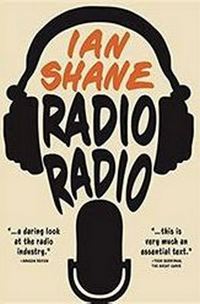
Radio Radio by Ian Shane: A Tom Petty Song in Novel Form

Radio RadioRadio Radio

by Ian Shane

DETAILS:
Publication Date: July 17, 2008
Format: eBook
Length: 253 pg.
Read Date: December 7-8, 2022

And there goes the last DJ
Who plays what he wants to play
And says what he wants to say
Hey hey hey
And there goes your freedom of choice
There goes the last human voice
And there goes the last DJ

Sure, that’s Tom Petty and not Ian Shane. But I had that song stuck in my head for almost the entire novel, they might as well be writing about the same guy.

What’s Radio Radio About?

Erik Randall is a DJ—that’s all he’s ever wanted to do. He loves being on the radio, sharing music with whatever corner of the world he can. He comes alive on the microphone, he seems to be good at the technical bits, and he loves the medium. What it has been, what it is, what it could be—but he’s very much not a fan of what it’s becoming.

He’s a True Believer, though, and is convinced that if given the opportunity, radio can still be great. He’s even formulating a plan so that one day, he can make at least one station great.

We don’t meet him on that day—in fact, shortly after we meet him, his station comes under the thumb of a corporation that makes cookie-cutter stations all over the country. In the same way you know what you’re going to be served at an Olive Garden in a different state from home, you know what you’re going to hear on the radio in your rental car once you hear a familiar station tagline. That’s what they’re going to turn his radio station into.

About the same time, he meets a local singer/songwriter, Myra. Erik’s still reeling from a semi-recent breakup and isn’t in the right frame of mind to think about romance—but she’s the kind of woman he’s dreamed about. His co-worker/friend, Shakespeare, has been pushing him for months to date again, and once Shakespeare meets Myra, he increases the pressure.

His professional life is falling apart, his personal life is looking promising for the first time in forever—can Erik handle it?

So, what did I think about Radio Radio?

I thought there was something grating—something blindly immature about Erik’s attitude and antics at work. Yes, he’s firmly in the model of the rebel DJ who cares more about the art than the business side. And as such, I can enjoy the character. Maybe it’s because I’m reading this through the eyes of someone in 2022 so I have 14 years of insight to know just how Quixotic Erik is being and how reality is going to hit him hard. Shakespeare, on the other hand, I could get behind—he’s a realist. There’s a romantic streak in him—he wants Erik and his vision to have a chance, but he knows better. I was enjoying the novel, but I really wasn’t on board with it. Which isn’t to say I didn’t find Erik amusing—I just found him a grating sort of amusing.

But then, Myra comes on the scene and two things happen. Erik starts to change, the bits of his personality that grate on me get pushed to the background.* Secondly, Ian Shane writes this stuff really well—like the way that Erik and Myra interact, the way that Erik makes an utter fool of himself because of her, the way that Myra and Shakespeare interact—this is where Shane’s later novels shine, and you can see him building that ability here. If this was the first Ian Shane book I read, shortly after Myra comes on the scene is where I’d order his next two books.

* I am fine with a protagonist grating on me—as long as there’s something about them or their story I can get behind. But I prefer the alternative.

I should also note, that some of Erik’s work attitudes and behaviors remind me of other characters in similar situations—the works of Adam Shaw, Matthew Hanover, and Andy Abramowitz jump to mind—so I’m not trying to say that Shane messed up by having Erik be this way. I just find it grating. What he does and says are, by and large, what an immature twenty-something would think and do. As he is an immature twenty-something, he’s spot-on.

Speaking of needing to grow up a little—a lot of the ways he approaches the big changes he needs to make, the conversations around them, and the way he reacts to people like Shakespeare making those changes himself, displays that immaturity. In those cases, I find it endearing and relatable.

Maybe I’m just the office crank? Out of the office issues don’t bother me as much.

One other challenge for me is that like with Postgraduate, I felt like Shane was judging me for my musical taste. And he probably should—because my musical taste not the kind of thing that Erik Randal (or anyone at Championship Vinyl) would approve of—very I’m fairly plebian, really. Frankly, I’m okay with that—and I did make a note or two to follow up on some music. I do wish I could hear Myra’s stuff, because I think I could get into it. That’s not a reflection on the novel, I just wish Shane would write a character with mainstream taste who is seen in a positive light.

This is a sweet book—there’s good character development, a strong cast of supporting characters (most of whom I didn’t mention) that I would love to see again in some form, great banter, solid comedy in a variety of forms, insight into an industry I know practically nothing about, and a sweet and well-told romantic story. It’s not as strong as his later novels, but it’s easy to see that he’ll be capable of greatness. Buy this book, it’ll make you happy.


4 Stars

Emily Wilde’s Encyclopaedia of Faeries by Heather Fawcett: Journaling Her Investigation into the Hidden Ones of the North

Emily Wilde's Encyclopaedia of FaeriesEmily Wilde’s Encyclopaedia of Faeries

by Heather Fawcett

DETAILS:
Series: The Emily Wilde Series, Book One
Publisher: Del Rey
Publication Date: January 10, 2023
Format: eARC
Length: 336 pg.
Read Date: December 19-21, 2022
Support Independent Bookstores - Visit IndieBound.org

What’s Emily Wilde’s Encyclopaedia of Faeries About?

Emily Wilde is a dryadologist. Imagine, if you will, what post-Darwin scientists and naturalists were doing for the study of plants and animals in the late nineteenth/early twentieth centuries; or what Carter and the rest were doing in Egypt; but dryadologists are studying fairies (oh, in this world, they are as real as the tomb of Tutankhamun—she’s not a literary theorist). Humans have been dealing with fairies for centuries, but what we know about them is really limited. Mostly left to legends, tales told around the fire or in an inn—where a third or fourth-hand account is rare and as close to an eyewitness as most people will ever get. Emily and her counterparts throughout the world are seeking to bring that to an end. She has a position at Cambridge but is hoping her current project is the kind of thing that will secure her tenure and allow her to further her research.

Her project is the first comprehensive Encyclopedia of Fairies (hence the title). She could publish what she has now and probably receive scholarly acclaim—and tenure. But she’s driven. She’s a completist. And, to be honest, she has a little bit of an ego and she wants more than probable acclaim. So she rents a small shack in a Norwegian village for a few months to try to find, interact with, and document the least-understood fairies in the world. The northern Hidden Ones (both the common and regal varieties) are powerful and secretive. They don’t interact much with humans—and when they do, it’s generally bad for the humans. If Emily can be the first to get any scholarly research done, it will definitely put her on the map.

Sadly, as good as she is at dealing with and understanding Fairy, Emily is bad with humans. She has no people skills, is aware of it, and doesn’t care. But in this inhospitable climate, she really needs help to survive—much less to learn a lot about the Hidden Ones.

Thankfully (?), soon after her arrival, a colleague/competitor—and her only friend—gatecrashes her trip and takes up residence in her shack with her. Wendell Bambleby is the very picture of a Victorian gentleman-scholar. He’s a charmer, and soon has the villagers eating out of his hand. He’s also pampered and demanding (would probably have been considered a bit of a dandy at the time)—and has a really hard time not wrapping his head around things like cooking for himself, working to keep the fire burning, etc. He’s decided that he’s going to collaborate with Emily (not really caring if she agrees) and that their work in Norway will be the thing to help him reclaim some academic respectability following a scandal.

He may be under a cloud, but Wendell has connections and can open doors for Emily to get her the audience she really needs. So she accepts his proposal to collaborate, assuming she’s going to do almost all of the work.

Things ensue. I really can’t say more than that.

Poe

The first fairy that Emily meets is a young brownie—she ends up referring to him as Poe. It’s great to see her in action with him. it shows that she does know what she’s doing—we don’t just have to take her word for it (not that we have any reason to think she’s lying, but it’s good to know).

Poe really ends up showing us so much about Emily—and other characters, too. He’s ultimately so integral and important to the novel—and in a very real sense, not important to the plot in any way. But through his interactions (both that the reader sees on the page and those that happen “off-screen”) with various characters, so much of the plot becomes possible and the reader gains a whole lot of insight. Really, he was well, and cleverly, used by Fawcett. I can’t say it better without spending a few hundred spoiler-filled words, but the more I think about him, the more impressed I am by Fawcett.

Knowing More than Emily

Around the time—probably a little before—I figured out that the story of the novel isn’t really what you think it is, I figured out a couple of things that Emily is utterly blind to for a very long time.

Knowing more than a protagonist can be frustrating—I spend a lot of time yelling at detectives in mystery novels in particular. But sometimes, it can be fun watching them catch up to the reader. Fawcett’s able to draw humor from us knowing things that Emily doesn’t. It also helps us empathize with both Emily and other characters as we see her work through various situations and conversations.

And then, when Emily catches up with the reader—and reality—it’s all the more satisfying. Most/all of what we know that she doesn’t really wouldn’t be that believable if we learned it when she does. We get to spend many pages urging, “Come on, come on, come on…open your eyes/pay attention/etc.” And then, finally, cheer when she does. It’s the closest many readers will get to the position of a sportsball fan yelling at their TV to communicate to someone in a stadium miles/states away.

Slamming on the Brakes

I did have one significant problem with this book. As part of her research—part of her life, really—Emily specializes in stories about faeries. She shares some of them as part of her journal. It makes sense, they serve both the character and the overall novel. They’re truly fitting.

However.

It was like slamming the brakes on. Everything that had been building, all the tension, the momentum, the development, and so on all came to a rapid stop. And then picked up again after the stories. It reminded me of a time in Kevin Hearne’s Hammered when everything stopped for some of the characters to tell stories. As fun as those stories were, it really made that novel hard to get through (that series went on for 6 more books, two spin-off series, and a number of novellas and short stories—so the jarring stop was obviously not too catastrophic).

If the transition to them had been smoother—or maybe they had been more spread out. Just something, I probably wouldn’t have mentioned them—or I’d have talked about what a great way it was for us to get an understanding of the Northern Fairies without an infodump. Instead, it came across as a stumble—one that the novel recovered from nicely. But in the moment, it really bugged me.

So, what did I think about Emily Wilde’s Encyclopaedia of Faeries?

Stick with me for a minute—I could tell from the opening pages that this was a well-composed and well-structured novel full of fantastic world-building. But it took longer for me to move beyond appreciation and admiration for what was being done to really care about it. I did, though, the book started out slowly and picked up momentum as it went—and as it did, I got more and more invested (and my appreciation and admiration increased, too). Somewhere around the mid-point, maybe a little later, I was as invested as is possible and only my notes tell me it took time for that.

I think I just used too many words to say—it’s a slow burn of a novel in almost every conceivable way. Not unlike Emily’s rented shack—it takes a while for a fire to really start heating the place, but once it has time, it’s nice and toasty warm.

There’s a lot I’d like to talk about, but I’m not sure how. I can see later installments being easier, but so much of the novel is about beginnings. To really talk about it would be to discuss the last 20% of the novel. And no one wants me to do that.

Just because of my own prejudices, I could spend a few paragraphs on her dog, Shadow, too. As much as he deserves them, I’m going to leave it with “he’s a very good boy.” I hope to see more of him in the books to come, too.

This book is rich in character, story, world-building (and world-revealing), magic, and subtlety. I’m not sure if you can be rich in subtlety, but Fawcett pulls that off. This is absolutely something I recommend and imagine the next few months are going to be filled with people gushing over this. Readers of this post might as well get in line now to be one of those gushing.

Disclaimer: I received this eARC from Random House Publishing Group – Ballantine, Del Rey via NetGalley in exchange for this post—thanks to both for this opportunity.


4 Stars

This post contains an affiliate link. If you purchase from it, I will get a small commission at no additional cost to you. As always, the opinions expressed are my own.
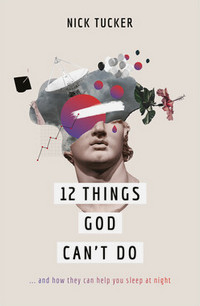
12 Things God Can’t Do by Nick Tucker: 12 Reassuring Truths

12 Things God Can't Do12 Things God Can’t Do:
…and How They Can Help
You Sleep at Night

by Nick Tucker

DETAILS:
Publisher: The Good Book Company
Publication Date: May 31, 2022
Format: Paperback
Length: 184 pg.
Read Date: December 4-18, 2022
Support Independent Bookstores - Visit IndieBound.org

What’s 12 Things God Can’t Do About?

A lot of Theology Proper is negative*—God can’t do this, He can’t do that, He won’t do another thing. This has been the case since the beginning and is still true today.

* A lot of the rest is the omni- attributes. Theology Proper is really an all-or-nothing kind of thing.

Nick Tucker wants the believer to consider 12 of the things God cannot do. No, we’re not talking about foolishness like “Can he make a rock so heavy that he can’t lift it?” These are the big things—the stuff a faith (collective and individual) can be built on.

But…God…

Along with these 12 things, Tucker pauses for five interludes. These interludes look at things the God-man, the Incarnate Word, could and did do. He could learn, He could be tempted, and He did sleep. As He took on humanity, The Son was now capable of these things—and that’s proof of His humanity. He became truly human—and as such, He could (and did) redeem us.

So, what did I think about 12 Things God Can’t Do?

I’ve read a handful of books on the attributes of God over the last few years (and have one more scheduled), but this one approaches the idea from a very different perspective. Well, most of the other books touch upon Tucker’s purpose, but they have other things going on—Tucker’s more single-minded.

Most books on the topic are about advancing or defending orthodoxy, buttressing right thinking about God (and it is right to do so). Tucker’s focused on what the believer is to do with orthodoxy. What’s the whole point of understanding who God is? It’s for the reassurance, confidence, hope, and comfort of the believer—look at the way the Psalmists, prophets, and apostles used these doctrines. Reflecting their priorities, Tucker points the reader to these can’ts.

We can sleep well at night, knowing that God will not slumber. We can trust His promises because He can’t change or lie. And so on. Which makes this book one of the more rewarding reads I’ve come across lately.

Tucker writes in a simple, clear, and straightforward style. There’s a little gentle humor in his illustrations and style—but the book isn’t a showcase for Tucker’s writing. He writes to point the reader to God. This book is encouraging, devotional, and should lead to doxology. It’s wholly sound, and easy to read and, in turn, to lead to trust. It’s well worth the short time it takes to read and re-read.


4 Stars

This post contains an affiliate link. If you purchase from it, I will get a small commission at no additional cost to you. As always, the opinions expressed are my own.
Sacrifices by Jamie Schultz: To Destroy, or to Be Destroyed

SacrificesSacrifices

by Jamie Schultz

DETAILS:
Series: Arcane Underworld, #3
Publisher: InterMix
Publication Date: July 19, 2016
Format: eBook
Length: 351 pg.
Read Date: December 14-16, 2022

I look around, though, and I ain’t stupid. How’s this end? Just keep going like this forever? Naw. People gonna die.

What’s Sacrifices About?

That opening quote sums it up—the story, characters, and events of this trilogy can’t keep going. This ends—and not everyone is going to make it out alive. Maybe no one does.

After the end of Splintered, things were bleak—the team was, well, splintered. People were dead. Demons had infected (for lack of a better term) two of the team—and the biggest and most powerful one seemed to be working with the crime boss/would-be supernatural force that they’d been working so hard to get away from. But even Sobell didn’t seem to be fully in control and might be in danger from this demon.

This brings us to Sacrifices, Karyn had a vision/prophecy that gave hope that there was a way to defeat Belial. If they could just figure out what it said—of course, Belial heard it, too, and was at work to prevent anyone from fulfilling it. The FBI is lurking around—they may be willing to help, but are more interested in slapping the cuffs on Sobell and anyone else they could.

Now it’s just a matter of seeing what happens. Will their (literal and figurative) demons defeat them? Will Belial end up wreaking destruction on Los Angeles/the world? Will…actually, I don’t know if the reader—or any of the characters, actually—really gets a picture of the ultimate stakes here. I don’t think our minds could comprehend it—but it’s big, nasty, and possibly apocalyptic.

The solution to all this may lie in the fact that demons have an enemy. An enemy even more terrible and awful (especially if you look at older definitions of those words). But what will have to be given up to secure their presence?

I’m So Glad this Isn’t a Scratch ‘n Sniff Book

It came to her that this was the world as it really was, just thin tissue floating atop an unknowable black ocean teeming with horrifying, malicious creatures— creatures at the command of the demon before her. For the first time, she saw him as much greater than simply another enemy, if more revolting than most. For the first time she really understood that he was also unspeakably ancient and filled with knowledge and power beyond reckoning. This was the type of entity she dealt with each time she delved into magic

Some authors will mention the smell of sulfur or something like that and talk about rot and decay when talking about demons. Other authors will basically make demons out to be Byronic hunks (the Cullening of demons). Schultz does not do that—either of them. He dwells on the rot, the decay, the blood, grime, disease, and filth that comes with demonic possession, power, and or presence.

His demons aren’t misunderstood, they’re not occasionally benign or honorable, and there is nothing to them other than destruction and power—they may seemingly aid a human for a time, but it’s for a price. A price that no one should pay.

Schulz’s descriptions of the demonic effects—and just the life in L.A.’s heat for those without much in the way of resources—are so vivid that you feel a little grimy just reading it. From the description of the clear bottle that one man uses as a spittoon, bloody sweatpants that have been worn for days, various wounds, and so much more—Schulz makes sure that your visual images of these events are real and substantial.

A quick personal note

I’d fully intended on jumping on this book when it came out in 2016—and cannot tell you why I didn’t. It’s just been sitting there collecting dust on my Kindle since then—and it’s been so long at this point, I didn’t think I’d remember the story enough to make it worthwhile.

But within a few pages, I was right back—Schultz did a little bit of recapping, but not much. Mostly it was the tangibility of this world and these characters, just seeing them brought it all back to me, and it was like no time had passed at all. There are few authors that can pull that off, but he did it. And I’m impressed as all get out by that.

So, what did I think about Sacrifices?

“Funny, isn’t it? Lack of a demon isn’t usually a problem to be addressed. Quite the opposite.”

“I’m not laughing.”

Sobell made a clucking noise. “That’s your prerogative, but from my position, I’d have to say that if you don’t find any of this funny, you’ll find it unspeakably bleak.”

On the whole, this book is closer to the unspeakably bleak end of the spectrum, but there are a couple of moments of brightness (and maybe a little bit funny). And I do mean a couple of moments, a handful at best.

Even the more optimistic statements and moves come with the air of “This is probably not going to work, but it’s something to do.” The only characters that are operating without a sense of impending doom are those who are on the outside of the occult happenings in the city. The futility of every scheme, plan, and idea taints everything—but these people (and/or magical/spiritual entities) keep moving forward, scrabbling after the chance that someone will make it out alive. This is hard to read—I wasn’t even sure the planet would exist when the book ends—but once Schultz got his talons into your brain, there’s just no way that you stop reading—you have to know what’s around the corner, even if it will leave you despairing.

This is a great UF trilogy, and one that I am so sad that didn’t get the attention it deserved (including from me for the last 6 years). Pick up the set, you won’t be sorry.


4 Stars

The Spare Man by Mary Robinette Kowal: Classic Mystery and Classic SF in One Contemporary Package

The Spare ManThe Spare Man

by Mary Robinette Kowal

DETAILS:
Publisher: Tor Books
Publication Date: October 10, 2022
Format: Hardcover
Length: 348 pg.
Read Date: December 5-6, 2022
Support Independent Bookstores - Visit IndieBound.org

“The same, but different.”

Despite it being on my list since High School, I’ve never gotten around to watching The Thin Man or the sequels. I haven’t read Hammett’s novel, either (on a similar list for almost as long). I know enough about them to catch the occasional allusion and to make the right guess when it comes up in a trivia game or crossword puzzle.

Still, when I saw Kowall’s piece on CrimeReads last month, “On Writing a New Take on The Thin Man, Set in Space“, I was intrigued and my library put it into my hands a lot sooner than I expected.

So, all I know about the comparisons between this novel and the source/inspiration material comes from this piece. So I can’t judge how much is Kowall being clever and inventive with her reworking and how much is just Kowall being clever and inventive. I can tell you there’s a whole lot of Kowall being clever and inventive, though. I’m going to write this pretending it’s all Kowall so if I give her credit for something I shouldn’t have…whoops.

So I’ll tell you now a couple of things before we dive in: 1. I won’t appreciate everything she did in the way I maybe should. 2. (more importantly) You don’t have to know anything about the movies or the book to appreciate this novel. You just have to appreciate goodness.

With that out of the way, let’s dig in.

What’s The Spare Man About?

Tesla Crane—heiress, noted inventor, and celebrity—is on her honeymoon. Her new husband, Shalmaneser Steward, is a retired detective and isn’t exactly a non-celebrity either. They are traveling under assumed names and in disguise to stay under the radar. They do get their fair share of attention, however—thanks to something we don’t get to know about at the beginning, Tesla has a service dog—an actual dog, which is apparently a very big deal to see.

They’re on a cruise from the Moon to Mars, and the ship they’re on puts the lux in luxury (wow, that’s a lame line). They plan on spending their time drinking ridiculous cocktails, having fun with various activities on board, and other honeymoonish activities. Sadly, someone is attacked while they’re nearby and Shal’s old instincts kick in and he chases after the assailant. The victim dies and Shal becomes the prime suspect because running away from the victim in pursuit of someone only you see tends to make the ship’s security think you’re lying.

Shal is content to let the authorities take care of things, certain that by the time actual law enforcement gets involved, he’ll be exonerated. Besides, he’s retired. Tesla cannot sit by and wait and she investigates on her own (ultimately Shal will get on board, but Tesla will do the bulk of the work).

Tesla and Shal

The best part of this book is probably the relationship between these two newlyweds. She shows a couple in love. Not a meet-cute followed by chapters of misunderstandings and near-misses, not a love unrequited for whatever noble/stupid/bureaucratic reason, not a couple in the first blush of infatuation and love, nor a couple trying to recapture something or having doubts. They are in love, they respect and support each other, and they actually like each other. I see this so, so rarely in stand-alones or series that it just fills me with joy to see.

They’re not perfect (who is?), they bicker a bit—and there’s some lying back and forth—mostly of the “I’m not in that much pain” type (which they generally readily admit to when asked). But even then, it’s typically a lie told so the couple can accomplish something without the other being distracted by worry.

Sure, it’s their honeymoon, so they are a little extra-lovey-dovey. But you get the impression they’d been together for a while pre-wedding and that this is pretty much the way they are together (if only because of the way Gimlet interacts with them).

I cannot express just how much I loved this couple. I wish I could see things like this more.

Fantine

The only element of this book that I liked almost as much as their marriage was Tesla’s lawyer, Fantine. Fantine isn’t crazy about the way that Tesla and Shal are being treated and starts threatening various lawsuits.

Depending on where they are in the journey, there’s a communication lag between the ship and her office, so she’s continually responding to people 3-8 minutes after they’ve said something. The comic opportunities from that alone are great.

Add in Fantine’s aggressiveness and you have gold. Think Dr. Perry Cox, but angry, her gift for creative insults and threats are gold. Fantine is clearly a power to contend with and has lawyers and security officers on the ship jumping to keep her from making the lawsuits she’s planning from becoming even bigger. I could read a novella full of nothing but her yelling at people.

So, what did I think about The Spare Man?

I feel like I should be raving over this, shooting up fireworks, and putting on a song and dance show here, but I can’t quite. The entire time I was reading, I wondered why I wasn’t liking it more.

The dialogue was great—especially when it veered toward the banter (between Tesla and Shal, either of them bantering about the other, between them and a particular security officer). The characters leaped off the pages and were practically alive. The setting and all the SF accouterments were perfect. The mystery…was pretty good. Everything else I can think of to point to was outstanding.

But I never felt engaged with the work—I admire it, I can praise a whole lot of it, but I was never grabbed. It felt like an exercise, like someone executing a recipe or equation. Wonderfully executed, but it left me cold.

I expect I’m a minority report on that—at the same time, I want to stress that this is a really good book. I’m just saying that I feel I should be giving this 5-Stars, instead of the 4 I’m giving it. There’s just so much to relish, so much to enjoy in this book that you should really ignore this last section and go get the book. It’s taken a darker turn than I intended—or want to leave you with.

This really is a great mixture of SF and Mystery, with a classic feel to both elements and yet it’s very much something that could only be produced in this moment. Kowall captured something here and you should really check it out.


4 Stars

This post contains an affiliate link. If you purchase from it, I will get a small commission at no additional cost to you. As always, the opinions expressed are my own.
Page 17 of 88

Powered by WordPress & Theme by Anders Norén