Tag: 4 Stars Page 16 of 88

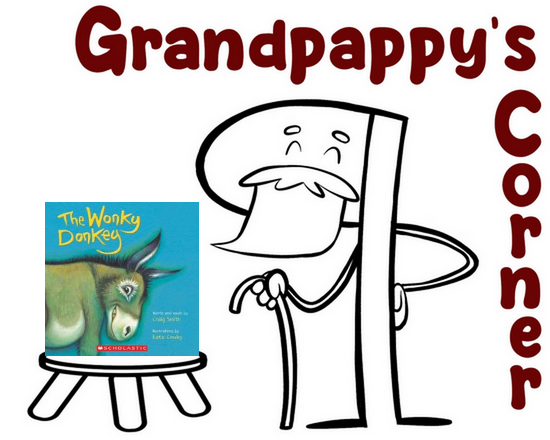
Grandpappy’s Corner: The Wonky Donkey by Craig Smith, Katz Cowley (Illustrator): Tongue-Tying Magic

Grandpappy's Corner Logo

The Wonky Donkey

by Craig Smith, Katz Cowley (Illustrations)

DETAILS:
Publisher: Cartwheel Books
Publication Date: December 29, 2020
Format: Board Book
Length: 21 pgs.
Read Date: March 8, 2023


What’s Wonky Donkey About?

Lifted from the lyrics of a children’s song, the book starts:

I was walking down the road and I saw…
a donkey,
Hee Haw!

And goes on from there to describe this unfortunate equine in more and more detailed (and ridiculous) ways–starting with its three legs, going on to describe its taste in music, coffee consumption, attitude, attractiveness, and so on.

Let’s Talk about the Art for a Minute

Katz Cowley is fantastic. The natural world and physical objects are presented in a great realistic fashion–heightened just a bit. The titular donkey and a bird that shows up in every scene, however, are a goofy cartoonish exaggeration of that fashion

I don’t know who decided to give this donkey a prosthetic leg–but it only comes up in the illustrations, so I’m going to give Cowley credit for it. It’s a great detail on many levels.

The expressions on the bird and donkey are the stars of the show–better than the words (by a crooked hair). I don’t know how a child can look at them and not want to stare. Or not wanting to pick up the book for another reading session.

Especially when a child is the age of the target audience, the adult reading the book is going to see themselves in the coffee-less expression of the donkey on the page talking about the caffeine deprivation. So everyone wins?

You can see some of the art, and learn more about the book, on Cowley’s website.

How is it to Read Aloud?

Ohhh boy. This is going to be hard to convey. First, it was only after I’d read this that I took the time to track down the song, but I couldn’t help but get a sing-songy cadence and voice as I read it. I also found myself talking faster and faster as I went through the book–like there was this unconscious effort on my part to spend the same amount of time reading each pair of pages–like a snowball rolling downhill, growing bigger and getting faster. This is great and all, but it’s also kind of a workout of both stamina and verbal dexterity.

You can’t help having fun with these lines–even as they build up and repeat like the 12 Days of Christmas. Really, try being expressionless or frowny while saying “He was a hanky-panky crank stink-dinky lanky honky-tonky wink wonky donkey.” You can’t, can you?

You might need to start using a spirometer before cracking this thing open though. As fun as it is, you’re going to end up getting requests for encores, and after 2-3 readings in a row, it’s going to lose a little bit of its charm. So keep something else around so you can switch to it for a minute or two before having to come back.

(between you and me, the song isn’t my style. I really hope the Grandcritter doesn’t discover it, because it feels like the kind of thing that’d you’d have to listen to 30 times a day–like that ditty about an infant scaleless predatory fish)

So, what did I think about Wonky Donkey?

A couple of weeks ago, my wife was telling a friend about our prep work for grandkids, including all the books we’re starting to stockpile. Once she got over being aghast that we’d never heard of The Wonky Donkey, she insisted that we fix this. We dutifully complied and it’s either one of the best moves we’ve made or one of the worst (see what I said above about reading it).

Joking aside, this is a great book for the intended age group. I’m going to have to do a deep dive into both the work of Smith and Cowley.

The other thing my wife’s friend told us was to get the board book–and she was right again. Parents/Grandparents/Etc. Do NOT get the paperback or hardcover. If the child(ren) doesn’t/don’t like the book, you’ll have spent too much money. If they do like the book (the more likely outcome), they will destroy it. It’s going to demand the number of re-re-re-re-reads that anything else won’t hold up to it. It’s also going to end up being one of those books a kid is going to carry around with them and flip through themselves–a lot. Paperbacks/hardcovers will not survive the gumming, accidental ripping, deliberate ripping, and overall expressions of toddler love that are so destructive.

I can’t see where this doesn’t become a tongue-tying obsession. The book you know the kid will love, you enjoy (the first few times a day you read it), you end up memorizing without trying to and just hope your lung capacity holds out during. It’s fun, it’s goofy, and it’s the kind of thing you’ll look back on in fondness.


4 Stars

This post contains an affiliate link. If you purchase from it, I will get a small commission at no additional cost to you. As always, the opinions expressed are my own.
Grandpappy Icon

The Hero Interviews by Andi Ewington: A Thoughtful Fantasy Adventure Shares the Page with 900 Fireball Jokes, 750 Quips about Useless Clerics, 600 Ways to Mock Paladins, and Plenty of Other Comedic Bits

So this is like a month overdue. I feel really bad about that because Andi Ewington got his Q&A responses back to me in record-time and I paid him back by dithering with this. It’s one of those I started and abandoned several times because it wasn’t right. This isn’t either, but I forced myself to actually finish it—it’s just going to get worse the more I tinker with it.

Oh, yeah, and do check in later this morning for a very nice Q&A with Ewington.


The Hero InterviewsThe Hero Interviews

by Andi Ewington

DETAILS:
Publisher: Forty-Five Limited
Publication Date: December 1, 2022
Format: eBook
Length: 925 pgs.
Read Date: January 20-February 11, 2023

What’s The Hero Interviews About?

The child and sibling of heroic adventurers, Elburn Barr, has taken a different path in life—one fit for someone with his particular set of skills (or lack thereof). He is a Loremaster—no spells, weapons, or danger for him, thank you very much. At this point in his life/career, Elburn has set out to understand what makes a hero tick—what is it that drives them, what early influences molded them, how do they keep going on? Does it vary from type to type? Are Barbarians made of different stuff from a Cleric or a Thief? What about a Ranger or a Wizard?

In addition to interviewing various leading examples of each type of hero, he talks to non-heroes, too. Like a farmer whose farm was saved(?) by some heroes from a dragon, the curator of a hero museum, people who run/design dungeons, etc.

We get these interviews in transcript form—with a little introduction from Elburn at the beginning of each, and maybe a little narrative about what’s going on around them during the interview, or what he does after. But primarily, it’s transcriptions of the interviews.

In addition to trying to understand the heroic psyche in general, Elburn’s hoping to understand and maybe connect with his adventurer-filled family. But he has an ulterior motive for all this—his older brother went off adventuring ten summers ago, and Elburn would like to know what happened to him. He’s hoping to find him alive somewhere but will settle for just knowing what happened.

This sounds heavy—but I should stress that this is a comedy. There’s a serious story (or three) being told, sure. But the book is a comedy.

Comic Footnotes

I’m a long-established fan of comic footnotes in novels—see what I’ve said about Josh Bazell, Lisa Lutz, Thomas Lennon, and K.R.R. Lockhaven for example. But Ewington puts them all to shame.

At least in terms of volume—there are almost 2 per page, although I’d have wagered it was higher than that (that’s an average—there are pages with several). Occasionally, it feels annoying to stop the flow of what you’re reading to check it. All I can say is that if you’re feeling that way, just keep reading and then circle back for the footnote after that bit of dialogue or at the end of the chapter—it’s not going anywhere.

On the whole, they work better in the moment without doubling back, so click the link if you’re not at the annoyed point. I did it both ways depending on my mood and can vouch for both methods. Whatever you do, don’t skip them.

You get a good sense of Elburn’s personality and attitude toward his interview subjects from the main text—but it really shines forth in the footnotes. To really understand the protagonist, you need to read them.

But your comedy-per-word ratio is higher in the footnotes, too. In the main text, comedy has to come out of the words, situations, and characters. In the footnotes, Ewington doesn’t have to do that—he can just make the joke. Frequently, that’s all it is—the joke. Neither is a superior joke-delivery method, it’s just easier to get to the funny bit in the footnote.

Audience

Anyone who’s into Fantasy to one degree or another is going to be able to appreciate most of what Ewington’s doing here. There is a pretty solid D&D-basis to everything, however, so the more you understand and/or have been exposed to the game.

The Length

There’s no getting around this point, The Hero Interviews is long. One might argue that it’s too long. I’m not sure I’d agree—but I wouldn’t disagree.

Early on (maybe around the 20% mark), I started to wonder if this thing wouldn’t work better as a trilogy. Break this into (roughly) thirds, add a 1-3 page Epilogue/Prologue to each to connect them and it’s a lot easier to digest. I think it’d work. Check out my Q&A with Ewington to see why he disagrees with that idea. I’m not entirely convinced, but at the end of the day, it’s not that important.

I do wonder how many readers will find their patience pushed by the length—I’d tell them to stick with it because it’s absolutely worth it (but taking a break every few chapters isn’t the worst idea).

A practical downside to the length is that it’s likely cost-prohibitive to publish this in paperback. This is a real shame because everyone I can think of to give this to won’t read it in ebook. (but I’m trying to think of a way to work around that)

So, what did I think about The Hero Interviews?

I hate when people drag out Douglas Adams or Terry Pratchett when talking about humorous SF/F, but I can’t get away from this one. For a long time, I’ve said that Life, the Universe, and Everything by Douglas Adams isn’t so much a novel as it is a series of comic episodes/scenes/bits trying to look like a novel.* As I’ve been trying to come up with a succinct way to talk about this book the last few weeks, I’ve decided that it’s the opposite—it’s a novel trying to look like a series of comic episodes/scenes/lines.

* I feel compelled to add at this point that I love the book, some of my favorite lines/paragraphs/ideas from Adams are in it. But it’s not a good novel.

It takes a while to see the plotlines emerge—it really does seem to be a light-hearted look at D&D clichés, stereotypes, tropes, etc. at the beginning, but eventually, you start to see the story arcs emerging and even start to see Elburn grow and develop. That’s something I didn’t expect to see when I started reading this.

If only because I have memories of interview transcripts and fantasy humor (and sadly, not much else), I expected this to feel like Off to See the Wizard by Clay Johnson, but it really doesn’t. Ewington’s ambitions are larger—and he packs more jokes into his pages. Ewington is also more interested in playing with the tropes and types of the genre, while Johnson was working within pretty well-established types.

Once I got to the interview with Gwenyn, the poor farmer with a field ruined by a dragon corpse left behind by heroes, I knew this book was for me. The Mime Warrior interview was so ridiculous that I had to love it—and I even came around to the least-Conan-like Barbarian (I admit I had a hard time with that one at first blush). Ewington both seems to embrace and relish going for the obvious joke—but the way he gets there, or what he surrounds the obvious joke with—that’s pretty special and creative. I’m not sure that makes a lot of sense, you’re just going to have to read it to see what I’m trying to communicate.

It’s really easy to see why Jodie recommended this one to me for the 12 Books Challenge, and I’m so glad she did (I wanted to, but hadn’t gotten around to buying it until she did). You should pretend that she recommended it to you, too (here, read her post about it). I mean, I’m recommending it to you—but maybe you’ll listen to both of us more than you’d listen to just me.

You’ll laugh; you’ll chuckle; you’ll grin; you’ll shake your head and roll your eyes while wondering, “Did he just find another way to make the same fireball joke?”*; and you’ll have a lot of fun. No better time than the present to go grab this, you’ll be glad you did.

* Yes, yes he did.


4 Stars

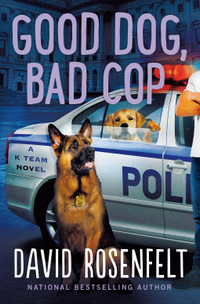
PUB DAY REPOST: Good Dog, Bad Cop by David Rosenfelt: Corey Douglas Starts to Come Into His Own as a PI

Good Dog, Bad CopGood Dog, Bad Cop

by David Rosenfelt

DETAILS:
Series: The K Team, #4
Publisher: Minotaur Books
Publication Date: March 14, 2023
Format: eARC
Length: 288 pg.
Read Date: February 28-March 2, 2023
9781250828965

What’s Good Dog, Bad Cop About?

Pete Stanton, when he’s not building up a tab for Andy Carpenter at their favorite sports bar, is in charge of the Homicide Division of the Paterson PD. He doesn’t have the budget for more police detectives, but he had a healthy budget for consultants (figure that one out if you can). So he’s hired the K-Team to look into some cold cases for him.

The first one they pick is a doozy. A few years ago, a retired detective and mentor to Corey Douglas was found shot on his boat, a woman’s body was also found there. Some suspicions about a murder-suicide were floated, but nothing stuck. Corey wants to look into it, and Pete approves it with one caveat—they have to investigate the murder of that woman’s husband. He, too, was a Paterson police officer who was murdered. Other than his wife, there’s no obvious connection between the cases, and they weren’t investigated that way.

Corey and Laurie knew going in that Pete would assign them both if they requested one—and honestly, they wanted it that way. All three were aware of the game they were playing, and they all did their part. Now, hopefully, the K-Team and help the PPD close these cases and get some justice for the victims.

Simon

This is really Corey’s book—Laurie’s in it a decent amount, but she doesn’t seem to play as vital a role as usual. Marcus isn’t around much—but is when it counts. Where it comes up short is, as is often the case, Simon’s involvement.

We need to see more of him—Corey even jokes about it at one point, saying Simon’s going to be jealous about something he’s up to without him. That’s all well and good–but it’s not enough.

This is a series about detectives who name their team after a dog. Corey’s a former dog handler. The dog needs to be around more. Do we get some good Simon action? Yes. Are the lines about him and the action involving him good? Absolutely (equating him to Marcus is a great idea). But c’mon, Rosenfelt—give us more Simon.

Poor Sam

Okay, it’s been evident for quite some time in the Andy Carpenter books that while Sam is a good accountant, he enjoys his side gig as a computer researcher for Andy (who isn’t impeded by things like ethics or laws), and he’s more than happy to help out with the K-Team.

But these guys are starting to rely on him too much—sure, they do the legwork. They put a lot of the clues together—but Sam got most of those clues for them. And the number of times that Corey called with new tasks for him was borderline outrageous. They’re working this guy to the bone.

It occurs to me that I said something very similar about the computer tech in the DC Maggie Jamieson series. Is there maybe a union for overworked tech geniuses in Mysteries/Procedurals? Maybe Tilly Bradshaw can organize something.

Corey as a PI

Corey is really coming into his own as a PI (at least as far as fictional PIs go). In the first book or two, he tried to do things the right way—he was very aware that he was no longer a cop and had to act in a certain manner because of it. But he still acted like a police officer, with those kinds of instincts.

Laurie had spent enough time as a PI, was more comfortable in the role, and accepted a greater degree of looseness when it came to protocols. I doubt Marcus ever cared about them in the first place. But Corey was pretty uptight and had to be cajoled into doing certain things.

He seems over that now—he’s willing to color outside the lines, ignore certain rules/laws, and so on. It’s about getting the results and taking care of details and technicalities later.*

* I want to stress that I’m okay with this because we’re talking fictional detectives. The casual attitude toward privacy, phone records, financial transactions, and breaking and entering in a real person would be intolerable—I don’t care what their profession is.

It’s great to see him grow and develop. He’s not the same character that he was when we met him in the Andy Carpenter books–or when this series started. I’m sure that growth with slow and/or stop soon—but for now, I’m liking the journey.

The M Word

As much as he’s growing in his new profession, Corey’s got a long way to go on the personal front. Sure, he’s made great strides since meeting and starting to date Dani. He’s in a long-term committed relationship and isn’t thinking of running for the hills or making some lame excuse to break up.

But he can’t even bring himself to say—or think (including in his narration)—the word “marriage.” He will call it “M” throughout the book—and he’s thinking about it pretty frequently in this book. Sure, it’s immature—he realizes it. But that’s not enough. This is also one of those things that the reader has to suspend disbelief and just roll with. If you do, it’s a fun running joke (it’s easy to do, because if anyone can make a somewhat emotionally stunted man entertaining, it’s the creator of Andy Carpenter).

So, what did I think about Good Dog, Bad Cop?

I know this series (like the Carpenter books) aren’t technically cozies—Marcus by himself keeps them from being considered that way. But I don’t know if there is a pair of series (or one) that I feel so comfortable in. Within a paragraph or two of the protagonist showing up, I’m enjoying the book and feel at home.

Sure, there are better entries and lesser entries—characters moves I like more than others, and so on. But I know as soon as I start one of these books that I’m going to have a good time. That’s what happened here.

I’m enjoying Corey’s transformation into a more typical PI—there are a couple of moments where he felt like the 1990s-era Spenser (just with a dog that wouldn’t run from gunfire). I’m not going to complain about that—ever. I enjoy the dynamics between the team, between the team and the police/other law enforcement entities, between the team and Andy, and so on. I simply enjoyed myself here.

The mysteries on top of that were good, too. I admit that I got suckered into a red herring or two, and things that I was sure of along the way were wrong (I was on the right path, and was only one connection away from being in step with Corey).*

* I’m sure I probably sound defensive there, but that’s only because I am.

I don’t know what else to say—this is a good installment in a reliable series. Fans of Carpenter, the K-Team, or lighter mysteries will gobble this one up. Satisfaction assured.

Disclaimer: I received this eARC from St. Martin’s Press via NetGalley in exchange for this post—thanks to both for this.

4 Stars

This post contains an affiliate link. If you purchase from it, I will get a small commission at no additional cost to you. As always, the opinions expressed are my own.

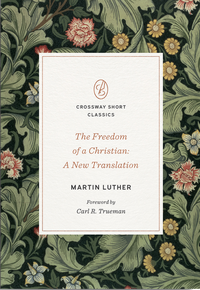
The Freedom of a Christian by Martin Luther, Translated by Robert Kolb: A Pastoral Gem from the Reformer

The Freedom of a ChristianThe Freedom of a Christian: A New Translation

by Martin Luther, Translated by Robert Kolb Carl R. Trueman (Foreward)

DETAILS:
Series: Crossway Short Classics Series
Publisher: Crossway
Publication Date: February 21, 2023
Format: Paperback
Length: 86 pg.
Read Date: February 26, 2023


Some Thoughts on the Series as a Whole

The point of this series is to take classic short works—sermons, tracts, articles—package them attractively, edit a bit (modernize language, eliminate footnotes, tweak grammar, etc.), and make them widely available. Each is given a short introduction to help the reader get the context and a bit of information about the author.

They published seven books in this series last year, and I discussed them here. Two have come out this year (so far), but I’m hoping for more.

What’s The Freedom of a Christian About?

A Christian is a free lord of everything and subject to no one.

A Christian is a willing servant of everything and subject to everyone.

This is Luther (early in the Reformation) laying out his vision for good works for the believer–how they are to be performed, why they are to be performed, and their place in the life of the believer. I’m sure there’s more to say, but that’s basically it.

That quotation gives his two theses–the rest of the book is his working out the thinking behind them. It’s penetrating, it’s convicting, and it’s inspiring to watch him work. Whoops, I seem to have stumbled into the next section.

So, what did I think about The Freedom of a Christian?

From all of this comes the conclusion that a Christian lives not in himself but in Christ and in his neighbor, in Christ through faith, in the neighbor through love. Through faith he rises above himself in God, from God he descends under himself through love, and remains always in God and in divine love. It is as Christ said in John 1[:51]: “You will see heaven standing open and the angels ascending and descending over the Son of Man.” Behold, that is the proper, spiritual Christian freedom, which liberates the heart from all sins, laws, and commands. This freedom exceeds all other freedoms, as high as heaven is over the earth. May God grant us that we truly understand that and retain it.

I wasn’t sure about reading this–it’s one of those works I’ve read so much about. I’ve seen it cited, heard descriptions of it in lectures, and read about it, but I haven’t gotten around to reading it. A lot of the times I read something that I know about like this, it doesn’t work out (I’ve never been able to get past page 40 of Postman’s Amusing Ourselves to Death, for example). But this is exactly what it should’ve been.

Martin Luther being pastoral is just great. Luther coming alongside those believers so often neglected in the Church and saying, here’s what to do–free of burden, free of guilt, free to live and love as they ought, as they’ve been called to.

This little read is a gem. I’m glad I took the chance on it and so glad that Crossway’s series brought it to us.

4 Stars

This post contains an affiliate link. If you purchase from it, I will get a small commission at no additional cost to you. As always, the opinions expressed are my own.

Good Dog, Bad Cop by David Rosenfelt: Corey Douglas Starts to Come Into His Own as a PI

Good Dog, Bad CopGood Dog, Bad Cop

by David Rosenfelt

DETAILS:
Series: The K Team, #4
Publisher: Minotaur Books
Publication Date: March 14, 2023
Format: eARC
Length: 288 pg.
Read Date: February 28-March 2, 2023
9781250828965

What’s Good Dog, Bad Cop About?

Pete Stanton, when he’s not building up a tab for Andy Carpenter at their favorite sports bar, is in charge of the Homicide Division of the Paterson PD. He doesn’t have the budget for more police detectives, but he had a healthy budget for consultants (figure that one out if you can). So he’s hired the K-Team to look into some cold cases for him.

The first one they pick is a doozy. A few years ago, a retired detective and mentor to Corey Douglas was found shot on his boat, a woman’s body was also found there. Some suspicions about a murder-suicide were floated, but nothing stuck. Corey wants to look into it, and Pete approves it with one caveat—they have to investigate the murder of that woman’s husband. He, too, was a Paterson police officer who was murdered. Other than his wife, there’s no obvious connection between the cases, and they weren’t investigated that way.

Corey and Laurie knew going in that Pete would assign them both if they requested one—and honestly, they wanted it that way. All three were aware of the game they were playing, and they all did their part. Now, hopefully, the K-Team and help the PPD close these cases and get some justice for the victims.

Simon

This is really Corey’s book—Laurie’s in it a decent amount, but she doesn’t seem to play as vital a role as usual. Marcus isn’t around much—but is when it counts. Where it comes up short is, as is often the case, Simon’s involvement.

We need to see more of him—Corey even jokes about it at one point, saying Simon’s going to be jealous about something he’s up to without him. That’s all well and good–but it’s not enough.

This is a series about detectives who name their team after a dog. Corey’s a former dog handler. The dog needs to be around more. Do we get some good Simon action? Yes. Are the lines about him and the action involving him good? Absolutely (equating him to Marcus is a great idea). But c’mon, Rosenfelt—give us more Simon.

Poor Sam

Okay, it’s been evident for quite some time in the Andy Carpenter books that while Sam is a good accountant, he enjoys his side gig as a computer researcher for Andy (who isn’t impeded by things like ethics or laws), and he’s more than happy to help out with the K-Team.

But these guys are starting to rely on him too much—sure, they do the legwork. They put a lot of the clues together—but Sam got most of those clues for them. And the number of times that Corey called with new tasks for him was borderline outrageous. They’re working this guy to the bone.

It occurs to me that I said something very similar about the computer tech in the DC Maggie Jamieson series. Is there maybe a union for overworked tech geniuses in Mysteries/Procedurals? Maybe Tilly Bradshaw can organize something.

Corey as a PI

Corey is really coming into his own as a PI (at least as far as fictional PIs go). In the first book or two, he tried to do things the right way—he was very aware that he was no longer a cop and had to act in a certain manner because of it. But he still acted like a police officer, with those kinds of instincts.

Laurie had spent enough time as a PI, was more comfortable in the role, and accepted a greater degree of looseness when it came to protocols. I doubt Marcus ever cared about them in the first place. But Corey was pretty uptight and had to be cajoled into doing certain things.

He seems over that now—he’s willing to color outside the lines, ignore certain rules/laws, and so on. It’s about getting the results and taking care of details and technicalities later.*

* I want to stress that I’m okay with this because we’re talking fictional detectives. The casual attitude toward privacy, phone records, financial transactions, and breaking and entering in a real person would be intolerable—I don’t care what their profession is.

It’s great to see him grow and develop. He’s not the same character that he was when we met him in the Andy Carpenter books–or when this series started. I’m sure that growth with slow and/or stop soon—but for now, I’m liking the journey.

The M Word

As much as he’s growing in his new profession, Corey’s got a long way to go on the personal front. Sure, he’s made great strides since meeting and starting to date Dani. He’s in a long-term committed relationship and isn’t thinking of running for the hills or making some lame excuse to break up.

But he can’t even bring himself to say—or think (including in his narration)—the word “marriage.” He will call it “M” throughout the book—and he’s thinking about it pretty frequently in this book. Sure, it’s immature—he realizes it. But that’s not enough. This is also one of those things that the reader has to suspend disbelief and just roll with. If you do, it’s a fun running joke (it’s easy to do, because if anyone can make a somewhat emotionally stunted man entertaining, it’s the creator of Andy Carpenter).

So, what did I think about Good Dog, Bad Cop?

I know this series (like the Carpenter books) aren’t technically cozies—Marcus by himself keeps them from being considered that way. But I don’t know if there is a pair of series (or one) that I feel so comfortable in. Within a paragraph or two of the protagonist showing up, I’m enjoying the book and feel at home.

Sure, there are better entries and lesser entries—characters moves I like more than others, and so on. But I know as soon as I start one of these books that I’m going to have a good time. That’s what happened here.

I’m enjoying Corey’s transformation into a more typical PI—there are a couple of moments where he felt like the 1990s-era Spenser (just with a dog that wouldn’t run from gunfire). I’m not going to complain about that—ever. I enjoy the dynamics between the team, between the team and the police/other law enforcement entities, between the team and Andy, and so on. I simply enjoyed myself here.

The mysteries on top of that were good, too. I admit that I got suckered into a red herring or two, and things that I was sure of along the way were wrong (I was on the right path, and was only one connection away from being in step with Corey).*

* I’m sure I probably sound defensive there, but that’s only because I am.

I don’t know what else to say—this is a good installment in a reliable series. Fans of Carpenter, the K-Team, or lighter mysteries will gobble this one up. Satisfaction assured.

Disclaimer: I received this eARC from St. Martin’s Press via NetGalley in exchange for this post—thanks to both for this.

4 Stars

This post contains an affiliate link. If you purchase from it, I will get a small commission at no additional cost to you. As always, the opinions expressed are my own.

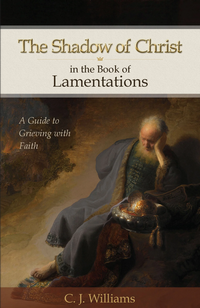
The Shadow of Christ in the Book of Lamentations by C.J. Williams: Finding the Hope of the Gospel in the Laments

The Shadow of Christ in the Book of LamentationsThe Shadow of Christ in the Book of Lamentations:
A Guide to Grieving with Faith

by C.J. Williams

DETAILS:
Publisher: Crown & Covenant Publications
Publication Date: November 25, 2022
Format: Paperback
Length: 172 pg.
Read Date: February 5-12, 2023

The people had been warned about this day of judgement for centuries, but as God pleaded with them through the prophets, they became more stubborn in their sin. Now the day had come. If there was ever an “I told you so” moment, this was it. But the speaker does not stand aloof; he gives a voice to the sorrow and suffering of the people. He wept with them and for them with sympathy that arose from the depth of his soul. Although the people had brought this terrible day upon themselves, they were met with compassion and “a spirit of gentleness” with which we are to minister to those who are overtaken in any trespass (Gal. 6:1).

What’s The Shadow of Christ in the Book of Lamentations About?

Based on a series of sermons, Williams walks the reader through the book of Lamentations—in a careful manner. He doesn’t avoid technical points, nor does he dwell on them, moving the book in an esoteric direction. At the same time, he doesn’t keep it so simple that there’s not a lot to learn, to think about, or to meditate on.

As the back of the book says,

The book of Lamentations counsels us on how to:

  • respond to hardships with faith,
  • grieve with hope,
  • and find the renewal of grace during the trials of life.

and Williams is careful to draw out each of these points more than once.

But that’s not the focus of his book—and, Williams would argue, it’s not the focus of Lamentations. The focus is on how Christ is displayed and revealed through this short Old Testament book. This comes through loud and clear and proves comforting and inspiring.

Christ-Centered Perspective

When seen in this light, a book that technically has no direct speech from God comes alive with the voice of the Son whom he would send.

Starting in the introduction and carrying on through the end, Williams makes it clear that this is going to be a Christ-centered book because the role of this book is to reveal Christ to his people. There is a speaker throughout the book, referring to himself as “I.” Williams argues that this is the voice of Christ—he is the lamenting one alongside the other voices in the book.

I’m not going to try to echo his arguments—I don’t have that kind of space. But when he started to enfold it, I was captivated—and as he returned to it throughout the book, I kept being captivated and wanted to spend more time examining these points.

So, what did I think about The Shadow of Christ in the Book of Lamentations?

When believers experience hardship or the chastening of God, asking this blunt question awakens us to the truth: Has God utterly rejected us? To ask the question is to answer it. You may not know how any hardship will end, but as a child of God, you know how it will not end. Nothing can Separate us from the love of God that is in Christ Jesus our Lord (Rom. 8:39).

The conclusion of Lamentations shows us that there js always a path forward when we walk with faith.

Of all the prophetic books, Lamentations is the one that has always resonated with me the most—but I always knew I was missing something about it. Starting in Chapter 2 (where he begins his argument for the Voice of Christ in this book), so many lightbulbs turned on—I know Christ was revealed in this book (as he is everywhere), but I didn’t understand how thoroughly the book did that.

I’m not for one second suggesting that this is an exhaustive treatment of the book, nor that Williams is the final answer when it comes to this idea—but it’s a fantastic place to start.

The rest of the book was just as good—I walked away from every chapter with a better understanding of or refreshed appreciation for the text.

If you’re looking for a trustworthy guide to this dark portion of Scripture (that is also full of light and hope), you’d do well to look to C.J. Williams.


4 Stars

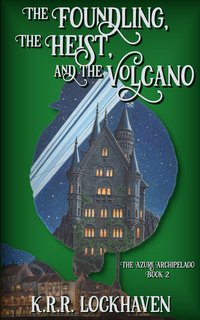
The Foundling, the Heist, and the Volcano by K.R.R. Lockhaven: Exactly What the Title Says

I didn’t think I had much to say about this book until I was about halfway finished with the post and realized I was nowhere near done with it. I’m not certain it’s all that coherent now, but it’s done, or as close to done as I can get without another two-three days to tweak it and wring all the stream-of-consciousness out of it.


The Foundling, the Heist, and the VolcanoThe Foundling, the Heist, and the Volcano

by K.R.R. Lockhaven

DETAILS:
Series: The Azure Archipelago, #2
Publisher: Shadow Spark Publishing
Publication Date: January 20, 2023
Format: e-Book
Length: 313 pg.
Read Date: February 13-15, 2023
Support Independent Bookstores - Visit IndieBound.org

What’s The Foundling, the Heist, and the Volcano About?

It’s been a year or so since the events of MD&D* when we rejoin our friends on Adventure Ship as they pay a quick visit to Azure’s father.

*I’m just not going to refer to these books with their logorrheic titles, I’m just using initials. And to be snotty, I’m taking out all the T’s.

The visit is cut short when Azure receives a job offer—getting the Marauders a reliable flow of income is Azure’s top priority and it’s not going well. A raven named Sir Terry brings this lucrative offer to her and they have to jump on it—the fact he gets such an auspicious name, tells you how much we’re going to see Sir Terry for the next couple of books, I think. The Mauraders are on a hunt for buried treasure on behalf of the man who buried it and cannot seem to find it. For those thinking about the title, the treasure is buried near a volcano.

Along the way to the treasure, they get attacked by a pirate which proves to be a test of the new captain, who acquits herself well. They then discover that the treasure has been discovered by someone else very recently—requiring the titular heist. They also find the foundling—a young girl who stumbled into this world from Earth (getting her home also requires the titular heist). The girl isn’t the only one who came to this world from Earth—later on, a gargoyle on the hunt for a certain dragon does, too.

That’s a lot for a novel to tackle in 313 pages—but Azure and the Mauraders are up to it. Probably.

Before I Dive Into the Book

Pre-Chapter One, Lockhaven gives us a recap of the first novel. This is to be commended, and I try to make a point of saying it when any author does this because it needs to become a standard.

He gets bonus points for having a character do it in a very organic way, helping the reader get back into the feel of things in addition to remembering the events.

The Foundling

Oh, boy. I don’t know if I can remember a more adorable kid in fiction than Oriana.* It took me a freakishly small amount of time to fall under her charms—she’s brave, she’s sweet, she’s adaptable, she’s resilient, and she’s incredibly vulnerable.

* Oh, okay. Maggie Dresden. But it’s close.

The reactions of the crew—especially Elijah and Azure—to her are believable and do a great job of enforcing what the reader is already thinking about her.

What strikes me about Oriana is that really, Lockhaven doesn’t spend that much time on her—it’s actually largely the reactions of others to her that endear her to the reader. All the Maurauders take her in, Elijah dotes on her, but it’s Azure thinking about her, attempting the heist to get her home, and (being incredibly vague) going through a lot of introspection because of her. It’s through that that the reader really makes the connection to Oriana—as Azure and the others grow in their affection for her, so does the reader.

The Heist

It seems that people associated with a casino on Mirth Island took both the treasure and a tool that would return Oriana to her home (not recognizing it for what it is). Azure foolishly/full of belief in the goodness of people asks the Casino owner for them back. He takes a quick break from twirling his mustache to refuse her, so she has to come up with a new solution. One more suited for the Marauders.

I’m not sure why either Lockhaven or Azure bothered with that—although it does give us a chance to meet the owner, Mr. Pierce, and look around a bit at the Casino. Pierce—and the people (and the falcon) who work for him are pretty despicable—they have ties to Gov. Pratt, and display the species-ism and sexism we’d associate with the former governor, with a heaping side-order of avarice. Not that the reader wouldn’t have been cheering for the Marauders to succeed in their extra-legal efforts to get the property back, but Lockhaven makes sure that we have no sympathy for him.

The design of the heist itself is pretty clever—and Azure has definitely watched or read her fair share of stage plays and novels about them (or listened to epic songs about them?)—and draws on those to design her plan. Sure, it resembles a Rube Goldberg device, but if it works, it’ll be a thing of beauty. Like a good Rube Goldberg device. If it doesn’t…

The Volcano

Well, yeah, there’s a volcano. There’s not much more to say. It’s been dormant for a while now, but it’s waking up at the point we encounter it—and it gets closer and closer to being very not-dormant as the story progresses.

It honestly doesn’t play as much of a role in the novel as I expected, but it does play an important role—and it does loom over most of the novel.

The Ending

So MD&D wrapped up nicely—it really could’ve been a stand-alone and that would’ve been fine. Readers would definitely want more with these characters, but that’s just because we’re greedy when it comes to things that make us feel good and characters we like. There was nothing in it that demanded a sequel.

That is not at all the case with FH&V. Yes, there’s the greedy reader, feel-good stories, likable characters, etc. But that’s not what I’m talking about. There are at least three things that we need another book to address. There’s one thing that will likely consume most of the action/plot of the next book, there’s something that we need to know more about and that will likely be a running subplot to the main action—and then there’s something we need to see a resolution about in the first twenty pages or so. Two cliffhangers and one thing that we’re staring down at the cliff’s edge from a safe vantage point. And we’re hanging onto a strong, but not that strong, plant with one of those cliffhangers.

So, what did I think about The Foundling, the Heist, and the Volcano?

By skipping ahead a year, we miss out on the early, swoony days of romance between Elijah and Azure—we’re at the committed stage, and they’re trying to figure out how to navigate their relationship. I adore this—sure, those early, swoony days can be fun—but a couple doing the work (our focus is on Azure’s internal work, but we get glimpses of Elijah doing the same) within the commitment to make things go well? That’s what I want to see. Not a relationship falling apart, in danger of it, or blossoming—I see enough of those (and I’m not saying I want those stories to go away)—but it’s people navigating life together that I can’t get enough of. While on that idea, I really should spend a few paragraphs talking about the really healthy and robust marriage between our favorite Orcs, Nargol and Orok, but I’ve blathered on too long. One of the best marriages in fantasy.

Speaking of internal work—we get a lot of that from Azure. MD&D was about her working to patch things up with her father. Here she’s coming to terms with her new position, balancing it with her relationship with Elijah, and what to do with Oriana. Oriana just being around forces Auzre to think about her mother, how she related to her, and how her mother might have been inclined early on toward a Human First philosophy.

These two things aren’t as flashy and gripping as the Heist or anything going on with Zoth-Avarex—but they add meaning and depth to the work. Ultimately, it’s more important to this series and is what is going to make these books stick around in minds of readers.

All the fun stuff of the first book—the goofy characters, the songs (fantasy songs I want to actually read and not skip), the adventures, and the antics—is back. The heist is full of slapstick and tension. Everything clicks here and will satisfy readers of the first volume.

As far as new readers? Eh, I’d start with MD&D first for context—you’d probably be okay jumping in now, but why? I don’t think I’d call this a cozy fantasy—but it’s adjacent (too much violence for cozy if I understand the term correctly, but just a tad).

Labels aside, I’d sum it up by saying that FD&V is a lighthearted fantasy with a lot of heart. But that’s mixing heart metaphors, so I won’t say that. So imagine I said something pithy like that, but without the deficiencies, okay? Then go buy the book.


4 Stars
This post contains an affiliate link. If you purchase from it, I will get a small commission at no additional cost to you. As always, the opinions expressed are my own.

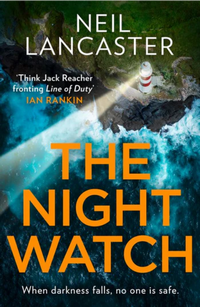
The Night Watch by Neil Lancaster: Lancaster Just Keeps Getting Better and Better

The Night WatchThe Night Watch

by Neil Lancaster

DETAILS:
Series: DS Max Craigie Scottish Crime Thrillers, #3
Publisher: HQ Digital
Publication Date: September 8, 2022
Format: eBook
Length: 461 pg.
Read Date: January 9-10

Being alive is dull, being dead is tedious. The transition is what counts. Watching him die made me feel more alive than I could ever describe to anyone.

What’s The Night Watch About?

After a high-profile trial, a drug dealer walks free. He and his lawyer go separate ways to celebrate and are both soon dead. Theoretically, the lawyer’s death wasn’t suspicious, but the dealer was clearly murdered. The coincidence is too much for Max and his team to believe—and they soon find the evidence to back that up. The two of them killed near the same time? That smells like a vigilante.

These weren’t the vigilante’s first two victims either. A tip from an oddly cooperative reporter puts them on the right track—the victims appear to all be connected with the same investigative team. A vigilante cop is the last thing that Craigie and the rest want to imagine—but now they have to stop the killer before they strike again.

The Killer’s POV

I’m pretty sure I’ve mentioned a time or twelve that I rarely find chapters from the Killer’s POV in a Detective/Procedural novel to be that effective. I figure I’m in the minority on this point—if only because authors keep using them. And after the first one in this book, I made the note, “Did we need this? Did it add anything?” and it took a while before I saw Lancaster’s point with them in this one.

But note “it took a while,” by the end—I saw (at least most of) what Lancaster was doing with these moments from the Killer’s POV. Not only did I understand the point, but I appreciated what he did with them.

So, what did I think about The Night Watch?

I’m tempted to just copy and paste what I said about the last Max Craigie book, The Blood Tide—it all fits, once I swap out the titles. The Blood Tide was a noticeable growth over everything Lancaster had written before, and The Night Watch is even better.

Some procedurals are about figuring out who did what, and some are about figuring out how to prove they did it—or apprehending them before they do something else. This is about all of those. But—like the others in this series—it’s also about the toll paid by those involved in stopping the killing.

There’s some good character development with all the characters—not just our protagonist. Although most of it is happening between novels, and we just get to see the effects—I really like that style, it’s so much easier to buy than growth in the middle of one case that takes place over a limited time.

The Night Watch had some very effective twists, some great reveals, and some genuine surprises. Yeah, I identified the killer right away—but Lancaster fooled me and I abandoned the idea—and I just love that. As always, Lancaster knows how to keep the reader turning pages because you just have to know what happens next. Basically, this is exactly what I’m looking for in a police procedural.

Wholly satisfying and it just made me more eager for the next DS Craigie book.


4 Stars

Friends, Lovers, and the Big Terrible Thing: A Memoir by Matthew Perry: A Memoir of Self-Destruction

Friends, Lovers, and the Big Terrible ThingFriends, Lovers, and the
Big Terrible Thing:
A Memoir

by Matthew Perry

DETAILS:
Publisher: Macmillan Audio
Publication Date: October 31, 2022
Format: Unabridged Audiobook
Length: 8 hrs., 49 min.
Read Date: December 6-7, 2023
Support Independent Bookstores - Visit IndieBound.org

My mind is out to kill me, and I know it. I am constantly filled with a lurking loneliness, a yearning, clinging to the notion that something outside of me will fix me. But I had had all that the outside had to offer!

What’s Friends, Lovers, and the Big Terrible Thing About?

This isn’t full of—but does contain—some good, behind-the-scenes stuff about Friends, Fools Rush In, The Whole Nine Yards, Mr. Sunshine, The Odd Couple, Studio 60 on the Sunset Strip, and other projects. But those don’t make up the bulk of the material. And those are interesting, amusing, and support the overall thesis of the book—he’s an addict who has been blessed with more good things than he knows how to handle.

There’s some juicy (largely nameless, but you can read between the lines) bits about his love life—as the title suggests. But again, there’s not much of that overall—and those, too, serve to support the overall thesis—even more than the professional matters do.

Then there’s the Big Terrible Thing—his addictions themselves, how he got started, how he maintained them, and his several attempts to get sober (of varying successes and lengths of success). He also goes into graphic (perhaps too graphic) detail about the physical toll they’ve taken on him—and the financial, emotional, and mental toll they’ve taken on those close to him.

How Perry Comes Across

When this book first came out (or just before it) there were more than a few headlines about some (I’m going to be charitable and call them) questionable jokes he made about Keanu Reeves and some people casting doubt about some of the particulars of some of his stories. Given how impaired he was during most of those disputed events (and just about every other event he recounts), I’m not surprised he doesn’t remember them correctly, and I don’t think it should be held against him. The Reeves jokes, on the other hand, might have seemed like a good idea at the time—but his editors really should’ve stopped them. I jotted down a note after the second one that “someone at Macmillan must have it out for him to let this make it to print.”

But both of those things pale in comparison to everything that Perry admits to in this book. He doesn’t come across as a good guy at all—and I don’t think he’s trying to. Sure, the fact that he’s (seemingly) coming clean about everything and (seemingly) taking responsibility for the lies, destructive behaviors, and despicable actions might make some people want to think better of him—but I don’t think he really wants that.

He comes across—and I realize this could be entirely calculated—as someone who is being honest about his shortcomings, seeking to explain the devastation his addictions have wrought on himself and many, many of those around him—how he’s somehow managed to have some success in the midst of that. He gives credit to some of those who’ve helped him get to this point in recovery—or kept him alive long enough to get there. In the end, however, Perry’s not a good guy and doesn’t pretend to be one. He’s a mess who will very likely kill himself if he relapses a time or two more.

So, what did I think about Friends, Lovers, and the Big Terrible Thing?

I’ve been a big fan of Perry’s since Friends (I can point to the joke that made me one)—I’ve seen almost everything he’s done (sometimes not because of him, but I appreciated his involvement). But I put this book under the category of “will get around to eventually, maybe.” Until I saw people reacting to how much of the focus of the book is on the Big Terrible Thing. And that piqued my interest.

That sounds ghoulish, I realize, but hearing a well-documented addict talking about their struggles is something that I appreciate. It helps me empathize with those I know fighting that fight, and I hope, helps me understand and appreciate their struggles.

Perry’s clear that he’s been given every opportunity, tool, and help to get sober and to maintain that sobriety. And he’s squandered almost every one of them. And it has yet to work. The amounts he takes on a regular basis when he uses is…it’s a shocking amount—and only someone as wealthy as he is could pull it off.

At the same time, there’s a glimmer of hope. A faint glimmer, sure. But there is one—and if someone whose rock bottom is as low as Perry’s was can maybe make it—there’s hope for others, too. And that’s the big thing I took away—there’s hope. Hope for other addicts, hope for Perry.

I thought this was a riveting and disturbing read—made tolerable by Perry’s off-kilter and somewhat humorous telling of the stories. It’s not like most celebrity memoirs I’ve read (but I don’t think it’s that ground-breaking)—but definitely worth the time.


4 Stars
This post contains an affiliate link. If you purchase from it, I will get a small commission at no additional cost to you. As always, the opinions expressed are my own.


I Have a Confession: The What and Why of The Westminster Confession of Faith by Nathan Eshelman: You Get More than Your Money’s Worth in this Small Book

I Have a ConfessionI Have a Confession:]
The What and Why of the
Westminster Confession of Faith

by Nathan Eshelman

DETAILS:
Series: The Bedrock Series 
Publisher: Grassmarket Press
Publication Date: December 12, 2022
Format: Paperback
Length: 136 pg. 
Read Date: January 15, 2023

What’s I Have a Confession About?

This is an introduction to the Protestant practice of confessions—specifically The Westminster of Confession of Faith.

Eshelman starts out by describing the need for confessions, and what the ecclesiological landscape in the US is like without them. Chapter two lays out “the pillar of confessionalism”—the Scriptures themselves. It’s those Scriptures that give the warrant (chapter 3) for the development and use of confessions. This is what I expected from the book, and when that ended just a little past the halfway point, I was more than a little surprised.

What comes next is truly impressive—Eshelman gives a quick, yet thorough, review of the English Reformation from Henry VIII to the 1640s and the composition of the Westminster Confession of Faith. Then he gives a very brief overview of the contents of the Confession—chapter by chapter.

So, what did I think about I Have a Confession?

Let me start with a minor and really unimportant point—I really like the look and feel of this book. It’s like a field notebook in size, weight, and feel. It works really well for the series.

I’d intended on kicking off this year by rereading R. Scott Clark’s Recovering the Reformed Confession, but a couple of things derailed that (hopefully by the year’s end), but if I couldn’t get into that work, this is a good replacement.

The design of the series is to provide “clear, concise” works on faith and life from a Reformed perspective. Eshelman gives the reader precisely that—clear and concise. Concise, easy to read, and surprisingly thorough for a book of its size.

I was very impressed with this little book—it was everything I expected and more. I’d quibble with a point or two (a couple of his illustrations made me wonder), but only minor things. This is something I’d pass out to people without a second look—and would encourage anyone looking into the idea of Protestant confessions to give it a read.


4 Stars

Page 16 of 88

Powered by WordPress & Theme by Anders Norén