Tag: 4 Stars Page 18 of 88

Low Anthropology by David Zahl: How Realism Should Lead to Compassion and Charity

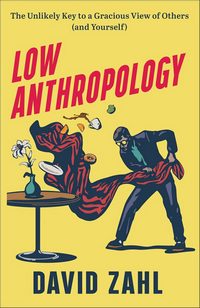
Low AnthropologyLow Anthropology:
The Unlikely Key to a
Gracious View of Others
(and Yourself)

by David Zahl

DETAILS:
Publisher: Brazos Press
Publication Date: September 12, 2022
Format: Hardcover
Length: 203 pg.
Read Date: November 27-December 4, 2022
Support Independent Bookstores - Visit IndieBound.org


This is another one of those books that I have to fight the temptation to dig deep and spend a few thousand words laying out the ideas in detail and responding to them in kind. But that’s not what I do around here—nor is it what I have time to do. But mostly, I wouldn’t do it as well as the author did in the book—so why not just stick with what I do and tell you to buy the book?

What’s Low Anthropology About?

Zahl’s concern is the way we think about human nature—our anthropology—not in some academic sense (or just that), but how, individually, what we believe about human nature impacts the way we live and think.

High anthropologies are based on some idea about basic decency and goodness in humanity and that with the right ideas, the right amount of effort and ambition, we can improve ourselves, and fix ourselves. Low anthropologies start off with the idea that people are broken, sinful, a mess, and that while we’ll do the right thing sometimes, those times are the exception. And yes, with help, we can stumble through life in a way to be of service to others and do better ourselves.

By realizing—and remembering—that everyone is broken and struggling, we can be gracious. We know ourselves and that we are a mess, we deal with bad habits, addictions, imperfections, and sin on a more-than-daily basis. But we forget that’s true of others, too, especially in a social media world where we only see the airbrushed images others put forward.

High anthropologies tend toward self-righteousness, perfectionism, and judgementalism (toward ourselves and others). Low anthropologies can and should free us from that—to compassion, humor, and charity.

At least that’s the basic idea—he fleshes it out and argues for it much more convincingly. Then he applies it to various aspects of life—relationships, politics, and religion.

So, what did I think about Low Anthropology?

This really reminded me of Alan Noble’s You Are Not Your Own: Belonging to God in an Inhuman World and Kelly Kapic’s You’re Only Human: How Your Limits Reflect God’s Design and Why That’s Good News (it’s not that surprising, really, I invoked Kapic’s book when I posted about Noble’s). The three books approach similar topics in very similar terms—just changing the focus a little bit. The chapter on politics reminded me of the relevant chapters in Michael Horton’s Recovering Our Sanity: How the Fear of God Conquers the Fears that Divide Us (and there’s probably some overlap with other chapters, too).

I guess what I’m saying is that there’s a lot in this book to tie to things I read over the course of the year—2022 ended up being along a theme. In essence, humans are limited creatures—and when we remember that (as true of ourselves and others) and recognize the legitimacy of those limitations, as well as who put those limitations on us—it will affect the way we live and think of ourselves. It will free us to obey as we ought, to live as we ought, and treat ourselves and others along the lines we’re supposed to. We can think of it in terms of limitation and creaturely dependence, in terms of being those purchased by Christ, or in terms of realism about human nature. All call us to humility, all put the emphasis on our hope in Christ, and all will help us serve others because we’re in the same situation as them.

Zahl’s treatment of this is a bit briefer—and he applies it to more situations than Noble or Kapic, so it’s inevitably shallower. Not worse, I want to stress, but he can’t get to the same depth as the others.

Zahl’s sense of humor is evident throughout, and his engaging style really carries this work—it’s not just a helpful book, but you want to be helped by it because you’re having such a good time reading it. He brings in good illustrations and insights from psychology and culture alongside his points from Scripture and theology.

This is a practical work—the theory is sound and worked out well, but it’s not theory for theory’s sake—Zaahl’s eye is on doing something the whole time—living better, serving others, and being gracious. I wondered a little bit about particular applications he makes, and if they’re as consistent as I’d want them to be. Thankfully, a low anthropology ensures there’s plenty of room for Zahl and me to be wrong on those points and not get too worked up about it.

I really liked this work and suggest you find some time for it.


4 Stars

This post contains an affiliate link. If you purchase from it, I will get a small commission at no additional cost to you. As always, the opinions expressed are my own.

The World Record Book of Racist Stories (Audiobook) by Amber Ruffin & Lacey Lamar: Records No One Should Want to Hold (but too many vie for)

The World Record Book of Racist StoriesThe World Record Book
of Racist Stories

by Amber Ruffin & Lacey Lamar

DETAILS:
Publisher: Grand Central Publishing
Publication Date: November 22, 2022
Format: Unabridged Audiobook
Length: 4 hrs., 54 min.
Read Date: November 28-29, 2022
Support Independent Bookstores - Visit IndieBound.org

An Issue with Sequels/Follow Ups

As I’m sitting here thinking about what to write, I keep comparing this to last year’s You’ll Never Believe What Happened to Lacey: Crazy Stories about Racism. This is intentional because this is very much a Part II to that book. But it’s different, too. So it makes sense to contrast it so I can give an idea of how it’s different.

At the same time, I run the risk of sounding dull—”You’ll Never Believe did X, The World Record Book did Y,” “The World Record Book is more Z than…,” and so on.

I don’t know how to avoid that—so I guess this is an apology in advance? I’ll try to limit the comparisons and keep this interesting, if only because the book deserves to give a good impression, even if I’m not able to do that.

What’s The World Record Book of Racist Stories About?

Because they got to share a bunch of stories in the first book—primarily about Lacey—the sisters wanted to give the rest of their family, and some friends, the chance to get their stories told. Or, as they put it, “air out [their] dirty racist laundry.”

Ruffin warns:

FYI: You’ll be able to tell the difference between this book and the last book. This one’s gonna be a bit heavier. A touch more serious. The reason for that is with the first book, Lacey and | got to giggle through silly racism stories, and it felt great. So, if the family wants to share their stories too, however they want to share, we welcome that. We want them to feel great and heard and blah, blah, bloo. There’s plenty of silliness, it’s just that the rest of the family is less likely to remember the funnier racist stories. They have not been keeping journals. But those terrible, scary racist stories? Maaaan, they remember those like a mug. So, to emotionally prepare you, I’d call this book fifty-fifty silly-scary racist stories. Okay? So, don’t come to me talking about “It wasn’t like the first book” ‘cause you’ve been warned.

To balance out these stories, the interplay between the sisters seems a bit sillier than before (in the print version, each has their own typeface so you can see it)—up to, and including, them singing their own little ditties in the audio. The authors also include some pictures for illustration of the ridiculousness of the story or for a little burst of joy or cuteness to alleviate the heaviness of the stories they’re telling.

I should add there are a couple of anecdotes that really silly or scary, just heartbreaking.*

* Granted, there’s a sense in which all of these are heartbreaking, humanity’s inhumanity always is. So I guess those stories are extra-heartbreaking. Heartbreaking cubed.

The Organization of the Book

So, the theme of this book is there in the title—it’s a Guinness World Records collection, but no one wants to get their stories told here (names have been changed to protect those involved—according to the authors, at Lamar’s insistence over Ruffin’s intentions). The anecdotes are arranged under broad topics (or for the person they’re about), and they are each given a title like “Most Confusing Racist Phrase,” “Worst Car Service,” “Most Racist Pilot,” “Worst Celebrity Look-Alike,” “Worst Teacher,” and so on. Several of the category names are clearly exercises in creativity by the authors, like “Most Regular Degular, Day-to-Day Racism” or “Most Racist Comment I Was Not Part Of”

These Worsts and Bests, it must be remembered, apply to their family and circle of friends. Most minorities in this country can probably come up with their own “Worst Nursing Home Experience,” “Second Worst Bar Patron,” or “Worst Interview.”

A Variety of Storytellers

In the previous book, the stories were predominately told about things that happened to Ruffin or Lamar, as I’ve said. This time out, they bring in stories about their mother, father, all their siblings, a sibling-in-law, a former Nebraska state senator, and even a couple of white people (for contrast).

In fact, the book opens with an anecdote from a white, male friend about a traffic stop. It’s really atypical encounter, and one that this white, male would enjoy having. But, Ruffin says that it’s the story that shocked her the most. I don’t blame her if what follows is what she’s used to. Roughly midway through the book, we get another five quick anecdotes from a friend that Ruffin trades “opposite stories” with:

Stories where I’m suffering some racist nonsense and she’s getting away with everything but murder. It’s so shocking to me. I can’t believe this is happening to my little bud. Being white is hilarious. So, as you read these next five stories, try to think about how out of place they are in this book. Try to imagine a Black man getting away with any of this. It’s fun because you can’t!

With at least four of these, I agree—I can’t imagine that. Probably not the other, either.

They also include some anecdotes from state senator Tanya Cook, a nice (?) reminder that it’s common to find this kind of behavior anywhere.

So, what did I think about The World Record Book of Racist Stories?

Lamar writes in her closing remarks:

I’m glad our family and people from the community got the chance to share these stories with you. No matter how you feel about them, they have happened and are happening out there to not just a small group of people in Omaha, Nebraska, but to absolutely anyone at anytime, anywhere. I personally feel that by sharing these stories we are shining a light on racism, ignorance, and just some all-around hilarious shit.

That’s a pretty good way to summarize this book. And it’s a light that needs to be shone in a way that the masses will take it in. In our culture, for better or worse, the best way to do that is to make it funny and chopped up into digestible bits*. Which is what Ruffin and Lamar did here.

* See Planet Funny by Ken Jennings for more on that.

I didn’t enjoy this as much as the first—no offense to the authors and contributors, but it wasn’t as fun. If only the Introduction had warned me… But the authors worked hard to make it enjoyable—it’s just hard to do with the subject matter. As it grawlix-ing should be. The fact that they succeeded at all is remarkable.

Pretty much, you can read what I said about You’ll Never Believe and apply it here, just with a little less laughter. But I did laugh audibly at a few points, so there’s that. I also shook my head enough in unbelief/despair/denial that I’m surprised I didn’t pull something.

It may not be my favorite non-fiction read of the year (but it’s close), but it might be the most important one. Pick this (and the predecessor) up, folks.


4 Stars

This post contains an affiliate link. If you purchase from it, I will get a small commission at no additional cost to you. As always, the opinions expressed are my own.

Little Ghost by Chris McDonald: Women and Money—The Deadliest Combo

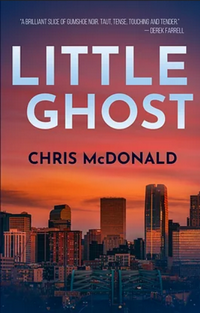
Little GhostLittle Ghost

by Chris McDonald

DETAILS:
Publisher: Red Dog Press
Publication Date: November 25, 2022
Format: eBook
Length: 151 pages.
Read Date: November 28-29, 2022

I’d enjoyed snooping around people’s lives. Poking at their secrets and unearthing dirty little details that earned me my payday. It wasn’t honest work, but it was fun.

Mostly.

The beatings weren’t, and I’d taken a few in my time.

Asked the wrong question to the wrong person. Asked the right question to the wrong person. Wisecracked at an inappropriate time. My crooked nose and the waxy scar on my cheek would be the lasting reminders.

What’s Little Ghost About?

Irving Ash is a Denver PI on rough times. His divorce is about final, this most recent romantic relationship (note the distinction) is over, and thanks to some recent headlines, he’s having a hard time getting work. He’s about to be evicted from his office, and it probably won’t be long before he’s out of a home, too. On the plus side, his cat, Cleo, seems to like him.

A friend connects him with a job. Well, not really a friend, an acquaintance. Okay, technically the bartender of his regular stop—Ash calls him an “enabler.” This may be out of the goodness of his heart, but it’s more likely that he’d like Ash to be able to pay his growing tab. The job is doing security work for Roxie Pictures—a porn studio (the owner, Gordon Rock, describes their work as “art…Beautifully shot videos, made by passionate people for passionate people,”*). Cleo apparently has some qualms about the job, but the pay is good enough he can’t pass on it.

* That sentence alone gives you everything you need to know about the character. You can feel the sleeze dripping off of him. The next sentence of his description will make you want to wash your hands before picking the book up again.

It’s not too long before Ash finds the studio’s biggest star, Brandi Dyvine, in a confrontation with someone. Then she goes missing, potentially kidnapped. Rock’s in love with her and is willing to fork over ransom money—Ash talks him into trying to buy some time instead. Ash figures finding and rescuing her is far more likely to result in Dyvine and Rock not being killed at the end of the transaction.

Ash starts combing through the details of Brandi’s life—and well, things get messy from there. In the world that Ash finds himself in, women and money are the deadliest combination—and he learns that the hard way.

Brother John

Like any good PI who finds themselves near the morally gray areas, Ash has a friend who is far more comfortable in the gray—maybe even the black. The Hawk/Joe Pike/Bubba Rogowski/Mel Frost role.

For Irving Ash, that friend is a man named Brother John. Brother John is the kind of friend you want when things get hard—he’s resourceful, dedicated, and willing to go the extra mile. I’m unwilling to say more about him because Ash should be the one to introduce him to you (I’d just ruin it). But I couldn’t not say something about him.

So let me say this—I’ll be the first backer for a Kickstarter for a novella or two about Brother John before Ash moved to town (or be the first to pre-order). I don’t see McDonald doing that, but if he did…

Pesky Britishisms

I really hate to pick at these nits. Truly. But my biggest fear when I heard that McDonald was going to write this was that it was going to sound like someone from the British Isles pretending to be an American. Sadly, that fear was realized.

And I get it—we still owe a debt for Dick Van Dyke’s Bert. I’m not sure how much longer we need to atone for this (but it’s a while)—and there are several other lesser offenses we need to make up for, too.

But, no one in the US uses a biro to make notes on pages of A4, gets aspirin from a chemist, or plugs an address into a car’s sat nav. (there are smaller examples, but let’s stick with some of the more egregious ones). Do I—like many/most readers–know what’s being said there? Sure. But when I come across something like that it jars me, takes me out of the moment. And I really don’t like that when I’m enjoying the moment so much. I was in Ash’s head, I was fully invested, and then McDonald slips and throws ice water on my face. Yes, I’m able to get back into the moment, back into Ash’s voice, etc.—but this whole experience would’ve been so much richer if I didn’t have to get back into it, but could’ve just stayed there.

Now, this all goes away if Irving was someone who grew up in England and moved to the States, eventually to Denver, instead of going to University or something along those lines. Then these slips are character moments, not the jarring errors they become as he’s a guy from the East Coast who moved to Denver.

Is any of this that big of a deal? Not really. Is it unforgivable? Of course not. Did I lose some appreciation for the novel because of it? Yes. It’s something that could’ve been explained away, or reduced with another editing pass or two. When the rest of the novel is so good, the tiny flaws really stand out.

So, what did I think about Little Ghost?

‘So, what’s the plan?’

‘Whoever it is has Brandi, I’m sure of that. So, we hit them, and we hit them hard.’

‘Revenge?’

‘Absolutely.’

‘I love revenge,’ Brother John smirked.

I know I was supposed to think of classic PI types when I read this novel—and I did to an extent. But really what this made me think of more than Chandler or Hammett was Stephen Mack Jones and Walter Mosley’s Down the River Unto the Sea.* Both of those were very much in the classic PI mold, but incredibly contemporary, too. That’s what Irving Ash felt like to me, a 21st-Century PI, and regular readers know what kind of catnip that is to me.

* I also want to mention Michael Koryta. I’m not sure why, every example I can think of from Koryta fails to match up. But I can’t shake the feeling that Little Ghost shares some DNA with something he did or would write.

I saw the bigger elements of the final reveal coming—but not all of them, and the ones I missed were the more important and disturbing ones (if you ask me). So I was able to feel good about myself and be taken unawares at the same time. I really can’t ask for more than that. Along the way, McDonald hit me with at least four moments where I couldn’t believe I read what was on the page, and had to go back to verify. After the second moment, it became clear to me that McDonald wasn’t playing around, no punches were going to be pulled here.

McDonald has crafted a compelling story with a central character that will get you invested and hoping he’ll come out on top–even while he’s doing things that most of the time you’d find abhorrent. The writing is crisp and terse–McDonald gets his money’s worth out of each syllable. Ash is a damaged man, and you can sense it–and you can see when it gets worse, just because the text isn’t verbose, doesn’t mean you’re not going to find a lot of emotion and depth in the scenes. McDonald has given us both.

This says something about his talent. If you gave this to me without an author’s name on it and told me it was someone I’d read before, I don’t know that McDonald would be in my first five guesses. I think that’s true of his DI Erika Piper series, too–I wouldn’t have picked the Stonebridge Mystery author for those. So far, that’s three distinct voices and styles he’s displayed in three subgenres. You’ve got to wonder a little what he’s not capable of at this point.

I strongly encourage PI fans to pick this up–and soon. Maybe if enough of us do it, we can convince him to keep this from being a stand-alone.


4 Stars

Snowstorm in August by Marshall Karp: Retired Cops Face Off Against a Cartel to Save NYC

Snowstorm in AugustSnowstorm in August

by Marshall Karp

DETAILS:
Publisher: Blackstone Publishing
Publication Date: June 6, 2022
Format: Hardcover
Length: 279 pg.
Read Date: September 12-13, 2022
Support Independent Bookstores - Visit IndieBound.org

What’s Snowstorm in August About?

Joaquín Alboroto is the head of Mexico’s largest drug cartel—and is a character straight out of Winslow’s Cartel Trilogy (and, likely, reality). He’s powerful, ruthless, calculating, and vengeful—and right now, he’s angry. His anger is directed at New York City and the family of one judge from NYC, and he goes after both.

The first step in this process is blanketing Central Park in cocaine—it looks like a snowstorm swept over the park. Horses, dogs, squirrels, birds, children, and adults out for a fun day in August are killed or hospitalized—countless lives are irrevocably damaged at once. And Alboroto promises more to come.

The NYPD is totally unprepared for this—the current commissioner isn’t the right man for this moment, he’s better known for working the political and bureaucratic sides of things. Preventing attacks of this type isn’t in his wheelhouse.

A former counter-terrorism officer in the NYPD is recruited to head up a group of retired officers to confront Alboroto and similar threats. This is a vigilante group with private funding, but in their hearts, they’re still NYPD and want to serve the city. Using old contacts (on both sides of the law), liaising with the Mexican government, and armed with the best hackers and technology that money can buy—plus their own experience and grit—this small group just may be able to stop Alboroto before his next strike.

The Baltic Avenue Group

This right here might be my favorite idea in this novel. So you’ve got a non-governmental anti-terrorist strike force—you need to fund them if they’re going to be effective at all. So, sure, you could have one of them be a super-genius inventor/entrepreneur (like Tony Stark), an orphaned heir of a super-rich man (Bruce Wayne), a group of thieves and con artists turned Robin Hood (Leverage), or a Powerball winner. Something.

Karp gives us a group of billionaires who know the economic impact that a terrorist attack can bring on the city—and on themselves. They don’t want to go through that again, so they’re willing to spend a lot of money to keep them from losing much more. They’re benevolent and out for themselves at the same time. That’s as close to a perfect description of heroes for our time as you’re going to find anywhere.

So, what did I think about Snowstorm in August?

This book made me flashback to a book that I hadn’t thought of in years—I posted about it on October 25, 2013, so probably the last time I gave it any thought was the 26th (though probably the afternoon of the 25th)—Dick Wolf’s The Intercept. There’s a very similar elite group of cops ready to take down terrorist threats with all the fancy tech and everything. That group, however, was part of the NYPD and should’ve been controlled by things like the Constitution, the courts, and the city’s budget. This book, however, features retired cops acting as vigilantes with a budget that probably shames even all of The Big Apple’s. Also, the writing is crisper, the characters aren’t cardboard, and it’s more entertaining. My intent wasn’t to find another excuse to disparage The Intercept, but because the books were similar in so many ways, I had to figure out why I really liked one and had little good to say about the other.

Sometime after 9/11 I remember reading about (and I think I heard one or more of the participants discuss this), some governmental agency brought together some thriller writers, movie makers, etc. to think up some possible, but unlikely attacks that could be launched on the U.S. so contingency plans could be thought up as well as ways to deter this. Does anyone else remember this? Anyway, a lot of what Albortoro gets up to in this book feels like the product of those meetings—possible, but unlikely. Still, if you picked up your phone tomorrow morning and whatever social media feed gives you your news described the attack on Central Park (or any of the other things in this book), you’d believe it. I’m not so sure how willing I am to believe that a handful of ex-cops and federal agents could stop it. But I’d like to think it could happen. (I clearly have more confidence in the ingenuity of criminals and killers than I do in people who’d want to stop them).

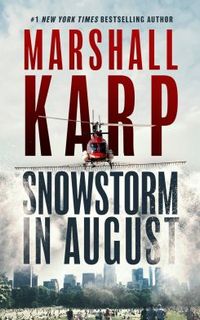
There’s an incredibly cinematic feel to this—if your brain doesn’t project a lot of these scenes onto a mental movie screen in your head, something’s wrong. That cover shot alone deserves a Wagner score (although that seems overused, maybe substitute Harold Faltermeyer*). That cinematic feel lets Karp get away with a few things that I’m not sure that other thriller writers could get away with (and some thriller writers use all the time)

* Composer of Top Gun‘s score.

Combine all of those two paragraphs, and what Karp has given us is a blockbuster novel with a very realistic grounding, but it doesn’t necessarily play out that way. But Karp hooks you quickly and keeps on hooking you—he’s not content to get you invested just once, he wants it all. There’s a romantic subplot that works well and rounds out Danny’s character, but I wondered a couple of times if it messed up the pacing a bit (and made me wonder about Danny’s priorities at least once). Aside from that, the pacing was spot-on, and the novel kept picking up speed as it goes and you barrel into the conclusion—I don’t know how someone is supposed to put this down during the last 50 pages (it’s slightly easier in the 50 before that—slightly).

Satisfying action, well-executed plot twists and turns, characters you want to see again, and very believable villains. Snowstorm in August is the action-adventure novel you need to read.

Disclaimer: I received this ARC from the author in exchange for this post and my honest review.

This post contains an affiliate link. If you purchase from it, I will get a small commission at no additional cost to you. As always, the opinions expressed are my own.

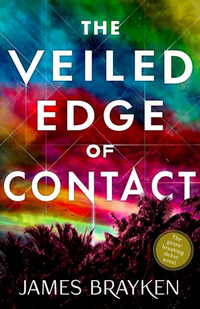
The Veiled Edge of Contact by James Brayken: Apotheosis Through Union

I’ve got a a Q&A with the author coming up in an hour or so. I haven’t read his A’s yet (so I didn’t have to rethink anything I wrote below), but I’m betting they’re worth your time. Come back and give them a read, will you?


The Veiled Edge of ContactThe Veiled Edge of Contact

by James Brayken

DETAILS:
Publisher: Oh Gentle Night
Publication Date: May 10, 2022
Format: eBook
Length: 384 pg.
Read Date: October 26 - November 1, 2022

…right now, I’m not discounting anything— time travel included— just because it sounds unbelievable. Unbelievable is the new norm.

What to Say? What to Say? What to Say?

This is one of those books that I have a lot of things that I want to talk about. There is so much worthy of discussion. But if I talked about it all—in the ways that I’m tempted to—you’d finish reading this post and say, “Yeah, H.C., this book sounds like it’s full of interesting ideas, but now I don’t need to read the book.” Then I’d have to admit you were right, and I’d feel bad and the tens of you that read this wouldn’t buy Brayken’s book. So then I’d feel guilty, because he seems like a real nice guy, so then I’d buy multiple copies of it to make up for the copies you don’t buy. Then Mrs. Irresponsible Reader would see what I spent and a fi—ahem—an intense discussion would ensue. Annnd….

Well, let’s just say that’s just too much drama. So I’m going to have choose what I discuss carefully.

What’s The Veiled Edge of Contact About?

Okon is no one’s idea of an SF hero—including his own. A former chef of some notoriety, he hasn’t worked in some time, instead, he’s lived a life of comfort. His wife, Efawi, is an engineer-entrepreneur who is very politically active. Okon isn’t sure that he shares her politics—he definitely doesn’t want her as active as she is (particularly as it puts her under the unfriendly gaze of the government). A few years back, she’d become hugely successful and he’d quit working, and mostly sat around all day playing video games and watching movies (or a futuristic equivalent).

It’s been seventy or so years since a large war of some sort in Africa (and, possibly, other places, it’s not made specific). They live in a country near the largest jungle—but the specifics (again) aren’t given. The couple has little in common beyond a shared history and commitment to each other. As all marriages do, they’ve had their ups and downs—they’re currently in the middle of a prolonged down—but Okon is sure (fairly sure), they’ll turn it around.

But before they can, Efawi’s political activity puts her on the outs with the government, she’s accused of some serious crimes and goes missing. Several days later, Okon finds messages for him to come after her and meet her—she’s on the verge of a discovery that will change everything. Assuming she can finish it without being arrested. She wants her husband with her and has left him directions and equipment—including an armored exosuit—to follow.

Weeks after she’d gone missing, Okon follows her into the jungle. Something about the jungle (and he assumes what she came looking for) interferes with almost all of his tech—particularly the communication portions. So he’s relying on data drops Efawi left behind giving directions to the next one, and the next, and both are starting to despair about how long it’s taking him to catch up.

Okon then stumbles upon a group that call themselves Wuchumbu. They’re possibly the last people group on Earth unfamiliar with and untainted by technology, “modern” culture, etc. They want nothing to do with anyone not in their group and set to attacking him. Stuff happens, and he ends up living with the Wuchumbu and looking for his wife. He’s certain that there’s something about the Wuchumbu, their practices, their location…something that is tied to the tech issues. And therefore, this is where he’ll be able to find Efawi.

And then a whollllle bunch of other stuff ensues.

The Tone of the Novel

This doesn’t read like an SF novel (not that there’s a monolithic tone/voice for SF, but not many come across this way). It might feel like a Mike Chen SF novel, if it was set in an African jungle. But that’s as close as you’re going to find.*

* If I wasn’t late getting this up in the first place, I might spend 3-4 paragraphs on this point. Part of me wants to restart the whole post and say “Pretend Mike Chen wrote a book that’s set…” The more I think about this comparison, the more apt it feels.

The whole novel is rather dark and dystopic but is written in such a way that you can easily forget that. Okon is a likable fellow and his voice (it’s a first-person narration), is pretty much what you’d expect from an adult male who spends his life watching movies and playing video games while his wife revolutionizes science and tries to shake up her country’s government. That same, laid-back attitude crosses time and culture, apparently.

When you wipe everything away, this is the story about a man looking for his wife, increasingly concerned that he can’t find her—but who habitually (and through force of will) is optimistic in the face of increasing challenges. Making this ultimately a sweet—and potentially sad—story. Largely because of Okon’s outlook, his voice, and his devotion to Efawi. Those challenges—mostly those things we just wiped away—take the form of the Wuchumbu, the government Efawi is fleeing from, Okon’s tech issues, and a mess of other obstacles.

A Question of Genre

The descriptions for this book describe it as “genre breaking.” I’m not sure about that. I don’t know that it’s wrong, but I fear that it might mislead some readers (I went into it with skewed assumptions, for example). I’ve got a Q&A with Brayken coming along later today, and he might convince me otherwise—I haven’t read his responses yet, so I don’t know.

What I would say is that The Veiled Edge of Contact is a great example of the wideness of Science Fiction, the range of ideas and settings that it’s capable of, the diversity of characters, and more. I’m not saying that Brayken has done things I haven’t seen in SF before, but the way he combined most of the aspects of this book is pretty rare. (I’d say it’s unique, but as soon as I do that, someone’s going to point out something similar out there, so let’s stick with rare).

The fact that he mixes so many ideas together successfully, with wit and polish not usual for a first novel makes this stand out.

So, what did I think about The Veiled Edge of Contact?

I want to go home—to the one made from bricks. I crave my room. I crave walls and ceilings. I’ve never felt so strongly about carpet.

I felt a little lost at the beginning—there’s a pretty big disconnect between the Prologue and Chapter 1. But I pushed on through and Brayken quickly won me over and I forgot about everything that I got hung up on in the Prologue and the disconnect I felt. Literally forgot—so much so that when that material became relevant again, I had to work to remember it. Which is a compliment, Brayken got me so sucked into to Okon and the Wuchumbu and everything that was immediately going on that it consumed all my attention.

I wanted to see what was around the corner, what was going to befall our (mostly) hapless protagonist next. But I also just wanted to live in the moment and spend more time with him and that moment to go on—because whatever befell him next was going to push the narrative to an end and I’d have to say goodbye. We’ve all been there before with novels, you know that sensation. I got a major dose of it from this book.

I don’t know what more to say about the book than that. Brayken plays with SF concepts, tropes, and mainstays, and does things with them that are familiar and are strikingly unfamiliar. Mostly at the same time. But on the whole, while he’s doing that you don’t care—you just want to see what’s coming next. All the thoughts about what he’s doing and why and how it changes the story come after you’re done—or when you step away for a while for work or whatever.

I would love to sit down and pick his brain some time over a meal and dig down into his thinking and some of the choices he made. I’m not crazy about all of them—but they were absolutely the right choices, and I’m glad he made them (maybe especially the ones I’m not crazy about). Brayken immersed me in another world and I really didn’t want to leave. There’s not a whole lot more I can say that’s more complimentary than that.

Now, I’ve behaved and haven’t said too much. It’s your turn to keep the other end of the bargain. Go and do the right thing and buy this book, will you?


4 Stars

Disclaimer: I received a copy of this book from the author in exchange for this post and my honest opinion.

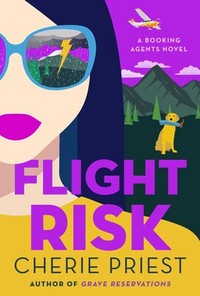
PUB DAY REPOST: Flight Risk by Cherie Priest: Two Missing Persons Bring the Team Back Together for this Winning Sequel

Flight RiskFlight Risk

by Cherie Priest

DETAILS:
Series: Booking Agents Series, #2
Publisher: Atria Books 
Publication Date: November 15, 2022
Format: eARC
Length: 320 pg.
Read Date: October 20-21, 2022
Support Independent Bookstores - Visit IndieBound.org

What’s Flight Risk About?

Grady and his daughter lose their dog while visiting Mt. Rainer—but never fear, they find him—much to their relief. They’re not at all relieved by the fact that when he’s found, he’s carrying a human leg in his mouth. While it’s a different jurisdiction, it’s soon determined that the (probably dead) man missing a leg is/was a Seattle resident, so Grady handles that end of the investigation.

At the same time, Leda is approached by a man to find his sister. This is a major step up for Leda’s psychic consulting—since the news coverage stemming from the events in Grave Reservations, she’s been hired to find a few missing things (mostly successfully), but a person that’s been gone for a month is a significant case. She takes it on with some hesitation, and several caveats toward the brother that she might not find anything, and he might not like what she is able to find.

Naturally, there’s a connection between both missing persons, and Grady and Leda team up again.

Leda’s having a hard time making headway, at first, with her case, and calls in the woman who’d offered to mentor her for some help. Almost immediately the medium demonstrates that this was a wise choice and that she’s the real deal. As she works with Leda, providing a nudge or two, she hints that Leda may discover other abilities as she grows as a psychic—which will be interesting to watch, for sure.

Det. Grady Merritt

Flight Risk features a lot more of Grady on his own (still plenty of Grady with Leda and Grady with everyone else, don’t worry) doing police work. It’s good to see him plugging away at things and interacting with his partner (who I hope we get more time with in the future—Sam and Niki would be a fun team-up).

He doesn’t strike me as a super-cop like Bosch or Ballard—but he’s the kind you hope our police departments are full of—decent guys who are dedicated to their jobs, driven by curiosity and a sense of duty. He just happens to be pretty lucky and he now has a psychic friend who can lend a hand. I enjoy reading about this kind of police detective*, it gives me hope.

* I’m still devouring books about Bosch, Ballard, Washington Poe, and other super-cops, don’t get me wrong.

Niki

Leda’s best friend Niki is, of course, back. In Grave Reservations, Niki essentially pushed Leda to take risks, to persevere in the investigation, and so on. Then, when she accompanied Leda and Grady when they were investigating, she could be relied upon to go a little further than Leda, and would carry the comedic weight in her scenes.

Here in Flight Risk, she has the same roles. But Leda’s more confident now and doesn’t need her friend egging her on quite as much either on-stage or in her office. She is still a little more “out there” when she rides along with Grady and her friend, but I think she’s more restrained there, too.

I might be a little off here, and if I revisit this next year, I’ll wonder what I was thinking here. But right now, Niki seems to be the weak link in this book, not bringing quite enough to the plot or to the comedy. A toned-down Niki is more grounded, more realistic—absolutely. But if she’s not being Lula to Leda’s Stephanie Plum, I’m not sure what purpose she’s serving. I should stress, I don’t think Priest shouldn’t have her around, nor do I want her to be as goofy as Lula (the world doesn’t need another one)—but we just need her to be a little less restrained.

The Law of Interconnected Monkey Business

So, anyone who’s read a mystery novel before will be pretty sure that there’s a tie between Grady’s and Leda’s cases are going to be connected. Obviously, if you read the above section or the description on the back of the book or on the online store of your choice, you’ll know that, too.

That’s not what I want to talk about—it’s the way that Priest combined these two cases and got Leda and Grady to work together again. I honestly expected that this series would be Grady bringing cases to Leda, either on his own or because he’s instructed to, when the SPD comes up against a tough case. But that’s clearly not going to be the case.

There’s going to be flexibility—even possibly some times when Grady comes into things pretty late in the game (I can’t see leaving the police out of a book entirely). The fact that Priest stayed away from the structure of the first book already is an encouraging sign and shows that this isn’t going to be a cookie-cutter kind of series, but that she’s going to bring something new each time.

So, what did I think about Flight Risk?

I have to say this one was a tough one to write about—I almost felt like I could copy and paste what I said about Grave Reservations here. If you liked that novel, you’ll dig this one—having introduced the characters and world, Priest (and the readers) can focus more on the mysteries, and the book is better for it.

The mysteries were well-designed and executed, with the psychic clues/impressions/whatever along the way pointing Grady and Leda in the right direction, but not giving them so much that they don’t have to work out things for themselves (with one notable exception). This is the way to do a Psychic Detective novel. The red herrings and false trails were particularly well-done and I enjoyed seeing our protagonists dealing with them.

We got a better sense of all the supporting characters, as one would expect/hope, and I enjoyed them all. This is really a pleasant little universe that Priest has given us and I hope we get to hang out with these characters for a good while to come.

Flight Risk would be a good introductory novel for this series as well as a pleasant continuation for those who read Grave Reservations—it’s light(ish) fun with a dash of the supernatural to enliven the mystery, the combination of police and amateur detectives working together is a tried and true way to make things entertaining—and Priest uses it well. This novel hit the spot for this reader, and I look forward to another case or two soon. I definitely recommend this one to you.

Disclaimer: I received this eARC from Atria Books via NetGalley in exchange for this post that reflects my honest opinion—thanks to both for this.

This post contains an affiliate link. If you purchase from it, I will get a small commission at no additional cost to you. As always, the opinions expressed are my own.

Terry’s Crew by Terry Crews and Cory Thomas: Brings a Much-Needed Dose of Encouragement and Enthusiasm to the Page

Be sure to check out the rest of the highlights, reviews, and other posts associated with the Tour here.
Terry's Crew Tour Banner

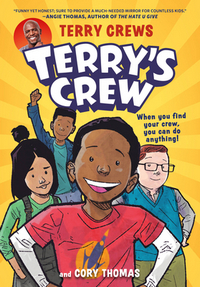
Terry's CrewTerry’s Crew

by Terry Crews, Cory Thomas (Illustrator)

DETAILS:
Publisher: Little, Brown Books for Young Readers
Publication Date: November 8, 2022
Format: eBook
Length: 208 pg.
Read Date: November 4, 2022

What’s Terry’s Crew About?

Our protagonist, Terry, is a bright, energetic (very energetic) kid with big dreams. Huge dreams. He even has a name for them, and when he speaks, you can hear the capitalization—Big Dream Plan.* He is basically the living embodiment of joie de vivre. We meet him the day before he starts a new Middle School on the other side of town—he’s qualified for a scholarship and his parents are hoping this is his ticket to a better life.

* Yes, this is a graphic novel, so you can literally see the capitals, but those around him hear the capitals.

Not that there’s anything wrong with the life he has—demanding, strict, but caring and supportive parents. An older brother who always has his back (although he’s human and stumbles), who has the same hopes for Terry that he does. He even has a small-time criminal from the neighborhood looking out for him. It’s a good life, but his parents still hope that his talents and ambitions can give him a better (read: financially secure and in a better neighborhood).

Okay, that’s more space than I thought the introduction was going to take, let’s get moving. His new school is dazzling—there’s clearly money being spent on all levels here. And most of the students come from it, too. It seems to take Terry a while to figure that out, and when he does, it doesn’t seem to phase him.

Terry has a hard time making friends at first but is given a chance to get in with the “in crowd” (I’m sure no one says that anymore, but I’m not going to try to pretend I know what people say), by bullying a kid. It goes well enough, but he feels horrible about it and tries to make things right the next day. This leads to Terry landing a small group of potential friends (including the kid he bullied) and puts him firmly in the “out-crowd.”

An extra-curricular group activity proves the perfect outlet for Terry’s creativity (which needs a large outlet, the kid cannot stop creating), but it seems to be damaging his grades. His mother puts an end to that—which causes some family tension and forces Terry to be even more creative in his approach to the extra-curricular activity.

Things go on from there—basically, this is about Terry getting his feet wet in a new world of opportunity, learning how to navigate it, making some real friends, and learning to appreciate the support and direction of his parents.

The Tone of the Book

Terry’s pretty naïve—or at least he comes across that way. He’s so caught up in his dreams and the possibilities of the future that he really doesn’t seem to notice or understand the harsher realities around him. His big brother does a good job of helping him navigate through this without opening his eyes.

This gives the whole book a similarly hopeful and almost starry-eyed tone and feel. But the art is thoughtfully used to make sure the reader sees the reality—the looks on the faces of characters around him, the changes in the economic status of his environments, the run-down nature of his neighborhood’s buildings, and so on. Terry’s eyes are on the bright future, but he’s living in a very real now, and the art serves well to show that both of these things are true.

It feels like I’ve already transitioned out of this section into the next, let’s make it official:

A Word About the Art

Cory Thomas is a huge part of what makes this graphic novel work. From his capturing the dual worlds that Terry lives into his character designs and the sense of energy conveyed on the page, Thomas really brought this to life.

As usual, I struggle to describe the artwork, so forgive me if any of the positive things I’m trying to say here don’t sound positive.

Thomas’s artwork isn’t polished and full of fine detail—these aren’t beautiful panels like you’d get from George Pérez or someone in his school. The penciling and inking are rough, the lines are jagged—they convey an energy, a youth, and a vitality more like Bill Watterson (and the more I think of it, the more I like my floundering here landed on Watterson as a comparison).

The expressions on the character’s faces alone make me want to commend his artwork here, from Terry’s almost ever-present smile (in various wattages) to the doubt or cynicism depicted on others, these characters pop off the page.

So, what did I think about Terry’s Crew?

In interviews (and in many of his performances), Terry Crews comes across as someone with an indefatigable optimism, an infectious enthusiasm, and a near-unrelenting positivity. I get the impression that this is a fully intentional outlook on his part and I can’t help but admire it. This book encapsulates that outlook and brings it to life in this fictional Terry.

Yes, I wondered if the book ends up being a little Pollyanna-ish in the end, but I think that was the goal—and who doesn’t need a little sunshine? I had a lot of fun reading this—I think it’s difficult not to. Terry, his friends, family, and others (including the nefarious neighborhood supporter) show that with support, encouragement, and teamwork, small dreams can come true—with the assurance that comes from that. If you can make enough of those small dreams come true, even a Big Dream Plan is possible.

This worked for me, someone decades past the target audience, I’d like to think—and I hope—that this will bring some encouragement into the lives of the Middle-Grade audience, too. I recommend picking this up and putting it in the hands of the Middle Grade (maybe even younger) reader in your life.


4 Stars

About the Book:

Actor-author-athlete Terry Crews digs into his childhood in Flint, Michigan, to tell a story of fitting in and finding your place in his showstopping debut middle-grade graphic novel, the start of a series.

Young Terry Crews has a Big Dream Plan: He wants to become a MULTIHYPHENATE. That means he wants to be an artist. And a football player. And a musician. And maybe a NASA scientist, too! OK, maybe it’s ambitious, but his parents worked hard so he could go to a new school—Rock City Academy, a prestigious institution (read: rich kids go there) where he’s sure he can make his mark at the talent show. He plans an elaborate performance with his new friends, Rani, a passionate engineer, and Xander, a shy kid with a head like an encyclopedia.

Along the way, Terry’s plan is threatened by his grades, which slip below Mom-and-Dad-approved levels, as well as the schemes of the school’s football star, Rick, who won’t stop until Terry quits the talent show altogether. No matter what challenges he faces, though, Terry knows that he always has his crew to back him up.

Purchase Links

Goodreads ~ Amazon ~ Barnes & Noble ~ Book Depository ~ Indigo ~ IndieBound

About the Author:

Terry Alan Crews (born July 30, 1968) is an American actor and former American football player. He is best known for playing Julius on the UPN/CW sitcom Everybody Hates Chris, Sergeant Terry Jeffords on the NBC comedy Brooklyn Nine-Nine, and for his appearances in Old Spice commercials, as well as films such as Friday After Next, Idiocracy, and The Expendables series. He is a host of America’s Got Talent.

Author Links

Twitter ~ Instagram ~ Goodreads ~ Facebook


TBR and Beyond Tours
My thanks to TBR and Beyond Tours for the invitation to participate in this Book Tour and the materials (including the book) they provided.

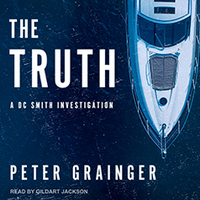
The Truth (Audiobook) by Peter Grainger, Gildart Jackson DC Shakes the Dust Off and Steps Up for a Friend

The TruthThe Truth

by Peter Grainger, Gildart Jackson (Narrator)

DETAILS:
A DC Smith Investigation, #9
Publisher: Tantor Audio
Publication Date: October 25, 2021
Format: Unabridged Audiobook
Length: 8 hrs., 56 min.
Read Date: September 19-21, 2022
Support Independent Bookstores - Visit IndieBound.org

What’s The Truth About?

Charlie Hills, the former Desk Sergeant at King’s Lake Central and verbal sparring partner of DC Smith has a problem—his son has been arrested on drug charges. Charlie’s retired, and apparently forgotten about by everyone at the station, so can get no favors pulled on his son’s behalf. The lawyer he’s hired for his son is one of the best around, and they think they’re in good shape. But Charlie doesn’t want to wait for that.

DC Smith gets wind of the trouble and volunteers to help out—he first has to get himself hired on (albeit temporarily) with PI firm so he can get standing to do any investigating. Then he dives in.

It’s quite an adjustment having to rely on his own wits and guile, without any threat of official power behind him as he pokes around the evidence. On the other hand, when has DC not relied on his wits and guile more than anything?

The investigation brings him close to more than one unsavory character, a couple of faces from his past, and a little more danger than we’re accustomed to DC facing—along with a bit of international travel and our man having to figure out how Airbnb works. That last just might cause DC to retire for good.

What’s in a Name?

DC decides to do his PI work under his Christian name, David. If for no other reason, the joke wouldn’t work without any Detective Constables around. So apart from some old friends of his (and the series’ fans), he’s called David or Smith by everyone. This is a rather minor note, but imagine what it would be like if we actually learned Spenser’s name and everyone started using it.

I never adjusted to it—David will always be D.C. to me, and I didn’t stop doing audio double-takes every time anyone other than Jo referred to him as “David.” Neither in this post or any future ones (assuming there are future PI cases for him) will I call him anything but DC or Smith. It does make for a pretty clear line of demarcation between his two careers, but…ick.

Gildart Jackson’s Narration

I know I’m supposed to talk about the narration for this book—everyone who writes blog posts or articles about reviewing audiobooks says you have to. And, you really should—they are tasked to bring the author’s words to life, convey the characters, and keep the listener engaged.

But I’ve talked about Jackson’s work on the 8 previous Smith novels, 3 King’s Lake novels, and likely some Alex Verus stuff. I don’t know what to say about him that I haven’t said before. He’s perfect for this series and it’s fantastic to hear him spending this much time with DC and other old friends. But I don’t know how to say anything new about him and I’m tired of saying the same things over and over (and loyal readers are probably tired of my stretches toward novelty). So, I guess I have to take a pass on it this time.

So, what did I think about The Truth?

It’s great to see DC back in action again—such an old pro playing the fish-out-of-water is a nice touch, too. Sure, with Rebus and Bosch (among others), it’s not unheard of to see the retired police detective doing the PI thing. But it feels different (if inevitable) with DC. He’s been such a believer in the police services, and so denigrated PIs, that it’s striking to see him do this.

But oh, so good for the fans. It’s a good case for DC, no matter who is paying the bills. And it’s a good novel for the author—in particular, the last chapter or two are killers. Grainger’s firing on all cylinders here with DC back at the helm. It’s a joy to see.

It’s clear from what Jo’s said to Chris over the course of time in the King’s Lake books that DC needed something to do other than putter around the house and play around with the dog. So you knew something like this was coming. It also seemed like it’d take something like Charlie Hills being in trouble to get him moving. Now the hope has to be that he realizes how good it was for him, so that Grainger has to work in the occasional (or frequent, I’d be okay with frequent) case for DC between King’s Lake books.

I heartily recommend this one—it’d probably be best if you were familiar with the character before this novel, but not necessary. Come on in, the water’s fine.


4 Stars

This post contains an affiliate link. If you purchase from it, I will get a small commission at no additional cost to you. As always, the opinions expressed are my own.

Gardens by Benedict Jacka: A Quick, Action Packed, Visit to the World of Verus

GardensGardens

by Benedict Jacka

DETAILS:
Series: Alex Verus, #12.1
Publication Date: October 31, 2022
Format: eBook
Length: 123 pg.
Read Date: November 3, 2022

What’s Gardens About?

This takes place about four months after Risen, and definitely should not be read by anyone who hasn’t read it (I’m not going to spoil anything though). We do get to catch up with the world of Mages, the Council, and the state of things with Adepts post-Risen, but we do so from a different perspective and with a largely new group of characters (they ultimately interact with some people we know though).

These characters are Daniel, Jess, and Emmanuel. They are youngish adepts with a little experience in thievery (although they really don’t like using that term) and are looking to expand. They’re hired by a mage to join a crew of others for a job to “retrieve” an object.

The object is in the possession of a mage, who they are told will be away from home for quite some time. All they need to do is open a lock (through an interesting application of wind magic that I don’t think I’ve seen before) and find the thing. Assuming they can get along with the other group of adepts hired for this job (which is clearly going to be an issue from the get-go), it sounds like an easy job.

But if it was an easy job, why would Jacka give us a novella about it?

So, what did I think about Gardens?

I had so much fun with this. It satisfied my desire to know more about this world and how things look after that fantastic finale—but was a different kind of story in it. Just not getting it told in Alex’s voice, but from a third-person narration, gave it a different feel immediately. Also, Jacka says that this is “a slightly different (but overlapping) genre to urban fantasy,” so that different feel is multiplied.

With all due respect to Jacka, I think it’s still UF. It is a darker form of it than we’re used to from him, though. But that’s just splitting hairs, and there are much better things to do with this novella.

Primarily we ought to just read and enjoy it—this is exactly what a heist-gone-wrong story told in the Verus-Verse should be. There’s in-fighting, double-crossing (maybe triple-crossing), lies, deception, unrequited love, and people in way over their head. Especially as we’ve been colored by Alex’s attitudes toward Adepts, it’s easy to forget what a great gulf there is between even a strong Adept and a Mage. Gardens does a great job of fixing that misapprehension. It’s a fast read with plenty of action—pound for pound, more than Jacka usually gives us, and I am here for it.

Is this a must-read for Alex Verus fans? No, not especially. But my friends, you will be missing out. You will be so glad you took an hour or so for this. This is definitely a must-not-read for people who haven’t read Risen (and if you haven’t read Risen, you likely haven’t read anything else in the series—which is something you should fix).


4 Stars

Jane Steele by Lyndsay Faye: Reader, She Murdered Him. Er, Them.

Jane SteelJane Steele

by Lyndsay Faye

DETAILS:
Publisher: G.P. Putnam's Sons
Publication Date: March 14, 2017
Format: Paperback
Length: 420
Read Date: October 14-17, 2022
Support Independent Bookstores - Visit IndieBound.org

Few among us are aware of how much blood the human body contains—surging in thick waves should it chance to be spilt.

I had spilled it, meanwhile, and therefore drastic measures were required.

[redacted] was felled by a strangely skilful blow—as if I had studied the act, when in fact I had simply decided that he should stop being alive. He gurgled a disbelieving shriek, eyes ablaze with wrath and fear, looking perversely more alive than ever, each muscle taut with severest alarm. He even got halfway to his feet, reaching for me, rich gore soaking the fateful ledger.

Then his lips bubbled crimson, his blazing eyes hardened, and he slumped forward over the desk. His fingers, so graceful in life, twitched like the poisonous insect he was; his back ceased to shudder.

I cocked my head and gauged his condition: dead.

What’s Jane Steele About?

I got really long-winded in my first draft on this point and bored myself—if I can’t keep my interest, there’s no way I’m going to keep yours. So, because I’m a giver, I’m going appropriate the description from the Publisher’s site:

A sensitive orphan, Jane Steele suffers first at the hands of her spiteful aunt and predatory cousin, then at a grim school where she fights for her very life until escaping to London, leaving the corpses of her tormentors behind her. After years of hiding from the law while penning macabre “last confessions” of the recently hanged, Jane thrills at discovering an advertisement. Her aunt has died and her childhood home has a new master: Mr. Charles Thornfield, who seeks a governess.

Burning to know whether she is in fact the rightful heir, Jane takes the position incognito and learns that Highgate House is full of marvelously strange new residents—the fascinating but caustic Mr. Thornfield, an army doctor returned from the Sikh Wars, and the gracious Sikh butler Mr. Sardar Singh, whose history with Mr. Thornfield appears far deeper and darker than they pretend. As Jane catches ominous glimpses of the pair’s violent history and falls in love with the gruffly tragic Mr. Thornfield, she faces a terrible dilemma: Can she possess him—body, soul, and secrets—without revealing her own murderous past?

The Jane Eyre of it All

There are a couple of ways to talk about Charlotte Brontë’s work relating to this book. First, the novel is Jane Steele’s favorite novel. She makes frequent mention of it, plot points, and even when she buys a new copy. Jane is very aware of how events in her life parallel Eyre’s, and while the two women share responses to some things—ultimately, they’re very different people.

But my primary focus is from the perspective of the reader. The book was marketed as “what if Jane Eyre was a serial killer?” and “Jane Eyre + Dexter.” And that’s not wrong, but I think it’s more than that. Another way to put it is that this isn’t in the same vein as Pride and Prejudice and Zombies. The account of Steele’s life—broadly viewed—does follow the same outline as Eyre’s (the question can, and should, be asked how much of this is real and how much is a projection by the narrator). Also, I’m not crazy about the serial killer tag. She’s a vigilante who has killed enough to get the label “serial.” But it’s not ever presented as something she’s driven to do from within (although that might be a coverup by the first-person narrator).

But basically, it’s the same rough outline, with a lot of significant differences. The Flight of Gemma Hardy and Re Jane are closer re-tellings of Jane Eyre.

So, what did I think about Jane Steele?

In the end, not only is it a strange little love story and a little bit of a thriller, but there’s some reflection on humans as storytelling creatures. Not just in the stories we set down—Jane Eyre and Jane Steele for example—but the stories we tell ourselves and each other. There’s an essay to be written there by a more insightful blogger than I.

Faye did a good job of making most/many of the characters have Twenty-First Century sensibilities while walking around Nineteenth-Century London. Some authors can’t pull it off, but Faye did. The pacing is quick. The writing is crisp and clever, and there’s a humor to this that you might not expect (but is really the only way this is palatable)—after distancing the work from Dexter earlier, the humor of the novel really does match the Showtime version at its best. I wouldn’t change a thing about any of the characters, and really do regret that the nature of this story pretty much eliminates a sequel, because I’d like to revisit them (but a sequel would really be a bad idea).

I came for the Jane Eyre aspect, got hooked by the characters, and stayed for Faye’s prose and story. This ended up as far better than I expected and pretty different than what I thought I was getting into. I was glad to see it (don’t get me wrong, the Eyre stuff is great, but it’s just the icing on this tasty cake) and heartily recommend this to you.


4 Stars

This post contains an affiliate link. If you purchase from it, I will get a small commission at no additional cost to you. As always, the opinions expressed are my own.

Page 18 of 88

Powered by WordPress & Theme by Anders Norén