Tag: 4 Stars Page 19 of 88

REPOSTING JUST CUZ: The Essential Trinity by Brandon D. Crowe and Carl R. Trueman, eds.

(the title’s not entirely true…there’s another re-run because I couldn’t stay awake Saturday to finish a new post. But there’s no event correlating with selecting this book. I’ve got three books to post about in the Sunday evening slot, hopefully you’ll see one of them here next week.)


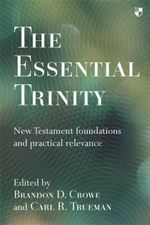
The Essential Trinity The Essential Trinity: New Testament Foundations and Practical Relevance

by Brandon D. Crowe and Carl R. Trueman, eds.

Paperback, 273 pg.
Inter-Varsity Press, 2016

Read: July 31 – August 14, 2016

As far as consistency of quality amongst edited volumes goes, Crowe and Trueman have assembled one of the stronger line-ups I’ve read in a while — men from a spectrum of persuasions of Evangelical-ish thought have given the Church fourteen articles (approximately 20 pages each) to deepen our thinking about the Trinity. The aim was for a volume that “eschews overly technical discussion and focuses attention on the importance of the doctrine for every Christian.”

In Part 1, the articles look at the “trinitarian contours of every corpus of the New Testament, along with a chapter reflecting on the Old Testament roots of trinitarian doctrine.” If there are weak chapters in the volume, they’re in this part — but they aren’t that weak, either. Crowe’s chapter on Matthew is excellent, but the chapters on the Mark, Luke-Acts and John aren’t far off that Mark. Brian S. Rosner’s chapter on “Paul and the Trinity” is worth the price of the book. The chapters on the rest of the epistles are very helpful (particularity Hebrews). Mark S. Gignilliat’s article, “The Trinity and the Old Testament: real presence or imposition?” is very helpful and insightful — and as an added bonus, it’s the most stylistically entertaining and engaging piece in the book.

Benjamin Gladd’s chapter exploring Daniel’s influence on Revelation’s view of the Trinity is the biggest mental workout you’ll get in the book. I appreciated the material covered and the argument Gladd makes, but I’m going to have to read it a few more times before I think I have a good handle on it.

Part 2 addresses the importance of the Trinity for everyday living — many would say the doctrine is impractical and only belongs in Statements of Faith and academia. The authors here show the fallacy of that. It begins with a brief, but excellent, description of the doctrine by Scott R. Swain. Carl Trueman has the next chapter, “The Trinity and prayer,” which is probably as valuable as Rosner’s — it’s actually about more than prayer, but the material specifically on prayer is great — hugely indebted to John Owen (but not uncritically so). Robert Letham’s chapter on “The Trinity and worship” also draws deeply from Owen; if he doesn’t move you to worship as you understand the work of the Trinity in it, you aren’t paying attention (I probably have more problems with some of what he says than anything else in the book). Michael Reeves, typically, made me chuckle in his chapter on preaching — but he did more than that, too.

Timely, convicting, thoughtful and inspiring, this examination of the Trinity in Scripture and Life should be a great benefit to any believer ho reads it. It may not be the easiest thing read all year (but really, it’s not that difficult), but it’ll be one of the most rewarding.

—–

4 Stars

Flight Risk by Cherie Priest: Two Missing Persons Bring the Team Back Together for this Winning Sequel

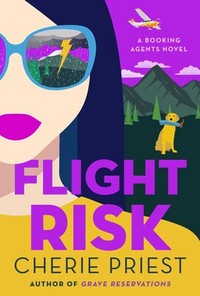
Flight RiskFlight Risk

by Cherie Priest

DETAILS:
Series: Booking Agents Series, #2
Publisher: Atria Books 
Publication Date: November 15, 2022
Format: eARC
Length: 320 pg.
Read Date: October 20-21, 2022
Support Independent Bookstores - Visit IndieBound.org

What’s Flight Risk About?

Grady and his daughter lose their dog while visiting Mt. Rainer—but never fear, they find him—much to their relief. They’re not at all relieved by the fact that when he’s found, he’s carrying a human leg in his mouth. While it’s a different jurisdiction, it’s soon determined that the (probably dead) man missing a leg is/was a Seattle resident, so Grady handles that end of the investigation.

At the same time, Leda is approached by a man to find his sister. This is a major step up for Leda’s psychic consulting—since the news coverage stemming from the events in Grave Reservations, she’s been hired to find a few missing things (mostly successfully), but a person that’s been gone for a month is a significant case. She takes it on with some hesitation, and several caveats toward the brother that she might not find anything, and he might not like what she is able to find.

Naturally, there’s a connection between both missing persons, and Grady and Leda team up again.

Leda’s having a hard time making headway, at first, with her case, and calls in the woman who’d offered to mentor her for some help. Almost immediately the medium demonstrates that this was a wise choice and that she’s the real deal. As she works with Leda, providing a nudge or two, she hints that Leda may discover other abilities as she grows as a psychic—which will be interesting to watch, for sure.

Det. Grady Merritt

Flight Risk features a lot more of Grady on his own (still plenty of Grady with Leda and Grady with everyone else, don’t worry) doing police work. It’s good to see him plugging away at things and interacting with his partner (who I hope we get more time with in the future—Sam and Niki would be a fun team-up).

He doesn’t strike me as a super-cop like Bosch or Ballard—but he’s the kind you hope our police departments are full of—decent guys who are dedicated to their jobs, driven by curiosity and a sense of duty. He just happens to be pretty lucky and he now has a psychic friend who can lend a hand. I enjoy reading about this kind of police detective*, it gives me hope.

* I’m still devouring books about Bosch, Ballard, Washington Poe, and other super-cops, don’t get me wrong.

Niki

Leda’s best friend Niki is, of course, back. In Grave Reservations, Niki essentially pushed Leda to take risks, to persevere in the investigation, and so on. Then, when she accompanied Leda and Grady when they were investigating, she could be relied upon to go a little further than Leda, and would carry the comedic weight in her scenes.

Here in Flight Risk, she has the same roles. But Leda’s more confident now and doesn’t need her friend egging her on quite as much either on-stage or in her office. She is still a little more “out there” when she rides along with Grady and her friend, but I think she’s more restrained there, too.

I might be a little off here, and if I revisit this next year, I’ll wonder what I was thinking here. But right now, Niki seems to be the weak link in this book, not bringing quite enough to the plot or to the comedy. A toned-down Niki is more grounded, more realistic—absolutely. But if she’s not being Lula to Leda’s Stephanie Plum, I’m not sure what purpose she’s serving. I should stress, I don’t think Priest shouldn’t have her around, nor do I want her to be as goofy as Lula (the world doesn’t need another one)—but we just need her to be a little less restrained.

The Law of Interconnected Monkey Business

So, anyone who’s read a mystery novel before will be pretty sure that there’s a tie between Grady’s and Leda’s cases are going to be connected. Obviously, if you read the above section or the description on the back of the book or on the online store of your choice, you’ll know that, too.

That’s not what I want to talk about—it’s the way that Priest combined these two cases and got Leda and Grady to work together again. I honestly expected that this series would be Grady bringing cases to Leda, either on his own or because he’s instructed to, when the SPD comes up against a tough case. But that’s clearly not going to be the case.

There’s going to be flexibility—even possibly some times when Grady comes into things pretty late in the game (I can’t see leaving the police out of a book entirely). The fact that Priest stayed away from the structure of the first book already is an encouraging sign and shows that this isn’t going to be a cookie-cutter kind of series, but that she’s going to bring something new each time.

So, what did I think about Flight Risk?

I have to say this one was a tough one to write about—I almost felt like I could copy and paste what I said about Grave Reservations here. If you liked that novel, you’ll dig this one—having introduced the characters and world, Priest (and the readers) can focus more on the mysteries, and the book is better for it.

The mysteries were well-designed and executed, with the psychic clues/impressions/whatever along the way pointing Grady and Leda in the right direction, but not giving them so much that they don’t have to work out things for themselves (with one notable exception). This is the way to do a Psychic Detective novel. The red herrings and false trails were particularly well-done and I enjoyed seeing our protagonists dealing with them.

We got a better sense of all the supporting characters, as one would expect/hope, and I enjoyed them all. This is really a pleasant little universe that Priest has given us and I hope we get to hang out with these characters for a good while to come.

Flight Risk would be a good introductory novel for this series as well as a pleasant continuation for those who read Grave Reservations—it’s light(ish) fun with a dash of the supernatural to enliven the mystery, the combination of police and amateur detectives working together is a tried and true way to make things entertaining—and Priest uses it well. This novel hit the spot for this reader, and I look forward to another case or two soon. I definitely recommend this one to you.

Disclaimer: I received this eARC from Atria Books via NetGalley in exchange for this post that reflects my honest opinion—thanks to both for this.

This post contains an affiliate link. If you purchase from it, I will get a small commission at no additional cost to you. As always, the opinions expressed are my own.

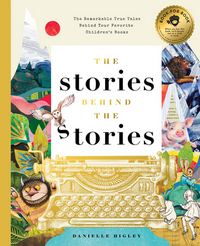
The Stories Behind the Stories by Danielle Higley, David Miles (Illustrator): Behind the Scenes of Some Childhood Favorites

I’ve got a Q&A with the author, Danielle Higley, coming up a little later this morning–be sure to come back for that!


The Stories Behind the StoriesThe Stories Behind the Stories:
The Remarkable True Tales
Behind Your Favorite Kid’s Books

by Danielle Higley, David Miles (Illustrator)

DETAILS:
Publisher: Bushel & Peck Books
Publication Date: November 2, 2021
Format: Hardcover
Length: 90 pgs.
Read Date: September 24, 2022
Support Independent Bookstores - Visit IndieBound.org

What’s The Stories Behind the Stories About?

It’s right there in the subtitle, isn’t it? “The Remarkable True Tales Behind Your Favorite Kid’s Books.” Higley takes 29 well-known and well-loved children’s classics—most from the Twentieth-Century, with a couple from before and a few after it.

We get roughly two pages on each book, with a full page of art to go along with them—although one of those pages will be heavily illustrated, too. The text will give a little biographical information about the author and then talk about the book itself—maybe how it was written, or received, or what inspired it. There’s also a sidebar with a little trivia about the book, too.

The books discussed range from Curious George to The Boxcar Children to Percy Jackson and the Lightning Thief, books written for children too young to read through books for Middle Grade readers.

The Design and Art

This is a wonderfully put-together book—let’s start with the cover design, a giant “Little Golden Book” look is an inspired choice for this. The collages used to illustrate the rest of the book are equally well done. They jump off the page and are well-paired with each book discussed.

Sure, the text of the book is my focus—and it should be here, too. But when it comes in a package this great to look at? That’s just a bonus.

So, what did I think about The Stories Behind the Stories?

I sat down to read about one or two of the books before starting something else one day, and read five before I realized it and had to force myself to stop. I ended up reading the rest of the book in one sitting. It’s the literary equivalent of Lay’s Potato Chips, “bet you can’t read just one.”

I’ve read 24 of the books talked about, and meant to read most of the others, so I was primed and ready for this—many readers in the target range (7-11 will be familiar with at least half, and this might inspire them to read more of them).

I think I learned a little about each of the books selected for this—except maybe Harry Potter and the Sorcerer’s Stone, because that’s been covered so well for so many years. Some of what I learned surprised me—The Boxcar Children was controversial? (okay, I probably should’ve guessed that one) Rawls almost didn’t get Where the Red Fern Grows published, and once it was, it took a lot of work to get it read—or put another way, I almost didn’t get my heart ripped out by it.

It’s engaging with a little dash of mild humor, nothing over-the-top—just enough to bring the occasional grin while not distracting from the point. It’s written in such a way that the target audience will have no problem reading it, and it’ll keep the attention of older readers, too—anyone who likes children’s books will find something to enjoy here. And you put that in an attractive package? It’s a win all the way around. I strongly recommend this book.


4 Stars

This post contains an affiliate link. If you purchase from it, I will get a small commission at no additional cost to you. As always, the opinions expressed are my own.

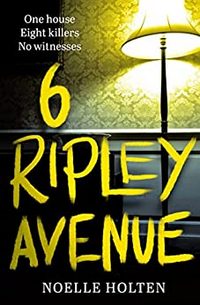
6 Ripley Avenue by Noelle Holten: One House. Eight Killers. No Witnesses.

6 Ripley Avenue6 Ripley Avenue

by Noelle Holten

DETAILS:
Publisher: One More Chapter
Publication Date: September 27, 2022
Format: eBook
Length: 378 pg.
Read Date: October 6-11, 2022

When you’re given the opportunity to confront your mother’s killer, do you take it?

I did.

No words were spoken though.

I just killed him.

Was it worth it?

Absolutely.

Do I have any regrets?

Only that I didn’t make him suffer longer.

What’s 6 Ripley Avenue About?

6 Ripley Avenue is a Probation Hostel—similar to what we call a halfway house in the U.S.—focusing on probationers convicted of violent crimes (including murder). It’s been plagued by controversy since before its opening two years ago. The concerns go beyond the typical NIMBY protests because of the violent nature of the residents.

Sloane Armstrong, a freelance investigative journalist, and Helen Burgess, an elderly woman who lives next door to the house, have been at the forefront of the effort to move and/or close Ripley House Approves Premises from the start. Their friendship was forged by this effort but has grown since then.

Now, a resident there—a convicted murderer—has been killed. The investigation into the murder highlights many of the concerns Helen has voiced and Sloane has published—poor staffing levels, inadequate security, malfunctioning CCTV, and more. Helen and Sloane see this as their opportunity to close the facility once and for all and work to uncover as much as they can about the crime and the systemic problems it exposes as possible for their purposes.

On the other hand, Jeanette Macy is the Senior Probation Officer on staff—she learns of the same problems (and more) during the investigation and sees this as the opportunity to improve things both at Ripley House and throughout the system.

The narrative bounces between the perspectives of these women as they investigate the happenings of that fateful night and interact with each other and the police during the inquiry. Will any of them be fast enough in their investigation to ensure the murderer is caught in time to save more lives?

It’s almost a locked-room mystery—but if you can’t trust the locks on the room…

The Prologue

I see a lot of hate/antagonism toward Prologues online lately. I’m not sure I get it, but if people want to skip them, I guess that’s their prerogative. However, anyone who is anti-prologue probably hasn’t read a Noelle Hotlen prologue—they’re consistently very good. This is one of her best—it’s not Dead Perfect—good, but it’s close.

If you read this book, don’t gloss over/skim/skip it.*

* I think that should apply to Prologues/Epilogues in general, but whatever. You do you.

On the Other Hand…

I think the last two chapters could be cut and the book would be stronger. I get (I’m pretty sure) the impulse for them, and they do make sure that some of what was suggested/implied in the text was nailed down. I also wonder if she answers a question or two that would be better left lingering. But I think most readers would either assume almost everything contained there—or wouldn’t care. It’s like watching deleted scenes from a movie and thinking “yeah, that was good to see, but I see why it didn’t make the final cut.”

Okay, the last six paragraphs of the penultimate chapter—they’re a distinct section—would’ve made a good, punchy last chapter on their own. But the rest felt like overkill.

Your results may vary, and it’s not like these chapters hurt the book significantly. But for me, they took a little of the luster off.

So, what did I think about 6 Ripley Avenue?

“Sometimes the places where you are meant to be safe are the ones you should fear the most.”

The violence in this book centers on those places you’re meant to be safe—home and family—and what happens when that safety is disrupted. The whodunit of the novel is the focus—but there’s a lot said about the ripple effects of (many, but not all, of) the crimes talked about. How the repercussions of a moment of violence or other dangerous choices are long-lasting and alter the lives of those only indirectly affected by them. Crime Fiction in general is getting better at showing this, and few do it as well as Holten does.

Holten’s signature style of terse chapters and paragraphs is well-evident here,* jumping from perspective to perspective to make sure the plot is always steadily advancing. This makes the pacing almost relentless and it’s hard to put the book down, no matter what the reason for doing so may be. I’m not saying that I burned any meal or let a pot boil over while reading this, but I’d absolutely understand why someone would. Thankfully, the style also makes it incredibly easy to pick back up and get fully immersed in the story immediately. You could easily read 6 Ripley Avenue in one sitting without intending to.**

* Really, does she draft on cocktail napkins? What would happen if she invested in a couple of reams of 8.5 x 11/A4?
**The fact that it took me as long as it did to read this is a commentary on my schedule this month, not the book.

The only problem with the pace is that we don’t get quite enough time to see enough of Helen and Sloane’s friendship—it’d be easy to see their relationship as Sloane exploiting the lonely woman for ammunition and Helen as desperate for an emotional connection. That’s what I saw it as initially. But as the novel progresses, we see actual affection between the two and it’d have been nice if circumstances had allowed us to see more of it. On the other hand, things do allow the reader to change their initial impression of Jeanette over the course of the novel (at least this one did).

This is one of those novels that is strengthened by the use of multiple POVs—the overlapping motives, agendas, and methods of the women looking into the crime and its repercussions, sometimes in alignment, sometimes at odds, but leading to getting at the truth was really well done. I’m not sure that, outside of the first bit of narrative from the Killer’s point-of-view that having their perspective present is that helpful—but I’d say that about at least 98% of those that I’ve read, so take that comment with a boulder-sized grain of salt.

This standalone solidifies Holten as an auto-buy for me, it’s a pleasant departure from Holten’s series work, displaying her already visible strengths and giving her a chance to show new ones. 6 Ripley Avenue is a fast, compelling, read that will stay with you for a while—you can’t ask for more than that.


4 Stars


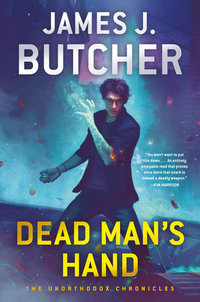
PUB DAY REPOST: Dead Man’s Hand by James J. Butcher: Welcome to the World of The Unorthodox

Dead Man's Hand Dead Man’s Hand

by James J. Butcher

DETAILS:
Series: The Unorthodox Chronicles, #1
Publisher: Ace
Publication Date: October 10, 2022
Format: eARC
Length: 384 pg.
Read Date: September 16-20, 2022

Support Independent Bookstores - Visit IndieBound.org

The World of This Novel

This is a Fantasy world where the Muggles (here, they’re called “Usuals”) know about Magic and the Supernatural populace (called “the Unorthodox”). They’re largely not that comfortable with them, it doesn’t seem—and maybe look down upon them. We don’t get a lot of Usual/Unorthodox interaction, so it’s difficult to get a good read.

The Unorthodox are policed by a division of the Department of Unorthodox Affairs called Auditors. They’re witches with the power to enforce the laws governing the Unorthodox. And there are rules governing how the Unorthodox interact with Usuals. We don’t get to see a lot of them here—but you know they exist.

It occurs to me now that we really don’t get that much insight or information about all the situation the protagonists find themselves in (more below). Dead Man’s Hand cares about the story and will let the rest take care of itself. It took me until now (and this is the last section of the post I’m writing) to realize just how little we know because I didn’t care. My mindset apparently was the same as the novel’s: just tell me the story. I got the impression that there were rules and bureaucracy and some sort of history, but my focus was on this case.

That’s kind of cool, really—until it comes time to think about and write about the book.

So What Exactly is Dead Man’s Hand About?

One of our two protagonists is Grimshaw Griswald Grimsby. Grimsby grew up wanting to be an Auditor and tried to work on the requisite skills as much as he could to prepare himself. He’s not the most powerful witch, but he can do a lot with what he has (roughly the equivalent of “street smarts” vs. “book smarts”). He’s flunked out of the Auditor Training Program at the very end and has to go find a job in the Usual world.

He ends up as a performer/custodian at a Chuck E. Cheese-style restaurant, where the animated figures are powered by his magic. It’s humiliating, embarrassing, and eats at his soul. Grimsby went through some big trauma in his childhood; was on the verge of his dreams coming true before that ended; and now he’s scraping by demeaning himself and his abilities. It’s hard to find a character with supernatural abilities downtrodden or pitiful, but…Grimsby is. To put it concisely, he’s a schlub and he’s fully aware of that.

The other protagonist is a Usual who worked with the Auditors, Leslie Mayflower, better known as The Huntsman. He’s responsible for enough death and destruction amongst the Unorthodox that many don’t believe he actually exists—he’s an Urban Legend to keep people in line. In reality, he’s a guy who’s seen too much, done too much, and when personal tragedy hits, he’s done. He retires to drink himself into oblivion to avoid the memories and his own tragedy.

The Auditor who flunked Grimsby is considered one of the most powerful and dangerous witches in the world. Mansgraf is respected and feared—mostly feared. And when the novel opens—she’s been killed in a fairly brutal fashion (the only way she’s going to be able to be taken out). Mayflower spent his career (at least the bulk of it) as her partner—and he’s brought in to look at the scene to see if he can pick up any clues. He comes up with one—and doesn’t share it with the Department—and it points right to Grimsby as his prime suspect.

The Huntsman is back in the saddle for one last ride—to get vengeance, and his target is a man currently wearing a pink tutu with taco wings and an avocado wand. The Taco Fairy at Mighty Magic Donald’s Food Kingdom.

It’s almost patently obvious to Mayflower that Grimsby can’t have killed Mansgraf, but that’s where the evidence points. The Auditors won’t be far behind, and they’ll be less inclined to listen to Grimsby. So Mayflower has to stay one step ahead of them while protecting the witch and using him to help the investigation. The result is a buddy cop kind of story—without that much comedy or much in the way of buddy-ness. The duo drag themselves and fight their way through a variety of hazardous situations facing a variety of supernatural obstacles (some are solid takes on well-established ideas—some are new and surprising twists to them).

Broken Heroes

Mayflower is your typical brooding, laconic, action hero. He’s grizzled, he’s serious, and he really only cares about wrapping this up so he can get back to destroying his liver. But he’s fair, he’s got a strong moral core, and on some level, he feels sorry for Grimsby and wants to help him out. We know just enough of his backstory to understand what kind of man he is and the scars he carries.

We get more information about Grimsby and the hardships he’s endured. His cowardice, his lack of confidence, and his lack of career prospects make him a relatable kind of character, and you want to root for this underdog. Although you (and Grimsby) know that he’s going to need a lot of help from Mayflower to survive, much less succeed here. His problems are both played for laughs and treated with respect—frequently in the same paragraph. He has a genuine reason for being scared by things, but it can result in some laughs/grins. I keep thinking about Arthur from The Tick.

There’s a stoic, stay standing while the waves crash against you, feel to Mayflower’s outlook and the way he treats Grimsby. Yes, life is hard, but keep moving because that’s what you have to do. Whatever problems there are with that worldview, the immediate circumstances the duo finds themselves in, it works. if they survive it, maybe more nuanced approaches and help can be found. But that’s a problem for another day.

Comparing This to that Other Butcher

I really don’t want to spend a lot of time comparing this Butcher to his father, but 1. everyone I talk to about this asks about it and 2. the publisher’s description mentions him, basically inviting the comparisons. I’d prefer to consider him on his own—but here we are.

Honestly, I don’t see a lot of similarities—beyond seeing the influence that Jim Butcher has on many UF series (see Anton Strout, Kevin Hearne, Mike Carey, Benedict Jacka, etc., etc.). Sure, there are similar attitudes portrayed, similar character types and voices, and even a couple of situations that feel like I could easily name some parallels to in The Dresden Files. But again, every time I could point to something and say, “That’s his Dad,” I could point it and say, “That’s Peter Hartog” or “That’s Jacqueline Carey.” So maybe it’s just James J. Butcher.

His writing style is different, the characters aren’t just retreads of Harry or his friends, and the particulars of the plot don’t seem to fit something for Harry.

If you’re looking for someone who writes things in the same general vein as Jim Butcher, you can look to James J. Butcher. But if you’re looking for Butcher 2.0? There are other options that would be better.

So, what did I think about Dead Man’s Hand?

This is a solid introduction to a series. I want more of the worldbuilding, I want to see how Usuals/The Unorthodox interact when they’re not at a lousy restaurant, etc. But I’m more than content to wait for it—like I said, I didn’t really realize what we didn’t get until now.

I would say I’m not a huge fan of the epilogue—the events of it should prove interesting, even if I might want for a different storyline to be pursued—but I don’t like the way it functioned in the novel. Personally, I’d have been happier if it had been a prologue to book 2 or 3, and let the book end without it. I don’t think it was needed, and I think the book ending with Chapter 47 would give a stronger impression.

Aside from that, I really have no complaints about the book—I was solidly entertained and invested from Chapter 1 onward. I don’t know that I can say that I was blown away by anything—but there are some things I’m not talking about here because of space/don’t want to give something away, that I will be talking about for months (and have already started doing so). I’m not going to be announcing to the world that the next Jim Butcher/Seanan McGuire is here. But I will say that this new writer is really good and absolutely worth reading. You’re going to be entertained. Seriously, pick this up just for the kid’s birthday party scenes, and then stick around for the excitement.

In the last twelve months, we had to say goodbye to Jane Yellowrock this year and Alex Verus the year before, I’m glad we got to say hello to The Unorthodox Chronicles now. I think this series could be as long and as satisfying as those if it’s given the chance to grow naturally and doesn’t get overshadowed by Butcher’s DNA.

Disclaimer: I received this eARC from Berkley Publishing Group via NetGalley in exchange for this post—thanks to both for this.


4 Stars

This post contains an affiliate link. If you purchase from it, I will get a small commission at no additional cost to you. As always, the opinions expressed are my own.

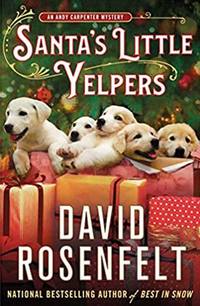
PUB DAY REPOST: Santa’s Little Yelpers by David Rosenfelt: A Little Yuletide Cheer and Two Dangerous Cases Andy Didn’t Ask Santa For

Santa’s Little YelpersSanta’s Little Yelpers

by David Rosenfelt

DETAILS:
Series: Andy Carpenter, #26
Publisher: Minotaur Books
Publication Date: October 11, 2022
Format: eARC
Length: 304 pg.
Read Date: September 30, 2022
Support Independent Bookstores - Visit IndieBound.org

What’s Santa’s Little Yelpers About?

There’s a new employee at the Tara Foundation—he’s an ex-con, and an ex-lawyer (the former led to the latter). Chris is clear that he was wrongly convicted, but is trying to rebuild some sort of life and move on from there. Andy, Willie, and Sondra are happy to have him on board—especially because one of the shelter’s dogs just had a litter, and Chris has taken mom and her pups into his house until they’re ready to be adopted.

But since this is an Andy Carpenter novel, you know what’s coming next—the dog lover introduced at the beginning of the book is headed for trouble. Chris is told by the major witness in the case against him that he was lying and will recant in court. But before Andy can get anything filed on Chris’s behalf, the witness changes his mind. Chris goes to confront him, the witness is murdered, and, as we all expected, Chris is arrested for that crime.

It’s up to Andy, The K Team, and the rest of Andy’s team to try to prove him innocent of the murder—and maybe the initial crime.

It’s Beginning to Look (a Little) Like Christmas…

I’m not sure why Minotaur keeps doing these Christmas-themed Carpenter novels—there’s very little Christmas-y (or other holidays) in them. The Christmas content in this one is less than usual—don’t worry, there’s enough to justify this being considered a holiday novel or to satisfy those who want that content. But just enough for that—not one sentence more.

I should stress—I’m not complaining about this. I’ll take any excuse for an Andy Carpenter novel, and this gives us two in a year—and some of these “Christmas” novels have been better than the others released that year. I’m just wondering.

So, what did I think about Santa’s Little Yelpers?

Between the 25 previous books in the series and the 3 K-Team books, I like to think I’m pretty familiar with Rosenfelt and his bag of tricks—the series and I are old friends by now, and while I have a ball with these books, I pretty much see most things coming. Or so I thought. Sure, most of the book went as I expected, and I was enjoying it as much as I expected to. And then Rosenfelt pulled off a twist that I didn’t see coming—my interest and appreciation for the book increased.

And then he did it again. I wouldn’t have guessed that by book 29, Rosenfelt would be surprising me twice in one book. I’m not saying that I don’t appreciate the twists and the turns of the stories in most of his books, because I really do—but I usually know something like them is coming—I didn’t see either of these coming at all. (I do think I should’ve been in the ballpark for one of them, though, if I’d been on my game). And because of these reveals, a lot of the book played out in ways I didn’t fully expect. I love it when an author does this.

Are all semi-savvy readers going to experience this? Not necessarily—but you just might.

Even without that—this is a classic Andy Carpenter book, there’s some good Ricky material, Laurie and Marcus get to do their thing—Corey and Simon Garfunkel get some nice moments, too. Sam Willis (very minor spoiler) gets some out-of-the-office work, which is fun. And Andy meets a new judge and prosecutor and doesn’t totally alienate them (I’m not sure he endears himself to either, either).

It’s a good time, a clever case, with some typical quotable lines. Everything an Andy Carpenter fan wants—and, as always, this would be a good jumping on point for a newbie looking for an enjoyable mystery/legal thriller to read.

Disclaimer: I received this eARC from St. Martin’s Press, Minotaur Books via NetGalley in exchange for this post and my honest opinion–thanks to both for this.


4 Stars

This post contains an affiliate link. If you purchase from it, I will get a small commission at no additional cost to you. As always, the opinions expressed are my own.


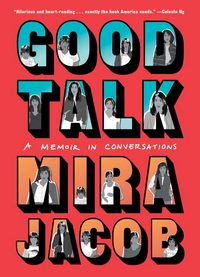
Good Talk: A Memoir in Conversations by Mira Jacob: Explaining Race in the U.S. to a Child

Good TalkGood Talk:
A Memoir in Conversations

by Mira Jacob

DETAILS:
Publisher: One World
Publication Date: March 25, 2019
Format: Hardcover
Length: 349 pg.
Read Date: October 5-6, 2022
Support Independent Bookstores - Visit IndieBound.org

Sometimes, you don’t know how confused you are about something important until you try explaiing it to someone else.

What’s Good Talk About?

It’s 2014 when the book opens, Mira Jacob’s son Z is six and he’s asking Mom a lot of questions (because he’s six). They start off talking about Michael Jackson—Z is obsessed with him. Z eventually asks about Jackson’s skin color—Z is half-Jewish, half-Indian and has several questions about skin color that stem from this (and likely predate this, but what do I know) which leads to questions about race, race relations, and what he sees on the news. Jacob’s committed to being open and honest with Z, but struggles knowing how much she should say—and how optimistic she should be about the state of the US in terms of Ferguson, MO, and a lot of the rhetoric surrounding the 2016 elections.

The memoir comes in as Jacob recounts several scenes from her childhood/young adulthood that shaped her. Her parents immigrated from India in the 60s (a week before MLK was assassinated) and took up residence in Albuquerque. We get a few scenes from her childhood and teen years before moving to adulthood, dealing with misunderstandings, assumptions, and unintentional rudeness based on her background. Eventually, she finds herself in New York City trying to make it as a freelance writer and dating. This is all told with frankness and humor. The kind of humor that reminded me of Amber Ruffin/Lacey Lamar’s You’ll Never Believe What Happened to Lacey from last year—you laugh so you don’t have to cry.

The Art

I really don’t know how to describe the art here, but this is a graphic memoir, so it’s a major component of the book. So I’d better try.

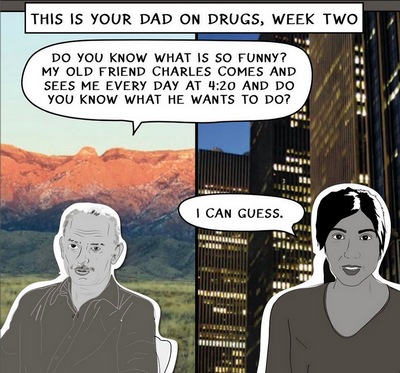
I saw someone on Goodreads use the term “mixed media,” and without researching it, I think it’s close enough to use as a description (maybe not technically right?). Please note that this is me trying to describe it, not being dismissive as it may sound. It’s like Jacob drew nice, but not fantastic, paper dolls of each character (some at different ages, others static) and put them on top of photographs or drawings of various locations and added speech bubbles.

I just saw that she has an Instagram account that uses images from the book (in addition to the regular Instagram stuff), so I figure I can “quote” something to show what I’m talking about:

This is nowhere near the kind of art that appeals to me in graphic novels/memoirs etc. Give me something dynamic, something with some flair, something I can bask in. But…this really worked for me. It helped give this a “documentary” kind of feel (don’t ask me to explain this, but it struck me that way). This isn’t about the glitz or the pictures jumping off of the page, it’s about a woman having tricky conversations with her loved ones—and complete strangers, sometimes. The focus is on the words, but the images help carry you along.

So, what did I think about Good Talk?

Sometimes, you go along with it and pretend nothing happened. Sometimes, you hold your breath until the feeling of wanting to believed passes. Sometimes, you weigh explaining against staying quiet and know they’re both just different kinds of heavy. Sometimes, when it’s your mother-in-law—a woman you started calling Mom the day you got engaged because you admired the ferocity with which she loved her children, and maybe even wanted some of it for yourself—you look ahead and see all the years of birthdays and graduations and weddings that will be shadowed by things that she can’t imagine about your life. Sometimes, you can’t hold your breath long enough.

I typed “I really enjoyed this book”, but I’m not sure that’s the appropriate response. I don’t know that supposed to enjoy this—but her style and humor are really engaging and there’s enough hope in there that it feels natural to say. I feel okay saying that this is a good read—it’ll make you think, it might make you grin, and it’ll definitely make you wince.

Right away, when Jacob goes to visit families in India and they tell her that her skin tone (darker than her parents’ or her brother’s) marks her out as not as attractive or a good prospect for marriage, you can tell she will pull no punches. And you can understand why she wouldn’t want to. It’s one of the many, many things that guys like me on Scalzi’s Lowest Difficulty Setting don’t have to think of. There are many sections of the book that hit the same way—like the chapter where she talks about being mistaken for “the help” at a party her mother-in-law was hosting. The above quotation is part of that—she decides mid-way through the conversation that she’s not going to try to explain what happened, nor argue about it. Constantly having to explain your experiences—your life—to people who don’t get it has to be a kind of exhausting that I can’t imagine.

But there’s a lot of humor and hope here, too—not all of it at the expense of clueless white folk saying dumb things. There’s the chapter about getting her dad to use marijuana to help the pain of his cancer treatment, for example. It’s funny and heart-warming. Until he dies, of course, reminding you that this isn’t that the hope is tinged with reality.

I really recommend this book—it’s a deceptively easy read, and you shouldn’t let the style or format fool you into racing through it. There’s a lot to chew on, a lot to reflect on—and a perspective that should be listened to. Even if you can’t relate to her struggles, can’t agree with her politics, and find the whole discussion unsettling. Maybe especially then.


4 Stars

This post contains an affiliate link. If you purchase from it, I will get a small commission at no additional cost to you. As always, the opinions expressed are my own.

Santa’s Little Yelpers by David Rosenfelt: A Little Yuletide Cheer and Two Dangerous Cases Andy Didn’t Ask Santa For

Santa’s Little YelpersSanta’s Little Yelpers

by David Rosenfelt

DETAILS:
Series: Andy Carpenter, #26
Publisher: Minotaur Books
Publication Date: October 11, 2022
Format: eARC
Length: 304 pg.
Read Date: September 30, 2022
Support Independent Bookstores - Visit IndieBound.org

What’s Santa’s Little Yelpers About?

There’s a new employee at the Tara Foundation—he’s an ex-con, and an ex-lawyer (the former led to the latter). Chris is clear that he was wrongly convicted, but is trying to rebuild some sort of life and move on from there. Andy, Willie, and Sondra are happy to have him on board—especially because one of the shelter’s dogs just had a litter, and Chris has taken mom and her pups into his house until they’re ready to be adopted.

But since this is an Andy Carpenter novel, you know what’s coming next—the dog lover introduced at the beginning of the book is headed for trouble. Chris is told by the major witness in the case against him that he was lying and will recant in court. But before Andy can get anything filed on Chris’s behalf, the witness changes his mind. Chris goes to confront him, the witness is murdered, and, as we all expected, Chris is arrested for that crime.

It’s up to Andy, The K Team, and the rest of Andy’s team to try to prove him innocent of the murder—and maybe the initial crime.

It’s Beginning to Look (a Little) Like Christmas…

I’m not sure why Minotaur keeps doing these Christmas-themed Carpenter novels—there’s very little Christmas-y (or other holidays) in them. The Christmas content in this one is less than usual—don’t worry, there’s enough to justify this being considered a holiday novel or to satisfy those who want that content. But just enough for that—not one sentence more.

I should stress—I’m not complaining about this. I’ll take any excuse for an Andy Carpenter novel, and this gives us two in a year—and some of these “Christmas” novels have been better than the others released that year. I’m just wondering.

So, what did I think about Santa’s Little Yelpers?

Between the 25 previous books in the series and the 3 K-Team books, I like to think I’m pretty familiar with Rosenfelt and his bag of tricks—the series and I are old friends by now, and while I have a ball with these books, I pretty much see most things coming. Or so I thought. Sure, most of the book went as I expected, and I was enjoying it as much as I expected to. And then Rosenfelt pulled off a twist that I didn’t see coming—my interest and appreciation for the book increased.

And then he did it again. I wouldn’t have guessed that by book 29, Rosenfelt would be surprising me twice in one book. I’m not saying that I don’t appreciate the twists and the turns of the stories in most of his books, because I really do—but I usually know something like them is coming—I didn’t see either of these coming at all. (I do think I should’ve been in the ballpark for one of them, though, if I’d been on my game). And because of these reveals, a lot of the book played out in ways I didn’t fully expect. I love it when an author does this.

Are all semi-savvy readers going to experience this? Not necessarily—but you just might.

Even without that—this is a classic Andy Carpenter book, there’s some good Ricky material, Laurie and Marcus get to do their thing—Corey and Simon Garfunkel get some nice moments, too. Sam Willis (very minor spoiler) gets some out-of-the-office work, which is fun. And Andy meets a new judge and prosecutor and doesn’t totally alienate them (I’m not sure he endears himself to either, either).

It’s a good time, a clever case, with some typical quotable lines. Everything an Andy Carpenter fan wants—and, as always, this would be a good jumping on point for a newbie looking for an enjoyable mystery/legal thriller to read.

Disclaimer: I received this eARC from St. Martin’s Press, Minotaur Books via NetGalley in exchange for this post and my honest opinion–thanks to both for this.


4 Stars

This post contains an affiliate link. If you purchase from it, I will get a small commission at no additional cost to you. As always, the opinions expressed are my own.


Roxanne (Audiobook) by Peter Grainger, Gildart Jackson: The Murder Squad Wades Through a Pool of Lies

RoxanneRoxanne

by Peter Grainger, Gildart Jackson (Narrator)

DETAILS:
Series: A Kings Lake Investigation, #3
Publisher: Tantor Audio
Publication Date: March 2, 2021
Format: Unabridged Audiobook
Length: 10 hrs., 13 min.
Read Date: August 19-23, 2022
Support Independent Bookstores - Visit IndieBound.org

What’s Roxanne About?

Gregory “It’s not lupus” House, MD’s guiding dictum was “Everybody lies.” Every police officer/detective knows and expects this, too. But there are cases where the lies fly thicker than others—this is one of those.

DS Chris Waters and DCI Cara Freeman are called to sign off on an apparent suicide/accidental overdose. But because this isn’t a short story, they both notice some things that make those scenarios highly improbable/impossible, and the Murder Squad takes the case (incidentally, they haven’t had a lot of work to justify their existence, so it’s coincidentally good for them). They soon discover that the victim was a sex worker. This alone pretty much guarantees that everyone is going to be lying to them—her roommates, clients, the people at her former booking service.

Some good breaks, some lucky leaps of intuition—and a little advice from a certain retired detective—help the team get to the truth. A very nice touch was seeing how Waters being a decent guy with a good memory from a previous case or two pay off now. His training served him well.

Just Enough

We get a little more backstory for DCI Freeman here—rounding the character out a bit. It’s nice, but I don’t know that her character needs to be humanized or anything. She’s a driven and highly compartmentalized person, and if we really only see her at work, I think that’s enough. I clearly don’t think that’s the case for all characters in this series (I’m a huge fan of the current romantic subplot for Waters, can’t get enough of John Murray as father, etc.), but for her, I’m content as is.

But hey, if Grainger wants to shed some light on her? I’ll take it—and I thought it was a good way to show what made her into the person she is today.

I’m Not So Sure About This…

This could be spoiler-ish, but I’ll try to keep this detail-free. So when Grainger introduced a whole lot of new characters in On Eden Street, I wondered how he was going to serve them all—and so far, the answer is sparingly. But he’s not ignoring them, and they seem like better people to work with than the characters on the other side of the office back in the DC Smith series. We got to know some of them in On Eden Street, but there was one character Grainger didn’t do much with, but he addressed that this time.

I think it was better to ignore her. Her activities land Waters in some hot water—and it could’ve been interesting to see this play out. It also could’ve been annoying because there’s no way that any reader would believe Chris did something that questionable, and Grainger really couldn’t afford to damage the character at this point. At the same time, it seemed almost too easy for Waters to get out of that hot water. I knew he’d be okay, but he should’ve had to work a little harder for it.

Unless this storyline circles back in a future book, I just don’t understand why it happened. It’s the first time in 11 books that I’m really questioning something that Grainger did.

Gildart Jackson’s Work*

I don’t have anything new to say about Jackson at this point. I thoroughly enjoy his work, I can’t imagine listening to one of this series with anyone else, nor do I think I’d enjoy reading one on my own half as much.

* Yes, I’m just plagiarizing myself at this point—and will likely do so in the future, I’m not creative enough to find a new way to talk about how good he is.

So, what did I think about Roxanne?

This is another winner from Grainger and Jackson. Grainger has this gift for taking what looks like a “small” case, an everyday kind of thing—no grand conspiracy, serial killer, or especially violent death like we so often get in procedurals—the kind of case you expect the police to deal with on a pretty regular basis, and turning it into something as interesting for the reader as a “flashier” case would be in other series.

There’s not a lot of character development going on here—these are all adults who are good at their jobs—they’re gaining experience, getting better at them, and are progressing through their careers/personal lives as we all do. So at this point, it’s about us getting to know them better (this is not, in my mind, contradicting what I said about not needing to know more about Freeman outside of work), understanding them better, and seeing how the past builds on itself. Grainger is able to do this while telling stand-alone stories in a way that few others can. It’s one of the surest pleasures in my life watching him do this.

Not surprisingly to anyone who’s read me before—I strongly recommend this, and all of Grainger’s DC Smith/King’s Lake Investigations series. Solid, entertaining mysteries; characters that will endear themselves to you; and a reliably clever narration (the text itself and the audiobook narrator).


4 Stars

This post contains an affiliate link. If you purchase from it, I will get a small commission at no additional cost to you. As always, the opinions expressed are my own.

Dead Man’s Hand by James J. Butcher: Welcome to the World of The Unorthodox

Dead Man's Hand Dead Man’s Hand

by James J. Butcher

DETAILS:
Series: The Unorthodox Chronicles, #1
Publisher: Ace
Publication Date: October 10, 2022
Format: eARC
Length: 384 pg.
Read Date: September 16-20, 2022
Support Independent Bookstores - Visit IndieBound.org

The World of This Novel

This is a Fantasy world where the Muggles (here, they’re called “Usuals”) know about Magic and the Supernatural populace (called “the Unorthodox”). They’re largely not that comfortable with them, it doesn’t seem—and maybe look down upon them. We don’t get a lot of Usual/Unorthodox interaction, so it’s difficult to get a good read.

The Unorthodox are policed by a division of the Department of Unorthodox Affairs called Auditors. They’re witches with the power to enforce the laws governing the Unorthodox. And there are rules governing how the Unorthodox interact with Usuals. We don’t get to see a lot of them here—but you know they exist.

It occurs to me now that we really don’t get that much insight or information about all the situation the protagonists find themselves in (more below). Dead Man’s Hand cares about the story and will let the rest take care of itself. It took me until now (and this is the last section of the post I’m writing) to realize just how little we know because I didn’t care. My mindset apparently was the same as the novel’s: just tell me the story. I got the impression that there were rules and bureaucracy and some sort of history, but my focus was on this case.

That’s kind of cool, really—until it comes time to think about and write about the book.

So What Exactly is Dead Man’s Hand About?

One of our two protagonists is Grimshaw Griswald Grimsby. Grimsby grew up wanting to be an Auditor and tried to work on the requisite skills as much as he could to prepare himself. He’s not the most powerful witch, but he can do a lot with what he has (roughly the equivalent of “street smarts” vs. “book smarts”). He’s flunked out of the Auditor Training Program at the very end and has to go find a job in the Usual world.

He ends up as a performer/custodian at a Chuck E. Cheese-style restaurant, where the animated figures are powered by his magic. It’s humiliating, embarrassing, and eats at his soul. Grimsby went through some big trauma in his childhood; was on the verge of his dreams coming true before that ended; and now he’s scraping by demeaning himself and his abilities. It’s hard to find a character with supernatural abilities downtrodden or pitiful, but…Grimsby is. To put it concisely, he’s a schlub and he’s fully aware of that.

The other protagonist is a Usual who worked with the Auditors, Leslie Mayflower, better known as The Huntsman. He’s responsible for enough death and destruction amongst the Unorthodox that many don’t believe he actually exists—he’s an Urban Legend to keep people in line. In reality, he’s a guy who’s seen too much, done too much, and when personal tragedy hits, he’s done. He retires to drink himself into oblivion to avoid the memories and his own tragedy.

The Auditor who flunked Grimsby is considered one of the most powerful and dangerous witches in the world. Mansgraf is respected and feared—mostly feared. And when the novel opens—she’s been killed in a fairly brutal fashion (the only way she’s going to be able to be taken out). Mayflower spent his career (at least the bulk of it) as her partner—and he’s brought in to look at the scene to see if he can pick up any clues. He comes up with one—and doesn’t share it with the Department—and it points right to Grimsby as his prime suspect.

The Huntsman is back in the saddle for one last ride—to get vengeance, and his target is a man currently wearing a pink tutu with taco wings and an avocado wand. The Taco Fairy at Mighty Magic Donald’s Food Kingdom.

It’s almost patently obvious to Mayflower that Grimsby can’t have killed Mansgraf, but that’s where the evidence points. The Auditors won’t be far behind, and they’ll be less inclined to listen to Grimsby. So Mayflower has to stay one step ahead of them while protecting the witch and using him to help the investigation. The result is a buddy cop kind of story—without that much comedy or much in the way of buddy-ness. The duo drag themselves and fight their way through a variety of hazardous situations facing a variety of supernatural obstacles (some are solid takes on well-established ideas—some are new and surprising twists to them).

Broken Heroes

Mayflower is your typical brooding, laconic, action hero. He’s grizzled, he’s serious, and he really only cares about wrapping this up so he can get back to destroying his liver. But he’s fair, he’s got a strong moral core, and on some level, he feels sorry for Grimsby and wants to help him out. We know just enough of his backstory to understand what kind of man he is and the scars he carries.

We get more information about Grimsby and the hardships he’s endured. His cowardice, his lack of confidence, and his lack of career prospects make him a relatable kind of character, and you want to root for this underdog. Although you (and Grimsby) know that he’s going to need a lot of help from Mayflower to survive, much less succeed here. His problems are both played for laughs and treated with respect—frequently in the same paragraph. He has a genuine reason for being scared by things, but it can result in some laughs/grins. I keep thinking about Arthur from The Tick.

There’s a stoic, stay standing while the waves crash against you, feel to Mayflower’s outlook and the way he treats Grimsby. Yes, life is hard, but keep moving because that’s what you have to do. Whatever problems there are with that worldview, the immediate circumstances the duo finds themselves in, it works. if they survive it, maybe more nuanced approaches and help can be found. But that’s a problem for another day.

Comparing This to that Other Butcher

I really don’t want to spend a lot of time comparing this Butcher to his father, but 1. everyone I talk to about this asks about it and 2. the publisher’s description mentions him, basically inviting the comparisons. I’d prefer to consider him on his own—but here we are.

Honestly, I don’t see a lot of similarities—beyond seeing the influence that Jim Butcher has on many UF series (see Anton Strout, Kevin Hearne, Mike Carey, Benedict Jacka, etc., etc.). Sure, there are similar attitudes portrayed, similar character types and voices, and even a couple of situations that feel like I could easily name some parallels to in The Dresden Files. But again, every time I could point to something and say, “That’s his Dad,” I could point it and say, “That’s Peter Hartog” or “That’s Jacqueline Carey.” So maybe it’s just James J. Butcher.

His writing style is different, the characters aren’t just retreads of Harry or his friends, and the particulars of the plot don’t seem to fit something for Harry.

If you’re looking for someone who writes things in the same general vein as Jim Butcher, you can look to James J. Butcher. But if you’re looking for Butcher 2.0? There are other options that would be better.

So, what did I think about Dead Man’s Hand?

This is a solid introduction to a series. I want more of the worldbuilding, I want to see how Usuals/The Unorthodox interact when they’re not at a lousy restaurant, etc. But I’m more than content to wait for it—like I said, I didn’t really realize what we didn’t get until now.

I would say I’m not a huge fan of the epilogue—the events of it should prove interesting, even if I might want for a different storyline to be pursued—but I don’t like the way it functioned in the novel. Personally, I’d have been happier if it had been a prologue to book 2 or 3, and let the book end without it. I don’t think it was needed, and I think the book ending with Chapter 47 would give a stronger impression.

Aside from that, I really have no complaints about the book—I was solidly entertained and invested from Chapter 1 onward. I don’t know that I can say that I was blown away by anything—but there are some things I’m not talking about here because of space/don’t want to give something away, that I will be talking about for months (and have already started doing so). I’m not going to be announcing to the world that the next Jim Butcher/Seanan McGuire is here. But I will say that this new writer is really good and absolutely worth reading. You’re going to be entertained. Seriously, pick this up just for the kid’s birthday party scenes, and then stick around for the excitement.

In the last twelve months, we had to say goodbye to Jane Yellowrock this year and Alex Verus the year before, I’m glad we got to say hello to The Unorthodox Chronicles now. I think this series could be as long and as satisfying as those if it’s given the chance to grow naturally and doesn’t get overshadowed by Butcher’s DNA.

Disclaimer: I received this eARC from Berkley Publishing Group via NetGalley in exchange for this post—thanks to both for this.


4 Stars

This post contains an affiliate link. If you purchase from it, I will get a small commission at no additional cost to you. As always, the opinions expressed are my own.


Page 19 of 88

Powered by WordPress & Theme by Anders Norén