Tag: 4 Stars Page 22 of 88

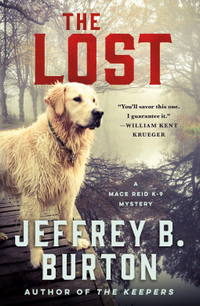
The Lost by Jeffrey B. Burton: Mace and Vira Race the Clock to Find a Kidnapped Girl

I was interrupted more than usual while writing this post by one of my dogs seeking attention. “Could I give you scritches later, girl? I’m trying to talk about fictional dogs,” is a strange mind space to be in.


The LostThe Lost

by Jeffrey B. Burton

DETAILS:
Series: Mace Reid K-9 Mystery, Volume 3
Publisher: Minotaur Books
Publication Date: June 27, 2022
Format: eARC
Length: 288 pg.
Read Date: June 16-17, 2022
Support Independent Bookstores - Visit IndieBound.org

What’s The Lost About?

Mace and his dogs are moving in different circles after the events of The Keepers, and get called to help the FBI look for a missing mother and daughter—they were kidnapped after a home invasion went wrong. Their husband/father, financier Kenneth J. Druckman, was beaten and left behind. It’s up to Mace and Vira to give them a lead.

Sadly, it doesn’t take long for Vira to find the mother’s body on Druckman’s land, or for her to act like Druckman did the killing. It’s not like Mace can just point at the billionaire and shout, “J’accuse!” He’s going to need to find more than the word of his young dog—he also needs to help the FBI (if he can) to find the five-year-old girl before it’s too late.

Kippy Gimm (now a detective) and the rest of Mace’s dogs are, of course, in on this, too.

Non-Mace Perspectives

Typically, I’m not a fan of a first-person narrated book frequently switching to the third person—usually the killer. It doesn’t turn me off of a book, but I really don’t enjoy it. Burton, however, has done a better job of it in this series than most authors. I don’t know that I can say that I’ve enjoyed every instance of it—but, unlike most, in the previous two books in this series, those sections have added to the novel.

That really doesn’t sound like a compliment, but it was one.

In The Lost, most of those scenes/chapters are essential. The way this novel is set up—and the crimes perpetrated by the various criminals involved (and there are a handful)—necessitates that we see things from several perspectives that aren’t Mace’s. There’s just no way that he can find this information (he doesn’t require it, but the reader is going to demand to know what’s going on)—and it’d take months of investigation after these events for the FBI to figure some of this out (assuming they’d try).

The later in the book we get, the better these non-Mace portions get. Particularly those from the daughter’s point of view, they brought a lot to the table and got me really invested in these characters.

I still think I’d prefer more Mace and less of everyone else in future books in the series—but The Lost really shows that this approach can work. It also underlines how good at it Burton is.

So, what did I think about The Lost?

I’m not sure how the space is given to the non-Mace perspectives in this book compares to the previous novels, but it’s significantly more—that alone makes this novel feel different. The fact that many/most of those sections of the book take place prior to Mace’s involvement with the Druckman family also contributes to that feeling. I appreciate the fact that Burton’s doing things in Book 3 to make sure the series doesn’t get in a rut.

Sure, it’d be a fine rut to get stuck in and I’d have gladly read more books that were structurally similar to The Finders and The Keepers.* But I’m glad Burton made the step now and didn’t wait until he needed to shake things up.

* I read The Keepers a year ago and didn’t get the title until right this moment. I’m not too proud to admit that.

I’m not sure that we needed to learn about Kippy’s job woes at this point—it didn’t have an impact on this book, as FBI-centric as it was. It might have been better to talk about her difficulties with her new assignment when it’d have a bearing on the plot, and wouldn’t risk feeling like a repeat when it does come up. It’s not a good position for her to be in—I don’t want to minimize that—I’m just not sure the reader needed to get that information now, I don’t know what we’re supposed to do with it. As complaints go (and I think it’s the only one I had with this book), that’s a pretty minor one.

The pacing on this is strong—we hit the ground running with Mace and Vira at the beginning and we really don’t stop. There isn’t a lot of time here for contemplation and rumination—it’s not a breakneck speed, but it’s a steady jog. Again, it shows that Burton’s doing something different in this book.

I feel like I’m spending too much time talking about how different The Lost is from the other books—and I don’t mean to harp on it, I’m just commenting on the various ways it is. I don’t know that readers who aren’t writing about the book are going to spend that much time thinking about it—I think they’ll note the freshness of it, they’ll feel the overall effect, though. I’m not saying it’s better or worse than the other two, just appreciatively different. And that’s a nice thing.

As always, any time spent with Sue, Maggie May, Delta Dawn, Vira, and Billie Joe is a boon. They’re a fun pack of animals to read about—and I’m already looking forward to their next adventure. Mace and Kippy are good, too—but we all know who the stars are here.

This would be an okay jumping-on point to the series, I’m not sure you’d get the full idea of Vira’s special talents—but that’s okay, it’s not required to appreciate the books. The important thing is that mystery readers—particularly the dog-loving kind—jump on to the series at some point.

Disclaimer: I received this eARC from St. Martin’s Press via NetGalley in exchange for this post—thanks to both for this.


4 Stars

This post contains an affiliate link. If you purchase from it, I will get a small commission at no additional cost to you. As always, opinions expressed are my own.

REPOSTING JUST CUZ: The Christ of Wisdom by O. Palmer Robertson

The Christ of WisdomThe Christ of Wisdom: A Redemptive-Historical Exploration of the Wisdom Books of the Old Testament

by O. Palmer Robertson

eARC, 432 pg.
P&R Publishing, 2017

Read: May 7 – 21, 2017


Robertson’s preface laments the way that the Wisdom Literature of the Old Testament is usually ignored in Redemptive-Historical studies —

…how do you fit these wisdom books into the flow of redemptive history that consummates in the Christ? By letting them be what they are in their own distinctiveness. They are, it should be remembered, canonical, divinely revealed, and authoritative writings that tell the world how and what to think about the deeper mysteries of human life. Rather than submitting to the moldings and bendings of modernity, these books broaden our understanding of the nature of redemptive history. Divine progress in the complete restoration of reality does not merely move in a purely linear fashion like the flight of an arrow moving across time and space without deviation until it reaches its target. This “third dimension” of redemptive history moves in a cyclical pattern. For certain aspects of God’s salvation perform according to a pattern of regulated repetition.

To ignore this dimension of redemptive history is to exclude a major portion of the old covenant canon—and that you do not want to do.

So how do you discuss these books from a RH point of view? This is what Robertson seeks to do in this book — not as a final answer, but as the beginning of a search for wisdom along these paths.

In one sense, Robertson could’ve made this easier to talk about this book — there’s not one central argument developed throughout. There’s a general discussion (brief) of wisdom, wisdom Biblically defined, that is. And then using that discussion, Robertson looks at the Wisdom Literature of the Old Testament (and Lamentations, which is not usually considered Wisdom Literature, but can function as such), summarizing each book, looking at the various forms of wisdom described and passed on through it.

Simply,

Wisdom is the ability to understand the basic principles inherent in God’s created order, and to live by those principles. Wisdom enables a person to summarize these basic principles in a succinct and memorable fashion. Wisdom is living out the whole of life with a constant awareness of accountability before a loving, gracious, and just Creator and Redeemer.

The work he does to get to this summary is well worth the time and effort to work through. Actually, that goes for everything in the book, but I’ll hold off on saying that kind of thing for a few paragraphs.

The chapter on Proverbs is, fittingly, the longest and most developed. He discusses various approaches to the book, to understanding its construction and from there trying to understand it:

A much more accurate view of the theology of Proverbs may be gained from a covenantal perspective. The wise sayings of the book are not presented in a vacuum. They are not purely moralistic aphorisms. Instead, they are steeped in theistic assumptions. These wise observations about how the world works assume that God the Creator is none other than Yahweh, the Lord of the Covenant.

This, right here, would help so much of what I’ve read about Proverbs over the last few decades. To get into everything that Robertson says about the pursuit of Wisdom, passing it on and living by it from this book would make this post unbearably long — but it builds the foundation for everything that comes. Proverbs covers Wisdom as a whole — the rest of the book deals with it in specific areas.

While dealing with the personification of Wisdom in Proverbs 8, Robertson gives an excursus, “Athanasius as the Champion of the opponents of Arianism,” that is just gold. I’d love to see this developed into something longer.

Following Proverbs, he moves on to Job. Job doesn’t give us the answers to the puzzling circumstances of life, but for those who understand the book, they learn how to puzzle through the circumstances, how to think about them — how to ask God about them. Yes, there are answers given in the book — not easy answers, not the answers anyone necessarily wants, but answers — answers tied to the hope of the Resurrection. But wisdom knows to look for those answers in the difficulties of life, with a sure faith that is willing to look at dark circumstances and say, “I don’t know why this is happening, but I trust in Him Who does.”

Ecclesiastes, is, naturally, a tricky chapter — Robertson threw me a curveball when setting aside the usual discussion of authorship of the book to note

But a related question of some significance for understanding the book has been generally neglected. This neglected question is the identity of the “target audience”of Ecclesiastes.

Chewing on this a little helps get through some of the discussion of authorship. There are so many divergent readings of Ecclesiastes that your head can swim just trying to get a sense of them, Robertson is a pretty sure guide through them before landing on his conclusion that Ecclesiastes presents a “realistic picture of life” — one that is a precursor to Paul’s discussion in Romans 8, where creation is subjected to frustration, but that this is being renewed. I do think this chapter could’ve been organized in a more straight-forward way, but I appreciate the way that Robertson makes you work through various considerations and themes before leading to his conclusions — which are all very helpful.

His discussion of Lamentations, summed up in the subtitle “How to Weep,” was one of the best things I’ve read on the book (an admittedly too-short list). You may think that’s a pretty easy thing to learn — but there’s a wise way, a godly way to weep over the tragedies that will come into our lives. The book of Lamentations teaches us that — and, here’s the RH emphasis coming through — there’s a hope tied to the wise weeping. A hope tied to faith in God’s commitment to preserving a repentant people to Himself.

Lastly, we get to the wisdom of “How to Love” (in a marital sense) in the Song of Songs. The way he reads the book is a “Redemptive-Historical” way, in

terms of the redemptive work of God in restoring humanity to the situation prevailing at the time of creation . . . a restoration of the initial blessing of man and woman in their relation to each other, just as when they first stood in each other’s presence “both naked” but feeling “no shame” (Gen. 2:25). This Song rejoices in the fullness of God’s redemption of the marriage relationship.

He concludes this chapter uniquely, with a script for a Dramatic Reading of the Song of Songs — I think there could’ve been a bit more instruction on how to approach such a Reading — and why — than he gave. But I really appreciated that part.

He could’ve used a conclusion to wrap things up — returning to the closing admonition of the opening chapter. But that’s probably just a taste thing on my part.

There’s a focus on the literary/poetic forms in each book tying in the themes and teachings of them to the way the author presents them. This kind of discussion — no matter the type of literature (inspired or not) always stretches me. I imagine I’m not alone in that — in fact, I bet many people will skip those parts. This is to their own detriment. Robertson discusses these matters in a way that takes some effort to understand, but it’s effort that pays off.

This is a truly helpful book — not full-fledged commentaries on any of the books, but helpful summaries pointed towards seeing the wisdom passed down in each book, and tied into the Redemptive work going on in history all around us. I found it interesting that the recent A Biblical-Theological Introduction to the Old Testament doesn’t approach some of these books the same way as Robertson — in some ways flatly contradicting him. I’d hoped for more overlap between the two works approaching this material from the same framework — but none of the contradictions or differences change the overall message of the Biblical material, just shadings. Honestly, in each case, I think Robertson’s readings are easier to square with the texts in consideration (and not just because he has more pages to develop his points, either).

Robertson, as always, delivers the goods with this book. The reader has to think about what he says, has to drag out their Bible and use the two books together, but will ultimately come out the better for it. I found this book to be incredibly helpful, insightful and something that drove me back to the fullness and fulfillment of all the wisdom of God — Jesus the Messiah. Just where Robertson wants his readers to focus.

Disclaimer: I received this eARC from P&R Publishing via NetGalley in exchange for this post — thanks to both for this.
N.B.: As this was an ARC, any quotations above may be changed in the published work — I will endeavor to verify them as soon as possible.

—–

4 Stars

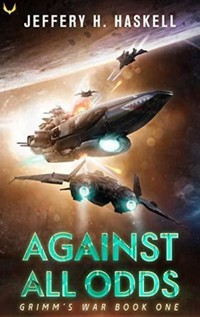
Against All Odds by Jeffery H. Haskell: It’s the Chance He’s Gotta Take

Against All OddsAgainst All Odds

by Jeffrey H. Haskell

DETAILS:
Series: Grimm's War, #1
Publisher: Aethon Books
Publication Date: April 19, 2022
Format: Kindle Edition
Length: 448 pgs.
Read Date: June 13-16, 2022

Chief Boudreqx rolled the ship until the belly faced Kremlin and the cockpit looed out into open space…open except for her.

The Interceptor. The front of her hull was painted like a shark’s head, but it was old and faded, scratched and worn.

Jacob had spent most of his life waiting for this moment, and in it, all his concerns about his past, his present, and his future faded away.

He didn’t care if she looked like a beaten prizefighter with her armored hull dented and streaked from action. Or if the turrets were scratched, streaked, and patched.

Only that she was his.

What’s Against All Odds About?

Two years ago, Lt. Jacob Grimm, did the right thing in a crisis situation. Sadly, the optics of his action were horrible and the political fallout from it turned a promising Naval career into a dead-end endeavor. He’s assigned to an obscure post—where he does well but is destined to fall into obscurity and having to leave the navy.

Then politics intervenes again—and he’s assigned a ship to command. The commander unexpectedly died of natural causes a couple of months ago, and Interceptor needs someone to get it back into shape. Grimm doesn’t know the politics behind this assignment—and doesn’t care. This is his last hope of doing anything with his time in the Navy that won’t be covered in scandal.

In the intervening months, the ship has fallen into disrepair (its major drive component is missing!), and there’s little-to-no discipline among the crew. Grimm has his work cut out for him.

Meanwhile, a hostile (foreign) government, pirates, other criminals, and an obsessed scientist are at work in this sector—naval high command is up to something, too. Grimm and his crew only know about the pirates, so they don’t realize just how interesting/dangerous life is going to get.

The Technology of this Universe

He wasn’t in uniform, but the cap was a universal spacer adornment. Ships were almost always on the cold side, enough to be uncomfortable without warm clothes and a watch cap. If a ship was warm, something was terribly wrong.

One thing every book about interstellar travel has to deal with is how both travel and communication are handled. I appreciated Haskell’s approach, it feels as grounded as any series that’s not going to force generation ships on everything can be.

The way he designed the technology/construction/etc. of the ships really appealed to me. There’s a very Star Trek-feel to the whole thing, but without the shiny panels and great lighting, the physical aspects of the ships are more Firefly-like. Think Moore’s Battlestar Galactica, just slightly less advanced.* There’s also a feel of 20th Century Navy ships and submarines—unforgiving metal everywhere, a focus on function over comfort/aesthetics; cold temperatures everywhere; worrying about what could happen to things that aren’t bolted down while the ship moves; food that’s nutritious, but not necessarily appealing.

* I’m a little annoyed with myself here. I spent the entire novel thinking about the Star Trek/Firefly comparison and only got around to BSG because I wanted to throw on some Bear McCreary as I wrote this. BSG is a better way to envision the tech/atmosphere. There’s a very non-subtle Star Trek homage in the novel, so I feel okay getting it stuck in my mind.

So, what did I think about Against All Odds?

I’ve enjoyed the first two novels in Haskell’s Full Metal Superhero series (and have been kicking myself for years for not reading more of them), but this? He’s clearly been working his craft since 2017, and it has paid off here.

I spent a good portion of the novel wishing he’d spend less time on the subplots—assuming they’d end up being important, but all I wanted to do was get back to the Interceptor. It made me question several of my reading choices over the last couple of years—why didn’t I read more things like this? There was a brief spy vs. spy thing, too, as part of a subplot—I could’ve used more of that. But once the subplots started converging on the Grimm/Interceptor story? It was like having my cake, eating it, too—and not caring about my A1C levels.

My impatience aside, this was skillfully paced—he kept the tension mounting as you become more invested in the various crews and characters, and as the layers of the plot get pulled back to reveal Haskell’s game plan. The combat scenes—the ship vs. ship scenes in particular—were great. There are times I feel shallow and adolescent for enjoying that kind of thing the way I do, but I get over that pretty quickly.

I would say the Epilogue felt unnecessary—if the reader didn’t assume most of what we got there already, I’m not sure they were paying attention. I think it’d have been better for Haskell to trust the reader to assume the Epilogue and/or to see the effects of it play out over the next book or two without spelling it out quite the way he did. That’s my major beef with the book, and if it takes until the Epilogue to get something like that? That’s a pretty good sign. There were a couple of other choices I questioned, but I want to see what Haskell does with them before I spend too much ink on them.

I’ve got Book 2, With Grimm Resolve, scheduled for mid-July—and at least one too many books on my June schedule—but it took all my discipline not to dive into it after finishing this. Do yourself a favor, grab some popcorn and settle down with this for a couple of hours—you’ll have a whale of a time.


4 Stars

20 Books of Summer

In Divine Company by Pierce Taylor Hibbs: Communication Failure?

In Divine CompanyIn Divine Company: Growing Closer to the God Who Speaks

by Pierce Taylor Hibbs

DETAILS:
Publication Date: June 7, 2018
Format: Kindle Edition
Length: 43 pg.
Read Date: June 5, 2022

God is a communicative being who speaks with himself in three persons and speaks to his creation by way of revelation. This communicative nature of God is utterly critical. The moment we say God does not speak in any recognizable sense is the moment we throw our theology in the wastebasket, along with any hope of relationship. Speech is at the core of who God is, and it’s how we come to know him.

What’s In Divine Company About?

Like many, Hibbs sees a problem in the prayer life of most Christians, and it plays a significant role in the feeling too many have of being distant from God. He calls this a “communicative malnourishment.”

His treatment for CM is two-pronged:

predictable, I think, but I hope to look at it in fresh ways: (1) following God’s voice in Scripture and listening to what the world is saying about him (hearing from God), and (2) praying to the Trinity (speaking with God).

This short booklet looks at God (and then His people) as communicative beings, as language as communion behavior. God’s communication comes from General and Special Revelation, ours is in prayer.

What did I think about In Divine Company?

If you read this book and change nothing in your life, then either I have failed as a writer or you have failed as a responsive reader…I want to be forthright in saying change is the most important measure of value for this book. So, I encourage you to read and grow, not merely to read and know.

If it’s the most important measure of value for the book, it’s really the best way to evaluate the book. It’s too soon for me to say how much this book has changed me, it’s only been a week—but I think the potential is there.

I love this approach to thinking about prayer and the problems with our prayer life. By better understanding the nature of our communicative God, we better understand our need (as image-bearers) to communicate with Him. Communication is part of our nature as it is His nature, how can we not communicate with him, and seek to find more ways and more time to do so? To be better listeners and better talkers?

Hibbs has got to be my favorite theological writer today. There are theologians that I learn more from, but none that I enjoy reading like him—it only makes sense, he cares a bit more about language and writing than your typical theologian.

This is good for the mind and offers plenty of tools to use for change. The rest is up to the reader.


4 Stars

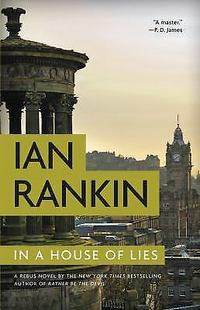
In a House of Lies by Ian Rankin: The Past and Present Collide for Rebus, Clarke, and Fox

In a House of LiesIn a House of Lies

by Ian Rankin

DETAILS:
Series: John Rebus, #22
Publisher: Little, Brown and Company
Publication Date: December 31, 2018
Format: Hardcover
Length: 372 pg.
Read Date: May 24-27, 2022
Support Independent Bookstores - Visit IndieBound.org

What’s In a House of Lies About?

A decade and change ago, a private investigator went missing. John Rebus was part of the team that spent weeks looking for him—interviewing his client, his family, his boyfriend, the target of his current investigation, and everyone else they could think of. At least that’s what the paperwork said. There’s some question about that—and the family of Stuart Bloom has forced more than one investigation into the original search.

Now his body is discovered—in an area that had been well-searched originally. There’s reason to believe that the body had been somewhere else for years. Now the police—a team featuring DI Siobhan Clarke—have to decide where it was as well as who killed him. This involves taking a fresh look at the old case as well as a new investigation. The original detectives (those who are still alive, that is) and some of the uniformed officers are brought in for questioning—which means that Rebus is under the microscope once again. This suits him fine—it’s a chance for him to have a part in closing the case once and for all (at least in his mind)

Meanwhile, Malcolm Fox’s boss assigns him to take one final look at the original investigation—given the new discovery, can they find police misconduct at the root?

Also, Clarke’s being harassed by someone—only crank calls and vandalism, so far. She doesn’t want to do anything official about it, so she asks Rebus to look into things—if nothing else, it might keep him out of her hair while she looks for Bloom’s killer. Might.

There’s a lot to untangle in these pages, thankfully, Rankin’s three detectives are on the cases.

What did I think about In a House of Lies?

This post feels entirely too short. I’m struggling here. What do I say about Rankin or Rebus (or Clarke or Fox) that I haven’t already said? I’m willing to believe that I’ve asked this question when discussing at least 3 previous books. I’m sorely tempted to just post something like: “Ian Rankin wrote a book about John Rebus. You know what to do.”

I was particularly impressed at the way Rankin got the band (on both sides of the law) back together here—for the reader, it’s expected—probably even inevitable. But it comes across as organic and unforced. Between Rebus’ retirement, and the divergent paths that the others’ careers have taken, that’s no mean feat. Unlike, say, Renée Ballard, Siobhan Clarke isn’t soldiering on with those she can’t trust. Ballard has to get Bosch involved, Clarke chooses to ask for his help and/or lets him push his way in.

Solid mysteries, expertly plotted and executed, full of characters (new and old) that you believe and get invested in. In a House of Lies feels as fresh and as compelling as Knots and Crosses.


4 Stars

This post contains an affiliate link. If you purchase from it, I will get a small commission at no additional cost to you. As always, opinions expressed are my own.

The Doctrine of Scripture: An Introduction by Mark D. Thompson: A Strong and Helpful Entry this Series

The Doctrine of ScriptureThe Doctrine of Scripture:
An Introduction

by Mark D. Thompson

DETAILS:
Short Studies in Systematic Theology
Publisher: Crossway
Publication Date: April 26, 2022
Format: Paperback
Length: 185 pg.
Read Date: May 15, 2022
Support Independent Bookstores - Visit IndieBound.org

The Christian doctrine of Scripture is an integrated account of the word of the living God given to us in written form through the conscious, creative, yet faithful agency of human servants especially prepared for this work, and attended at every point by the Holy Spirit. As a doctrine, it does not arise from isolated and unusual “proof texts.” Instead, it emerges from a broad and deep biblical theology and is ultimately anchored in the being and character of the triune God. At its center is Jesus Christ, the incarnate Word, who himself appealed to the written word, both endorsing and fulfilling the Old Testament and, through the commission he gave to his apostles and the promise of his Spirit, authorizing the New Testament.

What’s The Doctrine of Scripture About?

This seventh volume in the Short Studies in Systematic Theology series addresses (as the title states), the doctrine of Scripture.

Thompson grounds his discussion in Christ’s view of Scripture—how he uses it, refers to it, and points people to that. If that’s his view, then those who follow him ought to share it. From there, he discusses God’s speaking to his people as depicted throughout Scripture—as He is a communicative God, we ought to rightly esteem and study that communication—starting with the spoken word and then the record of it—as well as the rest of the written revelation given to us. He then explains the attributes—or character—of Scripture: clarity, truthfulness, sufficiency, and efficacy. The book then closes with some guidance and encouragement for how the believer ought to use scripture—how we are to be discipled by it.

Highlights

I typically like to address highlights in a book like this—sadly, I don’t think I can really point to any. I can’t point to a chapter or two, or line of argumentation, or anything that I thought was more valuable, made a bigger impact on me, or anything else. It’s a strange feeling, really. Each chapter was equally strong—it’s not often you find a book like that.

I guess the strongest part of the book was Thompson’s approach—he kept it centered on Christ. Nothing against other books on the Doctrine of Scripture or Sola Scriptura, etc.—but few of them focus on Christ this way.

So, what did I think about The Doctrine of Scripture?

How a person responds to the word of God, spoken by Jesus or written in the Scriptures, has serious consequences. The most articulate confession of the nature of Scripture and the strongest affirmations of its authority mean nothing if a person is not willing to live under that authority with repentance and faith. In contrast Jesus once exclaimed, “Blessed . . . are those who hear the word of God and keep it!” (Luke 11:28).

This is one of the better entries in the series—it covers all the basics in clear, comprehensible terms, and then goes a little further, prompting the reader to further reflection and study.

A book this good deserves more than that sentence as an evaluation, but there’s not much more to be said. If you’re looking for a capable, accessible, and useful introduction to the Doctrine of Scripture—or a refresher on the essentials on this vital topic, you will be well served to give this a read.


4 Stars

This post contains an affiliate link. If you purchase from it, I will get a small commission at no additional cost to you. As always, opinions are my own.

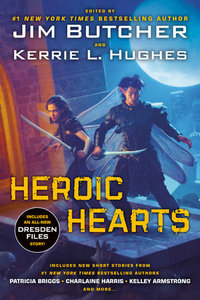
Heroic Hearts ed. by Jim Butcher and Kerrie L. Hughes: Street-wise Herculeses to fight the rising odds

Heroic HeartsHeroic Hearts

edited by Jim Butcher and Kerrie Huges

DETAILS:
Publisher: Ace
Publication Date: May 3, 2022
Format: Paperback
Length: 345 pg.
Read Date: May 18-19, 2022
Support Independent Bookstores - Visit IndieBound.org

Heroes have fascinated humanity since we started telling stories. They became even more fascinating when we started writing the stories down—and achieved the status previously reserved for pantheons of deities when we started putting them on the big screen. Heroes have become big business.

But heroes, real heroes, aren’t titans or icons.

Real heroes are standing behind cash registers, starting cold trucks, getting kids out of bed. They’re the everyday humans who happen to be standing there when something bad happens, and when there is a sudden need for skill, courage, or intelligence. They’re the regular people in irregular circumstances who find themselves considering others first and standing up to do whatever needs to be done.

What’s Heroic Hearts About?

In her Foreword, Kellie Hughes describes this as

a collection of hopeful stories about courage, bravery, codes to live by, and people you can trust.

Who doesn’t love a hero story? Here we have twelve stories from a dozen UF authors all approaching this idea in their own distinctive ways. Some are stand-alones, some are parts of a series.

Authors I’m Not That Familiar With (if at all)

It’s the rare anthology that will be full of only authors you know well—half the point of one of these is to be exposed to someone new so you can decide if you want to read more by them.

Charlaine Harris wrote the only story I didn’t appreciate in this collection, I just couldn’t get into it. That’s likely something to do with my mood/what I ate today/something else. Most days, I simply wouldn’t have cared—I don’t think it’s in me to really like this one.

I thought the rest of the stories were entertaining and well-executed, but a few are going to get me to keep an eye out for authors/series. Chloe Neill’s “Silverspell” tempted me to check out the rest of that series, these are characters and a world I could spend more time with. Jennifer Brozek’s “The Necessity of Pragmatic Magic” was great—ditto for “Grave Gambles” by R.R. Virdi.

“Troll Life” by Hughes was just wonderful. It’s everything you want in a short story—we’re given a well-developed world, a handful of strong and interesting characters, a good plot, and it just made me smile throughout.

Authors I’m Very Familiar With

Kevin Hearne, Patricia Briggs, and Jim Butcher are what brought me to this collection. I’ve read everything I can by them, so that’s not surprising, right?

We meet up with Atticus, Starbuck, and Oberon in Australia, looking into the cause of a massive forest fire, in “Fire Hazard.” It’s told from Oberon’s point of view, which makes it a sure-fire win. I’ll read just about anything in Oberon’s voice—and this story demonstrates why. It’s funny and action-packed. Some of the best lines in the book are in this story, too.

I wasn’t that interested in “Dating Terrors,” by Patricia Briggs based on the idea. “Asil on a blind date” just doesn’t draw me in—sure, I’m curious about Asil’s activities, so I wanted to read it. But the concept didn’t grab me. That lasted only a few pages—now I want to see more about Asil’s date and her friends. Preferably with Asil around, but that’s not necessary. I should’ve known Briggs would hook me by the end, and come into it with better expectations.

This brings us to the story the book opens with (but I saved until the end), Jim Butcher’s “Little Things.” This happens days after Battle Ground, as the city (and its wizard defender) is trying to recover from those events. The “Little Things” this story focused on are Major General Toot-Toot Minimus, his forces, Lacuna, and Mister. When a threat to the castle slips by the guards and other defenses, these heroes have to rise to the challenge. It’s deceptively fun, light, and breezy. But it’s Butcher, you know he won’t let you off that easy. Dresden in the shadow of Battle Ground? The emotional core of this story isn’t small. The story made my day…I’ve got nothing negative to say about it.

So, what did I think about Heroic Hearts?

This is a strong collection of Urban Fantasy stories, with a little something for everyone. Anything I didn’t mention above was fine—they’re all written well, but some characters/stories aren’t for everyone, and that would describe the few I didn’t talk about. Every story was worth the time (except for that thing by Harris, I just didn’t see why that was written—and I wouldn’t be shocked to hear that most readers of the book will think I’m nuts for that).

This probably would’ve gotten a warm 3 Stars from me, if not for the Briggs and Butcher stories. I enjoyed almost all of these stories, and really only disliked one. But wow, those two were just outstanding. Nothing that made me as happy as those two did is going to get less than 4.

Even if you’re new to the genre or are only a fan of one or two of the authors, I expect you’ll find yourself enjoying most, if not all, of the book. Pick it up.


4 Stars

This post contains an affiliate link. If you purchase from it, I will get a small commission at no additional cost to you. As always, opinions expressed are my own.

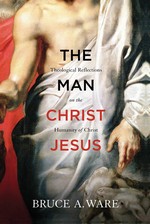
Reposting Just Cuz: The Man Christ Jesus: Theological Reflections on the Humanity of Christ by Bruce A. Ware

Was flipping through this book the other day, dipping my toes in here and there after reading Bavinck on Christ’s humanity (not that there was a problem with Bavinck, I just needed someone else’s voice in my head for a minute). So it seemed fitting to repost this today, rather than something half-baked on another book. I just wish that I’d finished the sentence I abandoned in paragraph #4….

The Man Christ Jesus: Theological Reflections on the Humanity of ChristThe Man Christ Jesus: Theological Reflections on the Humanity of Christ

by Bruce A. Ware
Kindle Edition, 160 pg.
Crossway, 2012
Read: March 9, 2014

One of Ware’s presuppositions — repeated throughout this book — is that evangelical Christians today have a good understanding of and embrace the doctrine of the Divinity of Christ, but their understanding of his humanity is wanting — enter this book. Without dipping a toe into Nestorianism, Ware wants his readers to understand the humanity of Jesus. He explains this so with a constant eye to His divinity — and how that divinity is expressed in the life of the God-man.

One of his main interests is for his readers to understand the dependency of Jesus on the Spirit — His indwelling, guidance and empowering. Without that indwelling, it would be impossible for Jesus to carry out His father’s will. If we grasp that, we see the limitations of the divine nature of Christ to his earthly work, which may seem paradoxical, but isn’t as Ware will explain.

The application portions to every chapter keep this book from being merely theoretical (however great that theory is) to helping readers put shoe leather to this teaching — as every teaching ought. It’s just easier when the author goes out of his way to help us start that on our own.

I really appreciated the chapter “Resisting Temptation,” Ware’s reflections on Hebrews 4:15 and the idea of Jesus being tempted to sin in general. He surveys some of the leading theories before suggesting his own idea how the idea of the impeccable theanthropos being tempted without sinning. He put into words an idea or two that had been floating around in my own head for a few years, and

I was surprised that Ware had to devote an entire chapter defending the masculinity of the God-man, although I shouldn’t have been. Sadly, this was a pretty boring chapter. Ware really beat this horse far beyond the point of its flatline. Sadly, he probably needed to be as through given today’s thinking.

Deep enough to discourage a casual read, but friendly enough that this should be able to be read by thoughtful laity.

—–

4 Stars

Of Claws and Fangs by Faith Hunter: Tales of Vampires, Weres, Witches, Skinwalkers and More

Of Claws and Fangs Banner

Of Claws and FangsOf Claws and Fangs

by Faith Hunter

DETAILS:
Series: Jane Yellowrock/Soulwood 
Publisher: Ace
Publication Date: May 3, 2022
Format: eARC
Length: 352 pg.
Read Date: April 26-28, 2022
Support Independent Bookstores - Visit IndieBound.org

What’s Of Claws and Fangs About?

It’s a collection of 18 shorter works in the Jane Yellowrock/Soulwood universe—one novella, a couple of very short vignettes, and several short stories.

This is the second collection of such works (and I really should get that first one, I’m not sure how I’ve managed to miss it), and brings in material from a variety of collections and some things published online and brings them all together in one handy volume—which is great, most readers are like me and we’re not going to be able to get all these various collections, but you put them in a book like this, and we’re going to have a good time.

I briefly considered giving a sentence or two about each piece, instead, I’m going to focus on just a few:

Jane Tracks Down Miz A

This is the sole bit of new material for the book—it’s described as a “short-short story.” It’s a little longer than a vignette, but not quite a short story. It was originally written for someone who won a charity auction, and Hunter re-worked it for this collection. I wasn’t sure what to think of it originally, but by the time it was over I wanted it to keep going.

Bound into Darkness

This novella is the longest piece in the book, and as such, seems like it should get a little more attention than the rest. The story centers on Eli and Molly’s sister Liz Everheart. Several other characters get involved by the end, but it’s primarily about these two and one of the worst dates (that really wasn’t a date) in history. There were plenty of good character moments, a few good supernatural baddies, and a lot of Eli doing his thing.

The nicest touch, if you ask me, was the short story that followed it in this collection. It ties into the novella, talking about something that happens behind the scenes. It doesn’t really alter your understanding of the novella, it just adds a little color. I really liked it—not just because of the added color, but the story was nice, too. I didn’t realize I wanted to know more about Lincoln Shaddock, but I was wrong.

Other Highlights

I’m a big Soulwood fan, so I was pleased to run into two stories from that series here. There’s a cute story about Nell’s early days with PsyLED and Black Friday, which is followed by Occam’s origin story.

There’s a great story where Angie Baby gets to shine. I’ve been thinking it for a while, but this story (“My Dark Knight”) confirms it for me—I need a stand-alone novel featuring her, either at her current age or as a young adult. She’s possibly the most interesting character in this series that features several interesting characters.

Of course, there’s plenty of good material featuring Jane and Beast—it’s pretty much a requirement. My one note on “Life’s a Bitch and Then You Die” was that it would justify the book’s purchase price by itself. Then I read “Of Cats and Cars” (I posted an excerpt from that earlier today), “Anzu, Duba, Beast” and “Shiloh and the Brick”—I think I’d have said the same about any of them.

Lowlights?

Really, there weren’t any—not many collections like this can say that.

For me, the collection started off rough—but I’m going to be in the distinct minority on this. The first vignette and the story that followed focused on Leo Pellissier, and he’s really never been my cup of tea. I can enjoy him as an antagonist to Jane, and even a benefactor, but that’s it—as a secondary character, basically. But even then, I thought the story, “Make it Snappy,” ended well, with a nice reveal at the end.

So, what did I think about Of Claws and Fangs?

I had more fun with this than I expected. I expected to have a good time with it, don’t get me wrong, but with short story collections, I try to go in with low expectations (and usually have those met). Like I said above, there’s not a bad one in the batch—sure, there were a few I could’ve liked more, but none of the stories were disappointing or dull.

For readers of Jane Yellowrock and Soulwood, this is a must. You’ll enjoy the time with your favorites, get a new perspective on a handful of them, and will be exposed to a variety of adventures that wouldn’t fit into a novel.

There’s nothing to complain about here, and plenty to enjoy—go get your paws on Of Claws and Fangs.

This post contains an affiliate link. If you purchase from it, I will get a small commission at no additional cost to you. As always, opinions are my own.
My thanks to Let’s Talk! Promotions for the invitation to participate in this tour and the materials (including the book via NetGalley and Berkley Publishing Group) they provided.

Old Made New by Greg Lanier: A Practical and Engaging Guide for Laypeople

Old Made NewOld Made New:
A Guide to the New Testament
Use of the Old Testament

by Greg Lanier

DETAILS:
Publisher: Crossway
Publication Date: April 12, 2022
Format: Paperback
Length: 137
Read Date: April 10-17, 2022
Support Independent Bookstores - Visit IndieBound.org

What’s Old Made New About?

Lanier’s goal is to enable the average reader of the New Testament to understand how and why the authors would use an Old Testament passage at a particular point. As often as the NT uses the OT, that’s so important.

He begins—and this is beyond sad that he has to—by explaining why the reader of the NT would want to understand their use of the OT. He then differs his approach from others—primarily he’s not going to get bogged down in or distracted by technical considerations. As interesting as I find that kind of thing, he has a point.

In Chapter 1, he explains his method for analyzing the NT usage of a portion of the OT (I won’t get into that here), and then he spends the next few chapters demonstrating it.

The bulk of the book consists in tracing the NT authors’ engagement with the OT along three major themes:
Chapter 2—articulating the gospel in terms of the saving work of God in history and the gift of salvation to individual believers
Chapter 3—articulating the fullness of Jesus in his person and work, both as divine Son and human Savior
Chapter 4—articulating the identity of the church as eschatological Israel, as well as its mission and conduct for today

Each chapter has a mix of shorter examples that help prove out these themes, as well as longer case studies (six per chapter) that model for the reader how to do the work.

Appendix

There is a fourteen-page appendix to this book, “Inventory of New Testament Uses of the Old Testament,” listing most of the major agreed-upon uses of the Old Testament in order of New Testament chapter and verse, and then notes what kind of NT usage (Quotation, Allusion, Citation). There are some disagreements about what verses are NT uses of the Old, so Lanier keeps it to those with widespread agreement.

This is a very useful list both for the sake of reference and to help the reader practice the principles in the book. I know I’m coming back to this appendix.

I would’ve liked another version of this list using the same data, but in order of the OT book/chapter/verse—only to make things easier.

So, what did I think about Old Made New?

Lanier did a great job of balancing explaining his points with demonstrating the principles, and showing why the reader would want to use these principles. This is an engaging book, an eminently practical read, and an easy-to-use hermeneutic guide.

I really liked Lanier’s 3-step approach to analyzing the usages, it’s easy to wrap your brain around both as an example and for following the example. His case studies are both great object lessons and interesting for what he shows about the passage. I’d have had no problem reading these chapters if they were twice as long for personal benefit. Getting a handle on tools like this is such an aide for personal study and understanding, and Lanier’s given the Church a great gift with such an easy-to-understand and easy-to-use guide.

I definitely recommend this to your attention, study, and application. You’ll be rewarded.


4 Stars

This post contains an affiliate link. If you purchase from it, I will get a small commission at no additional cost to you. As always, opinions are my own.
Page 22 of 88

Powered by WordPress & Theme by Anders Norén