Tag: 4 Stars Page 21 of 88

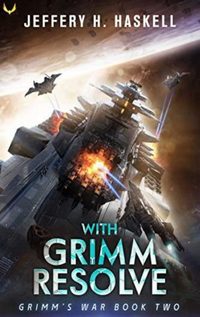
With Grimm Resolve by Jeffrey H. Haskell: Buckle Up, Grimm and the Interceptor are Back!

With Grimm ResolveWith Grimm Resolve

by Jeffrey H. Haskell

DETAILS:
Series: Grimm's War, #2
Publisher: Aethon Books
Publication Date: May 17, 2022
Format: Kindle Edition
Length: 373 pg.
Read Date: July 15-18, 2022

“Kim, any ideas?” he asked.

He didn’t need to tell her what for— her stations repeated everything he saw and kept her apprised of the situation.

“Other than we run? Nothing, sir. I know that’s not what you were hoping to hear.”

“I can’t expect you to solve the impossible every day. Maybe just on Tuesdays,” he said with false cheer.

What’s With Grimm Resolve About?

Grimm’s back from command school and the USS Interceptor is back on patrol. His crew has become the well-oiled machine he knew they could be. There’s been a little shuffling of the crew between books, but by and large, those secondary characters you enjoyed before are back and ready for more.

I really don’t know what else to say shy of recapping the whole novel—the crew looks into a distress call on a fairly remote station, and finds both action and a mystery. Chasing breadcrumbs leads them to a couple of discoveries that blow their minds (and don’t do wonders for the structural integrity of the ship, come to think of it). Coupled with what they uncovered/witnessed in the first volume, Grimm and his crew know that things for their Navy and the Alliance will never be the same.

Its Place in the Series

Initially, I saw this advertised as a trilogy (and it still looks like one on the publisher’s website, as of the time I write this)—and there’s at least one reference in the book to a trilogy.

However, Amazon tells me there’s a fourth book coming in September. I’m refusing to read anything about it, so I don’t inadvertently learn anything about the third volume, One Decisive Victory. But I can’t stop speculating—was there just too much to wrap up in One Decisive Victory, so Haskell had to split it? (I can 100% believe that given the events of this book) Did he finish the trilogy and decide he was having too much fun/success to leave it there and came up with something new? (Another theory I could absolutely believe).

Regardless, With Grimm Resolve functions as a middle novel of a trilogy—it’s darker, the stakes are higher, and it certainly appears that Grimm, the Interceptor, her crew, and potentially the entire Alliance are in dire straits—straits so dire I should probably capitalize them. At the same time, we get a complete story here—Haskell only leaves the minimum unresolved. There’s clearly more to come, but we get a resolution on most of the important events here. One Decisive Victory will be about the repercussions of this novel.

So, what did I think about With Grimm Resolve?

Against All Odds started slowly, establishing the status quo for the Navy, the political realities in the Alliance, and the state of relations with other governments—in addition to everything about Grimm and the Interceptor. Once that’s established, he takes the brakes off and it becomes a thrill ride. As we start this novel by focusing on a different group and their activities threatening the Alliance, I assumed we’d get something similar.

And we sort of do—but it’s quicker, Haskell doesn’t have much to do in order to orient his readers, and the action hits before we’re a quarter of the way in—and it really doesn’t let up. Yes, there are moments of rest for the reader and characters, it’s not all danger and combat for the last three-quarters. But the plot doesn’t stop and no one gets out of the woods until the end. There’s a tension throughout that doesn’t let up.

Along those lines, I should mention a nice trick by Haskell. The series is called Grimm’s War, and whether it goes on for one or two (or more) books, you know Grimm makes it through Book 2, or the series would be called something else. Yet, there’s more than once where you can see Grimm being killed and you can’t help but wonder if Haskell has fooled you into thinking he’s safe. I love that he was able to do that.

With Grimm Resolve ended in a way that made me consider tossing off my schedule and jumping on to the next one right away. I’m thoroughly enjoying this series and can’t imagine why anyone wouldn’t. Give this series a try!


4 Stars

20 Books of Summer

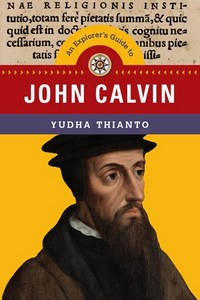
PUB DAY REPOST: An Explorer’s Guide to John Calvin by Yudha Thianto: Calvin 101

An Explorer's Guide to John CalvinAn Explorer’s Guide to John Calvin

by Yudha Thianto

DETAILS:
Series: Explorer's Guides Series 
Publisher: IVP Academic
Publication Date: July 11, 2022
Format: eARC
Length: 256 pg.
Read Date: June 12-19, 2022
Support Independent Bookstores - Visit IndieBound.org

What’s An Explorer’s Guide to John Calvin About?

IVP Academic’s website describes the Explorer’s Guide Series as:

Anyone who has ventured into new territory knows the importance and benefit of having an experienced guide. Discovering the classics of Christian theology is no different.
The Explorer’s Guide Series acts as a guide for those who are exploring some of the great Christian texts and theologians from the church’s history.
Written by scholars with years of expertise, these volumes will acquaint readers with the sometimes unfamiliar context in which these classic texts were written and help readers navigate the rich yet often complex terrain of Christian theology. New and experienced readers alike will benefit from these volumes as they continue on their journey of faith.

This volume focuses on John Calvin, the Genevan Reformer. Yudha Thianto has been introducing students at Trinity Christian College to Calvin for years. Now he aims to bring an accessible overview of his life and thought through this book.

Part One: Calvin the Man

The first part of this book focuses on the historical context and the person of Calvin. Why do people still read him today? Why is he so important—or at least why is he regarded as such?

After sketching out why Calvin’s worthy of study, Thianto gives a brief (34 page) biography of Calvin. I’ve read a handful of full-length biographies of John Calvin, and I learned a thing or two from this.

Thianto follows this biography with a FAQ about Calvin—addressing several important questions and controversies about him and his teaching. Several parts of that FAQ were impressive, and I appreciated his approach to it (he did duck a couple of typical controversial points that are brought up—but it’s safe to argue that those are for less introductory works). Then he spends a chapter focusing on Calvin as a pastor. It covers some of the material from the biography, but from a different angle—and it covers a lot of additional material, too. Whatever Calvin’s legacy may be, this chapter addresses what was likely the most important part of his life to him.

Part Two: A Guide to The Institutes of the Christian Religion

A little more than half of the book is spent on the book Calvin’s best known for. Thianto spends a chapter talking about the different editions the book went through, where Calvin was in his career when each was written, and discusses some of the major differences between editions.

The final version was the 1559 edition, which is composed of four books/parts. Thianto spends one chapter on each book—describing the flow of thought, some important arguments made, and the major doctrinal teachings.

This is not an easy work to summarize and condense into a little over 100 pages, and I’m sure some will say Thianto glossed over or skipped something important—he undoubtedly did. But he also covered most (if not all) of the essentials). Something like this part of the book would be great to have for someone diving into the book for the first time.

So, what did I think about An Explorer’s Guide to John Calvin?

First, I really like the idea for this series, and hope to get my hands on other volumes. Naturally, I think someone as ill-understood and intimidating as Calvin is a good subject for this kind of book.

I appreciated Thianto’s approach to Calvin, the misunderstandings surrounding him (although he doesn’t cover all of them), and his writings. His experiences in the classroom have given him a solid understanding of those things that need to be covered for someone’s initial/early exposure to the Reformer, and it shows.

As this is supposed to be a guide for those with little-to-no exposure to Calvin, I can’t complain about the lack of depth displayed on some issues—and I really wouldn’t want to, anyway. The only thing that jumped out at me to make me wonder about the book is a point in the conclusion where he suggested that different beliefs about the Trinity are equivalent to differences regarding sacraments or predestination and that Calvin would see them as such. It was a minor point in the conclusion, and I think the overall point was sound—but the Trinity isn’t something Calvin would put on the same level as a debatable point of doctrine.

This is a great resource—a fantastic introduction to Calvin and a handy guide to reading the Institutes for yourself. If you’re curious about Calvin and don’t want to do the heavy lifting required by a full biography and/or reading his Institutes, I’d strongly recommend picking this up and giving it a read (and hanging on to it for future reference).

Disclaimer: I received this eARC from InterVarsity Press via NetGalley in exchange for this post—thanks to both for this.


4 Stars

This post contains an affiliate link. If you purchase from it, I will get a small commission at no additional cost to you. As always, opinions are my own.

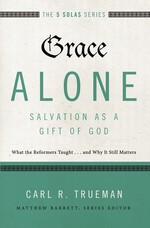
REPOSTING JUST CUZ: Grace Alone–Salvation as a Gift of God by Carl R. Trueman

Grace Alone--Salvation as a Gift of GodGrace Alone–Salvation as a Gift of God: What the Reformers Taught…and Why It Still Matters

by Carl R. Trueman
Series: The 5 Solas Series
Paperback, 243 pg.
Zondervan, 2017
Read: October 8 – 22, 2017

After struggling through three books in this series, I will admit to some trepidation about this one — thankfully, Carl Trueman is an author I have a bit of experience with, so I figured it’d be worth the effort. Thankfully, there wasn’t that much effort, and the book was absolutely worth the time.

Trueman organizes this book differently than the others — in Part 1, he considers Sola Gratia in Scripture and Church History. Trueman surveys the idea of grace alone through both Testaments (it’s easier than some would lead you to think to find it in the Old Testament), looking at individual texts as well as themes throughout the books. I would have liked this to be a bit longer — but I really can’t complain about it. Following that, Trueman focuses on the teachings of the Church throughout history about Grace — starting with the early church, focusing on Augustine and his Confessions as emblematic of the first centuries of the church. Then he continues to focus on Augustine but shifts the focus to the controversies sparked by the Confessions with Pelagius and his followers as the prism through which the (Western) Church discusses and teaches Grace since those days. In the next chapter, Trueman focuses on Medieval theology about grace using Aquinas as the example. Following that we get chapters on Luther and Calvin (and those who’d be allied to Calvin’s branch of the Reformation), shaking off the accumulated tradition and misunderstandings to get back to the core of Scriptural and Augustinian teaching (with help from Aquinas). Would I have appreciated another chapter or two about post-Reformational history? Sure. But they weren’t necessary to fulfill Trueman’s aims, and we get a taste of what they’d offer in Part 2.

Part 2 is titled “Sola Gratia in the Church.” Grace is communicated to Christians via The Church, Preaching, Sacraments, and Prayer and so Trueman a. defends that idea and then proceeds to discuss how God goes that in chapters devoted to each of those. For those of the Reformed tradition, there is nothing ground-breaking or controversial here, although Protestants from other traditions might find some of the ideas challenging. These are solid chapters of the kind of teaching I expected from this series, and I appreciated them.

In the book’s Conclusion, Trueman attempts to address the questions: “What would a ‘grace alone’ church look like today? What would characterize its life as a church? How might we recognize such a church when we see it?” The answers to these questions are a mix of doctrinal and practical ideas that he lists in ten points showing the interconnections between them. This conclusion (in building on what came before) is worth at least half the price of the book — just fantastic stuff.

I still have one to go in the series, so I may have to modify this, but this one is by far the best of the bunch — accessible, pastoral, and thorough without sacrificing depth. Trueman doesn’t seem to get distracted by pet details, nor to just beat the same obvious deceased equines on this topic. If you’re going to read just one of the five, let this be it. Alternatively, if the some of the others have left you wanting, give this one a shot, I think you’ll appreciate it.

—–

4 Stars

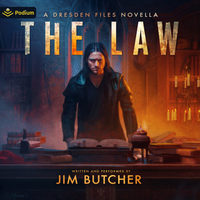
The Law (Audiobook) by Jim Butcher: Harry Gets Back to His Roots in this Novella

The LawThe Law

by Jim Butcher

DETAILS:
Series: The Dresden Files
Publisher: Podium Audio
Publication Date: July 5, 2022
Format: Unabridged Audiobook
Length:  3 hrs., 22 min.
Read Date: July 5, 2022

What’s The Law About?

Harry is still recovering from the events of Battle Ground, as is the city of Chicago. This is going to be a theme for a while, It seems (and should be). But he’s doing better than he was in “Little Things” (from Heroic Hearts. I’m not sure that I am, but that’s something for me to take up with my therapist.

He and Billy are tending to some administrative duties when they’re interrupted by someone looking for help. “Everyone knows” that if you need help, there are groups you can seek out, but if you need a miracle…Harry Dresden is who you look for.

Her problem isn’t supernatural in origin—it’s dealing with a vicious landlord who is on the verge of destroying a tutoring service that she and several others have built up over the last few years, serving underprivileged kids and barely scraping by. Something about her problem strikes at something in Harry—this isn’t the kind of problem he’s dealt with in a long time (but it brings the reader back to the time before his office building burned down, probably earlier, too). He figures the landlord is a bully and he can go out-bully him and help the tutor out.

Of course, it’s not that easy.

And sure, I said something earlier about it not being a problem of supernatural origin. But maybe it’s supernatural-adjacent, and everyone’s favorite wizard gets to do his thing.

Battle of the Bean Aftermath

We don’t spend much time with characters inside Harry’s immediate circle, and everyone (or so close to everyone that it doesn’t matter) that he comes across outside that circle responds in some way to what he calls the Battle of the Bean—although they may not understand what actually happened there (officials have done a really good job with a cover story, better than anything Tommy Lee Jones’s Agent kay ever gave). But more people have at least a general awareness of what happened there than I think Harry realized.

I can’t dive too deeply into this without spoiling, so I’m just going to offer two thoughts:
bullet I loved seeing Harry’s reactions to these responses.
bullet This, more than anything that happened to any character(s) in Battle Ground makes that whole thing more real to me. It gives it all a different weight than many of the events in the books—it didn’t happen in Chichen Itza or some other place that will make it out-of-sight-out-of-mind; it’s not something that was limited to the signatories of the Accords (or their like), or something that had limited impact on us muggles. This was a major event and the ripples from it are going to change everything.

How was Butcher as a Narrator?

He was…fine? Yeah, he’s clearly not James Marsters (who will, Butcher assures listeners be returning for the next novel), and doesn’t try to be.

Still, listening to the author bringing his own words to life—hitting things the way he absolutely intended, rather than someone’s best guess—is always fun. While Dresden is generally narrated by a better performer, I’d gladly listen to more Dresden audio narrated by Butcher (and would only complain a little).

His characterization of Bob was, shall we say, interesting. If I hadn’t heard 16 novels by Marsters, I might have appreciated it more. While I didn’t dislike Butcher’s Bob, it wasn’t what we’ve grown used to.

Oh, be sure to stick around at the end for some outtakes. They’re amusing and something that others should add to their audiobooks.

So, what did I think about The Law?

This was a great way to bridge the gap between Battle Ground and the next novel (we might get more bridges, too….who knows?). Harry, his allies and friends, and the city are recovering. Things are shifting around and the new status is becoming more quo. That kind of thing wouldn’t work in a full novel, we need something more, but it’s great in a novella (he says knowing that Butcher could easily prove him wrong). Now we’re ready for the next Big (or fairly-Big) Thing in Harry’s life.

My favorite part of this novella is that Harry can’t blast his way to a solution to this case. He can’t yell “Forzare!” or “Fuego!” and make everything okay (except for cleaning up the debris left behind). He has to think about it. He has to work the system—multiple systems, actually. He has to find a new ally to help him through one of them, too. We all know Harry is capable of this, but too often lately (especially post-Winter mantle) his solution is to punch at something, punch some more, and then, if there’s no other recourse, to think about the problem. This was a nice return to Harry having to think.

This is not one of the best entries in this series—long or short form—but it’s a really good one. I love spending time in this world and with these characters, so I’ll gladly embrace any excuse to do so. Even if you’re only a casual Dresden fan (I assume those exist?), you’ll have a good time with this one.


4 Stars

PUB DAY REPOST: Holy Chow by David Rosenfelt: Keeping the “Semi” in Andy’s Semi-Retired Status

Holy ChowHoly Chow

by David Rosenfelt

DETAILS:
Series: Andy Carpenter, #25
Publisher: Minotaur Books
Publication Date: July 5, 2022
Format: eARC
Length: 304 pg.
Read Date: June 20, 2022
Support Independent Bookstores - Visit IndieBound.org

What’s Holy Chow About?

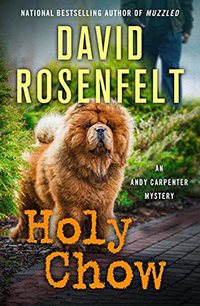
About a year ago, Rachel—a new widow in need of a companion—came into the Tara Foundation’s dog rescue facility and fell in love with a Chow Chow named Lion (who reciprocated)—Andy remembered her fondly. Then she calls out of the blue with a favor—will Andy take the dog if she dies and her stepson, Tony, can’t/won’t take the Lion?

Andy says of course he will. Within a week, Rachel’s been murdered and Andy learns more about this woman. She was rich, in an eye-popping kind of way, and Andy is told to come to the will reading. He’s confused by this, but assumes it has to do with taking possession of Lion (just in an unusual way). The reading is interrupted by the police coming to arrest that stepson for her murder.

Andy visits Tony and decides to take his case—for solid, evidence-based reasons, and not at all because he seems like a nice guy, his Great Dane mix had recently died and he’s excited to take Lion. Okay, that’s not true—Andy smells something off about the case, but it’s (naturally) because Tony’s a nice, dog-loving guy.

The police and prosecution are presenting this as a case of an heir being angry at the size of their inheritance. But Tony doesn’t have a history of being that interested in money. Andy wonders if the murder might have something to do with the fact that Rachel had been taking an interest in her late husband’s company’s day-to-day activities lately. Or is there maybe something else afoot?

It’ll take the combined efforts of Andy’s firm, The K-9 Team, and the Bubeleh Brigade (the retirees-turned-hackers that Andy uses from time to time) to get to the bottom of this.

When Will They Ever Learn?

I’m not wondering why prosecutors don’t immediately drop the case when they hear that Andy has taken on a client. He does have a few guilty verdicts on his record. Although, you would think they’d require the police to tighten up their cases and make sure there aren’t any threads hanging once Andy requests discovery.

But what I wonder is that given his track record, why they don’t take him seriously when he calls the FBI, DEA, Homeland Security, or any other three-lettered agency. (note: I wonder similar things when Joe Pickett starts meddling in non-wildlife issues). I’m not saying they need to roll out the red carpet or anything for him—don’t let Andy Carpenter, of all people, call any shots. But he shouldn’t have to rely on favors from a friend of a friend or threats to get someone to take him seriously anymore.

How does no one have this conversation:

Agent 1: Hey remember that guy who tipped us off to that terrorist organization and saved all those lives a couple of years ago?
Agent 2: That lawyer with the hot wife and the scary bodyguard, sure. Didn’t he also tip us off to the smuggling ring last Winter?
Agent 1: Come to think of it he did.
Agent 2: Why are you bringing him up?
Agent 1: Well, he’s got this theory about _________ now.
Agent 2: Might be worth sitting down with him, looking at his theory.

Although, some of that threatening and calling in favors can make for entertaining scenes. So, y’know…

So, what did I think about Holy Chow?

Andy Carpenter #25? That’s a mind-boggling number. I know it wasn’t that long ago that I read #24, but I don’t think it registered. So, does the Andy Carpenter series have anything new up its sleeve? (I’m tempted to make an old dog/new tricks joke here) I won’t rule it out, but we don’t see much new here.

But that doesn’t make this stale, either. There’s a comfort and a reassurance in knowing Andy’s behavior while the jury deliberates, the fact that Pete and Vince are going to bust his chops and put their food on his tab, that taking a walk with his dogs will help Andy come up with an idea, and so on.

I’m not trying to take a shot at anyone here, but where this feels comfortable and not tired and repetitive is that Andy has settled into these patterns—this is his life. He’s not, say, constantly second-guessing his choice of career (as much as he complains about it), he’s not trying to decide between a sexy Homicide Detective love interest and a lethal and hot Security Specialist love interest after 30+ books. Just to come up with some completely random example that no way could be describing any particular series.

I guess what I’m trying to say is that the twenty-fifth novel in this series might not have a lot that’s new, there’s still a lot of fun to have. And, we might get a glimpse of a different side of a long-running character (a continuation of something from Citizen K-9)

The humor is still present and sharp, the courtroom antics are fun (maybe a little subdued this time compared to others because of the case), and you can’t beat the time hanging with these characters. Both the solution to this case, the reveals involved, and the resolution are as well-delivered as always.

Readers new to the series or those who’ve been around since 2003* will find plenty to enjoy in the pages of Holy Cow. A good time should be had by all.

* Or at least since Open and Shut, no matter when they read it.

Disclaimer: I received this eARC from St. Martin’s Press via NetGalley in exchange for this post—thanks to both for this.


4 Stars

This post contains an affiliate link. If you purchase from it, I will get a small commission at no additional cost to you. As always, opinions are my own.

PUB DAY REPOST: The Lost by Jeffrey B. Burton: Mace and Vira Race the Clock to Find a Kidnapped Girl

I was interrupted more than usual while writing this post by one of my dogs seeking attention. “Could I give you scritches later, girl? I’m trying to talk about fictional dogs,” is a strange mind space to be in.


The LostThe Lost

by Jeffrey B. Burton

DETAILS:
Series: Mace Reid K-9 Mystery, Volume 3
Publisher: Minotaur Books
Publication Date: June 27, 2022
Format: eARC
Length: 288 pg.
Read Date: June 16-17, 2022
Support Independent Bookstores - Visit IndieBound.org

What’s The Lost About?

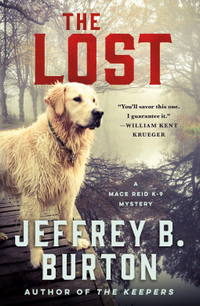
Mace and his dogs are moving in different circles after the events of The Keepers, and get called to help the FBI look for a missing mother and daughter—they were kidnapped after a home invasion went wrong. Their husband/father, financier Kenneth J. Druckman, was beaten and left behind. It’s up to Mace and Vira to give them a lead.

Sadly, it doesn’t take long for Vira to find the mother’s body on Druckman’s land, or for her to act like Druckman did the killing. It’s not like Mace can just point at the billionaire and shout, “J’accuse!” He’s going to need to find more than the word of his young dog—he also needs to help the FBI (if he can) to find the five-year-old girl before it’s too late.

Kippy Gimm (now a detective) and the rest of Mace’s dogs are, of course, in on this, too.

Non-Mace Perspectives

Typically, I’m not a fan of a first-person narrated book frequently switching to the third person—usually the killer. It doesn’t turn me off of a book, but I really don’t enjoy it. Burton, however, has done a better job of it in this series than most authors. I don’t know that I can say that I’ve enjoyed every instance of it—but, unlike most, in the previous two books in this series, those sections have added to the novel.

That really doesn’t sound like a compliment, but it was one.

In The Lost, most of those scenes/chapters are essential. The way this novel is set up—and the crimes perpetrated by the various criminals involved (and there are a handful)—necessitates that we see things from several perspectives that aren’t Mace’s. There’s just no way that he can find this information (he doesn’t require it, but the reader is going to demand to know what’s going on)—and it’d take months of investigation after these events for the FBI to figure some of this out (assuming they’d try).

The later in the book we get, the better these non-Mace portions get. Particularly those from the daughter’s point of view, they brought a lot to the table and got me really invested in these characters.

I still think I’d prefer more Mace and less of everyone else in future books in the series—but The Lost really shows that this approach can work. It also underlines how good at it Burton is.

So, what did I think about The Lost?

I’m not sure how the space is given to the non-Mace perspectives in this book compares to the previous novels, but it’s significantly more—that alone makes this novel feel different. The fact that many/most of those sections of the book take place prior to Mace’s involvement with the Druckman family also contributes to that feeling. I appreciate the fact that Burton’s doing things in Book 3 to make sure the series doesn’t get in a rut.

Sure, it’d be a fine rut to get stuck in and I’d have gladly read more books that were structurally similar to The Finders and The Keepers.* But I’m glad Burton made the step now and didn’t wait until he needed to shake things up.

* I read The Keepers a year ago and didn’t get the title until right this moment. I’m not too proud to admit that.

I’m not sure that we needed to learn about Kippy’s job woes at this point—it didn’t have an impact on this book, as FBI-centric as it was. It might have been better to talk about her difficulties with her new assignment when it’d have a bearing on the plot, and wouldn’t risk feeling like a repeat when it does come up. It’s not a good position for her to be in—I don’t want to minimize that—I’m just not sure the reader needed to get that information now, I don’t know what we’re supposed to do with it. As complaints go (and I think it’s the only one I had with this book), that’s a pretty minor one.

The pacing on this is strong—we hit the ground running with Mace and Vira at the beginning and we really don’t stop. There isn’t a lot of time here for contemplation and rumination—it’s not a breakneck speed, but it’s a steady jog. Again, it shows that Burton’s doing something different in this book.

I feel like I’m spending too much time talking about how different The Lost is from the other books—and I don’t mean to harp on it, I’m just commenting on the various ways it is. I don’t know that readers who aren’t writing about the book are going to spend that much time thinking about it—I think they’ll note the freshness of it, they’ll feel the overall effect, though. I’m not saying it’s better or worse than the other two, just appreciatively different. And that’s a nice thing.

As always, any time spent with Sue, Maggie May, Delta Dawn, Vira, and Billie Joe is a boon. They’re a fun pack of animals to read about—and I’m already looking forward to their next adventure. Mace and Kippy are good, too—but we all know who the stars are here.

This would be an okay jumping-on point to the series, I’m not sure you’d get the full idea of Vira’s special talents—but that’s okay, it’s not required to appreciate the books. The important thing is that mystery readers—particularly the dog-loving kind—jump on to the series at some point.

Disclaimer: I received this eARC from St. Martin’s Press via NetGalley in exchange for this post—thanks to both for this.


4 Stars

This post contains an affiliate link. If you purchase from it, I will get a small commission at no additional cost to you. As always, opinions expressed are my own.

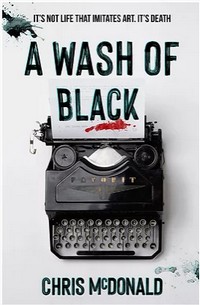
A Wash of Black by Chris McDonald: This is How a Series Should Start

A Wash of BlackA Wash of Black

by Chris McDonald

DETAILS:
Series: DI Erika Piper, #1
Publisher: Red Dog Press
Publication Date: January 27, 2020
Format: Kindle Edition
Length: 218 pg.
Read Date: June 17-18, 2022
Support Independent Bookstores - Visit IndieBound.org

What’s A Wash of Black About?

A year ago, DI Erika Piper was assaulted in the course of her duties, she survived, but it was close. It’s her first day back to work, and it’s a doozy.

A famous actress has been murdered and her body was essentially left on display. It’s a recreation of a very famous scene from a movie she starred in—the same way her character was killed. Well, almost. The film version departed from the novel it was adapted from on a couple of points—this crime scene is loyal to the book. The publicity around this case is going to be huge—as will be the pressure to solve this quickly.

Is this a personal grudge against the actress disguised to throw off the police? Is this a crazed fan paying a gruesome tribute to the actress/movie/novel? Is this someone working off some other twisted purpose hiding it beneath the spectacle?

This killer isn’t satisfied with one murder—and soon it appears the killer has Piper herself in their sights.

DI Erika Piper

Piper arrives in this book nearly fully-formed, sure, there’s room for development and growth in the books to come—but as a character, she’s fully fleshed out. She has a past (that we get a glimpse of), well-established relationships with fellow detectives, her superiors, crime scene investigators, coroner, and so on—as well as a full personal life.

Frequently we get these layers a little at a time with a series like this, and only after a few books, do we get to see the character’s entire world (or at least a good deal of it). McDonald doesn’t go that route, we could be reading the 4th or 8th book in the series, not the first. I don’t mind taking the former route with a character—and I understand why authors might make that choice—but I love it when an author successfully pulls off what McDonald did here.

She might be physically ready to come back to work, but she’s not fully ready on the psychological front (it’d be easy to argue she never will be). I don’t think she came back too soon, but she has some work to do on that front, and it was great to see a character actually do that work rather than the typical “detective does just enough to get the shrink to sign off on their return to duty.”

I particularly enjoyed the relationship Piper has with DS Liam Sutton. They work so well together, and their interactions and rituals bring this part of her world to life. I’m hoping to see more of that in the books to come.

A Mistake or a Red-Herring?

I don’t know about you, but I frequently find myself talking back to books when characters are making mistakes. Boy howdy, did I mutter at Piper a lot about one thing. There’s a witness that I (based on my extensive training and experience as a reader of procedurals) figure should’ve been talked to right away. And Piper and the other detectives ignore them.

Now, was this an oversight on McDonald’s part? Should Piper have tracked this person down? Is this a red herring designed to trip up readers like me?

I’m going to assume it’s the latter—although it could also be a sign that Piper’s a little rusty. Either way, it drove me nuts.

So, what did I think about A Wash of Black?

I had such a great time with A Wash of Black. It hit the spot just right—well-executed and satisfying. It’s not reinventing the wheel, there’s nothing revolutionary about it. It’s a solid, confident police procedural that delivers all the twists and complexity that the genre demands—with a good cast of characters, an engaging protagonist, and a compelling killer. You don’t need to be flashy or to subvert conventions or anything when you get everything as right as this one does.

I said it above, but it bears repeating—there’s no indication that this is the first in the series—or a debut for the novelist. McDonald approaches this with the assurance of an established writer. It shouldn’t need to be said, but just to be safe, I will—this is not the same kind of book as his Stonebridge Mysteries, and it takes no time at all to see that. Don’t go looking for anything cozy here.

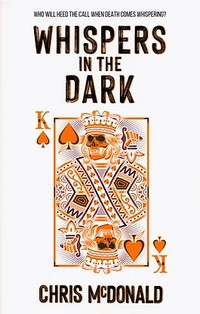
I’m eager to come back for the second, Whispers in the Dark, in a couple of weeks. In the meantime, I heartily recommend this to you.


4 Stars

20 Books of Summer

This post contains an affiliate link. If you purchase from it, I will get a small commission at no additional cost to you. As always, opinions are my own.

An Explorer’s Guide to John Calvin by Yudha Thianto: Calvin 101

An Explorer's Guide to John CalvinAn Explorer’s Guide to John Calvin

by Yudha Thianto

DETAILS:
Series: Explorer's Guides Series 
Publisher: IVP Academic
Publication Date: July 11, 2022
Format: eARC
Length: 256 pg.
Read Date: June 12-19, 2022
Support Independent Bookstores - Visit IndieBound.org

What’s An Explorer’s Guide to John Calvin About?

IVP Academic’s website describes the Explorer’s Guide Series as:

Anyone who has ventured into new territory knows the importance and benefit of having an experienced guide. Discovering the classics of Christian theology is no different.
The Explorer’s Guide Series acts as a guide for those who are exploring some of the great Christian texts and theologians from the church’s history.
Written by scholars with years of expertise, these volumes will acquaint readers with the sometimes unfamiliar context in which these classic texts were written and help readers navigate the rich yet often complex terrain of Christian theology. New and experienced readers alike will benefit from these volumes as they continue on their journey of faith.

This volume focuses on John Calvin, the Genevan Reformer. Yudha Thianto has been introducing students at Trinity Christian College to Calvin for years. Now he aims to bring an accessible overview of his life and thought through this book.

Part One: Calvin the Man

The first part of this book focuses on the historical context and the person of Calvin. Why do people still read him today? Why is he so important—or at least why is he regarded as such?

After sketching out why Calvin’s worthy of study, Thianto gives a brief (34 page) biography of Calvin. I’ve read a handful of full-length biographies of John Calvin, and I learned a thing or two from this.

Thianto follows this biography with a FAQ about Calvin—addressing several important questions and controversies about him and his teaching. Several parts of that FAQ were impressive, and I appreciated his approach to it (he did duck a couple of typical controversial points that are brought up—but it’s safe to argue that those are for less introductory works). Then he spends a chapter focusing on Calvin as a pastor. It covers some of the material from the biography, but from a different angle—and it covers a lot of additional material, too. Whatever Calvin’s legacy may be, this chapter addresses what was likely the most important part of his life to him.

Part Two: A Guide to The Institutes of the Christian Religion

A little more than half of the book is spent on the book Calvin’s best known for. Thianto spends a chapter talking about the different editions the book went through, where Calvin was in his career when each was written, and discusses some of the major differences between editions.

The final version was the 1559 edition, which is composed of four books/parts. Thianto spends one chapter on each book—describing the flow of thought, some important arguments made, and the major doctrinal teachings.

This is not an easy work to summarize and condense into a little over 100 pages, and I’m sure some will say Thianto glossed over or skipped something important—he undoubtedly did. But he also covered most (if not all) of the essentials). Something like this part of the book would be great to have for someone diving into the book for the first time.

So, what did I think about An Explorer’s Guide to John Calvin?

First, I really like the idea for this series, and hope to get my hands on other volumes. Naturally, I think someone as ill-understood and intimidating as Calvin is a good subject for this kind of book.

I appreciated Thianto’s approach to Calvin, the misunderstandings surrounding him (although he doesn’t cover all of them), and his writings. His experiences in the classroom have given him a solid understanding of those things that need to be covered for someone’s initial/early exposure to the Reformer, and it shows.

As this is supposed to be a guide for those with little-to-no exposure to Calvin, I can’t complain about the lack of depth displayed on some issues—and I really wouldn’t want to, anyway. The only thing that jumped out at me to make me wonder about the book is a point in the conclusion where he suggested that different beliefs about the Trinity are equivalent to differences regarding sacraments or predestination and that Calvin would see them as such. It was a minor point in the conclusion, and I think the overall point was sound—but the Trinity isn’t something Calvin would put on the same level as a debatable point of doctrine.

This is a great resource—a fantastic introduction to Calvin and a handy guide to reading the Institutes for yourself. If you’re curious about Calvin and don’t want to do the heavy lifting required by a full biography and/or reading his Institutes, I’d strongly recommend picking this up and giving it a read (and hanging on to it for future reference).

Disclaimer: I received this eARC from InterVarsity Press via NetGalley in exchange for this post—thanks to both for this.


4 Stars

This post contains an affiliate link. If you purchase from it, I will get a small commission at no additional cost to you. As always, opinions are my own.

Holy Chow by David Rosenfelt: Keeping the “Semi” in Andy’s Semi-Retired Status

Holy ChowHoly Chow

by David Rosenfelt

DETAILS:
Series: Andy Carpenter, #25
Publisher: Minotaur Books
Publication Date: July 5, 2022
Format: eARC
Length: 304 pg.
Read Date: June 20, 2022
Support Independent Bookstores - Visit IndieBound.org

What’s Holy Chow About?

About a year ago, Rachel—a new widow in need of a companion—came into the Tara Foundation’s dog rescue facility and fell in love with a Chow Chow named Lion (who reciprocated)—Andy remembered her fondly. Then she calls out of the blue with a favor—will Andy take the dog if she dies and her stepson, Tony, can’t/won’t take the Lion?

Andy says of course he will. Within a week, Rachel’s been murdered and Andy learns more about this woman. She was rich, in an eye-popping kind of way, and Andy is told to come to the will reading. He’s confused by this, but assumes it has to do with taking possession of Lion (just in an unusual way). The reading is interrupted by the police coming to arrest that stepson for her murder.

Andy visits Tony and decides to take his case—for solid, evidence-based reasons, and not at all because he seems like a nice guy, his Great Dane mix had recently died and he’s excited to take Lion. Okay, that’s not true—Andy smells something off about the case, but it’s (naturally) because Tony’s a nice, dog-loving guy.

The police and prosecution are presenting this as a case of an heir being angry at the size of their inheritance. But Tony doesn’t have a history of being that interested in money. Andy wonders if the murder might have something to do with the fact that Rachel had been taking an interest in her late husband’s company’s day-to-day activities lately. Or is there maybe something else afoot?

It’ll take the combined efforts of Andy’s firm, The K-9 Team, and the Bubeleh Brigade (the retirees-turned-hackers that Andy uses from time to time) to get to the bottom of this.

When Will They Ever Learn?

I’m not wondering why prosecutors don’t immediately drop the case when they hear that Andy has taken on a client. He does have a few guilty verdicts on his record. Although, you would think they’d require the police to tighten up their cases and make sure there aren’t any threads hanging once Andy requests discovery.

But what I wonder is that given his track record, why they don’t take him seriously when he calls the FBI, DEA, Homeland Security, or any other three-lettered agency. (note: I wonder similar things when Joe Pickett starts meddling in non-wildlife issues). I’m not saying they need to roll out the red carpet or anything for him—don’t let Andy Carpenter, of all people, call any shots. But he shouldn’t have to rely on favors from a friend of a friend or threats to get someone to take him seriously anymore.

How does no one have this conversation:

Agent 1: Hey remember that guy who tipped us off to that terrorist organization and saved all those lives a couple of years ago?
Agent 2: That lawyer with the hot wife and the scary bodyguard, sure. Didn’t he also tip us off to the smuggling ring last Winter?
Agent 1: Come to think of it he did.
Agent 2: Why are you bringing him up?
Agent 1: Well, he’s got this theory about _________ now.
Agent 2: Might be worth sitting down with him, looking at his theory.

Although, some of that threatening and calling in favors can make for entertaining scenes. So, y’know…

So, what did I think about Holy Chow?

Andy Carpenter #25? That’s a mind-boggling number. I know it wasn’t that long ago that I read #24, but I don’t think it registered. So, does the Andy Carpenter series have anything new up its sleeve? (I’m tempted to make an old dog/new tricks joke here) I won’t rule it out, but we don’t see much new here.

But that doesn’t make this stale, either. There’s a comfort and a reassurance in knowing Andy’s behavior while the jury deliberates, the fact that Pete and Vince are going to bust his chops and put their food on his tab, that taking a walk with his dogs will help Andy come up with an idea, and so on.

I’m not trying to take a shot at anyone here, but where this feels comfortable and not tired and repetitive is that Andy has settled into these patterns—this is his life. He’s not, say, constantly second-guessing his choice of career (as much as he complains about it), he’s not trying to decide between a sexy Homicide Detective love interest and a lethal and hot Security Specialist love interest after 30+ books. Just to come up with some completely random example that no way could be describing any particular series.

I guess what I’m trying to say is that the twenty-fifth novel in this series might not have a lot that’s new, there’s still a lot of fun to have. And, we might get a glimpse of a different side of a long-running character (a continuation of something from Citizen K-9)

The humor is still present and sharp, the courtroom antics are fun (maybe a little subdued this time compared to others because of the case), and you can’t beat the time hanging with these characters. Both the solution to this case, the reveals involved, and the resolution are as well-delivered as always.

Readers new to the series or those who’ve been around since 2003* will find plenty to enjoy in the pages of Holy Cow. A good time should be had by all.

* Or at least since Open and Shut, no matter when they read it.

Disclaimer: I received this eARC from St. Martin’s Press via NetGalley in exchange for this post—thanks to both for this.


4 Stars

This post contains an affiliate link. If you purchase from it, I will get a small commission at no additional cost to you. As always, opinions are my own.

Love and Other Monsters in the Dark by K. B. Jensen: A Truly Impressive Batch of Short Fiction

Love and Other Monsters in the DarkLove and Other Monsters in the Dark

by K.B. Jensen

DETAILS:
Publisher: Crimson Cloud Media LLC.
Publication Date: June 20, 2022
Format: eARC
Length: 186 pg.
Read Date: June 11-20, 2022

What’s Love and Other Monsters in the Dark About?

I have no idea how to answer this question in any but the most annoying way—it’s a collection of forty-two short stories and flash/sudden fiction (however you want to refer to them). Learning that this is only 186 pages long emphasized just how short these stories are.

As far as this collection goes—the stories are about love and monsters, basically. The fact that the title says “Other Monsters” suggests a little about what kind of love stories will be told. Let’s just say that none of these will be fodder for a Hallmark movie.

The genres these stories approach the subjects from are varied—there’s some Science Fiction, some Horror, some Crime, and a little General Fiction—there’s even a Zombie story (a Zombie story I liked—despite my frequent claims that I don’t like the genre).

Self-Depreciation

Jensen does not have a lot of good things to say about writers in these pages, those comments both ring true and are some of the funnier lines in the book. In one story, a character cites a line in an earlier story and casts aspersions on it. It’s a small moment, and if you don’t recognize the call back you will miss absolutely nothing—but if you do catch it, you’ll enjoy it.

(yes, it’s possible that there are other self-referential moments that I missed. Which would only bolster that point about missing the one I caught not making that much of an impact)

There are not many lighter moments in this book—it’s about monsters, after all. So it makes those that Jensen provides all the nicer.

So, what did I think about Love and Other Monsters in the Dark?

It’s even harder to answer this question than the first one…the short version is, that I really liked it and was more than impressed with Jensen’s skill and versatility. I could list names of stories that wowed me, but that wouldn’t be useful to anyone (and my list would be really long—and incomplete). If I told you a little about the stories or why they were so effective, I’d ruin the experience for you. My hands are tied on being too helpful here.

If I did this as a profession, I’d take the time/effort to give you numbers here, but I’m not, so you’ll get impressions. A little more than half of the flash fiction aren’t complete stories—they’re the beginnings of stories, the introductory page or two for a short story, and then they end. Oddly, with one exception, that was enough for me—I was satisfied.

Well, I say I was satisfied, but I’d have loved to turn the page and get the rest of the story. Yet in a way that I cannot really understand (or, evidently, explain), what Jensen gave was enough. And that one exception had nothing to do with the brevity, it was the piece—I don’t think it would’ve resonated with me no matter how much content was provided.

Now, when she told a whole story in either the flash or short fiction? Some of the best short fiction I’ve read in a dog’s age. Sure, there were two or three stories that didn’t work for me, but that’s about my taste, not Jensen’s writing.

There are moments of sweetness (frequently deserving the prefix “bitter”, sure, but the sweetness is what I remember), there’s some heartbreak, too. There are just some horrible people and worse outcomes. I’m not sure there’s a “happily ever after” to be found, but maybe a few “better than it could’ve been” endings. Sure, there are also the horror stories or the SF that tends in a horror direction. Those might have been my favorites.

I’m going to stop flailing around, trying to describe my impressions of this book. In short—this is the kind of short fiction I want to read more of, and the kind I don’t find that often, which is why I read so little of it. Fast, well-written, impactful—these literary snacks will stay with you longer than you’d think they will based on the length.

Disclaimer: I received this eARC from the author and Lori Hettler of The Next Best Book Club in exchange for this post—thanks to both for this.


4 Stars

Page 21 of 88

Powered by WordPress & Theme by Anders Norén