Tag: 4 Stars Page 24 of 88

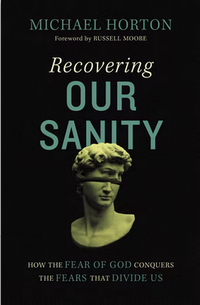
Recovering Our Sanity: How the Fear of God Conquers the Fears that Divide Us by Michael Horton

Recovering Our SanityRecovering Our Sanity:
How the Fear of God Conquers
the Fears that Divide Us

by Michael Horton

DETAILS:
Publisher: Zondervan
Publication Date:  February 14, 2022 
Format: Kindle Edition
Length: 320 pg.
Read Date: February 27-March 13, 2022

Support Independent Bookstores - Visit IndieBound.org

Even in more conservative contexts today, the reading of a “fear of God” passage is often quickly followed up with an explanation, dying the death of a thousand qualifications. The upshot is that fear doesn’t really mean “fear.” In such widespread dismissals we are not only failing to give God his due but are depriving ourselves and each other of the only antidote to the crippling fears that haunt us.

…The fear of God leads to trust, and trust bears the fruit of the Spirit, producing a harvest of blessings for ourselves and for others. Fear really is worship— we fear what we believe is ultimate, what we think has the last word over our lives.

What’s Recovering Our Sanity About?

In Part 1, “The Fear to End All Fears,” the goal is to remind readers about the Biblical virtue of the Fear of God—what it means, how it contrasts to other fears, and how when our focus is on the Fear of God, other fears lose significance and power.

In Part 2, “Facing Our Fears with Eyes Raised to God,” Horton puts shoe leather to this understanding of Fear of God vs. other fears. He looks at our fears of death, suffering, disease, the future—and, perhaps most importantly, other human beings.

Confronting Our Fear of Each Other

Once we regain the fear of God— indeed, of Christ as well (he’s not just the friend of sinners but the judge of all)—and face up to who we are before him, coming with empty hands to receive his Son, we’ll begin to lose this fear of the world. We will not be embarrassed when the unkempt widow sings off-key with the gusto of heartfelt conviction or when the building is drab or if we have never had a brush with greatness and our pastor has never been photographed with anybody in the news. The faithful preaching of the Word, baptism, and the Lord’s Supper; the gracious care, encouragement, and warnings of elders and the wider body; the extension of Christ’s love for temporal needs through the deacons; common prayers, singing, confession of our faith and of our sins, Christ’s declaration of forgiveness, and even God’s greeting at the beginning and his benediction at the end— all these will seem so marvelously familiar and new to us at the same time. And then we will begin to not need the world’s affection any longer.

Roughly the last third of the book is taken up by the third part of Part 2, “Confronts Our Fear of Each Other.” In this Horton talks about the fear we have of other Christians and other people outside the Church—there’s a focus on social and political issues and how American Christians ought to react to them instead of how we tend to. Horton avoids a “Left Wing” or “Republican” response—finding positive things on both sides of an issue (many of which shouldn’t find binary responses, but it seems impossible for Americans to do anything else), as well as things to critique on both sides.

Horton goes out of his way not to demonize those who disagree, but reminds his readers that there are those on each side who are fellow image-bearers, and all need Christ more than they need to be corrected or encouraged about their stances on any issue. The Church’s calling is to set aside the focus on the temporal and point others to the eternal and the world to come, while showing our gratitude for Christ’s work by serving those around us.

This sub-section is worth the price of the book (not that the rest was a waste).

So, what did I think about Recovering Our Sanity?

My goal in this book is not to take sides in cultural and political debates. Instead, it is to raise our eyes to heaven so that our sanity can be restored, as Nebuchadnezzar experienced in Daniel 4.

There were more than a few times where I wondered if Horton had lost track of the thesis of the book—I found each chapter, each topic that he covered very valuable and was impressed by the wisdom that Horton offered.

But I was wrong about that—and by the end, it was easier to see where he was going all along. Horton’s been one of those writers that have been helpful to me for a couple of decades now and it’s good to see that hasn’t changed.

There’s a lot to chew on here, and as I said, a lot of wisdom to be gleaned. I can’t imagine every reader is going to agree with everything he has to say (and I can’t believe that Horton expects that, either)—but his major points are sound, Biblical, and needed by the American Church so that we remember what our priorities are supposed to be.


4 Stars

This post contains an affiliate link. If you purchase from it, I will get a small commission at no additional cost to you. As always, opinions are my own.

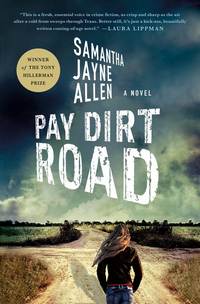
Pay Dirt Road by Samantha Jayne Allen: A Tale of Oil, Murder, and Land

Pay Dirt RoadPay Dirt Road

by Samantha Jayne Allen

DETAILS:
Series: Annie McIntyre Mysteries, Volume 1
Publisher: Minotaur Books
Publication Date: April 19, 2022
Format: eARC
Length: 304 pg.
Read Date: March 21, 2022
Support Independent Bookstores - Visit IndieBound.org

What’s Pay Dirt Road About?

Annie just graduated from college and moves back to her hometown to decide her next move. That’s the generous way to look at it, anyway, we’ll get back to that in a bit. She’s waiting tables at a local diner—well, the local diner in Garnett, TX. It’s hard to say exactly how large Garnett is, but it’s not big. But given the nearby oil fields, there’s a lot of money as well as a lot of poverty in this smaller town.

Annie and her roommate/cousin spend a lot of their evenings drinking, frequently with others they graduated from high school with. One night they go to a bonfire at the home of one of Annie’s former classmates and unexpectedly run into a co-worker, Victoria. Victoria has overserved herself at this point and doesn’t show signs of slowing down. When Annie decides to leave, she tries to find Victoria but is told that she’s gone off with someone.

That’s the last anyone sees Victoria—the last anyone will admit to, anyway. Her body is found a few days later. Driven by guilt for abandoning her, Annie takes advantage of an offer from her grandfather—former sheriff, now a PI—to work for him and look into the case.

Annie

Annie is what many would call a deeply flawed character, but others would just say human. She’s trapped by her own insecurities as well as ego. She knows she could likely do well in law school—but it would be hard and risky. She could probably talk herself into the challenge, but failing means losing hope she could get away from Garnett, and I don’t think she’s willing to do that.

Like so many people in similar circumstances, not knowing what to do, she drinks, so she doesn’t have to think about it for a while. And drinks a lot. This wouldn’t be a big deal for me as a reader, but Annie spends a lot of time judging her grandfather for his drinking—especially when they’re supposed to be working. She doesn’t say anything to him, she just keeps it inside and lets herself indulge. It’s things like this that make her a wonderful, complex character.

The Sense of Place

I’m vague on a lot about the town of Garnett (size, demographics, etc.), but I also have some concrete visions of certain parts of it. It reminds me a lot of the TV version of Dillon, Texas—which seemed to change size, economic status, and makeup from week to week, depending on what the story called for.

As I type that, I realize that my ideas about Garnett are basically half-Samantha Jayne Allen/half-Friday Night Lights. Annie would basically fit in with the Tyra Colletes and Tim Riggins of the world, not the Jason Streets and Lyla Garritys (although we get glimpses of that part of Garnett, too). I just thought of three paragraphs I could do paralleling the worlds of these two fictional towns, so I’d better move on before this becomes a very different kind of post.

What I kept getting was a feel for the town more than anything—it’s the kind of place where the best and brightest leave after high school, and the big question is: will they come back? You get the impression that if they do, it’s not because they chose to—they either have no choice, or it’s just as a way station–like Annie intends. Some of those in the latter category end up sticking around, usually not by choice. This bleakness covers the whole of the novel—in the successes as well as the failures (and the in-between moments).

At the same time, it seems that few of these people are there by choice. It is their home. Up until two weeks before her death, Victoria had been tied to Garnett, but she had plans. Annie intends on leaving. But when it comes to the land of Garnett? Their families’ acres? There’s a reflexive, instinctive, and deep sense of possession and binding. Everyone knows that Annie’s going to leave town at some point—but when there’s a suggestion that someone is going to buy the land she’s set to eventually inherit? That sets an emotional fire in her that I think surprised even her. You see something similar with Victoria, too. People like them may not like Garnett, may not want to live there but it’s home. It’s their home, and will be.

So, what did I think about Pay Dirt Road?

I don’t know that I can say that I particularly enjoyed this book—by design, it’s not a good time. But it’s a great experience. Allen’s sense of character and sense of place ensures that the reader feels what’s going on. Particularly, but not limited to, Annie’s experiences.

Like with any good mystery—and look at character—Pay Dirt Road is as much about the investigation as it is the history of the characters—for Annie, this goes back to High School, for her family, the history we see goes back far before that. The past illumines the present, and helps the reader—and eventually, Annie and others—to see what’s going on in the present.

Last year, I finally got around to reading The Far Empty by J. Todd Scott. Garnett doesn’t have the same kind of corruption (at least that we see) going on, but it has the sense of setting, of bleakness, and dedication to place/city/home. Between these two books—not to mention Locke’s Bluebird, Bluebird and Kent’s The Dime—I’m starting to think I should focus more of my Crime reading on the Lone Star State.

This could be the beginning of a series—and if it is, I’ll be at the front of the line for the sequel. This could be a stand-alone, and if so, it leaves the characters in a good place—both in terms of closure and promise for the future. Either way, this is a book that’s going to linger in the back of my mind for a while, and I think that’ll be true for others.

Disclaimer: I received this eARC from St. Martin’s Press via NetGalley in exchange for this post—thanks to both for this.


4 Stars

This post contains an affiliate link. If you purchase from it, I will get a small commission at no additional cost to you. As always, opinions are my own.

REPOSTING JUST CUZ: Who Shall Ascend the Mountain of the Lord? by L. Michael Morales

Fatigue is winning over my will to get the post I intended for today finished. So, I’m going to repost this—I’ve been thinking a lot about this book recently, but I feel like I remember too much of it to commit, even if I want to master the arguments. I didn’t do justice to the book when I wrote the original post, but maybe it’ll nudge someone to read the book.


Who Shall Ascend the Mountain of the Lord Who Shall Ascend the Mountain of the Lord?: A Biblical Theology of the Book of Leviticus

by L. Michael Morales
Series: New Studies in Biblical Theology, #37Paperback, 306 pg.
IVP Academic, 2015
Read: October 16 – November 27, 2016

So this is another one of those books that I’m not really qualified to talk about, but . . . whoops, here I go.

Morales doesn’t give us what you typically find/look for in a study of Leviticus — detailed explanations — or dodges — of the various purity laws and other commands and regulations contained in it. Instead, he begins by explaining his conclusion that Leviticus is the center of the Pentateuch, and that Chapter 16 is the center of it. Beginning in Genesis, everything is leading up to the Day of Atonement, and then everything from that is to be seen as the result of, or in light of that day.

That’s a lousy summary, but that’s the best you’re going to get from me in a couple of sentences. The argument is so detailed, so complex that I can’t really do much better without spending a few pages on it — and no one wants to read that (especially since you can read Morales doing a better job). At first, I thought that it was an interesting idea, but it really didn’t matter much. But as I read on and understood what he was doing better, it started to capture my imagination and draw me in. This was well argued, well researched — and well explained for even non-technical types like me.

But when it comes to Biblical Theology, the proof in the pudding comes from tying in his theses to the unfolding story of redemption — first in Israel’s story and then showing how it leads to Christ and His work on earth, His Ascension and pouring out of His Spirit to prepare a people to meet with Him on Mount Zion. The last two chapters were fantastic — and I’m going to have to reread them a few times to really wrap my brain around it all. There were moments of beauty here — it’s hard for an academically-inclined work to inspire and touch the emotions of a reader, but Morales did it.

This volume is the first I’ve read in New Studies in Biblical Theology (I believe it’s the first I heard of it, too) — the series is edited by D. A. Carson. The series aims “to simultaneously instruct and to edify, to interact with current scholarship and to point the way ahead. . . While volume notes interact with the best of recent research, the text of each work avoids untransliterated Greek and Hebrew or too much specialist jargon. The volumes are written within the framework of confessional evangelicalism, but they also engage a variety of other relevant viewpoints and significant literature.” If this is a representative volume, it won’t be my last in the series. If I can just pick another — the list of 41 is daunting — just too many choices.

Anyway, Who Shall Ascend was a challenging, interesting, educational and inspiring work — there’s not much more that you can ask for. If you’re up for the work, I heartily recommend it.

—–

4 Stars

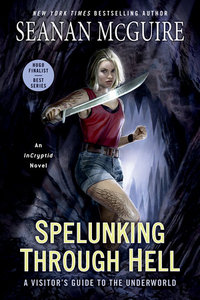
Spelunking Through Hell by Seanan McGuire: It’s Always the Last Place You Look, Right?

Spelunking Through HellSpelunking Through Hell:
A Visitor’s Guide to the Underworld

by Seanan McGuire

DETAILS:
Series: InCryptid, #11
Publisher: DAW
Publication Date: February 28, 2022
Format: Trade Paperback
Length: 267
Read Date: March 14, 2022
Support Independent Bookstores - Visit IndieBound.org

If Thomas is there, if he’s still alive and waiting for me to find him, I can’t make him wait because I’m finally stopping to worry about my own neck. My neck doesn’t matter. My neck made a lot of choices, and none of them said ‘hey, it would be fun to survive a long, long time.’

What’s Spelunking Through Hell About?

Alice Price—grandmother to the primary protagonists of this series—has spent the last fifty years jumping from one dimensional reality to another, seeking her husband who has been taken from her as part of the deal he made with the crossroads. Alice has sacrificed just about everything—her health, almost every waking moment, her children’s childhoods, and her relationship with them, for starters.

Now, given some information Annie was given as she defeated the crossroads recently, Alice knows that the clock is running out, she’s going to have to take some risky and dramatic moves in a last-ditch effort to bring her husband home. Assuming she can find him, that he’s still alive, and interested in coming home, that is.

Alice calls in markers, gets help from several allies, and takes some big—possibly fatal—risks to follow her last theory about where to look.

Hopefully, it’s worth it.

Quo Vadimus

The first five books in the series, while interconnected, felt very stand-aloneish. Then we got Annie trilogy—which started out as something in the same vein, but then shifted into something else, something else that ended up informing this book—and then we had the pretty intense duology about Sarah. Now we have this one, which feels stand-aloneish again, but is also the consummation of things that go back to the beginning.

That’s how the series struck me as I read it, anyway—although between what McGuire has said and a little bit of thinking I’ve done in the last day or so, maybe it’s not the best way to think of things—easier to say from this vantage point. At any rate, this book sure feels like a turning point in the InCryptid series.

So where does the series go from here? Well, it can go back to the whole Covenant of St. George vs. the Prices (and all Cryptids in North America) conflict. Maybe touching base with things in Australia, along the way? It’d be nice if we saw Alex and Shelby again. Maybe there’s more fallout from Annie’s Crossroads takedown or Sarah’s adventures to deal with, too. Or something that seems out-of-nowhere but that McGuire’s been planting seeds for since at least the second book—I put nothing past her.

I realize it’s silly to speculate, but when a book is where a series has been heading for a while, it invites theories about where the series might be going next. Knowing McGuire, the answers are somewhere online already, but I’m going to wait until Book 12 to see.

So, what did I think about Spelunking Through Hell?

The last couple of books just didn’t do as much for me as the earlier books in the series did, I was so glad to get back to the previous levels here (sorry, Sarah!). There’s just so much to commend about this book, and so little to complain about. There was at least one point in the book that was a “Eureka!” moment for me—I couldn’t believe McGuire had tied X into this book. Thirty seconds or so after I got that surprise, I realized I should’ve been expecting it. I’m glad I hadn’t taken the time to think about things so that I would expect it, it’s more fun to get the Eureka.

Alice shares the same quippy attitude as her grandchildren, the same stubborn streak and aptitude for violence—which isn’t that surprising, really, where did I think the kids got it? Still, as has been the case for the other four narrators in the series, while there’s a family resemblance, there are individual distinctives so that you don’t confuse her with the previous narrators.

Inside the crunchy candy shell of quips, magic, trans-dimensional travel, and people fighting for their survival, there’s a chewy center of a very sweet love story. I have no problem with the crunch shell, but like with a Tootsie Pop, the center is what makes it all worth it. The dénouement may be better, however—I know I didn’t get through it with dry eyes.

This is not the book to jump into this series with. Yeah, I’ve said it feels like a stand-alone, which seems like it’d serve as a jumping-on point, but it’s really not. Go back at least to Magic for Nothing, but you’d be best served going back to Discount Armageddon. Just know that when you start (and you really should if you haven’t yet) at one of those points, you’re in for a heckuva ride when you get to this book.


4 Stars

This post contains an affiliate link. If you purchase from it, I will get a small commission at no additional cost to you. As always, opinions are my own.

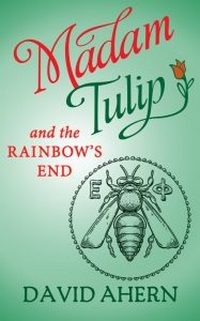
Madam Tulip and the Rainbow’s End by David Ahern: Derry and Bruce on the Hunt for Treasures Not Associated with Leprechauns

Madam Tulip and the Rainbow’s EndMadam Tulip and the Rainbow’s End

by David Ahern

DETAILS:
Series: Madam Tulip, #5
Publisher: Malin Press
Publication Date: March 1, 2022
Format: eARC
Length: 274 pgs.
Read Date: March 5-8, 2022


Yeah, okay, the post title is pretty lame. It’s the best I can come up with. Let’s move past that, okay?

What’s Madam Tulip and the Rainbow’s End About?

Thanks to a series of events that probably rings true for many struggling actors, Derry and Bruce find themselves stranded by the touring company they’d been a part of without funds and a pretty hefty hotel/bar tab. One thing leads to another, and Derry finds herself suiting up as Madam Tulip to do some fortune-telling at a charity event to work off this debt.

She’s happy to do that for a few reasons—it seems that Derry’s trying to cut back on her Tulip work, and really only does it for charities anymore. This time, she can do it for her own benefit and a charity, so she’s okay with that.

As she’s wont to do, as Madam Tulip she befriends a couple of women—one local, and one fellow American (who turns out to employ the local woman). Both women have recently had family members die, and are still grieving. The local woman comes to Madam Tulip for confirmation of her suspicion that her brother was murdered—which Tulip gave her without realizing it. The other woman’s father was supposed to leave her a large amount of money, but didn’t—her focus isn’t on the money as much as it is on understanding what happened (which makes it so much easier to like her).

Having confirmation of her brother’s murder, Mary Jo sets out to prove it and find the murderer—Derry’s friend, Bruce, is going to prove more useful than his psychic bestie on this front and is happy to try. Being able to look at things more objectively, Derry’s able to suggest a thing or two to Lena that might help her find the closure she needs.

Given the nature of a cozy mystery novel, obviously, it won’t be long until Derry finds herself more caught up in the efforts of both women to get the answers they seek—and a little more peril than any three of them expected.*

* Although by this point, Derry should know better—even without any psychic abilities..

Derry’s Gift

Derry’s abilities that stem from being the daughter of a seventh son of a seventh son have gotten her into (and out of) plenty of trouble in the past few books—but they’re never enough by themselves. Derry’s got to figure things out and take advantage of the information she gains—and frequently needs an assist from Bruce for those things that those abilities can’t cover.

This time out, she doesn’t get to take advantage of that gift too much—there are a couple of tarot readings that help her friends (and maybe some of the other readings she does in between those, but we don’t see them). But that’s pretty much it—the rest comes from Derry putting on her metaphorical deerstalker and sussing things out for herself (talking things over with Bruce helps, too).

I think I like it better this way—Derry’s never used her psychic (or whatever) capabilities as a crutch to get to the bottom of things. But the further she gets from that, the better for me.

(although, I can’t imagine I’d complain too loudly if Book 6 or 7 has Derry acting more like Jean Grey/Professor X than Jessica Fletcher)

Jacko Off-the-Grid

You can’t have a Madam Tulip novel without Derry’s father, Jacko, turning up to make things interesting. This time, fresh off a new variety of financial woes (for him, anyway), he decides to rent out his home and go live on an isolated island for a while—to reconnect with his art and avoid the distractions of technology and the city.

Neither Derry nor her mother have a lot of faith that this is going to work too well. But Derry wants to give him the chance and refuses when her mother tries to enlist her to stop him.

In the end, Jacko’s storyline brushes up against Derry’s in a few places, but in more of a “what a small world” kind of way. The two barely interact with each other, and Jacko’s never part of the main action. This is a good use of the character, who is prone to taking over the books (in an entertaining way, but a bit too dominant). Here he gets to go full-on with his antics without impacting the main story—that’s perfect.

So, what did I think about Madam Tulip and the Rainbow’s End?

At this point, getting a Madam Tulip book is a chance to spend time with some friends—with all the warmth, comfort, and pleasantness that comparison brings to mind. Ahern’s got his world and characters down pat now, and the novel moves like clockwork.

This isn’t the same old-same old by any means, however. As he mentioned in our Q&A about this book, Derry not only has to solve a crime this time but there’s a puzzle, too.

Madam Tulip and the Rainbow’s End gives you everything you want in a cozy mystery—good characters, a grin or two, a clever mystery or two, a well-constructed story, and a diverting read for a couple of hours. As expected from this series/author, I’m glad to recommend it to you.

I know Madam Tulip #6 is on the way, and I’m looking forward to it—and hopefully, several more before people in Ireland figure out that they need to stop inviting the fortune teller to their events if they want things to go smoothly (especially nefarious things).

Disclaimer: I received this eARC from the author in exchange for this post. I thank him for that, but the opinions expressed are mine.


4 Stars

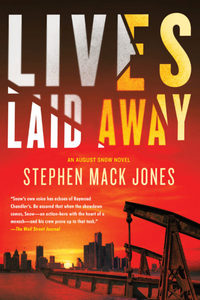
Lives Laid Away by Stephen Mack Jones: An Action-Packed, Dark Sequel

Lives Laid AwayLives Laid Away

by Stephen Mack Jones

DETAILS:
Series: August Snow, #2
Publisher: Soho Crime
Publication Date: January 7, 2019
Format: Paperback
Length: 296
Read Date: March 9-10, 2022
Support Independent Bookstores - Visit IndieBound.org

What’s Lives Laid Away About?

While August Snow is considering how to help out his neighbors in the middle of an ICE crackdown/intimidation campaign, his friend from the coroner’s office brings him a case he can’t get out of his mind. A young, unidentified, Hispanic woman was tortured, raped, killed, and dumped while dressed as Marie Antoinette. The police can’t get anywhere with the case and are ready to move on. Falconi can’t do that. So he comes to August for help.

Snow’s not able to get the photos he’s been shown out of his mind, either. So he starts looking into it—knowing the right people to ask, he’s able to identify the woman within a day. This gets him looking in the right direction for answers—sadly, that direction is full of organized crime, disorganized crime, human trafficking, and corrupt government officials.

August gets backup in both his brushes with ICE and the murder case from new and unexpected allies. There’s a lot going on in Detroit (and in his own past) that August had been previously unaware of, and he’s likely going to wish he’d stayed in the dark before all is said and done here.

Tomás

We met Tomás Gutierrez, August’s godfather, in the previous book and he provided some of the backup August required then. In this book, he’s basically August’s partner.

He fills the fairly typical modern detective sidekick role (Hawk, Joe Pike, Bubba Rogowski, Nate Romanowski, Nick Petrie’s Lewis, etc.)—a little meaner, a little less bound by conscience, a little more prone to violence, has a better personal weapons stash, and so on. The big twist here is that he’s so much older than August. I don’t know if we’re told his age anywhere, but he’s no spring chicken—He’s his godfather, was good friends with his parents, he has a grandchild. And while his age is mentioned every now and then, he seems too spry to be really believable in this role.

This might be because of the subjects of the book—his wife is being threatened, the dead woman was known to his wife, etc.—and in the next book, he won’t be as involved in whatever is happening. If that’s the case? I have no problem with it—but if he keeps acting as a partner, it’s going to have to be addressed.

I like the character of Tomás and how Jones has been using him so far, I just don’t know if he’s a viable long-term option.

What is it About Places Like This?

Back in 2019, I posted about M. W. Craven’s Black Summer, and discussed how Craven’s description of a seedy pub made me feel like I was there. I had a flashback to that moment when Jones described the biker bar Taffy’s on the Lake here. It was so crystal clear and detailed that I felt like I was there. I don’t know if it’s me, and the one or two nasty bars that I’ve been in have stuck with me so much that when Craven or Jones describes one that I’m taken there, or if they’re just so good that I’d feel the same way without personal experience.

I’m going to credit them with this, not just for the sake of my mental health. For example, in August Snow, Jones did a similar job with a small Mexican restaurant. In that case, his writing made me want to feel like I was there.

He’s so good at describing places in a way that brings in all of your senses (there are other examples I could cite, but this one paralleled so nicely with Black Summer), that without ever stepping foot in Detroit (or the state of Michigan) that I can really get a strong feel for the settings.

So, what did I think about Lives Laid Away?

Is this as good as August Snow? I don’t think so. But that says more about how good it was than about the quality of Lives Laid Away. This was intense and exciting. You’re kept on the edge of your seat while being given things to think about.

At the same time, while August Snow had enough action to satisfy any thriller reader, Jones stepped up the violence this time. I don’t know if this is the direction of the series in general, or if something about these circumstances brought it out in August, but wow. I can think of Jack Reacher/Peter Ash novels that contain less violence and action—I wouldn’t have expected that given the first novel. This is not a criticism, I’m just putting that out there for potential readers—it really worked for me (although I’m not sure I needed all the “enhanced interrogation” scenes).

Along those lines, I’m not sure I really realized how ominous, “I gotta see a guy about a thing,” could sound.

This isn’t just a novel about a vigilante ex-cop on a crusade—it is that, but it’s more—it’s also about a city dealing with contemporary pressures, contemporary issues, and a troubled (to be nice about) past. What is Detroit becoming? How is it treating the people who live there? How should it be? These questions loom large while August is trying to figure out who killed these women and why. Lives Laid Away is a solid, action-filled thriller with a social conscience and heart. This is not a combination that you see that much, but I wish we’d see more of.


4 Stars

This post contains an affiliate link. If you purchase from it, I will get a small commission at no additional cost to you. As always, opinions are my own.

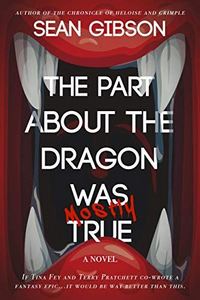
The Part About the Dragon Was (Mostly) True by Sean Gibson: A Hilarious Fantasy Filled with Adventure and Shenanigans. Definitely Shenanigans.

The Part About the Dragon Was (Mostly) TrueThe Part About the Dragon Was (Mostly) True

by Sean Gibson

DETAILS:
Publisher: The Parliament House
Publication Date: December 10, 2020
Format: Kindle Edition
Length: 358 pg.
Read Date: March 10-12, 2022
Support Independent Bookstores - Visit IndieBound.org

I am, if not the most well-known bard in Erithea (yet), arguably the most talented, and unarguably the cleverest. I also wouldn’t quibble if you suggested that I’m the most beautiful, but that’s just because I’m very agreeable (and beautiful)…

Decades ago, I was sworn to secrecy regarding the true story of the great and terrible “Dragonia,” but recent developments have released me from that promise, and so I can finally tell the tale.

What’s The Part About the Dragon Was (Mostly) True About?

This is that true story about Dragonia, told alongside the “official” account so the reader can see how the details were adjusted and tweaked to create the story everyone knows.

The town (or village, depending on who you ask) of Skendrick is being terrorized by a dragon—crops are being ruined, trade is disrupted, and the town is about to fall apart. Desperate, they put out a call for adventurers to come and kill the dragon. But they get no takers—so they go to Plan B. The villagers (or townspeople) pool their meager resources to hire a bard. This bard is to compose a song to make the attempt to kill the dragon sound appealing enough—and its treasure (which may or may not actually exist) enticing enough—to get a band of adventurers to come.

This is where Heloise comes in. She takes the gig and soon gets a new and yet unaccomplished band of adventurers to take up the call to action. I don’t want to get into describing the group, you want to meet them in the book.

They encounter difficulties from without and within; nasty, malodorous geography; orcs and other creatures; and, well, the dragon.

Heloise the Bard

“You’re not half as funny as you think you are, as I suspect you have a very high opinion of yourself.”

“My opinion of myself is in direct proportion to my amazingness,” I said sweetly.

The half-elf, Heloise the Bard is our narrator—as you can tell from the quotations above, she has a fairly high opinion of herself and her abilities. She’s also rather impressed with her hair and certain other physical attributes. Probably her greatest skill is self-promotion.

She decides to accompany the adventurers, to chronicle their journey and the outcome of their clash with the dragon. Her wit and quick thinking prove valuable to their effort and her particular set of skills make all the difference.

She is a hoot. It’d be easy for Heloise to be an annoying, over-the-top character, but somehow Gibson keeps her as an entertaining, over-the-top character. I’ve been trying to come up with a character to compare her to, and I’m failing. Maybe she’s the Fantasy version of Evanovich’s Lula, except Heloise has the skills that Lula thinks she has. Maybe she’s the equivalent of High Fidelity‘s Barry. Somewhere in the Venn Diagram featuring Fantasy, Lula, and Barry, I guess.

She appears in a couple of other books by Gibson, and I’m eager to spend some more time with her.

The Humor

The section could easily be merged with the previous one because the humor displayed in the book is primarily Heloise’s. The jokes are pretty much non-stop—even in the middle of fight scenes, or when death is nigh. The danger is still present, and the combat (and so on) is as deadly as it would be in another book—it’s just surrounded by laughs.

It didn’t take me long before I’d highlighted too many lines to quote—not that it stopped me from going on. My notes on this one are ridiculous. I kept chuckling throughout the reading. I probably would’ve finished the book in 2/3 the time, if reacting to the jokes didn’t make me stop reading for a moment.

If you’ve read The Tales of Pell, you’ve got a good idea for the pace of the jokes—and tone of the book, too.

There’s slapstick, there’s scatological humor, a great Meatloaf (the singer) line, some fantastic bursts of alliteration for the sake of a laugh, some general silliness, clever dialogue, and…honestly, I’m having a hard time thinking of a kind of humor that’s not in there. There’s a running gag (that I’ve alluded to) throughout about whether Skendrick is a town or a village—I can’t tell you how often it’s brought up. And the joke works every time—I should’ve gotten sick of it, and I never did. I don’t know how Gibson pulled that off, but that alone is the mark of a fantastic humor writer.

In addition to The Tales of Pell, if you’ve enjoyed Christopher Healy, Dave Barry, K.R.R. Lockhaven, Peter David, Scott Meyer, Joe Zieja, Jim C. Hines’ Jig the Goblin series, or John Scalzi—you’re going to dig the humor here. And if you dig the humor, you’re going to really enjoy the book. It’s that simple.

So, what did I think about The Part About the Dragon Was (Mostly) True?

You know by this point that one of my main goals in telling this story is to show that the adventuring life isn’t all it’s thought to be. It’s mostly boring, frustrating, dangerous (though not excitingly dangerous), smelly (dear gods, so smelly), and not particularly lucrative. Occasionally, however, it’s exactly how the songs make it sound, and in those moments, it’s easy to see why people—even smart, capable people like Nadi—would devote their lives to doing something so irrational. Let the record show that entering a dragon’s lair for the first time is one of those moments, and it’s fair to say that each member of our intrepid band experienced more than a frisson of excitement as we crept across that threshold.

I think it’s pretty clear that I had a blast with this book, but I should probably make that explicit. I had a blast reading this book.

I think I should not that this is not a book to read if you’re in a “find out what happened and get to the end of the story” frame of mind. This is a “enjoy the trip, not the destination”/”stop and smell the roses” kind of book. The destination/what happens is fully satisfying, but the getting-there is so much better.

In addition to the jokes and the dragon, there is a running commentary on what “the adventuring life” is like outside of the glamorous or exciting bits. A lot of fantasy novels will show bits of it, but not enough of them do—and most don’t do it this way. For example, The Part About the Dragon Was (Mostly) True contains more description of various odors than every 99% of the fantasy novels I’ve read by a significant factor. If this were a scratch and sniff book…well, I can’t imagine anyone would stock it—you just don’t want that in your warehouse/store. Sure, it’s silly talking about realism in a book featuring orcs, halflings, elves, etc.—but this factor does ground the book and give it a seriousness (for lack of a better term) that makes this more than a collection of jokes.

This is the funniest book I’ve read in 2022, and I can’t imagine it’ll face much competition. It’s got it all, go get your hands on it.


4 Stars

This post contains an affiliate link. If you purchase from it, I will get a small commission at no additional cost to you. As always, opinions are my own.
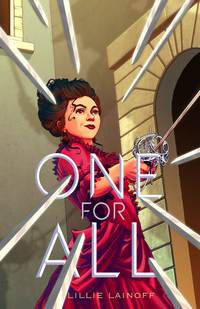
One for All by Lillie Lainoff: An Entertaining YA Dumas-inspired Adventure

One for AllOne for All

by Lillie Lainoff

DETAILS:
Publisher: Farrar, Straus and Giroux (BYR)
Publication Date: March 8, 2022
Format: eARC
Length: 336 pgs.
Read Date: March 5-6, 2022
Support Independent Bookstores - Visit IndieBound.org

The Publisher’s Description

I keep stumbling over coming up with my own synopsis, it’s either too long, too spoiler-filled (although I wonder if I’d have said as much as this does), or too brief to be worth it. So, here’s what the publisher has to say:

Tania de Batz is most herself with a sword in her hand. Everyone thinks her near-constant dizziness makes her weak, nothing but “a sick girl.” But Tania wants to be strong, independent, a fencer like her father—a former Musketeer and her greatest champion. Then Papa is brutally, mysteriously murdered. His dying wish? For Tania to attend finishing school. But L’Académie des Mariées, Tania realizes, is no finishing school. It’s a secret training ground for new Musketeers: women who are socialites on the surface, but strap daggers under their skirts, seduce men into giving up dangerous secrets, and protect France from downfall. And they don’t shy away from a sword fight.

With her newfound sisters at her side, Tania feels that she has a purpose, that she belongs. But then she meets Étienne, her target in uncovering a potential assassination plot. He’s kind, charming—and might have information about what really happened to her father. Torn between duty and dizzying emotion, Tania will have to decide where her loyalties lie…or risk losing everything she’s ever wanted.

POTS

The main characters of this novel are Tania and her fellow musketeers, the head of L’Académie des Mariées, the bad guys, and Postural Orthostatic Tachycardia Syndrome. The description talks says, “Everyone thinks her near-constant dizziness makes her weak, nothing but ‘a sick girl.'” Which introduces that character.

Obviously, no one has actually diagnosed Tania with POTS, and most of the characters don’t know the extent of the Syndrome’s impact on her (not just because she hides it as much as possible). But that’s what she has—I know that not just because the symptoms are recognizable to those who can, nor because it’s in all the marketing materials I’ve seen—but because there’s a great note at the back describing the author’s own experience with it (and, as I understand it, the same applies to the audiobook narrator).

It’s depicted, discussed, and addressed in period-appropriate ways, which is great. This is a really good way to raise awareness and understanding of POTS. I, for one, needed that—and I’m pretty sure I’m not alone in that.

I’d never heard of POTS until a few months ago—or if I had, it didn’t take root in my consciousness—but a family member was diagnosed with it. I’ve read websites, heard them discuss it, and so on, so I had a decent understanding. But after reading this novel, I think I have a richer understanding. Lainoff helped me walk a mile in the shoes of someone with the Syndrome in a way I hadn’t been able to before. The book is going to have a special place for me because of that.

I want to stress that I’d have enjoyed it anyway and would’ve appreciated “the look behind the curtain” of POTS without the personal connection, and I’m certainly not recommending it only because of the depiction of POTS. But it was a personal highlight.

YA-ness

Every so often when I’m reading a YA/MG book, I feel like a grumpy old man. The things that make a book fitting for the target audience jump out at me, they usually don’t make me like a book less (maybe they help me cut the book some slack). So what I’m saying here—just because I mention something, it doesn’t mean I’m critiquing/criticizing/complaining about it, it’s just something that jumped out at me.

Also, I know some readers of this blog have a YA allergy (or at least sensitivity), and I want to provide them with enough information to make an informed choice.

One for All is a very much YA book. If you bear in mind that it is one, the excesses/lack of subtlety/predictability of the book can be understood/expected.

Would I have preferred a little more nuance? A little more complexity? Sure. But Lainoff’s plot and characters were good enough to make up for it.

I also think it’s the YA-ness of the book that makes the transplanting of progressive 21st Century attitudes, expectations, and behaviors on the part of some of the characters in this 17th Century setting work. Were this written with older readers in mind, there’d be more internal conflict (amongst Tania’s group, and likely within some of the individuals) against bucking the cultural norms to the degree that they do.

Tous Pour Un

Big themes that one might expect to be addressed in a book like this would be romance, maybe family, likely even found family. And that’s not really what happens here. (well sort of found family, but it feels different to me, your results may vary)

Instead, it’s about camaraderie. It’s about a team. A group working together in a very Star Treky “the needs of the many outweigh the needs of the few…Or the one” kind of way. The four Mousquetaires have different political, social, and personal agendas—which are respected, understood, and shared to varying degrees—that they put aside for the needs of each other.

Time and time again, they tell each other “we won’t let you fall.” Mistakes will be made, errors will occur—hugely stupid choices will be made—but these four rally together to form a bond that is truly all for one and one for all.

I love seeing things like this—and I don’t see it often enough. And when I do see it, it’s largely an unstated thing. Sometimes it will be discussed with an outsider, but rarely within the group. And I get that, and there’s a certain beauty and nobility about not having to say it. At the same time, there’s a beauty in saying it. It’s great having examples of people reassuring each other, “I’ve got your back, I’m on your six, and I will help when needed” is a wonderful thing. How many of us need to hear that ourselves? So seeing it in a group of characters? I absolutely loved it and it’s likely my favorite thing about this book.

Use of French

Lainoff will frequently drop in a word, phrase, or sentence in French in the middle of dialogue or the narration. It’s almost always immediately translated or given enough context clues that a translation is unnecessary (generally she still provides one even when it’s unnecessary).

It was a nice way to brush up on my high-school French, for sure, but I really can’t tell you why it was used 97% of the time. And even that 3% I could guess about, I’m not certain that it was necessary or useful.

It was a nice bit of seasoning—little dashes of spice to add flavor—but nothing the recipe needed.*

* See the section head above for an accidental example of what I’m saying.

So, what did I think about One for All?

I really had fun with this book. I think I liked it in a “the whole is greater than the sum of its parts” kind of way. I do think if I focused on story X or Y; character W or Z; or theme A, B, or C; I might end up quibbling with the book. But the experience as a whole really worked for me and gave me almost everything I wanted in this book. (a little more humor or panache would’ve been nice—but now that the four have established themselves, that’s possible in a sequel)

It’s a familiar premise, well-executed—with just enough distinctiveness about it to make this stand out. Good characters acting in largely relatable and believable ways. Solid action that’s well used (although I’d like the volume turned up just a little bit on those scenes). It’s very much an origin story kind of thing and does a good job of introducing and creating a world as well as populating it.

If there’s a sequel, I will read it. If this is a stand-alone, I’m satisfied with it. Which is a great spot to be in, and not one I find myself in a lot lately. Particularly when you bear in mind the target audience, this is an enjoyable and satisfying read that I’m pleased to recommend.

Disclaimer: I received this eARC from Macmillan Children’s Publishing Group via NetGalley in exchange for this post—thanks to both for this. Although I’m sorry that this posted the day after publication, I tried, really.


4 Stars

This post contains an affiliate link. If you purchase from it, I will get a small commission at no additional cost to you. As always, opinions are my own.
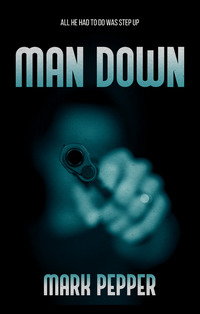
Man Down by Mark Pepper: The Wrong Man in the Wrong Place at the Wrong Time

Man DownMan Down

by Mark Pepper

DETAILS:
Series: Matt Spiller, #1
Publisher: Red Dog Press
Publication Date: February 22, 2022
Format: eARC
Length: 428 pages
Read Date: February 21-22, 2022

The Proper Mindset

Do you like movies (or shows) like Fargo,* where regular, everyday folks find themselves in the middle of some sort of large criminal activity? Things go quickly out of control and before they know it, this regular guy is kidnapping people, covering up killings, disposing of bodies, planning heists, and whatnot. If that’s your kind of thing, buckle up, because you’re in for a ride.

*I had a handful of other titles I was going to invoke, but as soon as I started the sentence, they vanished.

If Fargo ain’t your thing, if Elmore Leonard or Eoin Colfer’s Crime Novels don’t work for you, well, you might want to skip Man Down, unless you’re looking for someone to change your mind about this type of thing.

What’s Man Down About?

Matt Spiller is our Everyman—he’s a taxi driver, he’s a devoted dad, he’s separated from his wife, and his life is about to be turned upside down. And then shaken up, bounced around, chewed up, and spit out.

One Christmas Eve night, after dropping off a fare, he sees a couple of men who look like they’re about to attack her. Without thinking about it, Matt steps in and prevents that—they won’t be harming anyone for a while. This isn’t something he typically does, but the woman he rescued doesn’t know that. Which leads to an interesting business proposition…

Meanwhile, his 16-year-old daughter doesn’t make it home for Christmas—she’s off with her new (older) boyfriend. When she eventually gets home, Matt and his wife are told that she’d been prevented from leaving or calling them. Also, a police officer warns Matt about the boyfriend—his criminal C.V. is truly impressive if you’re the sort who’s impressed by that sort of thing. Matt and his wife are going to have to do something drastic to keep this creep away from their girl. But maybe they go too far…

That’s a thumbnail of the first 12% of the book. There’s no way to summarize the next 88%, even if I was the kind of guy who’d do that. Where those two storylines take Matt and his family can only be read to be believed.

Helen

It’d be easy to give all of your attention to Matt and his antics while reading/talking about this book, but that’d be a mistake. The women in his life really deserve a lot of attention.

His daughter Sophie, a Minions addict, is one of the cutest kids you’ll encounter in print this year. Sammy, the girl with lousy taste in men, is strong, determined, and would probably have found a way out of her trouble on her own, thank you very much. Emma, the fateful fare…okay, I don’t know how to describe her—but man, she’s intriguing (and then some).

But Helen, Matt’s wife (at least for now), is something else. She’s had it up to here with his Depression, his dead-end job, and any number of other failings he has. She still loves him, but she has to do what she can for herself and their daughters. This spills over to how she approaches a boss who’s been harassing her constantly, Sammy’s boyfriend, the repercussions of what happens after Christmas, and everything else to do with Matt. Helen’s the kind of character you’d like to meet in real life, just to hang out and get to know a little bit.

That Reveal

There’s a reveal that’s so big that I want to spend a few paragraphs talking about it. I won’t, don’t worry, but I want to. When you get to it, you’ll know exactly what I mean.

If you’re anything like me, you’ll cackle a bit. Then you’ll have to flip through the pages to check a few things to see how Pepper played you. Then you’ll chuckle some more and dive back in to see how this new understanding of everything plays out—and you’ll be eager to do so, because this book that had been a compelling read has become something new, something richer, something more twisted and fun. What you won’t know is that there’s another reveal or two coming, and that you shouldn’t get comfortable.

So, what did I think about Man Down?

This was a bonkers read—that’s a compliment, in case that wasn’t clear. On the one hand, it’s impossible to predict how Pepper is going to start at Point A and end up anywhere near Point Z, but he does, and when you look back at it, the logic is clear and sound.

I can’t tell you how many times he pulled the rug out from under me (he does the same to Matt almost as often)—sometimes eliciting a laugh, sometimes shock and dismay, sometimes I was so dumbfounded as not to know how to react. But there’s a lot more going on than just unpredictability—Matt keeps coming across as a poor guy just trying to do the best he can—and failing with horrible results. But you never stop pulling for him.

The humor is dark, the action is frequent and dynamic, with characters that you want to get to know better and see more of. I’m not sure what else to say at this point without giving away everything, so let’s just go with if you’re in the mood for a Mr. Toad’s Wild Ride of a thriller, get your mitts on this one pronto.


4 Stars


My thanks to Red Dog Press for the invitation to participate in this reveal and the materials (including the novel) they provided. The opinions expressed are mine and honest.

Red Dog Press

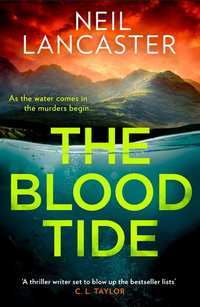
PUB DAY REPOST: The Blood Tide by Neil Lancaster: A Gripping Sequel, Stronger than its Predecessor

The Blood TideThe Blood Tide

by Neil Lancaster

DETAILS:
Series: DS Max Craigie Scottish Crime Thrillers, #2
Publisher: HQ
Publication Date: February 23, 2022
Format: eARC
Length: 384 pgs.
Read Date: February 7-9, 2022

Dead Man’s Grave Spoilers Ahead

It’s impossible to talk about this sequel to Dead Man’s Grave without spoiling it. If you haven’t read that yet, go read my post about it and skip this post. (but thanks for the blog view, I always appreciate the visit)

What’s The Blood Tide About?

It’s been a few months (if we’re told specifically, I missed it) since Dead Man’s Grave, but not too long. Tam Hardie’s in prison for his crimes, his wife and kids are out of the country, and his syndicate is in trouble from without and within. The Policing Standards Reassurance Team, now established, is still trying to find Hardie’s remaining contact(s) in the police. On the personal side, Max Craigie’s wife has moved back in with him, and things are going well.

Basically, things are in a good place. This means it’s time for things to happen—a fisherman goes missing on a routine fishing trip (well, a routine something anyway), not long after that, an intelligence officer with the National Crime Agency commits suicide—and the only witness’s notes go missing, too. And then there’s another (apparent) suicide. There’s almost no reason for anyone to see a link between them—but once Max Craigie is shown the link, he’s able to convince the rest of his team and soon will get more proof.

This is where things get really dicey—and the Team is immersed in a case involving drugs, murder, corrupt officials—and at least one criminal in their own midst.

Characters

In the previous book, we got a pretty good handle on DS Max Craigie and DC Janie Calder. In this book, we get to know their boss, DI Ross Fraser better as he’s able to take a greater leadership role (since it’s not an off-the-books investigation anymore) and as we see him deal with problems in his home life.

We also get introduced to a new member of their team, and get to know her fairly well. I liked the fact that we didn’t come into this book with a greatly expanded team, and only added someone after this book’s action had started—it helps the readers to connect with everyone, and it’s also a nice touch of realism, if the team expands too quickly, it’d be more difficult to keep it to those who can be trusted.

Policing the Police

Max and his team operate far differently from the other fictional Scottish detective looking into Police Corruption that I’m familiar with—Malcolm Fox. There’s no way that Fox in his role with Complaints and Conduct would pursue a case this way (although by the end of his time with them, that had started to change, and he might be more open to it).

The Policing Standards Reassurance Team is a band of mavericks, or at least operate as a collective maverick—going back to their inception. They seem more effective running that way—although I do wonder about realism (for those who care about such things—and it’s more exciting to read about than a bunch of people being careful about paperwork.

So often reading what Max and Janie are going through, I wondered how they trust anyone in the Police service. It almost seems like luck when they have an operation go well without someone having leaked something to their target. Does that take a toll on people? I wonder if Lancaster will deal with that in the future.

So, what did I think about The Blood Tide?

It is really hard to talk about this in any kind of detail—the twists and reveals start early on and I fear I may have said a bit too much already.

I will say as someone who’s been reading Lancaster from the beginning, that it’s great to see his growth as an author—the writing, the characterization, the details in The Blood Tide is leagues beyond what his debut displayed. And I enjoyed his debut, and would’ve kept reading him if he kept producing books like it. It’s just so much easier to do when they’re as good as this one.

Along the same lines, there’s growth to this series—as ought to be expected. Dead Man’s Grave was about establishing this world, these characters, and their mission. Now we get to see them in action, we’re ready to see them at work, in danger, and taking on bigger challenges.

Do I recommend The Blood Tide? You bet—a good author getting better at his craft, a handful of strong characters, and a plot that’ll keep you guessing as it ratchets up the tension. Grab both of the DS Max Craigie thrillers and you’ll be in for a good time. The third book is due this autumn, which is too far away for my tastes.


4 Stars

Disclaimer: I received this eARC from HQ via NetGalley in exchange for this post—thanks to both for this.

Page 24 of 88

Powered by WordPress & Theme by Anders Norén